A Beginner-Friendly Chemical Structure Pendant
by meloendypeiope in Workshop > Metalworking
777 Views, 5 Favorites, 0 Comments
A Beginner-Friendly Chemical Structure Pendant
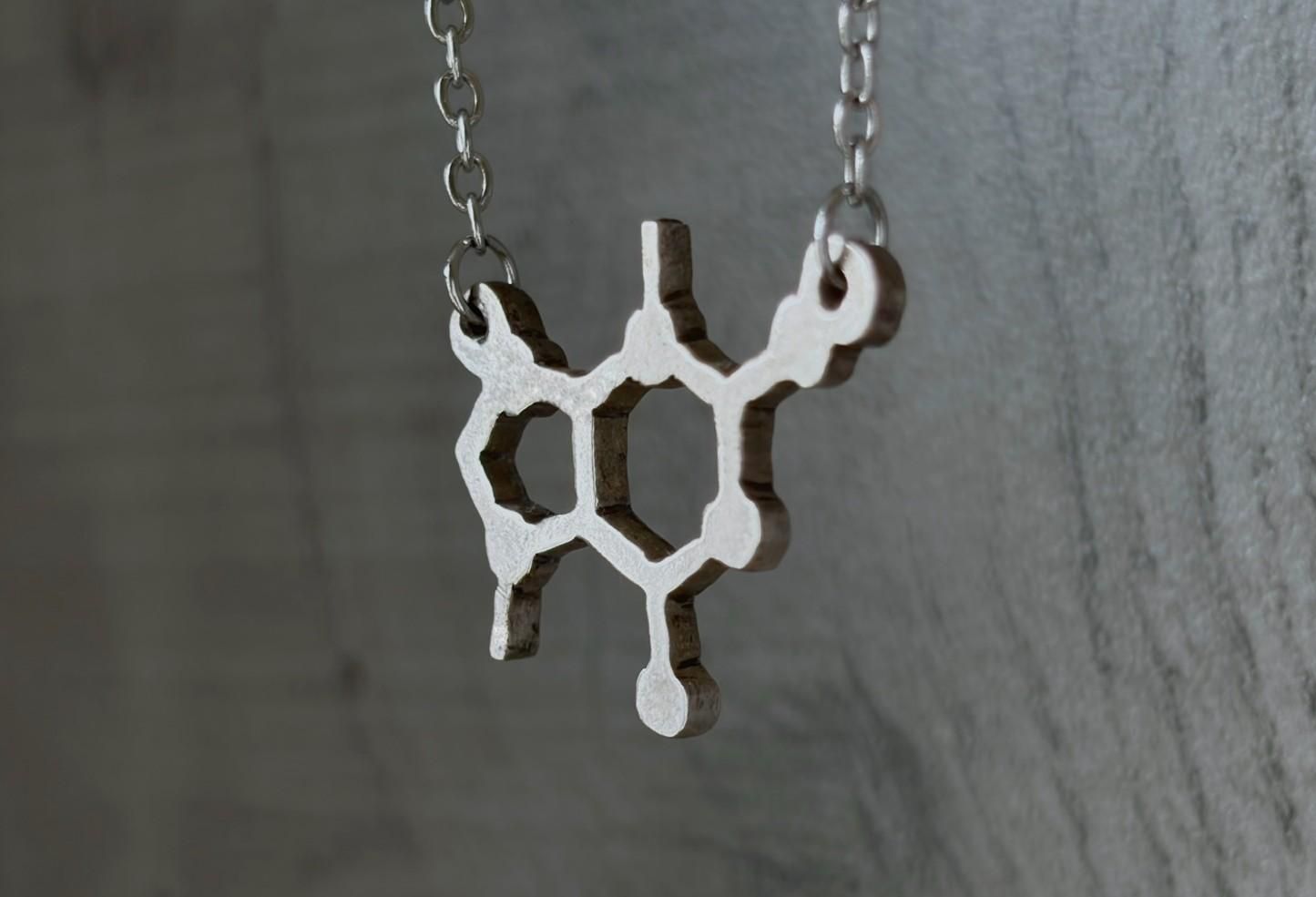
My sister's birthday is coming up, so I decided to make a chemistry themed necklace for her!
Since we both love chocolate, the pendant in this instructable is Theobromine (which gives the bitter taste in chocolate), but you can follow these steps to make whatever chemical structure you want. (Fun fact! Caffeine is only one carbon off from Theobromine, so you can just modify the pattern included in this instructable if you're making caffeine.)
Although I'm making a necklace in this instructable, you could easily use this pendant for other accessories like keychains and bracelets too!
Supplies
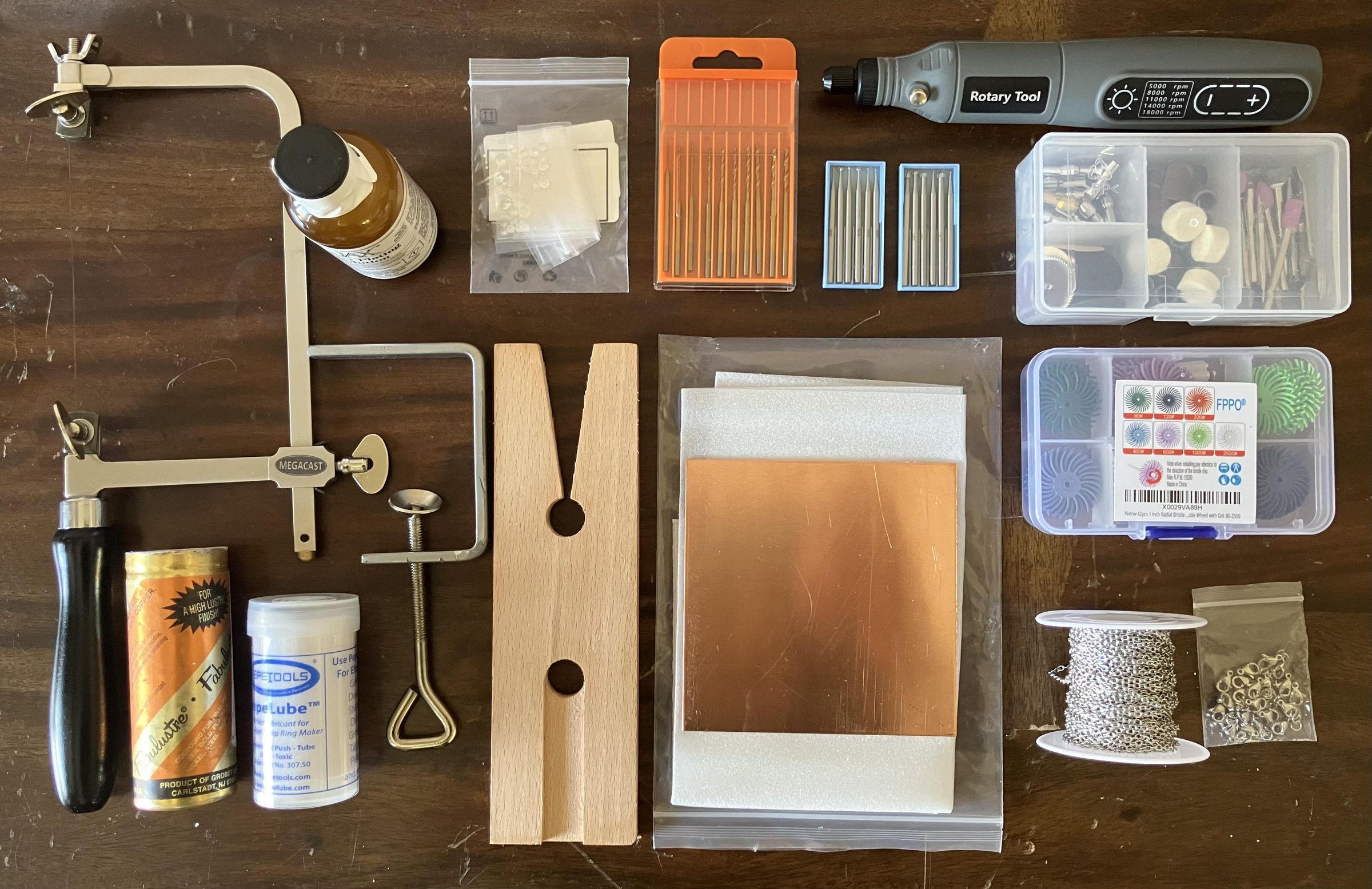
Since this is supposed to be a beginner-friendly project, I've opted for cheaper materials, such as copper instead of silver. Still, if you have the experience or feel comfortable, sterling silver would be best for the longevity of the piece (more about this in Step 9). We will also just be cutting the pendant from a metal sheet, so no annealing or soldering is required!
Jewelry materials:
- Copper or Brass sheet (I'm using a 2mm copper sheet, but you could probably go down to 1.2mm.)
- Chains/clasps/jump rings
- Pliers (to close the jump rings)
- Silver plating solution (optional; I use JAX which is ~$20 for a 2 ounce bottle)
- Gloves (for when using the solution; do not wear gloves when using the rotary tool as they can get caught - not in photo)
- Cotton swabs (to apply the solution to your pendant - not in photo)
Tools:
(Some of the prices listed below are on the cheaper end. More professional tools will likely cost more, but tools around these prices will definitely work!)
- Wood pin and clamp (~$15)
- Saw frame and blades (~$20)
- Cutting lubricant (~$10 for a tube)
- Rotary tool (~$15; check if it comes with anything listed below)
- Collets (~$5 for a set; check that the sizes are right for your accessories (the drill bits, burs, etc.))
- Drill bits (~$10 for a set)
- Bristle discs (~$15 for a kit)
- Diamond burs (~$10 for a set)
- Ball burs (~$20 for a set; could also use something else to make a divot for drilling holes)
- Polishing compound (~$10 for a tube; I use Fabulustre, but there are a lot of materials and methods for polishing out there)
- Buffing wheels (~$10 for a kit)
- Sticker paper (~$5 for a pack - not in photo)
- Printer (for printing the design on the sticker paper - not in photo)
Assuming you had nothing (except the printer), I would approximate it to be ~$200 for all the supplies. Pretty much everything can be used for future projects though!
NOTE: Before we move onto the instructions, I should mention that despite what it looks like in the pictures, you should be holding down the pendant with one hand when sawing, drilling, and polishing. (I'm taking a picture with the other hand so most of these photos are just me posing.)
Designing Pendant
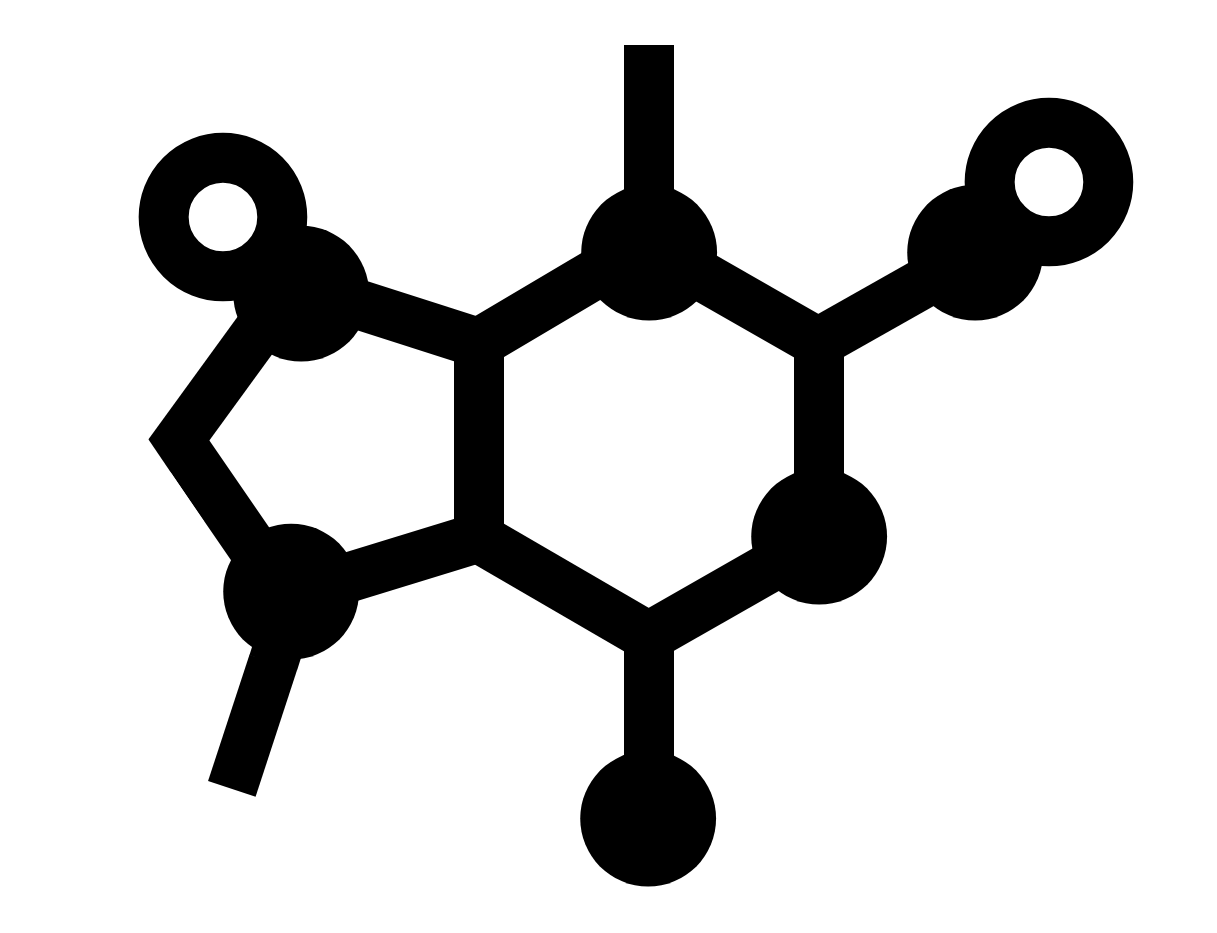
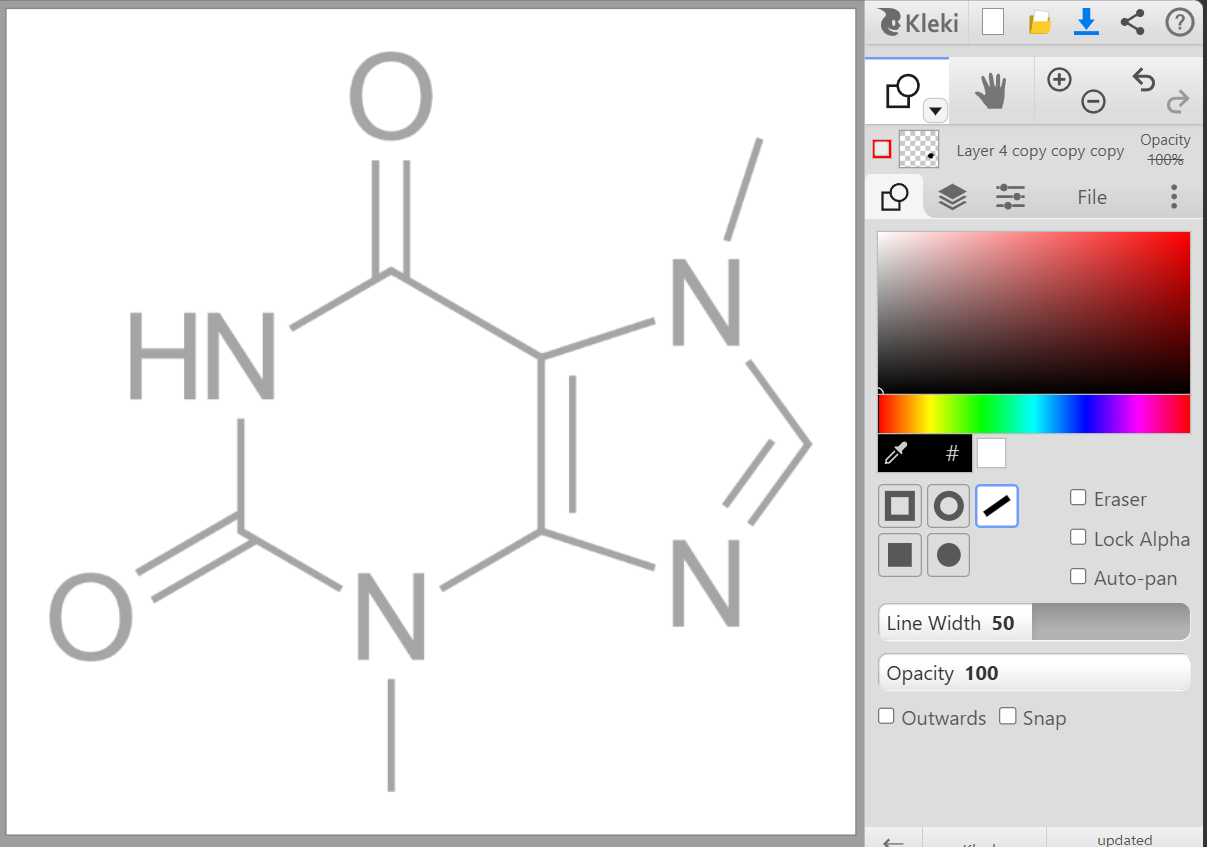


Find a picture of the chemical structure you are making and draw the shape of your pendant with it. If you want to make Theobromine, you can just download the first photo. Remember to include rings for attaching the chains to!
I made my design on Kleki (an open-source web-based painting tool), so here are some tips for anyone who wants to use it for their design:
- A line width of 50 worked fairly well for me; avoid going much thinner so that the pendant doesn't break/bend.
- When drawing circles, select Outwards (starts circle at a point - photo 7) and Fixed 1:1 (prevents it from becoming an oval - photo 7). Use Duplicate Layer (looks like two stacked rectangles with a plus on top - photo 6) and Transform (photo 5) to make all the circles the same size. The filled circle tool can be used for atoms, and the circle outline tool can be used for the rings.
- Rotate your structure to find a good place to put the rings! Rotate can be found on the same tab as Transform. You can also crop and extend your drawing using Crop/Extend, which is also on the same tab.
- To download your image, click the blue arrow at the top right of the page.
Printing


Upload the image of your structure to a doc and adjust the scaling of the image so that the pendant is the size you want. Make sure the rings are a reasonable size.
Print it onto a sheet of sticker paper. Stick your design onto a piece of your metal sheet. (Tip! When removing your design from the sticker paper, peel and cut the sticker only. The rest of the sticker paper can still be printed on as long as the backing is intact.)
Cutting
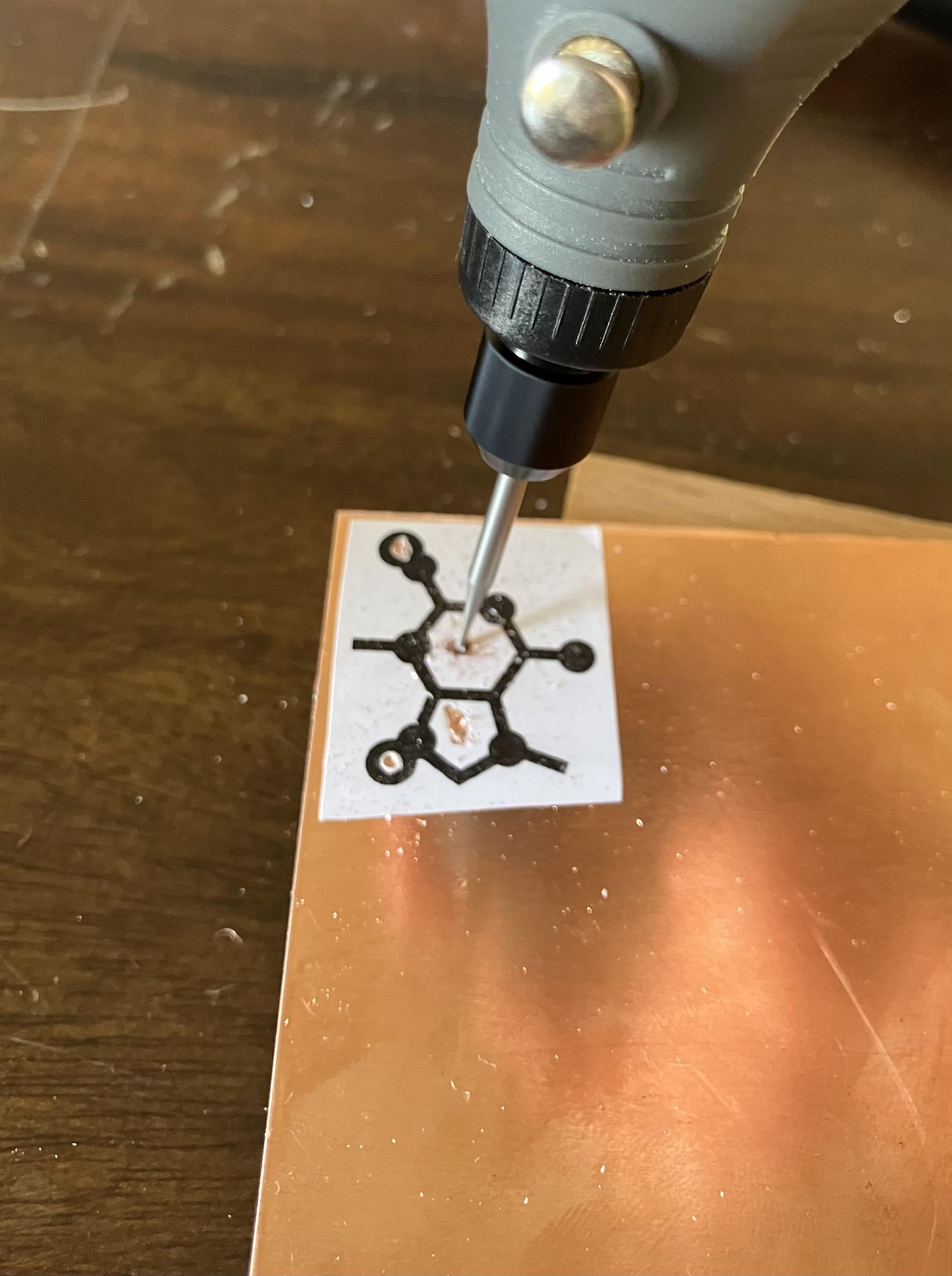


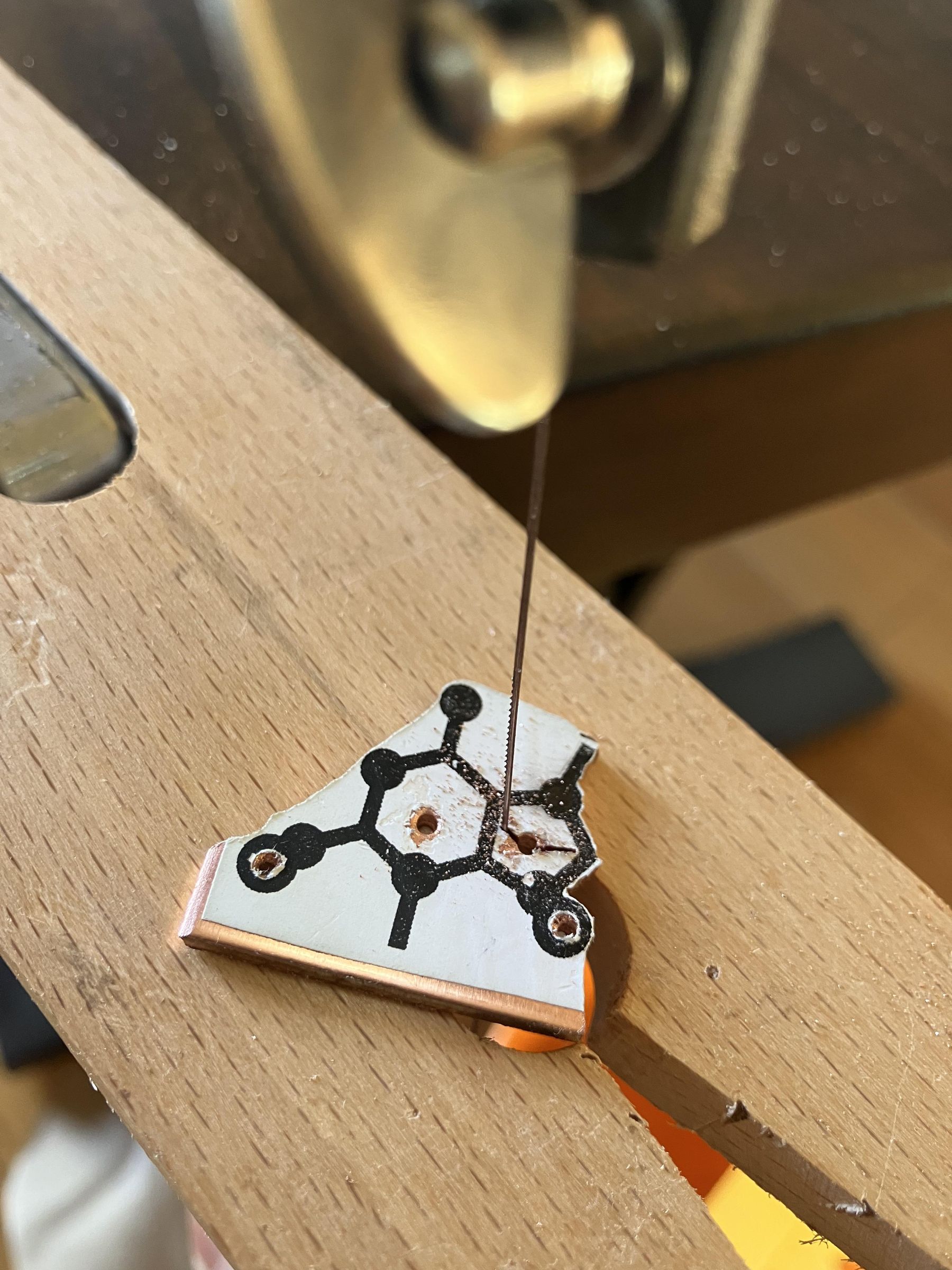
To cut enclosed shapes, such as the hexagons:
- Make a dent with a ball burr where you want to drill a hole to prevent the drill from moving around when drilling.
- After drilling, you can thread your saw blade through the hole and load it into your saw frame. (I'm using a 3/0 blade in the photo.)
- Cut out the shape with your saw.
You can directly load your blade when cutting the outside of the pendant.
(Beginners: When loading the saw blade into the saw frame make sure that the blade is facing out with the teeth pointing toward the handle. The blade is held in place using the clamps on the saw frame. Be careful; the blades are very sharp! Here is a fantastic instructable on how to use a jewelry saw.
Before cutting, don't forget to run your blade through the cutting lubricant. Also, have a cloth or tray below the wood pin to catch the metal shavings when cutting.)
This is by far the most time-consuming step, so get ready to be cutting for a few hours depending on the complexity of your chemical structure. You'll probably go through a few blades.
Removing Sticker Paper
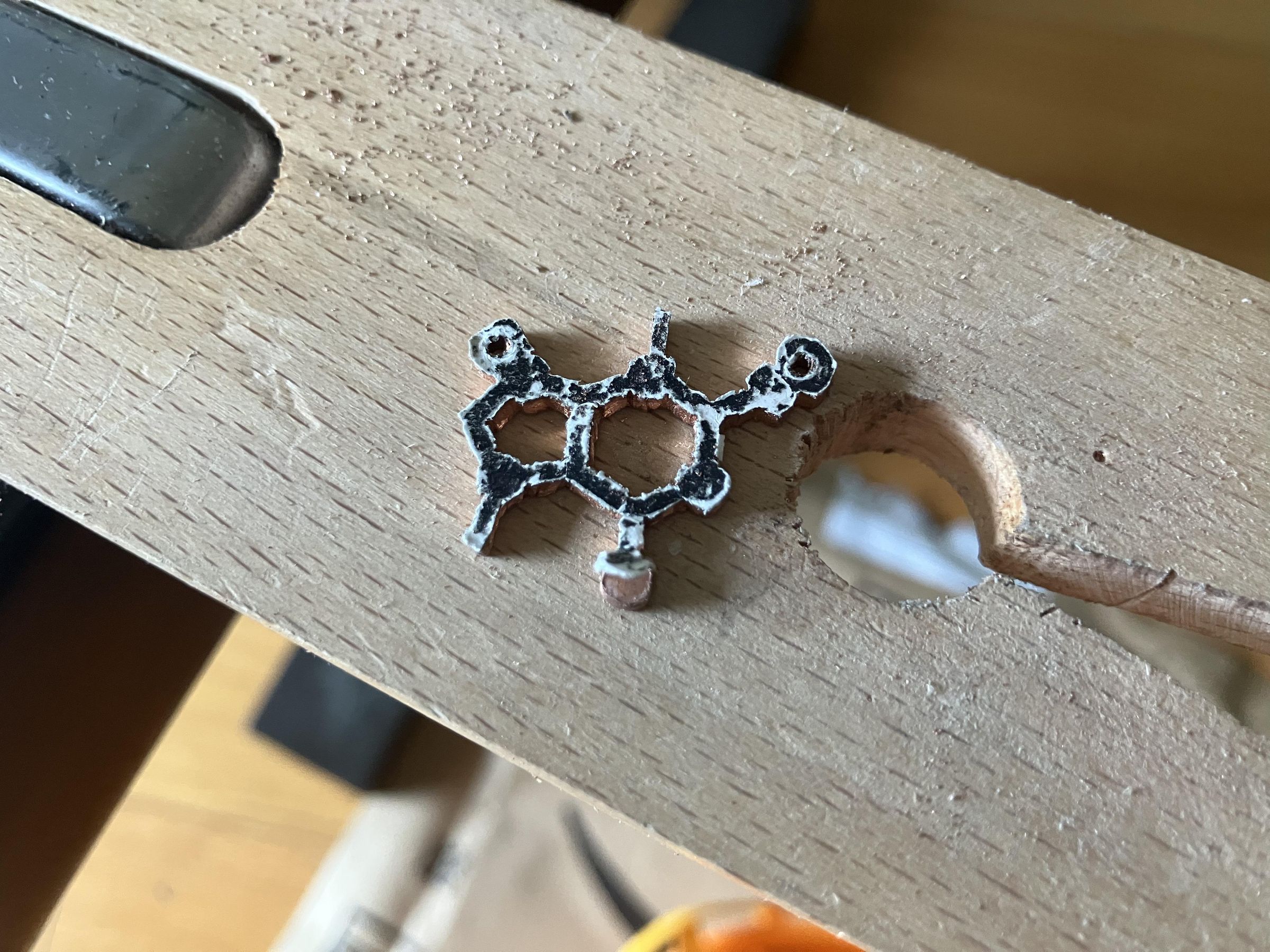

Peel off your sticker paper! If there is residue and it isn't washing off, use some acetone/alcohol to remove it.
Clean Up


Use the diamond bits to clean up any edges. There will be saw marks on the edges!
Use the bristle discs to deburr and clean up the surface of your piece. You can start with 220 grit and increment up. (I finished at 1000 grit.) Be careful to hold down your piece when doing this and make sure it doesn't bend.
Polishing
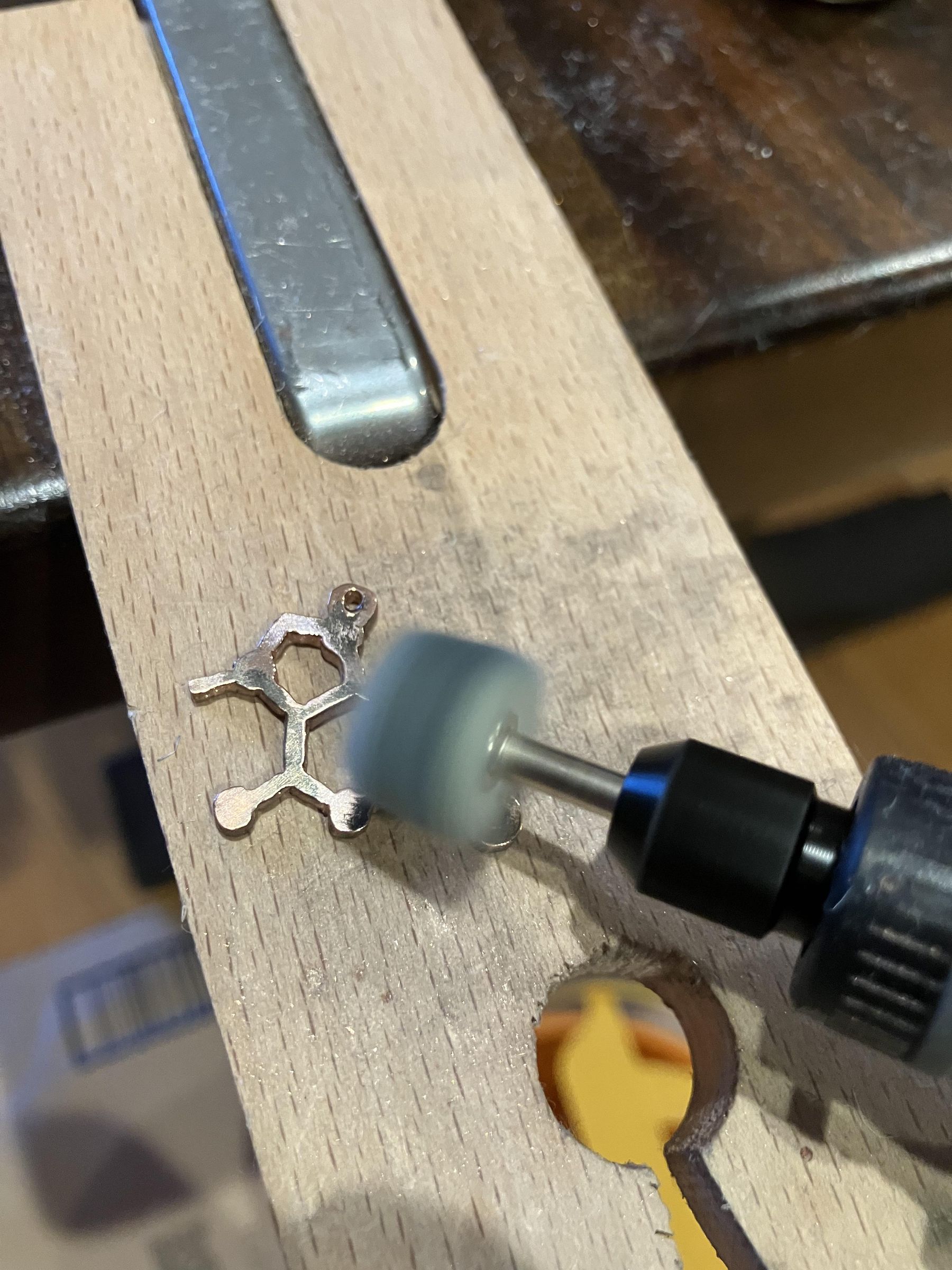

Apply some polishing compound to your buffing wheel and polish your piece. After you are done, use a toothbrush or something similar to clean your piece with hot soapy water.
(Optional) Silver Plating

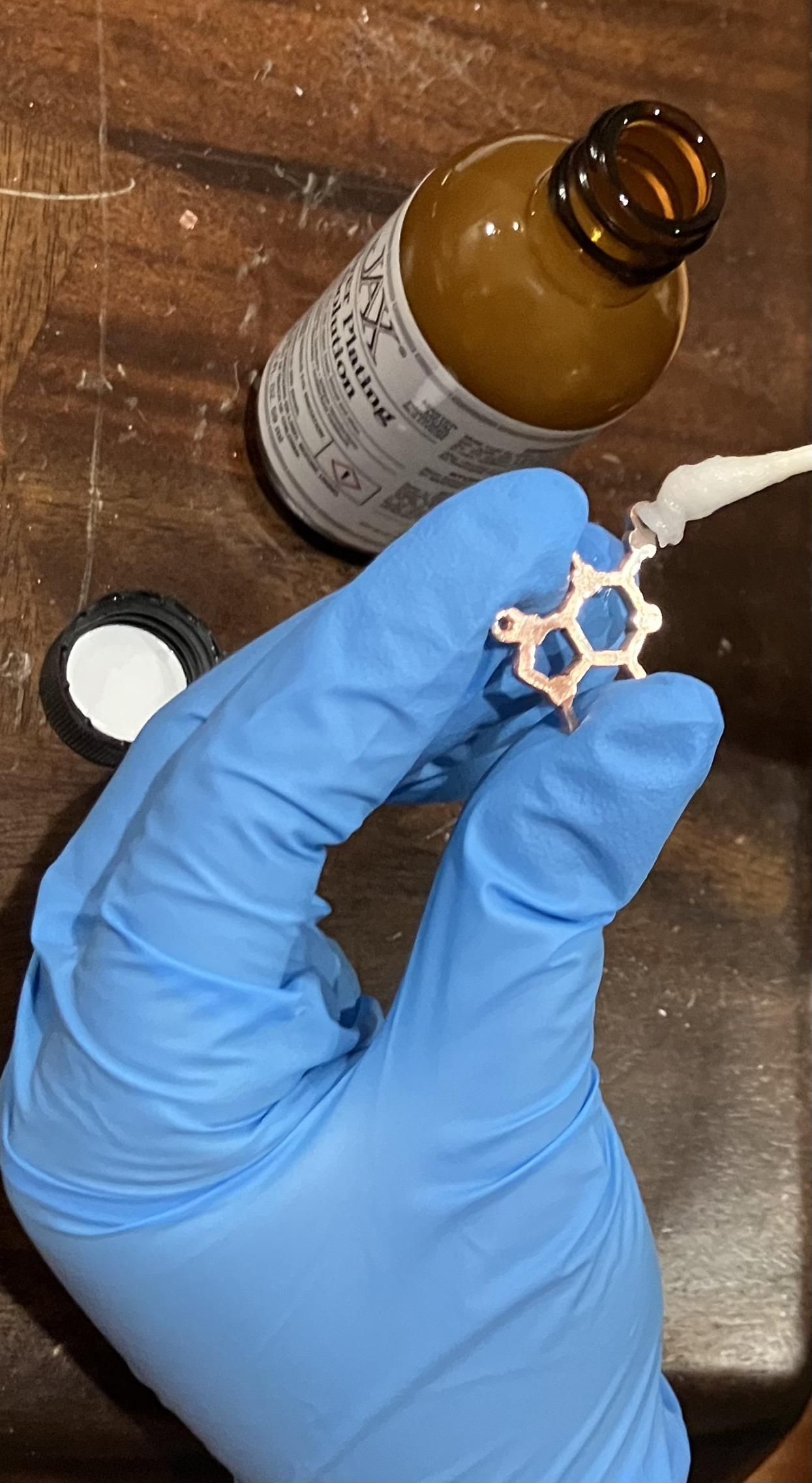


Before you start, make sure you are happy with the polishing, as you won't be able to change this afterwards (the silver will come off). You will want the surface to be as clean as possible, so at least wash it with some soap and water. (If you are moving on from polishing, this shouldn't be an issue!)
Use a cotton swab to apply the silver plating solution. I recommend trying it on a penny to make sure you are doing it correctly before applying it to your pendant. Check your bottle for instructions (since it varies by brand), but here are some tips for the JAX solution:
- Turn the bottle upside down to mix the solution before using it.
- Whether you use a swab (like I am here) or a cloth, you want to apply the solution like you are rubbing it in; don't just dab it on. Also do follow the instruction of polishing dry before trying to do another coat. I used one end of the cotton swab for applying the solution and the other for polishing dry.
- You will probably want to do several coats! The finish does get brighter the more coats you add.
- Wash the pendant off with warm water after you are done. The silver should not come off easily.
Don't worry if it goes wrong! (The third and fourth photos are what happened to mine when I messed up haha.) You can replate it after cleaning and polishing it again (so just repeat steps 5 and 6.)
Adding Chains


You should measure out the length of chain that you want around your neck before cutting it with the pliers. (Tip! If it's not cutting, usually pulling on the chain while holding it with the pliers will break the chain where its being held.) Then, attach the clasp and pendant by closing the jump rings with your pliers. Since my pendant has two rings, I split my chain into two and attached half on each side.
If you want to make this a bracelet instead of a necklace, just cut shorter chains according to the size of your wrist. You could also attach this to a key ring and chain (easily purchasable online as well!) to make a keychain.
Wearing & Notes


And that's it for your necklace! Here is a photo of the necklace packaged and ready to be gifted to my sister :D
A few notes about wearing this:
- Copper will typically stain skin and easily tarnish (think old pennies). If you would like to keep it as copper, you will need to regularly polish and/or seal it with something like Renaissance Wax or ProtectaClear. (I included a photo of what it would have looked like if I left it as copper!)
- Similarly, if you silver plate the necklace and wear it regularly, the silver plating will wear off relatively quickly and need to be replated. It can also be sealed with the same materials as above.
- Sterling silver will tarnish but can be cleaned with common household items. If you want to wear it in the long run, this would be best, but for practice copper/brass is more economical.
Hope this instructable was helpful, and good luck if you do make one! Let me know if you have questions about any of the steps.