Accessible Secure Bike Pedal for Indoor Cycling
by WSUAssistiveTech in Workshop > 3D Printing
2215 Views, 6 Favorites, 0 Comments
Accessible Secure Bike Pedal for Indoor Cycling

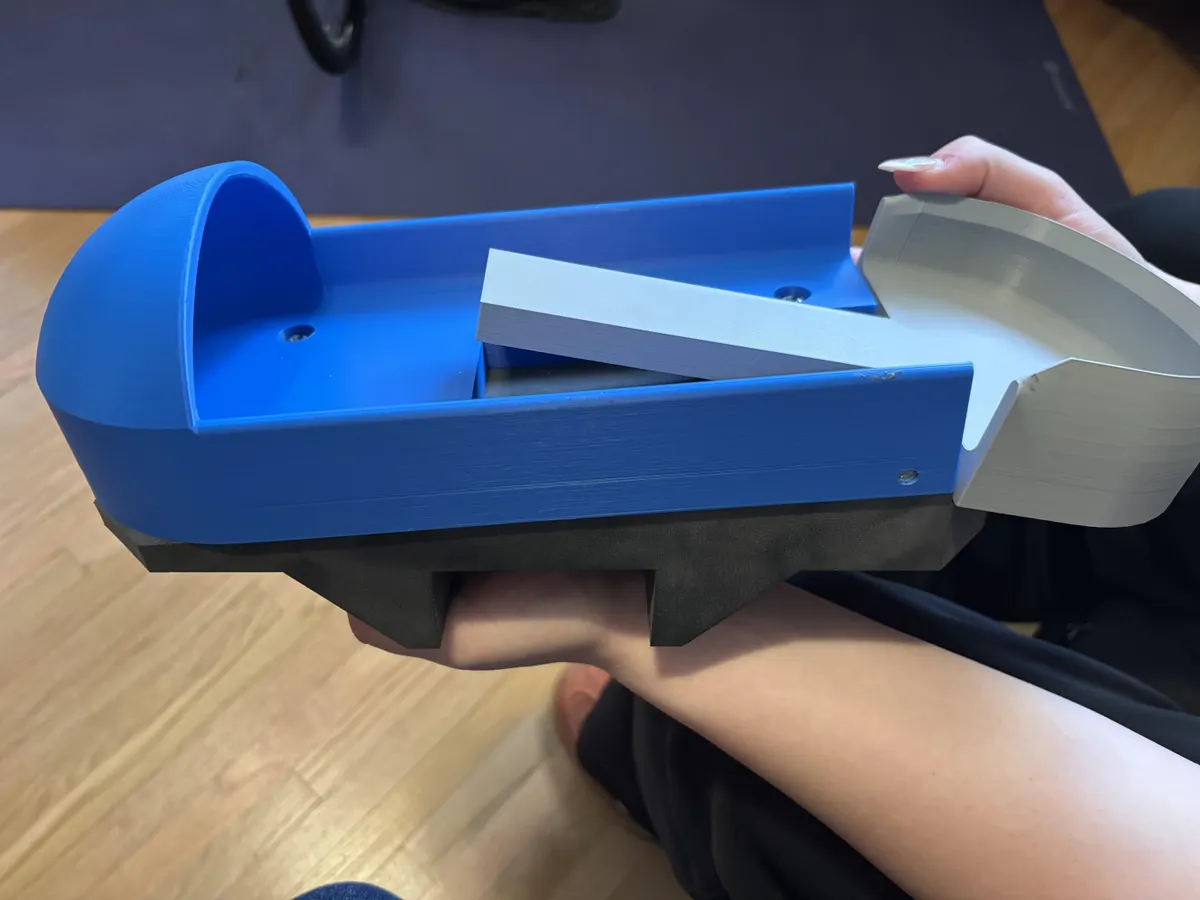
This secure bike pedal was originally created for an active cyclist. After she had a stroke, the mobility of the right side of her body was limited due to muscle spasticity, making it difficult for her to keep her right foot on her bike pedal when cycling. This Instructables will show you how to make a bike pedal that safely secures the foot when cycling while also allowing the foot to be quickly released for safety purposes.
This project is an addition to the Adaptive Bicycle for Indoor Cycling focusing specifically on the right bike pedal.
*Note: The design in this Instructables was created specifically for our client's foot size. Sizing modifications may be needed to fit your circumstances as well as adjustments to make it suitable for the left foot.
Downloads
Supplies
Materials
- PLA (3D printing material)
- ABS (3D printing material)
- 3/16" diameter 4" long aluminum rod (for hinge axel)*
- Screws - 1/4"-20x2" (for pedal assembly)
- Nuts - 1/4"
- 28" Dressing Rod**
*We bought a longer rod and cut it down to 4 inches.
**Dressing rod was added as an extra safety measure for our client, so she could use it to push her foot out of the pedal if she had a muscle spasm. It may not be needed for your specific circumstances.
Tools
- Computer
- 3D Printer
- 3D Modeling Software compatible with your printer
- Pliers (for removing supports from 3D printed parts)
Meeting With Client/physical Therapist

We initially met with our client and her physical therapist to learn more about her mobility limitations and any previous modifications that were made to her bike. Our client's foot tends to fall forwards or sideways when she puts it on the pedal. To secure her foot to the pedal, they were using Velcro straps, but our client could not fasten them without her PT's help. Furthermore, the straps did not allow her to remove her foot from the pedal while cycling. This was a safety concern because our client sometimes gets muscle spasms in her right foot which need to be relieved by taking her foot off the bike and standing on it. The physical therapist's temporary solution was to hold our client's foot to the pedal with her hands as she cycled, but this was not very secure or convenient. Taking all of this into consideration, we needed to make a pedal that could secure her foot, allow for a quick release, and be used independently.
Getting Shoe Measurements
Measurements need to be taken before designing the securing pedal. The measurements should be made based on the shoes the cyclist will be wearing when cycling. If the person cycling has multiple shoes they like to wear, take the measurements of the bulkiest ones.
Measurements we took of our client's shoe (Women's size 9):
- Width (from widest part of the shoe)
- Length (from back of the heel to the furthest tip of the toe)
- Width of the toe box
- Height of the toe box
Create the Base for the Pedal

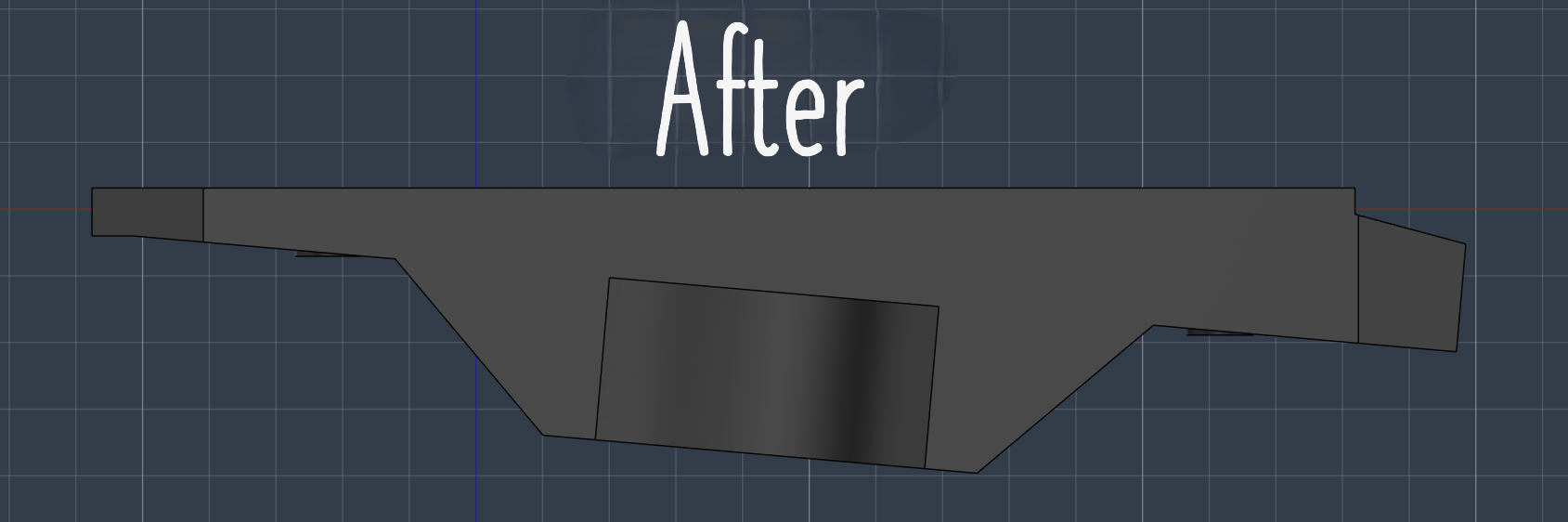
Before creating the foot-securing pedal, a base pedal needs to be made. This base pedal will attach to the original pedal of the bike, and the foot-securing pedal will be separately attached to this base.
The design of our base pedal is based on a previous design by WSU graduate Oscar Martinez. Using his original design, we made some modifications to allow the secure pedal to be attached seamlessly.
The modified file for the base pedal can be downloaded and adjusted for your specific bike.
Here is the file for the base pedal:
Downloads
Designing the Secure Pedal in Fusion
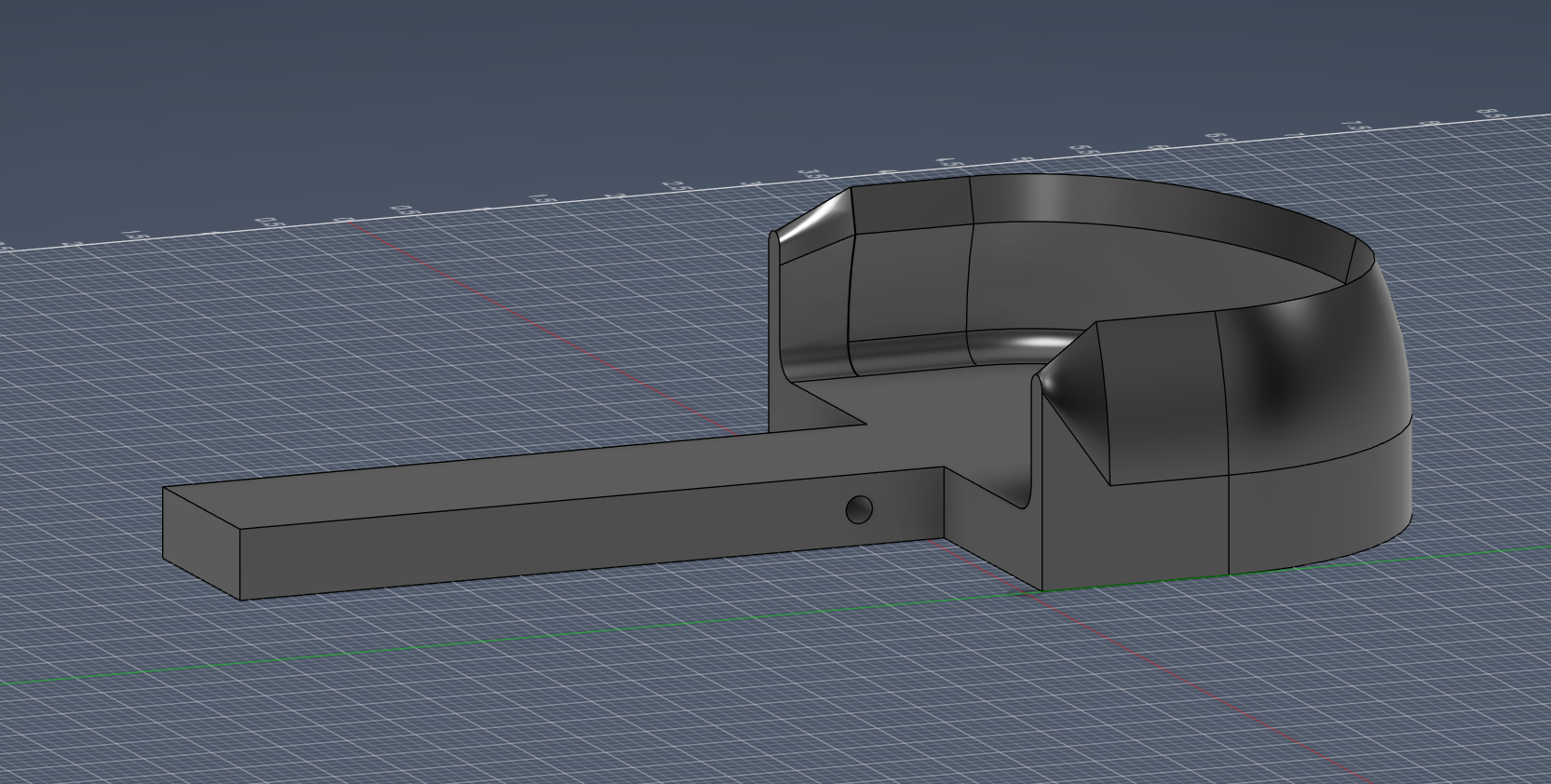
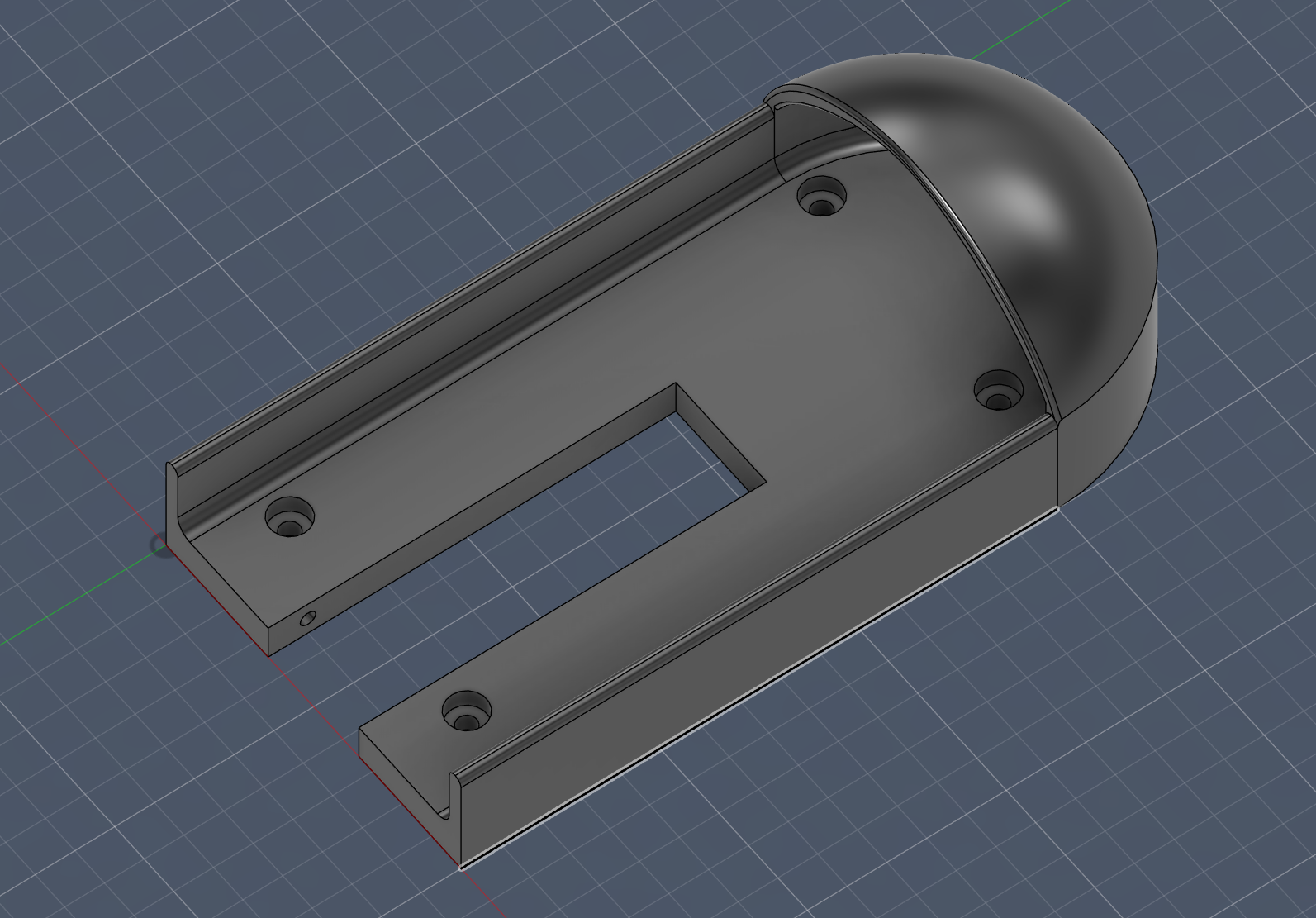

The foot-securing pedal design was created in the 3D modeling software Fusion, but other software can also be used. Using the measurements of our client's shoe we designed a pedal that accommodates the dimensions of her foot but is not an exact fit. The design has three parts: the base (from the previous step), the front, and the back.
The front of the pedal was designed with walls on either side to keep our client's foot from slipping off when her ankle rolls outwards. A toe box was also added to keep her foot from falling forward with a dome shape that provides a comfortable amount of space. We made the toe box about 1.5 inches taller than her foot to allow for clearance for her foot with different shoes. The back of the pedal was designed to clasp the heel of the shoe to help keep her foot planted while cycling.
Since our client can exert the most strength in her foot through her heel, the security of our design revolves around this strength. When the pedal is fully assembled, the longer piece of the back acts as a lever that lifts the heel into place when our client pushes down with her heel.
The file with the design for our client is attached and can be downloaded to make adjustments specific to your needs. Adjustments may include adding or removing length, width, and/or height of the toe box.
The foot-securing pedal design was created in the 3D modeling software Fusion, but other software can also be used. Using the measurements of our client's shoe we designed a pedal that accommodates the dimensions of her foot but is not an exact fit. The design has three parts: the base (from the previous step), the front, and the back.
The front of the pedal was designed with walls on either side to keep our client's foot from slipping off when her ankle rolls outwards. A toe box was also added to keep her foot from falling forward with a dome shape that provides a comfortable amount of space. We made the toe box about 1.5 inches taller than her foot to allow for clearance for her foot with different shoes. The back of the pedal was designed to clasp the heel of the shoe to help keep her foot planted while cycling.
Since our client can exert the most strength in her foot through her heel, the security of our design revolves around this strength. When the pedal is fully assembled, the longer piece of the back acts as a lever that lifts the heel into place when our client pushes down with her heel.
The file with the design for our client is attached and can be downloaded to make adjustments specific to your needs. Adjustments may include adding or removing length, width, and/or height of the toe box.
You can download the files for the back and front of the pedal here:
3D Printing
Our pedal was printed using PLA and ABS filament. To print:
- Load the files into your 3D printing software.
- Add supports in the settings to keep the floating and overhanging parts from collapsing during the printing process.
- Align the model to make sure it sits within the bounds of the printer.
- Slice the plate and print.
- The pedal base was printed with ABS, whilst the heel hinge and toebox parts were PLA
Printing took about 10 hours but may differ with adjustments made to the design.
After the parts are printed, use pliers to carefully remove the supports.
Assembling the Full Pedal
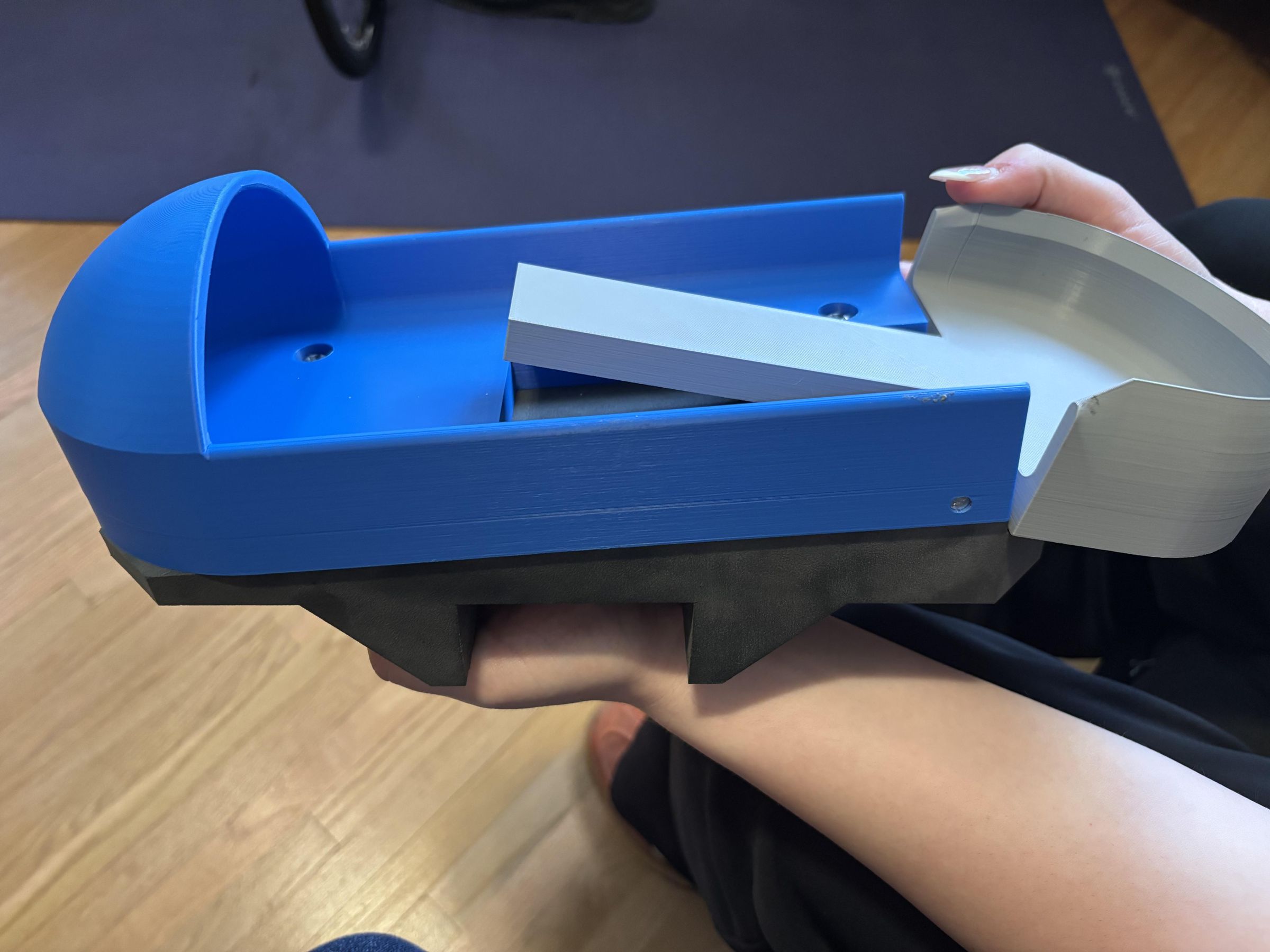
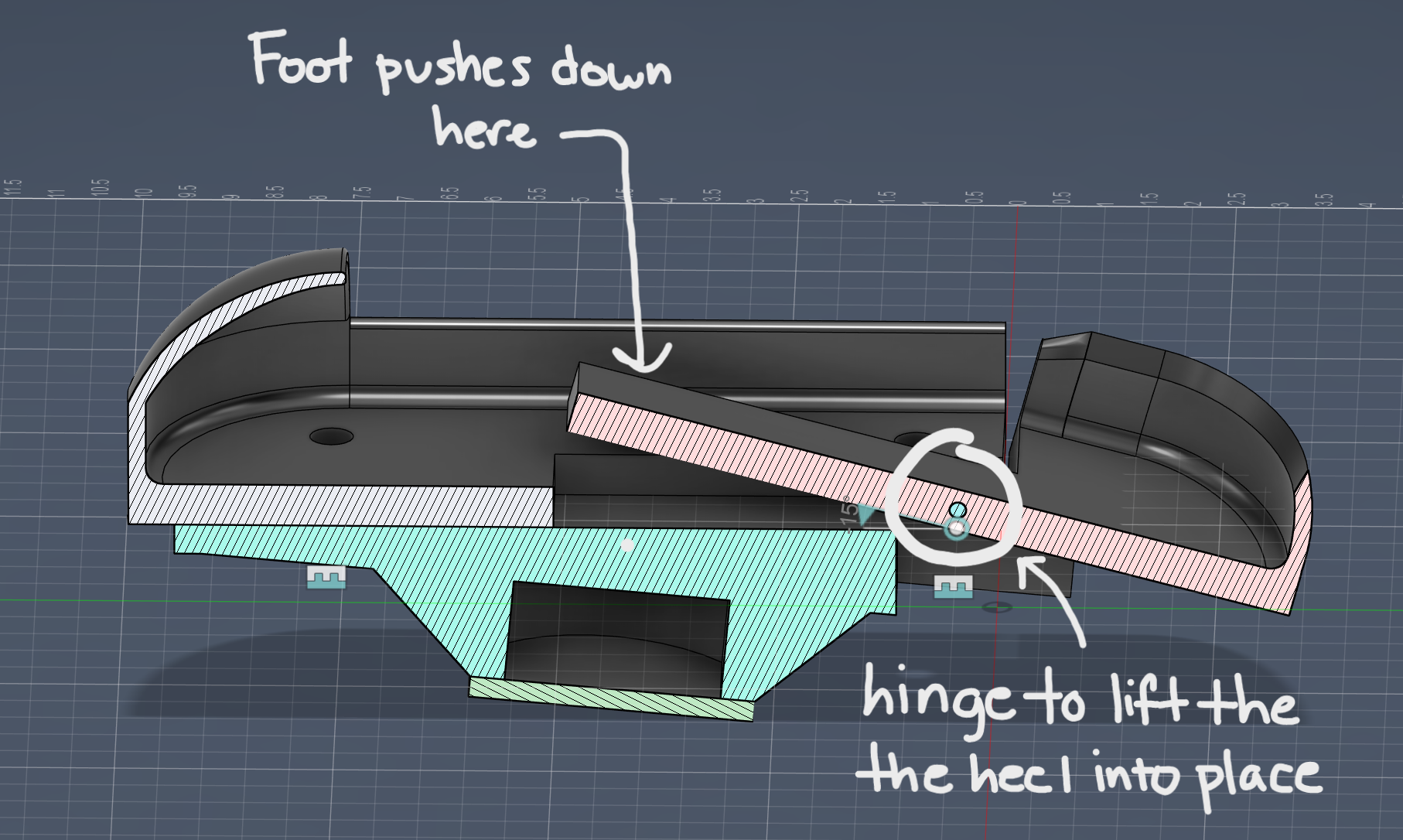
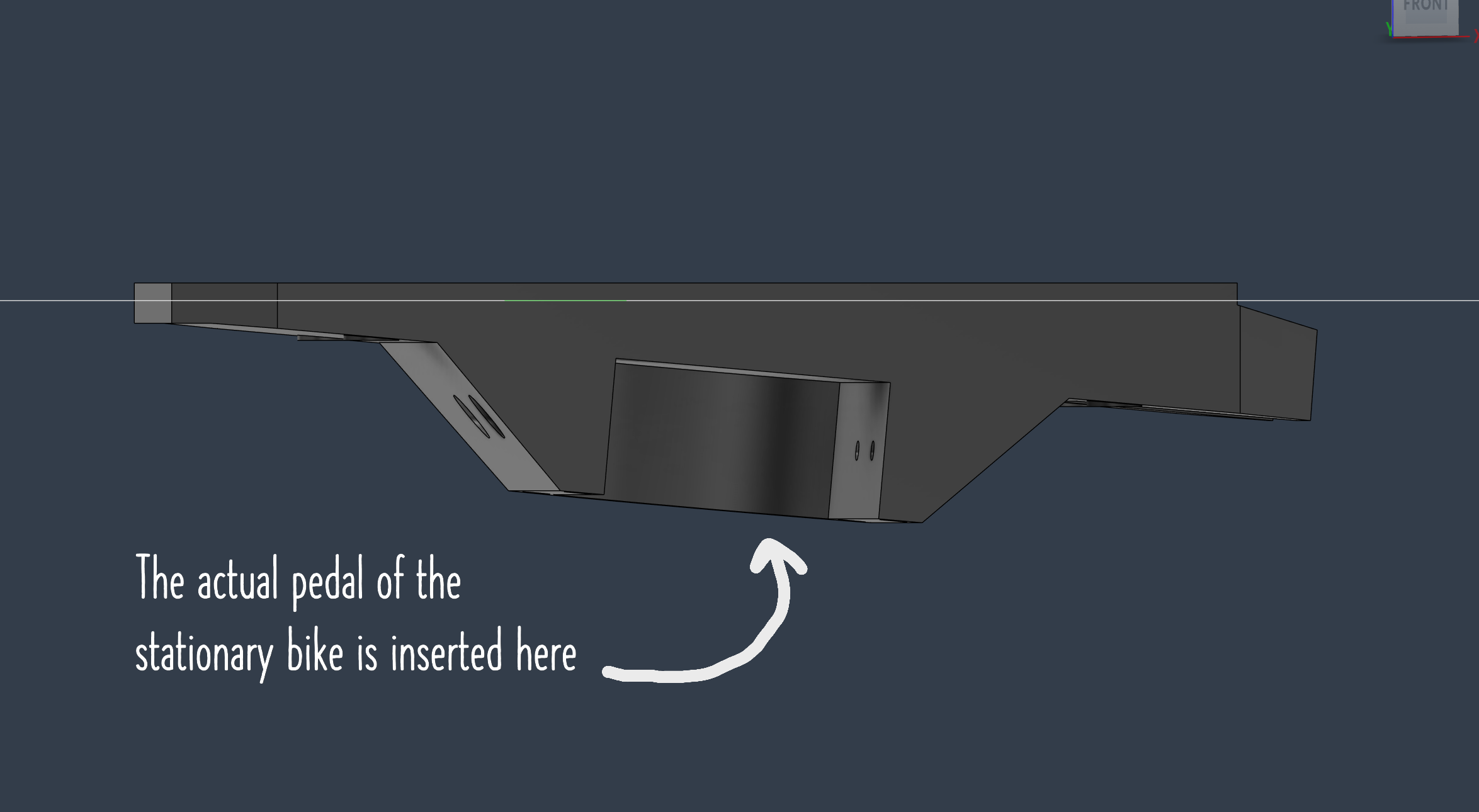

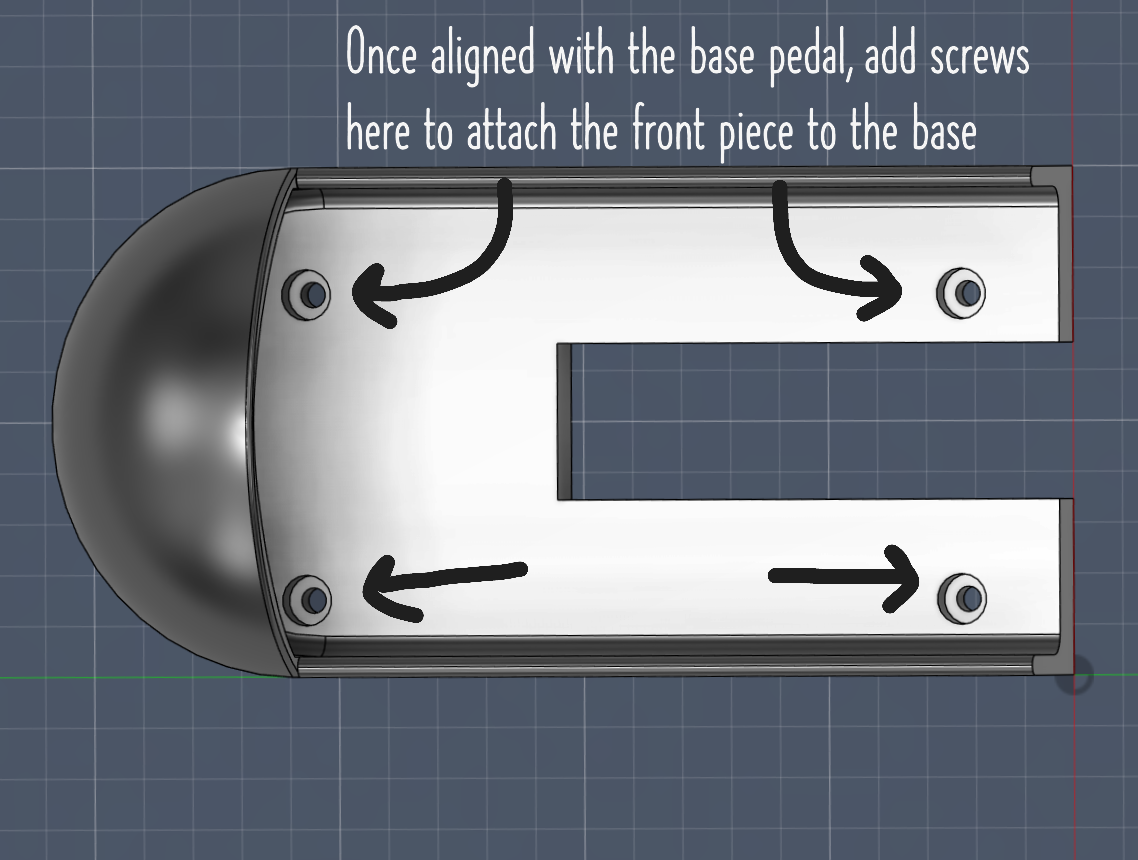
After printing all the parts, everything can be assembled.
Attaching the back to the front:
- On the front piece, find the two holes on the sides (they are aligned with each other).
- Find the hole going through the lever of the back piece and align the hole in the back piece between the two holes in the front piece.
- The 4" aluminum rod can then be stuck through the holes to attach the two pieces. This acts as the hinge axel that allows the pedal to open and close.
Attaching the secure pedal to the base:
- Find the four holes in the bottom of the secure pedal and align it with the four holes in the base pedal.
- Use screws to attach the two parts.
Attaching the Full Pedal to the Bike

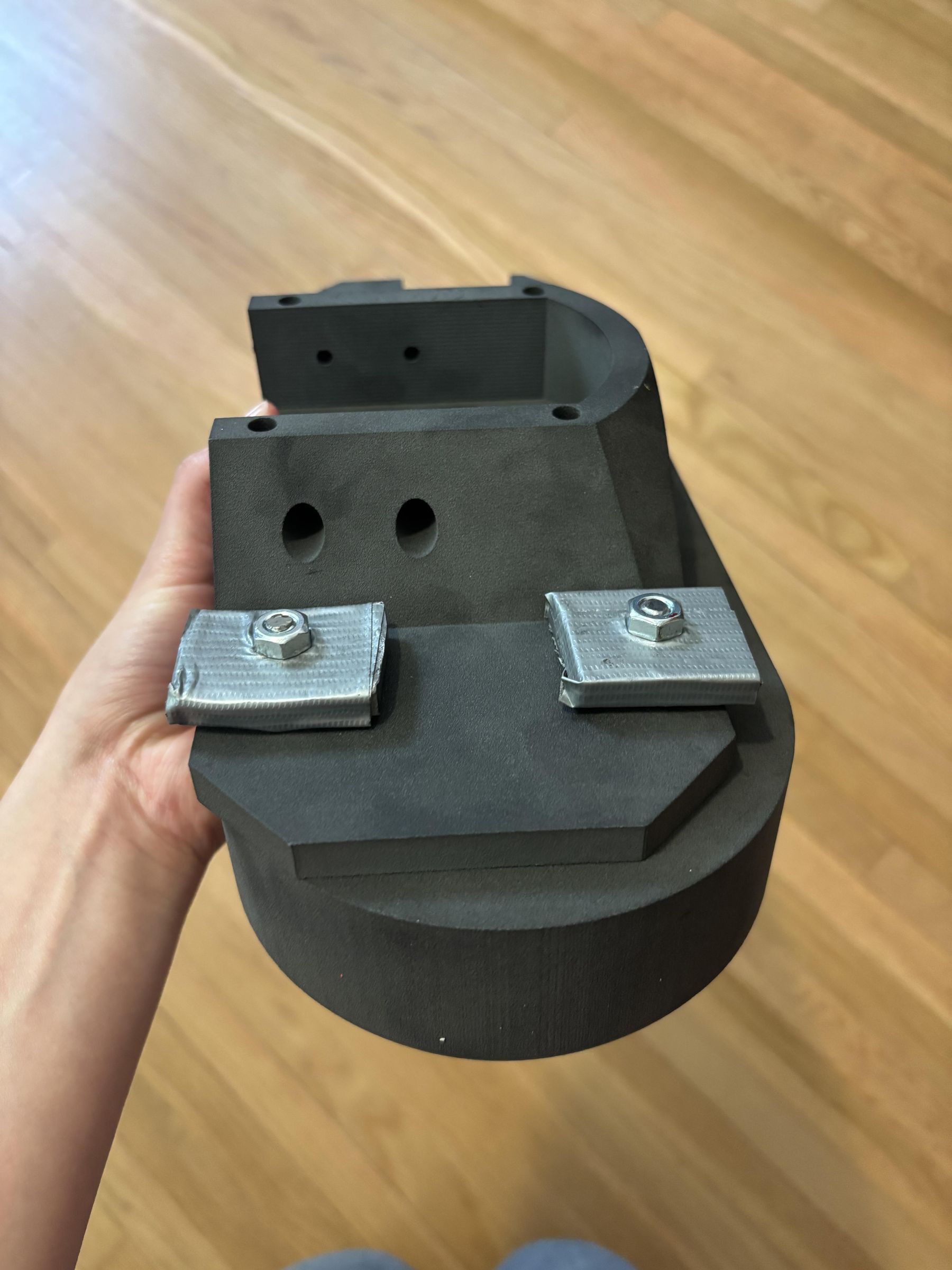


At the bottom of the base, find cut-out gap. Slide the original bike pedal into this gap. Once the original bike pedal is connected to the secure pedal, find the two holes facing the front and two holes facing the back on the bottom of the base. Using screws and nuts for each hole to fasten the base to the original pedal.
[OPTIONAL] Pedal Stop
The pedal stop was designed to address a specific accessibility need for our client and was not intended to be a universally necessary feature for all users recreating this design. A previous design team had created a locking mechanism that could be engaged to hold the pedal securely at the lowest point of its rotation, approximately 270 degrees, and disengaged to allow the pedal to rotate freely during cycling. While this system successfully stabilized the pedal, the lowest pedal position still required our client to bend and maneuver her foot in a way that prevented her from independently inserting her foot into the pedal.
To solve this issue, we designed an additional pedal stop attachment that mounts directly onto the existing locking mechanism. When engaged, the stop securely holds the pedal at a higher angle rather than at the bottom of the rotation. This elevated position allows our client to more easily slide her foot into the pedal independently before beginning to cycle. When disengaged, the stop moves completely out of the pedal’s range of motion so it does not interfere with normal pedaling.
An important consideration during this process was balancing the pedal assembly. Holding the pedal at a higher angle changed the center of gravity of the system, which made the pedal unstable in the raised position. To correct this, weight plates were added to the bottom of the pedal assembly to lower the center of gravity and ensure the pedal remained balanced while the stop was engaged. This balancing process was critical to maintaining both the functionality of the pedal stop and the ease of use for the client.
You can download the file for the pedal stop attachment here:
Downloads
[OPTIONAL] Dressing Stick Holder


This step is not necessary for the function of the secure pedal but can be used as an extra safety measure.
Our client uses two wooden blocks beside her bike to mount it, so we attached a holder for a dressing stick to the left block. This acts an extra precaution, so if she has a muscle spasm, she can grab the dressing stick on her left and use it to push on the pedal and lift her foot our more easily.
Dressing stick holder file:
Downloads
Delivery
The foot shape of the bike pedal was able to effectively conform to the customer's foot allowing her to pedal the bike without any physical therapist assistance. With the pedal, the customer was satisfied with how the ankle indent of the pedal held the heel of her shoe. Additionally, she believed the sizing of the toe box allowed her enough room for comfortably without sacrificing any security.
While the design was able to secure the customers foot throughout biking exercises, there were issues during attempts to mount the bike. The intention of the design was for it to sit level with an existing box so the customer could slide their foot over and into the pedal. The customer has little fidelity in the motion of her foot, to place her foot exactly on the pedal is very difficult, thus a sliding motion onto a fixed pedal is more appealing. To do this, the pedal was weighted and balanced such that it would always naturally pivot to be right side up. However, due to the nature of the design most of the mass is above the pivot point of the pedal making it difficult to balance. With the completed pedal model, it was possible to balance it such that it always rotates to the desired right side up orientation, but this correcting moment was very weak.
For future iterations, most of the design work should focus on the mounting and um-mounting of the bike. The customer was satisfied with the fit of the pedal but still had difficulties getting her foot into the pedal without the assistance of the physical therapist. This hearkens back to the balancing issue, as the general instability of the pedal was too much. To remedy this, the design needs to have less mass above the pivot point of the pedal. This could be done moving the pedal mounting spot further up into the floor of where the customer would place her foot. Another potential solution could be the development of a more robust counterbalancing system that would allow variations of weight on the aft side of the pedal.