Appleridge Library and Community Center
by meloendypeiope in Design > Architecture
22 Views, 0 Favorites, 0 Comments
Appleridge Library and Community Center


The initial inspiration for this project was a mock congress bill I wrote on pre-disaster mitigation funding in a history class back in 2023. While many years have passed since I wrote it, it was then that I originally had read and learned about the 2022 Jackson, Mississippi water crisis. Here, I'm revisiting a place in Jackson and trying to create a public space that could have helped following the area during water crisis and would benefit the community in general.
Supplies
Tinkercad
- I used Tinkercad at the start visualize the general shape and placement of the buildings on the selected site.
AutoCAD
- I used AutoCAD for creating the floor plans of the library and community center.
Paper/pencils/ruler
- I also did some drafting on paper, especially at the start, to quickly explore ideas about the layout and design.
Jackson, Mississippi, Water Crisis
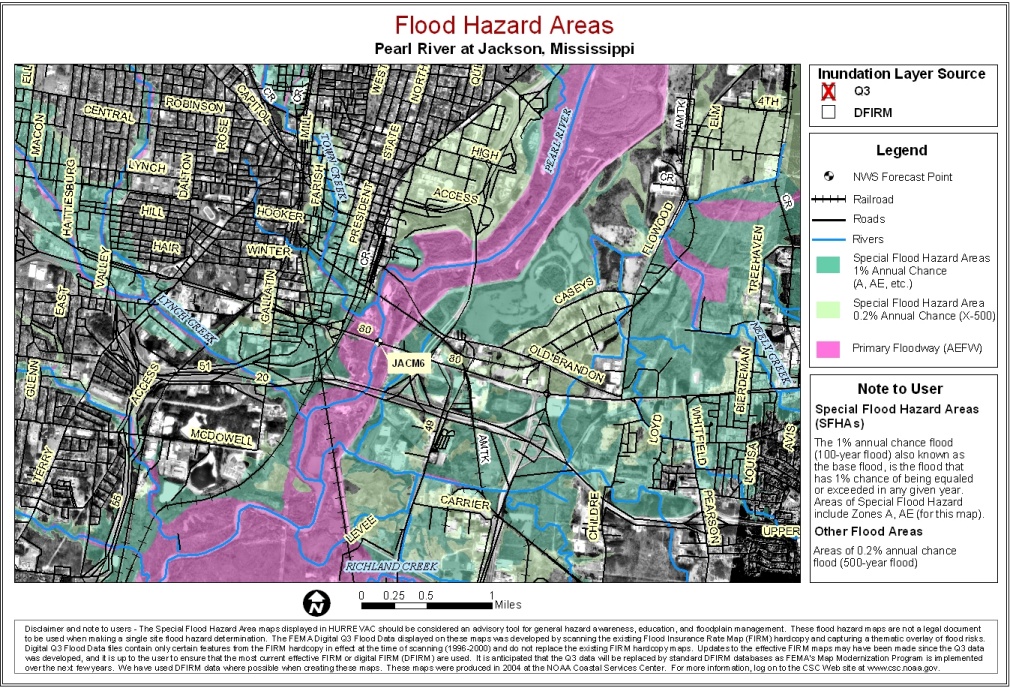
In August 2022, the Pearl River flooded due to heavy storms and rain, causing the O.B. Curtis Water Treatment Plant, the city's primary water treatment facility, to fail. Over 150,000 residents were left without water for multiple weeks. During this period, water was distributed at malls, parks, schools, and community centers.
Jackson's water treatment systems had been problems for years before the crisis, however, and even now residents face regular water boil notices. Indeed, Jackson had failed to meet the Safe Drinking Water Act's standards during EPA's inspection in 2012. The city has also historically faced millions in damages due to flooding, impacting homes and businesses, as well as outages during storms.
For my project I decided to create a library, community center, and park. This location could have served to be a site for water distribution during the crisis as well as a source of information about the situation and any sort of precautionary measures residents should have been taking (such as how to properly boil water before usage or ways to protect homes and businesses against flooding). In addition, the large meeting and event rooms in libraries and could be converted into emergency shelters for people who lost their homes. Finally, libraries, community centers, and parks are all public places that invite people to gather together, fostering community while also providing services, like education and counseling, for people to recover and regain a sense of home.
Appleridge Shopping Center

The sites rejected before Appleridge were usually rejected because of their size (too small to hold a library, community center, and park) and/or location (too close to another library/park/community center; on the outskirts of the city, where it would not be able to support many people).
Appleridge (the neighborhood):
Appleridge has a population of 1,781 and a population density of 5,778 / mi², which is significantly higher than that of Jackson overall (1,496 / mi²). The neighborhood has a lower average per capita income than 97.3% of all U.S. neighborhoods and has been seeing a decrease in income, unlike most of its neighboring neighborhoods. Appleridge also faces the problem of children living in poverty at a percentage of 67.6%, which is greater than found in 98.3% of all neighborhoods in the U.S. Sitting below Lynch Creek, the neighborhood is relatively close to flood hazard areas, while also not being at risk of flooding, making it an ideal site for a center to provide aid during floods. At the same time, it is not the immune to the effects of storms and flooding, such as the water crisis.
Appleridge Shopping Center (the site):
The Appleridge Shopping Center was a shopping center that was finally taken down in 2021 after over a decade of siting abandoned. Residents had called for its demolition for ages, calling it an eyesore and magnet for crime. Today, the 14-acre plot of land is still empty.
This site was ideal to me because it was not only large enough to fit the community center, library, and park I wanted to create, but also because it had a need for these facilities as well. The closest library to the site, the Nursing Allied Health Center Library, is a 5-minute drive northwest, with no libraries further south to serve the Appleridge neighborhood and neighborhoods around and south of it (Woodville, Alta Woods, and Englewood just to name a few). The Richard Wright Library, which was a 2-minute drive east from the shopping center, had been closed a few years ago without a replacement. The closest community center is the Skyes Park Community Center (which provided water during the Jackson water crisis!), which is 5-minutes south of the Appleridge Shopping Center. The closest parks (Flowers Park, Alta Woods Park, and Woods Park) are all 5-minutes away from the site as well. Finally, the site is right next to several churches, already making it near the center of a community, and is in the middle of a residential area.
Having volunteered as a teacher at my local community center's preschool, I decided to add a preschool/daycare to my community center after noting how there was a daycare program that had closed near the site a few years ago. The closest preschool and daycares were around 4-minutes away from the site, so it seemed that it could be helpful to residents if there was a closer/less out-of-the-way option to bring their kids too. The high percentage of children living in poverty in Appleridge could also benefit from the resources and events provided by the library and community center.
Initial Ideation - Tinkercad & Paper


Tracing the image from Google Earth, I was able to create a correctly scaled object of the site. Tinkercad was helpful for quick ideation in the beginning since I was able to easily and quickly move around simple shapes and experiment with the sizes and locations of buildings. During this period, I also did some sketched of what the floor plan of the builds would look like.
Although I originally had placed the buildings at the northern end of the site, I ended up moving the buildings to the southern end because while the original placement allowed for a larger park, parking space was insufficient and felt awkwardly shaped. In addition, I didn't want the library (the largest building) to be surrounded on two sides by fences, as it was preferable for visitors studying or browsing at the library to be able see the openness of the park and parking when looking outside rather than a closed off fence.
Floor Plan - Tinkercad & Paper


At this point in the project, I had the opportunity to talk to several librarians both in person and through email. I am very thankful for all the help they gave me by providing be information about the layout and non-public rooms of libraries (as well as about the super cool machine that sorts returned books!). I also visited a few libraries in the area to get a feel for how their spaces were connected and how they took advantage of natural lighting.
The floorplan (scaled 10ft per side of grid) includes:
Library
- Staff Rooms: Includes a work area, reserves, service desk area, staff restroom, staff lounge, storage space, and electrical room. As indicated in the Tinkercad model, there is a properly dimensioned truck parking space outside of the northern side of the library, where shipments could be brought in from the door near the storage space. Openings for book returns would be on the wall labeled check in.
- Teen & study spaces: Tucked into the northwest corner of the library, it avoids the noise from the maker space and family & children's area, allowing for quiet study. It is also next to the adults seating and computers for easy access to higher level books and technology.
- Program rooms: The highschool and elementary school program rooms are both situated close to their respective areas of the library (teen and family & children). The library program room and community room are in the southeast corner of the library, somewhat closer to the family & children's area. All rooms also have storage spaces.
- Restrooms & Janitors: The restrooms (including the family restroom) are located roughly at the center of the library in order to provide easier access to the entire library. The janitor's closet it next to the restrooms for ease of cleaning and also due the central location.
- Family & Children's area: In the southwest corner of the library; closer to the community center preschool/daycare. The children's service desk can double as a general service desk for those entering from the secondary entrance from the courtyard on the community center side.
- Maker space & market space: Foster creativity and provides resources and tools to the community. Alongside the program rooms, could hold workshops and events, bringing the community together.
Community Center
- Event hall: A rentable event hall with a kitchen and storage, large enough to accommodate hundreds of guests. Could double as an emergency shelter. The trees outside in front of it create a sense of privacy, while slide doors open on the side facing the courtyard for entry.
- Community center: Facing the southern end, there are entrances from the parking lot to the courtyard. The staff area includes a service desk with a staff lounge and work area. Facing into the courtyard and tucked next to the staff area for privacy, the counseling rooms provide a view of the large tree in the courtyard while not being in a high traffic area, creating a space that feels safe and away from prying eyes. There is a meeting room which can be rented or used to host classes, workshops, etc. There is also a restroom, and the furniture in the main area invites visitors to sit (ex. parents waiting to pick up students from preschool/daycare).
- Daycare: The daycare opens out to a large outdoor play area which could be furnished with various toys (foam blocks, plastic cars, play structures). The classroom itself has two doors and a removable divider (could allow for setting up surprises for the students or to split the classroom if two groups of students are using them. There is a children's restroom for the students. Finally, there is a staff room/kitchen and a storage closet.
- Courtyard: The large tree in the courtyard provides natural shade for the surrounding buildings and a pleasant view. The width and flow of the paths is meant to invite visitors feel welcomed to the courtyard, mainly through the space between the library and the event hall and the diagonal path into the courtyard which has a space for bike racks.
Other: Small trees and bushes are planted behind the buildings to provide a more pleasant view (instead of just fencing). The roof of the library would be slightly taller and be covered with solar panels to generate electricity. The roofs of the community center buildings would be green roofs. The parking lot in the south is spaced so that there is enough space for 4 rows of parking with trees in the middle (18' car, 24' lane, 18' car, 10' plants/trees, 18' car, 24' lane, 18' car). The lots would be slightly slanted so that stormwater would drain into the area of the plants and trees during rain.
Floor Plan - AutoCAD

Here is a floor plan of the library in AutoCAD. Due to time constraints, I didn't get to finish my AutoCAD and make a render, but the project was still a lot of fun and I learned a lot! I'm planning to go tour a library soon and plan to add more to my project in the future.