Battery Powered Ride-On Lawnmower Conversion - Using a Mobility Scooter & Cordless Mower
by steve-gibbs5 in Workshop > Electric Vehicles
3799 Views, 9 Favorites, 0 Comments
Battery Powered Ride-On Lawnmower Conversion - Using a Mobility Scooter & Cordless Mower






The Project:
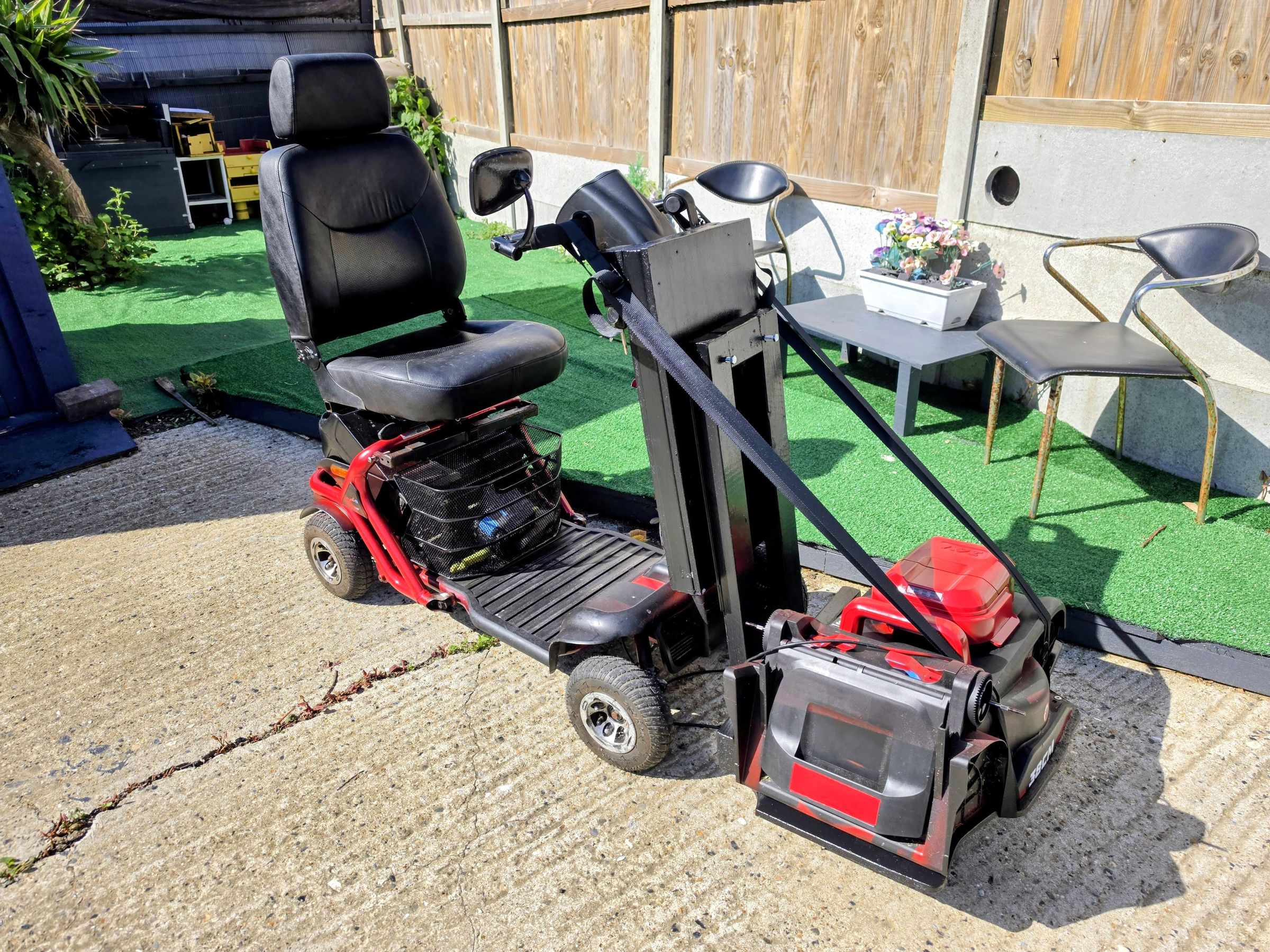
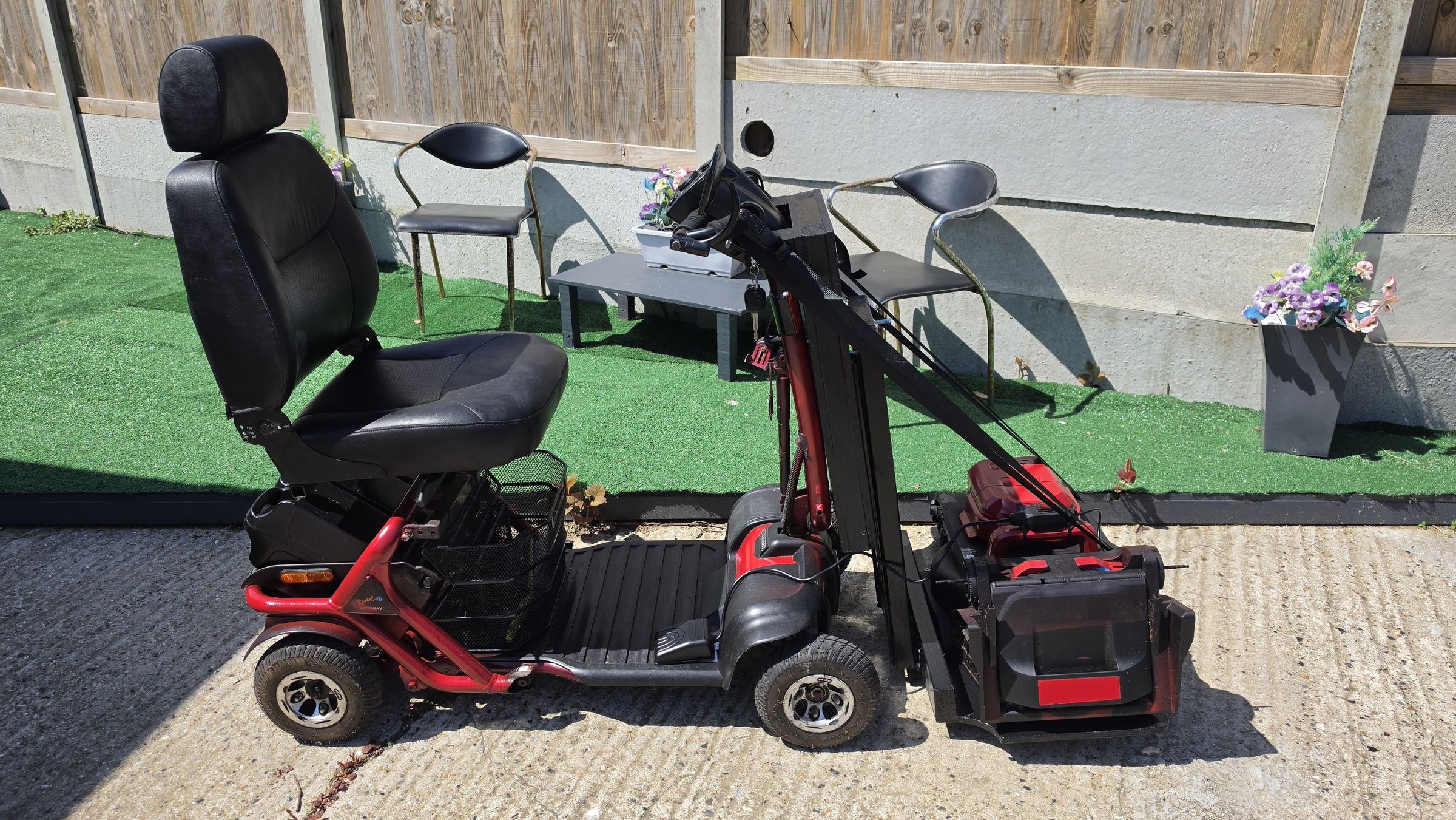
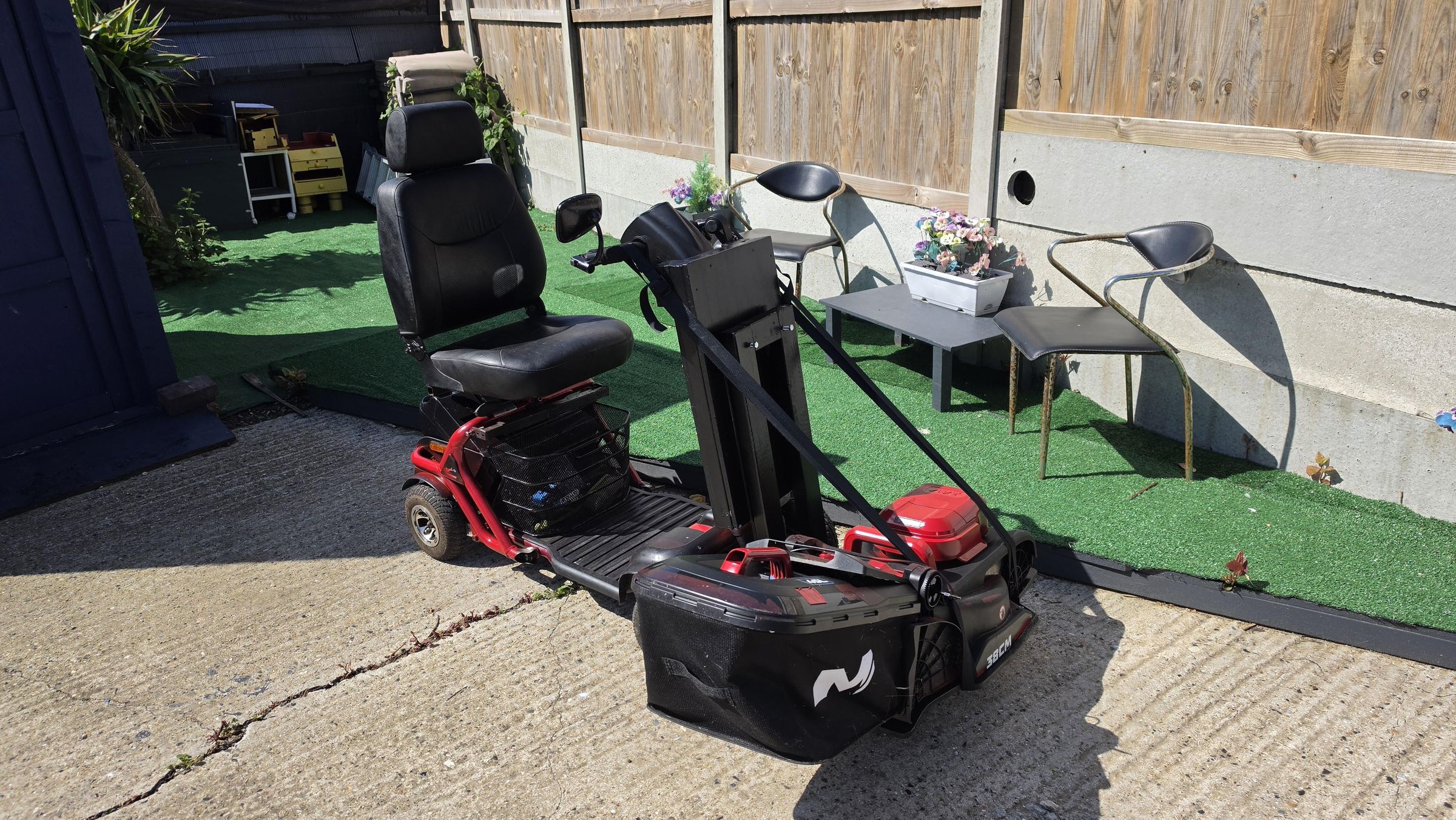
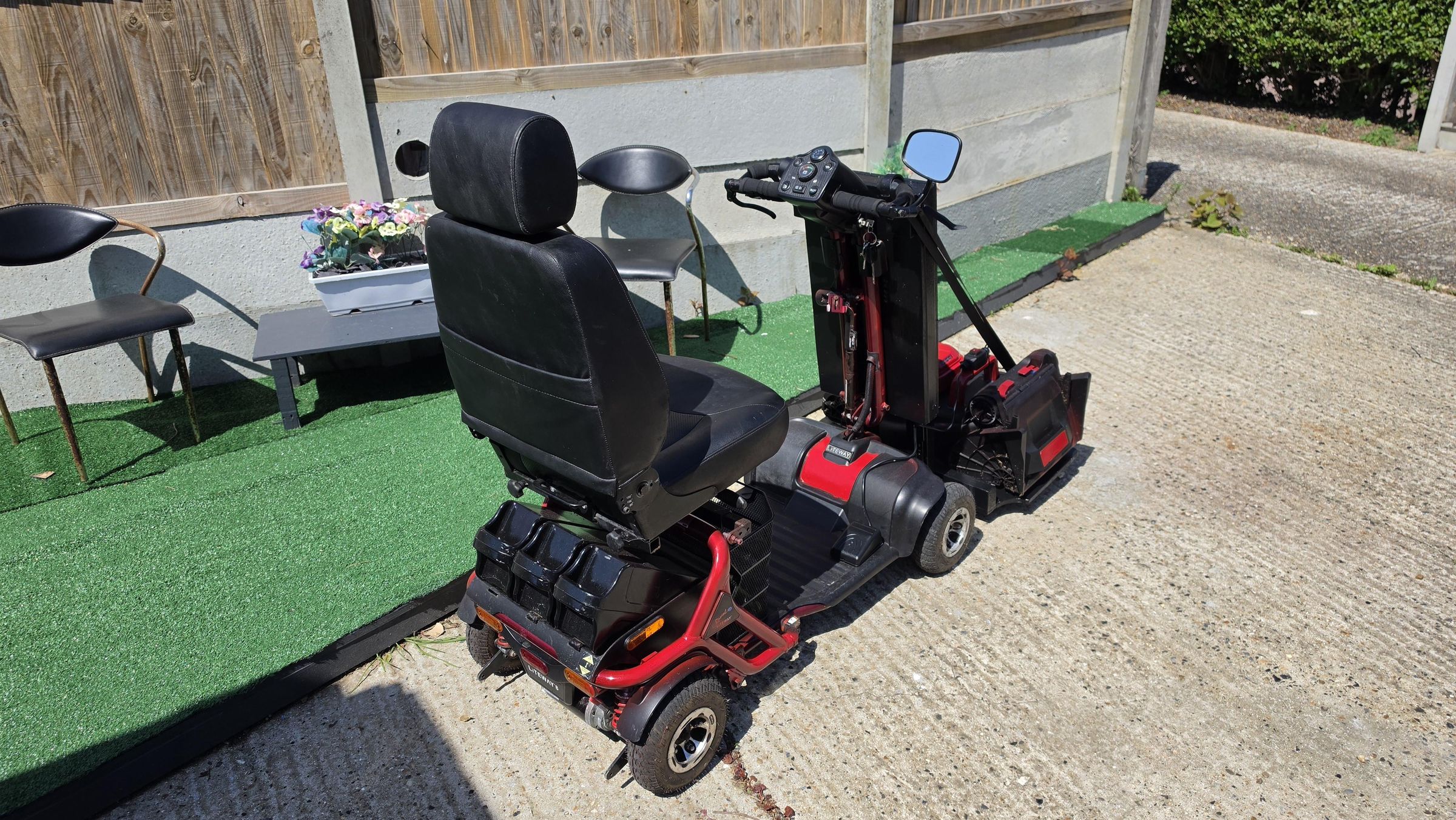
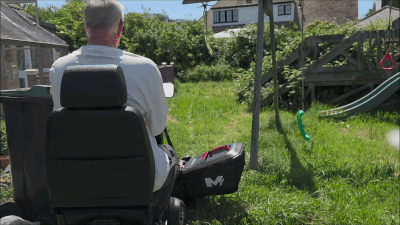
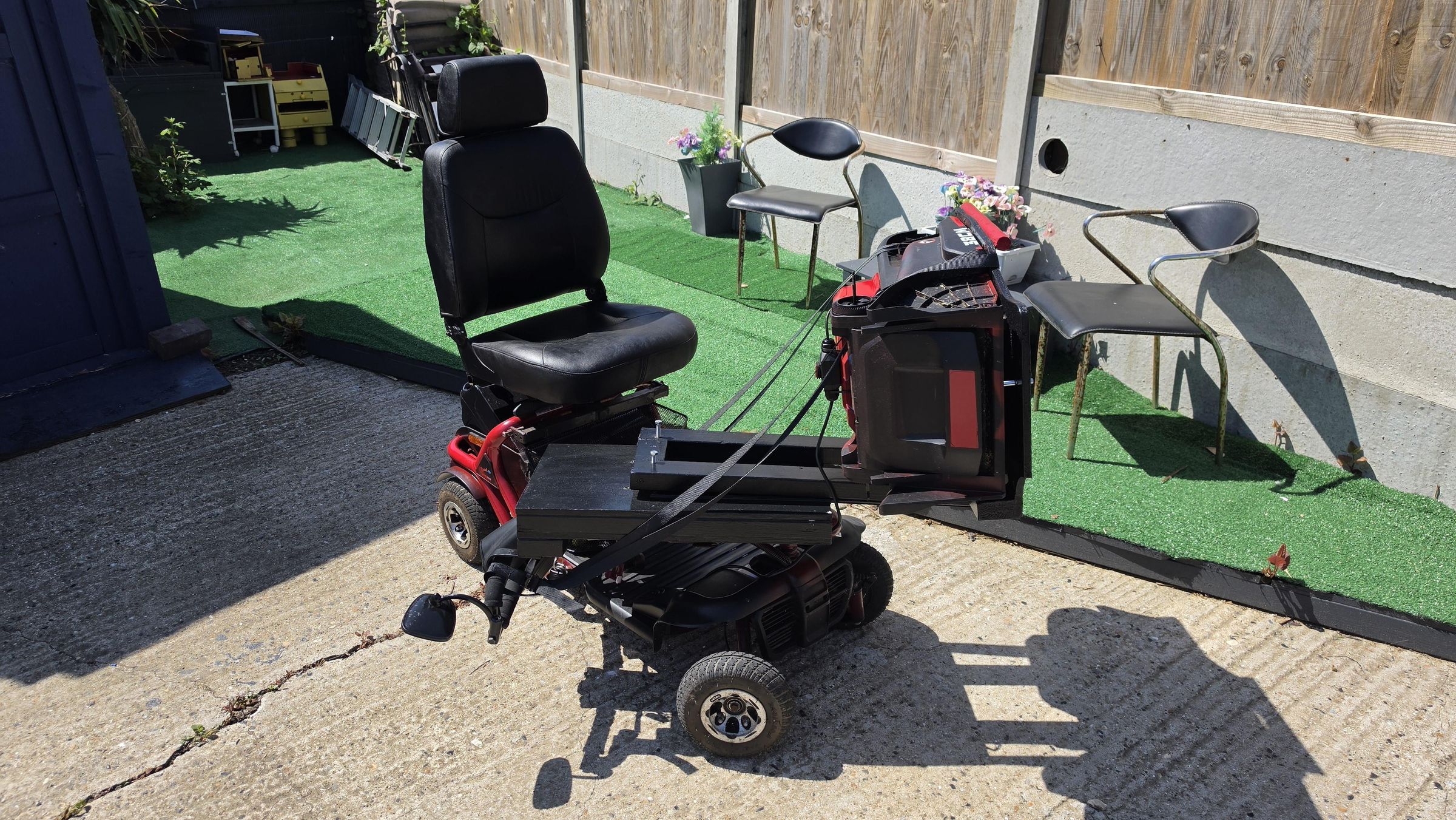
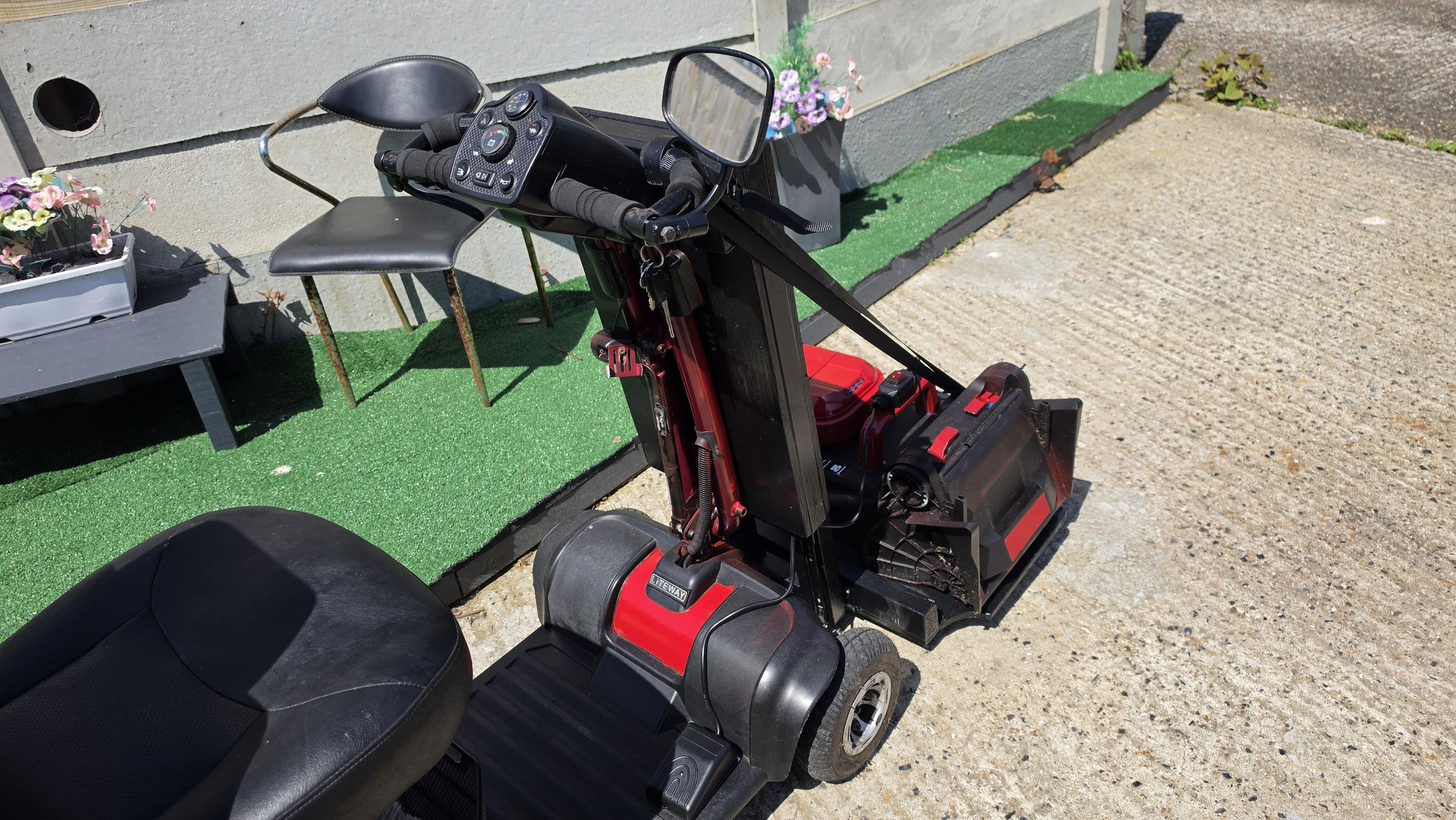
Welcome dear reader. For this project, I take a standard 4 wheel mobility scooter and transform it into a battery powered ride-on lawnmower using the deck of a battery powered lawnmower mounted to a custom floating frame to cut my friend/neighbours lawn. Instead of redesigning a lawnmower from scratch, my approach keeps the mower’s cutting system completely intact including the blade, deck, airflow system, safety shielding... and grass collection too. The result is a hybrid system, a mobility scooter which provides movement and steering, while a cordless mower provides the cutting power. A front mounted deck, fixed to a pivot for easy cleaning and removing obstructions, adjustable cutting height, cutting operated with a foot switch and in-line safety cut-off switch, and removable for easy storage, and I still get to use the scooter, as a mobility scooter. Not a gimmick or fun project (which it actually was), but an actual productive gardening tool.
The Inspiration:
The idea came from a simple frustration seen in many DIY ride-on mower conversions where as cool and ingenious as they are, a lot of builds either tow a mower behind a vehicle or rigidly attach a full mower unit to a frame, often leading to poor or no steering, limited manoeuvrability, no grass collection, or compromised cutting performance.
At the same time, cordless lawnmowers have quietly replaced many wired electric models, removing the restriction of power cables and making fully mobile cutting systems far more practical, especially for large lawns. This project combines those two ideas, the freedom of modern battery powered mowing, and the accessibility and stability of a mobility scooter platform into a single unified system. I actually built this as I have a lower spine condition that make cutting grass with a push along mower very difficult and wanted a better, more comfortable, yet cost effective solution.
What’s Involved:
The build centres around three key ideas:
First: The mower is fully converted from a corded or petrol mindset to a cordless battery powered one by relying entirely on the existing battery systems. This removes the limitations of mains power or popping down the petrol station, and allows the mower to operate as a fully self-contained cutting machine.
Second: The parts of the mower, handles, wheels, switches are removed and the remaining deck is mounted to a custom floating frame attached to the scooter. This keeps the original mower system intact while allowing controlled height adjustment and improved manoeuvrability. New switches are added and the use of the grass collector still remains.
Third: My mobility scooter becomes the driving platform. It provides the steering, forward and reverse motion, and stable and comfortable seating, while the mower operates independently as a cutting module, mounted at the front on the scooter tiller.
Unlike many DIY conversions, nothing about the mower’s cutting mechanism is modified. The airflow, blade system, and grass collection remain exactly as they were designed which reduces complexity, it increases the chances of reliable performance, and I have the full steering range while cutting. The end goal is a low cost battery powered lawn cutting machine that combines proven cordless mower technology with a stable, accessible mobility platform, without compromising and using the best of both systems. Lets get to it.
Supplies



Tools:
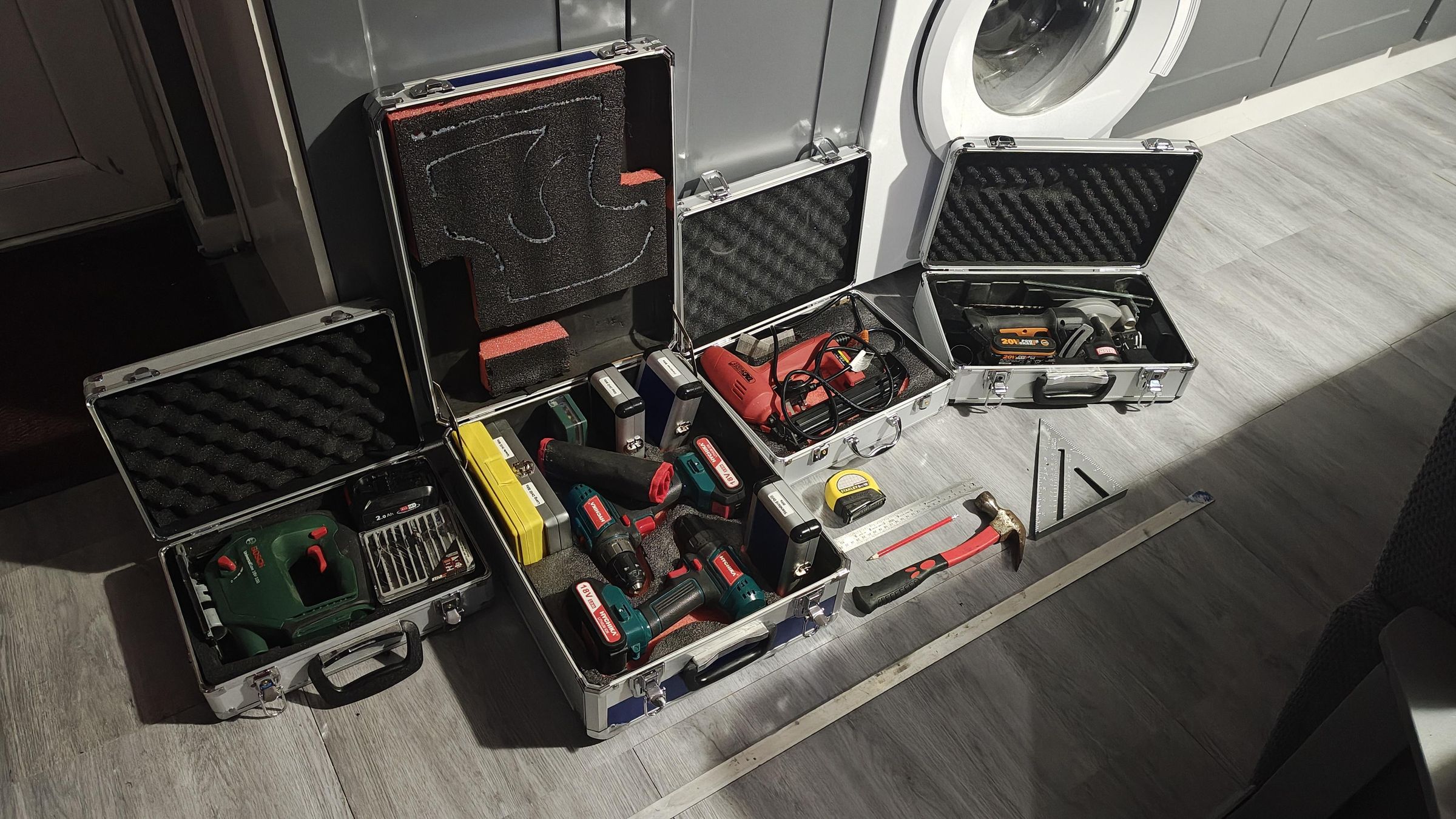
- Cordless drill/driver and bits
- Jigsaw with wood cutting blade
- Pencil and ruler
- Spanners (I needed a 10mm and a 13mm)
- Sockets (As above, I needed a 10mm and a 13mm)
- Wire cutters/strippers
- Electrical Screwdrivers
- Tape measure
Materials:
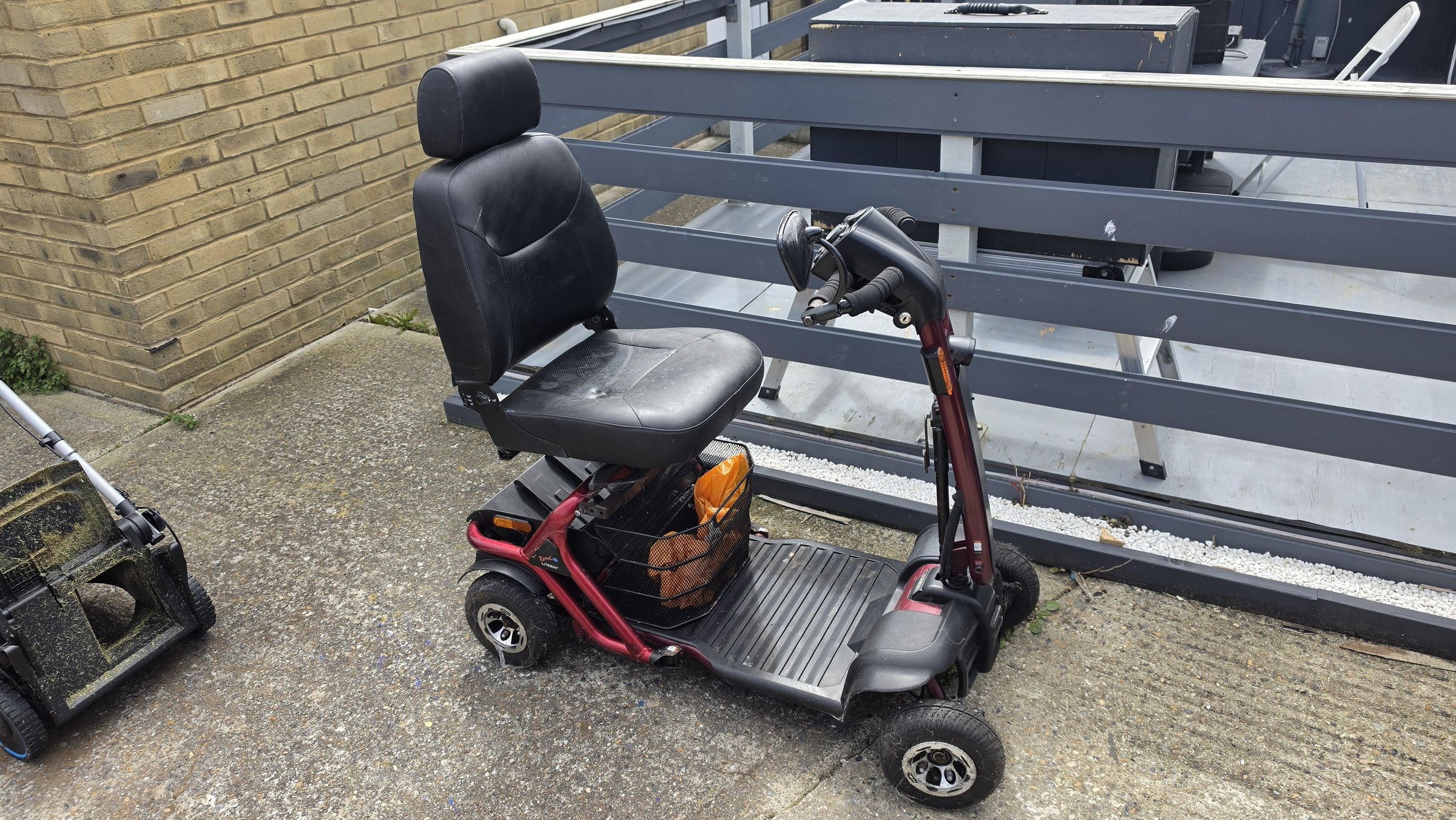
- A mobility scooter (I picked up one for free from 'Freecycle' which needed servicing)
- I needed a new set of six 12v lead acid batteries and new tyres for the scooter
- Cordless lawnmower (new or used)
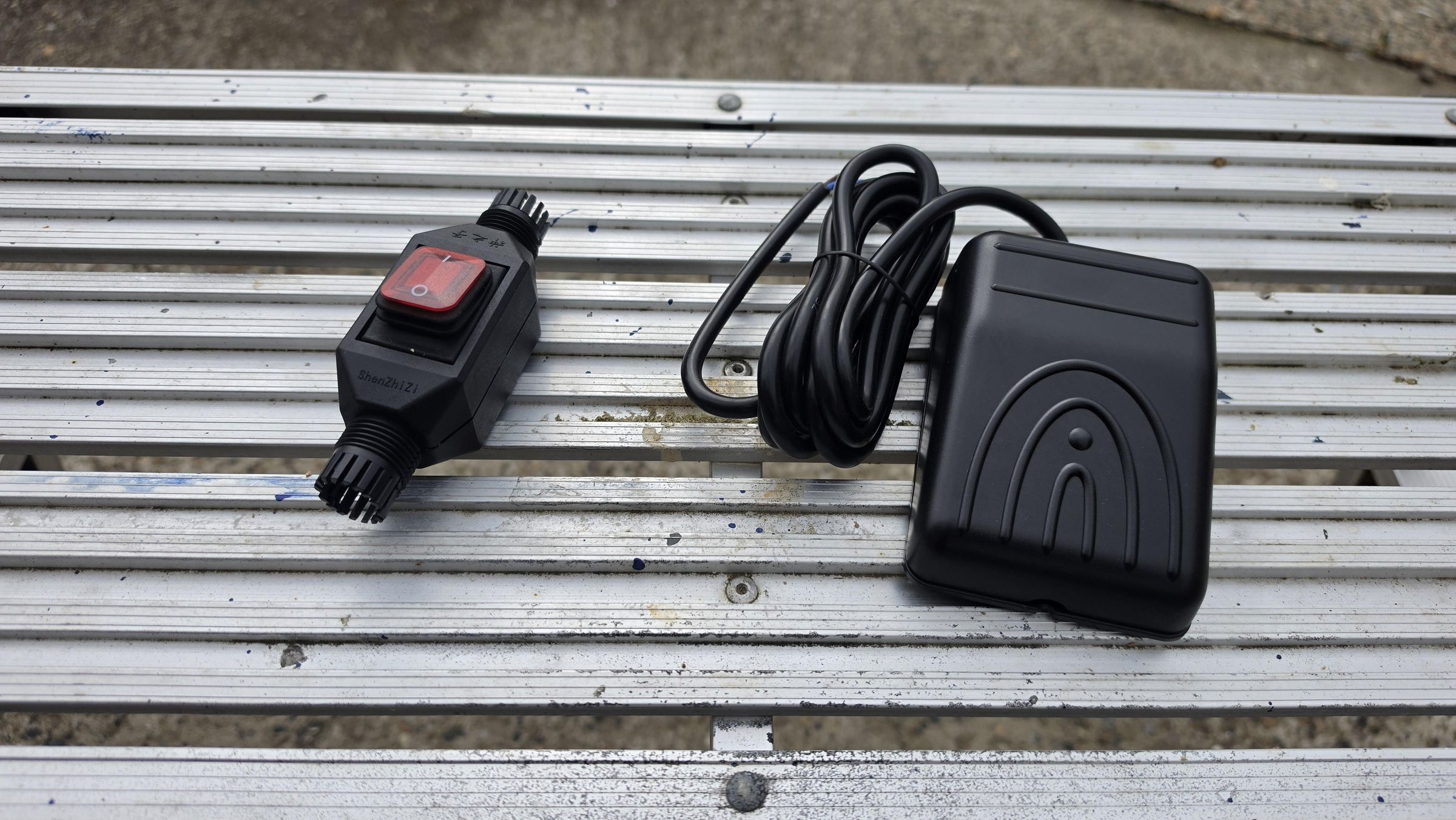
- Foot operated momentary switch (for mower operation)
- Inline latching rocker switch (for the safety cut-off)
- Pair of heavy duty hinges
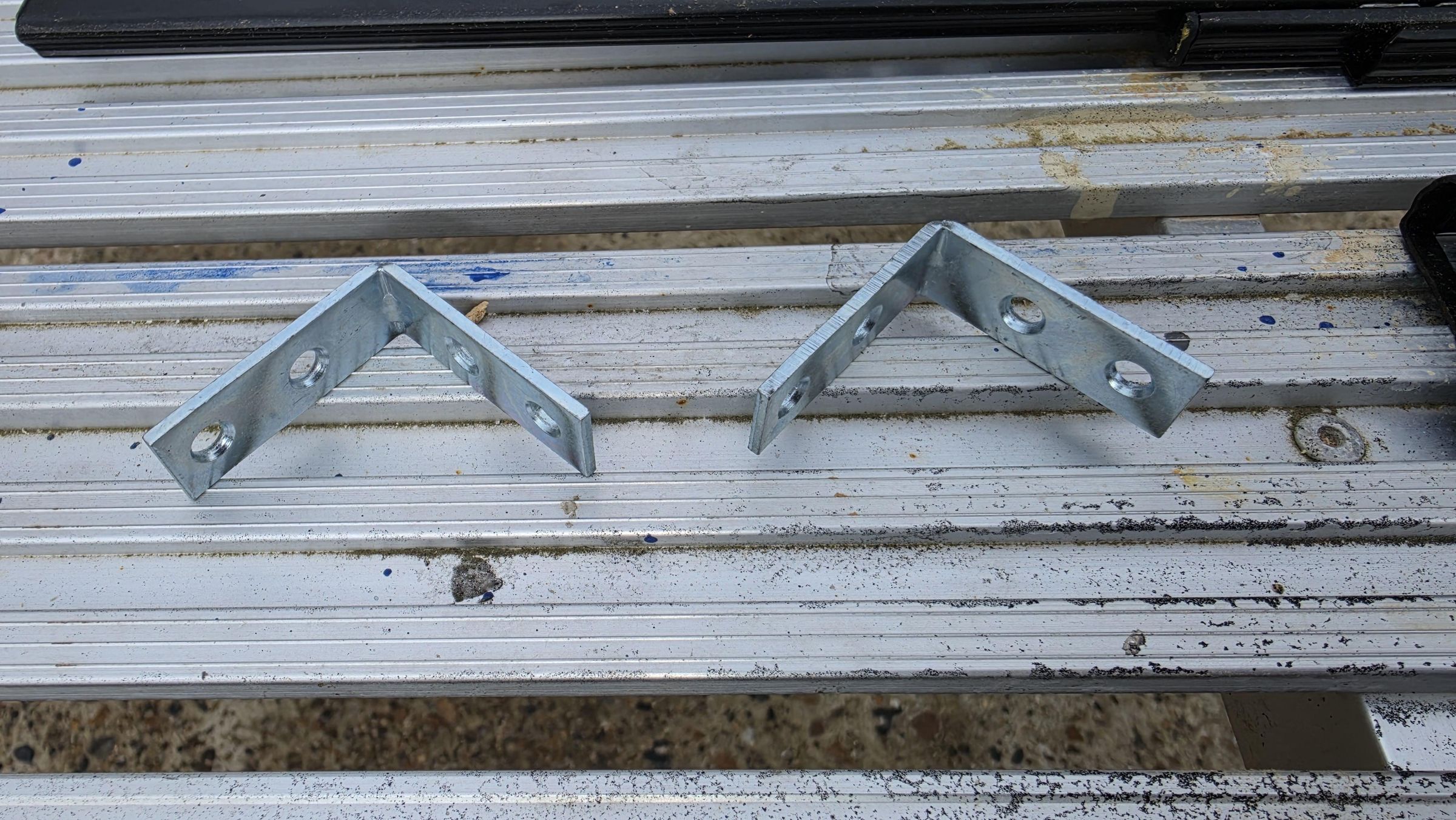
- Two 'L' shape angle brackets
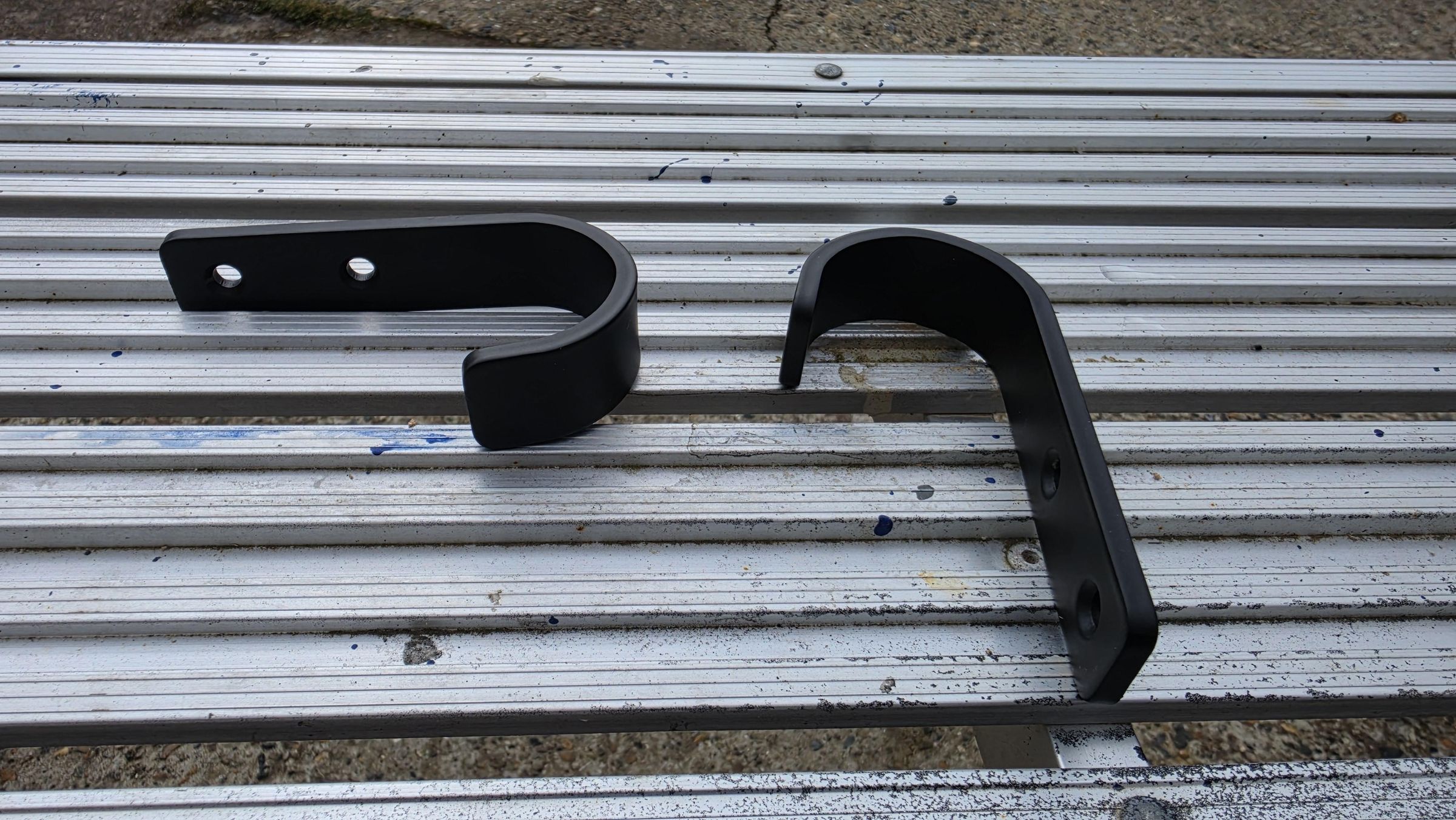
- Pair of hooks
- Strips of treated timber
- Sheet of 12mm MDF or plywood
- External wood sealant
- Paint
- Various 'external use' screws, nuts and bolts
- Pair of heavy duty nylon straps
Design
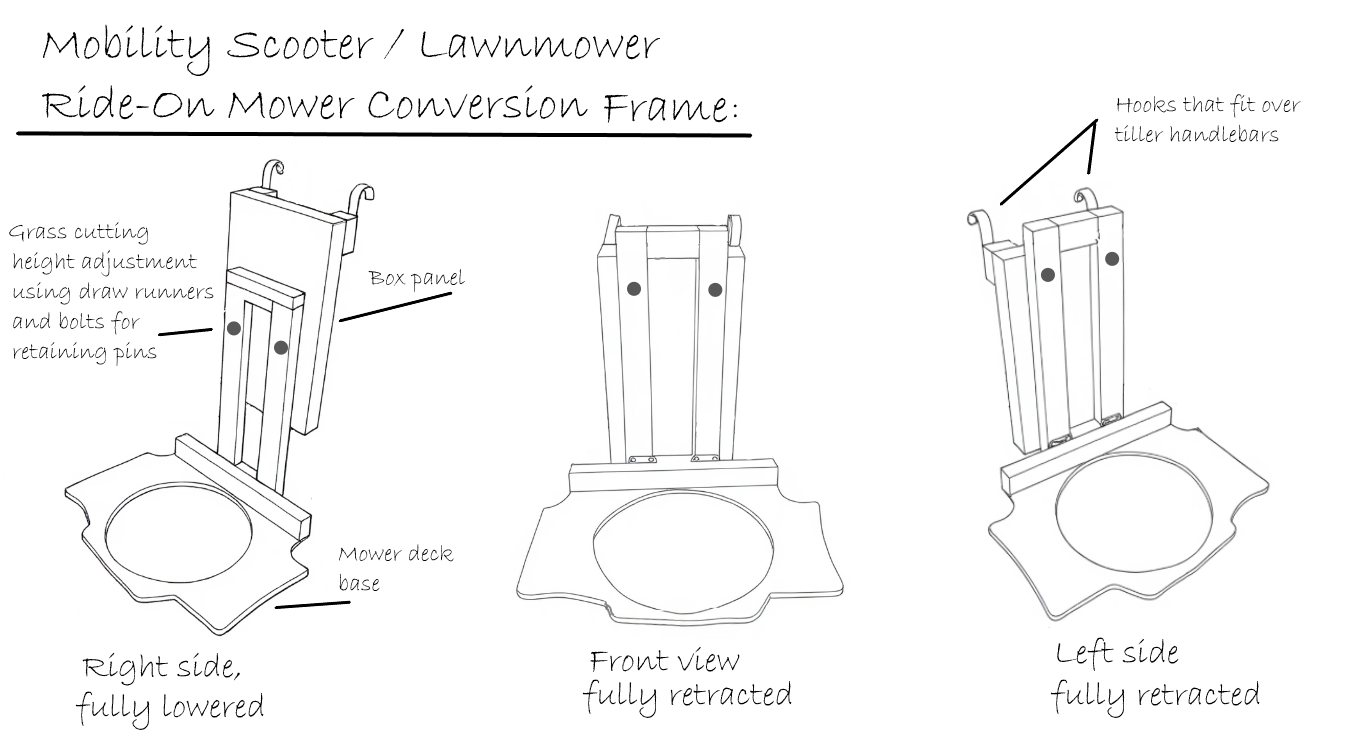
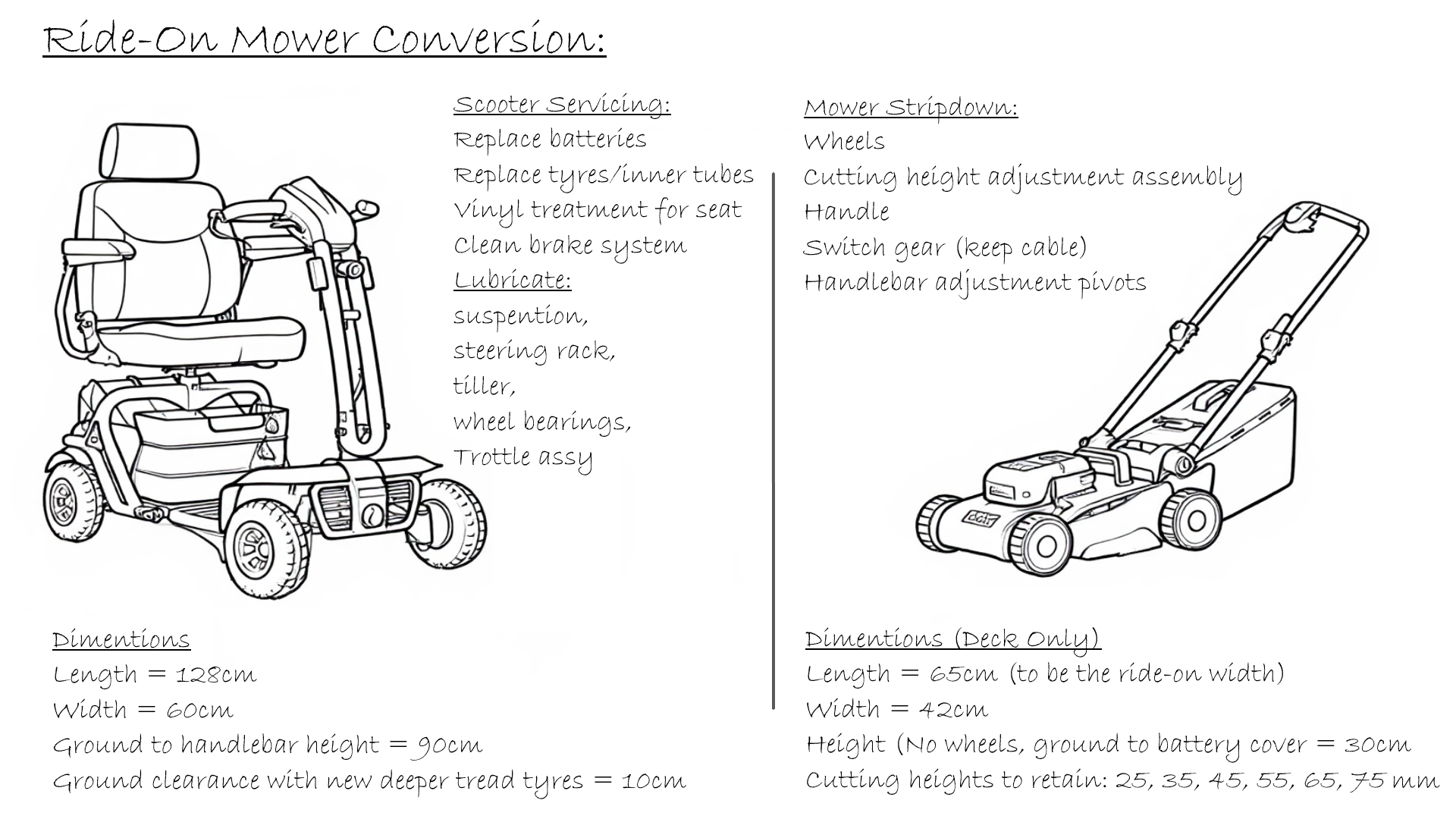
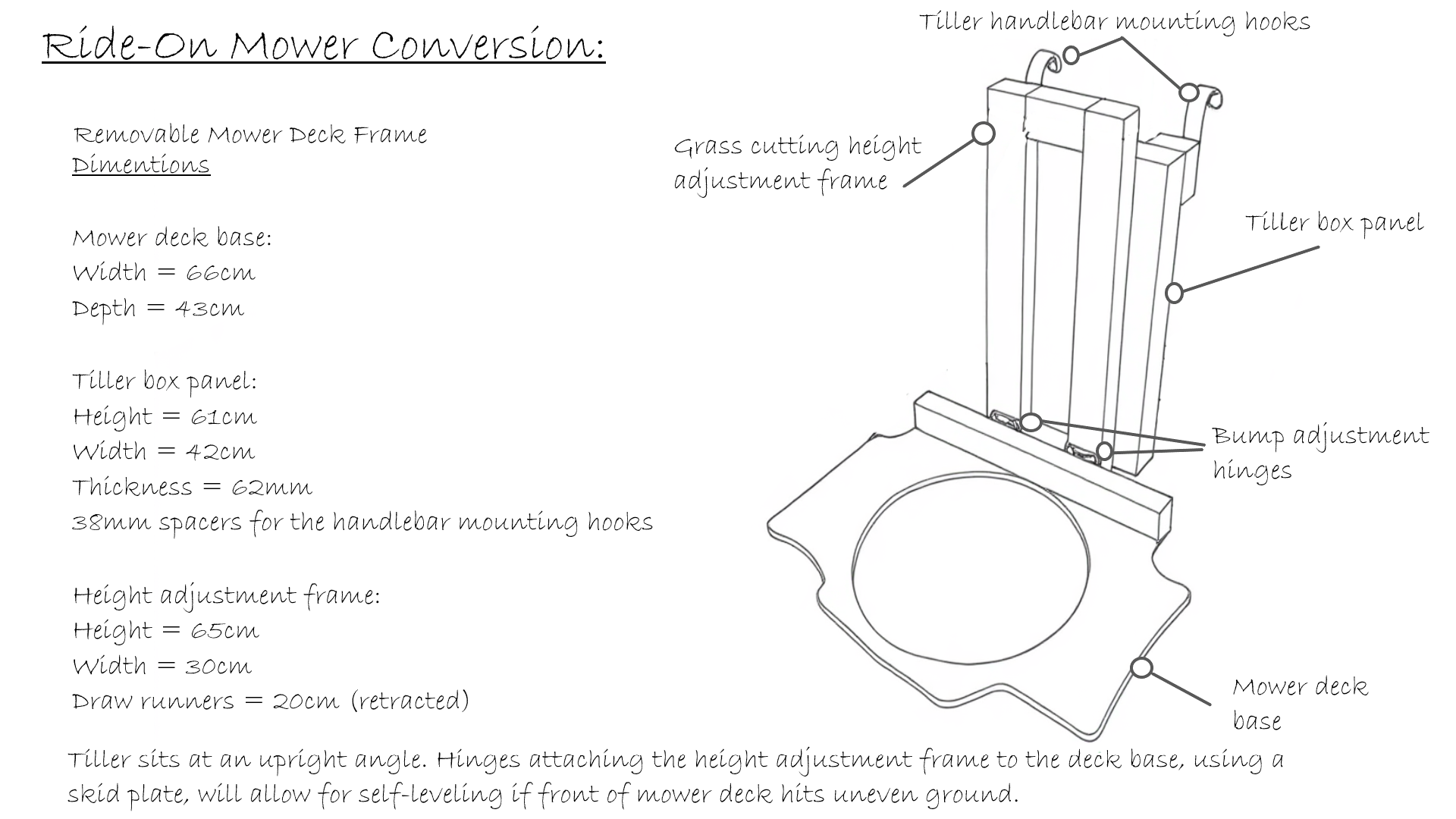
So, fixing a cordless mower to a mobility scooter, sounds relatively simple, what else is there to say about the design? Well there are a few important things that needed to be addressed, so I urge you to read through this step before jumping into the fun stuff as they may very well be things you might not have thought of.
Before building anything, I spent quite a while thinking about the overall design and how to avoid some of the problems I kept seeing in other DIY ride-on mower conversions. A lot of homemade builds online either tow a mower behind a vehicle, bolt a mower rigidly to the front, or remove so much of the original mower that they create new problems with cutting, collection, or steering. And throughout my searching, I didn't actually come across any front mounted power mower decks attached to a mobility scooter, never mind one that could easily steer or collect grass.
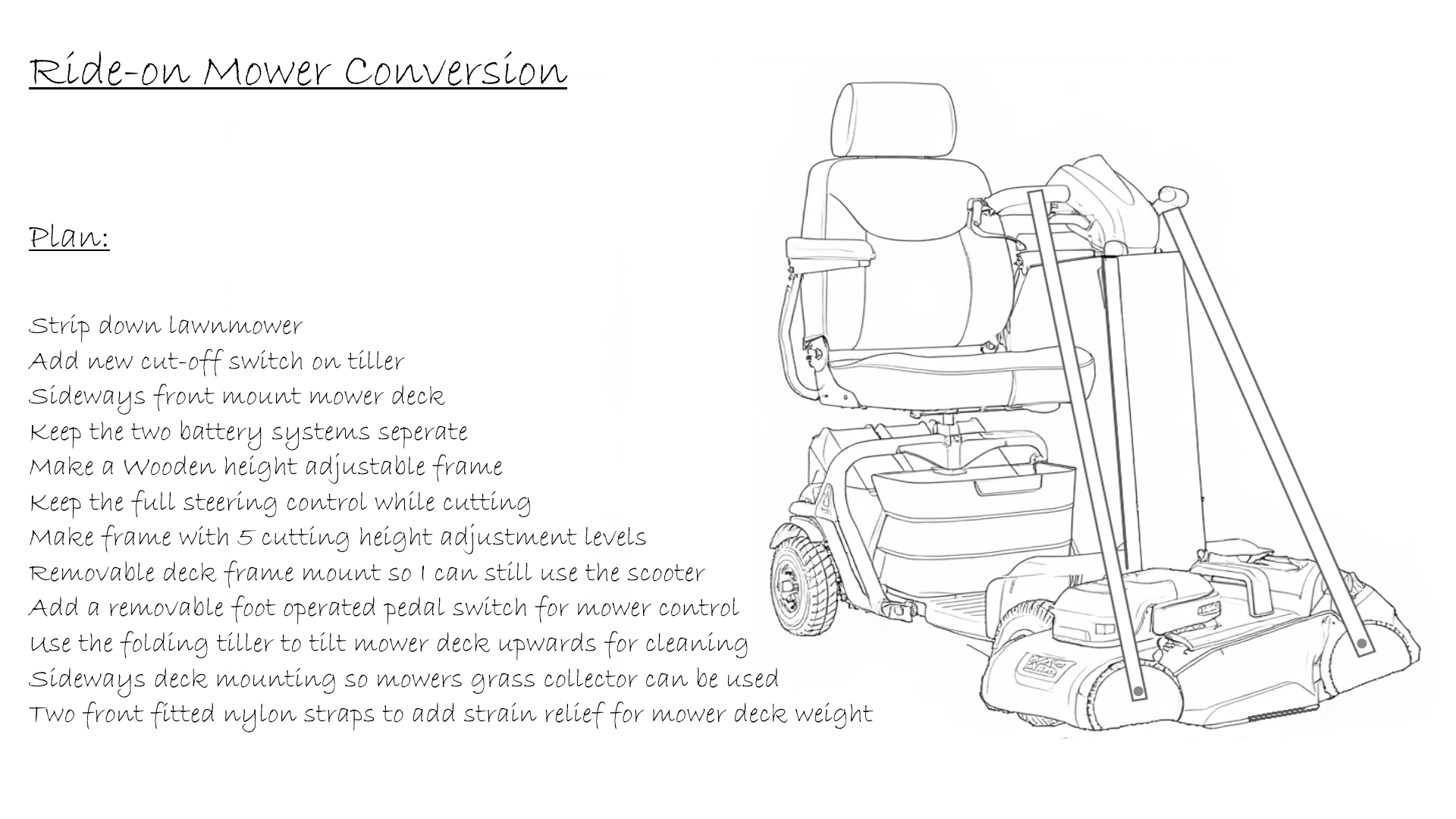
So my goal was different, I wanted to keep as much of the original mower system intact as possible while simply changing how it moved around the garden. The biggest design decision was to keep the mower deck, blade system, discharge chute, and grass collector completely original, yet make it removable for easy cleaning and storage. So the airflow, blade speed, grass collection, and safety features all remain in place because the mower itself is still operating with its overall basic design. Instead of towing the mower behind the scooter, the mower deck will be mounted to the front of the 4 wheeled mobility scooter using a custom mounting frame. Mounting the deck at the front allows proper visibility while cutting and makes it much easier to manoeuvre around edges, trees, and borders compared to a rear-towed setup.
As I mentioned, one problem I noticed with many DIY ride-on mower conversions was steering. A lot of builds use a complete push mower with all four mower wheels still attached or two wheeled mowers on a fixed frame. The problem I saw was that the mower wheels would fight against the steering of the vehicle and drag on the ground, especially during turns. Many videos I watched cleverly avoids showing tight manoeuvres because the machine can realistically only travel in straight lines. To avoid this problem entirely, I decided to remove the mower wheels and suspend the deck from a floating, adjustable mounting frame instead. The deck will be supported by the scooter rather than rolling on the ground which means the scooter remains fully manoeuvrable, while the mower deck “floats” at a controlled height above the lawn, similar to how commercial ride-on mower decks operate.
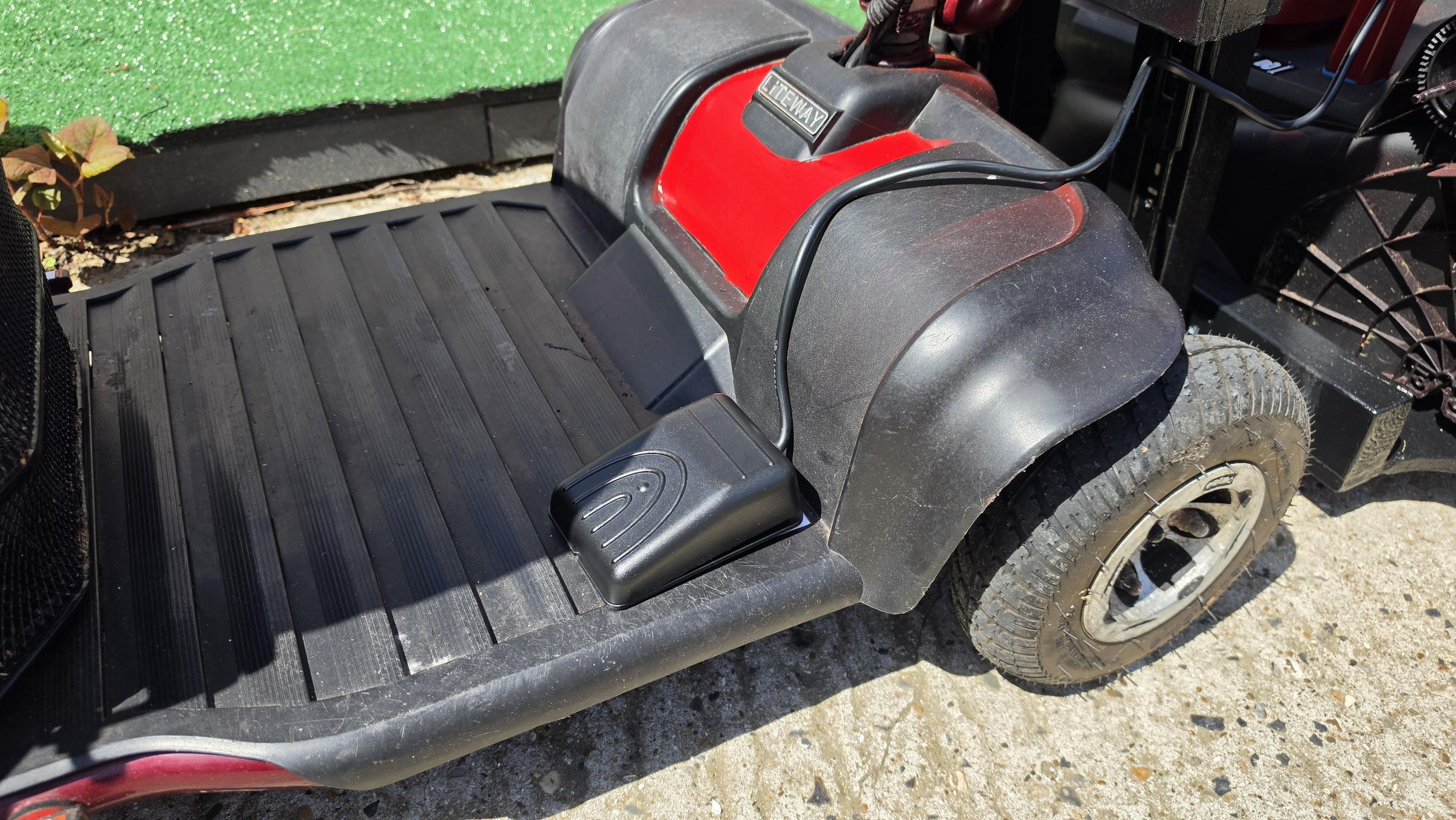
For safety and operation, as I would strip away parts of the mower like the handle, the attached switches/levers would be removed too. To replace these, I would add a removable foot operated momentary switch, so while sitting down and pressing the switch, the blade would start turning leaving my hands to drive and steer the scooter, and removing my foot would turn the mower off. I would also add an in-line latching rocker switch that would isolate the mower battery so I could clean under the mower deck safely.
The floating mount design also allows the entire deck height to be adjusted through the mounting frame itself. This would provide smoother cutting and better stability over uneven ground. My scooter has a folding tiller so it can be put into a car trunk, so I wanted to use this feature so the mower deck frame would be attached to the new mounting frame, and the deck could then be tilted upright to allow clearing out any clogged up grass from under the deck easily. When the tiller is at its most upright position, it still sits at a slight angle so if I simply attached the deck to the frame, the now front of the deck would be tilted upwards meaning poor cutting, reduced airflow, and potentially dangerous if the blade was to hit a stone or something turning it into a high speed projectile that could cause harm or damage. But I could take advantage of this angle, by using a couple of hinges to join the tiller panel to the mower deck, the deck would now not only lay flat, but using a skid plate, it could now tilt upwards over uneven ground.
Another key design choice was to keep the mower battery system completely separate from the mobility scooter batteries. The scooter powers the drive system which can last a few weeks on a single charge, and the mower powers only the blade motor using its original cordless battery which can easily be swapped out and recharged, so this keeps the electrical systems simple and reliable. A curved skid plate is also added to what would now be the front of the deck to raise the it if I ever encountered a sudden dip in the ground instead of coming to a sudden stop and risk breaking anything.
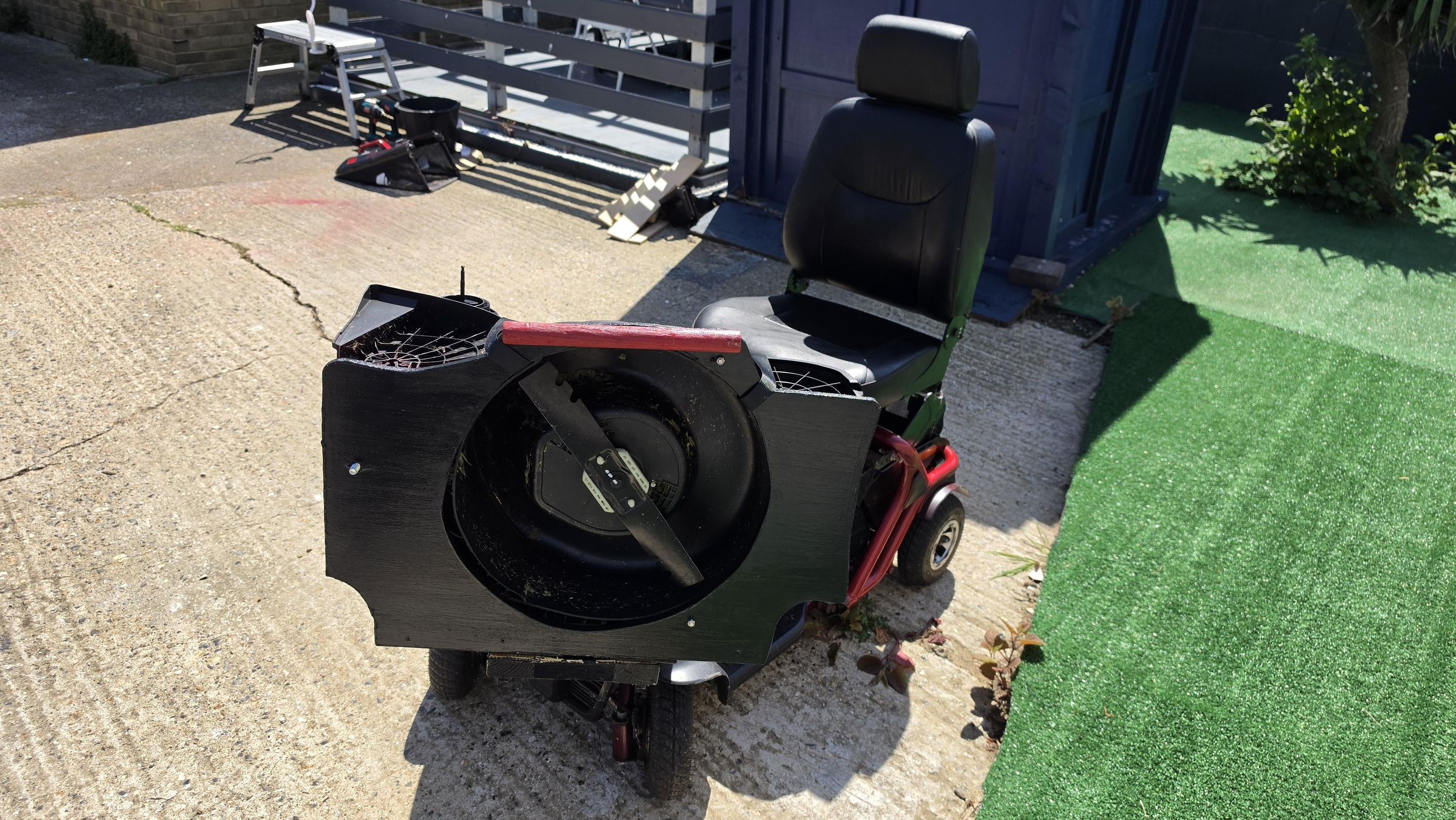
A key aspect was to mount the mower sideways rather than directly forward-facing. At first this might seem unusual, but after studying how mower decks actually work, it makes complete sense. The blade creates a circular airflow vortex inside the deck which pushes the cut grass toward the discharge chute and into the collector. And since the airflow system remains unchanged relative to the deck itself, rotating the entire mower assembly sideways doesn't affect the cutting or collection performance. In fact, from what I have seen, many commercial ride-on mowers already use side-discharge or offset deck systems for exactly this same reason. When you think about different examples of mower systems...
- hover mowers
- offset ride-on decks
- side discharge systems
- floating mower decks
the more my concept became a real world workable solution, and not a crazy idea sketched on a napkin down the local pub one night (not that there's anything wrong with that).
The other reason for my sideways mounting position is that the original mower has the removable grass collector at the rear of the deck, so mounting it sideways meant I could still use the collector when I need to.
Overall, I kept the overall design philosophy for this project surprisingly simple... keep the basic mower functioning exactly as designed, and only redesign the way I move it around the garden. I believe this approach removes a huge number of mechanical unknowns and gives the project a much better chance of working reliably as a regular use machine, and not just a fun DIY project.
Scooter Servicing
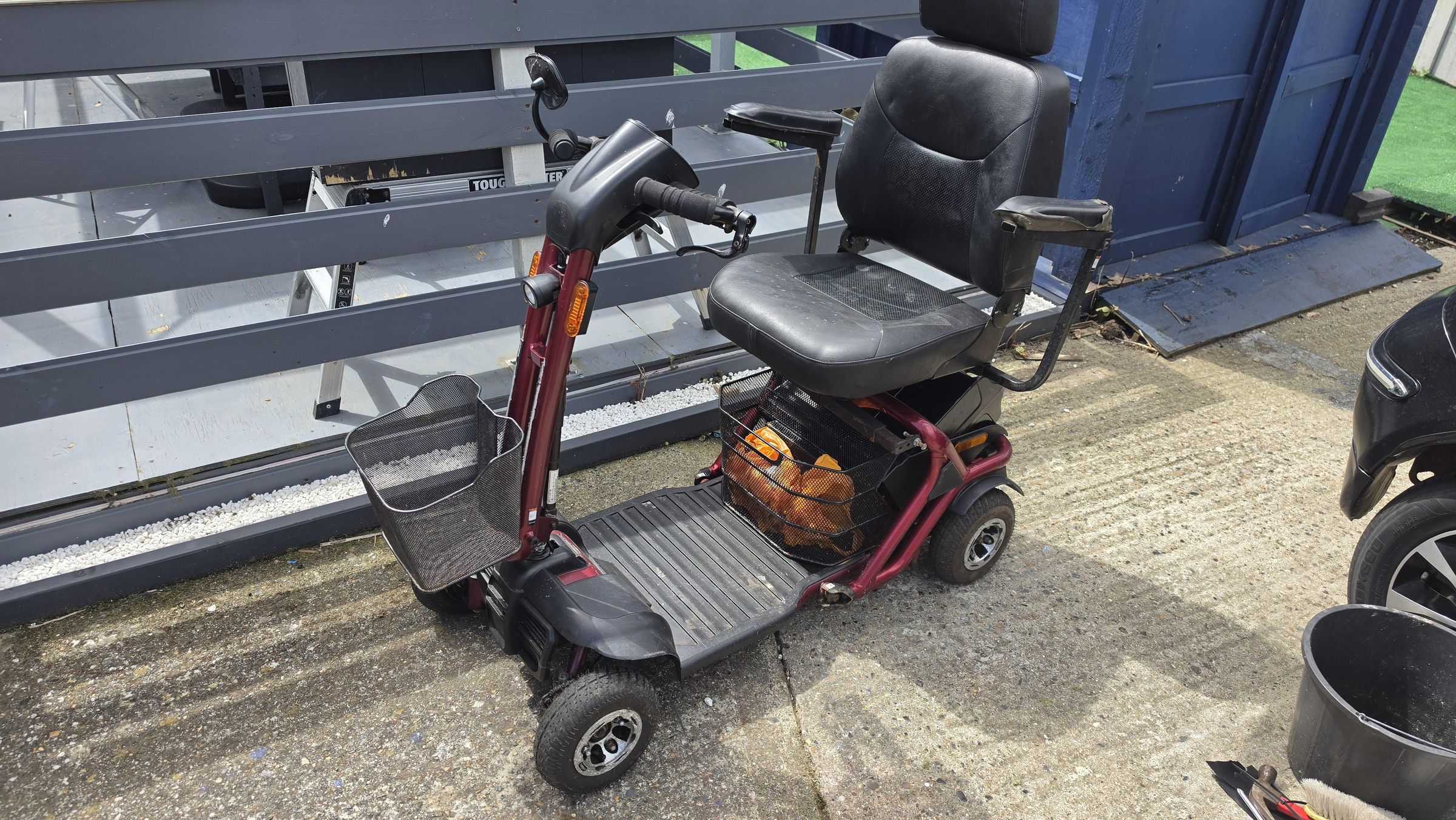
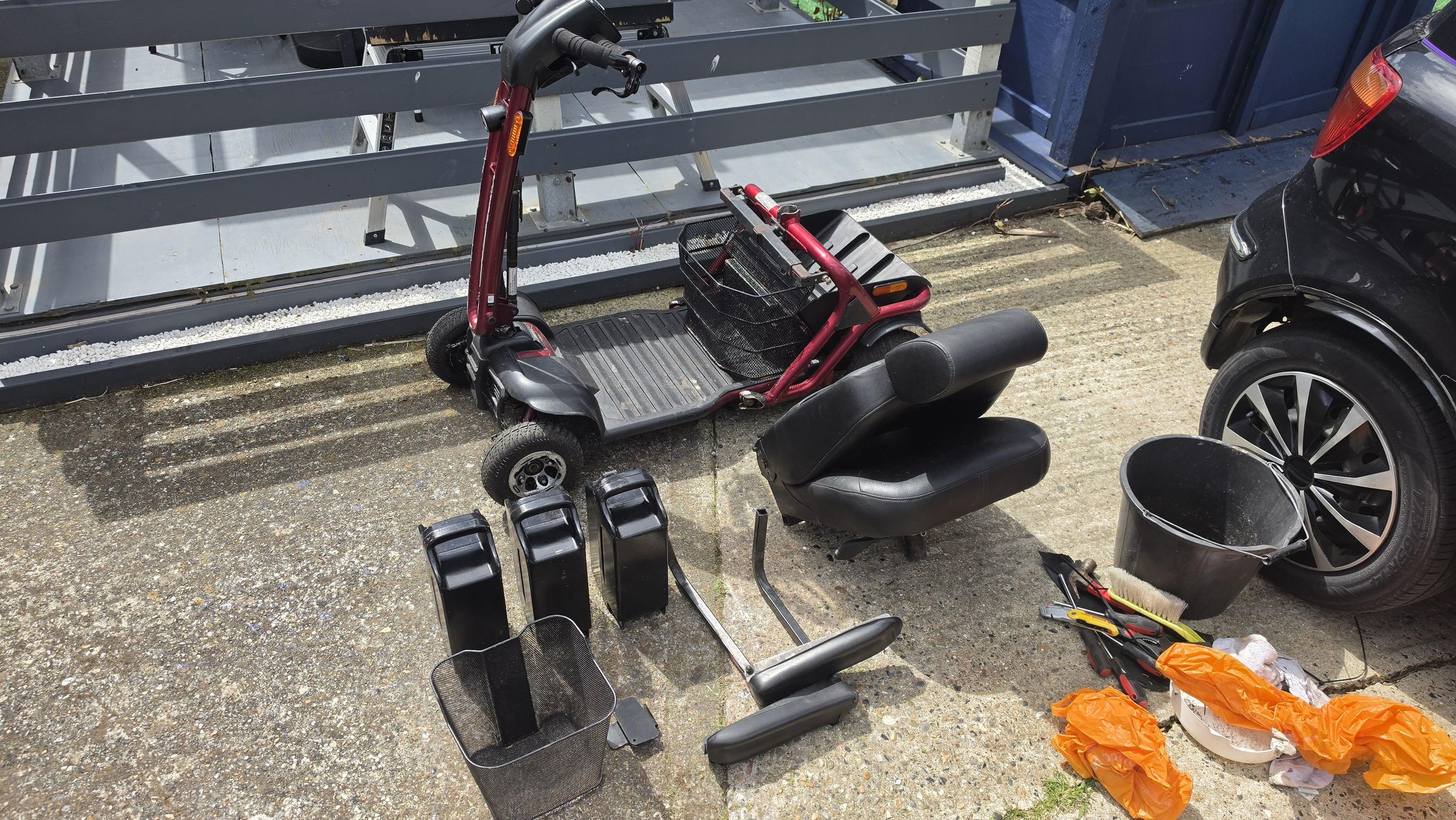



The scooter I picked up, a Rascal Liteway 8, was in okay shape, but I was told it was not used for quite a while so a few things needed doing to get it rolling again. Once I got it home and had a close look around, it turned out that all it really needed was a new set of batteries, a new set of tyres and a good clean up.
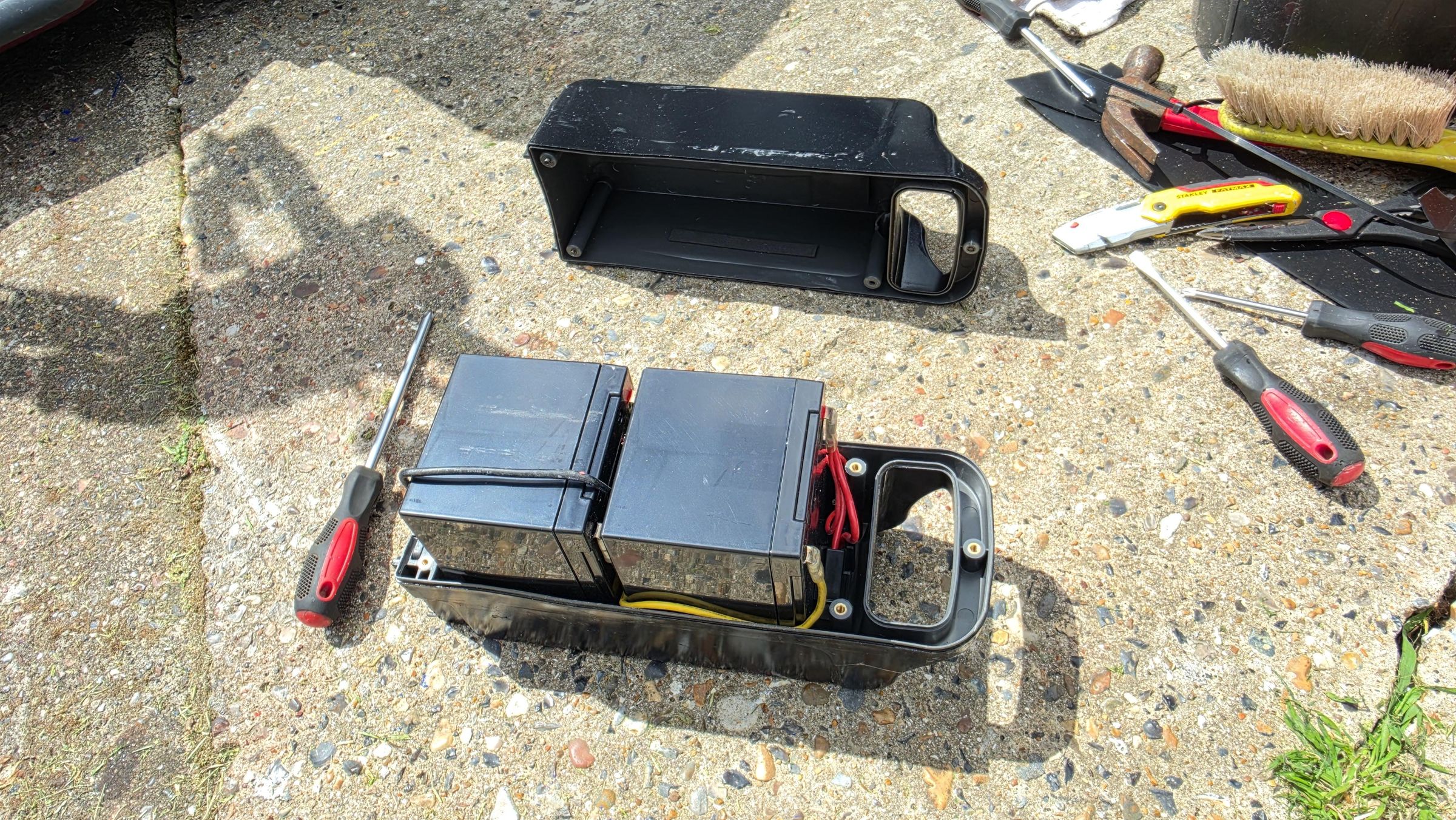
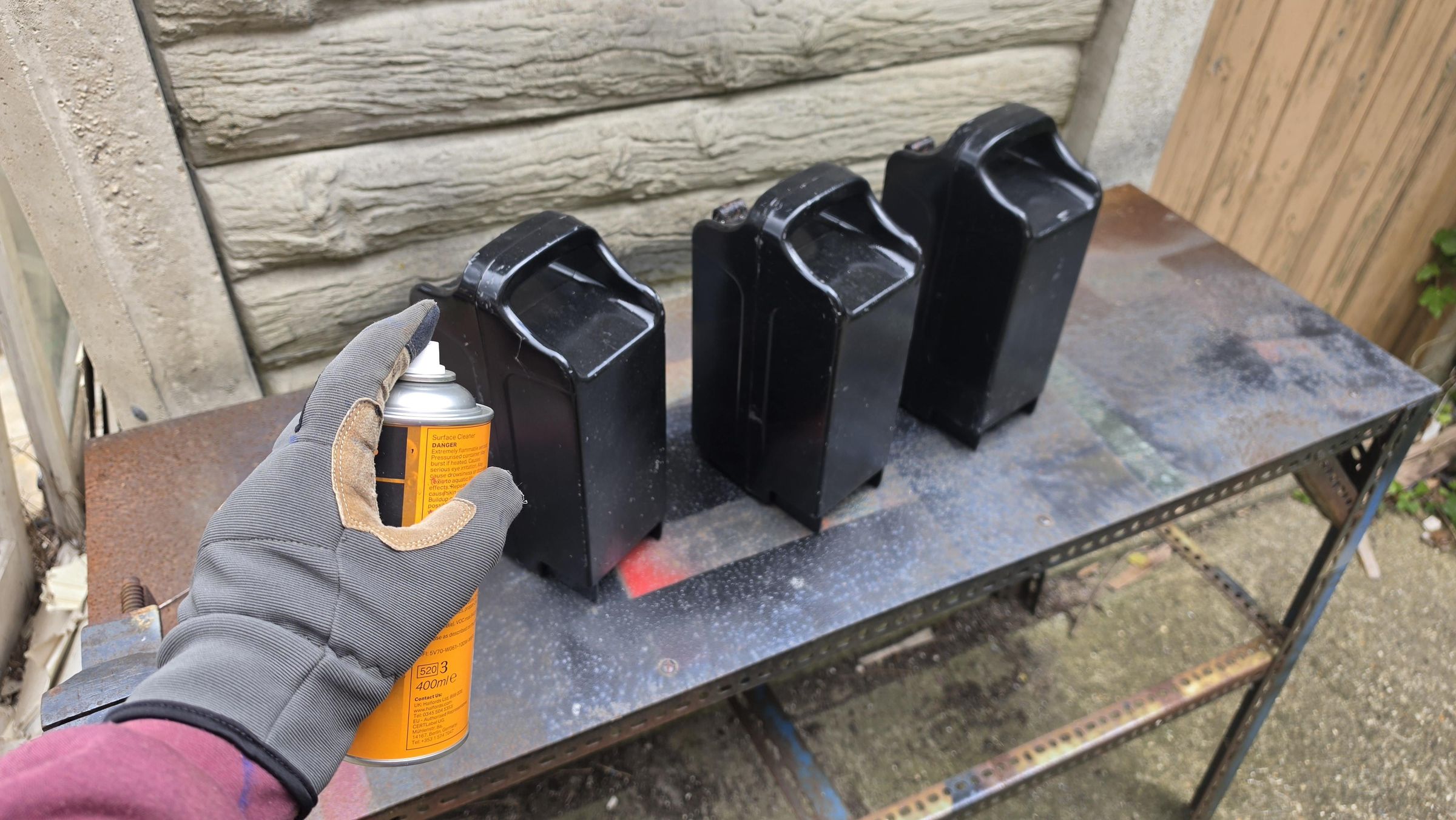
Batteries: I attempted to charge the battery packs up with the included charger, but after a few hours the charger status lights were saying "Error/No batteries detected" which told me that the lead acid packs were done for. I ordered a new set of six 12v batteries, unscrewed the the scooter battery cases and removed the old ones. The new ones were put in, connected (two 12v batteries per case, wired in series), screwed them back together, and fitted them onto the scooter. Success, the scooter was working and working well. I took the battery packs back out, gave them a clean a spray painted them with a gloss black primer/paint mix for plastic. When the paint was dry I gave the batteries a full charge up.
Tyres: The wheels had some cream coloured tyres with a very slick tread and were very shiny. To use on the grass, I decided to buy some new tyres with a deeper tread, and the new tyres also came with inner tubes too. The front wheels had a single nut holding them on the the front hubs, and the rear wheels again were held on with a single nut holding them onto the rear trans axle. With the wheels removed, the air was removed by pressing a small screwdriver onto the pin inside of the tyre stem. The wheels come in two halves which are bolted together. The nuts an bolts were removed, old tyre and inner tube removed, then the two halves were cleaned and painted with an enamel touch up paint.
When dry, the new tyre and tube were fitted feeding the tyre stem through the hole in the wheel, the wheel halves bolted back together and air added to the correct PSI. Before fitting, I examined the brakes which were in good shape, but striped them apart and gave the hubs a good clean. With the brakes reattached, the wheels were fitted back onto the scooter.
Other jobs: I removed the arm rests, shopping basket and seat and gave the seat a wash with warm soapy water and wiped the vinyl cover with a vinyl treatment. I then went round the scooter cleaning all the areas including the joins and any moving parts, tiller adjustment, steering rack, suspension, seat adjustment etc. finally spraying them with some white lithium grease and some WD40. I final clean up and a quick drive around, then I was ready to move onto the lawnmower.
Mower Strip Down
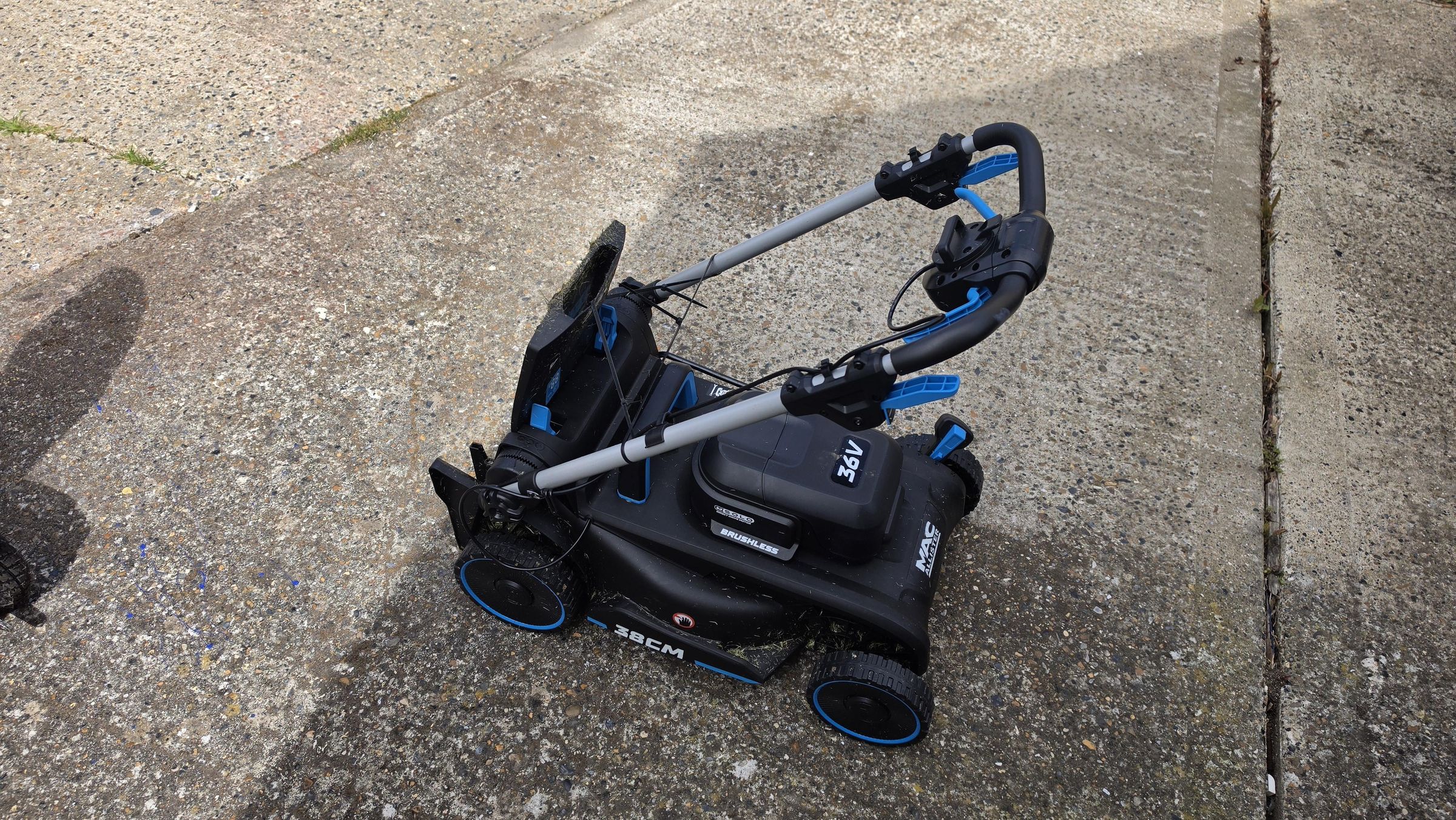




The 36v battery powered mower is one I already had and used, and although reluctant to strip apart an perfectly working £300 mower, the thought and excitement of having my own ride-on mower won the day.
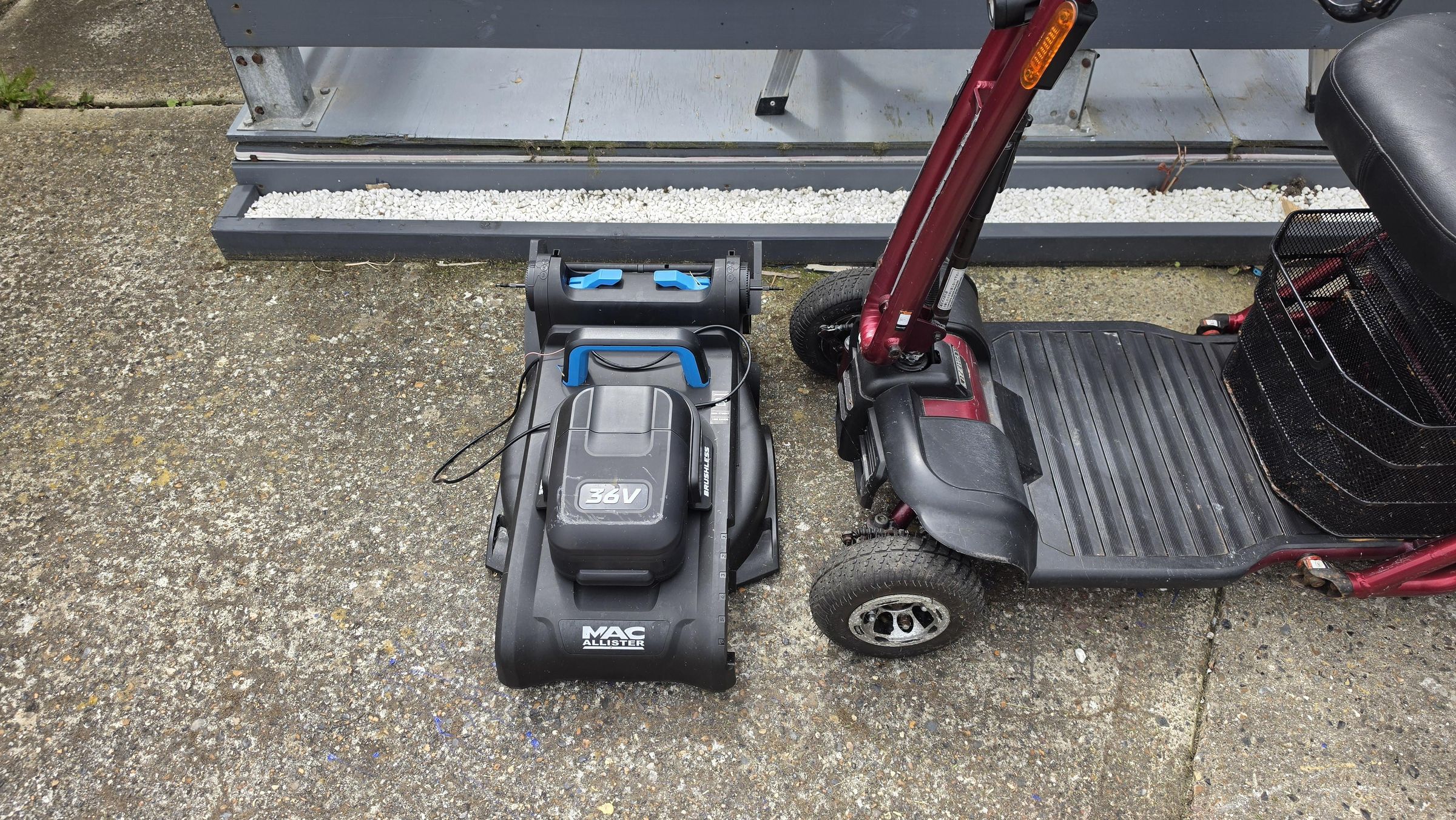
Measurements: The first thing I did before getting the spanners and screwdrivers out, was to take measurements of the adjustable cutting heights. On a flat surface I started at the lowest setting and worked my way up to the highest, making notes of each height to use later for the new mounting frame. Then lining up the mower sideways on against the front of the scooter, I found that the deck of the mower was pretty much the same size which was great.
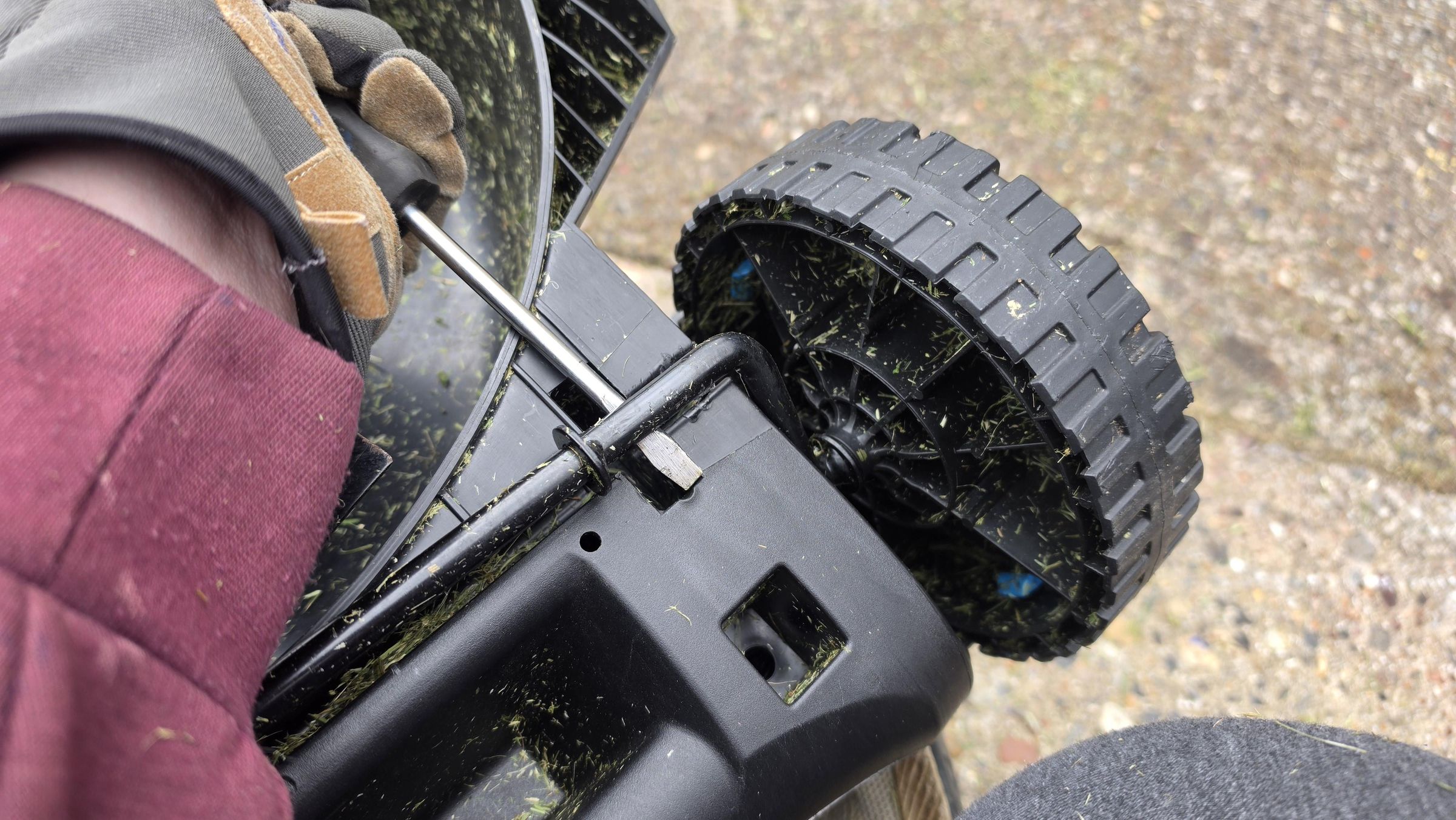
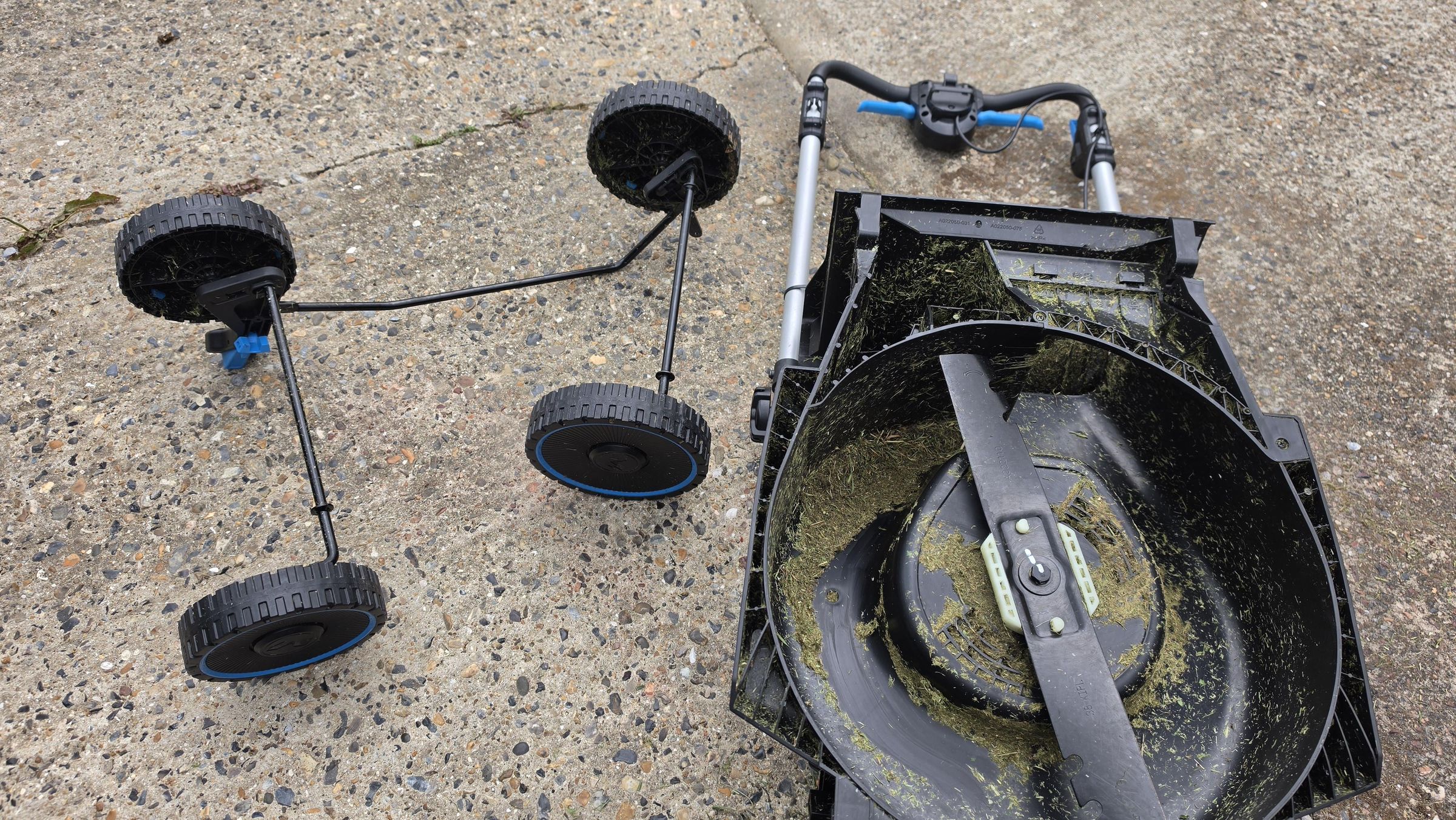
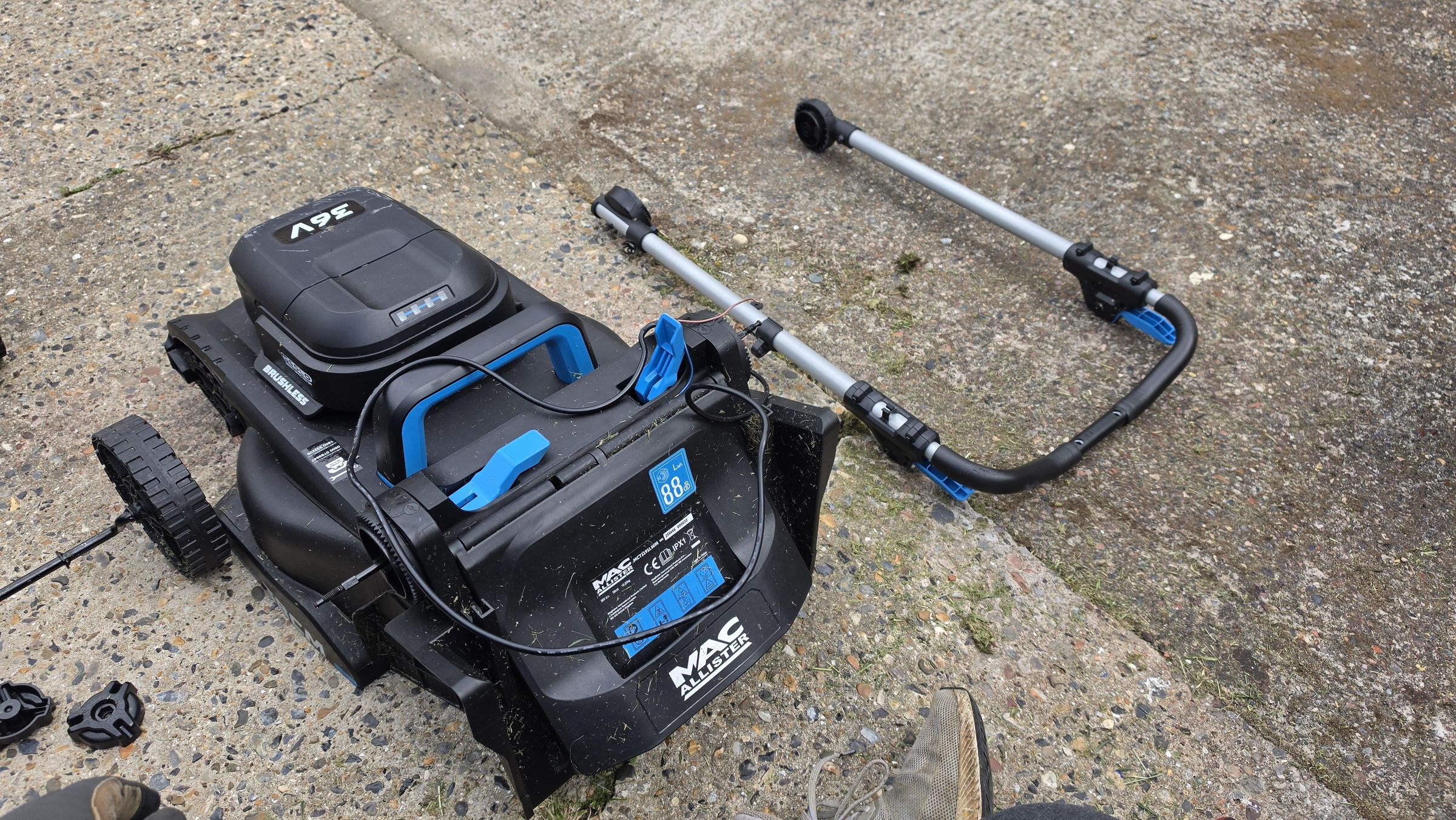
Disassembly: As I only needed the mower deck and power cable for the operation lever, I removed the wheels which were press fit into a couple of plastic clips, height adjustment assembly held on with a couple of screws, and the handle assembly which was held on with a couple of bolts - disconnecting the operation lever from the cable. Instead of just cutting the power cable, I took apart the lever/safety switches to see the insides just in case there was something inside I might need, an unexpected wire, a small PC board, but there were none, just two wires as expected.
All the unused parts were stored away just in case I ever wanted to put the mower back together again, or to use on another project. Now I was ready to spice the scooter and mower deck together.
Making the Mower Deck Frame
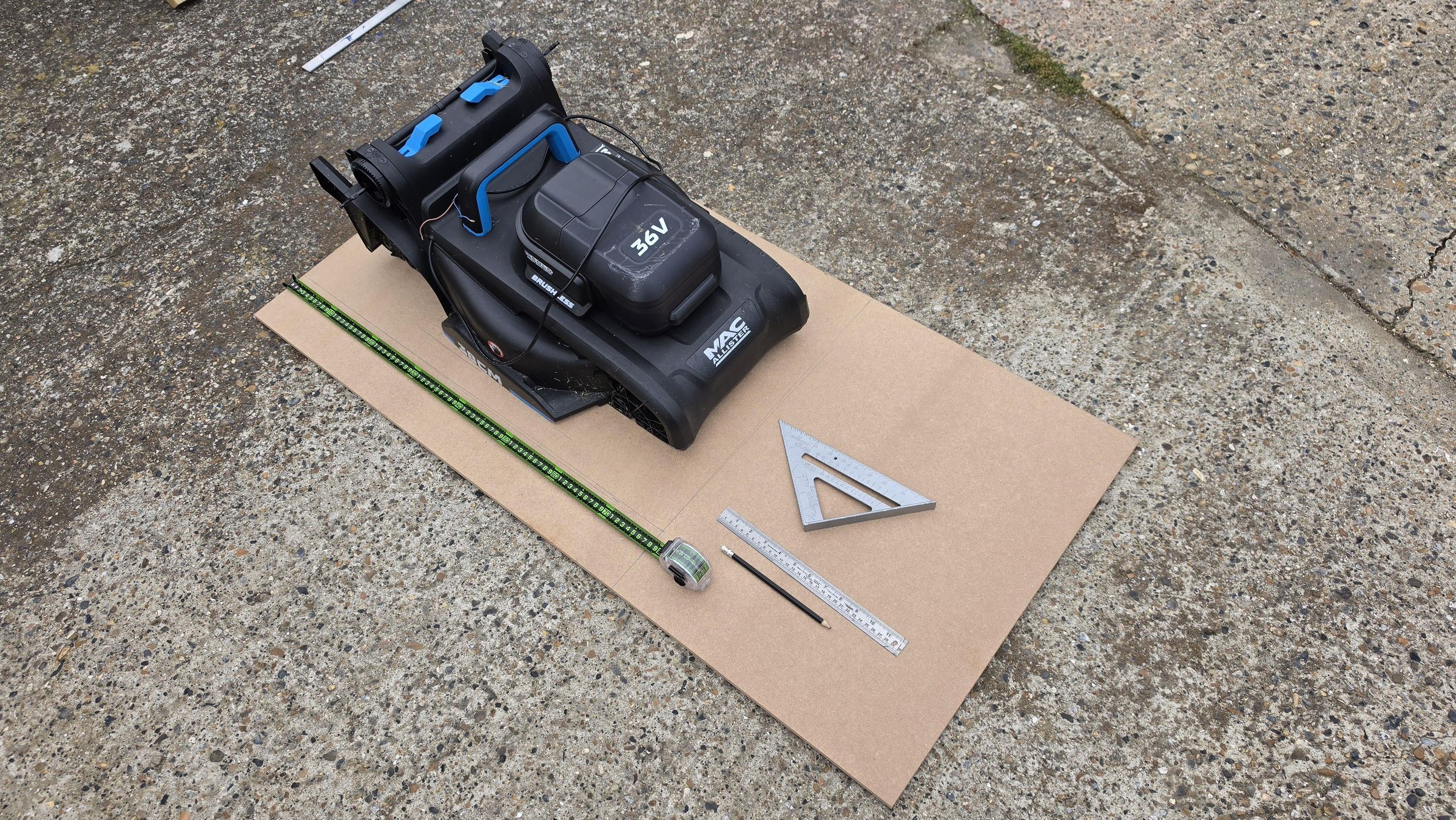

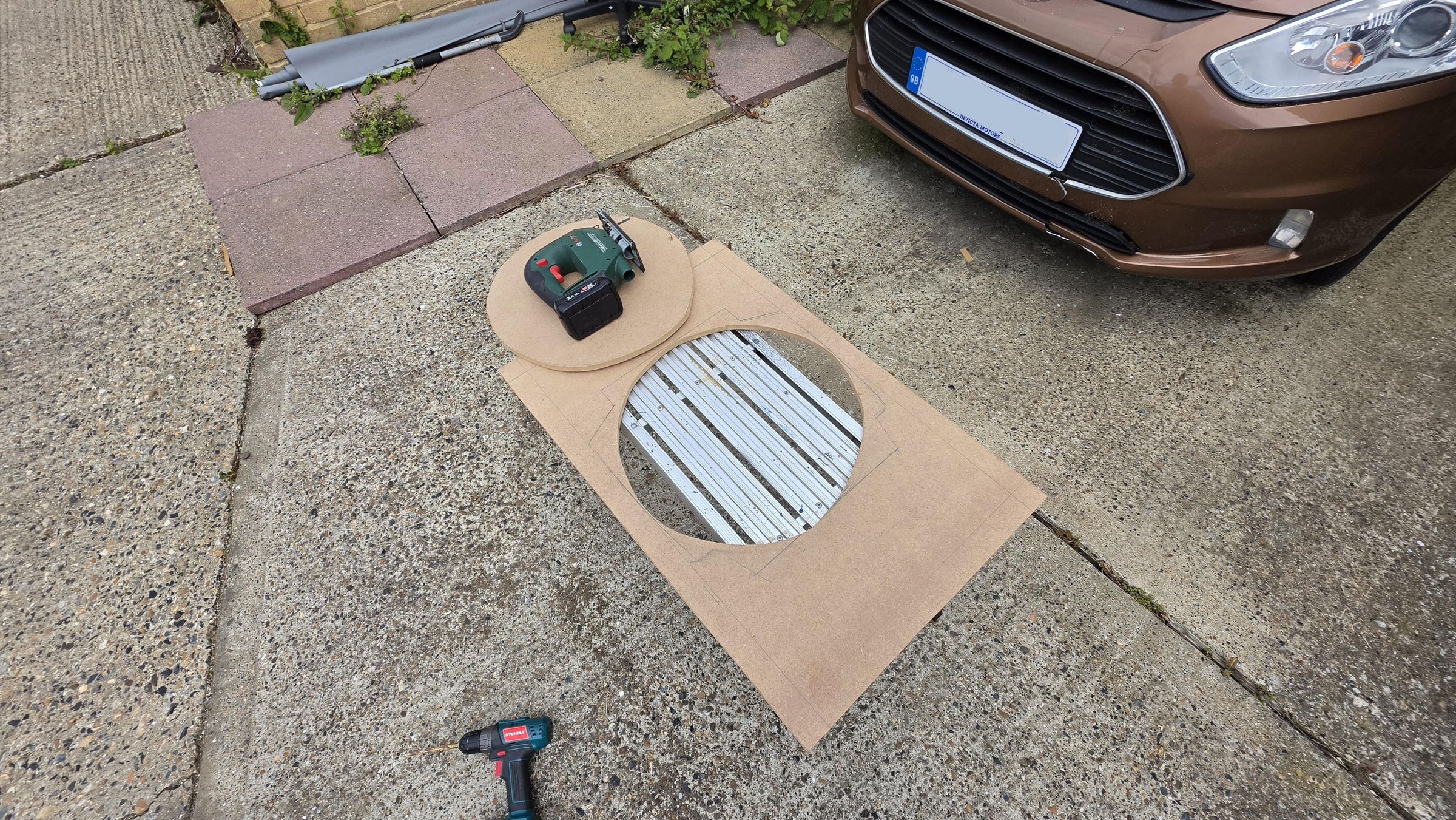
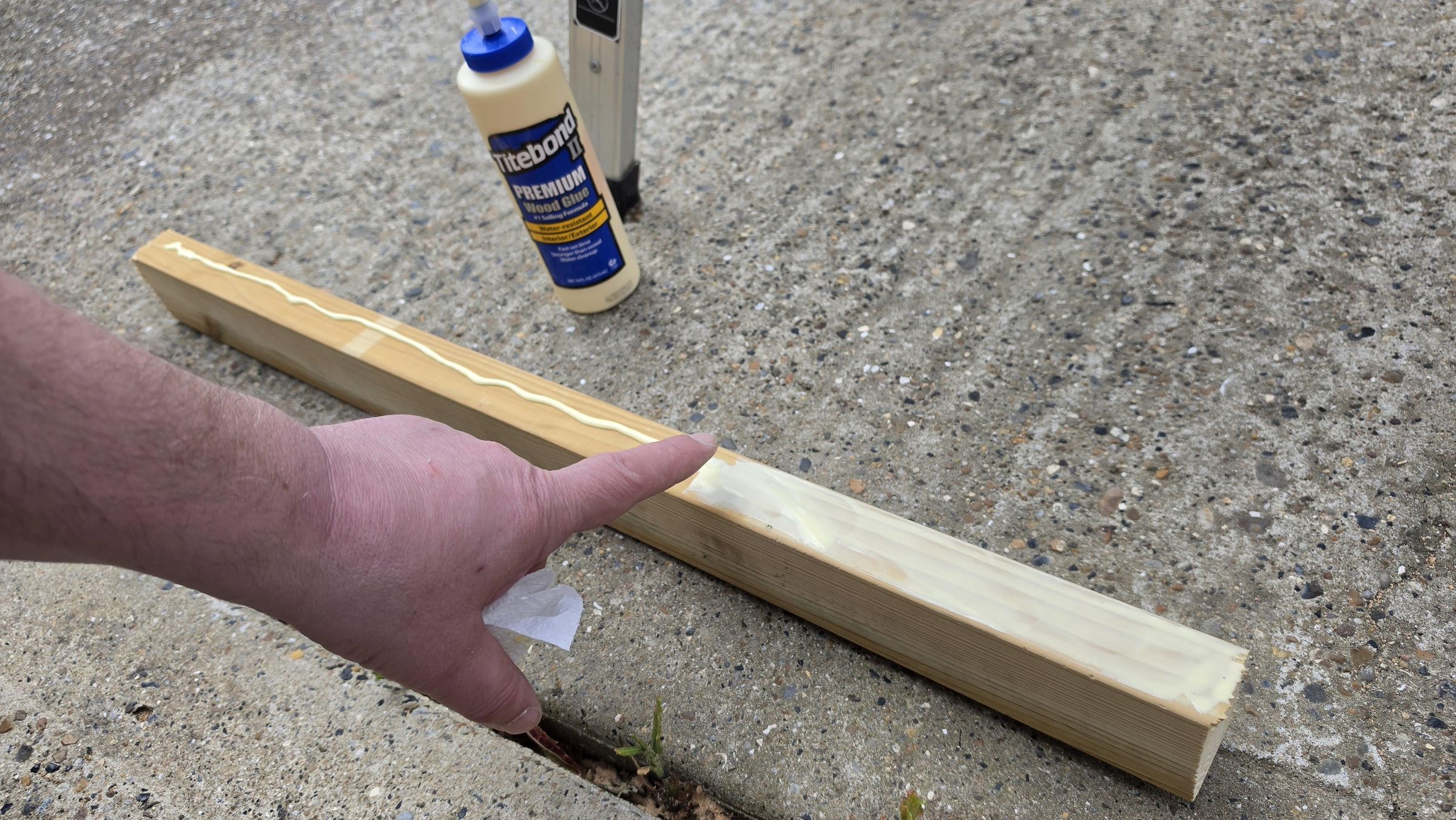
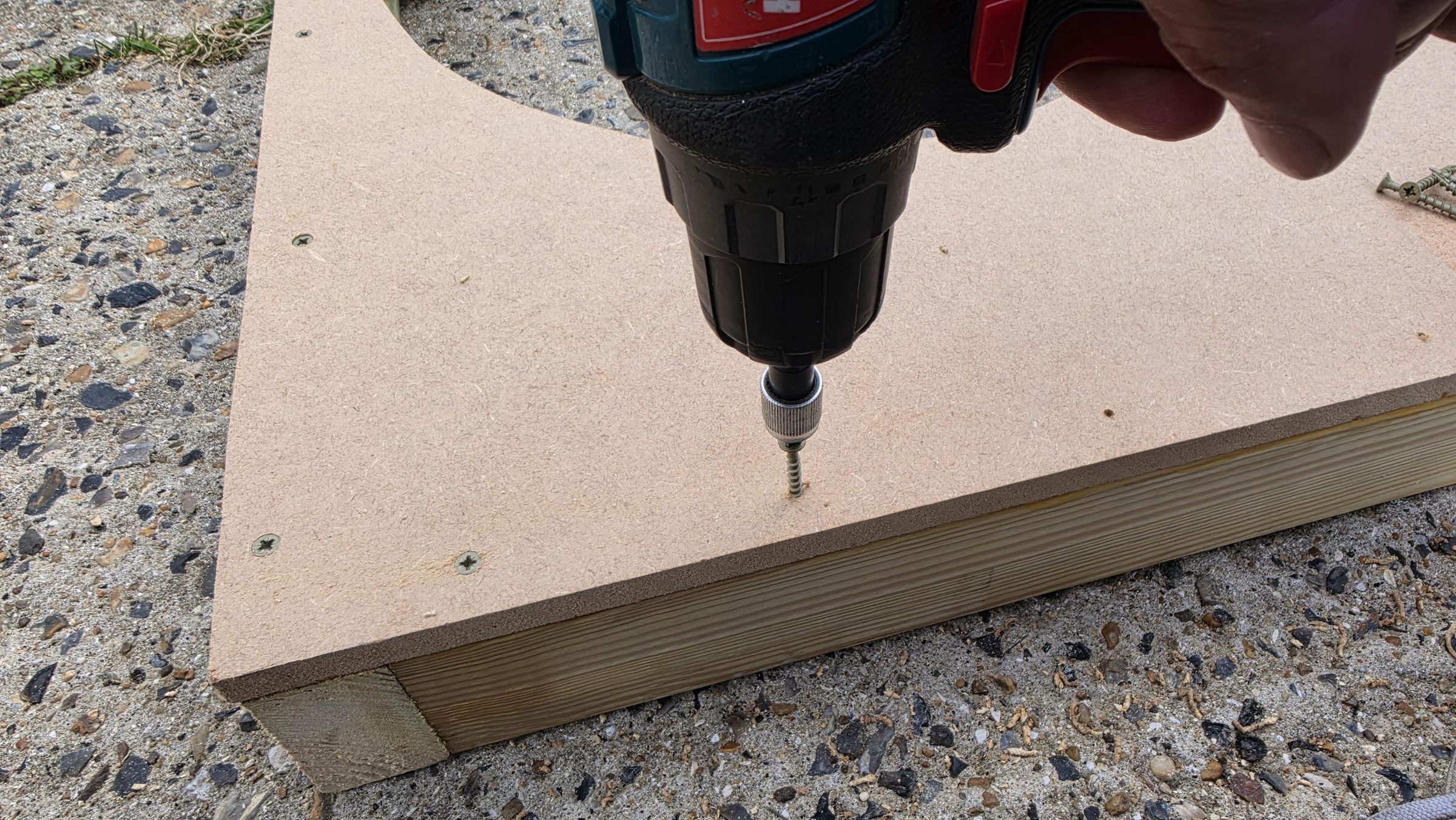
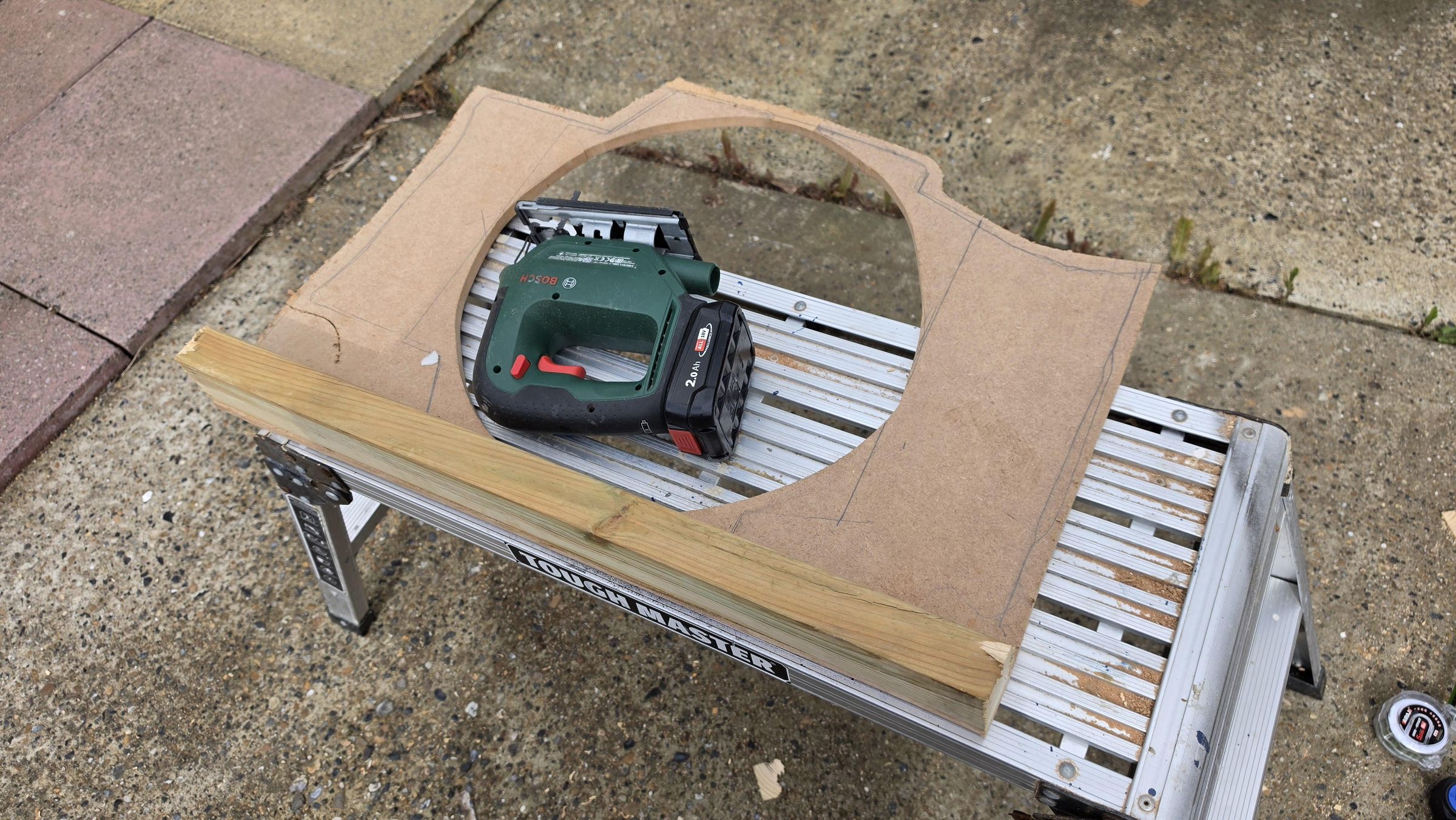
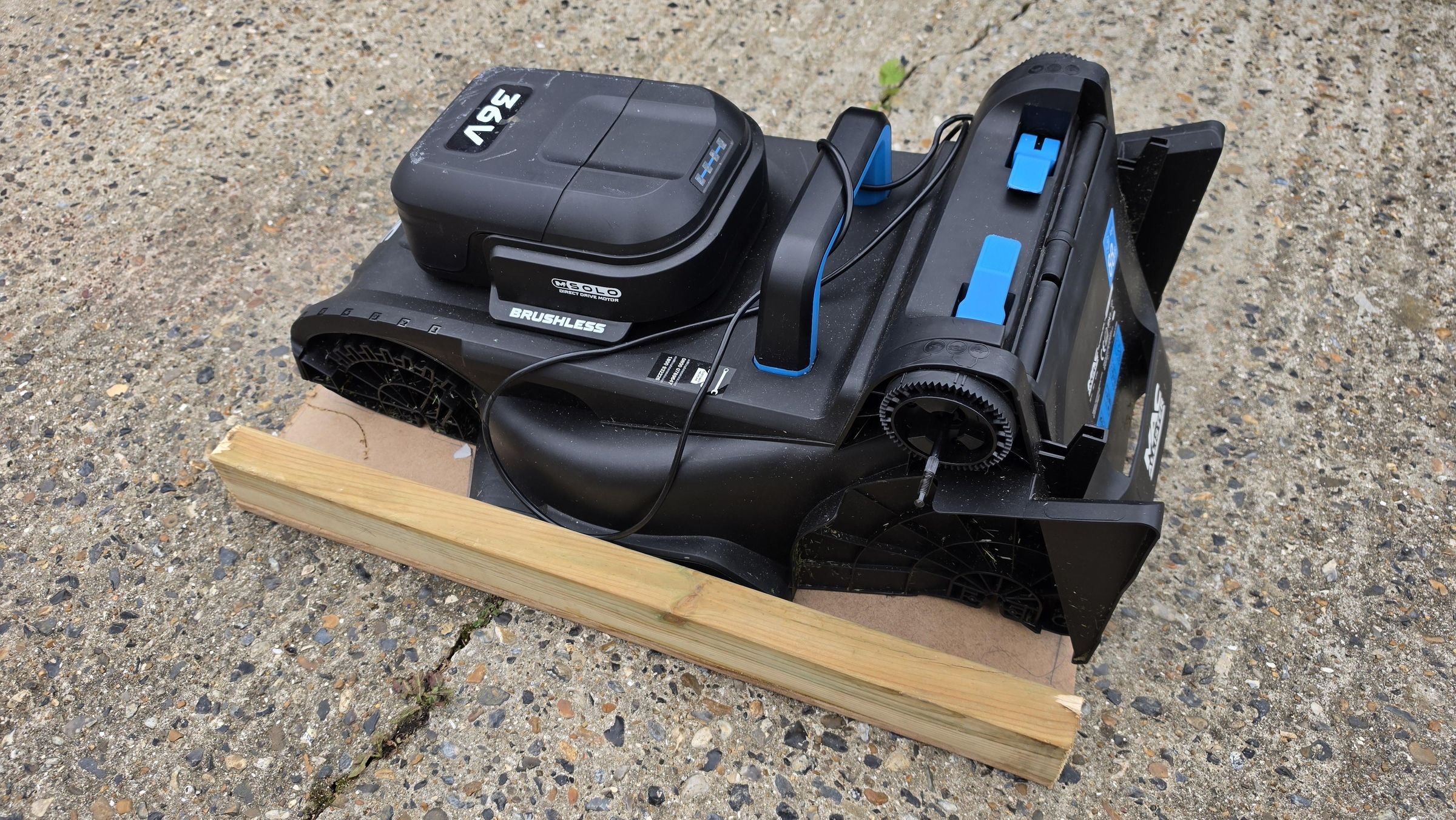
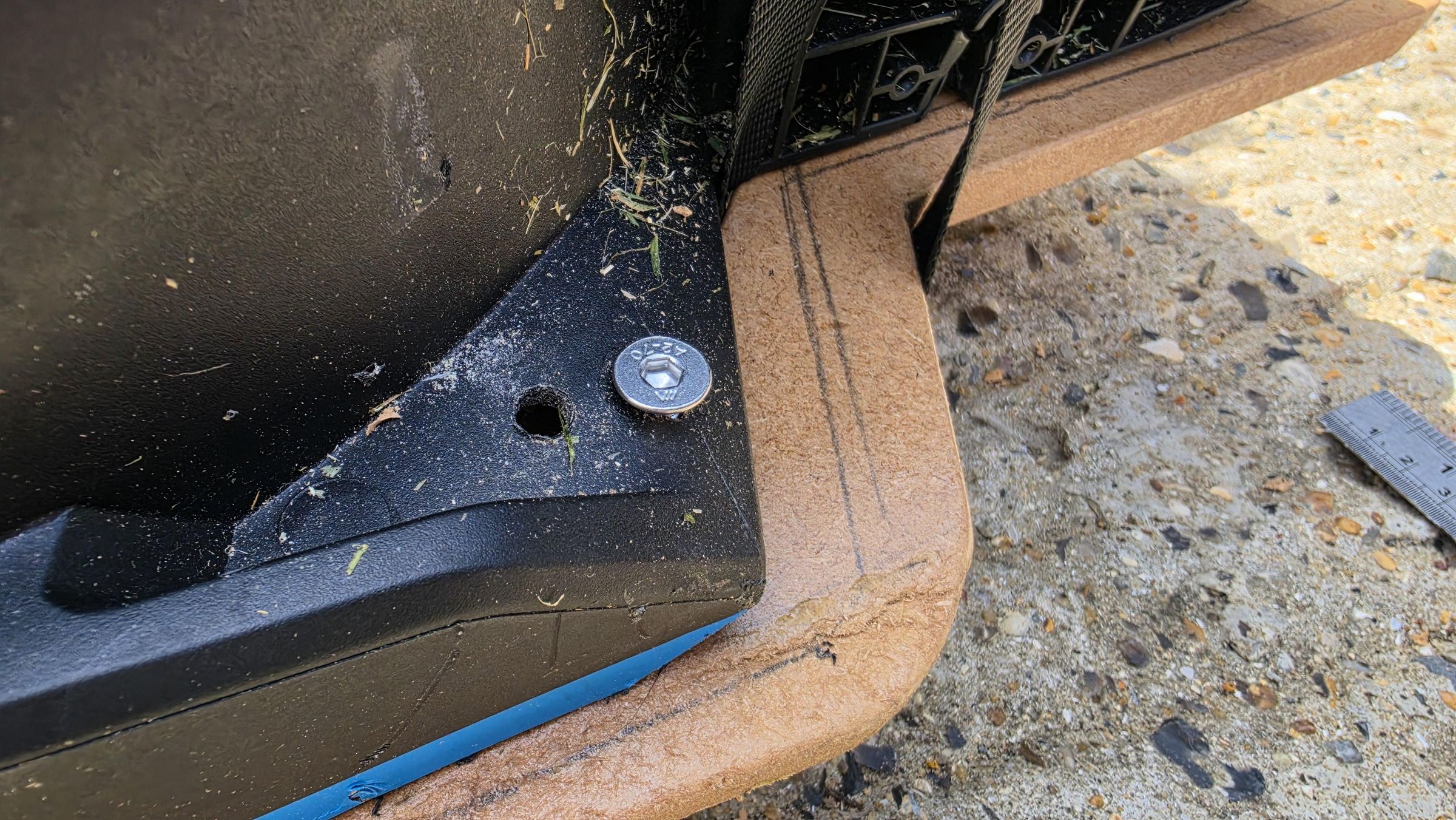
The mounting frame is made up from a base the mower deck sits on, a box panel that hooks onto the scooters tiller, and a couple of supports that fit to the box panel with a pair of draw runners to allow for cutting height adjustment. The deck attaches to these supports with a couple of hinges that allows for the deck to tilt and lift over uneven ground with a skid plate, and the front of the mower base fixes to the top of the height adjustment supports with a pair of heavy duty straps to take the weight of the front of the mower deck and allows for the tilt movement.
Base: Using a sheet of ply or MDF, lay it on your work surface and place the now stripped down mower deck on top. Draw a cutting mark around the outside of the deck leaving one edge (the edge that will attach to the scooter tiller) wide enough for a length of 38mm depth CLS timber to attach to. Then measure and mark the size/position of the circular blade housing and use a jigsaw to cut this out, then cut out the rest of the base. What you should be left with is a base a couple of millimetres larger than the deck around the left, right and at the front, with the back end 38mm wider to attach a length of CLS upright, and with a hole cut to align with the mower blade housing.
Cut a length of the CSL timber to the length of the back end of the base, apply wood glue and attach, then screw down for extra holding strength.
Making the Height Adjustment Frame
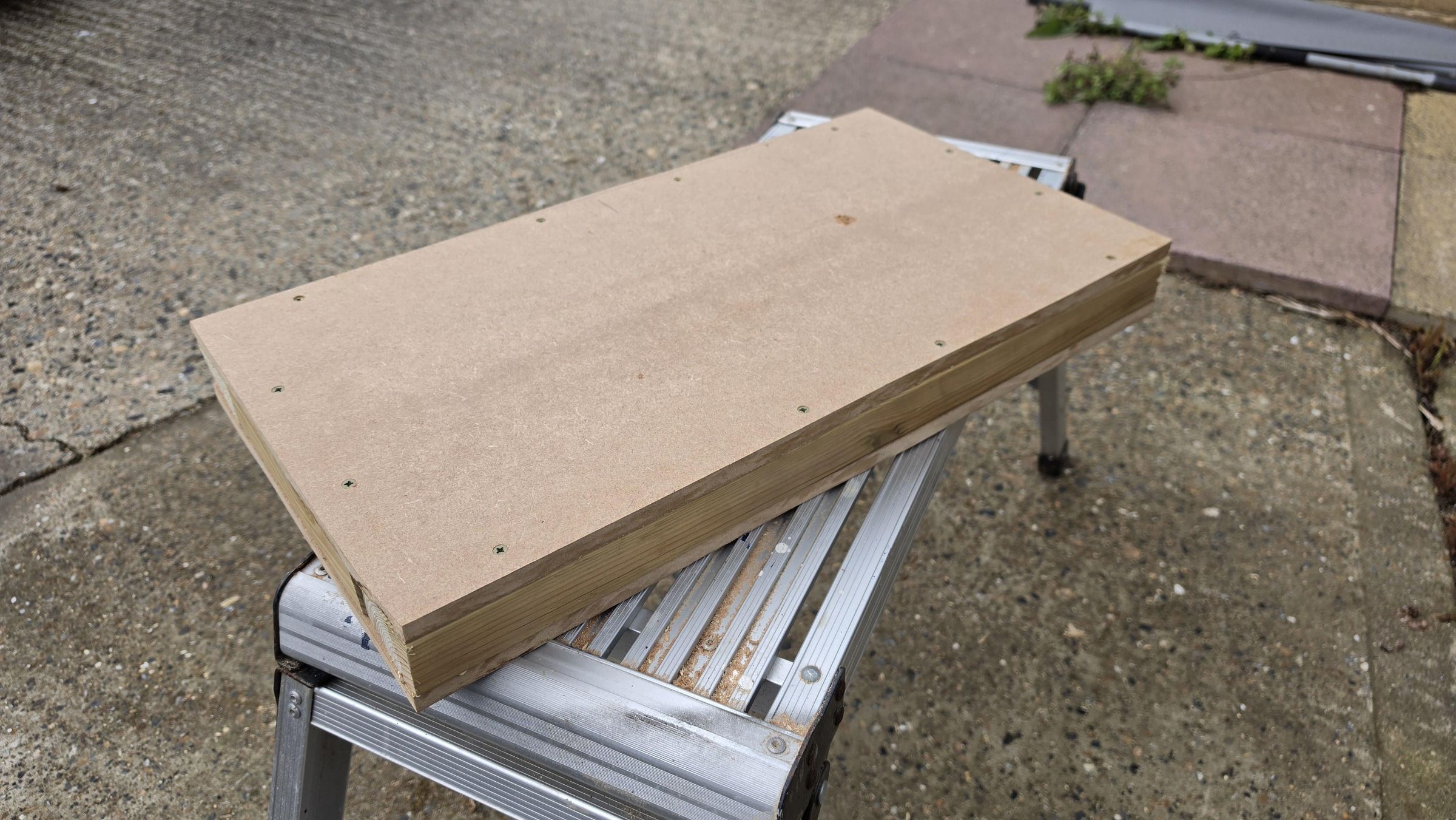


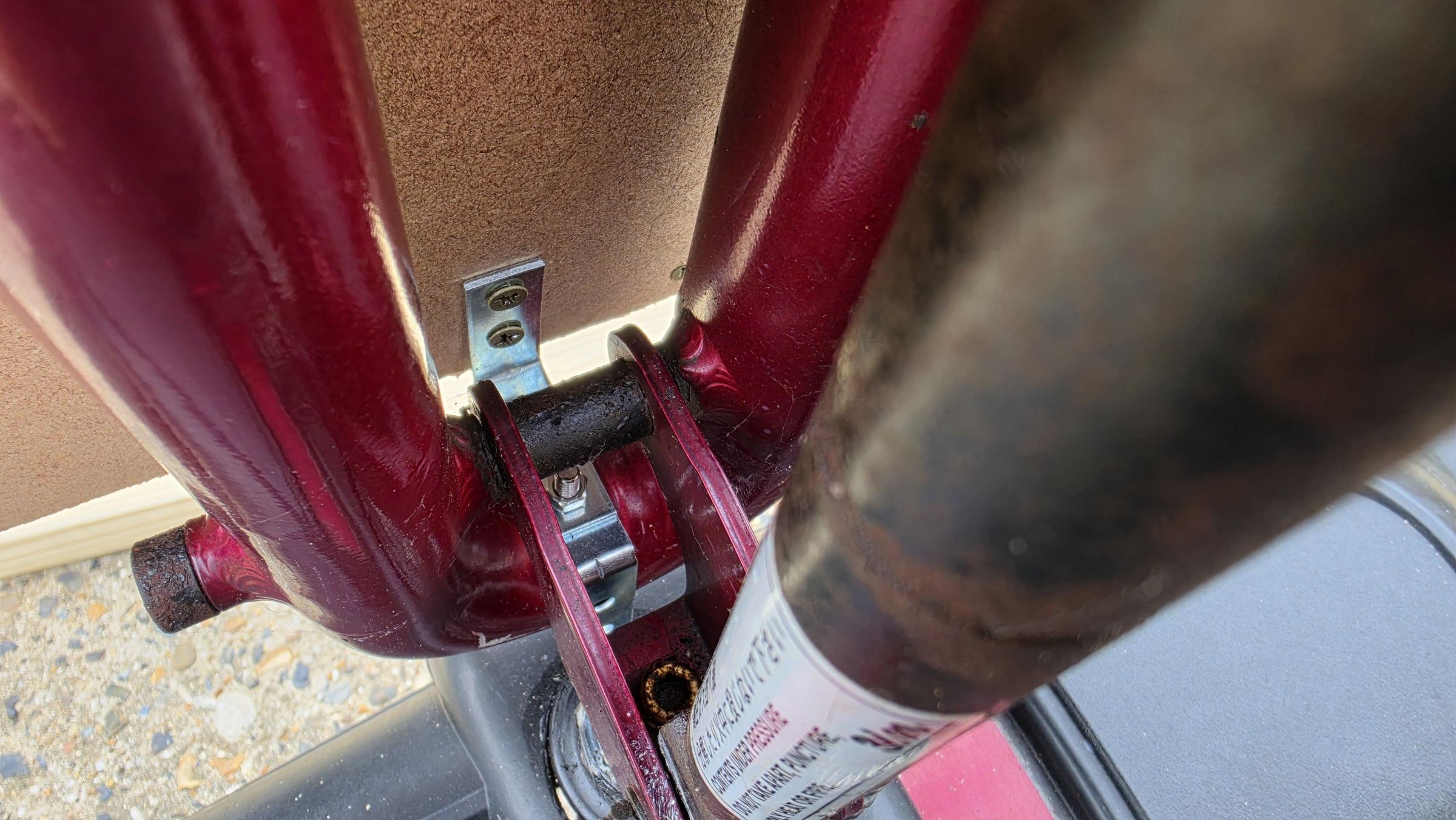
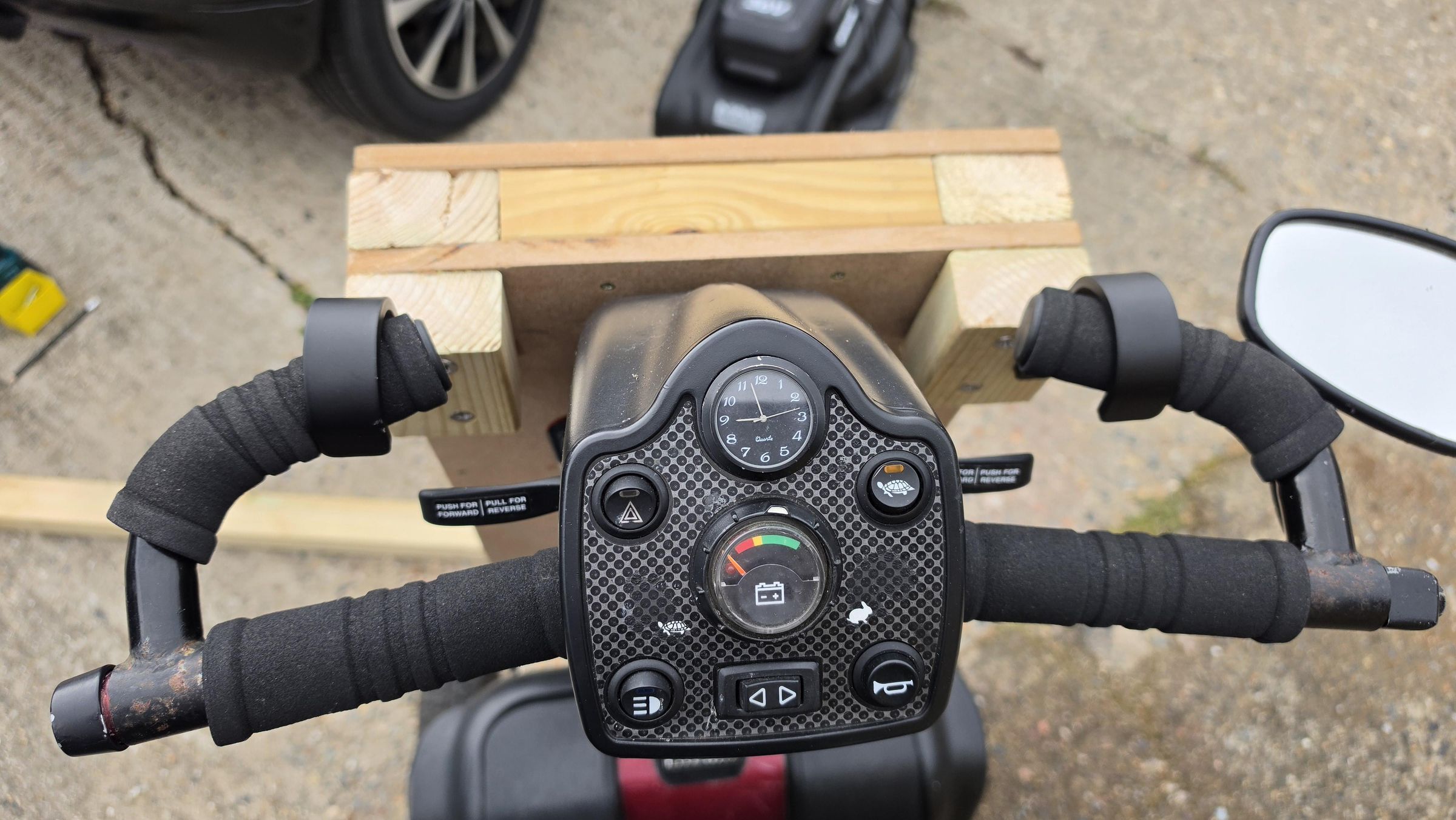

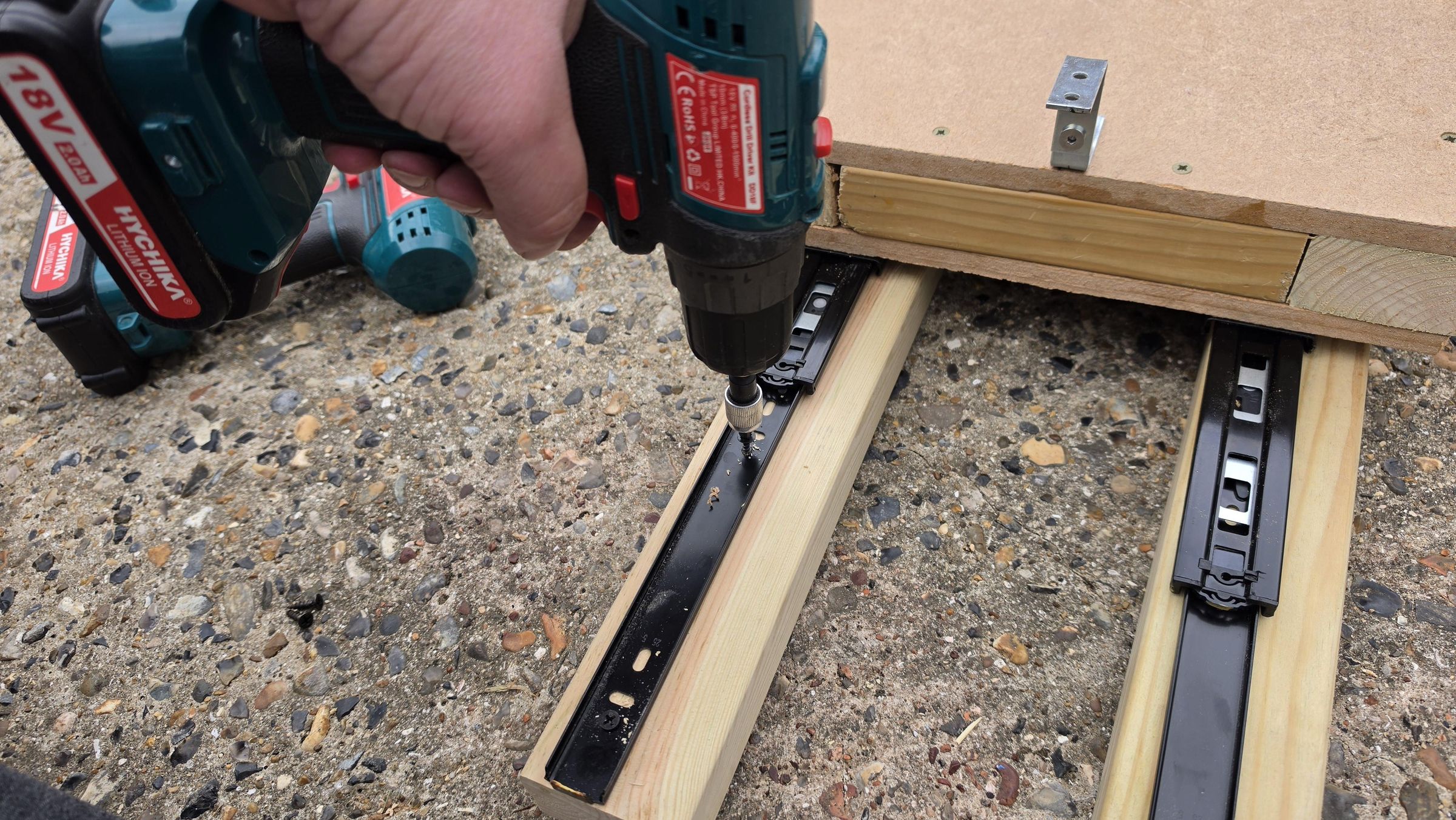


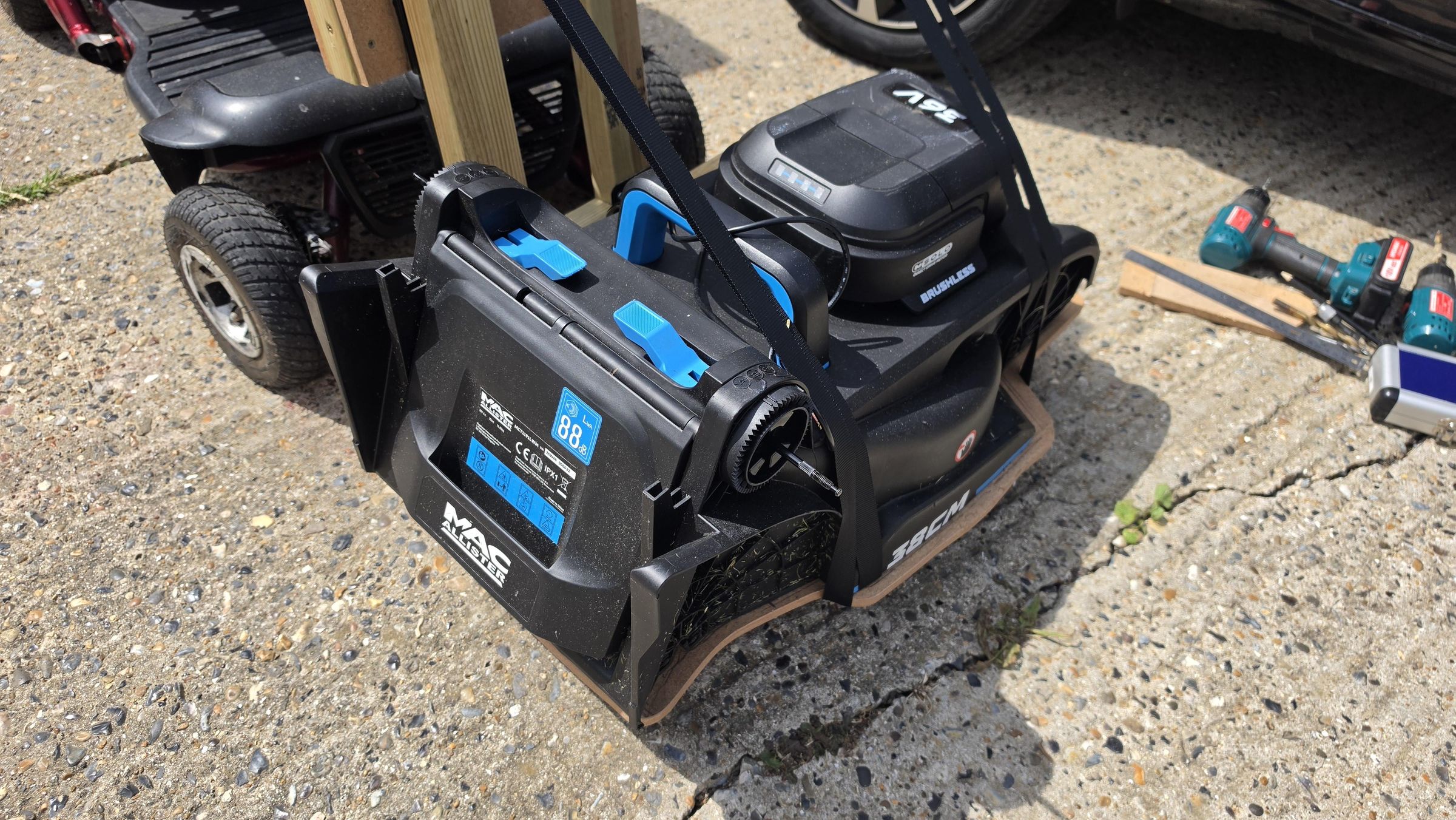
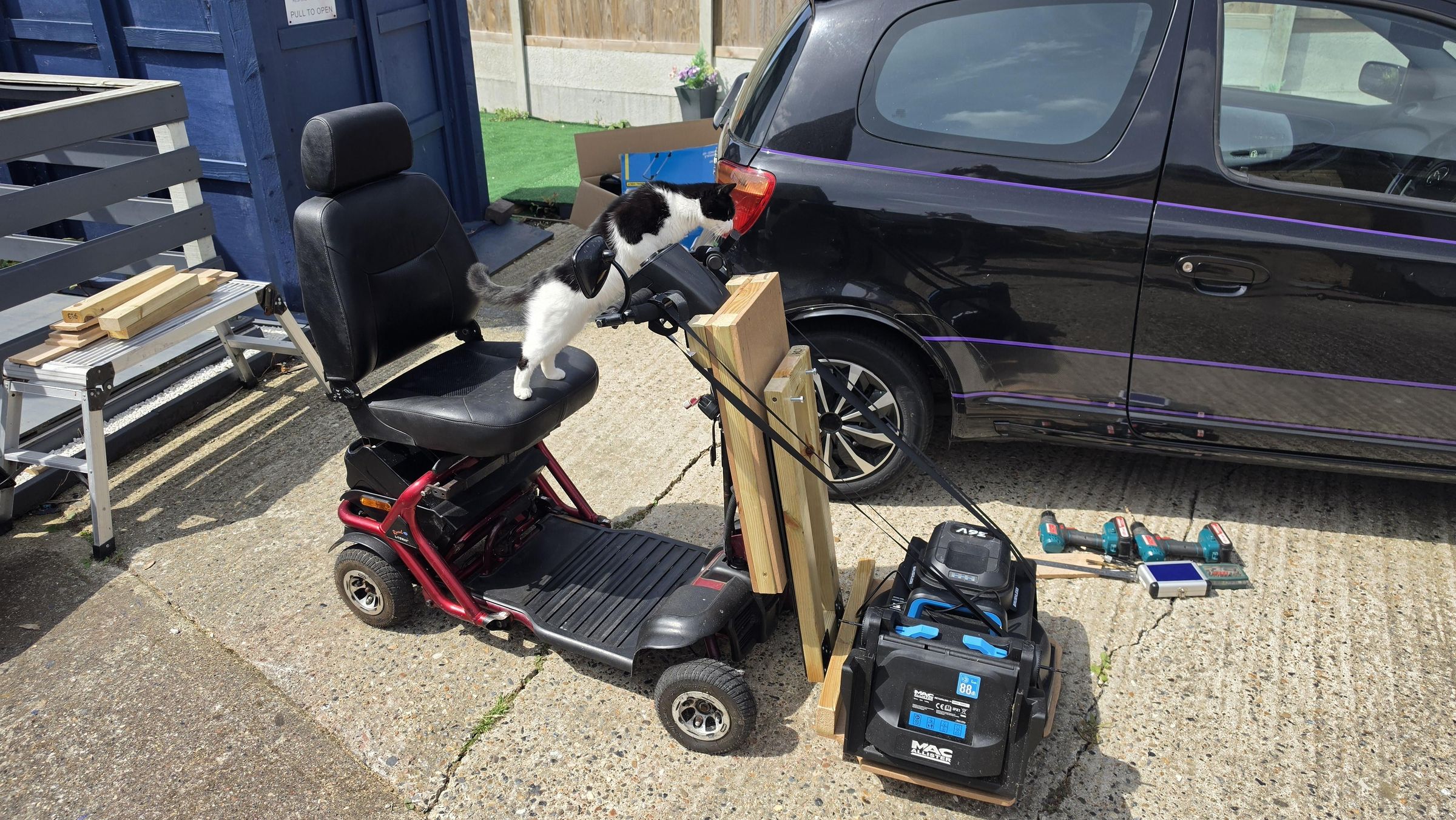
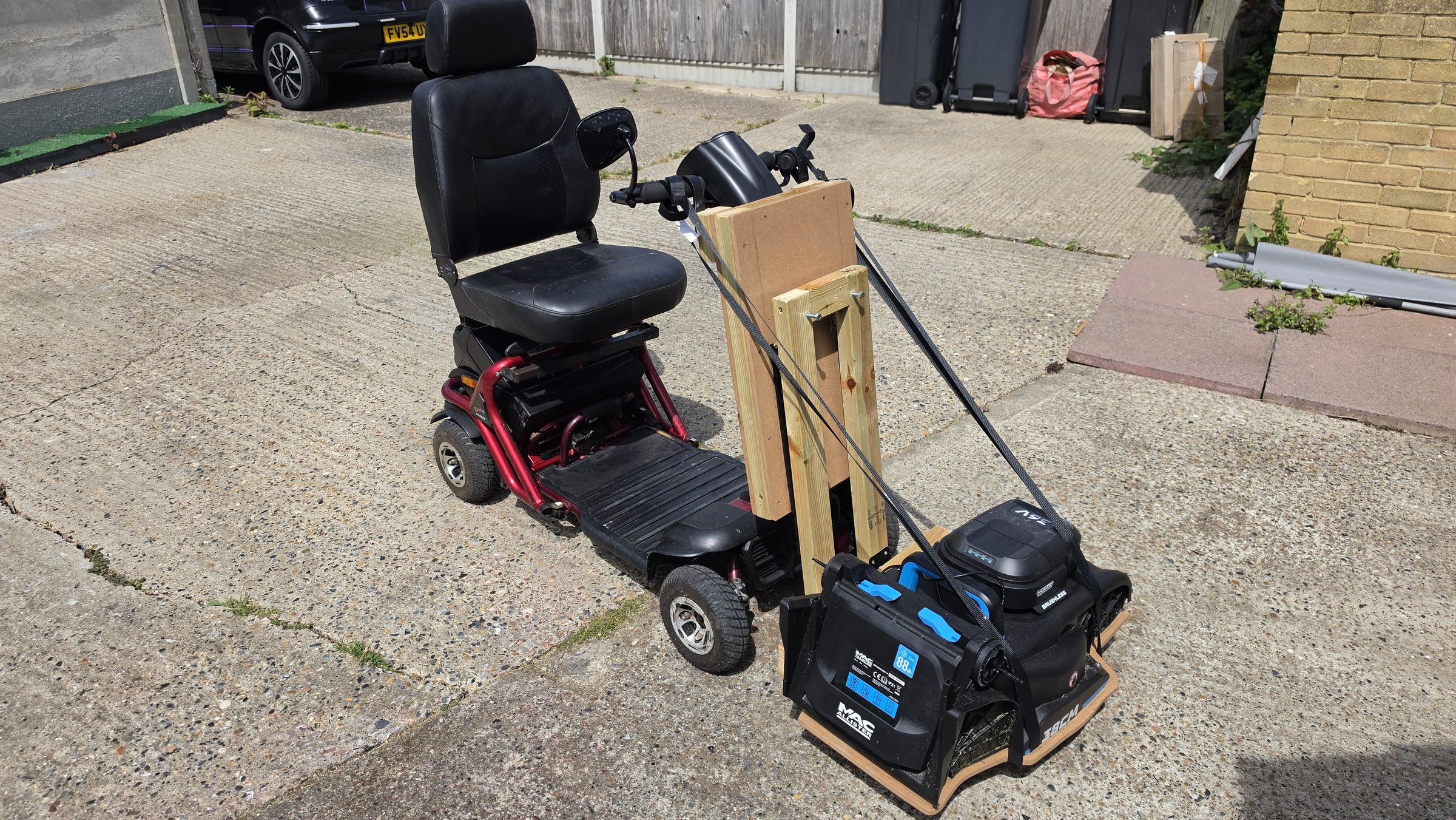
Now we make the upright part of the framework that fits to the scooter tiller. This supports the mower deck base, dose the grass cutting height adjustment, and helps to steer while cutting.
- Frame Mount: Here, we are making a simple box. This is needed to accommodate for the slight curve the tiller has, and to act as a spacer so the base/mower deck sits away from the front wheels to allow for unobstructed steering. Cut out two equal size panels from ply or MDF, cut four lengths of CLS to make the frame sandwich, glue and screw together to end up with a 62mm deep box (38mm depth of CLS, and 2x 12mm thick MDF/ply)
- I had to cut two small blocks of CLS timber and attach to the back top end of the box so the hooks would reach the handlebars. Attach the two metal hooks to the blocks, spaced correctly so they hook over the scooters handlebars. Bolt two smaller 'L' brackets together so they form a 'S' shape, then screw it to the lower back of the panel so it sits on the inner side of the U bend of the tiller.
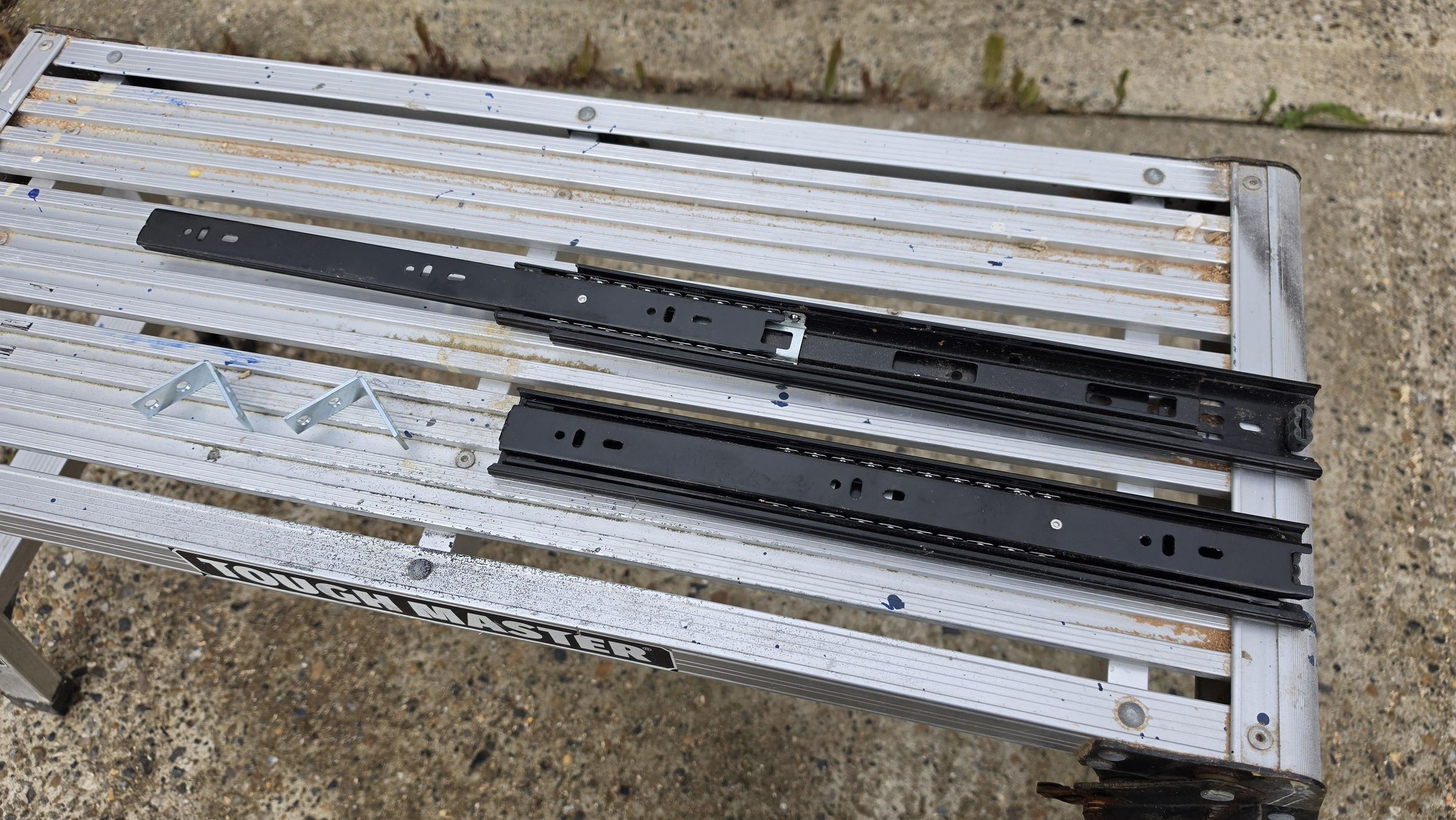
- 'Cutting Height' Adjustment Frame: Using a pair of 200mm draw runners, these were screwed to the box panel, and a couple of CLS lengths to make the adjustment supports were cut to size and screwed to the draw runners. Another small length of CLS was cut and glued/screwed to the bottom of the two adjustment supports.
- Mount the Base to the Frame: Screw the two hinges to the bottom of the height adjustment supports, and then to the CLS length of the mower deck base. A pair of supporting straps are fed through the circular cutout of the mower deck (they won't interfere with the mower blade), and hooked around the scooter handlebars.
- Making the Height Adjustment Levels: Now the holes needed to be drilled for the grass cutting height adjustment. I got my cutting height measurements I took before I stripped apart the lawnmower, then started with the lowest setting. I raised up the deck to the first measurement and propped up the base with some scrap wood so the base sat level and to the correct height I used two M10 bolts as the holding pins long enough to fit through the adjustment frame and into the box panel. I drilled a hole large enough for the bolt to fit through snuggly, through each height adjustment frame side, then through to the box panel, this was the first height setting. I then raised the deck to the next height, drilled through the existing holes in the adjustment frame, into the box panel again. I repeated this to make five height levels.
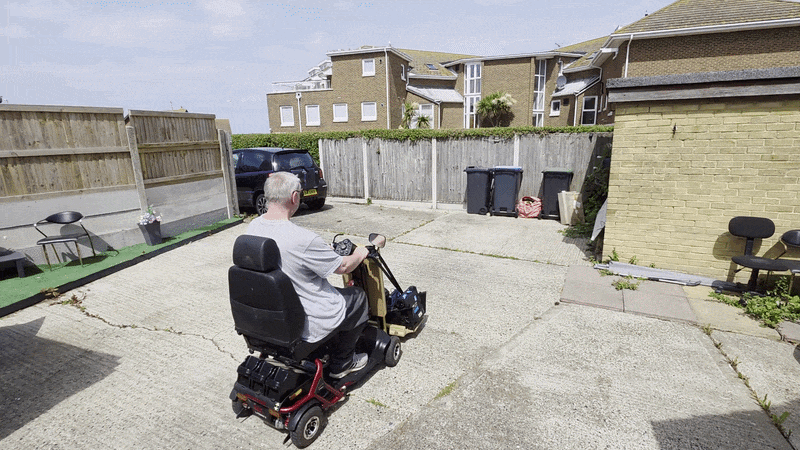
With everything assembled, it was time for a test drive. As you can see in the second to last photo, my feline project assistant wanted first dibs to do the test drive, but she was soon relegated to observer. The ride was comfortable, the mower frame sturdy, easy to steer, and had full turning range.
Sand, Seal and Paint

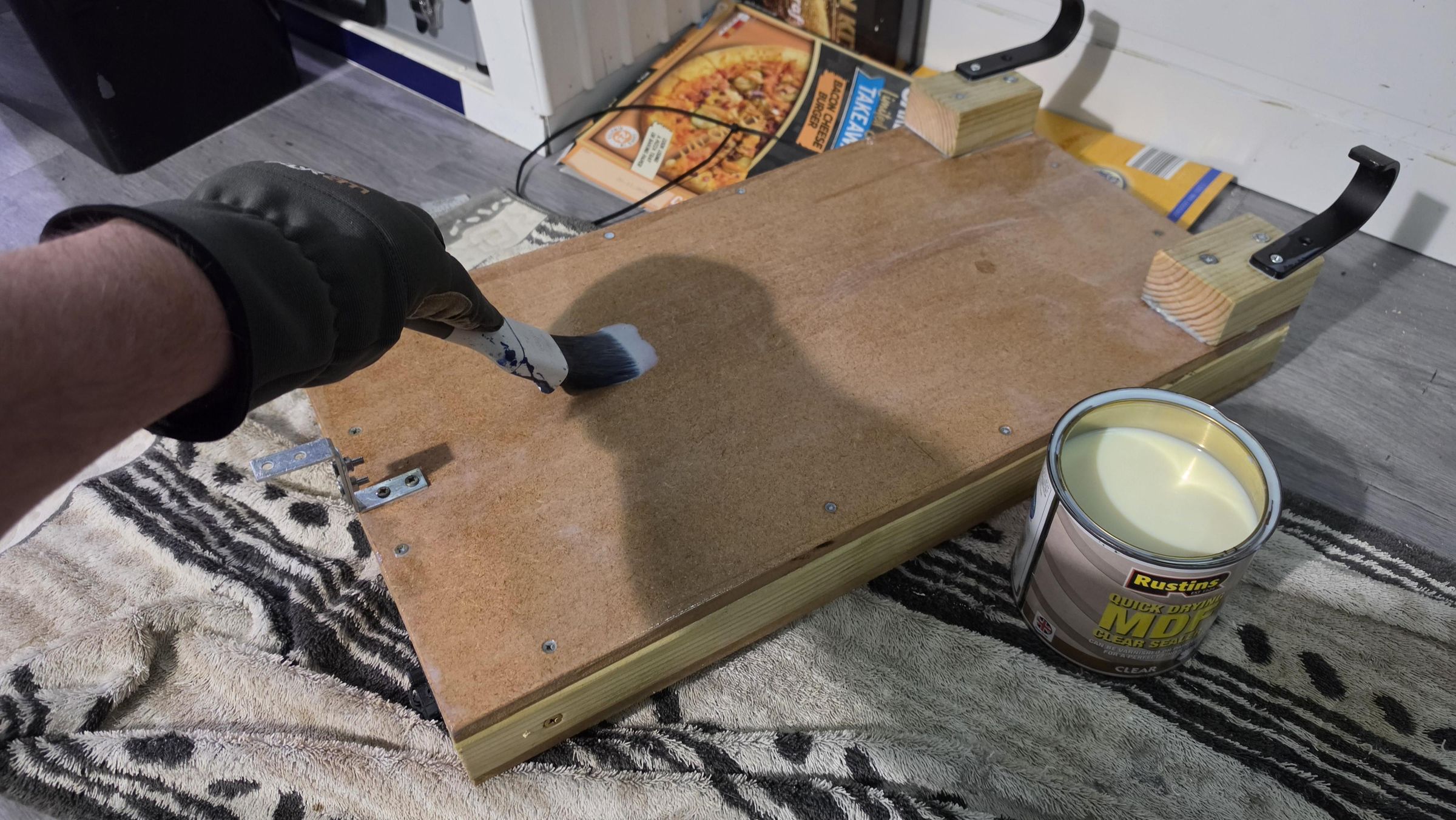

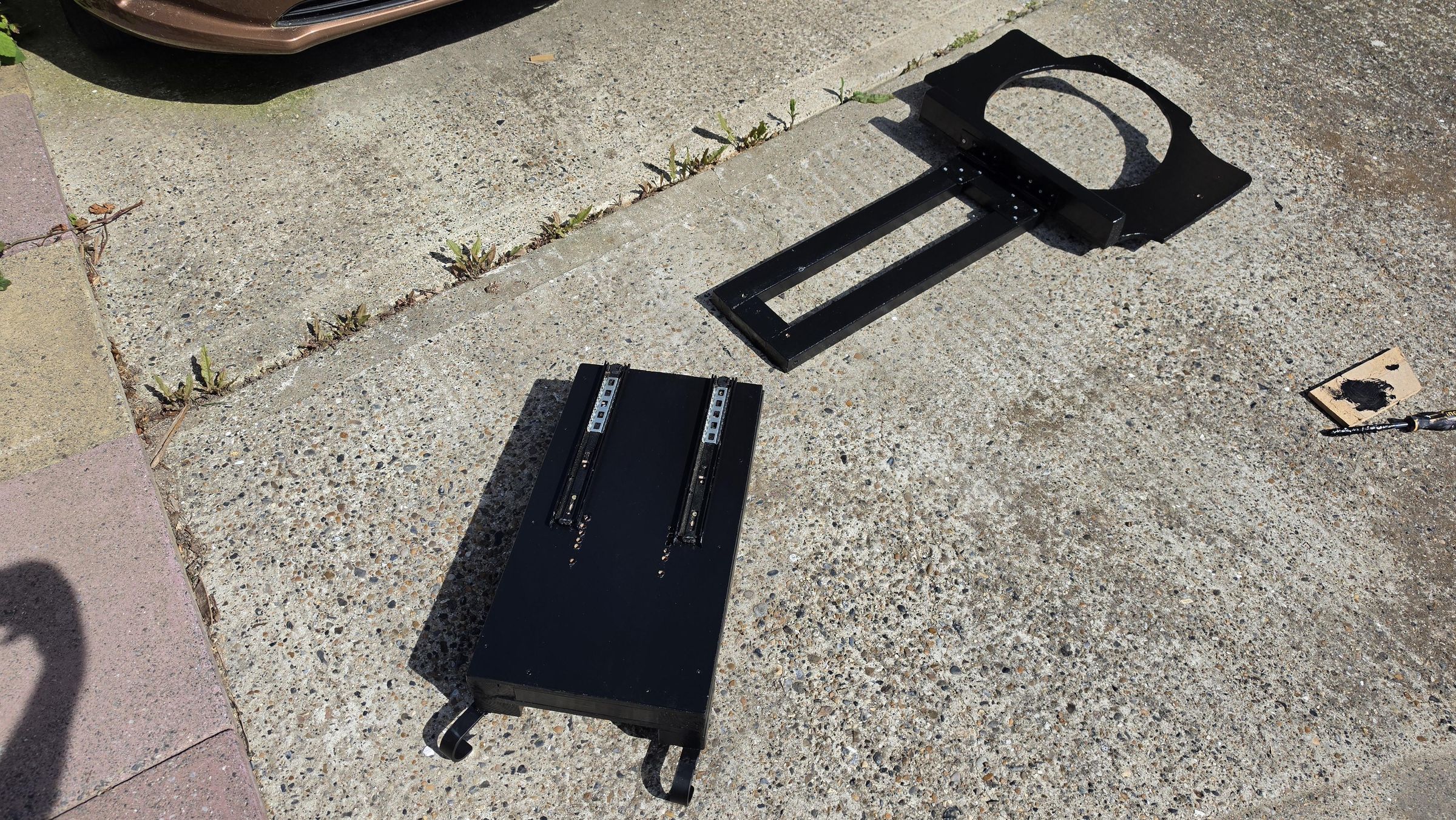


Test drive completed, the frame was removed and taken apart for painting.
Sanding: For this stage, it's best to remove the height adjustment supports by separating the two halves of the draw runners. Sand down all of the edges with a coarse sandpaper and sanding block to make curved edges around the frame, especially around the circular cutout and the front of the deck frame.
Wood Treatment: Then change to a fine grit paper to make everything nice and smooth. Wipe clean of and dust then give the frame two to three coats of an external use wood sealant and leave to completely dry.
Add Some Colour: Paint all of the frame areas with a good quality weatherproof gloss paint, two to three coats, and leave to fully cure after the last coat. The gloss finish makes cleaning a bit easier. I used black to match the black parts of the mower and scooter, and to finish off the matching, I also picked out a couple of areas of the mower deck, masked the areas and spray painted them with a dark red to match the scooters frame.
Wiring Up
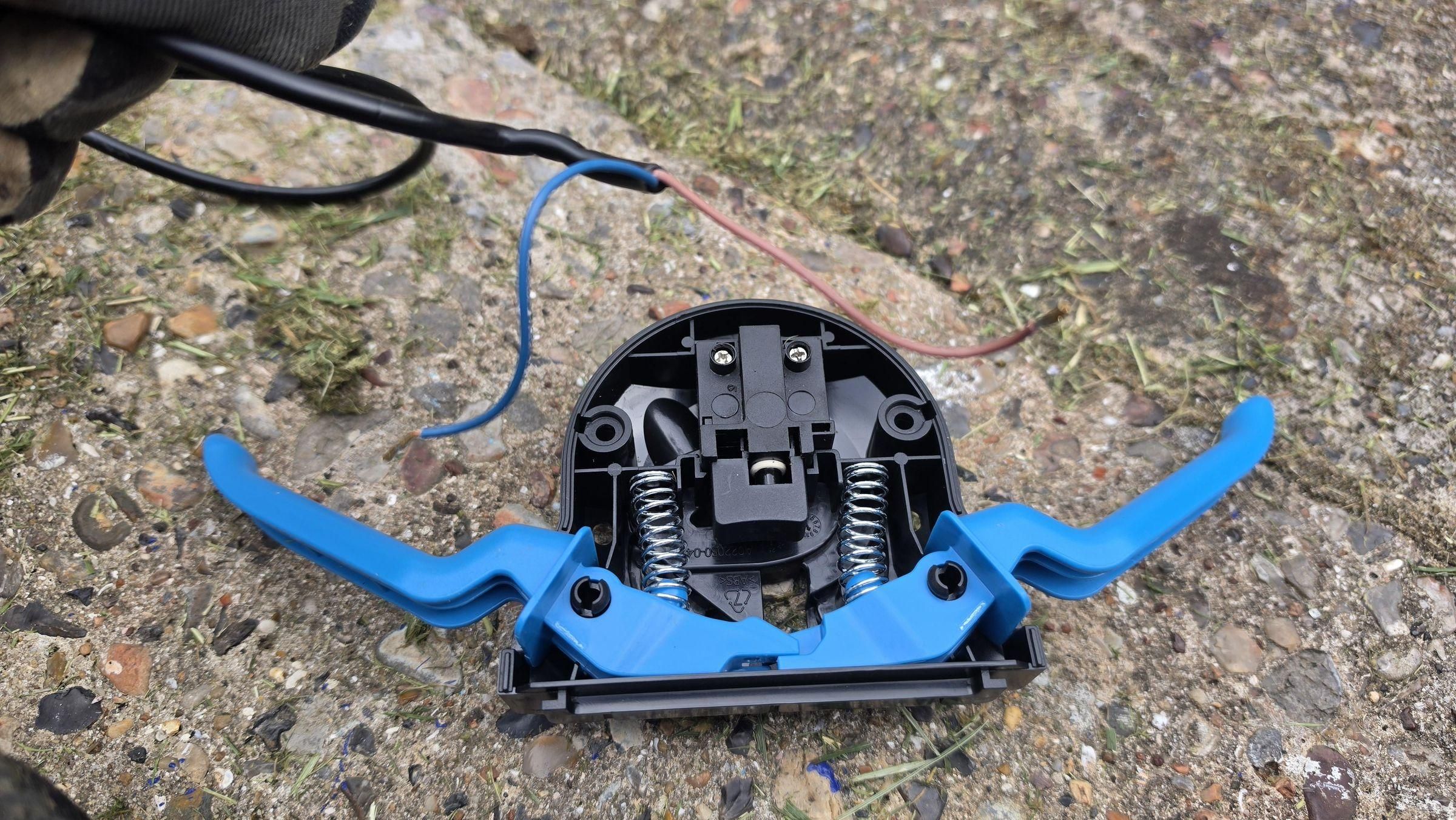
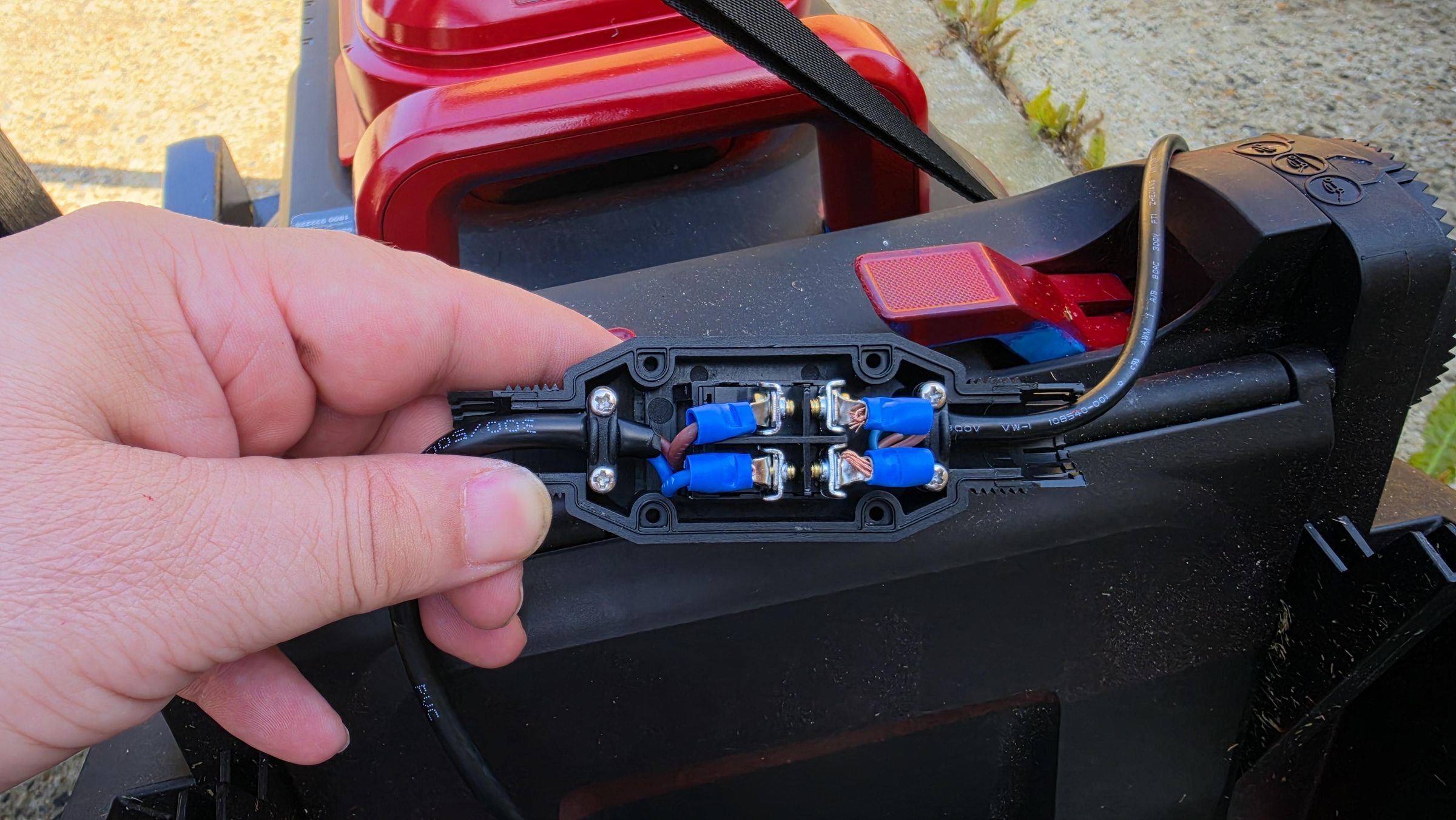


Using the existing cable that connected the mower deck to the operation lever, I measured the end from the deck to where I wanted to mount the safety cut-off switch. I unscrewed the new switch, cut and stripped both ends of the power cable, connected then to the switch terminals, positive to positive, negative to negative, then reassembled the switch. This was then attached to the new frame with a couple of zip ties in a position where it would not interfere with the mower height adjustment.
The other end of the power cable was then cut to size, stripped and attached to the new foot operated switch. Because I wanted the foot switch to be removable when I removed the mower frame, I use a strip of heavy duty Velcro (hook and loop). The hooks glued to the bottom of the switch, and the loops glued to the floor pan of the scooter. I chose to use my right foot for operation simply because of mussel memory from when I use the gas pedal when I drive my car.
There is something important to note: Battery powered lawnmowers can draw a lot of current anywhere from 10 to 30 amps (or more) depending on battery and motor, and this can be more when you count start-up draw, or cutting long or damp grass as the motor works harder. So take this into account when purchasing your new switches as they will need to be able to handle that current for your mower without overheating/failing. The spec sheet should tell you the current draw, but not all do though. Or while disassembling the mower, you can use a multimeter set to DC current draw, disconnect one of the wires from the operation lever switch, then connect one multimeter probe to the wire and the other to the now disconnected switch terminal. Then vary carefully, making sure you or anyone/anything are not anywhere near the blades, press the operation switch and make a not of the start-up draw, and continual running draw.
Assembly
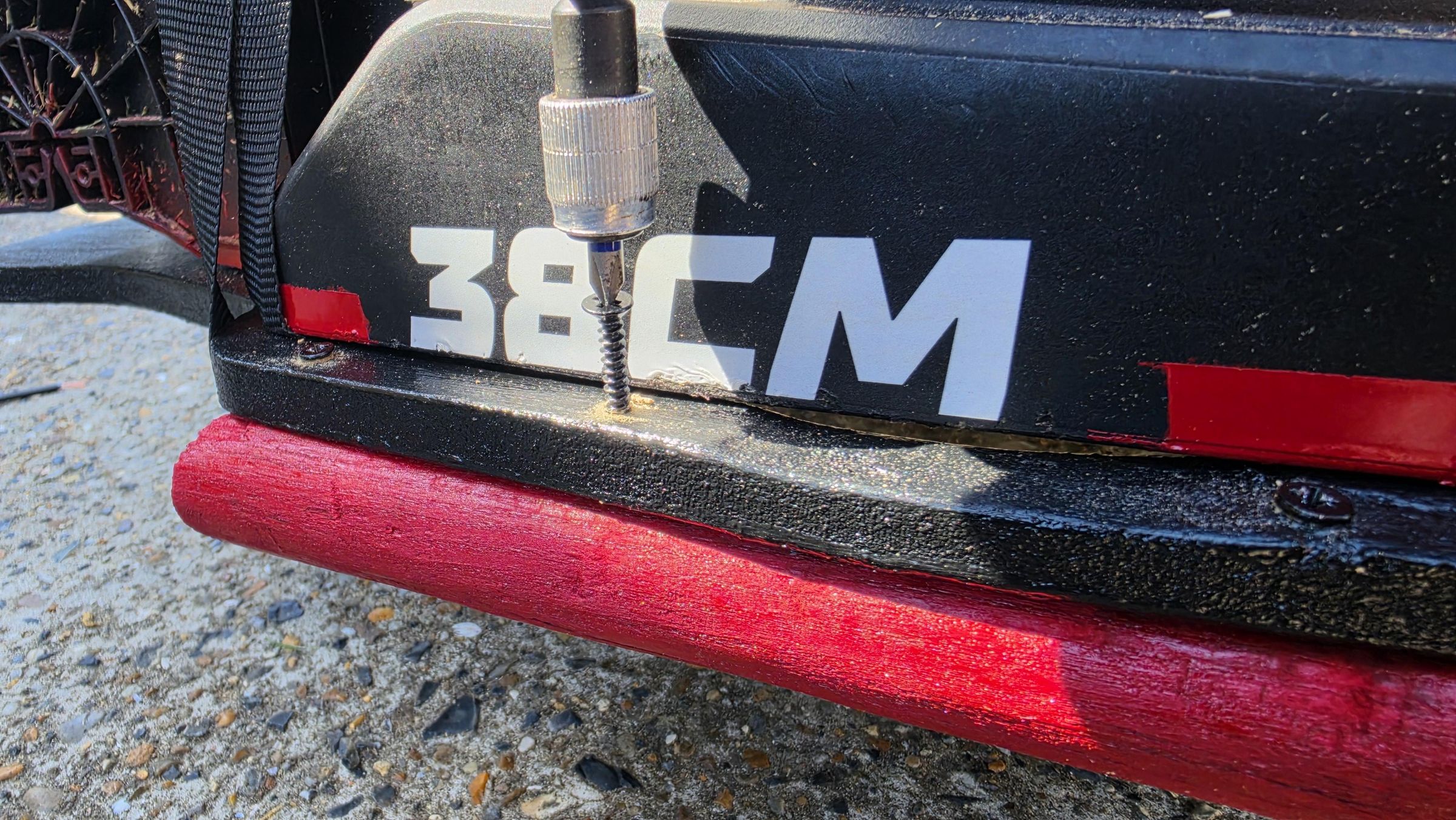
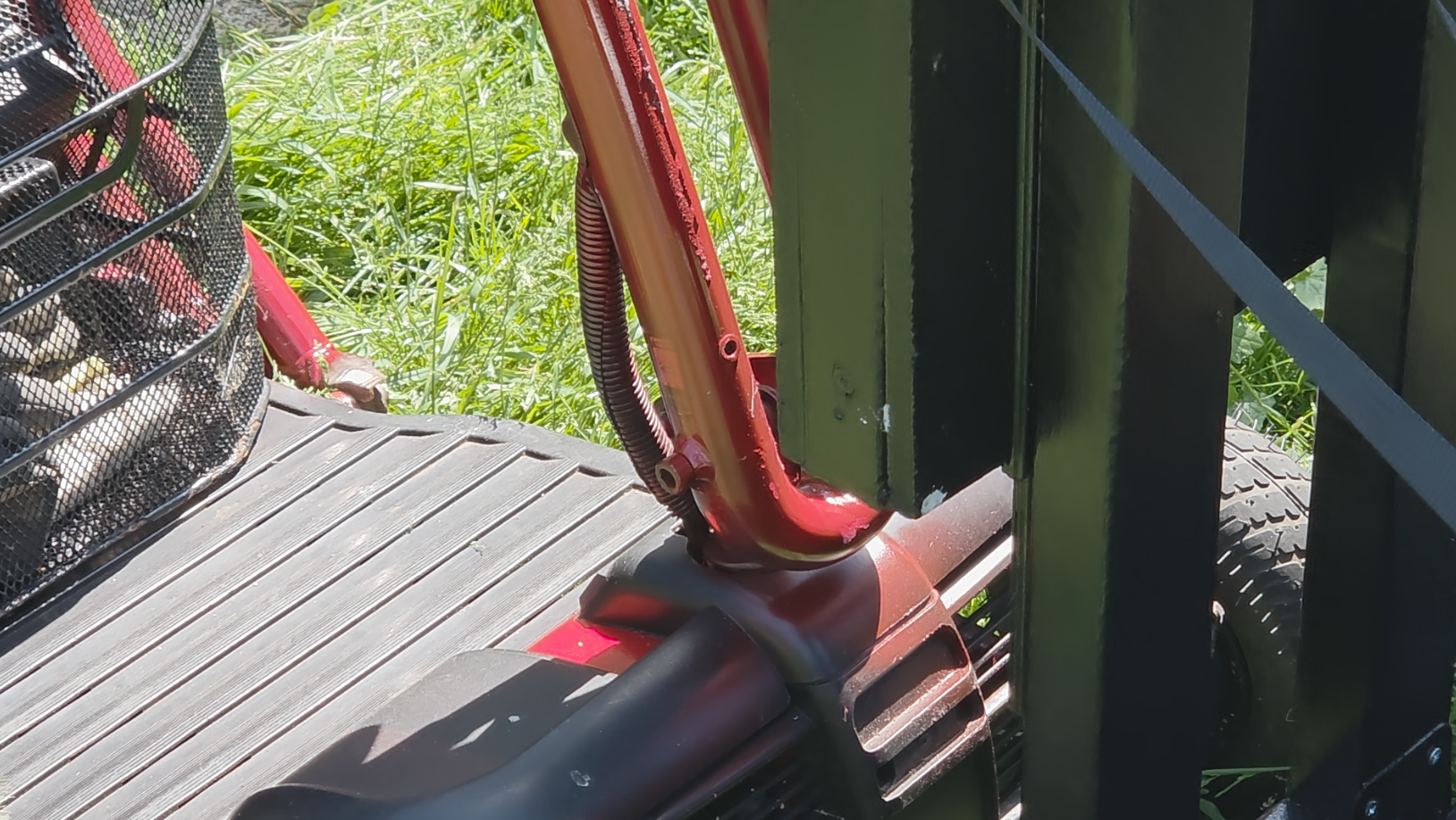
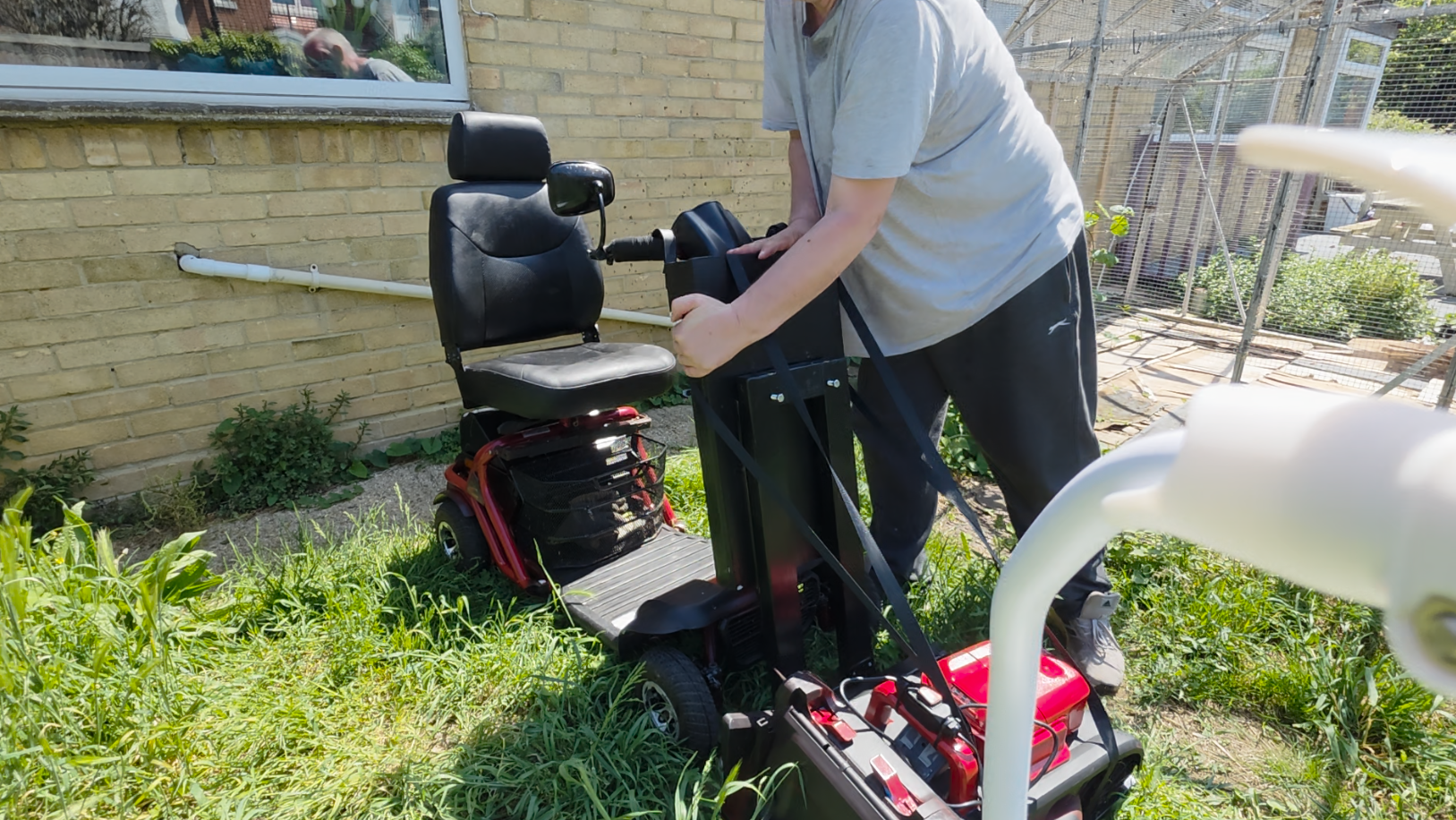
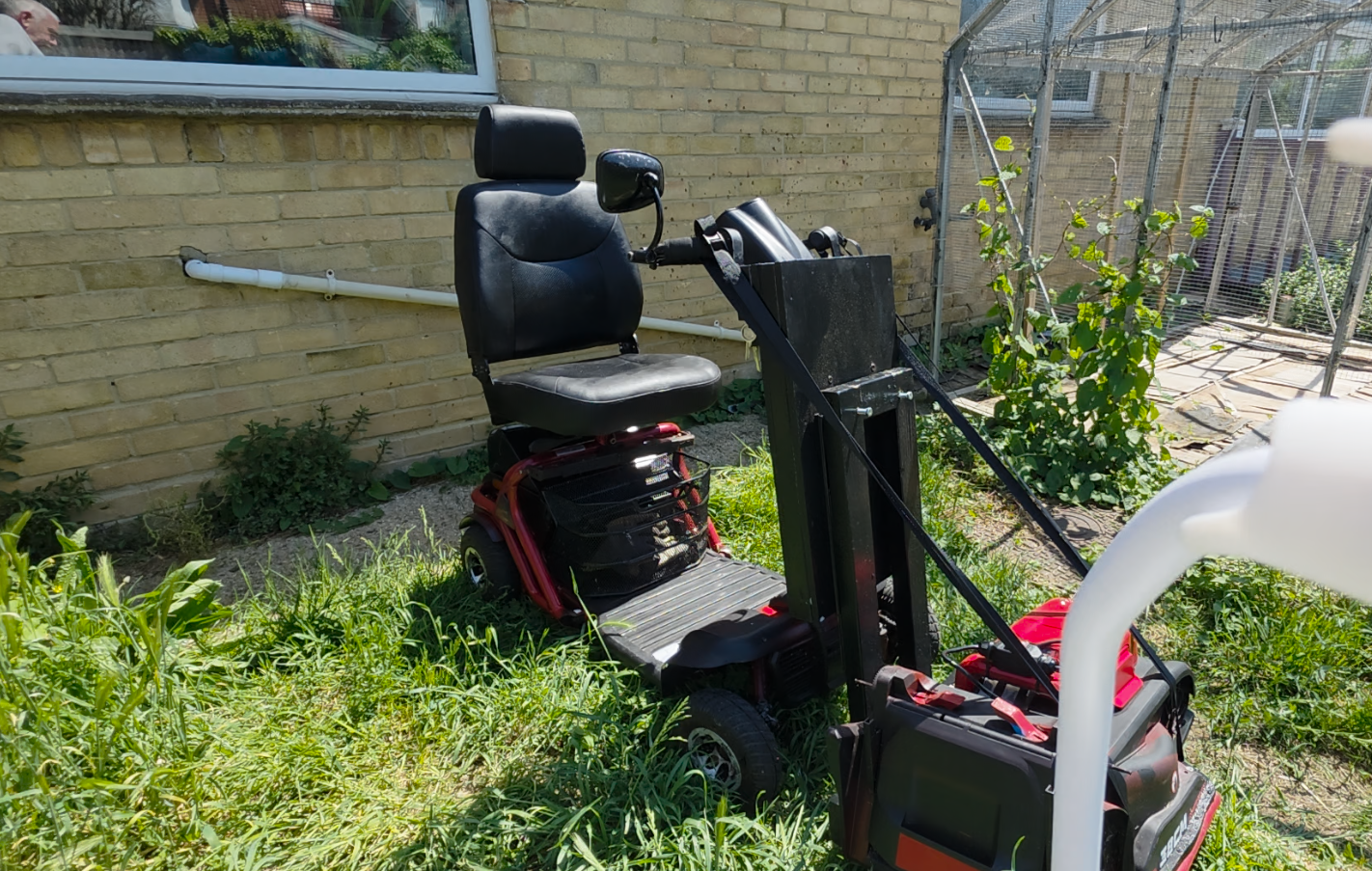
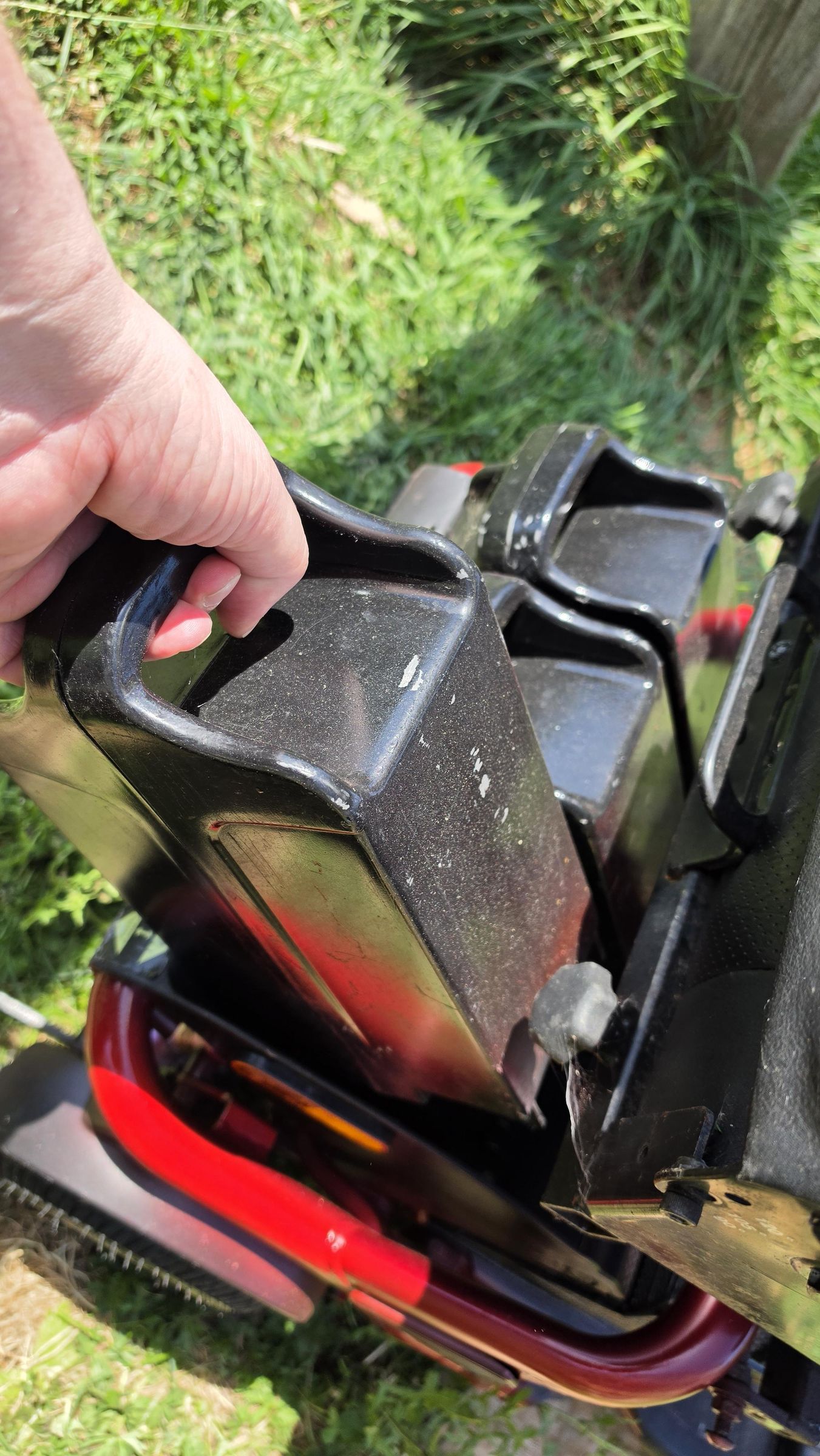
Re-attaching the Base to the Frame: With all of the paint dry, it's time to put the bits together. The draw runners were rejoined fixing the height adjustment frame back to the box panel. The frame was then fitted onto the scooter, sliding in the bottom 'L' brackets over the top of the U bend of the scooters tiller, then the two hook brackets hooked over the handlebars.
Skid Plate: All I used here was a small length of an old wooden broom handle, cut to size, and screwed in under the front of the mower deck base.
Supporting straps: These were refitted, fed through the blade cutout area, and hooked loosely to the handlebars.
Mower Deck: Next, the mower deck was placed onto the base, then bolted down to make it secure. the straps were then tightened to make the deck level.
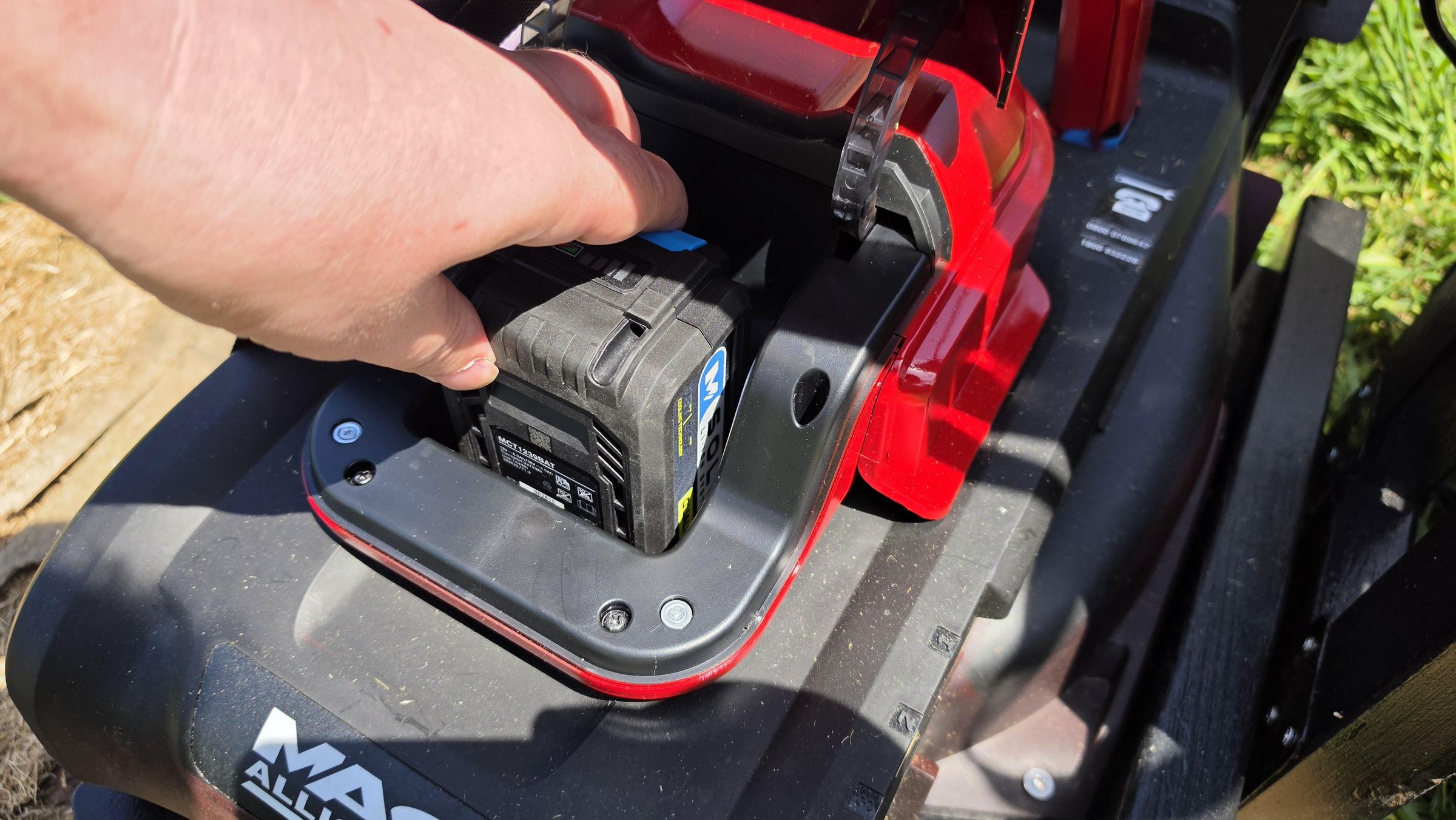
Ready to Roll: With the scooter and mower batteries fully charged, they were inserted, mower cut-off switch deactivated, foot pedal put in place, and the deck tested. Then it was simple a case of moving my new ride-on mower to my friends back yard, and mow the lawn. I lifted the grass discharge chute flap up then did a test cut to see how much grass was being cut, and it was a fair amount. Next I attached the grass collector and cut a larger area... and it worked, yay. Then I grabbed my phone and made shot some video that you will see in the attached video in the intro. I now had my very first battery powered ride-on lawnmower and I couldn't be happier with how it worked.
Conclusion
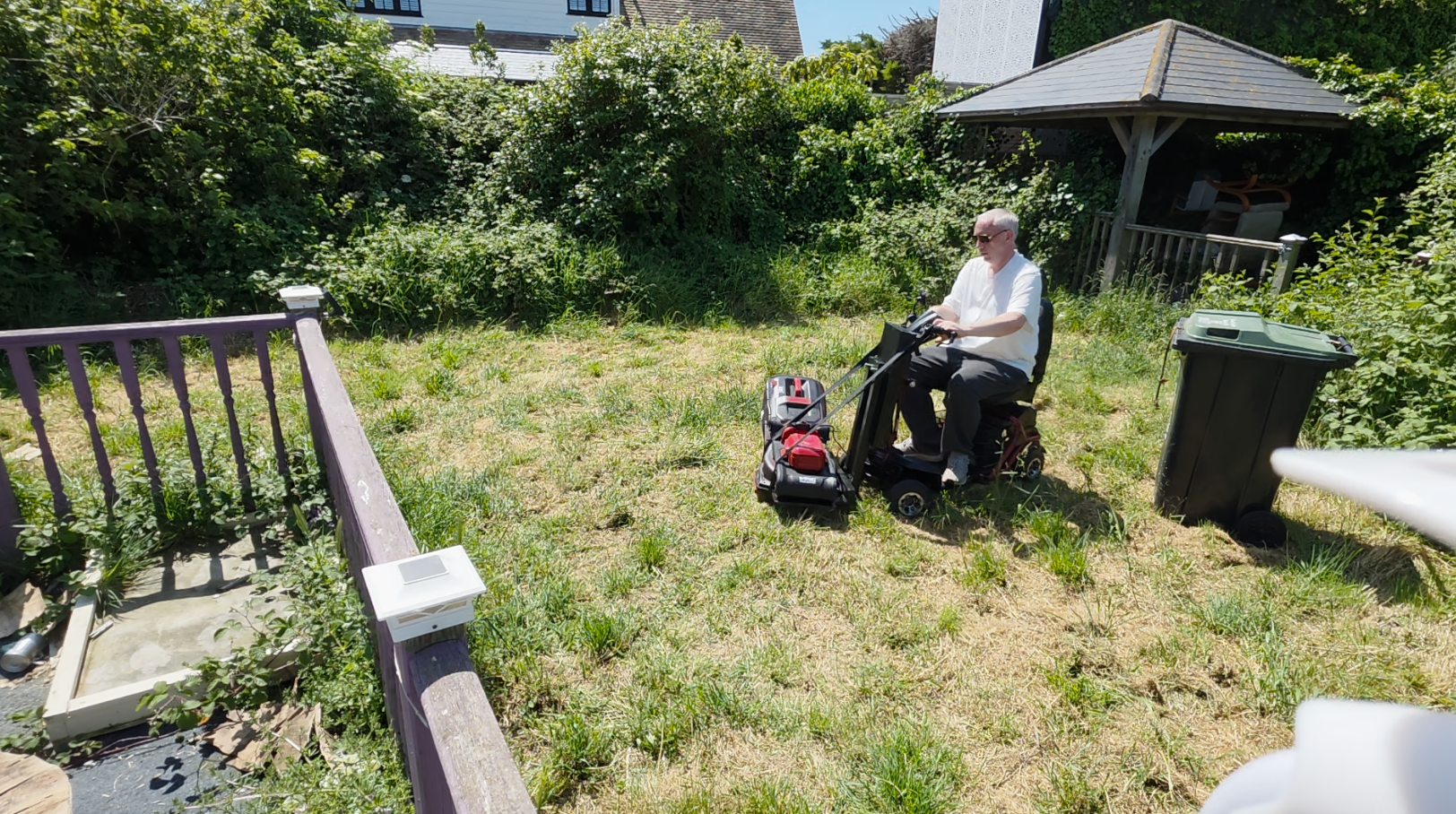
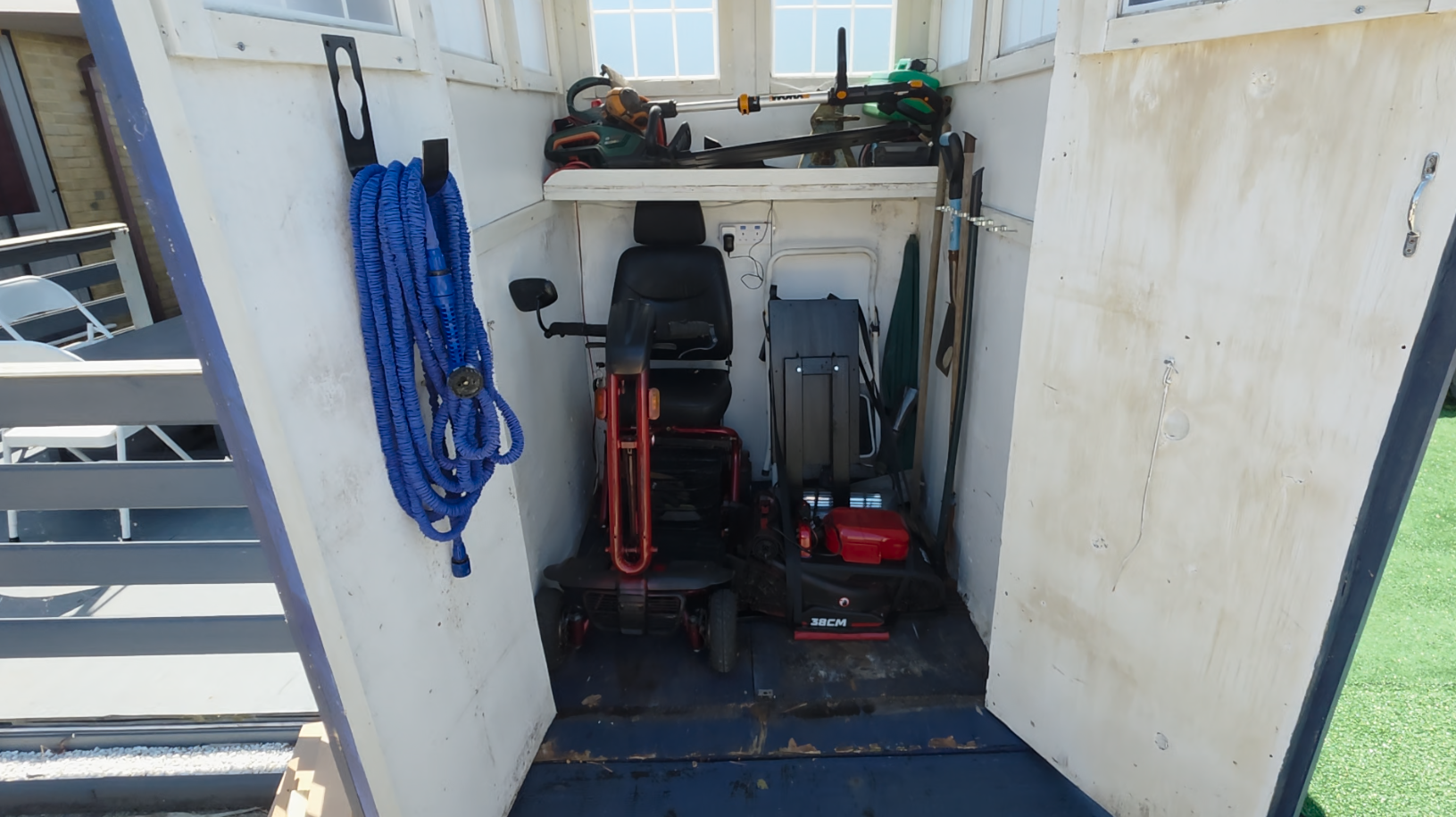
This project started as a simple idea... "could a cordless lawnmower be combined with a mobility scooter to create a practical battery powered ride-on mower without completely redesigning either machine?" And I think the final result proved that it is very possible to build a compact, manoeuvrable lawn cutting platform while keeping the original mower system almost completely untouched. By preserving the factory deck, blade system, airflow, safety shielding, and grass collection setup, the mower continues to operate exactly as intended, just from a seated driving position instead of being pushed by hand.
One of the biggest successes of the build was the floating deck mounting system. Removing the mower wheels and suspending the deck from the scooter frame allowed the machine to steer naturally while still maintaining a controlled cutting height. This solved one of the major problems seen in many DIY mower conversions, where fixed or wheeled mower attachments often struggle to turn properly, if at all. And I was pleased that I kept the scooter and mower battery systems separate as this made the project much simpler and more reliable. The scooter remains a dedicated drive platform which I could still very easily use for its original purpose, while the mower continues operating from its original cordless battery system with no major electrical modifications required.
Perhaps the most surprising part of the project was discovering how well the sideways-mounted mower configuration works. Since the mower deck’s airflow system remains unchanged relative to the blade and discharge chute, the mower still cuts and collects grass very well, despite being mounted in a completely different orientation. Overall, this project became less about 'building a crazy DIY mower' and more about rethinking how existing battery powered systems can work together in smarter ways, and still allow me to get outside a mow my friends lawn, comfortably.
And, admittedly, there is something deeply satisfying about mowing the lawn while comfortably seated like the captain of a very small, highly specialised electric vehicle. At the very least, it certainly makes grass cutting more of a fun task than a need to do chore. If you were thinking of doing something like this, then I hope that I haven given you some inspiration or motivation to give it a go yourself, and if you were just simply curious, then I hope you enjoyed the process. Just take care if doing something like this, high capacity batteries, and sharp blades need to be respected at all times.
Thanks for reading, and happy making.