Bloom Shields- an Adaptive, Upcycled Sculptural Rabbit's "No-Sit" Zone
by xX_christopher_Xx in Outside > Backyard
406 Views, 10 Favorites, 0 Comments
Bloom Shields- an Adaptive, Upcycled Sculptural Rabbit's "No-Sit" Zone
.jpg)
The Problem
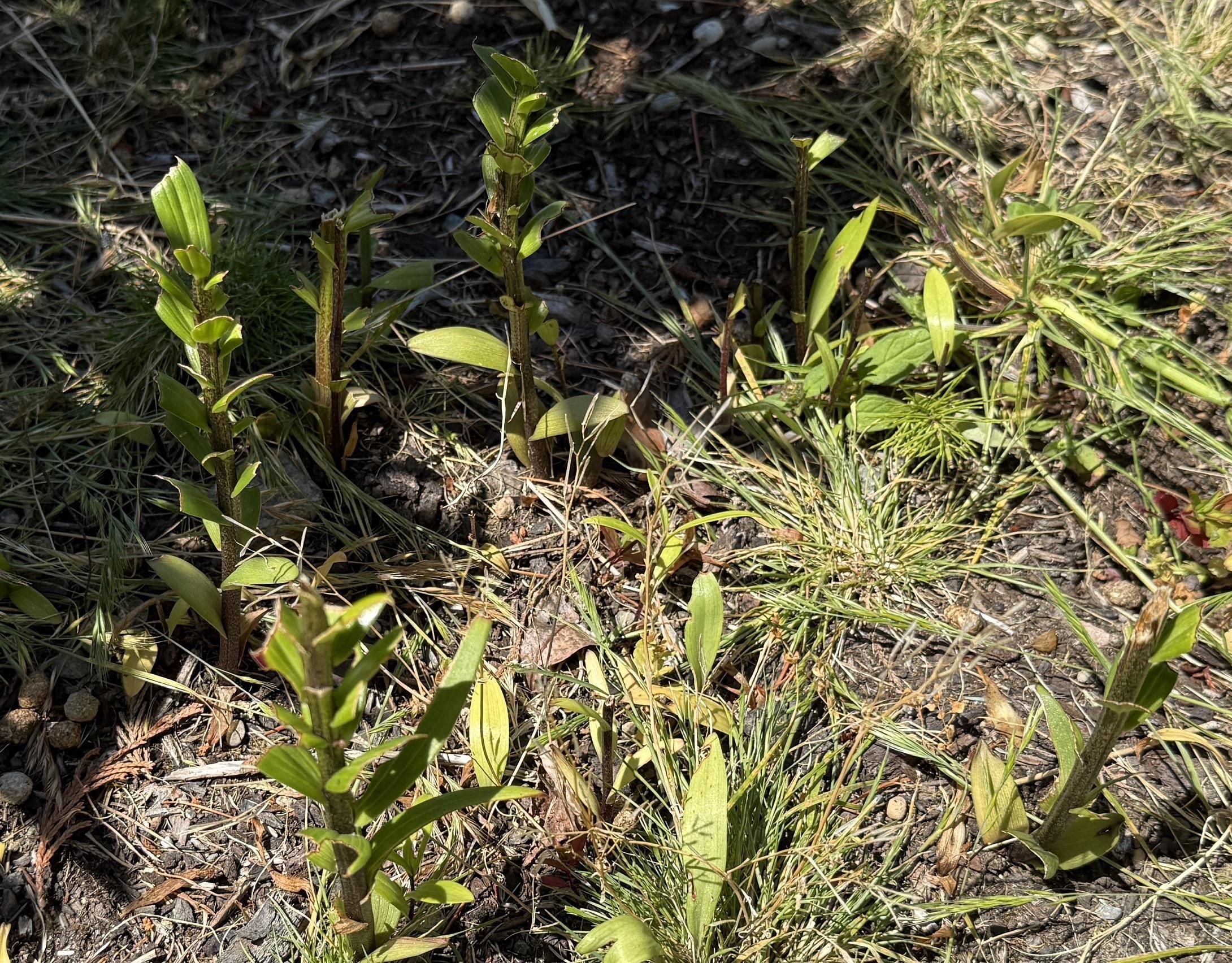
My family grows many lilies in our garden. Every early summer, they bloom with beautiful colors—but many never get the chance because rabbits eat them first and protecting the lilies is a yearly challenge.
The most reliable solution is a physical barrier. A proper rabbit fence needs to be tall enough to prevent rabbits from jumping over and buried deep enough to stop them from digging underneath. Instead of installing permanent wooden fencing around our flower beds, we built a temporary enclosure by placing poles around the lilies and wrapping them with bird and deer protection netting each spring as the shoots emerged. Once the lilies grew tall enough that the flowers were out of the rabbits' reach, we removed the netting. Although this method worked reasonably well, it required constant monitoring. If we were even a few days late removing the net, the flower buds could grow into the mesh, become trapped, and never bloom properly. Even with this setup, once the net is removed, rabbits will eat any leaves they can reach.
Chemical repellents are another common solution, but they require frequent reapplication. I experimented with pepper powder as a natural rabbit repellent, but Seattle's rainy spring weather quickly washed it away. The treatment lasted only a short time and proved ineffective in practice.
I also explored more creative approaches. While working on one of my robotics projects, I wondered if I could build a motion-activated robotic dog or bird to scare away rabbits. The biggest obstacle was finding a practical power source, especially for a garden. I wanted to avoid batteries and electricity. Small solar panels couldn't provide reliable operation through the night, and miniature wind turbines produced very little power when the wind was calm. I even experimented with wind-powered mobiles, but they only moved when there was enough breeze. After a while, the rabbits got used to the motion and simply ignored them.
More importantly, I wanted this project to be a practical solution that anyone could build and use.
The Idea
Instead of trying to build a taller fence or create a better scare device, I started thinking differently.
A rabbit doesn't simply hop by a plant—it has to stop, sit, and comfortably eat it.
What if the goal wasn't to block the rabbit, but to make the ground around the plant too uncomfortable for it to stay?
Commercial plastic spike mats follow a similar idea, but many are made from soft plastic that bends easily and doesn't seem very effective. On the other hand, sharp metal spikes could injure wildlife, which is not my goal.
I wanted something in between: a surface ground structure that feels awkward and unstable to stand on, yet is flexible enough not to harm the rabbit.
The result is Bloom Shields, a modular plant protector made entirely from recycled household materials.
Project Status
I removed my protective net in early May, and the rabbits quickly ate every lily leaf they could reach. This reoccurring experience make me determined to find a practical solution, even though it is already late for this year.
I have been gradually expanding the structure as I collect more recycled soda cans and plastic bottles. Unfortunately, I ran out of materials before I could reach the desired ground coverage. As I continue collecting more cans and bottles, I will keep extending the system, observe how it works next spring and improve.
Please comment if you have any suggestions!
Supplies
Materials:
- Soda cans
- Plastic bottles
- Garden wire
Tools:
- Craft knife
- Scissors
- Sand paper
The Design
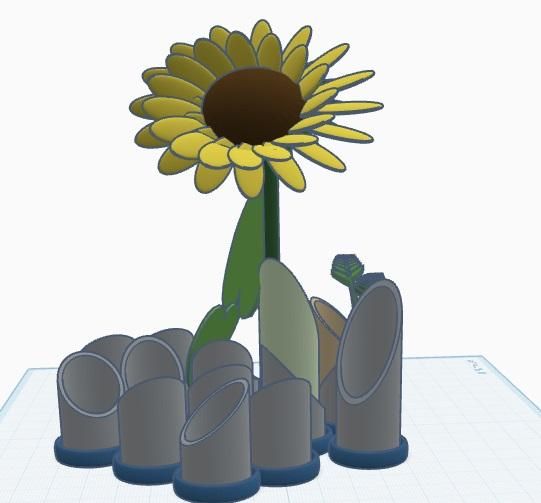
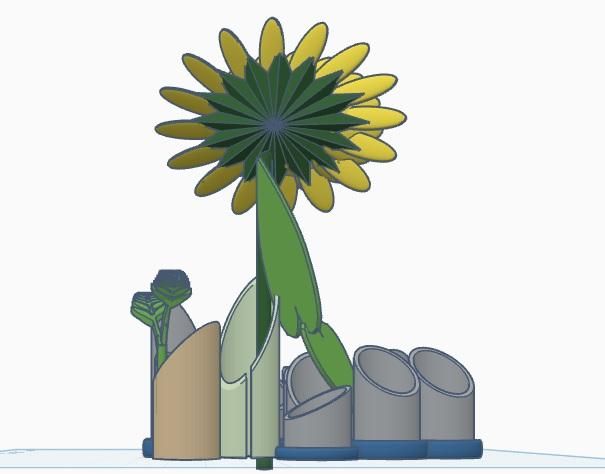
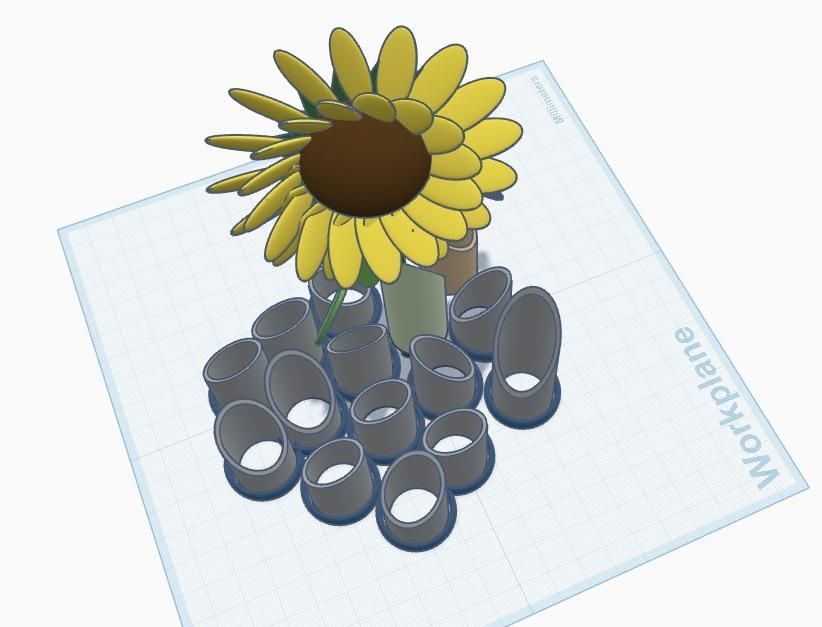
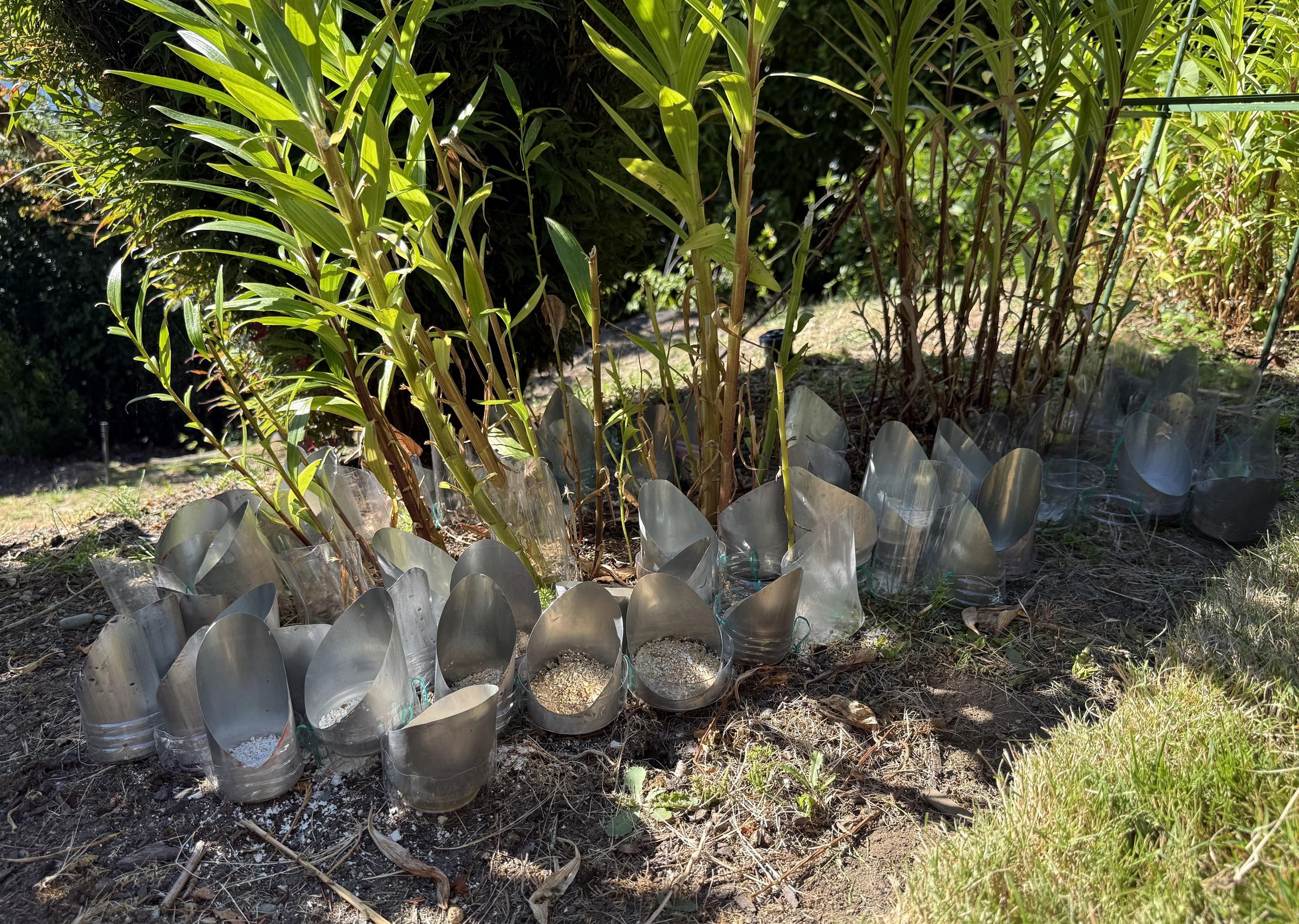
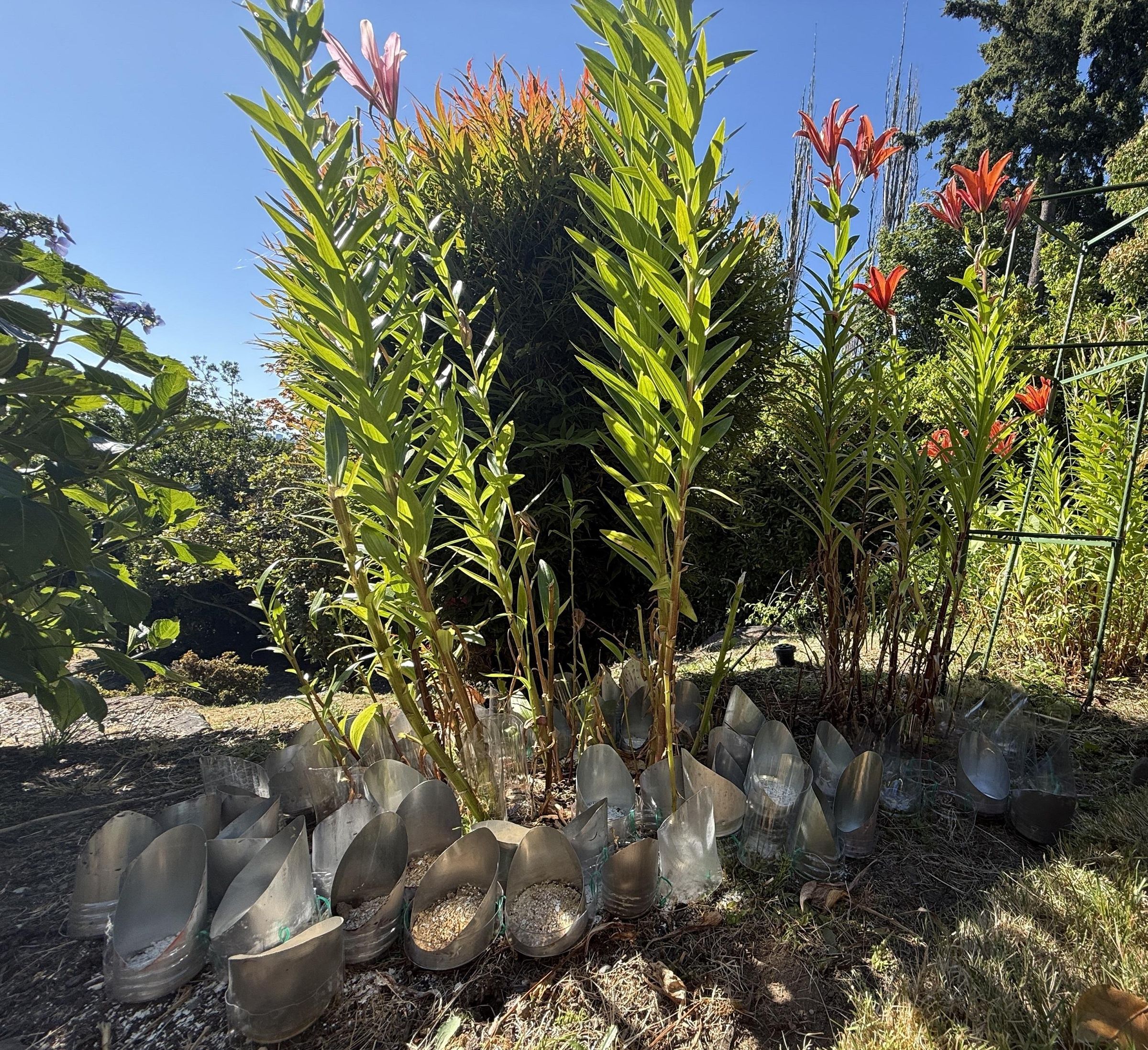
I wanted the system to be flexible enough to protect anything from a single lily to an entire flower bed, even on uneven or sloped ground. The design has two main parts: connected base rings and angled aluminum cylinders.
The Connected Base Rings: The base is made from connected rings cut from recycled plastic bottles. The rings simply sit on the ground and hold the aluminum cylinders in place. If a rabbit creates a shallow burrow beneath the barrier, the cylinders are designed to slide downward and block the opening. Because they're connected, the system can easily be expanded or shaped to fit different garden layouts.
The Aluminum Cylinders: The cylinders are made from recycled soda cans. Instead of cutting them straight across, I cut them at an angle to create a more artistic appearance.
Design consideration and advantages:
- Uncomfortable to Sit On: The tilted tops make an uneven, uncomfortable surface. Rabbits can't get comfortable enough to sit down and chew on my plants!
- Safe but Strict: The aluminum edges are just sharp enough to feel annoying to a bunny's paws, but not sharp enough to actually cut or hurt them.
- Lets water through: The open top lets rainwater and irrigation pour right through to the roots.
- No Mosquito breeding: Small drainage holes stop stagnant water from collecting inside.
- Holds repellent better: The structure hold onto sprayed rabbit repellent much longer than raw dirt or leaves can.
- Hidden Art: Unlike fencing, the system stays low to the ground. It protects the plants without blocking the view and adds an interesting metallic texture to the garden.
There are three types of cylinder in this design--Mix and match as needed
- Open Bottomless (With a Side Slit): The side slit lets the cylinder open up so it can be placed around an established plant without damaging the stem.
- Closed Bottomless (Solid Tube): This version slips over young shoots as they first emerge in the spring.
- Closed with a Bottom (Solid Cup): This version drops into the base rings. Several rows can be placed together to create a wider protected area around a single plant or an entire flower bed.
In the design diagram, Type 1 is shown in light green, Type 2 in tan, Type 3 in gray, and the base rings in blue. For simplicity, the illustration only shows one section of the system instead of surrounding the entire plant.
Modular and Expandable
The best part is that the whole system is modular. I can start with a single ring around one lily, then keep adding sections until an entire flower bed is protected. Since it's made mostly from discarded soda cans and plastic bottles, it's also a fun way to turn household waste into something useful—and, hopefully, something that looks good in the garden too.
Base Rings
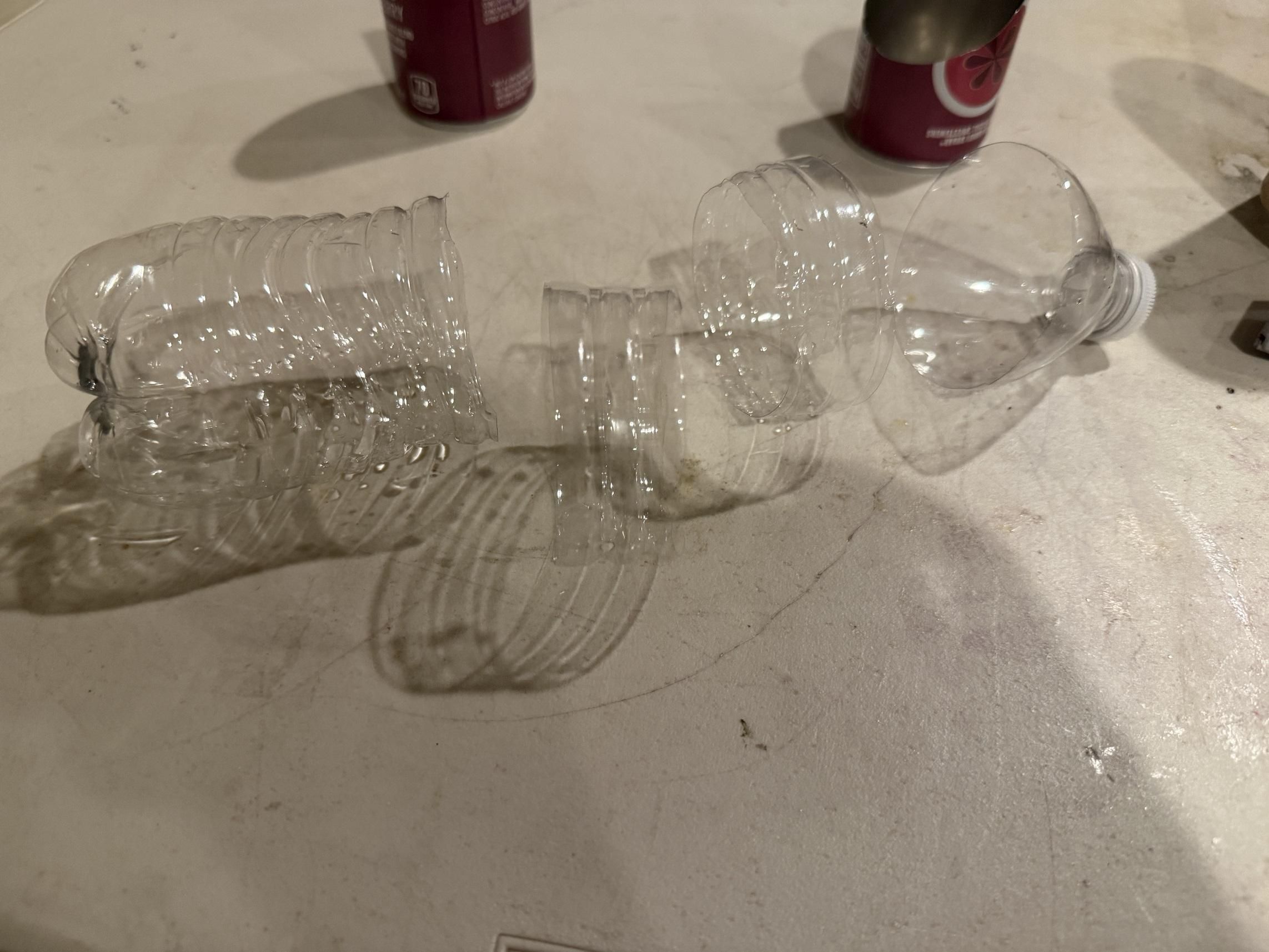
Cut recycled plastic bottles into 1-inch-high rings, as shown. The rings should be slightly larger in diameter than the soda cans.
Open Bottomless & Close Bottomless Cylinder
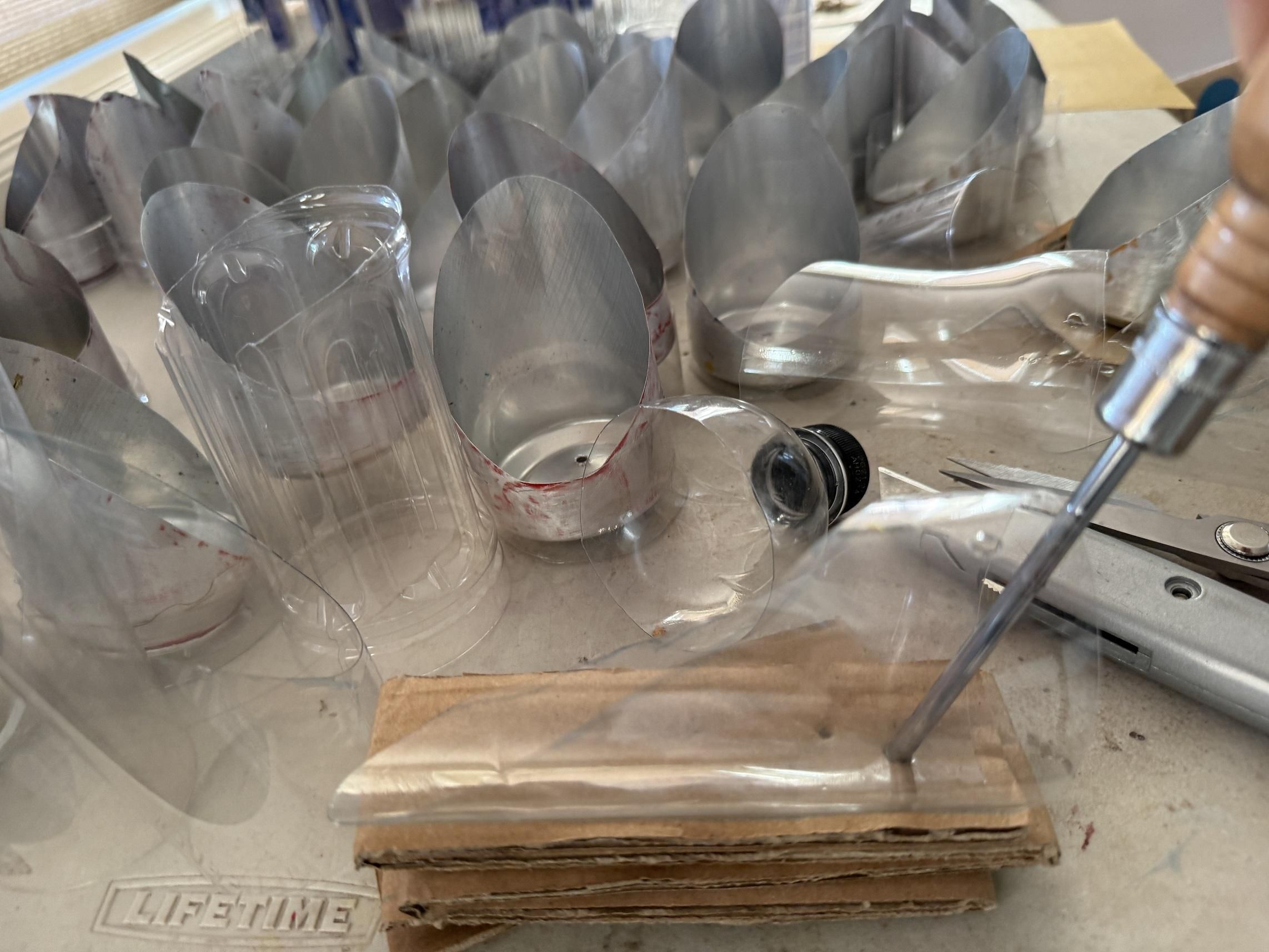
Cut the plastic bottles with one end flat and the other end at an angle. Drill two holes near the flat end so each cylinder can be connected to the rest of the system. This creates the closed bottomless cylinder. To make an open bottomless cylinder, simply cut a vertical slit down one side, as shown in the design.
Closed With a Bottom (Solid Cup)
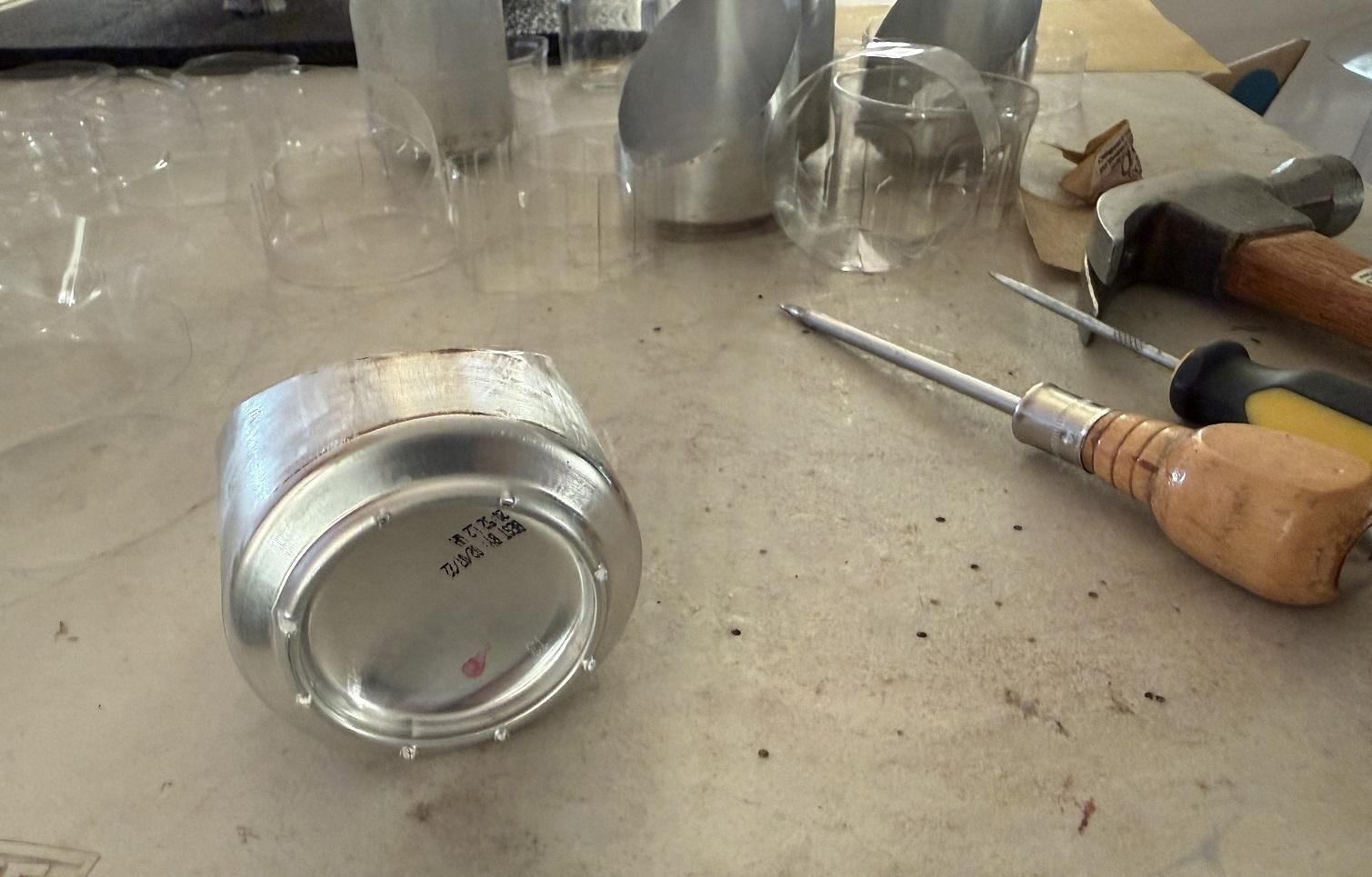
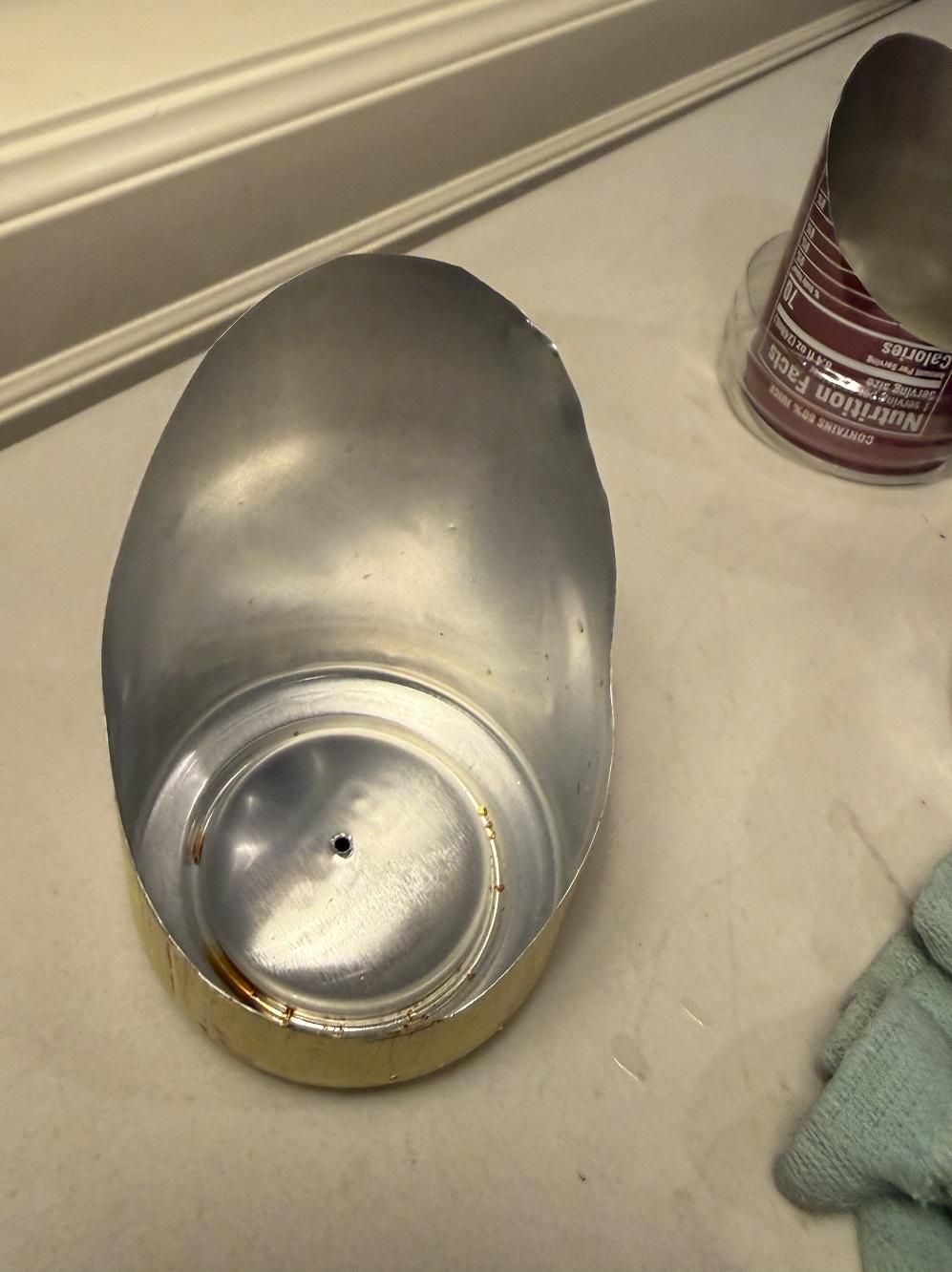
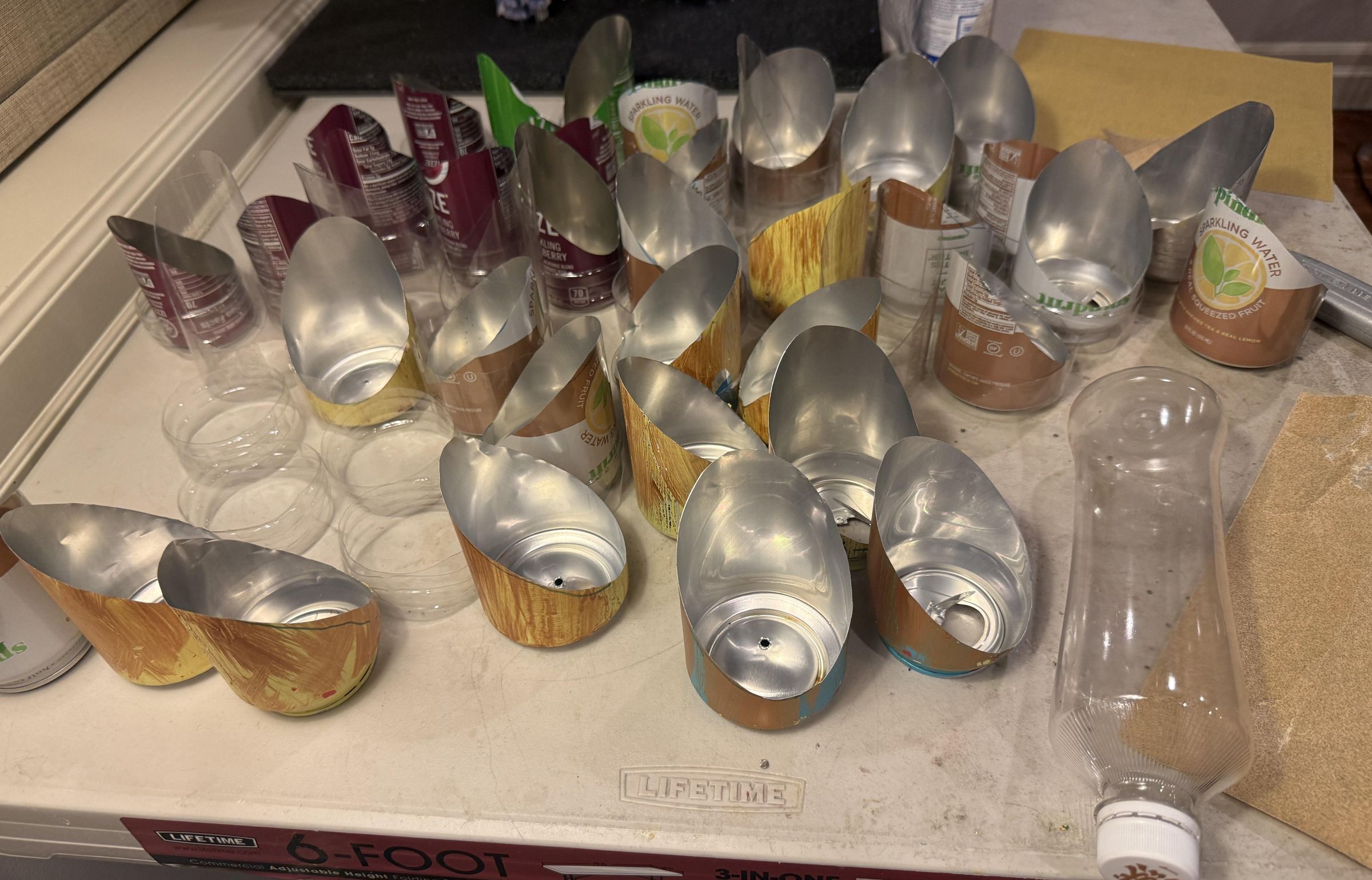
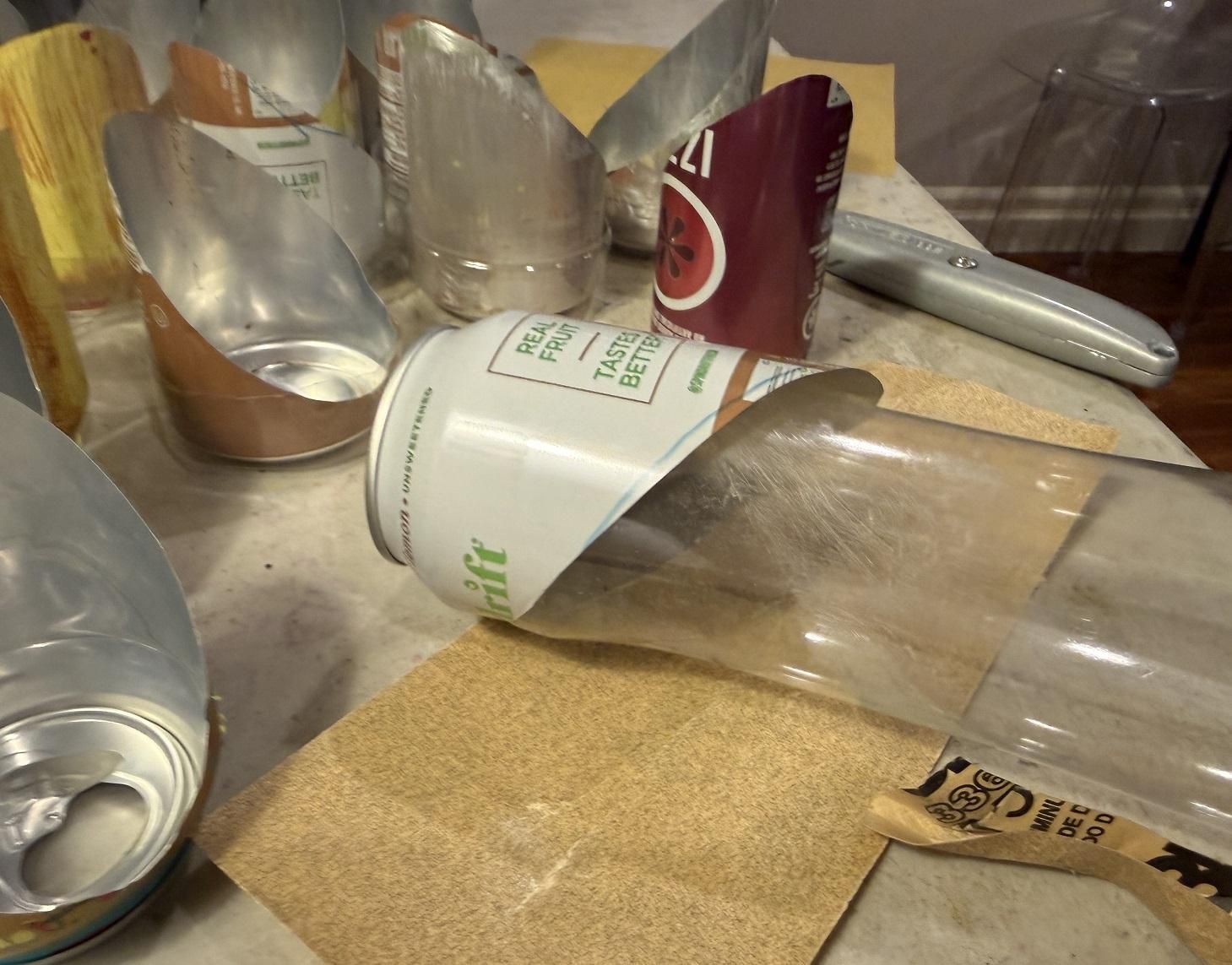
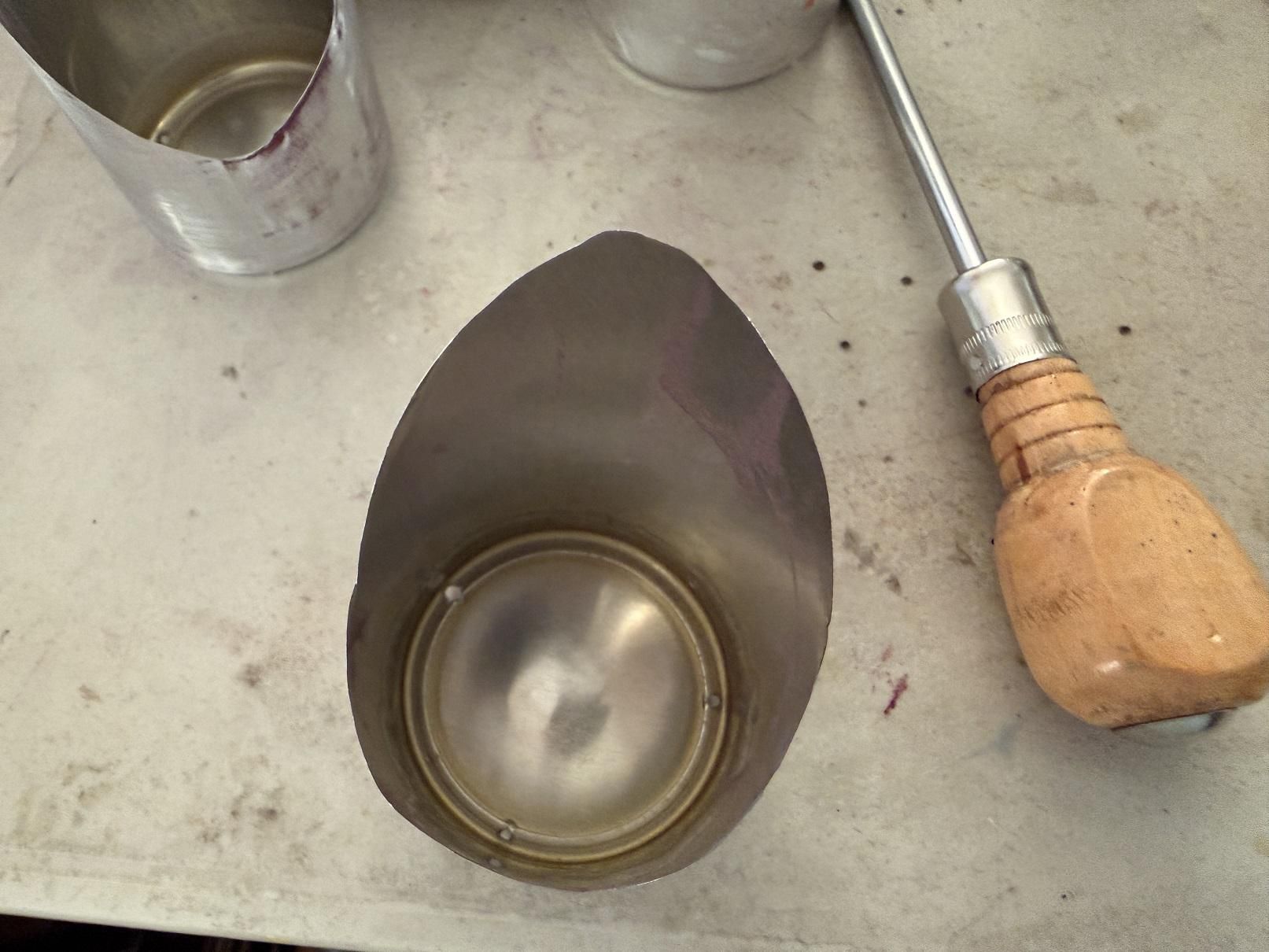
Cut each soda can diagonally into two pieces. Repeat until you have enough cylinders for your project.
Optional: Sand off the painted surface for a more uniform metallic finish.
Drill several small drainage holes near the bottom of each soda can cylinder.
Set Up
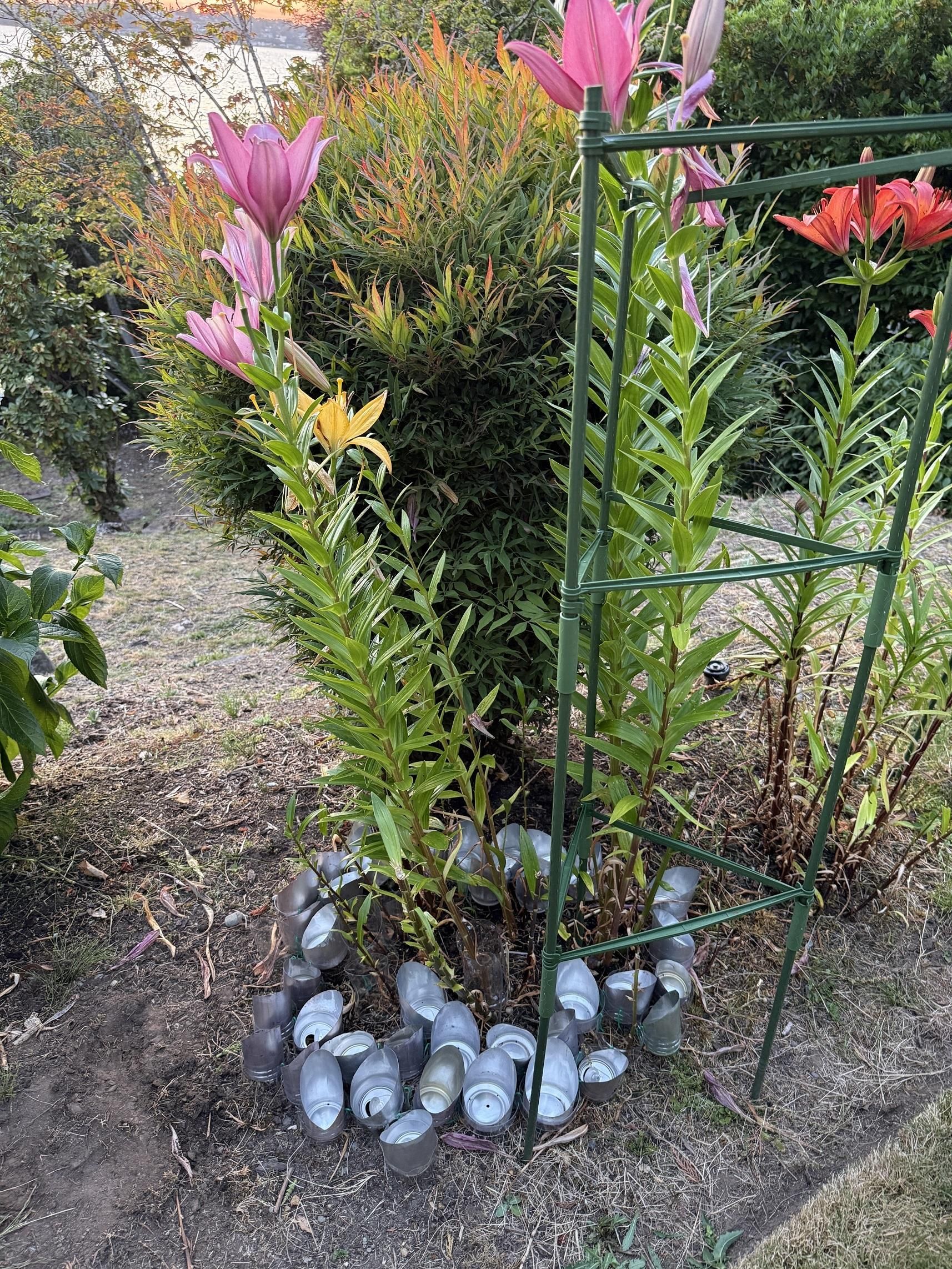
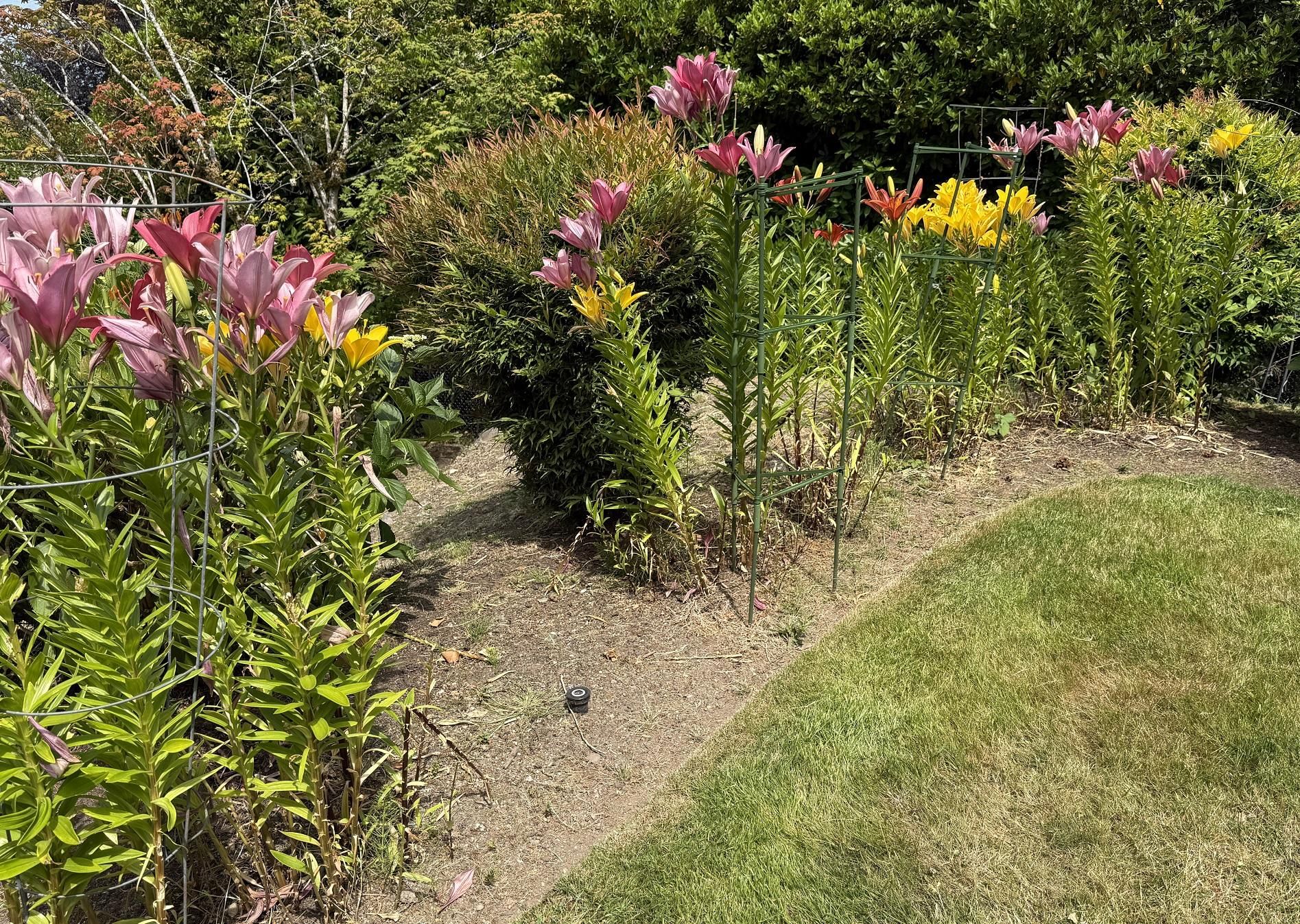
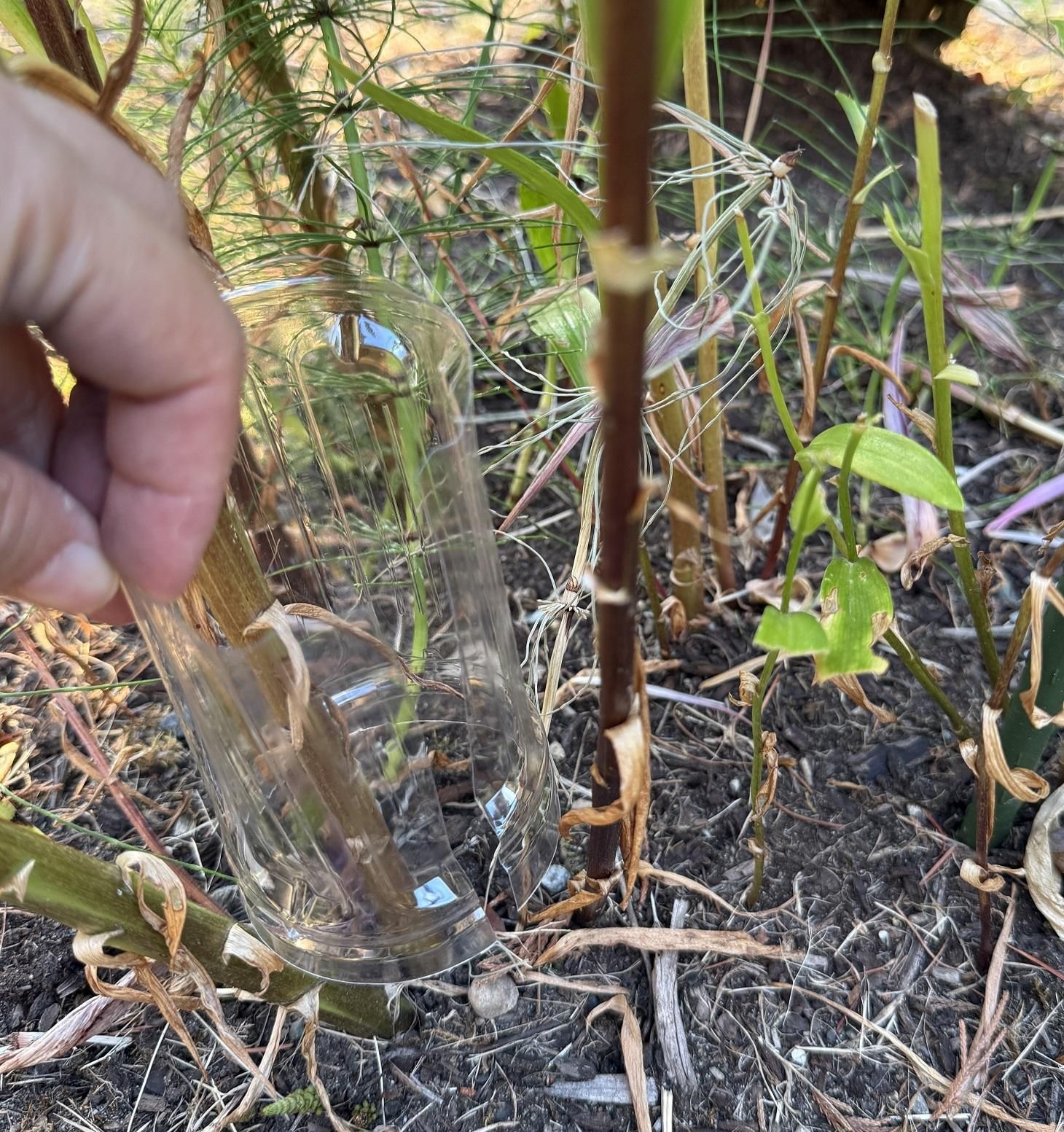
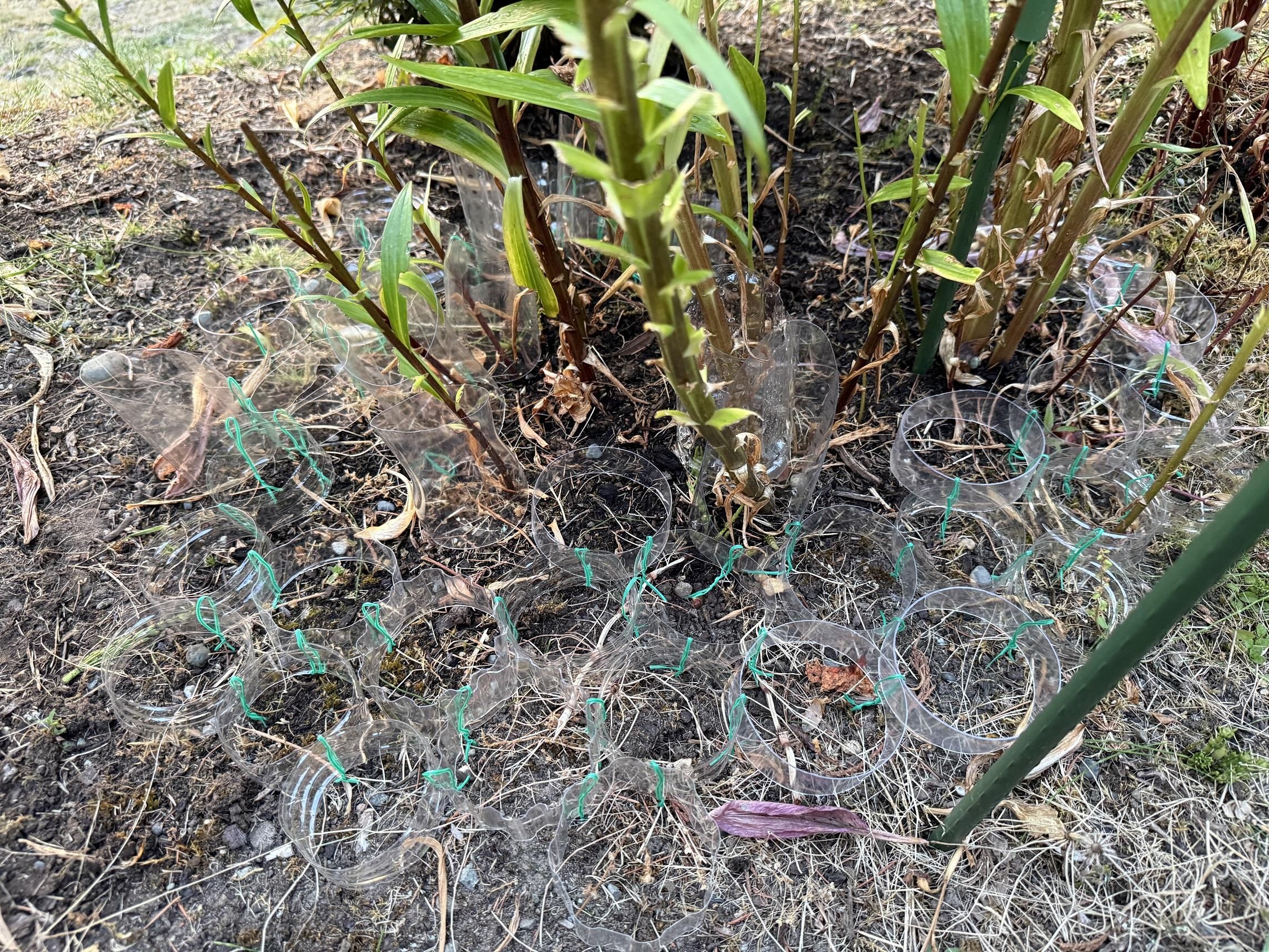
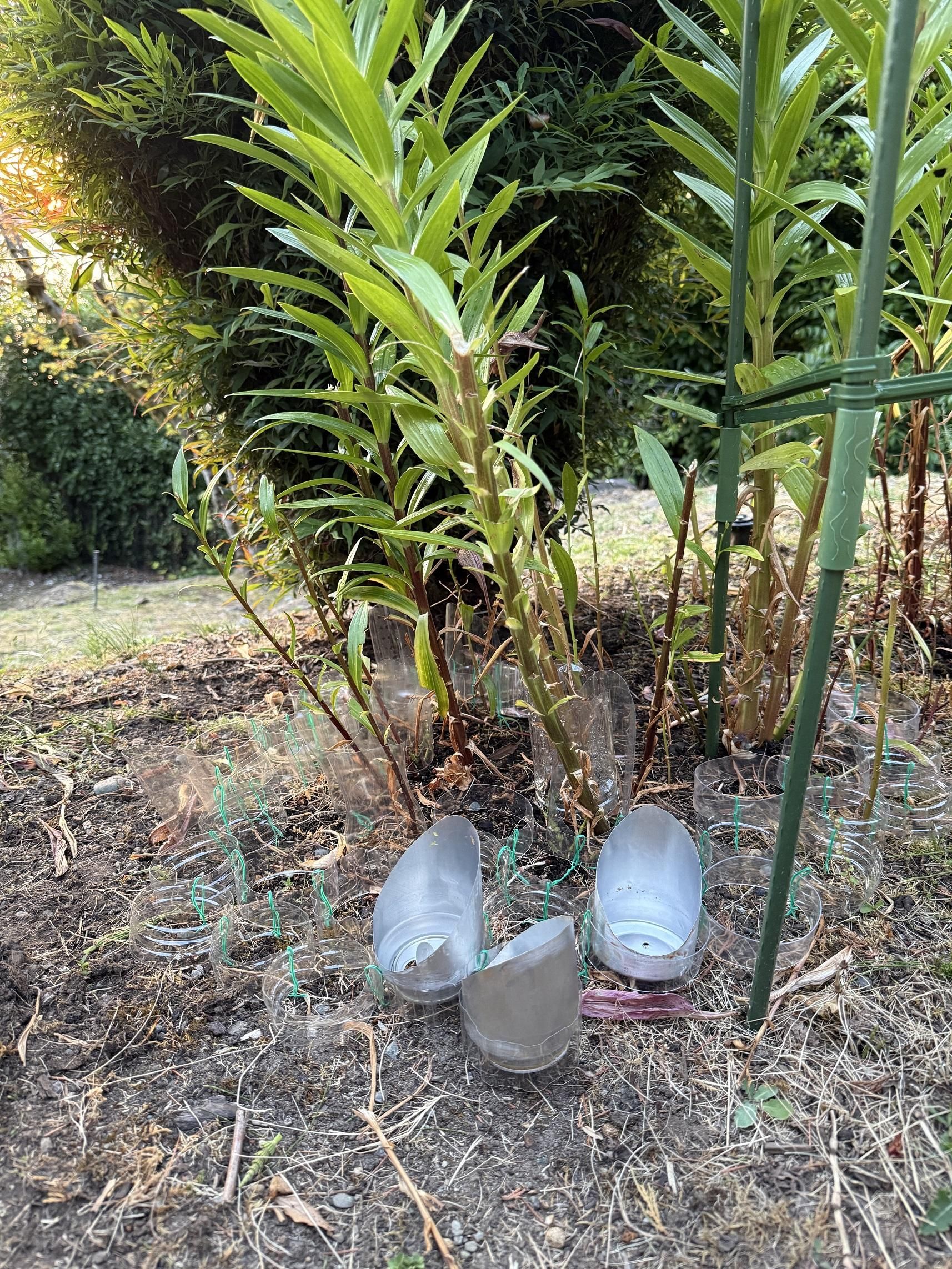
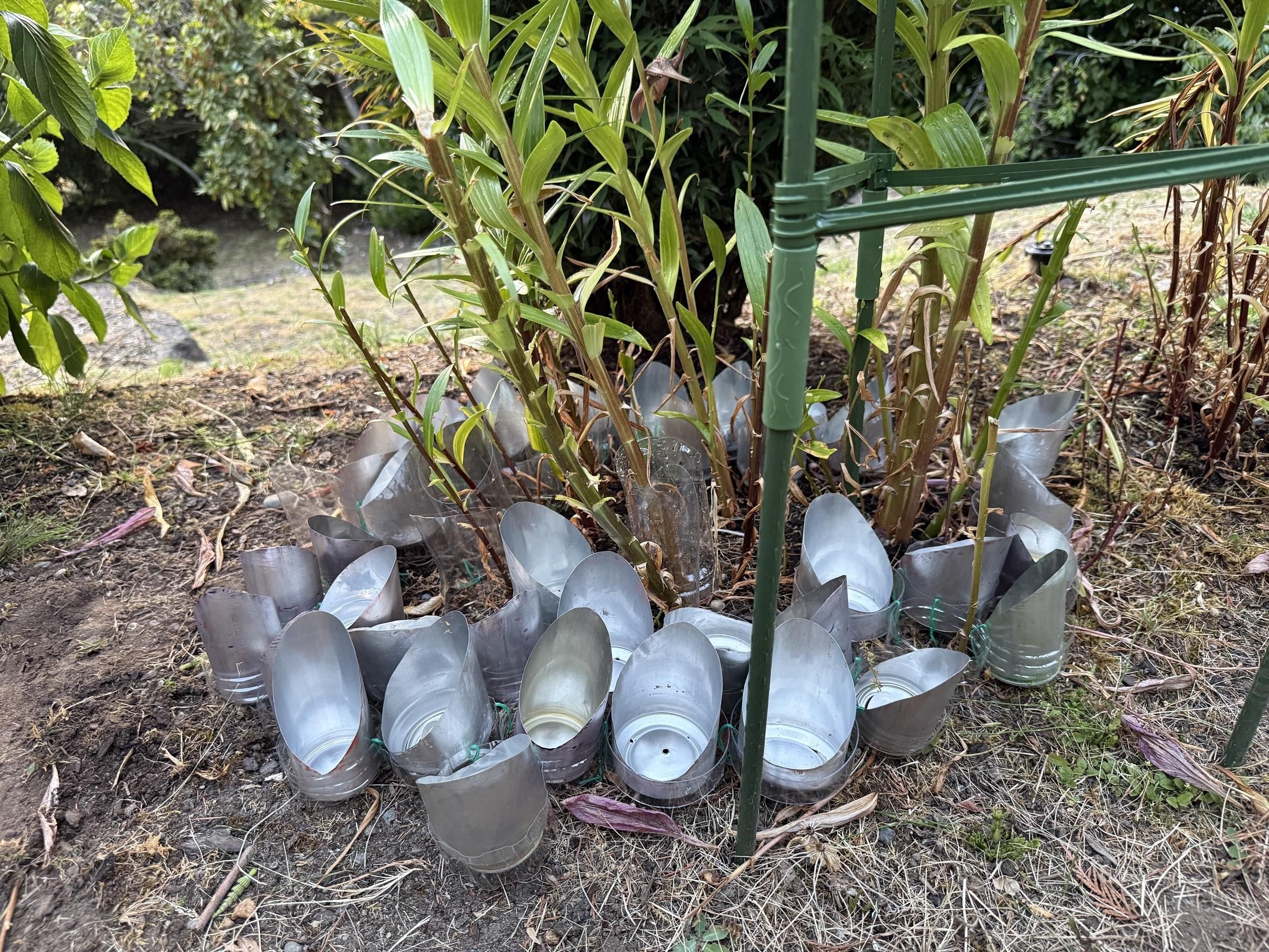
Start by placing the open bottomless and closed bottomless cylinders around existing plants or newly emerging sprouts as needed.
Next, lay the connected base rings around the flower bed and secure them together with garden wires.
Slide the solid cups into the base rings to complete the protective barrier.
If desired, add rabbit repellent to the solid cups. I also experimented with a mixture of crushed eggshells and flower fertilizer.
Unfortunately, I ran out of soda cans before I could finish protecting the entire flower bed! I'll keep expanding the system as I collect more cans.
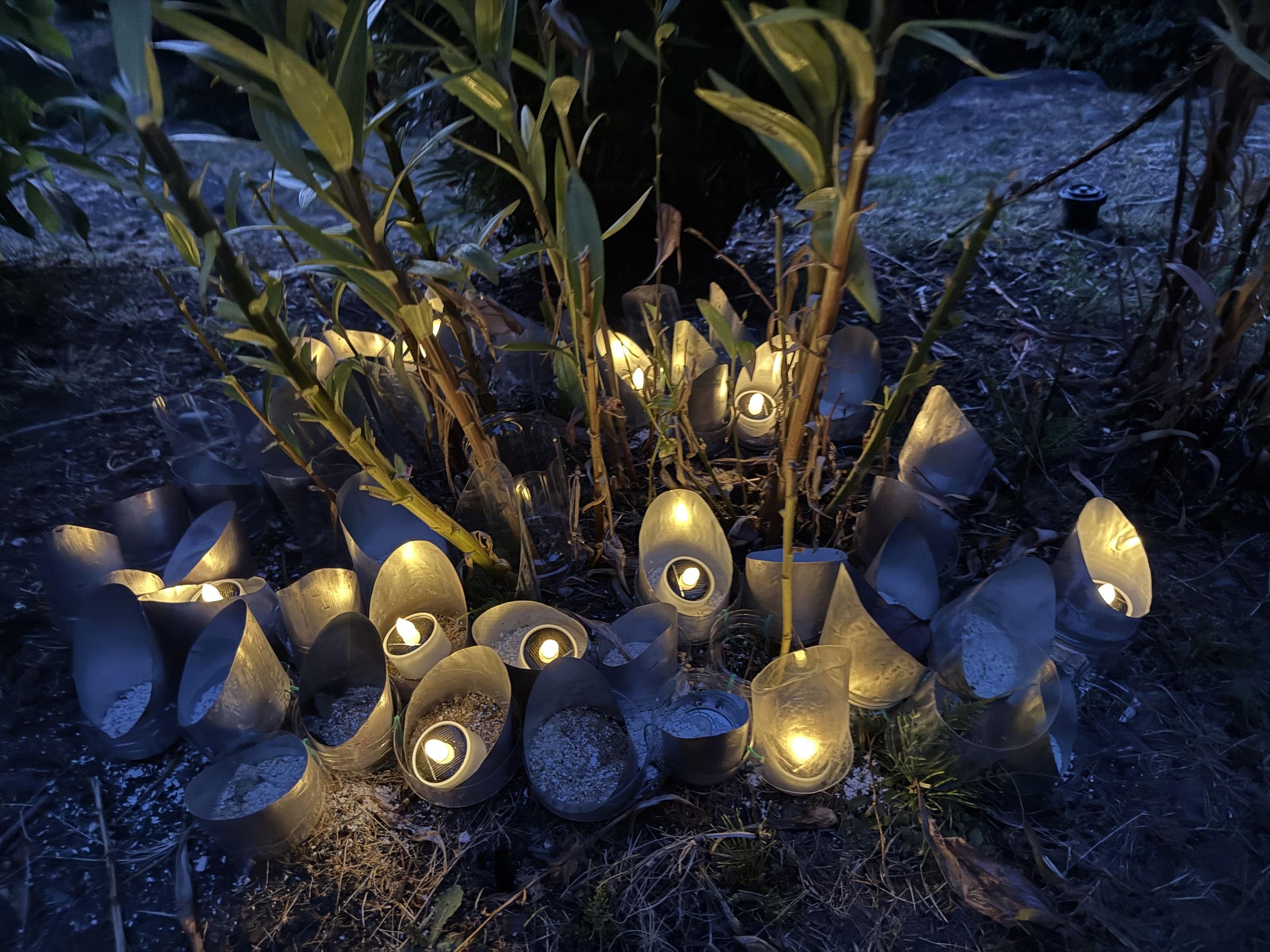
Optional Setup: Nutrients, Repellents, Lights!
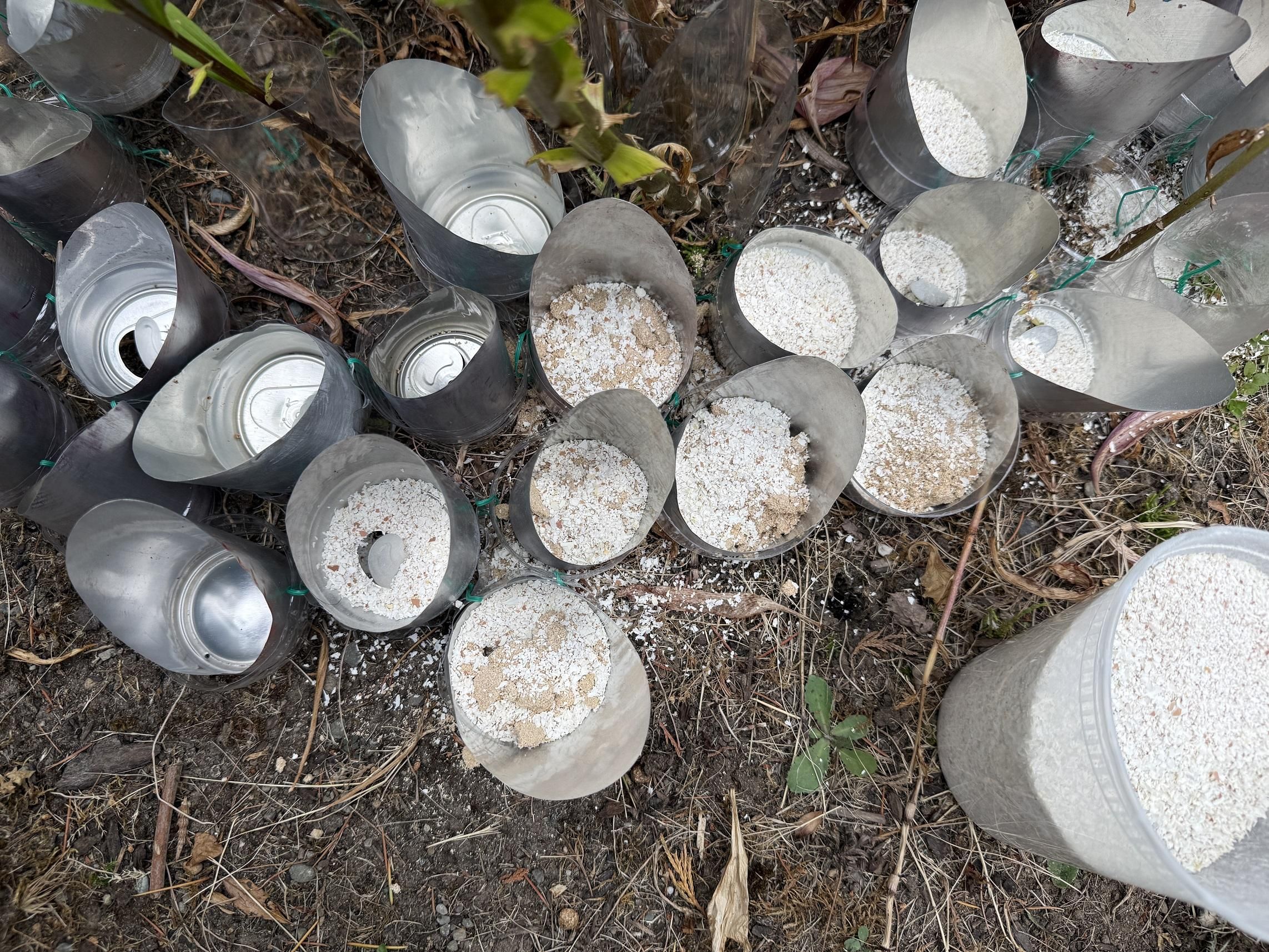
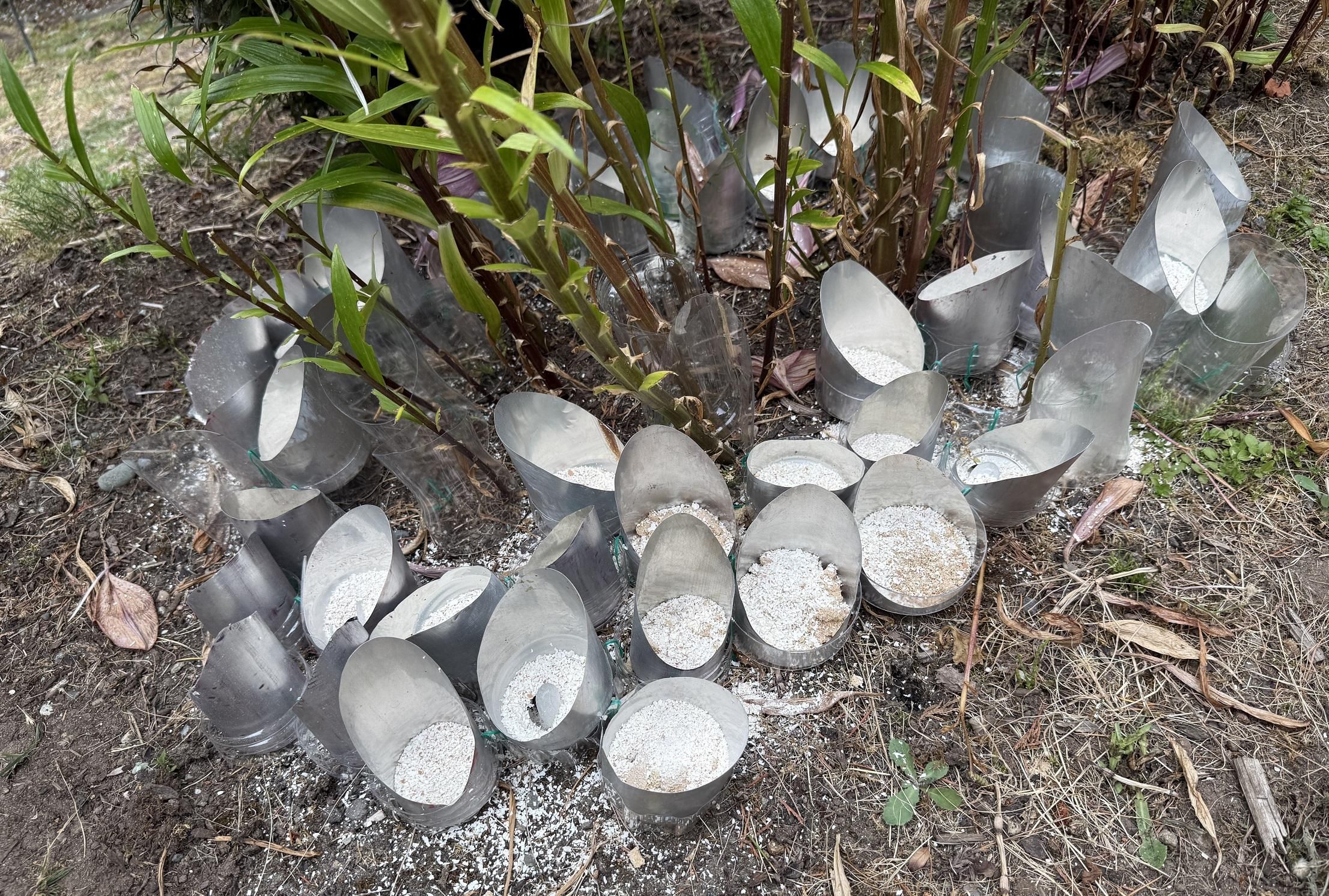
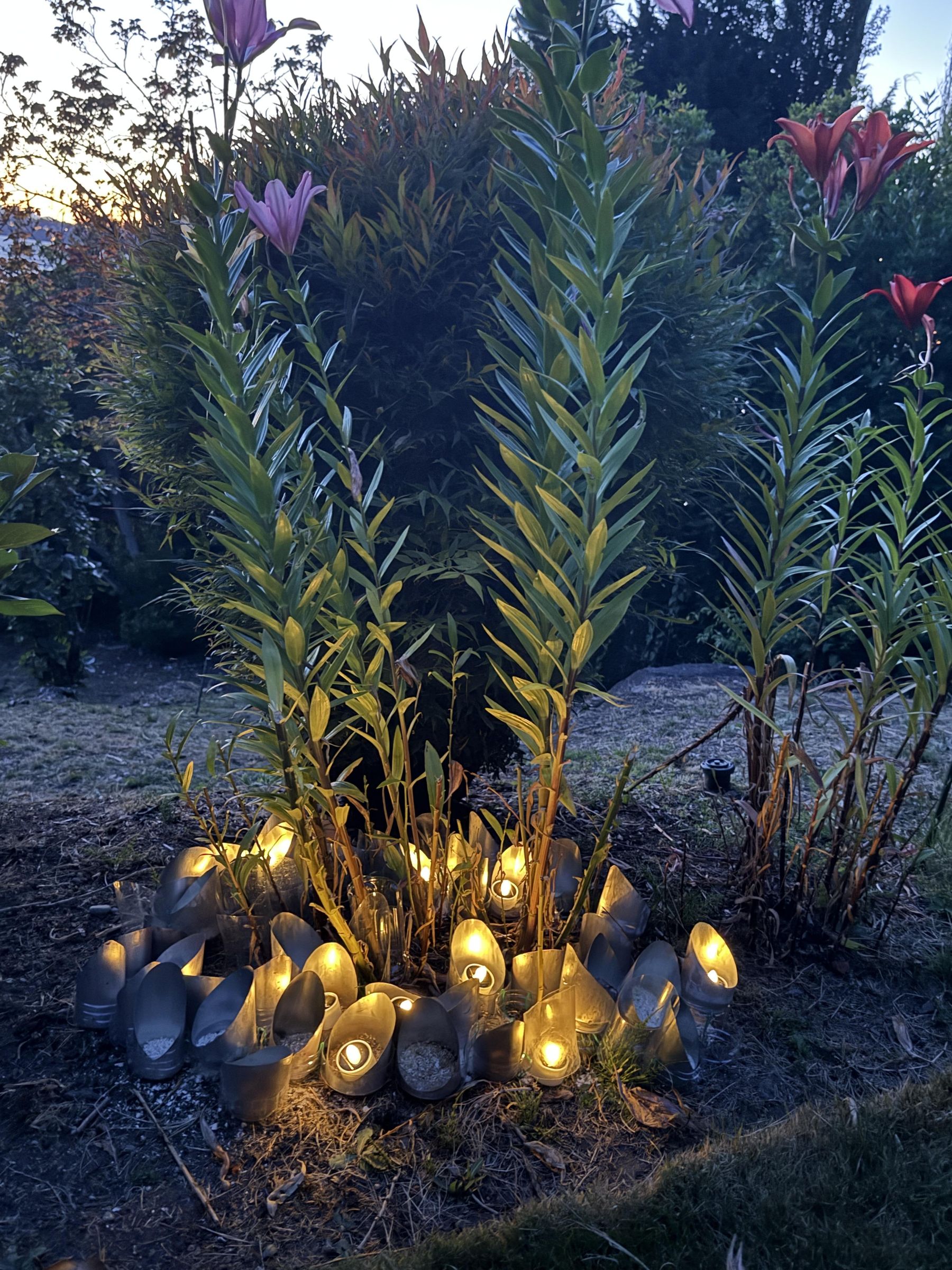
Add crushed eggshell powder, optionally mixed with rabbit repellents or other nutrients, to provide enhanced rabbit deterrence while gradually releasing nutrients into the soil.
Looking Forward to Next Spring
I wish I had more soda cans and plastic bottles, but the reality is that I ran out of materials before I could make the project reach my target ground coverage. I'll keep adding to the system as I collect more cans over time.
The good news is that the lilies that survived this year have already grown tall enough that rabbits can no longer reach the flower buds and cause significant damage. Next spring, I'll be able to give the system a much more thorough test from the time the first shoots emerge.
Even so, this prototype has successfully demonstrated the concept. My next goal is to expand the modular system so it can protect larger areas of the garden while keeping the same open, lightweight, low-profile, and upcycled design.