Build a Smart Vending Machine for Budkoin
by Chanchaldada in Circuits > Raspberry Pi
28 Views, 0 Favorites, 0 Comments
Build a Smart Vending Machine for Budkoin
In this project, I'll show how I designed and developed a smart vending machine for Budkoin that combines automated dispensing, digital payments, and remote monitoring into a single connected system. The client wants smart vending machines which have many features. No need to sit in front of the vending machine. They want smart and automatic vending machines.
Unlike traditional vending machines, this solution was built to provide a smoother purchasing experience while giving operators better control over inventory, sales, and machine status. The project demonstrates how embedded hardware and IoT technologies can be combined to create a modern self-service platform. When we see the cost of these machines, this machine is very affordable, and its components are easily available.
Supplies
Hardware
- Industrial Controller
- Touch Display
- Product Dispensing Motors
- Motor Driver Board
- Power Supply
- Sensors for Product Detection
- QR/Payment Module
- Wi-Fi Communication Module
- Relay Modules
- Wiring Harness
Software
- Embedded Firmware
- Cloud Dashboard
- Database
- Payment Integration
- Inventory Management Software
Project Overview
The objective was to build a vending machine capable of:
- Cashless payment support
- Product dispensing automation
- Real-time inventory monitoring
- Cloud-based reporting
- Remote maintenance alerts
- Secure transaction management
This architecture can be adapted for snacks, beverages, retail products, or other customizable vending machines designed for different business environments.
System Architecture
The controller receives commands from the touchscreen interface after a successful payment.
It verifies product availability, activates the dispensing motor, checks delivery using sensors, updates inventory, and synchronizes the transaction with the cloud dashboard.
This process helps maintain accurate stock records while reducing manual intervention.
Machine Workflow
 vending machineee.jpeg)
The operating sequence is straightforward:
- The user selects a product.
- Payment is completed.
- The controller validates the transaction.
- The dispensing motor rotates.
- Sensors confirm successful delivery.
- Inventory is updated.
- Sales data is synchronized with the dashboard.
Product Dispensing Mechanism
Each product slot is connected to an independent motor.
When a product is selected, the controller activates only the required motor, reducing mechanical wear while improving dispensing accuracy.
The modular design also makes maintenance much easier.
Inventory Monitoring
The software continuously tracks product availability.
Operators can monitor:
- Remaining inventory
- Sales history
- Machine status
- Error notifications
- Maintenance alerts
These features help minimize downtime and improve operational efficiency.
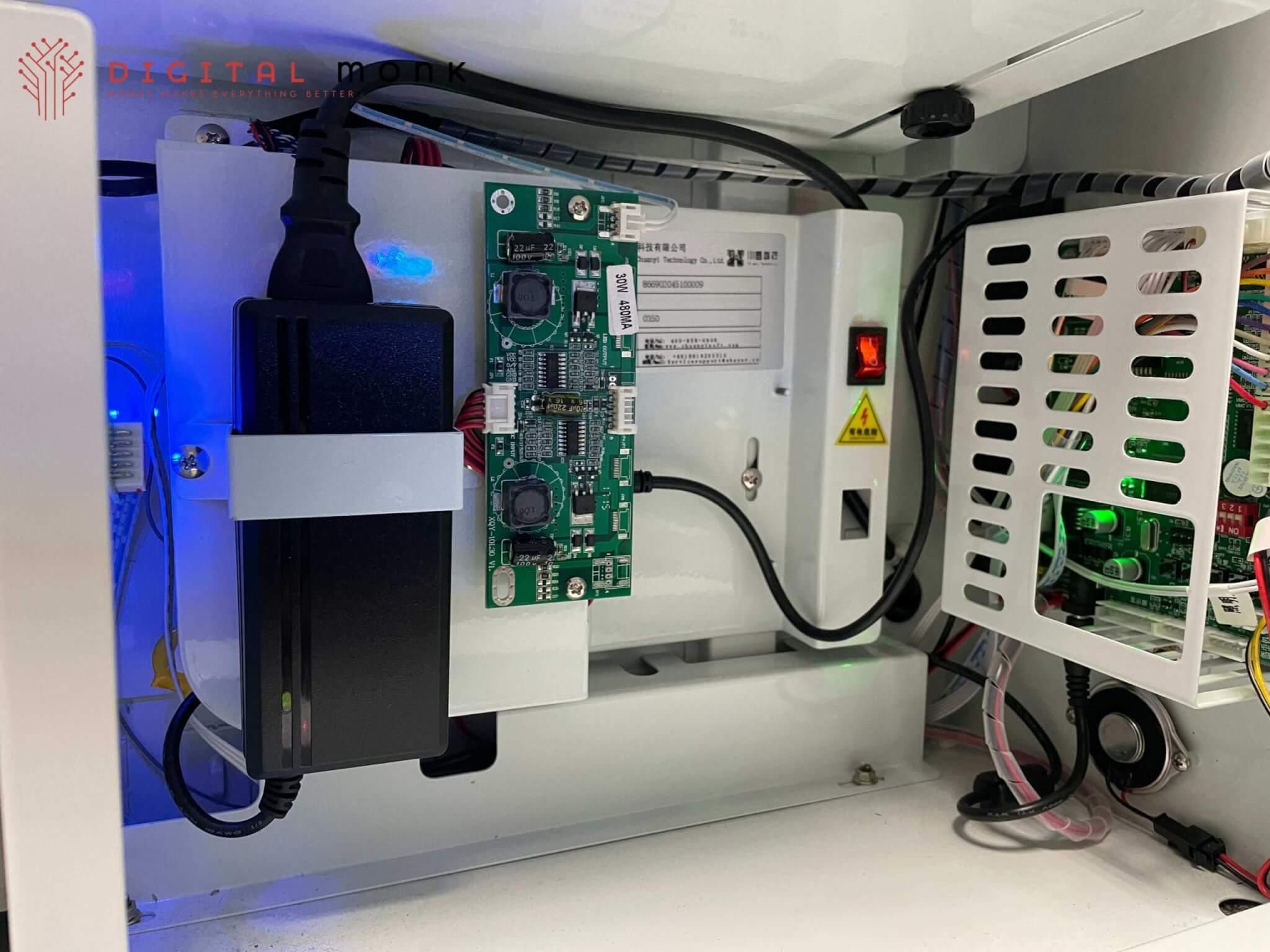
Safety Features
.jpg)
Several protection mechanisms were included:
- Product delivery verification
- Motor timeout protection
- Power recovery handling
- Communication monitoring
- Error logging
These safeguards improve reliability during continuous operation.
Possible Enhancements
Future improvements may include:
- AI-based demand prediction
- Face recognition for loyalty programs
- Dynamic pricing
- Voice-assisted interaction
- Energy optimization
- Mobile application support
Many of these ideas can also be incorporated into a custom vending machine developed for specific industries or customer requirements.
Testing
After assembling the hardware, multiple dispensing cycles were performed.
Testing focused on:
- Payment verification
- Motor synchronization
- Product delivery accuracy
- Inventory updates
- Dashboard communication
- Recovery from unexpected interruptions
The machine successfully completed repeated dispensing operations while maintaining reliable communication with the monitoring system.
Final Thoughts
This project demonstrates how modern embedded systems and IoT technologies can transform a conventional vending machine into a connected, intelligent retail solution. This vending machine reduces manual workflow. They can manage the inventory system and stock tracking. These machines are automatic and have no chances of errors. If this machine is damaged there are no hard procedures to fix. This machine is easy to fix.
By combining automation, remote monitoring, and digital payment capabilities, the overall system becomes easier to manage while delivering a more convenient experience for users. The same design approach can be adapted to many self-service applications across retail, healthcare, offices, and educational environments.