Building an Eco Friendly Modular House
by 2ko2kk in Craft > Cardboard
915 Views, 3 Favorites, 0 Comments
Building an Eco Friendly Modular House


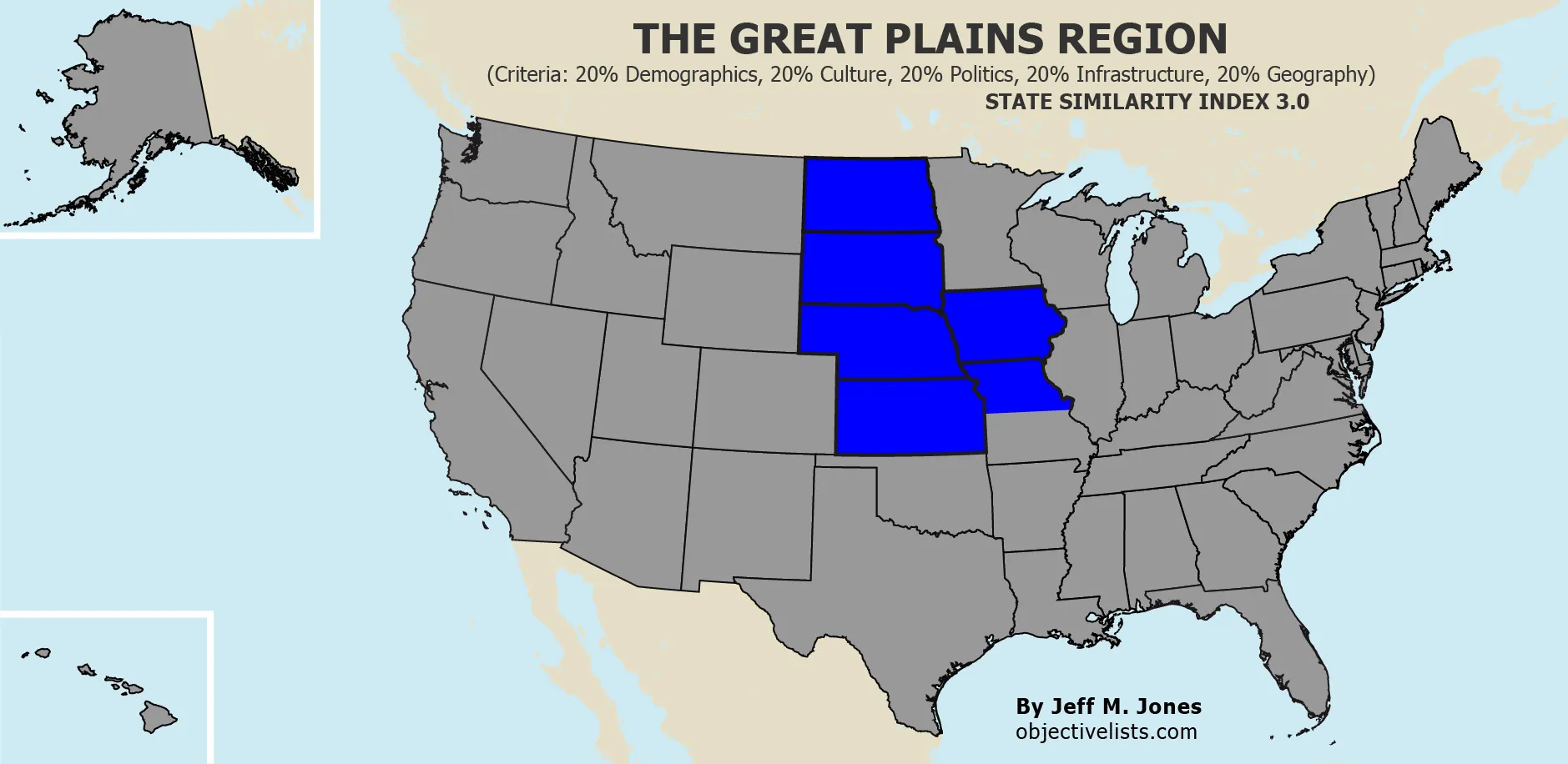
Why don't people live in the Great Plains? I was curious about this issue, but from researching the question, depopulation is partly due to climate and environment. There's a lot of natural disasters, extreme wind, and unpredictable temperatures stemming from climate change. Link
For my site, I chose Kansas for the cold/continental climate, specifically Ellsworth County, known for being a largely unpopulated county; with a population of 6316 in an area of 723 mi² (a very low population density)!
Additionally, the world uses 5 trillion plastic bags per year, and the bags are mostly unrecycled. Plastic bags, instead of breaking down over time, end up as microplastics. Plastic bottles and plastic materials all have varying resins like PET, HDPE, and PP, which raises concern about microplastics and their use. Likewise, paper waste has the risk of producing methane, but two-thirds of all paper products in the US are now recovered and recycled. https://www.beyondplastics.org/fact-sheets/plasticbags (https://tpplasticusa.com/21-10-25-the-rise-of-recycled-plastic-bags/)(stats about plastic/paper waste)
So, based on other module designs, and to adapt to the weather, I made a model of an eco-friendly modular house to adapt to the cold winters and warm, humid summers with sudden changes in temperature. Link
Sections!
Step 1: Origami in Architecture
Step 2: Modular home intro
Step 3: blueprint
Steps 4 and 5: building
Steps 6-9: Components of the House
Step 10: Conclusion
Downloads
Supplies

For the house!
- ruler
- a cup (for a water tank model)
- xacto knife/ scissors
- paper
- a large cardboard piece
- hot glue (gun)
For the materials:
-paper/concrete
-blender
-plastic bags
-foil/cardboard
Origami in Architecture/Inspiration


Origami is the name for the ancient Japanese art of paper folding. Origami has only recently been appreciated in architectural applications, and it is used in a variety of temporary structures, foldable structures, in solar panels, and in satellites. Personally, origami is a fascinating craft that is extremely useful for temporary structures/shelters in natural disasters. (Link)
I used the Muira-ori fold and Yoshimura fold (1x2). When folding the cardboard roof, make sure to score with the Xacto knife first.
-Shown above is a model of the Muira ori map fold and tessellation/fold.
How it works: The Muira ori is a repeating parallelogram crease pattern that lets a flat sheet compress and expand easily. All the creases alternate “mountain” and “valley” so the sheet can fold rigidly. It's great in walls and deployable solar arrays. Also, it compresses/expands in one smooth motion without bending the panels. Using hinges can form the structure into a uniform shape.
Yoshimura fold: This pattern comes from how a cylinder buckles under compression, forming a triangular/corrugated mesh. Unlike Miura, it usually requires panel deformation, so the surfaces bend and buckle rather than just hinge cleanly. This makes the Yoshimura fold great for walls as a temporary sunroom.
Why can't you apply the folds to all components of the house (walls/floor?)
Temporary houses such as shelter homes from natural disasters essentially employ origami, such as an accordion fold, but the models aren't resistant to high winds or changing climates. Only certain components can fold, while companies typically employ sliding walls or fold half the walls for structural stability.
Link: article about modular houses
Downloads
Building/folding House Into Modular Home


Modular homes are adaptable to environmental stress, and modules can be added for changing needs. Rather than being a temporary solution, modular homes are scalable, resilient, and balance efficiency and sustainability as an architectural innovation. Modular homes are also completed in a controlled environment and can be shipped long distances via modules, which reduces cost, construction time, and material waste.
Additionally, modular homes require a strong load-bearing system, resistance to wind, storms, and earthquakes, and secure connections between rooms.
They also require Climate Adaptation: (insulation for heat/cold, ventilation, natural lighting/airflow, and shading). Buildability (ease of assembly, time/labor efficiency) and Function/Flexibility (efficient layout and multi-use spaces).
Shown above here are many great examples of modular homes. Frank Lloyd Wright's modular house is a great example of how modular homes can be turned into a modern style! The use of bamboo and papercrete in the Paper House shows that common materials such as paper, cardboard, and bamboo be turned in a living space.
Link (Clayton Homes)
Energy STAR is a great basis for what makes a great modular home.
.webp)
Blueprint/CAD


A house blueprint is a detailed technical drawing that serves as the foundation for architectural design. It includes floor plans, elevations, sections, and other views that outline the structure, dimensions, layout, and materials of a house.
- Begin by defining your house's purpose, size, and style.
-Consider needs like number of rooms, budget, site constraints (e.g., lot size, orientation for sunlight), and features (e.g., open-concept kitchen, energy-efficient windows). This house has a shed roof and 3 windows for the living room (2) and bedroom (1).
- Sketch rough ideas. I prioritized sustainability (solar panels, insulation).
2. Determine the Scale and Layout
Decide on the overall dimensions (500 sq ft, 1 bedroom, 1 bathroom (for my house).
- Ensure rooms are proportional (ex. the living room is larger than the bathroom).
The blueprint above has the dimensions of the modular house! (1:13 scale)
- Optionally, building a CAD model can help visualize the dimensions. I was specific to my site, which is in this case Ellsworth County.
- Start with the walls and build the base. Add exterior details. (Link: Tinker cad house)
Building the Model

(look in diagram)
- Cut out the pieces with an Xacto knife or scissors. When cutting the slanted walls, make sure to mark both sides, and with a ruler, form a slope.
Building the Model.. Pt 2


- Assemble the pieces first (walls and base), and then add the rooms on the bottom.
- Assemble the outer details, the origami sections, then the stairs, the garden, and the water filter.
Shown are haphazard short clips of how the house is folded which explores the concept and portability of the house.
Eco Friendly Materials (components)


-Fused plastic bags can make up the roof and window covers as protection from rain.
-Walls: insulated corrugated composite (sandwich) panels are durable and strong for the intense climate of the Great Plains.
-Roof: There is an emerging source of plastic chainmail, by gluing plastic into rings and vacuum sealing the material, a flexible, durable roof can be formed. Using a hot glue gun with a zipper, I replicated this technique. https://arxiv.org/abs/2506.04660?
-A water system (and bathroom, including a composting toilet) can ensure that the house is self-sustaining due to distance. Link
-Solar panels/small wind turbine can provide energy to the home!
Recycled Plastic Chainmail Structures+ Fused Plastic Bags


Vinyl-fused bags
- Go to a well-ventilated space (plastic releases VOC gases). Turn the iron on to 158 C or (Wool). Run the iron through 4 cut-up plastic bags.
- Cut up the plastic for a vinyl-like fabric.
Chainmail
- Add 3 zipties to a hot glue gun. Wait for a long time (~1 hr).
- Use the dimensions (6 cm for interior), 3 cm thickness, and link the structure together.
I wasn't able to melt the zipties, so instead I cut plastic bottles (caps will work) and glued the material together (image above).
Link: (REF)
Link: Zipties as hot glue.
Link: Overview of plastic chainmail
Precious plastic machines additionally has brilliant machinery to process plastic and make tiles and adaptive chainmail. Link
Be aware of hazardous fumes!
Sandwich Panels (walls)


For the walls, The walls are constructed as layered sandwich panels using recycled paper and cardboard, creating insulation and structural strength. The layers include an outer waterproof layer, a honeycomb-style insulation layer, and a structural inner layer, making the walls lightweight, eco-friendly, and resilient to the Great Plains climate.
I'm using (WPP) waste paper pulp from old paper used as a wall. Additionally, this is paired with a corrugated structure (cardboard) and sandwich panels to strengthen the walls. (WPPA) Waste paper pulp ash (WPPA) is also a promising industrial application as a cement replacement; however, temperatures upwards of 1000 °C are required to replicate this, so this is only promising industrially.
- Blend wastepaper into a fine pulp.
- (WPP) Wastepaper pulp is turned into papercrete with a mixture of 3 (paper pulp): 2 (Portland cement): 1 (sand).
- Dry for 24-48 hours. Make a flat tile/panel with the honeycomb/flat tile structure. -Outer layer: stiff/waterproof material. I used cardboard coated in waterproof resin (Bioresin- from flour-starch paste). -Insulation layer: honeycomb panel, -Structural layer (thin recycled wood sheet).
Link: Honeycomb panels
Link: Papercrete
Suggestions?
What are the benefits/drawbacks of a modular house?
Drawbacks: The house is prefabricated, which means you can't choose a design, and it is difficult to change the house's components; additionally, land plotting and real estate affect the site and process of installing a home. Link
Benefits: A modular house is reported to save 20% of resources and energy in construction, and modern styles can be used to appeal to customers. In the Great Plains (Northern region), transport works well due to the distance between houses/lack of population in the region.
Ultimately, smaller houses reduce wasted space, curb energy usage, and focus on climate change through a foldable prefab/modular house. Thanks for reading this:
I'm open to collaborations and critiques!
Keywords
keywords:
(biochar) WPPA, WPP
paper honeycomb panels
plastic-film composite
paper-plastic sandwich tiles
insulation performance comparison
Modular homes