Building for Its People: a Makerspace for Altadena's Post-Fire Recovery
by liu707318 in Design > Architecture
179 Views, 0 Favorites, 0 Comments
Building for Its People: a Makerspace for Altadena's Post-Fire Recovery
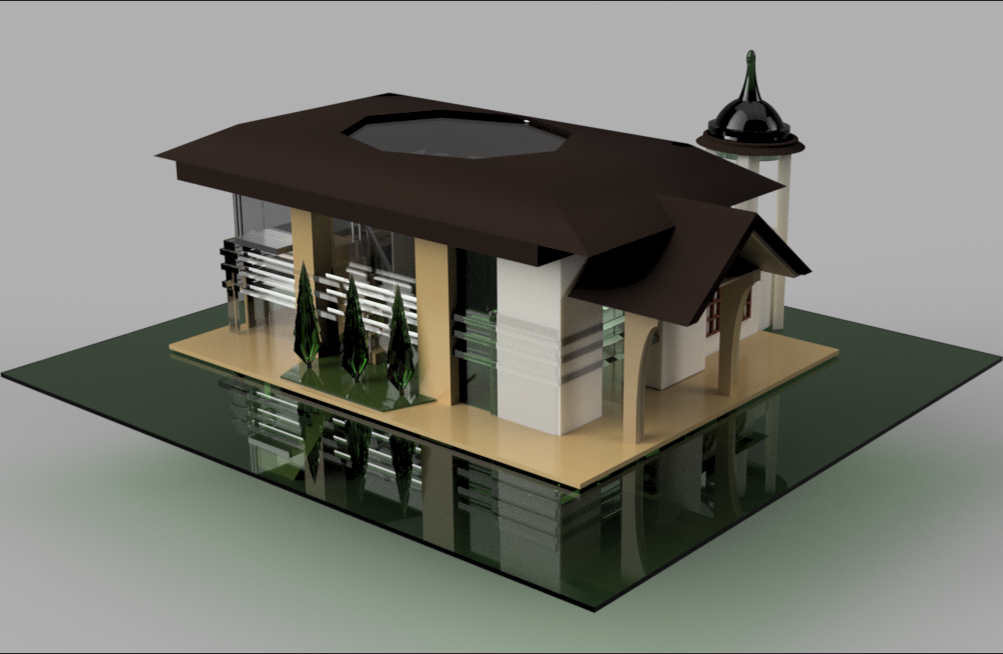
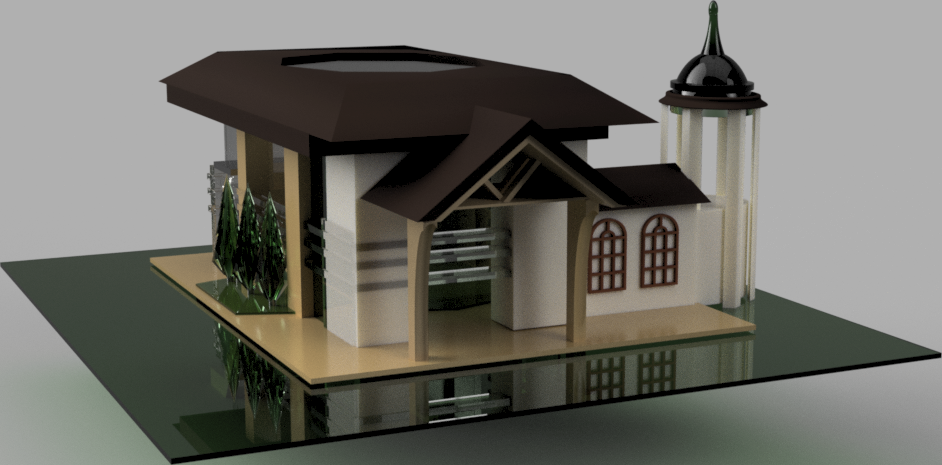
.jpg)
 Source Shigeru Ban Architects CORE (1).jpg)
Buildings are reminiscent of the past. They are a foundation for the future. The devastation of the Eaton Fire burned 14,000 acres, destroyed 9,413 structures, and left nearly 6,000 residential properties with significant damage. People lost not only the memorabilia from their childhood, but also the normalcy of their lives.
The effort to rebuild needs to start at what the people want. From testimonies of families who suffered through the tragedy of the fire, what I found is that people want normalcy. Many families are hesitant to return because the life they knew is gone after the fire. Their homes are gone, their public spaces are damaged, and the places that once held graduations, performances, meetups, voting, summer musicals, picnics, and community events are no longer the same. As one Altadena community member said, “At the end of the day people just want their community back. They want to gather again.”
As of December 2025, only 23 residential properties had been rebuilt. Even among the significantly damaged properties, less than half had applied for or received permits to begin construction. The rest are stuck facing at least $140,000 in construction costs just to afford rebuilding. Significant lead concentration was also found after debris removal, meaning that rebuilding cannot only be about replacing structures. It also has to address safety, health, and the long-term protection of the vulnerable children and elders returning.
Supplies





Tinkercad- initial draftings of buildings
Autodesk Fusion 360- rendering
RoomSketch- drafting floor plans
Autodesk Forma- Wind/solar/sunlight analysis
Adobe Firefly- AI rendition
Choosing Site
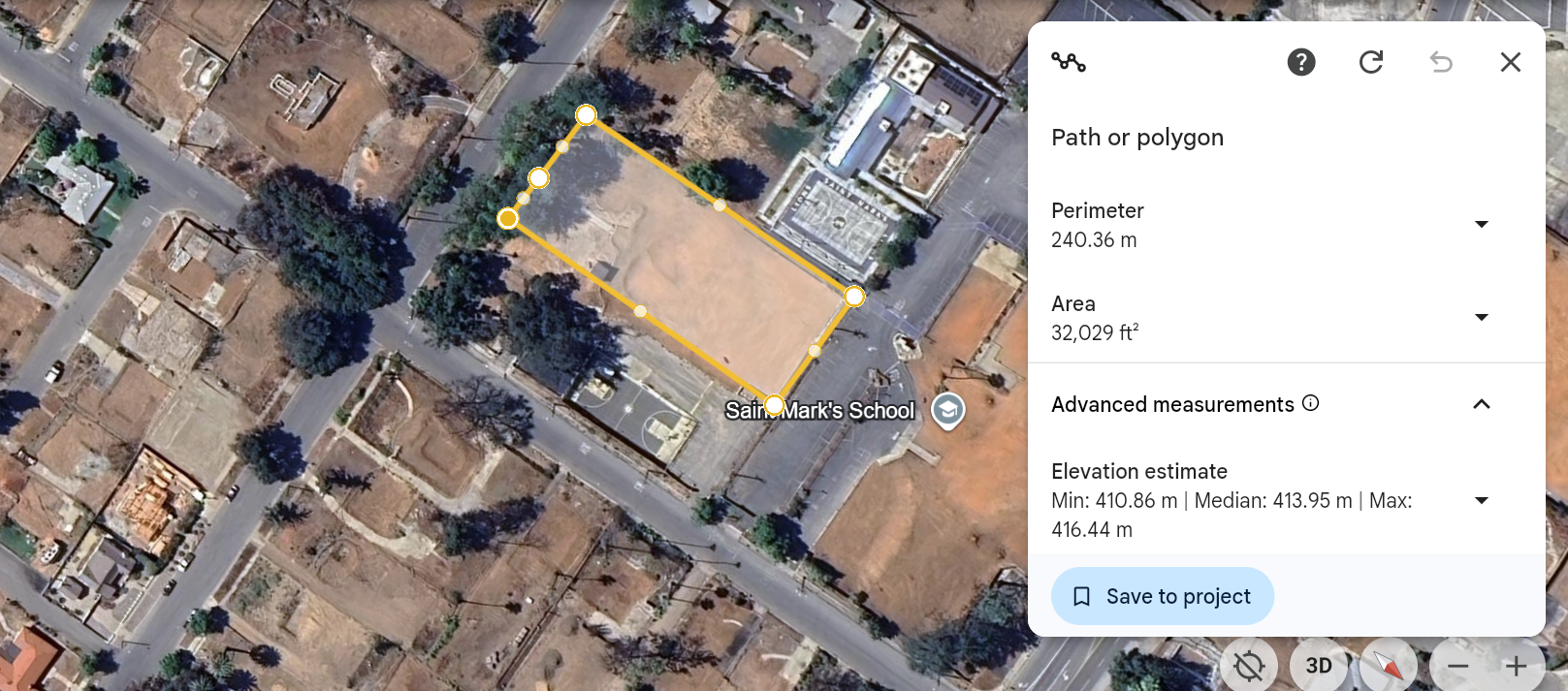
As one of the most vulnerable groups after disasters, children lose not only their homes, but also the familiar environment that once made them feel safe. Saint Mark’s School in Altadena, a 5.5-acre campus serving preschool through sixth-grade students, was one of the schools engulfed by the Eaton Fire.
Because the school plans to return, the makerspace is not meant to replace it, but to welcome returning students and families with support, learning, and safety education. Built next to the school, it can help children understand their changed environment through wildfire safety, lead protection, and safe rebuilding practices.
Although the fire has been extinguished, its aftereffects remain. Children need to learn how to stay away from ash, bare soil, and construction zones; wash their hands; clean their shoes; check air quality; and understand that danger can remain even after the flames are gone. Through creative activity, hands-on learning, play, and quiet spaces, the makerspace gives children a way to process what happened.
Front References: Architectual Heritage
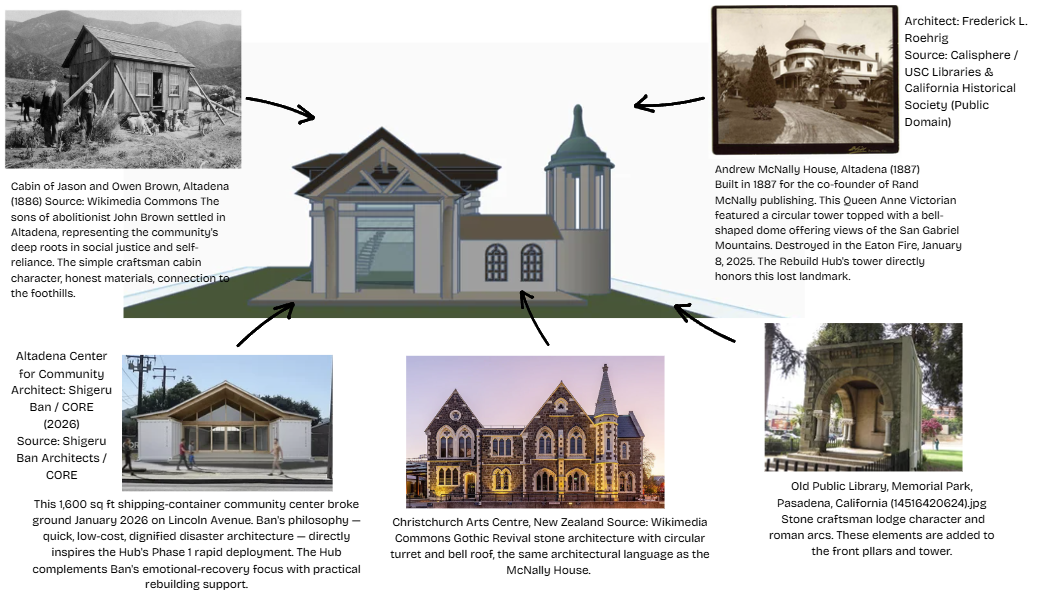
The Andrew McNally House (1887, architect Frederick L. Roehrig) had a circular tower with a bell-shaped dome and my water tower directly honors this lost landmark.
The Cabin of Jason and Owen Brown (1886) shows honest craftsman materials and the community's social-justice roots, informing the humble, familiar street face.
Shigeru Ban's CORE Altadena Center for Community (2026) demonstrates quick, low-cost, dignified disaster architecture, inspiring my Phase 1 rapid deployment; the Hub complements Ban's emotional-recovery focus with practical rebuilding support.
The Christchurch Arts Centre's Gothic-Revival stone with a circular turret and bell roof is the same architectural language as the McNally tower.
The Old Public Library in Pasadena contributes stone craftsman lodge character and Roman arches, echoed in my arched windows and tower base.
Top References:Light, Symbolism & Sustainability
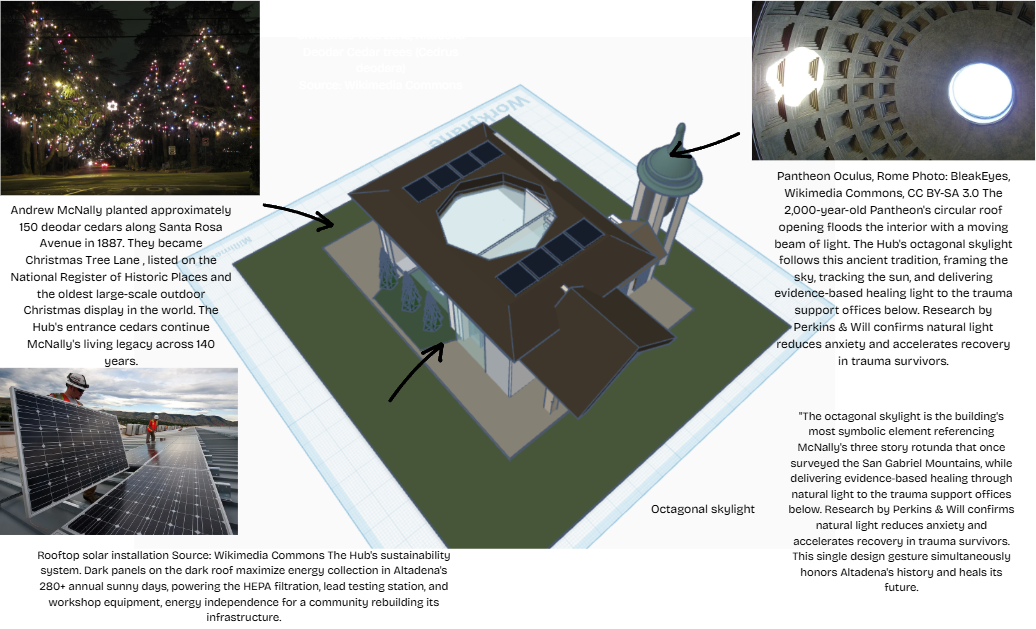
The Christmas Tree Lane deodar cedars are a living link to Altadena's founding: McNally planted about 150 deodars on Santa Rosa Avenue in 1887, and they became a National-Register landmark and the oldest large-scale outdoor Christmas display in the world. The Hub's entrance cedars continue that legacy across 140 years.
The Pantheon's oculus in Rome — a circular roof opening that floods the interior with a moving beam of light, inspired my octagonal skylight, which frames the sky and delivers daylight to the trauma-support offices below. Rooftop solar panels, dark on the dark roof, maximize collection in Altadena's 280+ annual sunny days, powering HEPA filtration, the lead-testing station, and workshop equipment.
The skylight is the building's most symbolic element: it references McNally's three-story rotunda that once surveyed the San Gabriel Mountains, while delivering evidence-based healing light. Research by Perkins & Will confirms natural light reduces anxiety and accelerates recovery in trauma survivors, so this one gesture honors Altadena's history and its future.
Side References: Fire-Resistant Construction

The Centre Pompidou (Piano and Rogers, 1977) is the pioneering "inside-out" building that celebrates structure instead of hiding it. The Hub's community-facing facade exposes its Cold-Formed Steel beams in the same spirit, honest about construction, and teaching residents the fire-resistant method now rebuilding Altadena.
The Hub uses the same construction already rebuilding the neighborhood: GA Design Build's cold-formed steel (CFS) residential system, built with Frame Up Now using the FRAMECAD f325iT production system. The panels arrive ready-made, shipped from Tucson to Altadena and prepped for simple on-site installation. CFS is fire-resistant, mold-resistant, and termite-proof compared to traditional wood (wood ignites around 400–500°F; steel survives where wood burns), and its non-porous surfaces resist lead-dust accumulation.
Lead Prevention
Because lead concentrations remained high even after debris removal, every interior surface is chosen to resist dust: sealed concrete or epoxy floors, smooth painted drywall or fiber-cement walls, smooth gypsum ceilings, double-paned sealed windows, and fiberglass doors, non-porous, washable, and easy to decontaminate. Each entrance is a double-door vestibule with a shoe-cleaning station and a sticky-mat to stop tracking lead indoors, and a HEPA-filtered HVAC system with positive air pressure keeps contaminated outside air out.
The building also hosts a public lead-testing hub modeled on USC's CLEAN program, which already offers free soil testing to LA residents. People bring soil samples, staff explain the results and next steps, and a dedicated display teaches lead risks, safe soil handling, protective equipment, and how to keep children safe. The testing room itself runs negative air pressure behind a glass partition inside emergency supply room, so samples stay contained and away from visitors.
The lead-safe garden uses only raised beds with certified clean imported soil, permeable pavers instead of bare ground, and native plants chosen partly for phytoremediation of sunflowers and Indian mustard pull heavy metals from soil, and vetiver grass stabilizes it, turning the garden itself into part of healing the land.
Elevation reinforces all of this: the concrete platform lifts the building about 18 inches above the contaminated soil, creating complete physical separation. This exceeds EPA's 200 ppm residential screening guidance and follows the post-disaster elevation precedent set by the Make It Right Foundation in New Orleans' Lower Ninth Ward.
Early Concept & Iteration in Tinkercad
 → Circular tower with bell dome (1).jpg)
I began with a simple craftsman build, but it was too plain and the tower felt separate. I then tried a dramatic yellow origami-folded roof, referencing folded paper cranes as a symbol of healing, but it was too steep and not quite fitting to the neighborhood atmosphere.
Then I lowered and widened the roof and revealed a king-post timber truss in the gable: this craftsman exposed-beam roof gave me the playful, structural character I wanted along with neighborhood fit. The final design is that exposed-beam craftsman lodge with a connected dome tower, arched windows
The exposed timber gable became my answer to interesting without being out of place. It shows honest structure, reads like a warm lodge for kids, and roots the building in craftsman Altadena.
Floor Plan
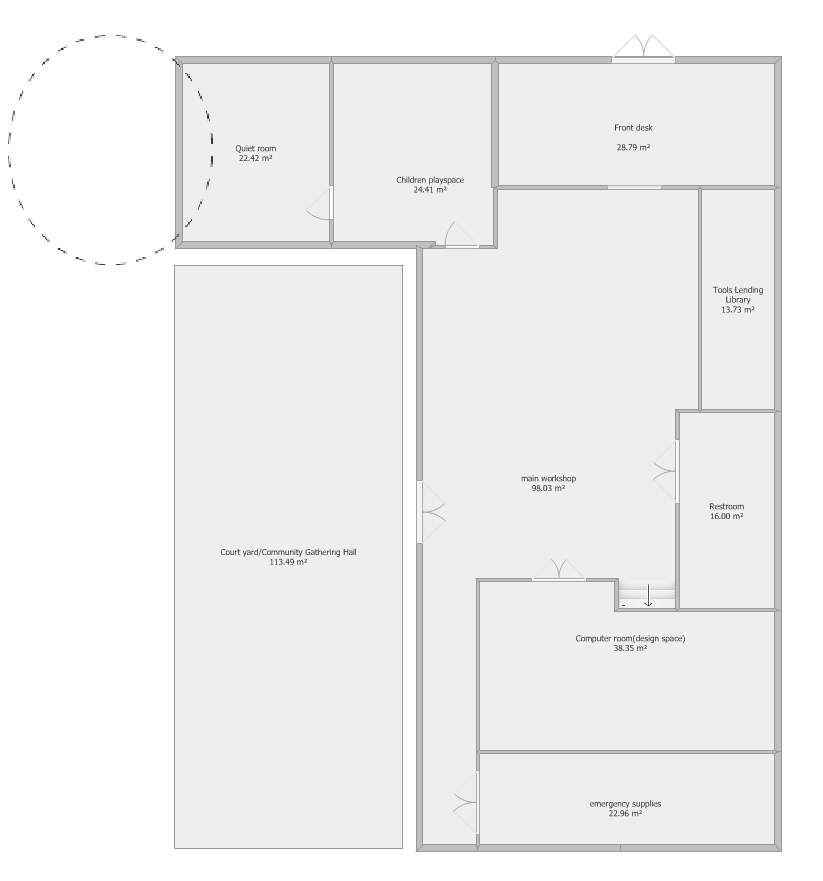
Using roomsketch, I drafted the first level floor plans.
I placed the quiet room and children's playspace at the front left corner deliberately, since these are the first spaces a traumatized family encounters, and they needed to feel calm, safe, and welcoming rather than industrial. The children's playspace sits directly beside the quiet room so a parent can decompress while their child plays within sight. The front desk is positioned at the top right of the entry zone, visible immediately on entry but not blocking the view into the buildin, you can see the workshop activity from the door, which draws people in.
The main workshop at 98 m² is the heart of the building, positioned centrally so it connects to every other space. The computer design room sits adjacent to the workshop so residents can move fluidly between digital design and physical making, designing their new home on Tinkercad, then building components at the workbench. Emergency supplies are placed at the rear with direct exit access so they can be distributed quickly without disrupting the rest of the building.
The courtyard and community gathering hall share the left side of the building. This placement means the gathering hall opens directly onto the garden, so events can spill outdoors. The lead-safe raised garden beds are visible from the workshop through the glass wall, connecting makers inside to the healing landscape outside, it was a deliberate biophilic design decision supported by research showing nature views reduce cortisol in trauma survivors.
Second Floor

The mezzanine is positioned directly above the main workshop, with an open railing overlooking the making floor below. This was a critical trauma-informed design decision: parents receiving case management support, permitting guidance, or counseling on the second floor can look down and see their children making at the workbenches. No one is isolated. The building keeps families connected even when they are on different floors.
The octagonal skylight opening at 54.70 m² dominates the center of the mezzanine floor plan, this is not wasted space but the building's most important spatial gesture, channeling the 14.3 hours of validated sunlight down through the mezzanine and into the workshop below, delivering the evidence-based healing light that Perkins & Will research confirms reduces anxiety and accelerates trauma recovery.
The three counseling rooms are placed at the quietest corner of the mezzanine, away from the staircase and the open design area, giving privacy and acoustic separation to the most sensitive conversations. The case management offices and permitting desk are positioned closer to the staircase so residents moving up from the workshop can access rebuilding guidance without navigating the entire floor.
Circulation Design
Every path through the building was designed with trauma-informed principles: clear sight lines with no dark corners, visible exits from every room, and a logical flow from public to private. A visitor enters through the front desk, moves into the open workshop, can step out to the courtyard, or ascend to the mezzanine for support services. The staircase is open and visible from the workshop floor, it invites rather than hides. Multiple exits on the ground floor ensure no one ever feels trapped, which is particularly important for survivors of a disaster that forced rapid evacuation.
Inside Space, Trauma-informed Choices

I then generated an inside space diagram using Firefly. Warm colors instead of clinical white, clear sight lines with no dark corners, visible exits, calming natural materials, and a quiet room always available. Biophilic choices reinforce healing: a courtyard garden visible from every room, fire-safe natural wood inside, a living plant wall, abundant daylight, and a courtyard water feature.
Google Earth Site Analysis
Before Forma, I used Google Earth to measure and verify the site adjacent to Saint Mark's School. The lot measures 32,029 sq ft with a perimeter of 240.36 m, confirmed at an elevation of 410-416m (1,324-1,349 ft) above sea level at the base of the San Gabriel foothills. The satellite view confirmed the fire-affected context: cleared lots visible throughout the neighborhood demonstrate the scale of Eaton Fire destruction that this building responds to.
Forma Set-up
I loaded the real Altadena site into Autodesk Forma by searching the address on East Mariposa Street, Altadena CA.
I selected these data layers to build an accurate site model:
- USA Structures (buildings)
- 3DEP Bare Earth DEM (terrain)
- OpenStreetMap Roads
- OpenStreetMap Trees
- Esri World Imagery (satellite)
- Esri Open Basemap
After loading site with all data, then start drawing building.
Choose:
June 21 (Summer Solstice) for sun hour analysis.
- Shows peak solar potential, best case for solar panels
1. Click points on the map to outline the building footprint
2. Draw a rectangle roughly matching the building
Preliminary Forma Analysis

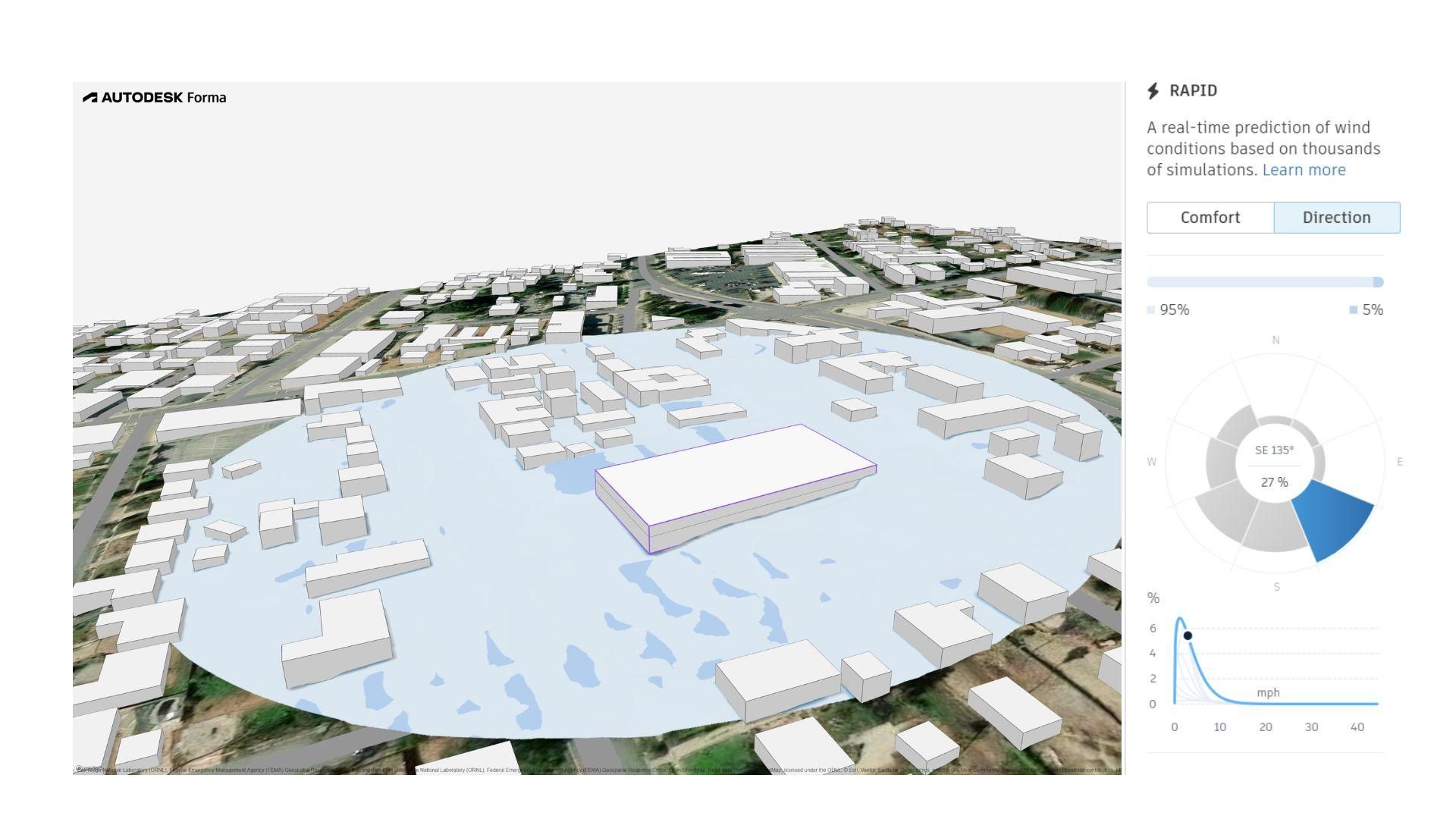

I first placed a simple massing block of the building on the real Altadena site in Autodesk Forma and ran quick AI studies to understand the site before committing to detail. Wind comfort analysis (RAPID, Lawson LDDC scale, Global Wind Atlas 3.0) showed about 72% of the site comfortable. Wind direction analysis showed prevailing flow from the southeast (SE 135°). A preliminary sun and daylight pass confirmed the roof as the high-exposure surface.
In-depth Analysis
After completing the preliminary massing analysis, I imported my detailed Tinkercad model into Forma as an OBJ file to run analyses on the actual building geometry. The model imported at approximately 1,329 feet, a common scaling issue when moving from Tinkercad's millimeter units to Forma's real-world scale. I resolved this by selecting all geometry and scaling down to approximately 60% until the building dimensions matched the site correctly.
Sun Hours Analysis

After importing the detailed model into Forma, the sun hours analysis confirmed the roof as the optimal surface for solar panels. The roof receiving 13.8-14.1 hours of direct sun confirms this is an ideal surface for solar panels. The analysis validates the design decision to place photovoltaic panels on the main roof planes around the octagonal skylight, where they will capture maximum energy. The building can realistically achieve energy independence, powering the HEPA filtration system, lead testing equipment, workshop tools, and 3D printers entirely through rooftop solar in Altadena's sun-rich climate (280+ sunny days annually).
The lower sun exposure on walls (3-4 hours) is actually beneficial since it means the interior won't overheat, reducing cooling loads while the roof harvests energy above.
Daylight Potential Analysis

The 92% daylight score at the octagonal skylight scientifically validates its role as the building's "healing light source." Research by Perkins & Will confirms natural light reduces anxiety and accelerates recovery in trauma survivors and this analysis proves the skylight delivers abundant daylight to the support offices below.
With 73% of the building achieving high daylight scores, the design successfully floods the interior with natural light, supporting the trauma-informed goal of bright, non-institutional, hopeful spaces. The two-story glass gable (48% score) brings light deep into the makerspace, while the lower scores in sheltered areas (10%) are appropriate for the quiet reflection room, which benefits from softer, calmer light.
Wind Flow Analysis
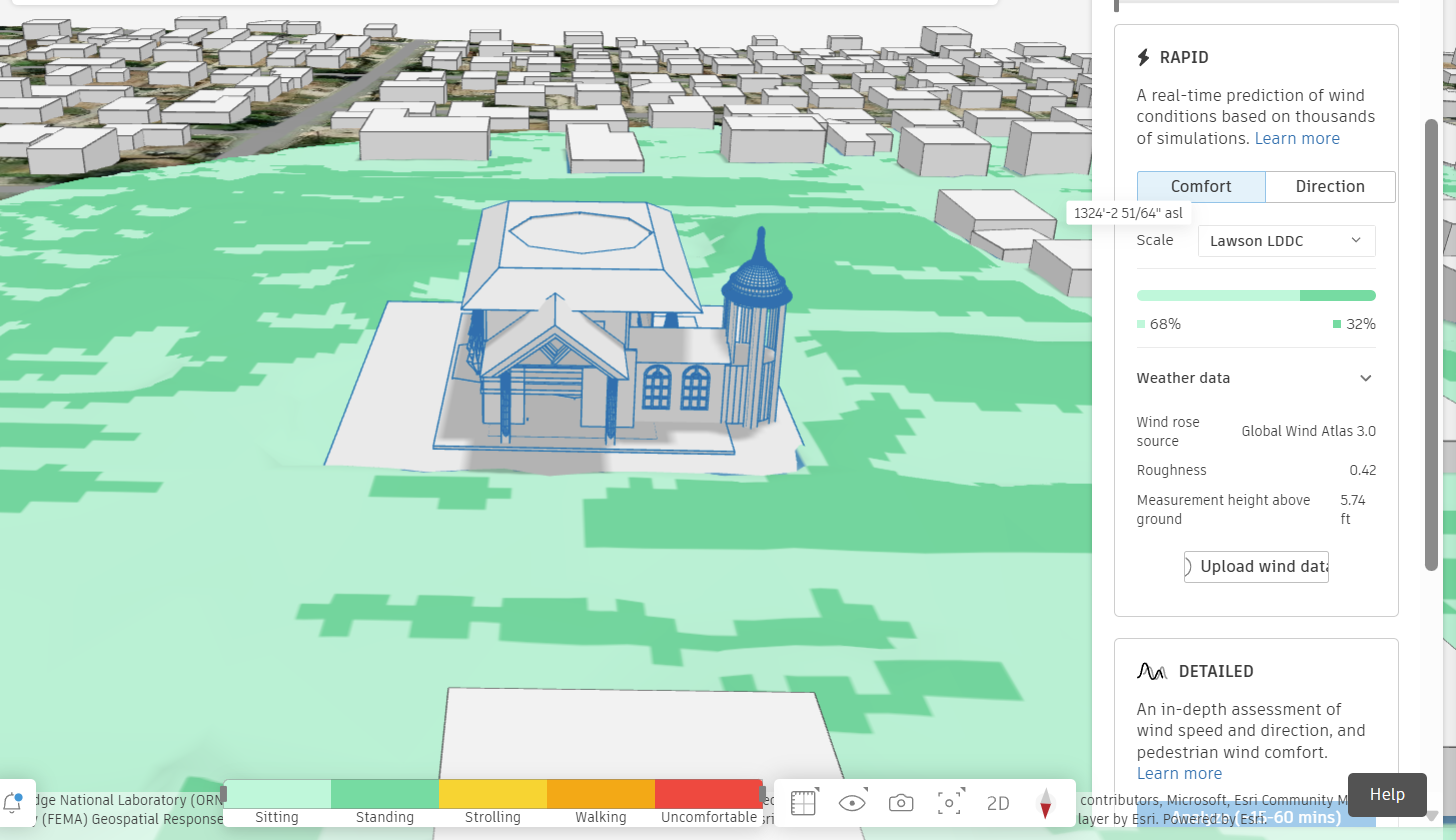
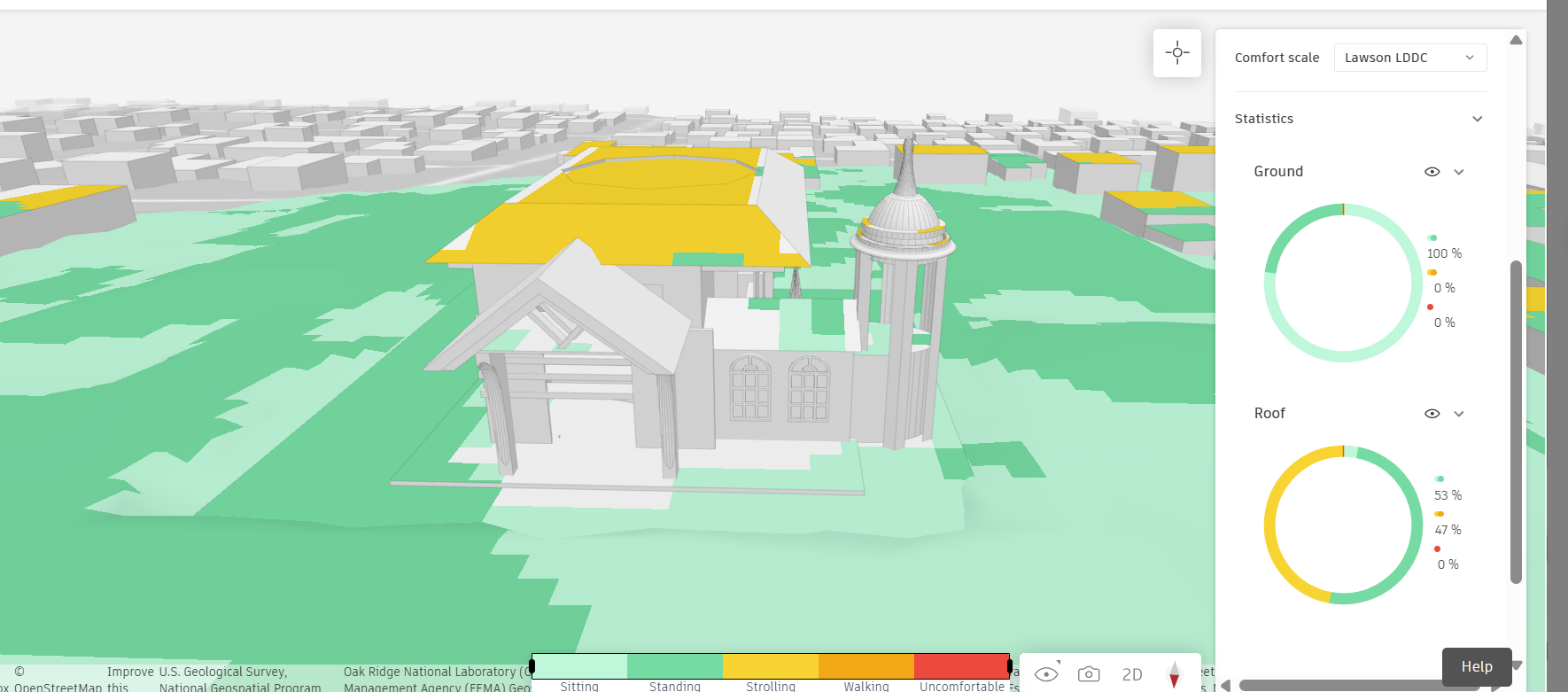
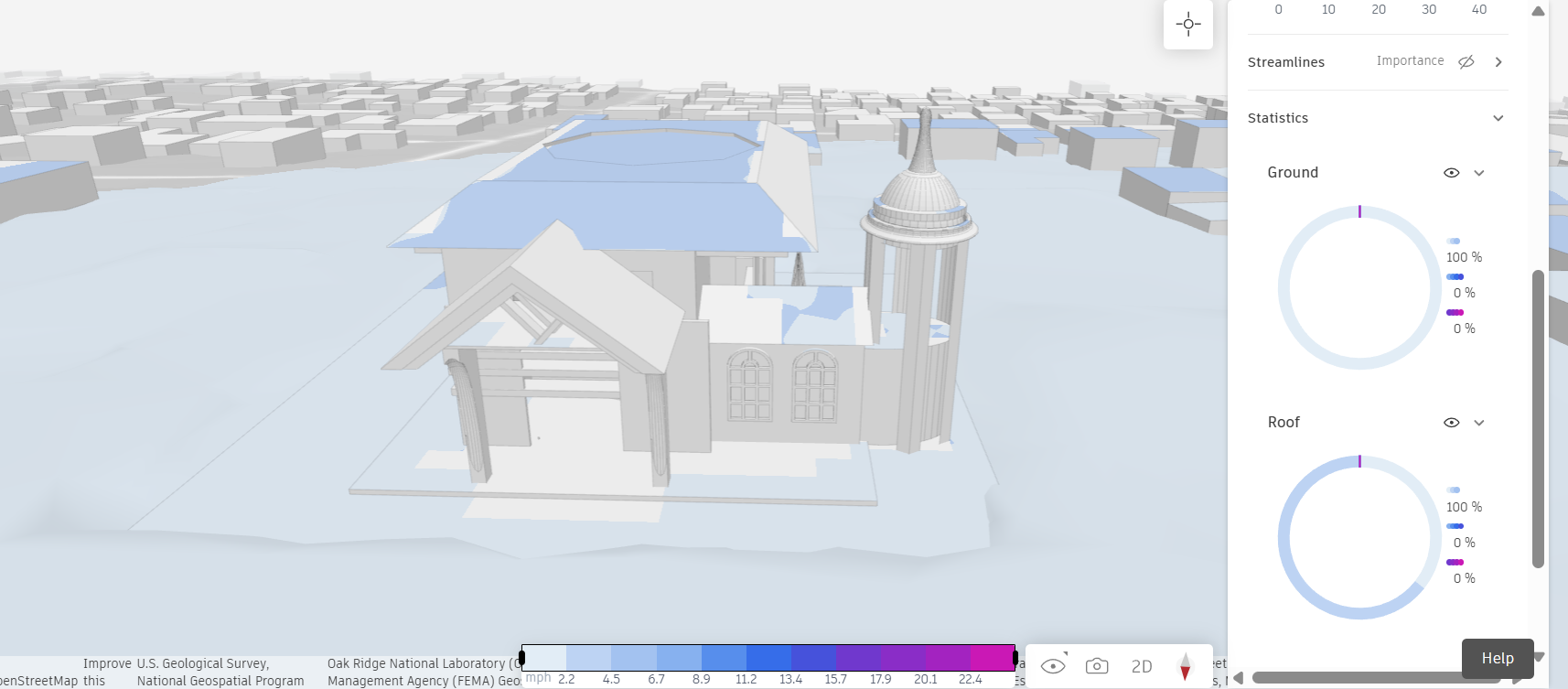
With 68% of the site rated comfortable for sitting and standing, the analysis confirms the site supports outdoor community gathering essential for a healing space where neighbors reconnect. This data informs the placement of the courtyard garden and outdoor gathering areas in the calmest zones, ensuring families can comfortably garden, children can play, and the community can gather outdoors year-round.
The windier 32% zones (building corners and exposed edges) are appropriately used for circulation and the water tower, which benefits from airflow for passive cooling. The building's form also shelters the courtyard, creating a protected microclimate for the lead-safe raised garden beds.
Overall Forma Conclusion
The octagonal skylight delivers both maximum solar potential (for panels) and maximum daylight (for healing), a single feature serving sustainability and trauma recovery simultaneously.
Solar panel placement is confirmed optimal, supporting the building's energy independence and resilience during grid outages (critical after disasters).
The courtyard garden sits in the comfortable wind zone, ensuring the biophilic, lead-safe outdoor healing space functions year-round.
The building successfully balances harvesting energy and light on top while keeping interiors comfortable and sheltered.
Materials and Cost
Downloads
Fusion Rendering
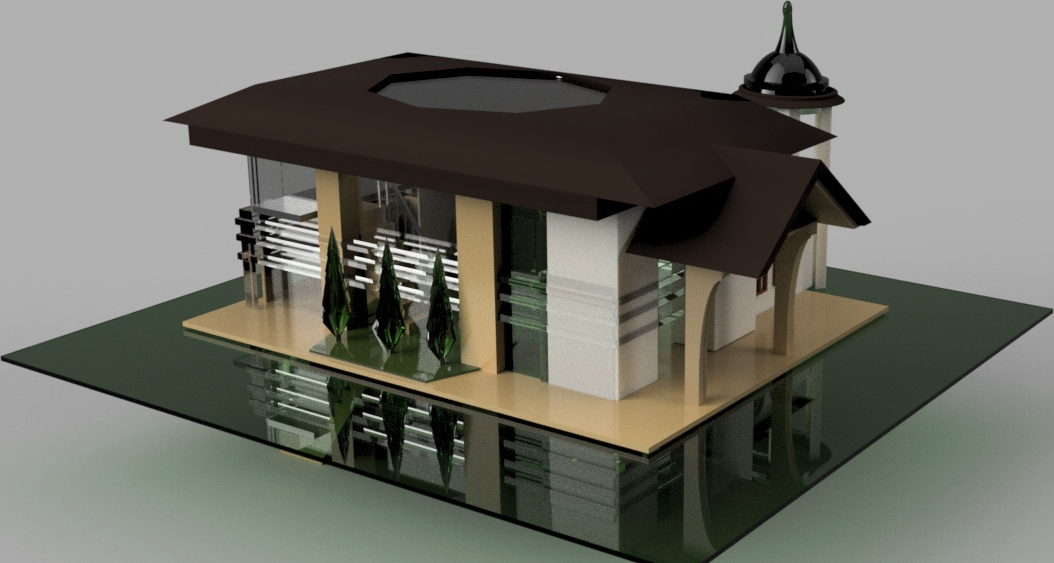
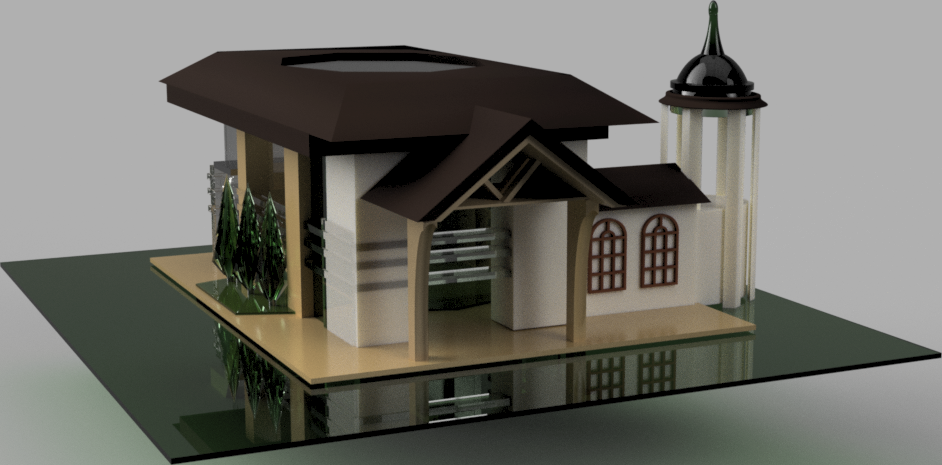
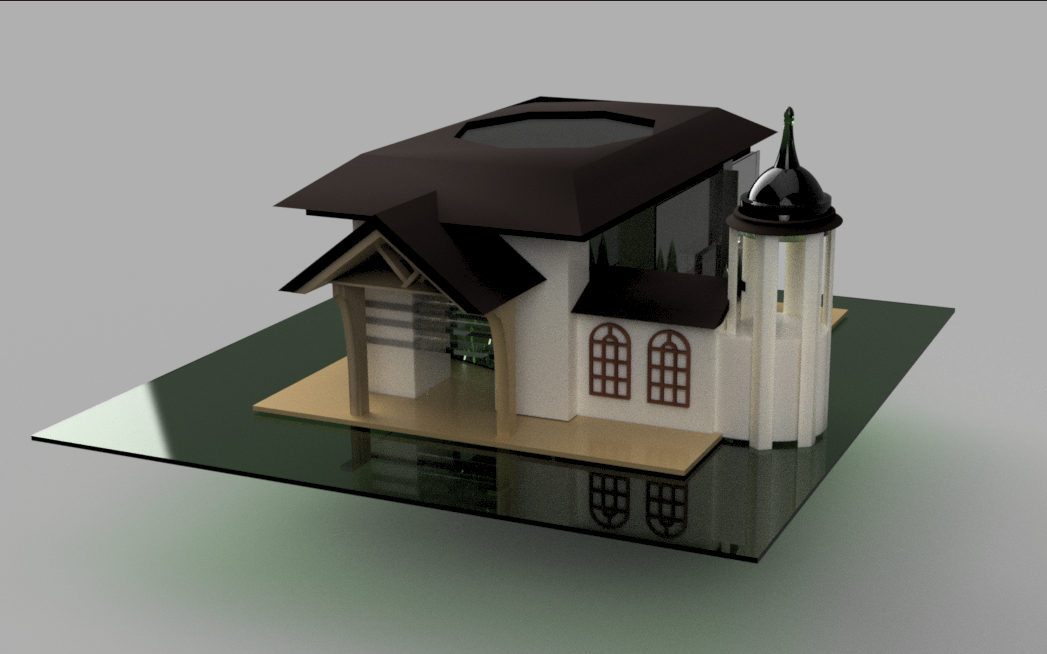
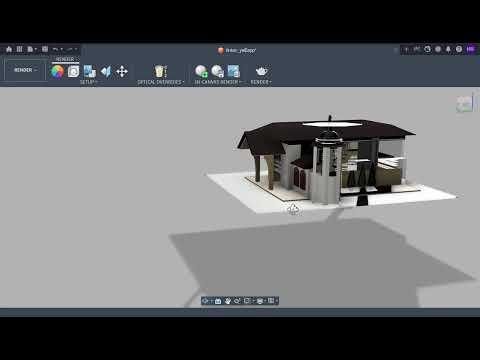
I imported the Tinkercad model into Autodesk Fusion 360 as Obj format. The import process required fixing the model's vertical orientation, a common issue when moving between Tinkercad and Fusion, which I resolved by applying a -90° rotation on the X axis.
Then went into Fusion's rendering mode.I then applied materials from Fusion's library to each component using A hotkey,
- Warm walnut wood shingles on the roof
- Oak semigloss on the walls
- Plastic(Translucent Matte) Green as grass
- Glass-Frosted Medium on the sides
Firefly Rendering
.jpg)

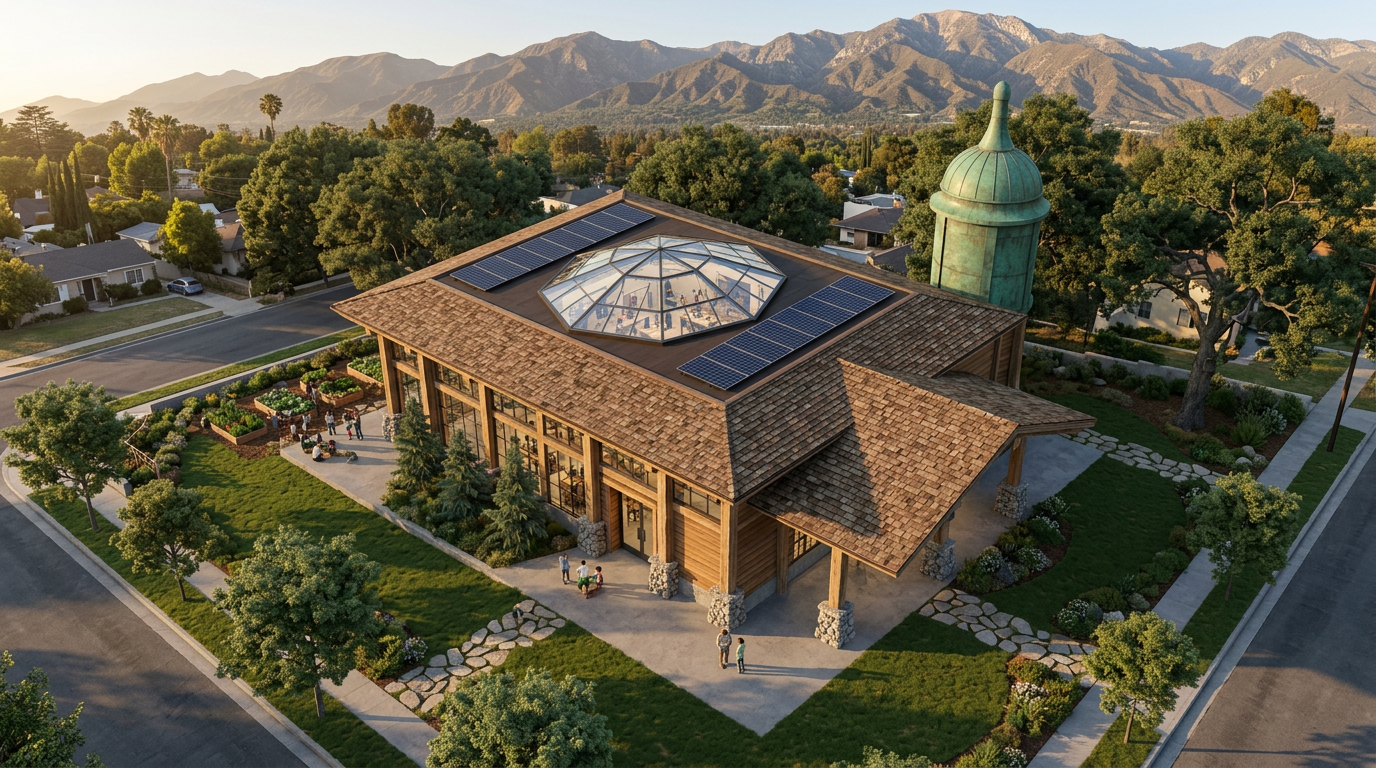
Having validated the design through Forma's environmental analysis and refined it through multiple Tinkercad iterations, I used Adobe Firefly (Gemini Flash) to generate photorealistic visualizations of the final vision with reference picture of Fusion rendered products.
The interior opens into a transparent, active, light-filled makerspace of who Altadena is becoming. This is the same move Shigeru Ban makes: humble and welcoming from the street, warm and uplifting within.
Closing Words
What I wish to do in this project is to reconnect the roots of this neighborhood and the heritage of the past, while helping people in their path to healing. The building is not only meant to replace what was lost. It is meant to give people a place to gather, rebuild, learn, and feel that their community life can exist again.
There are several problems that I encountered design-wise. First is to create a building that represents and blends into the neighborhood while, at the same time, being better and more symbolic than what was destroyed in the past. In short, creating novelty within normalcy. Second is to create a sense of familiarity under the cold feeling of steel used for fire resistance.
After several iterations and research on the neighborhood of Altadena, I found several historically important buildings and details that were lost in the fire, which I incorporated into the design. These references helped the building feel connected to Altadena’s past, instead of feeling like an unfamiliar structure placed on the site.
I then generated a floor plan without unnecessary office space, focusing instead on healing and functionality for its people. The design includes spaces for making, rebuilding, gathering, children’s activities, quiet reflection, and community support. Since the site is next to Saint Mark’s School, I also wanted the building to serve children and families returning to the neighborhood.
The building also needs to grow with the community after it is placed. It should reinforce long-term safety and protection through fire-resistant materials, lead-safe design, biophilic elements, and flexible public spaces. It should give people a place to host important events again, while restoring the ordinary parts of life that make a neighborhood feel whole.
Lastly, I cross-referenced and ran form simulations on the building to make sure it could withstand real-life complexity, including sunlight, wind, and environmental conditions. I also considered fire-resistant construction and lead-safe design so the building could respond to the actual problems Altadena faces after the fire.
Here is my answer: building for its people, a building that helps people heal, rebuild, and create a future that is hopeful.