Clamp on Fishing Rod Holder
by Sawdust Willy in Outside > Fishing
949 Views, 2 Favorites, 0 Comments
Clamp on Fishing Rod Holder
Pi or π (3.14159265.....) is an interesting number. It is the result of taking the circumference of a circle and dividing it by its diameter. It is irrational in that the decimal pattern never repeats. For some silly reason, back in college when I was using Pi all the time in my engineering courses, I memorized the number to its eighth decimal place. Why? I dunno. Just did. It's funny... after high school, college, and over 3 decades in the engineering world I have all this stuff in my head. Heck, I can tell still you what Avagadro's number is and never once in my life have I used it! Speed of light, acceleration due to gravity, and on and on... Most of it is useless information now. Might come in handy at a pub quiz if I'd ever participate in one of those. But Pi on the other hand is VERY useful. Seems like I'm using it all the time in one of my projects to figure something out. In fact, I just did in my latest project to build some pole mounted rod holders for my long time friend Larry to use at his lake house. I needed the diameter of the pipe that was used to build his boat house since I was designing a fishing rod holder to attach to them. He didn't know so he wrapped a piece of string around the pipe, marked it, and then measured the distance between the marks. That gives you the circumference of the pipe. So as I said earlier Pi = circumference/diameter. A little simple math now... multiply both sides of the equation by diameter and you get circumference = Pi x diameter. Now divide both sides by Pi and you have diameter = circumference/Pi. Easy peasy. Take the length of string that was measured and divide that by Pi and we get close to 2.5 inches in diameter. Perfect! I have a hole saw just that size. Now let me tell you a little more about the project and we'll get to it...
My old college buddy Larry lives in a home on Grand Lake up in northeast Oklahoma. Grand Lake is a beautiful, large lake, and it is absolutely LOADED with catfish. Once or twice during the year there are 4 of us hunting/fishing buddies who get together at Larry's and spend the week fishing, eating great food, drinking beer and margaritas (Larry's wife Janet has a frozen margarita machine!) and playing 42. It is a fantastic time. As far as fishing goes we spend 3 or 4 days running our jug lines (check out the Instructable for those HERE) and also a couple days just fishing from the deck of the boat house. Now, when we are fishing off of the boat house we typically are fishing with several rods at a time. Larry has rigged up some low cost/low tech rod holders made out of PVC pipe that are band clamped to the metal vertical pipes that hold up the roof. I'll have to admit that they are functional and like I said they certainly are inexpensive but for some reason they just bother me. Which is sort of odd for me (as an engineer) in that my favorite type of design is one that is the lowest level of complexity and still gets the job done. And the PVC pipes check both of those boxes but I still don't like them. Sometimes you simply want to have something that's a little nicer and a little fancier... no particularly good reason... just because it's more fun if nothing else. So I came up with a design that I like a whole lot better. The design parameters were... it had to work at least as well or better as the PVC pipes and be as easy or easier to use, they needed to be secure and built to last, and they needed to look cool and maybe be personalized in some way. I didn't really care how much they cost to make though I did want to keep it in the realm of 'reasonable'. My reasoning here is that I have fun with these projects so I figure that I'm getting a lot of entertainment value for my money as well as something useful at the end of it. Read on and you can see what I came up with...
Supplies


MATERIALS
Scrap hardwood
TOOLS
Hole Saw (to match the size of the pipe you have)
Drill press with various bits.
Table Saw
Router Table and 1/4 unch upcut bit.
Disc Sander
Random Orbital Sander
Hack Saw
Surface Planer
Miter Saw
Masking Tape
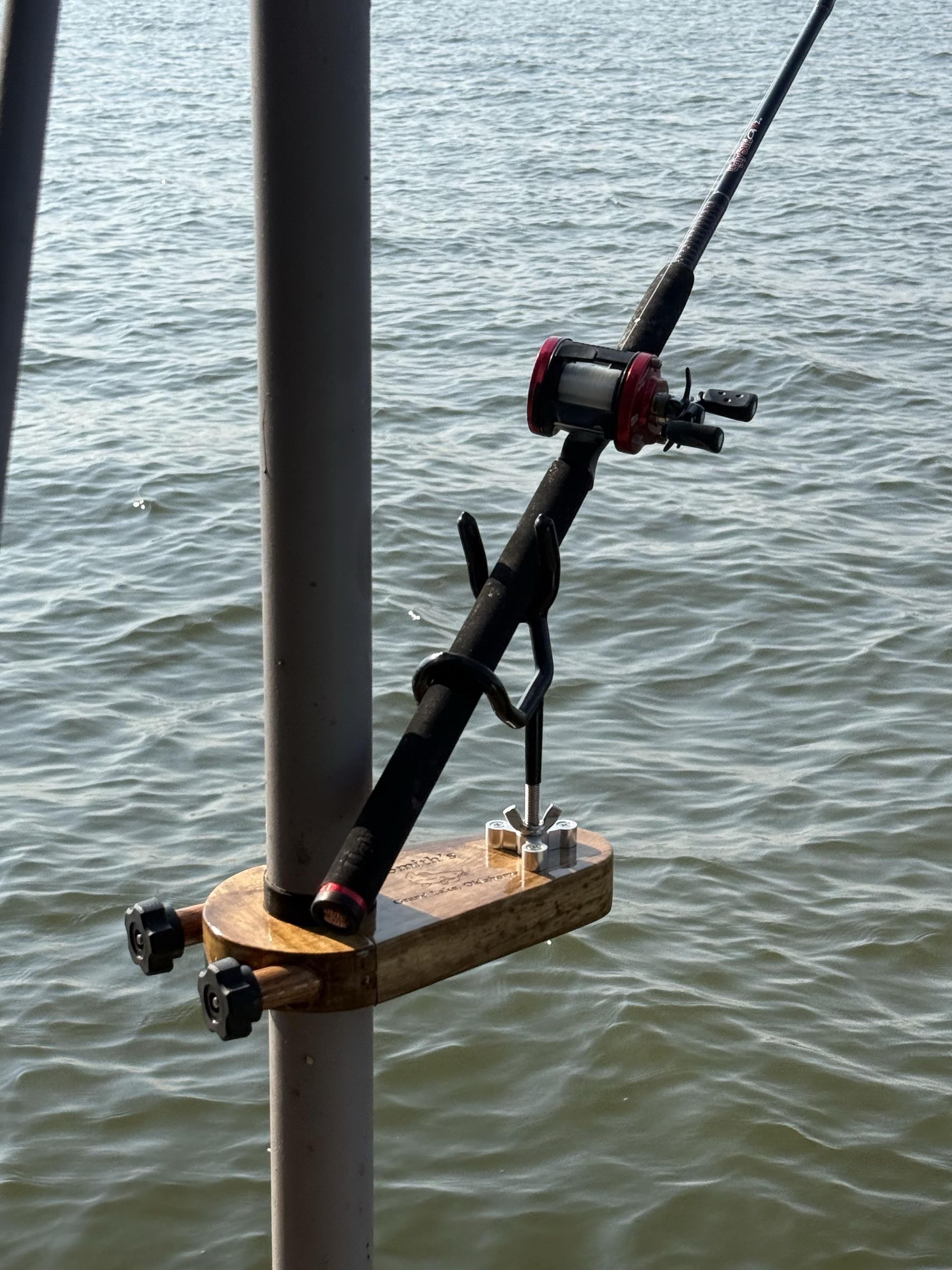
The fully assembled piece is shown in the first picture so you can see what we're shooting for. In the second picture are all of the wooden parts we need for three rod holders. We'll start with the wooden dowels. They are 7/8 inch oak dowels that are cut to 2-5/8 inches long. To the right of the dowels are the clamping block parts. They are 1-1/2 inches thick, 2-5/8 inches wide, and a little over 5 inches long. They are oversized in length but will end up being shaped to the correct size with the disc sander. To the right of the clamping blocks are the body pieces and these are made from 1-1/2 inch thick material. The base is 4-1/4 inches and the top is 1-1/2 inches. The distance from the base to the top is 8 inches. None of the dimenions are super critical. The last parts are the side pieces in the bottom left of the pic. They are 9 inches long, 1-1/2 inches wide, and 7/16 inch thick (since that was the thickness of the scrap that I had on hand). I did pay attention to grain direction. All of the parts except for the body piece have the grain running the length of the part. For the body piece it is running perpendular to the length. My thought here was if it was running down the length of the body piece then there could be the potential for the part splitting when you cranked down on the clamping knobs. And to keep it from snapping in the middle... the body is reinforced by the two side pieces as well as the steel rods embedded with epoxy. Probably way over engineered (that's what I do) but it is dang sure not going to break! You don't want to lose your expensive rod and reel when a big fish hits.
In the second picture the only thing to do here is cut the all thread to the rough length of 11 inches. They will be trimmed to the correct length once everything is together.
Last pic just shows all of the parts collected and ready for assembly.
All Thread


The all thread serves a couple purposes. It holds everything together and it reinforces the body piece so that it doesn't split in the middle in the event you get a big fish to hit. But before we do anything with the all thread we need to bevel a couple of the side pieces as shown in the first pic. Just one end of each piece. Next mark a point in the middle of the body piece edge that is 2 inches from the small end. There you drill a 3/8 inch diameter hole to a depth of 1/2 inch. Next mill a 1/4 inch channel in the middle of the body piece edge that is 3/8 inch deep from the hole to the large end as shown in pic 4. In pic 5 you can see how the piece will fit. The hole accomodates the nut on the end of the all thread... just a belt and suspenders approach to ensure the all thread is secure. The parts are masked (pic 6) and the channel is filled with epoxy (pic 7). Once the epoxy cures remove the masking tape (pic 8). The all thread then needs to be bent so that it is perpendicular to the back edge... next several pics.
Lengthwise Support and Rod Holder Base


To cover up the all thread channel and provide further lengthwise support the side pieces are glued in place and the end of the assembly is rounded off. I have a 3 inch diameter template that I use to mark the end.
Remove the base from the rod holder assembly to mark the hole locations and then drill the holes. The base is about 3/4 inch back from the front edge of the body piece.
Clamp


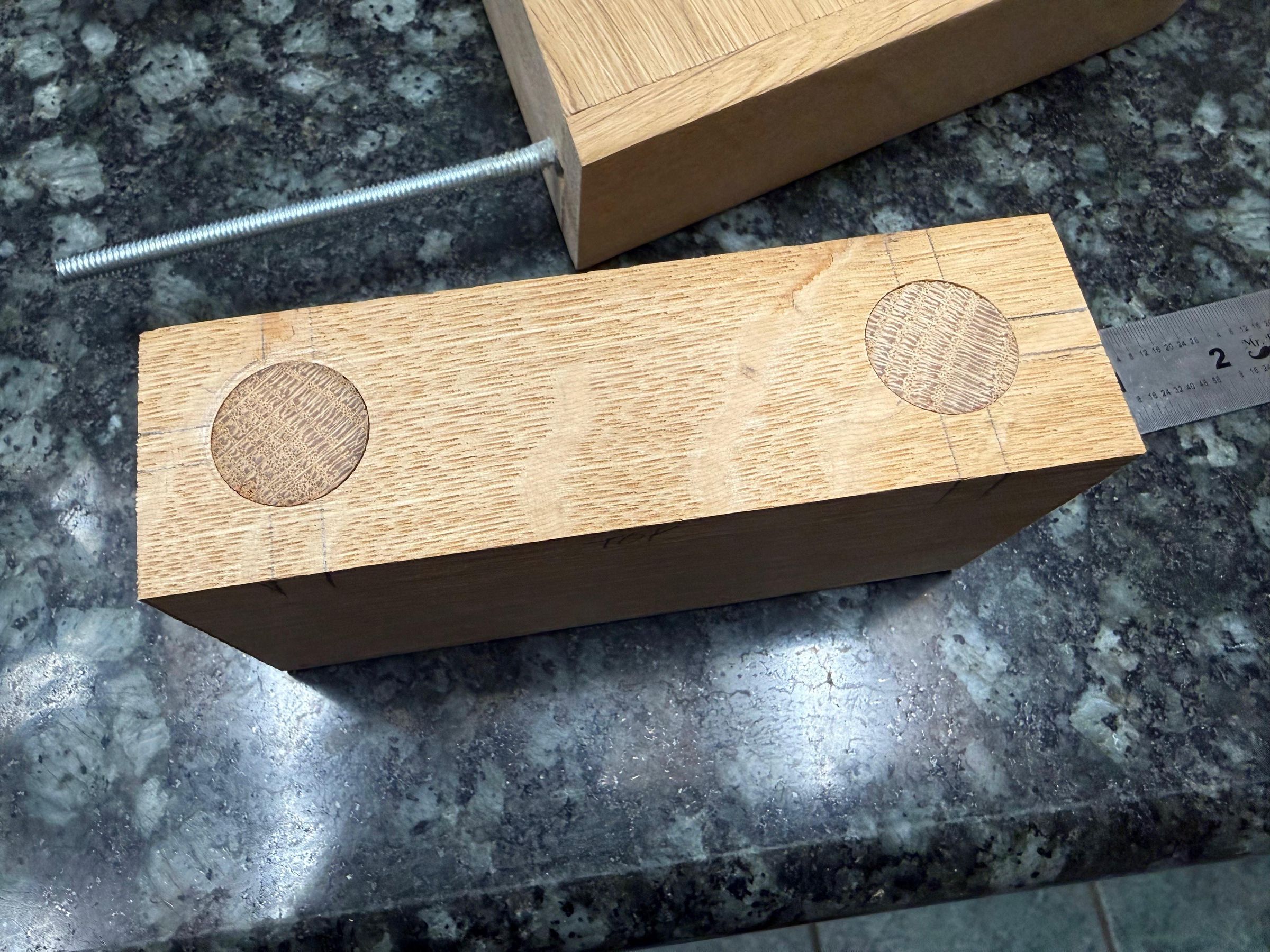


In the first few iterations of this design the clamping block was simply that... a block. A rectangular block of wood with a couple of holes drilled in it. And it was fine. It worked... but you know, it just didn't look nice and I wanted something that looked nice even if it complicated things. So I rounded it off but then I needed a couple of squared off flat areas for the clamping knobs to bear against. Additionally I figured that once I cut out the hole in the middle of the newly rounded clamping block it would also need some cross grain reinforcement and that's when I came up with the idea to use the oak dowels (especially since I had one laying around for years that I never used). Once the glue has cured on the oak dowels then the two parts are assembled and held firmly in place with the two knobs. Mark the center point where the two parts meet and use a hole saw to cut the area that will accomodate the pipe where the rod holder will be mounted when in use.
Personalize and Install Rod Holder


For the first several years that Larry was living in his lake home he would give first time visitors a T-shirt with his 'SMITH' lake house logo on it. So I used his logo for the first 3 rod holders and then I substituted a catfish drawing for the last 3. Seemed fitting since that's what we like to catch. I have a xTool S1 laser cutter that does a fine job. It was my retirement present that I bought for myself a few years ago and I have been having a lot of fun with it. I also signed the bottom side in laser. My buddies requested that I sign anything that I make for them.
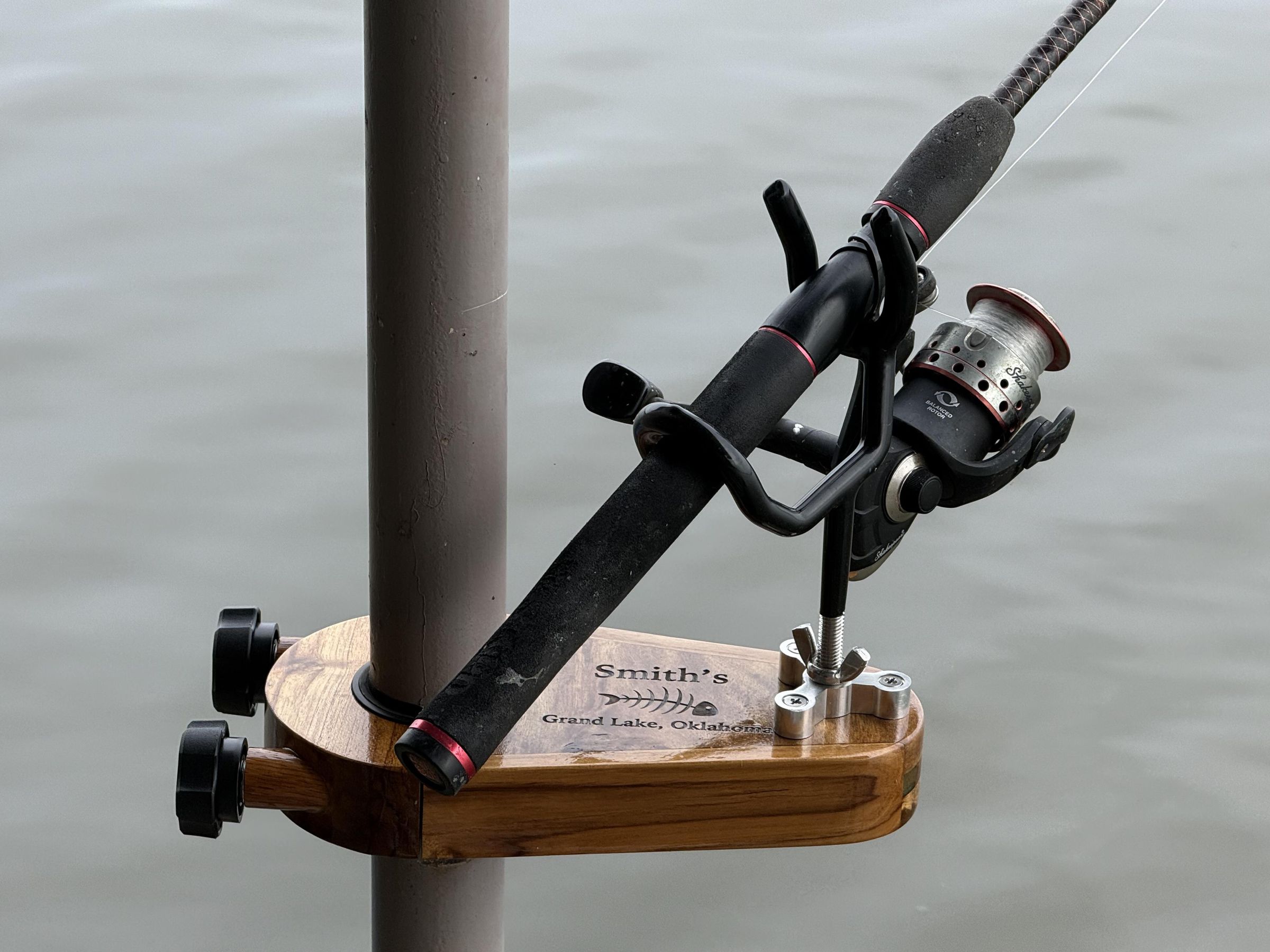
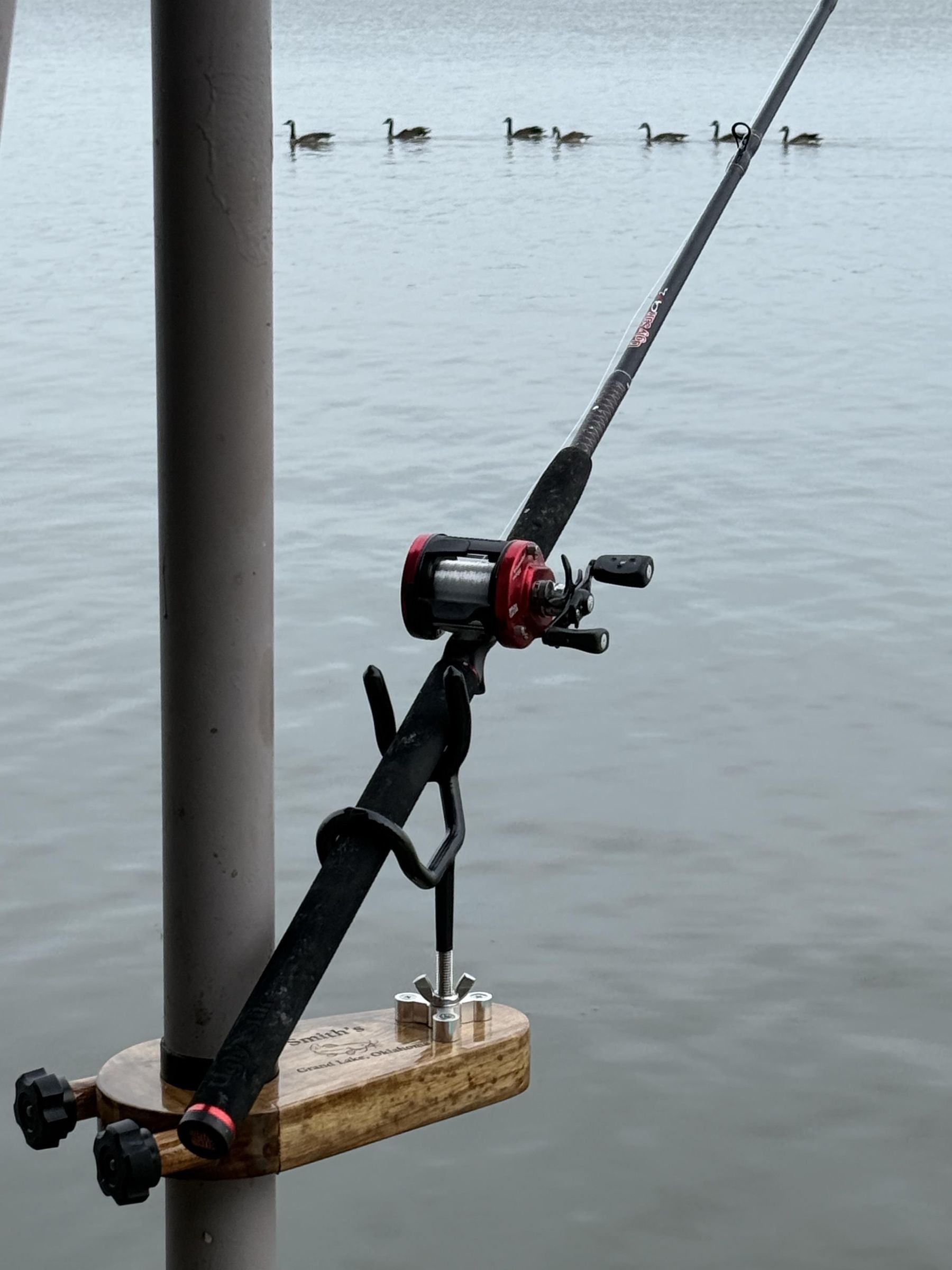
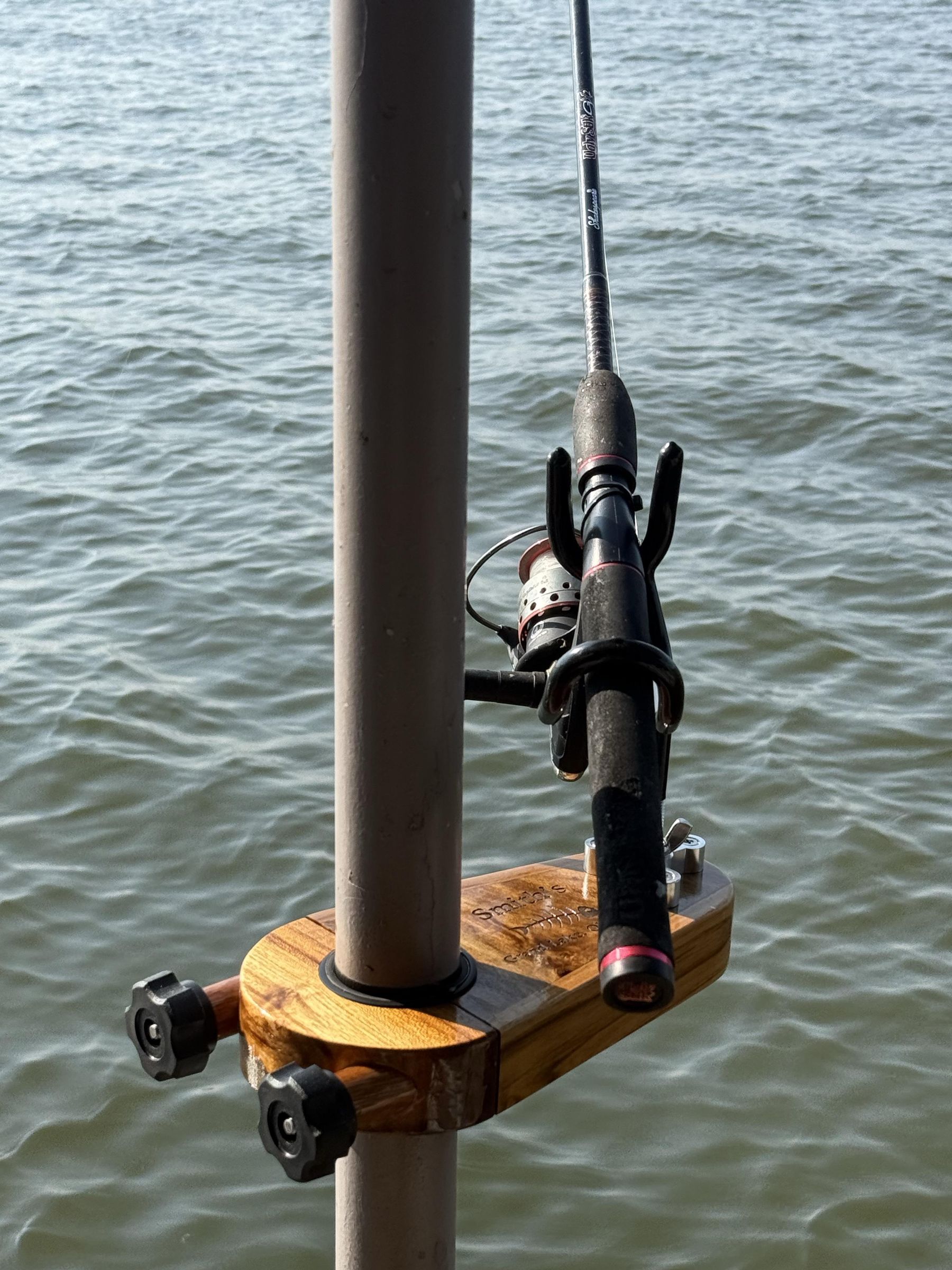
Once the engraving is done I installed the rod holder. I had one of the screws hit the embedded all thread so I ended up grinding the screw a bit shorter... or you can just use a shorter screw if you have one. Finished rod holders in the last picture.
One note. Usually when I'm making something that requires some sort of hardware installation (knobs, hinges, or in this case the rod holder) I like to do it all before I apply any finish. I usually end up making some bonehead move that dings the wood during installation so once all that's done I take everything apart, do some finish sanding, and then apply the finish. Sure it's more work but I think I end up with a better looking final product.
Finish


I used Minwax Helmsman oil based varnish. Whatever you use just make sure that it is rated for exterior use and contains UV blockers to stand up to the sun. I ended up applying a couple coats and lightly sanded in between coats. It's not as critical to apply a light coat on the first pass (but it's still better with a thin coat) as you can sand out any drips that occur but the second and any remaining coats do need be light. Allow everything to dry completely before proceeding or you will mess up the finish. Wait at least 24 hours. Then it is a simple matter of reinstalling the hardware and just like that we are ready to go fishing!
Go Fishing!


Well… dang it! I shipped a couple of the new rod holders to Larry so that he could try them out and get some action shots but he broke his ankle! Looks like he has some Frankenstein contraption bolted to his foot and a long recovery ahead so that will have to wait. I’ll go ahead and publish the Instructable for now but will update it later once the ankle is better. Take it easy buddy… we’ll see you in a few months when we get together for our annual catfishing trip. I’ll bring a nice bottle of bourbon to celebrate your recovery... and hopefully we'll catch a bunch of catfish using the new rod holders!
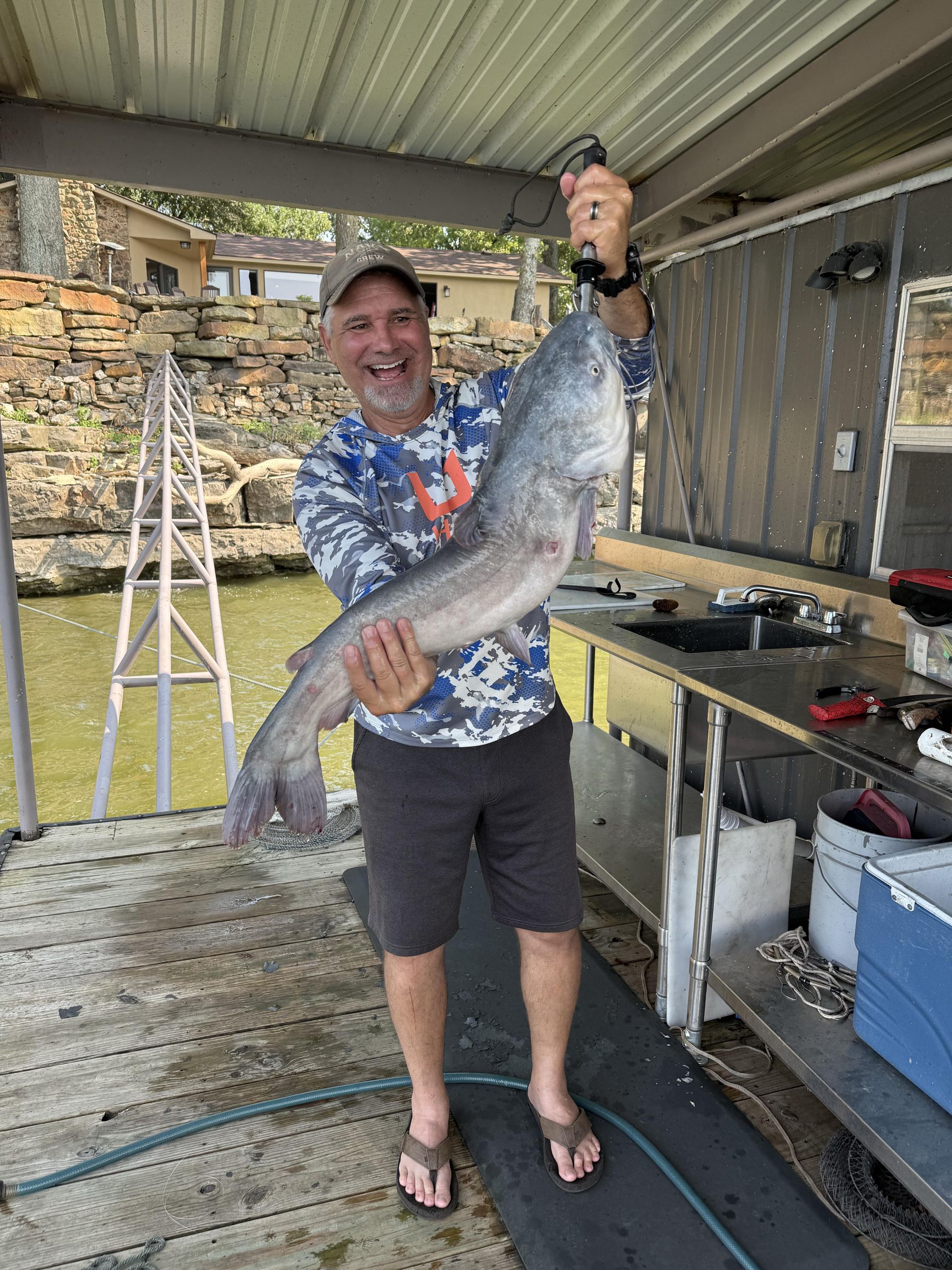
Update: July 25, 2026 - The ankle is much better and we spent several days fishing last week. Added a few pics of the newly installed rod holders and the big fish of the week from the boat house. A nice 12 pound blue catfish! As it turns out there were two different diameters of metal support poles. One was a little under two inches and the other was an inch and a half. For the pole that was a little under two inches I made a few wraps of Gorilla Tape to get a snug fit and for the inch and a half pole is used this material. If I had known about the inch and a half diameter pole I would have cut the rod holder to that diameter instead! Oh well... it all worked out nontheless.