Custom Hybrid Go Kart Build!
by agarw49350 in Workshop > Cars
37287 Views, 155 Favorites, 0 Comments
Custom Hybrid Go Kart Build!

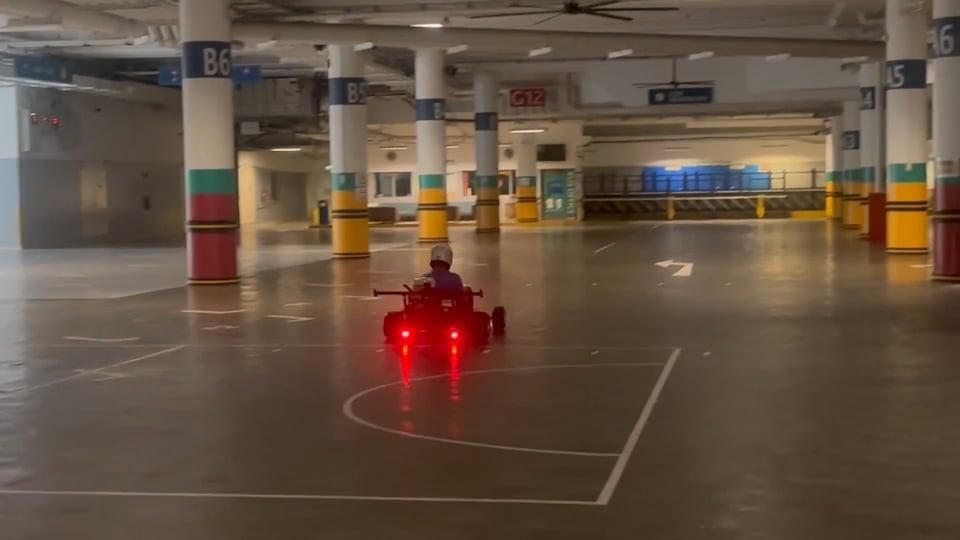
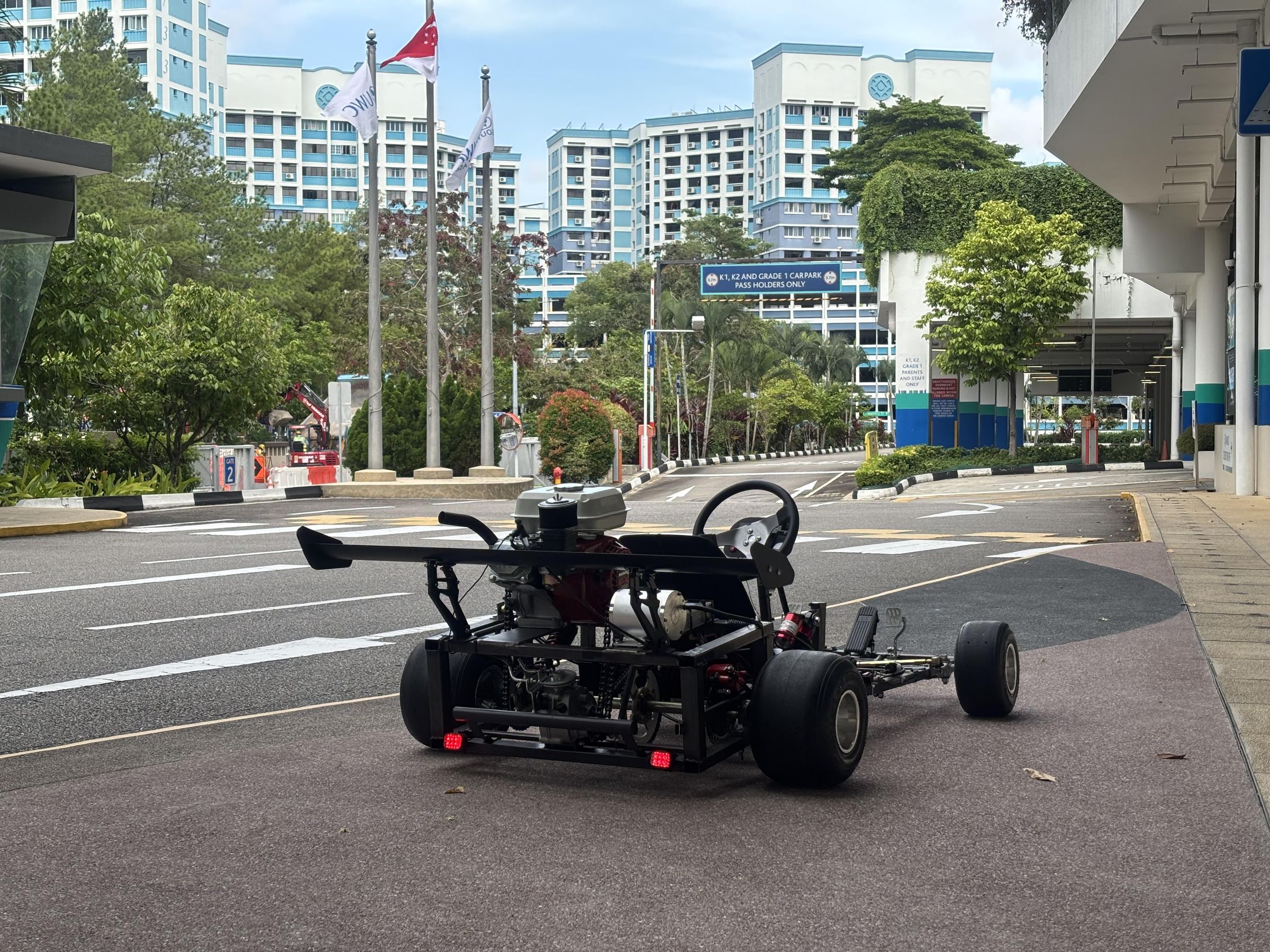
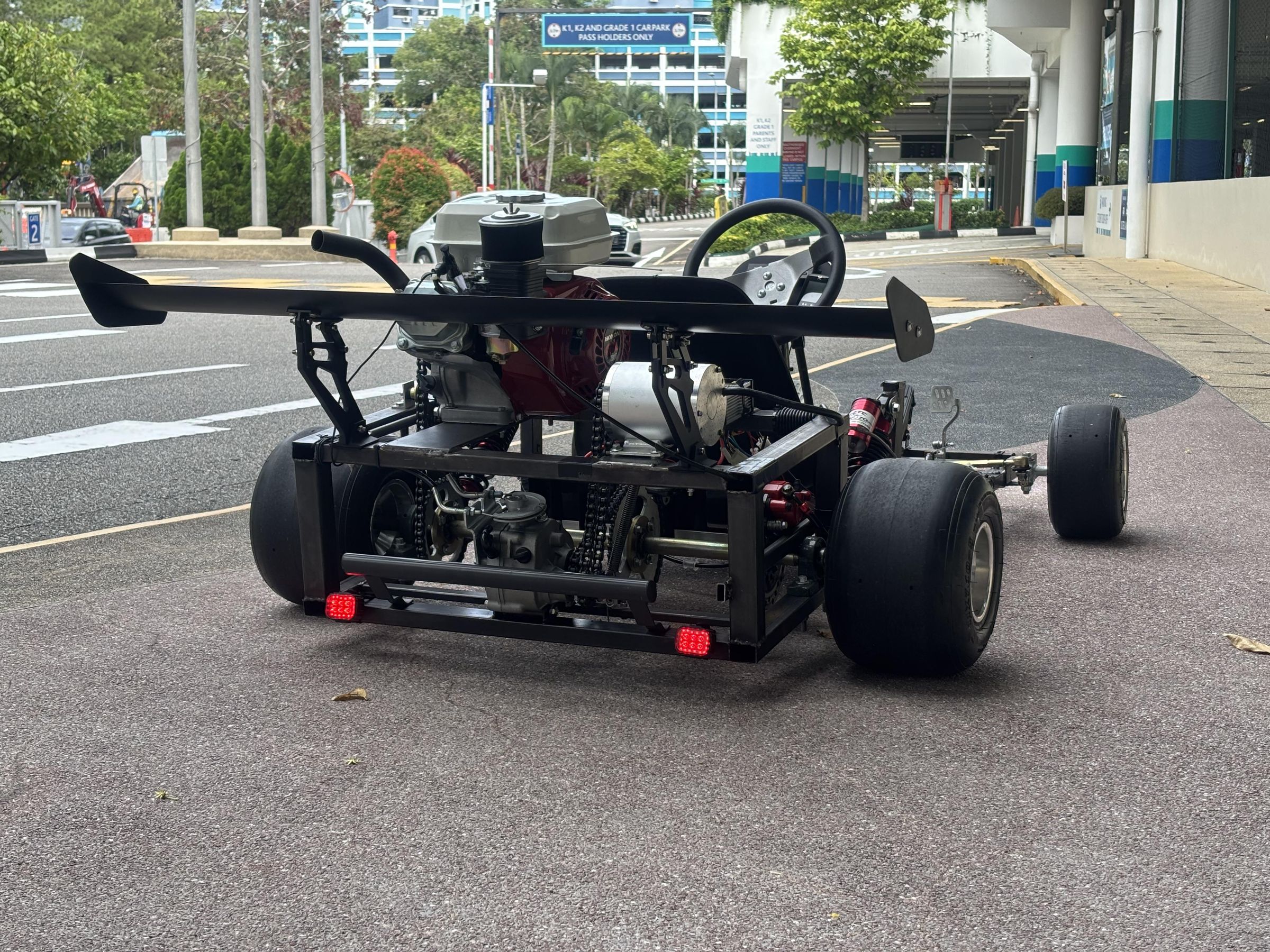
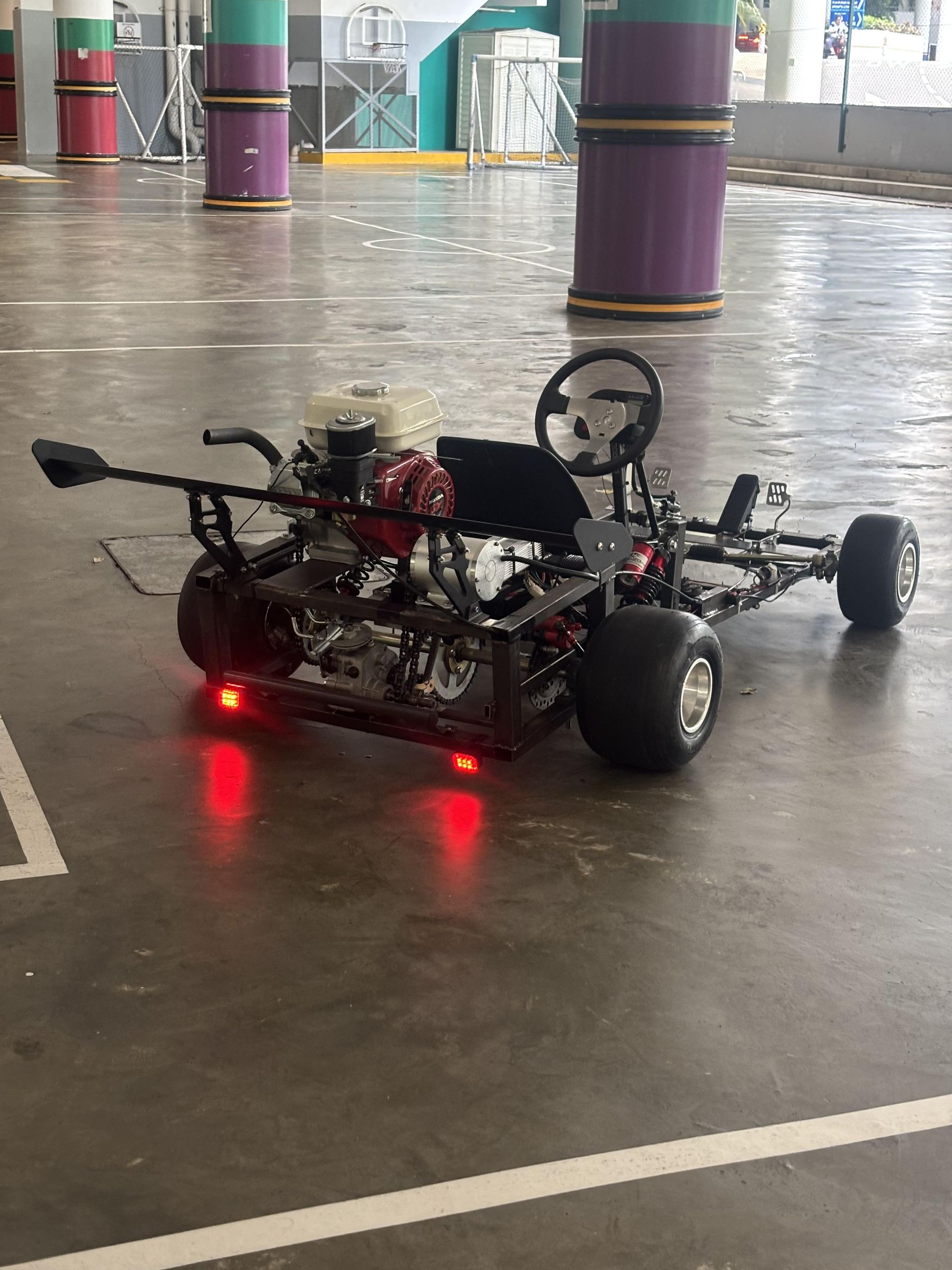
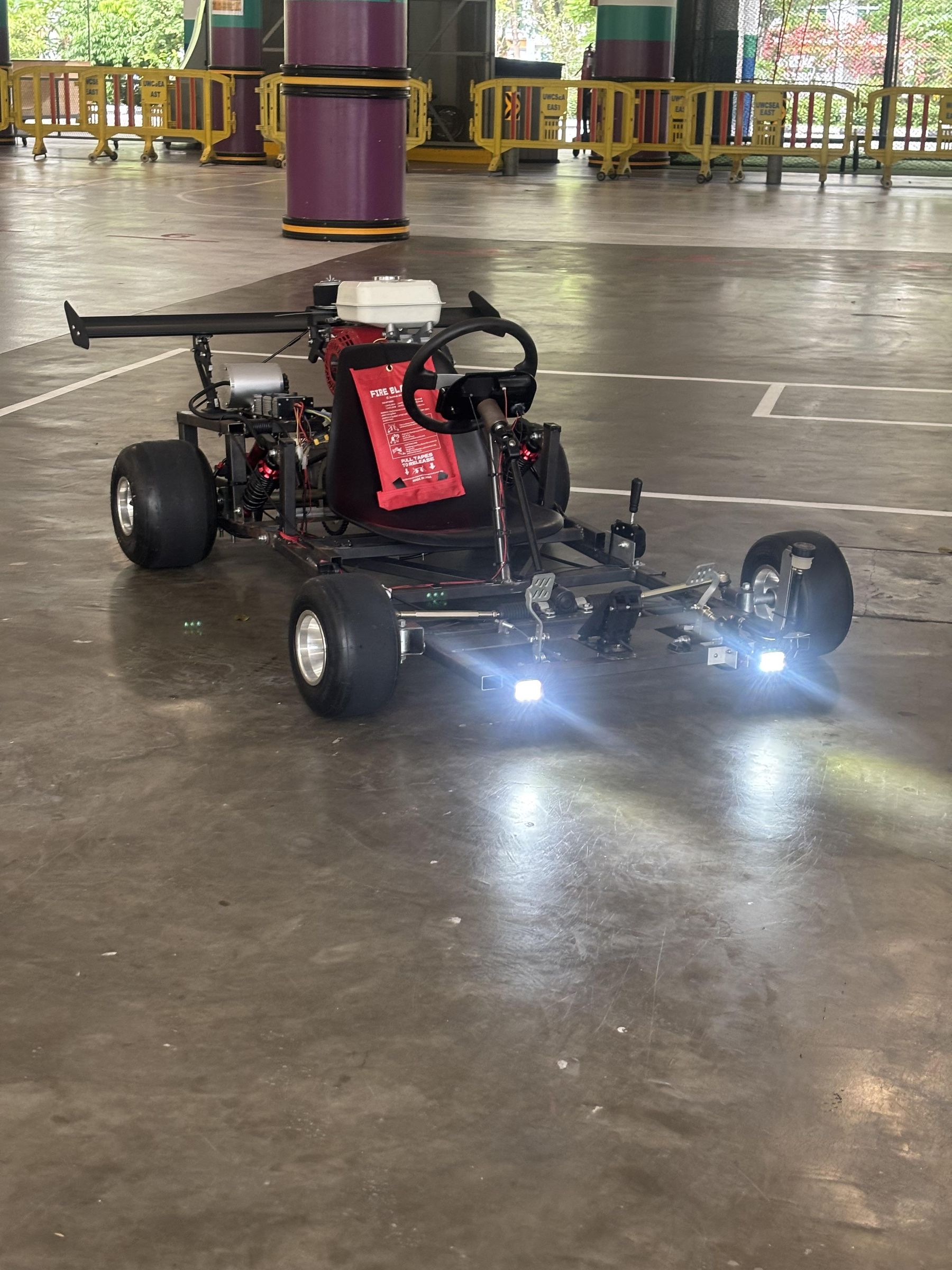
There are quite a few go-kart Instructables out there, and before the two of us (high school students) started this build we spent a lot of time going through them.
This project documents the design, fabrication and integration of a hybrid go-kart powered by two separate propulsion systems: a 212cc Honda-clone gasoline engine with pull-start and a 48V electric drivetrain. Both systems are mounted to a custom MIG-welded mild-steel chassis fabricated entirely in-house.
A key design decision for this project was to make the kart a NON-SIMULTANEOUS hybrid. The electric drivetrain is used only for low-speed operation, while the gasoline engine is reserved for high-speed operation. At no point do the two systems operate at the same time.
This decision was intentional. Allowing both systems to run simultaneously would require torque blending, complex control logic and additional safety systems. By separating operating modes, the drivetrain becomes easier to design, easier to diagnose and significantly safer for a first hybrid build. This approach also allows each system to be optimised for what it does best rather than forcing compromises in gearing, cooling or control.
You’ll notice that the build doesn’t follow a neat step-by-step progression. That’s because it didn’t happen that way.
Rough Build Order (What Actually Happened)
Before getting into individual systems, this is roughly the order things happened in real life. Not the clean version. The messy one.
We started with ideation and drafting, followed by laying the frame out on the floor using tape. Once the proportions felt right, we locked in the metal choice and started cutting steel. Steering rack layout came early since it affects chassis width more than expected.
From there it was tyre adjustment, axle setup, and bearing alignment. Electrical planning started earlier than expected, even before the frame was fully welded, just to make sure there would actually be somewhere to put everything.
The base frame was welded, the first engine arrived, holes were drilled, and the axle was mounted. Steering brackets were welded on, electrical testing began, and the gearbox arrived shortly after.
Engine testing followed, which led directly to push rod damage. An attempt was made to fix the engine. That was a mistake. A replacement engine was ordered.
While waiting, the engine plate was welded, sprockets were welded, holes were drilled for the gas pedal, and brake pedal placement was tested on the bare frame. The electric pedal plate was welded and drilled, the torque converter was mounted, and the second engine was tested successfully.
The seat went on, an old steering support was cut off and replaced, chain tensioners were installed, brakes were fitted, and a rear bumper bar was drilled and mounted.
Electrical testing resumed, during which a castle nut fell off. Shortly after that, the batteries were completely fried. The battery system was rebuilt, cotter pins were added, and a new seat was installed along with a basic dashboard holding a tachometer and battery level indicator.
The first full test followed. During that test, a tire flew off. Everything was tightened again, spacers were added, and fastener choices were rethought.
GoPro mounts and lights were added, a second full test was done, and at that point the kart was considered finished.
Parts and Machines
Here are all the components we used to build this go kart:
- Mild-Steel Box Sections (40x20x3mm for main ones)
- Various Mild-Steel Plates, Bars, and Brackets
- 212cc 7.5HP 4 Stroke Engine
- 48V 1600W BLDC Motor Kit
- 2x 24V 20Ah Lithium Ion Batteries
- 2x Rear Wheels (11x7.10-5)
- 2x Front Wheels (10x4.50-5)
- 3 Hole Wheels Hubs + Spindles
- 1 meter Rear Axle
- 2x 26mm Rear Axle Hub
- 8.5 x 10mm 11T 420 Sprocket
- 48T and 37T Sprockets
- 3x 420 Chains
- 2x Chain Tensioners
- 90" Throttle Cable
- 4x Velcro Belts (for batteries)
- Plastic Seat
- Pedals (Brake + Throttle)
- 150mm + 160mm Springs (2mm Wire Diameter, 15mm Outer Diameter)
- 10AWG Wires (Black + Red)
- 6.3mm Yellow Spade Connectors (female) and M5 Ring Terminals (Yellow)
- Steering Assembly (steering wheel, tie-rods, steering column, steering rack)
- 30 Series Go Kart Forward Reverse Gearbox
- 10T 20mm Centrifugal Clutch
- Matte Black Straight Pipe Exhaust (Short)
- Hydraulic Brake System (Disc + Caliper + Master Cylinder + 200cm Brake Cable)
- 3mm Matte Black Acrylic Sheet
- Instruments (Speedometer, Tachometer, Battery Level Indicator)
- Additional Hardware (Nuts, Bolts, Cotter Pins, Castle Nuts, etc.)
- A LOT OF ZIP TIES
Machines:
- Chop Saw (Or any good metal cutter)
- MIG Welding Machine
- Hand Drill
- Drill Press
- Angle Grinder
- Soldering Iron
- Laser Cutter
Ideation & Planning


The entire build starts with the chassis. Everything else depends on this being close enough to right. We began by sitting on the floor and laying out the chassis using masking tape, roughly around a human body. This helped define seat position, pedal reach, and overall length before any steel was cut. Once we were happy with the proportions, mild steel rectangular box tubing was selected.
Our main goals were:
- Reliable switching between power units
- Ensuring each power unit is used individually
- Design for easy maintenance
- Low-speed electric operation
- High-speed gasoline operation
We decided early on to use a non-simultaneous hybrid system to reduce complexity. This affected many later design choices, including mounting positions and drivetrain layout.
Our initial design had the engine and electric motor side by side, with the axle behind them (images 2-3). But we later had to adapt this design since it would have led to the go-kart wheelbase being very long. So we decided to design a mount, where the engine and electric motor and positioned above the axle (image 5).
Once we had a rough design, we measured our major components and adjusted the frame dimensions accordingly.
Before any fabrication began the design requirements and constraints were clearly defined. This step is critical and skipping it often leads to wasted materials and rework later.
Constraints are not limitations but design guides. Choosing a single rear axle simplified alignment and reduced drivetrain complexity. Chain drive was chosen for price, reliability, serviceability and tolerance to misalignment compared to belt systems.
Cutting Metal


With the design finalised, we started cutting the mild-steel box sections. Rectangular mid-steel tubing was chosen because it is cheap, easy to weld and forgiving. Flat faces make mounting engines, motors, and brackets much easier compared to round tubes. We opted for mild-steel over aluminium as it provides a much stronger chassis, at the expense of added weight.
Using a chop saw and angle grinder, we cut all frame pieces according to our measurements. Accuracy here is very important as even small errors can cause alignment problems later. After cutting, check the edges and make sure that all pieces fit together properly.
We started by cutting the 4 main box sections for the frame and laying them out - front, back, and sides. We then laid the pieces out and decided on the positioning of other components such as the seat, pedals, batteries etc.
Tip: Label each piece with dimensions after cutting to avoid confusion.
Material: Mild Steel
Tubing Type: Rectangular Box Tubing
Outer Dimensions: 4cm width, 2.5cm height
Wall Thickness: 2mm
Welding Process: MIG Welding
Reasons for using rectangular box tubing:
- Improved bending stiffness in primary load directions
- Easy(er) to weld compared to aluminium or chromoly
- Price is relatively cheap and material is widely available
- Flat surfaces simplify mounting of engine plates, motor mounts, and brackets
- Easier to maintain frame squareness and alignment during fabrication
- More predictable weld joints compared to round tube intersections
Rectangular box tubing was chosen because it balances strength, ease of fabrication and availability. For a kart chassis bending stiffness is more critical than torsional stiffness and rectangular tubing performs well in bending along its primary axes.
Trade-Offs:
- Increased weight compared to round tubing or other metals
- Reduced torsional efficiency per unit mass
These trade-offs were acceptable because durability and ease of modification were prioritized over weight savings.
Frame design considerations:
- Support combined loads from the gas engine, electric motor, batteries, and driver
- Resist torsional flex during acceleration and braking
- Allow modification and re-welding as the design evolved
- Provide mounting points for:
- Engine
- Electric motor
- Rear axle bearings
- Steering system
- Seat and pedals
And any other modifications later on.
Welding Chassis


First of all, we wanted to mention that welding the frame it's not as complicated as it sounds. We learnt how MIG welding works within 2 weeks and were able to get decent welds, which got better and better as we kept working.
We started by welding the 4 main box sections of the frame, then the mount, and then welded the mount to the frame. We first tack-welded all joints to hold the structure together. This allowed us to check alignment before committing to full welds.
After confirming that the frame was square and level, we completed the welds. We then sanded down most of the welds, giving the frame a cleaner look.
Once the idea of the basic frame was born, the goal was to get it rolling.
Installing Rear Axle + Rear Wheels


Next, we installed the rear axle assembly.
We mounted the axle using bearing blocks and ensured it was perfectly parallel to the frame. Misalignment here can cause major problems later. We installed the axle as close as we could to the front of the mount, giving us better weight distribution and space at the back to install the gearbox later on.
After securing the axle, we installed the hubs and rear wheels. The "covers" on the wheels are drift rings, we just used them to keep the wheels clean.
Axle length = 1 meter
Axle diameter = 1 inch
Rolling Chassis + Seat


If you've made it this far, congratulations! This part was one of the most rewarding milestones of building this go kart, and makes you feel even more motivated to keep going.
We welded 2 bars across the middle of the frame for the seat (you can see if you zoom in to the third picture), with the front bar positioned slightly higher and angled upwards, putting the seat in a slight decline - this small difference makes the go kart much more comfortable to ride.
We welded thick mild-steel plates for the engine and electric motor, drilling all the bolt holes beforehand using a drill press.
If you're wondering about what we did for the steering, it's only the front wheels that have been attached to the frame using spindle brackets (welded to frame). We'll explain how to install the steering rack in the next step.
Steering Rack + Front Wheels


The steering system was built using welded brackets and simple linkages mounted directly to the steel frame. At this point, we installed the spindles, steering rack, tie rods, and front wheels; saving the steering column and steering wheel for later.
The very first thing that needs to be done is to weld the spindle brackets on to the frame, ensuring they are level with each other, and not angled (unless you want caster).
After welding the spindle brackets, install the spindles and attach the front wheels. Both the front and rear wheels use 3 hole hubs, and require castle nuts as well as cotter pins to lock in place. We recommend not using the cotter pins until later, to make it easier in case you need to remove any wheel.
The rack was aligned carefully with the front wheels to ensure smooth turning and equal steering angles on both sides. We welded two thin plates below the steering rack, and mounted it using pipe-clamp brackets. We also welded a thin bar across, to add extra support and prevent the plates from bending.
After mounting everything, we tested the steering lock-to-lock and adjusted tie rods as needed. Make sure either wheel is not touching the frame when the steering wheel is rotated to its maximum position. Also ensure both wheels are straight when the steering wheel is straight, as even slight misalignment can cause issues.
Mechanically it worked well, but the real challenge ended up being steering geometry rather than strength. Early on, the front wheels had noticeable toe-out, which made the kart extremely twitchy.
At low speed it felt responsive, but once speed increased the kart became unpredictable. The toe-out caused the front end to hunt from side to side, and at higher speeds this turned into porpoising and sudden loss of control. Small steering inputs would quickly amplify, making it difficult to keep the kart tracking straight. During testing it became clear that even a few millimeters of toe-out had a massive effect on stability. Re-aligning the front wheels closer to the neutral toe immediately made the kart calmer and far more controllable.
Downloads
Plates


We welded four main mild-steel plates:
- Battery plate (1)
- Engine plate (2)
- Electric motor + controller plate (3)
- Foot plate (image 2 - green)
When installing these plates you should be as accurate as possible, which can be done by using a try square before welding, and marking holes before drilling using a ruler, marker, and center punch.
The battery plate is placed just behind the seat, allowing us to efficiently use the space and have a simple connection from the batteries to the electronics just behind.
The engine plate is roughly 7mm thick, providing enough strength to support the weight of the engine, which is about 17kg
The electric motor plate is relatively not as thick, but has a thin bar welded below the plate for added support - just in case.
The foot plate is pretty straightforward to install - sit down and position it to where it is most comfortable for your heel, making sure there is still enough room in the front to install the pedals. Ideally your knees should be bent a fair amount when sitting, so you are able to comfortably use the pedals - If you set the foot plate too far you'll have difficulty using the pedals, and can end up cramping your calf while riding (speaking from experience). A photo is attached for your reference of what the ideal driving position would look like.
Batteries + Electronics


The batteries are lithium-ion, each is 24V and 20Ah, for a total of 48V and 20Ah (wired in series). We mounted the batteries onto the plate using velcro straps, and had a metal bracket behind to keep them secure.
The electric system was pretty straightforward to use since we ordered it as a kit (Batteries --> Controller --> Motor). The controller has labelled connectors for each component; throttle pedal, ignition, and 3-speed, making setting everything up super quick.
All major electronic components were positioned for:
- Easy access
- Good airflow
- Short cable runs
We planned wiring routes at this stage to avoid messy layouts later, and built it designed for the mount so every component is easily accessible.
Downloads
Installing Electric Motor


The electric drivetrain uses a 48V 1600W BLDC motor. The motor was relatively straightforward to install, since the holes had already been drilled beforehand. We did however have to change the sprocket on the electric motor from a #35 chain sprocket to an 11T 420 chain sprocket, making it more compatible with our go-kart (we used 420 chains for everything).
We had to elevate the motor with a few washers as well, since there was more slack than we wanted and could not move the motor backwards to tighten it. We recommend installing your chains and checking the slack before you drill the holes, saving you extra work later. Apart from that, this step didn't take too long, and of course use nyloc nuts for everything.
Engine + Centrifugal Clutch


The gas engine is a 212cc Honda-clone with pull-start. It is air-cooled and the governor was left intact for safety. The engine is used only for high-speed operation and is mechanically isolated from the electric drivetrain.
We fitted a 20mm centrifugal clutch on our engine (don't use a torque converter / other CVT for this build), and installed it to the shaft using some thick washers and a shaft bolt.
Our throttle cable is roughly 90 inches, the longest one we could find since the engine is quite bar back from the pedals. Once we installed the cable to the throttle lever, we had to add another spring since the lever was not going back to idle when we let go of the pedal.
We also changed the stock air filter to a nicer one which doesn't wear out as fast and gives better intake. Our exhaust, as you might be able to tell from the picture is definitely not stock. We chucked the old muffler for a matte black, straight piped exhaust, which is extremely loud due to it being very short as well. Have a look at the engine modifications step to see what we're talking about.
Pedals


Our go-kart has 3 pedals, brake, electric throttle, and gas throttle (left to right respectively). The electric pedal was by far the simplest to install, just needs a plate below it with 3 holes drilled for some bolts. The gas pedal is installed with a tight spring, insuring it goes back all the way when you let go. Also ensure you add a stopper to your pedals if it doesn't come with it built in (ours did).
The brake pedal is connected to the master cylinder in front of it, which has built-in springs that return your pedal back to its original position. The master cylinder is attached to the front of the go kart with 4 aluminium l-brackets, which are drilled to the frame.
The brake and gas pedal each have separate bars that are welded from the front of the go kart to the steering rack, and under the foot plate as well for extra reinforcement.
Note: Before you install the pedals, make sure to test if you can press each pedal down all the way, and the pedal distance is comfortable for you.
Gearbox & Shifter


This is probably the most expensive component of the go kart, roughly double the price of the engine. The gearbox connects the electric motor to the axle, allowing us to engage/disengage the motor whenever we want, which is crucial for a hybrid setup. This is because if both power units drive the same axle, when we use the engine at high speeds it can cause the motor to overheat and the back flow of electricity could damage both the controller and batteries. If your controller supports regen, that would be ideal. Then you can have a proper hybrid system, where you can use the engine to recharge your batteries.
We installed the gearbox behind the axle, and welded an additional support bar. We cut 3 plates (image 5), bolted it to the gearbox, and welded them half on the rear bar, and half on the support bar (image 7). Make sure to line up your sprockets and chains before you weld it in place.
The shifter is installed on the left side of the kart, using an aluminium L-bracket. Make sure you remember to do the cabling for the shifter before you install it, otherwise you'll have to take it off. There are 2 cables that connect the gearbox to the shifter, have a look on YouTube for a tutorial on how to correctly install them (this is the video we found helpful)
Once everything's been installed and cabling is done, shift into each gear and rotate either sprocket on the gearbox to ensure it has actually shifted - we spent nearly a week fine tuning. If you find it really difficult to shift into either gear, that means one of your cables are too tight (from the gearbox side - refer to image 3). The solution is to just play around with it and keep testing until you reach your desired configuration.
Sprockets & Chains


Our system consists of a total of 6 sprockets (2 axle, 2 gearbox, 1 engine, 1 motor). The axle sprockets are both welded to the axle, via a hub (the golden discs in the photos). For all of our sprockets we use 420 chains, which are typically the best choice for go-karts and large power outputs.
Here is a list of all our sprocket connections:
- Engine (centrifugal clutch) --> Axle
- Electric Motor --> Gearbox
- Gearbox --> Axle
For all the chains, you want to make sure they are not too tight, but not too slacked either. We decided to use chain tensioners for some of our chains, which we'll talk more about in the next step.
Chain Tensioners & Springs


Chain tensioners are a component we both feel is extremely important. They allow us to adjust chain slack to exactly how much we want while remaining flexible, but more importantly make is super easy to remove a chain / reinstall a chain if it comes off. We saw this in action as during one of our tests a chain came off while turning, and with the help of the chain tensioner only took a few seconds to put back on.
If you do decide to add chain tensioners, get yourself some good springs. Ours were pretty inexpensive, but the quality was supreme. For reference we ordered 2 springs (150mm and 160mm), both of which had a 2mm wire diameter and 15mm outer diameter, meaning they were super stiff and perfect to support the chain tensioners. We used one chain tensioner for the gearbox-axle chain (to prevent it from hitting the frame), and one tensioner for the engine-axle chain (to get the perfect amount of tension).
Chain tensioners typically do come with springs, but those are absolute rubbish. We decided to get these good ones and then drill a hole in both of our chain tensioners for the new springs. In our gearbox-axle tensioner, the other side of the spring is connected to the electric motor plate (in one of the bolt holes). For the engine tensioner, we drilled a hole in the frame and bolted the spring to it (image 6 is a good angle of it).
We also made custom brackets for our tensioners to install them onto the frame, and used bearings to ensure the bolt does not have any room to move. Make sure to align tensioners perfectly with the chain before installing, and lubricate them well before driving. The tensioners should be pulling against the chain, not just resting on them. Also ensure your springs are able to handle the load of your go-kart - you can test this by rapidly accelerating and watching to see if the tensioner goes down under load (a video is attached below of what it looks when you use weak springs).
Video:
Also check out the video below:
Downloads
Brakes


Hydraulic brakes work very well, but only if installed patiently and cleanly. Rushing this step can cause many problems.
Our hydraulic brake system includes:
- Disc
- Caliper
- Master cylinder
- Brake cable
I mentioned earlier the master cylinder is installed to the front of the go kart, using 4 aluminium brackets and is connected to the brake pedal. Next to the master cylinder should be the fluid reservoir, which MUST be mounted above the master cylinder, high enough so the fluid can flow properly. Install the fluid reservoir upright, in a location where it is easy to open and top up with fluid.
The brake disc is welded to the axle, in the same way the axle sprockets are using the golden hub. Ensure the brake disc is installed perfectly straight, it should not move even 2-3mm left or right while the axle is rotating as this can cause the disc to rub against the caliper's brake pads, causing unnecessary friction and slowing the kart down.
The caliper is installed to the frame using a custom bracket, which is welded to another bar that connects to the main frame (image 3). You need to ensure the caliper's brake pads are equally spaced from the disc, and do not normally rub against the disc (test by spinning the axle a few times). You can get this perfect alignment by using washers to move the caliper left or right, as we did (reference to image 1). The surface area of the contact between the brake pads and disc should be maximised under braking, so ensure not to install the caliper too high, as this will lead to less effective braking.
After installation, we bled the brake system to remove air bubbles. This was probably one of the most challenging parts for us, my guess is because we were likely just doing it wrong. We tried reverse bleeding, which is when you pump the fluid from the caliper, and it naturally pushes air out through the fluid reservoir. However you can use a traditional bleeding method as well, but whichever way you do it just make sure to:
- Keep area clean - brake fluid is corrosive and an irritant, make sure to use gloves and keep paper towels nearby
- Cover brake caliper - we recommend covering the caliper with a cloth, to protect any fluid from damaging the paint on the caliper
- Use a large syringe - we had a 500ml syringe, and this made things much easier
- Have a partner - this is definitely not a one man job, get a friend to help you
Bleed the brakes until the pedal becomes firm. With the brake pedal pressed, try rotating the axle by hand from the wheel - you should barely be able to turn it, or ideally not at all. That's when you know you've successfully installed hydraulic brakes.
Wiring


This go-kart did end up having quite a few electrical components, all of were accommodated by our 2 batteries. But I can assure you, the wiring is MUCH simpler than it may look in the photos.
We made two custom 10AWG wires that connect the batteries to the controller, which had a female spade connector on one side and a ring terminal on the other. We then used heat shrink to secure the connectors after crimping.
We added two different housings for our main wires. The first housing is for the three motor-controller phase wires, which are ring terminals. They are also colour coded, simplifying the wiring (yellow, blue, green). The second housing is for the four battery-controller wires. Two from the controller, two from the batteries. In the 4th image which shows the second housing, you can see 2 additional wires sticking out the sides. Those are for the battery indicator, which measures the live battery voltage.
We installed the key-switch ignition onto the side bar, right next to the seat. We felt this was a good place to install the ignition as it blends with the go kart and makes it easy for the rider to switch on/off. We installed it to the frame using a simple DC motor plastic mount - which the ignition somehow perfectly clipped onto.
To make the wiring look neat, use housing as well as cable ties to organise your wires. We didn't necessarily do the best job with that.
Downloads
Steering Wheel


For reasons we don't fully understand, we left the steering wheel bar for the very end. Initially we had welded it at 90º, but it was too low, looked odd, and was extremely uncomfortable. It is always better to weld the bar slightly slanted. So we cut it off and decided to start over.
This time we modelled how we wanted the bar using foam blocks, and only after sitting in the go-kart and confirming the steering wheel positioning is good we started cutting and welding. The end result - a much more comfortable steering wheel position.
Dashboard


We decided to make a dashboard out of 3mm acrylic, which we can mount the battery indicator, tachometer, and speedometer to. The design is fairly simple, and includes a hole in centre with a diameter of 50mm, in order to fit perfectly onto the bearing housing of the steering column. Then drill holes into the acrylic for the relevant instruments, or if you want to be perfect you can laser cut the holes. We later added a kill-switch to the bottom left of our dashboard as well. The dashboard is a nice touch, and adds to both the aesthetics and practicality of this go-kart, making it another small feature we recommend.
Custom Jack


Building one of these jack's was super useful - it was easy to make and allowed us to easily test the kart while it was on the table. Highly recommend making.
Electric Test Drive


The electric test drive lived up to our expectations, providing enough power for our needs. We can also go in reverse with our electric system, a benefit of the gearbox. The steering was amazing, it was light, responsive, and turned the go-kart well.
Videos:
- https://vimeo.com/1160791979?share=copy&fl=sv&fe=ci
- https://vimeo.com/1160794068?fl=tl&fe=ec
- https://vimeo.com/1160795487?share=copy&fl=sv&fe=ci
Downloads
Petrol Test Drive


During the first petrol test, a tyre loosened and was on the verge of coming off. That shifted priorities very quickly. Turns out we forgot to use cotter pins, which caused everything to loosen. Wheel hub bolts and castle nuts were tightened, cotter pins were added, and everything was checked again before heading out for the second petrol test.
During the second test, we immediately felt more confident in the rear of the go-kart, however less confident in the front. Due to the front being much lighter, we were unable to get the best traction while steering, and the toe-out on the front right wheel caused significant difficulties while driving in a straight line. The solution was to realign the wheels and add some caster, which puts more force onto the front wheels.
By the time we got to the third test, we were satisfied with the performance and reliability of the go-kart, deciding to shift gears into making more performance based modifications.
Test drive videos:
Engine Modifications


After initial testing, we made small engine modifications for performance.
This included tuning the idle mixture (golden screw) and idle speed (black screw)
Idle mixture (air–fuel mixture at idle)
Controls how rich or lean the mixture is at idle and low throttle
- Turning it:
- Clockwise (in) → leaner (less fuel)
- Counter-clockwise (out) → richer (more fuel)
- Affects:
- Smooth idle
- How easily the engine starts
We decided to run a bit richer (roughly 720º counter-clockwise), which made our engine sound more aggressive and even gave us some backfire.
Idle speed screw (RPM at idle)
Sets how much the throttle is open at idle
- Turning it:
- Clockwise (in) → higher idle RPM
- Counter-clockwise (out) → lower idle RPM
We did't adjust this screw much, just half a turn (180º) clockwise to make it easier to engage the clutch. If you lower RPM too much, you risk stalling the engine at idle. You should make modifications in increments, no more than half a turn at a time, and only adjust one screw at a time.
Have fun playing around with this, but write down how much you've turned each screw so you can reset to stock if needed.
Videos:
BONUS: Spoiler

Have Fun!

Good luck if you’re attempting something similar. If you want more information, feel free to ask. The building process is just as much fun as driving it, so savour every moment of the journey! Thanks and hope you found this helpful.