Cyber Gotchi: From Tamagotchi to Modern Digital Life (1996 → 2026)
by Yakroo in Circuits > Arduino
815 Views, 3 Favorites, 0 Comments
Cyber Gotchi: From Tamagotchi to Modern Digital Life (1996 → 2026)
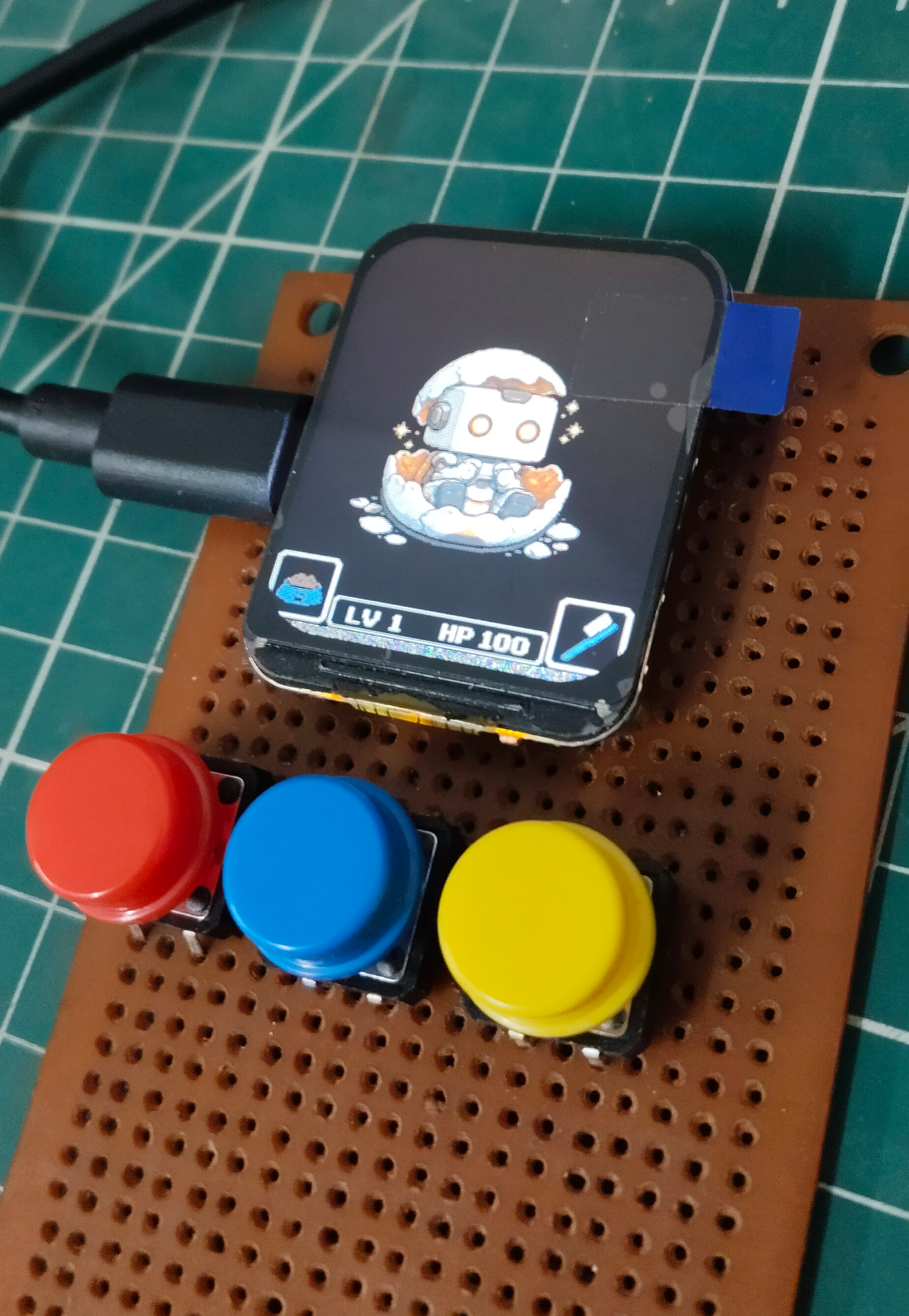
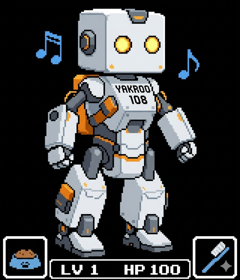
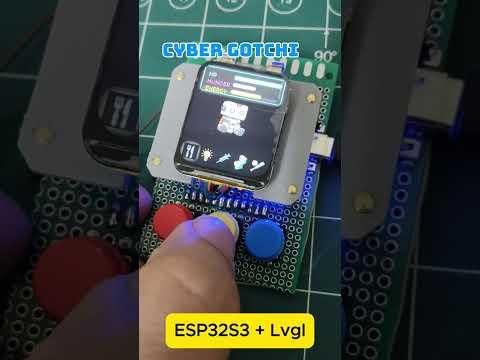
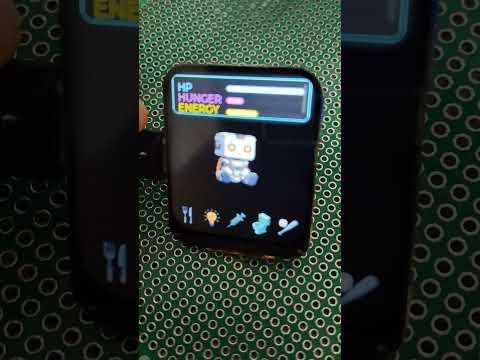
In 1996, a small digital device called Tamagotchi completely changed the way people interacted with technology.
It was simple, yet surprisingly powerful:
- Feed it
- Take care of it
- Watch it grow
Even though the system was extremely simple, it created something special — an emotional connection with a digital life form.
Personal Memory (The Beginning)
In the early days of personal computing, when digital pets first became popular, I had a simple but unforgettable experience.
At that time, Tamagotchi devices were quite expensive and not easily accessible for me.
Because of that limitation, I didn’t just try to play it — I tried to recreate it myself.
I started experimenting on an old computer and writing programs in C language to simulate the concept of a digital pet.
Early Experimentation
The system I built was very simple.
It used basic block-style graphics, and every behavior was fully controlled by code.
There were no engines, no frameworks, and no advanced graphics systems.
Only logic written in C.
When feeding the pet, the block would gradually grow larger.
When neglected, it would shrink or change state.
Even though it was simple, it created a real sense of something “alive.”
The Feeling Behind It
It was never about realism.
It was about emotion — the feeling of a digital life existing in its simplest form.
That experience stayed with me for many years.
From Memory to Cyber Gotchi
Cyber Gotchi is not a modern clone of digital pet applications.
It is a system rebuilt from memory using modern embedded technology.
It connects two eras:
- Early digital pet experiments using C language
- Modern embedded real-time systems
Unlike traditional digital pets, Cyber Gotchi is not limited to the screen.
It is designed to extend digital life into the physical world.
Using:
- LED filament as life energy
- Blinking patterns as warnings
- Interactive care-based behavior
In future development, when the system reaches a mature level, it can connect to a servo-based system to create a physical body.
This allows the digital pet to express real movement based on emotion.
What You Will Build
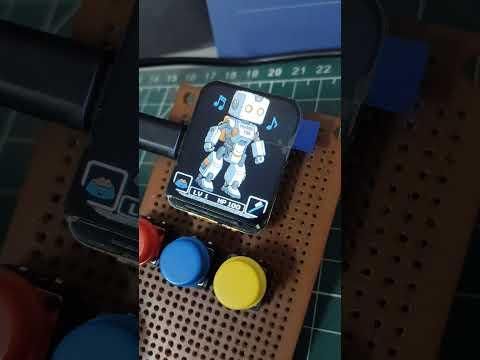




In this project, we will build Cyber Gotchi, a digital life system that evolves from a simple virtual pet concept into a physical interactive device.
The system simulates a living digital creature with real-time internal states such as hunger, energy, and health. These states affect its behavior and appearance through animation, sound, and physical output.
Unlike traditional digital pets that exist only on a screen, Cyber Gotchi extends its “life” into the real world using hardware.
The system is built on:
- ESP32 microcontroller
- TFT display with LVGL interface
- LED filament for real-life energy visualization
- Buzzer for sound-based emotional feedback
- Servo expansion for physical movement (future stage)
By the end of this project, you will have a system that:
- Behaves like a living digital creature
- Reacts to user interaction in real time
- Expresses emotion through screen + light + sound
- Can be expanded into physical movement
👉 Cyber Gotchi is not just a simulation — it is a digital life system that interacts with the physical world.
System Architecture (Digital Life Core)
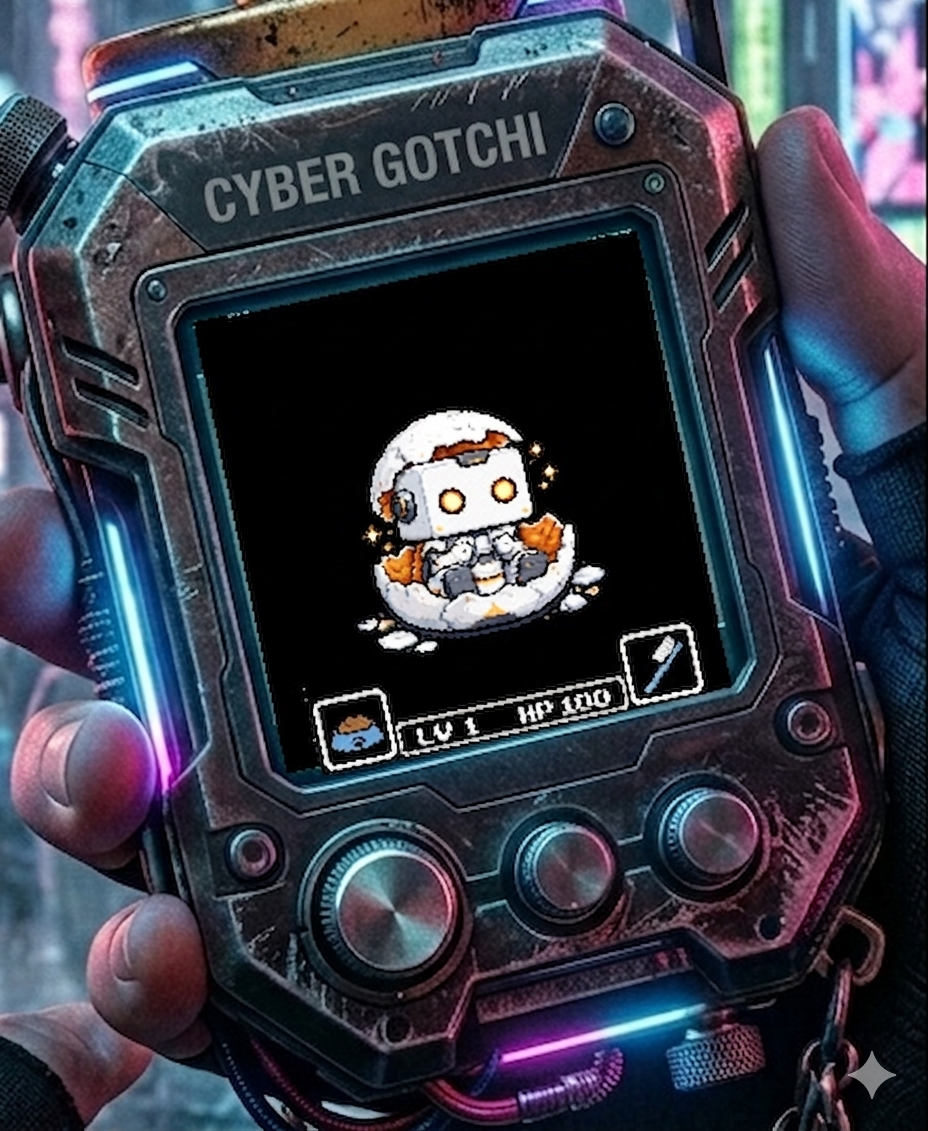
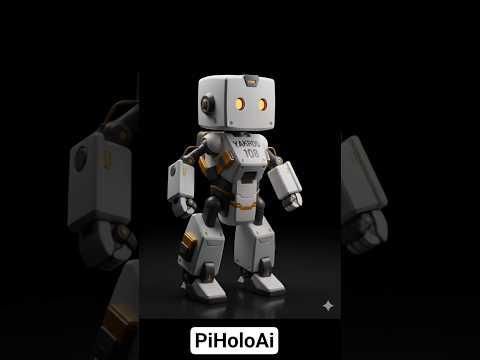
Cyber Gotchi is built on a Finite State Machine (FSM).
Everything is controlled through defined states:
- IDLE 😐
- RUN 🏃
- CRY 😢
- SICK 🤒
- SLEEP 😴
- DEAD 💀
Each state is determined by internal variables such as:
- Hunger
- Energy
- Health
- Time decay
👉 This creates a real-time evolving digital life form without scripted behavior.
Core Hardware
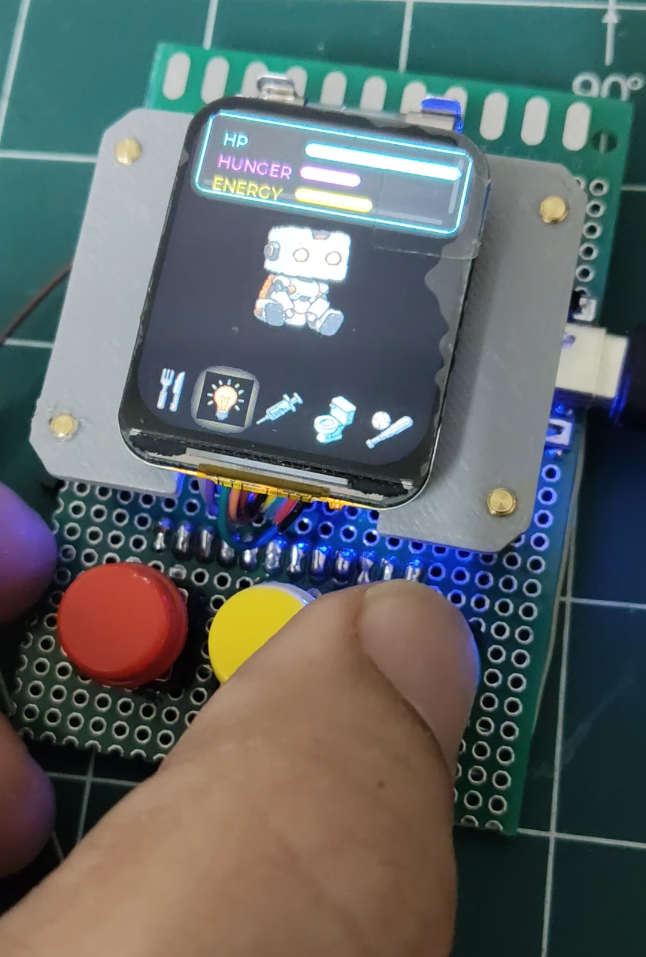
The system is built using:
- ESP32 (main controller)
- TFT display (life visualization)
- LVGL (UI system)
- Buzzer (sound feedback)
- LED filament (physical life energy display)
Extensions:
- Servo control board
- External motion system