DIY Perfect Diode With Zero Voltage Drop? DIY Ideal Diode!
by Creative For You - YT in Circuits > Electronics
687 Views, 1 Favorites, 0 Comments
DIY Perfect Diode With Zero Voltage Drop? DIY Ideal Diode!

Ideal Diode a Diode without Voltage drop
DIY Ideal Diode: Achieve 0V Drop With P-Channel MOSFETs
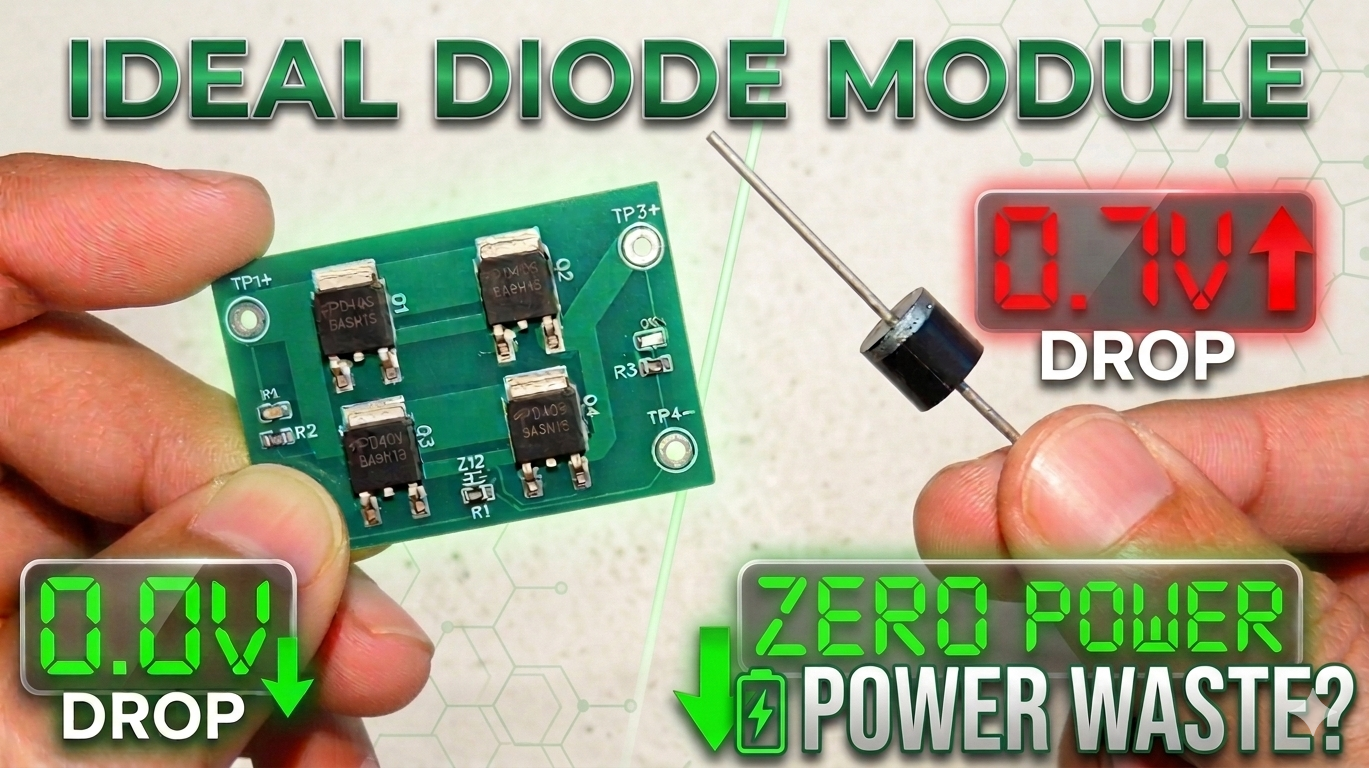
If you’ve spent any time in the world of high-power electronics, you know the frustration of the "Diode Tax." You design a high-efficiency system, only to lose 0.7V to 1V across a standard silicon diode used for reverse polarity protection. That might not sound like much, but at 10A, you’re looking at 7W–10W of pure heat.
Normal Diode
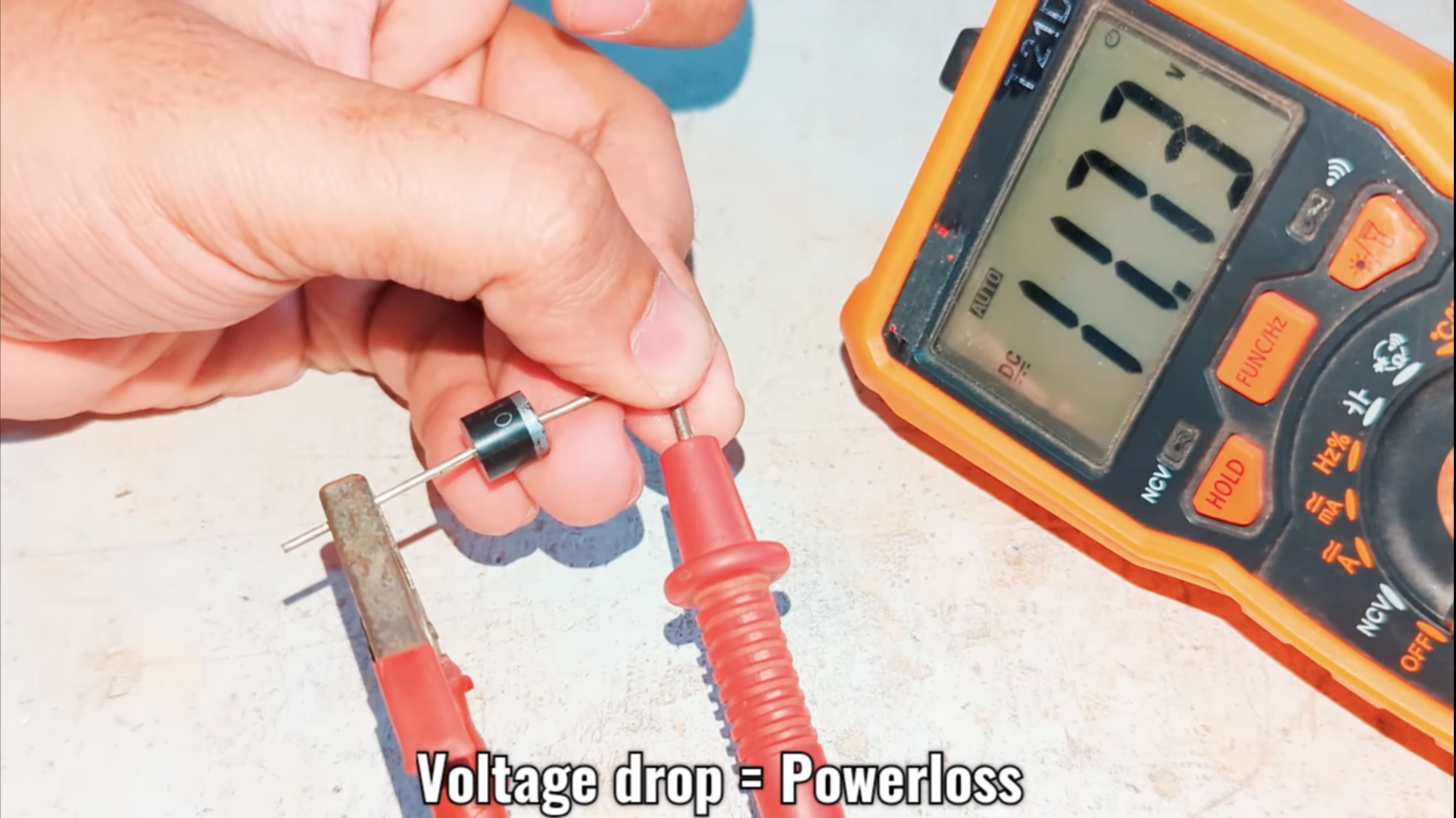
In this guide, we are going to build an **Ideal Diode** circuit using P-Channel MOSFETs. This project virtually eliminates that voltage drop, ensuring your power delivery is as efficient as possible. The Problem: The 0.7V Voltage DropStandard diodes, like the 1N5408 or the 20N10, rely on a P-N junction that requires a specific "forward voltage" to conduct. This drop is inherent to the physics of the semiconductor. When you’re running a 12V battery system, losing nearly a volt means your components are seeing less power, and your diode is getting hot enough to require a heatsink.
Diode : 0.7V To 0.4V
MOSFETs Ideal Diode

The Solution: The MOSFET SwitchBy using a P-Channel MOSFET (like the **AOD409**), we can bypass the physics of a standard diode. MOSFETs have a property called R_{DS(on)}—an extremely low "ON" resistance. Instead of a fixed voltage drop, we treat the MOSFET as a very fast, very efficient switch.
Ideal Diode : 0.01V To 0.05V
Manufacturing and Professional Assembly


When dealing with high-current paths, the quality of your PCB is critical. I designed a custom board for this project to ensure the traces could handle the load without over-heating.I always order my boards from JLCPCB, and for this project, I used their one-stop service. One thing I highly recommend—and what I did here—is ordering the *SMT Stencil together with the PCBs. It only costs a few extra dollars, but it changes the entire assembly experience.Link: I Order PCB and Stencil from JLCPCB, Track Your JLCPCB Orders and Shipments with JLCONE (Desktop or Mobile App) Download Here : Download
JLCONE
Instead of struggling with a soldering iron and potentially creating bridges on the SMD pads, you just align the stencil, swipe your SN63PB37 solder paste across it, and you have a perfect, factory-level application. If you’re curious about how it looks, you can check out the JLCPCBs JLCONE App it’s actually pretty handy for tracking your manufacturing progress while you're away from your desk.
Schematics


Step-by-Step Build Process 1. Solder Paste ApplicationSecure your PCB on your workbench. Align the laser-cut stencil from JLCPCB over the pads. Using a small spatula (or even an old credit card), spread the solder paste across the stencil. When you lift the stencil, you'll see perfectly defined paste "bricks" on every pad.2. Component PlacementUsing tweezers, place your four AOD409 MOSFETs, the 1k Ohm resistor, and the Zener diode. Because the solder paste is tacky, it holds the components in place, which is helpful if you’re using a hot air station.3. Reflow SolderingI used a hot air station set to approximately 250°C. Watch as the dull grey paste turns into shiny liquid silver. The surface tension of the molten solder will actually pull the components into perfect alignment—this is the most satisfying part of the build!Real-World Performance TestingTo prove the "Ideal" nature of this circuit, I ran a side-by-side test using a high-speed DC fan as a load. Test A (Standard Diode): With a 12.16V input, the output dropped to roughly 11.4V. The diode quickly became too hot to touch. Test B (DIY Ideal Diode): With the same 12.16V input, the output was 12.15V. A loss of only 0.01V! The MOSFETs stayed completely cool to the touch even under load.
Final Thoughts

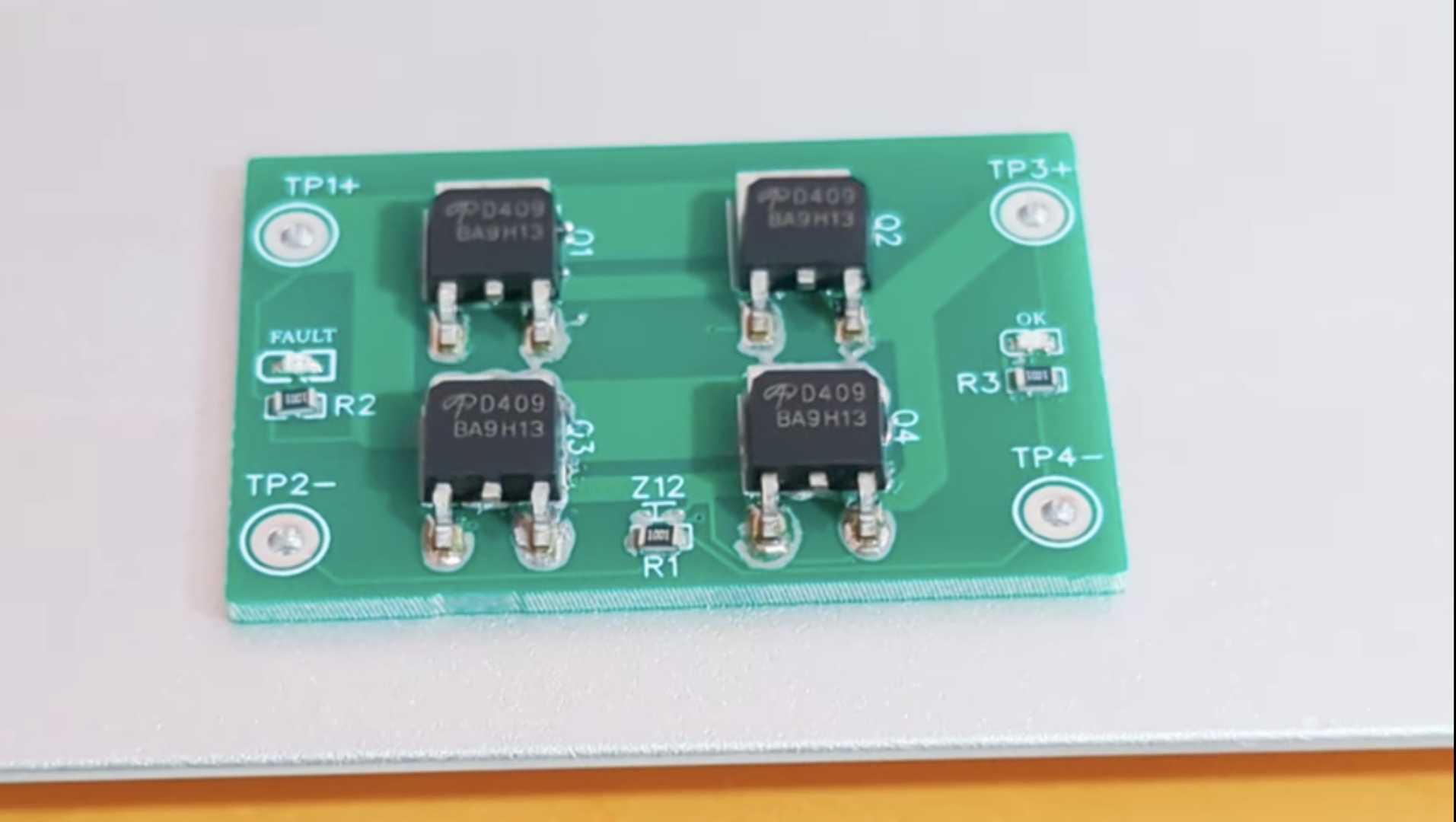
This Ideal Diode is a game-changer for anyone building DIY power walls, solar chargers, or automotive electronics. It’s a simple, elegant way to reclaim lost power.If you want to try this yourself, I’ve made the Gerber files available. I definitely suggest going the professional route with the boards and stencils from jlcpcb.com —it saves a lot of headache and ensures your high-current paths are reliable.*If you want to see the soldering technique and the live multimeter tests, you can watch the full video here: DIY Ideal Diode - Perfect Diode with 0 Voltage Drop*