Desk Lamp/Flashlight
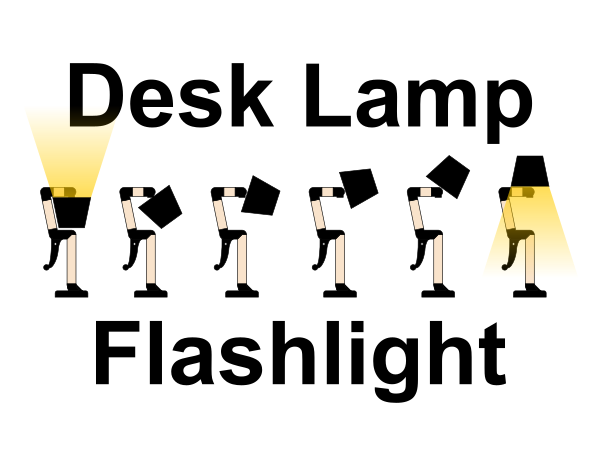
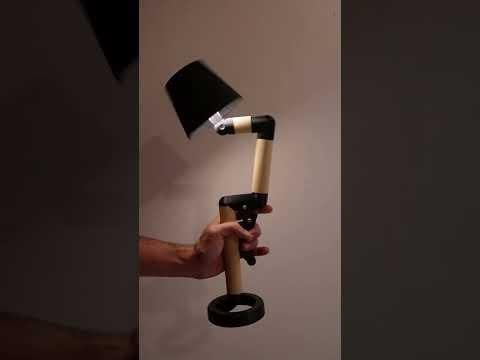
Most desk lamps are designed to stay on a desk, while flashlights are made to be carried around. This project combines both ideas into a single device: a wireless desk lamp that instantly transforms into a handheld flashlight. By simply rotating the lampshade on its articulated arm, the light can be repositioned for comfortable desk illumination or swiveled around and used as a portable flashlight wherever it is needed.
A key feature of this design is that the wireless, touch-sensitive lampshade is a completely off-the-shelf product. There is no need to design custom electronics, wireless charging circuits, batteries, or LED drivers. The project simply integrates an existing rechargeable touch lamp into a custom mechanical structure, making the build accessible while taking advantage of the reliability and safety of a commercially manufactured lighting module.
The articulated arm is inspired by the simple and robust mechanism used in bicycle brake levers. It allows the lampshade to pivot smoothly and lock firmly into 2 positions. Whether you need focused task lighting, ambient illumination, or a portable light source, the lamp can be adjusted in just a few seconds.
Because the light source is completely wireless, the lamp is not limited to indoor use. It works equally well inside the house as a desk lamp, bedside lamp, or workshop light, and outside as a convenient flashlight for camping, gardening, walking at night, or any situation where a portable light is useful.
This tutorial focuses on designing and building the mechanical support, creating the swiveling mechanism, and integrating the off-the-shelf wireless touch lamp into a practical and elegant dual-purpose lighting solution. No advanced electronics are required, making this project suitable for anyone with access to a 3D printer and a few common hardware components.
Supplies
3D printer (all STLs files can be fond here)
Wood dowels (i used about 30cm of 28mm - in diameter- dowels)
Drill
Metal wire
Tweezers (it helps but is not strictly necessary)
11 Screws (4mmx20mm) and screwdriver
Battery powered lampshade like this one (not sponsored)
Aluminum tubing (8mm diameter and 10cm in length)+metal saw
Cutting Wood Dowel
I used a dowel with a nominal diameter of 28mm. For the lampshade I cut the pieces of wood at 30mm, 90mm and 160mm. the 2 most important length to respect for my lampshade are the 30mm and 90mm because if cut to short, the lampshade might not fit inside the lamppost when in the flashlight position. The length of the handle (the part I cut 160mm long) can be adjusted depending on you need (final lamp height, hand size etc).
The 2 shortest dowel need to have a hole inside to feed the wire into. In the 30mm piece, drill a 10mm hole (for the 8mm latch), the hole inside the 90mm dowel can be smaller (because only the wire runs through it, not the latch itself
Assembly
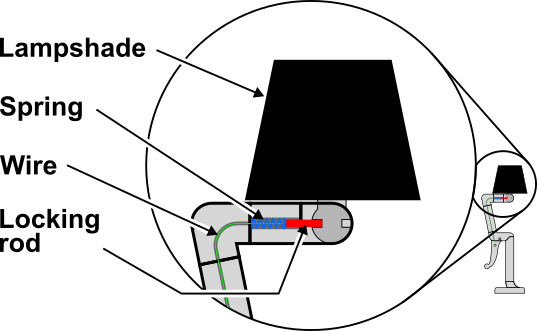
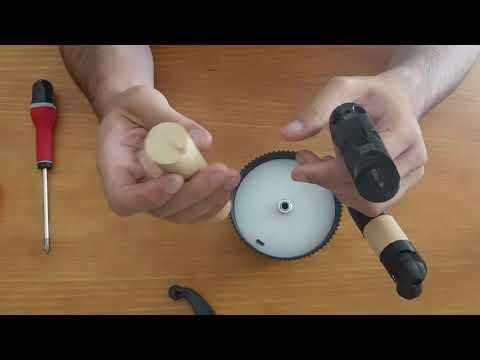
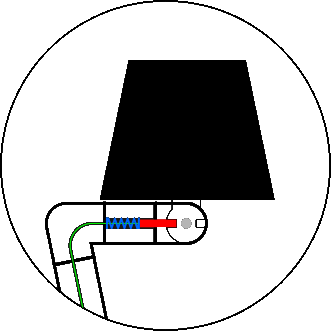
The lamp is assembled from the top down. Assembly requires to screw the 3D printed pieces to the wood dowel all the while feeding the wire of the locking mechanism inside the handle.
First assemble the 2 head pieces with an 8mm (in diameter) pin, I used aluminum tubing but you can use other materials. Place the locking mechanism inside (the latch with the wire and the spring), feed the wire in the 3D printed bend and then screw it in place (you can tug on the wire to make sure the locking mechanism still works).
Feed the wire inside the 90mm-long dowel and screw the 3D printed bend to it.
Screw the 3D printed handle mount (all the while feeding the wire through it) and pin the lever to the handle mount.
Feed the wire inside the lever and lock the wire inside the lever. To do so first unlock the head and maintain it in an unlock position. Feed the wire inside the lever (I used tweezers) and lock the wire in place with an 8mm pin (can be made of wood but I chose a piece of aluminum tubing.
Screw the handle and the handle feet and you are done !
Conclusion
.gif)
This project was interesting to make and look great on a desk but the emitted light is quite weak. For version 2, I would get a brighter light, dowels of larger diameter and I would rethink some of the part so that the screws aren’t so visible. I might also add other positions for the lampshade to be bale to lock in, not just pointing up and down.