Dignity After Disaster


Dignity After Disaster: A Modular Recovery Campus
Dedicated in Memory of Jacqueline Perry
Dignity After Disaster is a modular emergency disaster relief campus designed to support people displaced by wildfires, floods, earthquakes, evacuations, and other community-wide emergencies. The project was created around one clear belief: after disaster, people need more than a place to survive. They need food, water, hygiene, sanitation, clean clothing, emotional calm, practical support, and a recovery environment that treats them with dignity.
This design reimagines emergency response as a human-centered recovery compound rather than a cold temporary shelter site. Instead of relying on one building to solve every need, the campus is made up of coordinated support modules arranged around a central healing courtyard. Each module serves a specific purpose, but together they create one organized environment where displaced individuals and families can begin recovering physically, emotionally, and practically.
At the center of the site is a healing courtyard designed as the emotional heart of the campus. This courtyard includes a large central water fountain, a walkway around the perimeter, benches, drinking fountains, shrubs, and two different seating experiences. On one side are fruit-table benches where people can sit, eat, gather, and reconnect. On the opposite side are standard benches with drinking fountains, creating a quieter space for rest, hydration, and waiting. This courtyard is designed to soften the emotional strain of disaster and create a place where people can breathe, regroup, and feel human again.
Adjacent to the courtyard are the project’s major relief components. The large red main recovery pod serves as the anchor of the campus. It functions as the central support building where displaced people can rest, receive help, stabilize, and transition into a more structured recovery space. This module represents the care-centered heart of the relief compound and is designed to support rest, recovery, and coordination.
The campus also includes a dedicated shower unit and a separate bathroom unit, both designed to restore privacy, hygiene, and dignity in emergency conditions. These sanitation modules are critical because disaster recovery cannot be humane without safe access to bathrooms, showers, and basic daily care. The bathroom unit provides organized private stalls and sanitation access, while the shower unit supports personal hygiene and physical comfort.
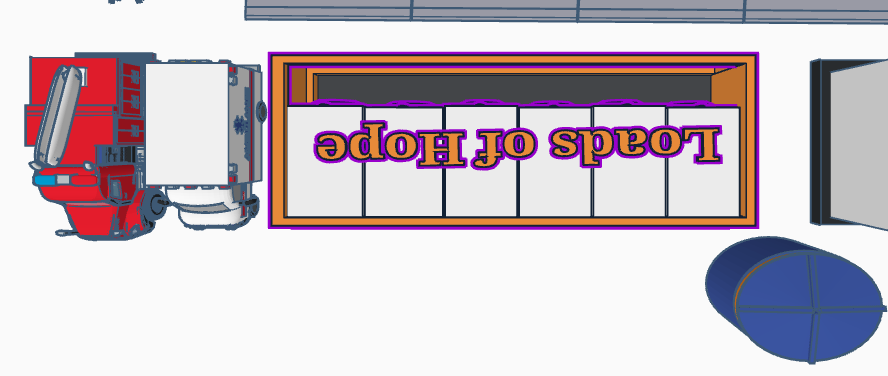
In addition to sanitation, the site includes the Loads of Hope laundry module, which allows displaced residents to wash clothing and regain an important sense of normal routine. This module also includes space for detergent, soap, and laundry-related supplies, making it more realistic as a true relief service unit. Laundry is one of the practical details many emergency concepts overlook, but it plays a major role in dignity, hygiene, and emotional recovery.
The support row also includes two staffed relief tents: a Food and Water Distribution Tent and a Clothing and PPE Distribution Tent. These are not “take what you want” spaces. They are designed as controlled relief distribution stations where aid workers hand out supplies as needed. The food and water tent provides nourishment, hydration, and organized relief support, while the clothing and PPE tent provides clothing, protective gear, hygiene items, and daily essentials for displaced people who may have lost nearly everything. Together, these tents strengthen the site as a working humanitarian response environment.
Between the service zones is a generator and utility support area, reinforcing the idea that the campus is designed to function as a real emergency relief site. Backup power support helps make the project more realistic, resilient, and operationally believable.
The campus also includes emergency vehicles and access lanes, which support logistics, response readiness, and movement throughout the site. These elements help the compound feel active and functional instead of static or decorative. The goal is for the full project to read as an organized response campus where real humanitarian operations could take place.
The visual direction of the project places the compound in a more earthy, tree-lined, mountain-inspired setting. This was an intentional choice. The surrounding greenery, shrubs, and natural setting help the campus feel grounded, realistic, and emotionally supportive, especially in the context of wildfire evacuation, mountain-region response, or rural displacement scenarios. The environmental setting reinforces both resilience and healing.
What makes Dignity After Disaster different is that it does not focus on only one building or one symbolic idea. It combines food and water distribution, clothing and PPE support, sanitation, showers, laundry, emergency access, utility backup, a main recovery pod, and a healing courtyard into one integrated system. It treats disaster recovery as a whole human experience, not just a shelter problem.
This project is designed to show that a disaster site can be practical without losing compassion. It can be organized without feeling cold. It can provide emergency support while still creating a place where recovery begins with dignity. A humanitarian disaster relief compound designed to restore hygiene, support, nourishment, stability, and dignity through modular recovery planning.
Supplies
Digital Design Tools and supplies
- Tinkercad (Autodesk) — used to design the full modular recovery campus, including the main recovery pod, shower unit, bathroom unit, laundry module, food and water distribution tent, clothing and PPE distribution tent, generator zone, emergency vehicles, and central healing courtyard
- EdrawMax — used to organize the site plan and layout
- Image generation / rendering tools — used to create realistic visualizations of the major project components
- Computer or tablet for design work and layout planning
Real Life Building Supplies
Site and Ground Preparation
- Prepared land or emergency staging site
- Grading and leveling equipment
- Gravel, compacted base, or paved access surface
- Drainage system
- Walkway materials
- Site fencing and access control if needed
Main Recovery Pod
- Steel or modular structural frame
- Insulated wall panels
- Wind-resistant curved roof system
- Exterior doors
- Windows
- ADA-accessible ramps
- Flooring system
- Interior wall panels and finishes
- Beds or cots
- Tables and chairs
- Interior lighting
- HVAC or ventilation system
- Electrical outlets and wiring
Shower Unit
- Modular waterproof enclosure
- Private shower stalls
- Roofing system
- ADA-accessible ramps
- Non-slip flooring
- Plumbing lines
- Drainage system
- Water heater or hot water supply
- Ventilation system
- Lighting
- Privacy doors and partitions
Bathroom Unit
- Modular restroom enclosure
- Roofing system
- Private toilet stalls
- Toilets
- Small sinks
- Faucets and plumbing fixtures
- Toilet paper holders
- Soap dispensers
- Mirrors
- ADA-accessible ramps
- Drainage / sewage connection or holding tank
- Lighting
- Ventilation
Loads of Hope Laundry Module
- Modular enclosure or trailer structure
- Roofing system
- Commercial washers
- Commercial dryers
- Folding counter or work surface
- Storage shelving
- Detergent and supply storage
- Plumbing and drainage
- Electrical service
- Ventilation
- Interior lighting
Food and Water Distribution Tent
- Heavy-duty relief tent or modular canopy
- Tent frame and anchoring system
- Serving tables
- Shelving or storage racks
- Food-safe bins and containers
- Bottled water storage
- Coolers or refrigeration if needed
- Handwashing station
- Lighting
- Signage
Clothing and PPE Distribution Tent
- Heavy-duty relief tent or modular canopy
- Tent frame and anchoring system
- Distribution tables
- Storage bins
- Shelving or clothing racks
- PPE storage
- Blankets, clothing, and hygiene supply storage
- Lighting
- Signage
Generator and Utility Support
- Backup generator
- Fuel storage or fuel connection
- Electrical panels
- Wiring and conduit
- Exterior-rated lighting
- Extension distribution systems
- Utility hookups
- Safety barriers or equipment housing
Water Support
- Potable water tank or water truck connection
- Reserve water tank
- Pumps if needed
- Water distribution lines
- Hose systems
- Sanitation and hygiene supply connection points
Emergency Access and Operations
- Emergency access lane
- Marked vehicle staging area
- Utility vehicles or emergency response vehicles
- Safety cones and barriers
- Site signage
- Communications support equipment if needed
Central Healing Courtyard
- Circular fountain system
- Water basin and pump
- Stone or paver walkways
- Benches
- Picnic / fruit tables
- Drinking fountains or hydration stations
- Shrubs, trees, and landscaping
- Site lighting
- Shade elements if needed
Safety, Accessibility, and Operations
- ADA-compliant ramps and circulation paths
- Fire extinguishers
- First aid supplies
- Waste and recycling bins
- Cleaning and sanitation supplies
- Maintenance tools
- Security or operational staffing
- Permits, inspections, and utility coordination
In real life, Dignity After Disaster would require a prepared site with drainage, emergency access, and walkways; a main insulated recovery pod with ramps, lighting, ventilation, beds, and furnishings; a shower unit; a bathroom unit; a laundry module with washers, dryers, plumbing, and supply storage; a food and water distribution tent; a clothing and PPE distribution tent; generator and utility support; water tanks and plumbing connections; emergency vehicle access; and a central healing courtyard with a fountain, benches, tables, drinking fountains, landscaping, and lighting.
Identifying the Problem

Step 1: Identifying the Problem
The first step in this project was identifying the real problem I wanted to solve.
Disaster displacement is often described like a housing problem, but it is much more than that. When people are forced to evacuate or leave their homes because of wildfire, flood, earthquake, or another emergency, they usually lose access to the basic systems that hold daily life together.
Those losses can include:
- safe shelter
- bathrooms
- showers
- clean clothing
- laundry access
- food and drinking water
- organized support services
- emergency coordination
- privacy
- emotional stability
- a calm place to sit, gather, and breathe
Many temporary emergency environments are built for speed, but not always for human recovery. They may provide temporary shelter, but they often lack the structure, dignity, and emotional support people need after crisis. I wanted to design a space that recognizes that reality.
I wanted to create a relief environment that supports the full human experience after disaster, not only survival, but also hygiene, nourishment, structure, calm, and dignity.
That is what inspired Dignity After Disaster.
Core Design Vision

Step 2: Core Design Vision
The core design vision behind this project was to create a modular recovery campus rather than a single shelter structure.
I chose a modular approach because disasters create multiple needs at once. One building alone cannot realistically provide everything displaced people need. Recovery works better when the site is broken into separate but coordinated support zones, each with a clear role.
This campus was designed to combine:
- emergency response
- humanitarian support
- daily practical needs
- human-centered recovery design
Instead of asking one structure to do everything, I designed a site that works like a system. Each module supports a different part of recovery, but together they create one organized environment.
My goals for the project were to make it:
- realistic
- functional
- modular
- humane
- easy to understand
- emotionally supportive
- visually organized
- resilient in emergency conditions
I also wanted the site to feel like a recovery campus, not just a collection of relief tents. That is why the design balances operational support areas with a central courtyard focused on gathering, calm, and emotional relief.
This project is not only about where people go after disaster.
It is about how they are treated once they get there.
Autodesk Design Process




I used Autodesk Tinkercad as the primary design tool for developing the structures, layout, and overall modular concept of the project. Tinkercad allowed me to build and refine the main components of the compound, test relationships between modules, and organize the site in a way that felt believable and purposeful.
Using Tinkercad, I designed the major components of the site, including:
- the main recovery pod
- the shower unit
- the bathroom unit
- the Loads of Hope laundry module
- the food and water distribution tent
- the clothing and PPE distribution tent
- the generator and utility support area
- emergency vehicle placement
- the central healing courtyard
I also used layout planning tools to help organize the site and think through scale, circulation, spacing, and placement. The process involved refining the visual balance of the compound so that the site felt both operational and human.
As the design evolved, I made several important updates:
- I improved the layout of the support tents
- I strengthened the courtyard design
- I added better environmental context
- I improved the realism of the modules
- I clarified the relationships between service areas and gathering areas
This design process helped move the project from an idea into a fully organized humanitarian recovery concept.
Overall Site Layout

Step 4: Overall Site Layout
The overall layout of the campus is built around a central courtyard, with major support systems arranged around the outside.
This organization matters because in emergency situations, site clarity reduces stress. People need to know where to go, where to wait, where to receive help, and where services are located. A confusing site layout can increase anxiety and make the relief process harder. I wanted the compound to feel organized and readable.
The updated site is arranged like this:
Rear Support Zone
This zone contains:
- the Food & Water Distribution Tent
- the Clothing & PPE Distribution Tent
- the Generator / Utility Support Area
This area functions as the main service and distribution row.
Center Zone
This is the Healing Courtyard, which acts as the emotional heart of the campus.
Right Side
This side is anchored by the Main Recovery Pod, which serves as the central support building for rest, stabilization, and coordination.
Left Side
This side supports sanitation and hygiene, including the Shower Unit and Bathroom Unit.
Front Support Edge
This area includes:
- the Loads of Hope Laundry Module
- emergency service access
- vehicle support
- operational movement along the outer edge of the site
This layout gives the compound a strong sense of order and makes it feel like a working emergency recovery campus instead of random pieces placed together.
Main Recovery Pod


Step 5: Main Recovery Pod
The Main Recovery Pod is one of the most important elements in the entire project.
This structure acts as the central support building of the compound. It is the place where displaced individuals and families can begin moving from shock and confusion into a more stable environment.
The pod is designed to support several key recovery functions:
- a welcoming lounge or seating area
- a sleeping and rest area with beds
- a support / coordination area with tables and work surfaces
This combination makes the main pod more than a shelter. It becomes a care-centered recovery unit.
Its purpose is to provide:
- a place to sit safely
- a place to rest and sleep
- a place to stabilize emotionally
- a place for information, coordination, and support
The pod was also updated visually with a more realistic roof concept to help it feel more weather-ready and wind-resistant. That detail strengthens the real-world logic of the module and makes it more believable as a deployed relief structure.
This building matters because it gives the site a true heart. Without it, the compound would feel like a service yard. With it, the project becomes a place where recovery can begin in a structured, human environment.
The Central Healing Courtyard


Step 6: The Central Healing Courtyard
The central healing courtyard is the emotional centerpiece of the project.
In the center of the courtyard is a large fountain, surrounded by walkways, benches, shrubs, drinking fountains, and two different seating experiences designed for both gathering and quiet recovery.
On one side of the courtyard are:
- fruit-table benches
- drinking fountains
- a more community-oriented seating area where people can sit together, eat, reconnect, and recover in a more social setting
On the opposite side are:
- standard benches
- drinking fountains
- a quieter seating edge for waiting, resting, and hydrating
This design choice was intentional.
Disaster relief sites are often focused only on logistics. I wanted this one to acknowledge the emotional side of recovery too. People who have been displaced need more than service lines. They need moments of calm, places to sit, and a space that helps them feel human again.
The courtyard represents:
- rest
- emotional decompression
- community
- order
- dignity
- recovery
The walkway around the courtyard also strengthens the site by creating clear circulation. It allows movement around the center without disrupting the gathering space.
This is one of the strongest parts of the whole project because it shows that disaster recovery should include healing space, not just utility space.
Food & Water Distribution Tent


Step 7: Food & Water Distribution Tent
One of the major support structures in the project is the Food & Water Distribution Tent.
This tent is designed as a staffed relief station where workers or volunteers hand out:
- bottled water
- prepared food
- packaged food
- drinks
- nourishment supplies
This is an important detail: the tent is not designed as an open grab-and-go area. It is meant to be an organized distribution point where aid is handed out as needed. That makes it feel more realistic, more secure, and more operationally sound.
The food and water tent helps the compound support one of the most urgent needs after disaster: immediate access to hydration and nourishment.
Its location near the courtyard is also important. It keeps the service area connected to the human-centered gathering area, which makes the compound feel more integrated and less divided into cold functional zones.
This tent represents:
- basic survival support
- organization
- stability
- relief access
- practical care
Without food and water, there is no recovery. This module helps ground the project in that reality.
Clothing & PPE Distribution Tent


Step 8: Clothing & PPE Distribution Tent
Next to the food and water tent is the Clothing & PPE Distribution Tent.
This module provides a dedicated support station for:
- clothing
- shoes
- blankets
- protective gear
- masks
- hygiene-related items
- daily emergency essentials
This part of the campus acknowledges a very real disaster problem: many people leave home with almost nothing. Some lose access to proper clothing, clean items, footwear, or protective gear. Others may need PPE after wildfire smoke exposure, hazardous conditions, or community-wide emergency response.
By including this tent, the project becomes more compassionate and more realistic. It recognizes that recovery requires more than food and shelter. It also requires practical daily resources that restore dignity.
This tent is designed as a staffed distribution point, not just a supply pile. That reinforces the idea that the campus is organized, controlled, and intended for real use.
This module represents:
- dignity restoration
- practical support
- daily living needs
- humanitarian care
Together, the food and water tent and the clothing and PPE tent form a strong rear support row that helps make the entire site feel like a working relief campus.
Generator and Utility Support


Step 9: Generator and Utility Support
Between the major rear support structures is the Generator and Utility Support Area.
This section plays an important role in making the project feel operational and resilient. In real emergency environments, reliable infrastructure cannot always be assumed. A relief compound must be prepared to support its own lighting, utility needs, and ongoing operations.
The generator zone helps support:
- site lighting
- service stations
- ongoing relief operations
- emergency functionality
- resilience during unstable utility conditions
This is one of the modules that moves the project from “design concept” to “working response environment.”
Without utility support, a disaster campus can look incomplete. With it, the site begins to feel ready for actual deployment.
This zone represents:
- resilience
- operational realism
- emergency preparedness
- infrastructure support
Shower Unit


Step 10: Shower Unit
The Shower Unit is one of the strongest practical pieces of the project.
This module is designed to restore:
- hygiene
- privacy
- dignity
- comfort
- physical relief
After disaster displacement, private hygiene is often one of the first things people lose. That makes a shower unit incredibly important in any realistic emergency recovery environment.
The shower module includes:
- multiple private shower stalls
- weather protection
- circulation access
- ramps
- organized layout for repeated use
The updated roof design helped this unit feel much more realistic and weather-ready, especially in an outdoor or rugged environment.
This unit matters because hygiene is not a luxury after disaster. It is part of recovery. It supports both public health and emotional well-being.
This module represents:
- care
- privacy
- sanitation
- human dignity
Bathroom Unit


Step 11: Bathroom Unit
Separate from the shower structure is the Bathroom Unit, which is essential to the functionality of the entire compound.
This module is designed to provide:
- private bathroom stalls
- toilets
- small sinks
- basic sanitation access
- ramps for accessibility
- organized circulation to each unit
The bathroom unit exists because a real recovery campus cannot function without dedicated sanitation infrastructure. People need safe, clean, private restroom access as part of daily life, especially in emergency conditions.
This module is one of the most practical and important components because it addresses:
- hygiene
- privacy
- accessibility
- order
- public health
In the context of disaster response, restroom access can become one of the most urgent basic needs. Including a dedicated bathroom module helps show that this project is grounded in real life, not just visual design.
This unit represents:
- essential daily support
- dignity
- basic human need
- realistic disaster planning
Loads of Hope Laundry Module


Step 12: Loads of Hope Laundry Module
The Loads of Hope Laundry Module is one of the most distinctive parts of the project.
This unit provides a dedicated laundry service area where displaced people can wash their clothing and begin to restore one of the most basic parts of routine.
The laundry module includes:
- washing machines
- drying machines
- space for laundry soap and detergent
- supply storage
- a realistic service structure built around daily use
This was an important part of the design because laundry is something many emergency concepts ignore, yet it matters deeply.
Clean clothes support:
- hygiene
- dignity
- confidence
- comfort
- emotional normalcy
Being able to wash clothing is one of those quiet but powerful things that can help people feel stable again. That is why this module matters so much.
The updated inclusion of storage for detergent and supplies made the module even stronger and more believable.
This module represents:
- routine restoration
- dignity
- comfort
- practical recovery support
Emergency Vehicles and Operational Access


Step 13: Emergency Vehicles and Operational Access
The project also includes an Emergency Operations Edge supported by emergency vehicles and access lanes.
This part of the campus helps the site feel active and realistic. It reinforces that the compound is not just a quiet support campus, but a functioning emergency response environment.
Emergency vehicles help communicate:
- logistics
- access
- medical and rescue support
- supply delivery
- on-site movement
- operational realism
Including vehicles strengthens the site because it adds visible evidence of response readiness. It tells the viewer that this is a working relief compound capable of supporting both humanitarian care and emergency operations.
This part of the site represents:
- readiness
- support infrastructure
- movement
- active response
Environmental Setting and Landscape Strategy


Step 14: Environmental Setting and Landscape Strategy
The environmental setting of the project is intentionally earthy, tree-lined, and mountain-based.
This decision was made to help the site feel grounded in a realistic disaster context, especially in wildfire, evacuation, mountain-community, or rugged emergency scenarios.
The landscape includes:
- trees
- shrubs
- earthy pathways
- surrounding greenery
- a more natural outdoor relief atmosphere
This matters because the environment affects how the whole campus feels. By placing the site in a more grounded and natural setting, the design becomes:
- more believable
- more humane
- more emotionally supportive
- better integrated with the idea of disaster recovery in real environments
The landscape also supports the emotional side of the project by softening the visual harshness that often comes with emergency infrastructure.
This part of the project represents:
- grounding
- realism
- resilience
- emotional balance
Future Collaboration Vision

Step 15: Future Collaboration Vision
If Dignity After Disaster were ever developed in real life, I would want it built through a team-based collaboration between specialized humanitarian and deployment partners.
My preferred future implementation vision would involve organizations such as:
- ETI for tent manufacturing and customization
- Rapid Deployable Systems (RDS) for larger camp infrastructure planning and deployment strategy
- ShelterBox for humanitarian field deployment insight and shelter-focused support
In that vision, ETI would help translate the support tents and modular field structures into durable, weather-ready units. RDS would help organize the compound at the systems level, including site flow, infrastructure logic, utilities, and camp-scale planning. ShelterBox would provide field-informed humanitarian perspective, helping ensure that the project remains focused not only on operations, but also on dignity, relief access, and practical support for displaced families.
This is not presented as an existing official partnership. It is a future collaboration vision for how the project could move from concept to reality if it were developed beyond design stage.
This section matters because it shows that the project is not only visually ambitious, but also realistically aware that a campus like this would require multiple areas of expertise to become real.
Why This Project Matters

Step 16: Why This Project Matters
What makes Dignity After Disaster different is that it does not stop at one structure, one tent, or one symbolic gesture.
It combines:
- food and water distribution
- clothing and PPE support
- sanitation
- showers
- bathrooms
- laundry
- generator support
- emergency access
- a main recovery pod
- a healing courtyard
into one organized system.
That is the project’s greatest strength.
This design treats disaster recovery as a whole human experience, not just a shelter problem. It recognizes that people need:
- access
- safety
- hygiene
- nourishment
- privacy
- emotional calm
- a sense of structure
- a sense of dignity
That is why this project matters.
It shows that emergency response can be practical without becoming cold, and compassionate without losing structure.
Final Reflection
Final Reflection
Disaster recovery should never begin with chaos, discomfort, and uncertainty alone. It should begin with dignity. Dignity After Disaster was designed to show that emergency response can be practical, organized, and resilient without losing compassion. By combining a main recovery pod, shower and bathroom units, laundry services, staffed distribution tents, utility support, emergency access, and a healing courtyard at the center, this project reimagines disaster relief as a complete recovery environment rather than a temporary holding space. Every part of the campus was created to restore something crisis often takes away—privacy, hygiene, nourishment, safety, structure, and emotional calm. This project is my vision for what humanitarian design can become when it is built not only to respond to disaster, but to help people heal, recover, and begin again with dignity.