Do Plants Have Brains?

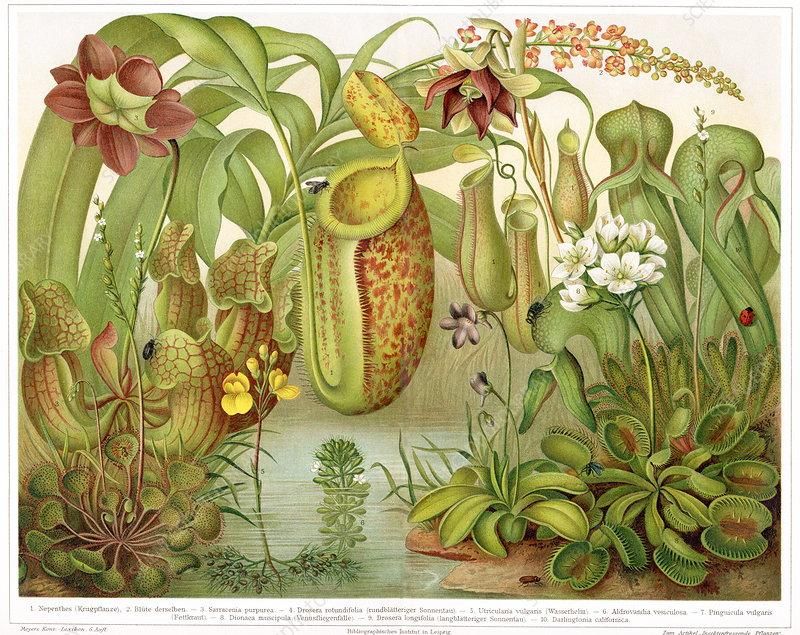
The Venus flytrap is a plant that responds to its outer environment incredibly. The flytrap has something called trigger hair in its leaves. When any insect stays on the trigger hairs of the plant, an action potential is fired. An action potential in the movement of potassium, calcium, and chloride ions out and into the cells of the Venus Flytrap. But first, we need to understand that plants do not have a nervous system. Meaning, they don’t have a brain. In fact, they have action potentials. Not only that, but plants do not have muscles. They move by hydraulic forces which is basically the flow of water. Plants quickly move water into and out of their vacuoles through special transport channels called aquaporins. Through these channels, potassium and chlorine ions that move across the membrane are being chased by water, which causes the plant to lose water quickly. And that results in the rapid movement of plant structures. The movement of chlorine and potassium ions out and inside of the cells differs from one plant to another. In this case, a Venus Flytrap takes 1-2 days to reopen.
For further information watch the following video that summarizes our experiment:
Problem or Purpose
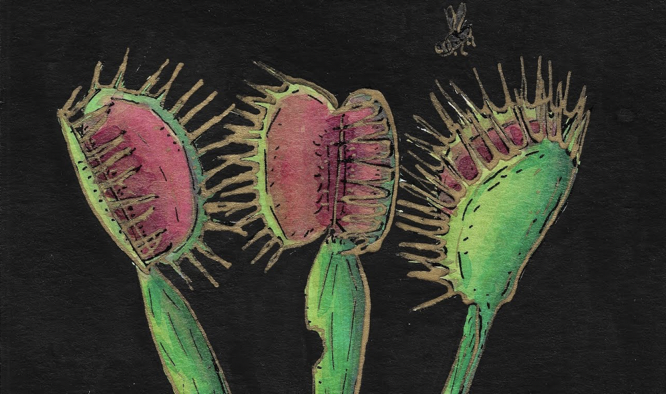
How is the length of the action potential of the Venus flytrap dependent on the weight (applied force by insect) exerted on it?
Hypothesis
If a force that is exerted on a Venus flytrap is increased, then the action potential energy increases due to a response caused by the electrophysiology of its cells allowing it to recall any touches applied on them within different timeframes.
Variables
· Dependent: Length of action potential (amplitude in meters)
· Independent: Forces applied on the Venus flytrap (different weights of worms)
· Controlled: The same plant used throughout the experiment and the same type of weight
Materials
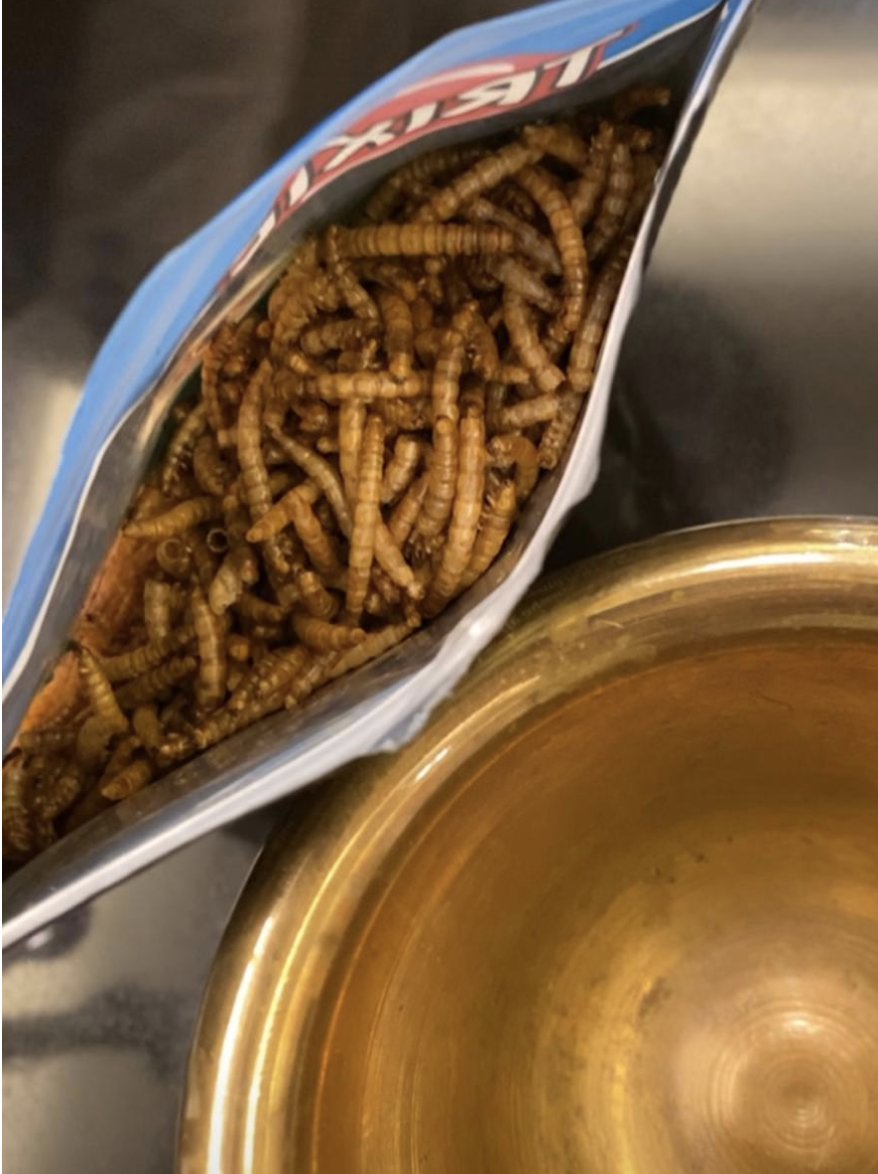
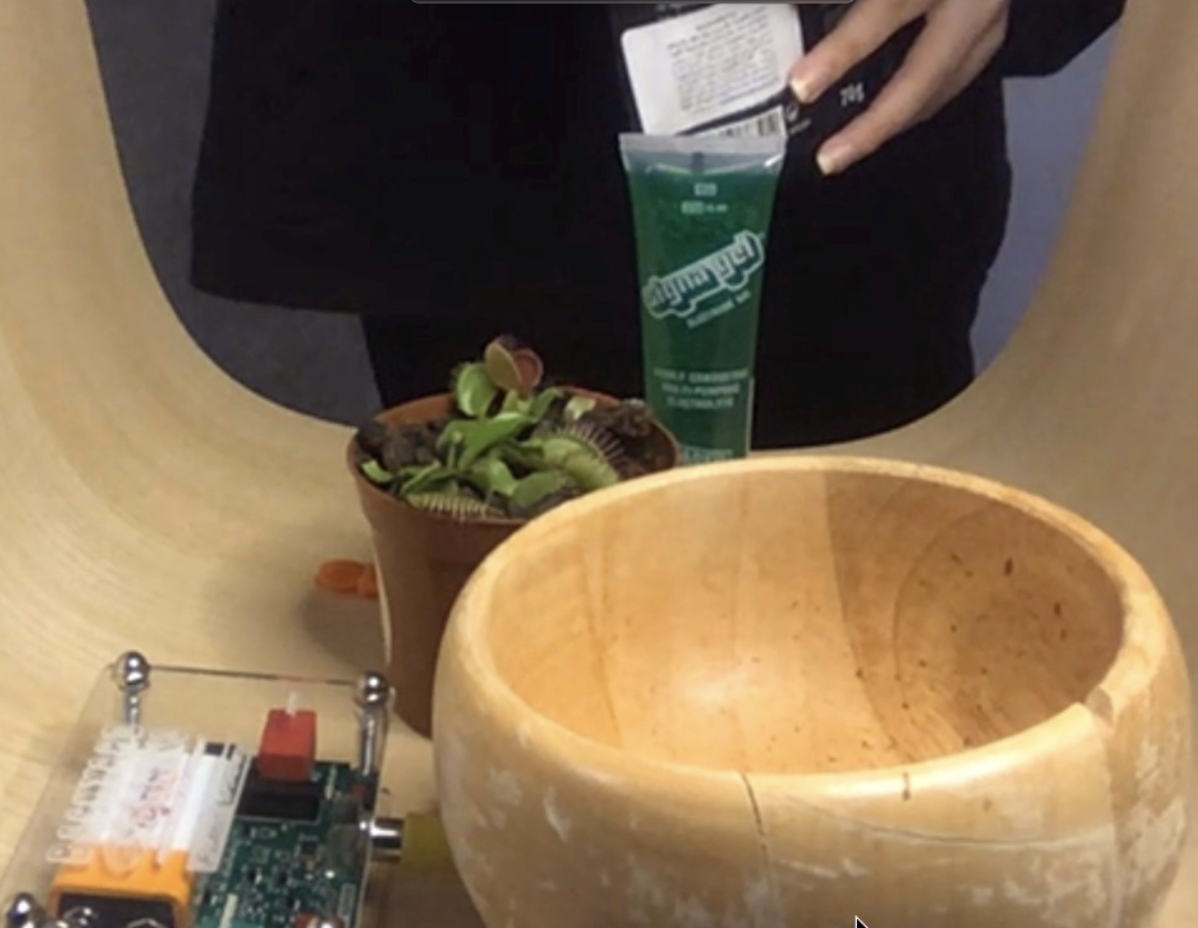
1. 3 Venus Fly Trap Plants
2. Plant Spiker Box
3. Flytrap Stake Recording electrodes
4. Conductive Electrode Gel
5. Green smartphone cable
6. Blue Micro USB Cable
7. Red Communication Cable
8. Stimulation instrument
9. worms
10. Crusher
11. tweezer
12. distilled water (20 mL)
Procedure
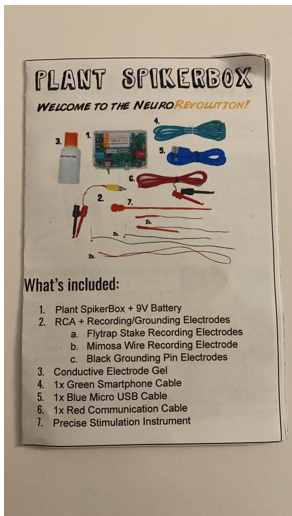
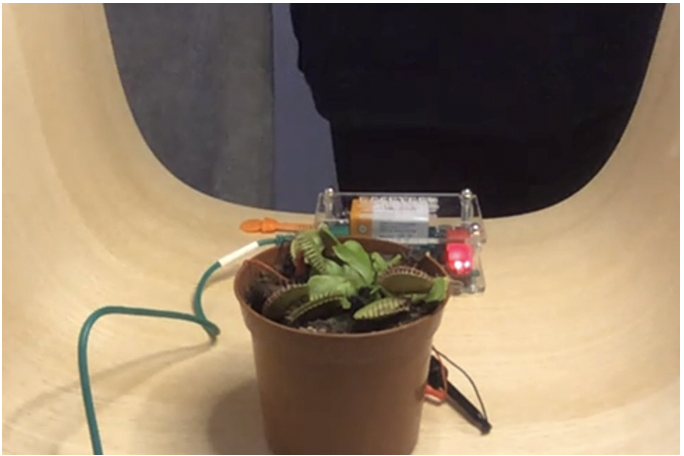
1. Grab your plant Spiker box + 9V battery
2. Connect the Yellow RCA to the spiker box
3. Connect the green laptop cable to the Spiker box and your laptop
4. Insert the flytrap stake recording electrodes beside the open trap you choose to record. Make sure that the electrode touches the head.
5. Apply 1 dab of electrode gel where the silver electrode wire touches the Flytrap
6. Grab the black grounding pin electrodes and insert it beside the open trap.
7. Connect the wires of the flytrap stake recording electrodes and the black grounding pin electrodes to the Yellow RCA from the spiker box.
8. Set the spike recorder app from your laptop.
9. Grab 2 dead worms and crush them using a hand crusher.
10. Apply 5 drops of distilled water to the crushed worms.
11. Using a tweezer, get the crushed worms into open trap
12. Start recording the action potential from the spike recorder app
13. The open trap will close as soon as you insert the crushed worms into the open trap. The spike recorder app will record the plant’s stimulus to the applied weight.
14. Record the Data.
15. Repeat step 8-14. However, this time with 4 crushed worms. Evaluate the hypothesis and procedure
Data
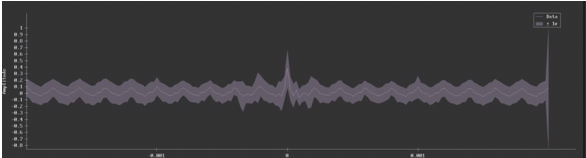
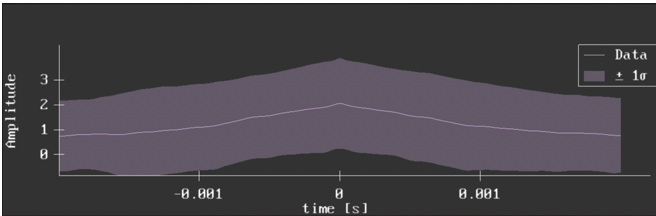
1) Venus flytrap stimulus response to 2 worms
Time (s) --> Amplitude (m)
0 s --> 0.4 m (peak)
0.001s --> 0.3 m
0.002 s --> 0.2 m
0.003 s --> 0.1 m
2) Venus flytrap stimulus response to 4 worms
Time (s) --> Amplitude (m)
0 s --> 1.4 m (peak)
0.001s --> 0.7 m
0.002 s --> 0.5 m
0.003 s --> 0.3 m
Data Analysis
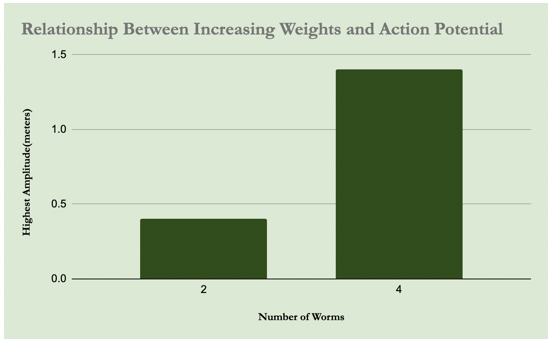
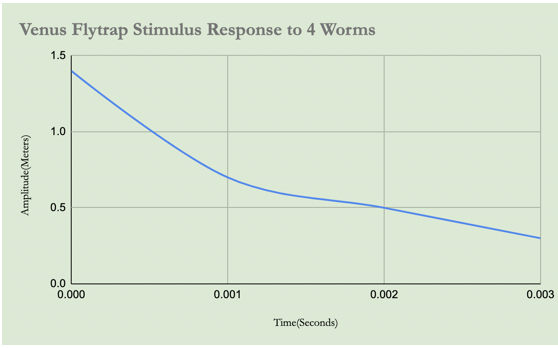
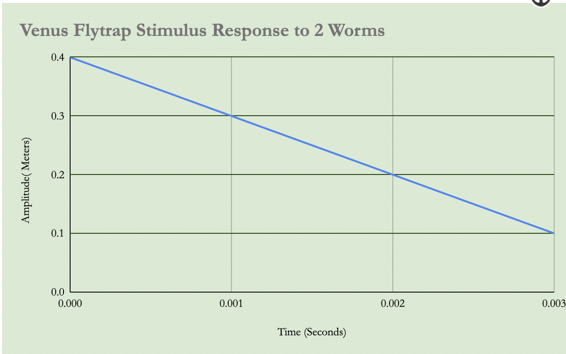
In general, there is a directly proportional relationship between increasing the number of insects, and how high the amplitude is, which corresponds to greater action potential fired. This was understood when we collected the data and represented them through 3 graphs.
- The first graph shows the plant's stimulus-response to 2 worms. When we fed the plant 2 worms, it closed, and its action potential reached an amplitude of 0.4 meters. Then, the plant quickly began restoring its normal state. This is evident through the decreasing line, which resembles the amplitude decreasing.
- The second graph shows the plant's stimulus-response to 4 worms. The line here is also decreasing. When we fed the plant 4 worms, it immediately closed, and the plant fired an action potential with an amplitude of 1.4 meters. Then, the plant started firing action potential with lower amplitude and quickly started restoring its normal state, which is shown through the difference between two consecutive amplitudes where there was a sharp decrease from a higher amplitude to a lower one.
- The third graph basically summarizes our findings and generalizes the data from the 1st and 2nd graphs. Whenever the number of worms increased (the weight), the action potential’s amplitude increased too, corresponding to a directly proportional relationship. This is evident through the 3rd graph. When the number of worms were 2 only, the action potential fired had a maximum amplitude of 0.4 meters only. However, when the weight was increased to 4 worms, the action potential fired had increased to have a maximum amplitude of 1.4 meters. This proves the directly proportional relationship between weight and action potential.
Results
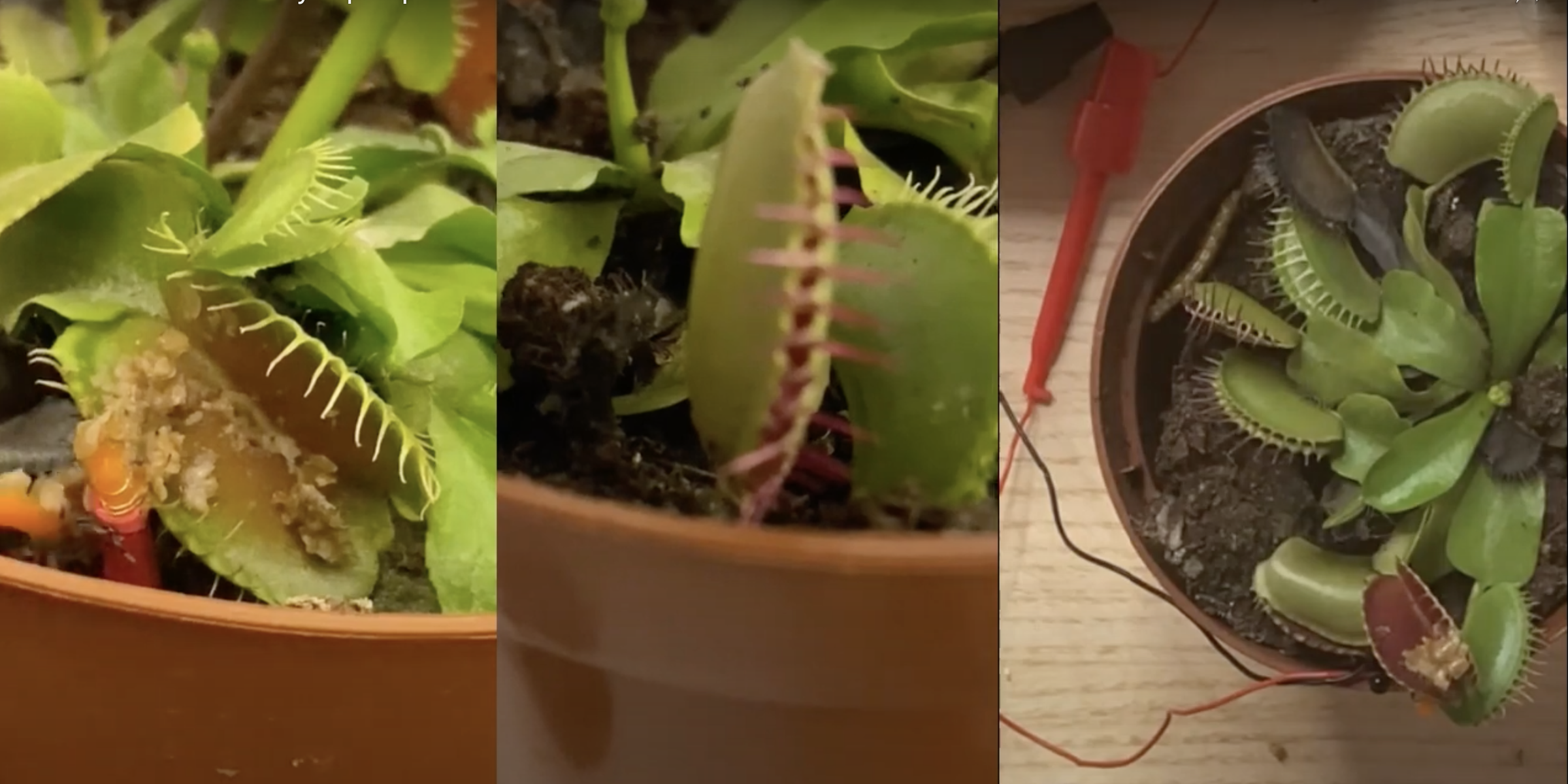
According to our collected data, and final patterns, we concluded that there is a directly proportional relationship between weight and action potential. This means whenever a larger weight is exerted on an open trap, the plant will fire an action potential with a high amplitude, corresponding to a greater action potential. Similarly, whenever the weight exerted by the open trap decreases, the action potential’s amplitude becomes lower.
Evaluating the Hypothesis
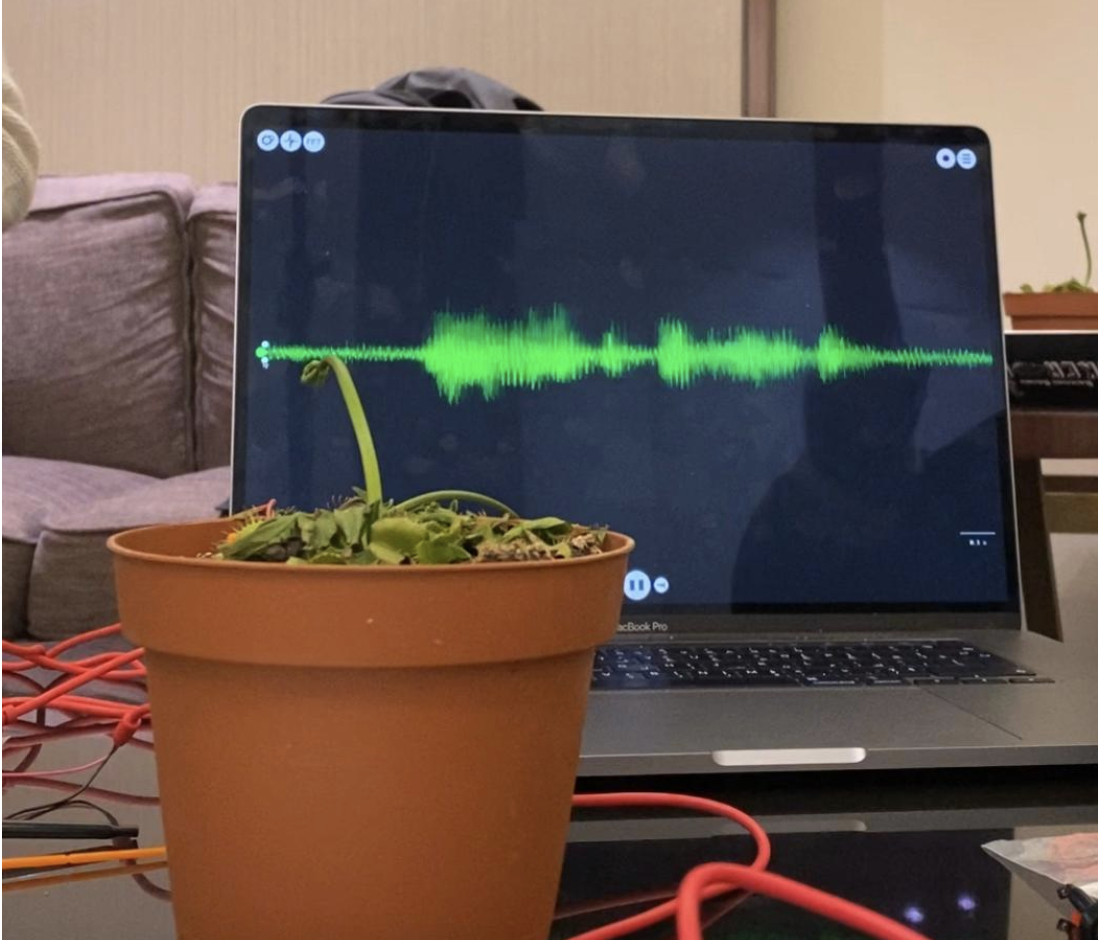
Our hypothesis was “If a force that acts on a Venus flytrap is increased, the action potential energy increases due to a response caused by the electrophysiology of its cells allowing it to recall any touches applied on them within different timeframes.” Our results responded excellently to the hypothesis, as a higher number of worms corresponded to a higher applied force, which resulted in an increased action potential, as evident in the amplitude’s peak of the spike recorder. For example, when we fed the trap with 2 worms, the corresponding action potential reached an amplitude of 0.4 meters. However, when we increased the applied force by feeding another open trap 4 worms, the corresponding action potential increased, reaching an amplitude of 1.4 meters. To wrap up, our collected data highly supported the hypothesis since we found a directly proportional relationship between weight and action potential.
Evaluating the Method
Strengths:
- The spike recorder contributed to our data reliability since it recorded every time the venus flytrap action potential. We referred to it in our data, data analysis, and comparison between both trials.
- Our team was ambitious, supportive, and cooperative thus despite the countless challenges we faced, we always found possible solutions.
- The idea of our experiment was highly challenging compared to the virtual learning circumstances, related to biology, and different from other experiments since the action potential and experimenting with sensitive plants was an unfamiliar situation to us.
- Our team was also understanding of any concerning circumstances which helped in creating a flexible, welcoming environment where teammates were open-minded, respectful, and fair.
- The materials were founded by neuroscientists, which contributed to our data’s reliability and accuracy. This allowed us to confidently collect the data with knowing the function of each and every material. Including to that, our 2nd Venus flytrap seemed healthier stimulated perfectly. Thanks to our mishaps with the 3 Venus flytraps, in the beginning, we learned how to supply the 2nd Venus flytrap with a suitable environment.
Weaknesses:
- Mimosa plants weren’t available in any Saudi plant shop, thus were abandoned from the experiment.
- Venus flytraps were challenging to find and pricey, noting that we contacted more than 30 local plant shops in different cities in Saudi Arabia. The spiker box arrived late, past the agreed-upon timing due to covid-19 constrictions, and the customs of the United States and Saudi Arabia. In the meantime, the Venus flytrap withered, thus the 1st trial of the experiment failed, and no action potential was detected.
- Due to studying virtually, we faced difficulties in meeting physically, which was needed in performing the experiment. However, we managed to meet in a private library while maintaining social distancing.
Improving the Experiment
- Experiment with another sensitive plant that is more likely to be found in Saudi plant shops and are cost-effective.
- Take into consideration shipment delays while planning the experiment steps.
- We could apply different types of masses (insects) and compare the action potentials, to see which mass is the most effective one.
- We could compare the action potentials of different carnivorous plants besides the venus fly trap, such as inhospitable bog, sensitive mimosa, sticky sundew plants, and the corkscrew plant.
- We could investigate the communication between plants by recording the action potential from a venus flytrap and sending it to the sensitive mimosa through touch receptors that send information between communicative plants.
Application and Service As Action

What is the importance of this research to humans?
This research is important to humans because it allows us to understand the Variety of plants around us and their capabilities and mysteries. We could use this aware people about the importance of caring about the environment. In the end of the day, god created amazing plants and creatures that we could know and not know about. For that reason, we believe that this could make people realize the importance of caring about the environment, since it certainly has valuable plants that make use realize god’s capabilities among us. Including to that, This research is important to humans because although plants do not have a brain, no axons, no neurons, yet they have something that's very similar to us; the ability to communicate using electricity, which was evident through the action potentials of the Venus flytrap. Noting that the action potential acts like the currency of the brain where all information is passed by firing action potentials all the way down to the end of the stem.
How can it be applied in practice?
Similar to how we respond to hitting our toe on a table, plants react to their environment. However, what sets us apart is that plants don't have brains or neurons, but they share the commonality of thinking. The reply the Venus flytrap offers when weight is applied can be compared to how one's heart responds to an unexpected shock from things such as a panic attack; the reasoning behind this is because the heart beats at a specific frequency when suddenly disturbed, the frequency reaches the highest peak; called an action potential and this happens before the body returns the heart influenced by other factors including blood pressure to homeostasis through negative feedback. Another similarity would be the procedure of how the experiment measured the action potential of the plant to an ECG scan, in which electrodes are used to send signals to a processor that displays the live frequency at which a heart is beating. This proves that a Venus Flytrap might be our next hope to developing a more efficient pacemaker or even other products that humans would need to find treatment for chronic diseases within the heart and brain.
How did you use your project as Service as action?
This experiment is considered a service as action since we enlightened our fellow students about a new interesting topic of neuroscience, and we also used this project to wish that this experiment and many other experiments related to neuroscience are included in the curriculum for grades K-12. Also, we used this project to enlighten people about the amazing creations of plants. A Venus flytrap is a literal carnivorous plant, which could be shocking to some people. It may make them realize the important of caring about the environment, and how science contributed to understanding the mysteries of the world.
Step 12: ATL Skills Reflection

1- Research skills:
We used research skills in investigating sensitive plants generally, and Venus fly traps specifically. We learned about using a spiker box, action potential, and electrophysiology through researching different media. We also watched Ted talks and videos by neuroscientists to educate ourselves and collect data of the history, wonders, and science behind carnivorous plants and how venus flytraps. In order to find a Venus Flytrap, we researched local plant shops through social media that sell venus flytraps and can provide us with the plants within our time boundaries; and finally after a long path of research we found 2 plant shops @zohooralrawnaq from Al Ahsa, and @laforet from Dammam. Not to mention that we utilized an appropriate multimedia technology to create an effective presentation (video). Last but not least, we referenced accurately and constructed a bibliography.
2- Self-management skills:
We were able to develop our self-management skills throughout the experiment. We developed our affective skills. This includes dealing with disappointment and unexpected results. In the beginning of the experiment, we bought 3 Venus flytraps. Unfortunately, they did not show any response to the applied weights. We were very disappointed. However, we never lost hope. In actuality, we looked for other places that had healthier plants, In the end, we were able to find a plant and succeed with our experiment. Including to that, we were able develop our organizational skills. We divided the work among us evenly and fairly. We set specific goals for each step we passed by. We managed our time to work on the science fair steps and submit them on time. We also managed ourselves and emotions in encountering challenges and always tried our best until it wasn’t in our hands anymore.
3- Thinking skills:
We applied thinking skills when we thought of science fair ideas, discussed and shared our thoughts until we agreed upon this experiment. We also thought of ways to enhance our experiment right after we noticed the plants’ withering as we considered all alternatives including the seemingly impossible in making decisions. In addition, we broke down the whole project into component, achievable parts. Critical thinking skills were demonstrated through identifying trends in the graphs. Nonetheless, we tackled all the challenges by seeing possibilities, problems, and challenges positively. Through reflections, we made connections between learning gained in different areas: the experiment, physics, and biology.
4- Communication and Social (collaboration) skills:
We communicated with each other approximately twice a week to discuss the updates and monitor our progress in applying the science fair steps. We also contacted and communicated with tons of local plant shop owners, asking if Venus Flytraps are in stock. In addition, we negotiated the purpose of the experiment and limitations of finding a venus trap with peers and teachers, and throughout the discussion we considered, respected, and analyzed different opinions, points of view, ideas, and preferences. Nevertheless, we interacted, collaborated, and published media represented through the video which showcased different digital media techniques to present to an audience. We also resolved conflicts and work collaboratively with appropriate roles; as each member of the team was responsible for a main task that suited their profession, in addition to other minor tasks as shown:
Leen: ordering the spiker box
Seba: ordering the Venus flytraps and insects
Sadeem: hosting the team and recording evidence (videos)
ALL: documenting progress and working on the report.
Works Cited
- Jabr, Ferris. "Plants Cannot "Think And Remember," But There's Nothing Stupid About Them: They're Shockingly Sophisticated". Scientific American Blog Network, 2021, https://blogs.scientificamerican.com/observations...
- Schlanger, Zoë. "Plants Can Feel You Touching Them—And Sometimes They Don’T Like It". Quartz, 2021, https://qz.com/1499046/plants-can-feel-you-touchi...
- Plants, Measuring. "Measuring Action Potential In Plants - Physicsopenlab". Physicsopenlab, 2020, https://physicsopenlab.org/2020/02/26/measuring-a...
- Backyard Brains. Electrical Experiments With Plants That Count And Communicate. 2017, https://physicsopenlab.org/2020/02/26/measuring-a... Accessed 3 Apr 2021.
- TED-Ed. The Wild World Of Carnivorous Plants. 2019, https://physicsopenlab.org/2020/02/26/measuring-a... Accessed 3 Apr 2021.