Dutch Bucket Hydroponic System
by vandencnelson in Outside > Backyard
335 Views, 1 Favorites, 0 Comments
Dutch Bucket Hydroponic System

Hydroponics is commonly used for growing vegetables, herbs, and other small crops indoors or outdoors, and it has become popular because of how controlled the growing environment is. After learning about sustainable gardening and seeing how expensive fresh produce can get, I became interested in coming up with a way to grow plants more efficiently at home. This hydroponic system is designed to grow plants without soil by circulating nutrient-rich water through a simple PVC pipe setup. It’s a compact and efficient way to grow vegetables and herbs while using less water and space compared to traditional gardening methods. The system is great for beginners (like me) because it’s cheaper than a traditional garden bed, easy to maintain, and can support multiple plants.
Supplies
STAND MATERIALS
2"x4"x8' Pine Board - Qty: 3
2" Wood Screw - Qty: 36
3" Wood Screw - Qty: 4 (optional)
DRAIN MATERIALS
1-1/2" Rigid One Hole Conduit Strap - Qty: 2
5' Section 1-1/2" PVC Pipe - Qty: 1
1-1/2" PVC Cap - Qty: 1
1-1/2" PVC Elbow - Qty: 1
FEED LINE MATERIALS
1/2" EMT two Hole Conduit Strap - Qty: 2
7' Section 1/2" Irrigation Tubing - Qty: 1
1/4" Irrigation Drip Tubing - Qty: 1 Small Roll
1/4" Irrigation Valve - Qty: 6
1/4" Irrigation Barb Fitting - Qty: 6
1/4" Adjustable Drip Nozzles - Qty: 6 (optional)
1/2" Irrigation End Cap - Qty: 1
1/2" x 1/2" Barbed Hose Adapter - Qty: 1
DUTCH BUCKET MATERIALS
5 Gal Bucket - Qty: 3
3/4" ID Rubber Grommet - Qty: 3 - https://amzn.to/33IQFHz (aff)
3/4" x 3/4" Barbed Elbow - Qty: 3
5' Section 3/4" PEX - Qty: 1
Pumps & Accessories
Active Aqua 250GPH Pump - Qty: 1 - https://amzn.to/3GzafVh (aff)
Active Aqua 15 l/min Aerator - Qty: 1 - https://amzn.to/33p5Jdw (aff)
Air Stones - https://amzn.to/3tuyZKn (aff)
Air Line Tubing - https://amzn.to/3FAFvSl (aff)
Tools Required
- Chop saw
- Hole saws:
- 3/4"
- 1"
- 2.5"
- Drill
- Impact driver
- Angle grinder (if using 2-hole conduit straps)
- Deburring tool
- Heat gun
Sketch

It's always a good idea to plan out the project and visualize what you have and don't have to adapt the project to your needs.
Prototype


This design is really up to you when it comes to deciding what goes where. The whole point of this project is to inspire you to make your own hydroponic system adapted to the supplies you have. By developing a prototype I got an image of what I could make based off what was available. (In the image(s): Green heat shrink to resemble plants, half inch pvc for the buckets, popsicle sticks for the stand and reservoir, a straw for the drain pipe, and a zip tie for the irrigation tubing.)
CAD
Technical Drawing
This drawing goes into detail of the dimensions and is modeled after the CAD in Fusion 360.
Downloads
Build Stand



.jpeg)
.jpeg)

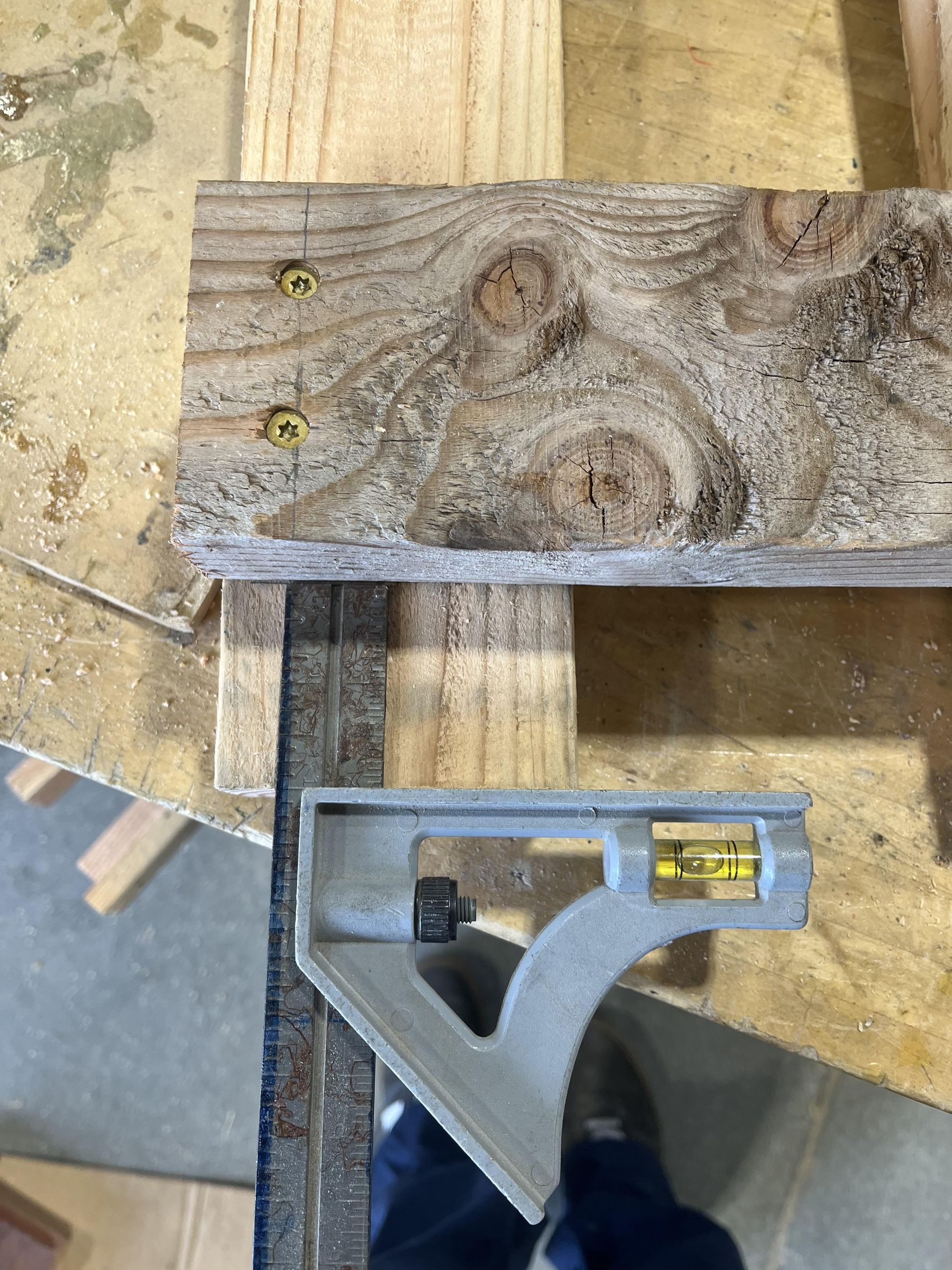
- Cut the pine boards to these sizes:
- 48" boards ×2
- 45" board ×1
- 17" boards ×4
- 11.5" boards ×4
- Build the two side supports:
- The 17" boards are the legs of the stand.
- Before screwing anything together, pre-drill the holes in the 11.5" boards so the wood does not split.
- Drill the holes about 1 inch from the edge and space them evenly apart.
- You can use 2 screws per side, but a third screw is optional if you want extra strength.
- Attach the 11.5" boards to the 17" legs:
- Put one 11.5" board flush with the top of the legs.
- Attach the second 11.5" board about 2 inches up from the bottom.
- Repeat this to make a second side support.
- Attach the long top boards:
- Lean the side supports on their sides to make drilling easier.
- Attach the two 48" boards across the top using 2 screws at each corner.
- Drill the screws about 1 inch from the edge and keep them evenly spaced.
- Add the center support board:
- Attach the 45" board in the center the same way as the 48" boards.
- This board is strongly recommended because it helps prevent the stand from sagging when holding heavier weight.
Get the measuring right the first time with the legs of the stand and make sure that they are uniform. If they are not the same then I would start over since it isn't that much stock and worth redoing to ensure a stable platform without requiring future adaptations. I made the mistake of not measuring twice and this caused me to have to recut the legs shorter which dropped my drain pipe (next step) to much so it didn't align over the reservoir. For this I had to drill in a couple pieces at the bottom to generate more height and make the bench stable enough to not shake at all.
Attach Drain Pipe

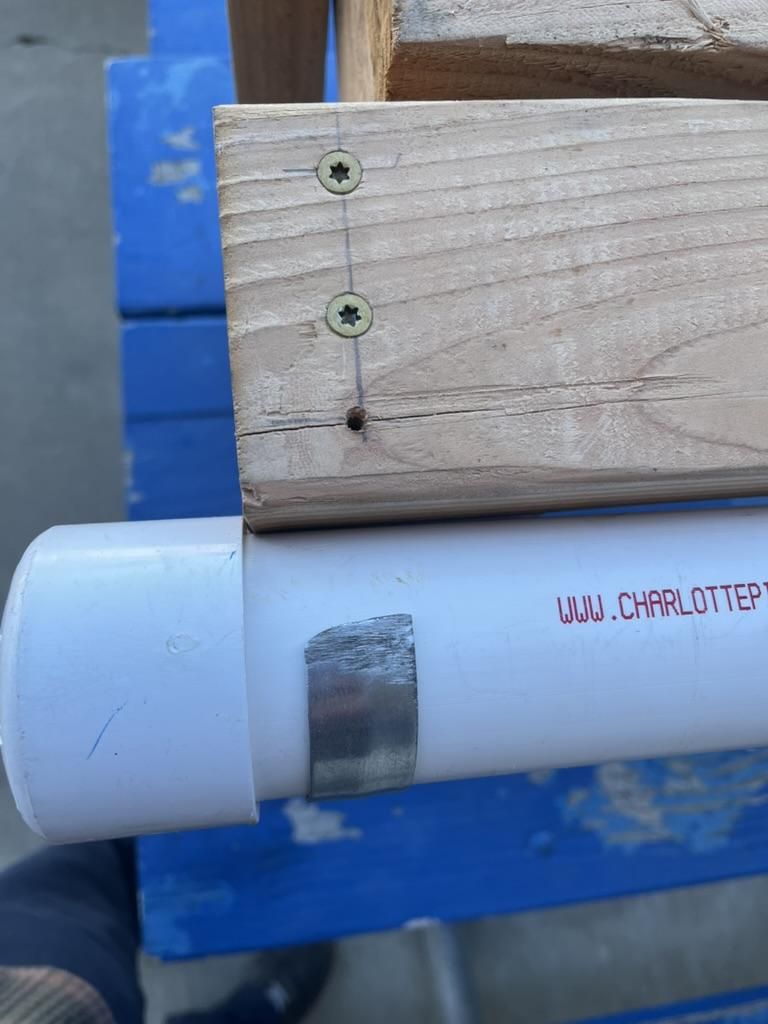
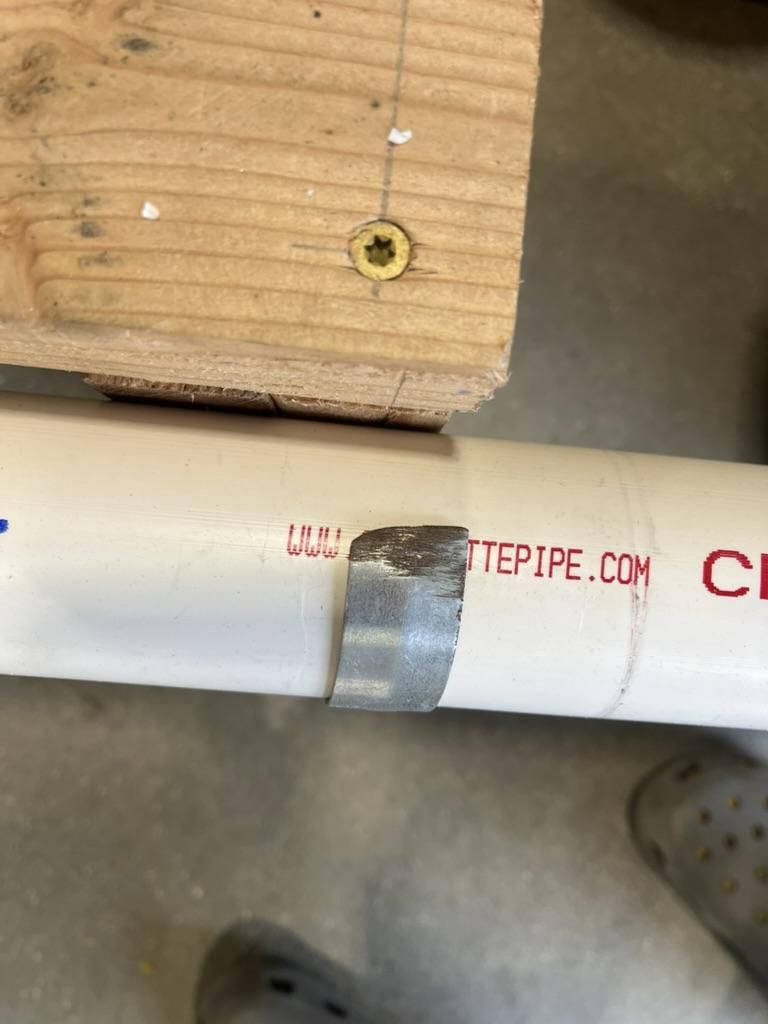
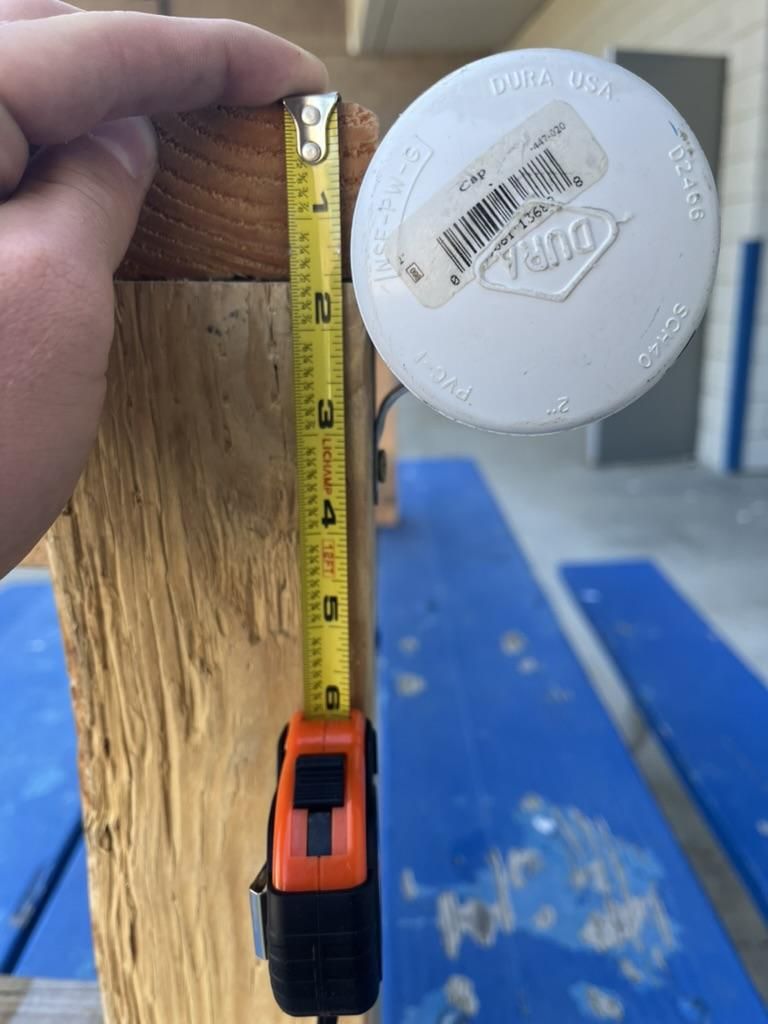

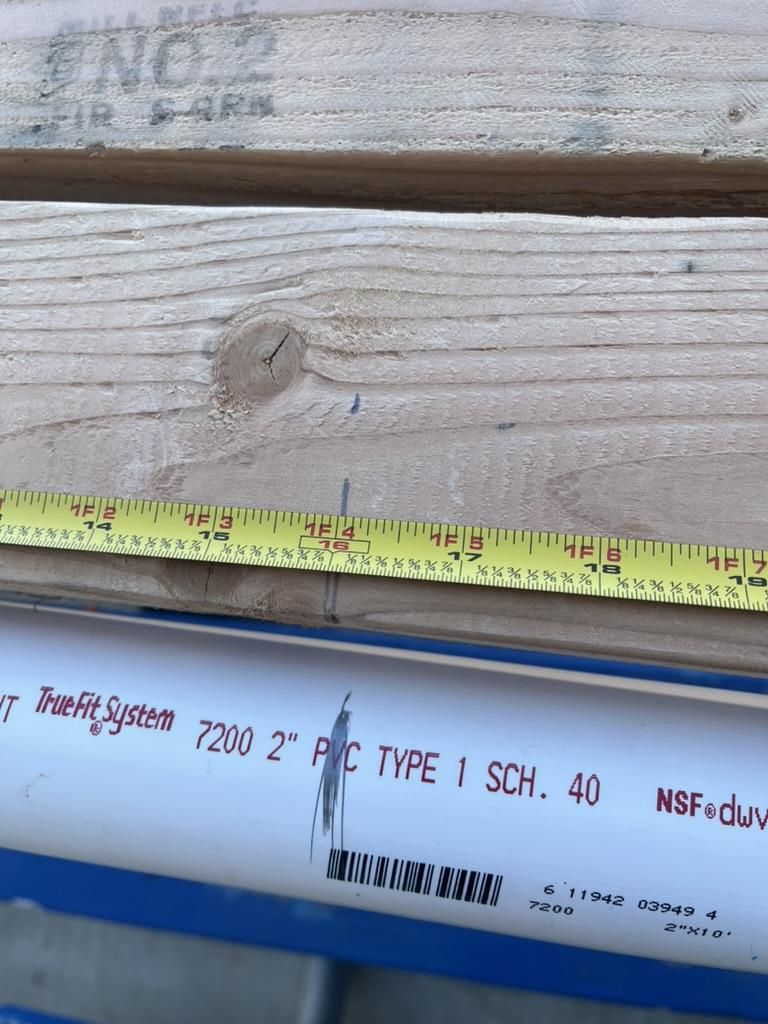
- If you are using a two-hole conduit strap, cut off one of the holes using an angle grinder. This makes installation easier since you only need one screw per strap. After cutting, smooth the edge so it isn’t sharp. Do not use EMT straps because they will not fit rigid PVC properly.
- Place the strap where you want it on the stand and mark the screw hole location.
- Pre-drill the hole where you made your mark.
- Install the left strap first, but only tighten it partway.
- Slide the PVC pipe into the strap, then finish tightening it once it is lined up correctly.
- On the right side, mount the strap about half an inch lower than the left side. This creates a slight slope so water flows toward the reservoir.
- Mark the centerlines where the buckets will line up with the drain pipe outlets. Start by marking the wood beam closest to the pipe, then transfer those marks onto the pipe.
- To make an accurate centerline, remove the pipe and draw a straight perpendicular line across all the marks. Using painter’s tape with a marker can help keep the height consistent.
- Use a 3/4" hole saw to drill the outlet holes in the pipe.
- After drilling, use a deburring tool to smooth out all the edges.
- Test fit a 3/4" pipe into the holes to make sure everything lines up correctly.
- Reinstall the drain pipe, cap the left end, and attach an elbow fitting to the right side.
- Double-check that everything is centered and aligned properly with the stand before fully tightening everything down.
While attaching the drain pipe I had to re measure the holes. Since I did this the screw holes got pretty loose so make sure to take that into consideration. I had to use zip ties to hold up the pipe which doesn't look professional and will have to be replaced or reinstalled anytime I want to take out the pipe in order to give it a deep clean.
Install Feed Line
- To the other side of the stand install the feed line with the 2 EMT straps and irrigation end cap
- The EMT straps should be positioned at least an inch away from the screws at each end.
- Leave a little extra tubing at the end to adjust if needed.
Make Buckets

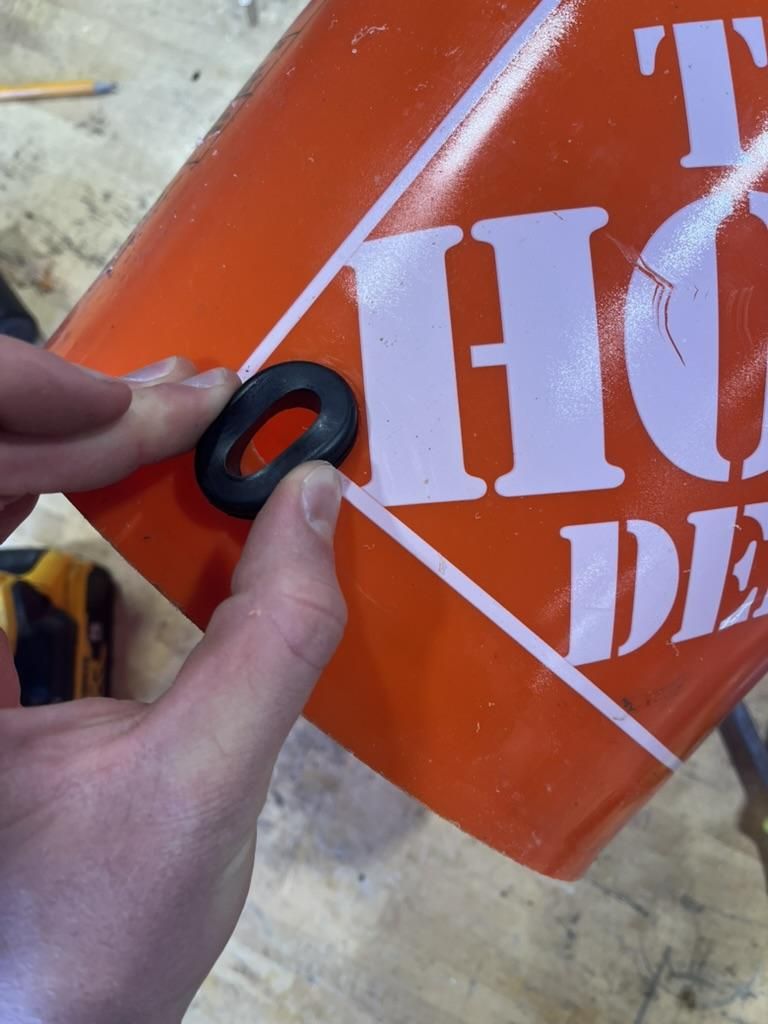
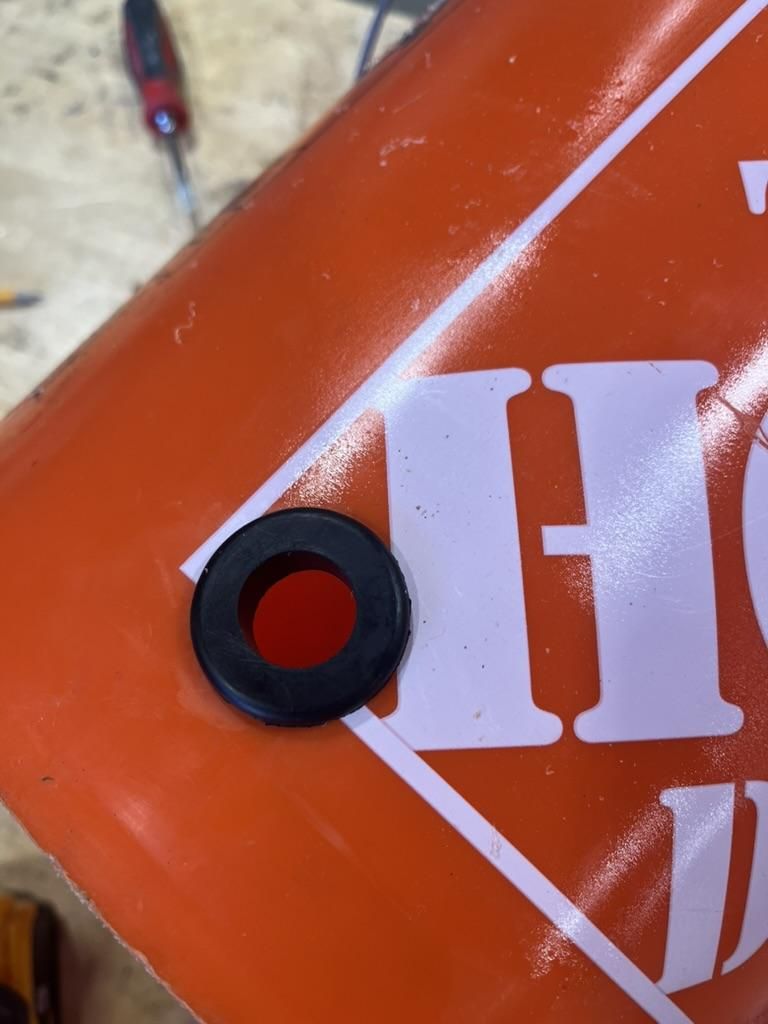
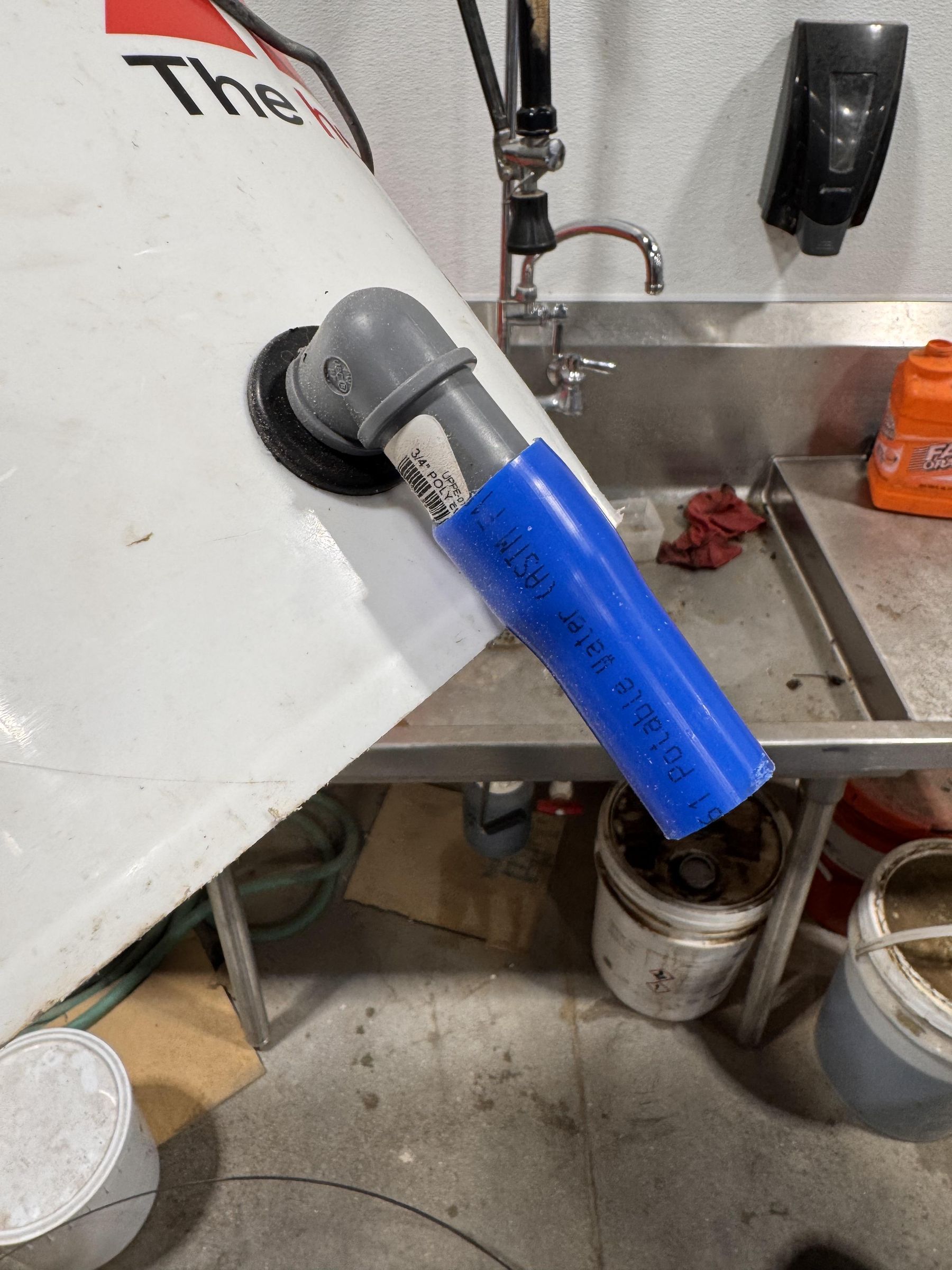

- Gather your materials:
- 3/4" ID rubber grommet
- 3/4" barbed elbow
- 3/4" PEX tubing
- 1" hole saw
- If needed, heat up the PEX tubing slightly so it becomes easier to work with.
- Push the PEX tubing onto the barbed elbow. Leave the tubing a little longer than you think you need so you can adjust it later after everything is fitted.
- Measure 2" up from the base of the bucket and mark the center point where the hole will go.
- Use a 1" hole saw to drill the hole in the bucket at your mark.
- Clean up the hole using a deburring tool so the edges are smooth.
- Install the rubber grommet into the hole, then insert the elbow through it. It should be a tight fit.
- Hold the backside of the grommet with your free hand while pushing the elbow through so it doesn’t pop out or shift.
- Place the buckets on the stand and line them up with the center marks so they match the holes in the drain pipe.
- Mark where the PEX tubing needs to be cut. Make sure it is long enough to reach into the drain pipe, but not so long that it sticks too far in and could block or clog the pipe.
Cut Holes in Reservoir


BEFORE YOU CUT HOLES IN RESERVOIR, DEPENDING ON WHAT TYPE OF TOTE YOU HAVE YOU MAY NEED TO PAINT IT. THIS IS TOTALLY OPTIONAL BUT HIGHLY RECOMMENDED TO KEEP SUNLIGHT OUT SINCE THE LIGHT COLORED LIDS ALLOW LIGHT TO SEEP THROUGH.
- Cut drain pipe to size and mark holes for the drain and feed lines
- Use an oversized hole saw so that the elbow is easily removable for the drain pipe and so that other irrigation tubing is able to be adjusted.
Pump


- Install a half inch barb tubing connector to the pump
- Use a hole saw that is a little larger than the plug itself to drill a hole in the top side of the tote for the power cord.
Any pump that does more than or equal to 160 gallons per hour will definetly work, the pump in the supplies list is just a recommendation.
Add Drip Lines

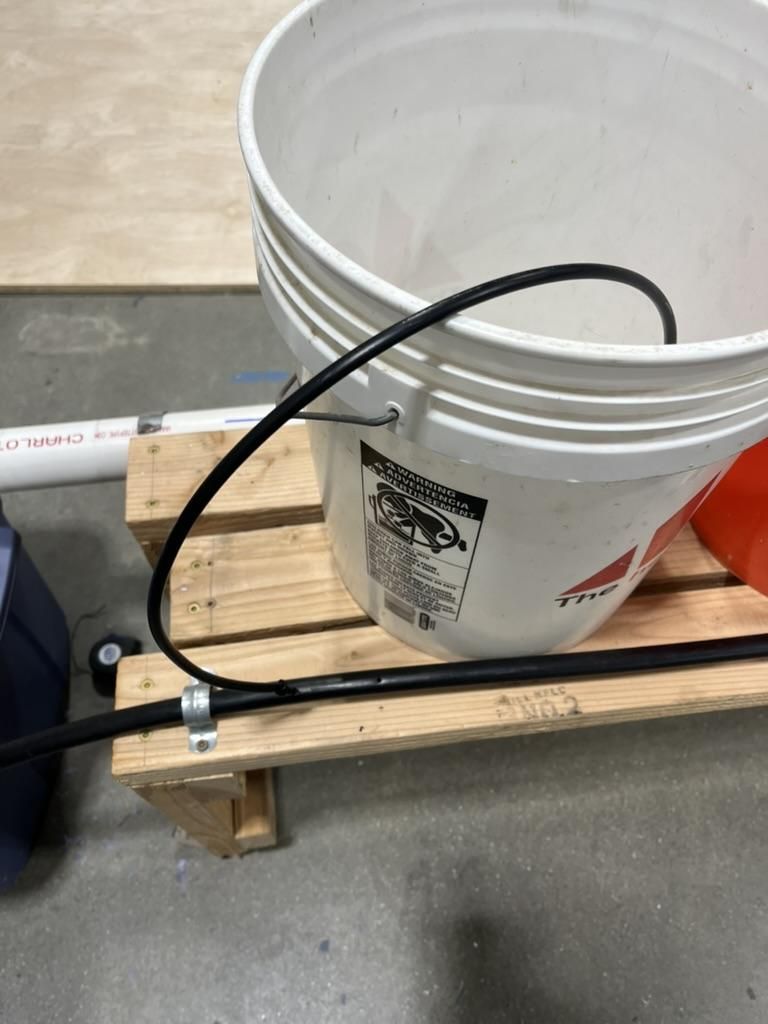

- Drill holes in the feed line with a drill that is slightly smaller in diameter than the irrigation line you will be using. Drill one or two per bucket depending on how much customization needed for whatever plants that will be grown.
- Cut 1/4" tubing to length and and attach to barbed irrigation connectors
- Connect these to the feed line and allow them to lay into the bucket at desirable length
Add Strainer

If worried about clogs within the bucket then it would be good to use a piece of cut up paint strainer and attach it to the outlet from inside the bucket with zip ties.
Add Perlite

Purpose: It acts as a soilless medium that supports roots while allowing nutrient solutions to flow, preventing compaction and ensuring oxygen reach.
Grades: Coarse or extra-coarse are preferred to ensure it doesn't plug drainage holes.
- Fill the buckets with perlite to within 2 inches from the top.
- Optional: Add a bit of expanded clay to the top to resist algae growth.
When pouring perlite make sure to not breath in the dust as it is not good to breath in.