Electric Drift Go Kart DIY
by Henry Schalwitz in Workshop > Metalworking
7589 Views, 58 Favorites, 0 Comments
Electric Drift Go Kart DIY
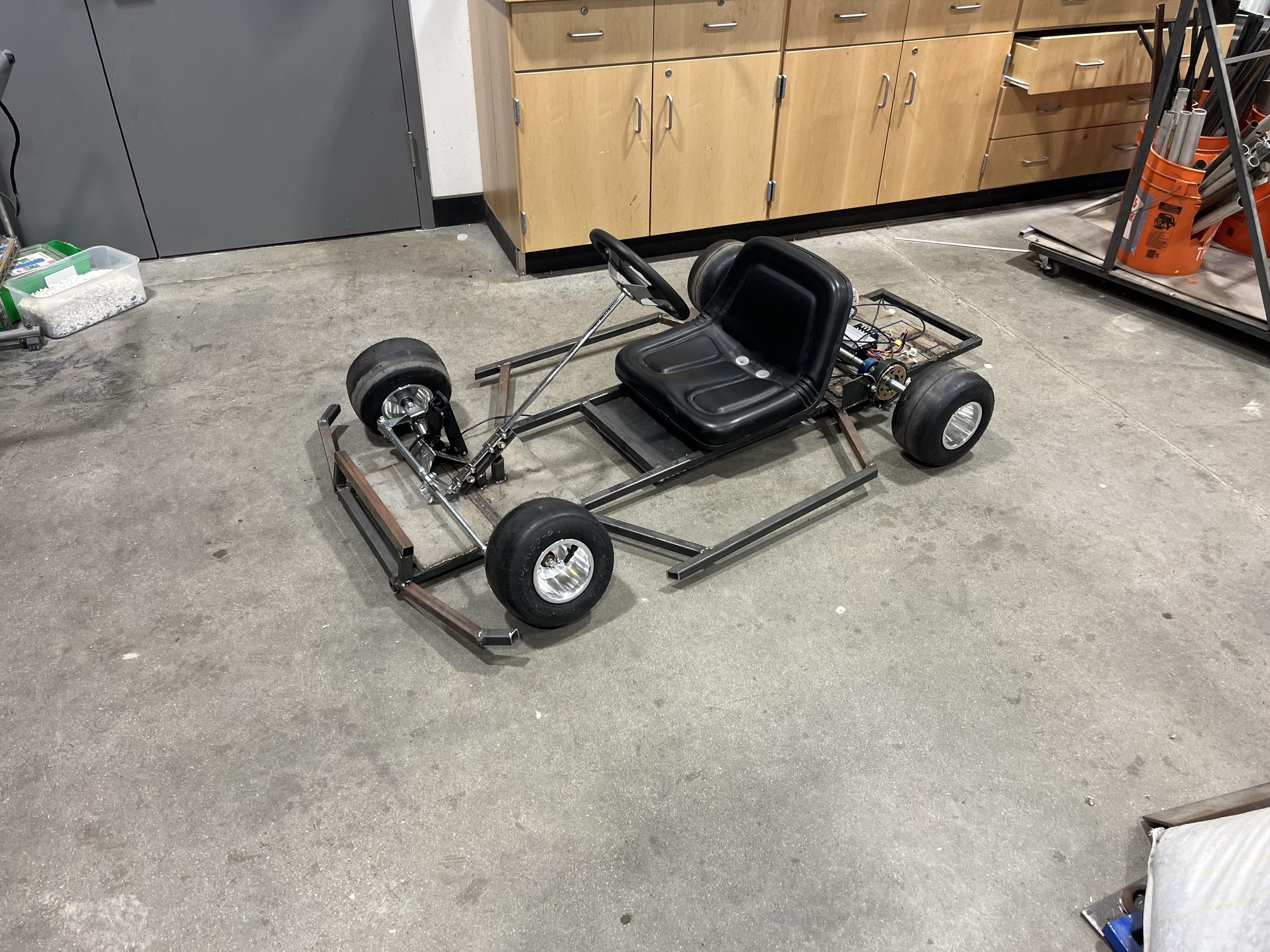
This is a step by step on how to weld and put together your own go kart frame that you can use for driftin gor whatever you want to use it for. It is a long process but in the end you get an amazing product that is very fun for any age. The frame you are making is based off of the Battle Aero Drift Kart Design.
Supplies
Hardware needs
160 ft of 1 in piping or rectangular pipe
20 sqft 1/8th in sheetmetal
Electric accessories and functionality needs
Go kart steering
36-60v electric motor-manufacturer i used(Kunray)
Speed and power controller to match the motor
Battery, output voltage HAS to be the same or a little less than the motors recommended, if over, will fry motor
36 in long 1in diameter axle
2-1 in diameter bearing
4 wheels-5x4.5 in diameter(You can get 2 wider wheels for back if you want it track oriented, its personal preference)
4 slick tires-5x10x4.5(if back two wheels dif size, make sure to buy correct size)
Tools Needed
Welding station
Angle grinder
Horizontal bandsaw
Tape measure
Create a Concept Sketch
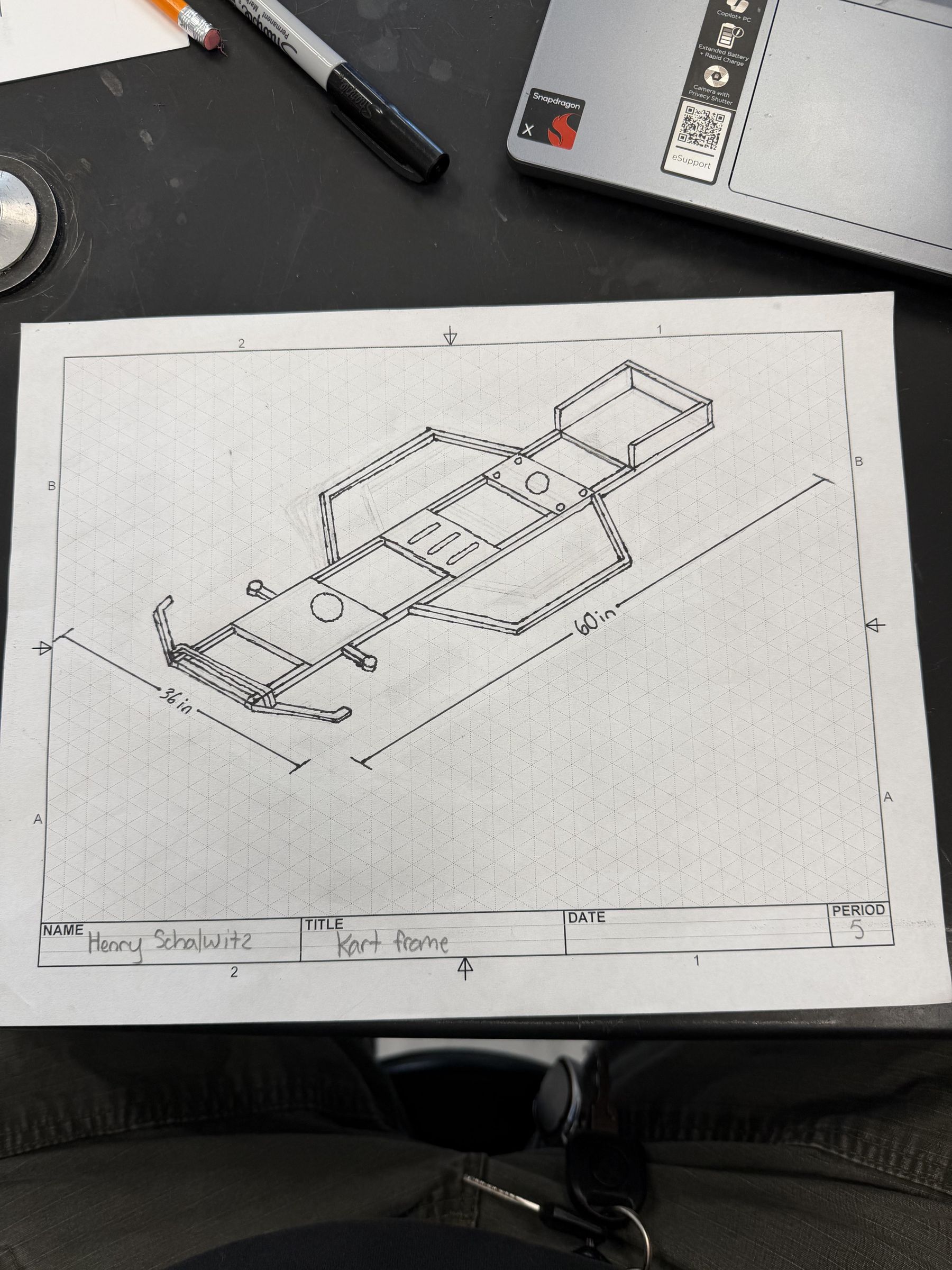
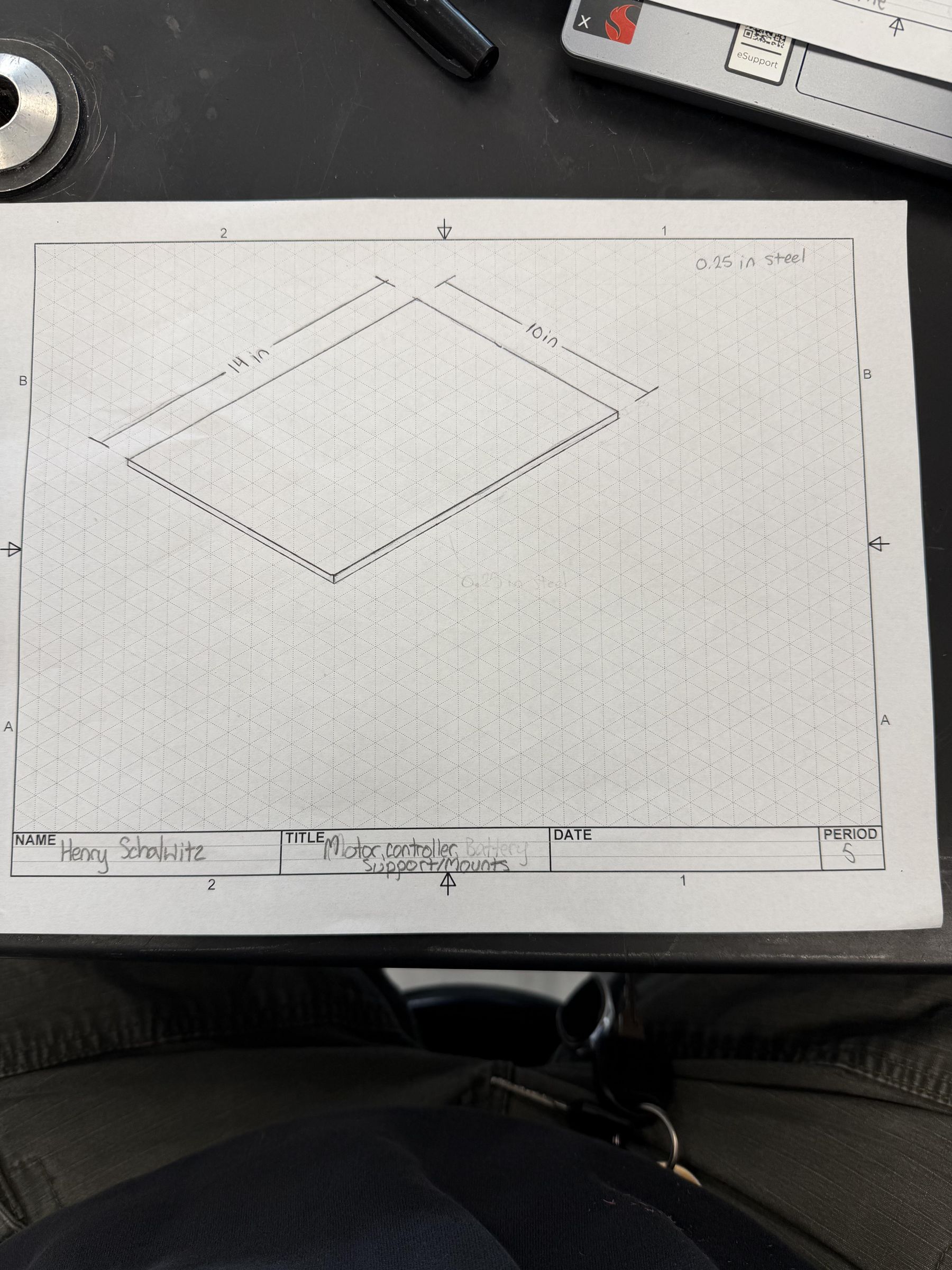
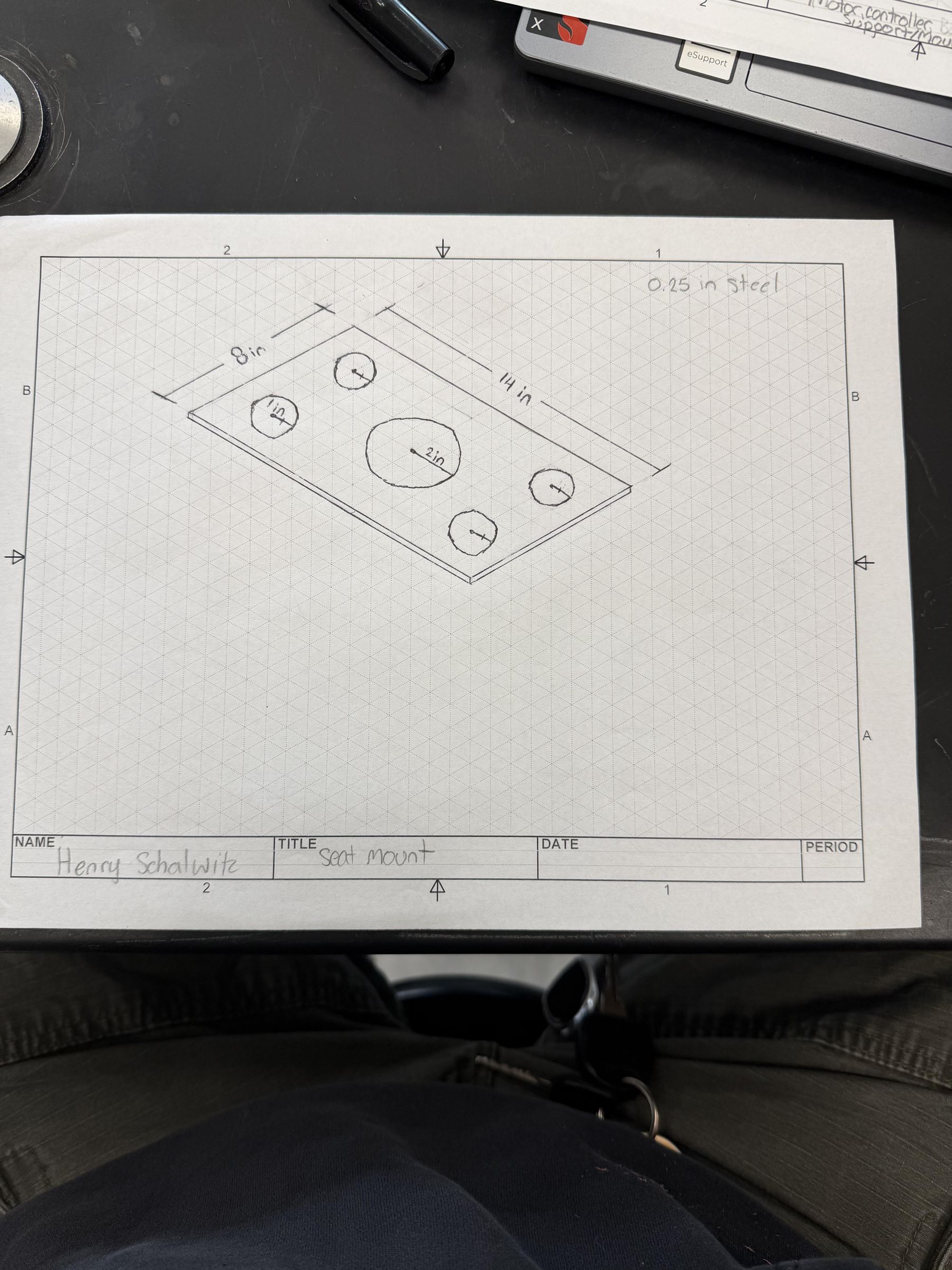
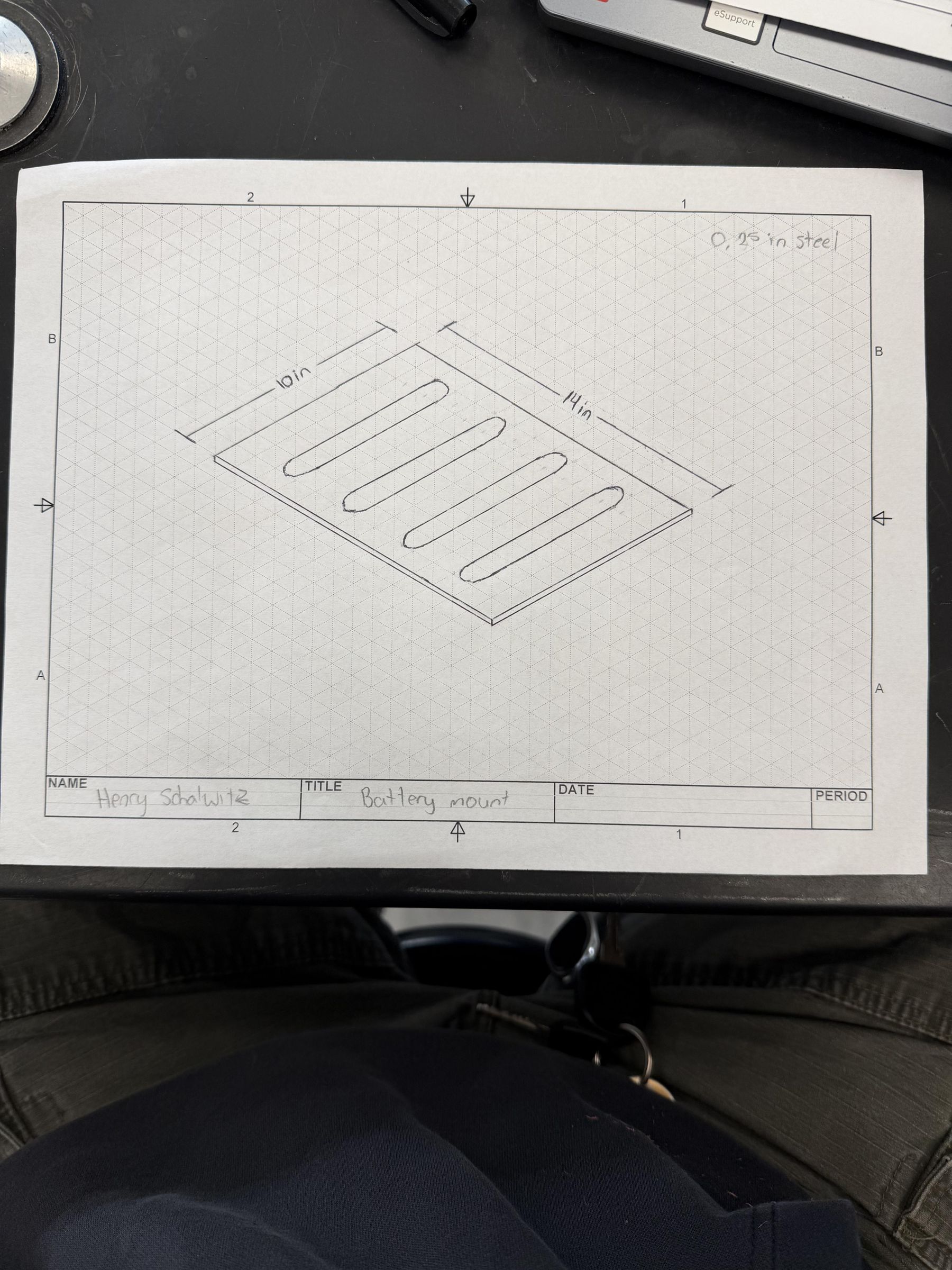
1.Create your first concept sketch of a design you are interested in.
2.Once you have created your first sketch, split it into multiple sketches of each component to reduce the risk of wasting matering.
3.Check measurements to make sure all componants fit then finalize and use the drawings for the next step.
Create a Prototype
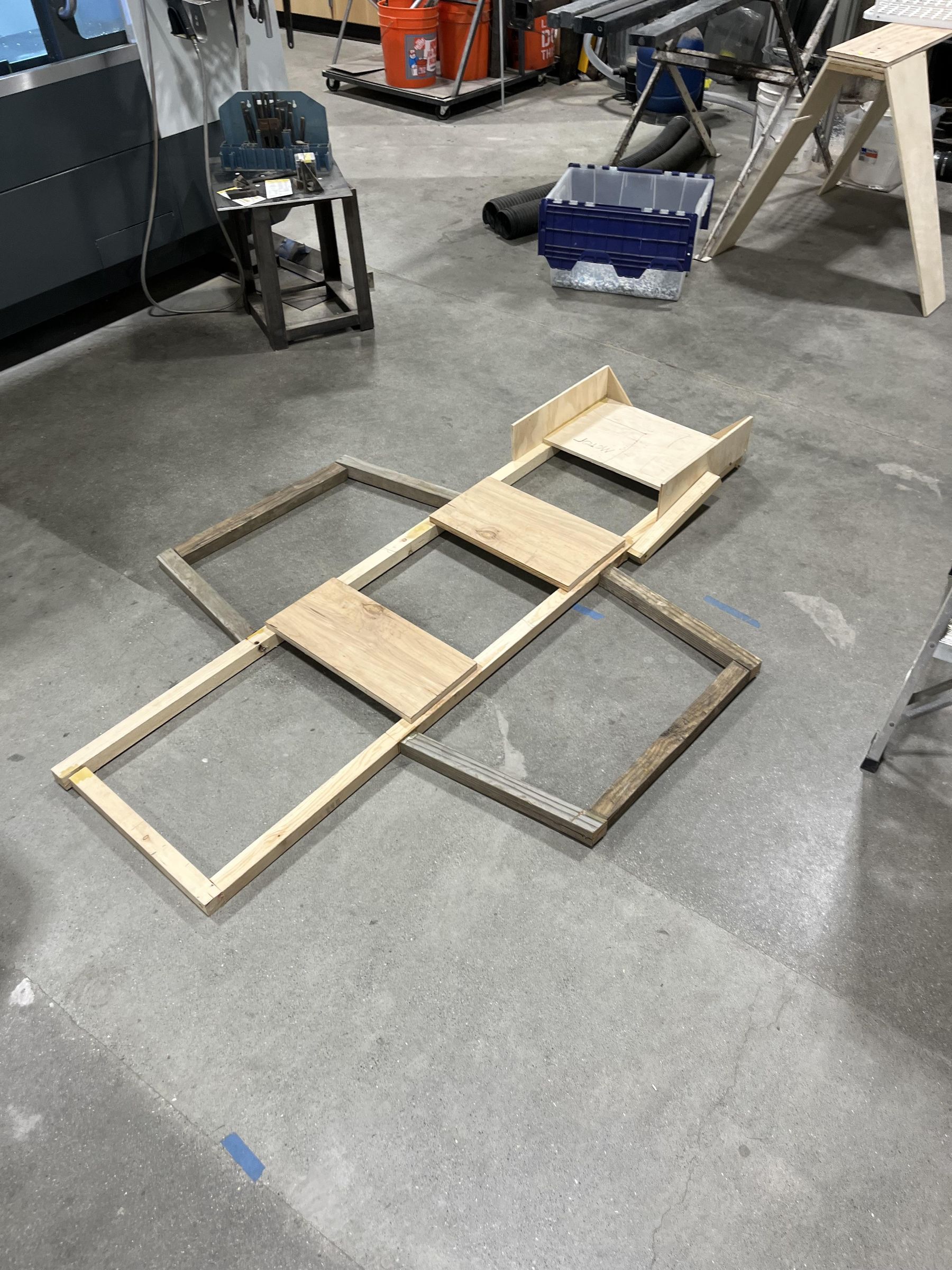
To ensure your final product is successful, create a prototype, you can create a small scale 3D printed model, or do what I did, and create a 1:1 scale prototype out of wood. Once you have created a rough prototype, fix anything that does not fit with what you desire or whatever is not fitting correctly.
In my first design, I made the prototype of the frame a lot bigger then what I wanted. Luckily I checked all the measurements and realised it was too large so I made it smaller and into the sizing I intended. Make sure you Check your measurements before the next step because it will mess up the final product in the end.
Create a CAD Model
Using your finalized prototype, take all your final measurements and create a CAD model in fusion 360. Fusion 360 is a proffesional and easy to use CAD software and it made the process a lot smoother and easier for me.
Linked below is the link to my CAD model which you are I am happy to offer for reference.
Along with your CAD, create a Technical drawing through the software that includes every measurement or information you feel is important to include. I will also have my Technical Drawing listed below as reference on what it could look like.
Cut Out Your Materials
Once you have finalized your CAD, use that model for the measurements and angle of the cuts you need to complete. Before you start to weld it, lay it out of the floor to make sure all your supports and mounts fit correctly before moving on to the next step.
CHECK MORE THAN ONCE BEFORE NEXT STEP!!!!!! I was not careful and when completing the next step I recognized a wrong measurement and had to break the welds. You will regret not checking the cuts multiple times if you mess up because believe me, it is not easy breaking welds.
Weld Your Pieces Together
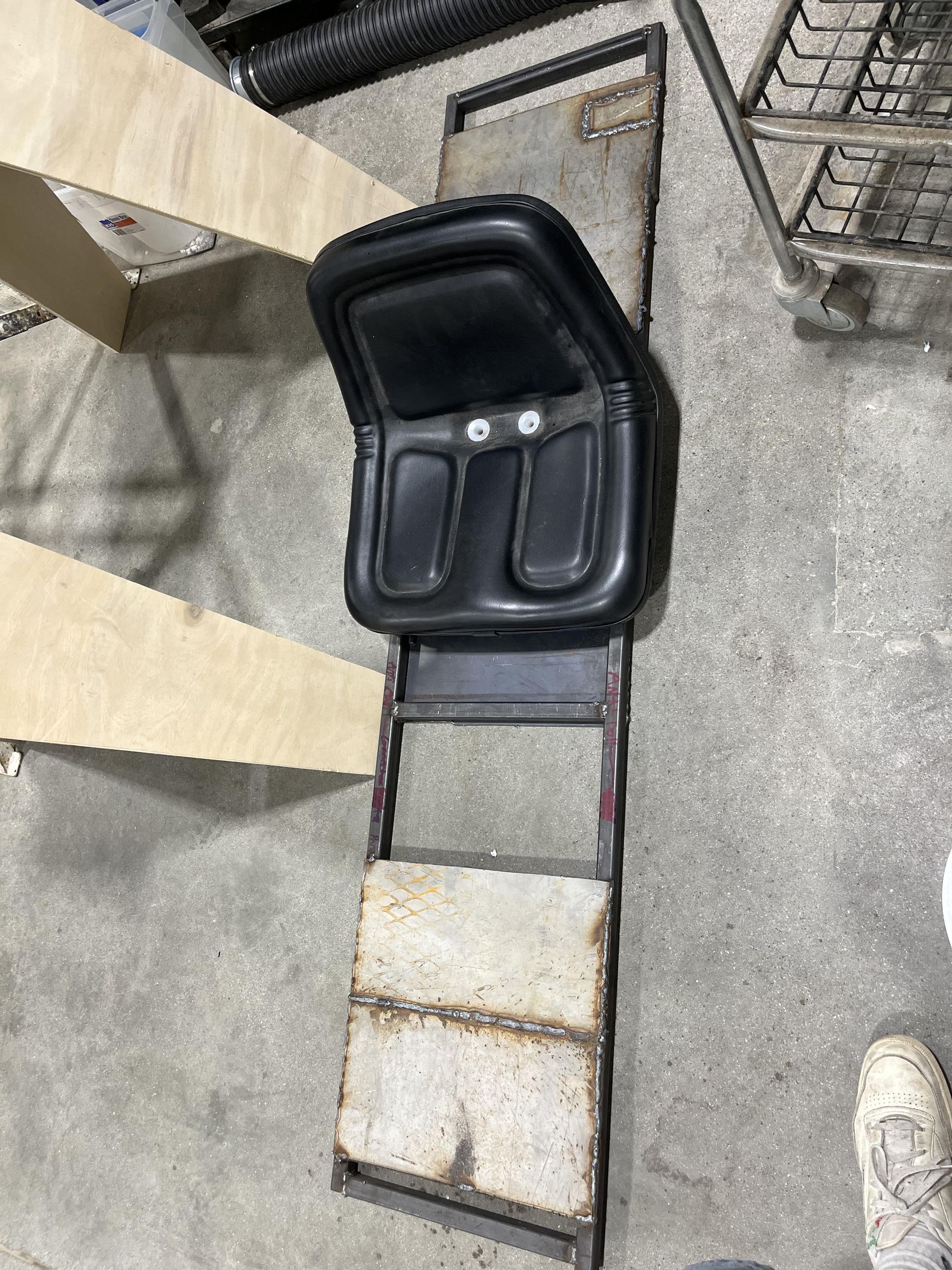
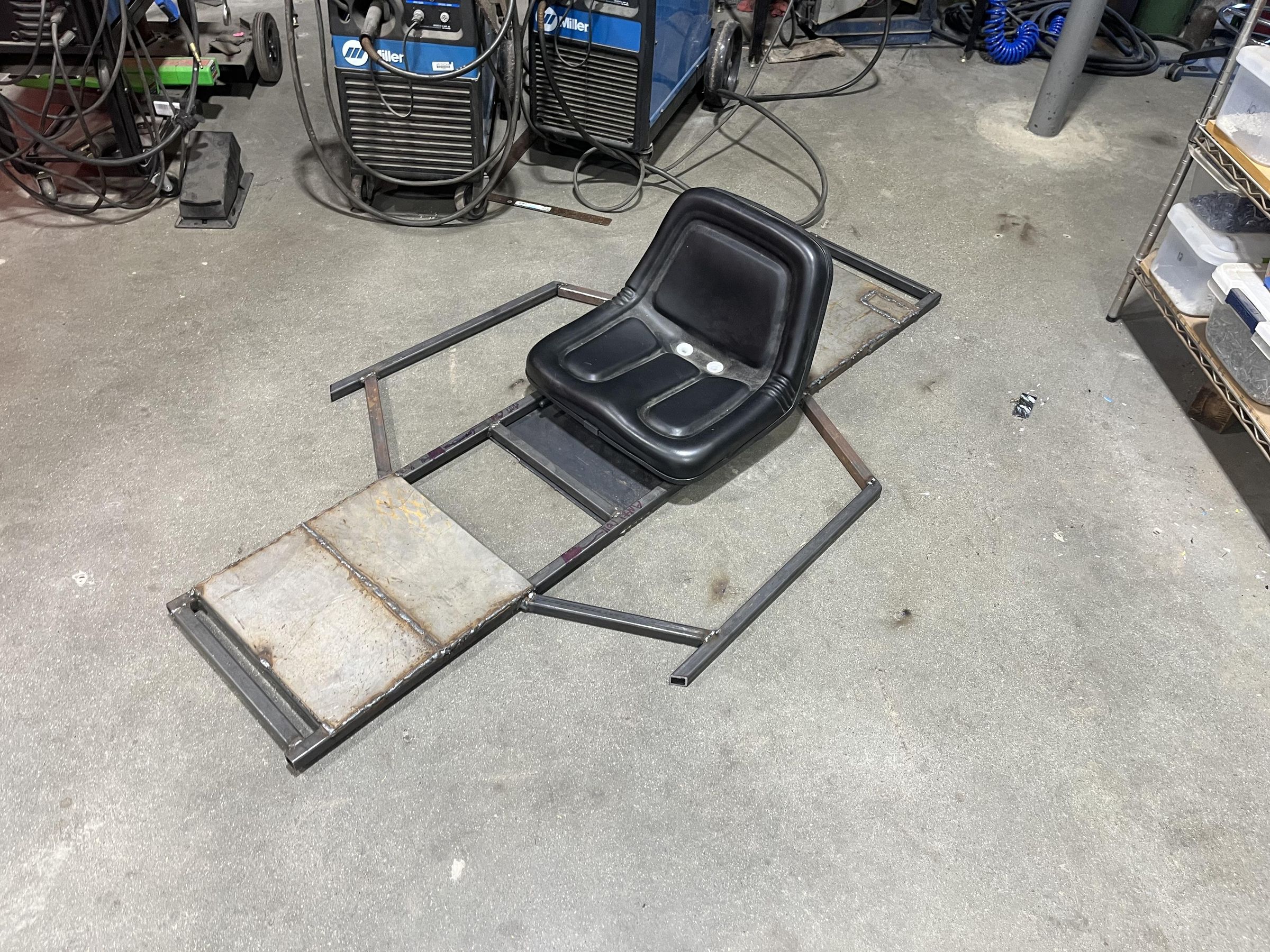
After you have the pieces layed out, you can start welding your pieces together. The settings I used for 1 inch steel square piping was a voltage of 30 and a wire speed of 20-30, 20-25 takes longer but is more accurate and decreases possible mistakes so I would recomend to newer welders. If you are more experienced in welding, 30 wire speed is definetly the way to go.
I would recomend splitting the frame into parts to weld first. For example completing the central part of the frame as seen in the first image. This is so you can adjust your wire speed and voltage as you go to find the right settings for you as well as the material based of thickness. It is also more acurate because you can focus on one part at a time rather than the entire thing at once.
Drilling and Electrical
.jpeg)
After the frame is welded together, you can start to lay out all of your electrical componants and mark with a sharpie or any marker you have for the drill spots of the holes. Check the sharpie marks multiple times before you drill becasue once you drill the holes they are there forever, there is not turning back.
Depending on your mounts the drill size and hardware size is custom to what you get so make sure you have enough hardware to mount everything after drilling.
Before drilling the following before, LAY OUT ALL COMPONANTS TO MAKE SURE THEY ARE IN THE RIGHT POSITION TO FIT AND WORK!!!!!!
Drill holes for:
- Power controller mount
- Motor Mount
- connection port
- Axle bearings
Axle and Sprocket
Once the holes for the axle bearing mounts are done, mount the bearing and adjust the axles position in the mounts so it is centered. After you have done that you can mount the sprocket to the axle. I was able to welding my sprocket onto the axle but the only reason why I had to do that was because the sprockets inner bore was to large and I couldnt mount it correctly. make sure the sprocket inner bore fits on the axle and if not the right size, get a sprocket mount that fits the axle that is locked in place by set screws.
Steering and Stance

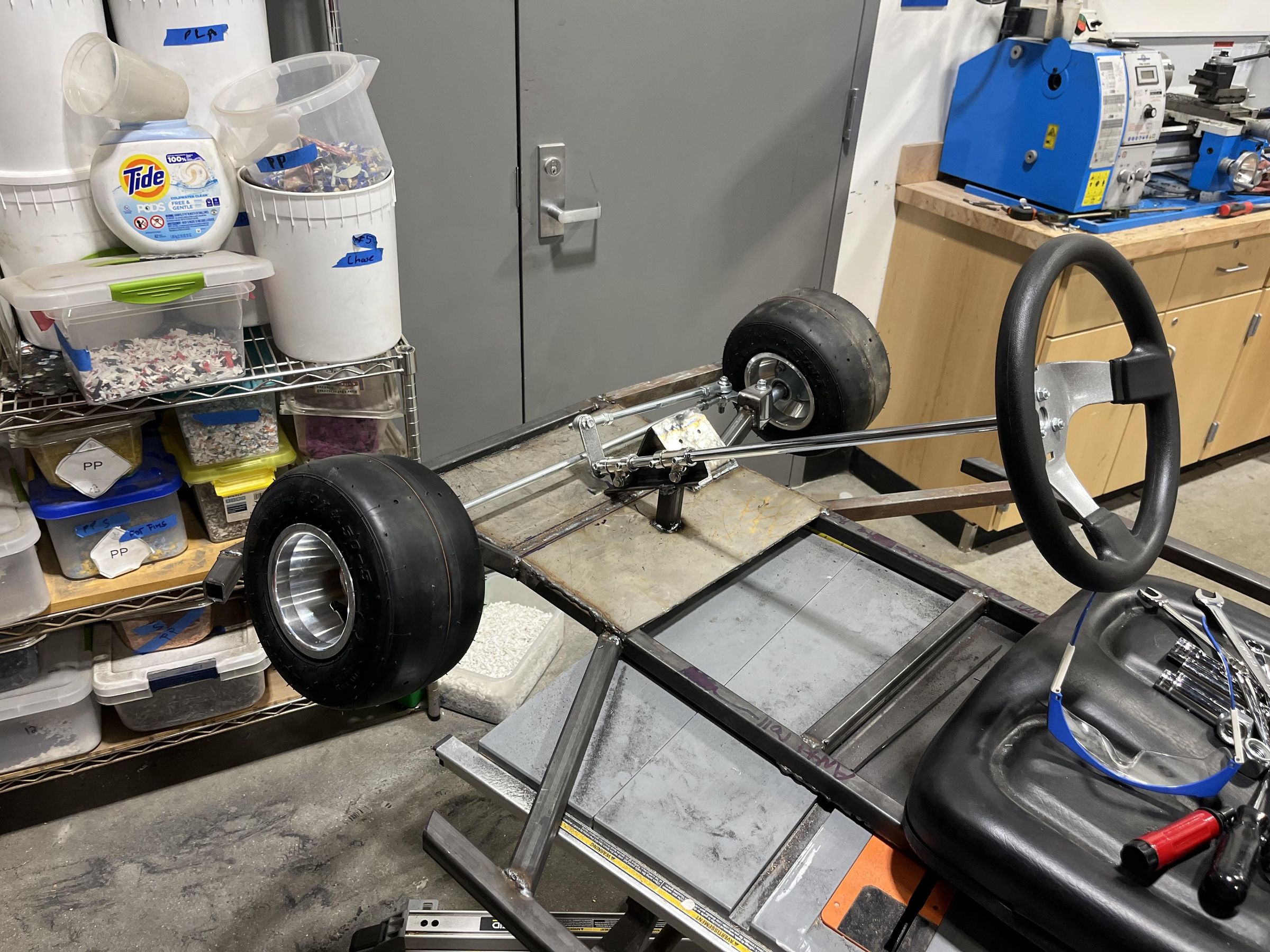
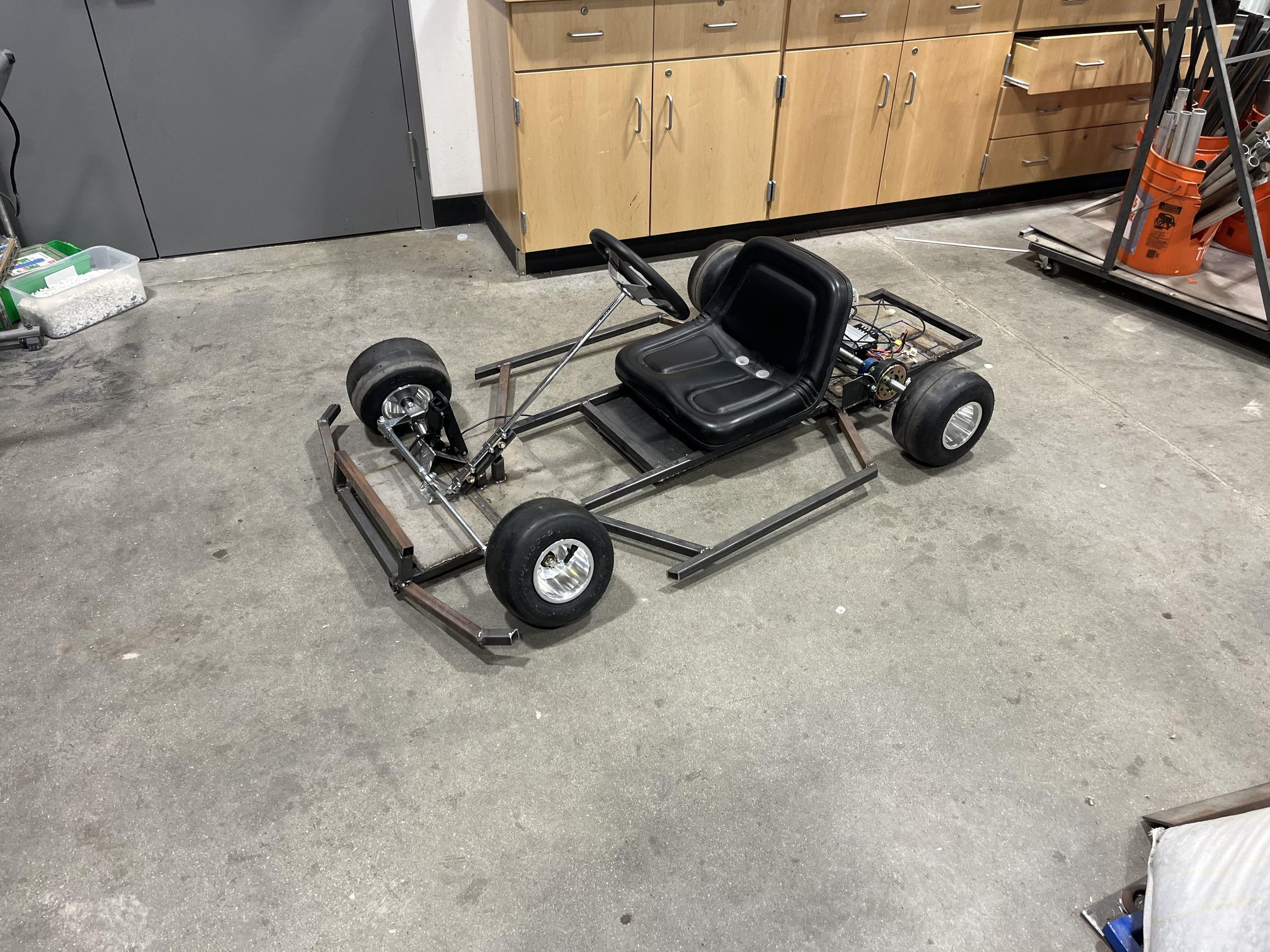
Once everything is mounted in the back, you can move onto the steering mounts. Make sure the steering is level as well as making sure that both wheels are at the same height. If they are not the same height, one side will not be touching the ground enough and wont get enough traction making the steering a lot more unrelieble.
After you have completed the steering mount, you can install your wheels check the ride height, if its level, and if everything functions correctly.
Congratulations!!!
You have now completed and created you own drift/track kart. You can now connect all your electrical componants and start ripping through the neighborn hood on your custom drift kart.