HOPE HEAL RECOVER



"When disaster hits, such as wildfires, floods, storms, or other crises, rebuilding must go beyond replacing what was lost. Communities need spaces that help people feel safe again, bring neighbors back together, and restore a sense of home."
When I started this competition I thought this challenge would be simple enough, create something that must rebuild the community. To begin, I started with what part of healing I would want to deal with. I decided to focus on a few of the disasters that I believe impact the community the most - Floods, Fires, Hurricanes, Tornados, and Earthquakes. All of these have one fatal consequence, the destruction of many people's homes and possessions. Although I do not have the skills to heal the community , I can re-imagine what we can do for the future to help heal the community. "What if the built environment could be part of the healing?"
My goal was to design something:
- That could potentially be used to heal the next disasters
- Practical yet visually pleasing
- That did not reinvent the wheel but improved upon it.
- That meets the needs of the community
- That could be repeatable in many locations and it not cost more than it needs to be
Then with these goals in mind I did some research and some thinking. I wanted something to be "repeatable in many locations and it not cost more than it needs to be" yet also "Practical yet visually pleasing". I decided that I wanted to design something small enough that could be transported on the road to the disaster location and serve as a temporary home to those in need. An issue with a huge permanent building for a healing center is that it could not "be repeatable in many locations and it not cost more than it needs to be" which was the goal I wanted to achieve. Additionally, permanent buildings can only be useful up to a certain point and disasters can affect these buildings as well. Therefore I wanted to design a building which could be transported to the hurt community to help relieve the pain and give a sense of security that amidst destruction, help came and the community can heal from there.
In this Instructable I will go through the research and the planning and the revisions which I took to accomplish the task of creating source of healing and also it meeting my goals for this project. In addition I have the 3d model included so that you may view the things which I don't explain in detail. Last note, all the 3d designs were made painstakingly by me except for the shipping container which I then modified.
Supplies
I used Fusion 360 to design for this contest and I really wanted to learn to use Revit however I do not have a Windows computer so am I stuck with Fusion 360. I would like to mention to those new to Fusion 360 to take advantage of the AI Autodesk assistant to help you because although I have been using Fusion 360 for a while, Autodesk assistant helped me a lot.
Research
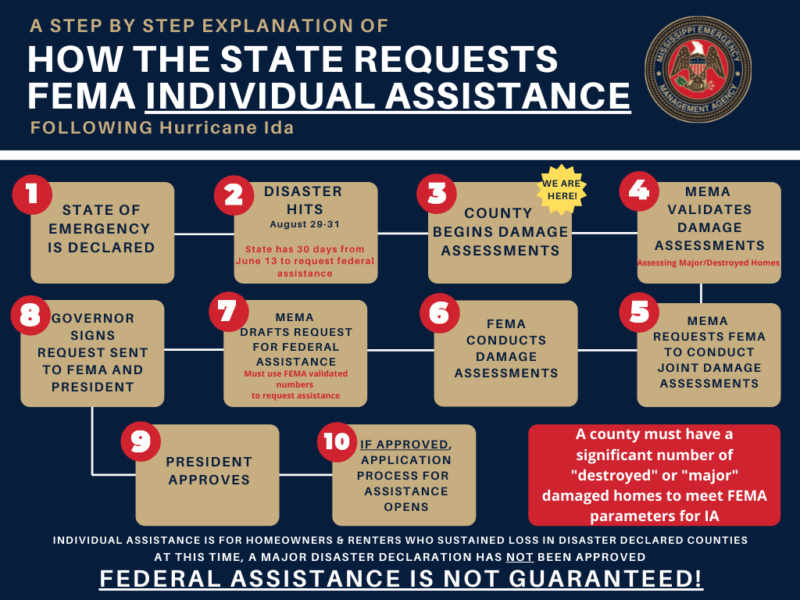
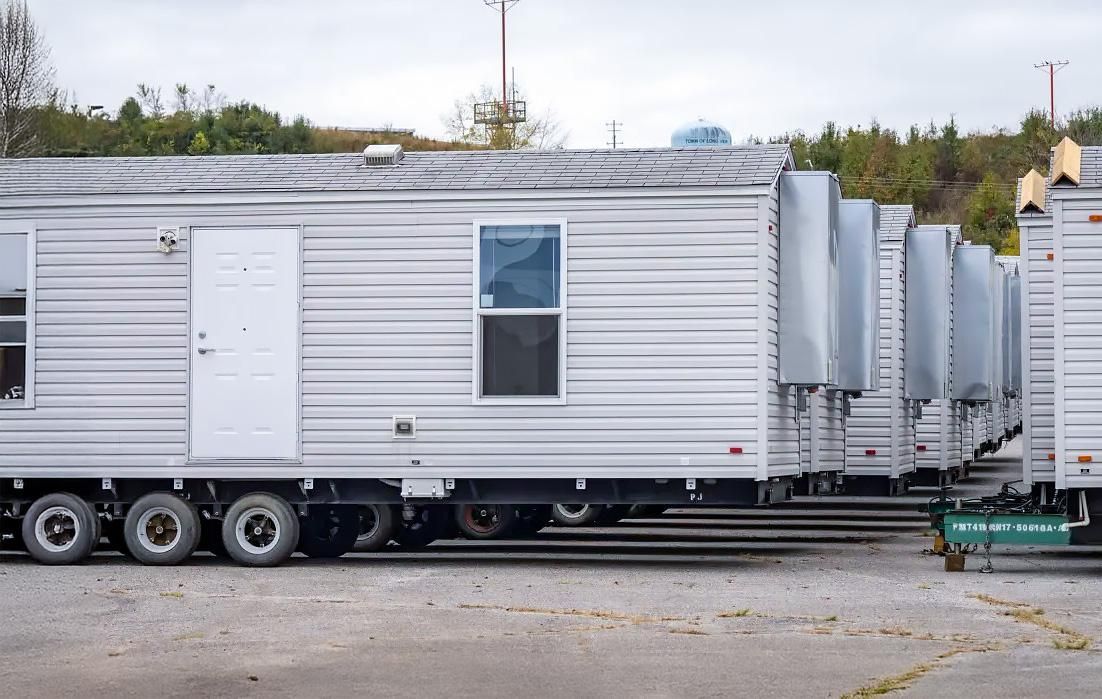

The following research was done with the help of AI
When a disaster hits, the way people get housed usually happens in stages, and each stage has its own strengths and problems. It all starts with the big emergency shelters — places like school gyms, stadiums, or community centers. These are the first places people go because they can hold a lot of people quickly. But they’re not comfortable. There’s no privacy, they’re loud, and some people can’t stay there at all, like people with pets or people who don’t feel safe in a big open room.
After that, there’s supposed to be a middle step called “interim sheltering.” These are small, individual units — little cabins or panel‑built rooms — that can be set up fast and give people a private space for a few weeks or months. They’re actually one of the most helpful stages, but a lot of communities skip them. When that happens, people end up stuck in those big gym‑style shelters longer than they should be.
Then you get into what’s called temporary housing, which is where FEMA usually steps in. FEMA provides different kinds of temporary homes — things like small manufactured houses, RV‑style units, or trailers designed for short‑term living. Sometimes people are placed in hotels or given help paying for an apartment. These are meant to last months or even years while permanent homes are rebuilt. But they come with issues too: some older units have had safety concerns, the process of getting one can be slow and tied up in paperwork, and living in a small temporary unit for a long time can be really hard on families.
There’s also a type of temporary housing that gets placed directly on someone’s property so they can stay close to their neighborhood while rebuilding. It sounds ideal, but it only works if you actually own property. Renters don’t have that option, and even homeowners can run into zoning rules or permit delays that make it hard to place a temporary unit on their land.
Finally, there’s permanent housing — rebuilding or replacing the home that was lost. This is the end goal, but it’s slow, and it’s not equal. People with more money or better insurance tend to rebuild faster. Renters often have the hardest time and may be displaced the longest.
So when you look at the whole system, it moves from big public shelters to small cabins to temporary homes to rebuilt houses. But every step has gaps — some are too slow, some are too expensive, some don’t offer enough dignity or safety, and some simply don’t work for everyone. That’s why disaster housing is such a complicated challenge: the system exists, but it doesn’t always meet people’s needs in a fair or timely way.
What does work, though, is that people have been learning from these problems, and some parts of the system are getting better. One of the biggest improvements is that emergency shelters aren’t all just giant open gyms anymore. Many places are starting to design shelters with smaller sections, quieter areas, and better support for different needs — like spaces for families, accommodations for people with disabilities, and options that allow pets. It’s still not perfect, but it’s moving toward something that feels a little more humane instead of just functional.
There’s also been more focus on that middle step — interim sheltering — because people are starting to realize how important it is. Instead of skipping straight from a crowded shelter to long-term housing, some communities are investing in small, quick-build units like modular cabins or panel homes. These can be set up faster than traditional housing and give people privacy and stability much sooner. When they’re used well, they take pressure off emergency shelters and help people recover faster.
Temporary housing is improving too, even if it still has issues. FEMA has been working on newer models of manufactured housing that are safer and better designed than older trailers, and there’s been a bigger push to use existing housing — like hotels or rental assistance — instead of relying only on large trailer sites. That can help people stay closer to normal life, like keeping kids in the same schools or staying near their jobs, which makes a big difference over time.
Another thing that’s starting to change is how communities plan ahead. Instead of figuring everything out after a disaster hits, more local governments are creating housing plans in advance. That includes identifying where temporary units could go, how permits can be sped up, and how to coordinate with organizations that build or provide housing. It doesn’t remove all the delays, but it can make the response a lot smoother.
There’s also more attention on fairness than there used to be. Programs are slowly expanding to better include renters, not just homeowners, and there’s more awareness that recovery isn’t equal for everyone. Some efforts focus on helping people stay in their communities instead of being pushed out, and on making sure assistance reaches people who might have been overlooked before.
So even though the system still has gaps, it’s not standing still. The idea is shifting from just getting people through a disaster to actually helping them recover in a way that’s stable, safe, and respectful. It’s still complicated, and it doesn’t always work the way it should, but there are real improvements being made — especially when communities take the time to plan, invest in those missing middle steps, and focus on what people actually need to rebuild their lives.
From this research, I sought to design a temporary compartment building that could be sent to the disaster site for shelter. I wanted to make a tiny home with healing in mind. There was a lot to plan.
Sources
www.fema.gov/pdf/emergency/disasterhousing/AnnexesAll.pdf
www.fema.gov/assistance/individual/sheltering-housing-options
www.gao.gov/products/gao-09-796
www.sciencedirect.com/science/article/abs/pii/S0197397513000386
My First Concept Idea

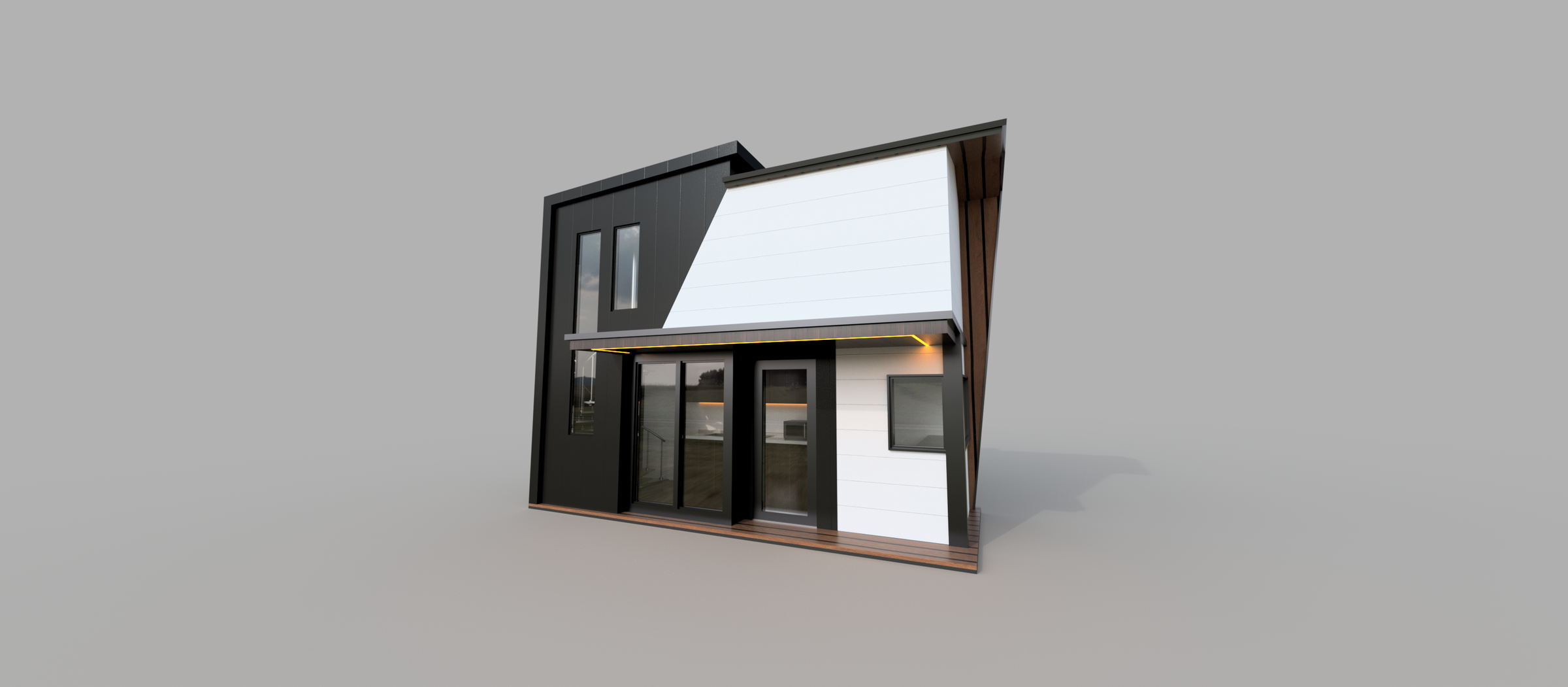

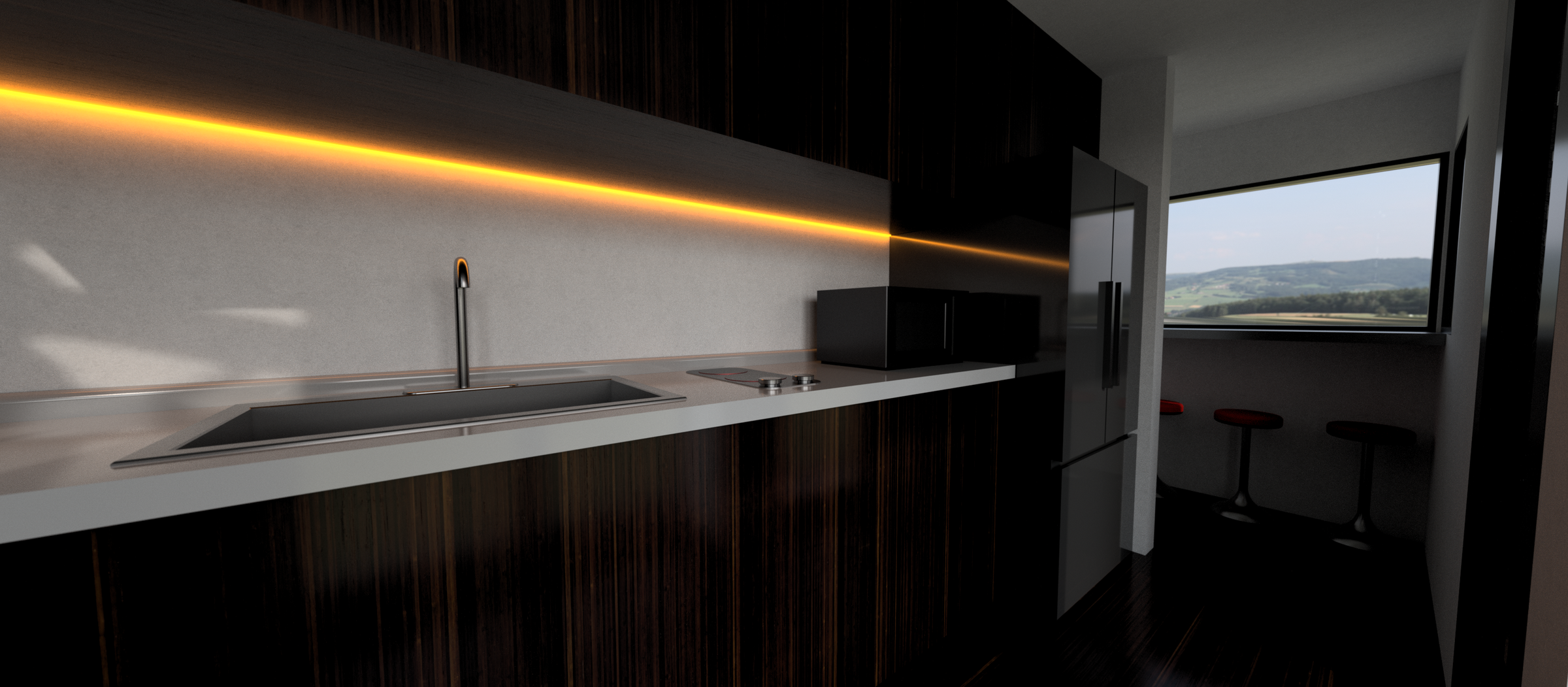

This was my first concept idea yet I stopped because I went back to my original goals for this building and it did not meet it. Although it looked nice it was not "repeatable in many locations and it not cost more than it needs to be". So then I went back to the drawing board, I remembered how I have seen people repurpose shipping containers to create all sorts of buildings so I restarted despite all the work I had previously had done.
I won't put to much time into explaining my first concept since this is not the final concept, I designed this to be able to be transported on the road. Inside there is a bottom floor and a top floor. In front there is a small covered porch. When you step inside, you can see the kitchen in front with a diner style eating area to the right, to the left there is an island but past that is a staircase to the upstairs. On the top floor their is a reading nook which is to add some warmth and coziness to the house and then to the right of that is a washer and dryer and what would be where the bedroom and bathroom would go. I did not finish the top floor because I knew I needed to restart if I want to accomplish my goal and if it were to be made, it would be difficult to be manufacture. However I didn't want all eh time I spent on it to be a lost cause so I am sharing my struggles and my journey for my final concept.
I just want to add that the staircase took me forever to make so if you need a staircase model, I have one.
Final Concept


This was my final concept, and I’ll explain and show you how it works in the next steps. However, let me give you a brief overview. After the initial concept, I realized I needed something that could accommodate more without being excessively expensive. So, I came up with the idea of a modular shipping container housing. Each container would be delivered to the disaster site on a semi-truck and then completed on-site in a matter of days. My goal was to create a space that felt spacious yet still provided all the necessary amenities. My idea consists of two modular buildings that make up the house- Unit A consists of the kitchen, bathroom and entry point, Unit B consists of the living area with one private bedroom and one fold down bed. What makes this system modular is that with a few changes, another Unit B building can be added on and I would suggest that this could house more than families but there can be pods of family and friends because Unit A would be the most expensive and by making it modular, it would make it cheaper to house those in need without hindering the safety, privacy, and healing of those in need.
An issue of what we have today is that, yes we have building like those of FEMA that can house the vulnerable yet it is not cheap along with the other issues that they have. I wanted to use shipping containers for the main structure of both units because shipping containers have stood the test of times for being strong and my design would be able to recycle shipping containers and turn them for healing and recovery.
Downloads
Unit A


In my design, I wanted all the water to be in one unit therefore making it easier to build and set up. Unit A includes a kitchen and a bathroom and a small lounge area. I wanted it to feel like a home and cozy. The kitchen area consists of a fridge and a sink and a stovetop and plenty of storage for food or other items. I included a shoe rack and coat hanger upon entry to the right so that items like shoes or jackets or backpacks can be stored. In the lounge area I designed a bench seat with storage space and I created a coffee table as well which is made special so that small items like paper can be stored under it for easy retrieval. Then in the back of Unit A I have the bathroom with a shower and a sink and a toilet. Then I also have a doorway to Unit B next to the fridge.
If I was to change the building if I had more time, I would have changed the lounge area so that it is easier to eat but I am finishing this project on the day the contest closes so I would but I do not have the time.
Unit B


In Unit B I wanted to focus on using the space for sleeping and a spot for either studying or eating. Upon entering Unit B, to the right I have what I am most proud of in this concept which is a fold down bed but then if it is folded up, there is a bench seat with storage and a desk. As the bed folds down, the desk folds with it and I keeps everything compact. Then finally I have a bedroom with a bed and storage underneath.
Downloads
Renderings


There is only so much I can finish in one day so here are some of the final renderings all together.
Final Thoughts


I have learned a lot from this project and I spent countless of hours to finish it. In my final concept I designed a modular shipping container housing in hopes to suggest a better option for housing for those who had lost their homes to a disaster. There is so much more I would like to share but no time to share it. If I had more time to improve it, I would add a garden to the outside and other types of modular shipping container buildings like a small library and a small craft building and maybe even a mini theater and all these in hopes to give HOPE and HEAL and RECOVER a community that had been effected by a disaster. When I entered this project for the Make It Heal Contest, I originally thought this would be a simple task yet as I started, there was more and more that needed to be done.
If you have gotten to this far in reading my instructable, thank you because this took a lot of time and thinking and effort.