Harbor Haven: a Community Healing Hub for Climate Recovery
by kbarun11 in Design > Architecture
50 Views, 0 Favorites, 0 Comments
Harbor Haven: a Community Healing Hub for Climate Recovery

Hello! My name is Kavin, and I am a 14 year old rising 9th grader from North Carolina. As a dedicated member of my robotics team, I have developed a deep passion for solving real world problems through CAD, engineering, and hands on design. I love using technology to create solutions that can genuinely improve people's lives and strengthen communities.
This year's Autodesk Design & Make It Real: Make It Heal challenge resonated with me profoundly because it focuses not just on rebuilding physical structures after disasters, but on rebuilding the social and emotional fabric of communities themselves. Recovery is about more than replacing homes and repairing infrastructure. It is about creating spaces where people can feel safe again, reconnect with their neighbors, and begin healing both emotionally and physically.
For my project, I chose to focus on western North Carolina communities devastated by Hurricane Helene in 2024. Witnessing this destruction happen so close to home fundamentally changed the way I thought about resilience, recovery, and what buildings can do for people. Entire communities lost roads, homes, schools, power systems, clean water, and perhaps most critically, gathering spaces where people felt connected and safe.
But one thing stood out to me above everything else: after a disaster, people lose the places where they belong.
That realization became the catalyst for my project: Harbor Haven.
Harbor Haven is a disaster resilient community healing center specifically designed to support communities immediately after catastrophic events while continuing to serve them throughout the long journey of recovery. It combines emergency response infrastructure, trauma informed wellness architecture, renewable energy microgrids, rainwater management systems, and flexible, reconfigurable community spaces into one integrated, human centered solution.
The building is designed to function as:
- An emergency relief hub with medical triage and supply distribution
- A temporary shelter with dignity and privacy
- A counseling and mental wellness center with biophilic healing spaces
- A renewable energy microgrid station capable of 72 hour off grid operation
- A community gathering space for connection and hope
- A long term resilience and preparedness center that stays active between disasters
Using Autodesk Revit, Fusion 360, and Robot Structural Analysis, I designed Harbor Haven to be flood resistant, structurally resilient, energy independent, human centered, and environmentally sustainable. I also built and tested a fully 3D printed physical prototype that demonstrates modular construction, microgrid functionality, and rainwater harvesting in a sophisticated, modern presentation.
This project demonstrates how thoughtful architecture and rigorous engineering can help communities not just survive disasters, but truly heal and thrive afterward.
Table of Contents
Research
-Understanding the Problem
Step 1: Hurricane Helene Crisis in North Carolina
Step 2: Why Asheville, North Carolina?
Step 3: Community Importance
Step 4: Mental Health After Disasters
Step 5: Infrastructure Failures During Emergencies
-Investigation and Inspiration
Step 6: Researching Community Recovery Centers
Step 7: Biophillic and Trauma Informed Architecture
Step 8: Modular Construction and Rapid Deployment
Step 9: Defining Core Design Principles
-Defining Harbor Haven
Step 10: What is Harbor Haven?
Step 11: Why the Name Harbor Haven?
Step 12: Program Summary and Capacity Goals
Step 13: Human Centered Healing Design
Sketching and CAD
-Designing With Autodesk Revit
Step 14: Early Sketches
Step 15: Getting Started With Revit
Step 16: Defining Levels
Step 17: Developing the Structural Layout
Step 18: Creating the First Floor Plan
Step 19: Creating the Second Floor Plan
Step 20: Doors and Windows
Step 21: Adding Roofs
Step 22: Designing the Healing Courtyard
Step 23: Renderings and Final Design
Prototype
-Construction
Step 24: Printing the Prototype
Step 25: Assembling the Prototype
-Expert Consultation and Design Improvements
Step 26: Meeting With a Civil Engineer
Step 27: Modular Interlocking Design
Step 28: Foldable and Hinged Components
Step 29: Flood Resistant Foundation System
Step 30: Impact Of Expert Feedback
-Analysis
Step 31: LEED and Sustainability
Step 32: Cost
Closing
Step 33: Conclusion
Step 34: Aknowledgements
Supplies


Software
Autodesk Revit
Autodesk Fusion 360
Bambu Studio
Hardware and Materials
Bambu Labs X1 Carbon 3D Printer
Pine PLA filament (1.75mm)
Green PLA filament (1.75mm)
Understanding the Problem - Hurricane Helene Crisis in North Carolina
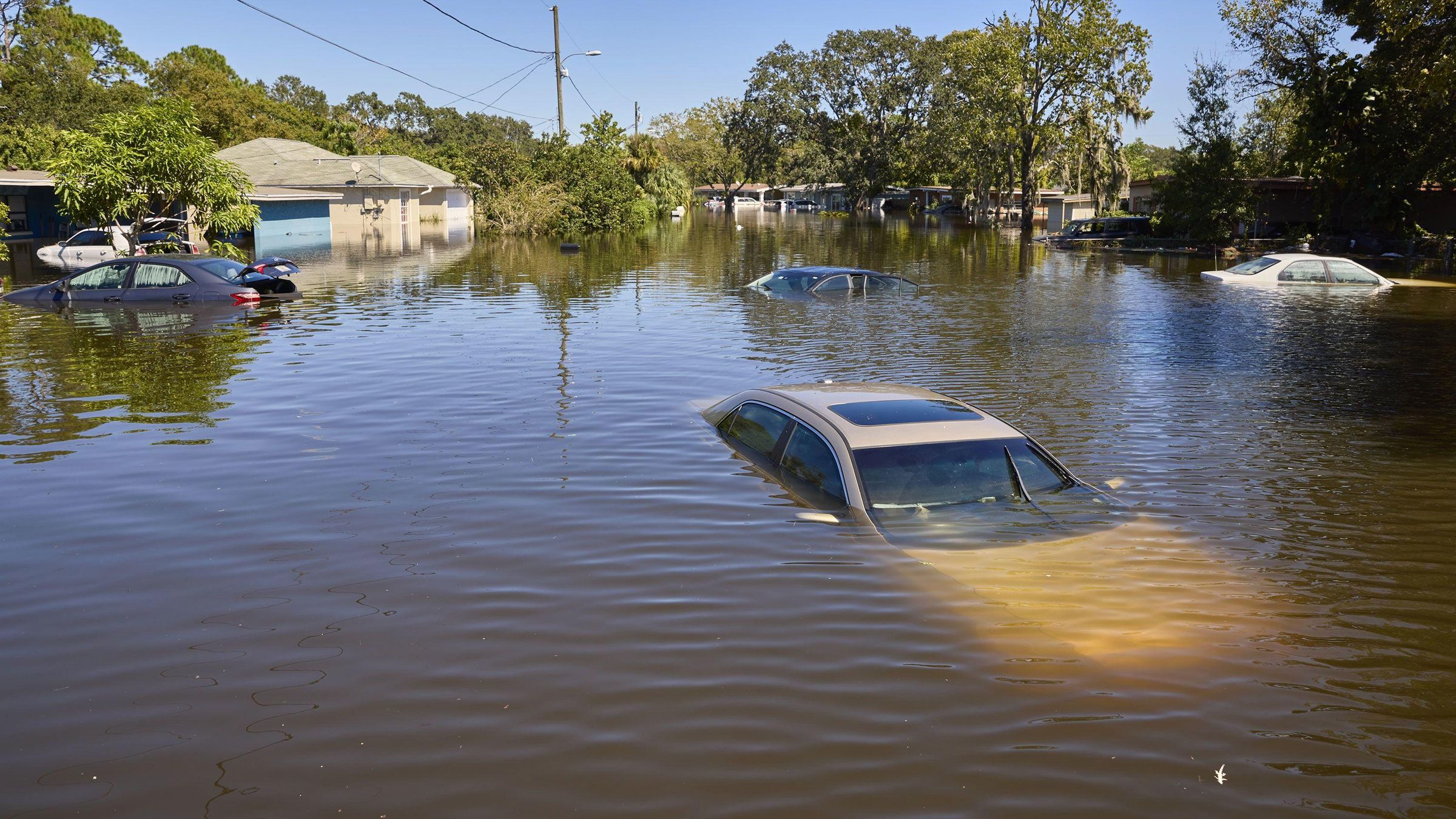

In September 2024, Hurricane Helene made landfall and brought catastrophic flooding and infrastructure destruction across western North Carolina. Although hurricanes are typically associated with coastal regions, the mountainous terrain of Appalachia created especially dangerous and deadly conditions. Heavy rainfall, over 20 inches in some areas within 48 hours, overwhelmed rivers, streams, and drainage systems, triggering devastating flash floods, landslides, mudslides, and widespread infrastructure collapse throughout rural mountain communities.
One of the hardest hit regions was Asheville and the surrounding Buncombe County area. Communities throughout western North Carolina experienced:
- Destroyed homes and businesses
- Washed out roads and bridges, isolating entire towns
- Severe flooding in valleys and low lying areas
- Landslides that buried homes and blocked evacuation routes
- Long term power outages lasting weeks in some areas
- Contaminated and damaged water systems
- Limited or no access to emergency services, hospitals, and grocery stores
Entire neighborhoods became isolated as roads collapsed and communication systems failed. In many areas, residents could not easily access hospitals, emergency shelters, clean water, or even cell phone service to call for help.
What stood out most to me during my research was that recovery efforts focused almost exclusively on rebuilding physical infrastructure like roads, utilities, and buildings, but far less attention was placed on rebuilding the emotional and social infrastructure within communities.
After disasters, people lose more than property and possessions.
Communities often lose:
- Safe gathering spaces like libraries, recreation centers, and churches
- Access to healthcare and mental health services
- Reliable electricity and internet for communication
- Educational spaces where children and adults learn
- Childcare and family support services
- Community identity, trust, and connection
When schools, libraries, recreation centers, and churches are damaged, destroyed, or inaccessible, people lose the places where they normally feel safe, supported, and deeply connected to others.
This issue is especially severe in rural mountain communities where resources are already limited, population density is low, and travel between towns can be difficult or dangerous even under normal conditions.
I realized that disaster recovery cannot focus solely on rebuilding structures. Communities also need spaces specifically designed to help people emotionally recover, reconnect with one another, and regain stability and hope after traumatic events.
That realization became the foundation for Harbor Haven.
Understanding the Problem - Why Asheville, North Carolina?

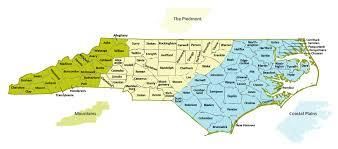
For Harbor Haven, I chose Asheville as the primary design location because it represents one of the most compelling examples of the growing challenges faced by climate-vulnerable mountain communities in the United States. While discussions about climate resilience often focus on coastal regions threatened by hurricanes and sea-level rise, Asheville highlights a different but equally urgent reality: mountain communities are increasingly exposed to severe weather events, flooding, infrastructure failures, and geographic isolation. These challenges make Asheville an ideal location for exploring innovative resilience and emergency preparedness solutions.
Geographic Vulnerability
Asheville is situated within the beautiful but complex landscape of the Blue Ridge Mountains. The city is surrounded by steep slopes, narrow valleys, dense forests, and numerous waterways, including the French Broad River and its tributaries. While this mountainous geography contributes to Asheville’s natural beauty and tourism appeal, it also creates significant environmental risks during extreme weather events.
When intense rainfall occurs, water flows rapidly downhill rather than gradually dispersing across flat terrain. This process dramatically accelerates runoff, causing streams and creeks to rise at dangerous speeds. Areas that appear safe under normal conditions can become flooded within a very short period of time. Small waterways can quickly transform into powerful torrents capable of damaging homes, businesses, bridges, and transportation routes.
The surrounding mountains also increase the risk of landslides and slope failures. Heavy rainfall saturates the soil, reducing its stability and causing sections of hillsides to collapse. These landslides can destroy infrastructure, block evacuation routes, damage utility systems, and endanger nearby residents. In many cases, recovery can take weeks or months due to the difficulty of accessing affected areas.
Flooding and Storm Impacts
Mountain flooding differs significantly from flooding in coastal or low-lying regions. Instead of gradual water accumulation, communities often experience sudden and violent flash floods. The steep terrain funnels water into valleys and river corridors, concentrating large volumes of water into relatively small areas. This creates highly destructive conditions with little warning time for residents.
Extreme rainfall events have become increasingly common across the southeastern United States, and Asheville faces growing exposure to these hazards. Climate scientists project that warmer atmospheric conditions will allow storms to hold and release greater amounts of moisture, increasing the likelihood of intense precipitation events. As a result, flooding that was once considered rare may occur more frequently, placing greater stress on local infrastructure and emergency response systems.
Infrastructure Challenges
One of the most significant concerns for Asheville is the vulnerability of transportation and utility infrastructure. Many roads in the region follow winding mountain corridors, cross rivers, or pass through narrow valleys. During major storms, these routes can become blocked by flooding, debris, fallen trees, or landslides.
Road closures can isolate entire neighborhoods and communities, preventing residents from accessing hospitals, emergency shelters, grocery stores, and other critical services. Emergency responders may also face delays reaching those in need, particularly in remote or rural areas surrounding the city.
Critical infrastructure such as power lines, water systems, communication networks, and bridges is also vulnerable to severe weather. Damage to these systems can lead to prolonged service interruptions, making recovery efforts more difficult and increasing risks for residents who rely on electricity, clean water, or internet access for health and safety.
Emergency Preparedness Gaps
Unlike many coastal cities that have decades of experience planning for hurricanes and storm surges, mountain communities have historically received less attention in disaster preparedness planning. While Asheville has emergency management systems in place, the increasing intensity and unpredictability of extreme weather events present new challenges that existing infrastructure was not necessarily designed to handle.
Many residents may underestimate flood risks because they associate major flooding primarily with coastal regions. However, mountain floods can be equally devastating and often develop much more rapidly. This creates a need for improved early-warning systems, community education, evacuation planning, and resilient infrastructure that can function during emergencies.
Why Asheville is Ideal for Harbor Haven
Asheville serves as an excellent case study for Harbor Haven because it combines environmental vulnerability, infrastructure challenges, and a strong community identity. The city illustrates how climate-related disasters can affect inland and mountainous regions just as severely as coastal areas. By focusing on Asheville, Harbor Haven can explore solutions that address rapid disaster response, community resilience, emergency shelter access, communication during infrastructure failures, and long-term adaptation strategies.
The lessons learned from Asheville are also highly transferable to other mountain communities throughout the Appalachian region and beyond. Designing for Asheville means designing for a future in which communities must become more resilient, connected, and prepared for increasingly frequent and severe climate-related events.
Understanding the Problem - Community Importance


Regional Importance and Community Dependence
The importance of Asheville extends far beyond its city limits. As a major economic, healthcare, transportation, and service center for western North Carolina, Asheville serves as a critical hub for dozens of surrounding rural and mountain communities. Many smaller towns throughout the region rely on Asheville for access to hospitals, emergency services, government resources, supply distribution, education, and communication infrastructure.
When severe weather disrupts Asheville's infrastructure, the impacts are felt across an entire network of communities. Road closures, damaged bridges, power outages, and communication failures can isolate rural populations that depend on Asheville for essential services. Residents in surrounding areas often travel to Asheville for medical treatment, groceries, emergency supplies, employment, and transportation connections. If these systems become inaccessible, the consequences can quickly extend beyond the city itself.
Healthcare is one of the clearest examples of this regional dependence. Major hospitals and specialized medical facilities located in Asheville serve patients from across western North Carolina. During disasters, maintaining access to healthcare services becomes especially critical, yet flooding, landslides, and infrastructure failures can make travel difficult or impossible for vulnerable populations.
Supply chains are similarly interconnected. Food distribution networks, fuel deliveries, emergency resources, and commercial goods frequently pass through Asheville before reaching neighboring mountain communities. Disruptions to transportation corridors can create shortages and delays that affect an entire region rather than a single city.
Because Asheville functions as a regional support center, investments in resilience infrastructure have benefits that extend well beyond local residents. Strengthening Asheville's capacity to withstand and recover from disasters helps protect surrounding communities that depend on the city's resources. A resilient recovery center located in Asheville could provide emergency coordination, shelter, communication services, medical support, and resource distribution not only for the city itself but also for the broader mountain region.
Increasing Climate Risk
Another major reason Asheville was selected as the focus location for Harbor Haven is the growing threat posed by climate change. Scientific research indicates that extreme weather events are becoming more frequent and more intense as global temperatures rise. Warmer air can hold greater amounts of moisture, increasing the likelihood of heavy rainfall events that can trigger flooding, erosion, and landslides.
Mountain regions are particularly vulnerable to these changes because of their topography. During intense storms, steep slopes accelerate the movement of water downhill, rapidly concentrating runoff into streams, rivers, and valleys. Drainage systems, culverts, roads, and other infrastructure that were originally designed based on historical weather patterns may no longer be capable of handling the volume and intensity of modern storm events.
As climate risks continue to increase, communities like Asheville are likely to face several interconnected challenges:
- More frequent and severe flooding events that threaten homes, businesses, and public infrastructure.
- Increased erosion and landslide activity that can damage roads, utilities, and natural ecosystems.
- Greater strain on transportation, water, electrical, and communication systems.
- Longer recovery periods following disasters as damages become more extensive and complex.
- Increased displacement of residents due to housing loss and unsafe living conditions.
- Growing economic instability resulting from infrastructure repair costs, business interruptions, and declining community resilience.
These risks highlight the need for proactive solutions rather than reactive responses. Communities can no longer rely solely on traditional emergency management strategies that focus on disaster response after an event has occurred. Instead, they must invest in infrastructure and systems that improve preparedness, adaptability, and long-term resilience.
Harbor Haven's Response
Harbor Haven was designed as a direct response to these growing environmental and social challenges. Rather than creating a temporary emergency shelter that remains unused until a disaster occurs, the goal was to develop a permanent resilience hub that serves the community every day while also functioning as a critical resource during emergencies.
The concept combines preparedness, community engagement, and disaster recovery into a single adaptable facility. Before disasters occur, Harbor Haven can provide educational programs, community gathering spaces, emergency preparedness training, and resource-sharing opportunities that strengthen social connections and resilience. During emergencies, the facility can rapidly transition into a response center, providing shelter, medical assistance, communication access, and emergency coordination. After disasters, it can support long-term recovery efforts by offering resources, services, and spaces that help residents rebuild and reconnect.
By creating infrastructure that remains active and valuable year-round, Harbor Haven promotes a more sustainable and community-centered approach to resilience. The project recognizes that recovery does not begin after a disaster, it begins long before one occurs. Through preparation, adaptability, and regional support, Harbor Haven aims to help Asheville and the surrounding mountain communities become better equipped to face the increasing challenges of a changing climate.
Understanding the Problem - Mental Health After Disasters


Natural disasters create more than physical destruction: they also leave lasting emotional and psychological impacts that can affect individuals and communities long after buildings, roads, and infrastructure have been repaired. Recovery is not only a matter of rebuilding structures but also restoring a sense of safety, stability, and well-being.
Research shows that disaster survivors frequently experience a wide range of mental health challenges, including anxiety, depression, emotional exhaustion, and symptoms of Post-Traumatic Stress Disorder (PTSD). Many individuals develop a persistent fear of future disasters, causing chronic stress and hypervigilance even after immediate threats have passed. Others struggle with grief resulting from the loss of homes, personal belongings, livelihoods, or loved ones. In many cases, communities also experience social isolation as familiar gathering places and support networks are disrupted.
Children are particularly vulnerable to these effects because disasters often interrupt the routines and environments that provide structure and security in their lives. School closures, displacement, separation from friends, and uncertainty about the future can significantly impact a child's emotional development and overall well-being. Creating spaces that help restore feelings of safety and normalcy is therefore a critical component of long-term recovery.
While researching trauma-informed architecture and mental health recovery, I discovered that the built environment can play an important role in the healing process. Architecture has the ability to influence how people feel, interact, and recover from stressful experiences. Thoughtfully designed spaces can reduce anxiety, encourage social connection, and support emotional well-being during difficult periods.
Several design strategies have been shown to contribute to positive mental health outcomes, including:
- Natural lighting that supports healthy circadian rhythms and improves mood
- Greenery and biophilic design elements that help reduce stress and promote relaxation
- Quiet, private spaces that allow individuals to rest, reflect, and process emotions
- Community gathering areas that encourage social interaction and rebuild support networks
- Access to outdoor environments that foster a connection with nature
- Warm, welcoming materials and colors that create comfort and avoid an institutional atmosphere
These findings inspired the vision for Harbor Haven. Rather than functioning solely as an emergency response facility, Harbor Haven was designed as a healing-centered environment that prioritizes both physical safety and emotional recovery. The project recognizes that resilience extends beyond surviving a disaster: it includes helping people recover psychologically, reconnect with their communities, and regain a sense of stability and hope. By integrating principles of trauma-informed design, Harbor Haven aims to support long-term community well-being while strengthening resilience before, during, and after future disasters.
Understanding the Problem - Infrastructure Failures During Emergencies
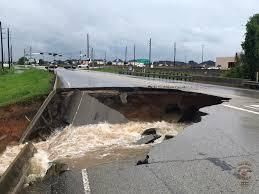
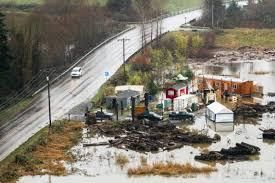
One of the biggest challenges communities face during natural disasters is the simultaneous failure of multiple centralized infrastructure systems. Modern society depends heavily on interconnected networks for power, communication, transportation, healthcare, water, and sanitation. When these systems fail at the same time, the impacts can quickly become overwhelming for both individuals and emergency responders.
During Hurricane Helene, many communities across western North Carolina experienced exactly this situation. Residents lost electrical power for extended periods, leaving homes, businesses, and public facilities without lighting, refrigeration, heating, cooling, or the ability to charge essential devices. Cellular service and communication networks were disrupted, making it difficult for people to contact family members, request emergency assistance, or receive critical updates from local authorities.
Internet access was also limited or unavailable in many areas, preventing residents from accessing information, coordinating relief efforts, or staying informed about changing conditions. Transportation systems suffered severe damage as roads, bridges, and evacuation routes became flooded, blocked, or completely destroyed. Access to hospitals, pharmacies, and medical care became increasingly difficult, especially for vulnerable populations who relied on regular treatment or electrically powered medical equipment.
Water infrastructure and sewage treatment systems were also affected, creating concerns about sanitation, clean drinking water, and public health. The loss of these essential services demonstrated how dependent communities are on centralized systems and how vulnerable they become when those systems are compromised.
Emergency shelters often face similar challenges because they depend on the same damaged infrastructure as the surrounding community. When the electrical grid fails, shelters can lose lighting, climate control, refrigeration for food and medicine, communication capabilities, and access to reliable power for emergency operations. As a result, facilities intended to provide safety and support may struggle to fully meet the needs of displaced residents.
Observing these challenges inspired me to ask a critical question: What if a building could continue operating independently during a disaster, even when the surrounding infrastructure has failed?
That question became one of the central design goals behind Harbor Haven. Rather than functioning solely as a community center, Harbor Haven was envisioned as a self sufficient resilience hub capable of supporting residents before, during, and after emergencies. The design incorporates flood resistant elevated foundations that help protect the structure from rising water while reducing the risk of flood damage to critical systems. Flexible interior spaces can quickly adapt to changing community needs, serving as gathering areas during normal operations and transforming into emergency shelters, medical stations, resource distribution centers, or communication hubs during a crisis.
Additional design features focus on maintaining essential functions during infrastructure outages. The building is intended to support independent power generation and storage systems, resilient communication capabilities, emergency supplies, and adaptable spaces that can serve multiple purposes. These features allow Harbor Haven to continue providing critical services even when external systems are disrupted.
By combining resilient engineering principles with healing centered architecture, Harbor Haven aims to address both the physical and emotional challenges that communities face after disasters. The project seeks not only to improve emergency preparedness and response but also to create a welcoming environment that fosters recovery, connection, and long term community resilience. Through this approach, Harbor Haven becomes more than a building. It becomes a dependable resource that helps communities remain safe, connected, and supported when they need it most.
Investigation and Inspiration - Researching Community Recovery Centers

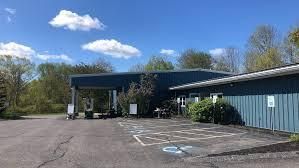
As I researched disaster recovery efforts across the United States, I discovered a common pattern that appears after many major natural disasters. When communities are affected by hurricanes, floods, wildfires, tornadoes, or other emergencies, existing public buildings are often transformed into temporary centers for relief and recovery. Schools, churches, libraries, recreation centers, and community buildings frequently become the places where residents gather to seek assistance, find shelter, and access critical resources.
These facilities often serve many different functions at the same time. They may be used for food and water distribution, medical triage and first aid services, emergency shelter and temporary housing, device charging stations, communication and information centers, supply storage and coordination, and spaces for community gathering and mutual support. In many cases, these buildings become the heart of recovery efforts, providing a central location where people can access resources, connect with others, and begin rebuilding their lives.
While these buildings play an incredibly important role during emergencies, I found that most were never originally designed to function as disaster response facilities. They were created to serve entirely different purposes, such as education, worship, recreation, or public services. As a result, communities are often forced to adapt existing spaces to meet emergency needs rather than relying on facilities specifically designed for disaster recovery.
This creates several challenges. Many existing facilities have limited flood resistance and may even be located in areas vulnerable to flooding or storm damage. Others have little or no backup power capability, making them dependent on the same electrical systems that may fail during a disaster. Ventilation systems are often designed for normal occupancy levels and may struggle when large numbers of people are sheltered in the building for extended periods.
Interior layouts can also present difficulties. Large open rooms may accommodate many people, but they often provide little privacy for families or individuals experiencing stress and trauma. Most facilities lack dedicated spaces for counseling, emotional support, or mental wellness services. Trauma informed design principles are rarely considered because the buildings were never intended to support people coping with the emotional effects of a disaster. In addition, medical facilities are often limited, making it difficult to provide healthcare services, private consultations, or ongoing support for vulnerable populations.
As I continued my research, I began to recognize a significant gap between the role these buildings are expected to perform during disasters and the way they were originally designed. Communities repeatedly rely on existing facilities to support recovery efforts, yet those facilities often lack the features needed to effectively address both the physical and emotional needs of displaced residents.
This observation led me to ask an important question: What if a building was specifically designed from the beginning to support both emergency response and emotional healing?
Rather than adapting an existing structure after a disaster occurs, what if a facility could be intentionally planned to provide shelter, resources, support services, and spaces for recovery from day one?
That question became the foundation for Harbor Haven. The project was conceived as a purpose built resilience hub that combines emergency preparedness with healing centered design. By addressing both practical disaster response needs and the emotional wellbeing of occupants, Harbor Haven seeks to create a space that can support communities not only during emergencies but throughout the entire recovery process.
Investigation and Inspiration - Biophilic and Trauma Informed Architecture

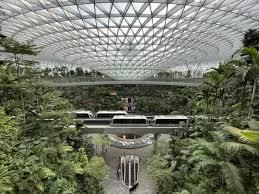
As part of my research process, I explored the field of biophilic architecture, an approach to design that intentionally incorporates natural elements into the built environment to improve mental wellbeing, reduce stress, and strengthen people's connection to nature. The concept is based on the idea that humans have an innate connection to the natural world and that access to natural environments can positively influence both physical and psychological health.
This area of research was especially relevant to Harbor Haven because disaster survivors often experience significant emotional stress, uncertainty, and trauma. While emergency facilities are typically designed to meet basic physical needs, I wanted to explore how architecture could also support emotional recovery. Biophilic design offered a way to create spaces that are not only functional and resilient but also calming, restorative, and supportive of mental wellness.
Research from environmental psychology, neuroscience, and healthcare design consistently demonstrates the benefits of incorporating nature into buildings. Studies have shown that exposure to natural elements can reduce anxiety and cortisol levels, improve concentration and cognitive function, lower blood pressure and heart rate, support emotional healing after traumatic experiences, and increase feelings of comfort, safety, and belonging. These findings suggest that the physical environment can play a meaningful role in helping people recover from stressful situations and regain a sense of stability.
To better understand how these principles are applied in real world settings, I studied examples of hospitals, wellness centers, mental health facilities, and public buildings that successfully use biophilic design strategies. Many of these projects shared common features that help create healthier and more welcoming environments.
I examined buildings that use central courtyards and atriums to bring natural light and vegetation into the center of the structure. I also studied the use of indoor plants and living walls, which introduce greenery into interior spaces while improving visual comfort and strengthening connections to nature. Large windows with views of trees, gardens, and outdoor landscapes were another recurring feature, helping occupants remain visually connected to the natural world even while indoors.
Other examples emphasized natural airflow and cross ventilation to improve indoor comfort and air quality. Outdoor gathering spaces and healing gardens were frequently incorporated to provide places for relaxation, reflection, and social interaction. Many facilities also relied on warm natural materials such as wood and stone to create environments that feel welcoming, comfortable, and human centered rather than sterile or institutional.
The lessons learned from these case studies directly influenced the design of Harbor Haven. Rather than treating nature as a decorative feature, I wanted it to become an integral part of the building's organization, atmosphere, and overall user experience.
As a result, biophilic design principles were incorporated throughout the project. A central healing courtyard serves as the organizational heart of the building, providing visual and physical access to nature from surrounding spaces. Natural daylighting is prioritized in every occupied area to create brighter, healthier interiors and maintain a connection to natural daily rhythms. Strong indoor outdoor relationships allow occupants to remain visually connected to landscapes, gardens, and open spaces throughout the facility.
Rain gardens and water features contribute to both stormwater management and a more calming sensory experience. Warm natural materials are used throughout the building to create spaces that feel comfortable, welcoming, and supportive for people experiencing stress or uncertainty.
The goal was not simply to design an emergency facility, but to create an environment that actively promotes healing and wellbeing. Many emergency shelters and temporary facilities can feel cold, crowded, and institutional, which may unintentionally increase stress during already difficult situations. Harbor Haven takes a different approach by using nature centered design to create spaces that feel calm, restorative, and inviting.
By integrating biophilic architecture into every stage of the design process, Harbor Haven aims to provide more than physical protection during emergencies. It seeks to create an environment where people can recover emotionally, reconnect with their community, and experience a sense of comfort, dignity, and hope during challenging times.
Investigation and Inspiration - Modular Construction and Rapid Deployment
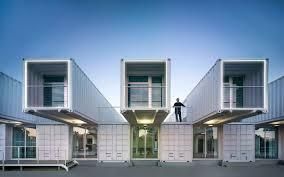
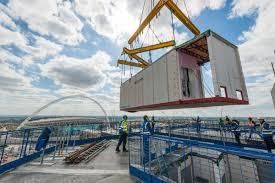
To address the urgent need for rapid disaster response infrastructure, I conducted focused research into modular construction systems, those that rely on factory-based prefabrication of repeatable building components, and examined how they have been applied successfully in dense urban contexts and in temporary and permanent disaster-recovery projects. I reviewed industry literature, surveys, and case studies to understand both the quantitative benefits and the practical lessons learned on the ground, then reflected on how those lessons apply to Harbor Haven’s goals of speed, resilience, and humane, adaptive space.
What I discovered was compelling and consistently reinforced across multiple sources: modular construction offers significant and measurable advantages over conventional onsite building methods, particularly when speed, cost control, waste reduction, and flexibility are priorities. The National Association of Home Builders (2017) survey highlights a fundamental industry constraint: labor cost and availability remain the top challenge for developers and builders. Modular approaches directly address that constraint by shifting much of the labor from weather-exposed, labor-intensive onsite tasks to controlled, repeatable factory processes. Because factories use assembly-line techniques, trained crews, and standardized workflows, they require fewer onsite labor hours and are less susceptible to local labor shortages and scheduling disruptions.
Cost savings are one of the clearest outcomes I found. Multiple industry analyses and practitioner reports indicate that factory prefabrication can reduce direct construction costs, both labor and certain material expenses, relative to traditional stick-built methods. Typical savings cited by manufacturers and developers often fall in the “around 20%” range for comparable building types when projects are planned and procured to take advantage of repeatable workflows, reduced onsite overhead, and minimized on-site rework. Equally important is schedule compression: modular production allows site work and building fabrication to proceed in parallel, which reduces overall project duration. Many practitioners report total project time reductions in the 20–40% range versus conventional construction, because while foundations and site utilities are prepared onsite, modules are assembled offsite and delivered ready to stack or connect. That reduction in schedule translates to earlier occupancy and lower interim financing and site-administration costs, especially important in disaster-response scenarios where time-to-use equals lives and wellbeing.
In terms of sustainability and waste reduction, offsite prefabrication demonstrates measurable benefits. By standardizing component sizes, optimizing material yields in the factory environment, and reusing cutting patterns across repeat elements, factories can reduce material offcuts and waste by meaningful percentages. Industry estimates and manufacturer reporting commonly suggest up to approximately 25% reductions in material waste compared with conventional onsite construction, where variable field conditions, weather interruptions, and ad-hoc cutting can generate additional scrap. Prefabrication also minimizes delays caused by adverse weather. If a job site is rained out, factory assembly can continue, further improving schedule reliability and reducing the carbon impacts of drawn-out construction processes.
To ground these general findings in real-world examples, I studied several inspiring projects and practices that illustrate how modular systems have been implemented at scale or used to solve social and environmental problems:
- Place Ladywell (London): This was a temporary modular housing scheme intended to provide rapid accommodation for homeless families. The project executed a strategy where the vast majority of the building work, approximately 95%, was completed off site in factory conditions. This approach dramatically reduced onsite time and logistics, resulting in production cost reductions reportedly in excess of 50% in certain budget lines and cutting construction time by more than half compared with a comparable conventional scheme. The benefits went beyond speed and cost: the factory conditions allowed higher quality control at assembly joints and finishes, and the installation was less disruptive to the local neighborhood during the delivery and craning operations.
- The Farmhouse (Chris Precht): This conceptual and realized work blends modular residential units with integrated vertical farming systems. The project demonstrates the creative possibilities of modularity: standard residential modules are combined with planter systems and circulation space in a stacked, pyramid-like composition. The Farmhouse emphasizes sustainability by enabling local food production, reducing transport-related emissions for fresh produce, and fostering community through shared agricultural amenity. Although the approach retains modular repeatability, the design shows how modules can be adapted with programmatic inserts, including planter shelves, access points, and shared green infrastructure, so that a modular block becomes a living, productive object rather than only a stack of generic boxes.
- Participatory Housing (Kelvin Ma): This system demonstrates how modular, reconfigurable units can support occupant-driven change. The Participatory Housing projects use standardized building blocks that residents can rearrange, expand, or reconfigure over time to accommodate family growth, changing accessibility needs, or evolving lifestyle requirements. These projects highlight an important social advantage of modularity: rather than forcing displacement when needs change, modular systems can adapt in situ. They also show the value of designing robust connection logic and simple assembly protocols so non-specialists can participate in reconfiguration decisions.
These case studies reinforced a set of design insights: modular buildings need not be permanent, monolithic, or inflexible. With thoughtful planning, which includes standardized connection systems, clear assembly sequencing, integrated MEP routing, and attention to user needs, structures can be both fast-deployable and adaptable over time while still offering the stability and dignity of a home. In other words, prefabrication does not imply a sacrifice in quality or permanence; rather, when properly specified, it can deliver high-quality finishes, consistent building performance, and the capacity to be repurposed or expanded.
Applied to Harbor Haven, the modular construction principles I studied offered several direct benefits that informed the design decisions:
- Faster deployment in disaster-affected communities: By shifting the bulk of construction to a controlled factory environment, Harbor Haven’s components can be manufactured on an accelerated cadence while site work (foundations, drainage, and utility connections) proceeds in parallel, dramatically shortening the calendar to occupancy during crisis response.
- Lower construction costs through factory production: Repeatable module production reduces onsite labor hours, lowers weather-related labor inefficiencies, and can realize economies of scale in purchasing and fabrication, helping to address the labor and cost pressures identified in the NAHB survey.
- Reduced material waste and environmental impact: The controlled manufacturing environment allows for optimized cutting yields, more accurate material ordering, and reduced waste streams. This aligns with Harbor Haven’s sustainability goals and reduces the environmental footprint of a rapid deployment strategy.
- Ability to expand or reconfigure spaces as community needs evolve: Harbor Haven’s module logic incorporates simple, durable connection points and routing for MEP services so modules can be added, rotated, or replaced as populations change, supporting long-term resilience and the social goal of giving residents agency over their spaces.
- Consistent quality control in controlled manufacturing environments: Factory assembly produces repeatable, well-documented conditions, including better fit and finish, consistent insulation and air-sealing details, and reliable mechanical assemblies, contributing to a more durable and comfortable facility for occupants.
Taken together, these findings convinced me that modular construction is a practical and strategically appropriate methodology for Harbor Haven. The evidence shows that modular systems can meaningfully reduce cost and schedule, improve construction predictability, lower waste, and produce adaptable living environments: fbenefits that align directly with the urgent operational requirements of disaster response and with the humanitarian aim of creating safe, dignified, and adaptable community shelter.
Investigation and Inspiration - Defining Core Design Principles
After weeks of research into disaster recovery systems, mental health needs in crisis situations, resilient infrastructure strategies, biophilic design approaches, and modular construction methods, I synthesized my findings into a set of core design principles that would guide every decision in the development of Harbor Haven. These principles act as a framework to ensure that every part of the building serves both functional emergency needs and long term community wellbeing.
Human centered healing became the first and most important principle. Every space within Harbor Haven is designed not only to provide physical shelter but also to actively support emotional recovery. This means that architecture should not feel harsh, temporary, or institutional. Instead, it should reduce stress, support dignity, and help individuals process trauma in a safe and supportive environment. The goal is for the built environment itself to contribute to healing rather than unintentionally reinforcing feelings of fear, displacement, or instability.
Energy independence is another foundational principle. During disasters, access to centralized utilities is often one of the first systems to fail. To address this, Harbor Haven is designed to operate off grid for at least seventy two hours during infrastructure disruptions. This includes the ability to maintain essential power, water access, lighting, communication systems, and basic life support functions even when external networks are unavailable. The intention is to ensure that the building can continue functioning as a reliable resource when surrounding systems are compromised.
Flood resilience is also a critical consideration due to the increasing frequency and severity of extreme weather events. The building's foundations, mechanical systems, and all critical infrastructure are designed with elevated protection strategies and reinforced construction approaches informed by FEMA guidelines and projected climate risk scenarios. This ensures that Harbor Haven can remain operational or recover quickly even in high risk flood conditions, reducing downtime and maintaining continuity of care for affected communities.
Modular flexibility is another key principle that influences spatial planning and architectural design. Spaces within the building are designed to adapt to a wide range of uses depending on community needs. A single area may function as an emergency triage center during a disaster, a distribution hub for supplies, or a long term space for community programs and education during recovery periods. This adaptability allows the building to remain useful in both emergency and non emergency contexts without requiring major reconstruction or redesign.
Environmental sustainability is integrated throughout the project as both an ethical responsibility and a long term resilience strategy. The building aims to minimize embodied carbon through material selection and efficient construction methods. Renewable energy systems are incorporated to reduce reliance on external power sources. Rainwater harvesting systems support water conservation and emergency supply needs, while integrated agricultural elements such as small scale food production areas help strengthen local food resilience and community self sufficiency.
Community connection serves as the final guiding principle and ensures that Harbor Haven functions as more than just an emergency facility. The design intentionally fosters social interaction, collaboration, and mutual support. Shared spaces are created to encourage communication and relationship building, helping to rebuild trust and strengthen community bonds after crises. The environment is structured to give people a sense of ownership and belonging, reinforcing the idea that the building is not only a resource for emergencies but also a shared civic space for ongoing community life.
Together, these principles form the foundation for every design decision moving forward. They ensure that Harbor Haven remains focused on resilience, healing, adaptability, sustainability, and community connection across all phases of use.
Defining Harbor Haven - What Is Harbor Haven?
Harbor Haven is a disaster resilient healing and recovery center designed to serve communities before, during, and after catastrophic events.
The structure is designed to support communities immediately after disasters while continuing to function as a long term wellness, education, and preparedness center during normal conditions.
The building integrates multiple essential functions:
- Emergency Recovery Spaces:
- Medical clinic and triage center
- Emergency shelter rooms with privacy and dignity
- Supply storage and distribution areas
- Device charging stations and communication center
- Community kitchen and dining facilities
Long Term Healing Spaces:
- Counseling and therapy rooms
- Meditation and quiet reflection spaces
- Healing courtyard and biophilic gardens
- Makerspace and skills training center
- Learning and education classrooms
- Child activity zones and family areas
- Community gathering hall for events and meetings
Resilience Infrastructure Systems:
- Solar canopy roof with photovoltaic arrays
- Battery storage microgrid for off grid operation
- Rainwater harvesting and greywater reuse systems
- Passive ventilation and natural cooling
- Flood resistant elevated foundations
- Vertical gardens and urban agriculture.
Defining Harbor Haven - Why the Name Harbor Haven?
The word Harbor represents safety and refuge during storms, a protected place where people can find shelter when conditions outside are dangerous and chaotic.
The word Haven represents healing, peace, and a place of rest where people can recover and rebuild their strength.
Together, the name Harbor Haven symbolizes a place where communities can weather disasters safely, then heal, reconnect, and rebuild together with hope and resilience.
Defining Harbor Haven - Program Summary and Capacity Goals
I organized Harbor Haven into distinct functional zones that work together as an integrated system:
Main Building: Recovery and Emergency Response
- Medical clinic with examination rooms and medical supply storage
- Community kitchen and gathering area
- Gyms for recreational activities
- Affordable supplies store
- Place of worship
- Multi-purpose room
- Classrooms
Central Courtyard: Healing and Connection
- Native plantings and rain gardens
- Water features for calming acoustics
- Seating areas for passive therapy and social interaction
- Outdoor gathering spaces for events and markets
- Visual connection to nature from all interior spaces
Off Grid Critical Operation: Support medical clinic, emergency lighting, communications, refrigeration, and 50 phone charging ports for 72 hours minimum using solar and battery systems alone.
Flood Resilience: Finished Floor Elevation (FFE) set to Design Flood Elevation (DFE) plus 2 feet minimum, with elevated pier foundations and scour protection.
Shelter Capacity: Accommodate up to 200 people for emergency shelter with dignity, privacy, and access to basic services.
Medical Capacity: Provide triage and basic medical care for 30 patients per day during emergency operations.
Sustainability: Achieve LEED Platinum certification equivalent through energy performance, water efficiency, material selection, and indoor environmental quality.
Modular Construction: Prefabricate 70 percent or more of building components off site to reduce construction time by 30 to 40 percent compared to conventional construction.
Defining Harbor Haven - Human Centered Healing Design


One of the most important goals of Harbor Haven is helping people feel emotionally safe, supported, and connected during some of the most difficult moments of their lives. While disaster recovery often focuses on restoring physical infrastructure such as roads, utilities, and buildings, the emotional and psychological impacts of disasters can last much longer. Many survivors experience stress, anxiety, grief, uncertainty, and feelings of displacement after losing their homes, possessions, routines, or sense of security.
Because of this, Harbor Haven was designed not only as a resilient emergency facility but also as a healing environment that actively supports mental and emotional wellbeing. The design incorporates trauma informed strategies supported by research in environmental psychology, healthcare design, and therapeutic architecture. These principles help create spaces that reduce stress, promote comfort, and provide a sense of stability during times of crisis.
Natural Daylight Throughout the Building
Every occupied room in Harbor Haven is designed to receive abundant natural daylight through large windows, clerestory glazing, and carefully positioned openings. Access to natural light is one of the most important factors in creating healthy interior environments. Studies have shown that daylight helps regulate circadian rhythms, which are the body's natural sleep and wake cycles. Maintaining these rhythms is especially important during emergencies when normal routines are disrupted.
Natural light has also been linked to improved mood, reduced anxiety, increased alertness, and lower levels of emotional distress. In emergency shelters, where people may spend extended periods indoors, access to daylight can help preserve a sense of normalcy and connection to the outside world. By maximizing daylight throughout the building, Harbor Haven creates brighter, more welcoming spaces that support both physical and psychological wellbeing.
Central Healing Courtyard
At the heart of Harbor Haven is a central healing courtyard that serves as a focal point for the entire facility. The courtyard provides both visual and physical access to nature from surrounding interior spaces, ensuring that occupants remain connected to the natural environment even while indoors.
Research in environmental psychology has consistently shown that exposure to nature can lower stress levels, reduce blood pressure, improve concentration, and support emotional recovery. Views of trees, plants, and natural landscapes have been associated with reduced levels of stress hormones and faster recovery from traumatic experiences. The courtyard offers a calm outdoor environment where individuals can relax, reflect, socialize, or simply take a break from the challenges of disaster recovery.
Because many people seek comfort and reassurance in natural settings, the courtyard acts as a restorative space that encourages healing, resilience, and community connection. Its location at the center of the building ensures that nature remains a visible and accessible part of everyday life within Harbor Haven.
Acoustic Privacy and Quiet Spaces
During and after disasters, people often need opportunities for private conversations, counseling, medical consultations, or moments of personal reflection. To support these needs, Harbor Haven incorporates acoustic privacy measures throughout key areas of the building.
Counseling rooms, meeting spaces, and quiet zones include sound insulating walls, acoustic ceiling treatments, and noise reducing materials that minimize distractions and protect confidentiality. These design features help ensure that sensitive conversations can occur without interruption or concern about being overheard.
In addition to supporting privacy, quieter environments can significantly reduce stress and mental fatigue. Constant noise can increase anxiety and make it more difficult for people to process information, especially during emotionally challenging situations. By creating peaceful and acoustically comfortable spaces, Harbor Haven provides environments where occupants can feel secure, focused, and supported.
Clear and Intuitive Wayfinding
Finding one's way through an unfamiliar building can be stressful under normal circumstances and even more difficult during an emergency. People experiencing trauma, anxiety, or exhaustion may struggle with decision making and information processing. For this reason, Harbor Haven prioritizes clear and intuitive wayfinding throughout the facility.
Signage is strategically placed at key decision points and uses simple language, universally recognizable symbols, and multilingual text to accommodate a diverse range of users. Building layouts are organized to provide clear sightlines and logical circulation paths, reducing confusion and helping visitors quickly understand where they need to go.
The goal is to create an environment where people can navigate independently with confidence. By reducing uncertainty and eliminating unnecessary stress, effective wayfinding contributes to a greater sense of control and security, both of which are critical components of trauma informed design.
Creating a Sense of Safety and Belonging
Together, these design strategies work to create an environment that feels calm, welcoming, and supportive. Rather than functioning solely as an emergency shelter or community facility, Harbor Haven is designed to foster healing, dignity, and resilience. Every design decision, from daylighting and nature access to acoustics and wayfinding, contributes to an atmosphere that helps people feel safe, respected, and cared for.
By integrating trauma informed design principles into every aspect of the building, Harbor Haven addresses not only the physical challenges of disaster recovery but also the emotional needs of the people it serves. The result is a space that supports both immediate crisis response and long term community healing.
Designing With Autodesk Revit - Early Sketches
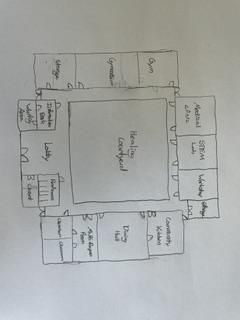
I began by sketching multiple possible layouts including:
- Circular concepts
- Courtyard-centered plans
- Expandable modular pods
- Linear recovery hubs
Eventually, I selected a central courtyard layout because it maximized:
- Natural lighting
- Ventilation
- Community interaction
- Access to greenery
My final sketch draft included a central square healing courtyard surrounded by 4 sections housing different sets of rooms that can accommodate multiple different needs
Each room in Harbor Haven falls within one of 4 zones
Recovery Zone-
Medical clinic, emergency shelter rooms, and storage.
Wellness Zone-
Meditation areas, and sensory gardens, and counseling rooms.
Community Zone-
Kitchen, dining hall, classrooms, gyms, and gathering spaces,
Housing-
Multiple types and sizes of housing to accommodate familial housing needs
I decided I would have an upper floor that would contain temporary emergency housing and breakfast, transforming the upper left storage area into an elevator
For more recovery focused needs, I decided to transform the STEM lab into a small shop with affordable appliances
This organization allows the building to support many different recovery needs simultaneously.
Designing With Autodesk Revit - Getting Started With Revit

It’s time to bring it to life through the power of CAD. The end goal is to 3D print the structure, so detailed CAD files are necessary. After browsing through the Autodesk suite of products available for students, I came across Revit. Revit is the most popular CAD software used by industry professionals to design architecture.
Autodesk offers completely free student licenses for their software. I would like to thank Autodesk here for their continuous support of education for aspiring engineers. You can use this link to learn more on obtaining a student license:
https://www.autodesk.com/support/account/education/students-educators/overview
To begin, first login into your Autodesk account. If you do not have one, make one using your email address. Use this link to access the Autodesk Education Resources page:
https://www.autodesk.com/education/home
Once you are on the page, click the "Get Products" button
If you have not already verified yourself as a student, it will take you to a verification portal. You will have to fill out some basic information as well as upload proof that you are a student. You will receive this confirmation once you are verified:
Once you have clicked the button, you will be sent to the products page. You can also find this page here:
https://www.autodesk.com/education/gateway?sorting=featured&filters=individual
Scroll down until you see the box for Revit. Click "Get product".
Press the download button, and follow the steps on the installer. The application is quite large and may take some time to install.
Designing With Autodesk Revit - Defining Levels
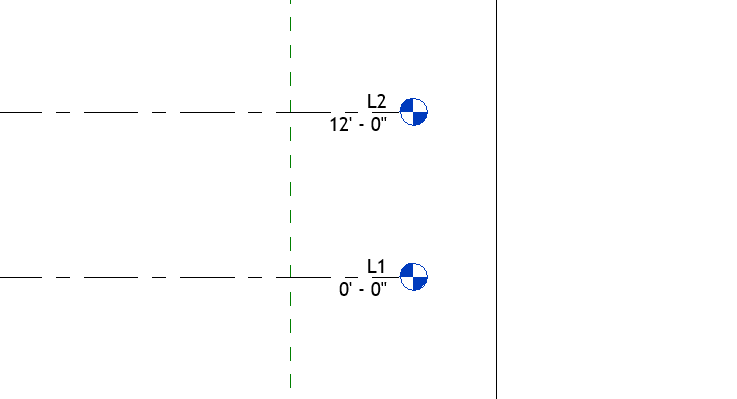
Heres how to define levels in Revit:
Open Revit, File → New → Project → Architectural Template.
View tab → Plan Views → Levels. Click Draw Line (or Level tool) and click in the view to create Level 1 and Level 2. Double-click level names to rename “Level 1
— Recovery” and “Level 2 — Housing.”
Select each level line → Properties → change Elevation value to raise floor-to-floor height (e.g., set Level 2 to +12'-0" or add +1.5–2 ft to typical). Click Apply.
Architecture tab → Room & Area → Room. Click inside each program space to place Room elements. In Properties, set the Room name and Department/Zone to “Gym” “Clinic,” “Counseling,” etc.
Manage tab → Settings → Project Units. Confirm units used for ceiling heights and room areas.
Designing With Autodesk Revit - Developing the Structural Layout
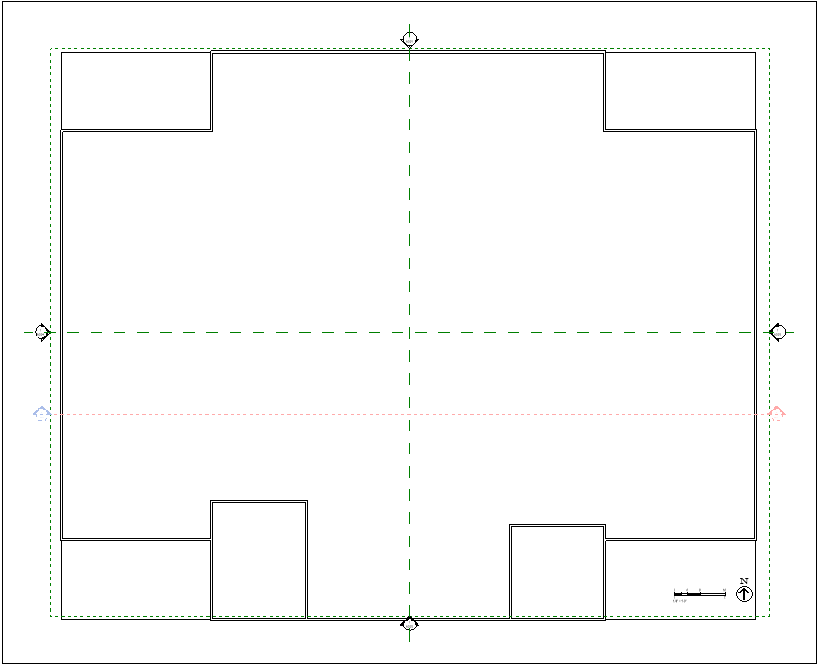
To develop a structural layout: File → New → Project → Structural Template (or Link architectural RVT: Insert → Link Revit → select file).
Structure tab → Grid. Click to place gridlines along major axes; dimension grids (Annotate → Spot Dimension).
Structure → Column → select steel column family → click at grid intersections to place columns.
Structure → Beam → choose appropriate beam family → click endpoints between columns to place beams. Use Modify → Align to snap beams to column faces.
Structure → Floor → Create Floor by Boundary: click to sketch slab extents on Level 1.
Roof: Architecture → Roof → Roof by Footprint → sketch roof perimeter → Properties → set slope and overhang values → Finish Roof.
Insert → Load Family → load window families. Architecture → Window → place windows on exterior walls. Use Modify → Move/Align to coordinate with beams/columns.
Exterior wall plan
Architecture → Wall → select wall type with wood-texture cladding → sketch exterior perimeter. Modify wall type: Manage → Additional Settings → Wall Types → Duplicate → edit Structure (layers: cladding, air gap, insulation, sheathing).
Elevations: View → Elevation → place elevation markers. Open elevation view → annotate materials and add wall type tags.
Create schedule: View → Schedules → Schedule/Quantities → Walls → add fields (Type, Thickness, Finish) → OK.
Designing With Autodesk Revit - Creating the First Floor Plan
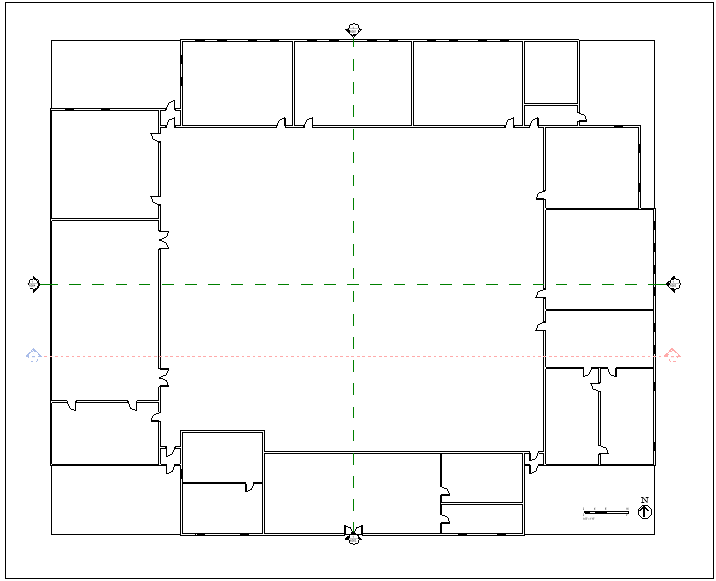
Heres how to draw a floor plan:
View → Level 1 plan. Draw courtyard cutout: Architecture → Wall or Model In-Place → create boundary where courtyard will be removed. Or use Site → Topography if using a site model.
Architecture → Wall → draw internal partitions for left wing rooms. Use the Dimension tool (Annotate → Aligned) to set exact room widths.
For each room: Architecture → Door → load appropriate door family → place doors in wall. After placing, select door → Type Properties → set Fire Rating / Hardware as needed.
North side: use Architecture → Component → load and place Medical Clinic equipment (medical sink family, exam table). Place plumbing fixtures: Systems → Plumbing Fixture → click to place sinks/toilets.
Right wing: Architecture → Component → load Kitchen Equipment families (ranges, sinks, refrigeration). Arrange using Modify → Rotate / Move. For classrooms, place furniture families: Architecture → Component → load desks/chairs → place.
South/main entrance: Architecture → Door → place main entry door. Architecture → Component → place reception desk family and accessibility ramp (if needed).
Doors throughout: Use a door schedule to set types: View → Schedules → Schedule/Quantities → Doors → include Type, Fire Rating, Hardware.
Windows: Architecture → Window → choose operable/ fixed types → place around rooms to maximize daylight; for gym, place high-sill or no-op panels as needed. Use Properties to set sill height.
Designing With Autodesk Revit - Creating the Second Floor Plan

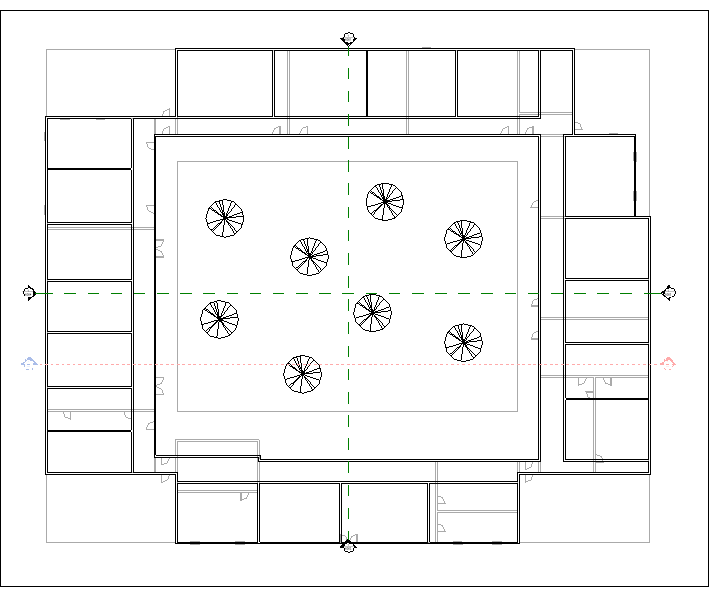
Using the same exterior dimensions as the first floor to save space, I created a floor plan for the 2nd flood that includes
- 4+ capacity rooms
- 2-3 capacity rooms
- 1 capacity rooms
- Multiple counseling rooms
You can use the same steps to create the level 2 floor plan as explained in the level 1 plan.
Here's how the 2nd floor will be divided up. Pictures of each wing and the overall design can be found at the beginning of the step
- The north wing contains the 4+ people rooms
- The west section has the 1 person rooms
- The south section contains the 2-3 person rooms
- And the west wing has numerous counseling rooms to fit demand
Designing With Autodesk Revit - Doors and Windows
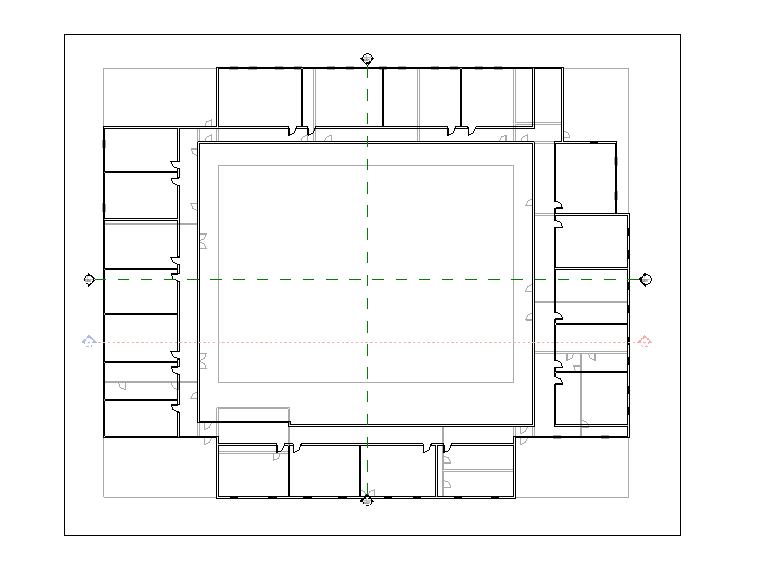
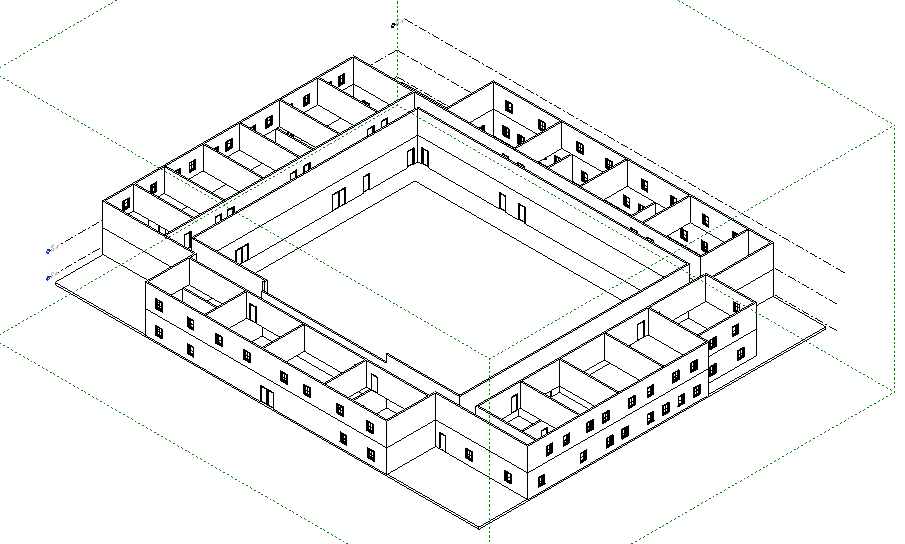
To place a door: Architecture → Door → Define Placement → Click Check
Doors were added from each room outward into the courtyard, turning it both into a calming area and a place for easy accessibility to each and every section
I added a numerous amount of windows to each room to maximize the amount of natural light each room receives, cutting down electricity costs and helping soothe residents.
Placements for doors and windows can be found a the top of each step
Designing With Autodesk Revit - Adding Roofs
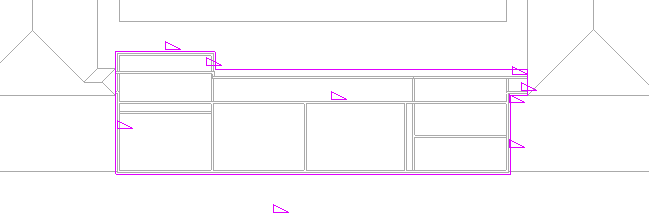
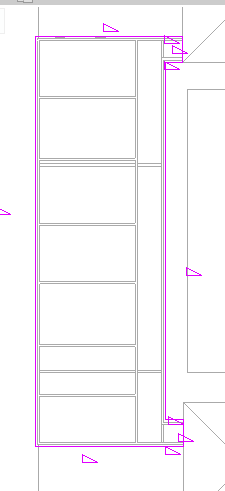

To place a roof: Architecture → Roof → Define Boundary → Click Check
Roof boundaries are important to include overhang to help rainwater flow and protect architecture, Also provides shade to the first floor perimeter pathway that helps residents and other visitors to move about the building.
Roof boundaries for the sections can be found in the images at the top of the step.
Designing With Autodesk Revit - Designing the Healing Courtyard


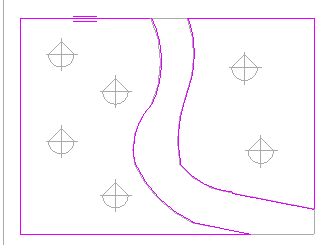
In plan view, select the area to remove: Modify → Split Element or create courtyard void with walls. If using a Site: Massing & Site → Toposurface → Create from Import → Draw points to form courtyard depression or grass area.
Site components: Insert → Load Family → load planting, tree, bench, and water feature families. Site → Component → place trees
Pathway: Architecture → Floors → Draw path boundary → Edit Type → Change material to “Path”, or whatever material you want your path to be.
This creates a outline for the courtyard and detailing to make the area come to life.
Sketches and renderings above.
Designing With Autodesk Revit - Renderings and Final Design
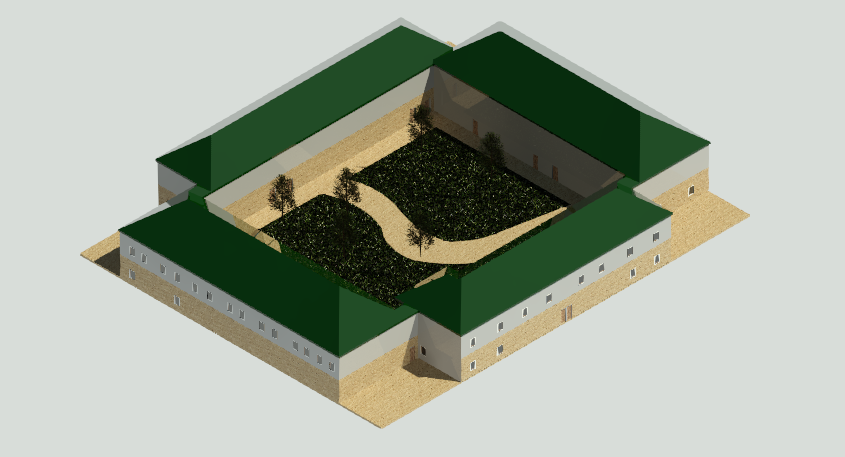
Heres how to render a design:
Materials: Manage → Materials → search/select wood texture → assign to exterior face in Type Properties or by selecting element → right-click → Override Graphics in View → By Element → set material/texture.
Green roof: Architecture → Roof → edit assembly to add green-roof layer (growing medium thickness) or place green-roof family as an object on roof surface.
Overhangs: Architecture → Roof → Extend or use Roof by Extrusion → sketch overhang geometry and place.
Views: View → 3D View → Orient to desired camera → View → Render → set Quality (High) and Environment (Sky) → Render. Export image: File → Export → Image.
Construction - Printing the Prototype

.jpeg)
The first step to creating my prototype is to print all the different parts to be assembled.
Emphasizing modularity, I printed out each room separately, similar to how rooms would be created off-site and assembled together.
Each part was printed in high speed poly-lactic acid filament (PLA) using my Bambu Lab X1-Carbom printer, I used the Bambu studio slicer to set settings and configurations
I used pine colored filament for the main building and olive green for the trees and roof, giving it a soothing look.
Construction - Assembling the Prototype
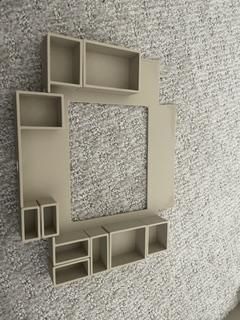
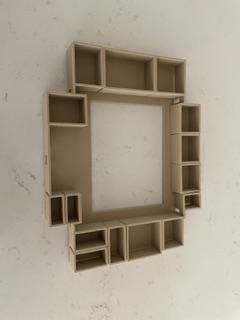
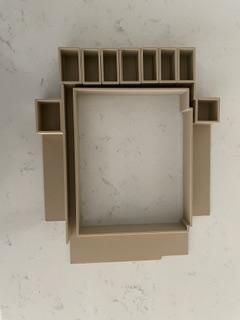
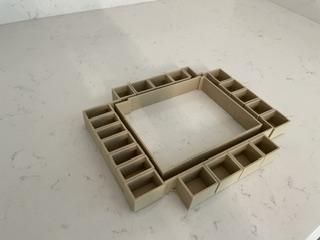
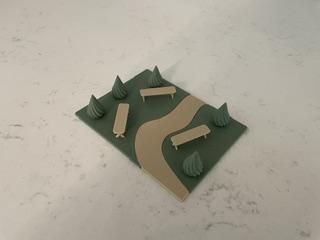

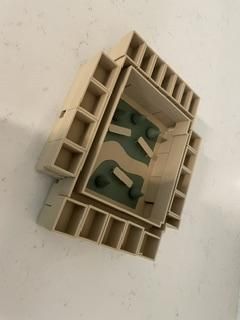

- Starting with the first floor, I started glueing the rooms together on the floor. I used Duco plastic cement to hold everything together
- I completed the first floor, following the same format and positioning of rooms it was designed in
- Then I began working on the second floor, continuing to glue the rooms to the base floor.
- Finishing up the second floor, I started working on the healing courtyard
- I printed out trees and benches to liven up the courtyard.
- I then glued the roof on and added the courtyard.
Pictures of my progress between each step can be found in sequence at the beginning of each step
Expert Consultation and Design Improvements - Meeting With a Civil Engineer
An important part of the engineering design process is actively seeking feedback from experienced professionals in relevant fields. After developing the initial concept for Harbor Haven, I had the opportunity to discuss my design with a civil engineer in order to better understand how the ideas would translate into real world construction and deployment scenarios. During this conversation, I presented my overall goals for the project, including disaster resilience, rapid deployment capability, environmental sustainability, and long term community use.
The discussion allowed me to explain the design intentions behind Harbor Haven in detail, including how the building is meant to function during emergencies as well as during long term recovery periods. I shared my focus on creating a structure that could support communities when traditional infrastructure systems fail, while still remaining flexible enough to serve everyday community needs once conditions stabilize.
The civil engineer carefully reviewed my concept and provided constructive feedback on how the design could be made more practical from an engineering and construction standpoint. They emphasized considerations related to how the building components could be efficiently constructed, transported, and assembled, especially in disaster affected areas where time, access, and resources may be limited.
Their suggestions encouraged me to think beyond the architectural layout alone and consider the full lifecycle of the structure, from fabrication and logistics to on site assembly and long term durability. This perspective helped me better understand the importance of designing not just for form and function, but also for feasibility under real world constraints.
Overall, the feedback strengthened my understanding of how Harbor Haven could transition from a conceptual design into a realistic, deployable system capable of supporting communities in urgent situations while maintaining long term value and usability.
Expert Consultation and Design Improvements - Modular Interlocking Design
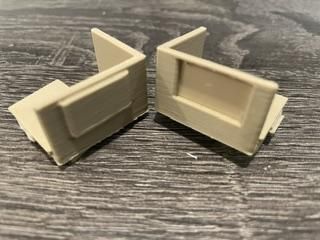
One of the engineer's key recommendations was to redesign portions of Harbor Haven as interlocking modular units. Instead of constructing every section individually on-site, major building components could be manufactured separately and then connected together using a standardized interlocking system.
This approach offers several advantages. Interlocking modules can be transported more easily, assembled more quickly, and replaced individually if damaged. It also allows Harbor Haven to be adapted to different community sizes and site conditions. Additional modules could be added in the future as community needs grow.
After considering this feedback, I revised my design to incorporate modular construction principles throughout the structure. This improved both the scalability and practicality of the project.
Each room module would fit in one another, similar to puzzle pieces, making construction far easier and development time would reduce significantly.
Expert Consultation and Design Improvements - Foldable and Hinged Components

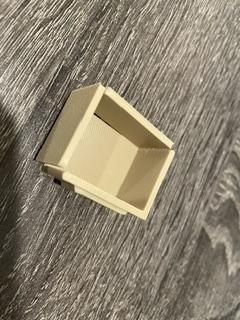
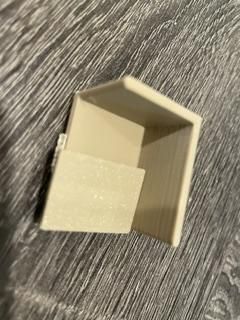
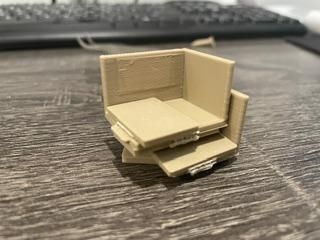
Another recommendation was to incorporate hinged and foldable structural elements into the design. The engineer explained that foldable components could significantly reduce transportation volume while making assembly faster and more efficient.
By using hinged wall sections, roof components, and modular connection points, portions of Harbor Haven could arrive partially assembled and then be unfolded into position on-site. This would reduce construction time and allow communities to establish critical facilities more quickly following a disaster.
This feedback led me to explore ways of integrating foldable design concepts into the building's modular framework. The resulting design became more flexible and easier to deploy while maintaining structural stability and functionality.
Each room module was edited to include floors and hinges on 2 of the 4 walls, allowing the roof to be folded into an L-shape, occupying less space and making each module easier to transport after off-site construction
Expert Consultation and Design Improvements - Flood-Resistant Foundation System
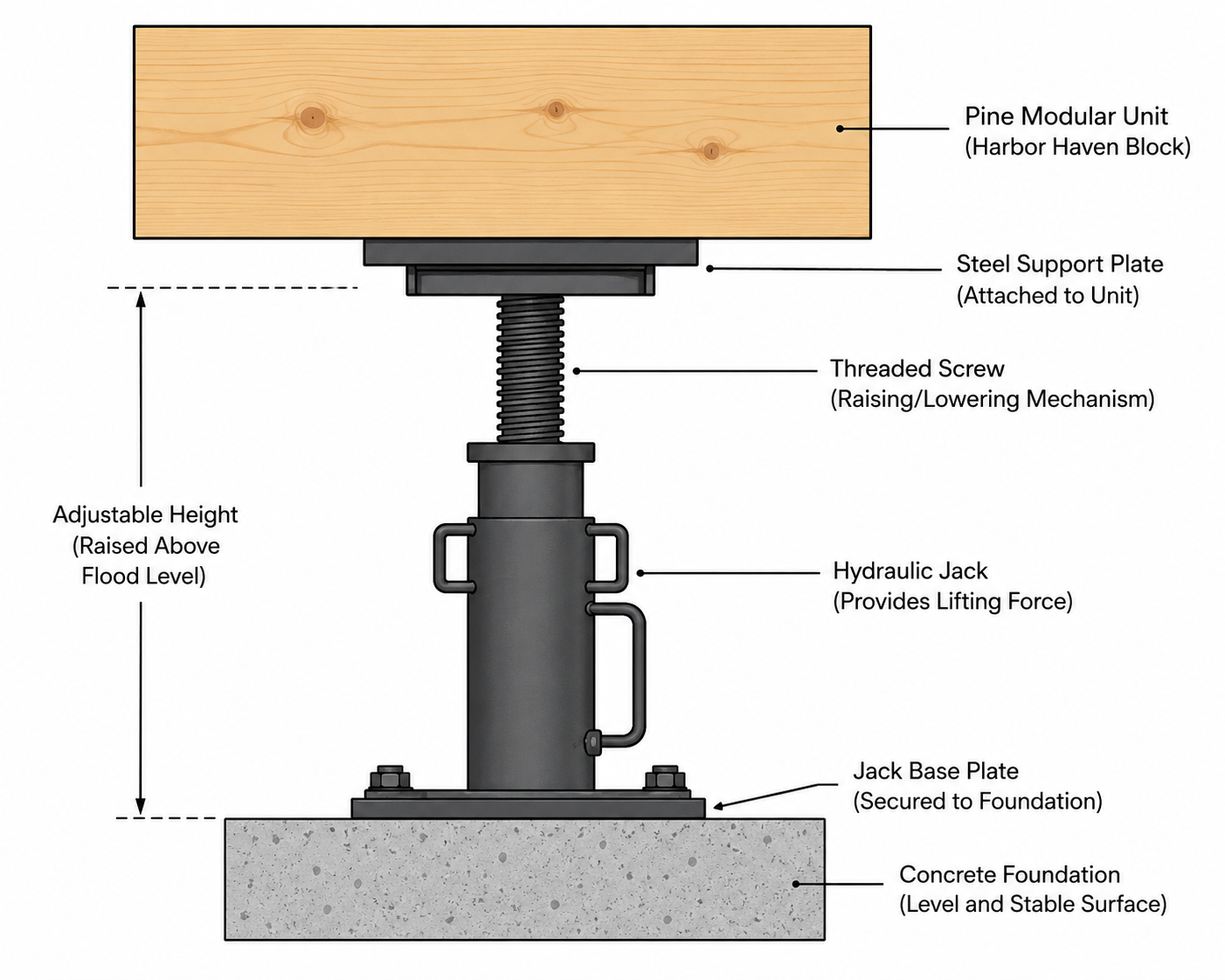
Perhaps the most impactful suggestion involved improving flood resilience. The engineer proposed incorporating a jack-based elevation system beneath the building. This system would allow Harbor Haven to be raised above expected flood levels when severe weather events are forecasted.
The concept works similarly to adjustable support systems used in certain flood-prone structures. Hydraulic or mechanical jacks positioned beneath the building could elevate the structure, helping protect critical spaces and equipment from rising floodwaters. This would reduce potential damage and improve the building's ability to remain operational during emergencies.
Because flood resistance is one of Harbor Haven's primary goals, I incorporated this idea into later design iterations. The elevated foundation concept complements the building's other resilience features, including renewable energy systems, rainwater management, and disaster-resistant construction materials.
Expert Consultation and Design Improvements - Impact of Expert Feedback
This consultation demonstrated the importance of collaboration throughout the engineering design process. While my original concept for Harbor Haven focused primarily on community recovery, sustainability, and wellness, the civil engineer’s feedback helped refine and strengthen the practicality and resilience of the design in meaningful ways.
Their input provided a valuable perspective on how the building could function not only as an architectural idea, but also as a real system that must be constructed, transported, deployed, and maintained in real world disaster conditions. This helped highlight aspects of the design that needed further consideration in terms of efficiency, structural feasibility, and rapid implementation during emergencies.
The recommendations to incorporate interlocking modular units introduced a more flexible construction approach, allowing different sections of the building to connect securely while still being easy to assemble and reconfigure as needed. Suggestions for foldable construction techniques further improved the concept by making components more compact for transport and easier to deploy quickly in areas where space, time, and resources may be limited.
In addition, the idea of an adjustable flood resistant foundation system significantly strengthened the overall resilience strategy. This adjustment allowed the structure to better respond to changing water levels and environmental conditions, improving its ability to remain functional in flood prone regions and extreme weather scenarios.
Together, these improvements made Harbor Haven more adaptable to different communities and a wider range of disaster situations. They also enhanced its potential for rapid deployment, ensuring that the structure could be set up efficiently when communities are in urgent need of shelter and support.
By incorporating expert feedback into the design process, Harbor Haven evolved from a strong conceptual framework into a more realistic, implementable solution for supporting communities before, during, and after climate related emergencies. This collaboration reinforced the importance of combining creative vision with engineering expertise to create designs that are both meaningful and practical.
LEED and Sustainability Analysis
To ensure my design aligned with modern sustainability and efficiency standards, I chose to evaluate it using the LEED (Leadership in Energy and Environmental Design) certification framework. LEED is a globally recognized system that measures the environmental performance of buildings based on categories like energy use, material selection, water efficiency, and indoor environmental quality.
Throughout the design process, I focused on strategies that aligned with LEED criteria, such as designing for natural lighting and ventilation to reduce operational energy demand.
After compiling all components of my project like my site plan, energy systems, material choices, and sustainable strategies. I submitted the design for a simulated LEED evaluation. Based on the criteria met across the major LEED categories, my design received a final score of 104/110 points, qualifying it for the Platinum certification level (Certification is defined as, Silver, Gold, or Platinum).
This certification not only validated the environmental responsibility of my design but also confirmed that affordable architecture can be sustainable, efficient, and scalable without compromising on resilience or quality.
Based on projected scoring, Harbor Haven would qualify for LEED Platinum certification.
Cost Analysis
One of the primary goals of Harbor Haven was creating a disaster recovery facility that is both financially realistic and scalable for different communities.
After natural disasters, many communities face limited financial resources, damaged infrastructure, and urgent rebuilding timelines. Because of this, recovery facilities must be:
- Cost-effective
- Rapidly deployable
- Durable and low-maintenance
- Energy efficient
- Adaptable to different site conditions
- Capable of long-term community use
Rather than designing a temporary emergency shelter, I wanted Harbor Haven to function as a permanent community asset that could continue serving residents long after disaster recovery efforts are complete.
To evaluate the economic feasibility of Harbor Haven, I researched modular construction systems, renewable energy infrastructure, and commercial building material costs to estimate both short-term construction expenses and long-term operational savings.
The structural system of Harbor Haven was designed around durability, flood resistance, and sustainability.
The primary construction materials include:
- Cross-laminated timber (CLT)
- Reinforced steel framing
- Low-carbon concrete
- Recycled composite wall panels
- Hemp insulation systems
- Elevated concrete pier foundations
Based on preliminary dimensional estimates from the Revit model, Harbor Haven contains approximately:
- 8,500–10,000 square feet of occupied interior space
- Large-span community gathering areas
- Reinforced elevated structural systems
- Extensive glazing and daylighting systems
- Outdoor covered circulation spaces
Using industry-average commercial construction pricing for resilient modular buildings, the estimated structural and enclosure costs include:
Component Estimated Cost
- CLT floor and wall systems - $180,000
- Reinforced steel framing - $140,000
- Elevated concrete foundation system - $95,000
- Exterior wall systems and insulation - $75,000
- Roofing and solar canopy structure - $110,000
- Windows and glazing systems - $65,000
- Interior partitions and finishes - $85,000
The estimated subtotal for major structural and architectural systems is approximately $750,000
These estimates reflect commercial-grade resilient construction designed to withstand flooding, severe weather, and long-term community use.
One of Harbor Haven’s most important features is its ability to continue operating during infrastructure failures and power outages.
Harbor Haven was designed to support many different community functions simultaneously, requiring specialized interior spaces and equipment.
Key interior spaces include:
- Medical clinic
- Emergency shelter rooms
- Counseling and wellness rooms
- Makerspace and fabrication lab
- Community kitchen
- Classrooms and gathering halls
Estimated furnishing and equipment costs include:
- Interior Component - Estimated Cost
- Medical equipment and clinic setup - $45,000
- Commercial kitchen equipment - $35,000
- Makerspace tools and fabrication equipment - $40,000
- Classroom and office furnishings - $22,000
- Wellness and counseling furniture - $15,000
- Emergency shelter equipment - $18,000
- Technology and communication systems - $20,000
The estimated total for interior systems and furnishings is approximately $195,000
A major advantage of Harbor Haven is its modular construction strategy.
By using prefabricated structural components manufactured off-site, the project can significantly reduce:
- Construction time
- Material waste
- On-site labor requirements
- Transportation inefficiencies
- Weather-related construction delays
Research shows modular construction can reduce project timelines by approximately 20–50% compared to conventional commercial construction methods.
For Harbor Haven, modular construction could potentially save:
Area of Savings Estimated Reduction
- Construction time 30–40%
- Material waste 20–25%
- Labor costs 15–20%
- Long-term maintenance 10–15%
These savings improve the feasibility of deploying Harbor Haven rapidly in disaster-affected communities.
Although Harbor Haven has higher upfront costs due to resilient infrastructure and renewable systems, the building was specifically designed to reduce long-term operational expenses.
Passive sustainability strategies include:
- Natural daylighting
- Cross ventilation
- Green roofing
- Thermal insulation systems
- Rainwater reuse
- Solar energy production
These systems help reduce:
- Utility costs
- Cooling demands
- Water consumption
- Emergency fuel dependency
- Maintenance requirements
The renewable energy microgrid also allows Harbor Haven to continue functioning during grid outages, preventing additional emergency infrastructure costs after disasters.
The cost estimates presented above are preliminary conceptual estimates and do not include several additional factors commonly associated with commercial construction projects, including:
- Land acquisition
- Site grading and excavation
- Permitting and inspections
- Regional labor variation
- Utility connection fees
- Landscaping installation
- Insurance costs
- Furniture upgrades and aesthetic finishes
Despite these exclusions, Harbor Haven demonstrates strong long-term financial value due to its resilience, adaptability, and ability to serve multiple community functions within a single facility.
Traditional emergency recovery infrastructure often requires multiple separate buildings for healthcare, shelter, education, and community gathering. Harbor Haven combines these systems into one integrated structure, improving both economic efficiency and community impact.
The project demonstrates how resilient, healing-centered architecture can remain financially achievable while significantly improving disaster preparedness and long-term community recovery.
Conclusion
Harbor Haven is more than a building. It is a place intentionally designed to help communities heal, recover, and rebuild a sense of stability during and after times of crisis.
Through the integration of resilient engineering strategies, trauma informed architectural principles, renewable energy systems, and community centered spaces, Harbor Haven demonstrates how the built environment can actively support both immediate emergency response and long term wellness. Every aspect of the design is intended to serve a dual purpose, addressing physical survival needs while also supporting emotional recovery and social reconnection.
This project taught me that architecture is not only about creating functional structures or solving spatial problems. It is also about shaping human experience. Buildings influence how people feel, how they interact with others, and how they process challenging events. In moments of crisis, the design of a space can either increase stress or provide comfort, clarity, and reassurance. Because of this, thoughtful design becomes a powerful tool for creating safety, connection, and hope.
As climate related disasters become more frequent and more severe, communities will increasingly need buildings that do more than simply withstand emergencies. They will need environments that remain operational during disruption, but also support emotional healing afterward. These spaces must help people regain a sense of normalcy, rebuild relationships, and prepare for future challenges in a way that feels supportive rather than overwhelming.
Harbor Haven represents my vision for that future. It reflects the idea that resilient infrastructure should not only be measured by how well a building survives a disaster, but also by how well it helps people recover from it. Through this project, I aimed to explore how architecture can become a source of stability, dignity, and hope in times when those qualities are most needed.
Acknowledgements
This project would not have been possible without the following, and I would like to sincerely thank them.
My parents, for their constant support and encouragement throughout this project.
My sister, for her encouragement along the way.
My robotics mentors, for inspiring my passion for engineering, design, and innovation.
Autodesk, for providing the powerful tools that helped bring Harbor Haven to life.
The civil engineer, for valuable feedback that strengthened my design.
The Make It Home judges, for encouraging students to develop meaningful real-world solutions.
Thank you for taking the time to review my project. Harbor Haven represents many hours of research, planning, design, and modeling, and I am grateful for the opportunity to share my work.