Holiday Boat Purse
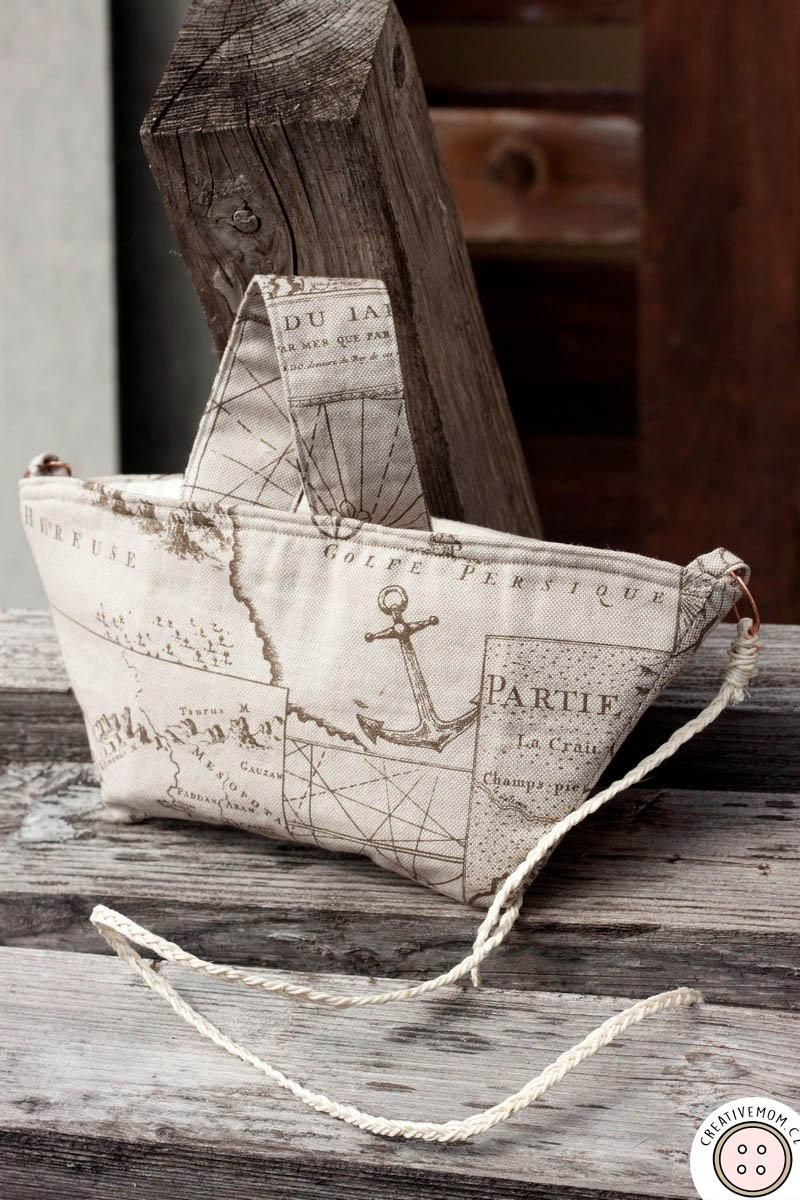

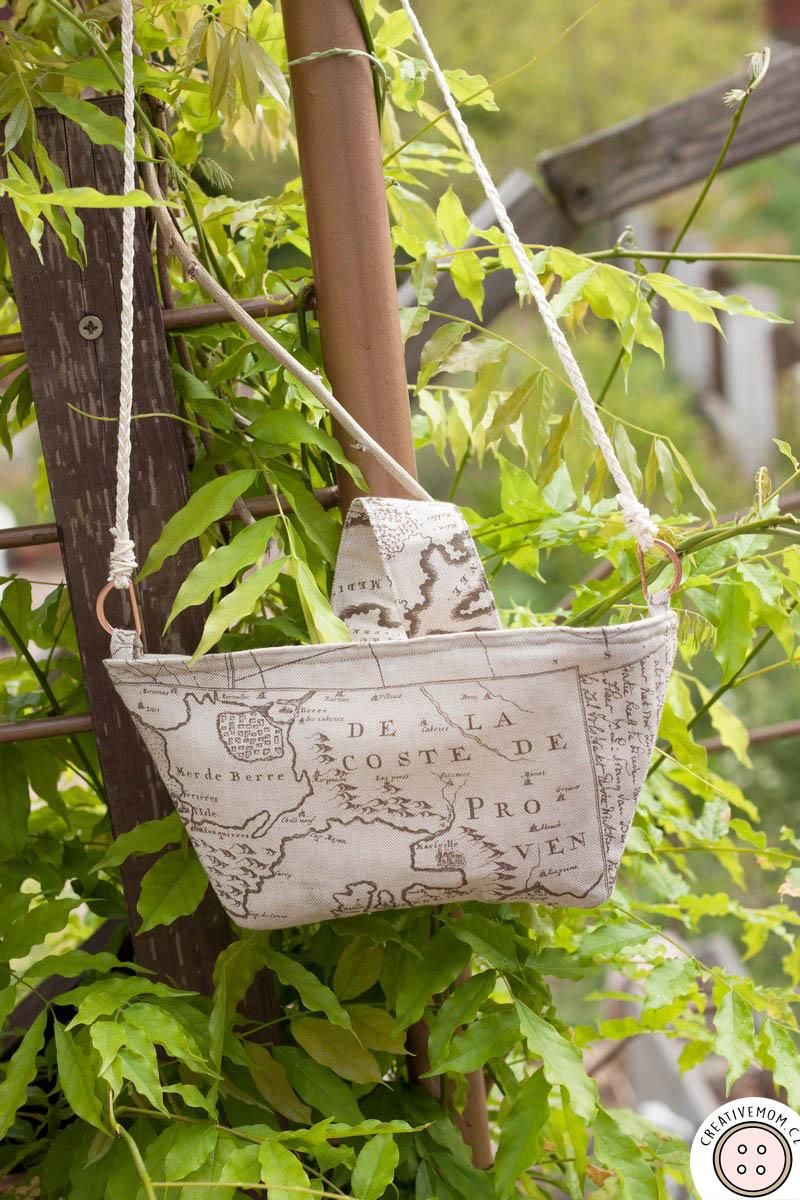
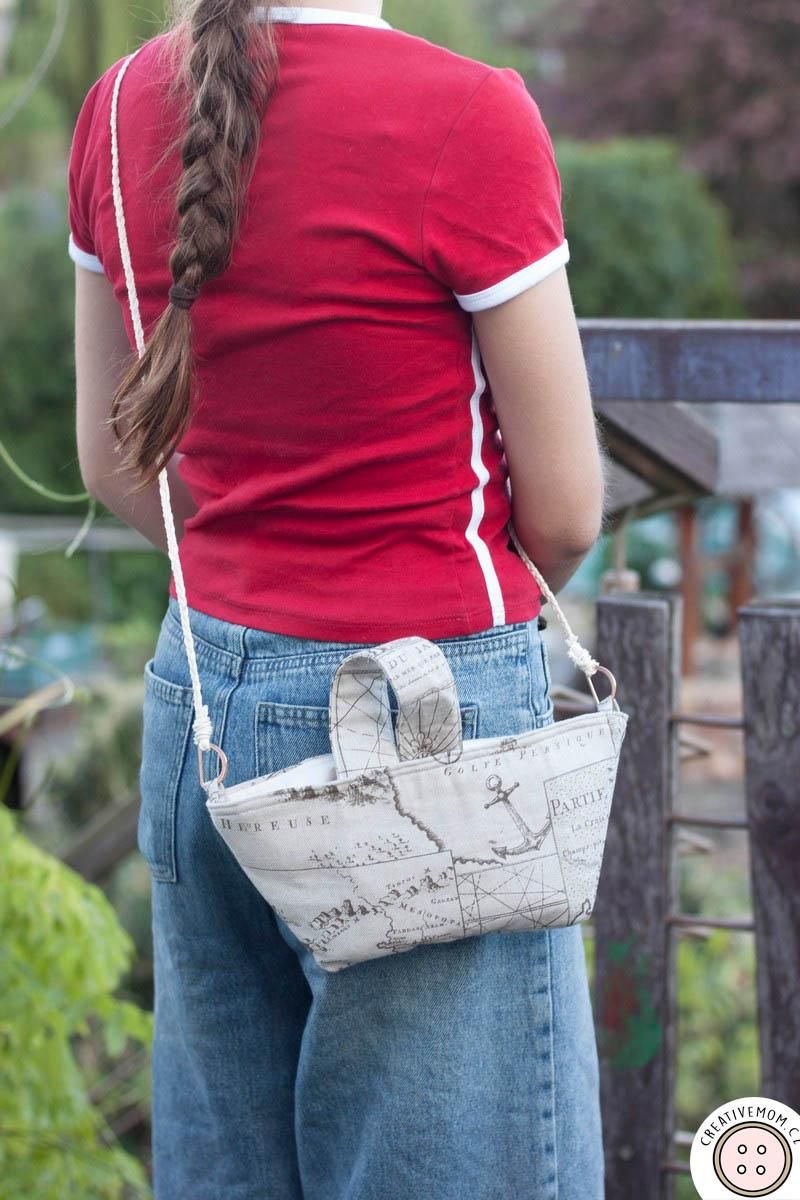
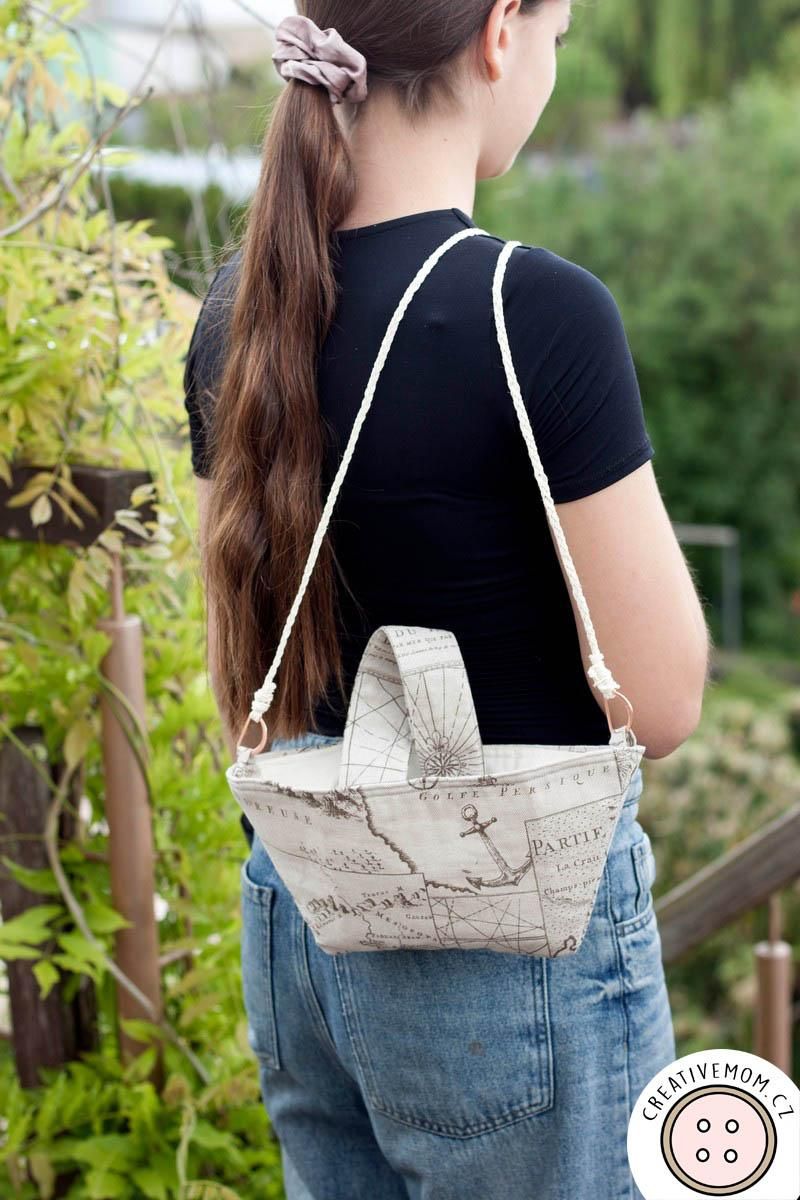
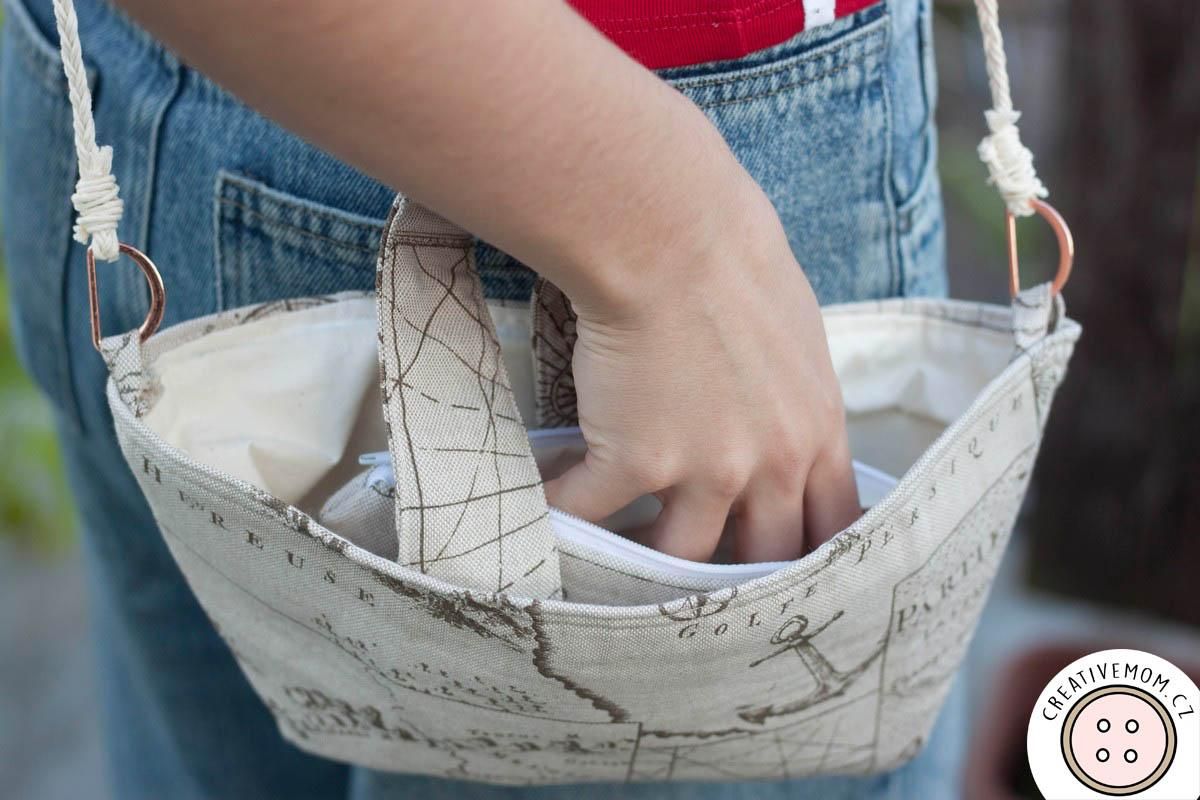
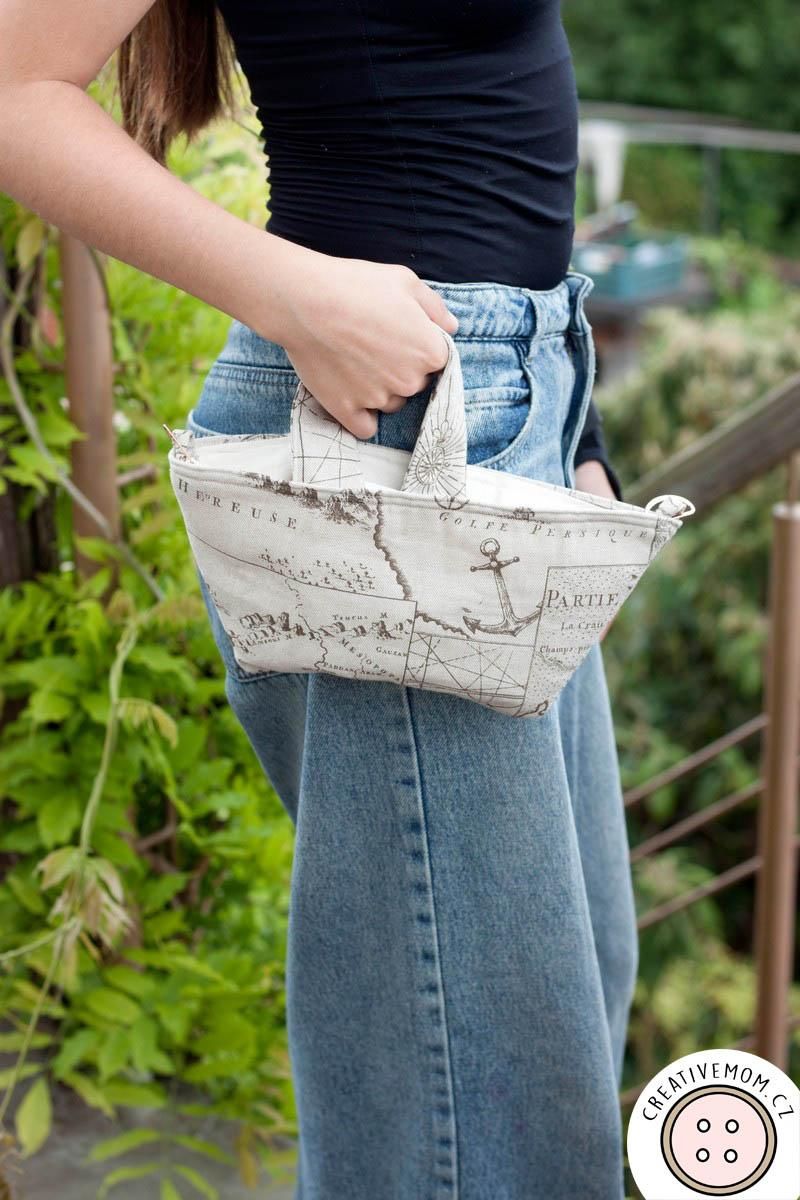
This is my instructable for a perfect holiday purse in a shape of a paper boat and with a design of an old world map.
It's a small purse with one coin pocket inside that can be zipped up and the rest of the boat is open, perfect for carrying smaller things. It has a handle and can be carried in hand or as a crossbody bag thangs to an original strap. Because the purse is supposed to resemble a paper boat, the handle is made to look like the sails of the boat but at the same time, it's long enough so you can reach into the coin pocket and it's practically attached to both sides of the boat.
This is an intermediate sewing project, it's good to know your way around attaching a zipper, handling thicker layers of fabric and working with interfacing.
Supplies
- Pattern - download HERE to print format A4 and HERE to print format US Letter, don't forget to set your printer to print "True size"
- aprox. 0,5 m of outer fabric with map design - heavier, non-elastic
- aprox. 0,4 m of lining fabric - lighter, non-elastic
- aprox. 0,4 m of fusible interfacing such as vliseline
- 2 D-rings of 1,5 cm/0.6 in or larger
- cotton string or similar, aprox. 2 mm/0.08 in thick
- zipper 17 cm/6.7 in or longer
- scissors
- pins
- sewing machine + threats + needle for thick layers
- hand-sewing needle
Print, Cut and Prepare Pieces
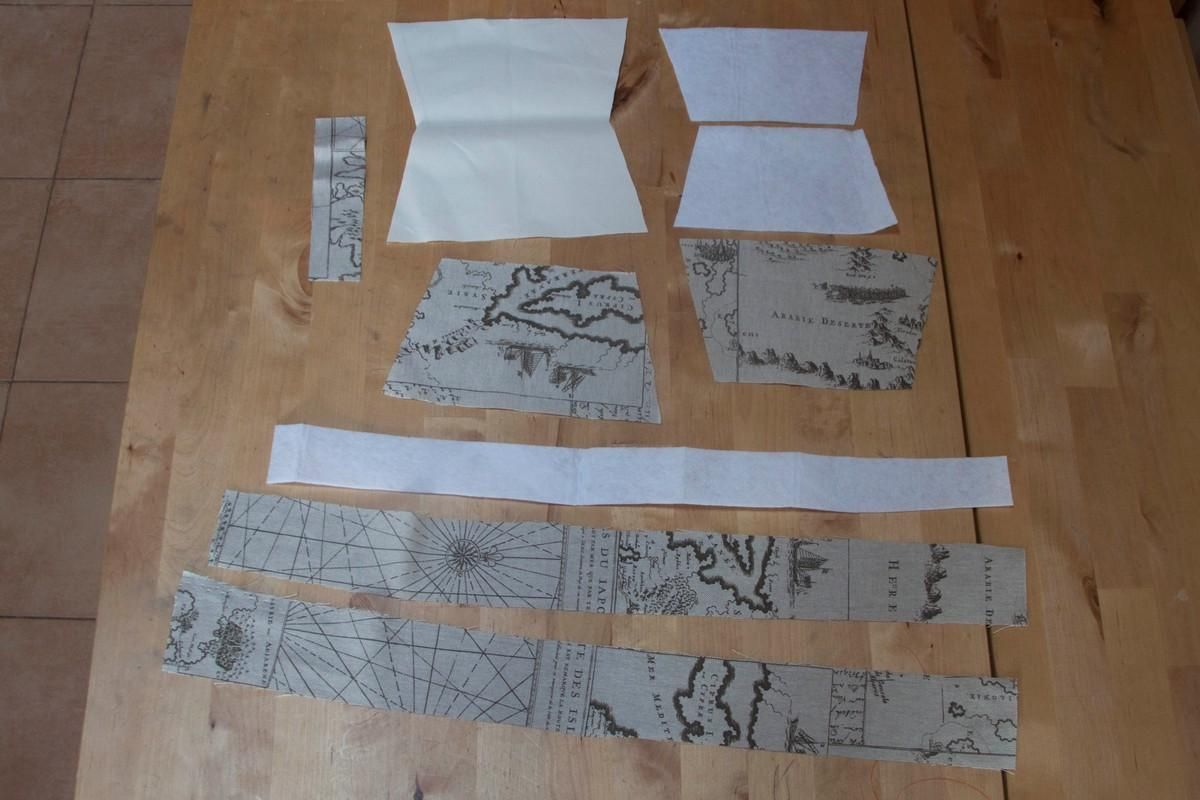
All pattern pieces are on one sheet of paper. Print as "True size". Read the notes on each piece, some of the pieces will be cut on a fold, some even on two folds.
Cut the following:
Piece A:
- 1x from main fabric on both folds
- 1x from lining fabric on both folds
- 2x from interfacing on side fold
Notes:
- Add 1 cm/0.4 in seam allowance on all sides of the fabric pieces, don't add seam allowance to interfacing
- To cut on both folds, you have to fold the fabric twice. I recommend to iron and press the fold before cutting.
Piece B:
- 2x from main fabric on side fold
- 1x from lining fabric on both folds
- 2x from interfacing on side fold
Notes:
- Add 1 cm/0.4 in seam allowance on all sides of the fabric pieces, don't add seam allowance to interfacing
- To cut on both folds, you have to fold the fabric twice. I recommend to iron and press the fold before cutting.
Piece C:
- 2x from main fabric if using A4 OR 2x from main fabric on fold if using US Letter
- 1 x from interfacing
Notes:
- You can add up to 2 cm/0.8 in seam allowance to main fabric for a more comfortable sewing, don't add seam allowance to interfacing.
Other:
- Cut a 10 x 4 cm/4 x 1.5 in rectangle from main fabric
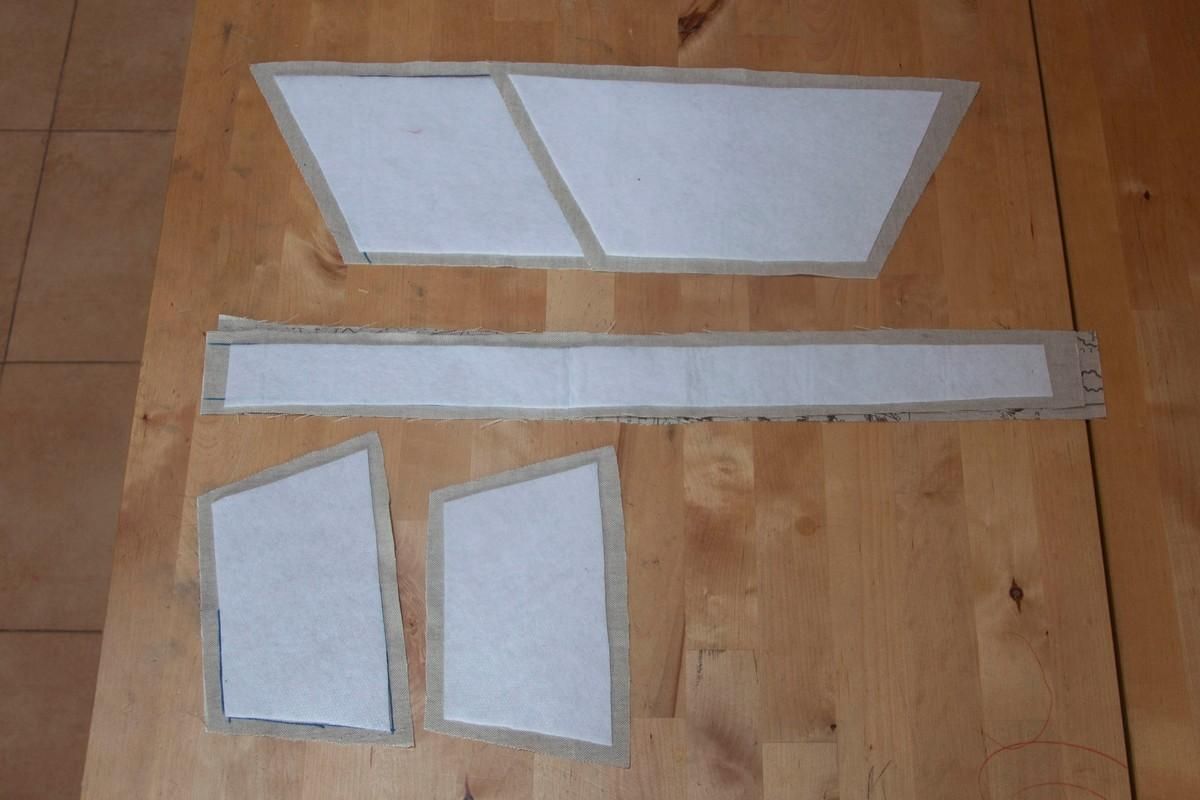
Iron the interfacing A to the main fabric pieces A. Iron the interfacing B to the main fabric pieces B . Iron the interfacing C to the main fabric pieces C. Iron the interfacing on the wrong side of the fabric about 1 cm/0.4 in from each edge (or 2 cm/0.8 in for piece C).
Coin Pocket

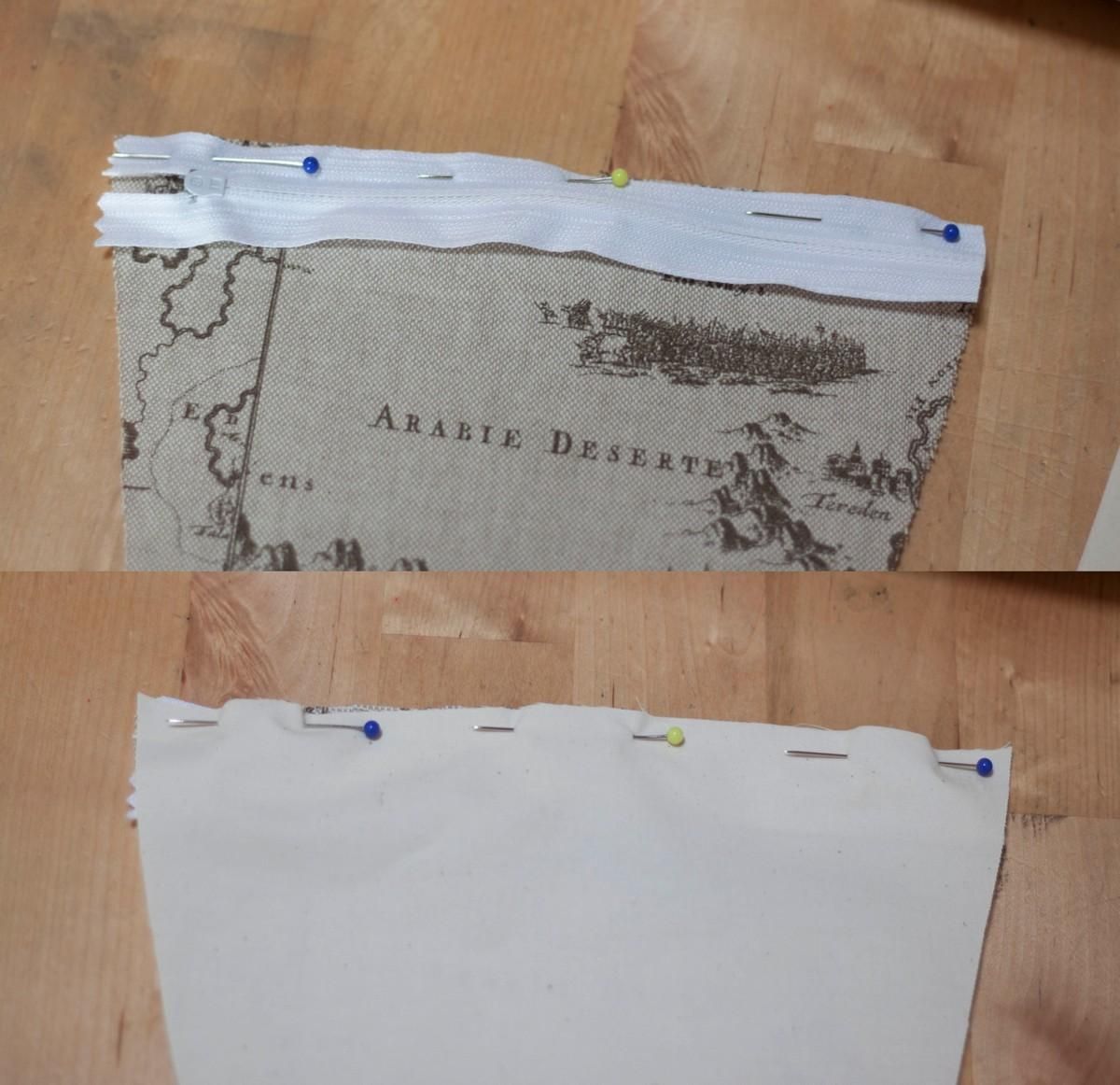

You'll be working with pieces A.
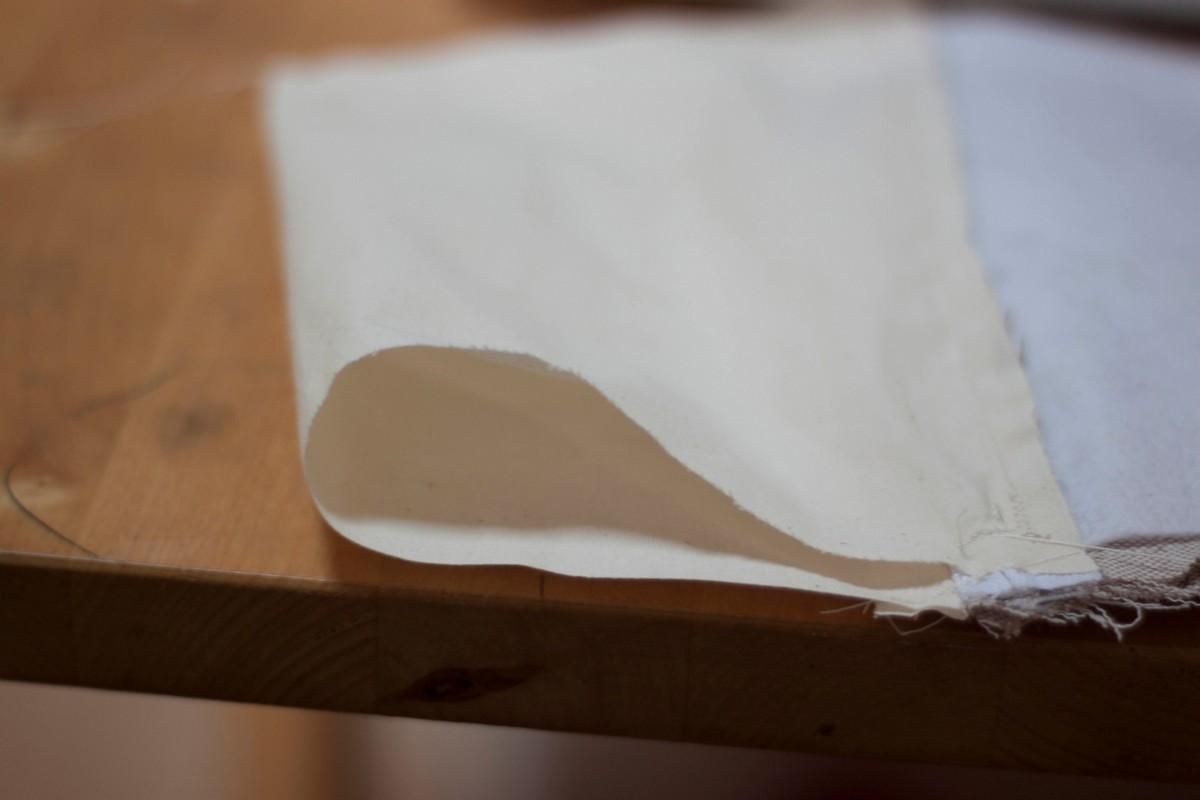
Place main fabric pieces right sides together and stitch the shorter straight side. (picture 1)
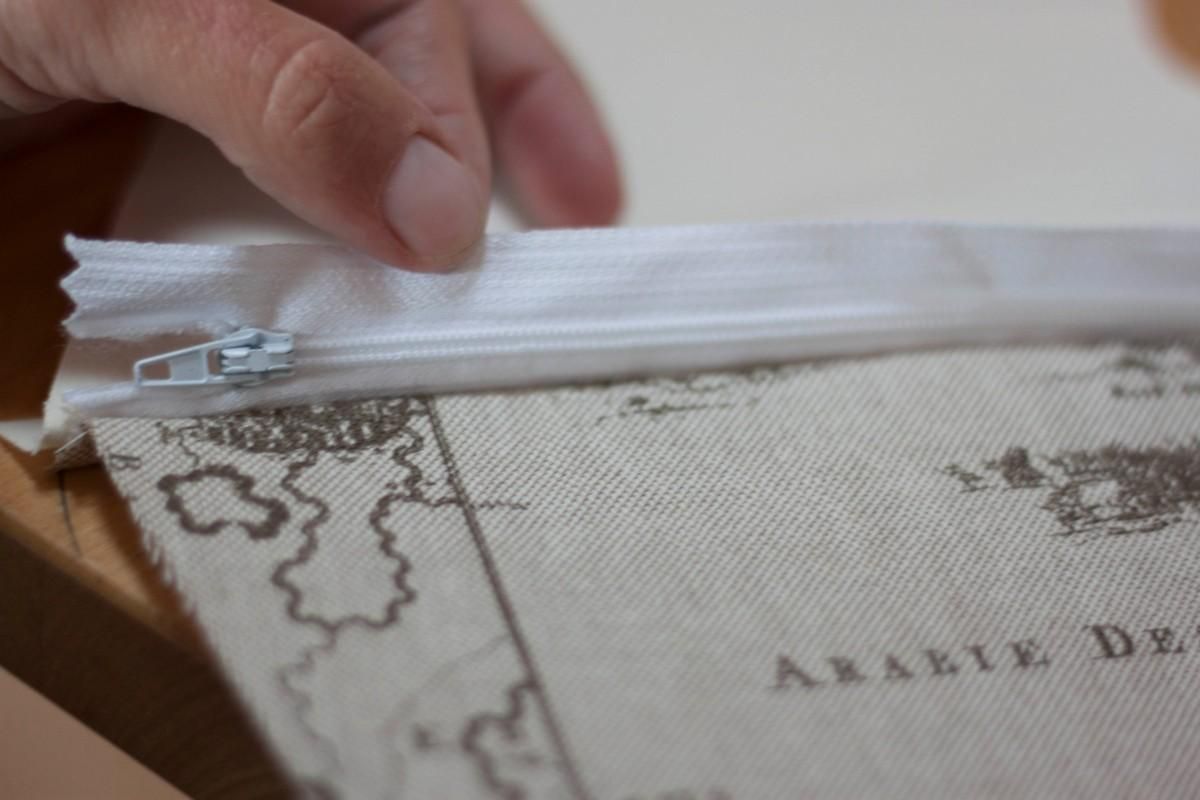
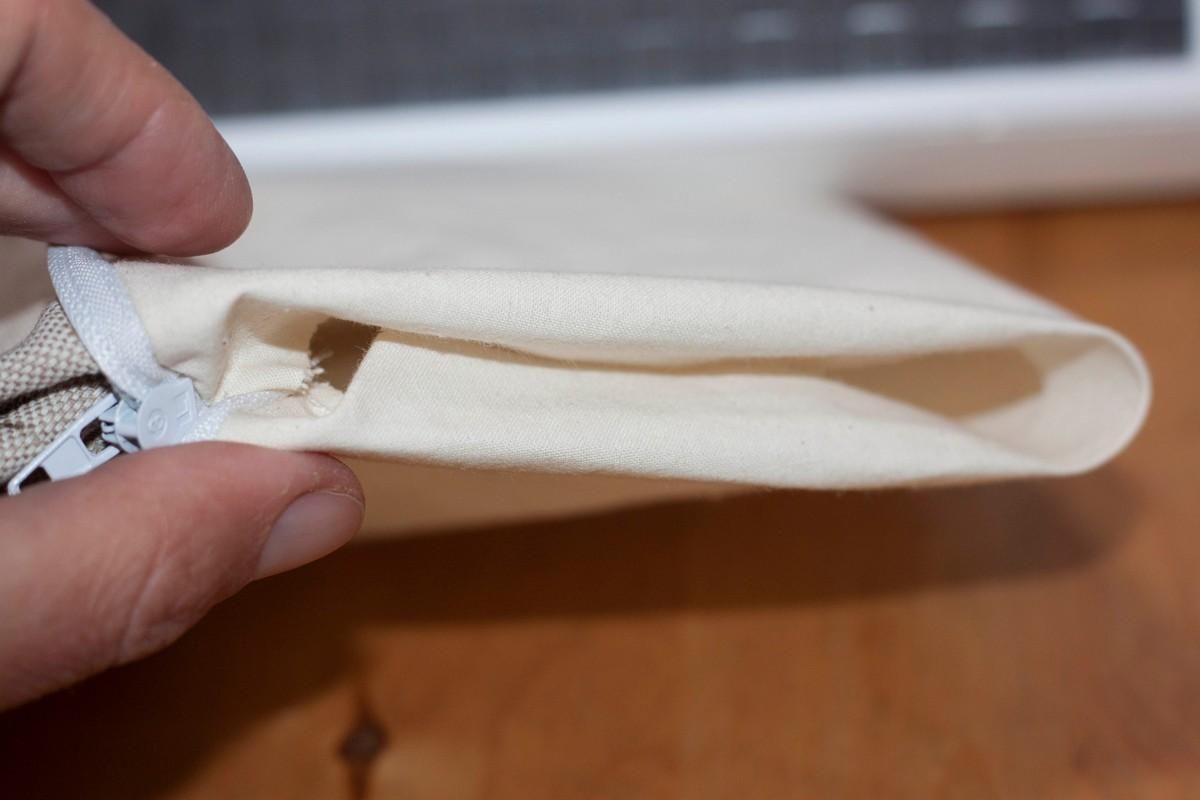
Align one side of the zipper with one of the longer straight sides (fabric piece facing right side up) as shown in picture 2 (the upper side of the zipper faces down). If your zipper is longer than the piece side, cut the zipper to be the same length.
Place one long straight side of the lining on the zipper, this side should also align with the zipper and the side of the main fabric piece. the lining should be right side down. (picture 2)
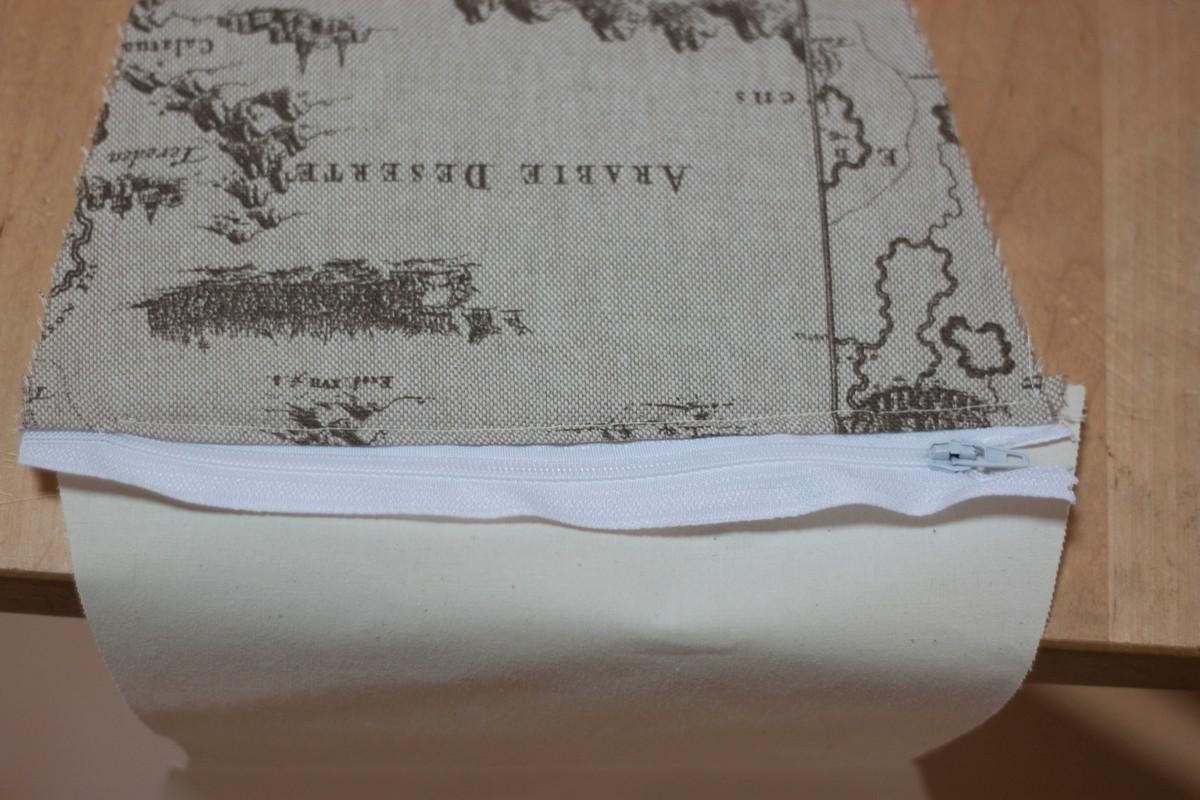
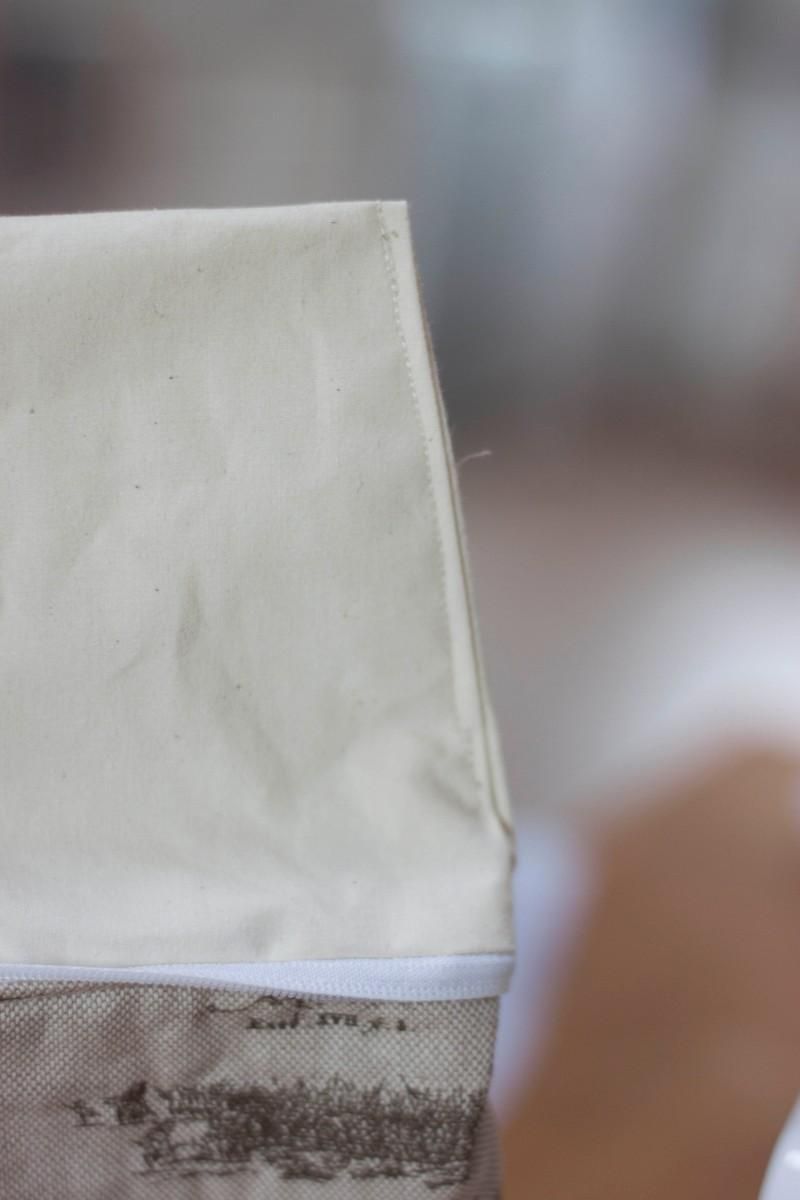
Stitch with a straight stitch using a zipper foot. When you open the piece, the zipper will be stitched between the main fabric and the lining. (picture 3)
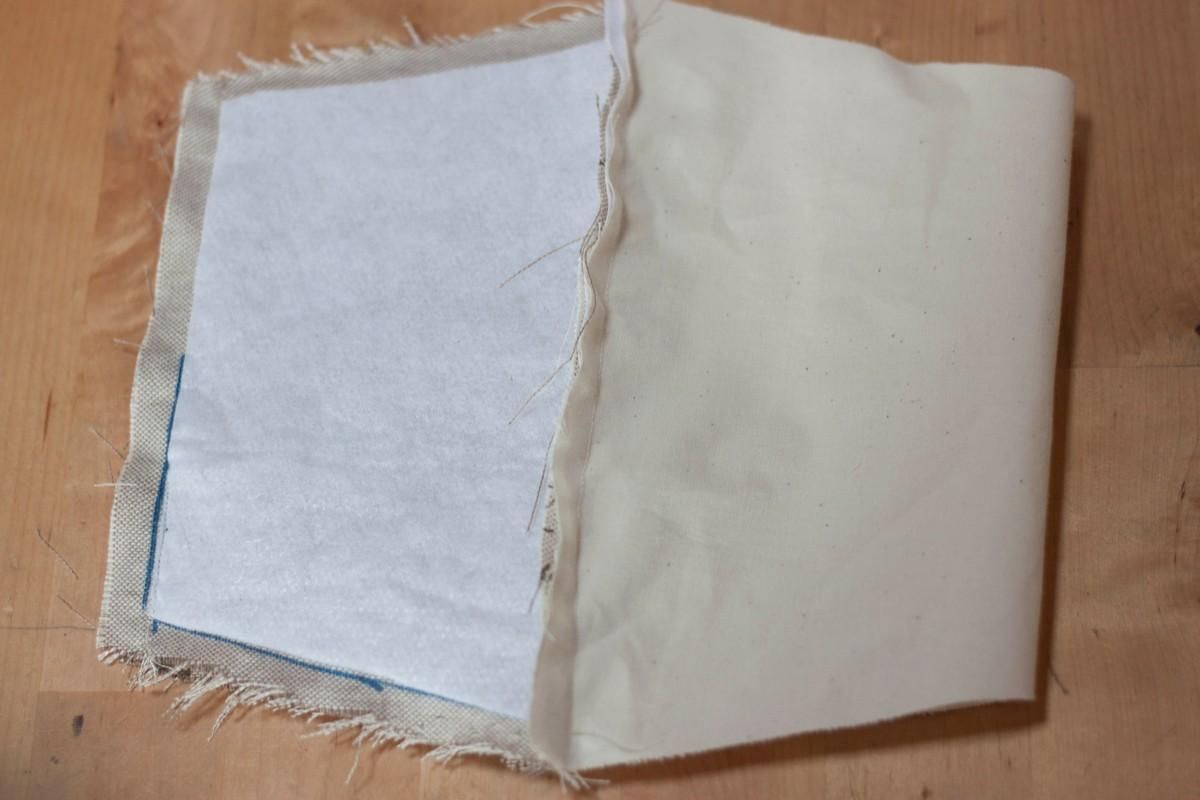
Fold the zipper onto the lining, iron the main fabric and topstitch at the edge of the main fabric. (picture 4)
Open the zipper and stitch the other part of the zipper to the opposite side of the main fabric and lining. If you cannot separate the two sides of the zipper, at least open it as much as you can. You'll have to play with placing the fabrics right. The shorter sides of the main fabric and lining are open and the whole piece is wrong side out. (picture 5)
Sew 3 sides closed, leave one side of the lining open. (picture 6)
Turn the pocket right side out through this opening. (picture 7)
Fold the edge of the opening 1 cm/0.4 in inside and iron. (picture 8)
Topstitch at the edge with your machine or by hand using the Invisible stitch. (picture 9)
Insert the lining into the main fabric and you can close the zipper. (picture 10)
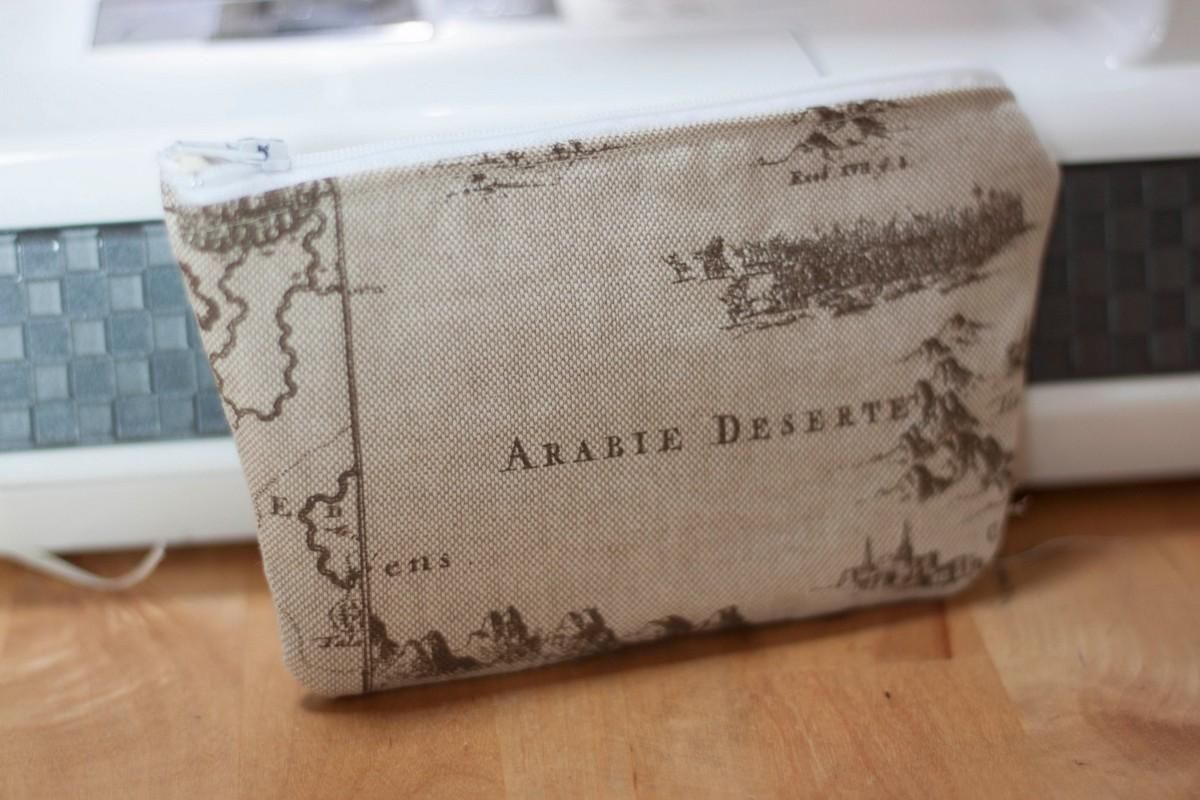
The coin pocket is done, set it aside for now. (picture 11)
Boat



Now you'll be working with the pieces cut from part B of the pattern.
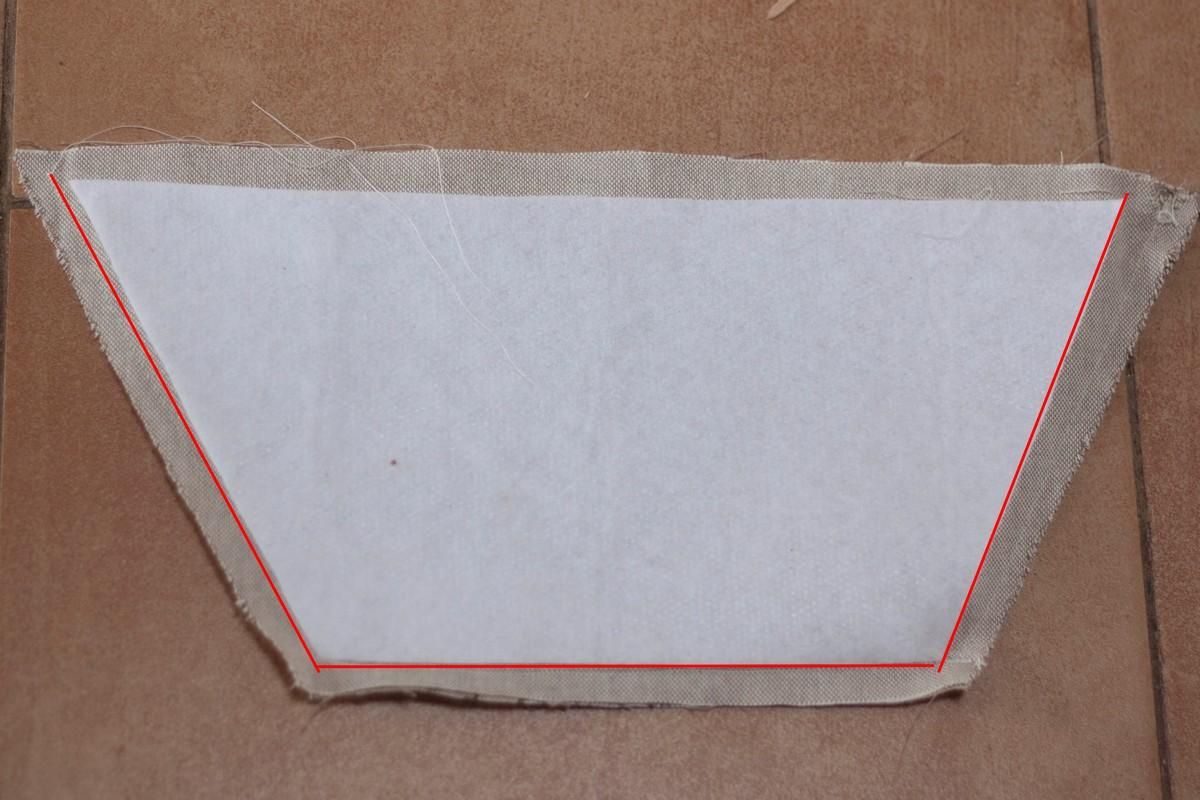
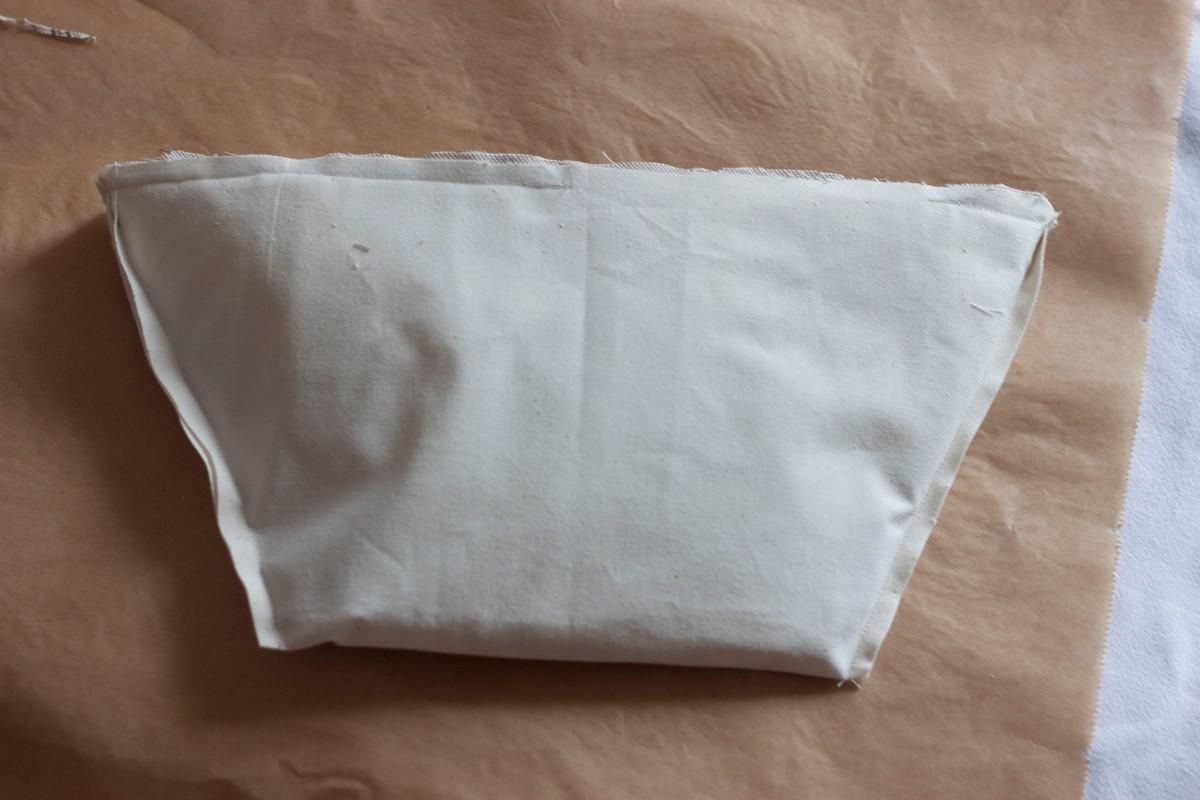
Place both main fabric pieces right sides together and stitch the bottom of the boat and the sides. (picture 1)
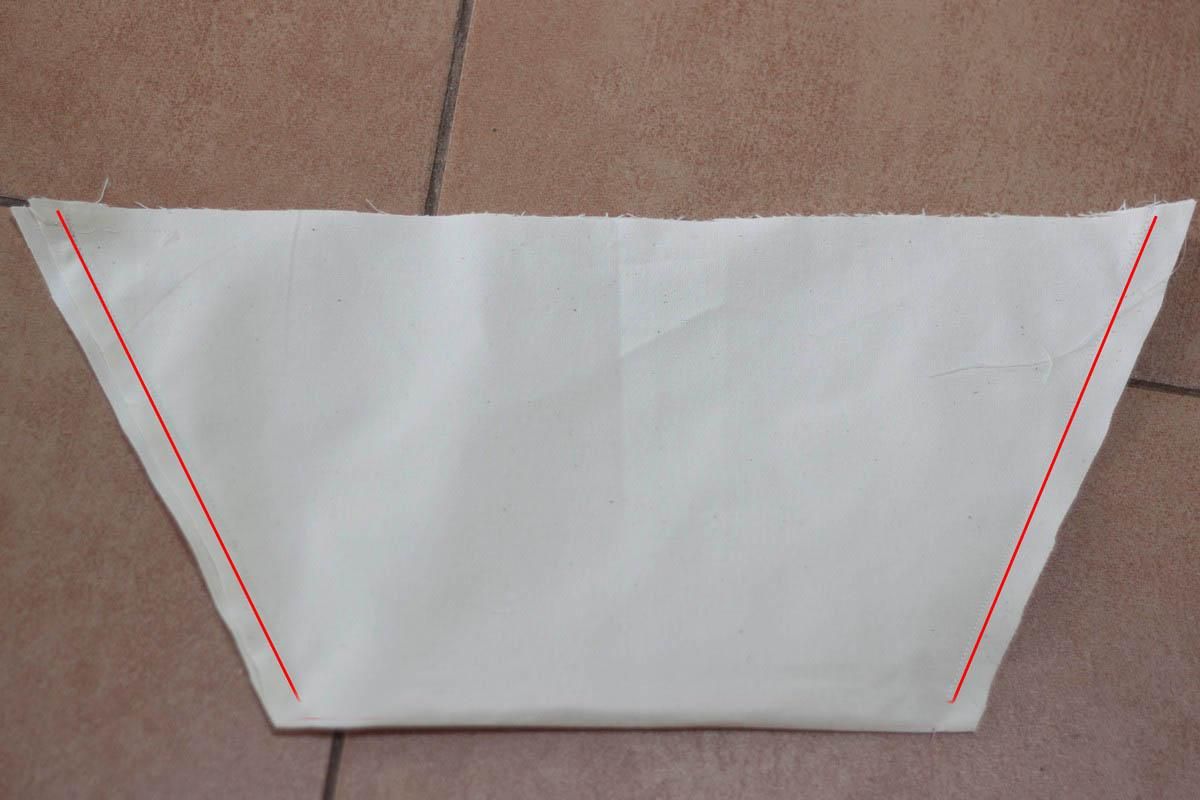
Fold the lining piece in half right sides together and stitch the sides. (picture 2)
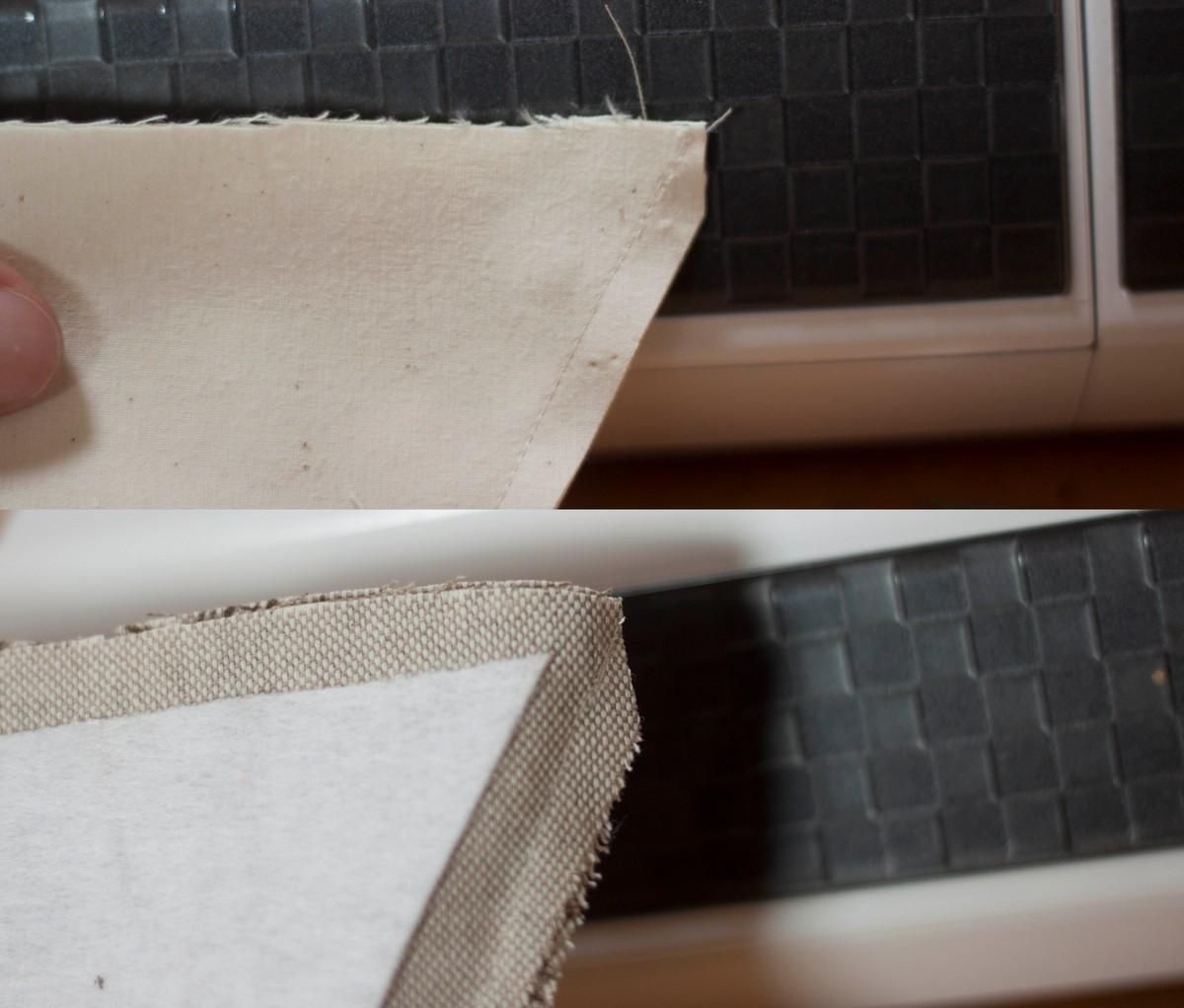
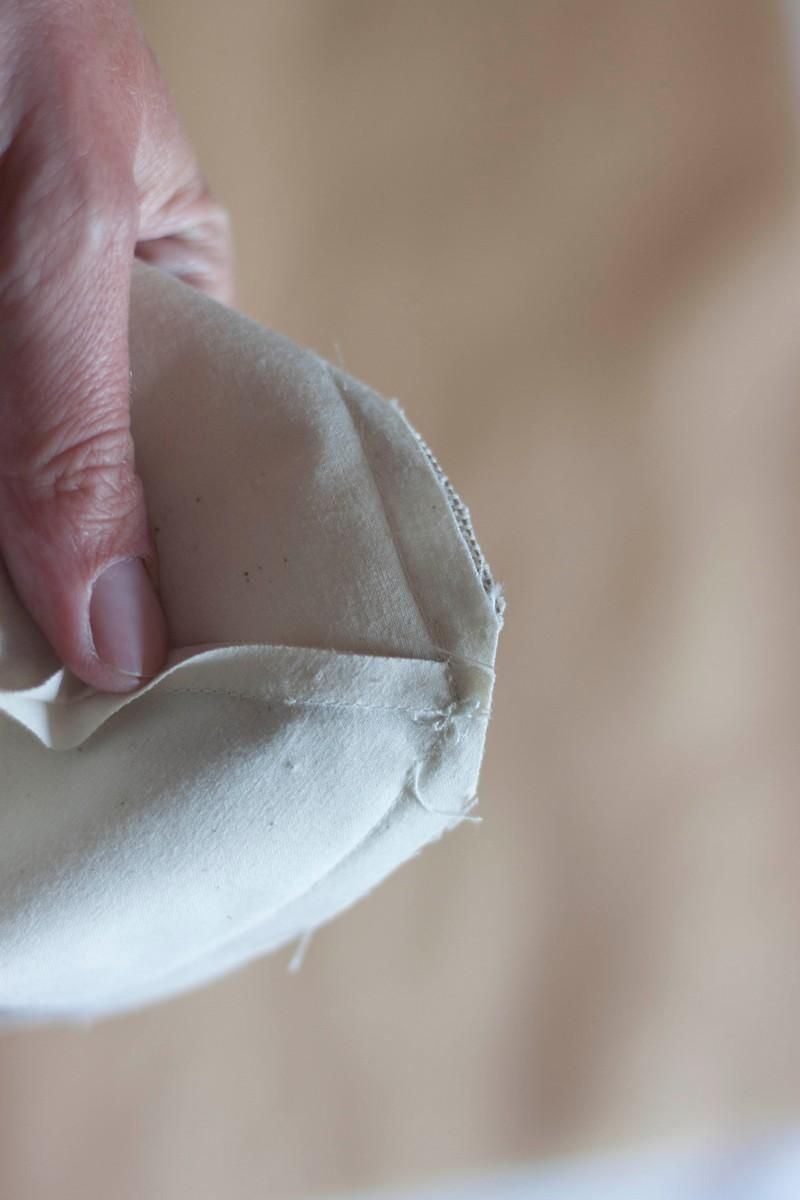
Cut the corners like in the picture, be careful not to cut the stitches. (picture 3)
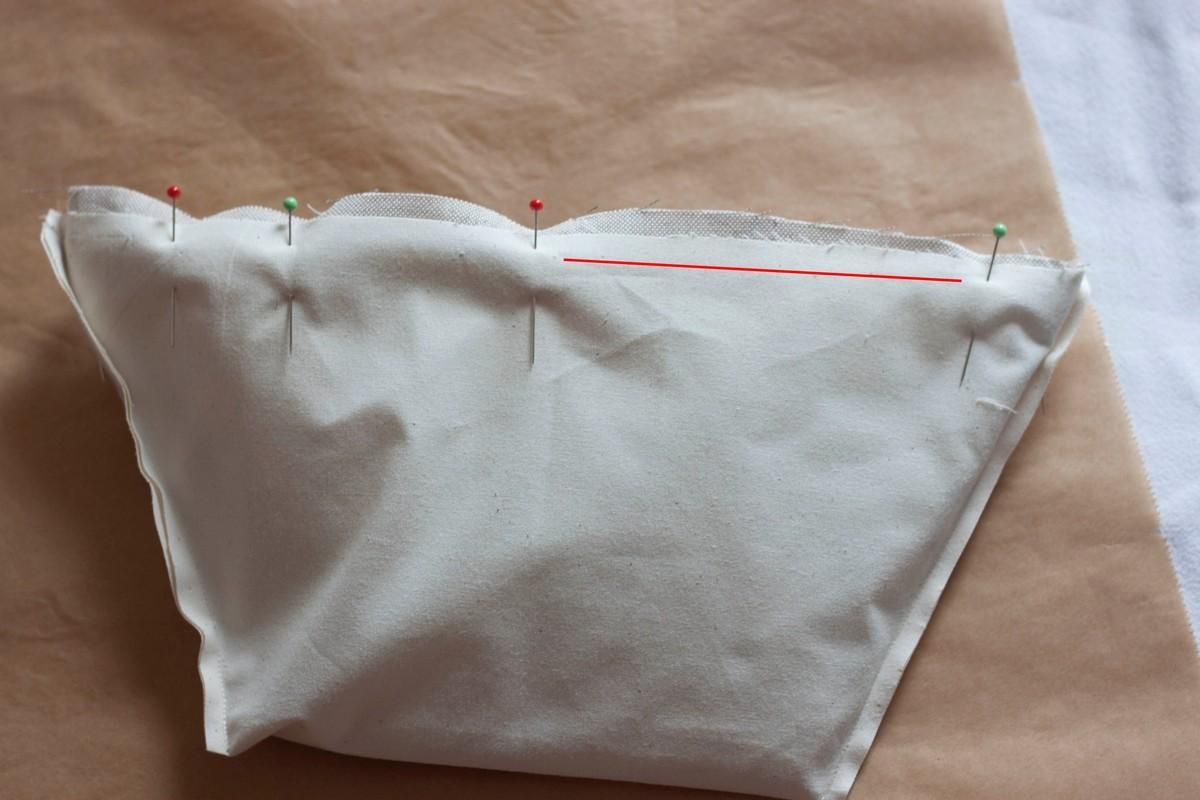
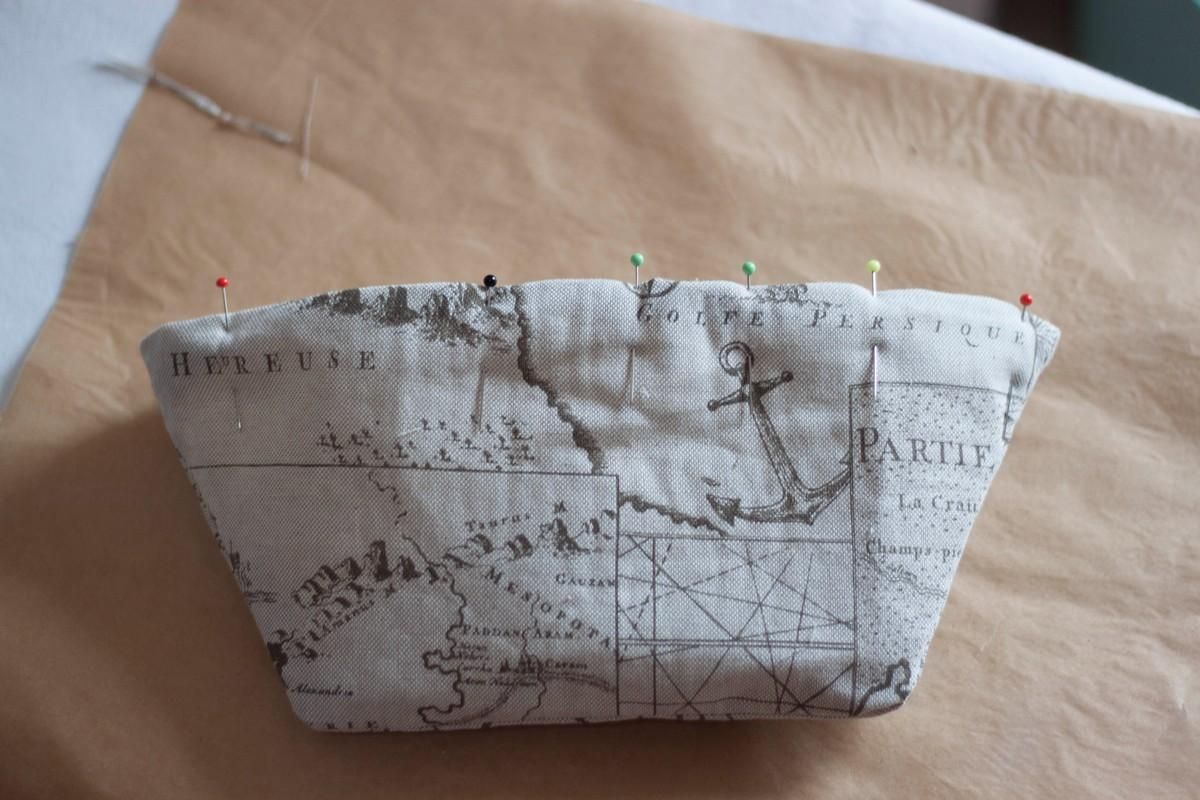
Leave the lining piece wrong side out, turn the main fabric piece right side out, place the main fabric piece into the lining piece and align well (especially the side seams). (picture 4)
Pin and stitch 1 cm/0.4 in from the edge, leaving about 8 cm/3 in open. (picture 5)
Cut both corners flat like in the picture and once again, don't cut the stitches. (picture 6)
Turn the whole piece right side out through the opening. (pictures 7 and 8)
Turn the lining into the main fabric piece. Fold the edges of the opening in just like you did with the coin pocket. Pull the lining down a little to make sure it doesn't go over the main fabric piece, pin. (picture 9)
Topstitch just a little from the edge. This way, you'll close the opening and also the topstitching will hold the lining in place and make sure it doesn't show above the edge of the main fabric. (picture 10)
Stitch Coin Pocket Inside the Boat
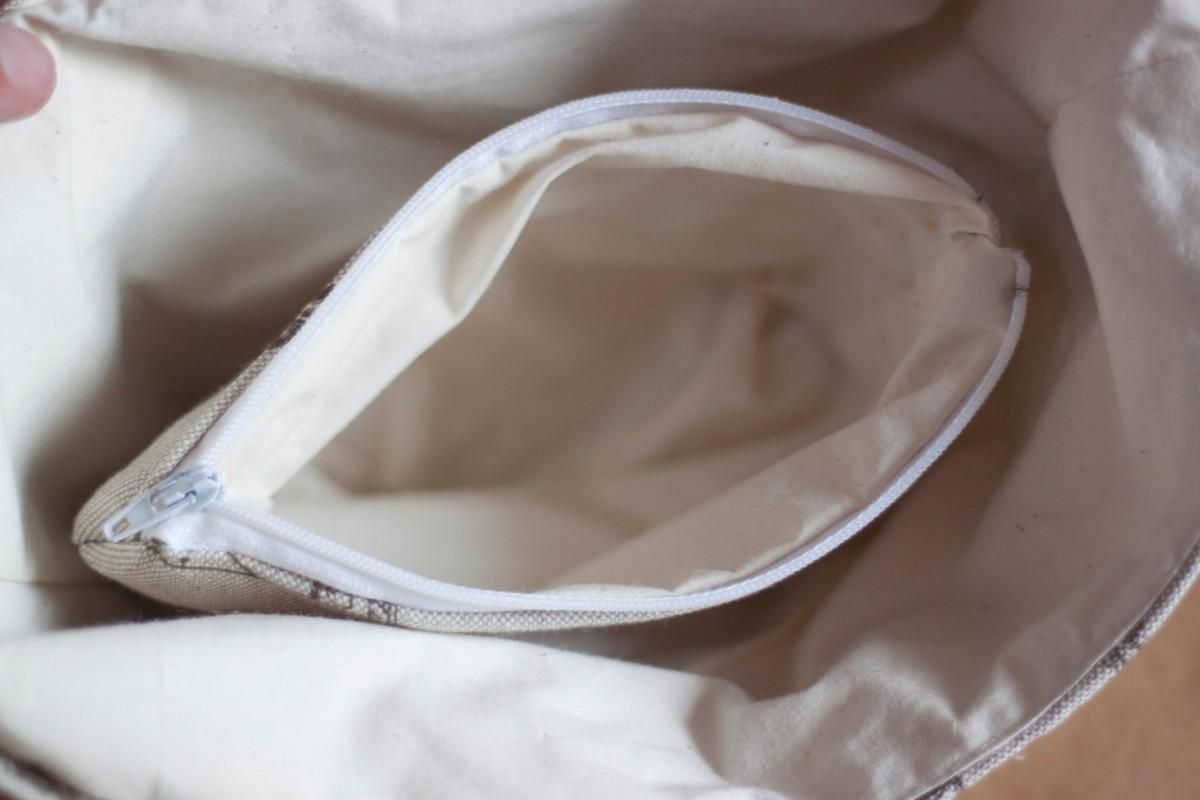
Place the pocket in the boat so that its bottom is centered on the bottom of the ship. (picture 1)
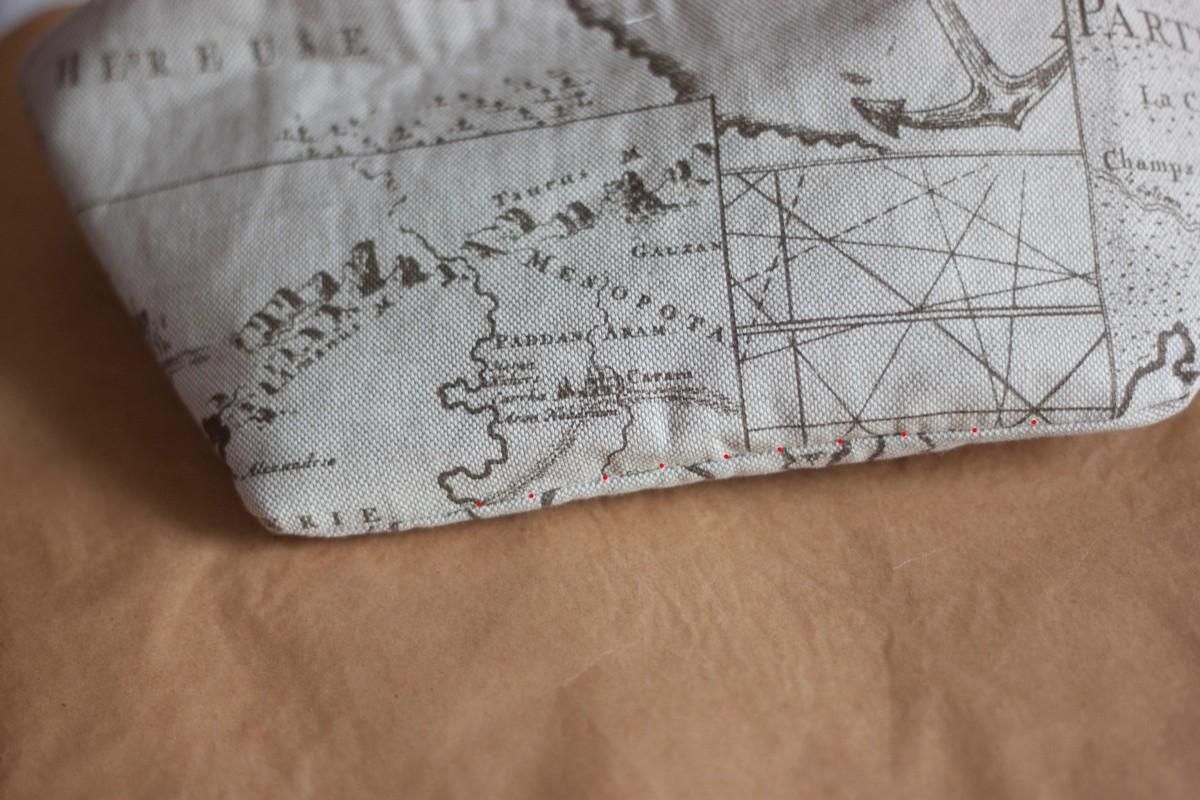
Using a matching threat, sew in hand from the inside of the pocket (bottom) through the bottom of the ship, pulling the needle exactly in the seam at the bottom of the boat. Continue stitching using the back stitch. You want to stitch the bottom of the pocket to the bottom of the boat and if possible, not to stitch through the lining of the pocket (so your needle goes through the main fabric and lining of the boat and only the main fabric of the pocket). (picture 2)
Handle
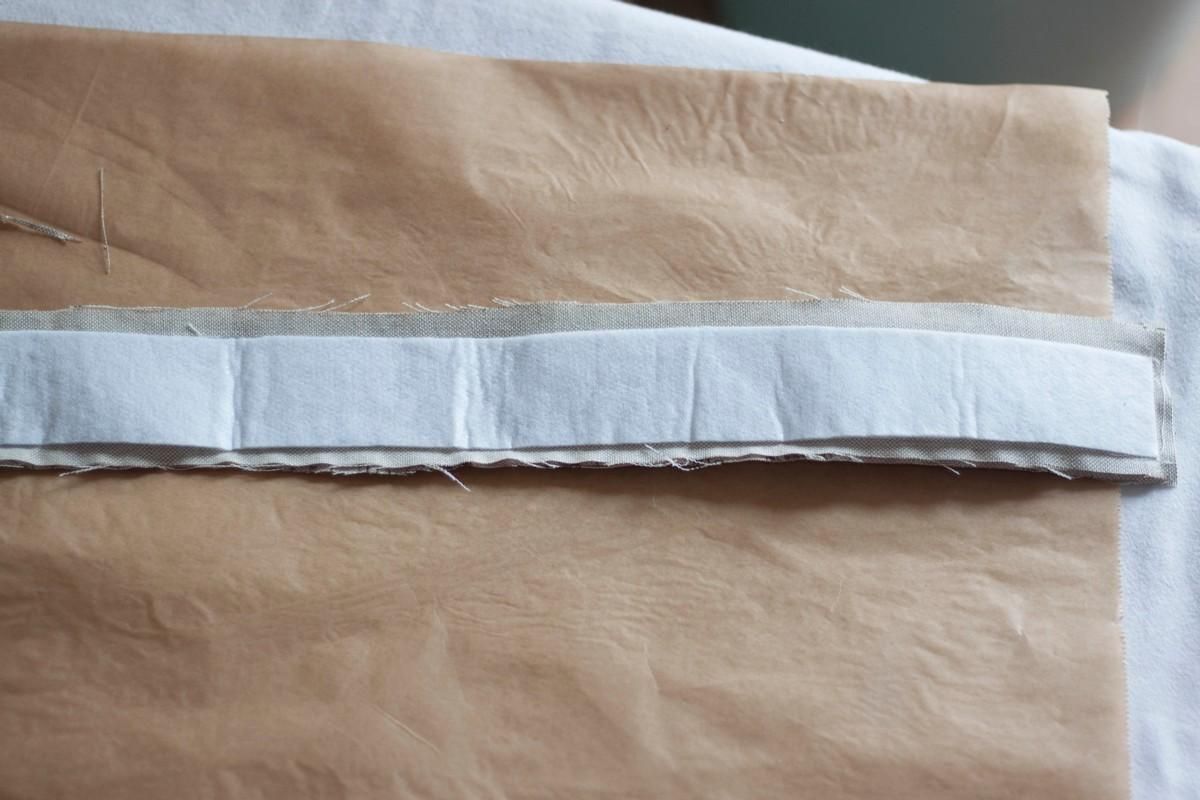
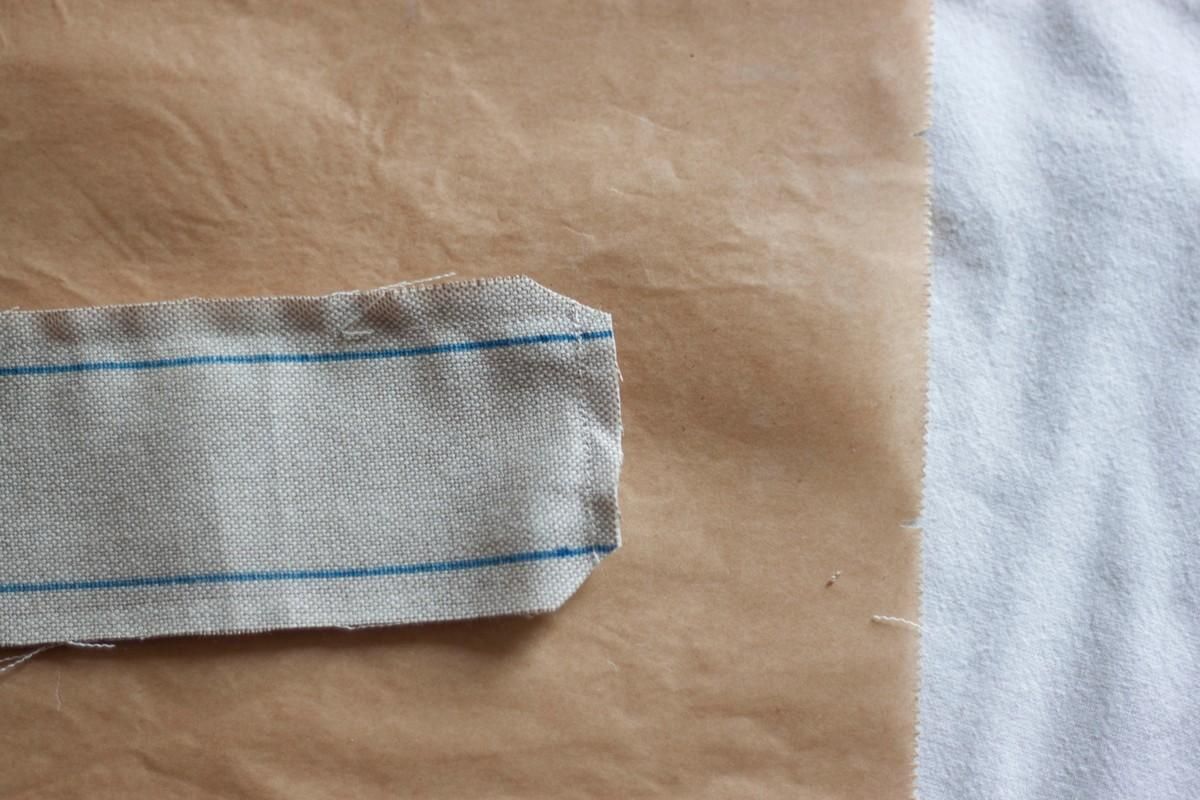
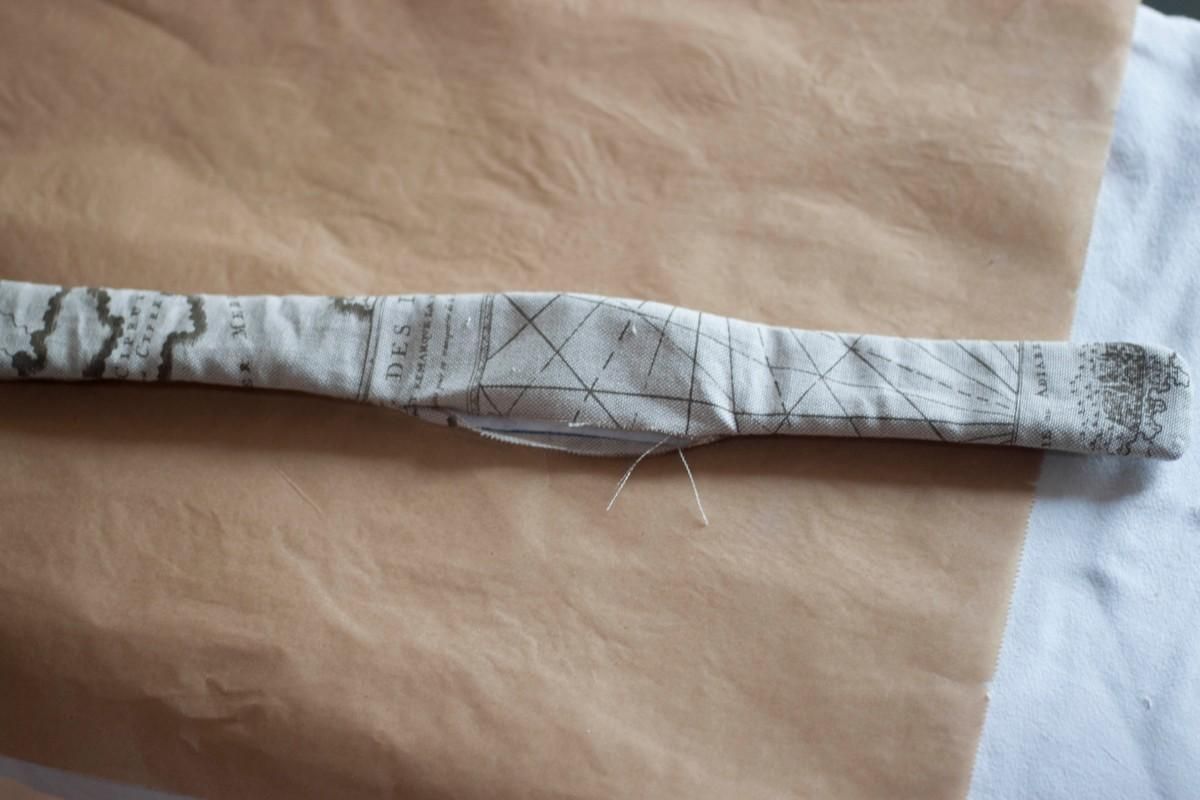
You'll be working with parts cut from the pattern part C.
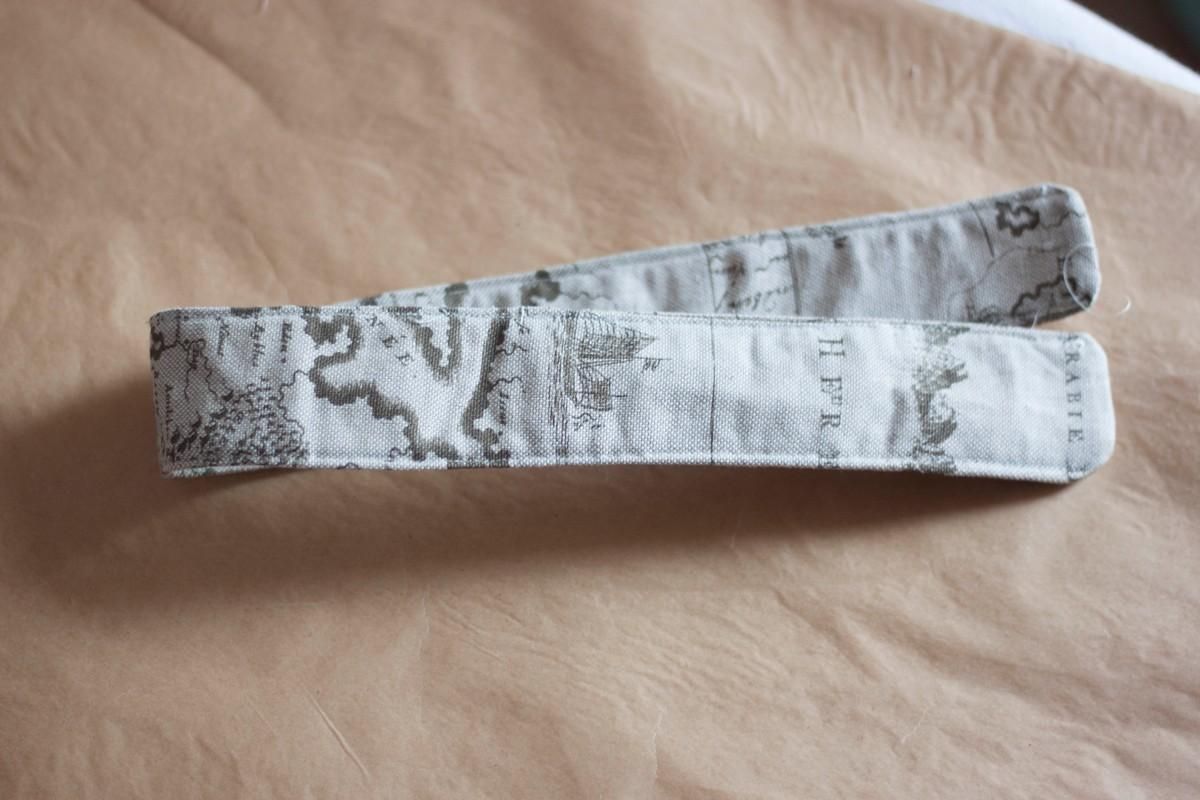
Place both parts C right side together and stitch all sides leaving 10 cm/4 in opening in the center of one long side. (picture 1)
Cut all four corners like in the picture. (picture 2)
Use the opening to turn the piece right side out. (picture 3)
Fold the edges of the opening in. Iron the whole piece and topstitch just at the edge. (picture 4)
Attach the Handle
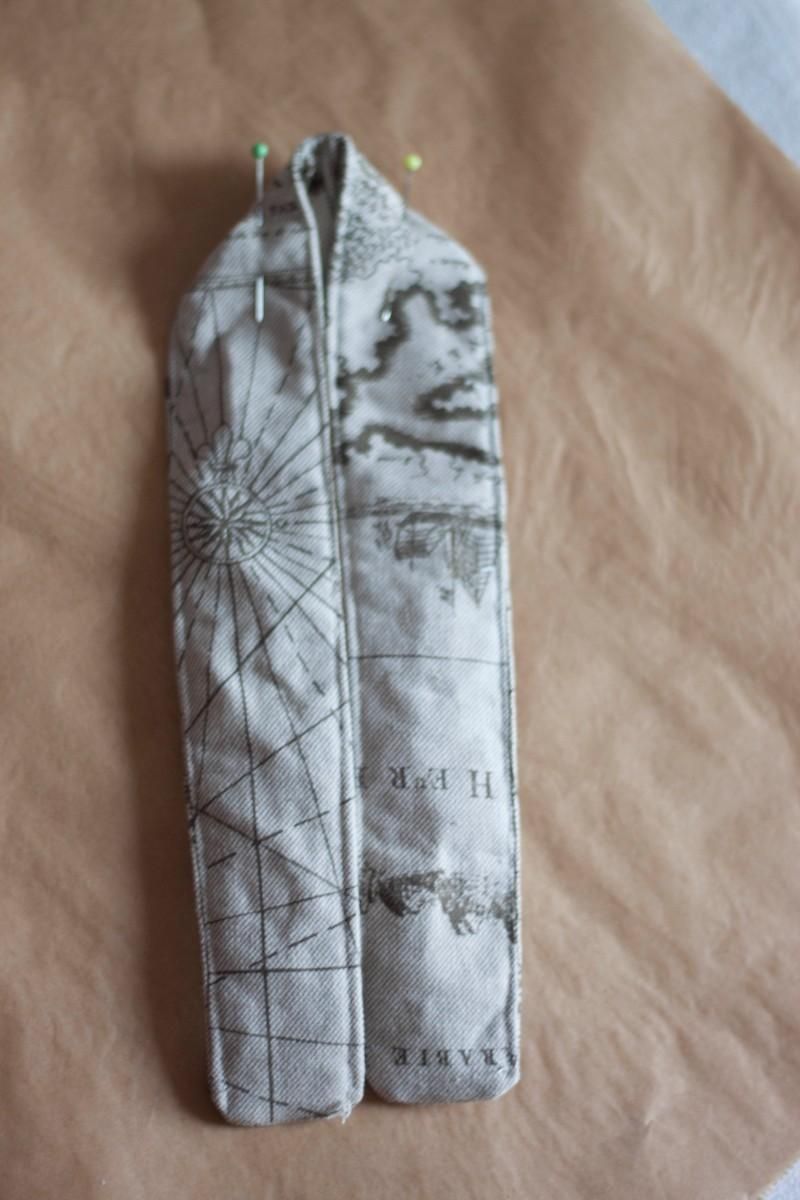


Fold the handle like in the pictures and pin. (pictures 1 and 2)
Place the handle inside the boat so that each end of the handle is on one side of the coin pocket. Pin each end to one side of the boat. You can decide how long the handle will be. I find it best to fold each end about 5 cm/2. Stitch each end of the handle to the bottom of the boat, again, go through the bottom seam of the boat. This length of the handle is ideal to make the handle that goes above the boat look like sails and at the same time, it's long enough to hold and not to block the zipper of the coin pocket. (picture 3)
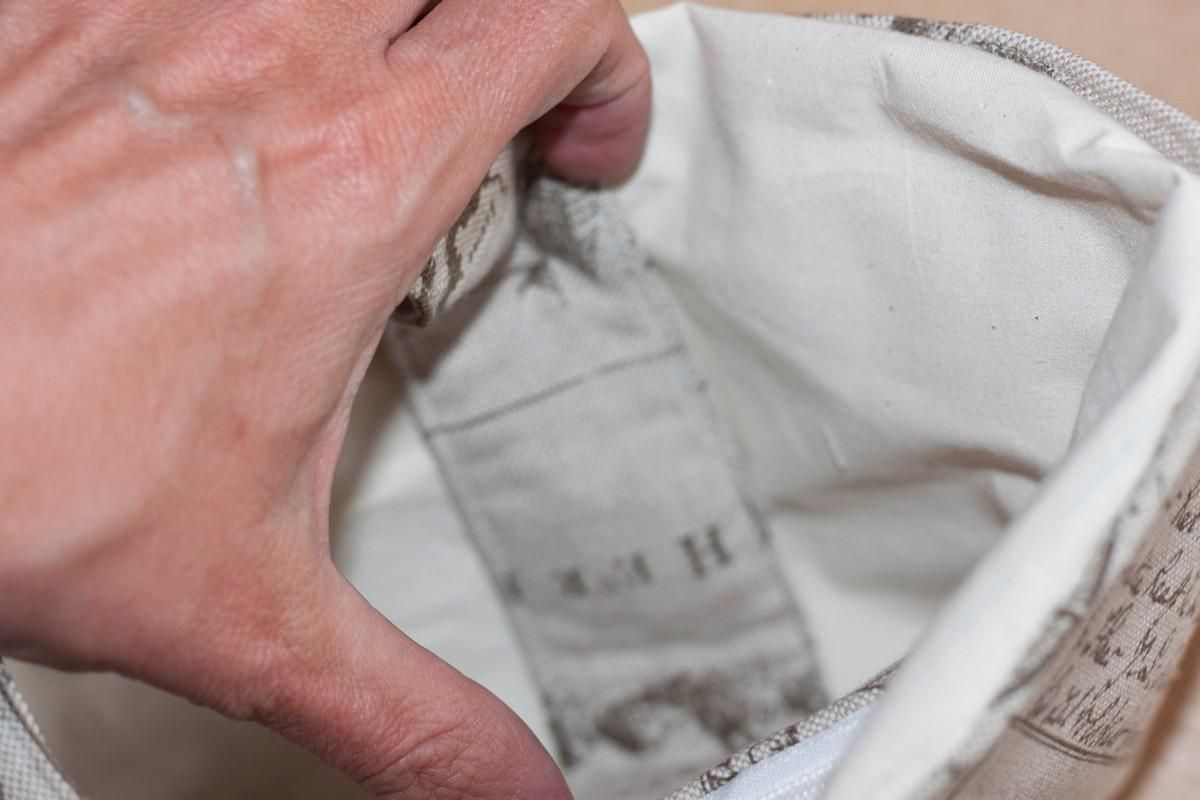
The last picture shows the folded end inside the boat. (picture 4)
Loops
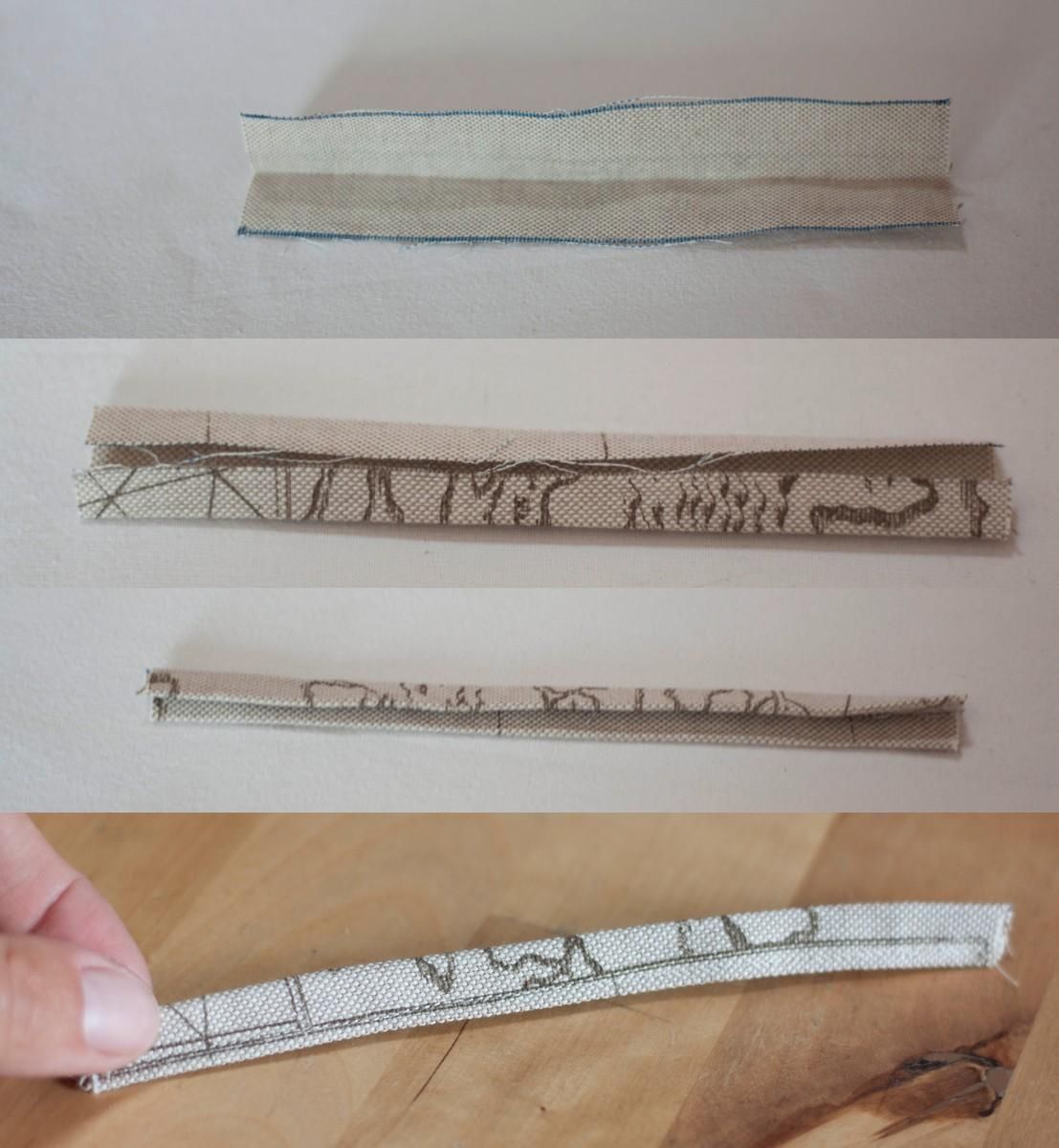


Take the 10 x 4 cm/4 x 1.5 in rectangle, fold it lengthwise wrong sides together, press and open again. You'll see the center crease. Fold the long edges to the center crease and iron. The fold the rectangle lengthwise again and press. Topstitch the open long side. Cut the piece in half to get two 5 cm/2 in long stripes. (picture 1)
Take one loop and fold 0,5 cm/0.2 in. Stitch it to the inside of the boat next to the side seam and just under the top edge of the boat. (picture 2)
Put a D-ring on the loop, fold the other end. (picture 3)
Stitch this end on the other side of the side seam. Follow the same steps on the other side of the boat with the other loop and D-ring. (picture 4)
Strap
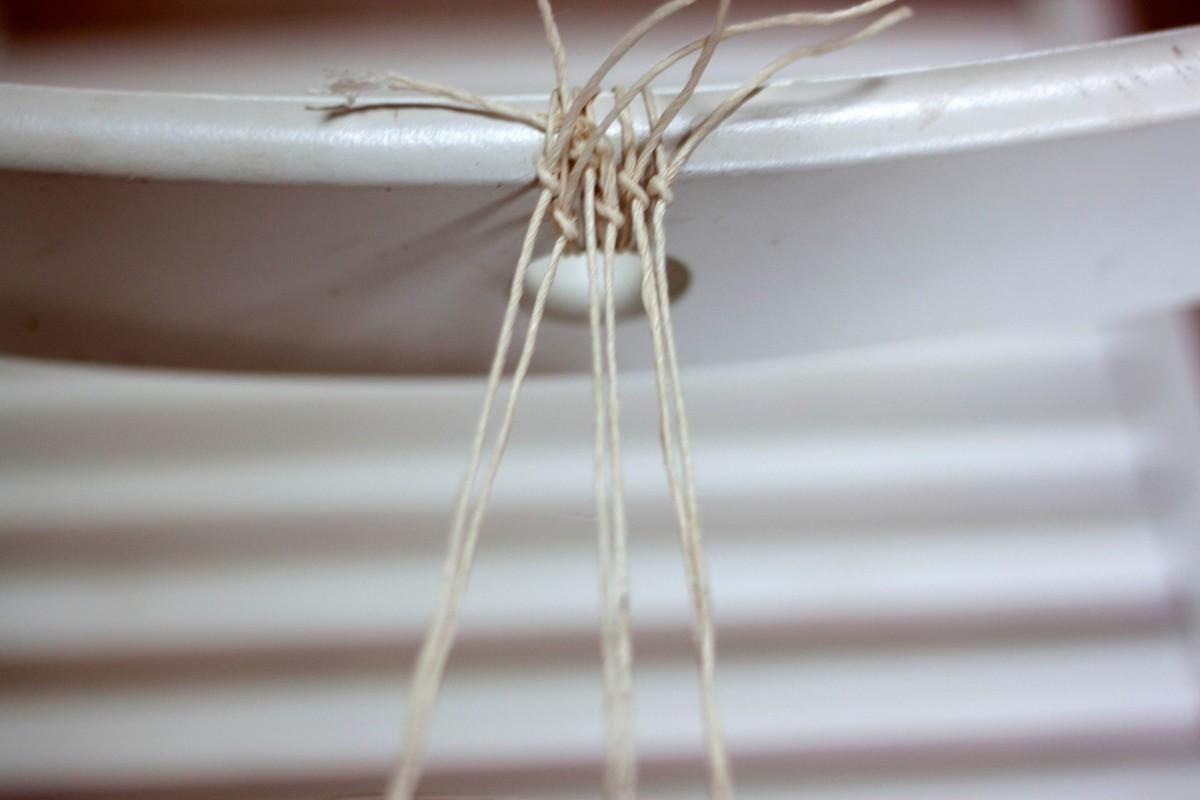
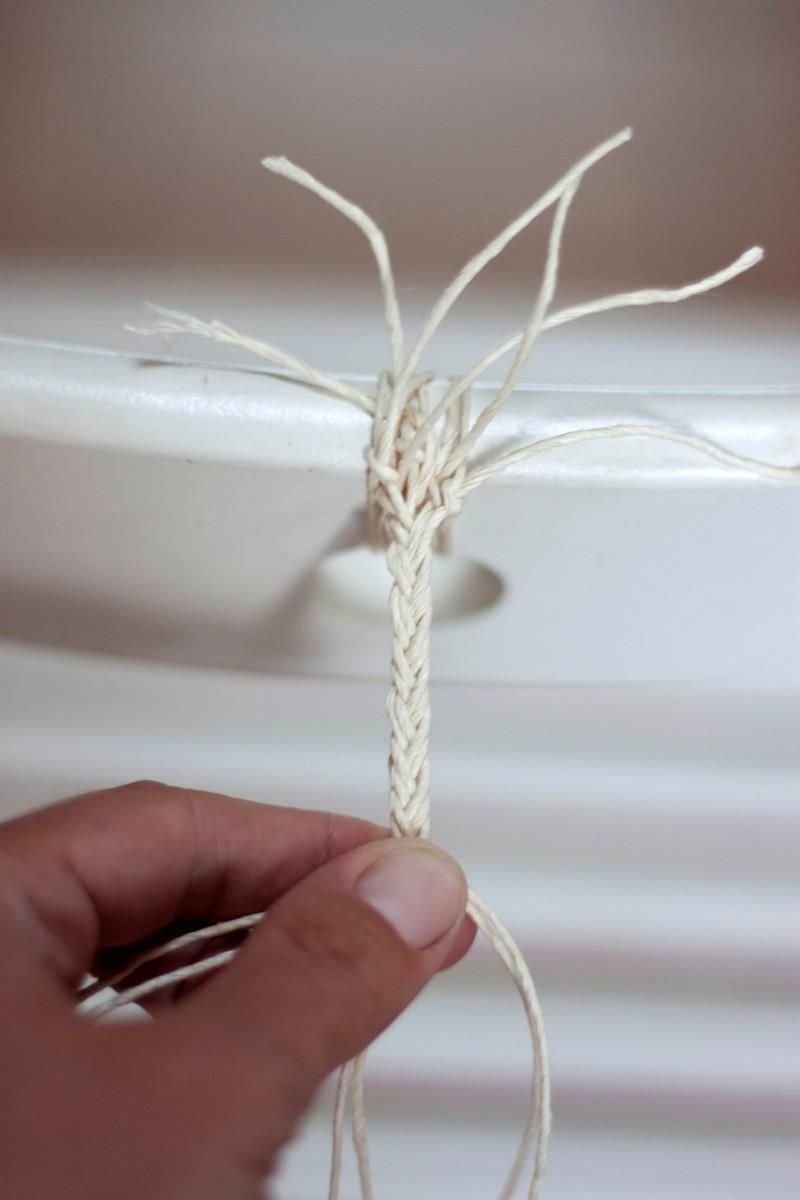

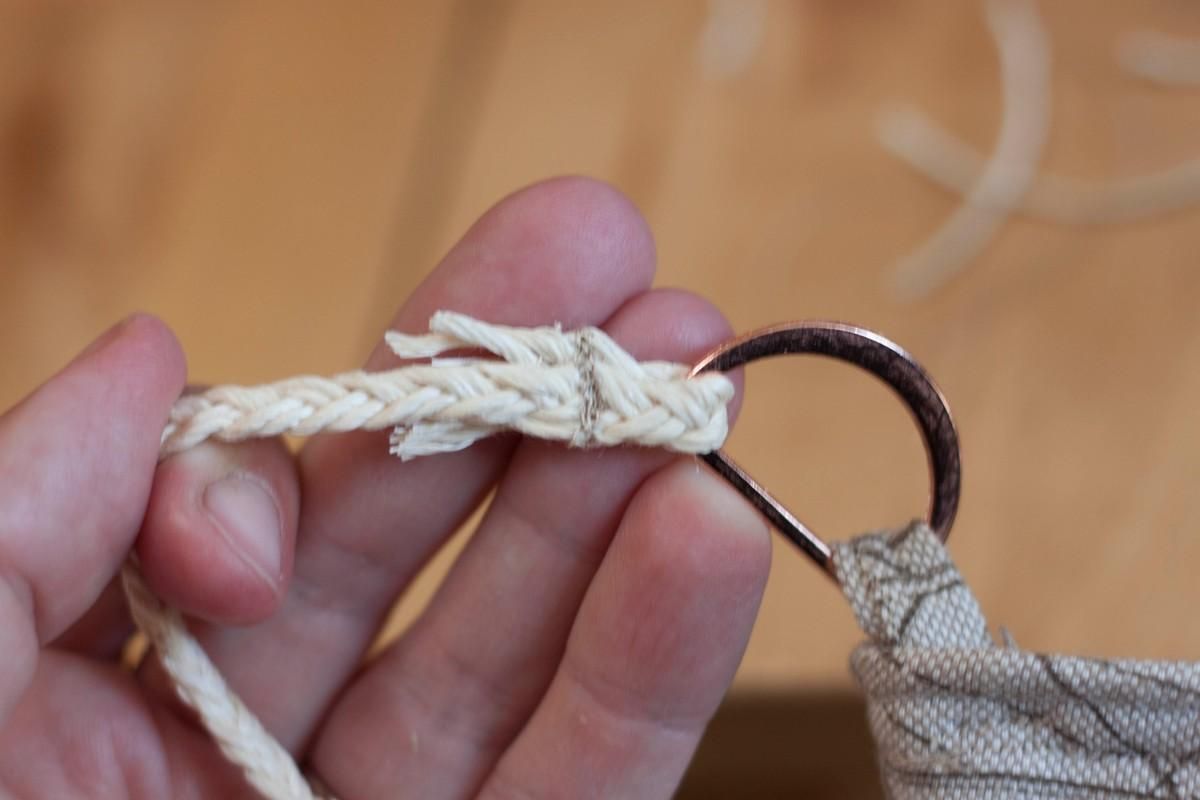

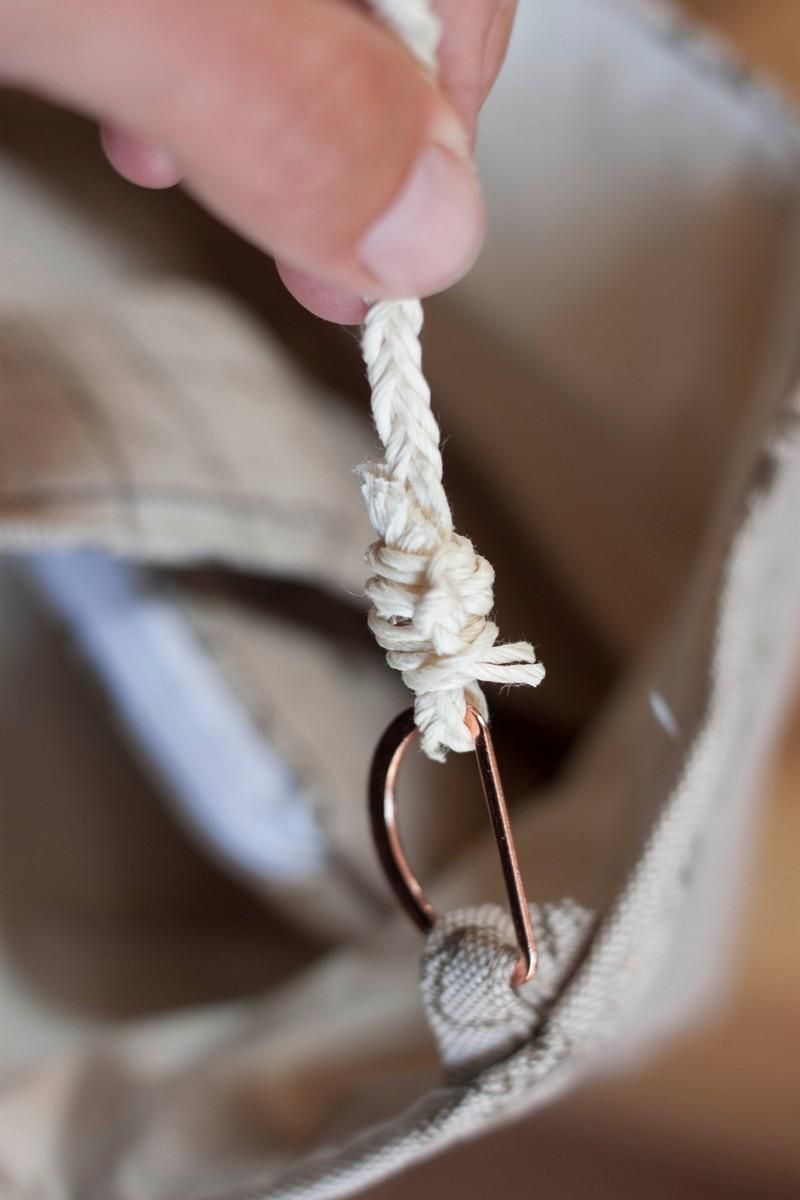
We'll make the strap by braiding strings.
Measure how long you want your strap to be and add one half of the length.* This is how long you should cut the strings. Cut 6 strings, tie them to something (e.g. a chair) and divide into sections of two. (picture 1)
* The necessary length can vary depending on how tight you braid and how much of the length you'll use to tie the strings to something. It's better to cut the strings longer, you can always make the strap shorter.
Braid a 3-strand braid, each strand will be two strings. (picture 2)
When you finish braiding, topstitch there and back a few times to prevent loosening. Cut the end. (picture 3)
Lead this end through the D-ring, fold about 2 cm/0.8 in and stitch (again, there and back a few times). Cut the other end off the chair and follow the same steps to stitch it to the other D-ring. (picture 4)
Cut a 20 cm/8 in long string and wrap it around the folded end of the strap to cover the trimmed ends. Make a knot. (picture 5)
Hide the ends of the string inside the wraps and cut. Do this at the other side. (picture 6)
Your boat handbag is done!