Hand-Forged Honyaki Petty Knife
by Preston M in Workshop > Metalworking
58 Views, 0 Favorites, 0 Comments
Hand-Forged Honyaki Petty Knife
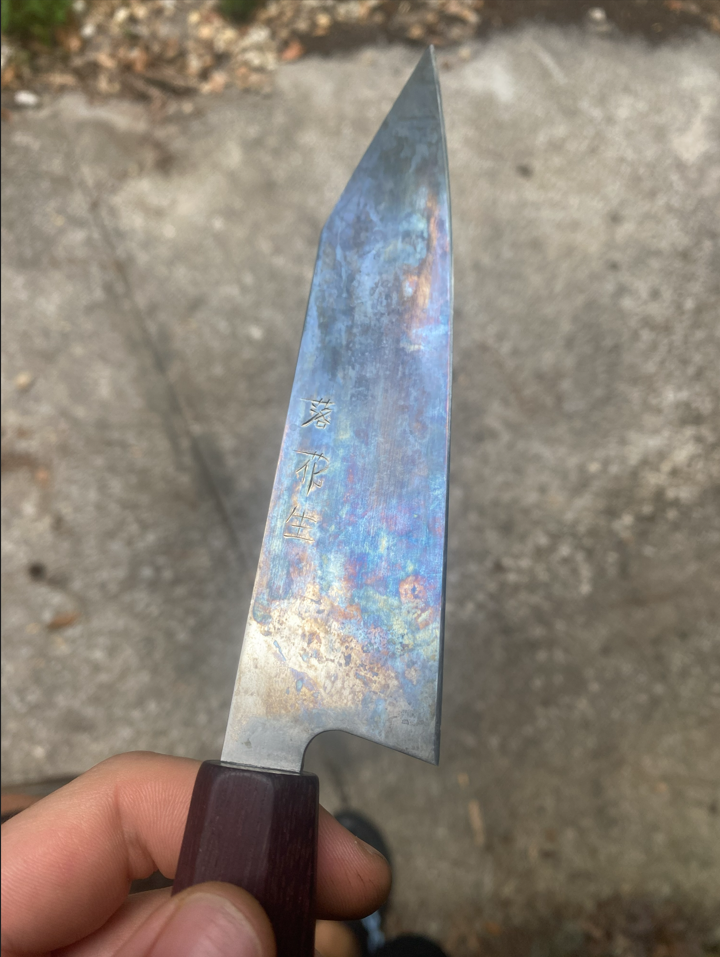
This hidden-tang Japanese style petty knife made from W2 high- carbon steel was hand forged, differentially hardened, ground, and polished for my own home and professional kitchen use.
Supplies
W2 High-Carbon Steel
Purpleheart and Hard Maple Wood
Wood Glue
JB Weld Steel Reinforced Epoxy
Refractory Cement
Forging
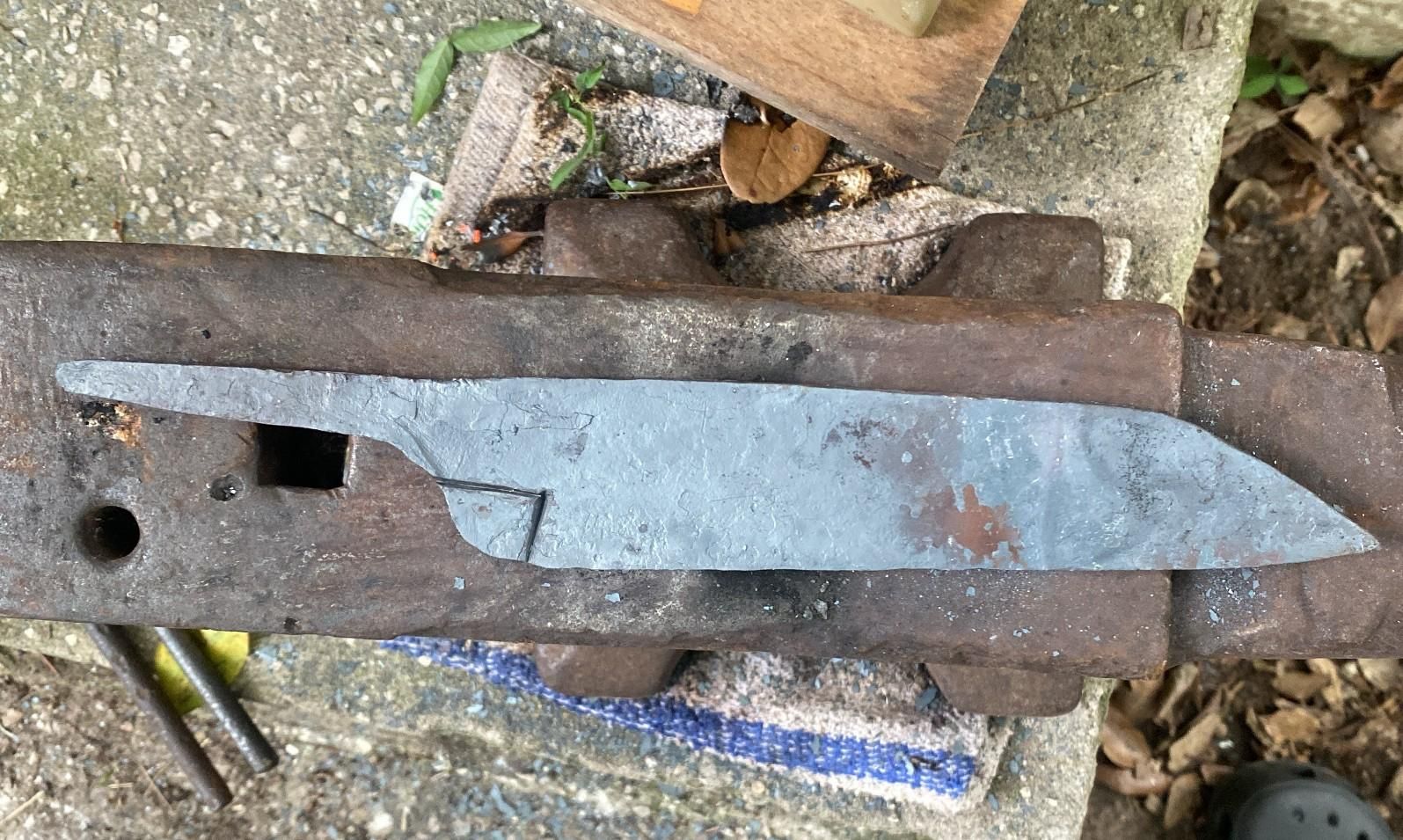
The goal was to create a knife that was compact, balanced, and versatile with little curve and a hard, robust edge. Sketch plans consisted of a knife with a short neck, aggressively angled heel, linear taper, flat-ground bevels and a differentially hardened edge for uncompromised hardness and resilience.
Once the drawings and materials list was completed, a two-burner propane forge and steel anvil was used to rough-forge the profile of the blade. Basic forging techniques such as hot-cutting, pointing, and beveling were used to obtain a rough profile.
Abrasion and Heat Treatment
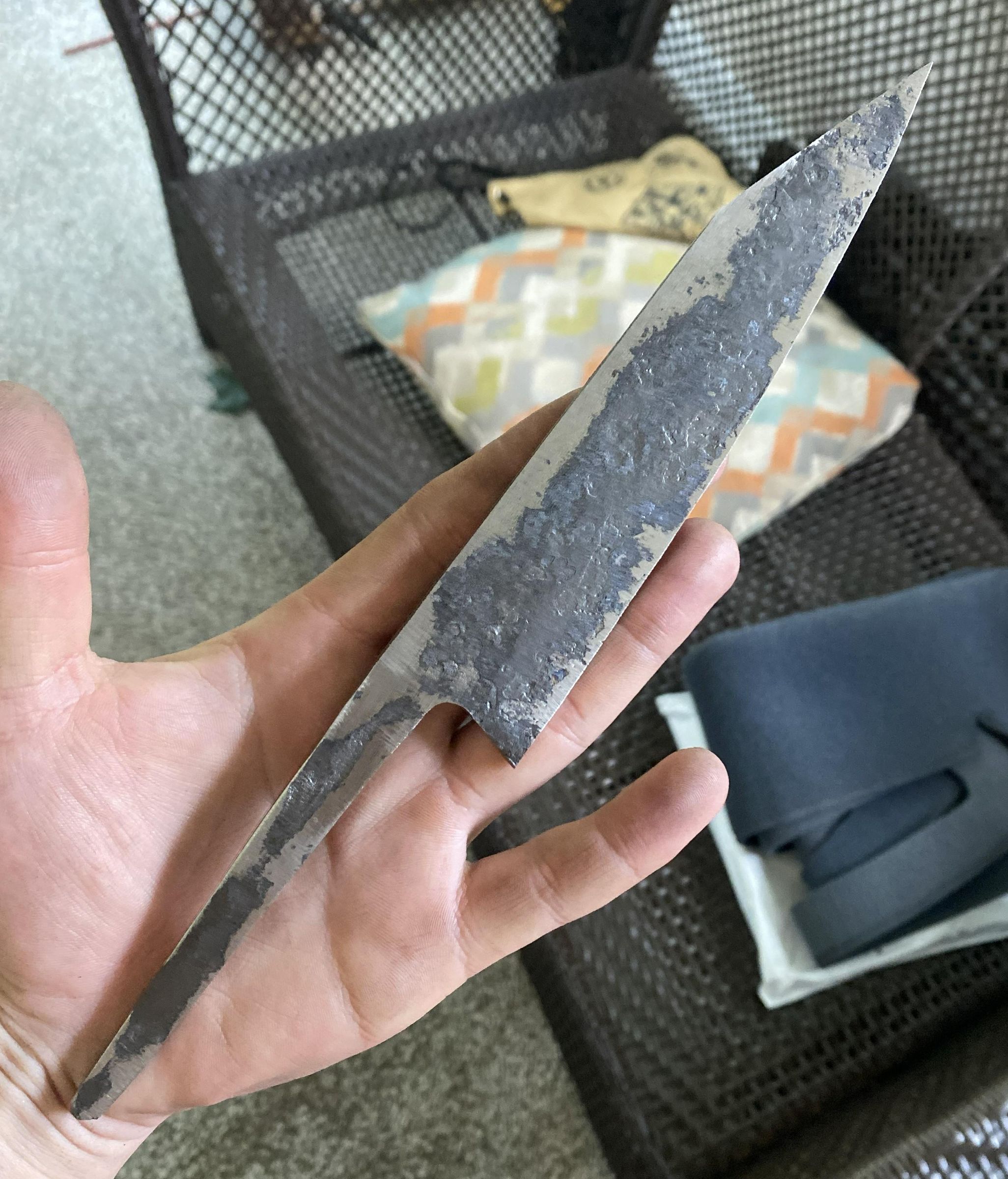
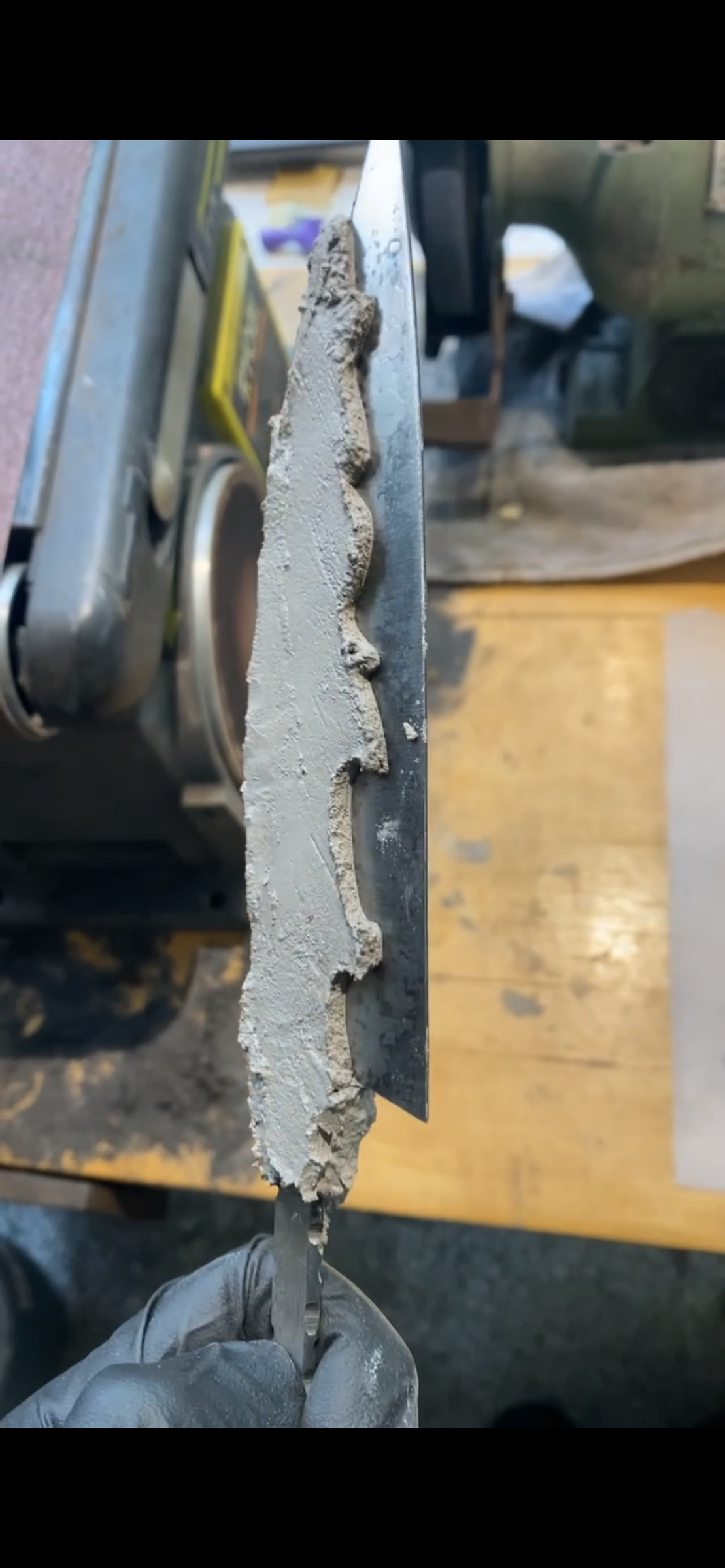
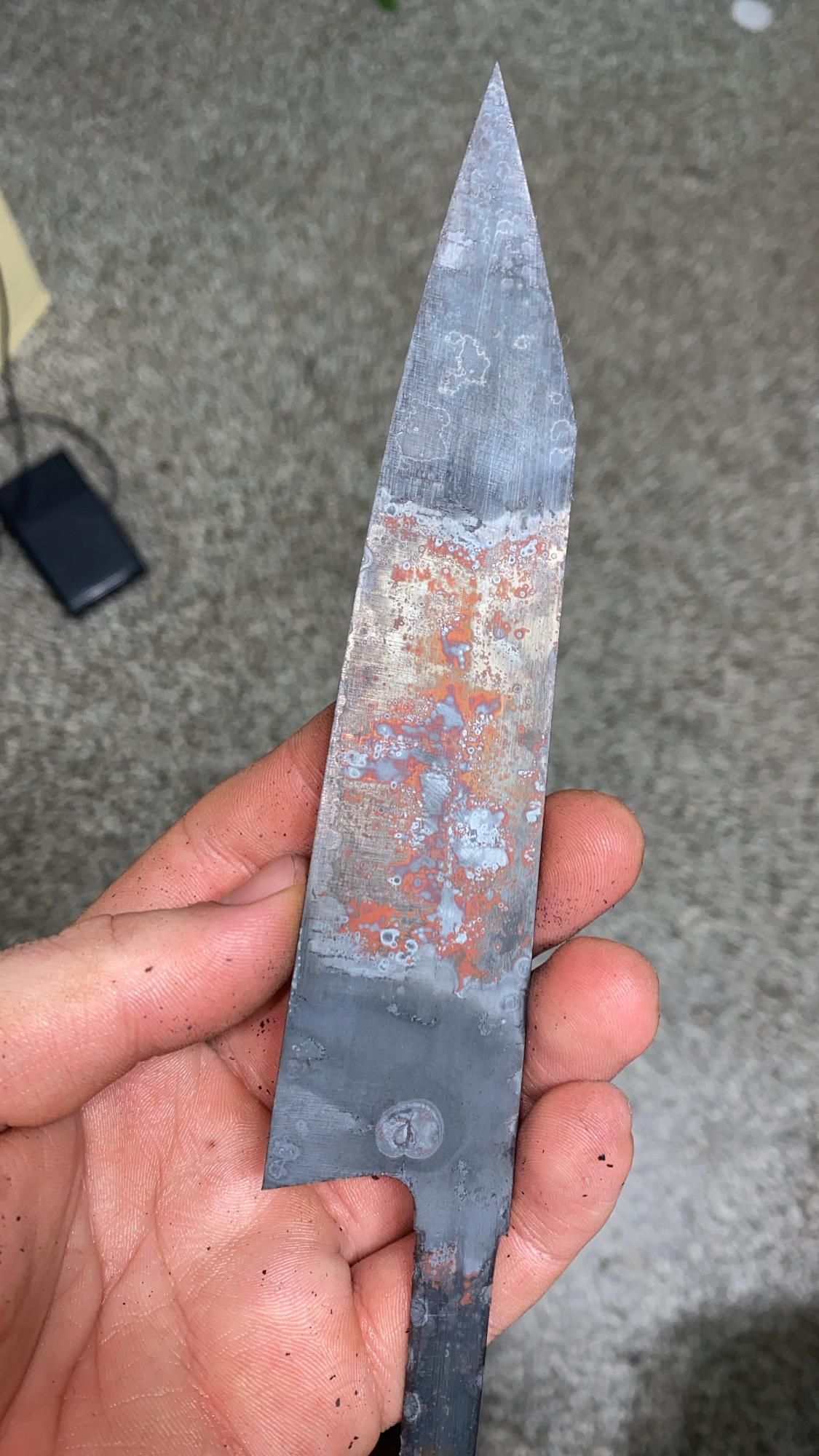
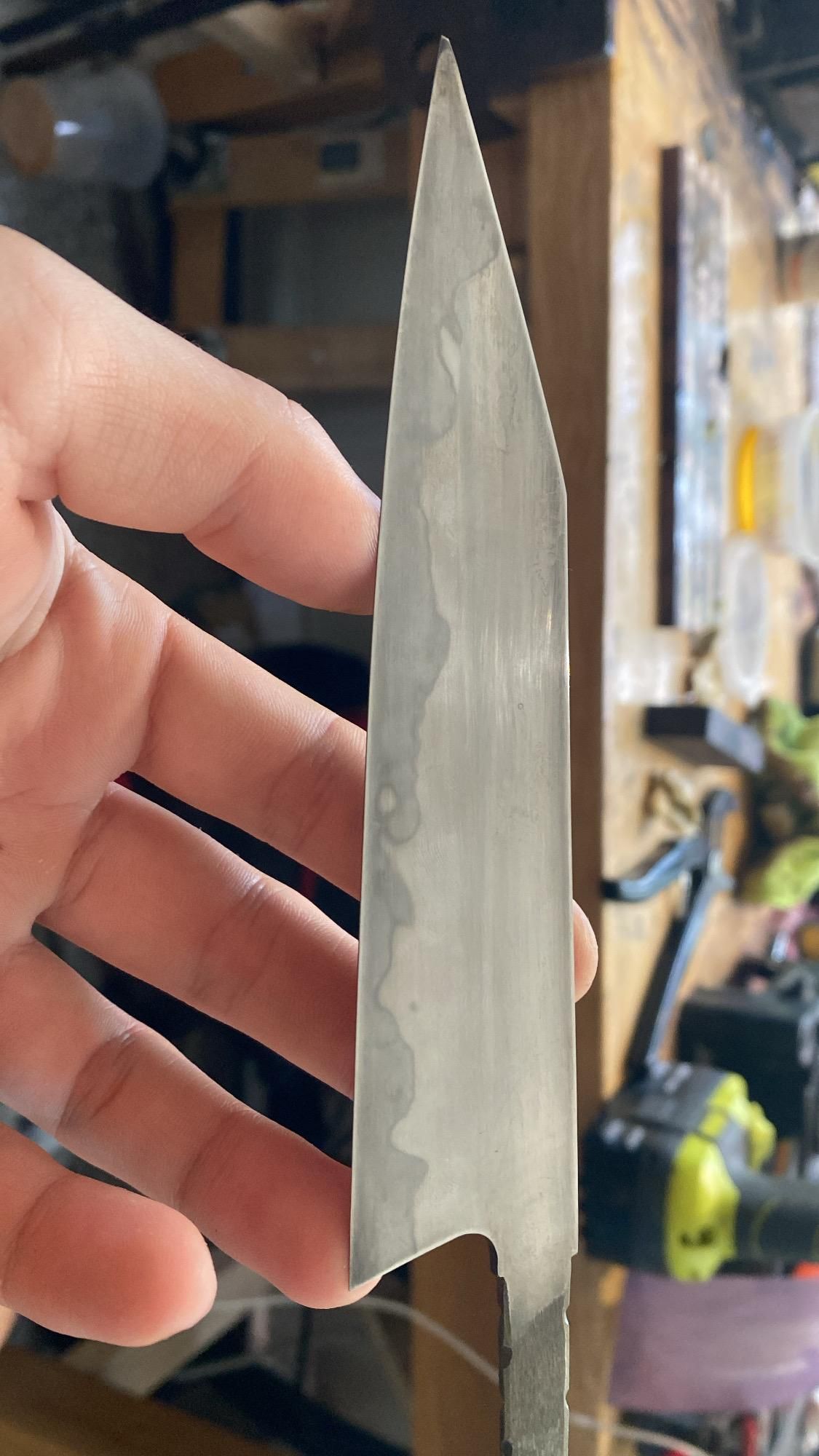
A grinding wheel and belt sander was used to refine the profile and bevels. Before achieving desired thickness, the blade was normalized three times to reduce internal stresses before hardening. Basic refractory cement kept the spine of the blade from rapid cooling and converting to martensite.
In an oven, the blade was tempered to reduce brittleness of the edge. A belt sander and whetstones, and small sheets of sandpaper were used to thin and polish the blade. At 2000 grit, I was content with the shine and visibility of the hamon.
Handling
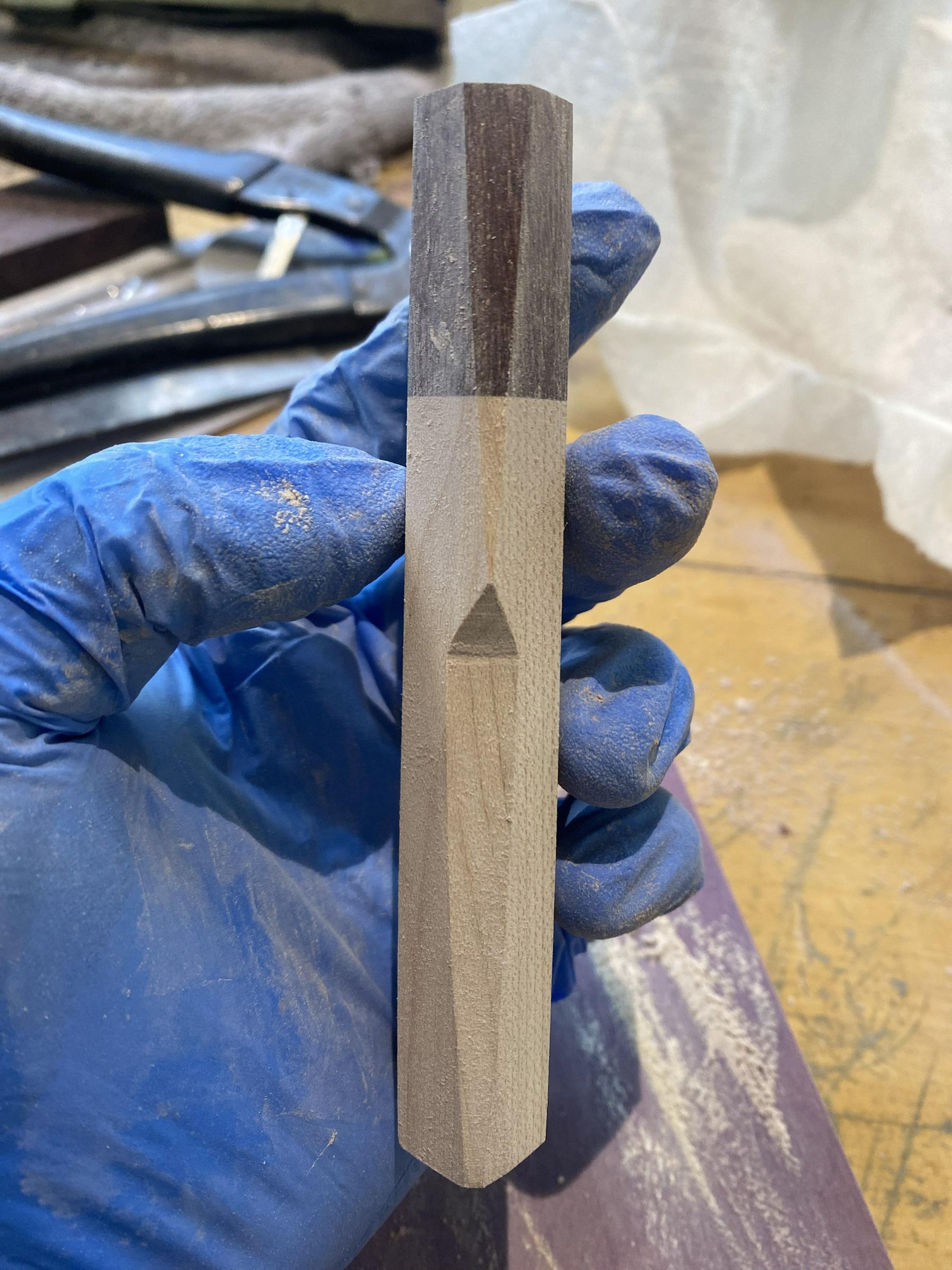
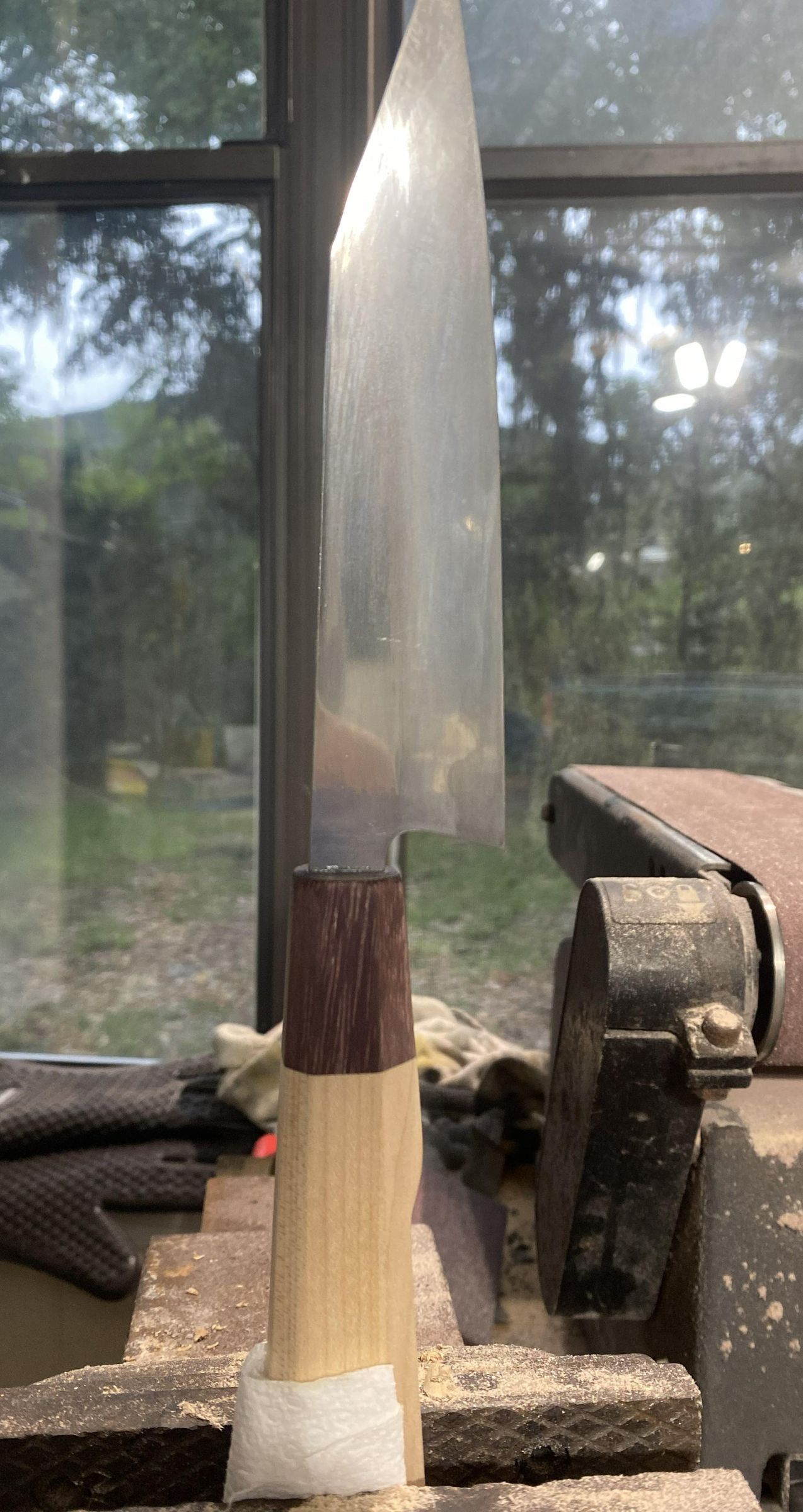
Wood glue held together a piece of hard maple and purpleheart. Belt sanding, filing, and hand sanding shaped the handle into a traditional inspired, but aesthetic and ergonomic shape. The tang was notched to provide greater grip for the adhesive.
After careful drilling and lots of filing, I mixed some JB Weld Steel Reinforced Epoxy to secure the knife tang into the handle. Acetone made it very easy to wipe the excess epoxy away.
Finishing Touches
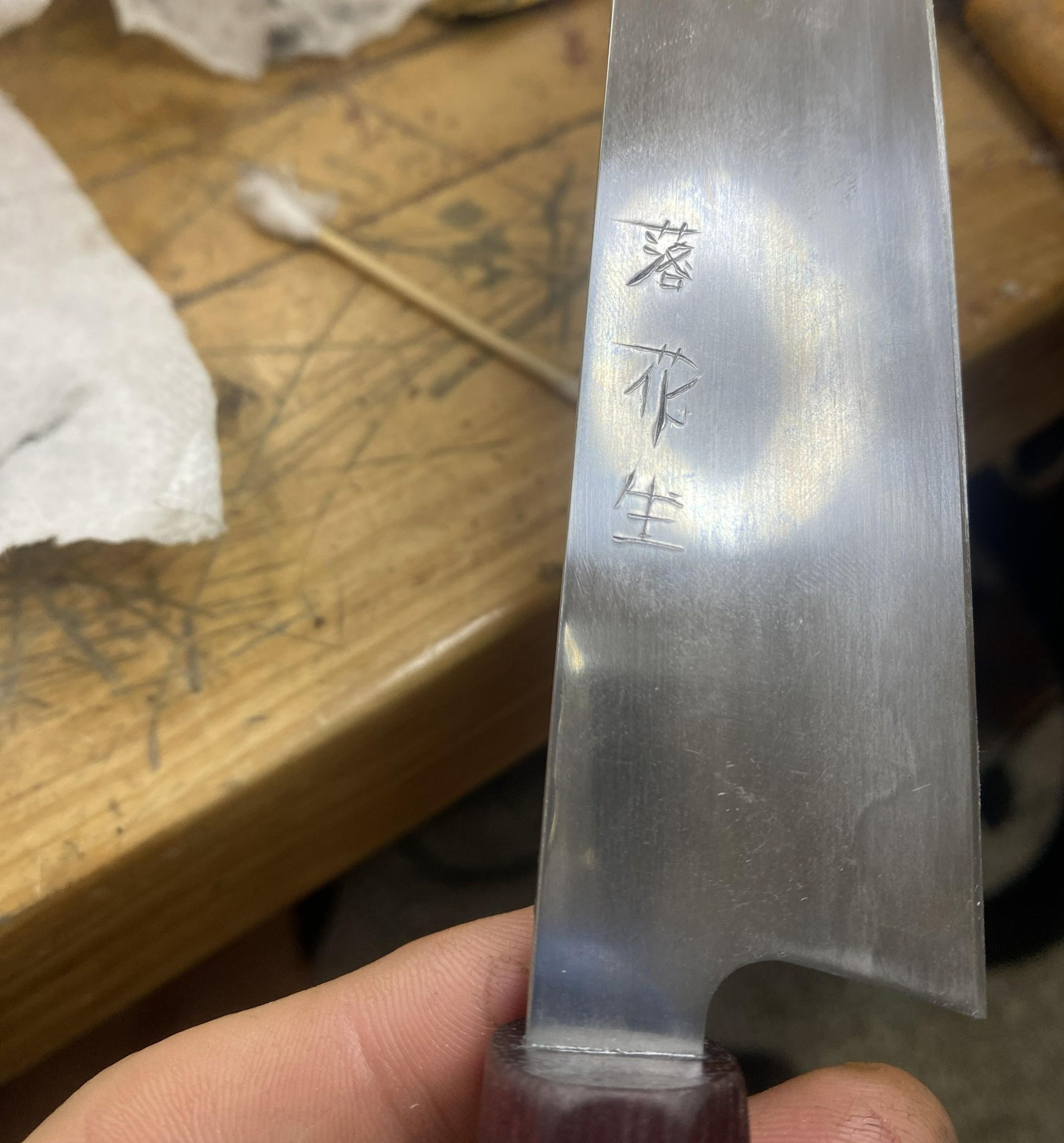
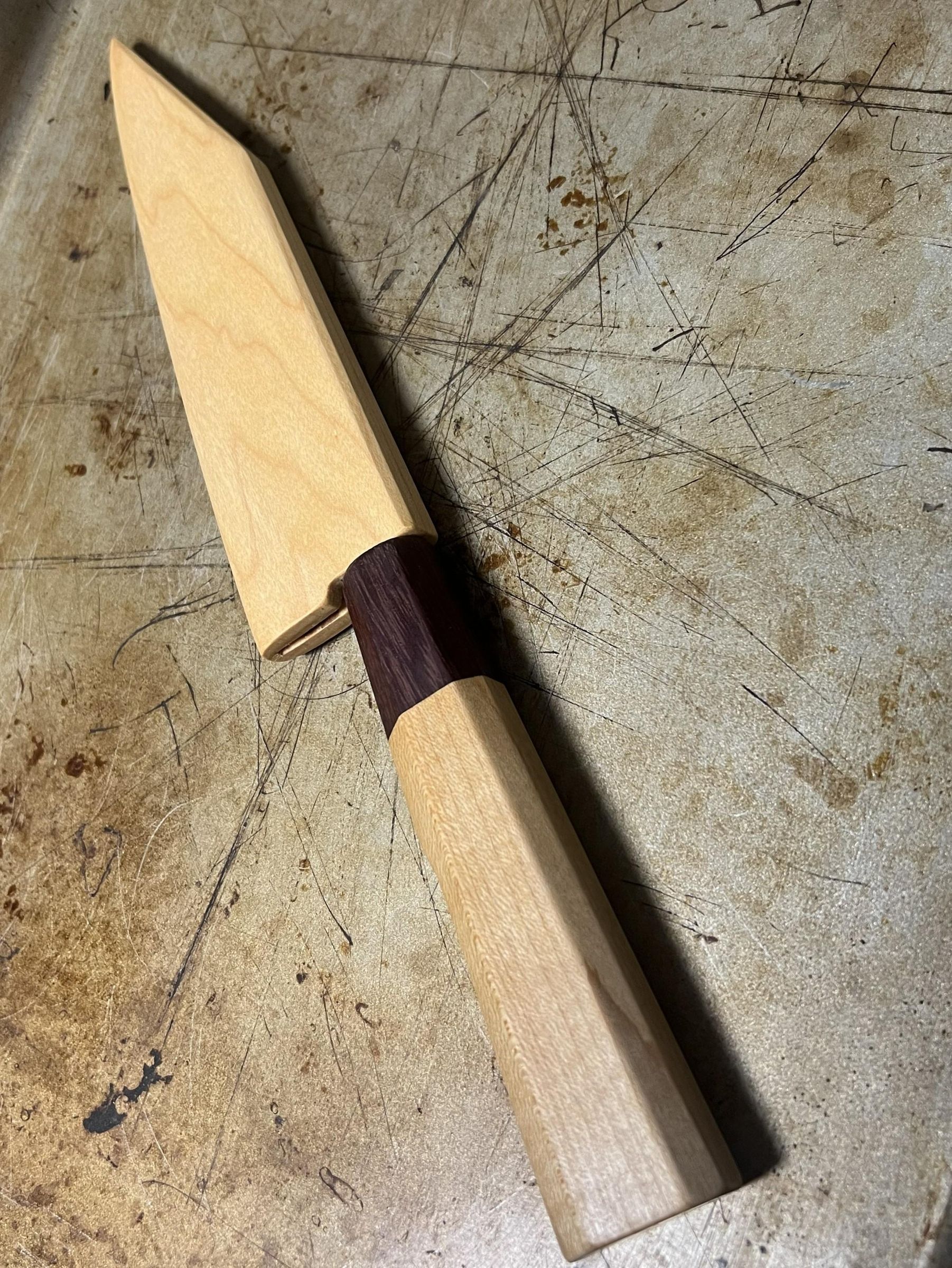
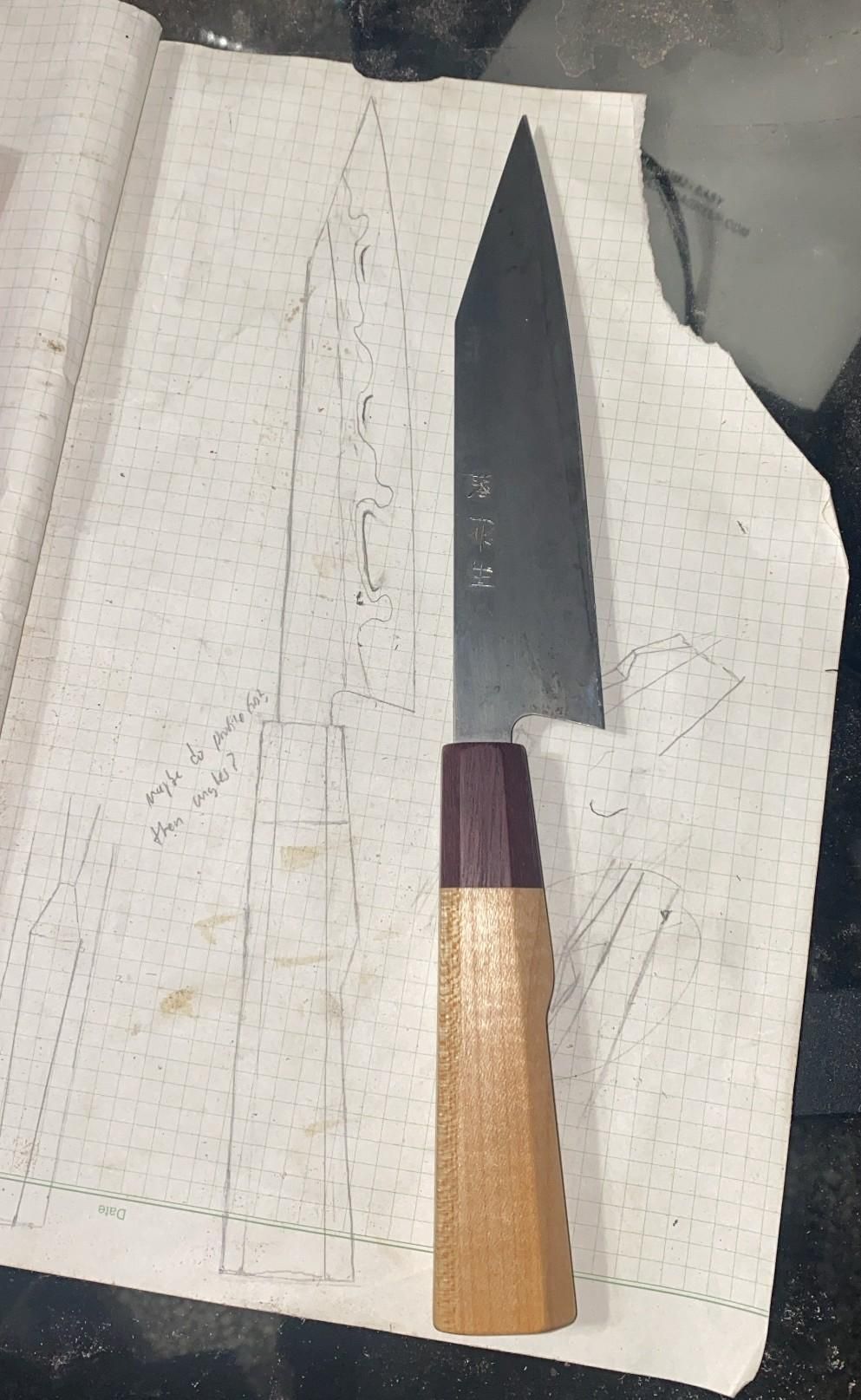
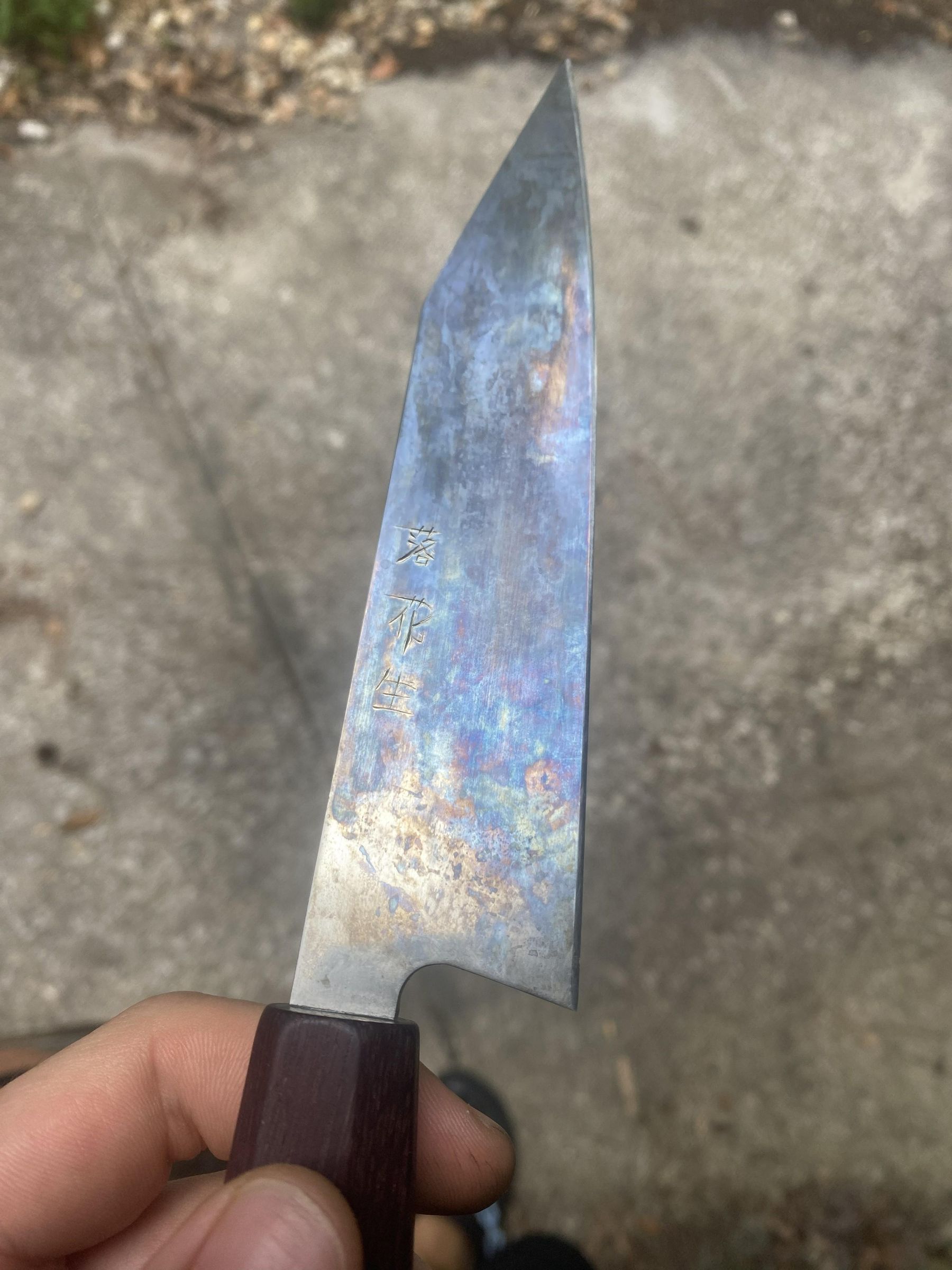
Since this knife included some inspiration from classic Japanese cutlery, I wanted to inscribe some Kanji onto it. I decided to put "落花生" which means Peanut, my nickname at my workplace where I was a line cook. I also decided to make a friction-fit saya from hard maple to keep the blade and its surroundings from damaging each other.
I used it at work every day. It maintained its sharpness, felt well balanced and comfortable, and the geometry fit perfectly for my preferred techniques and usage. I am very, very proud of how this one turned out.
Some specs:
flat ground
edge length: 155mm
total length: 290mm
spine thickness: 2.25mm to 1.75mm (linearly tapered)
thickness behind edge: 0.31mm ± 0.03mm
hardness: 62 HRC along edge, ≤45 HRC everywhere else