How to Sew a Thread Catcher | Sewing & Crafting Mini Bin With Weighted Section
by FernMakes in Craft > Sewing
585 Views, 4 Favorites, 0 Comments
How to Sew a Thread Catcher | Sewing & Crafting Mini Bin With Weighted Section

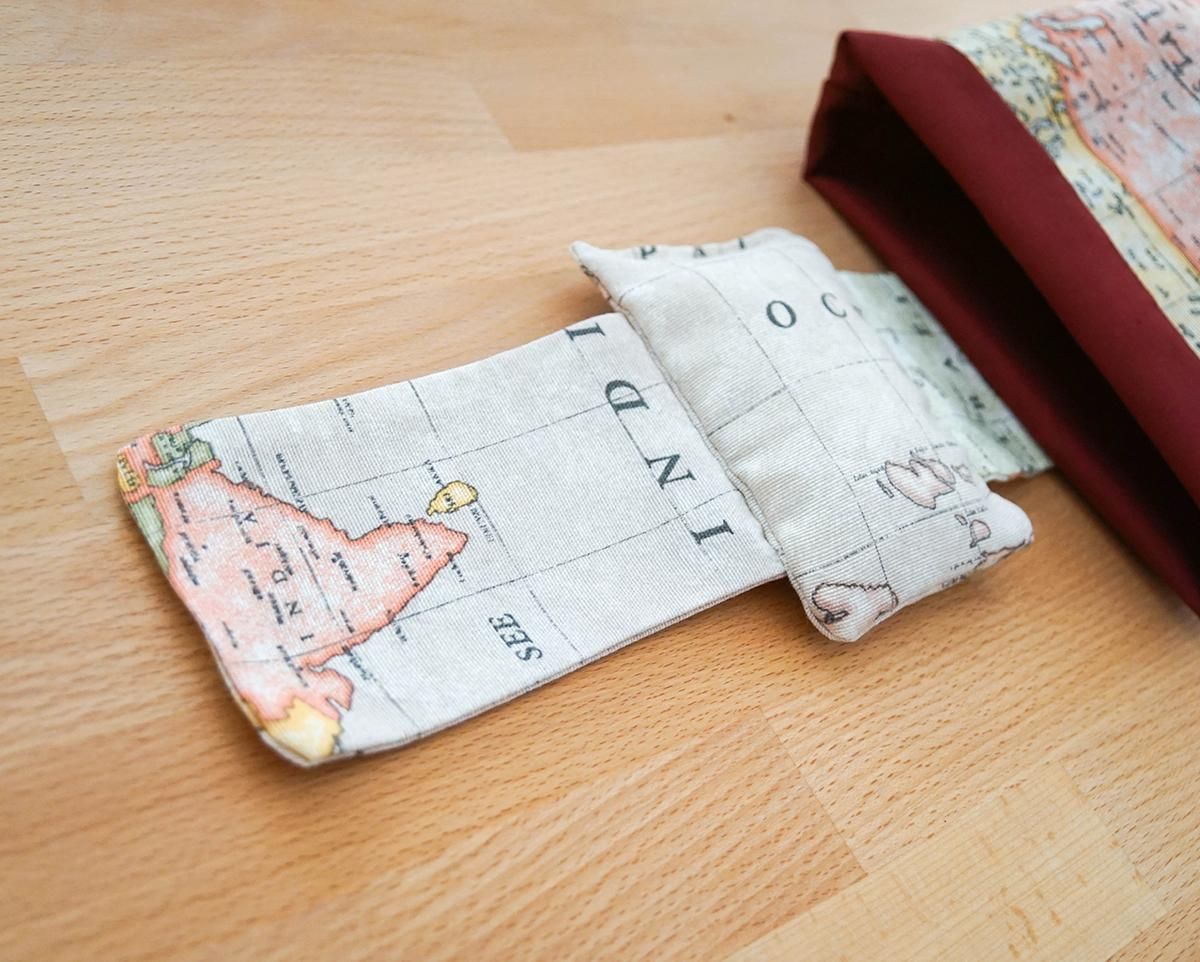

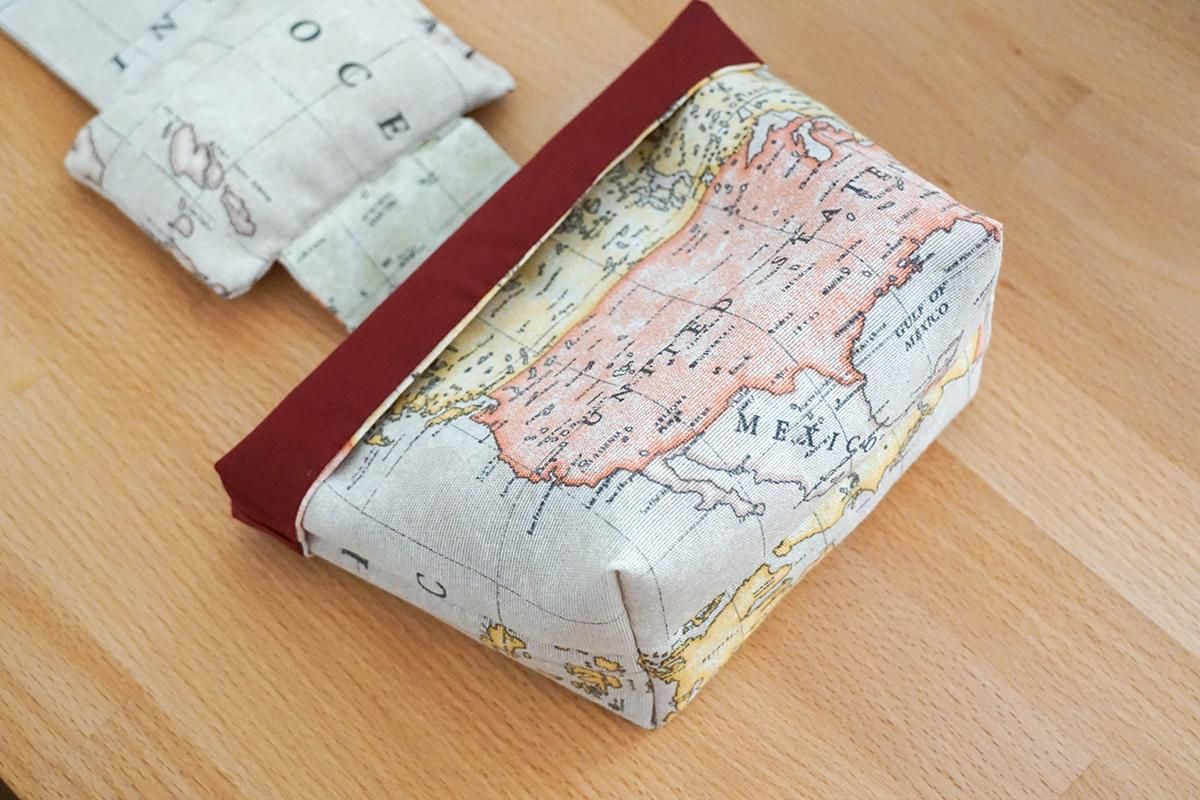


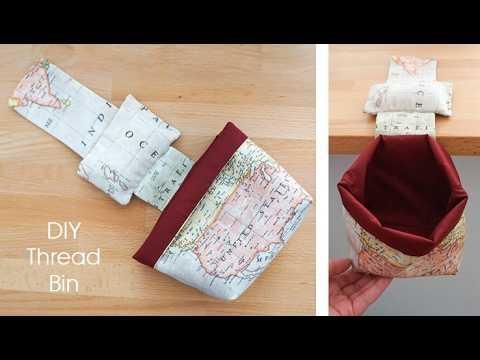
This weighted thread catcher is a very handy accessory to have near your sewing machine so that you can drop bits of thread and little fabric scraps straight into it as you work. The weighted section I've added simply allows the bin to hang off the end of a desk without it falling off...and it can also be used as a pincushion.
A perfect DIY project for anyone who sews or embroiders.
I hope you like it!
Supplies

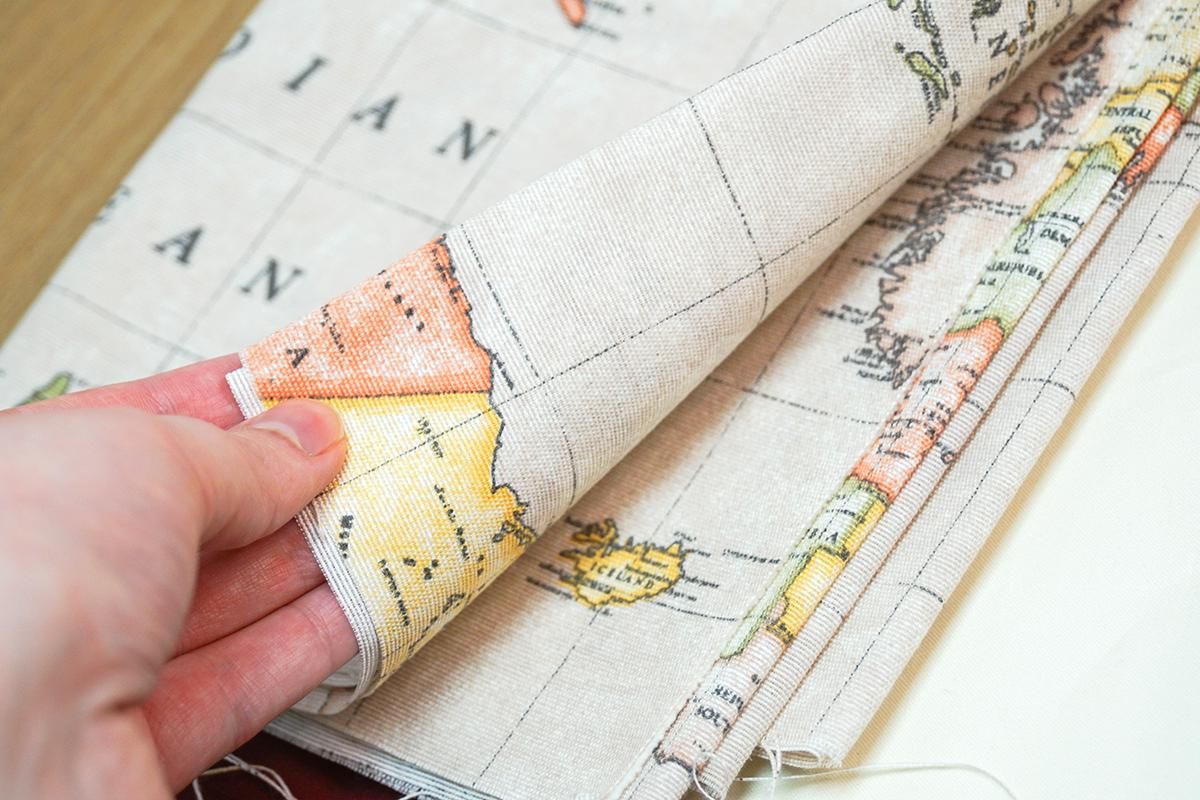
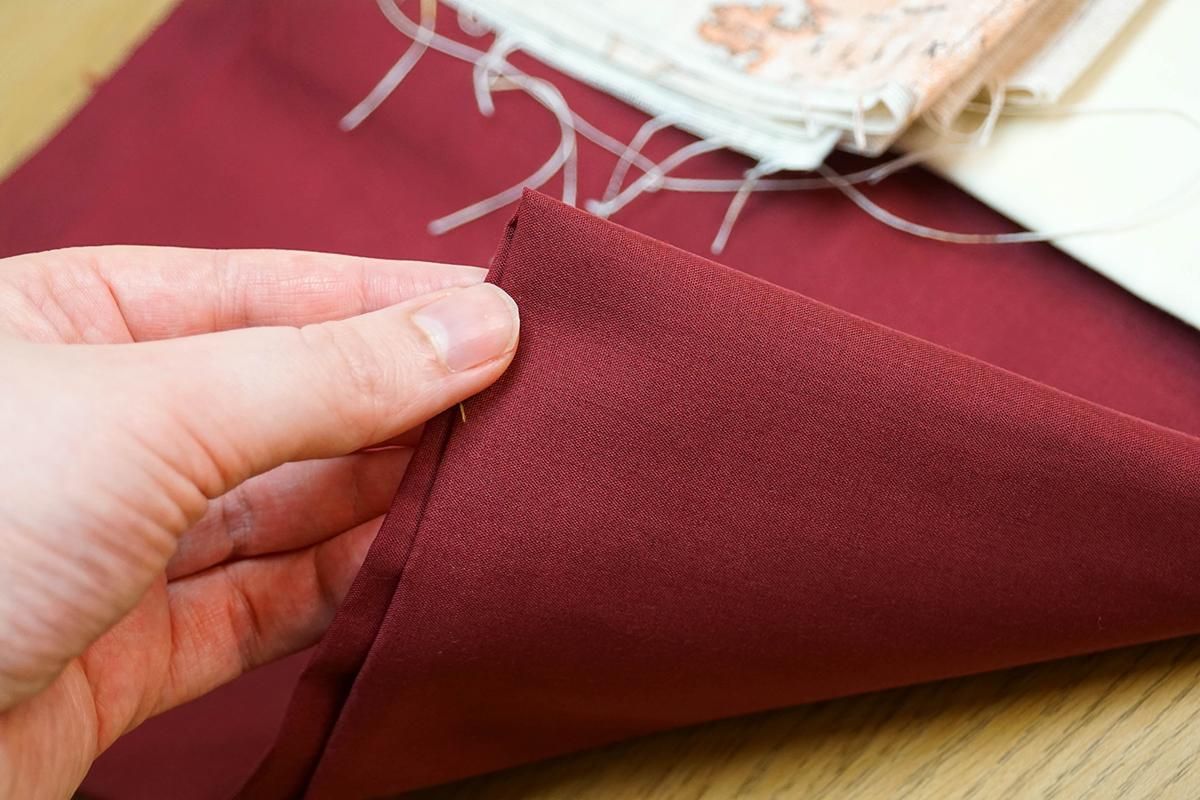


- Fabric; choose 2 different woven fabrics (not stretchy) to be the visible parts of this project. I used medium-weight upholstery cotton with a map design for the majority of the sections, and lightweight dark red cotton for the lining of the thread bin. You’ll also need a small amount of tightly-woven fabric (I used calico) for the inner pouch of the weighted section that won’t be visible.
- Sewing pins
- Sewing machine & thread; if you don’t have a sewing machine, it would be possible to sew this project by hand using backstitch, but it would be time-consuming!
- Hand Sewing needle
- Ruler
- Fabric scissors
- Dry & Clean Sand (or other material to use for weight, plus stuffing)
- Disappearing or ‘magic’ fabric pen
- Rotary cutter and cutting mat (optional)
- Iron & ironing board
- Funnel (ideally plastic, although you could make your own from thin card)
- Paper & a pencil
Paper Templates

Iron the fabric before you begin.
You then need to make the paper templates, as follows:
3 x 5” (for inner pouch of the weighted section)
3.5 x 5.5” (for outer pouch of the weighted section)
3.5 x 11.5” (for the strap)
8 x 9” (for the thread bin)
Measure out these rectangles on paper then cut them out.
Quick note on how these go together: The inner pouch will go inside the outer pouch to make the weighted section, which will be attached to the strap, and at the end of the strap will be the thread bin.
I’ve made the strap quite long, but feel free to alter that length if you wish. It just needs to attach the weighted section to the bin.
Cut Out the Outer Fabric


Draw around the templates onto the back of the fabric using your disappearing fabric pen.
You will need the following pieces cut from the outer fabric:
Two 8 x 9” pieces
Two 3.5 x 5.5” pieces
Two 3.5 x 11.5” pieces
Tip: If you’re using a directional fabric, like me, just bear in mind that the 9” edge of the thread bin pieces represents the horizontal dimension of the thread bin, and the 8” edge represents the vertical dimension.
Then use a rotary cutter and ruler (on top of a cutting mat), or fabric scissors, to cut these pieces out.
Cut Out the Lining
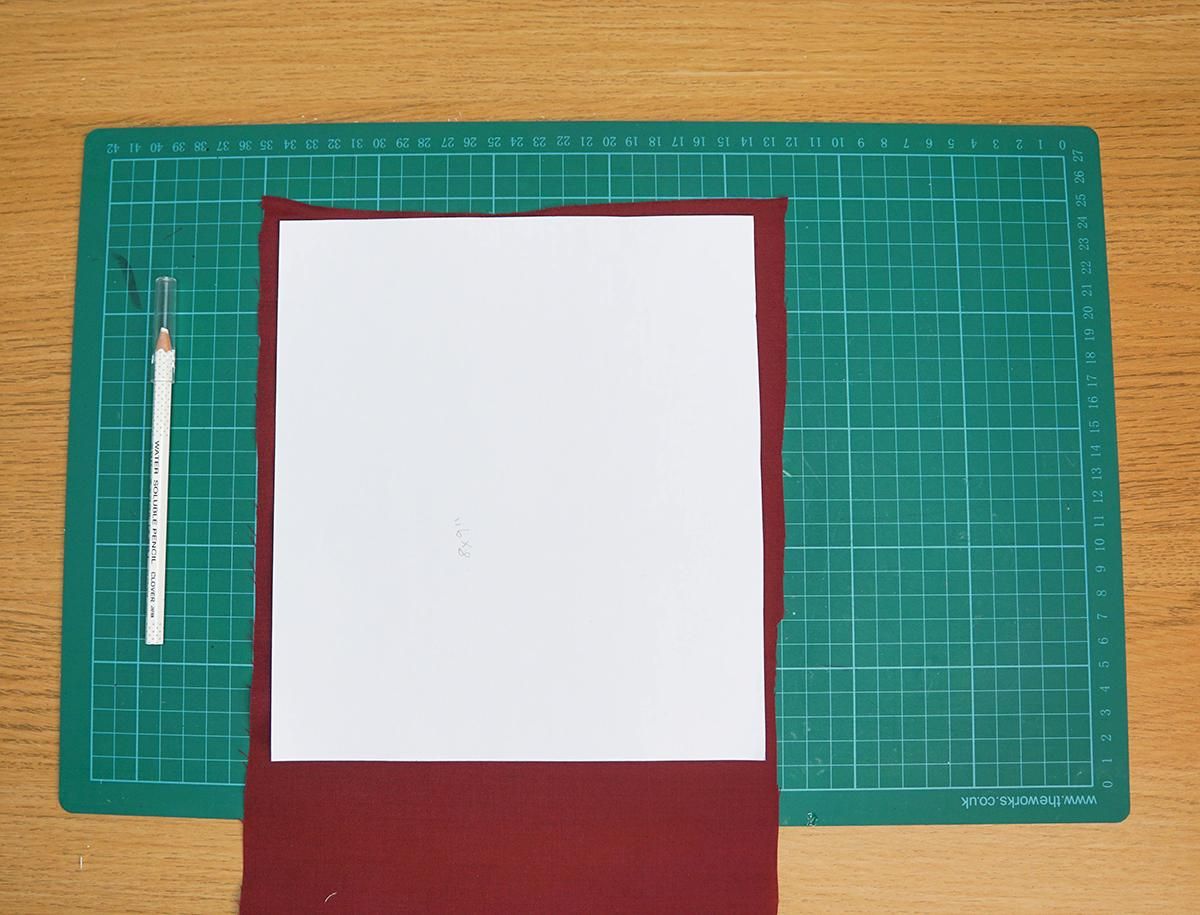


You will need the following pieces cut from the lining fabric:
Two 8 x 9” pieces
Note that I used a water-soluble white pencil instead to draw on the lining fabric since it is a dark colour fabric. Again, alays draw the lines on the back of your fabric.
Cut these pieces out.
Make the Inner Pouch


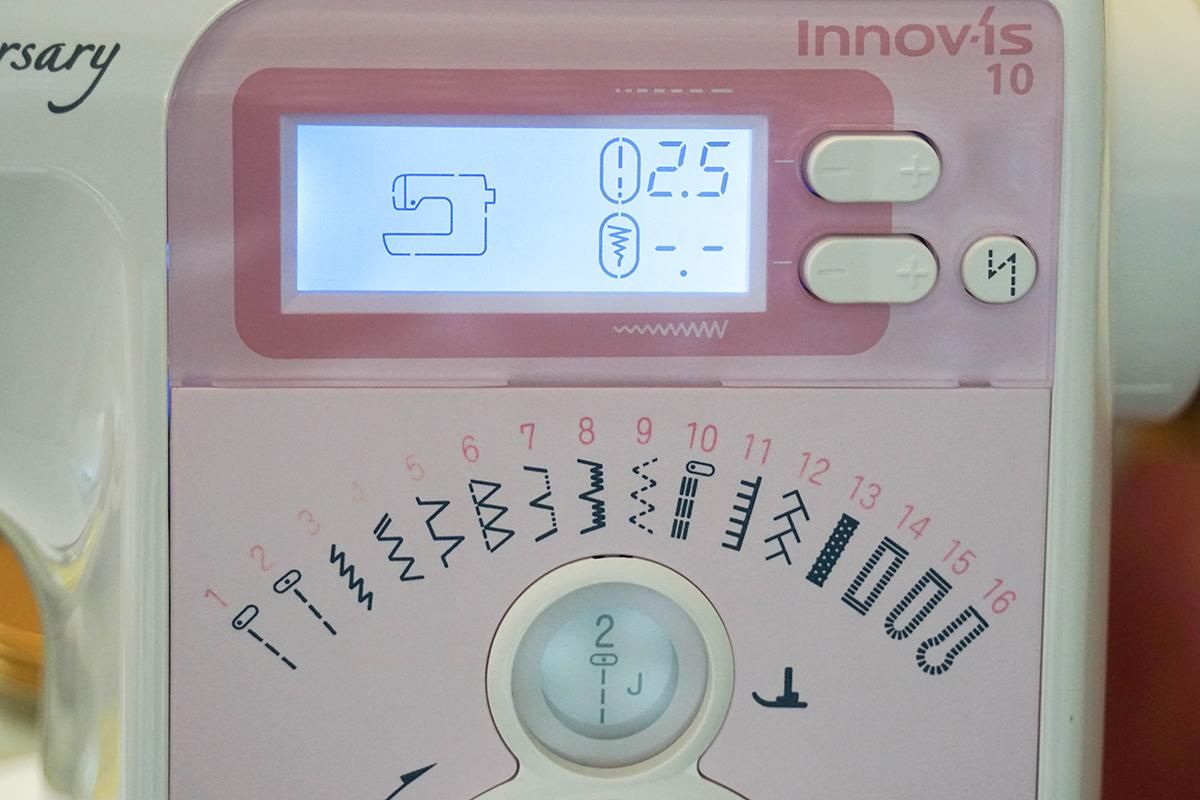

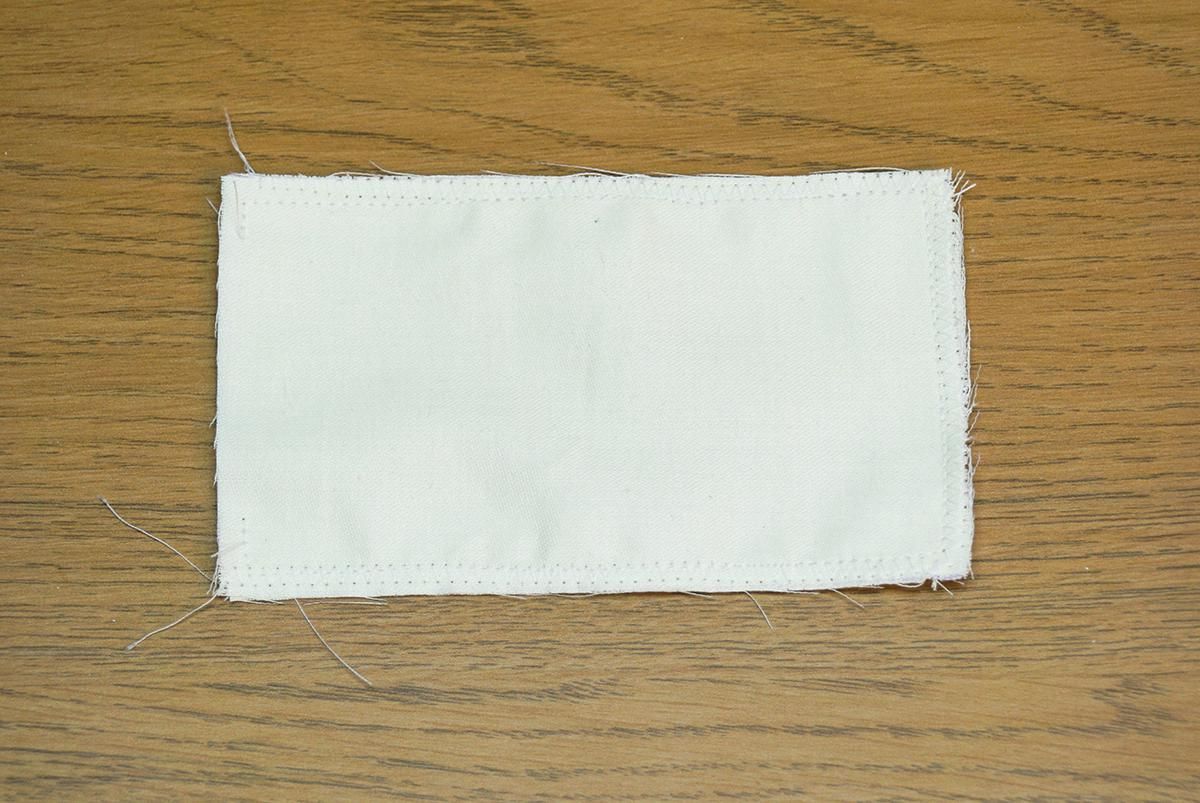
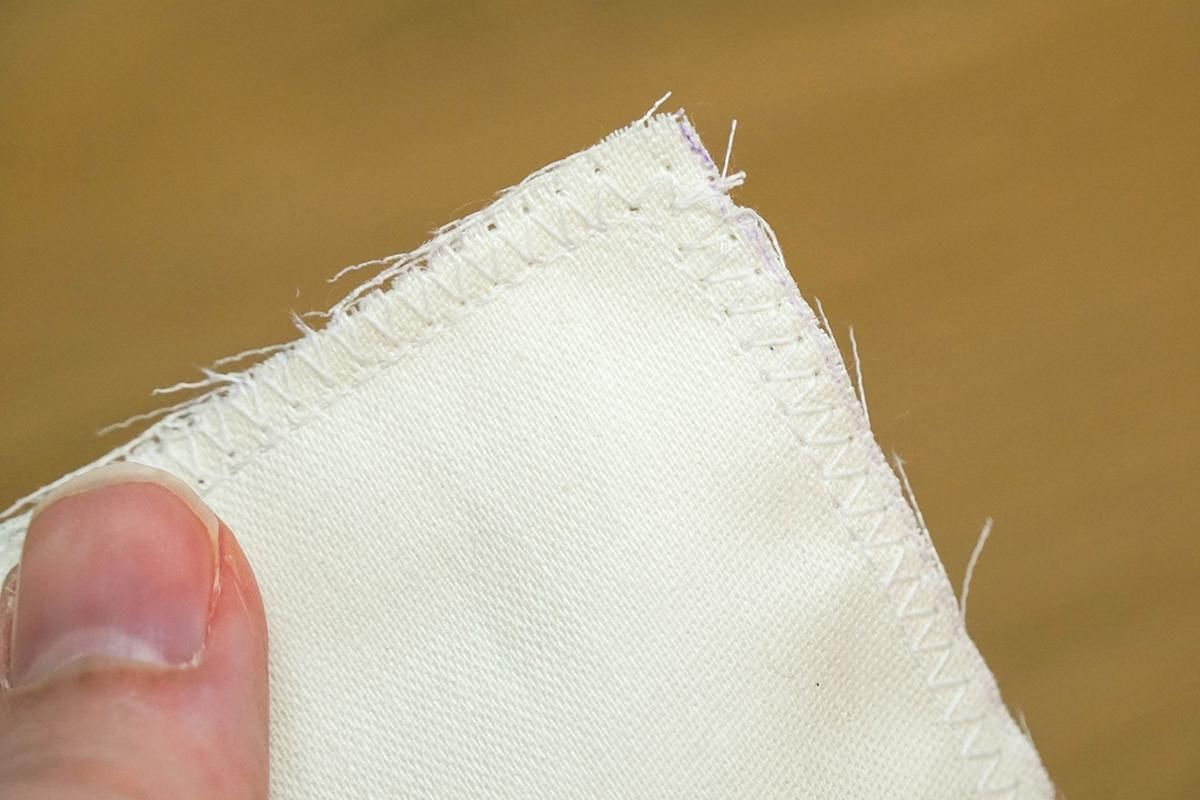
For the inner pouch, cut two 3 x 5” pieces (cut from calico fabric in my case).
Pin the 3 x 5” pieces together (wrong-sides together even though it doesn’t really matter) and sew along 3 of the sides, leaving one of the short sides open.
I did a short straight stitch and then a zigzag stitch along these edges, to make it extra secure. This pouch will contain sand so you want it to be very secure along the edges.
Note: I’ll be using a ¼” seam allowance throughout this project.
Add the Weight
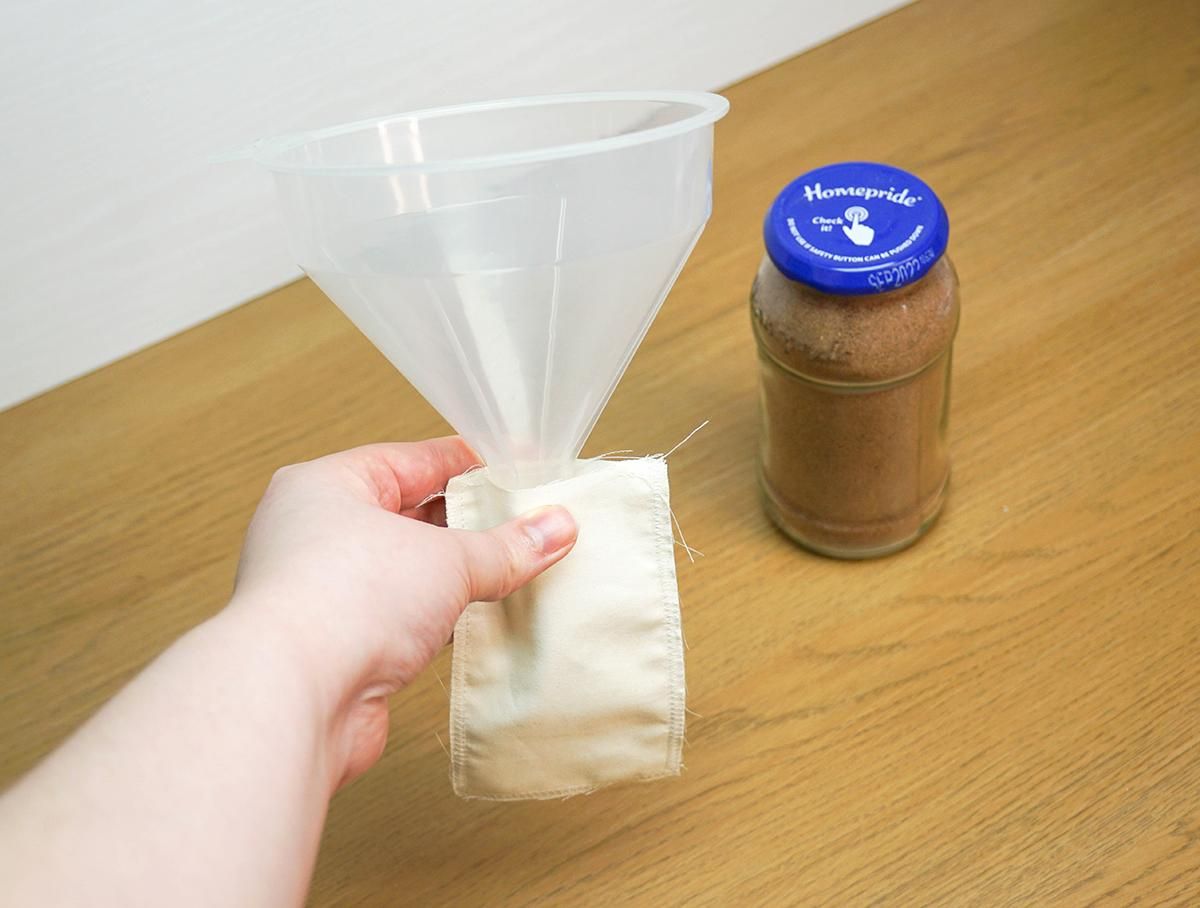


Take a funnel and pour sand into this pouch, making sure that you don’t overfill it…I did, so I had to remove some!
You need to still be able to fold over the unsewn edge twice, before you then pin it place and sew straight across, again with a straight stitch and then a zigzag stitch.
Always remember to backstitch at the beginning and end.
Please be careful here because you don’t want to get any sand on your sewing machine! Remove any sand from the pouch before sewing, and if you want to be cautious, feel free to hand sew this edge instead.
The inner pouch is complete.
Combine Inner & Outer


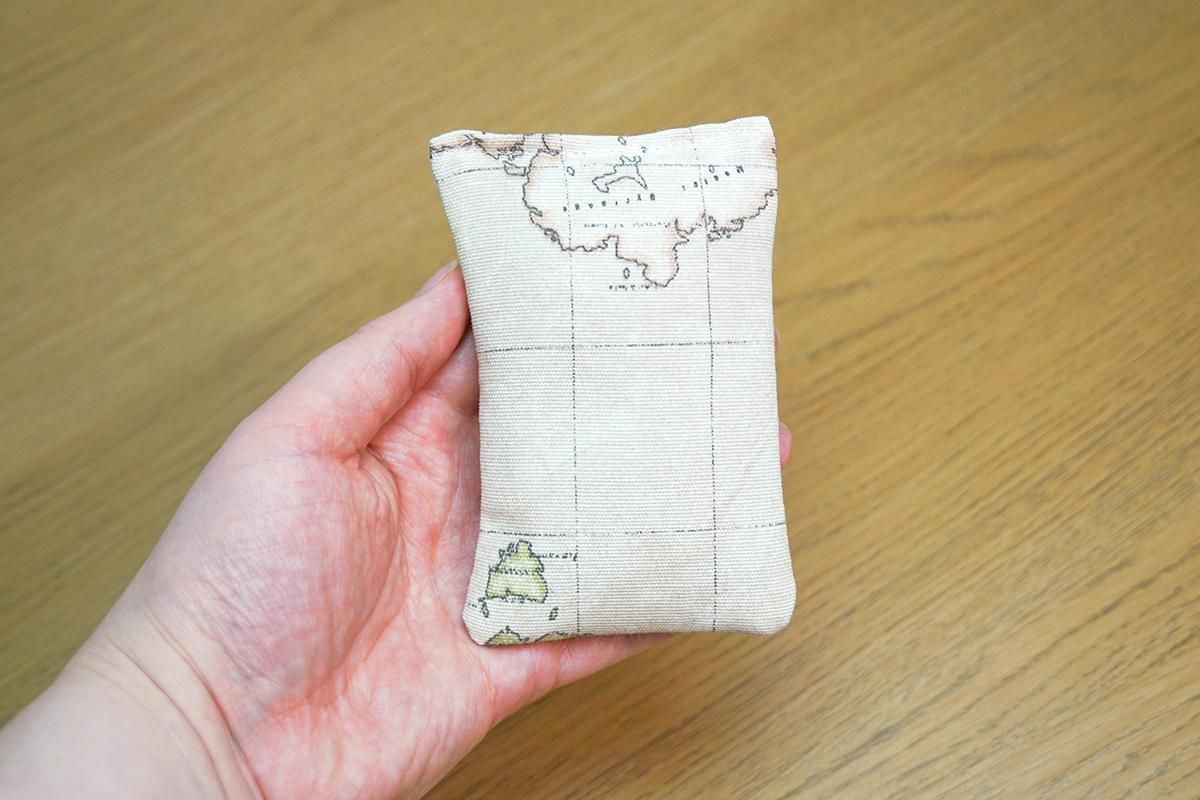
Now place the two 3.5 x 5.5” outer fabric pieces right-sides together, line up the edges and pin them in place. Sew along 3 sides with a straight stitch, leaving a short side open.
Turn this larger pouch right-sides out, then place the sand-filled pouch inside.
Fold the unsewn edges of the opening inside, pin, and then sew along this seam to close the opening.
The weighted section is now complete.
Begin the Thread Bin Section
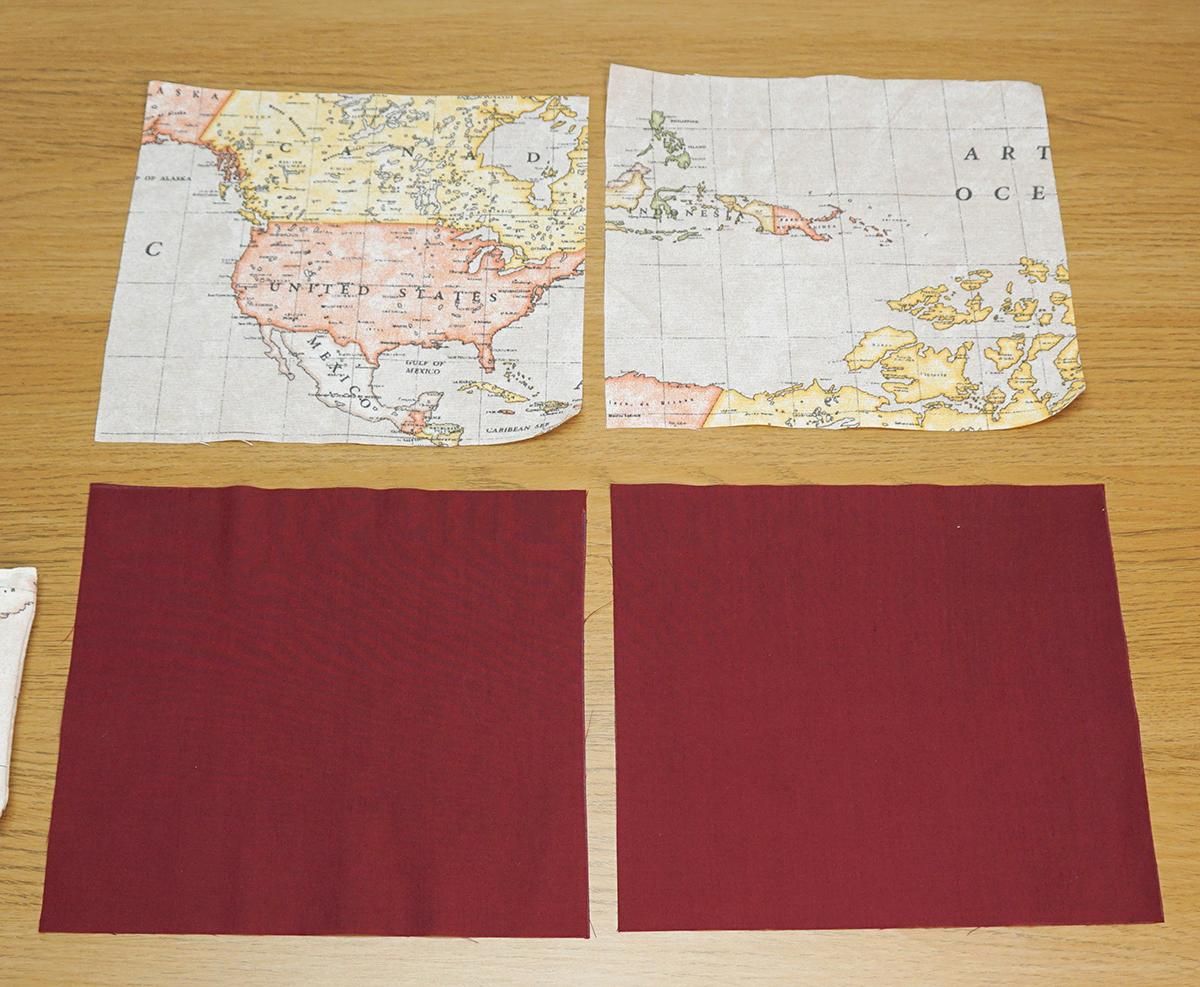
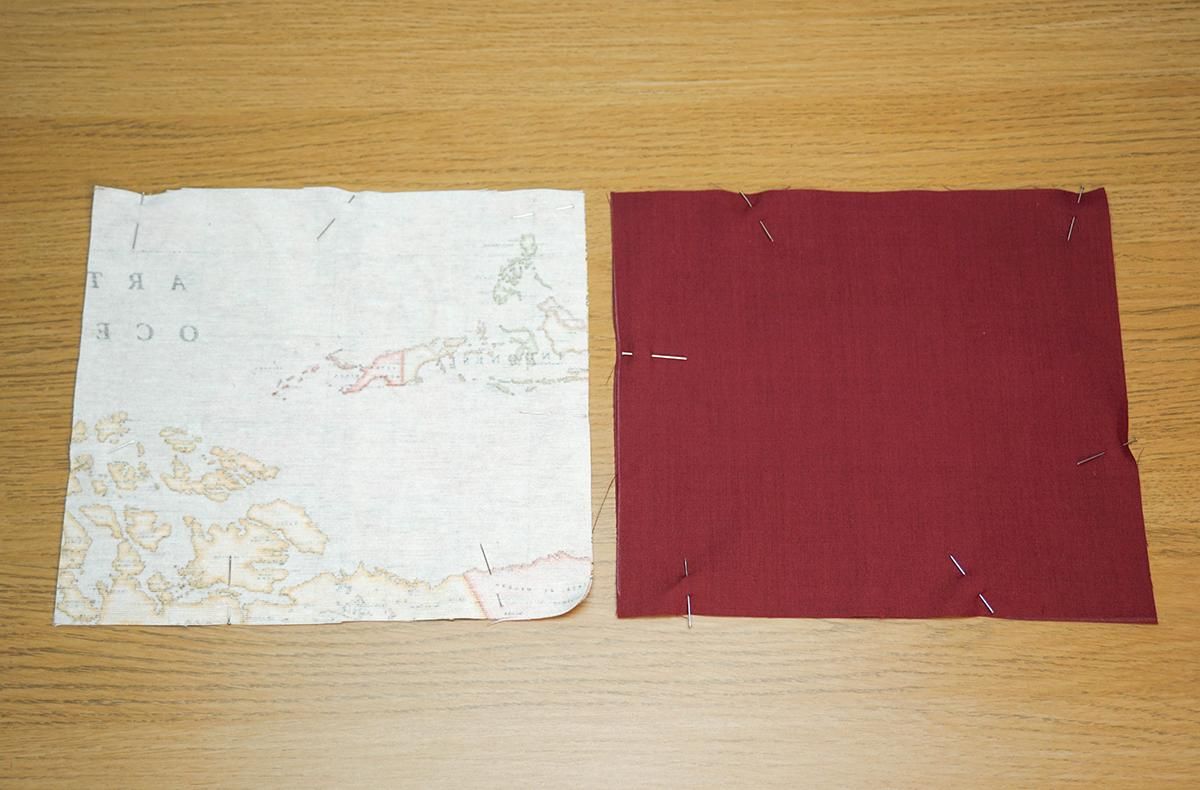
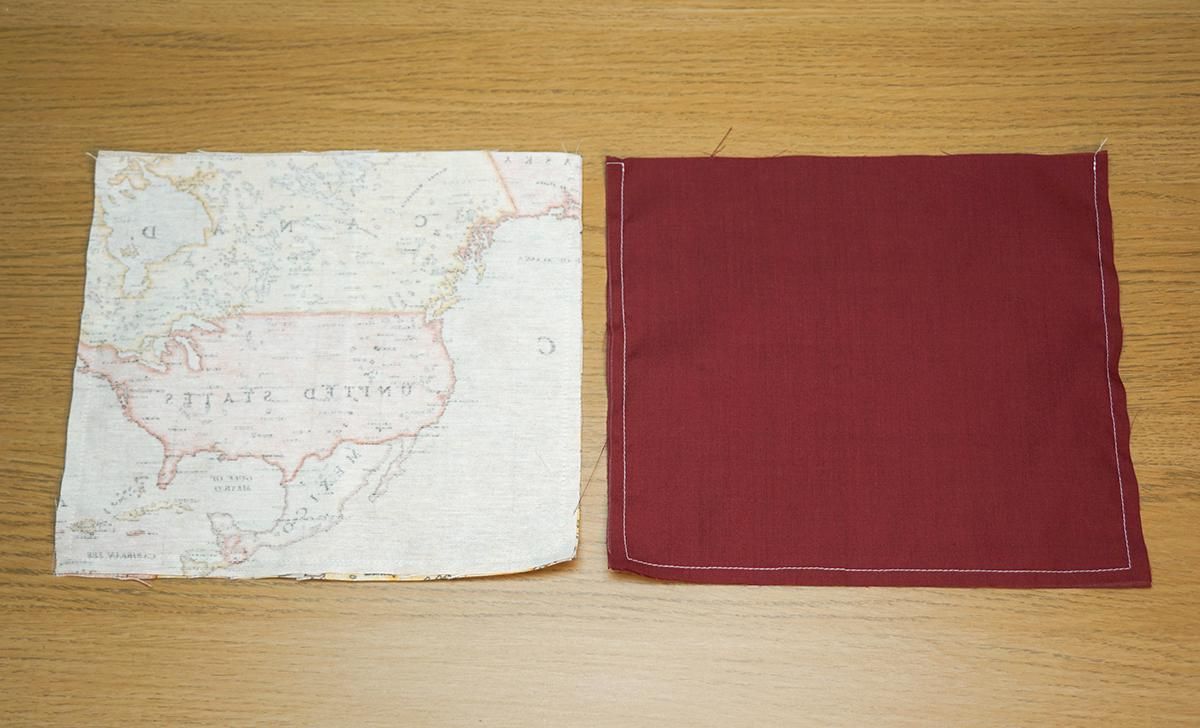
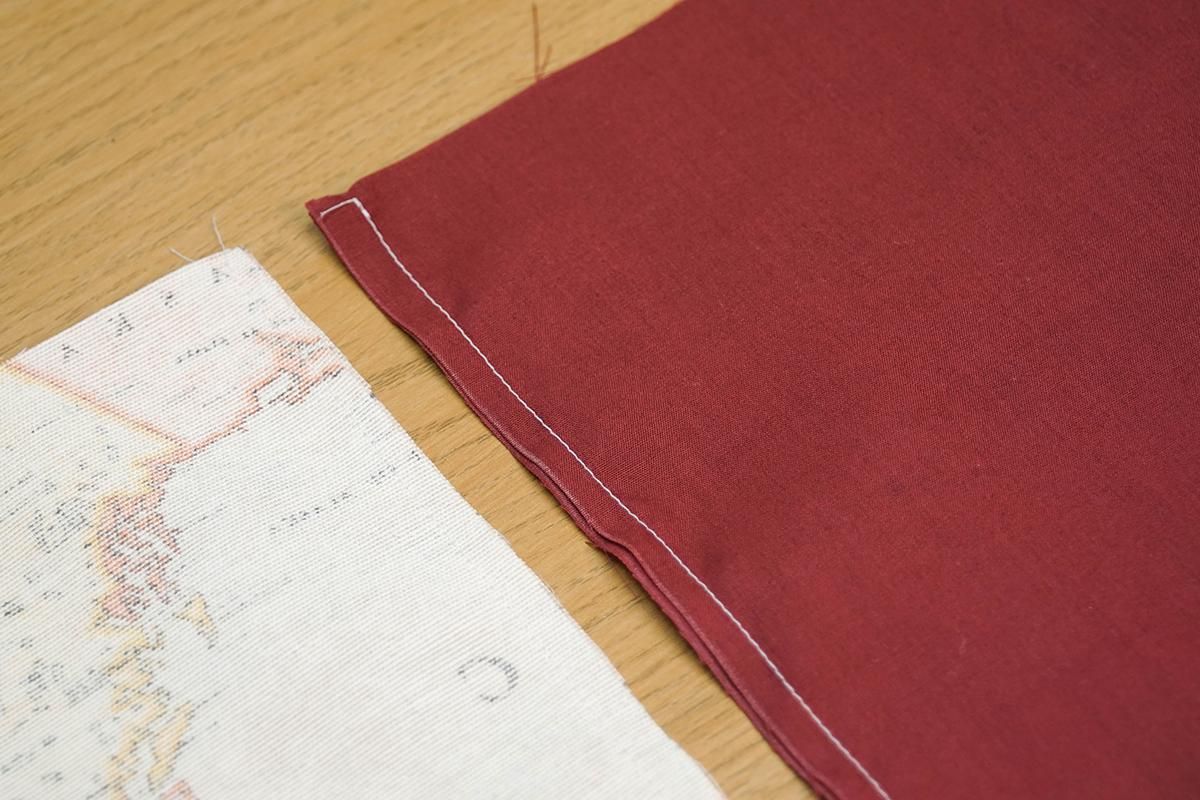
For the thread bin, take the 2 pairs of 8 x 9” fabric rectangles and pin each pair (one pair in outer fabric, one pair in lining fabric) together along the edges. The fabric pieces should be placed right-sides together.
Sew each pair together with a straight stitch along 3 of the edges, leaving one of the longer edges open.
You should then have 2 pouches the same size.
Make Boxed Corners


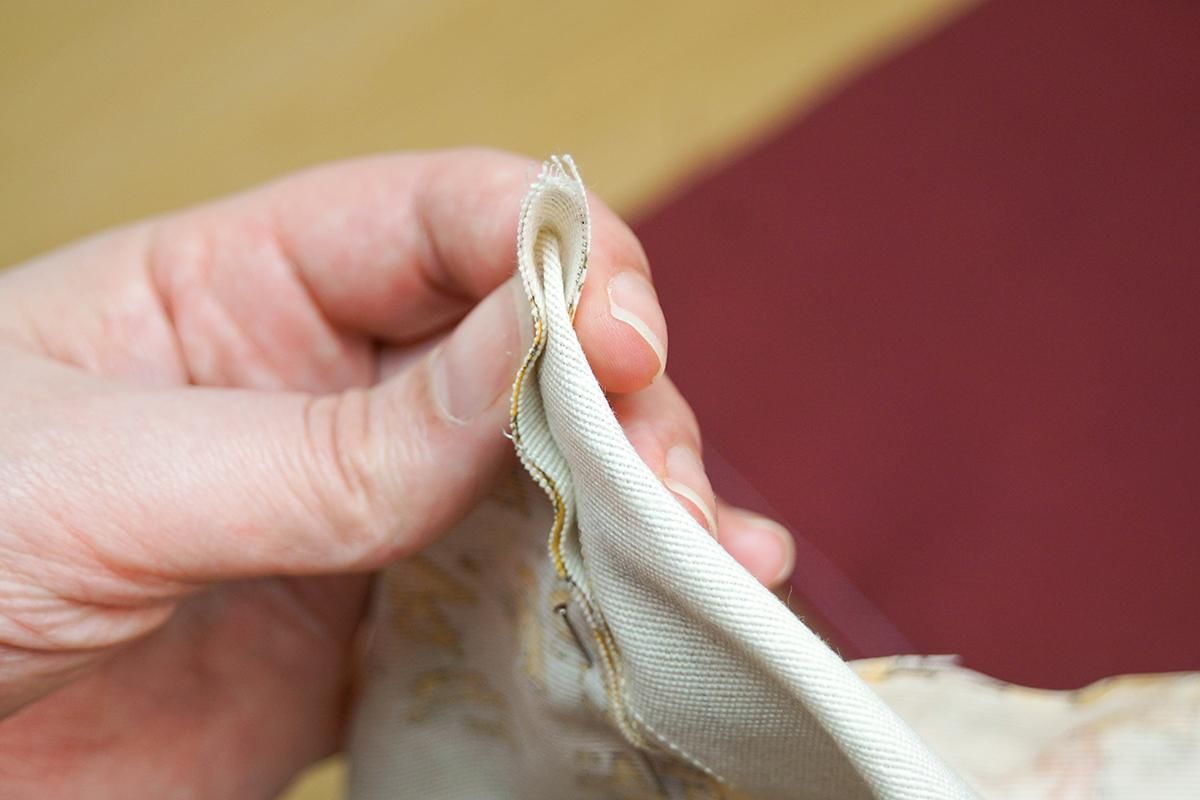
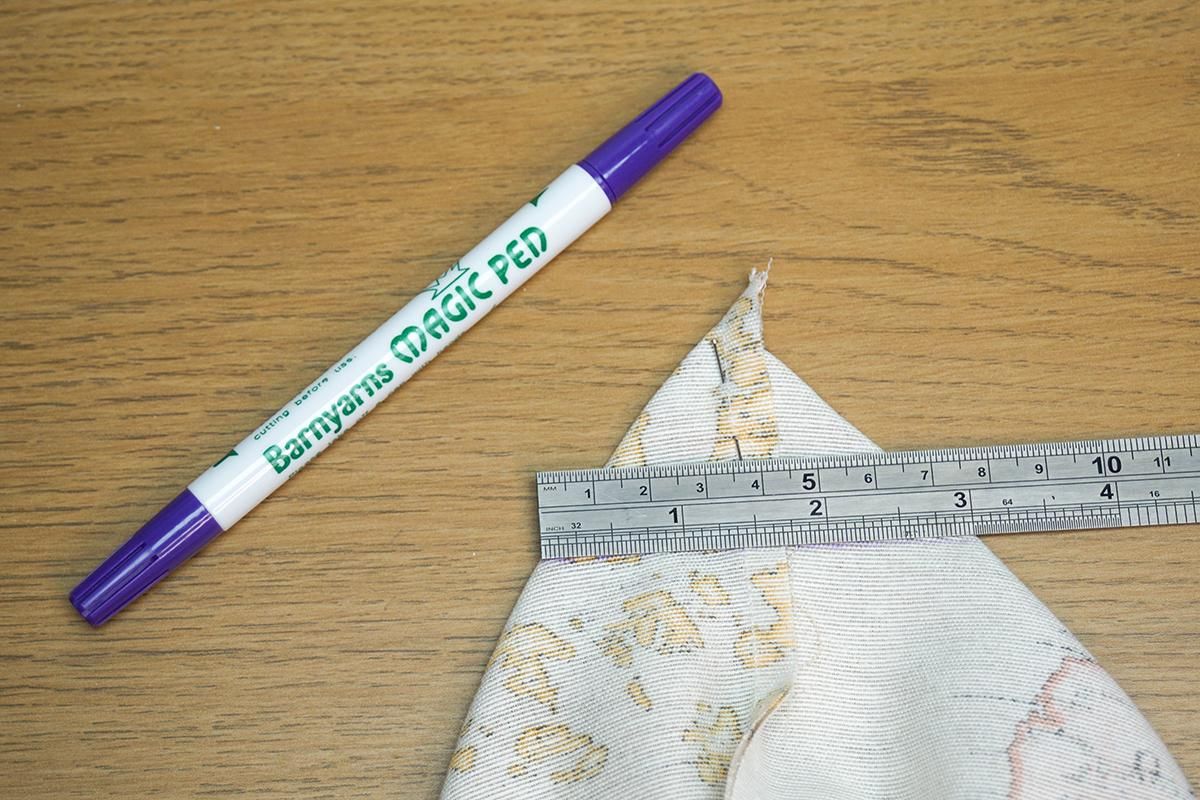

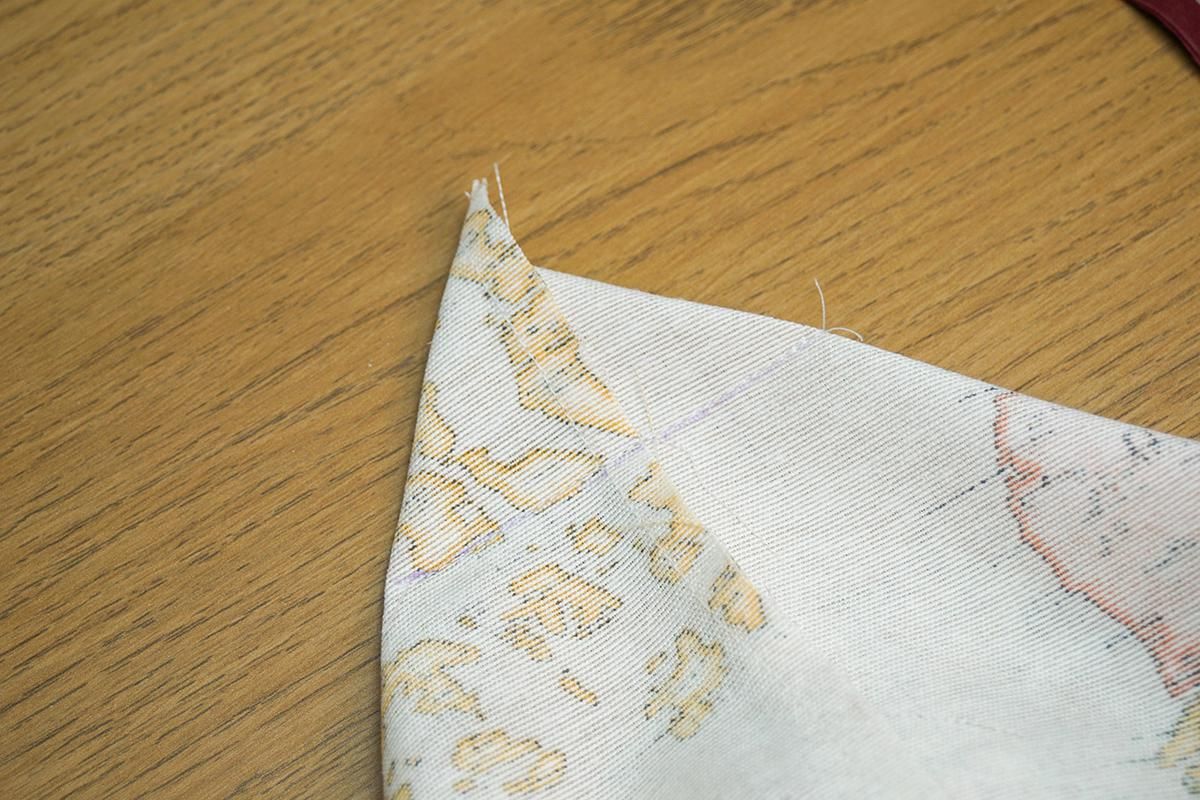
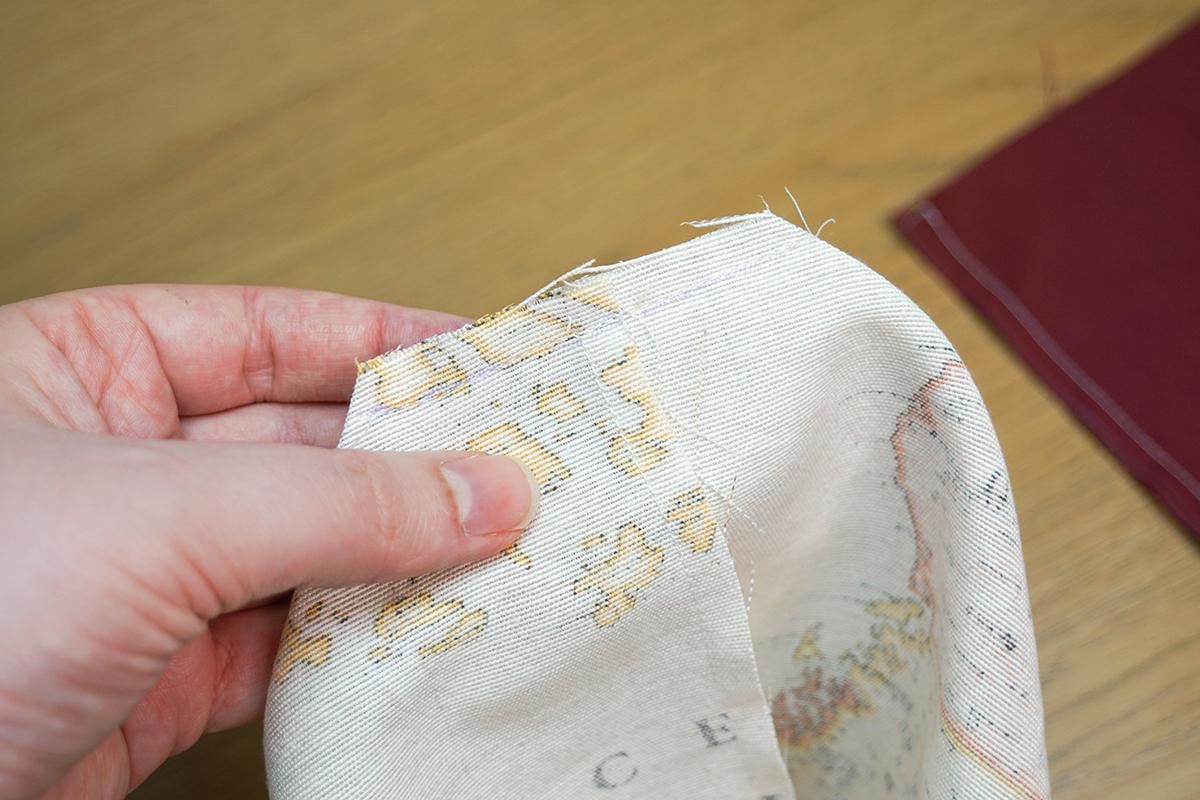

We’ll now sew ‘boxed corners’ to make these pouches into more of a bucket shape.
To do this, flatten one corner of the pouch into a triangular point. You need to make sure that the seams lie in the centre of this triangular point, and the seam on the front should line up with the seam on the back.
To keep these seams aligned, you might want to put a sewing pin through the line of stitches on the front and the back.
This point should lie flat. Use a ruler to find where the triangle measures 3” across.
Draw straight across the triangle with your fabric pen, so you’ll have a 3” line.
Sew along this line with a straight stitch, backstitching at the beginning and end as usual.
Cut off the excess fabric at the corner, leaving at least ¼” of fabric below the line of stitches.
Complete the Shaping
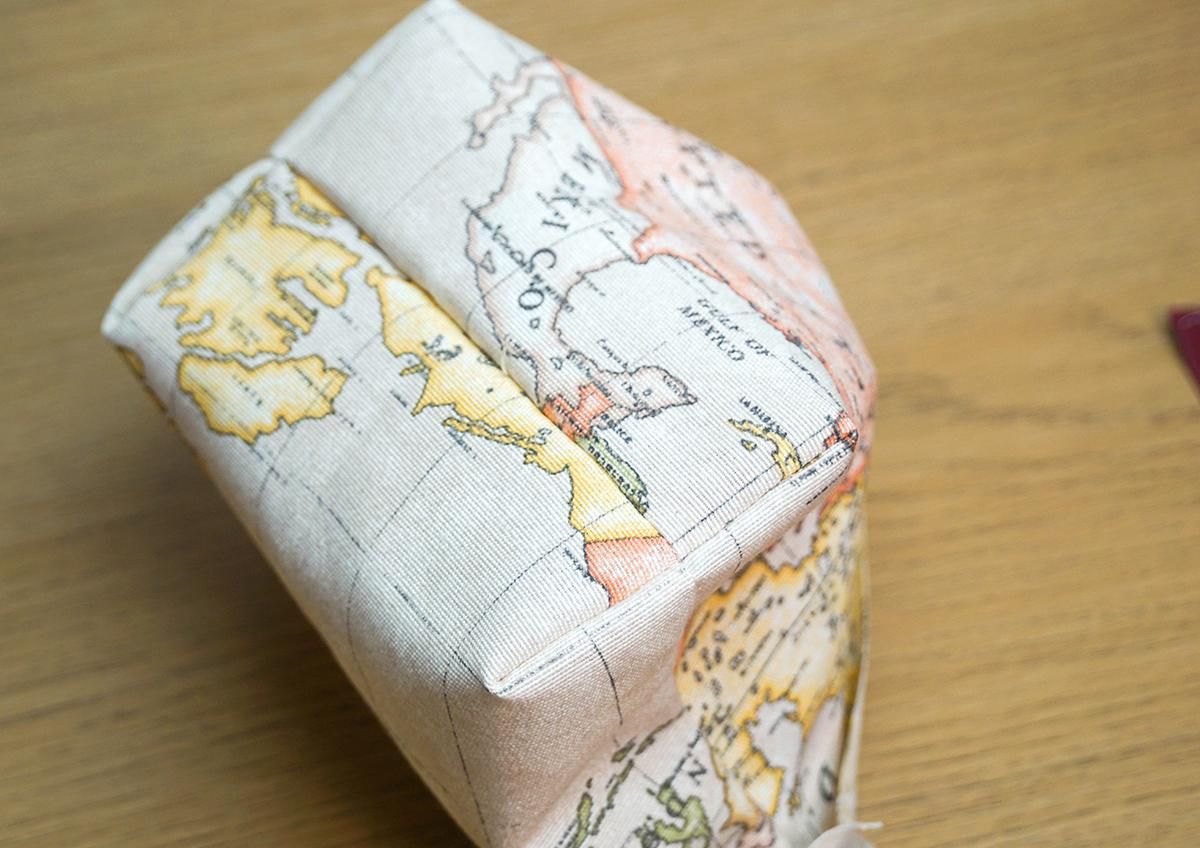
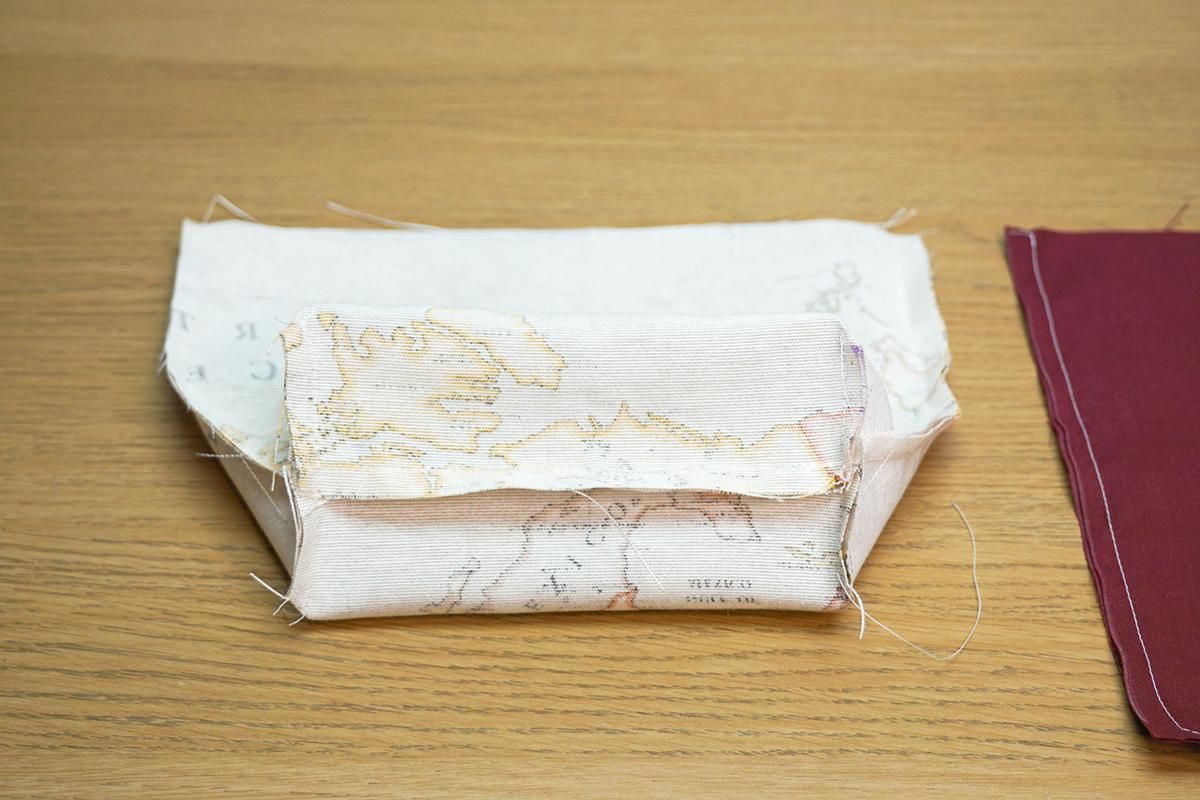

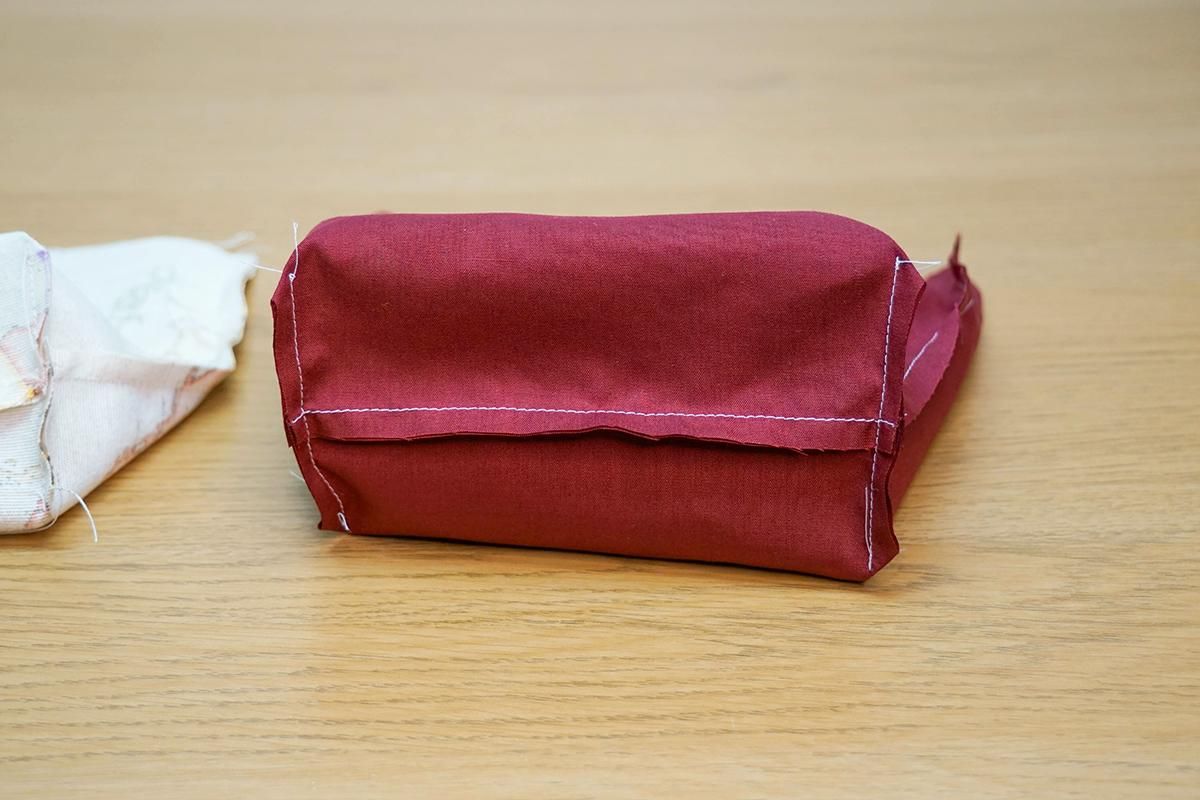
Repeat the boxed corner method for the other 3 corners at the base of these pouches.
Both pouches should both have a wide base.
Sew in the Lining


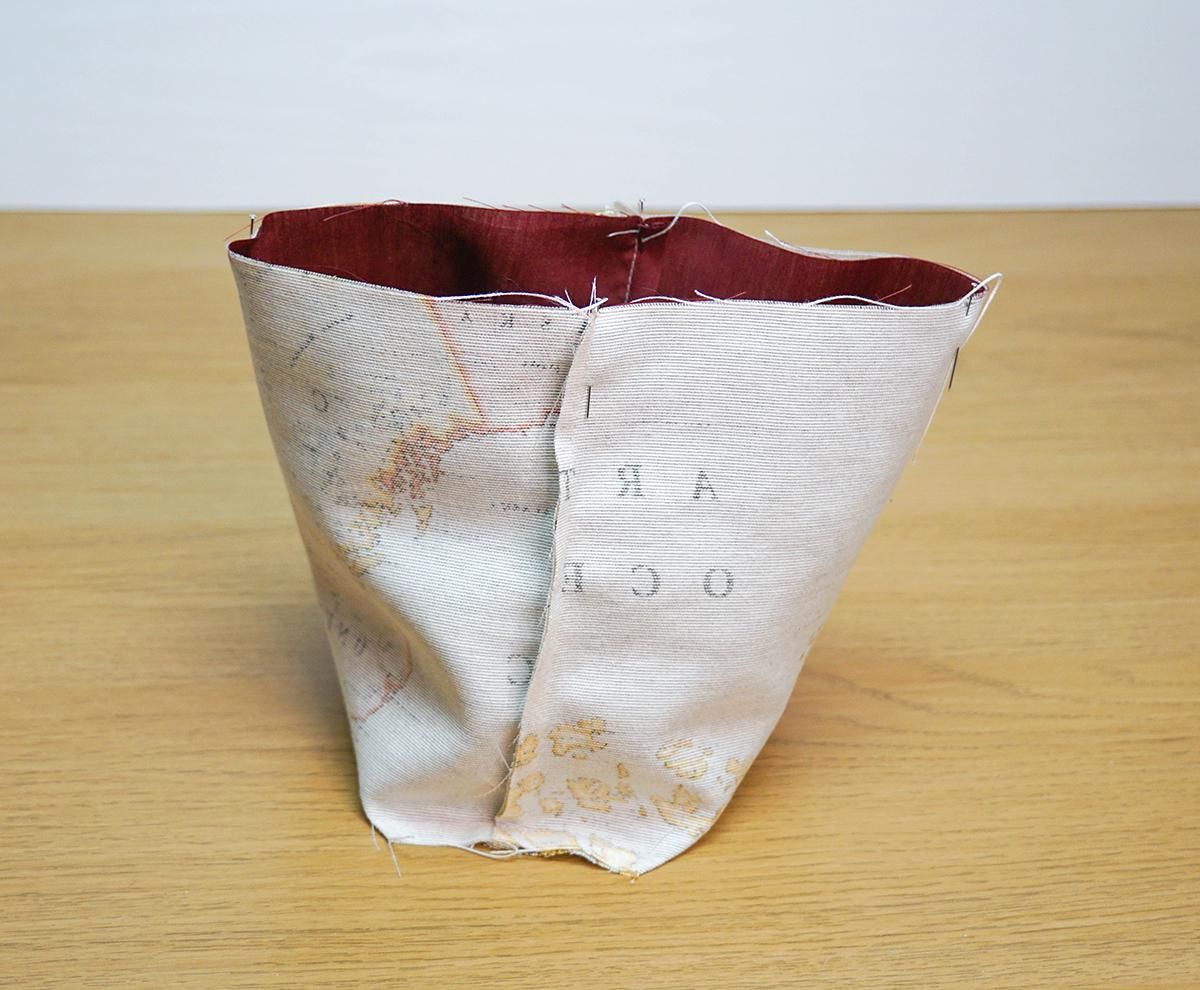

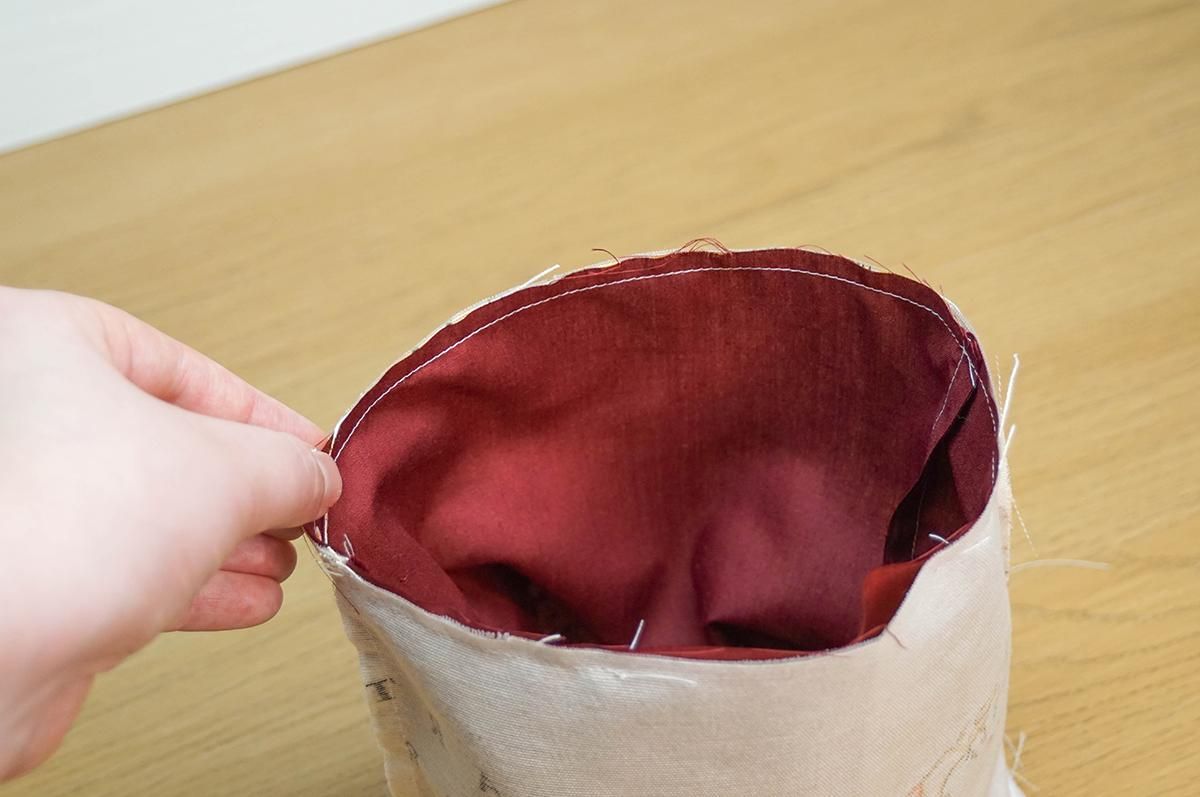

Turn the lining pouch right-sides out and push it inside the outer fabric pouch.
Line up the top edges and the side seams.
Pin the side seams of the 2 pouches together, at the top. Bring these pins together in the middle to find the centre of the side pieces and add pins at these points as well. This ensures that the fabric is distributed evenly around the opening.
Sew around the top edge, leaving a gap of a few inches on one side.
Turn the Right Way Out


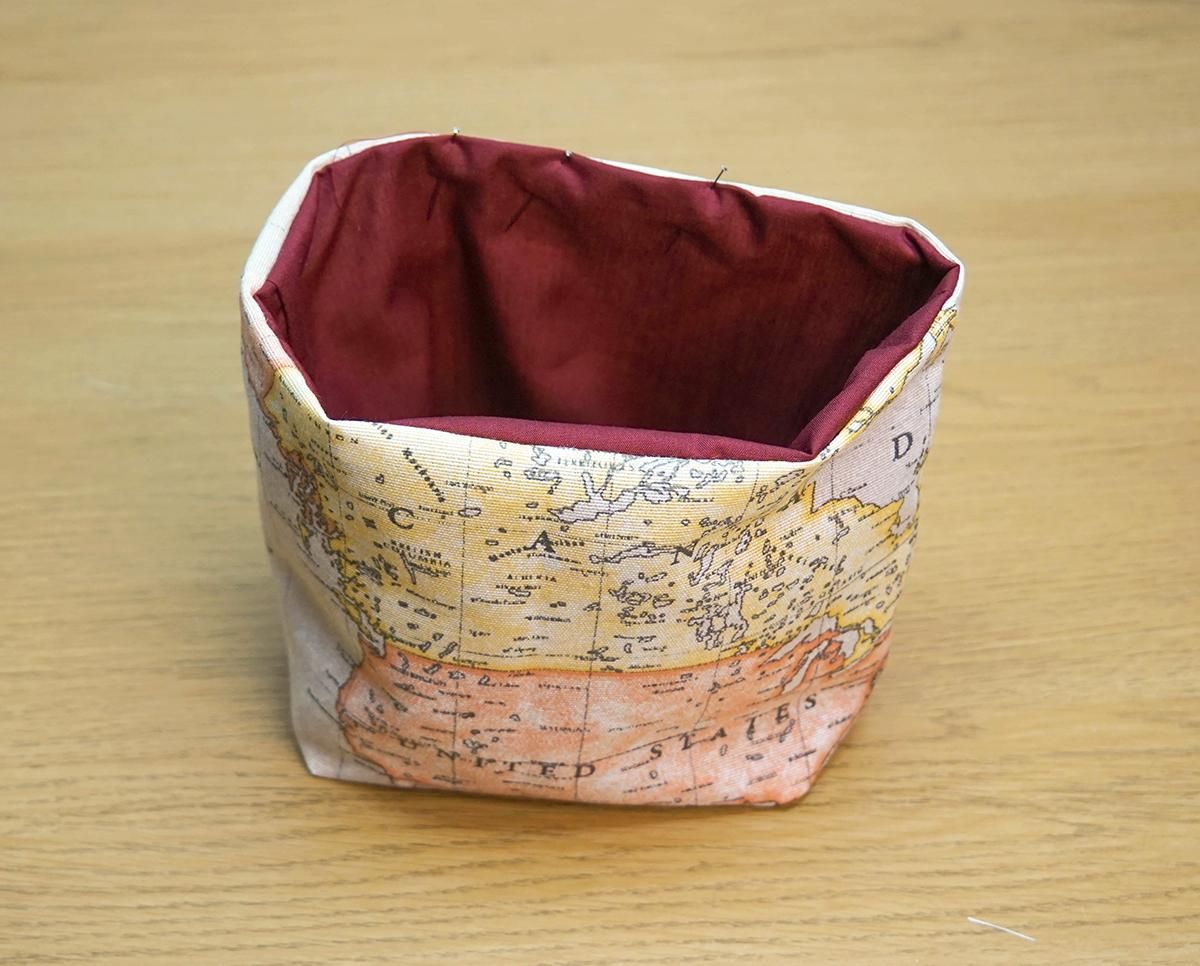

Turn this bin right-sides-out through this gap, before pushing the lining back down inside the bin.
Straighten out the fabric at the seam and then press with an iron. Also make sure to fold the seam allowance amount of fabric down inside the gap, on each side, and press these folds in place as well.
Stitch the Gap


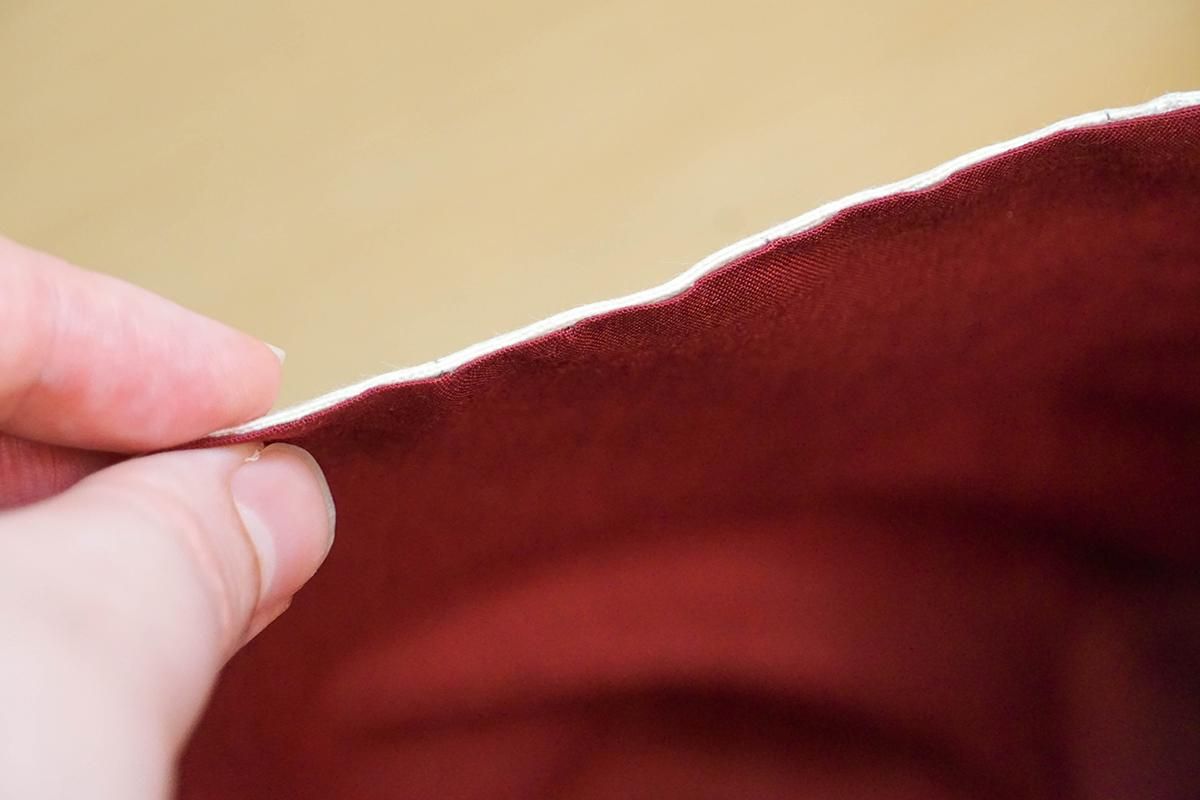


At this point you could pin the gap closed and top stitch all around the top edge, but I decided to hand sew (with the invisible stitch) across just the gap instead.
Make the Strap

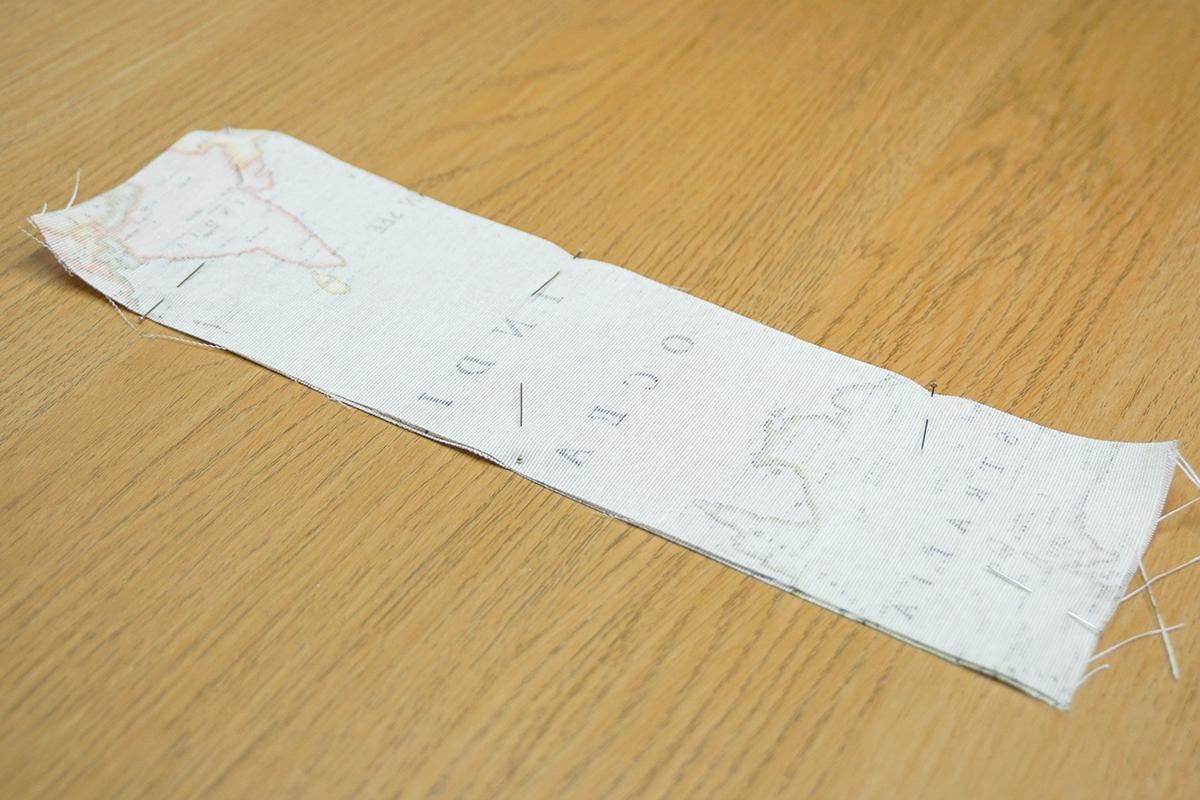


To then make the strap, pin the two 3.5 x 11.5” pieces right-sides-together, and sew along 3 of the edges, leaving one of the shorter edges open.
Turn the strap right-sides-out, fold in the edges around the gap, pin, and sew straight across. That’s the strap complete!
Press any of the parts you've made so far with your iron if they need it, to make sure the seams are all nice and neat.
Add the Strap
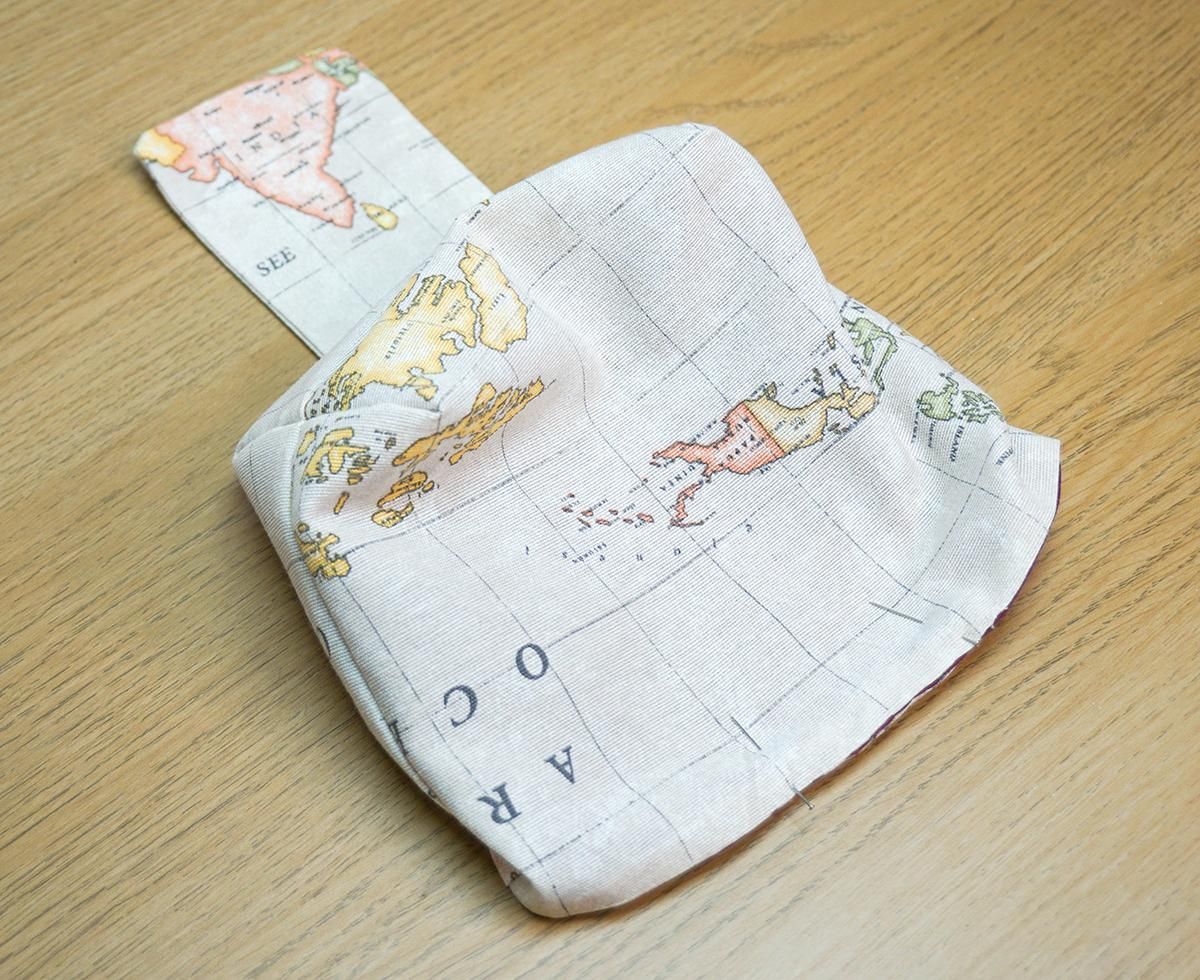

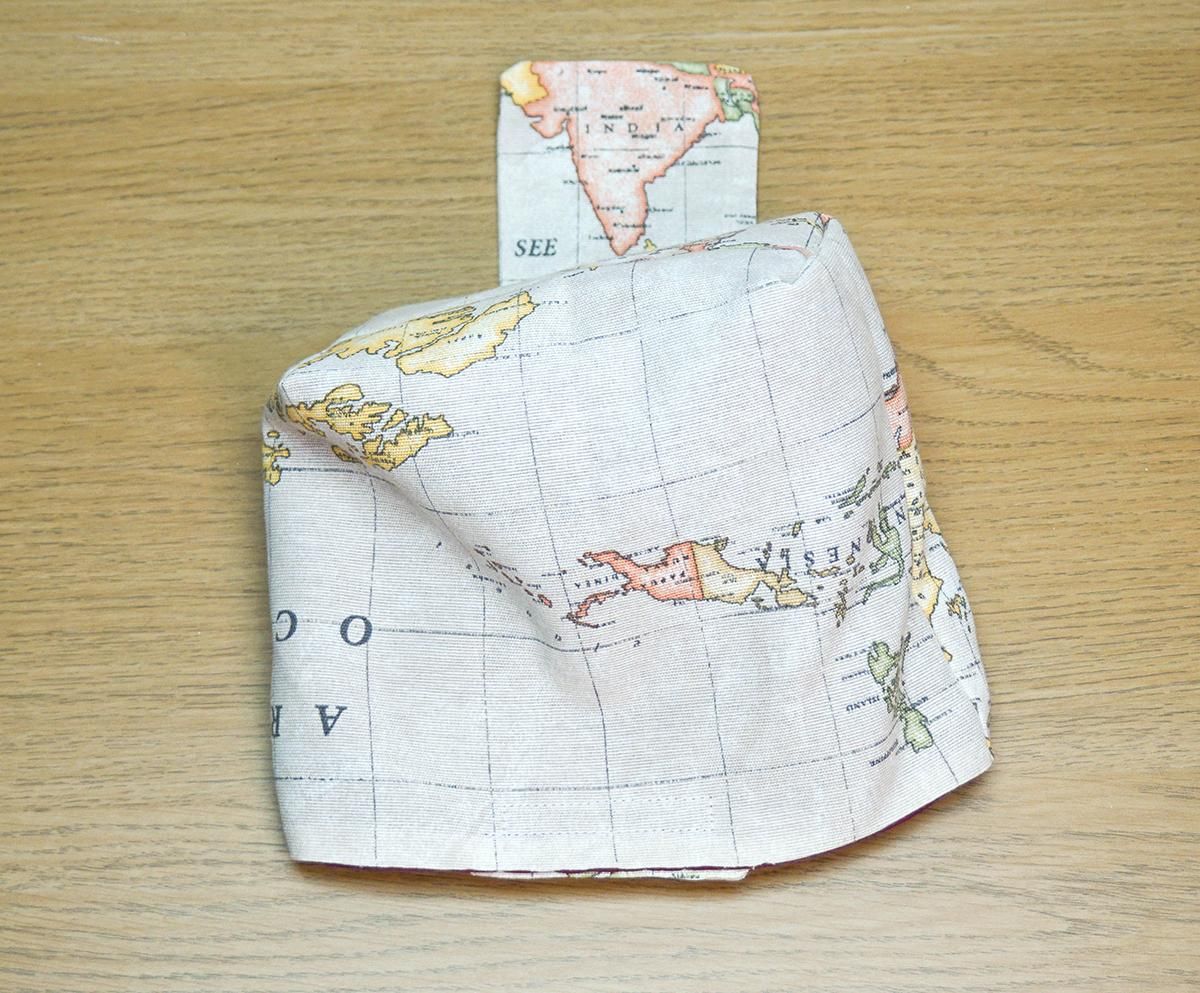
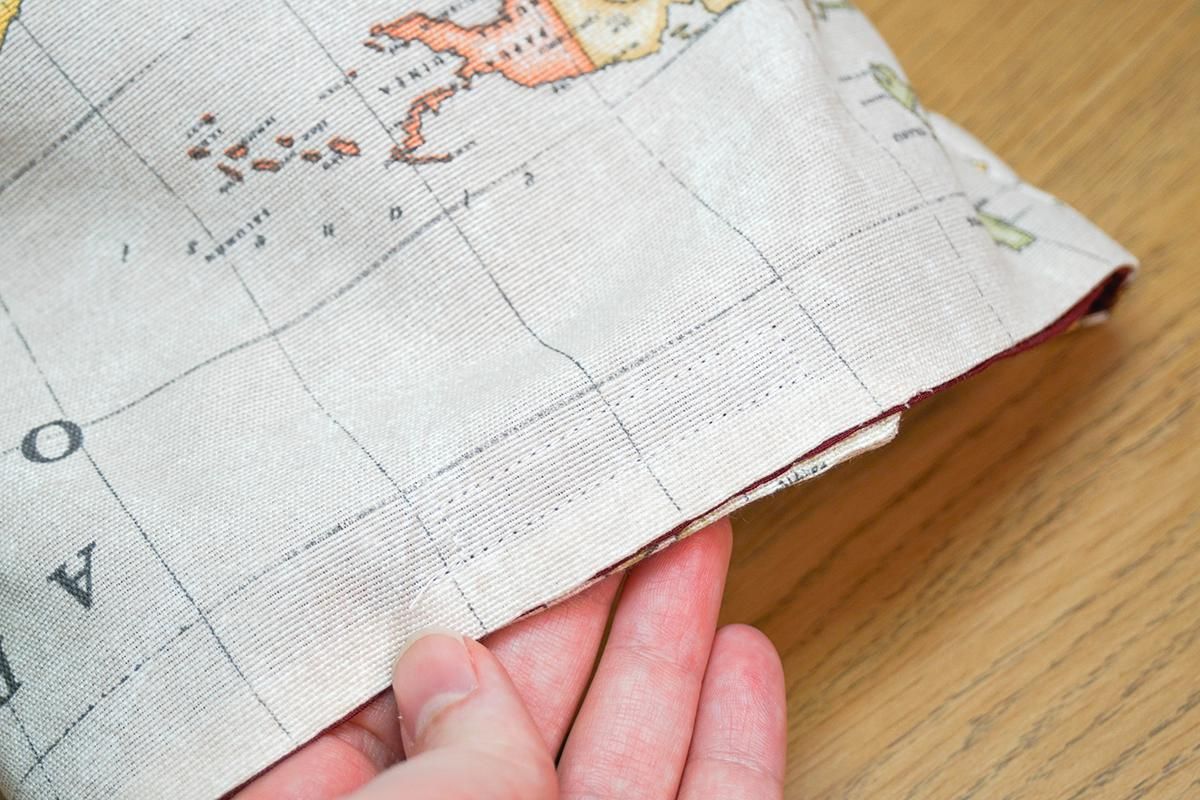

Attach one end of the strap to the bin. To do this, first position the bin and strap as shown in the photos, with the bin front-side-down on top of the strap.
Note that we’ll be turning the top edge of the bin over by about 1” after this step, so that you can see a band of the lining.
To find the centre of the back of the bin, fold the bin so the side seams line up, then place a pin in the fold at the back. Line this pin up with the centre of the strap, and pin it to the strap.
Sew some kind of box or rectangle shape at this point. This rectangle should be about ½”wide.
Fold the top edge down now and stitch it in place at the back, where the strap attaches. Use invisible or whip stitch.
Attach the Weighted Section


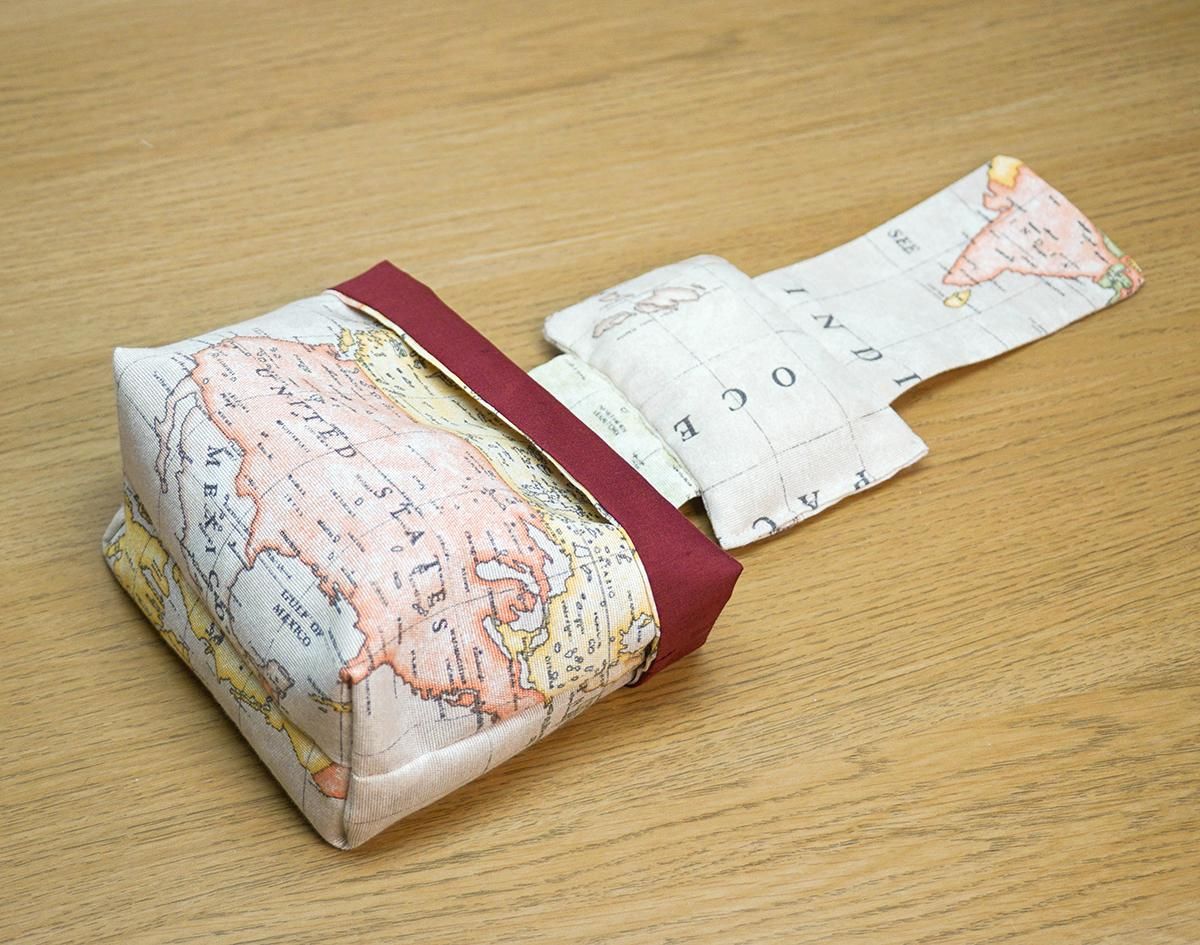
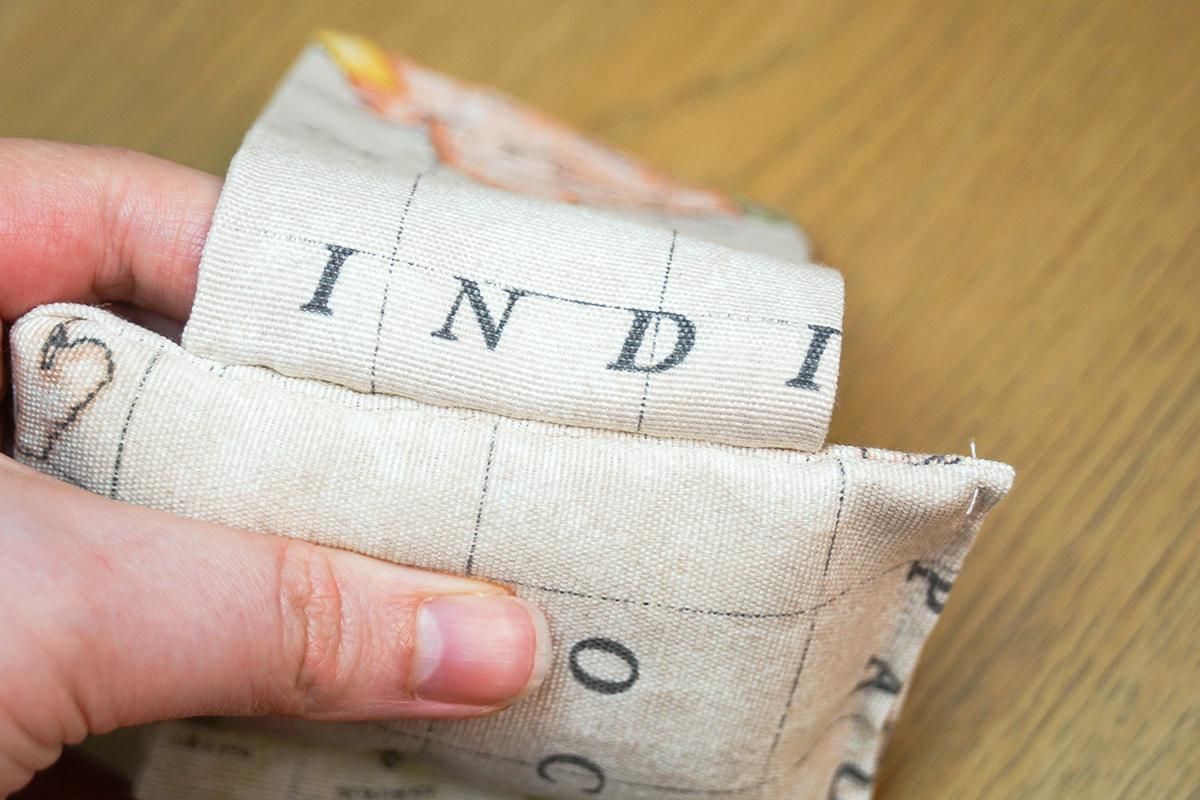
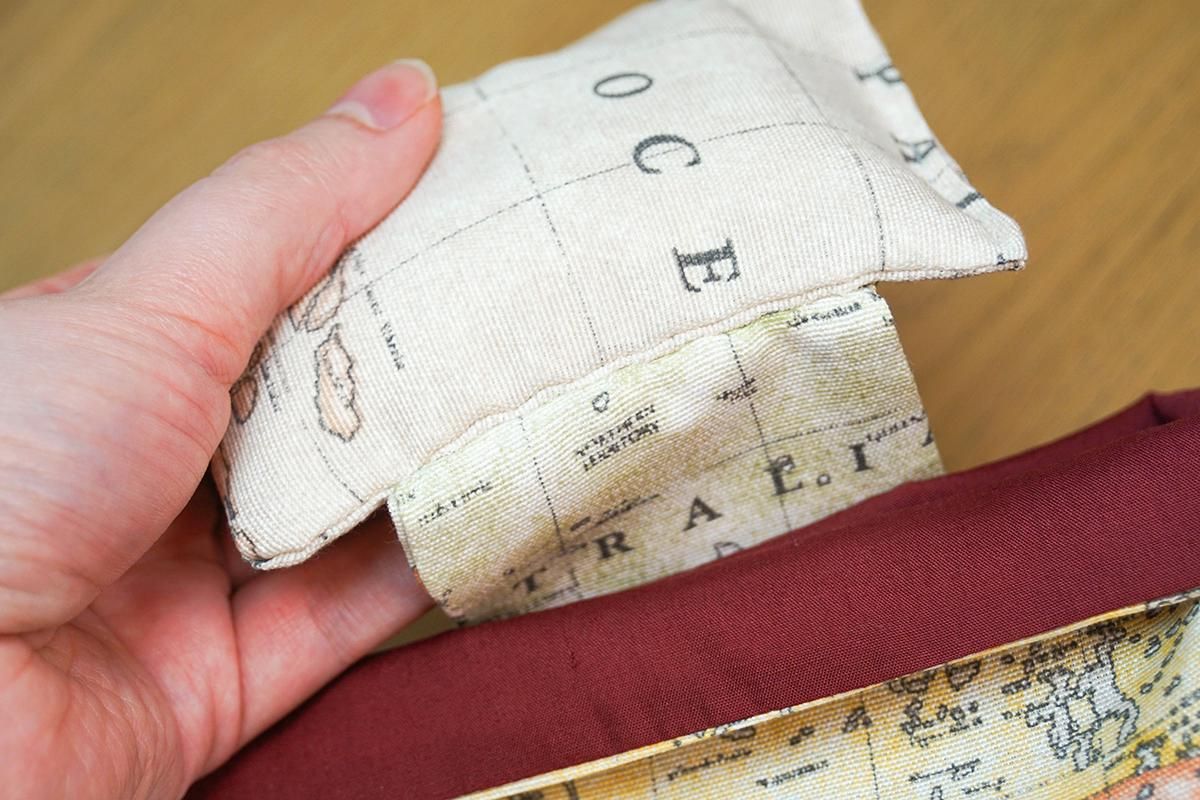
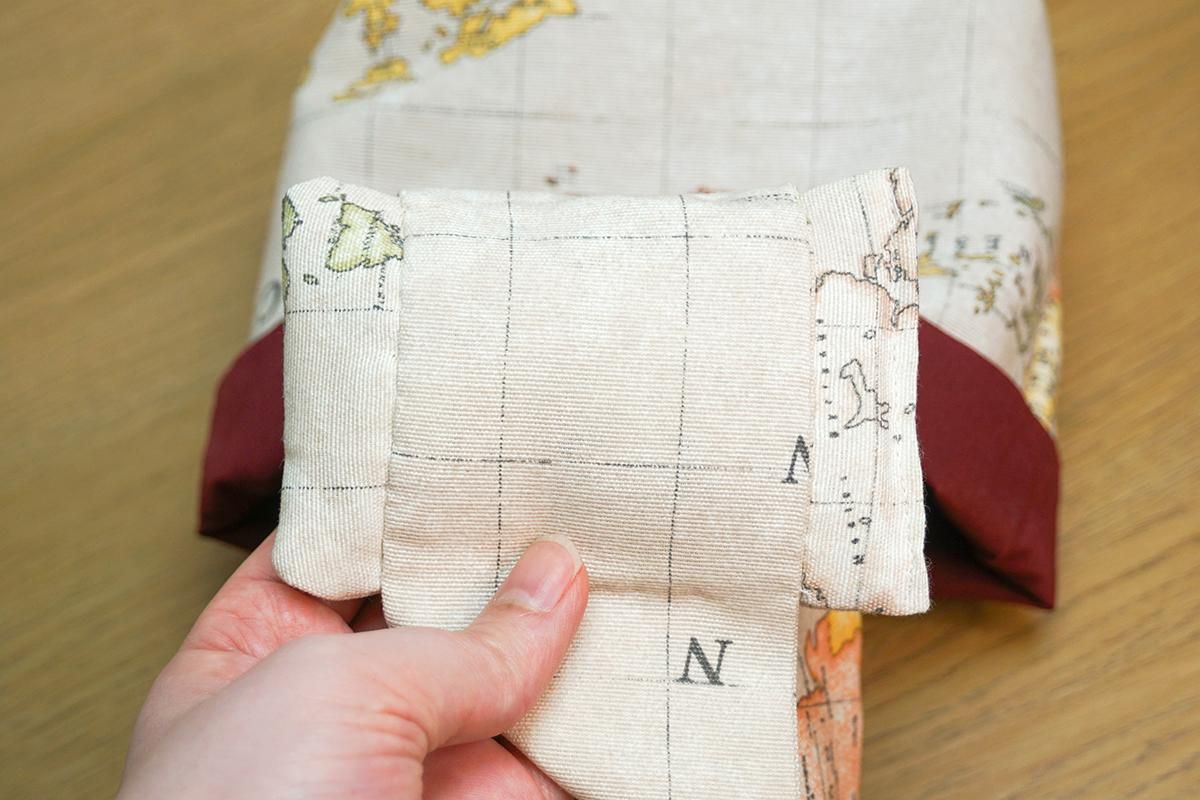
Next, attach the weighted section 1 ½” above the thread bin, making sure it’s centred. (Feel free to attach it elsewhere on the strap instead if you prefer).
To do this, I hand sewed along where the top and bottom edges meet the strap, using the invisible stitch, and on the underside of the weighted section I used the whip stitch. Please see photos.
Finished!
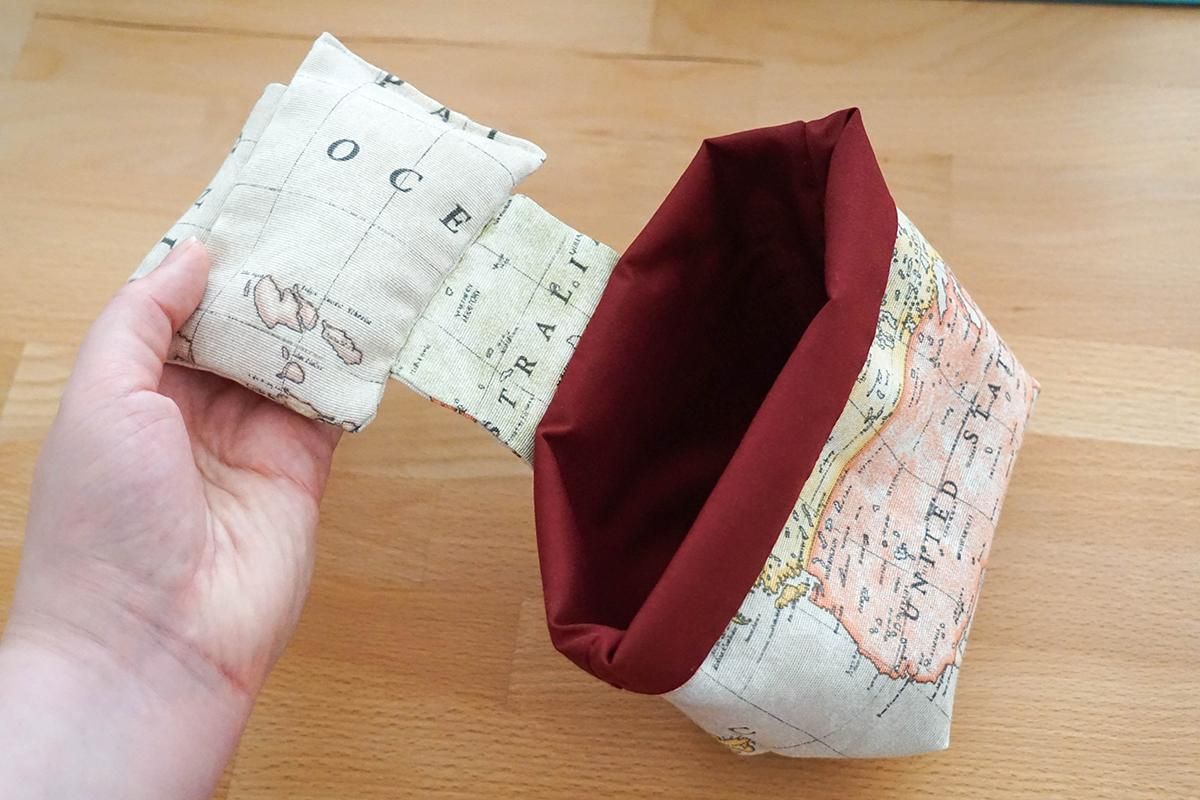


Your weighted thread bin is now complete…I really hope you like this project 😊
You can use the weighted section as a pincushion as well if you wish, but just note that there is a risk that some sand could escape!