How to Solder a LED Strip
by Daniel Saião Ferreira in Circuits > LEDs
203 Views, 1 Favorites, 0 Comments
How to Solder a LED Strip

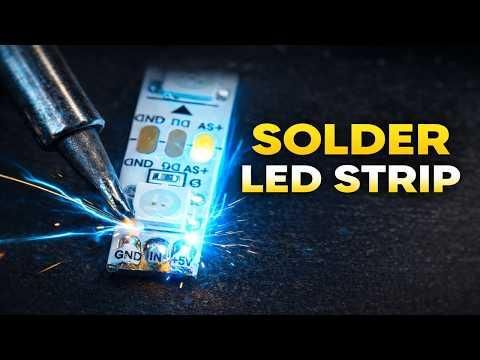
Soldering LED strips isn’t just about joining a few copper pads, it’s about taking control of your lighting setup. Whether you’re building custom desk lights, mood lighting for your setup, or integrating LEDs into a DIY project, mastering this skill opens up a world of creative possibilities. In this tutorial, I’ll go step-by-step through how to expose your strip, bridge connections, add wires, make clean corners, and finish everything off with a proper plug connection. Grab your iron, your steady hand, and maybe your favorite playlist, it’s time to solder some LEDs!
Supplies

Expose the LED Strip
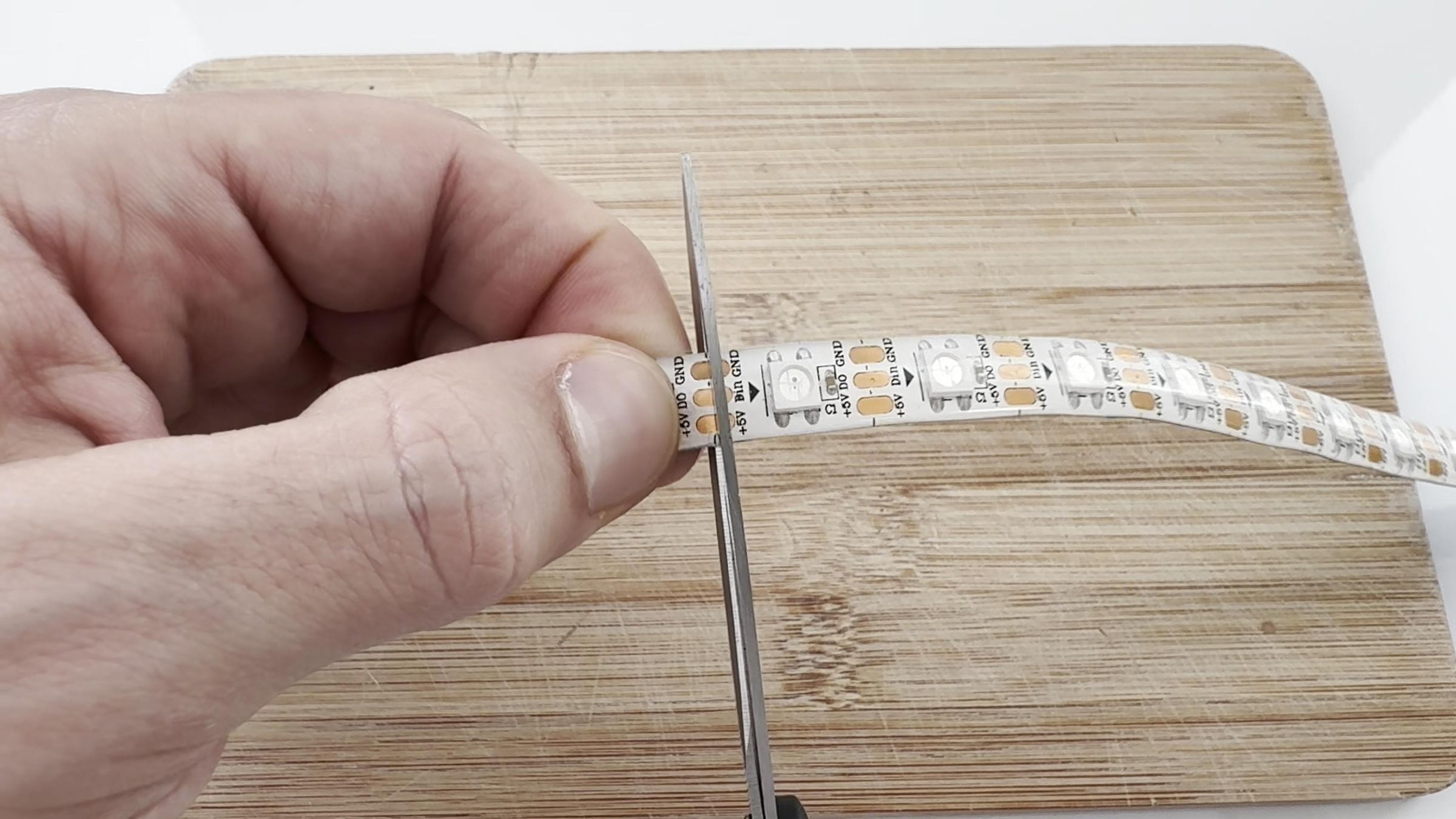

Every LED strip hides its magic under a thin silicone or plastic coating that keeps dust and moisture away. That’s great for protection, but not so great when you need to get to the copper pads. Start by finding the small scissor icon on the strip, that’s your cutting zone. Make a clean cut there, then carefully peel back the protective layer just enough to reveal the shiny copper pads. Don’t rush this part; damaging the pads can make soldering a pain later. Wipe away any leftover residue so you’ve got a nice clean surface to work on. Think of it like prepping the workbench before the real fun begins.
Bridge Two LED Strips


Sometimes, your LED project needs more length and that’s where bridging comes in. Line up two LED strips so the copper pads match: positive to positive, negative to negative, and always keep the arrows pointing in the same direction. Use a bit of tape to hold everything steady while you work; having both hands free makes a world of difference. Now comes the golden rule: don’t melt solder directly onto the pads. Heat the pad first, then feed the solder in and let it flow naturally. This gives you a strong, shiny bridge between the two strips both functional and satisfying to look at.
Solder Wires to the LED Strip
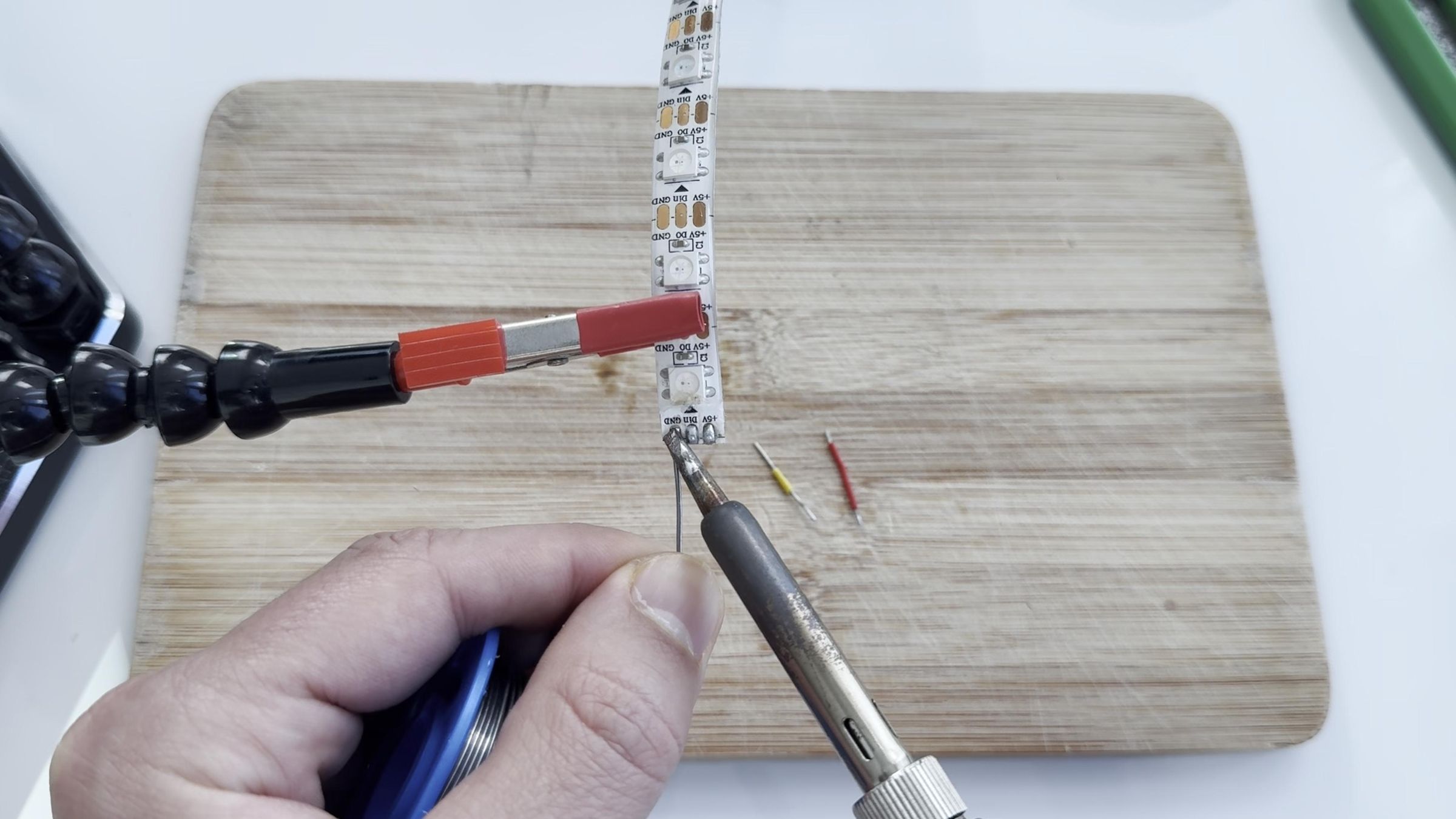

If you want to connect your LED strip to other components, soldering wires is the way to go. Use red wire for positive and black for negative. Your future self will thank you! This setup works great for connecting to a power supply, linking to a controller, or creating flexible extensions between strips. Tin both the wire ends and the copper pads first; it helps solder flow smoothly and form a reliable bond. Then, heat the pad, touch the wire, and let the solder melt on its own. Clean, professional, and solid, the kind of joint that makes every maker proud.
Make a 90-Degree Connection

Sharp corners don’t have to mean twisted LED strips. When your layout turns a corner, just solder short jumper wires between the two strip ends. Bend them neatly at a 90-degree angle to keep everything aligned and stress-free. It’s a simple move that keeps your build tidy and professional-looking. Plus, it gives your setup that “engineered with precision” vibe and let’s be honest, that’s half the fun!
A Cleaner Solution for 90-Degree Corners


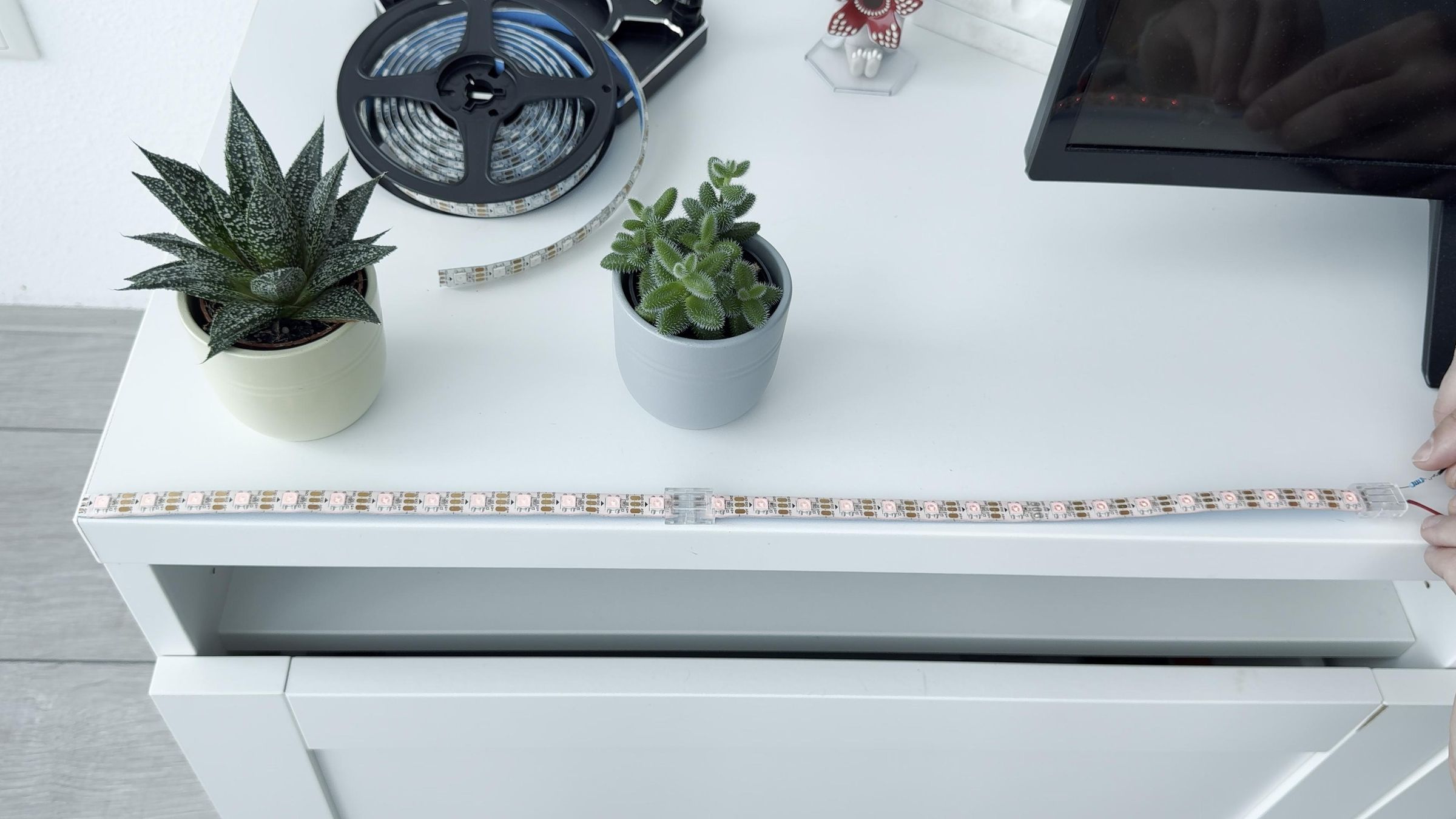
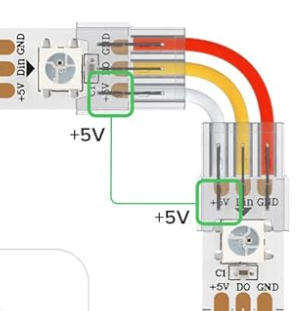
Soldering wires between two LED strips works perfectly fine for corners but let’s be honest, it can end up looking a little messy. After testing a few setups, I looked for a cleaner solution and found these 90-degree LED strip connectors. They’re basically tiny corner adapters with metal contacts inside that bridge both strips together without any soldering. Just slide each strip into the connector, make sure positive lines up with positive and ground with ground, then clamp it shut. The result looks way more polished and takes only a few seconds to install. I also found straight extension connectors that work the same way, making quick LED strip extensions incredibly easy. It’s one of those small upgrades that makes a DIY build instantly look more professional.
Conclusion: Light Up Your Projects
And that’s it!! You’ve officially mastered one of the most useful DIY skills out there. Soldering LED strips gives you total freedom to customize your lighting setup however you want. No connectors, no limitations. From PC mods to home lighting or even wearable tech, these techniques open endless possibilities. Remember, the more you practice, the cleaner your joints will get and soon, you’ll be soldering like it’s second nature. So go ahead, grab another strip, and light up your next idea!