Jasper Commons - a Community Space for Recovery and Gathering
by Jacob Janzen in Design > Architecture
489 Views, 6 Favorites, 0 Comments
Jasper Commons - a Community Space for Recovery and Gathering

Natural disasters are among the most powerful forces on the planet, capable of widespread destruction across many aspects of life. Yet their impact is most often thought of as just physical damage. In reality, their long term impact extends far beyond what is visible, affecting communities and individuals on a social and psychological level. These invisible wounds can grow, and if left unaddressed can turn into long lasting effects such as post-traumatic stress, displacement, and increased levels of anxiety and depression, often continuing long after physical damage has been resolved.
Despite this, built environments are rarely designed to support recovery in a way that feels natural, accessible, and integrated into daily life. This project bridges that gap and addresses the question, what if architecture could support recovery, growth, and connection?
Jasper Commons is more than a building. It is a built environment centered on recovery and gathering, supporting healing and growth while bringing together social, creative, and private environments. These spaces are designed to promote connection and stability within a biophilic, trauma-informed, and accessible setting. Jasper Commons includes spaces such as a central commons, library, café, makerspace, and counselling spaces, all of which are fused into a single, accessible environment.
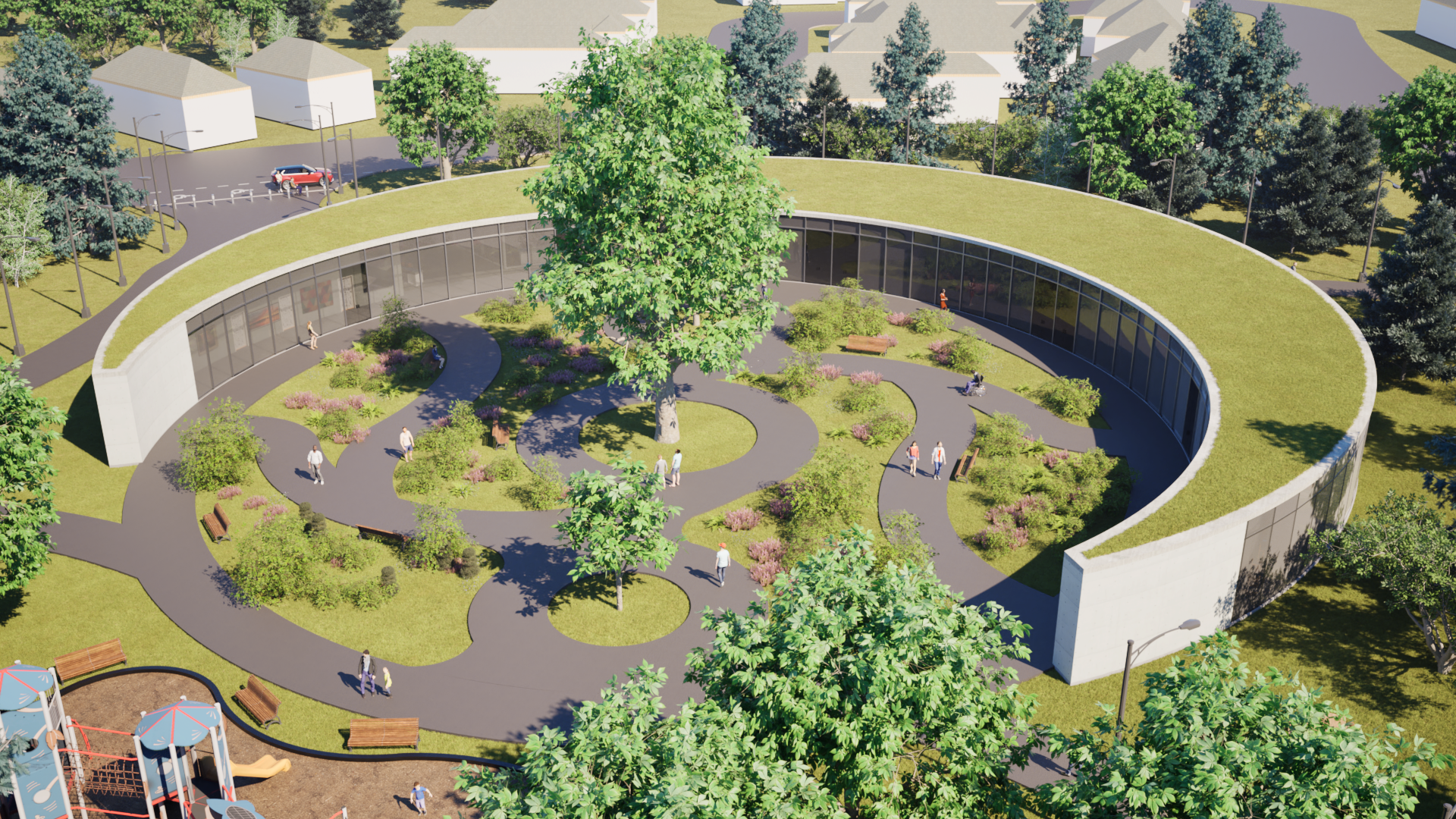
The Commons revolve around a center courtyard, shaped by the crescent form that creates balance between openness and enclosure. Circulation was designed to be continuous and intuitive with a gradient between public and private spaces. Natural light, biophilic design, and open views link inside with outside and are used to create an inviting space. Jasper Commons was developed through multiple iterations using digital Revit models alongside physical prototypes, allowing for the refinement of spatial relationships and the overall experience.
Supplies
Software:
- Autodesk Revit - BIM software used for creating layouts, floor plans, sections, and revisions.
- Twinmotion (Optional) - Visualization tool used to create and render images and videos of BIM designs.
- Autodesk Fusion (Optional) - CAD software used for preparing Autodesk Revit models for 3D Printing.
- OrcaSlicer (Optional) - Slicer used to prepare 3D Models and convert into G-CODE for 3D printing.
- Canva (Optional) - Graphic design tool used to create diagrams and drawings for clarification.
Equipment:
- Elegoo Neptune 4 3D Printer (Optional) - Used for creating physical prototypes and determining relative positioning throughout the design process.
- Canon 1200D Camera (Optional) - Used to document physical models and design iterations.
Materials:
All materials are only needed if creating a physical model.
- PLA Plastic - Used in conjunction with 3D printer to create physical models and model parts.
- Metalized Mylar Tape - Used for windows on small scale models.
- Miniature Grass Mat - Used for green roof and courtyard on small scale models.
Natural Disasters

Every year, countries around the world must respond and deal with floods, wildfires, earthquakes, storms, and other life altering natural disasters. These forces can tear apart our lives, both physically and mentally, and while the immediate damage is often most visible, the full impact of these disasters extends much further. Destroyed homes, infrastructure collapse, service loss, and shortages, occur when disaster strikes, but the underlying impact spans far wider.
Families can be displaced for weeks, months, or even years. Routines are disrupted, and public spaces we take for granted can be lost. Libraries, parks, and gathering spaces all play a vital role in maintaining community stability, and their absence increases the chance of mental health issues and significantly slows recovery.
Research has also shown that natural disasters can have significant long term psychological effects. A study by Eamin Z Heanoy and Norman R Brown found increased rates of anxiety, depression, and post-traumatic stress are common among those affected, finding that the highest prevalence rate was for post-traumatic stress (34.4%), followed by depression (25%), with anxiety also commonly reported among affected populations.
Between 2024 and 2025, The EM-DAT International Disaster Database reported 814 natural disasters, including 68 in North America alone, revealing the surprising frequency of life changing events. As communities continue to face repeated disruption, the need to understand disaster recovery as more than physical rebuilding becomes increasingly important.
The 2024 Jasper Wildfire


During summer 2024, Jasper National Park experienced an extremely destructive wildfire that was revealed to be caused by lightning and heavily accelerated by tornado force winds generated by the flames. The blaze was determined to be a wildfire complex with fires both to the North and South of the town of Jasper, which rapidly grew due to previously mentioned meteorological conditions.
On July 22, 2024, a mass evacuation was ordered, forcing approximately 25,000 individuals to leave the area. On the evening of July 24, 2024, the fire reached the town, and wildland firefighters without self-contained breathing apparatuses were forced to evacuate as well. On July 27 in an update to the public, Parks Canada Deputy Incident Commander Landon Shepherd stated that the fire was the largest recorded in the past 100 years for Jasper National Park.
At its largest, the fire covered more than 32,000 hectares (79000 acres) and burned for months before being deemed as under control on September 7, 2024. The Jasper Wildfire was one of the most significant natural disasters in Canada within recent years.
The Wildfire's Impact
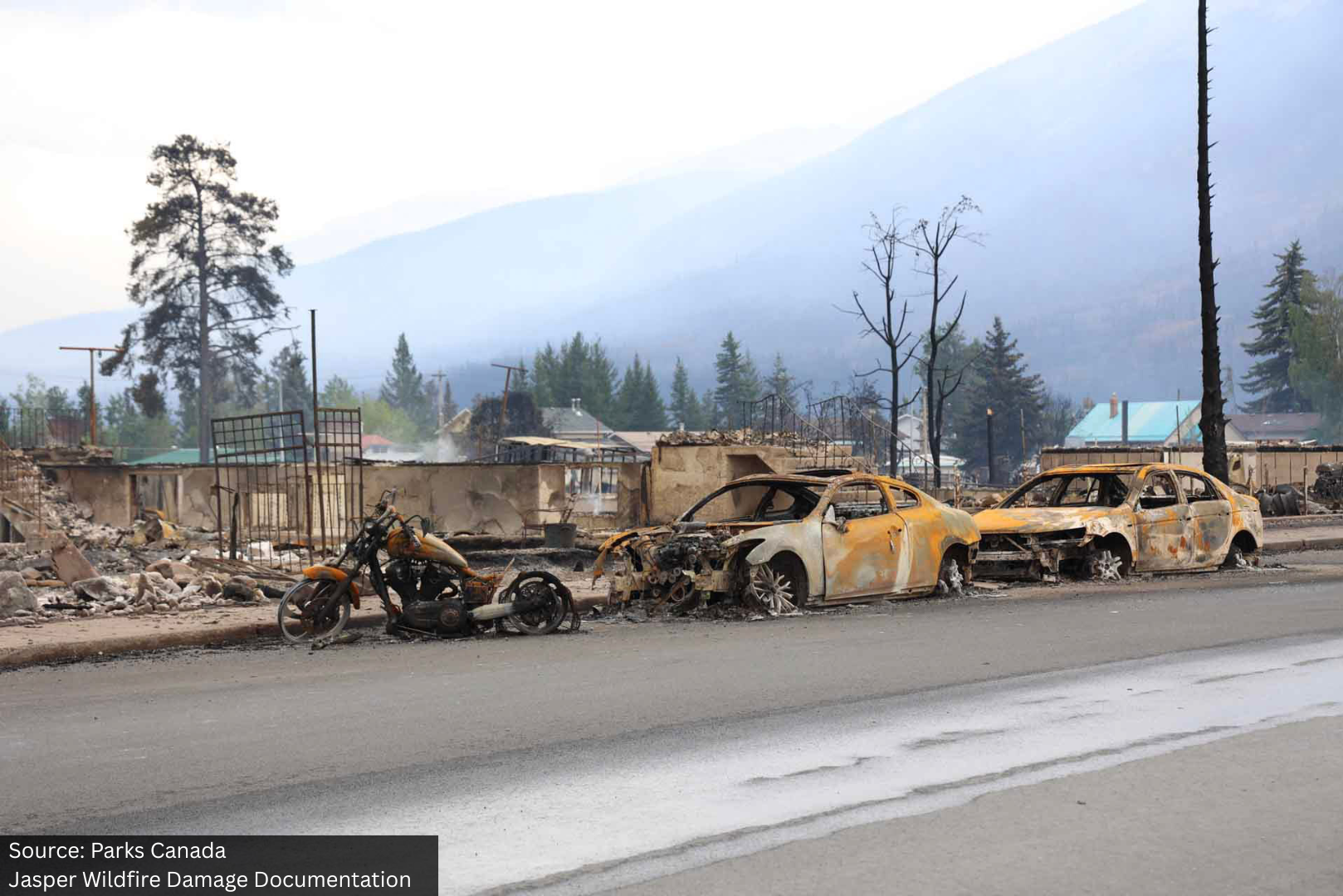

358 structures were destroyed, leading to $880 million in insurance claims, making the disaster the 9th most expensive in Canadian history. Beyond homes and businesses, the wildfire also damaged or destroyed multiple spaces tied closely to community gathering and social connection, including churches, hostels, community halls, and educational facilities.
Thankfully, due to the brave actions of structural firefighters, pieces of critical infrastructure such as schools, the hospital, and wastewater plant were saved. The 25,000 evacuees were left to find places to stay, seeing as most homes had been destroyed. A welcome center was established in British Columbia, and hotels were open to displaced persons but both were quickly overwhelmed due to a mass influx of people. Evacuees also spread North towards Edmonton and Grande Prairie, while some even fled South to Calgary, Alberta.
After the fire was deemed under control, the long and arduous process of recovery and rebuilding began. Even with funding from both the federal and provincial government, as well as organizations such as the Canadian Red Cross, many residents were left with the loss of homes, workplaces, gathering spaces, and facing financial uncertainty. They didn't just have the tangible loss to deal with, but the damage that affected daily life after the fire was contained.
The absurd amounts of stress and uncertainty placed on individuals that were involved in the Jasper fire led to many individuals facing mental health challenges. Disasters like these are extremely traumatic, and affect people in all aspects of life. In fact, a 2025 study from the National Bureau of Economic Research found that individuals who had evacuated from a wildfire stayed nearly 33% longer during hospital admissions than average. Events like the Jasper Wildfire highlight the extreme destruction and damage caused both mentally and physically, which is why it is so essential to ensure proper recovery is provided for everyone.
Trauma Informed Design

While designing Jasper Commons, one of the most important things to me was ensuring that the design would be capable of physical recovery and growth, but also mental and emotional recovery and growth. Trauma informed design - the process of implementing trauma informed care principles into architecture - was exactly what Jasper Commons needed to transform from just another building to a space grounded around healing.
Trauma informed design recognizes that architecture and built environments can directly influence how safe, comfortable, and emotionally supported an individual is within a space. In the aftermath of disasters like the Jasper Wildfire, environments tailored to be trauma sensitive can reduce stress and support recovery.
After looking at trauma informed work by architecture firms such as nbbj, MASS Design Group, and Perkins & Will, I noticed a reoccurring pattern of elements that created trauma informed care spaces. These principles were intertwined with almost every aspect of design; lighting, circulation, acoustics, privacy, and the human desire for biophilia.
These principles seen throughout trauma informed architecture set in motion the way of thinking that was essential in designing a safe, warm, and welcoming atmosphere, ensuring that the built environment of Jasper Commons would truly be part of healing and recovery.
Biophilic Incorporation


Another aspect of architecture that I wanted to incorporate while designing Jasper Commons was nature. During my research on trauma informed design, one key principle that repeatedly appeared was biophilic design. This principle builds on biophilia - "A hypothetical human tendency to interact or be closely associated with other forms of life in nature." (Merriam Webster) and is centered around integrating nature into built environments. Elements such as vegetation, lighting, airflow, and seamless transitions between indoors & outdoors are used to strengthen connection with nature.
One example of biophilic design that stood out to me was the incredible use of green roofs in the Casa Vallarta Greenroof & Greenwalls project by Cristina Grappin and Ezequiel Farca. With vegetation integrated directly into the built environment, It was incredible to see how much of a difference it could make.
Beyond the aesthetic aspect of biophilic incorporation into architecture, biophilic design plays a large role in reducing stress, improving well-being, and strengthening the connection between people and the natural world around them. In a 2025 issue of PLOS ONE, researchers found that participants in highly biophilic environments had significantly high positive emotional responses, with recovery showing the strongest increase, scoring over 3 times higher in highly biophilic environments compared to spaces with low biophilic integration (as seen in the graph above). These findings show the importance of integrating nature throughout Jasper Commons in order to support long-term healing and recovery within the built environment.
After researching all the benefits of biophilic design in architecture, it quickly became a non negotiable part of the design process. The integration of nature aligned with the atmosphere of Jasper Commons, one of healing and connection with our incredible world.
Defining the Purpose of Jasper Commons
While developing Jasper Commons, one of the most important things to me was defining what the project should actually become - beyond simply responding to the wildfire itself. During my research on the aftermath of the 2024 Jasper Wildfire, I was surprised by how much everyday life within the community had been disrupted. Gathering spaces disappeared, businesses were damaged and destroyed, and many people became disconnected from the routines, places, and communities they were once familiar with.
It was at this point I realized that Jasper Commons shouldn't just be an immediate and direct response to the wildfire, but rather it should be focused on long term recovery, growth, and resilience. Instead of fulfilling a single purpose, I wanted Jasper Commons to become a flexible and welcoming environment capable of supporting many different experiences. I wanted the atmosphere of the project to feel calm, open, and approachable, a place where people could gather, create, learn, heal, and grow.
As these ideas became clearer, the purpose of Jasper Commons started defining itself naturally. The project became centered around the idea that architecture can contribute to healing not only through physical shelter, but by creating spaces that strengthen connection, comfort, creativity, and long term community resilience.
Community Needs & Program Development
After determining that Jasper Commons should function as a fluid space supporting a wide range of experiences, I began translating that idea into something tangible. First, I noticed the absence of everyday public spaces where people could naturally gather, spend time, and make reconnection more easily accessible and less effortful. Many spaces that were previously used to gather, connect, and socialize such as parks, community centers, and other built environments were lost to the fire. This created a need for programs & activities that would act as catalysts for community interaction and growth.
With this in mind, I started researching different community oriented activities and programs that would fulfill this catalyst role, promoting creativity, growth, and resilience. Several activities that stood out as exceptional examples included libraries, makerspaces, meeting places, and counselling spaces. These programs would ensure that Jasper Commons could support both everyday community interaction and more individual forms of recovery, creating a balance between shared social activity and quieter spaces for reflection and support.
Defining the purpose of Jasper Commons and how it would fulfill that purpose built the foundation for the design that was to come. With this core philosophy established, the next step was translating the concept of Jasper Commons into the real world.
Site Selection


After determining some of the town's needs and the solutions that would support growth and healing within the built environment, it was time for the meat and potatoes of designing Jasper Commons.
The first step was to select a site for the project, so I started by locating three potential site options within Jasper that balanced accessibility, proximity to the community, and a sense of calm separation from the busiest areas of town. Each site needed to remain easily reachable for residents, while still offering enough quietness to support healing and growth within Jasper Commons.
The first site was located within Jasper along a major road, this site offered strong accessibility and close connection to the town. However, it raised concerns due to higher noise levels, poor walkability, and based on the most recent Street View data, it appeared to be occupied by trailers, making it an unfit candidate.
The second site was located further East along the same road. This site was vacant and near the center of Jasper, however, it still carried similar noise concerns due to its proximity to the main road, had limited walkability compared other areas, and was unfortunately too small for Jasper Commons.
The third site balanced accessibility, walkability, and a quieter surrounding environment while still remaining closely connected to the community. The site was also large enough to be secluded away from the bustle of daily life, which fostered the ideal atmosphere for the commons.
After reviewing the pros and cons for each site, the decision was made to continue with development on the third site due to its position, size, and ideal environment.
Site Concerns
After selecting the site, the next step was to analyze both environmental factors and practical considerations that would directly affect the design of Jasper Commons.
The first factor was preserving the landscape that the building would come to rest on. Rather than heavily reshaping or restructuring the site, I wanted to preserve as much of the existing terrain and vegetation as possible, ensuring that Jasper Commons’ focus on healing and growth extended beyond the people using the space and into the surrounding environment itself.
Another major consideration was wind direction and exposure across the site. Since Jasper often experiences strong winds, I wanted the built environment to help create calmer, more sheltered outdoor areas. This would allow exterior gathering spaces and pathways to feel more comfortable and protected throughout the year while also influencing the overall form and orientation of the building.
The Crescent Shape
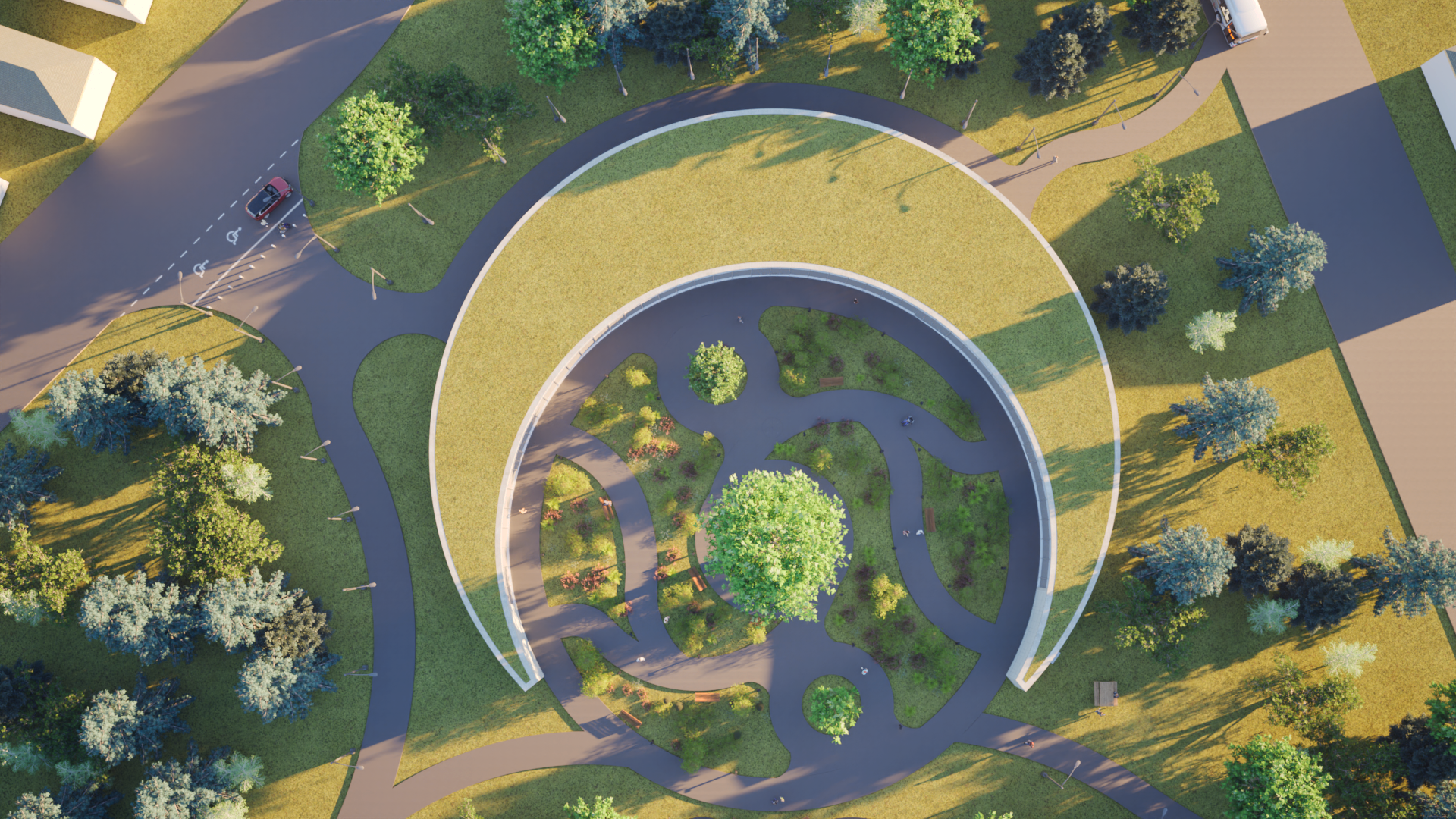
With these considerations in mind, it was time to determine the shape that would become Jasper Commons. After exploring different shapes and designs, I kept returning to a crescent form.
One of the main reasons for choosing this shape was its ability to create a sense of enclosure without feeling isolated. By wrapping around the central courtyard, the building helps create a calmer, more sheltered environment while still remaining accessible to the surrounding landscape.
The crescent design also strengthened the communal nature of this project by orienting towards gathering areas instead of isolating different locations from each other. Not only that, but the rounded crescent shape makes the building feel less harsh and rigid, ensuring a warmer and more welcoming atmosphere.
Layout Concepts

After coming up with the outer shape for Jasper Commons, it was time to draft a layout for the interior. Knowing that Jasper Commons was going to include multiple spaces for individuals to gather, connect, and grow, it was essential that an open plan concept was used, allowing for seamless transition and no barriers. With this in mind, I sketched out a rough plan.
In this sketch of the layout, I made use of large open spaces that would be used for connection and gathering, while closed off areas hosted specific purposes and programs as well as utility features.
Revit Model
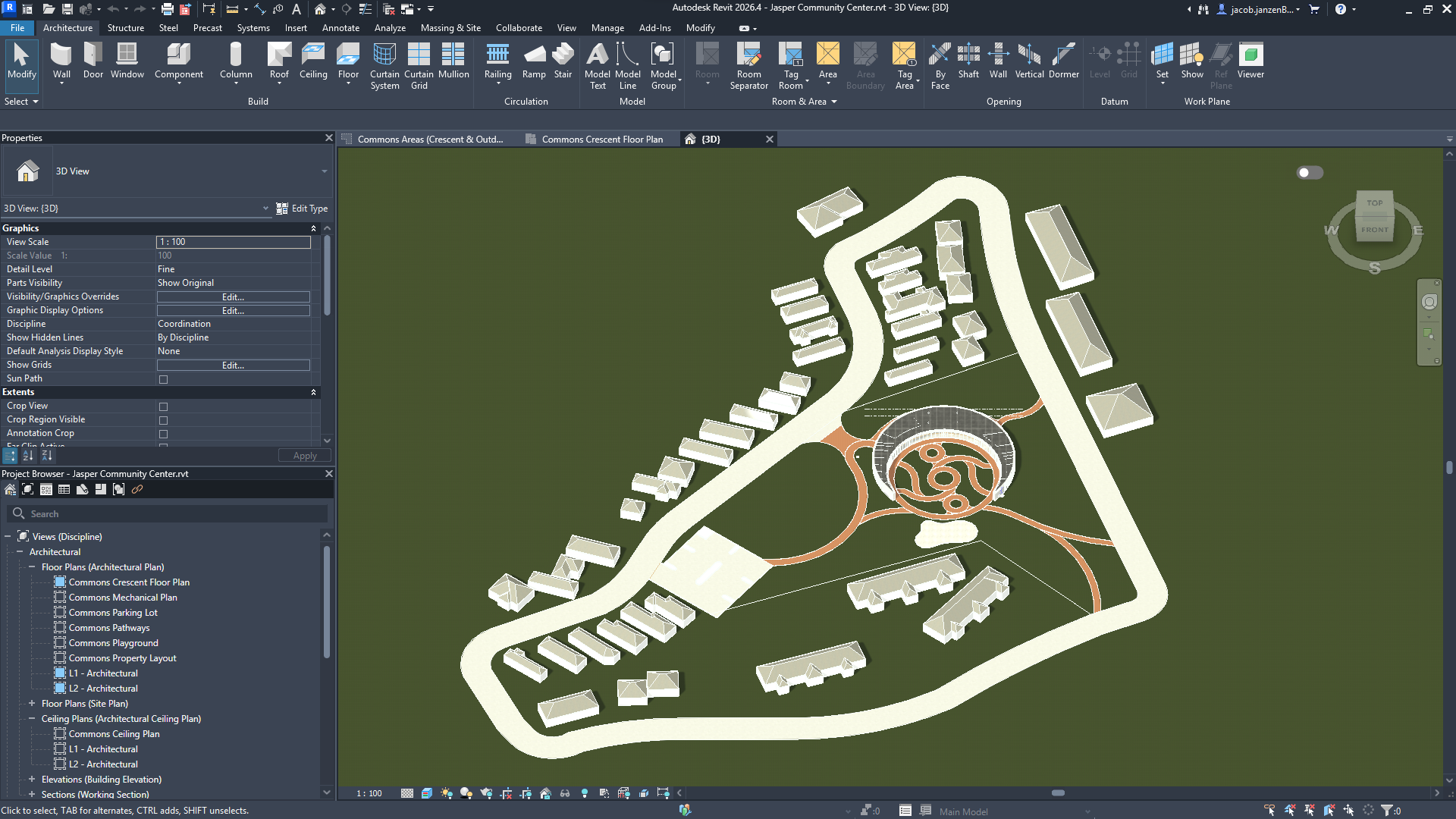


In Autodesk Revit, my first step was to establish the base floor plan using the tools within the Architecture tab, using the crescent form as the guiding boundary for the overall layout. Walls were created using the Wall tool, while doors, windows, and components were added using their respective modeling tools within the Architecture tab. I then used the Room and Tag tools alongside the Annotate tab to label and organize the different spaces throughout the building.
After the floor plan was established, I began developing the model vertically by creating a floor and roof to give the building proper form and scale. The Modify tools were heavily used throughout this process to adjust geometry, align walls, trim intersections, and refine the overall layout as the design evolved.
Once the built environment was modeled, I added the surrounding site context by referencing Google Earth data and used Massing & site tools to better visualize how Jasper Commons would sit within the landscape. Pathways and roads were then added to help define circulation and spatial relationships throughout the site.
Floor Plan & Iterations
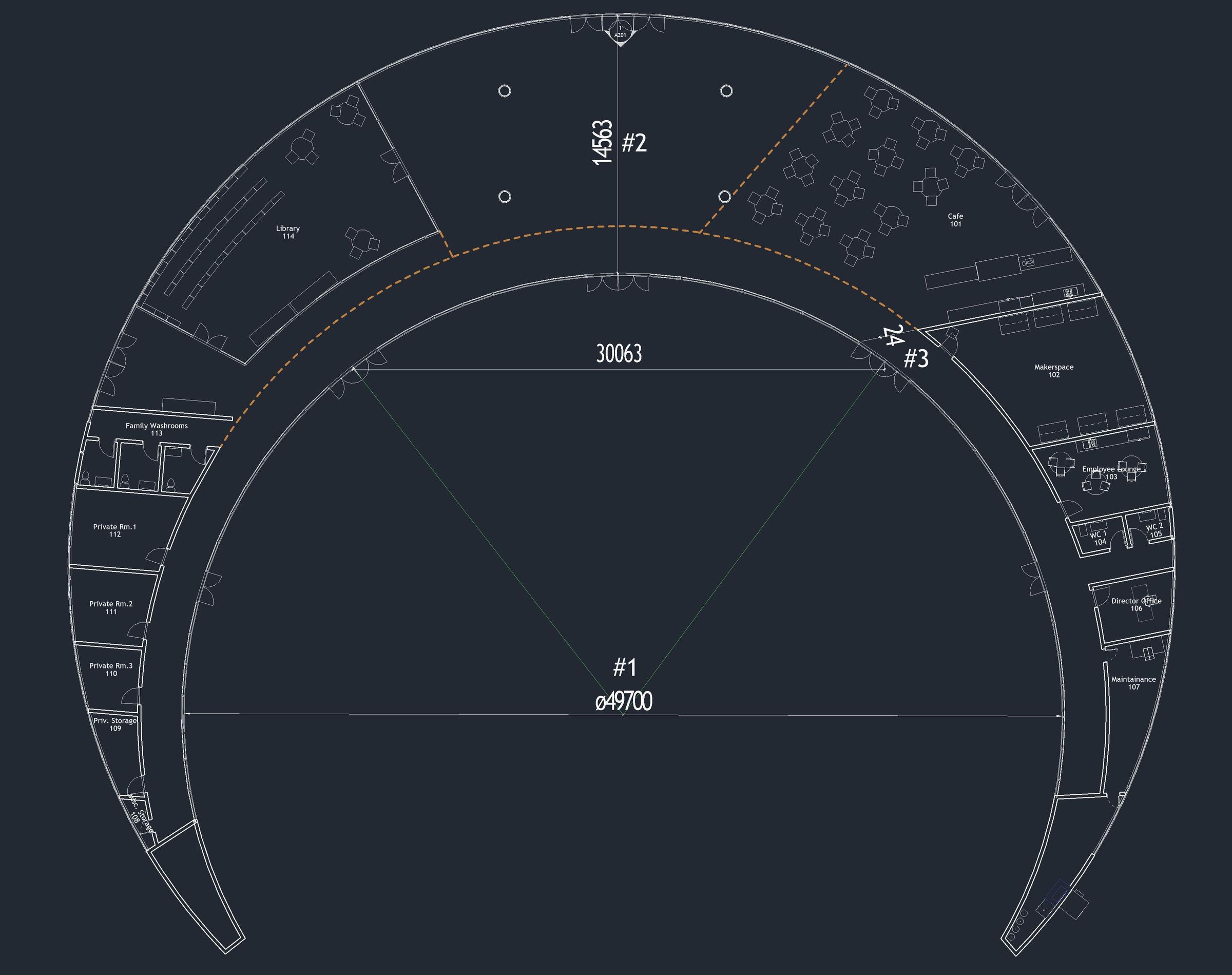
After establishing the main layout of Jasper Commons, I continued refining the floor plan through smaller iterations. Most of these changes focused on improving circulation, adjusting room sizing, and making the building feel more comfortable and intuitive to move through.
One of the larger changes during this stage was redesigning the washrooms. Originally, the project used larger public multi-gender washrooms, but these were later changed into more private family washrooms. This aligned better with the trauma informed direction of the project and helped the spaces feel more comfortable and accessible for a wider range of users.
These small changes were made in order to maximize the effectiveness, safety, and efficiency of Jasper Commons.
First Physical Model

After developing a more complete model in Revit, I decided to create a physical model in order to better understand the space in person and evaluate the spatial relationships throughout Jasper Commons.
The first step was exporting the Revit model as a .STEP file into Autodesk Fusion. From there, the model was simplified and slightly modified to better accommodate the limitations of FDM 3D printing. Once those adjustments were complete, the model was exported as a .3MF file into OrcaSlicer, where I prepared it for printing by adjusting support placement, layer settings, and print speeds.
After exporting the final .GCODE file, I sent the model to my Elegoo Neptune 4 and began the print. During the process, I used a Canon 1200D camera to capture a timelapse of the print, shown above.
Once the print was completed, the physical model became a useful tool for evaluating the overall layout, scale, and spatial relationships of Jasper Commons in a way that was more difficult to fully understand digitally alone.
Integrating Community Needs
With the final layout of Jasper Commons determined, it was time to begin designing each individual space around the community needs identified earlier in the project. Rather than treating every area as simply another room within the building, each space was developed with a specific purpose tied to recovery, creativity, connection, learning, or support.
At this point, I shifted my focus toward how each space would function on a day-to-day basis, including how people would interact with the space, move through it, and experience it. This would become one of the most important stages of the project, as the overall goals of Jasper Commons would begin translating into actual built environments.
Café & Gathering Areas

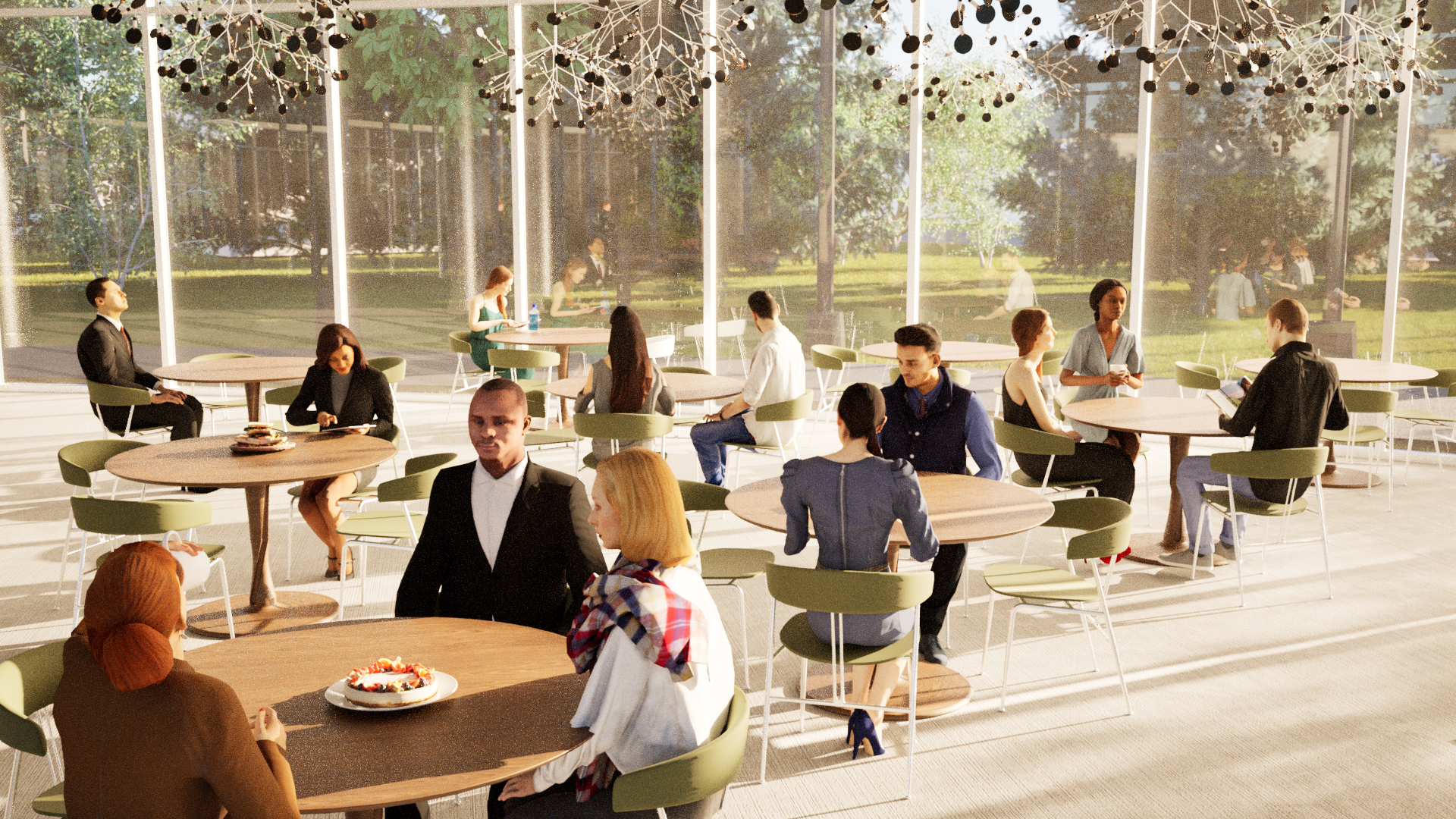
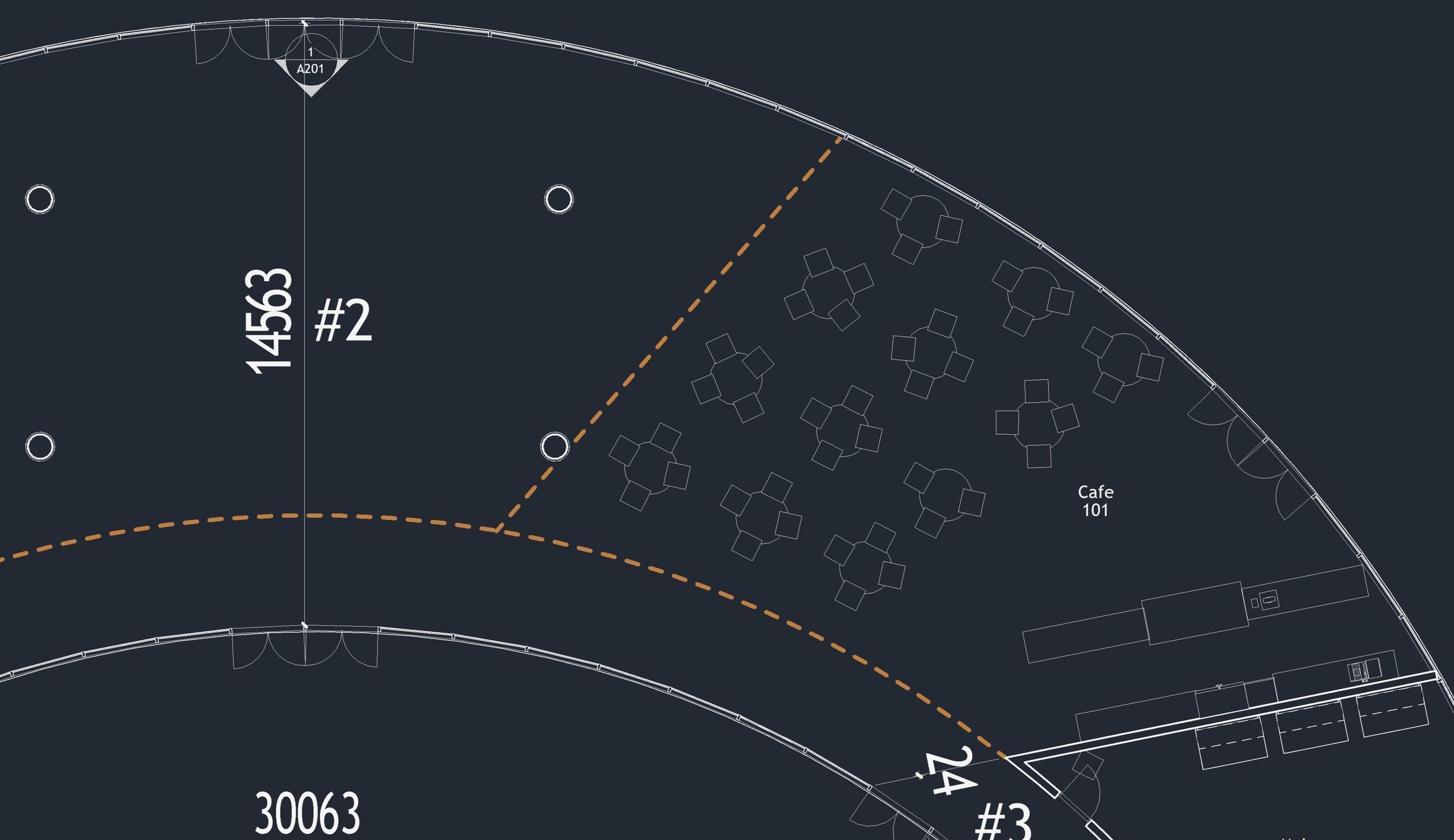
The first environment I began to design was the café and large common spaces. Throughout my research of what to incorporate into Jasper Commons, I continually ran into the concept of third places, environments aside from home and work/school where people gather, socialize, and built community. Spaces such as cafés, libraries, parks, and community centers are excellent examples of where people gather.
In a 2010 PLOS Medicine meta-analysis on social relationships and mortality risk, it was found that across 308,000 participants and 148 studies, individuals with stronger social relationships were significantly less likely to experience early mortality, with survival rates increasing by approximately 50% compared to those with weaker social relationships. This shows how truly essential third places are, in fact, in a 2019 Health & Place study, Dr. Jessica Finlay found that third places enrich social interaction, sense of community, and belonging outside of the home and workplace.
The café was designed to be one of the social anchors of Jasper Commons rather than just a food service. While designing the space, I focused on making it a warm environment suitable for conversation and gathering, featuring softer lighting, natural materials, open seating layouts, and strong visual connection to surrounding spaces such as gathering areas. It's placement along the outer window curtain wall invites people in and promotes connection to nature, allowing views of the landscape outside.
In addition to the café, the center of Jasper Commons features a large open gathering space designed to support a wide range of community activities and events. The flexibility of this area allows it to adapt to different uses over time, including conventions, meetings, celebrations, presentations, weddings, and other community gatherings.
Library
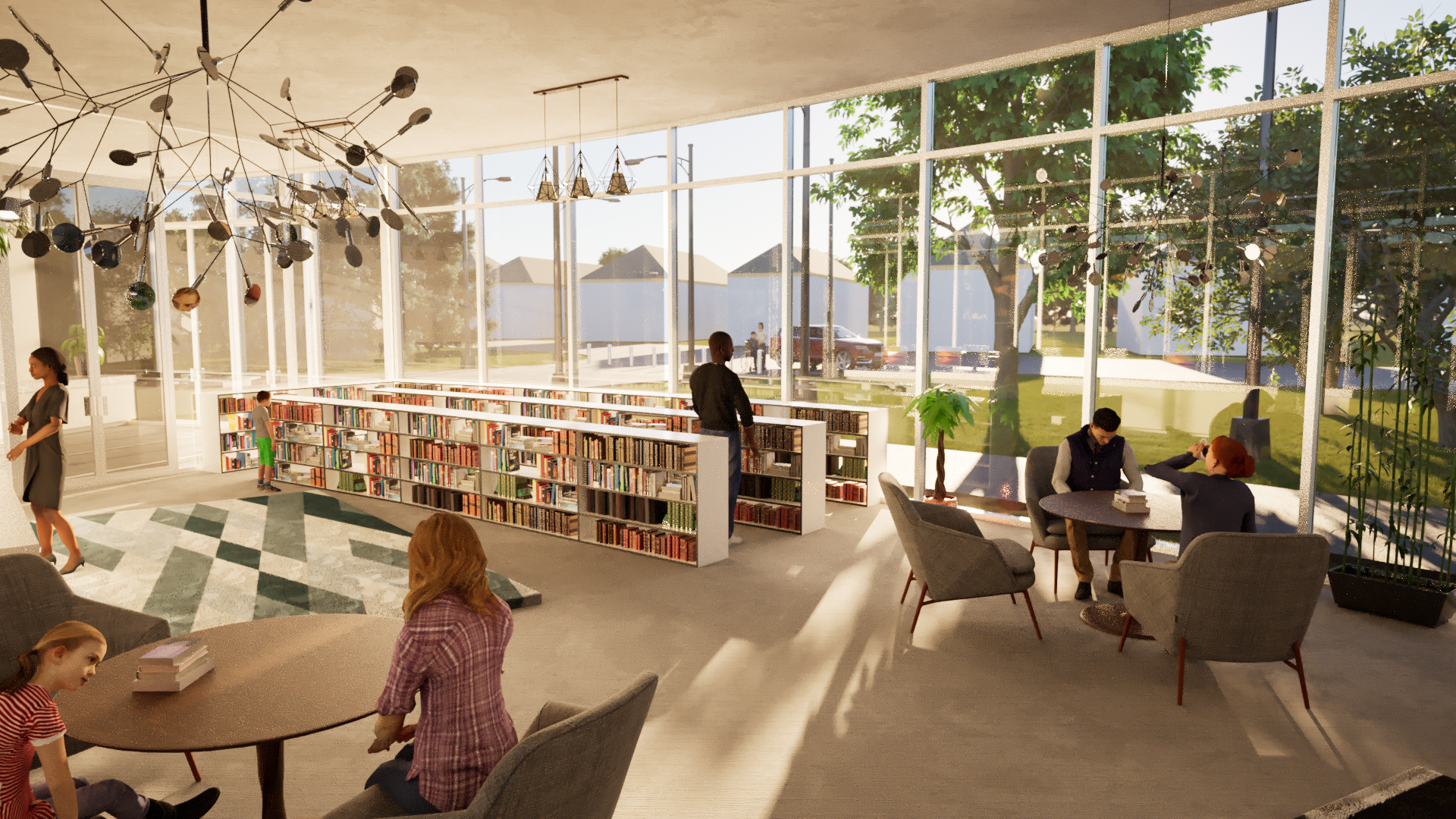
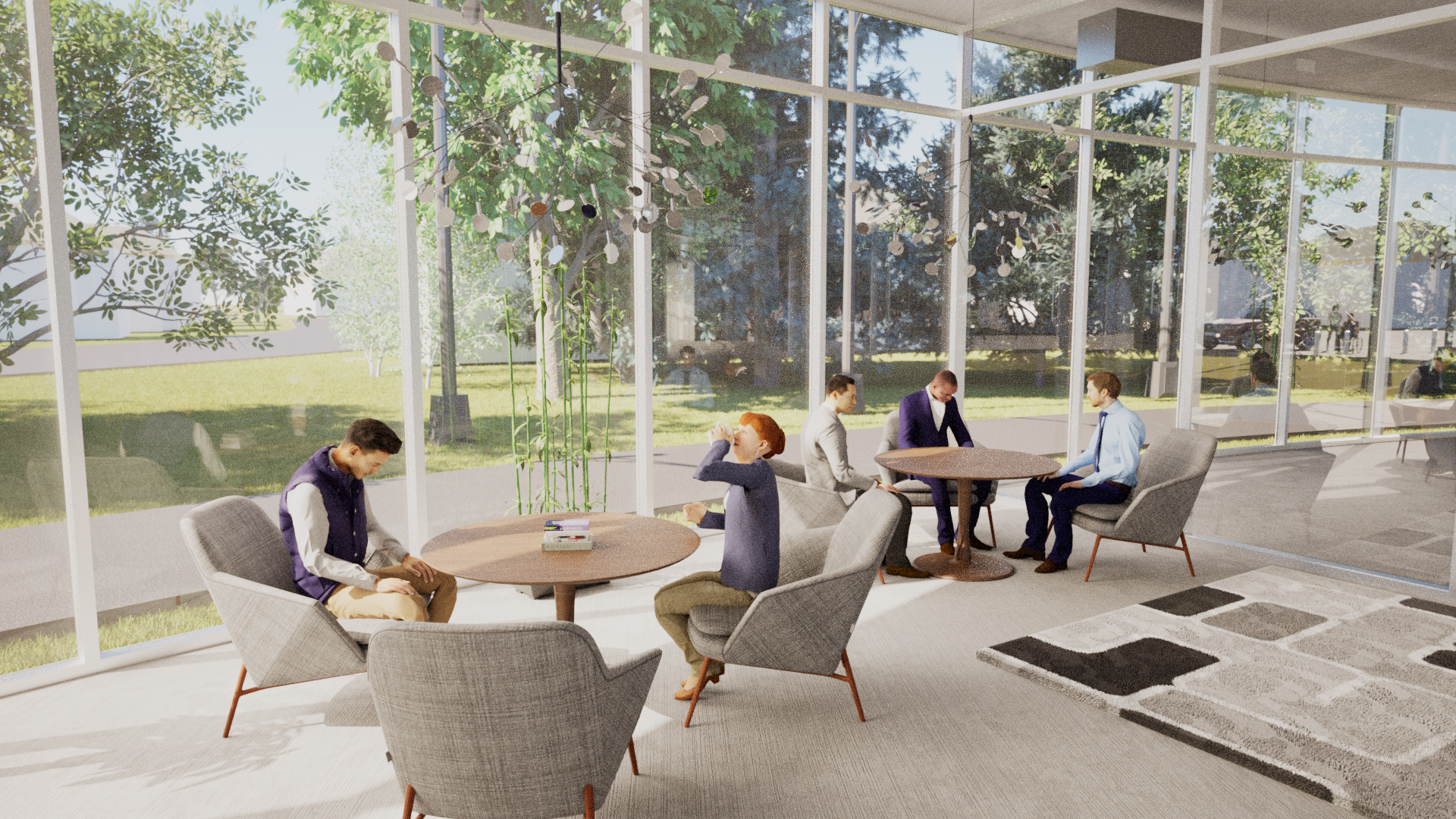

The next space I wanted to implement into Jasper Commons was a library. While researching trauma informed architecture and disaster recovery, one thing that became increasingly clear was the importance of low stimulation environments where people could step away from louder and more socially intense spaces.
I also discovered that libraries play a much larger role within communities than simply housing books. In a 2024 case study conducted by The New York Public Library alongside researchers from the University of Pennsylvania, 92% of respondents reported feeling more calm and peaceful after visiting the library, while 88% reported that library use supported their personal growth. These findings reinforced the importance of creating a library space within Jasper Commons that could also support emotional comfort, reflection, and personal growth within the community.
Because of this, I wanted the library to feel noticeably calmer and more private than the other spaces within Jasper Commons. Rather than designing it as a typical standalone library, I approached the space as more of a retreat within the Commons, a place where individuals could comfortably read, study, work, reflect, or simply spend time in a quieter environment.
With this in mind, I created separation in the library from the rest of the Commons using a windowed curtain wall. This allowed natural light and visual connection to continue flowing through the building while still helping the space remain quieter and more enclosed. I continued designing the library using an open floor plan, warm materials, and views toward the surrounding landscape in order to create a calm biophilic-friendly atmosphere.
Makerspace


Another major space that was integrated into Jasper Commons was the makerspace. While researching community-centered architecture and disaster recovery, I found that creativity and hands-on activity can play a major role in rebuilding confidence and routine, while promoting growth and expression within a community.
In a 2016 study by Girija Kaimal et al., researchers found that participants experienced an average 17% reduction in cortisol levels after engaging in 45 minutes of art making, reinforcing the positive impact hands-on creative activities can have on stress reduction and emotional well-being.
I wanted the makerspace to become on of the more active and collaborative spaces within Jasper Commons. Because of this the space was designed to encourage experimentation, learning, creativity, expression, and skill development through hands-on work. This was done by featuring creative tools such as 3D printers, workbenches, sewing machines, and CNC equipment.
During the process of designing the makerspace, I focused on creating a space centered around creativity and enabling invidiuals who would use the space to express themself through their creations. The makerspace was intentionally placed closer to the center of the commons to ensure that any noise coming from the space would not travel into the quieter, more reflective and private spaces within Jasper Commons. It was for this same reason the makerspace was enclosed.
Counselling Spaces


One of the most important spaces integrated into Jasper Commons was the counselling spaces. While researching the long term effects natural disasters can have on individuals and communities, it became increasingly clear that recovery extends far beyond rebuilding physical infrastructure. Mental and emotional recovery often continues long after visible damage has disappeared.
A study on the mental health impacts of natural disasters by Eamin Z. Heanoy and Norman R. Brown found that PTSD affected 34.4% of individuals following natural disasters, while depression affected 25% of individuals studied. These findings reinforced the importance of ensuring Jasper Commons included spaces capable of supporting emotional recovery alongside community rebuilding.
Because of the sensitivity of what would happen in these spaces, I decided they should be noticeably different from other areas within the Commons. Privacy, comfort, and emotional safety became some of the most important considerations throughout the design process. Rather than creating environments that focused on activity, openness, and social interaction, I focused on designing spaces that felt calm, warm, and approachable.
The counselling rooms were placed in the wing of the commons, ensuring they maintained a quieter, more sensitive atmosphere. I used softer lighting, warmer materials, controlled visibility, and reduced stimulation throughout the spaces to help create a more comfortable atmosphere. Views toward nature and natural light were also maintained in order to reinforce the calming biophilic principles established earlier.
Another consideration was flexibility. Although these spaces were designed for counselling and support, they were also designed to support other functions such as smaller meetings, tutoring, mentorship, and other forms of private conversation when needed. This helped ensure the spaces could remain useful and active for the community long term while still supporting the trauma informed goals of Jasper Commons.
Supporting & Operational Spaces

Although much of Jasper Commons focuses on larger public and community-oriented spaces, it was also important to me to incorporate many of the smaller operational spaces required for the building to function realistically on an everyday basis.
Several operational and staff-focused areas were integrated throughout the Commons, including an employee lounge, director’s office, maintenance room and storage spaces. While these spaces are do not directly contribute to the healing and growth promoted by Jasper Commons, they ensure that it can take place and support the overall functionality of the building.
I paid particular attention to how these spaces interacted with the public spaces and their organization throughout Jasper Commons. Staff and service spaces were generally positioned toward quieter or less public portions of the building in order to minimize disruption to major gathering and community areas
Even within these smaller support spaces, the atmosphere and warm built environment of Jasper Commons remains consistent. Natural lighting, clear circulation, and a strong biophilic presence were still incorporated throughout the design in order to maintain an environment that promotes recovery and gathering.
Privacy Design
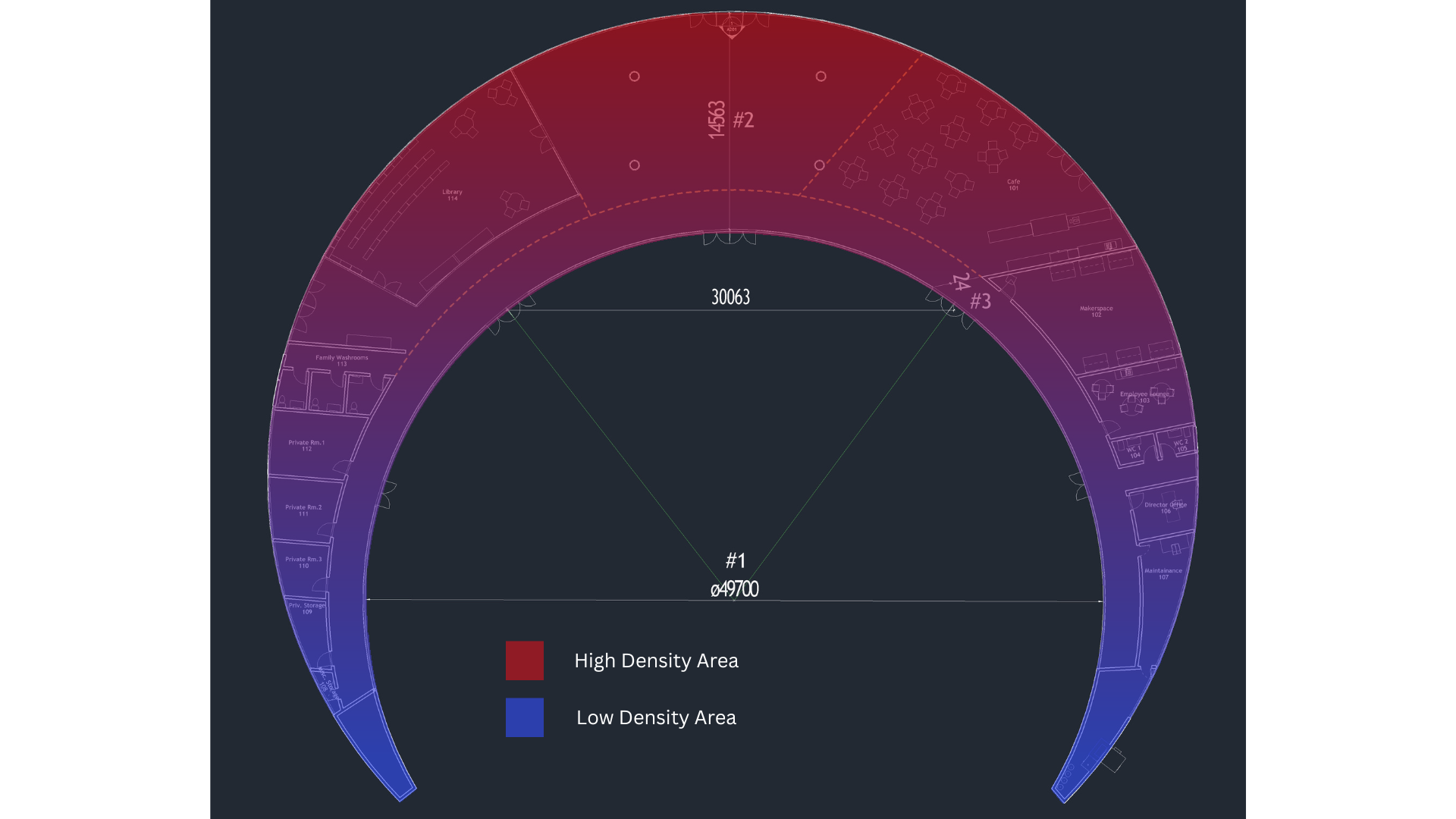

Privacy was another important principle when designing sensitive spaces such as counselling and support spaces. Since many areas of the project are centered around gathering, collaboration, and social interaction, it was equally important to me that spaces intended for reflection, support, or private conversation felt separated and protected from more active environments.
The crescent shape of Jasper Commons played a major role in establishing transitions between public, semi-private, and private environments. The wider and more open central areas of the building better supported gathering and social interaction, while the narrowing ends of the crescent gradually created quieter and slower environments better suited for reflection and privacy. This allowed movement throughout the building to feel more natural while helping more private areas feel separated without becoming disconnected from the rest of the Commons. The diagram above shows how the crescent form helped establish gradual transition.
Elements such as frosted glass doors and enclosed rooms were also incorporated to help maintain privacy while still allowing light to move throughout the spaces. Acoustic privacy was another major consideration, this was achieved through the material choice of concrete and it helped ensure quieter and more emotionally comfortable environments. These choices in my design process helped ensure privacy without feeling isolated or disconnected, creating an optimal environment for healing, growth, and resilience.
Safety
Another important principle that was essential to me in the design process for Jasper Commons was safety. Since the project is centered around recovery and emotional well-being, it was important that the building felt physically and psychologically safe for the individuals using it.
One of the main ways this was achieved was through visibility and circulation. Major gathering and circulation spaces were designed to remain visually open and easy to navigate. This reduces confusion and allows for people to be more aware of their surroundings.
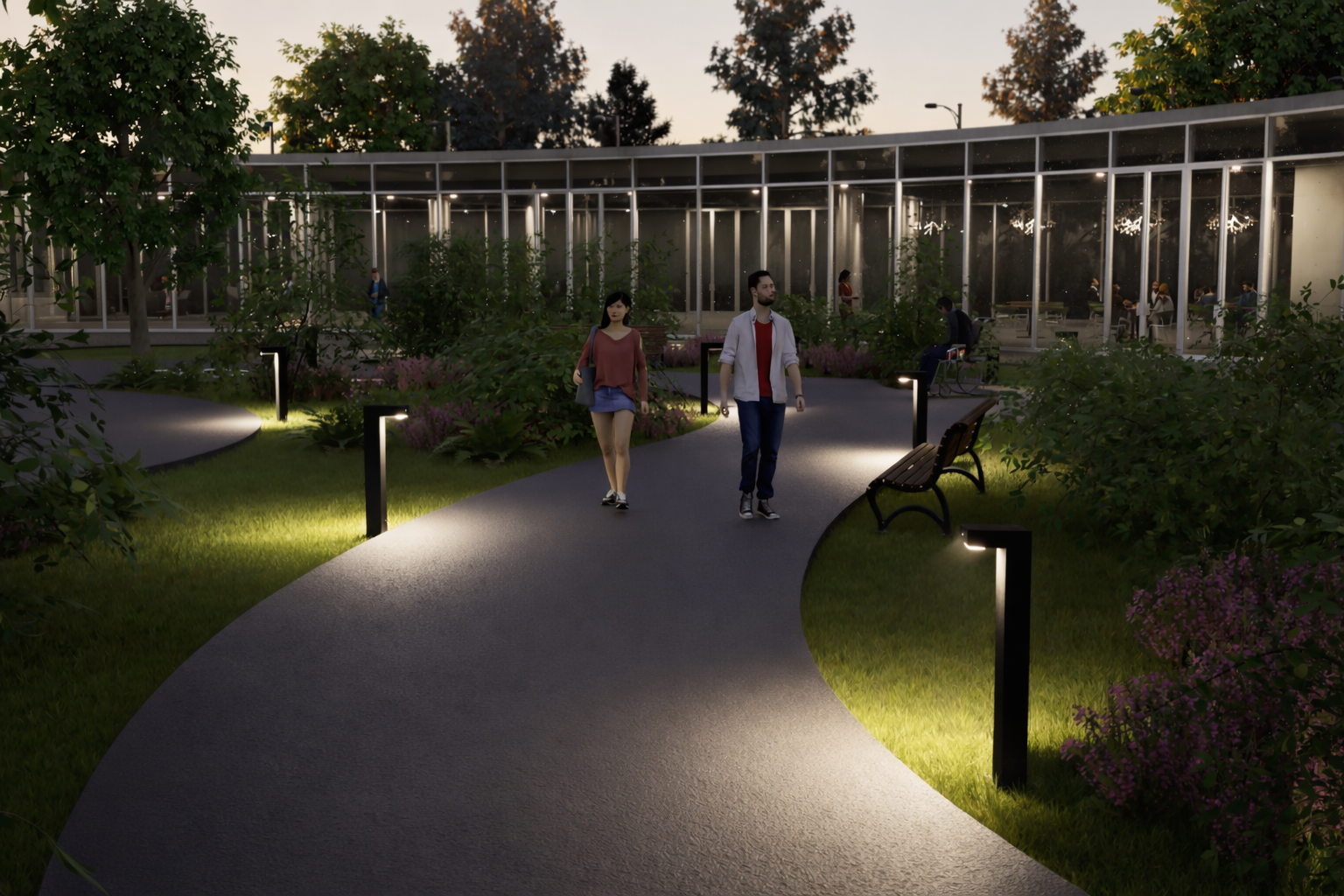
Safety after dusk was also an important consideration throughout the design of Jasper Commons. Since the spaces outside surrounding the building are intended to remain active into the evening, exterior lighting was incorporated along pathways in order to maintain visibility and help people feel comfortable moving throughout the site at darker hours. Rather than using overly harsh or intense lighting, softer pathway lighting was used to preserve the calm atmosphere of the project while still ensuring the site remained safe and accessible.
These design choices ensured that anyone who visits Jasper Commons will remain in a safe, welcoming, and comfortable environment.
Movement Around the Commons

While designing Jasper Commons, one thing I kept in mind was circulation. The flow of movement was intentionally designed to feel intuitive and open, instead relying on long enclosed hallways or complicated circulation designs.
The crescent shape of Jasper Commons helps reinforce the transition between different levels of activity throughout Jasper Commons. More active and social spaces are located closer to the center of the building, where circulation is wider and movement is more active. As individuals move further toward the wings of the crescent, circulation gradually becomes narrower and quieter, helping create a slower and more private atmosphere better suited for reflection, counselling, and quieter environments.
Visual connection also assisted in the design of circulation. Having open sightlines and connection to exterior spaces which helps maintain awareness while moving throughout the building. This was especially important within a project centered around trauma informed design, where clear navigation and visibility can help reduce stress and create a more comfortable experience within the built environment.
Accessibility & Inclusivity

Making sure Jasper Commons was accessible to everyone regardless of age, mobility, or personal needs was essential. Since the project is centered around community recovery and support, it was important to me that the building felt welcoming and usable for anyone.
Throughout the process of designing the Commons, I ensured that all spaces met accessibility requirements as stated by Accessibility Standards Canada. I also made sure that accessible routes were integrated naturally into the overall circulation of the project rather than feeling separated or secondary to the main experience of the building.
Inclusivity was also considered when designing Jasper Commons, allowing individuals to choose between more active social environments and quieter reflective spaces depending on their comfort level and emotional needs at a given moment. This flexibility became an important part of creating a building capable of supporting a wide range of experiences and individuals within the community.
These steps that were taken make Jasper Commons a welcoming and safe environment for anyone who visits.
Material Strategy
An essential aspect of creating a built environment that is supportive of recovery and gathering, while still remaining biophilic is material choice. During the design process, concrete stood out due to its long term structural strength, fire resistance, durability, and overall cost effectiveness compared to many other large scale building materials. Since the project is centered around resilience and long term recovery, it was important that the building felt permanent, stable, and capable of lasting far into the future.
Concrete also worked well with the architectural and engineering aspects of the design. Concrete made it easier to sustain the curved crescent shape of Jasper Commons while still maintaining stability. It also made sense due to recent advances in fabrication, including the possible use of emerging large scale concrete 3D printing, which would be efficient and cost-saving.
At the same time, one of the challenges I faced was combating the colder and more institutional feeling concrete can invoke when used heavily in architecture. To counteract this, I decided on using warmer complementary materials and biophilic elements to soften Jasper Commons. These elements also helped reinforce the biophilic and trauma informed principles that the Commons revolves around, ensuring that the environment still felt calm, human-centered, and connected to nature despite the use of concrete.
Structural Approach
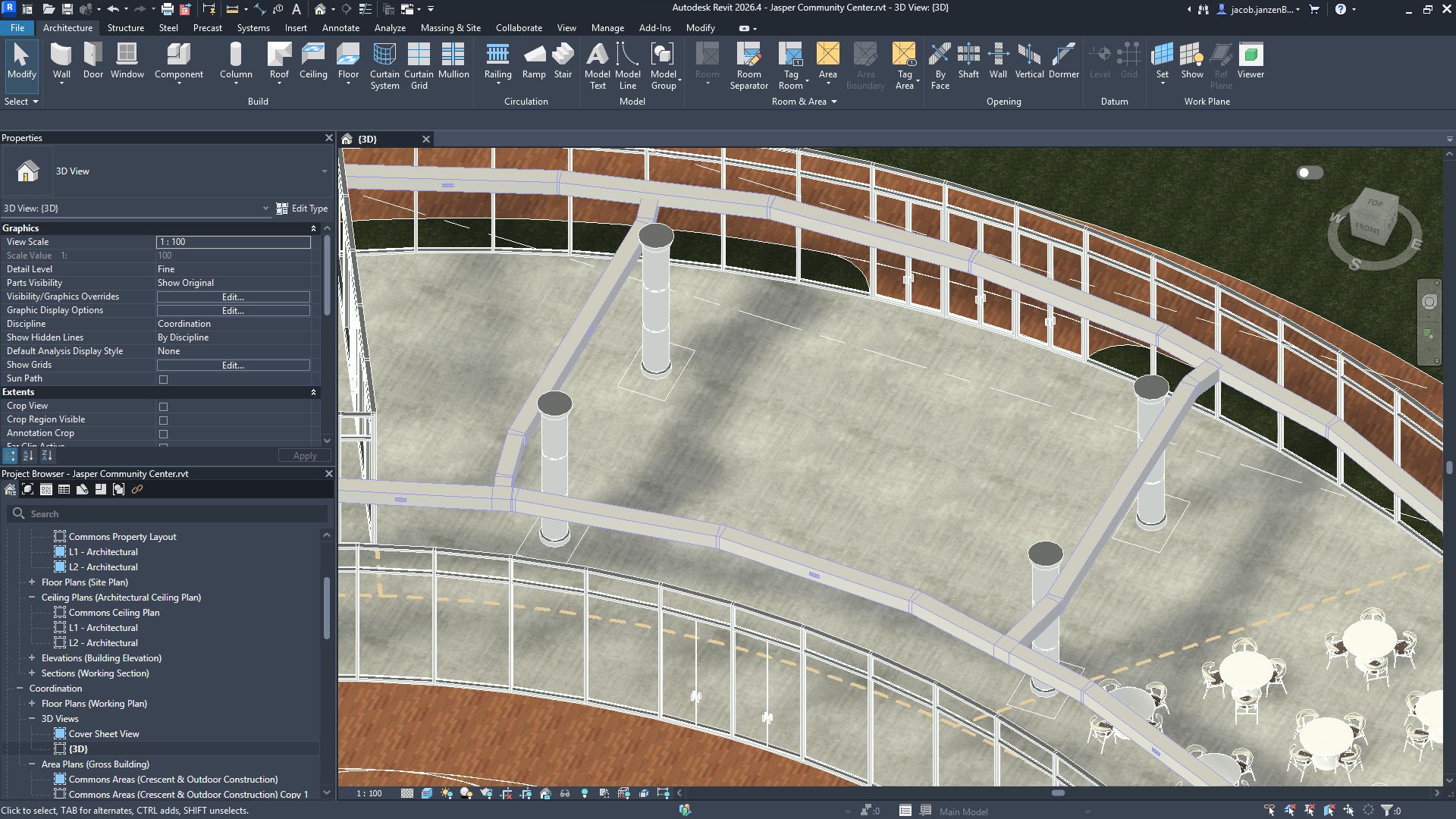
Ensuring that Jasper Commons had a solid structural system was important in ensuring that it remained realistic and constructable at a real world scale. Since the Commons includes large open spaces, curved geometry, and a green roof, the structure needed to support significant loads while still maintaining the open atmosphere established throughout the design process.
Jasper Commons is structurally built using reinforced concrete due to its long term durability, fire resistance, compressive strength, and ability to support larger spans and heavier loads. The commons is 1,163m² and has a 4.4m floor to ceiling height which requires a structural system capable of maintaining openness without excessive interior supports.
To achieve this, I used 4 reinforced concrete pillars in the central area of Jasper Commons in order to distribute the weight of the roof across the foundation. This ensured that an open floor plan was maintained and while still maintaining a realistic structure throughout the building.
The roof itself was designed as a reinforced concrete slab with a heavier rebar pattern to account for the additional loading created by the green roof system, snow accumulation, vegetation, and retained moisture. The crescent shape of the roof also contributed to the stability of the structure by naturally distributing the load throughout portions of the structure.
These features of Jasper Commons ensured that throughout the design process, the built environment remained structurally feasible, as well as contributed to the atmosphere of the Commons.
Biophilic Application


Biophilic design continued to play a major role throughout the later development of Jasper Commons. Rather than treating nature as a separate element from the architecture itself, I wanted connection to the surrounding environment to become integrated into nearly every aspect of the project.
One major example of this integration was the implementation of a green roof across the Commons. Beyond helping visually integrate Jasper Commons into the surrounding landscape, the green roof helps increase vegetation within the built environment while reducing heat absorption across the structure itself. The green roof also allows for the possibility of a future water collection and filtration system that would support irrigation across the property.
Nature was also heavily incorporated throughout both the exterior and interior environments of the project. I used outdoor gathering areas, vegetation, pathways, and landscaped spaces as a method of strengthening connection between the community and the surrounding environment, while large windows and curtain walls maintain visual connection to nature from within the building itself. This allows natural light, vegetation, and views of the landscape to remain consistently present throughout the Commons.
Applying biophilic design throughout Jasper Commons was essential because it reinforces the overall atmosphere of healing, comfort, and connection it is centered around. By adding natural elements directly into both the architecture and surrounding environment, Jasper Commons was far better at reducing stress, encouraging reflection, and strengthening connection between individuals and the natural world around them.
Connecting Indoors & Outdoors
Creating a strong connection between indoor and outdoor environments of Jasper Commons was an important part of reinforcing biophilia within the built environment. Instead of treating the landscape as separate from the building itself, I wanted natural light and views of the surrounding landscape to be consistently present throughout the building.
One of the main ways that this connection was achieved was through the use of large curtain window walls spanning almost the entire length of the Commons. These windows allow natural light to penetrate throughout the building while still maintaining structural feasibility and strong visual connection to outside. Since Jasper Commons is centered so much around recovery and growth, it made sense to maintain a connection with nature, ensuring that a healing atmosphere was also created.
Research around biophilic incorporation into architecture has shown the importance of views of nature within any environment. In a 2016 PLOS One study involving 444 employees, it was found that natural elements and sunlight exposure were associated with significantly lower levels of anxiety and depressed mood alongside higher job satisfaction and organizational commitment. While Jasper Commons is not an inherent work space, the study reinforces the values of access to daylight, vegetation, and outdoor visibility can have within architecture focused on well being and recovery.
Jasper Commons itself also helped strengthen this relationship. Since the crescent shape partially wraps around the central outdoor environment, many spaces within Jasper Commons maintain direct views toward vegetation and the calmer courtyard-like areas surrounding the building. Outdoor spaces were also designed as extensions of the building itself rather than separate spaces, allowing everyday activity to naturally continue beyond the interior environment and into the surrounding landscape.
Site Plan Development

After the overall form and layout of Jasper Commons was completed, The next step I took in the design of the built environment was creating the surrounding site and exterior spaces inside Autodesk Revit. Since the Commons is designed to focus on accessibility, recovery, gathering, the exterior environment needed to function as an extension of the Commons rather than simply open space surrounding the building.
Utilizing the architecture and massing & site tabs in Revit, I created the foundations for pathways, a parking lot, gathering areas, and a playground. These tools alongside others such as the Modify tools played a large part in bringing my ideas to life, allowing me to continuously adjust and tweak dimensions, locations, and design in order to bring about a circulative relationship between outdoor spaces.
Rather than heavily reshaping the site, I wanted the overall layout to preserve as much of the existing landscape as possible while still creating intuitive circulation and usable outdoor spaces throughout the property. This minimal approach led to design choices such as preserving existing vegetation where possible, limiting unnecessary land reshaping, and organizing pathways and outdoor spaces around the natural conditions already present on the site.
I also paid specific attention to how people would move around the site itself. I used pathways to organize and create clear movement regarding entrances, gathering areas, and outdoor amenities while ensuring accessibility was maintained throughout the property. These spaces described in the next steps show how essential an outdoor connection is throughout the process of healing, growth, and connection.
The Playground
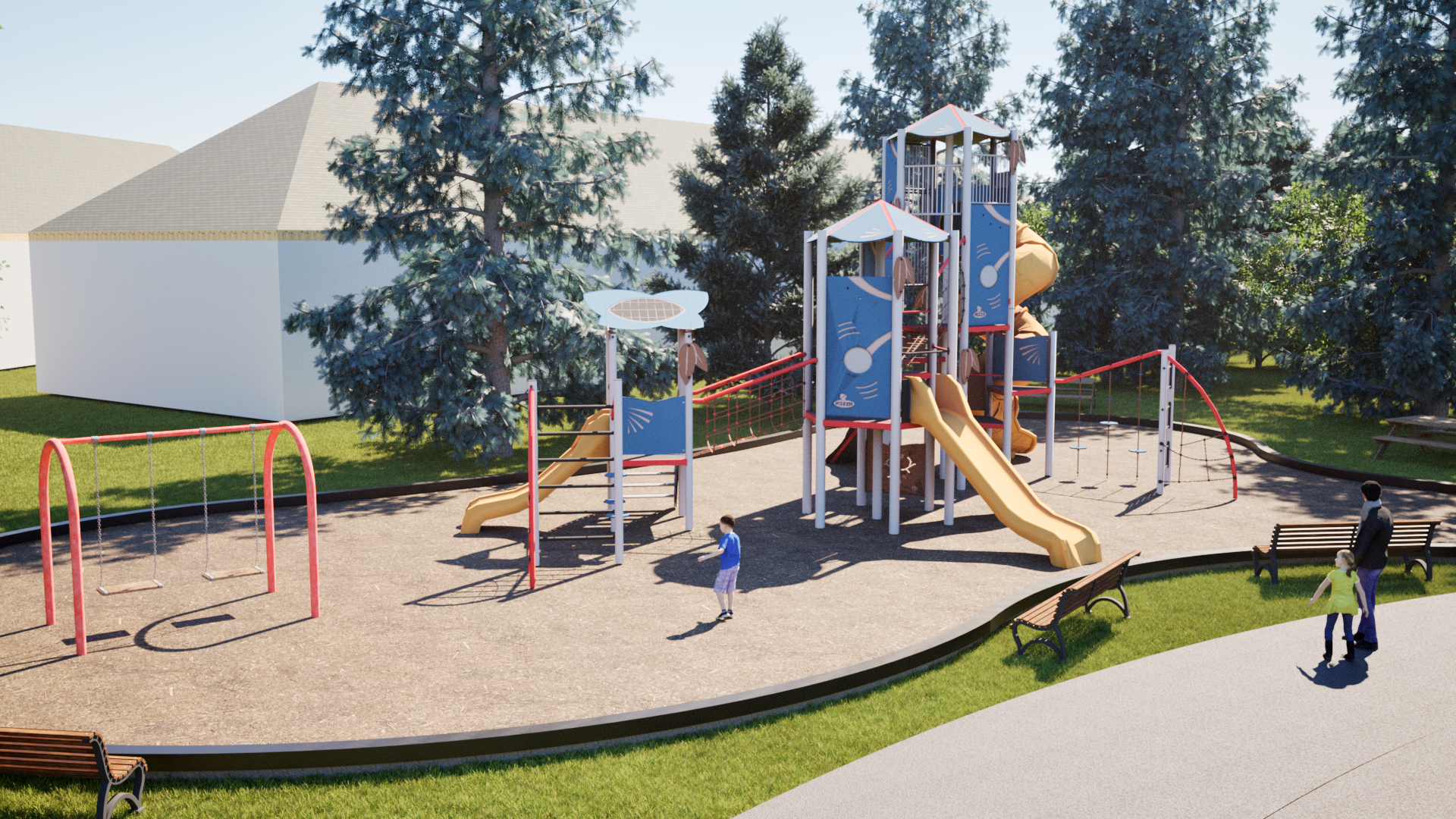
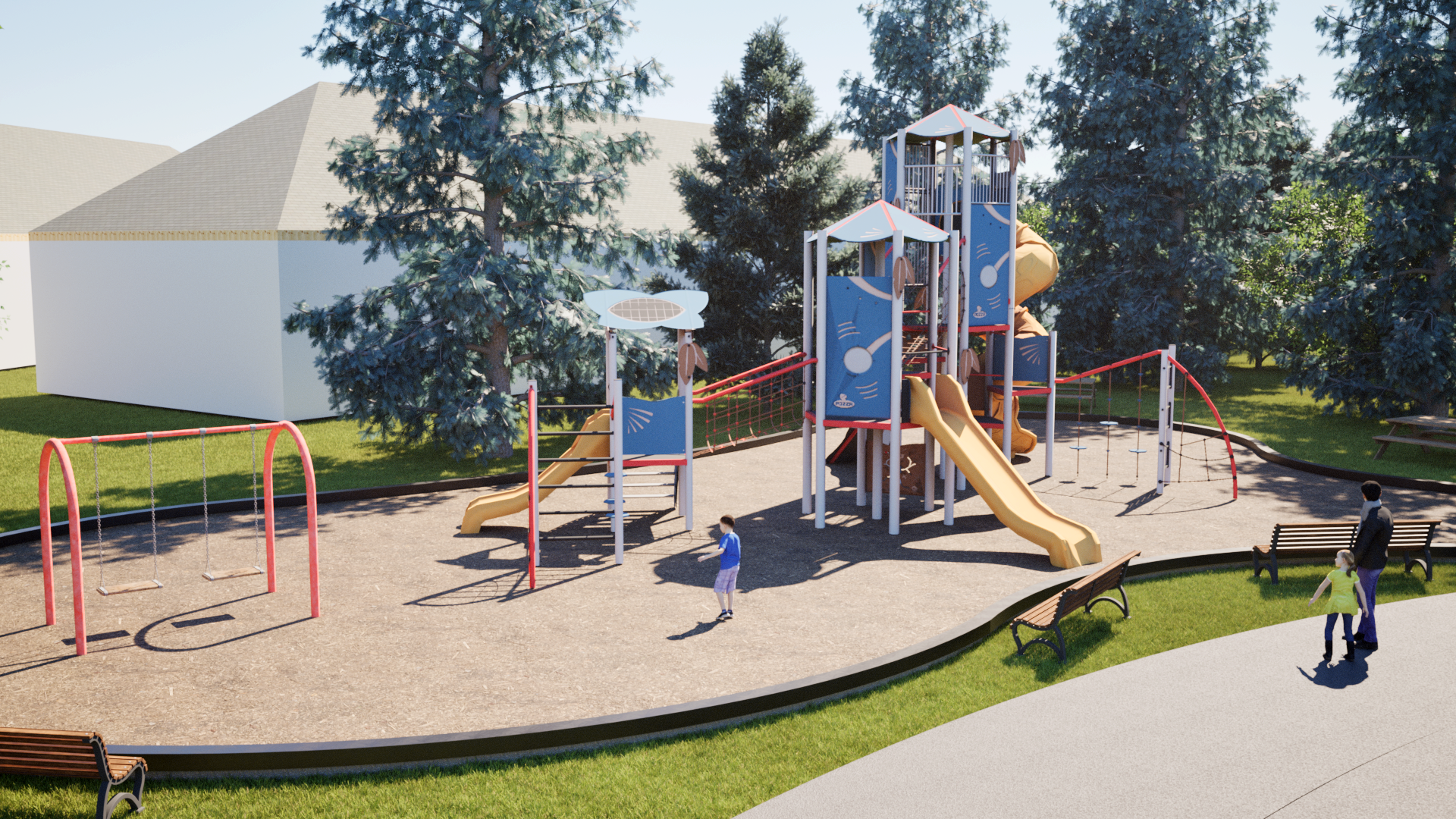
While much of Jasper Commons is centered around recovery, gathering, and emotional well being, it was also important to me that the site included spaces specifically supportive of children and families within the community. After disasters such as the Jasper wildfire, children are often times heavily affected, with major disruptions to their routines, recreation, and social interactions. Incorporating a dedicated outdoor playground became an important part of creating an environment that is supportive of a wider range of community needs beyond the building itself.
With this need in mind, I began to design a space where youth could play. This began with the decision to place the playground within visible range of the central courtyard while still remaining slightly separated from quieter areas. This allows the space to feel active and energetic without disrupting areas intended for calmer gathering or reflection. Its placement also improves visibility, safety, and passive supervision from nearby seating and gathering spaces.
I used Revit to ensure circulation and outdoor programming were established around the playground with the use of elements like pathways and seating areas. These were intended to better connect the playground back to the Commons while still maintaining accessibility throughout the area.
Outdoor Pathway Planning


The layout of all the paths outside was an important part in shaping how individuals would experience and move throughout the property. Since the majority of outdoor spaces are intended to support the goals and atmosphere of Jasper Commons, it felt important that they remained natural, accessible, and visually connected to the surrounding landscape.
This created the need for a pathway system. I began to develop these pathways in Revit, making use of the massing & site tab. This allowed me to control how circulation worked on the exterior of the Commons. While designing the paths, I paid particular attention to their shape and layout. Rather than relying entirely on straight or highly geometric routes, I used use softer and more organic forms that better align with the calmer atmosphere established throughout Jasper Commons. These curved pathways help movement throughout the site feel slower, more natural, and more connected to the surrounding landscape and vegetation.
Another important consideration around pathways was safety. As much as possible, pathways were intentionally placed to maintain clear visibility. I also used pathway lighting in order to improve visibility and accessibility during evening hours while supporting a greater sense of comfort, safety, and accessibility throughout the property.
Parking & Site Accessibility
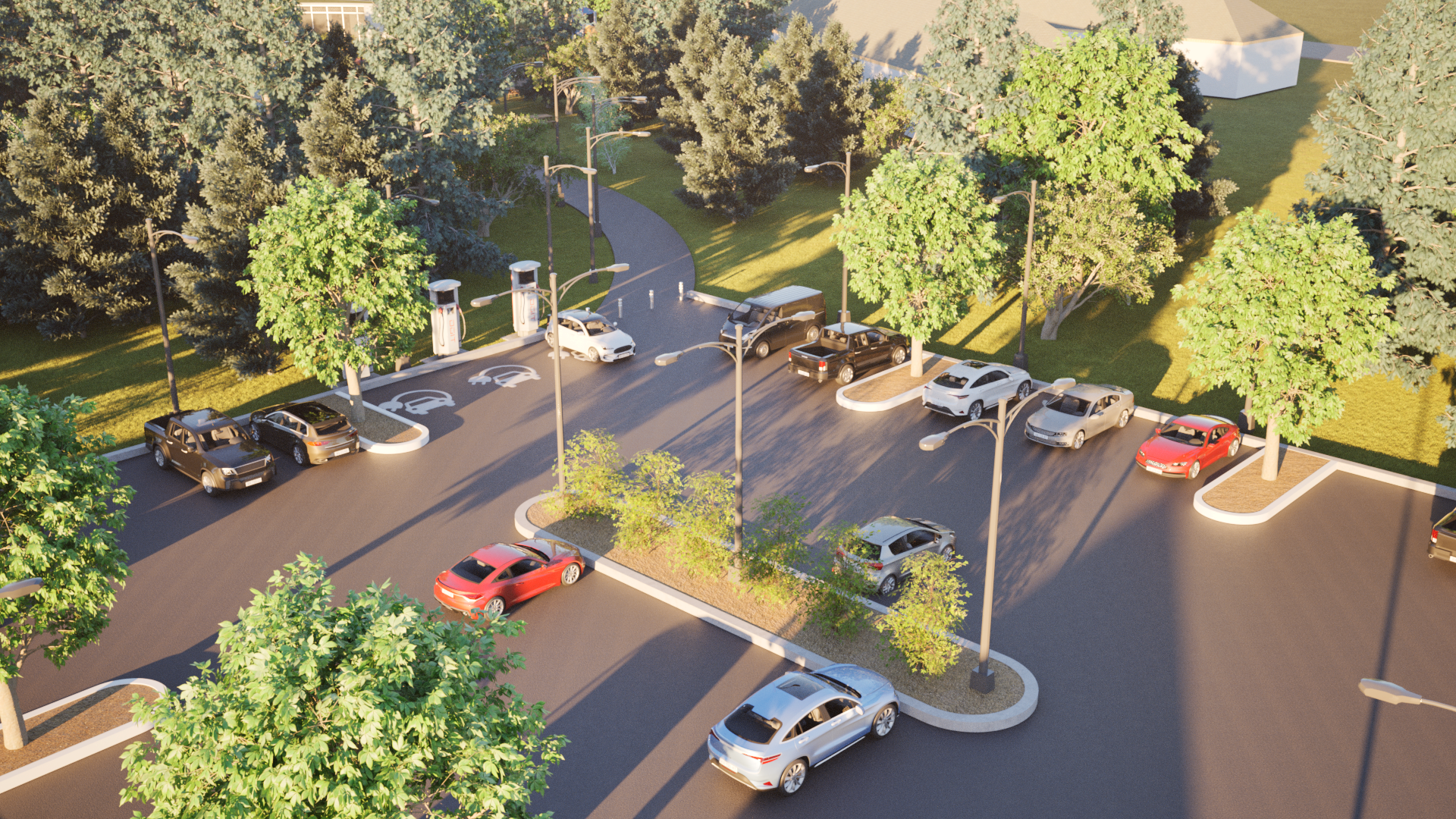

Another concern regarding Jasper Commons was accommodation for parking and site accessibility. Since the project is intended to support long-term recovery, gathering, and everyday use, access to the building needs to remain straightforward, safe, and accessible from the moment visitors arrive on the property. This required a solution that ensures sustainability, accessibility, and efficient circulation throughout the site while minimizing impact on the healing atmosphere of Jasper Commons.
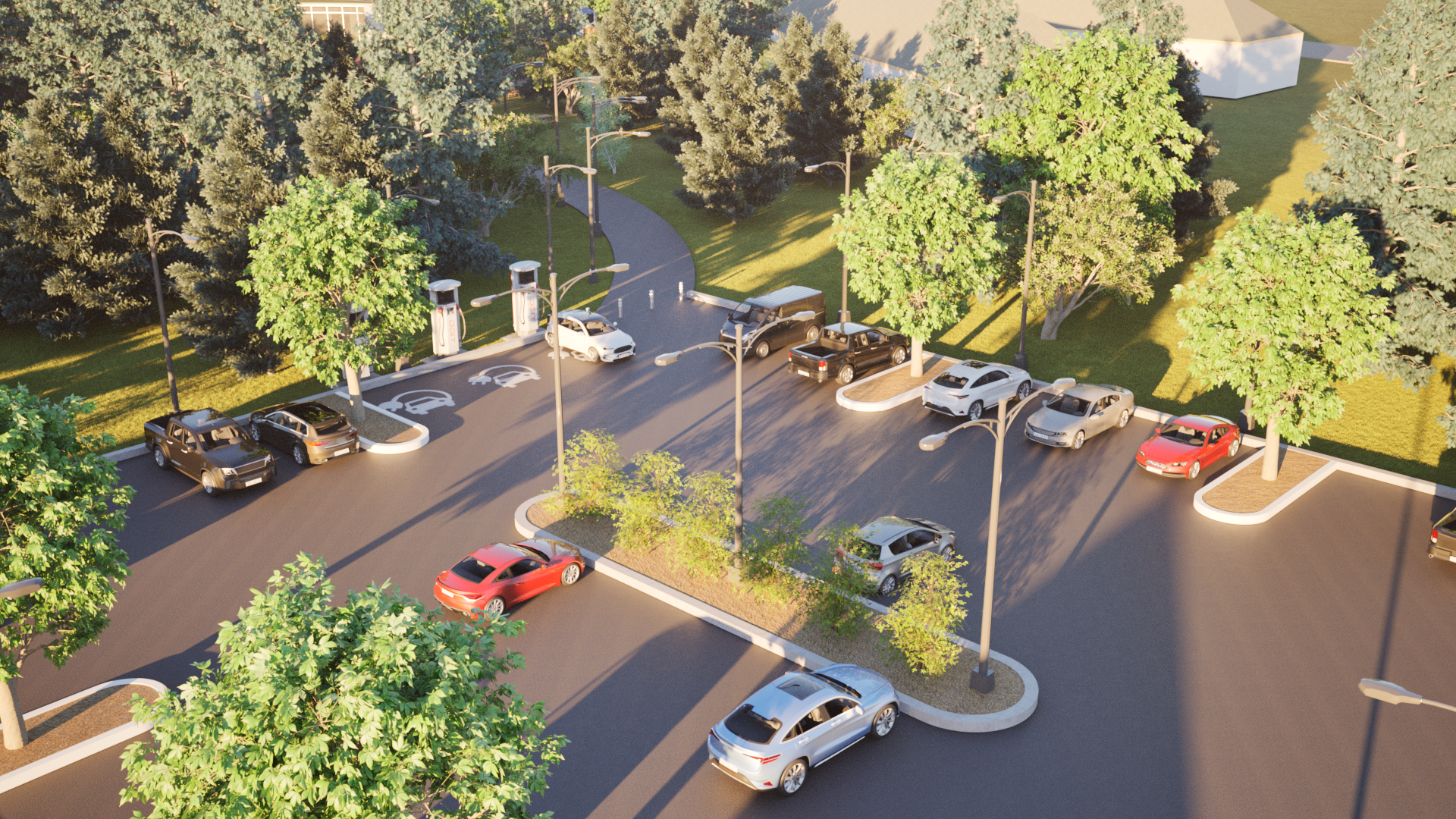
The parking lot and accessible parking area were developed in Revit using previously mentioned tools such as those in the Massing & Site tab and the Architecture tab. The location of the parking lot was also intentionally positioned slightly away from Commons in order to help preserve the quieter and calmer atmosphere established throughout the project.
I also paid particular attention to accessibility parking. Wanting to ensure that Jasper Commons was accessible and welcoming to anyone was essential. A dedicated accessible parking lane was positioned close to a primary entrance in order to reduce travel distance and improve ease of access into the building. This allowed accessible parking spaces to remain within 21 metres of the main entrances, passing the Accessibility Standards Canada maximum distance requirement of 30 metres. (7.2.3.1)
I designed the parking layout to provide straightforward access to Jasper Commons while maintaining efficient vehicle circulation throughout the site. I positioned parking stalls to minimize congestion. EV charging stations were also incorporated throughout portions of the parking lot in order to support and promote sustainable transportation options and help accommodate increasing electric vehicle use over time. Landscaping and vegetation were integrated around portions of the parking area as well in order to soften the visual impact of the lot.
Improvements
After finishing the overall layout and design for Jasper Commons and the surrounding property, I revisited several aspects of the built environment in order to look for improvements and changes that could be made. Rather than following a completely linear workflow, I tried to evolve the design through refinement as different spaces began to function as one unit over time.
I made several changes throughout development. This included the addition of seating areas in order to promote gathering outdoors in a biophilic environment. I also refined the interior of Jasper Commons, including the transition from larger public multi-gender washrooms toward family washrooms in order to improve comfort, flexibility, and privacy.
In addition to these changes, the parking lot had multiple layouts throughout the design process until the final design was chosen by its ability to improve movement throughout the site, and maintain stronger connection between the building and surrounding landscape.
While these changes might be small on their own, together they made a vast impact on the environment and atmosphere of Jasper Commons.
Second Physical Model
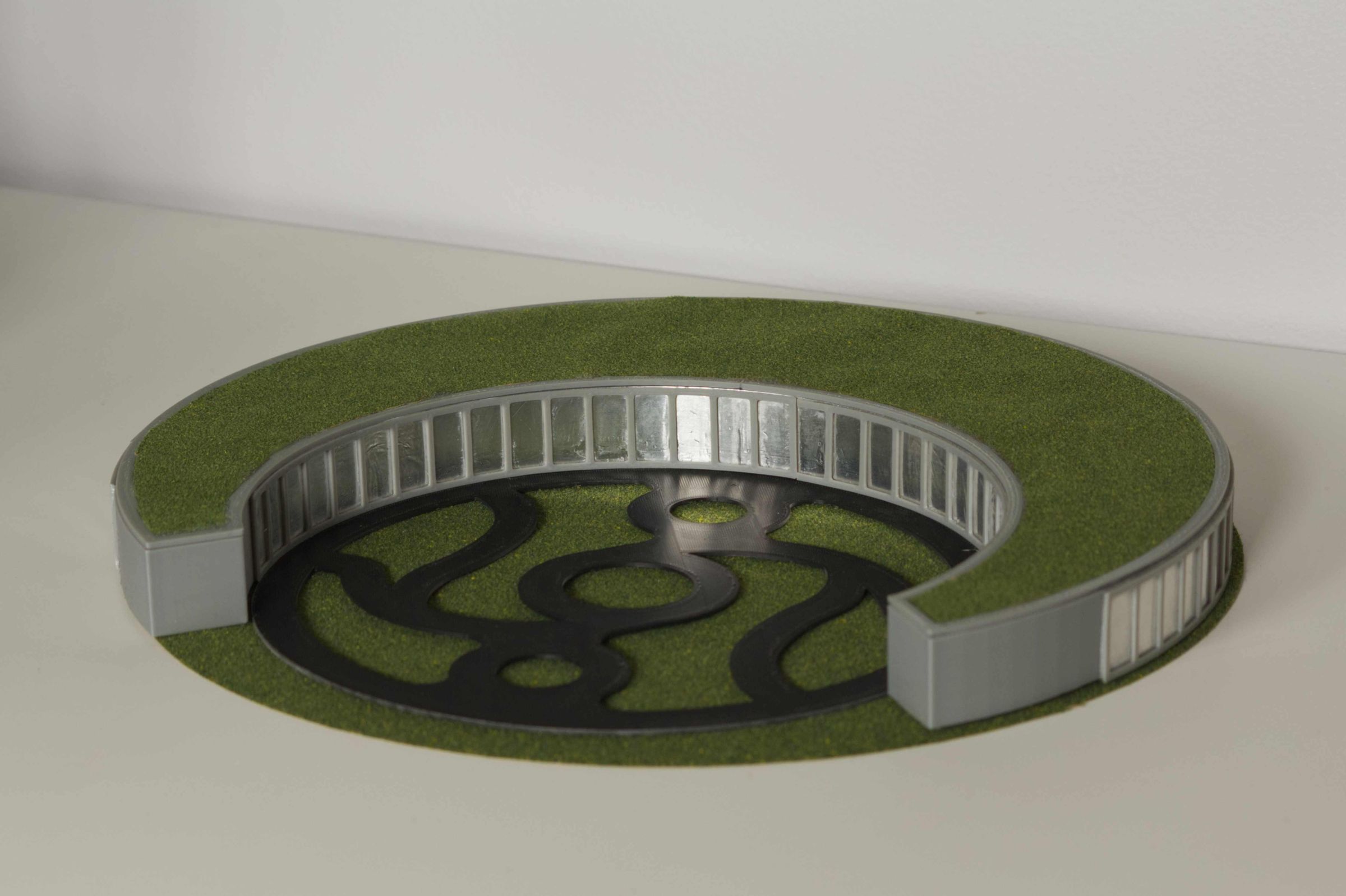
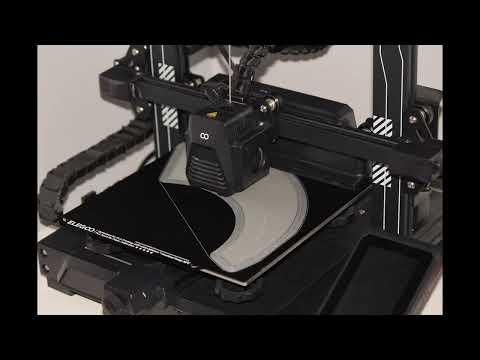


The next step in the design process was to create a final physical model. This model was developed at a 1:200 scale in order to better represent smaller architectural details, circulation spaces, and exterior relationships to become far more visible within the final model.
This model again began by exporting the Revit model into Autodesk Fusion, where I made significant additional modifications in order to be closer to scale while still following the limitations and requirements of FDM 3D printing at that scale. However, with printing a model this size, the full model exceeded the printer build plate dimensions, I to solve this issue, I separated the building into two sections within Fusion so each half could be printed individually before being assembled together afterward. With this completed, I exported the model to OrcaSlicer and prepared it for printing. I also took a timelapse of the printing process which can be viewed above.
Once printed, I glued the model sections together and refined the model using additional elements. Printed window frames were added throughout the curtain wall areas, while metalized mylar tape was used behind the openings to better simulate the windows themselves. Diorama grass was incorporated throughout the model in order to better represent vegetation, the green roof, and improve the realism of the model.
Compared to the first model, the second version provided a far more accurate representation of the architectural atmosphere, material relationships, and overall site integration of Jasper Commons.
Twinmotion

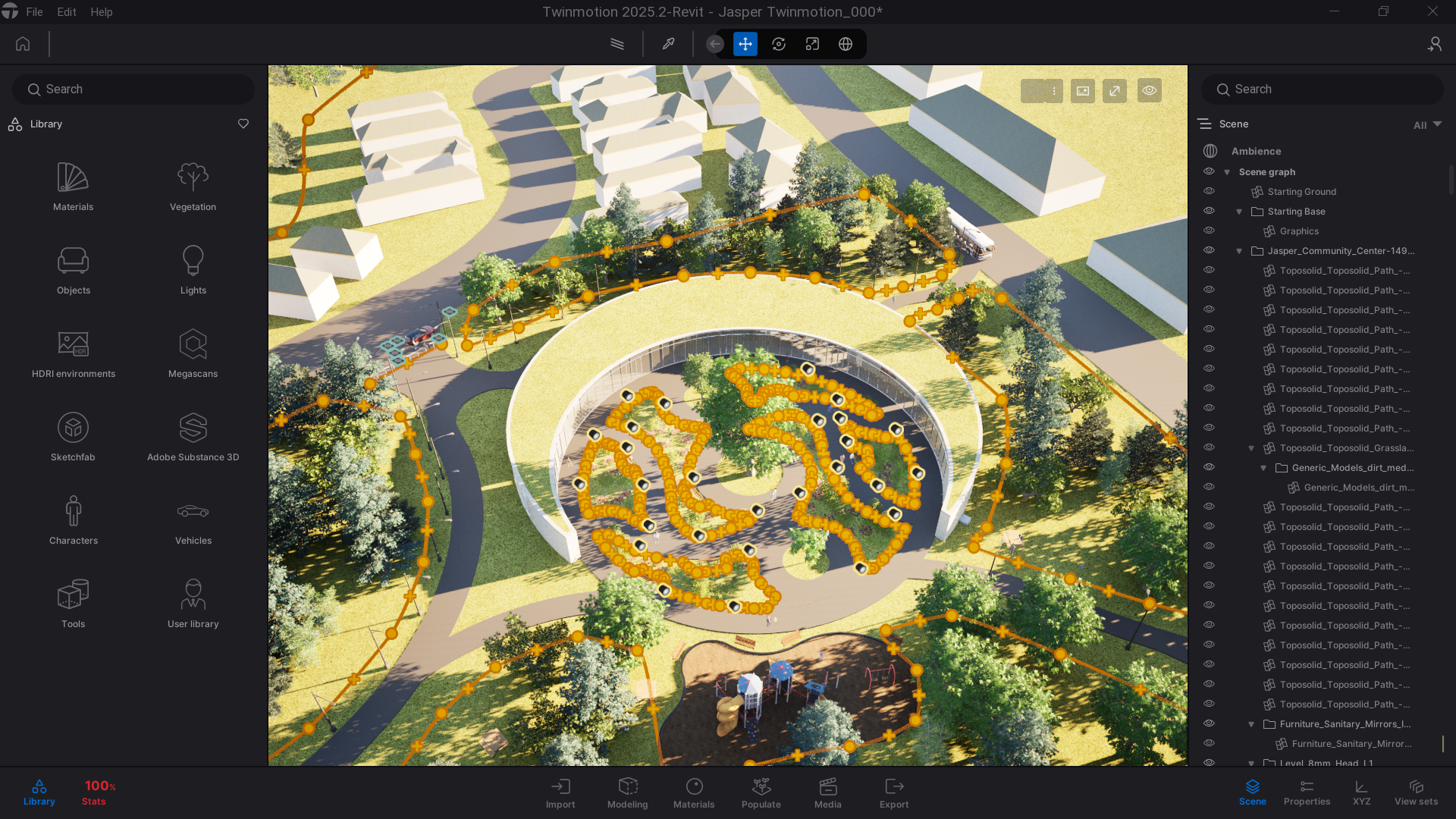
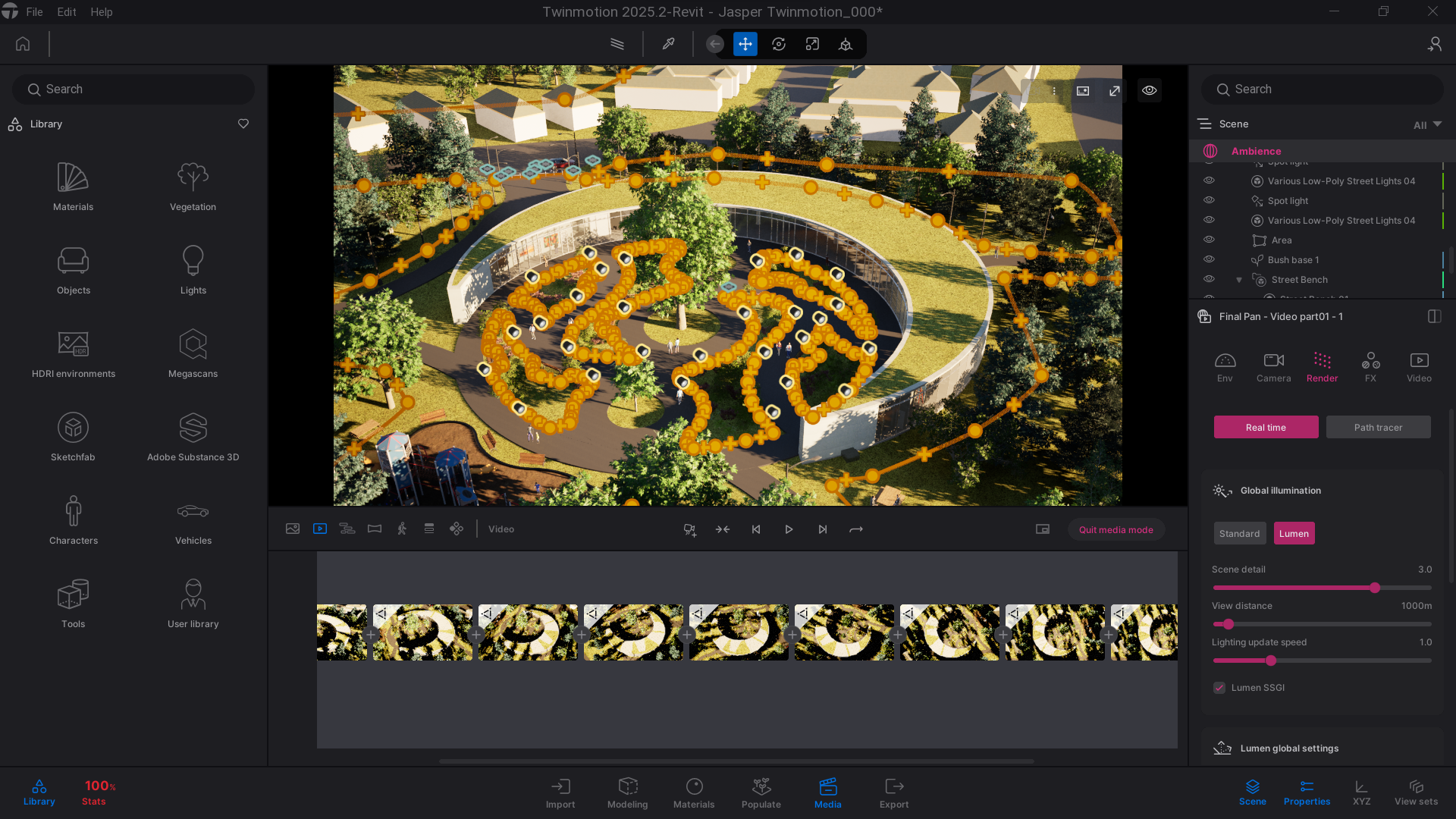
Twinmotion is a rendering software that transforms BIM 3D models into realistic environments using Unreal Engine 5 based rendering. It allowed me to create realistic visualizations that better communicated the atmosphere and experience of Jasper Commons.
After fully completing the model of Jasper Commons, the next step was importing it into Twinmotion. Since Autodesk Revit and Twinmotion can be directly linked through the View tab, I was able to import the project into Twinmotion while maintaining the scale and detail from Autodesk Revit. This made it much easier to continue refining the project visually without needing to rebuild the environment from scratch.
Once imported into Twinmotion, I used official textures and assets alongside community-made assets in order to bring Jasper Commons to life and better communicate the vision behind the design. Vegetation, furniture, materials, lighting, and environmental details were all carefully added to showcase the amazing atmosphere established throughout the project. The images of Jasper Commons throughout this Instructable were fully rendered in Twinmotion alongside the promotional cinematic walkthrough shown in Step 40.
Interior Renders
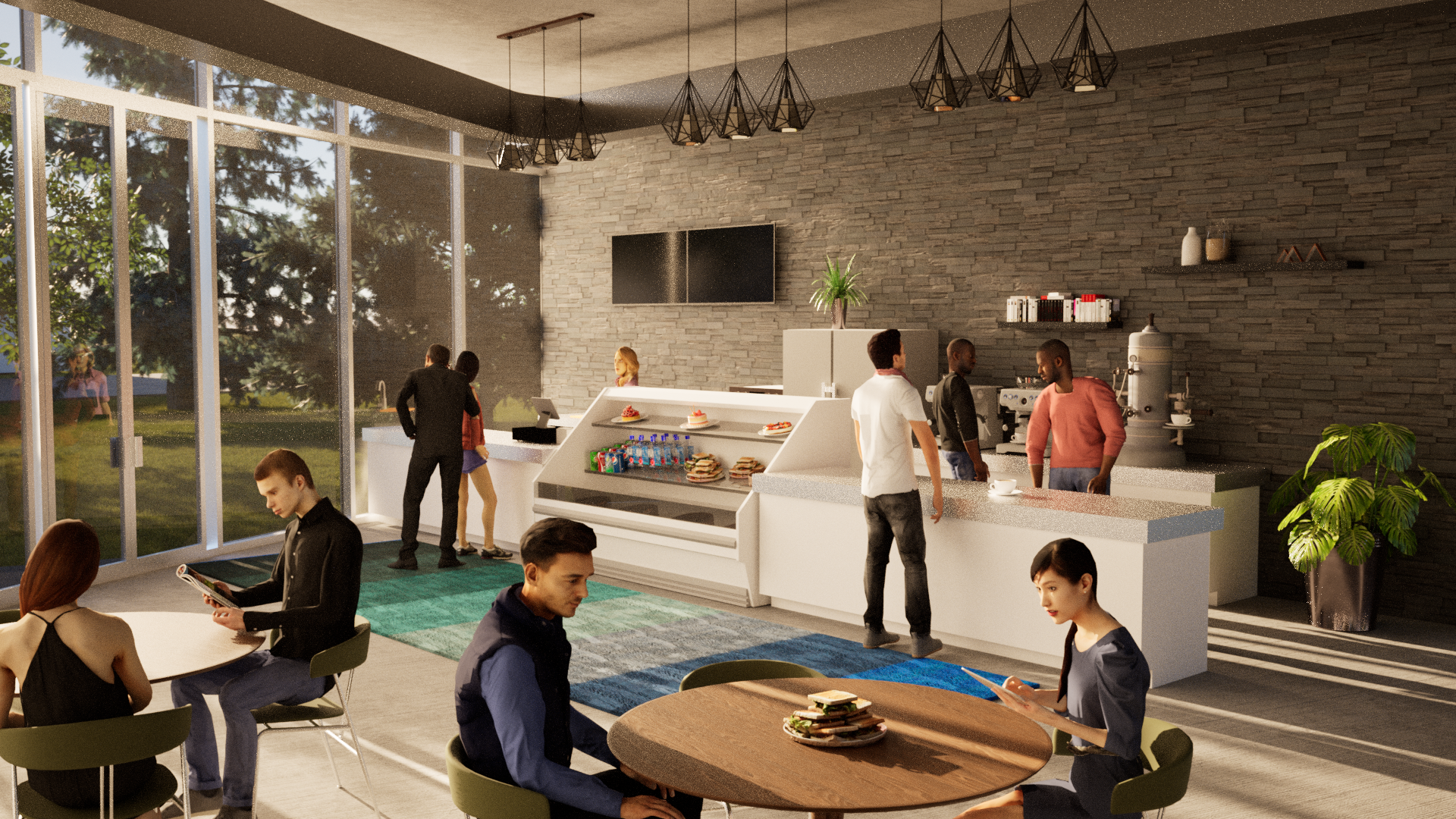
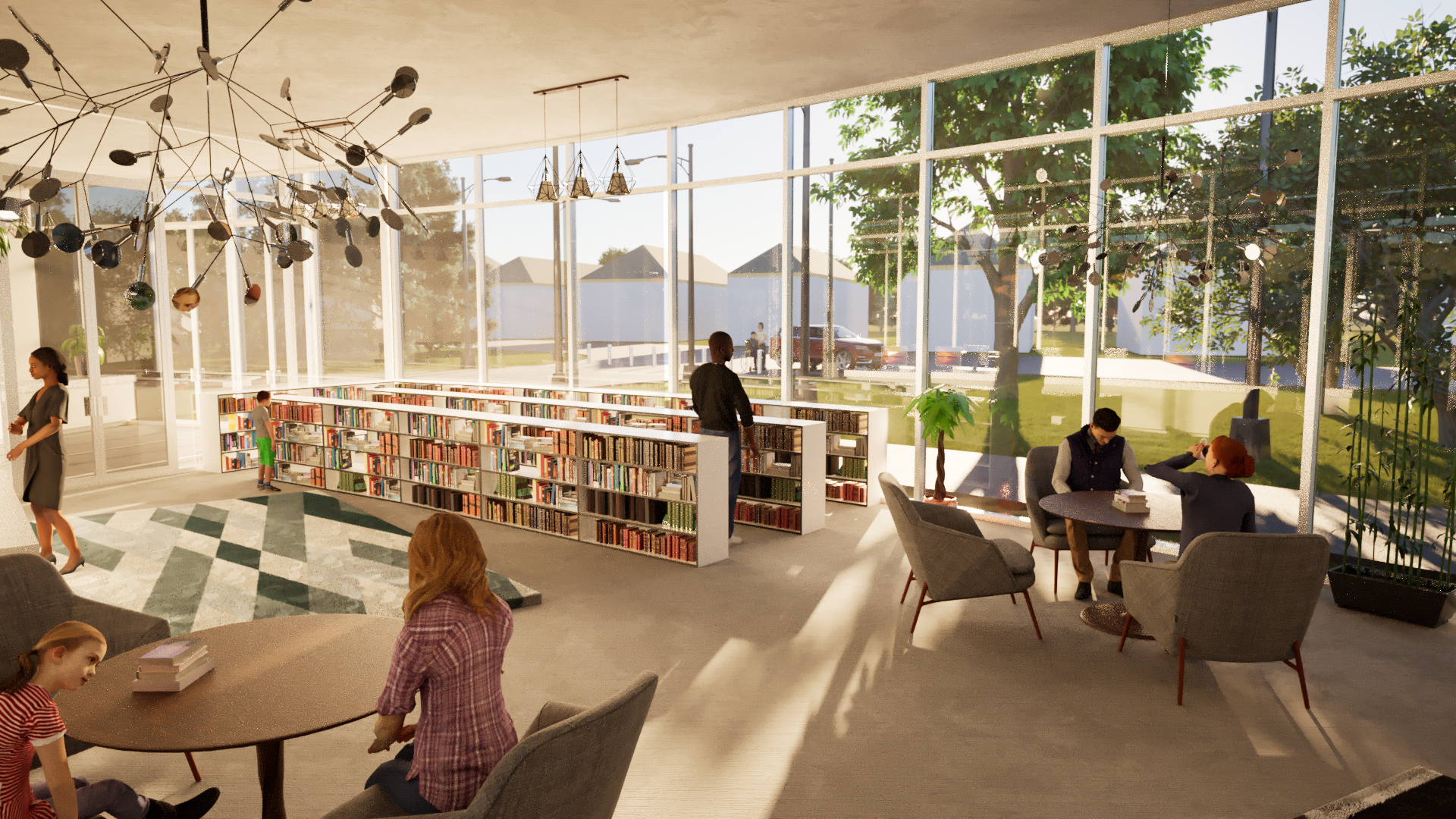


Exterior Renders

Promotional Video

In addition to the rendered images, I created a cinematic promotional video similar to an advertisement. This was completed using Twinmotion's built in video sequencer and renderer. Enjoy!
Jasper Commons: More Than Just a Building - Creating an Identity

At this point as Jasper Commons has finished development architecturally, it was time to expand beyond that. Alongside Jasper Commons physical impacts, I also wanted the project to establish a stronger visual identity beyond the building itself. Since the Commons is intended to represent recovery, resilience, gathering, and growth, creating a recognizable symbol or brand became an important part of helping unify the project as a whole.
I designed the logo using a simplified and minimal approach centered around the crescent form established throughout the architecture itself. Inside the crescent I used elements such as mountains and landscape elements were incorporated to reflect both the surrounding Jasper environment and the project’s connection to nature and recovery.
Much like with the design of Jasper Commons, I tried to avoid overly aggressive or rigid geometry in favor of softer forms and smoother transitions. The curved crescent shape helps visually reinforce the calmer and more protective atmosphere established throughout the project while also directly referencing the shape of the Commons itself.
Creating a unified identity for Jasper Commons helped the project feel more cohesive across drawings, renderings, and promotional content. Rather than functioning just as a building concept, the project began developing into something that felt more recognizable as a long-term community space centered around recovery and gathering.
Outreach Into the Community

In order to continue developing into something more recognizable, I developed a dedicated website that could organize the project into a more accessible and interactive platform.
The website was designed to help establish a stronger public facing identity for Jasper Commons while making the project easier to explore and learn about the Commons. Different sections of the site were created around the events and activities that the space hosts, including the café, library, makerspace, counselling spaces, and community events — allowing visitors to navigate and learn about the Commons in a way that felt more connected to an actual community space rather than a traditional architectural presence alone.
You can visit the website here: jaspercommons.ca
What's Next?
Although I designed Jasper Commons as a conceptual architectural project, much of the design process focused on creating something that could realistically continue growing beyond its current form. Many of the spaces throughout the Commons were intentionally designed with flexibility in mind, allowing the building to adapt over time as community needs, programs, and activities continue changing throughout the future.
The research in this project also helped explore how architecture focused on long-term recovery could potentially influence future approaches toward post-disaster rebuilding. Rather than prioritizing only speed or immediate function, Jasper Commons focuses more on growth, recovery, social connection, accessibility, and through both the building and surrounding environment itself.
Jasper Commons could theoretically also continue expanding alongside the needs of the community itself over time. Additional outdoor gathering areas, community programs, workshop spaces, support services, and seasonal events could gradually be integrated throughout the site as use of the Commons grows. The flexible nature of many of the environments would also allow programs and layouts to evolve without requiring major structural changes, helping the building remain adaptable long into the future.
Reflections
The process of creating and designing Jasper Commons pushed me more than I ever could have imagined. What began as a fun project gradually evolved into a much larger exploration of how architecture can influence recovery, social interaction, emotional well being, and long term community growth. The project constantly challenged me to think beyond aesthetics alone and consider how every decision, from circulation and material choice, to privacy and outdoor connection, could impact the way people experience a space.
One of the biggest areas of growth for me came from learning to think about how architecture affects people psychologically and emotionally. Throughout the project, elements such as natural light, visibility, atmosphere, circulation, and biophilic elements became just as important as the physical design itself. This changed the way I approached design overall, pushing me to think more carefully about how to dedicate different parts of the built environment.
The project also challenged my understanding of architecture and BIM tools. Developing the building in Revit, refining physical models through Fusion and 3D printing, creating renderings in Twinmotion, designing branding elements, and building a dedicated website all forced me to work across several different softwares simultaneously. Managing these different components together helped me better understand how much iteration, coordination, and refinement goes into creating a proper architectural project
More than anything, the project changed the way I think about the role architecture can play within a community. Jasper Commons reinforced the idea for me that buildings can support far more than physical function alone, they can also help shape comfort, belonging, interaction, recovery, and long-term resilience for the people who experience them every day. Seeing the different aspects of architecture and the things they do has been such an incredible experience and has inspired me so much to see those changes happen in real life and to make a difference.
Sources
This project incorporates multiple external resources, including reference images, studies, and digital assets. All sources are credited accordingly and were used to support the design, visualization, and presentation of this project for educational purposes.
Below is a complete list of sources, along with project materials, provided for clarity and ease of access.
About Me
I am Jacob Janzen, a grade 12 student based in Calgary, Alberta. I am interested in all things technology and software related! Through this project I have enjoyed pushing myself outside of my comfort zone, learning all about architecture, and implementing healing and growth into built environments! I graduate this year and I can't wait to push myself further than I ever have before.
Thank You
If you've made it this far I truly want to thank you from the bottom of my heart. During the countless hours I've spent on this project I had a blast. I hope that you learned something from this project or have been inspired to come up with your own ways to implement growth and community around us.
Until next time!