Magnetohydrodynamic Boat
by viktoroshki in Workshop > Electric Vehicles
738 Views, 1 Favorites, 0 Comments
Magnetohydrodynamic Boat
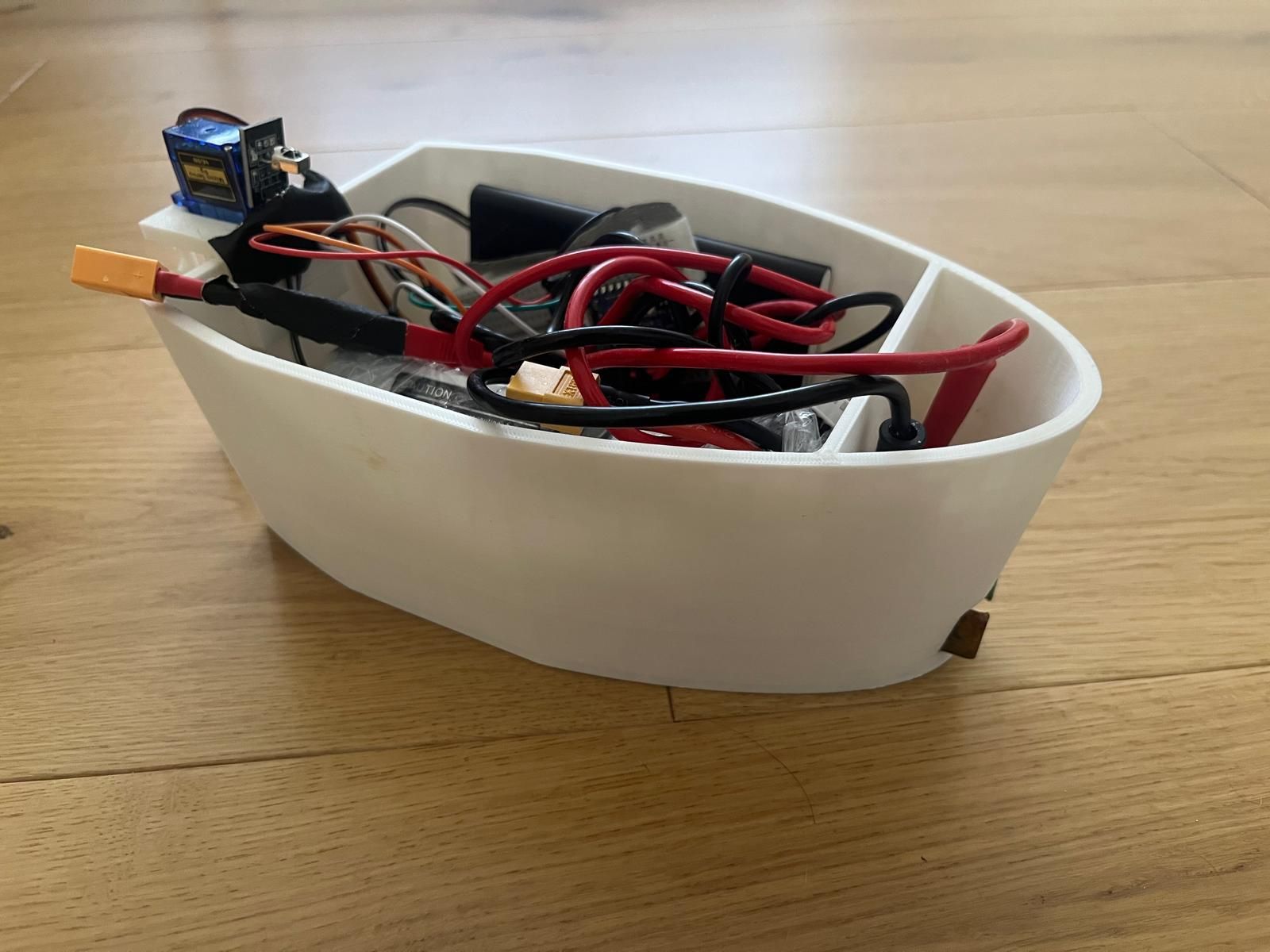
Magnetohydrodynamics is a way of propulsion that uses electricity, magnets and salt water to produce thrust, without any moving parts.
How it works:
MHD propulsion uses the Lorentz force: when an electric current flows perpendicular to a magnetic field it produces a force on the charged particles perpendicular to its motion and the magnet field.
The magnetic field can be made using permanent magnets, while a battery drives an electric current through two electrodes submerged in salt water. The dissolved salt provides ions that carry the current between the electrodes.
The Lorentz force pushes these ions through the water. According to Newton's third law of motion, pushing the water in one direction creates an equal and opposite force that pushes the boat forward.
How it can be used:
Since there are no moving parts, MHD propulsion is almost silent and avoids the mechanical wear associated with propellers. It also produces no greenhouse gases during operation, so could be a cleaner more eco-friendly alternative form of propulsion.
To demonstrate this principle, I designed a simple 3D-printable boat that holds the magnets, electrodes, and battery in the correct positions for MHD propulsion.
Supplies
Materials and components for MHD boat:
3mm x 15mm copper bar extrusion (at least 400mm length in total)
LiPo battery
60mm x 20mm x 5mm Permanent magnets
Crocodile clips and extra connectors to connect to the LiPo battery
Tape
Materials and components for remote controlled rudder:
Arduino
IR sensor
Servo
IR remote controller
Superglue
3D Printing the Boat
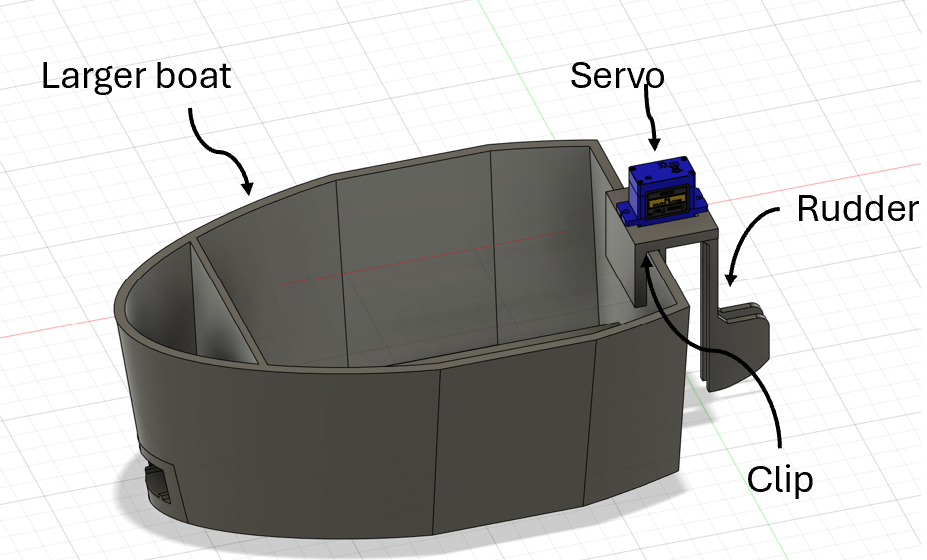
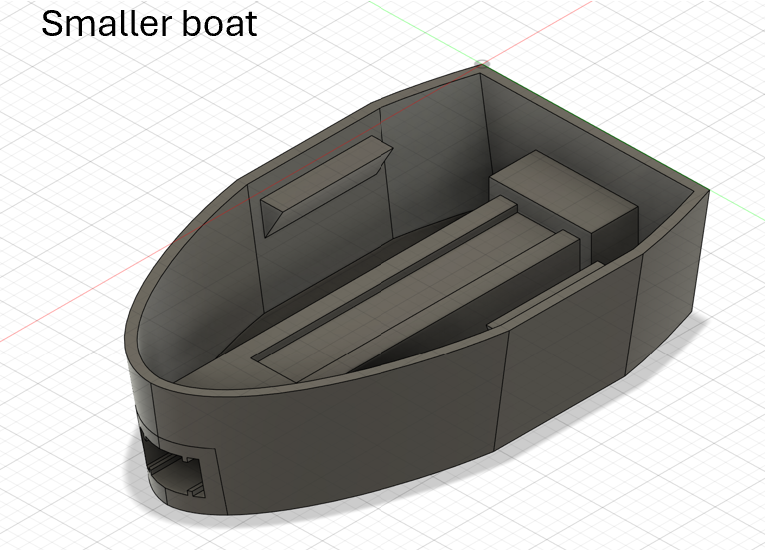
3D print the boat (choose either the small or large version).
Note: the remote-controlled rudder is only compatible with the larger model.
Copper Bars
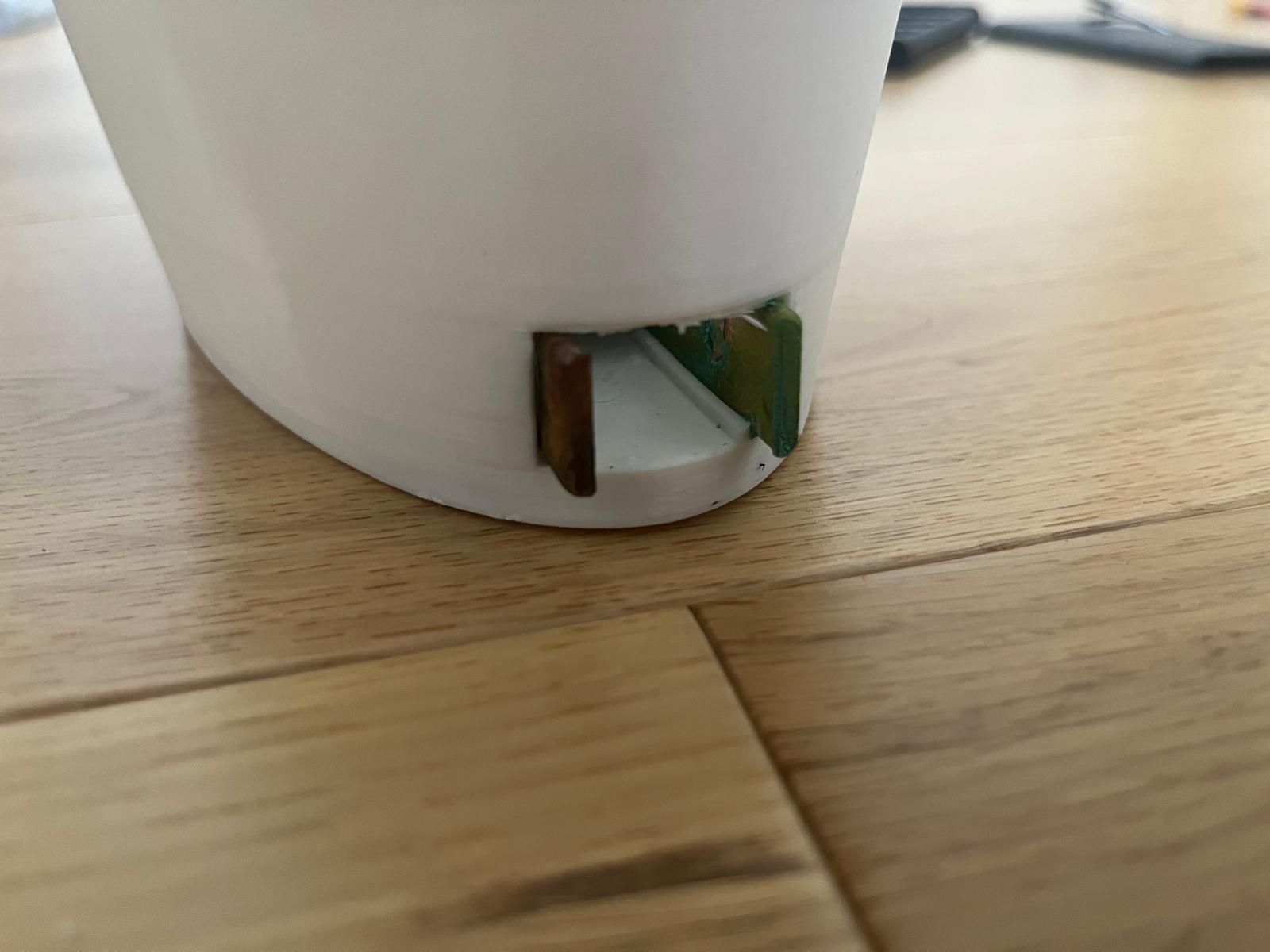
Cut down copper bars to length and slot into the boat
Adding the Magents
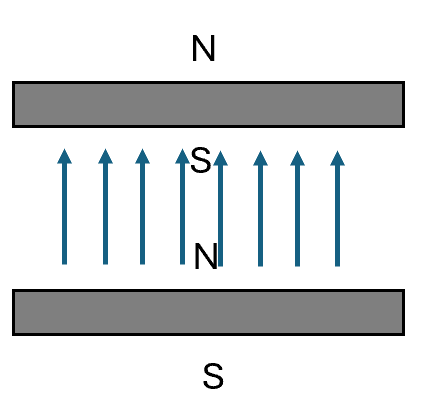
Place the magnets into the slots and secure them with tape. Make sure they are oriented to create a uniform magnetic field between them: the magnets on the bottom should have the same pole facing inward, and the top magnets should have the opposite poles facing inward.
Connecting the Battery
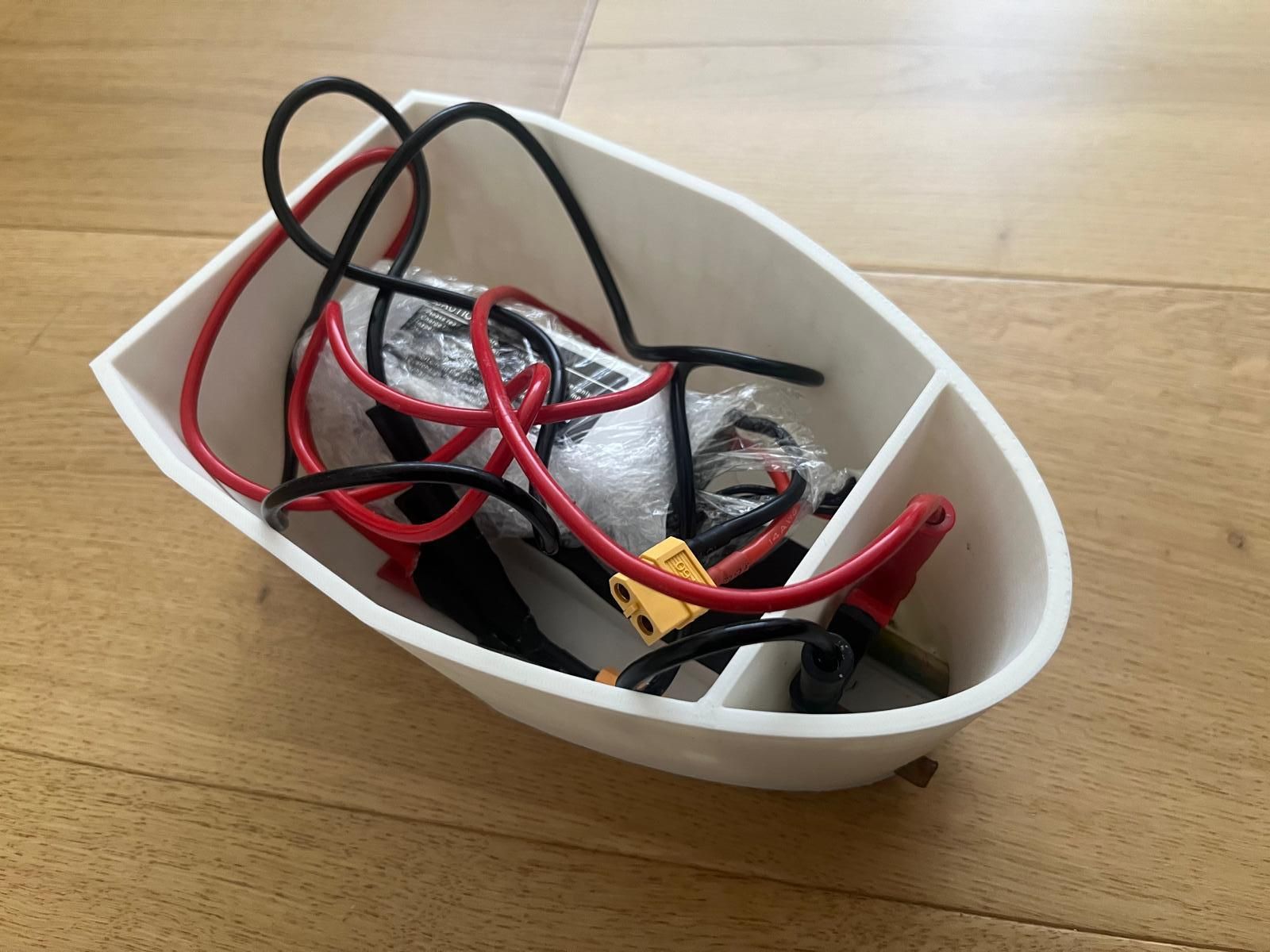
Connect the LiPo battery to the electrodes using crocodile clips
Place into salt water – the more salt that is dissolved into water, the more conductive the water will be and the better it will perform.
If the boat moves backwards, reverse which way the crocodile clips are attached to reverse the direction the boat moves.
Safety:
Make sure to slowly place the boat into the water so water does not short circuit the components and most importantly so the LiPo battery is not damaged.
For the smaller boat, anything up to 550g (including the weight of the boat) should safely float and for the larger boat anything up to 850g (including the weight of the boat) should also safely float; however, be careful when lowering the boat into the water.
Making the Rudder
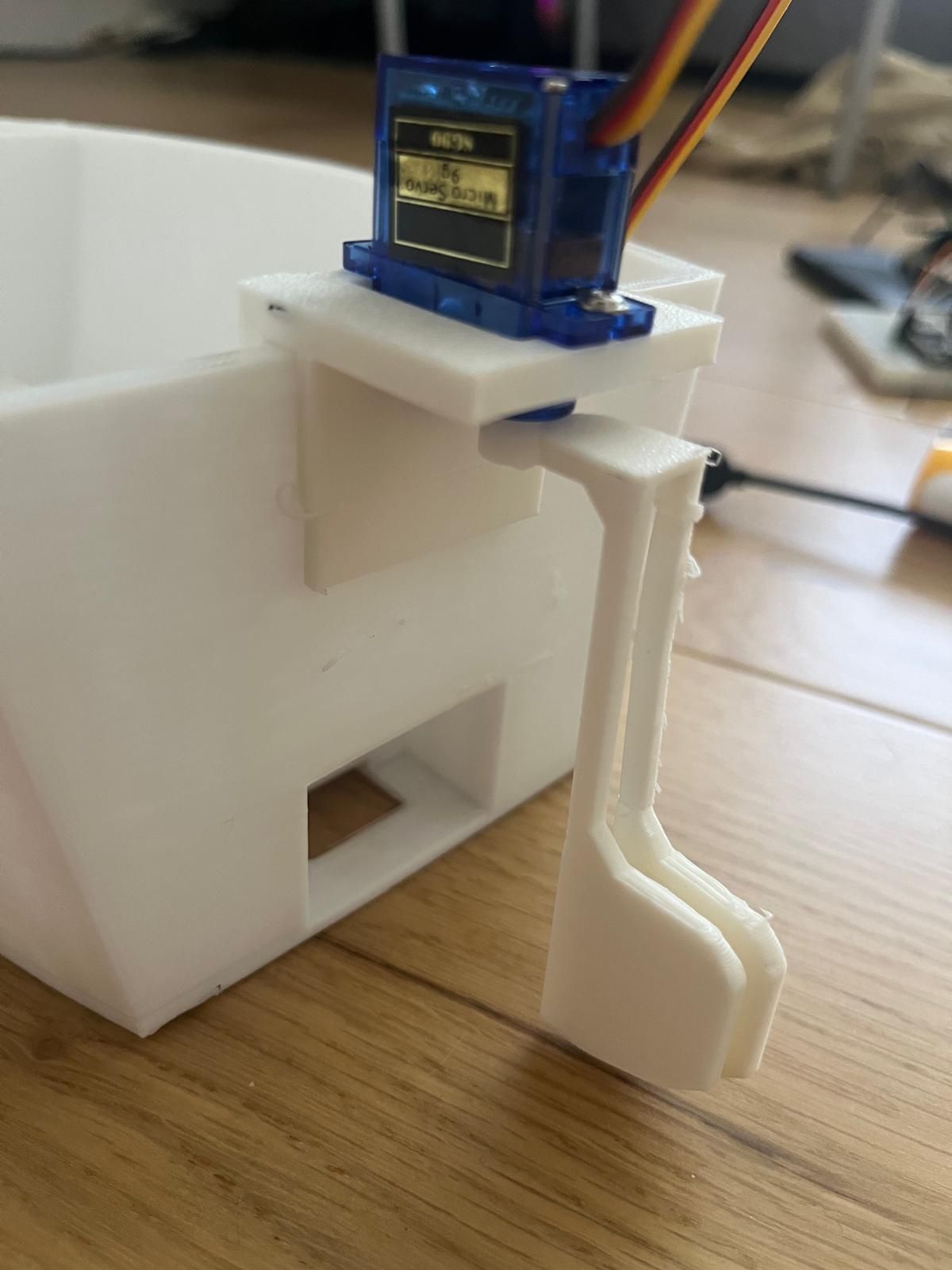
- 3D-print the parts
- Screw servo motor onto the clip
- Superglue the rudder to a servo horn
- Screw the servo horn (glued to the rudder) onto the servo motor
- Put the clip onto the back of the boat and tape into place if necessary
Creating the Circuit
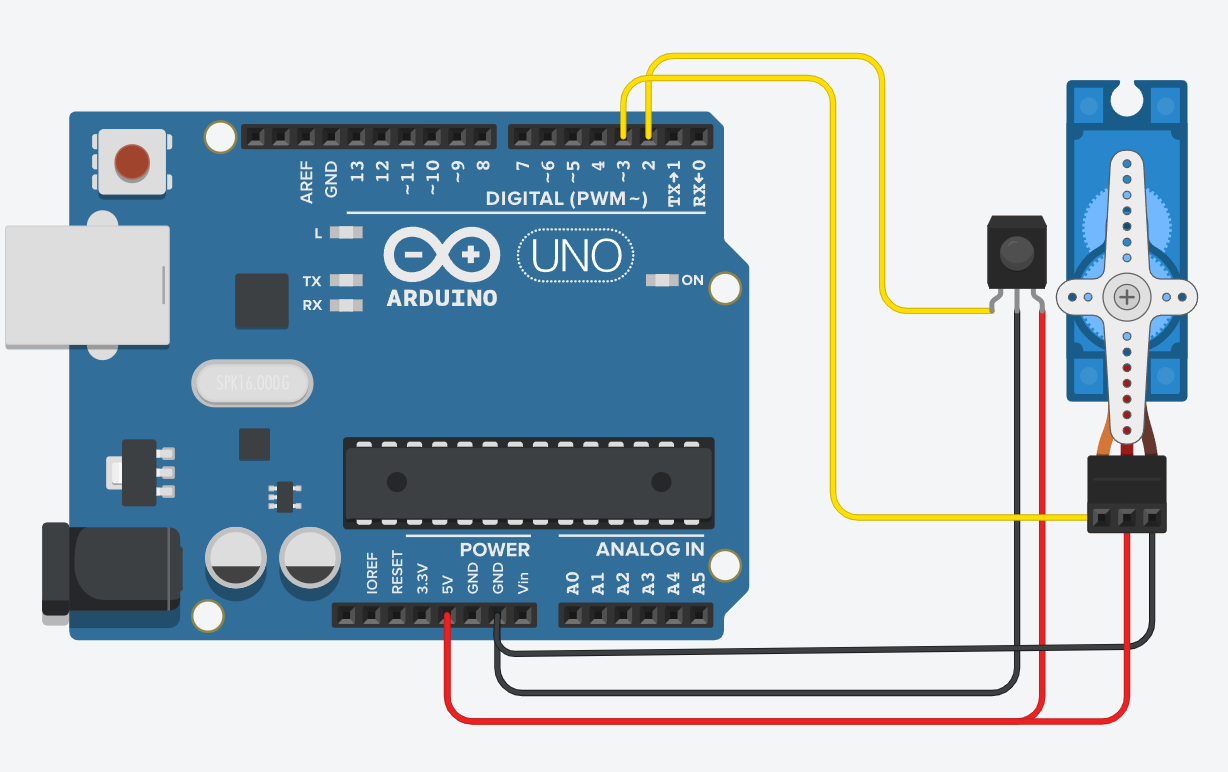
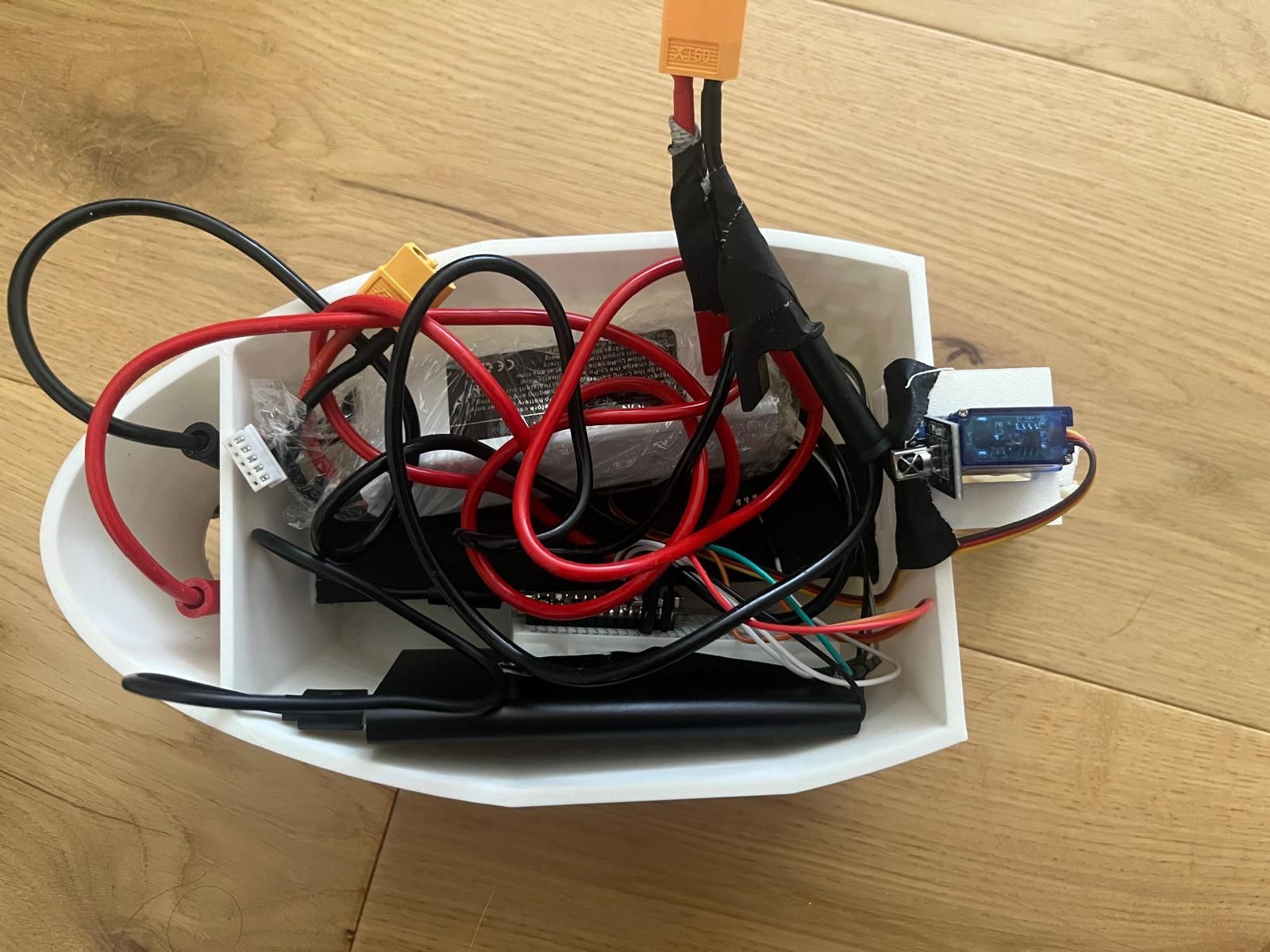
- Wire the circuit together as shown in the diagram
- Upload the code using the Arduino IDE. First, connect the Arduino to your computer and open the Serial Monitor. Point the IR remote at the receiver and press the buttons you want to use for control. The corresponding codes will appear in the Serial Monitor. Take note of these values (they should be integers) and enter them into the left_command and right_command variables in the code.
- Stick the IR receiver somewhere exposed using some tape
- Power it using a USB power bank or wiring a battery onto the Arduino as well
Downloads
Observations and Results
Observations:
You will be able to see bubbles coming from either end due to electrolysis.
The boat will move faster in higher concentrations of salt water due to the water being more conductive.
Results:
After testing both the small boat and larger boat, the smaller boat seemed to show more conclusive results as it accelerated in the water faster than the larger boat did.
To solve this you could use a larger battery with a higher voltage (to produce a larger current and a greater force) or use stronger magnets
The copper electrodes also corroded very quickly because the ions in the water were reduced/oxidised and then reacted with the copper, so graphite may be a more suitable material because it is electrically conductive and more inert.