Make It Heal: Tornado-Proof Community Roundup - Dome Design
by ved_r_builds in Design > 3D Design
51 Views, 0 Favorites, 0 Comments
Make It Heal: Tornado-Proof Community Roundup - Dome Design

Living in Texas, tornadoes are a major threat that can wipe out a community overnight. When an extreme tornado hits, it destroys physical structures in its path and tears apart a neighborhood's social fabric, leaving people worried and anxious.
As a rising 10th-grader , I wanted to design a real-world solution to this problem using Autodesk Tinkercad. The Tornado-Proof Community Roundup is designed to change that. Created for the Autodesk Make It Heal challenge, this structure is a dual-purpose public roundup optimized for extreme wind resistance. It serves as a rapid-response oasis during a storm and a solar-powered community hub for healing, connection, and rebuilding after the tornado clears.
Image source: link (scroll like a few times to find the image)
Supplies
- Software: Autodesk Tinkercad (for 3D digital prototyping)
- Concepts Used: Aerodynamic design, Biophilic architecture, Off-grid solar engineering
Background

The inspiration for this design comes from the deadliest tornado in Texas history. On May 11, 1953, a massive F5 twister—nearly a third of a mile wide—cut a path straight into downtown Waco. It completely destroyed 600 buildings, killed 114 people, and left survivors trapped for up to 14 hours waiting for rescue. This design is built to withstand those exact forces and prevent that kind of devastation.
Image source : USA TODAY
Brainstorming & Concept Sketches
.png)
I started by researching why tornado winds destroy roofs. Once I learned that flat surfaces create huge lift and drag, I started sketching a dome shape that would let the wind pass right over it.
2D Spatial Layout & Floor Plans

To make it even clearer how this pavilion supports both safety and community healing, I created a simple floor plan diagram. I used clean graphics to label the key areas I included in the design to show how it transitions from a survival shelter into a recovery hub.
1st Floor (Ground Level):
- Focus: Recovery, transition, and nature integration (biophilic).
- Entrance: A specific "Inviting Concentric Entrance" welcomes visitors.
- Recovery Areas: A "Communal Flex-Space" with primary seating and secondary recovery spaces is defined.
- Communal Core: The "Biophilic communal gathering area" is the central heart, designed with an adaptable layout for recovery and events.
- Garden Integration: There are designated "Garden" zones within the dome structure itself.
- External Access: "External Circulation Path & Ramp" and an explicit external "Staircase" connect the structure externally, perhaps to other units or the surrounding ground.
- Symbolic Center: A "Symbol of Resilience (Central Biophilic Hub)" features a central tree within its own circular frame.
2nd Floor:
- Focus: Administration, group functions, and dining.
- Functional Rooms: Includes a dedicated "Medical Station / Clinic," an "Administrative Conference Room" with shared desk space, and a private dining room.
- Dining and Lounge: Features a large "Gathering and Dining Zone" with multiple tables, and a curved "Quiet Observation Lounge" that takes full advantage of the "Curved Panoramic Glazing" for a seamless outdoor connection.
- Accessibility: An internal staircase is labeled "Both Up and Down."
The Aerodynamic Shell


- The Problem : Traditional flat house roofs catch high-velocity winds and experience high drag, which can cause roofs to rip off.
- The Solution : Curved Roofs. The shape of the roof ensures that the wind glides through, thus reducing the drag on the roof.
- The roof consists of structural columns and padding to ensure that, even if something flies and hits the building, it will withstand the impact. The structural columns and padding utilize circular, locally-sourced recycled materials to minimize environmental impact and lower construction costs.
- The dome uses a modular panel connector assembly system designed for rapid, cost-effective manufacturing and quick deployment to accelerate safe community rebuilding within days of a disaster.
Power (solar Panels)

- The Problem : When tornadoes hit, the local power line/grid is mostly destroyed, leaving communities without power for days.
- The Solution : Solar Panels. These will serve as an alternative source of power in case the local power line is destroyed.
Finished 3D Design
.jpeg)
.jpeg)
The 'Heal' Factors: a Look Inside.
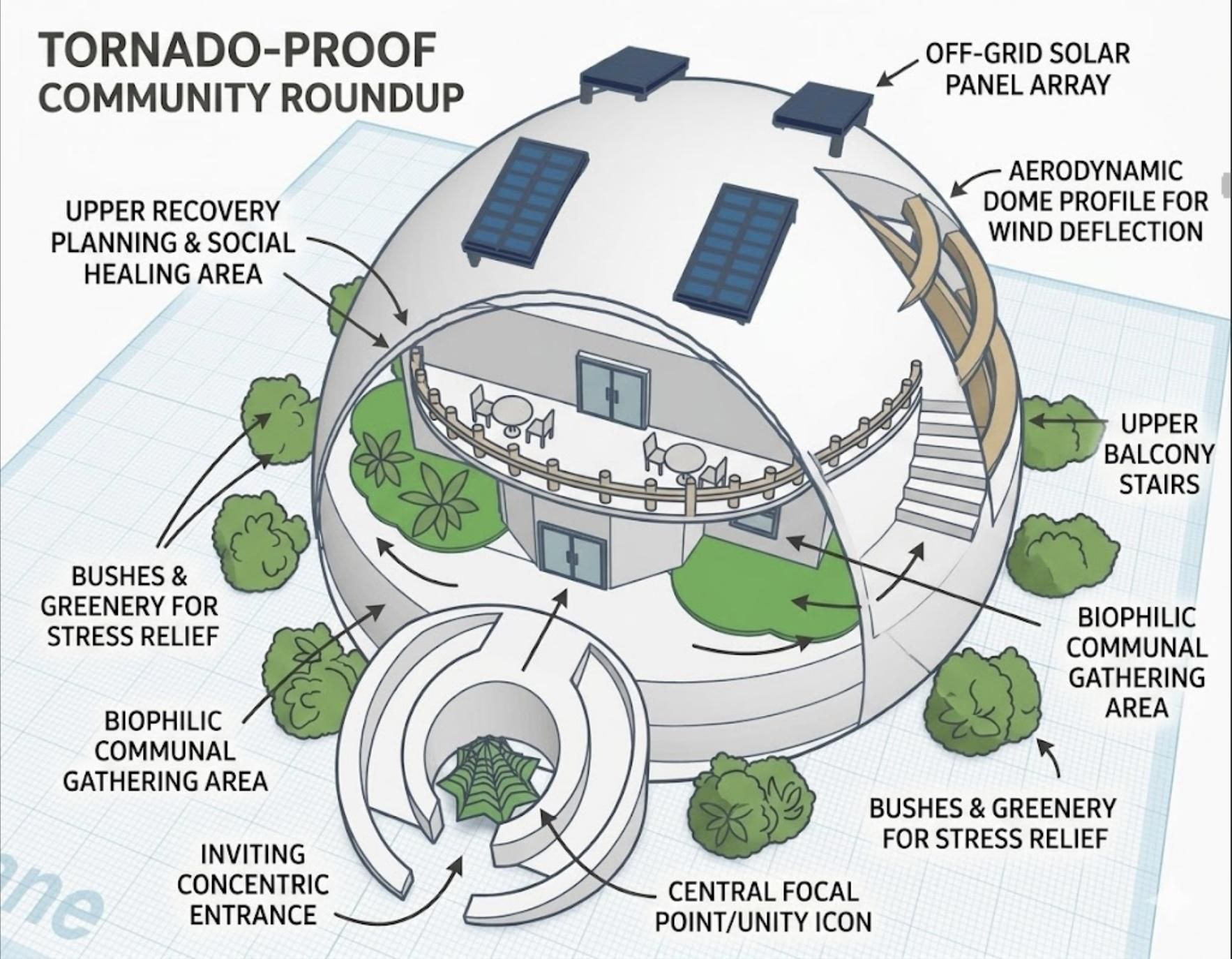
- Nature: I surrounded the building with bushes and greenery because connecting with nature is proven to reduce stress, lower anxiety, and promote mental well-being after a disaster.
- The Building Itself: The aerodynamic dome unites community members under one incredibly strong roof. It creates an inviting, safe space where a damaged neighborhood can come together to talk, find support, coordinate with authority figures, and start rebuilding their lives.