Mentor Mitra V3 – Speeding Up Children’s Learning While Preserving Creativity | Let There Be Innovation. Let There Be Speed.
by Udayan Banerji in Circuits > Assistive Tech
2040 Views, 20 Favorites, 0 Comments
Mentor Mitra V3 – Speeding Up Children’s Learning While Preserving Creativity | Let There Be Innovation. Let There Be Speed.
 | Accelerating Learning with AI)
In recent years, artificial intelligence has dramatically changed the way people access knowledge. With the emergence of conversational AI systems, learning is no longer limited to classrooms, textbooks, or formal supervision. Anyone can now ask questions, explore ideas, and discover new concepts instantly.
This transformation opens an exciting opportunity: using AI not just for convenience, but for social good, especially in education.
Children spend many years developing knowledge, creativity, and curiosity. However, learning often becomes rigid, and many children hesitate to ask questions freely. What if we could create a friendly AI companion that encourages curiosity, answers questions patiently, and helps children explore new ideas without fear of judgment?
To explore this idea, I built Mentor Mitra V3, an AI-powered conversational robotic mentor designed to support children’s learning through natural interaction. The system combines robotics and conversational AI to create a personalized learning companion that can answer questions, suggest activities, and even discuss cultural topics.
This project also aligns with the spirit of the “Let There Be Speed” Challenge, which celebrates innovation, iteration, and pushing ideas forward. Mentor Mitra has evolved through multiple versions, and Version 3 represents a faster and more refined step in that journey—accelerating the learning experience for children while preserving their creativity and curiosity.
In this project, I demonstrate how Mentor Mitra V3 works and how conversational AI can be integrated into a robotic platform to create a meaningful educational companion for the next generation of learners.
Supplies
.jpeg)
Tools & Components Used
Hardware
- Reachy Mini Lite
- The primary robotic platform used to build Mentor Mitra V3. It provides the physical robot interface for interactive AI conversations.
- Laptop / Desktop Computer
- Used for development, configuring the robot, and running the conversational system.
- USB Cable
- For connecting and configuring the Reachy Mini.
- Microphone (built-in or external)
- Used for voice interaction during conversations.
- Speaker or Headphones
- Used for audio responses from the robot.
Software & Development Tools
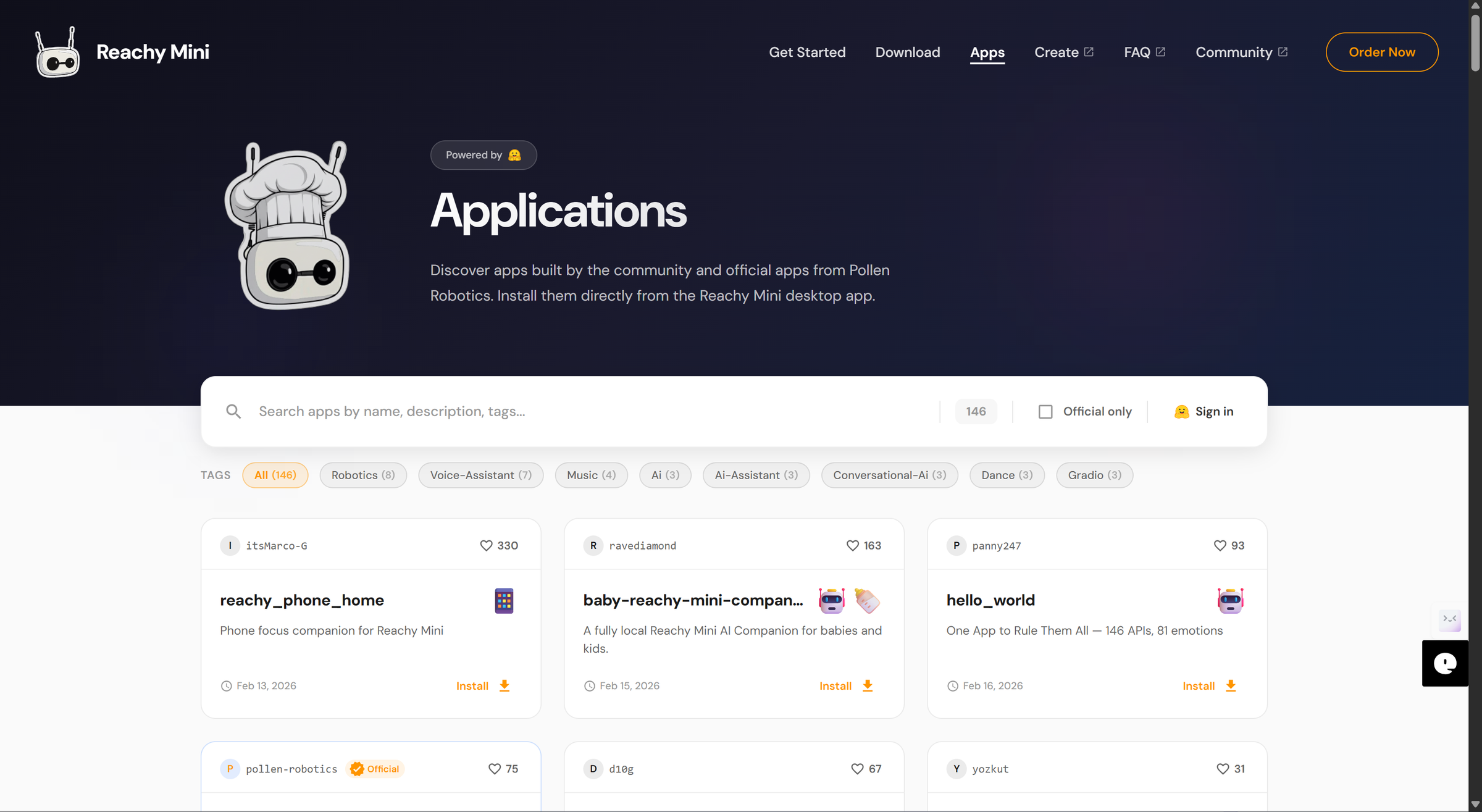
- Reachy Mini Applications Library
- The official application framework used to run different interactive programs on the robot.
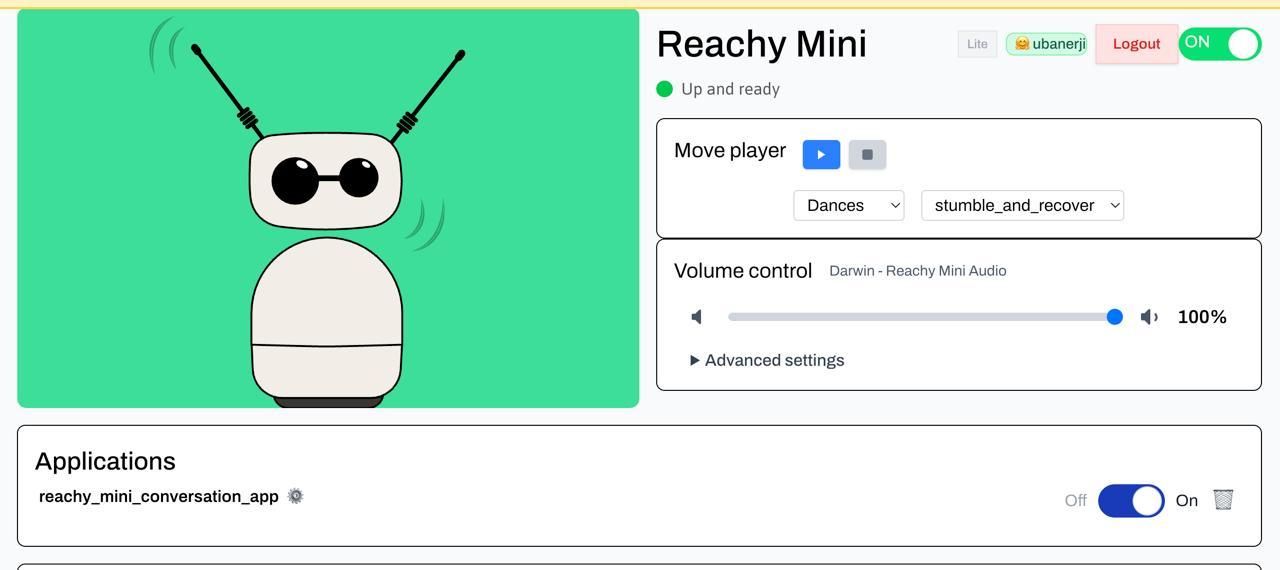
- Reachy Mini Conversational App
- The core application used as the foundation for this project. Mentor Mitra V3 was built by customizing and extending this conversational app.
- Hugging Face Tools & Libraries
- Used as part of the conversational AI ecosystem for building and running the interaction pipeline.
- Python
- Used for configuring the robot and implementing the conversational logic.
- Custom System Prompt Design
- A personalized prompt containing information about the child (name, hobbies, interests) that enables Mentor Mitra to interact naturally.
Identifying the Challenge
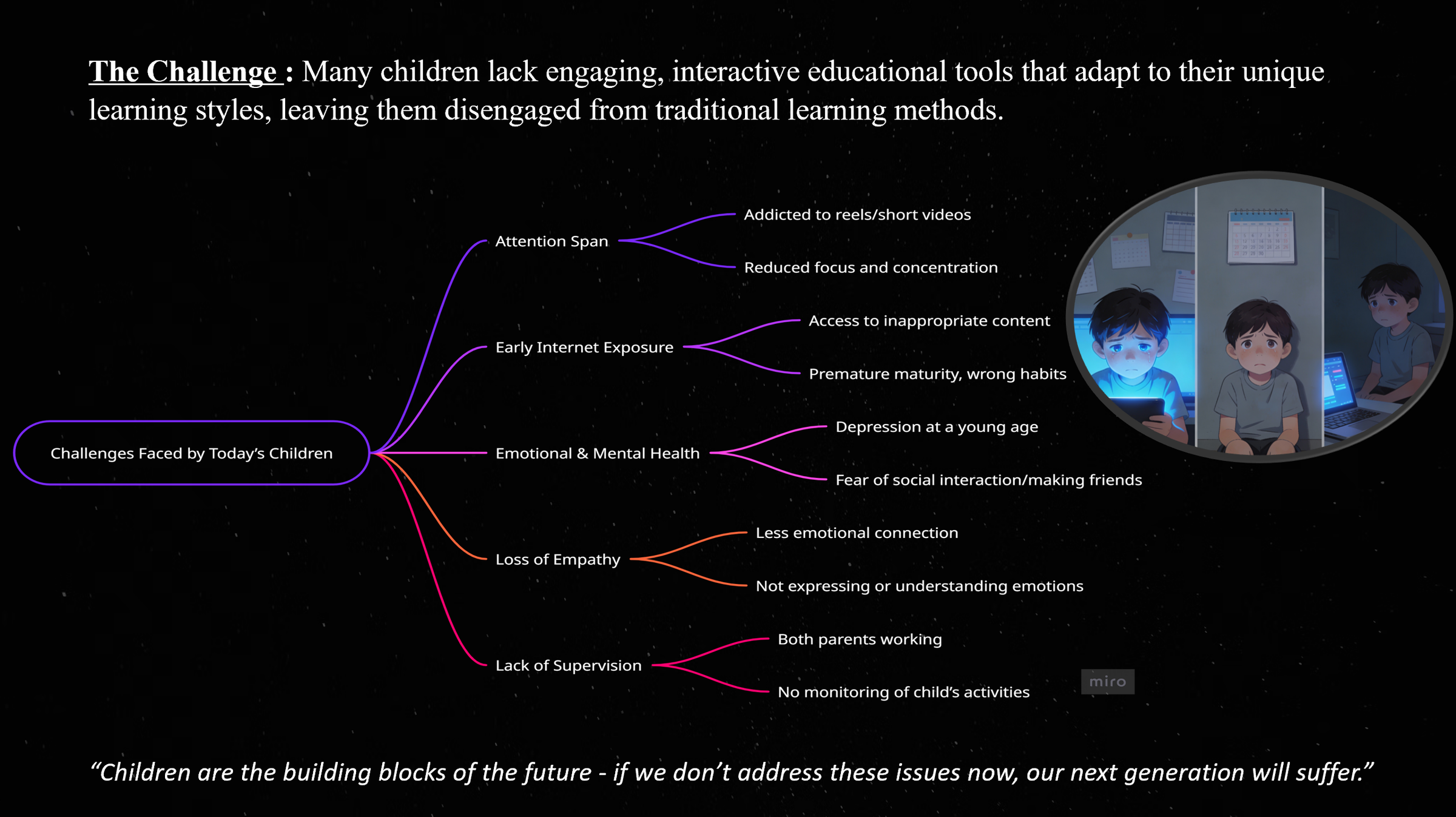
Many children today lack engaging and interactive educational tools that adapt to their unique learning styles. Traditional learning methods often follow a one-size-fits-all approach, which can leave many students disengaged, hesitant to ask questions, or unable to explore topics at their own pace.
In a world where curiosity should be encouraged, children sometimes feel limited by rigid systems that do not adapt to their interests or creativity. Without interactive guidance, learning can become passive rather than exploratory.
Children are the building blocks of the future. If we fail to address these challenges today, the next generation may struggle to fully develop their curiosity, creativity, and problem-solving abilities.
The image below highlights some of the key challenges children face in modern learning environments—lack of personalized attention, limited interactive tools, and reduced opportunities for creative exploration.
Recognizing this challenge was the first step that inspired the development of Mentor Mitra, an AI-powered robotic mentor designed to support children through engaging conversations and personalized learning experiences.
The Rise of Conversational AI
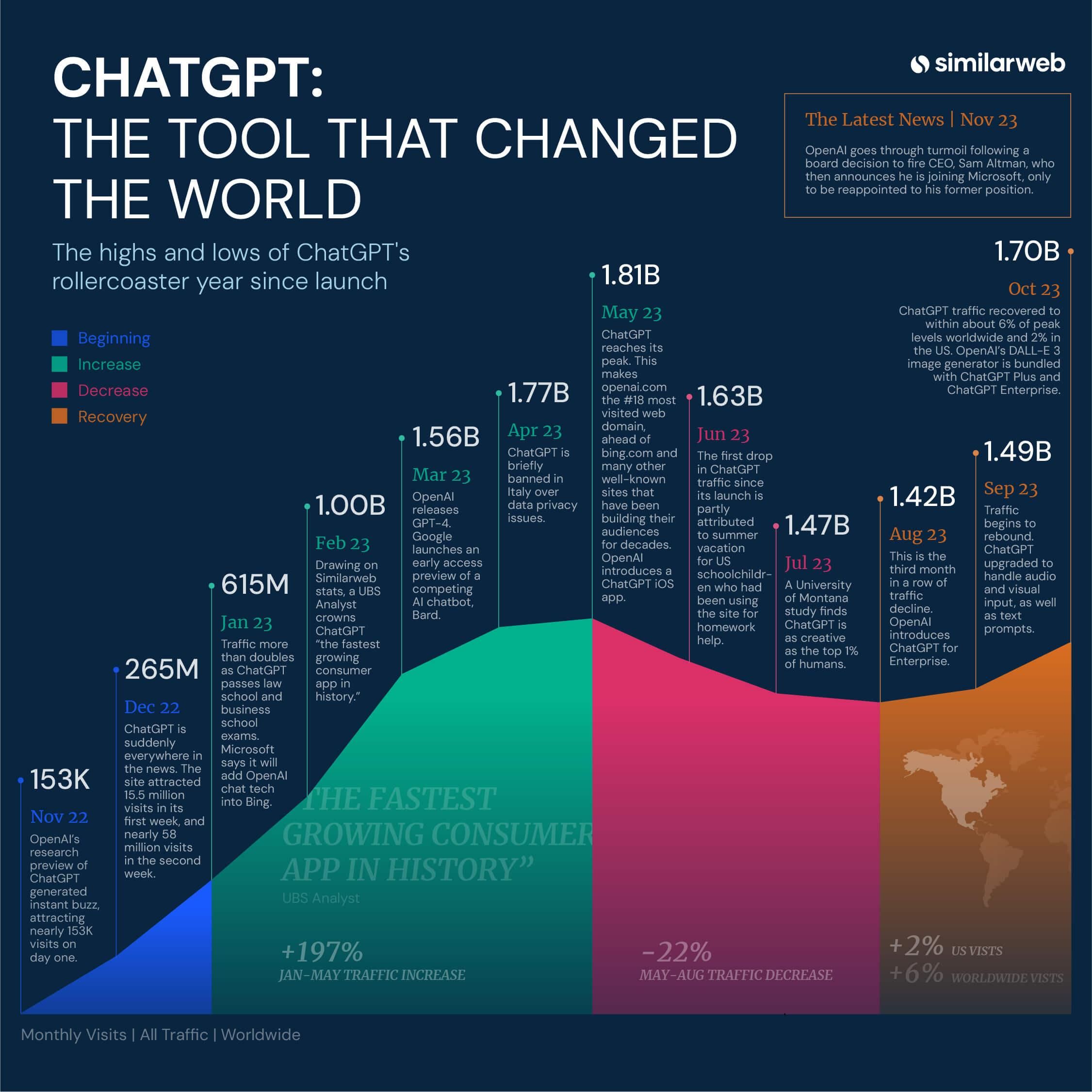
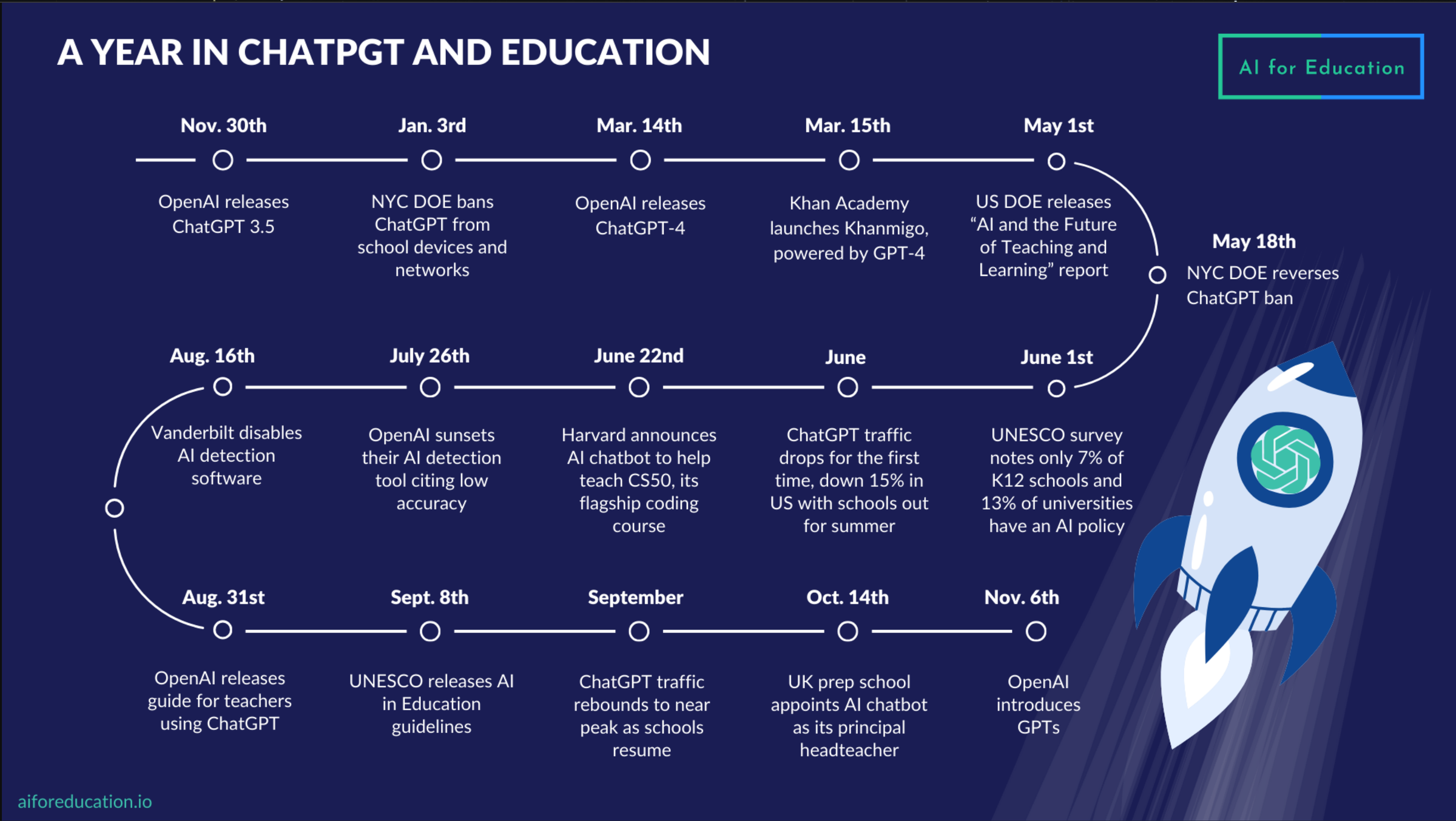
A major turning point in accessible knowledge came in 2022 with the public emergence of ChatGPT and similar conversational AI systems. For the first time, people could interact with artificial intelligence in natural language and receive helpful explanations, ideas, and guidance instantly.
This development dramatically lowered the barrier to learning. Instead of relying only on textbooks or formal instruction, students could now ask questions freely, explore concepts step by step, and learn at their own pace.
Conversational AI offers several important advantages for education:
- Instant access to knowledge – learners can ask questions anytime and receive immediate responses.
- Interactive learning – explanations can adapt based on the learner’s curiosity and follow-up questions.
- Encouragement of exploration – students can explore topics without hesitation or fear of being judged.
- Personalized guidance – AI systems can adapt their responses based on a learner’s interests and learning style.
These capabilities opened an exciting possibility: what if conversational AI could move beyond a screen and become part of a physical, interactive learning companion?
This idea inspired the development of Mentor Mitra, a robotic platform that combines conversational AI with an engaging physical interface to make learning more interactive, personal, and enjoyable for children.
Exploring the Reachy Mini Platform
With the rapid progress in conversational AI, the next challenge was finding a robotic platform that could bring these capabilities into a physical and interactive form.
This is where the Reachy Mini Lite, developed by Pollen Robotics, becomes highly interesting. The platform is designed as an accessible robotics system that allows developers and makers to experiment with human–robot interaction, conversational AI, and creative robotics projects.
Reachy Mini provides a compact robotic interface that can run interactive applications, making it an ideal platform for building an AI-based learning companion like Mentor Mitra.
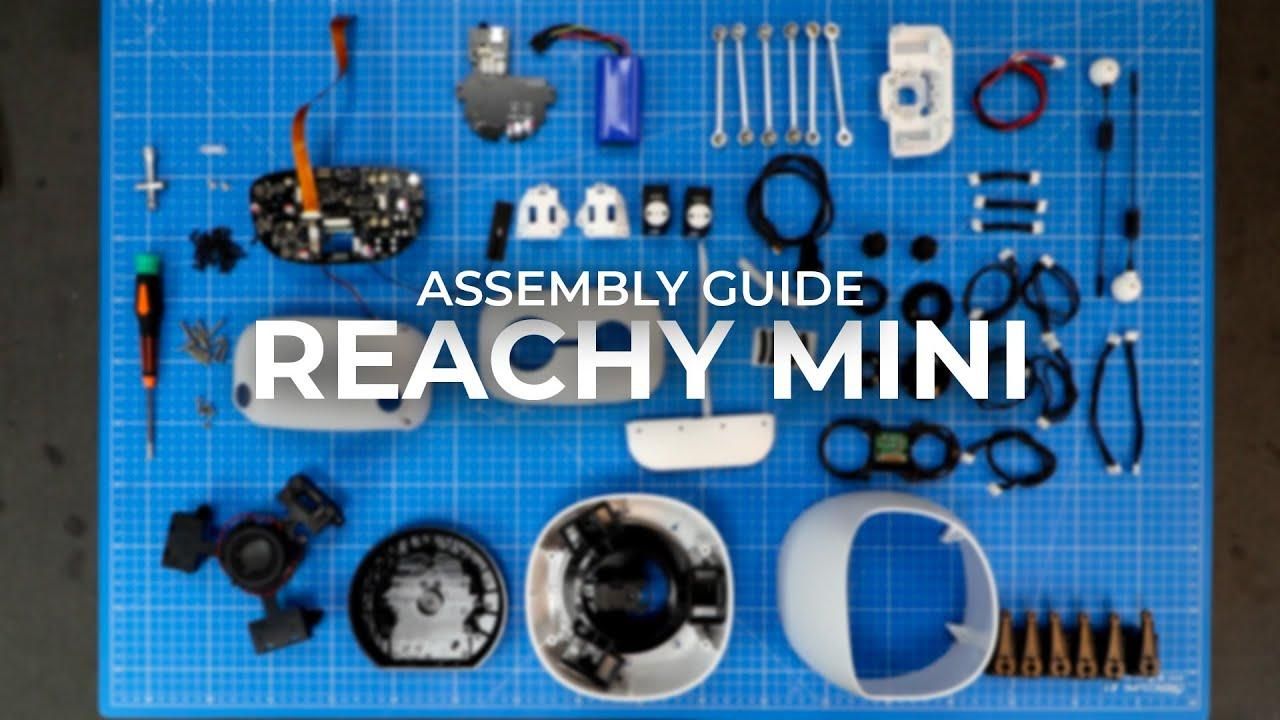
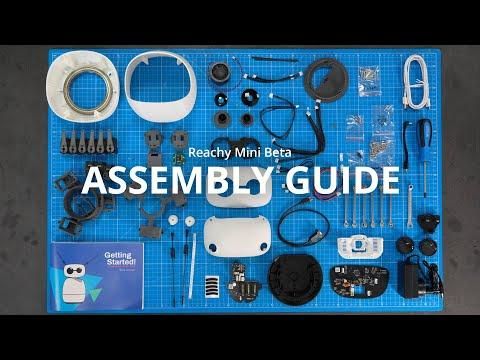
To assemble the robot, I followed the official assembly guide provided by the developers. The complete build process is demonstrated in the video below. Although the assembly video is about one hour long, the full process—including careful setup and configuration—took nearly a full day to complete.
The tutorial helped ensure that the hardware was correctly assembled and ready to run the Reachy Mini applications.
Understanding the Child and Designing the System Prompt
.jpeg)
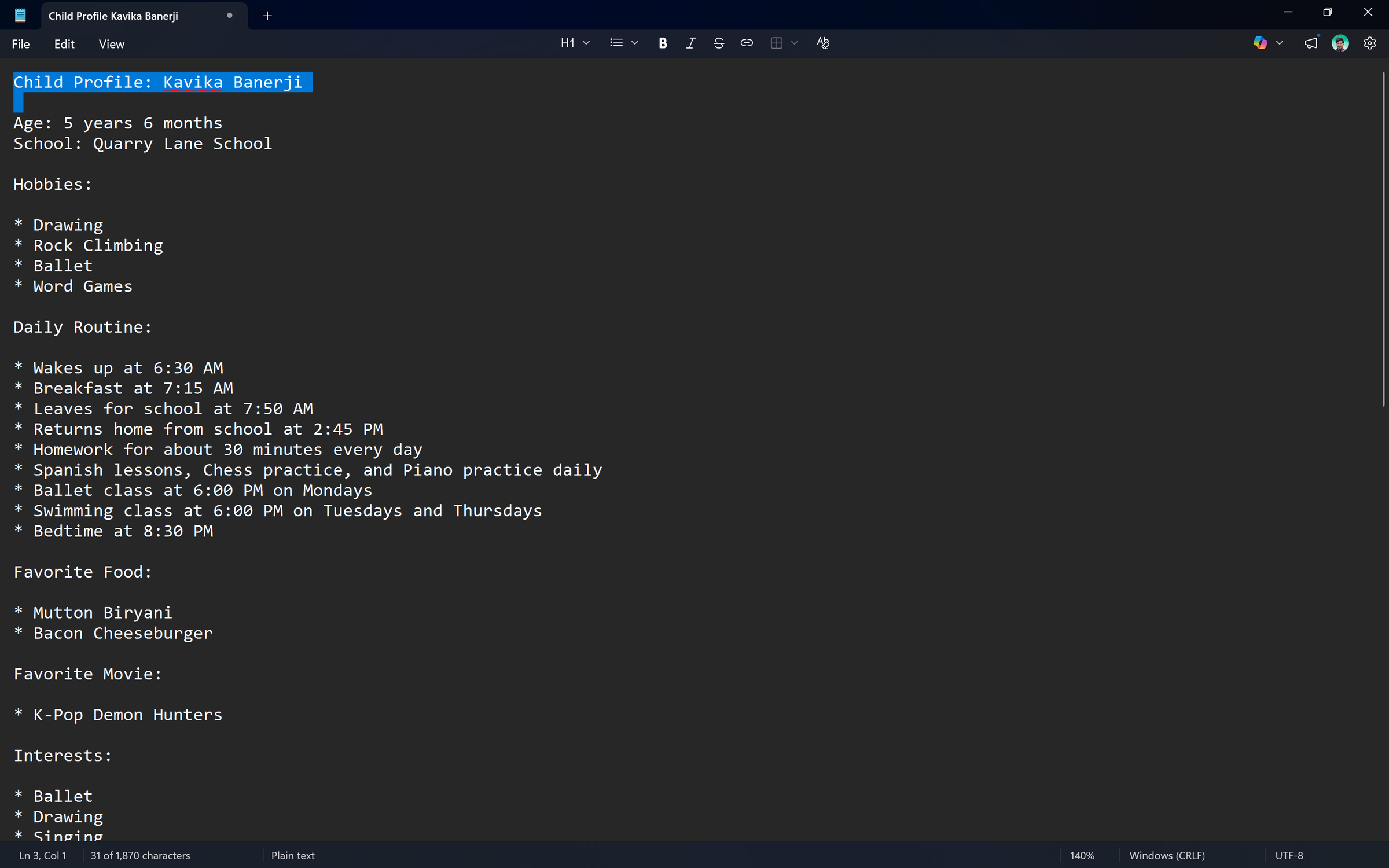
To make the interaction more meaningful, I wanted the robot to understand the child it was interacting with. Instead of giving generic responses, the goal was to personalize the experience so the AI could respond in a way that feels more natural and engaging.
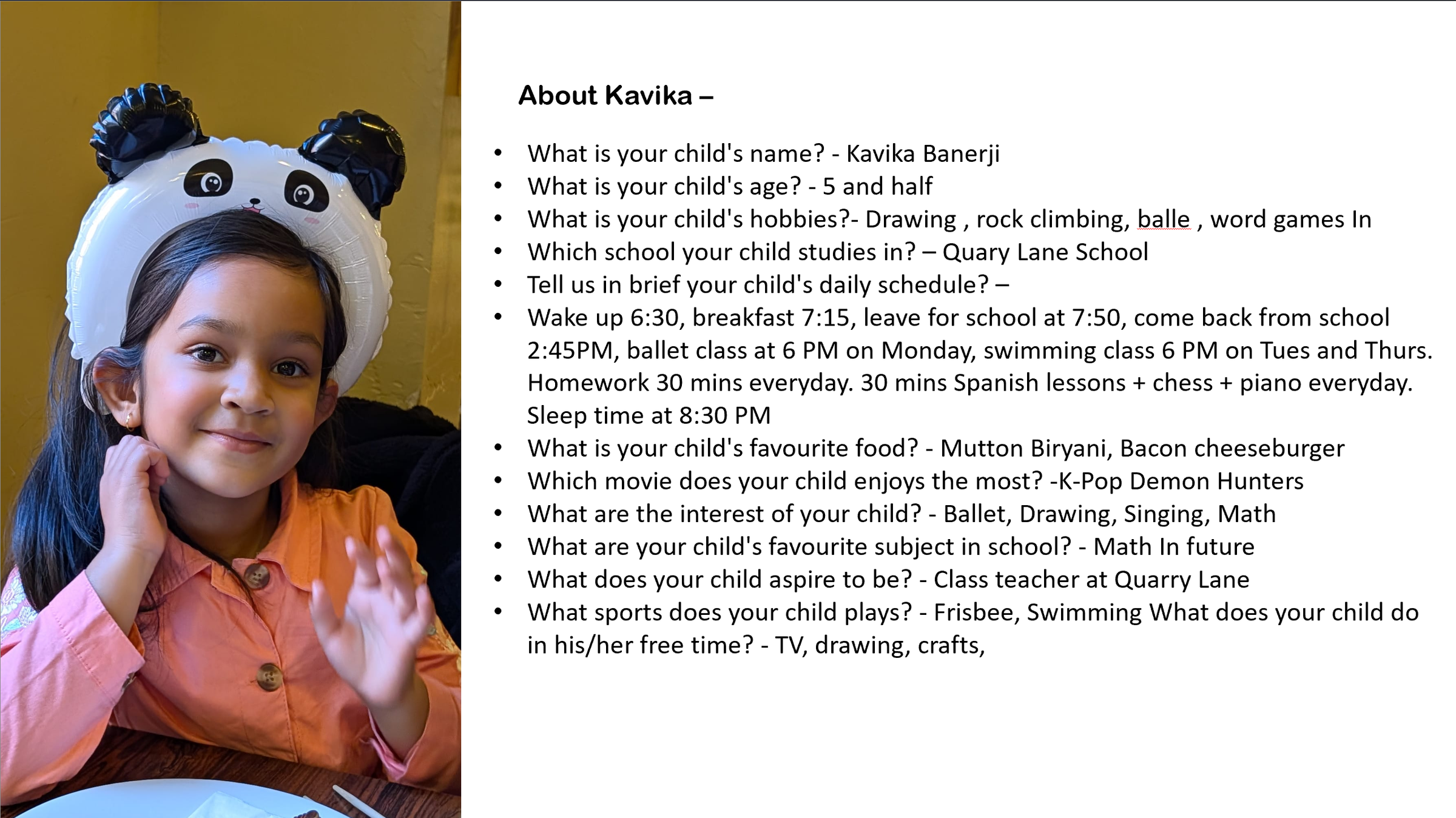
To do this, I prepared a simple questionnaire about my cousin Kavika. The questionnaire included details such as her age, school, hobbies, favorite subjects, daily routine, and interests. These details helped create a better understanding of her personality and learning preferences.
After analyzing this information, I designed a custom system prompt that included key details about Kavika. This prompt was then added to the system prompt section of the Reachy Mini Conversational App, allowing the robot to respond with more context and personalization during the conversation.
By giving the AI this background information, Mentor Mitra could interact more naturally—recognizing her interests, encouraging her curiosity, and making the conversation feel more like a friendly mentor rather than a generic assistant.
The image below shows the questionnaire and the key information used to design the system prompt for Kavika.
Demonstration – Interaction With Mentor Mitra
 | Accelerating Learning with AI)
After assembling the robot, setting up the conversational system, and designing the personalized system prompt, the final step was to test the interaction.
To demonstrate how Mentor Mitra works, I invited my cousin Kavika to interact with the robot. During the conversation, she asked different types of questions—from basic introductions to learning-related questions and even cultural topics.
This demonstration shows how the system responds to her queries, supports learning, encourages curiosity, and adapts to a natural conversation flow.
The video below captures the full interaction between Kavika and Mentor Mitra. It highlights how conversational AI combined with a robotic platform can create a more engaging and interactive learning experience for children.
You can also watch the same demonstration video attached at the top of this project page.
Evolution of Mentor Mitra (V1 → V3)
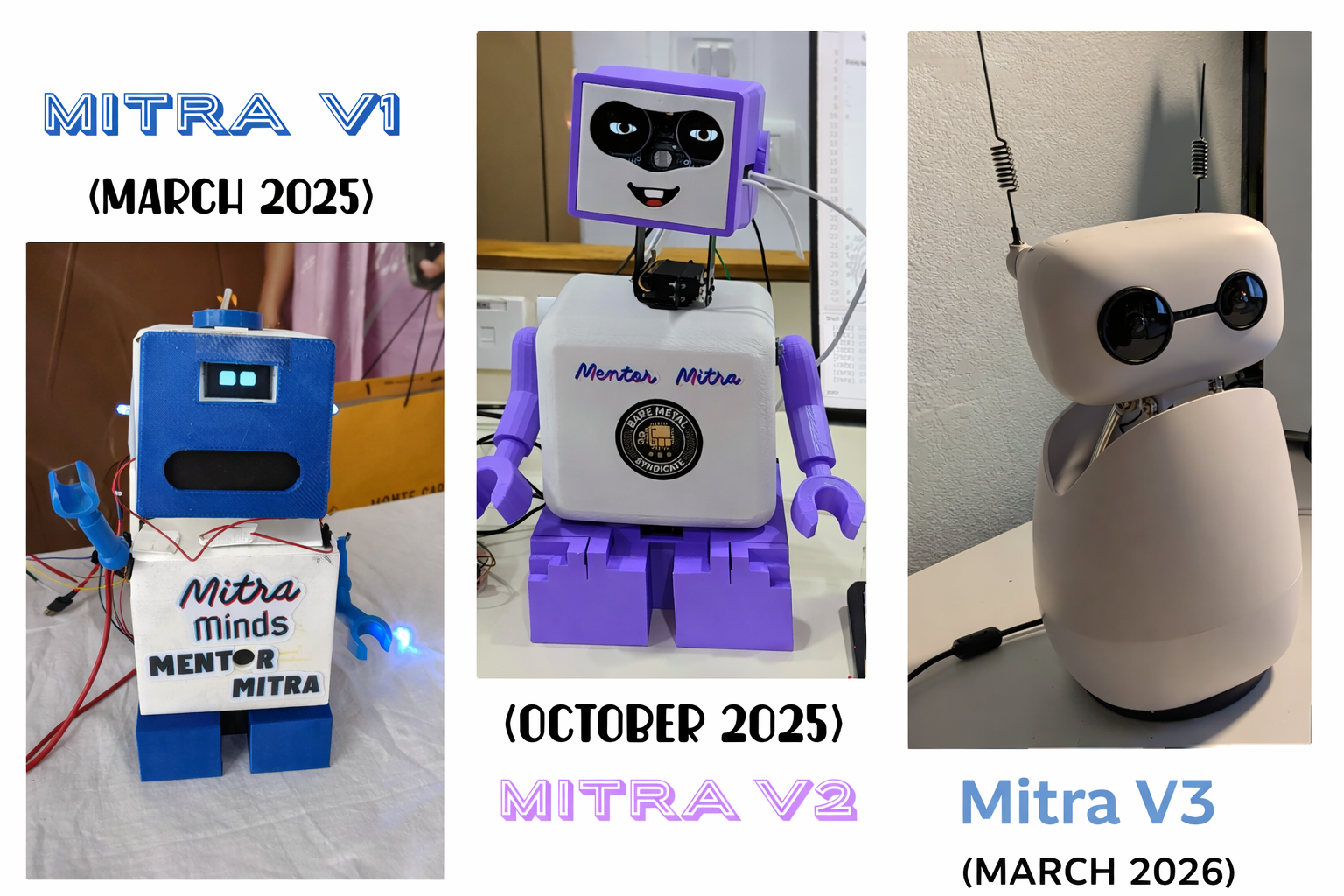
Evolution of Mentor Mitra (V1 → V3)
Mentor Mitra has evolved through multiple iterations, with each version improving the concept of an AI-powered educational companion for children.
Mentor Mitra V1 was the initial prototype that explored the idea of an interactive AI toy capable of voice interaction and emotional responses. This version focused on creating a playful and engaging robotic companion for children while experimenting with conversational interaction.
V1 Repository:
https://www.elecrow.com/sharepj/mentor-mitra-ai-interactive-toy-with-voice-and-emotions-818.html
Mentor Mitra V2 expanded the concept into a more advanced AI-powered robotic mentor designed to assist children in learning and creativity. This version introduced stronger AI interaction capabilities and demonstrated how conversational systems could support educational engagement.
V2 Repository:
Mentor Mitra V3, the current version, builds upon these earlier experiments by integrating the Reachy Mini platform and a customized conversational system. By using a personalized system prompt based on the child’s profile, the robot can interact in a more contextual and engaging way, encouraging curiosity, creativity, and learning.
This progression reflects an important principle of engineering and innovation: meaningful systems are rarely built in a single step. Instead, they emerge through continuous experimentation, iteration, and refinement.
Additional Demonstration – Mentor Mitra V2
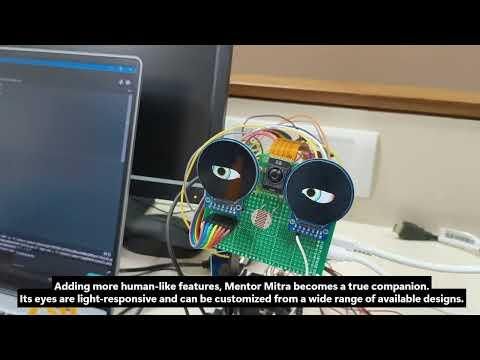
For those interested in the previous version of the project, I have also attached a demonstration video of Mentor Mitra V2.
This version of the system was designed to run completely locally without any cloud dependency, demonstrating how an AI-powered robotic mentor can function entirely on-device. The goal of this approach was to explore privacy-friendly AI interaction while maintaining responsive conversational capabilities.
You can watch the video below to understand how Mentor Mitra V2 worked and how it contributed to the development of the current Mentor Mitra V3 system.