Modular Food Stall Community Center
by RichardHuberjohn in Design > Architecture
65 Views, 0 Favorites, 0 Comments
Modular Food Stall Community Center


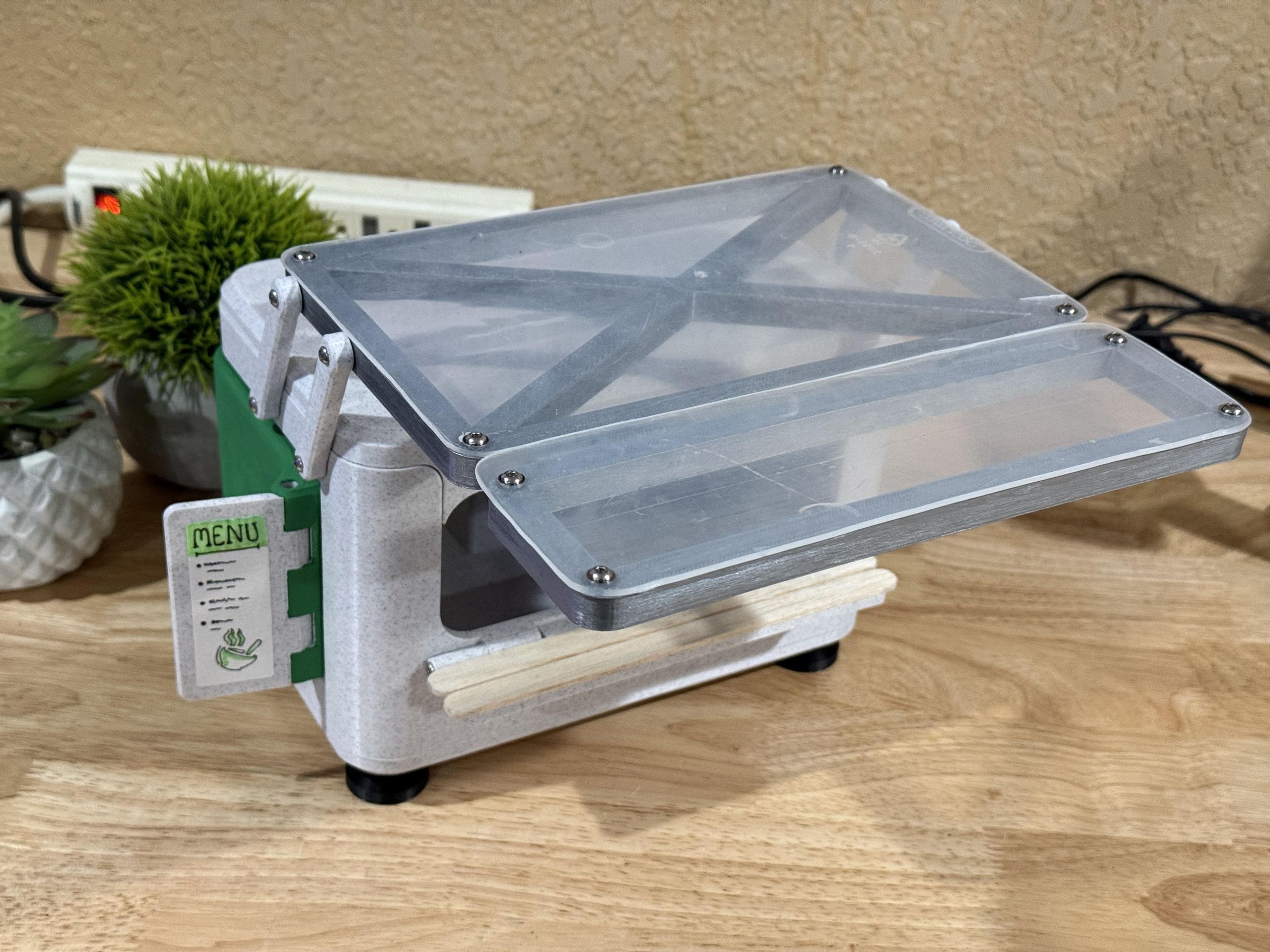
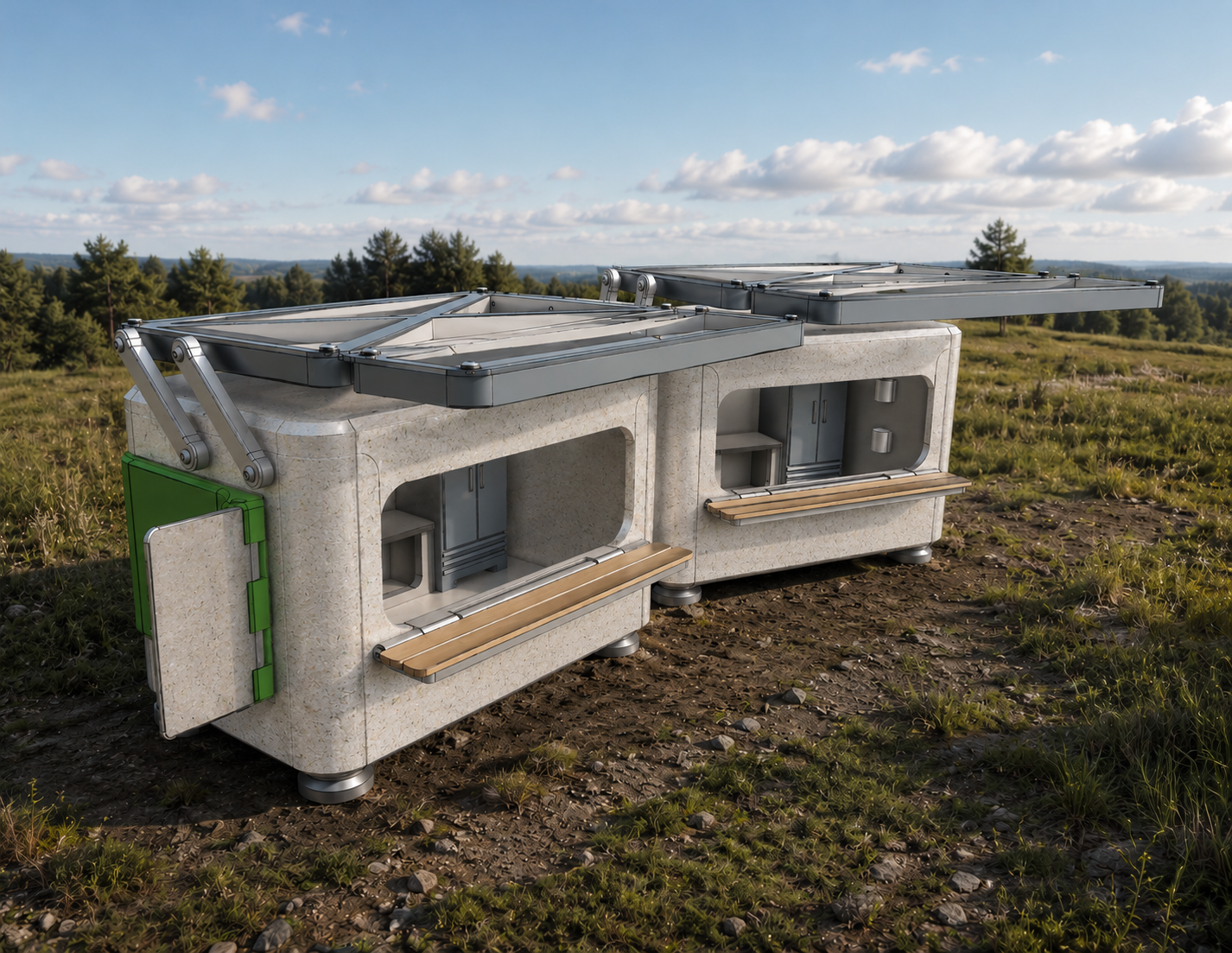
After tragic and impactful events like the LA wildfires, floods, earthquakes, and other natural disasters, people are in need of a space that helps rebuild the sense of community. This project aims to address this need via a community center based around modular food stalls, providing a place for people to gather and heal through reliable sustenance, diverse food, and a social atmosphere.
I wanted to address the real concerns of people during a time of uncertainty, and not having access to a reliable and satisfying source of food amplifies tension and heightens feelings of distress. I believe that in a real crisis, a community would prefer to have a local, welcoming, gathering place where they can get much needed food instead of a large scale "healing" center. The most important aspect in my opinion is providing safety to as many people as fast as possible to actually kickstart the healing process, and this project is how I achieved that goal.
In this Instructable, I detail the design process from research, to CAD, to physical prototyping. I strived to utilize human-centric design and real social principles to address the needs of communities after a traumatic event. Through this concept, I not only honed my design and making skills, but also learned about the recovery process and how a simple concept like food stalls can create a large impact.
Supplies
Software:
- Autodesk Fusion
- OrcaSlicer
For Physical Model:
- Black PLA+ Filament
- Marble PLA Filament
- Balsa Wood
- Plastic Container
- Acrylic Paint (Silver, Green)
- Super Glue
- M3 Hardware
Tools:
- 3D Printer
- Screwdriver (Hex)
- Drill
- Dremel/Rotary Tool
- Paint Brush
Research & Inspiration
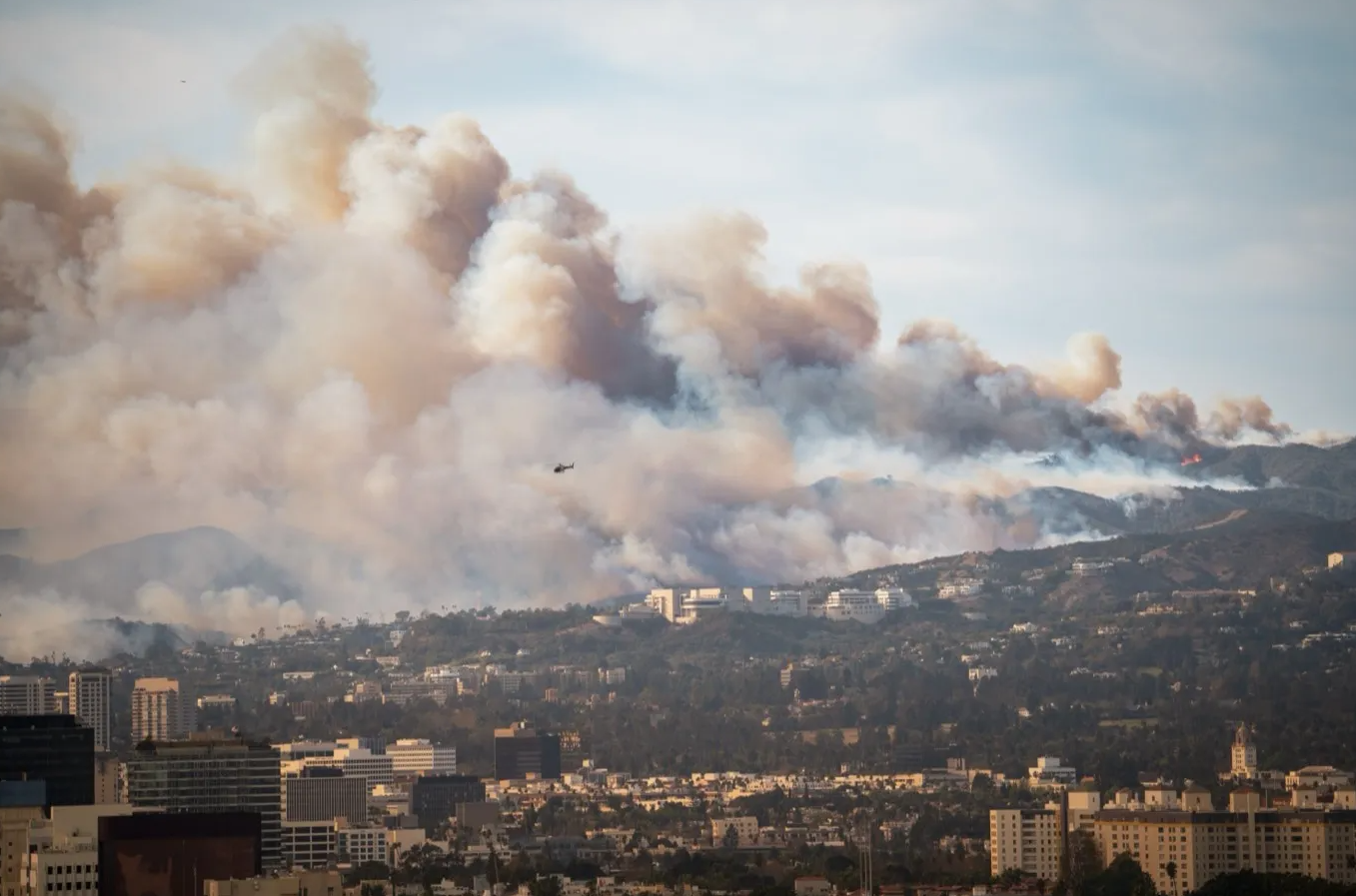

To properly understand the context in which a solution like modular food stalls is needed, I did research into real examples of community changing events and their impact on communities.
Events such as natural disasters disrupt food access long before the community has time to recover. Research found that after major storms and hurricanes, power outages, transportation issues, and damaged infrastructure greatly reduced access to food and grocery stores.
This reveals how modular food stalls can fill a critical gap by providing rapidly deployable food infrastructure exactly where people need it. When traditional restaurants are inaccessible and large scale aid operations are not feasible, having a mobile food solution provides a large step towards community healing without the need for permanent buildings.
For example, during the 2025 LA wildfires, hundreds of thousands of people were displaced and thousands of structures were destroyed, damaging typical infrastructure. Evacuation centers, shelters, and many neighborhoods required support for food. Modular food stalls could be setup near evacuation centers and deployed across affected neighborhoods to support residents and emergency crews when nearby restaurants are closed.
Design Requirements
To design the food stalls, I started by defining some requirements focusing on rapid deployment, adaptability, durability, and community healing.
Deployment:
- Must be transportable by a standard trailer
- Must be assembled by <4 people without specialized tools
- Setup time should be under 30 minutes
- Multiple modules should be deployable simultaneously in different locations
Adaptability:
- Modules must connect together to create larger food service community centers
- Individual modules must accommodate different functions
- Damaged modules should be easily replaceable or repaired
- Layout of community center should be configurable to different site conditions
Durability:
- Must be able to operate in areas with limited infrastructure
- Must withstand wind, rain, smoke, dust, and extreme temperatures
- Materials should be weather resistant and easily cleanable
- Modules must be able to level on uneven ground
Community:
- Must support safe food preparation and distribution
- Must accommodate a large number of people efficiently
- Should create an organized and welcoming gathering space
- Should allow for diverse community interaction and healing
- Should be easily identifiable as a food distribution point during emergencies
Sketching

In order to visualize some ideas for the food stall module, I created a detailed sketch which defines the basic structure and moving components.
I started with a simple rectangle (outlined in red) then started tweaking the form using softer design principles such as large rounded corners to shape the final design. The lack of sharp edges makes the structure seem more friendly and approachable, which is critical design language for a community focused environment that should be recognizable and inviting.
I added a large opening to the front of the module for food service and interaction. For people in need of emotional healing, being able to clearly see and interact with the person serving their food provides real human connection and combats feelings of alienation or helplessness.
Large panels on the side of each module (colored in green) create attachment points for accessories and other modules. These will also be hot swappable to accommodate whatever operation is occupying the module, for example, reflecting what food is available from a distance.
A large "awning" collapses atop the module and is designed to fold outwards to varying degrees to provide protection against rain and sun. The awning having the capability to deploy to different heights allows for many modules to operate close together without interference. Having a roof overhead also helps create a safe feeling, which is very important for community morale after uncertain times.
Design for Manufacturing
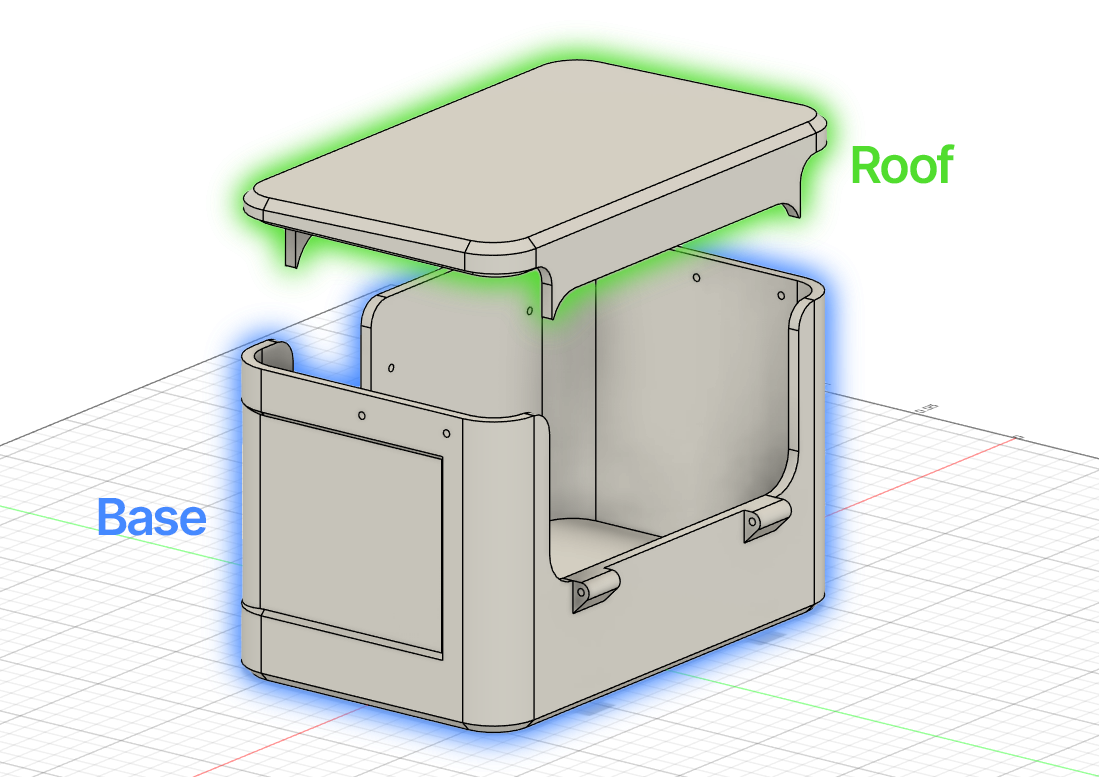

In order to optimize each module to be produced efficiently and economically, the structure is designed around a 3D printed base and roof component. The large scale 3D printing industry is experiencing a surge in popularity as it allows for agile and fast production without the setup costs of solutions like injection molding.
3D printing also allows for more diverse material choice, so the base and roof utilize recycled plastic filament construction. This helps reduce plastic waste in the environment, but also importantly means old or damaged components can be ground up and turned into brand new parts, creating a closed loop production process.
The base and roof are designed to be printed without the use of supports. Which is helpful for optimizing production at full scale along with making printing easier for the scale model. These pieces are connected afterwards to create the "frame" of the food stall module.
The frame component is standardized throughout all modules meaning extra parts can be shared to expedite repairs, a critical factor in getting food service where it's need in a timely manner. This standardization also means vendors can operate out of any module while only swapping proprietary equipment and decorate elements.
These design principles establish a precedent of mass produced food stall modules that are easy to repair and deploy to wherever they are needed.
Portability & Scale
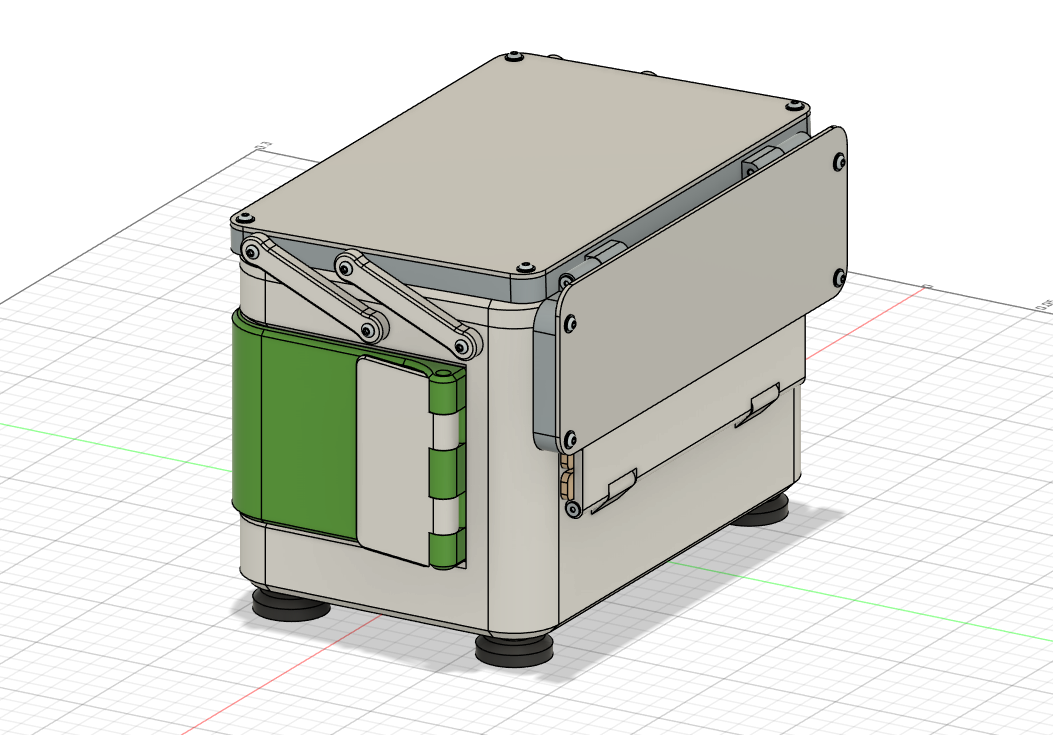
A critical element of providing food service to as many people in need as possible is being able to rapid deploy food stall modules to affected locations. During the sketching phase, I designed the stall to collapse into a compact package so it can be easily transported via trailer.
This trailer based approach allows multiple food stalls to be offloaded at a specific location and begin operation while the transport vehicles retrieve more modules if needed.
In order to keep the structure compact, many hinging components are used (Such as the awning, tray rail, and side panels) to allow the module to fit on a standard trailer. The use of hinges also helps optimize the part count as the tray rail and awning fold in to cover the opening in the stall instead of requiring a dedicated door, reducing weight (easier transportation) and streamlining manufacturing.
For the CAD and scale model, the module is designed to be as large as possible while still having the base and roof fit on my printer.
Adapability
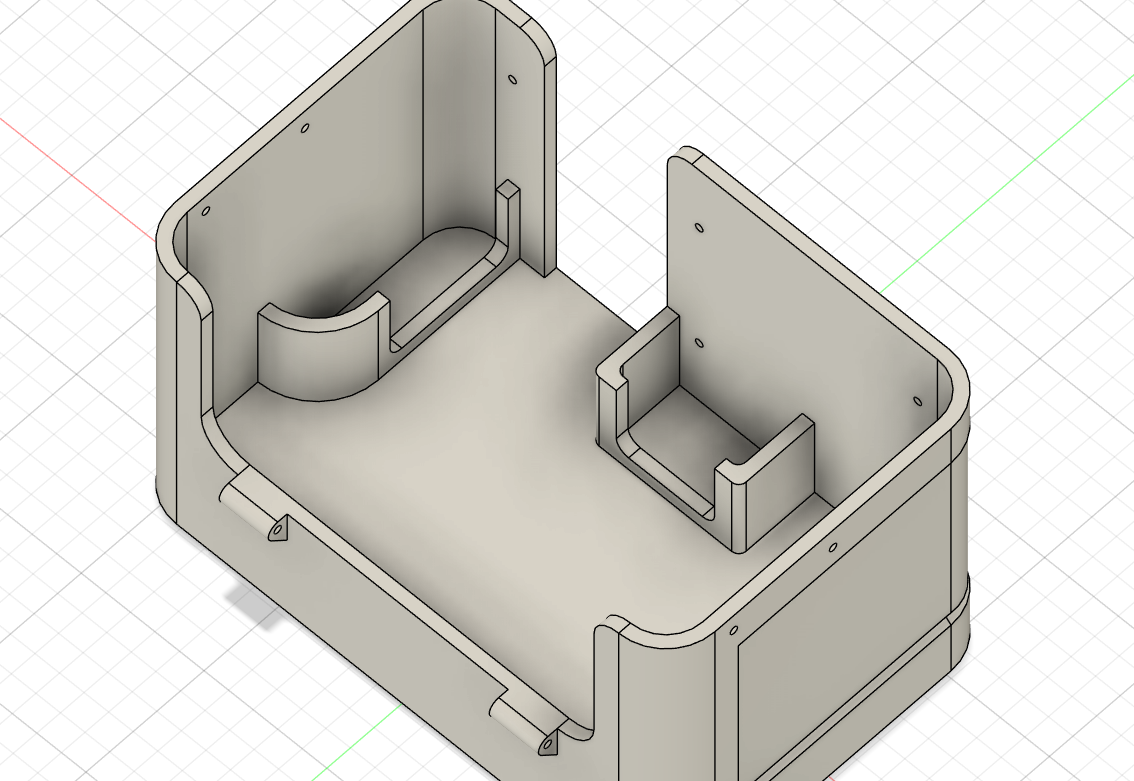

An important part of any modular system is the allowance for adaptability and multifunctionality. When designing the module, I wanted to be able to accommodate multiple "restaurants" with the same frame design.
On the interior of the food stall, there are very little permanent features, only two counter bases with a lot of room for extra appliances. Since different food operations require different tools, the module allows for many different configurations based on whether or not features like cold storage, fryers, grills, or more counter space are needed.
The two counters also have a unique feature thanks to the 3D printed construction as they are integrated into the frame, reducing the number of parts and adding rigidity to the counters. They also do not have affixed counter tops due to the nature of 3D printing without overhangs, but this actually allows different countertops to be interchangeable. For example a stainless steel countertop on the 3D printed base could be swapped for one with a cutout for a sink or other modifications, allowing for another degree of customizability.
Ultimately, allowing for many functions using the same module frame allows for more food to be available to people in need, and makes operation easier behind the scenes due to the aspect of standardization.
Resilient Design
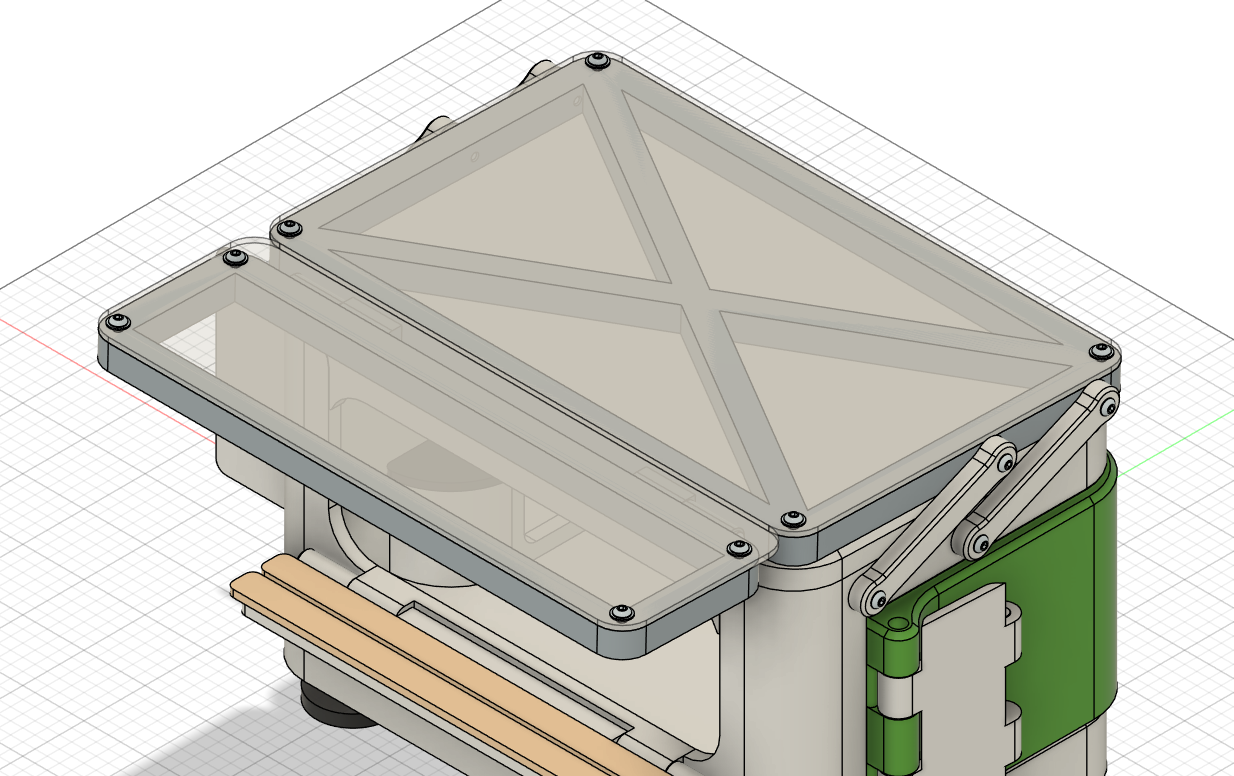


In the event of a community-changing disaster, the conditions of the affected areas will not be ideal, and the food stalls need to be able to withstand harsh weather and unforeseen factors. Along with the 3D printed unibody base component comprising a majority of the structure and keeping the module very rigid, the overhead awning also acts as protection to shield the top of the structure and people from bad conditions.
I knew the frame had to be very lightweight but strong, so I chose to create a frame utilizing aluminum box tubing. Both sections of the awning utilize a rectangular frame of tubing with rounded corners to match the design language of the rest of the food stall. The large section has "X" shaped beams for reinforcement and rigidity.
The awning is covered by large polycarbonate sheets which are able to protect from rain and impacts in the event of hail or other debris. Polycarbonate is a strong material for outdoor usage as it is prone to simply flexing instead of shattering like glass or acrylic. These sheets are also coated with a UV protection layer to block harmful rays while still providing natural light which helps boost moods.
Each module also has 4 adjustable feet to allow the food stall to remain level even in rough terrain which is common following natural disasters. This capability expands the scope of the food stalls operations and allows the system to cater to more people in need.
Diverse Customization
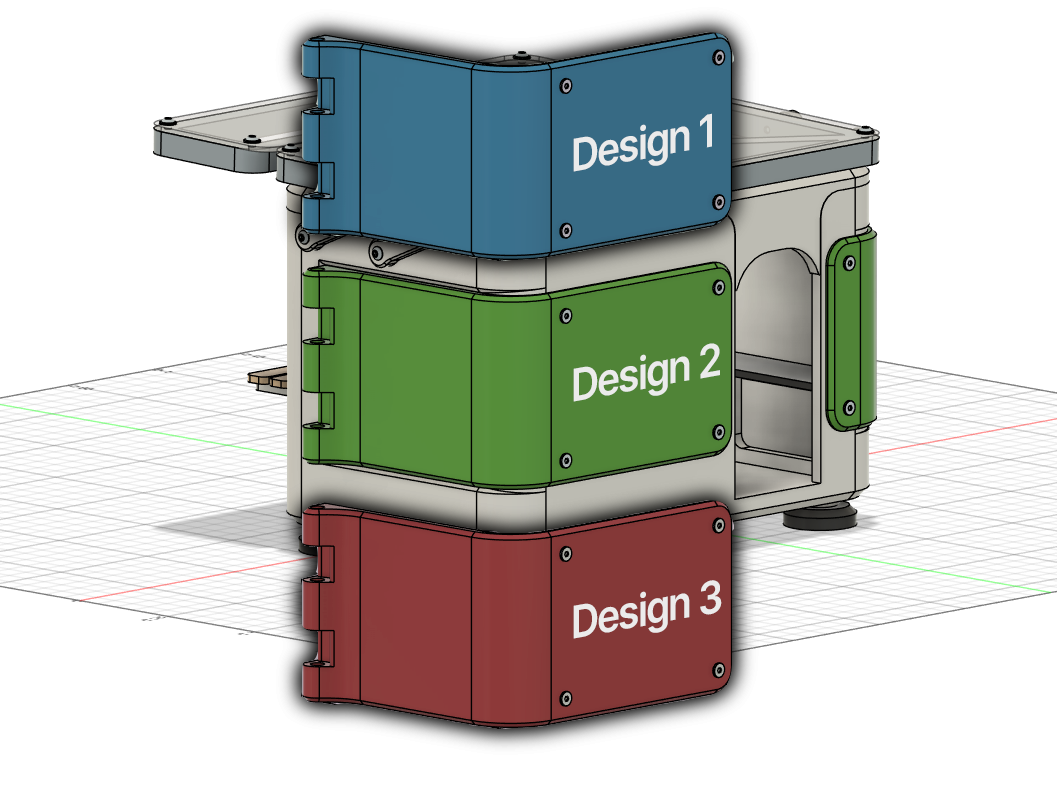
When a community is going through a healing process it's important to not only address the bare minimum physical needs but also the well being of the actual people. A very important aspect of the modularity and adaptability is being able to provide diverse food options to people from many backgrounds.
Giving people the ability to choose foods that align with their cultural background, dietary needs, and personal preferences help restore a sense of dignity and normalcy which is critical for beginning a transition away from the disruption that they've been experiencing. Familiar foods provide comfort and help people feel connected during a time of loss and encourage interaction between different backgrounds.
Visual design language plays a big factor as well. Often times recovery efforts are objectively helpful but still can seem visually sterile and lifeless. The side panels wrapped around each module are the perfect blank slate for plants, colors, murals, and other culturally significant imagery, allowing the food service operation to feel like a community as opposed to simply a place for survival. Visually appealing and considerate spaces help reduce stress, encourage interaction, and create a more positive atmosphere.
The hinge components on the side panels also allow for expanded creativity. I designed a simple "menu" attachment that can assist with bringing personality to each module and creates a more traditional food stall experience.
Fostering Community
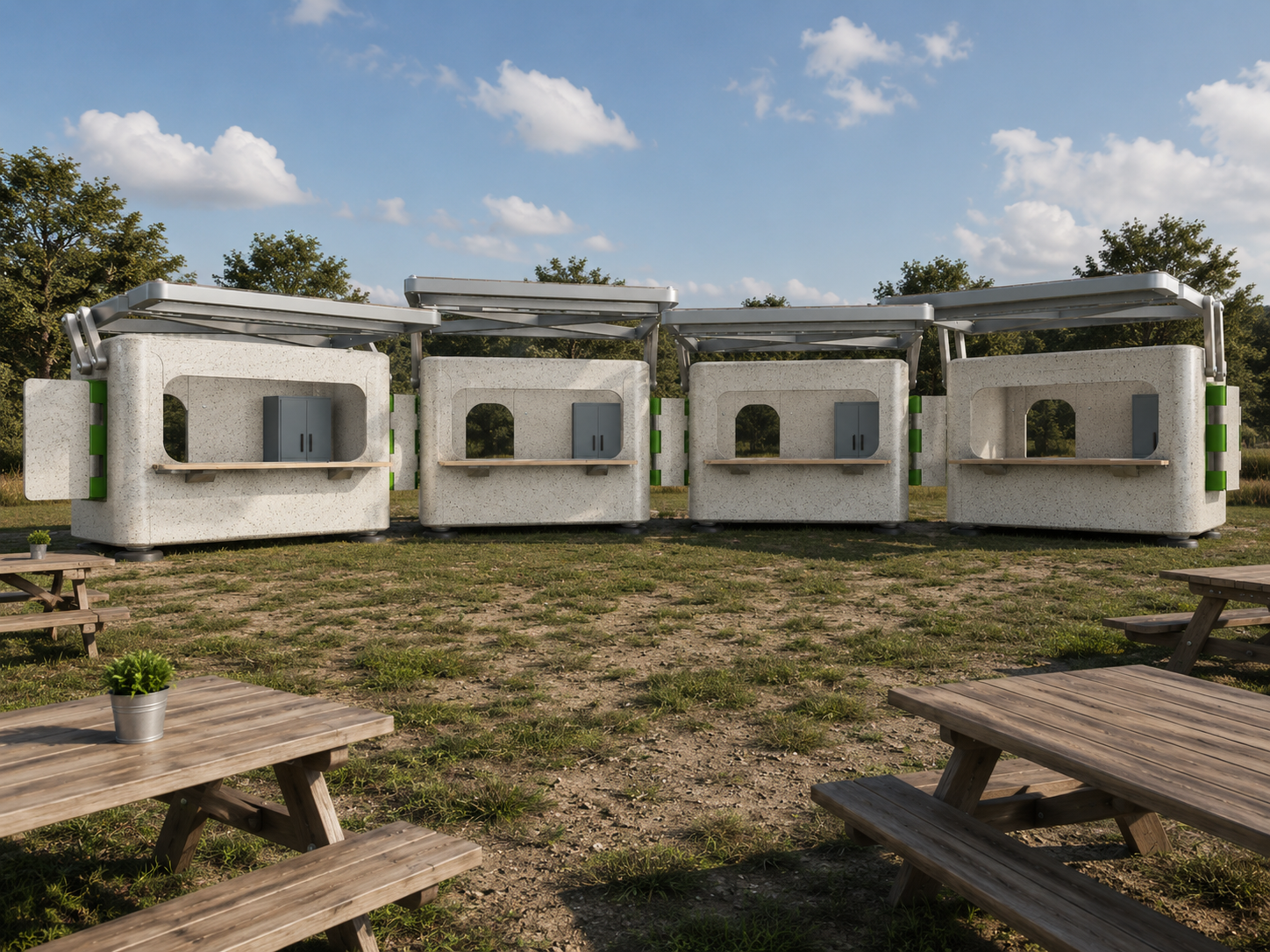
The final element of the modular food stall system is how they can all come together to create one large community center. Using intermediate connector pieces that attach to the hinges of each module, many food stall can be arranged in an infinite variety of possible configurations to form a cohesive recovery center.
One of the most effective layout concepts is having the food stalls aligned in an arc formation around a central seating area, as the stalls help enclose the people, creating a feeling of safety and mirroring a traditional food truck court style dining experience. Having the modules arranged together can also help shield the community from harsh winds or floating particles by creating a protective wall.
When all the food stalls form a singular gathering place, the close proximity encourages social interaction and connection, which is a critical aid in the healing process. By allowing community members to bond over a diverse meal, people can feel the support of their neighbors while also being supported by the built environment itself.
3D Printing Frame
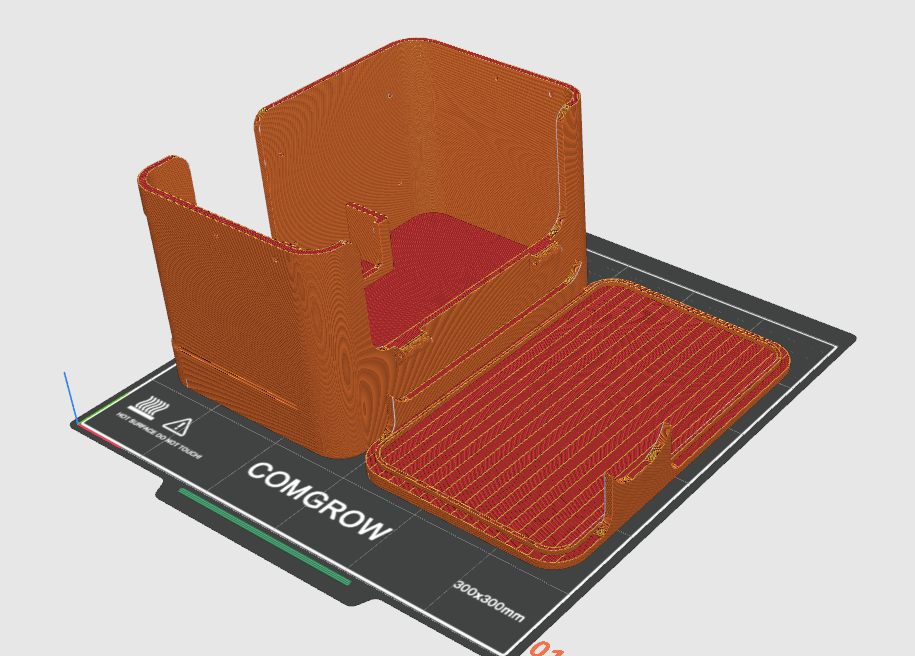

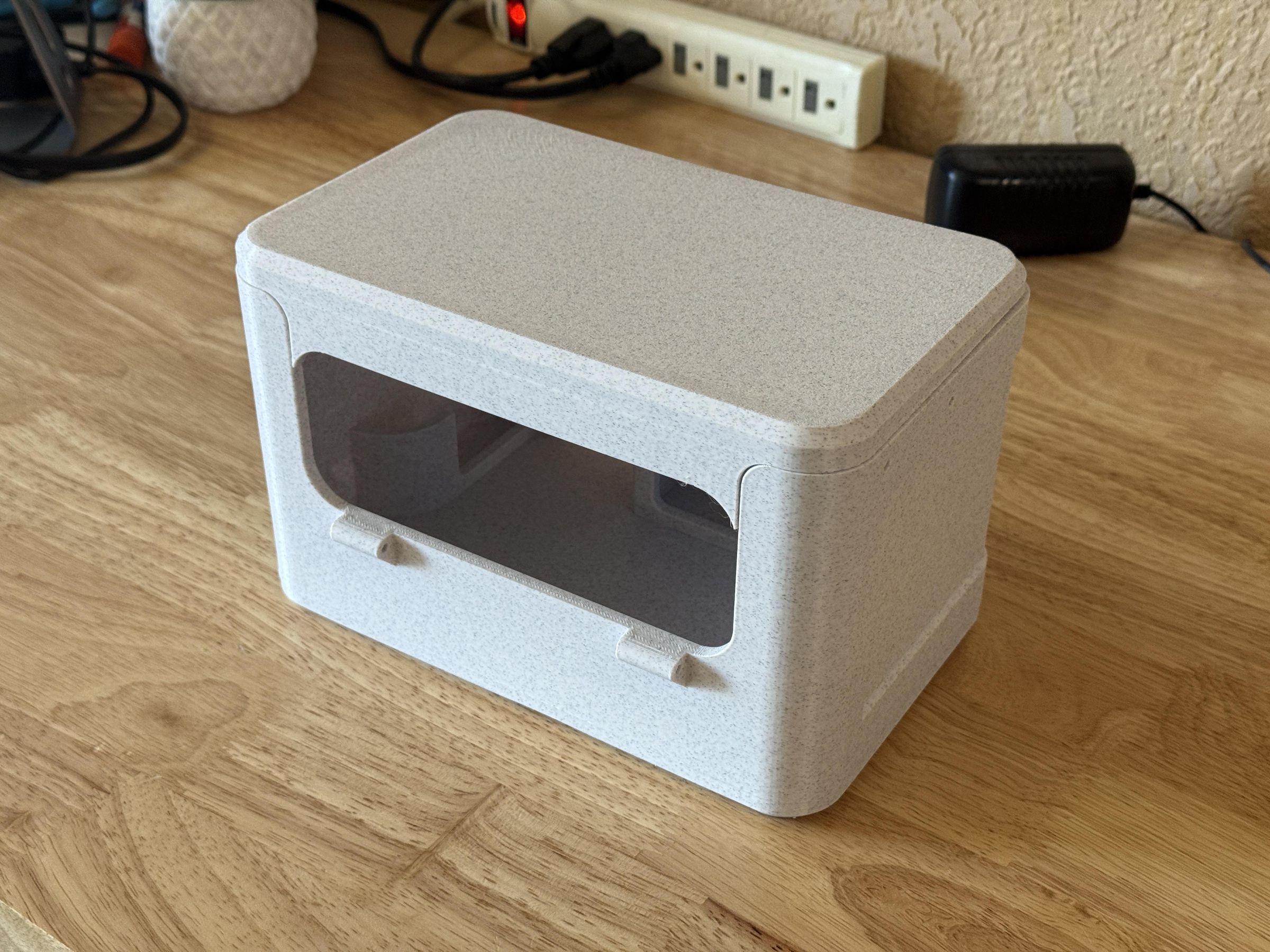

To replicate the real additive manufacturing methods I chose to 3D print the frame of the food stall. As previously stated both the roof and base were barely able to fit on my 300x300mm build plate and required an 11 hour print to complete.
However, once both pieces were completed, they nicely fit together thanks to the lip of the roof, essentially turning it into a lid for the base. Both pieces were able to be printed without supports, since the overhangs on the frame were incorporated into the roof component which was printed upside down.
When selecting the filament to use, I wanted a solution that visually reflected the intended use of recycled plastic on the large scale. So I chose marble PLA, which has particles embedded in it that mirror the discoloration commonly seen in recycled materials. Along with this, the white color helps reflect heat from the sun and creates a stone like texture, adding to the biophilic design.
Leveling Feet
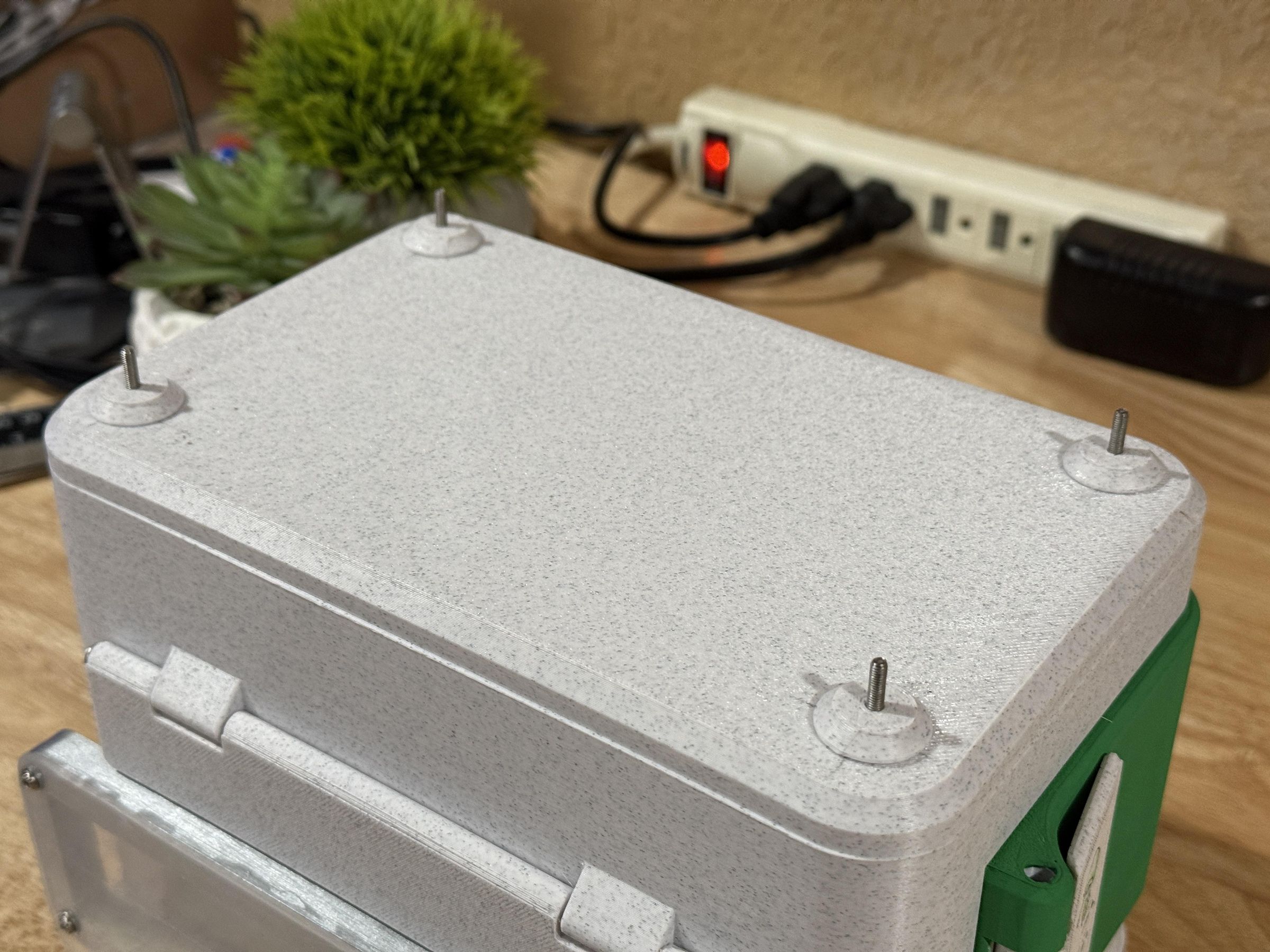
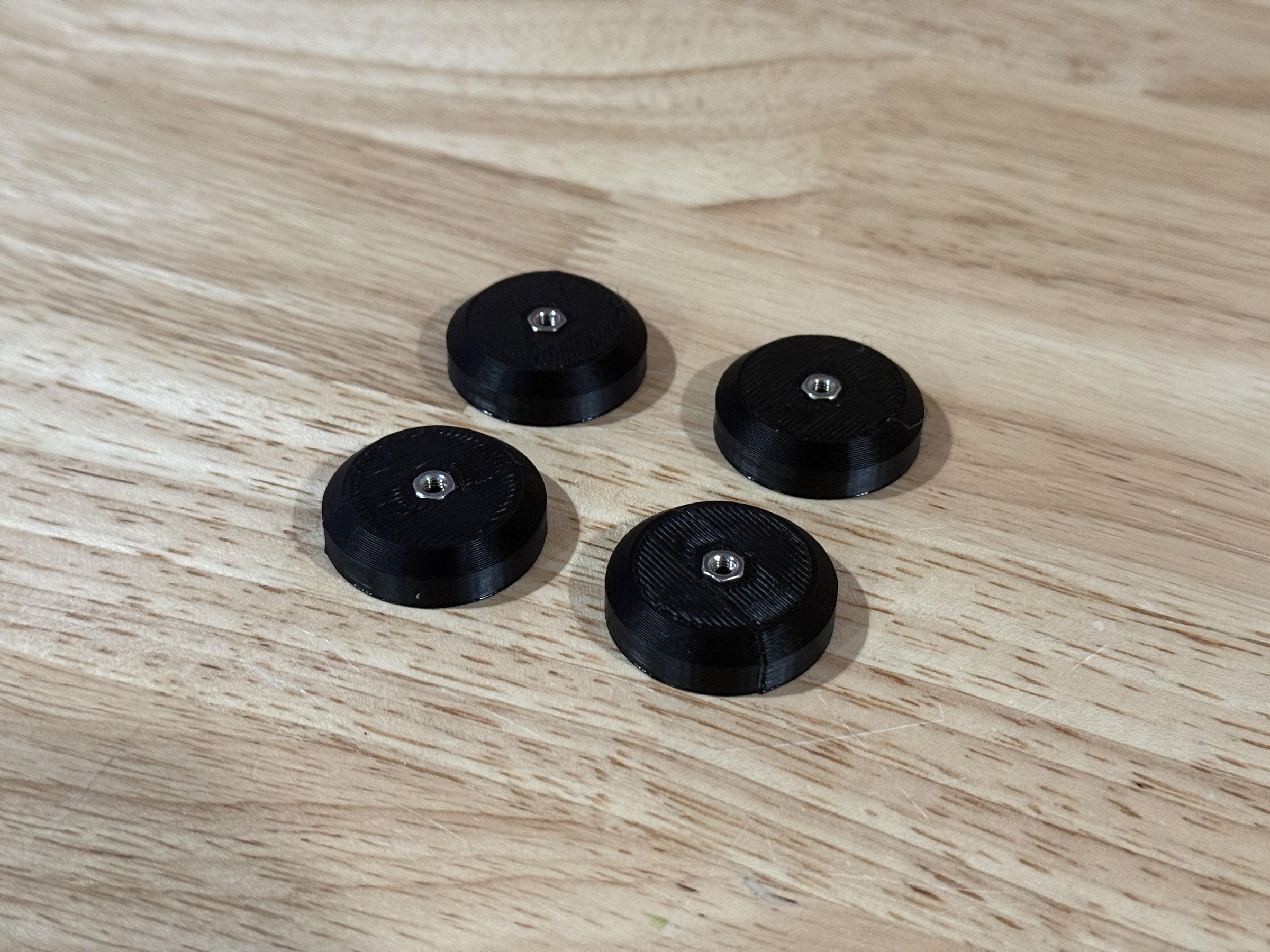
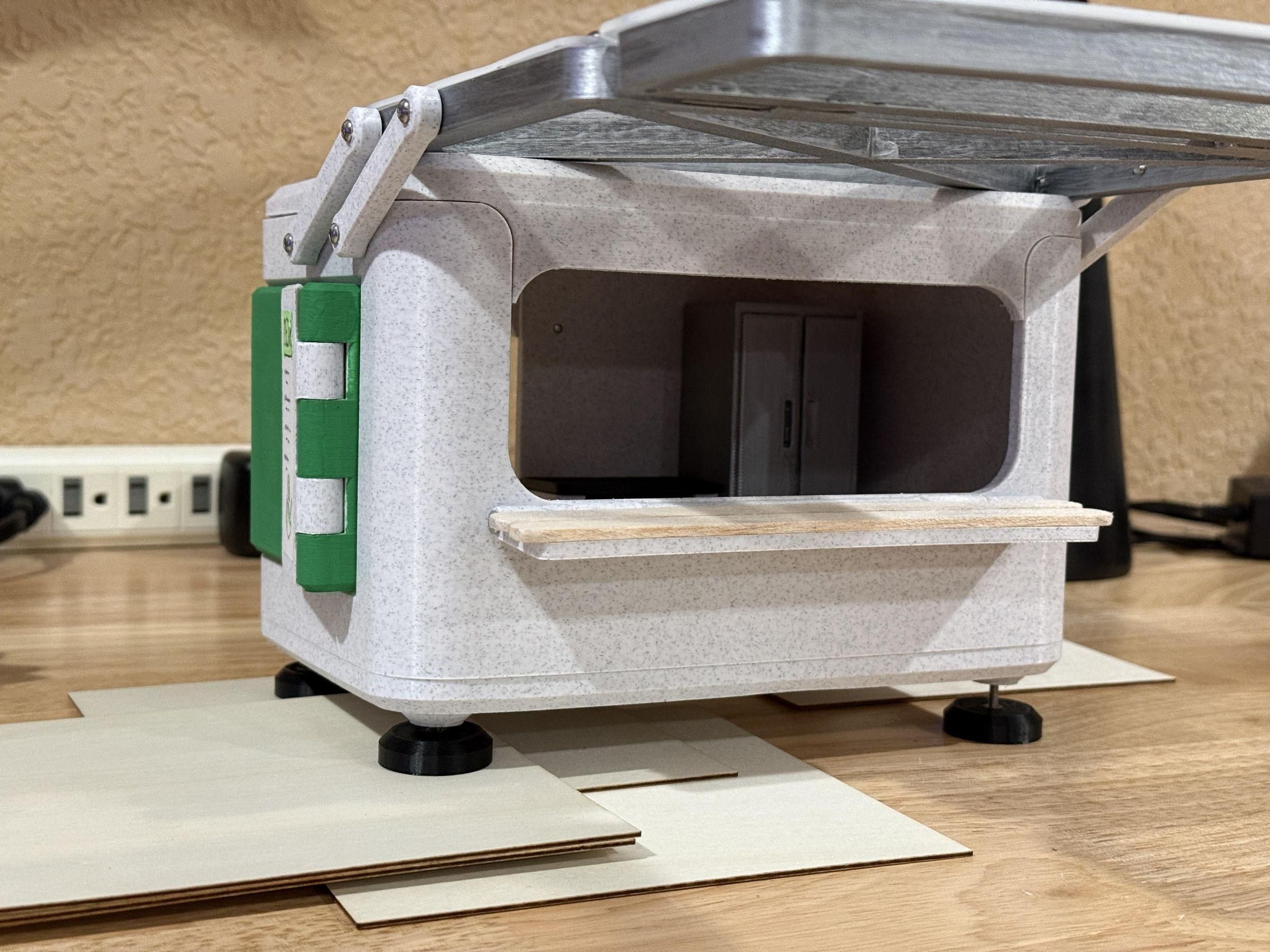
To create the adjustable effect for the feet of the food stall, I used M3 bolts to interface with M3 nuts in the feet, transforming rotational motion of the feet into linear raising and lowering.
I printed caps to hold the bolts and super glued them to the bottom of the base in each of the 4 corners. This left only the threaded portion of the bolts sticking out below the caps.
I printed the actual feet out of a stronger PLA+ filament and press fit an M3 nut into each one, this allowed them to screw onto the bottom of the food stall model and adjust by twisting each foot.
Side Panels

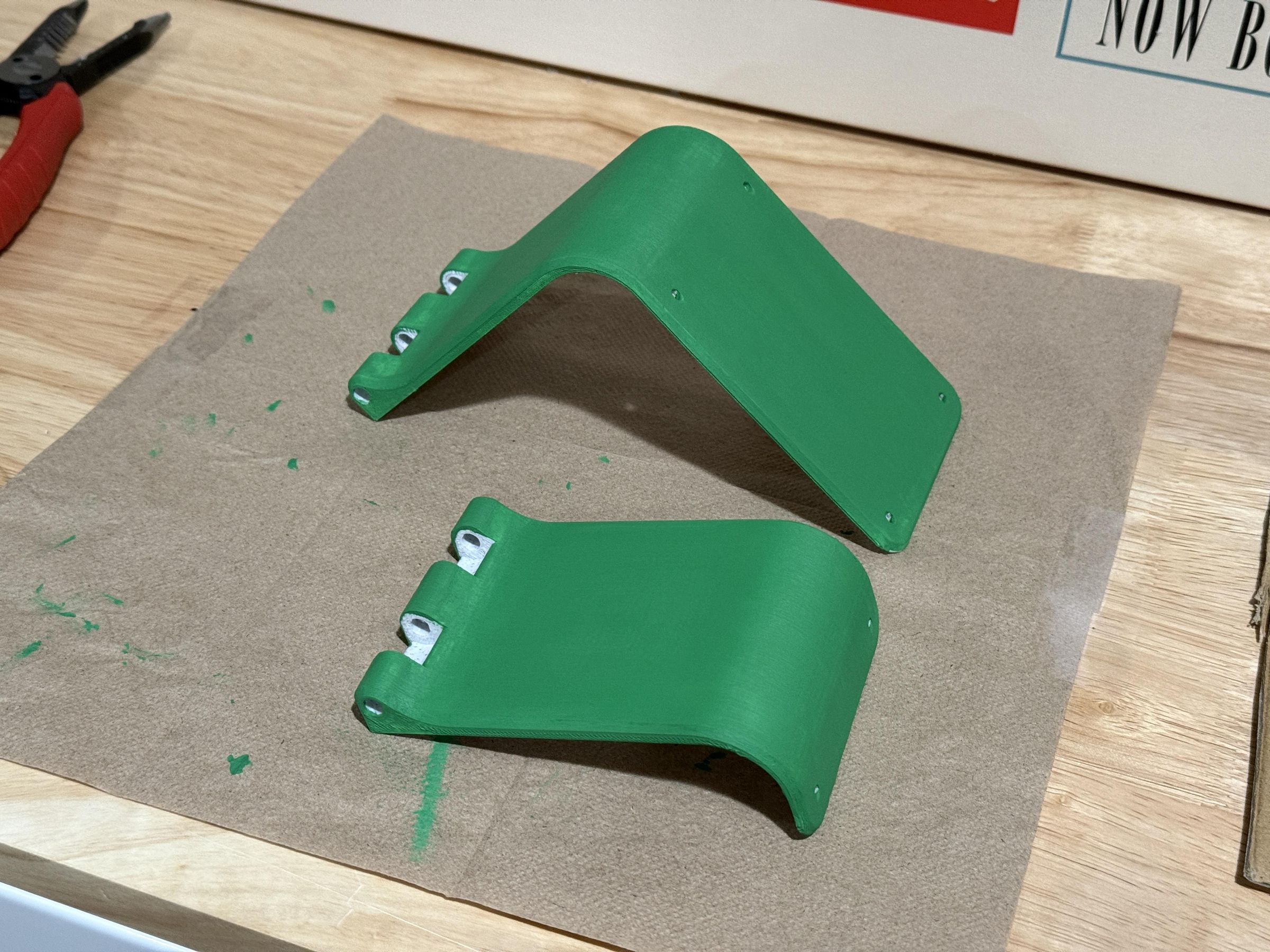

The side panels were also printed from the marble PLA, but I wanted to incorporate the pop of color that the customization of each module allows for, so I chose to paint them green.
I simply used craft acrylic paint, covering the panels with a few thin layers until the paint was roughly even.
Then, they could be attached to the frame using 6 M3 bolts that screw directly into holes in the back of the base.
Wood Accents
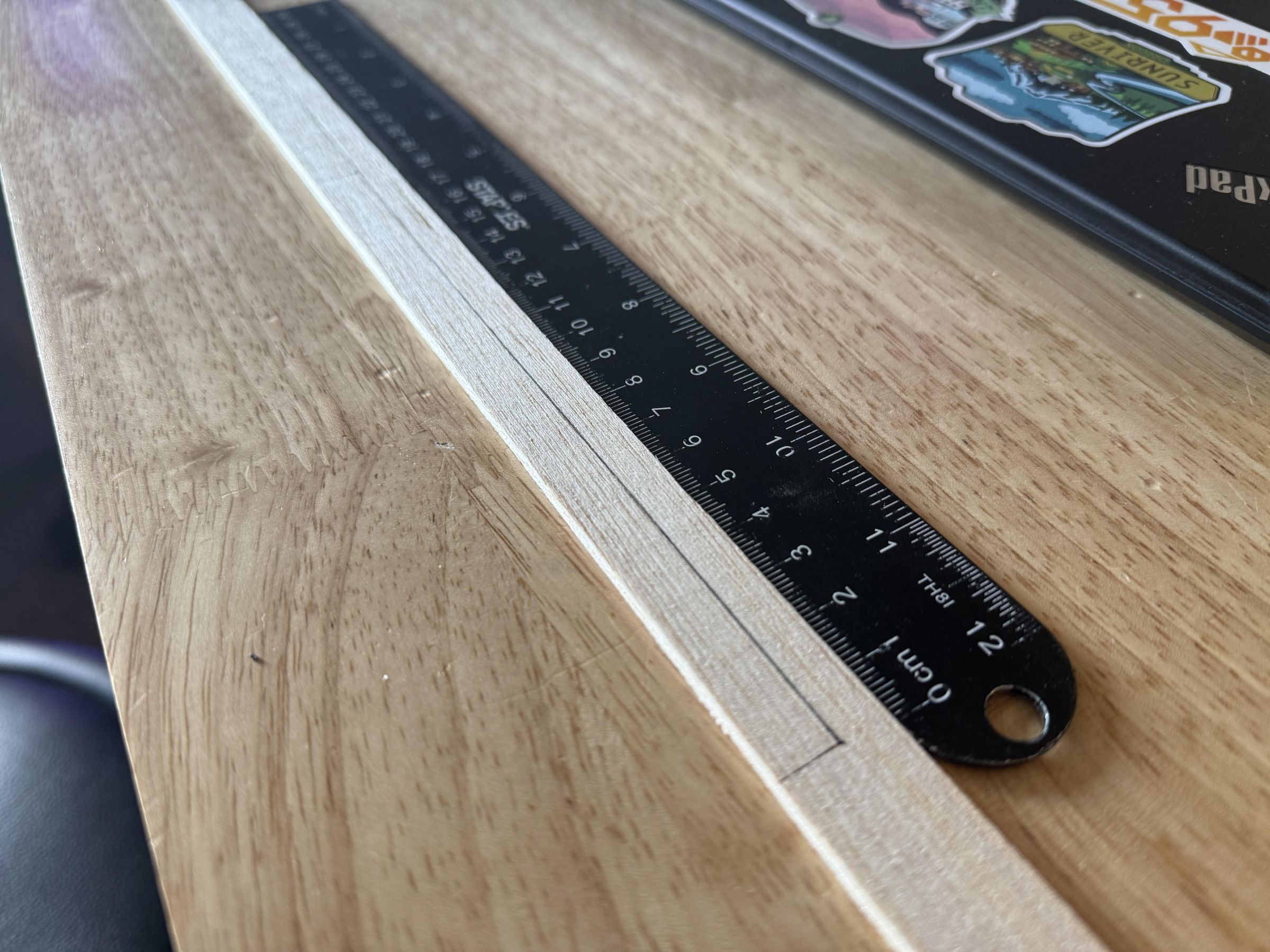
I wanted the tray rail at the front of the food stall to have wood accents to compliment the tones of the rest of the stall and create a biophilic feeling.
I used balsa wood to create the planks for the rail as it is cheap and nice to work with at a small scale. Starting with a long strip of balsa I marked and cut out the correct sizes for the tray rail.
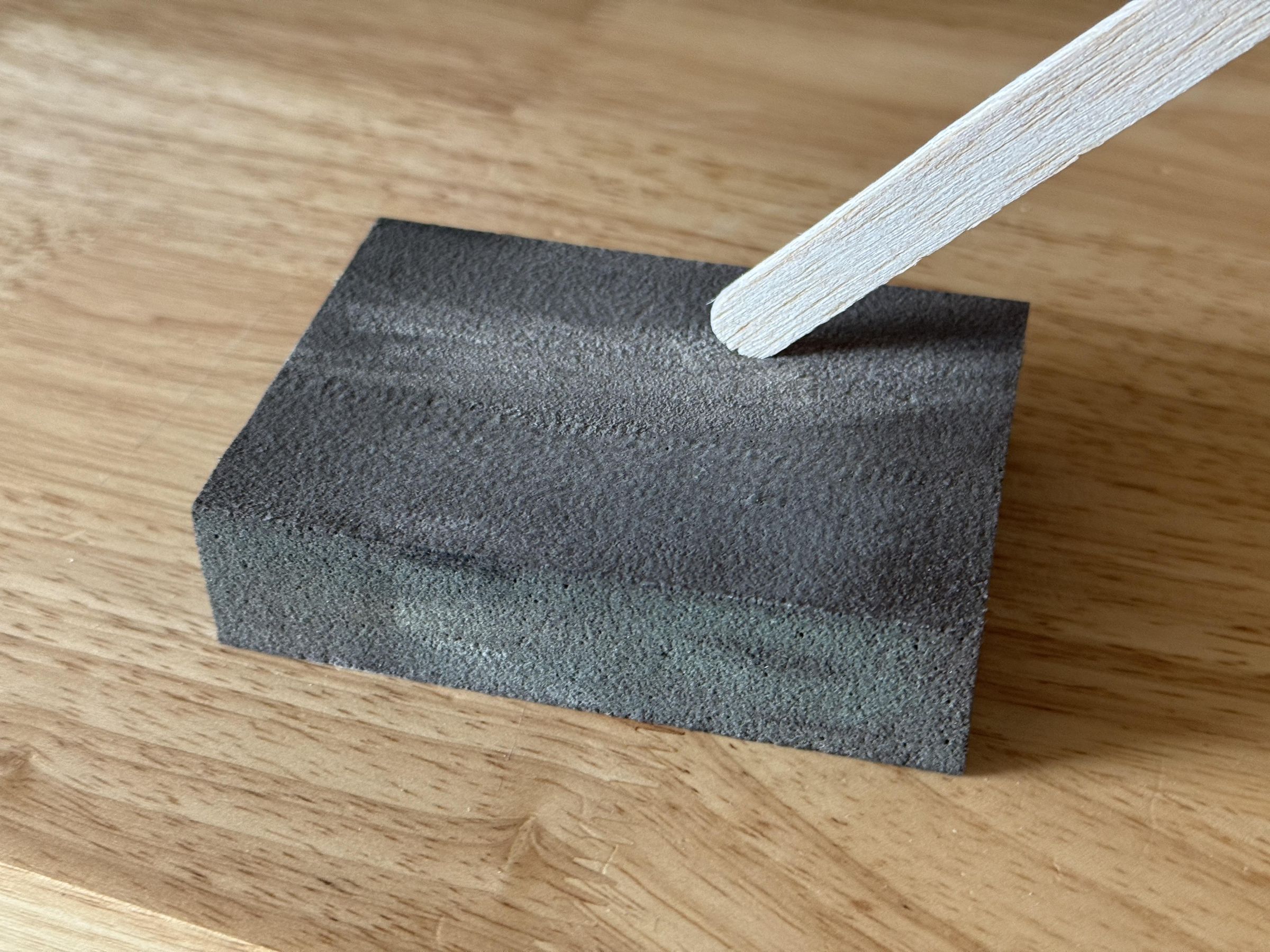
Then I sanded the edges to create rounded corners, aligning with the established design language from the rest of the food stall.
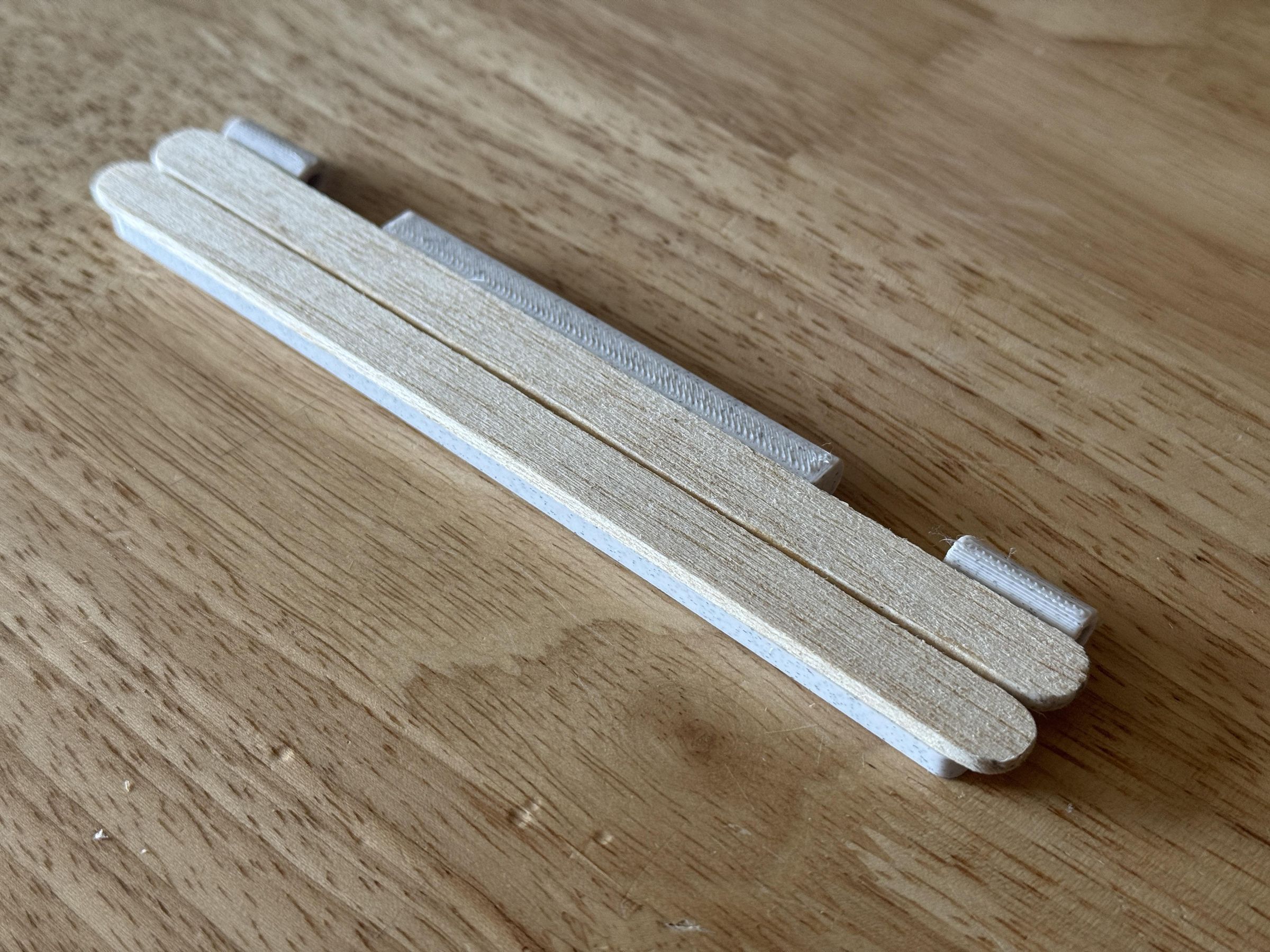
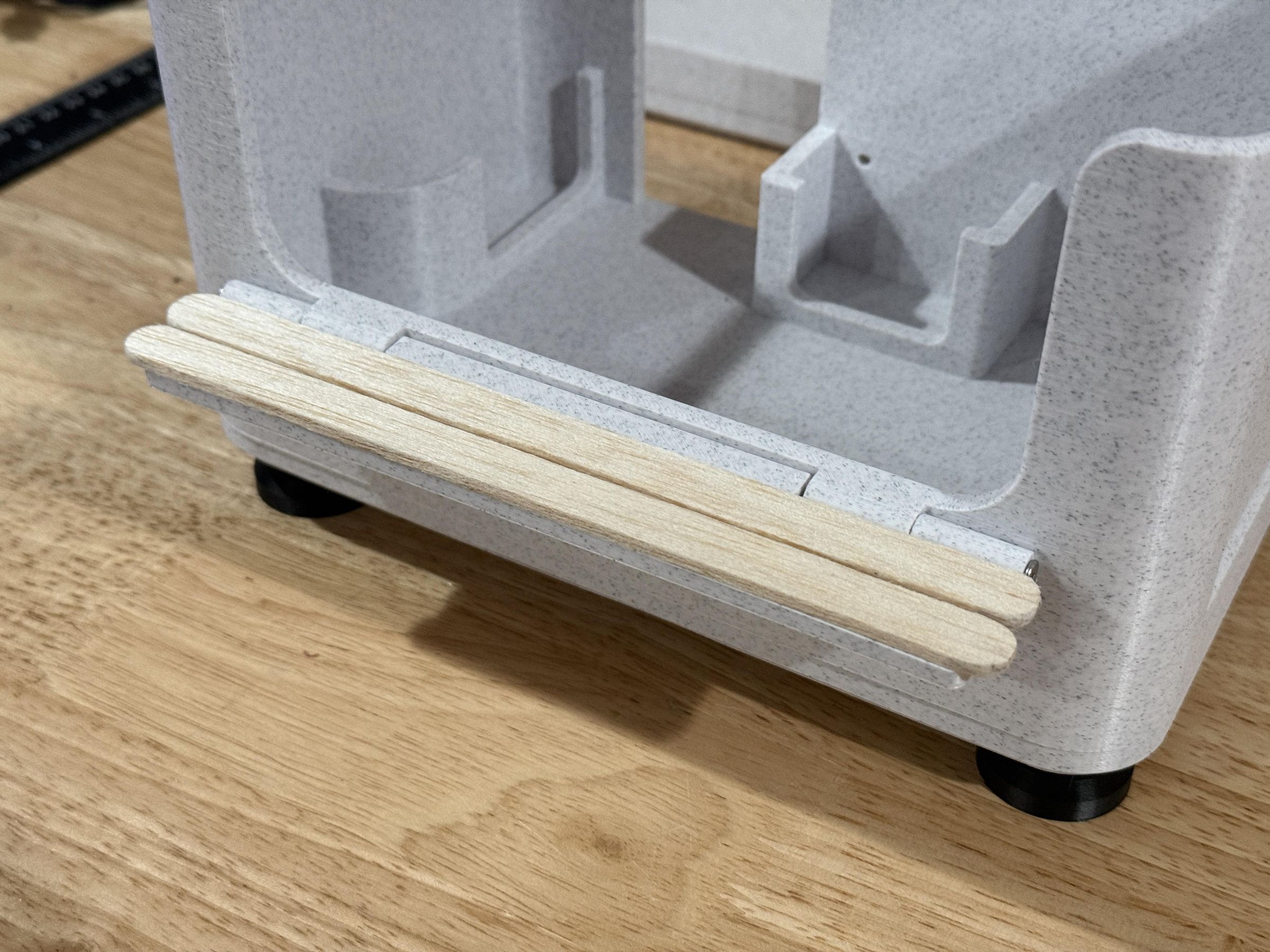
Finally I printed the hinging support component, superglued both planks of balsa to it, then used M3 bolts to attach it to the hinge connections on the front of the frame.
Interior Components


As previously mentioned, the countertops are designed to be hot-swappable to accommodate the specific needs of different vendors. I chose to create some simple countertops for this model.
I also printed the countertops from black PLA+ to contrast the white interior of the food stall. They also have a lip on their undersides, similar to the roof, allowing them to slot perfectly into place.
Then I used a small amount of superglue to keep them in place as I dont plan on removing them.
I also printed a simple refrigerator to demonstrate how the other space inside the food stall could be utilized. I painted the fridge metallic silver and used double sided tape to attach it inside so it can still be easily removed.
Creating Awning



I printed both frame pieces using the stronger PLA+ then painted them using the metallic silver acrylic paint to imitate the appearance of aluminum tubing.
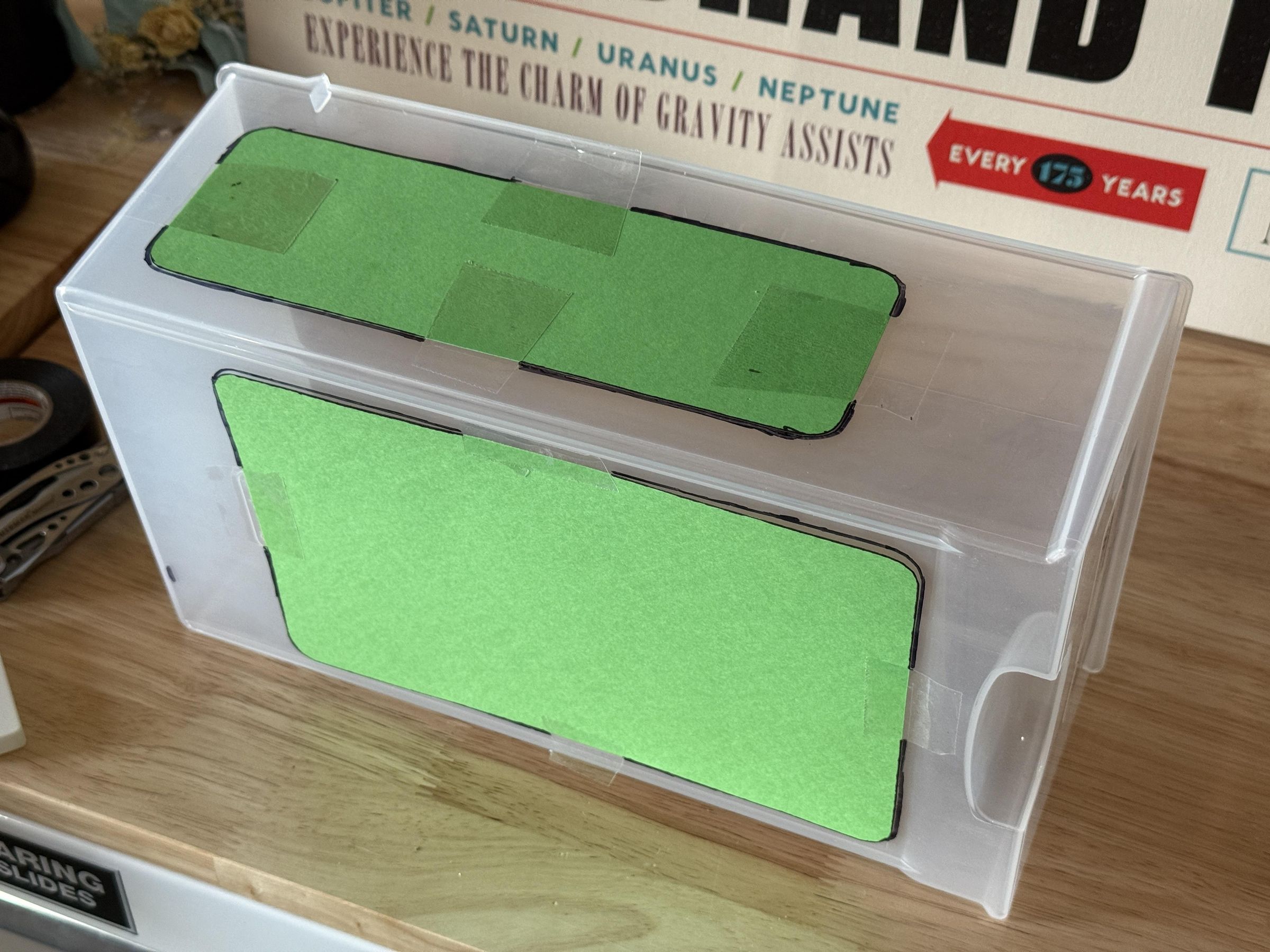
Originally I was struggling with how I would recreate the polycarbonate panels on the awning. I considered using acrylic sheet but that was difficult to source and work with. Eventually I decided to get a plastic storage container and use the transparent plastic from the bottom and sides to replicate the polycarbonate covering.
I cut out the correct shapes onto cardstock then taped it to the container and used a sharpie to transfer the edges onto the plastic. Then I used a combination of a drill and Dremel to remove the material around each panel. To finish each piece, I used the die filer from a previous Instructable to remove material until the sharpie marks were gone then sanded the edges smooth.
Finally I marked and drilled the hole locations into the plastic panels and bolted them to the frames using M3 bolts, completing the awning components.
Awning Linkage


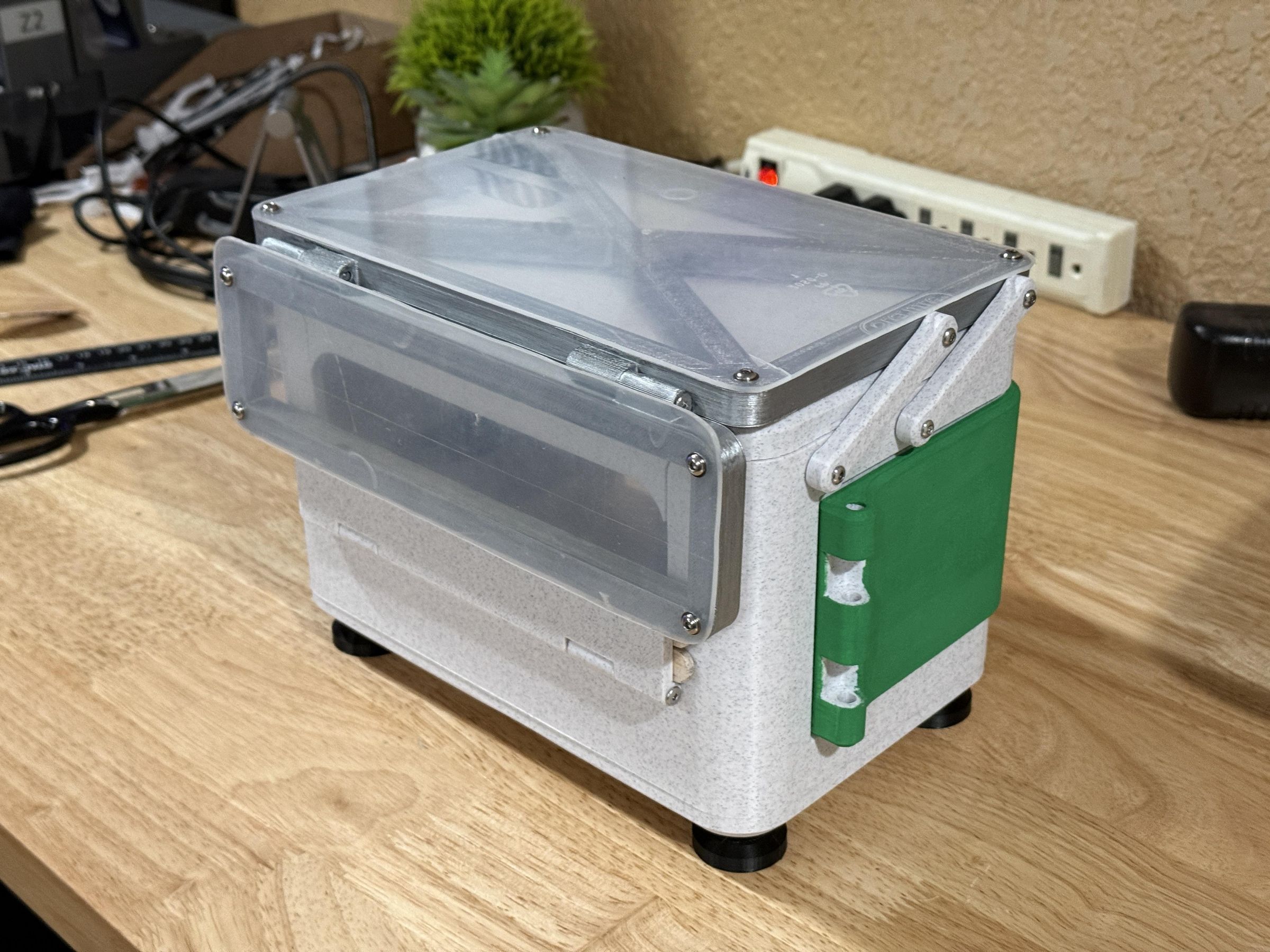
The awning connects to the frame of the food stall using a 4 bar linkage, which means it can be extended but always stays parallel to the roof. This is important because the roof actually has a slight incline to prevent rain from collecting on top, and the linkage ensures the awning always shares that slight incline as well.
4 "Arms" are printed from PLA and bolt to the frame with M3 bolts, utilizing an M3 washer between the arm and frame to act as an interface layer and reduce friction. Then the large awning piece bolts to the arms, also with washers, completing the 4 bar linkage mechanism. These bolts are tightened until friction can hold the awning in place.
Finally, the smaller awning component is bolted to the hinge on the other part of the awning. When this piece is folded up, the top panels should contact to create a relatively seamless protective covering. When the front of the awning is down, It should lay flat against the front of the food stall and cover the opening to protect it during transport.
Additional Elements

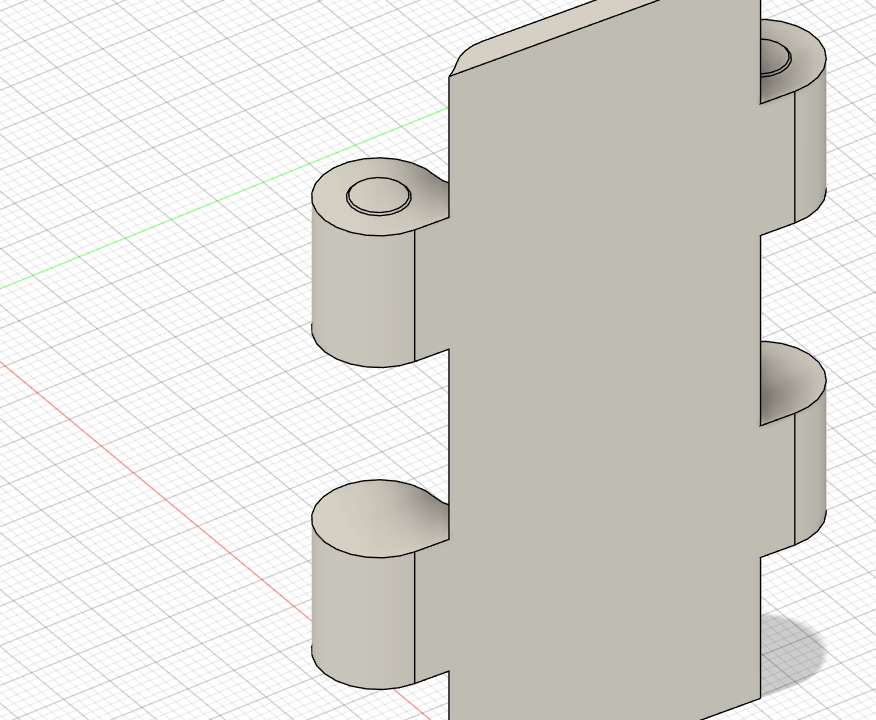

I printed a simple menu attachment for one of the hinges on the module's side panel. This panel simply clicks into place in the hinge and has small stubs to help keep it axially aligned. I had some issues with tolerances on this attachment so I worked to dial those in CAD.
Afterwards I drew and colored a simple menu graphic on a labeling sticker which I adhered to the attached panel to visualize what a simple menu could look like.
Using what I learned from the menu I created the connector piece that holds separate modules together and found it produced a much cleaner snap fit in the hinge.
Conclusion


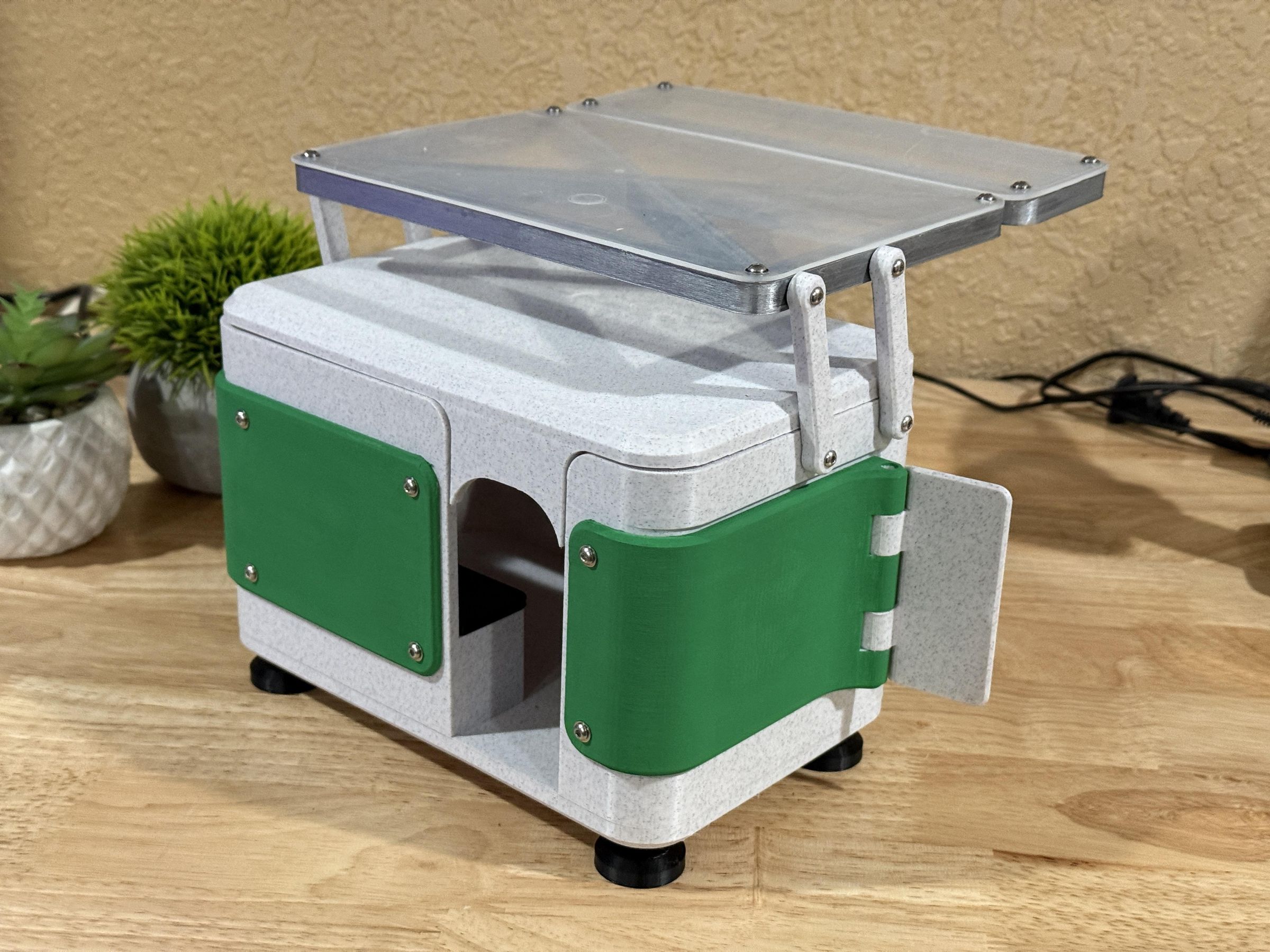

In conclusion, the food stall design was able to achieve the design goals I set out to solve. Along the way I learned a lot about how communities heal after a large scale disasters event, and I believe I was able to create a unique solution to help with the healing process.
Designing the modular food stall system helped me prioritize different aspects of form, functionality, and interaction with people. In the end, I was able to create a system that I would be happy to see in my own community in the event of a disaster requiring recovery efforts.
Creating the scale model was a highlight as it allowed me to explore cutting edge manufacturing techniques and design principles, along with using creative problem solving to recreate a design at a small scale with material limitations. The final model looks very accurate and retained all the functionality I wanted from the moving parts such as the hinges.
If I had to make changes I would want to add more customization to the sides panels such as traditional artwork or even a moss/plant wall, as well as obviously creating as the ideal use case involves many modules. However I think the model effectively displays the concept of the modular food stall.