Noto Hikari House

The Noto Peninsula in Japan, a region facing significant risks such as earthquakes and tsunamis, requires a sanctuary for the citizens during any environmental crisis. Noto Hikari House not only serves as a space for protection from external dangers, but also encourages internal reflection and recovery. Its name draws from the land it serves - Noto - and the concept of Hikari, meaning light: a force that carries symbolic significance for a place of refuge. Hikari speaks to hope rising from darkness and destruction. We aim to create a place that serves as a metaphorical lighthouse, where this structure projects a guiding light, becoming a beacon and a glimmering point of hope for displaced individuals.
Inspired by traditional Japanese temples, spaces historically for spiritual healing and centers for community, Noto Hikari House not only draws inspiration from the architectural elements of these traditional temples but also emphasizes their purpose as a place to find peace and community. Noto Hikari House's design, however, also finds inspiration from the innovative elements of Japan's contemporary architecture, entwining tradition and modernity into one building. The building simultaneously honors Japan's traditions and dedicates itself to the future of Noto Peninsula, interweaving Japan's past and future in a single design.
A harmonious blend of modern and traditional Japan, Noto Hikari House is more than a building — it is a vision of resilience, community, and renewal, brought to life through the collective effort of diverse individuals who believe that even in the aftermath of devastation, light can be found. A promise that Noto will endure time and environmental challenges by creating a monument to the former and future eras of Japan
The Team:
Noto Hikari House is the product of five students enrolled in a comprehensive four-year architecture program, built around progressive, hands-on experience with industry-standard tools and workflows. The program begins with foundational residential design, advances into commercial projects, and culminates in a fully collaborative model where students take collective ownership of every aspect of a building — from structural design and energy modeling to architectural detailing and documentation. Throughout all four years, Revit serves as the backbone of the curriculum, equipping students with the technical fluency needed to work at a professional level. It is from this foundation that our team was formed, bringing together distinct perspectives and shared expertise to design a building that is both technically rigorous and deeply human.
- Erin Barber - Group Leader
- Sofia Castro
- Melissa Canizales
- Jonathan Hong
- Harry Ha - Co-leader
Supplies
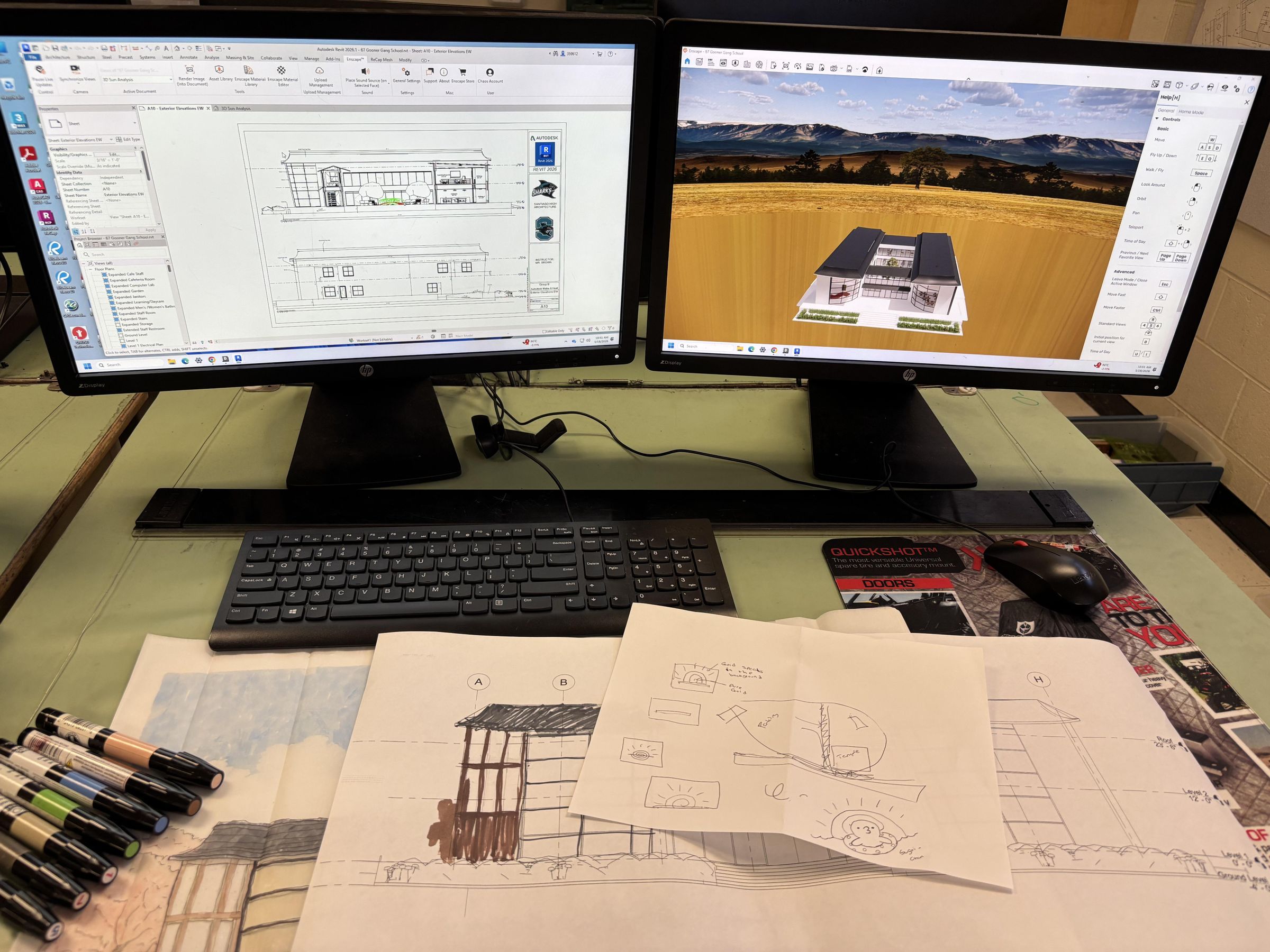
Hardware
- School Computers - rendering, modelings, documentation
- iPhone 15 - pictures
Software
- Autodesk Revit - modeling, schedules, 3D views, renderings
- Forma - collaboration within Revit
- Bluebeam Revu - PDF creation and mark-ups
- Google Docs - communication and documentation
- Enscape - visualization, renderings
- EnergyPro - HVAC load calculations and code compliance
- SDS2 - steel detailing and connection design solution
- Google Earth Pro - site planning and research
- SketchUp - 3D printing
Physical Supplies
- Desktop, Keyboard, and Mouse - accessing computer software
- Pencils and Markers - sketching, drafting, and elevation renderings
- Ductilator - CFM and vent sizing
Handmade Model Supplies
- Glue
- Wood
- Paint & Painting Tools
- Scissors
- Plastic Sheets
- Tape
Our Decision to Explore Japan


Our chosen site is the city of Noto, nestled within Ishikawa, Japan. As a team, we have been shaped by one another’s experiences, including that of our group leader, who previously lived in Japan and is of Japanese heritage. Noto is defined not only by its scenic coastal beauty, but also by the extraordinary resilience of its people.
Two years ago, Noto was struck by a devastating 7.6 magnitude earthquake that shattered homes, disrupted lives, and left deep emotional scars across the community. While rebuilding efforts have restored parts of the physical landscape, the invisible weight of trauma still lingers in the hearts of many residents.
In response, our vision is to create a safe and welcoming space where individuals can gather, share their experiences, and begin to process their collective grief. Through thoughtfully designed spaces for relaxation, recreation, and community engagement, the center will nurture both emotional recovery and social cohesion.
The siting of the project reflects this commitment to care and protection. Located within the mountains and above the highest recorded reach of the previous tsunami, the building is positioned to ensure the safety of its occupants in the event of future disasters, providing both physical security and a sense of reassurance.
Choosing the Site
When choosing a specific site to build at, we chose an area at a high elevation in order to effectively avoid hazardous zones that could be affected by tsunamis and earthquakes. Specifically, the area we chose was in the mountains of the Noto Peninsula, at an elevation high enough to avoid tsunamis while still remaining easily accessible for civilians to reach in the event of an emergency.
Because the selected site is nestled within the mountainous terrain just outside the city of Noto, the natural landscape required careful consideration before any design work could begin. The terrain in this area is not flat, so in order to create a buildable and stable foundation for Noto Hikari House, the site required slight grading and leveling to accommodate the building's footprint. This grading was planned thoughtfully to minimize disruption to the natural environment while ensuring a safe and stable base for the structure.
The location just outside the city of Noto was a deliberate choice as well, striking a balance between safety and accessibility. Positioned close enough to the urban center that residents could realistically evacuate to the site on foot or by vehicle, yet elevated and distanced enough to sit well above any recorded tsunami inundation zones, the site embodies the core philosophy of Noto Hikari House — that safety and community should never be in conflict with one another. The surrounding mountain landscape also contributes to the sense of refuge and peace that the building aims to provide, grounding the structure within the natural beauty that defines the Noto Peninsula.
Shaping the Spaces
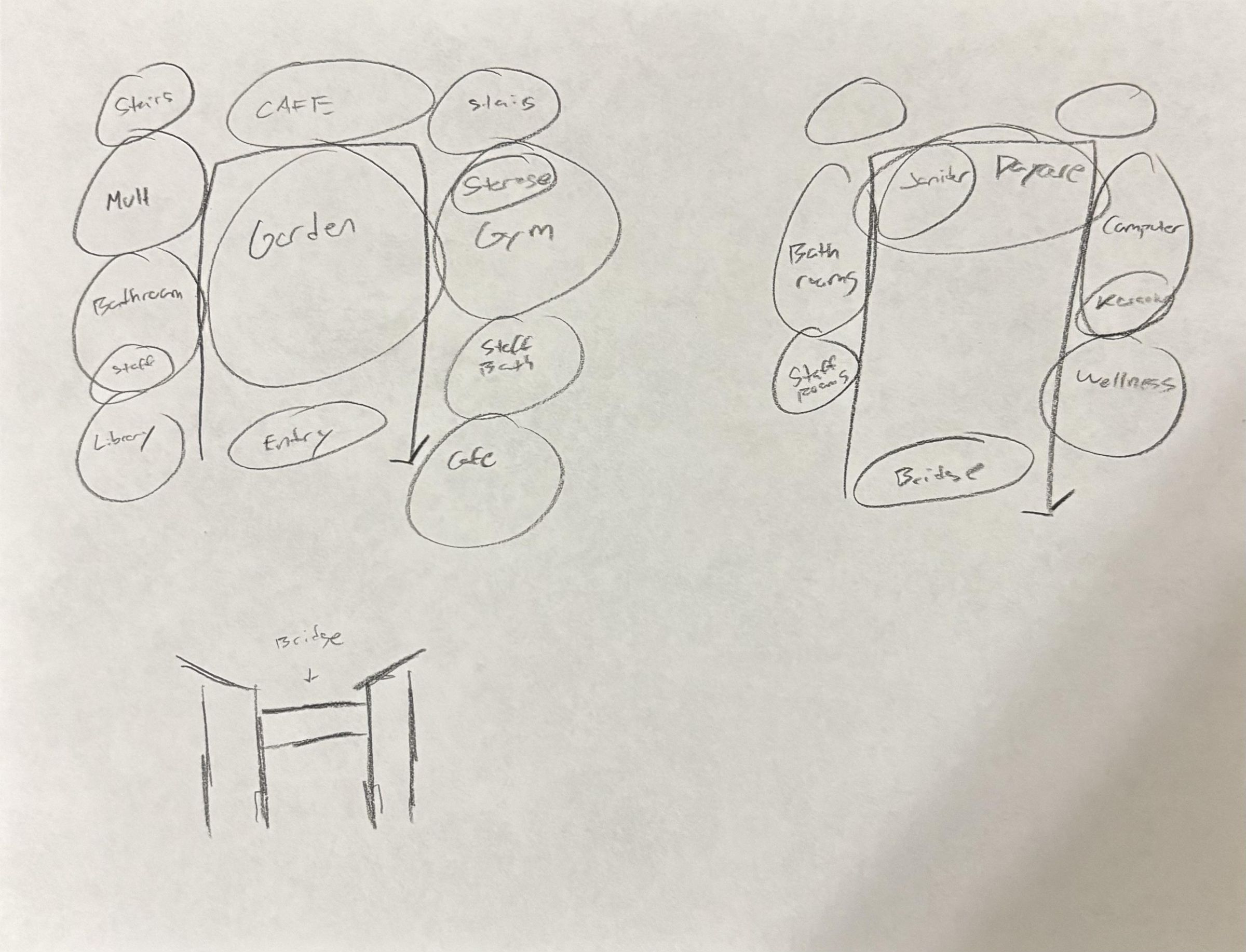
We started our design process by creating a simple bubble diagram creating a basic room layout. When deciding what rooms to add to our building we chose rooms that could foster healing and recovery. We also kept Japanese culture in mind implementing spaces that appeal to the people and their culture. The layout of the rooms were also made to seamlessly blend with each other and make people’s experience enjoyable.
Concepts and Inspirations

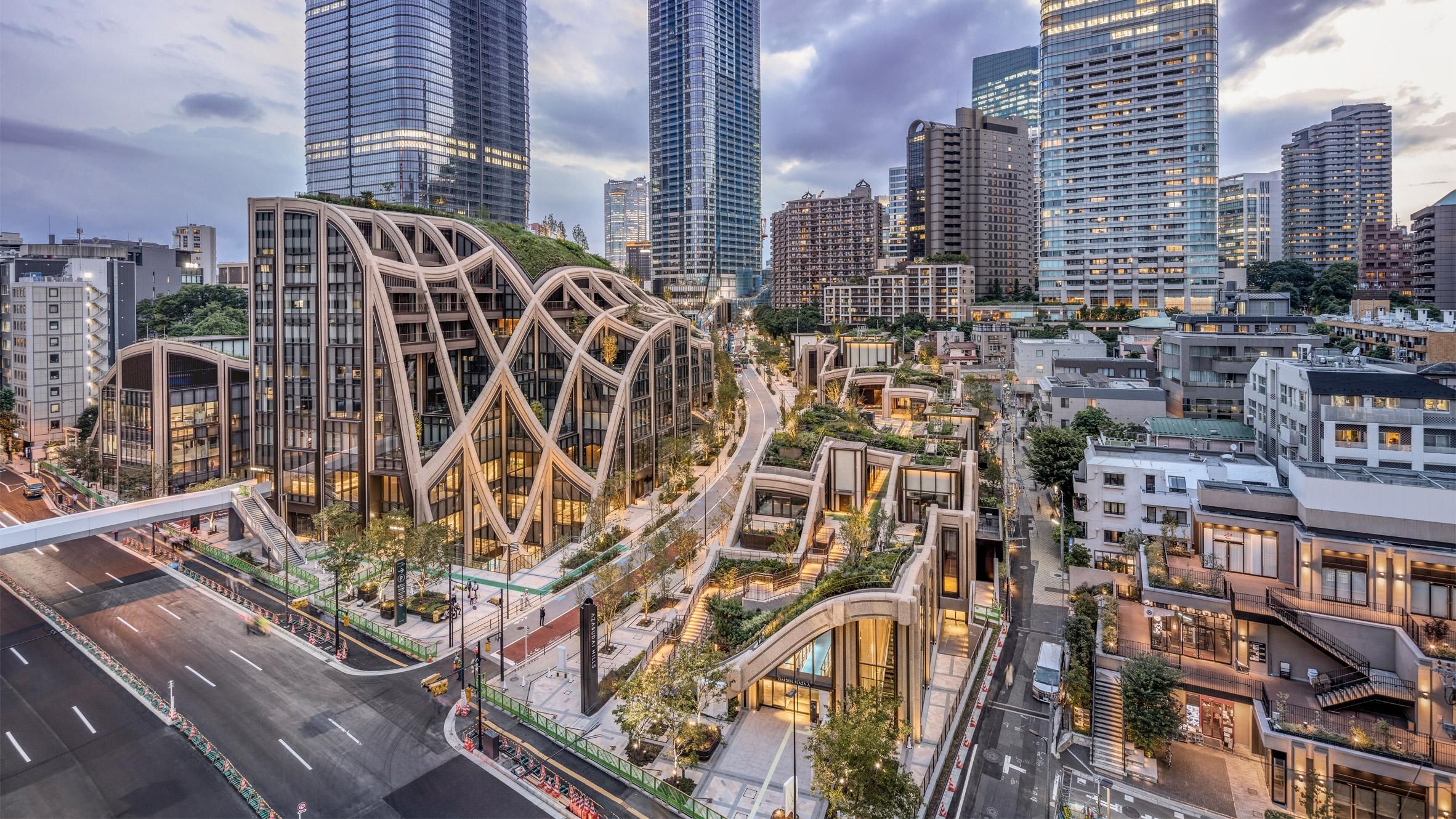
We took inspiration from many different sources when creating the first iterations of our building. Our main inspirations were from traditional Japanese architecture and temples particularity focusing on their unique roofs and harmony with both interior and exterior design. We also however wanted to put a modern take on this architectural style by also looking at the sleek cutting edge designs of contemporary Japan.
Seiganto-ji
This temple was a primary inspiration for our design serving as a prime example of traditional Japanese architecture with its distinct roofs and stairs leading to its main entrance. The temple also focuses on unity with nature something our building strives to achieve.
Azubadai Hills
A prime example of modern Japanese architecture this apartment complex features sleek designs and modern materials such as glass while also still being able to incorporate and work with nature.
Ideas Begin to Take Shape
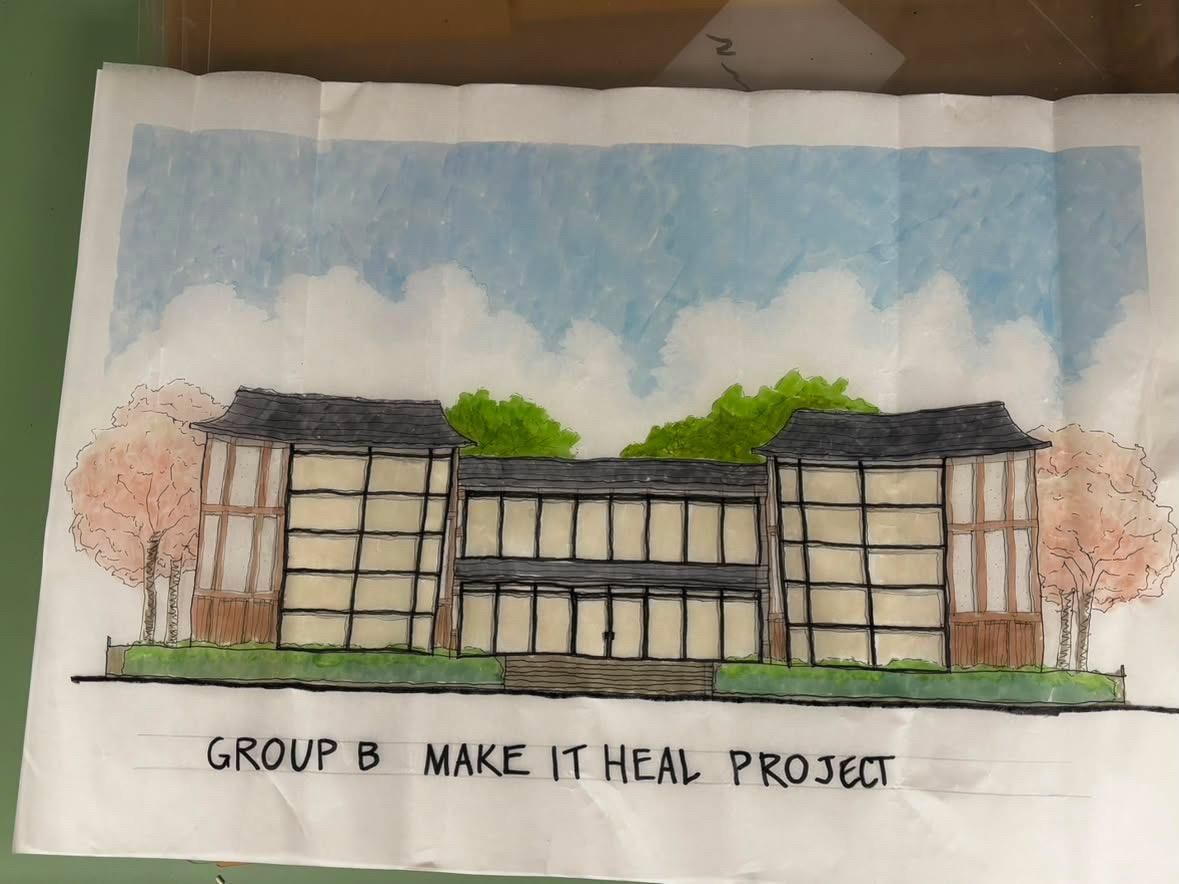
After we created a rough sketch of the front of our building creating multiple iterations until we created a final design for the front of our building. We then made a detailed rendering of our front elevation planning the materials and details of our building. When designing the exterior of our center we kept our inspirations in mind implementing features of traditional Japanese architecture while also putting a modern take on the style.
Building Massing & Form Development


When we first started creating our main building in Revit we closely followed our ideas made in our initial sketches particularly the circular building shape, which would follow around a central courtyard mirroring the layout of traditional Japanese temples.
Over time our building went through multiple iterations where we would change where certain rooms were or changed the size of them as we saw fit. One important change we added was removing some of our previously planned rooms on our second floor for an extra empty multipurpose room where more evacuees could sleep and stay in.
Something added that was absent from our initial sketches was a raised foundation which mimics the Japanese temples we were inspired by while also providing resistance to earthquakes.
After our main massing the building was ready for floors, furnishing and MEP.
The Shaping of the Roof


For the roof design in Revit, we were inspired by the curved roofs found in traditional Japanese temples. To achieve this distinctive shape, we used the Massing tool to create a custom roof form. We first placed reference points and connected them to create a series of grids. After forming multiple grids to define the roof geometry, we used the Create Roof by Massing technique to convert the massing model into a roof. This process allowed us to create the curved roof design while maintaining the traditional architectural style that inspired our project.
Materials
Choosing the materials for our model was an important step as we wanted ones that were both aesthetically pleasing while also being environmentally conscious and suitable for our building.
When creating our exterior and interior walls we created layers and added materials that would allow the walls to accountably hold conditioned air in Noto’s climate zone. To do so we created walls with U-values which would meet the requirements for a climate similar to the Noto Peninsula using Energy Pro to calculate our walls U and R-Values.
Our finish materials come from the materials used in traditional Japanese building such as wood and stone which when sourced responsibly can be extremely environmentally sustainable materials.
Structure and Steel Design

To ensure the structural integrity of Noto Hikari House, we utilized SDS2 to design and model the building's structural steel framework. SDS2 allowed us to engineer the precise steel connections, member sizing, and framing layouts tailored to the earthquake-prone region of Noto.
Within SDS2, we developed a comprehensive 3D steel model, detailing the connections between columns, beams, and bracing elements. The software's connection design tools allowed us to verify that each joint met the necessary load requirements, ensuring both safety and code compliance.
Once the structural steel model was complete, it was then exported into Revit, where is was integrated into the architectural model. This coordination between SDS2 and Revit allowed the team to align the structural model with the architectural layout, MEP systems and the overall building design.
Creating the Energy Model

To evaluate the energy performance of Noto Hikari House, we utilized Energy Pro 9 to construct a detailed energy model of the building. The software allowed us to define climate zones, assign room loads and assess how different building configurations would perform under real-world conditions.
Within Energy Pro 9, our team took a collaborative yet analytical approach to the modeling process. Each of the five team members independently built their own energy model of the building, with varying wall, window and ceiling types to produce differing R-values across each model. This allowed us to test a wide range of thermal performance scenarios rather than relying on a single design assumption.
Once all five models were completed, we evaluated the results room by room, identifying which configuration yielded the best thermal performance for each specific space within the model. The top-preforming assemblies for each individual model were than extracted and combined into one ultimate and unified model, in turn ensuring that every zone in Noto Hikari House was assigned the most efficient solution identified by our collective analysis.
Mechanical System Planning


Using the load calculations generated in Energy Pro 9, we designed the HVAC system for Noto Hikari House to ensure efficient and effective air distribution throughout the building. The data from our energy model served as the foundation for every decision made in this phase, allowing us to move from thermal analysis directly into mechanical system design.
The building was divided across two central HVAC units, one for each floor, reflecting the zone separations we had already established in our energy mode. This two-unit approach allows us to independently control the air distribution each level, improving both efficiency and occupant comfort throughout the varying spades of the community center.
With each unit assigned to its respective floor, we then utilized a Ductilator to calculate the required CFMs (cubic feet per minute) for each space within the building. By working through each space systematically, we were able to size the duct runs appropriately and ensure that every room received the correct airflow needed to meet its load demands. The result was a fully coordinated HVAC layout grounded in our energy findings, bringing both technical precision and occupant well-being design of Noto Hikari House.
Protecting Lives Through Fire Safety


Developed a fire protection system capable of responding to emergencies quickly and effectively. Given that the building is intended to serve as refuge during times of crisis, the responsibility to protect the lives of those inside was a design priority that could not be overlooked.
The fire protection system was designed around a tree layout, a distribution approach in which a single main supply line branches outward into progressively smaller lateral lines, delivering water to sprinkler heads across every zone of the building. This layout was chosen for its efficiency and reliability, allowing the system to maintain consistent water pressure throughout the network while keeping the pipe routing organized and straightforward to coordinate within the model.
Sprinkler heads were distributed along each branch of the tree system to ensure comprehensive coverage across both floors of the building, from the communal gathering spaces and cafeteria to the corridors and bathrooms. The placement of each sprinkler head was carefully coordinated with the ceiling layout and surrounding building elements to ensure full coverage without conflict with structural or architectural components.
Alongside the suppression system, fire alarm and detection divisions were positioned throughout the building to provide early warning in the event of a fire, giving occupants the maximum amount of time to evacuate safely. All fire protection elements were modeled and coordinated within Revit, allowing the team to align the fire safety system with the architectural and MEP components of the building, ensuring everything worked together as a unified, code-compliant whole.
Designing Spaces to Heal and Recover


One of the most important spaces within the structure is the wellness room, dedicated to reflection, mindfulness, and stress relief. This room features soft, natural lighting and large windows overlooking the surrounding scenery, allowing occupants to reconnect with nature. With activities such as yoga, meditation, and breathing exercises, providing emotional relief.
Noto Hikari House also includes a library and reading space designed to encourage both education and emotional comfort. The collection features books focused on healing, resilience, recovery, and Japanese history and culture, helping individuals reconnect with their identity and heritage. The library becomes a quiet retreat where individuals can learn and process their emotions.
Physical wellness is also prioritized through the inclusion of a gym and fitness area. Exercise is a proven method of reducing stress, anxiety, and emotional fatigue, especially during periods of instability. The gym offers occupants an outlet to regain strength and confidence. The garden located in the center of the building allows people to reconnect with nature and the outside. Additionally a bathhouse was created outside the main building to promote relaxation and hygiene.
Rooting the Site in Nature

When creating our site we wanted to create one that could further bring recovery just as our main building does. In order to achieve this we chose to create curved paths around our building as they encourage natural movement and relaxation.
We also chose to add lots of foliage around our site as nature has been found to lower cortisol, increase serotonin and alleviate anxiety. The plants we chose are specifically native to Japan and the region we chose to build in which also sustains local wildlife and biodiversity, requires less water and maintenance and prevents the need for synthetic pesticides and fertilizers. Overall our when creating our site we not only wanted to create a visually appealing area for people to recover but one that was created with healing in mind.
The Architecture Shaped by Hand


We started by cutting cardboard into the correct sizes for the walls and covering each piece with paper for a clean finish. We then cut and glued thin popsicle stick strips onto the walls to recreate the traditional Japanese wooden lattice patterns. Next, we cut openings for the windows and curtain walls, which were made from small pieces of clear plastic sheet. We added thin strips of black tape as the window frames and installed the windows into the openings. Afterward, we painted the wooden lattice details and constructed the roofs using paper and black tape. Finally, we assembled all the pieces and glued them onto a wooden base, completing our handmade miniature building prototype for the contest.
Conclusion

Overall, this design process helped us gain valuable skills in different software programs while also improving our ability to work effectively as a team. We learned to share ideas, effectively delegate and work together to create this building.
More importantly however this experience taught us that architecture and engineering is about much more than just making visually appealing buildings it is a way to create spaces where people can live, interact and thrive. This competition opened our eyes to not just have our visions and ideas in mind but to also remember to people we are created these buildings for.
As aspiring individuals that seek opportunity within the AEC field, it truly is an honor for our work to be able to be reviewed and put out for the public to see we hope to be able to continue and grow as architects from this.
Thank You
- Erin, Melissa, Sophia, Jonathan and Harry
Final Project Files
https://www.dropbox.com/scl/fo/v9e9grbgwgzqkx1fv0zf2/AO2HcX6fFszVJkBCLN3oyys?rlkey=k39iidezvj3jgl6hccxrg69ne&st=d7n8nkj4&dl=0