Poinciana Portable Community Adaptable Classrooms
by peanutjammy in Design > Architecture
73 Views, 0 Favorites, 0 Comments
Poinciana Portable Community Adaptable Classrooms
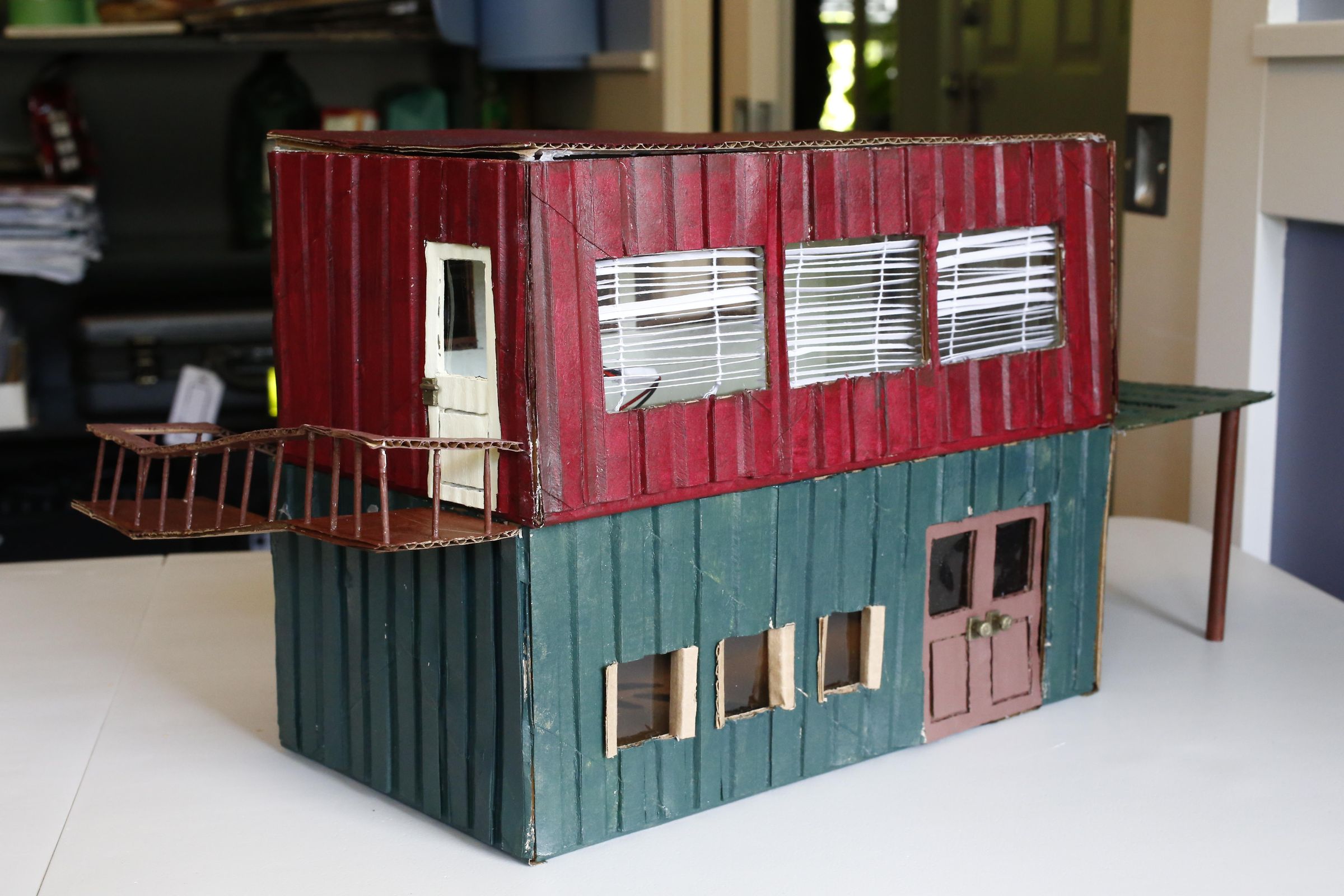
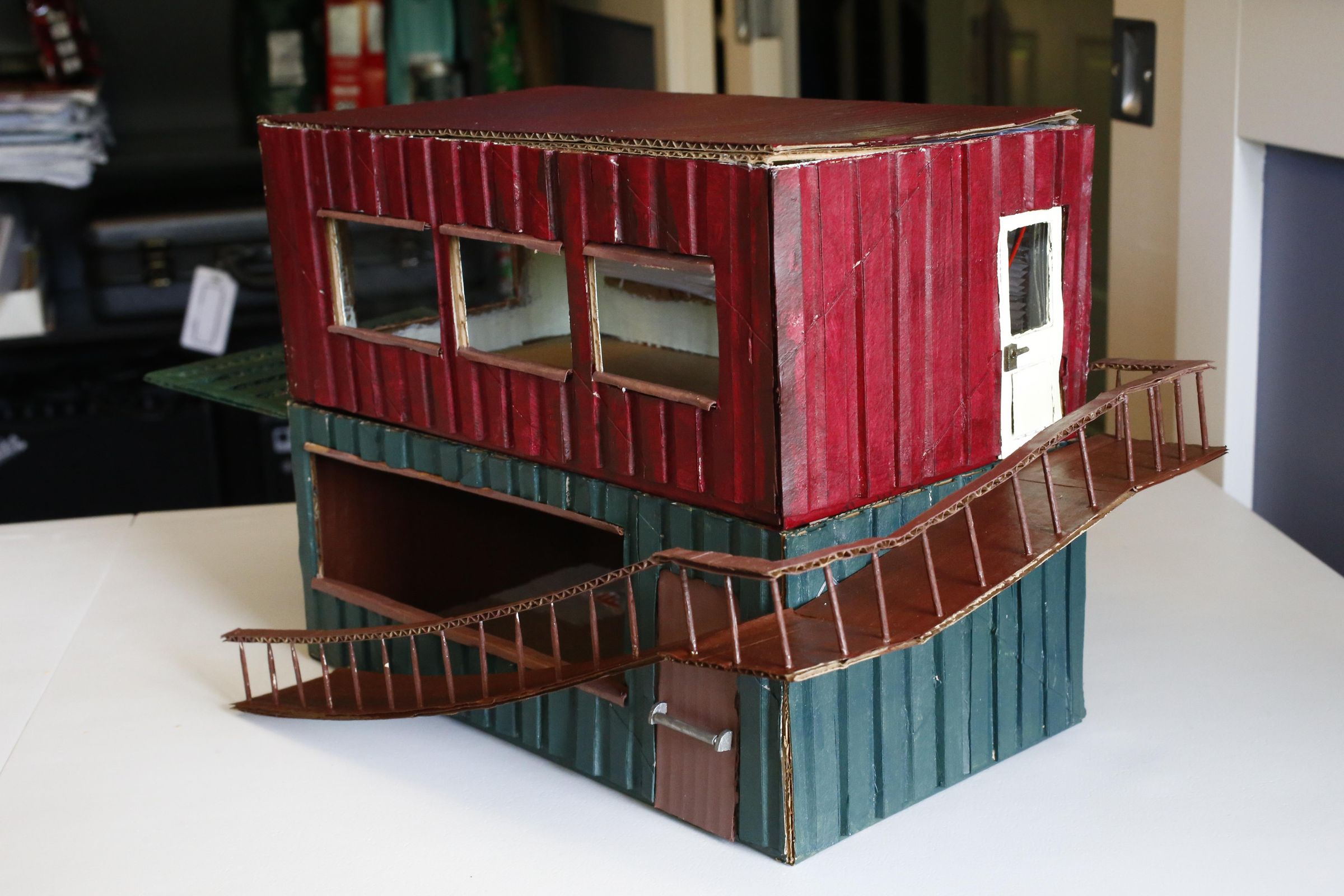
I am a junior student in high school and I propose this design for the "Make It Heal" contest. I believe that communities still deserve a safe and mindful place to learn. Every individual deserves the right to accessible education, which is why I created this design. It is a portable classroom set, both rooms wheelchair user friendly. The community can decide whether to use the rooms for a temporary school, hangout area, meeting rooms, etc. The design reuses and utilizes shipping containers, which typically have a lifetime from 25-40 years. They are built to be both durable, and cost effective. All shipping containers are bought secondhand, and must be inspected to make sure it meets health and safety requirements.
How my design answers the following questions:
1. Address community recovery needs following disasters like the LA wildfires or other community-changing events relevant to the site you choose.
This project is inspired by the Royal Poinciana trees. They are native to Madagascar, South America, and specifically South Florida. These trees are a beautiful canopy structure, with red and green leaves. I like this tree because it's a fast growing one, and that feels very symbolic to the integrity of this contest.
The classroom can comply with natural disasters such as floods, wildfires and storms. A big factor in my design is cork, which I explain more in depth (in #3). Cork is a known material to be naturally waterproof, soundproof and very heat resistant. This creates a safer environment for all individuals using the learning space.
The design of the classrooms are very adaptable:
-In the case of a community suffering from flood damages, the bottom classroom can be used as storage so that students can feel safer not being on the ground floor.
-Wheelchair users are welcome to this facility, they can access the second floor classroom using a ramp that has rubber trends for anti slip.
-If the air quality is poor, the air filters will be turned on, and the windows can be closed.
-If teachers want lessons outside, the overhang provides nice shade, and there are benches that come with the classrooms. The benches can be moved outside, but can also be used in the ground floor room.
-If at any point, people inside the classrooms need to evacuate, there are multiple exits they could use.
This is the reason why I did not design an interior for the classrooms. Its purpose is to help individuals of a community heal together and rebuild a sense of home. I refer to this project as “the classrooms” but in actuality, it is a space that each individual will interpret differently in the process of healing. It’s better to let each community decide how to utilize the space.
2. Incorporate human-centered design principles to support well-being and connection, such as trauma-informed and biophilic (or nature-inspired) design.
Design uses natural colours; red, green and brown. This project was inspired by the Royal Poinciana, which has a similar palette. The Royal Poinciana is a fast growing tree, and it symbolizes that nature will always bounce back, and we should too. These colours can all be found in nature, and helps the classroom feel comforting instead of dystopian.
The classroom will have multiple exits, and a plethora of windows, a design catered to individuals that have suffered PTSD from natural disasters, feeling claustrophobic or a sense of helplessness. Students and teachers alike deserve to know they utilize a space that is mindful of their worries. Plus, it gives all individuals a reminder that recovery happens overtime, and the nature that has been destroyed outside will soon grow back stronger.
Sitting areas outside can encourage people to socialize and connect with nature. During difficult times, it may feel like nobody else knows what you’re going through. It is okay to have alone time with your thoughts, but I think talking to other people who have shared similar trauma is also a healthy outlet, in which the circular bench idea does a good job of achieving. You can sit down at one, and strike a conversation with others that want to join you.
3. Embrace sustainability and resilience, exploring strategies such as self-healing infrastructure, circular materials, environmental analysis, and climate-ready construction methods.
The container's walls will be made of metal, and will be insulated with a layer of cork. Cork is an eco-friendly material harvested from the outer bark of oak trees. Its natural waxy coating makes it water proof, as well as heat/fire resistant. The structure of cork also makes it sound proof. When the classroom has been well used and is ready to retire, the layer of cork in the walls is biodegradable and can be composted.
Transportation of the classroom into a community will be fairly simple because it requires minimal construction at site. The containers will be checked, constructed and furnished in a warehouse. This means that a community can receive and put these classrooms to use quickly. Of course there can be minor changes made to fit the situation; if the ground is unstable, we can add stakes to the bottom of the classroom.
Benches outside are circular because it helps people practice their body language while talking to each other. When socializing in a circle, everybody is an equal distance from the centre, representing that each individual engaged in the conversation is equal, and there is no leader.
4. Consider efficiency and affordability, including how manufacturing and construction innovations can accelerate safe, cost-effective rebuilding.
My design is all about reusing, which is such a good way to make something affordable and efficient. The structure of the classrooms will be secondhand shipping containers. All materials bought secondhand will be checked for quality. By using recycled material, we save money that we can put somewhere else.
For example, instead of building an elevator for disabled individuals, I chose a ramp because it lets people connect with outside better, and is more affordable and realistic.
The budget towards construction on site will be minimal, most of the work is done off site.
Sources:
https://faq.yellowheadstorage.ca/faq/how-long-do-sea-cans-last/
https://www.planetnatural.com/fast-growing-trees/
https://gardeningsolutions.ifas.ufl.edu/plants/trees-and-shrubs/trees/royal-poinciana/
Supplies
Designing
Revit Software
Pencil
Eraser
Paper
Ruler
Crafting
(I did not buy anything specifically for this project)
Cardboard
Ruler
Exacto Knife
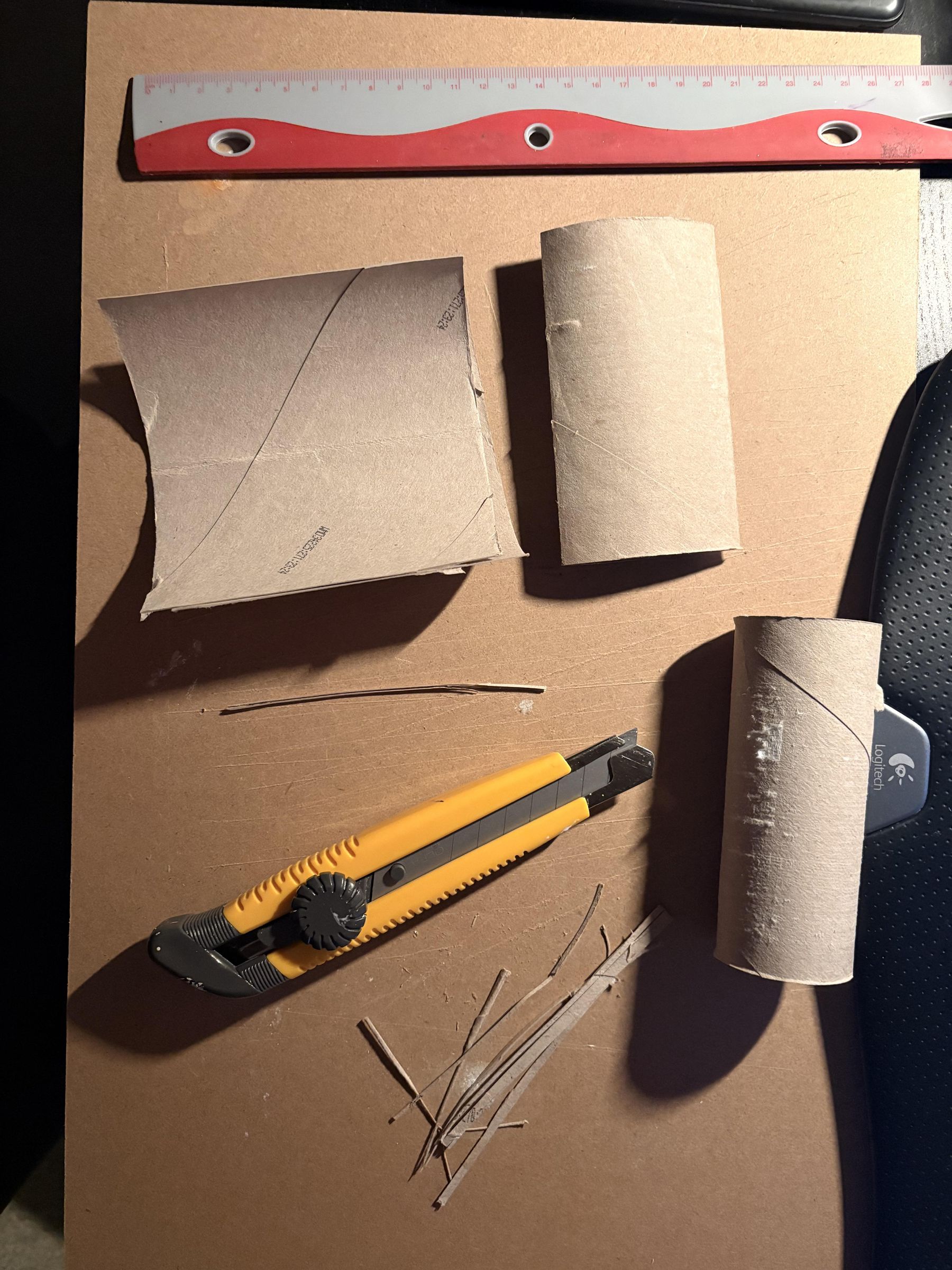
Toilet Paper Rolls
PVA Glue
Scissors
Masking Tape
Acrylic Paint
Paint Brushes
Paper Straw
Plastic Sheet
Popsicle Stick
String/Embroidery Floss
LEDs
Sketching the Blueprint
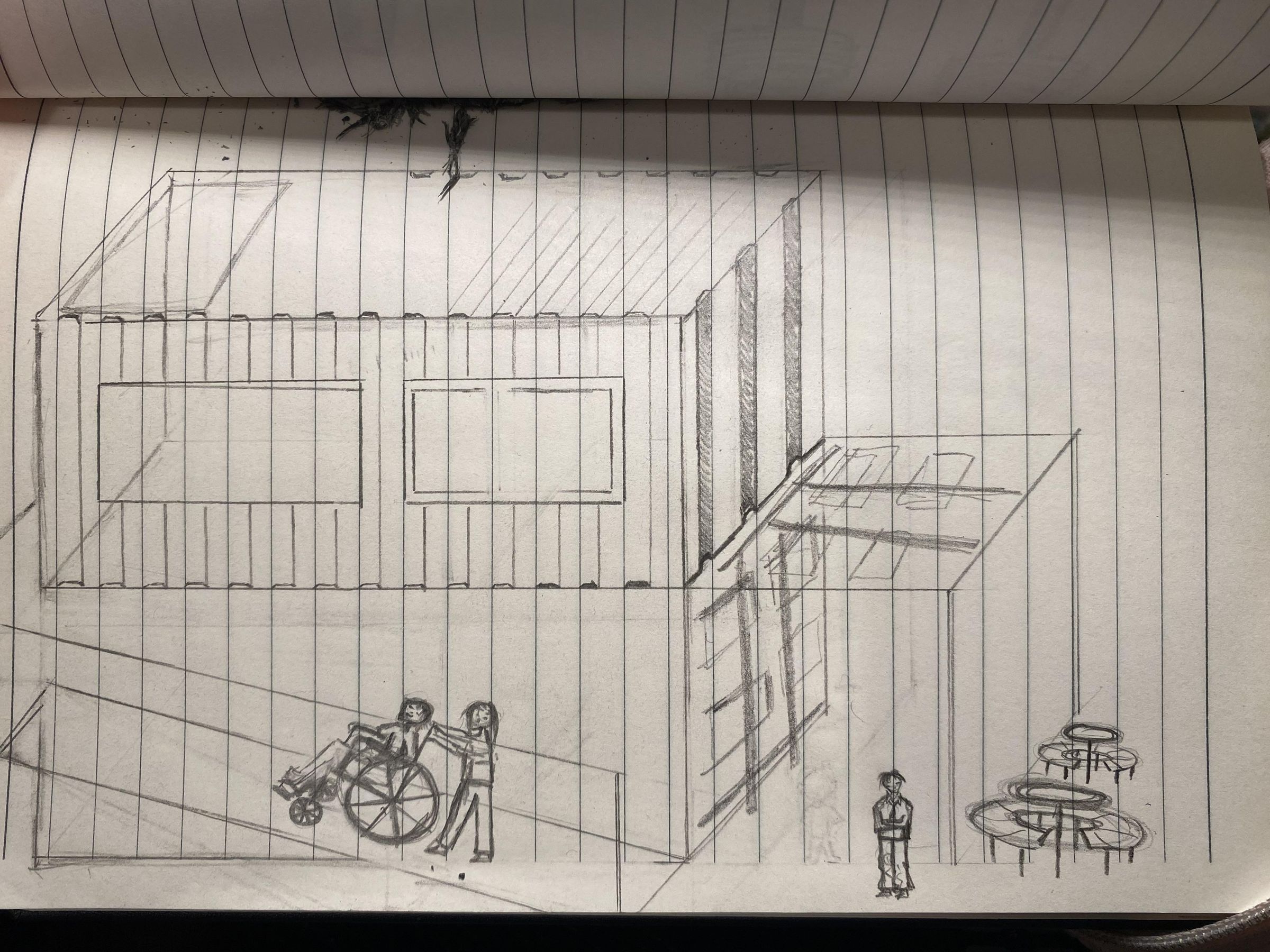
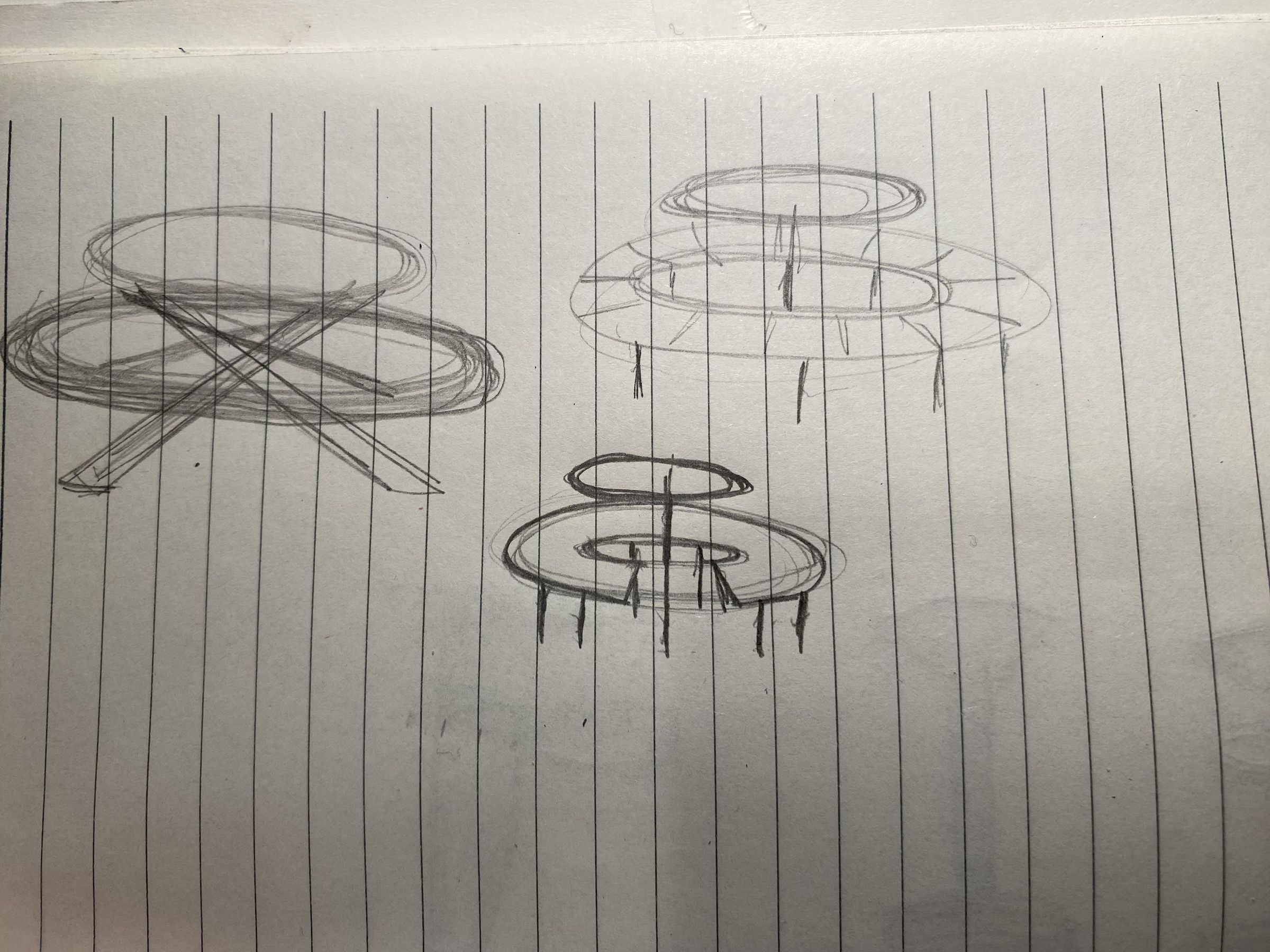
While brainstorming eco-friendly ideas for this long term project, I decided to incorporate shipping containers because I know that people upcycle them into food trucks, backyard offices, etc. They are built to be sustainable and portable.
In this stage, I came up with two shipping containers, one stacked on the other, with a ramp spiraling up to the second floor. Added many windows as potential emergency exits. An overhang so that people could socialize outside, while connecting with nature.
Choosing a Site

After further investigation, I have chosen 1585 SW Cashmere Blvd, Port St. Lucie, FL 34986, United States, which is in South Florida. Referred to as McChesney Park, this area is very prone to tropical storms, which includes flooding and lighting storms. This location right on the border of West St. Lucie and Port St. Lucie so that people from different towns can share a learning space. It can be good for an individual struggling to know that there are countless others who are in the same boat, and completely understand on a deeper level.
I was mindful to make this project friendly for disabled individuals because I can imagine not many things are accessible to them when a community is recovering from a flood or storm. Temporary pop up grocery stores, for example, will be set up very compactly, and will not be accessible to wheelchair users.
Since this area experiences floods and storms, I've tried to make it as anti electricity dependent as possible, because water leakage could render it useless otherwise. This also makes the project more cost effective.
South Florida is home to Royal Poincianas, and I hope that my colour palette choice can make the residents of both Port and West St. Lucie feel more comfortable.
Refining the Design With a 3D Model
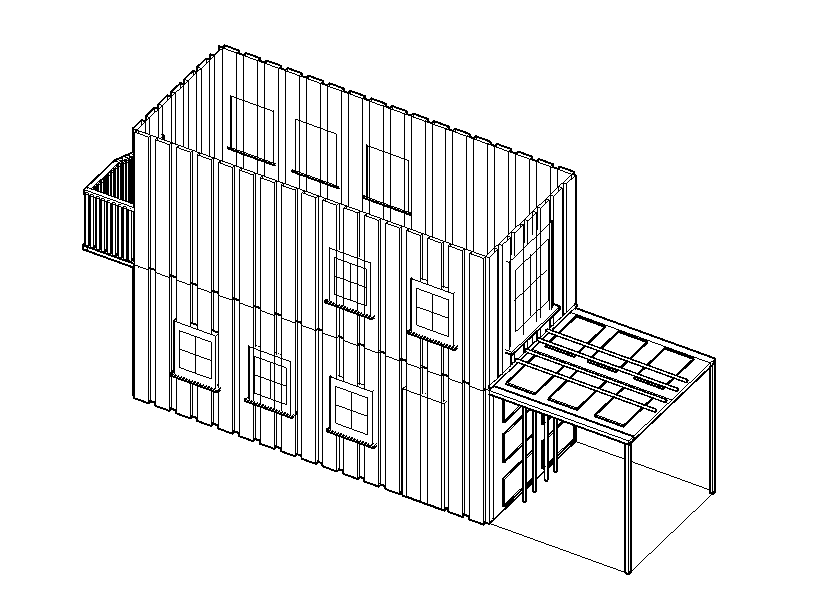
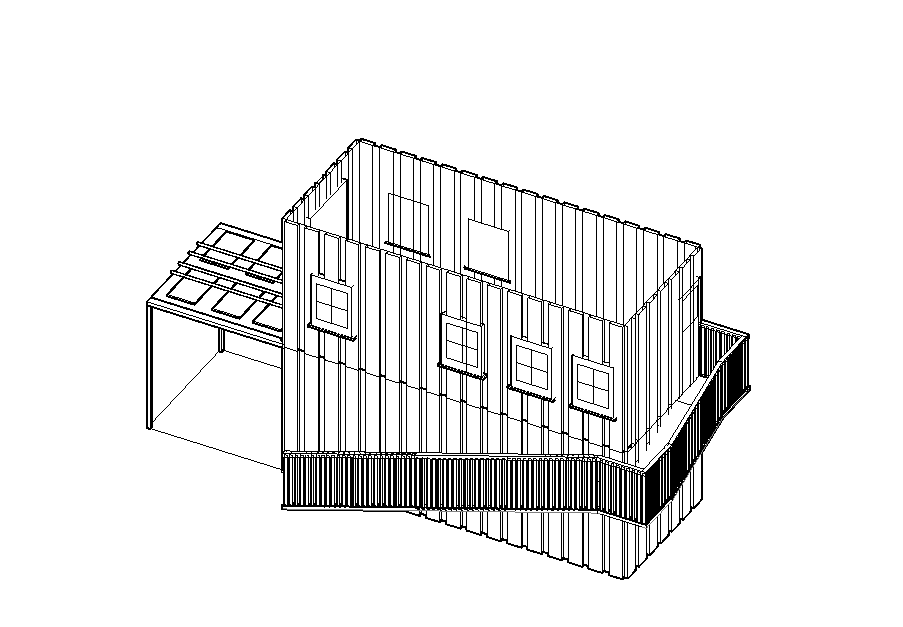
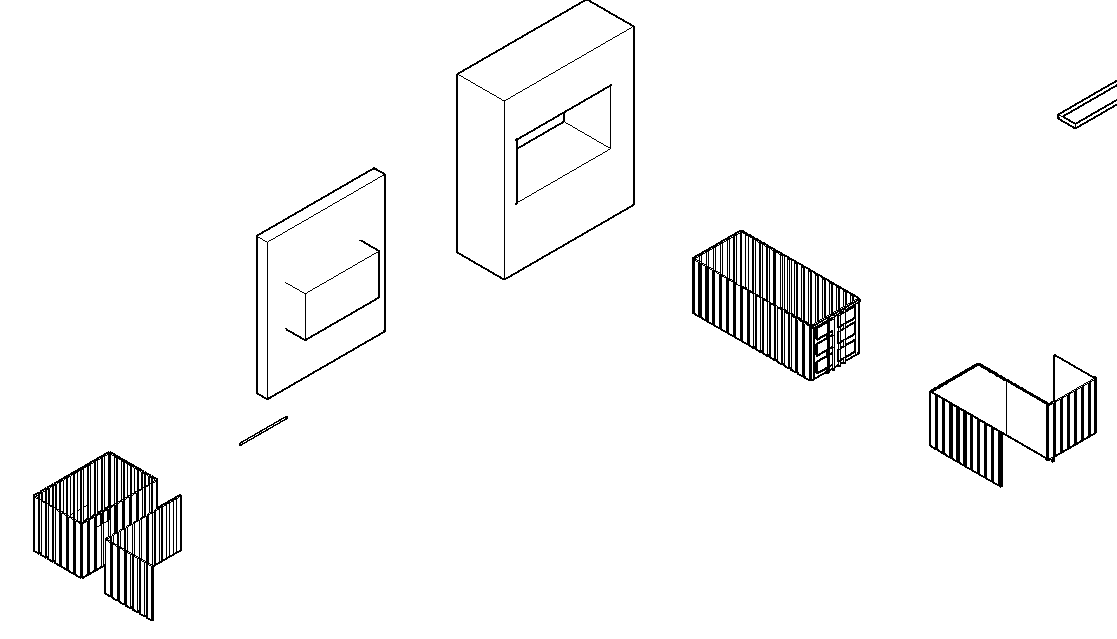
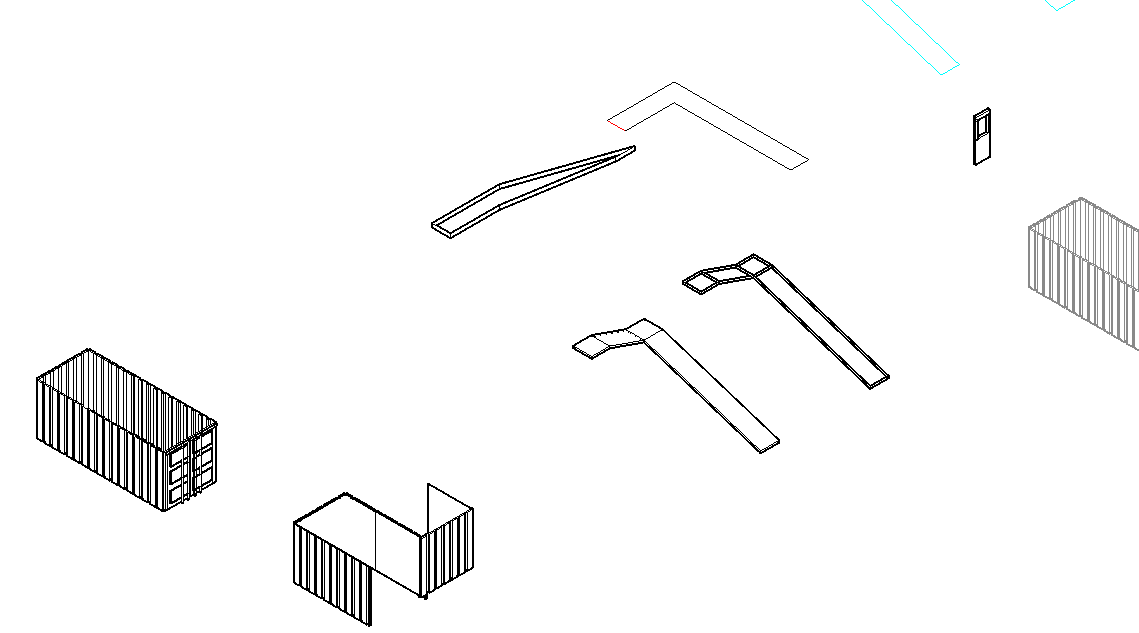

Prior to this project, I had minimal experience with Revit, so it was a fun learning experience. This is not my final design because I wanted to build it afterwards, and there were a few changes I made such as window placement and colour choices. I had some trouble modeling the benches, however, so I finalized them on paper.
Tackling the Physical Model
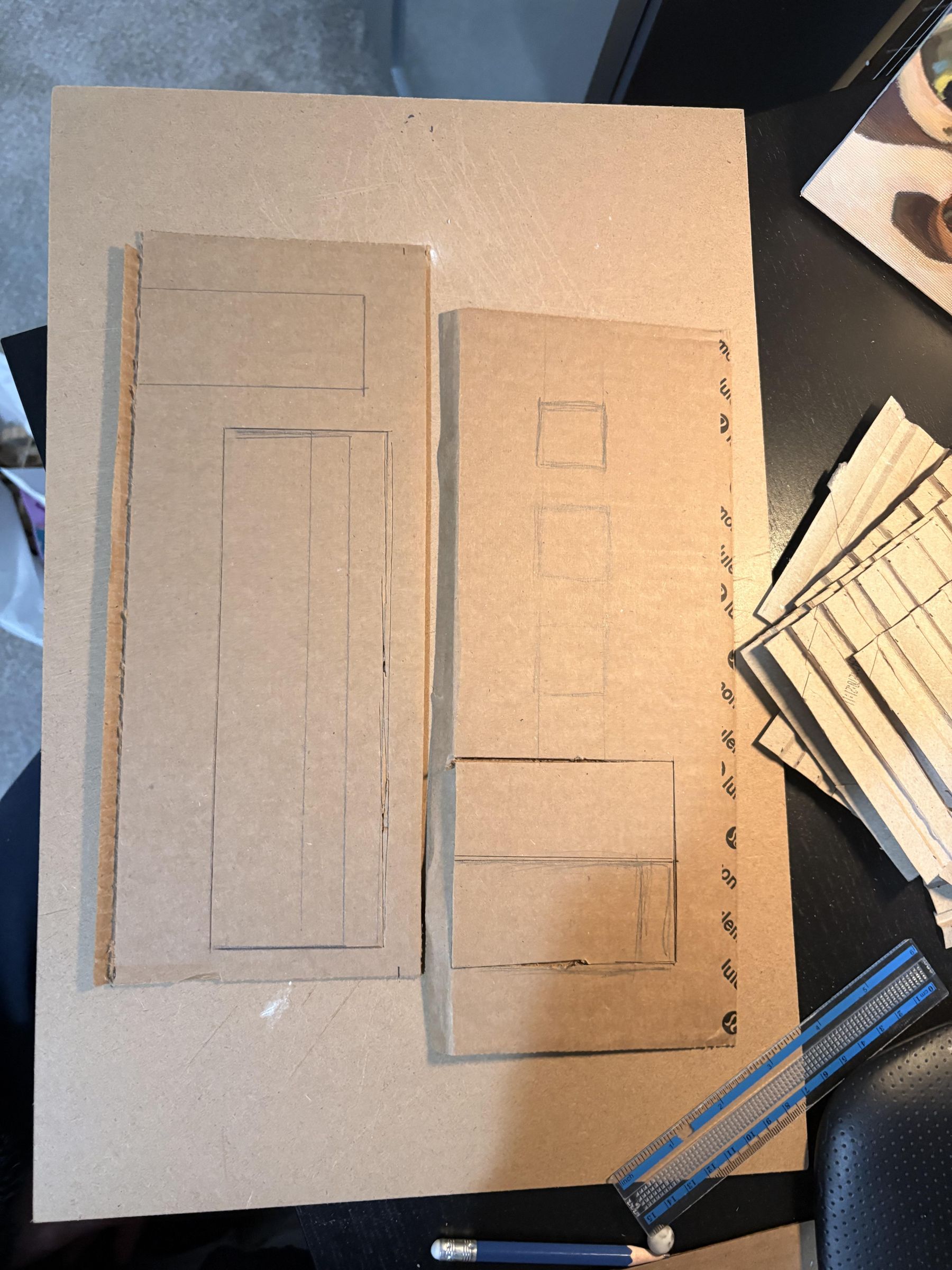
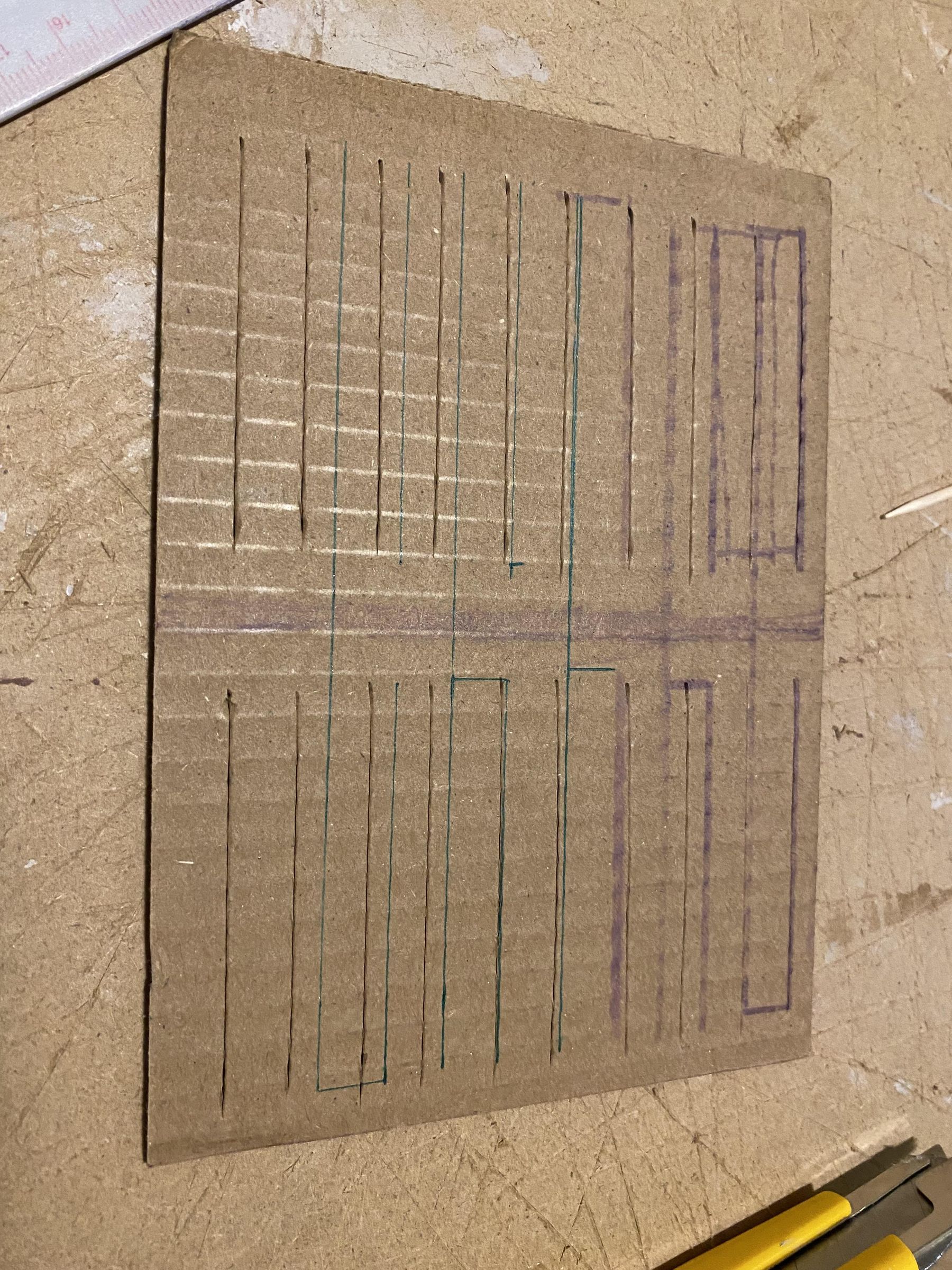
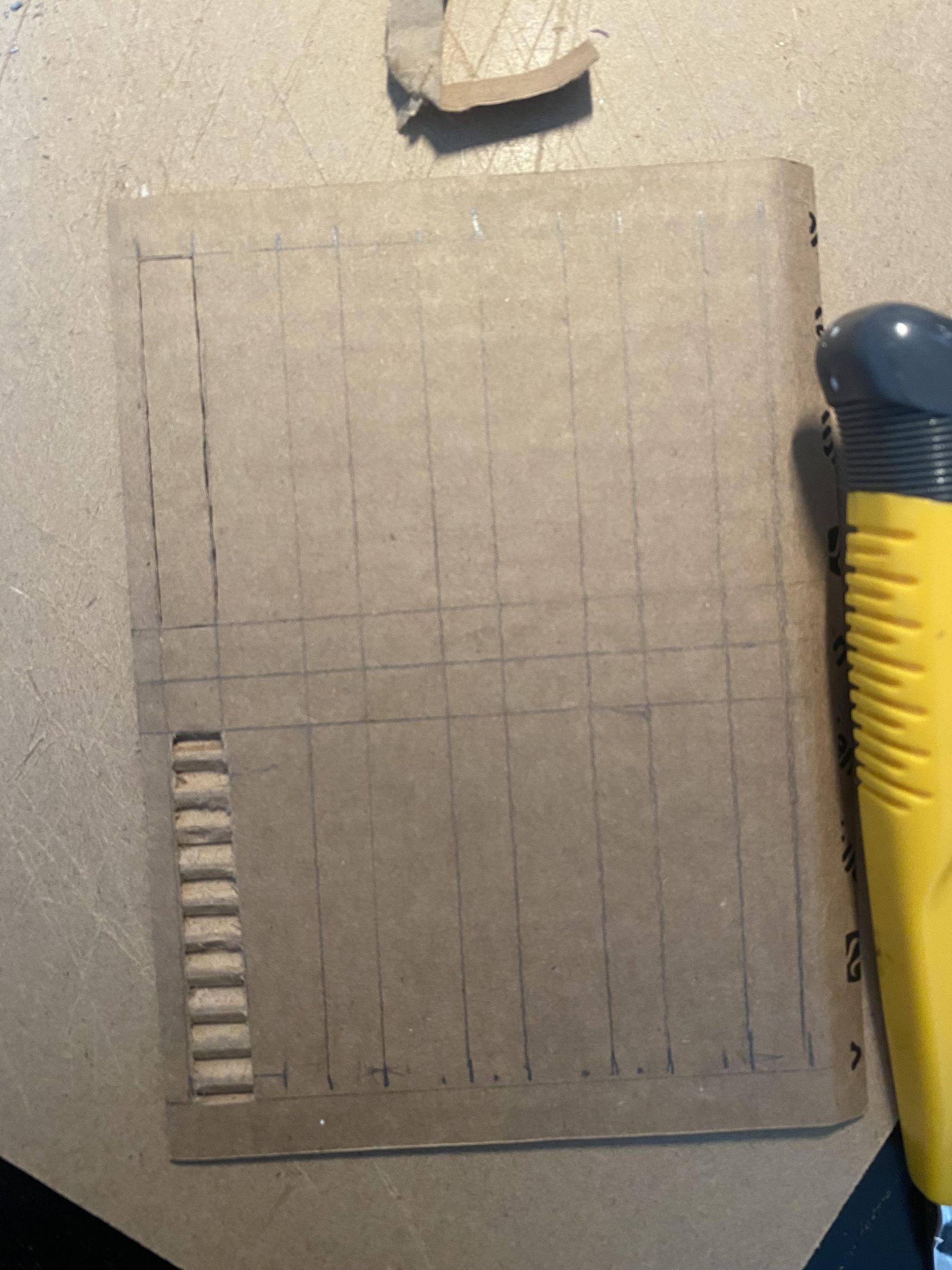
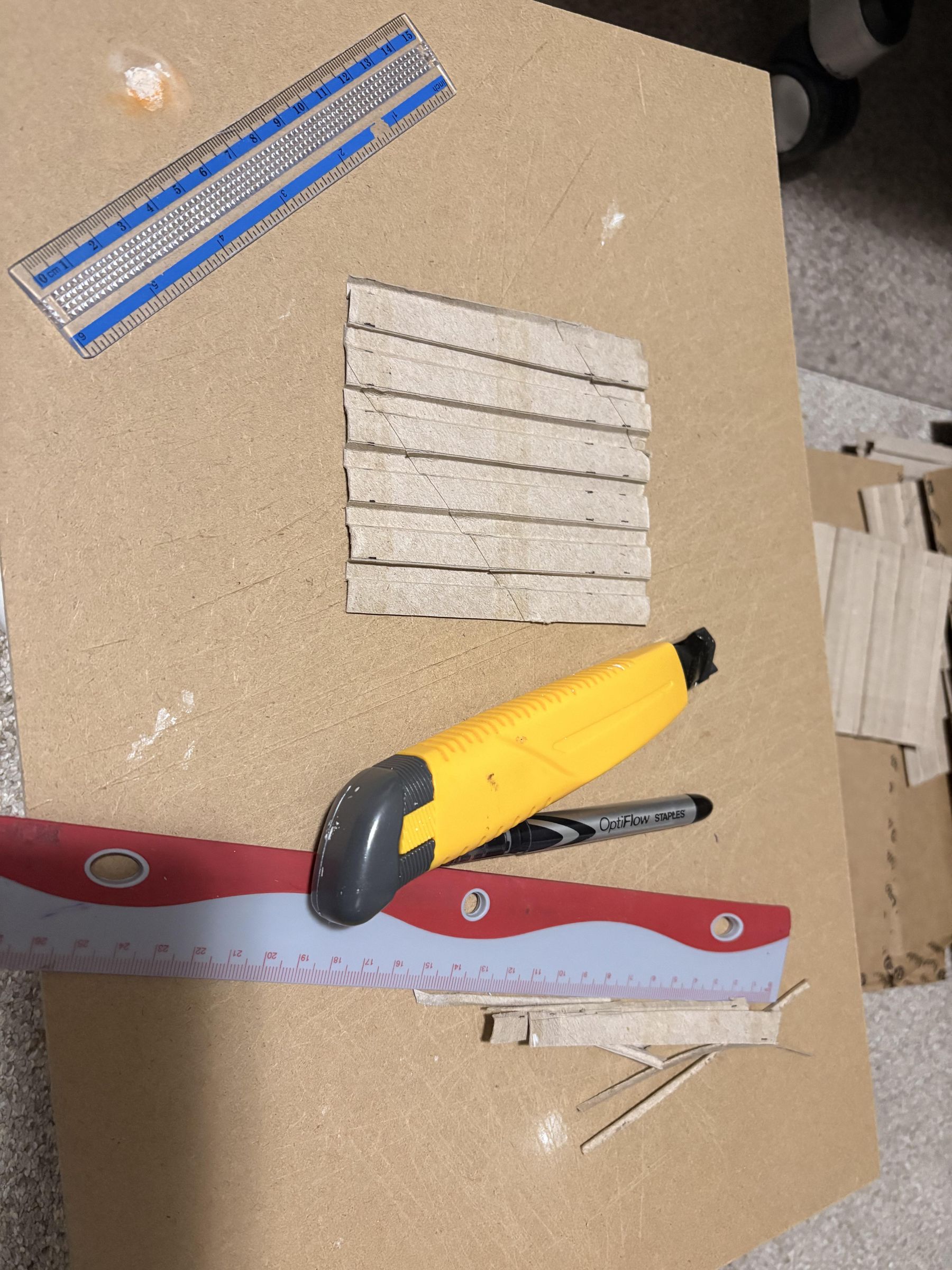
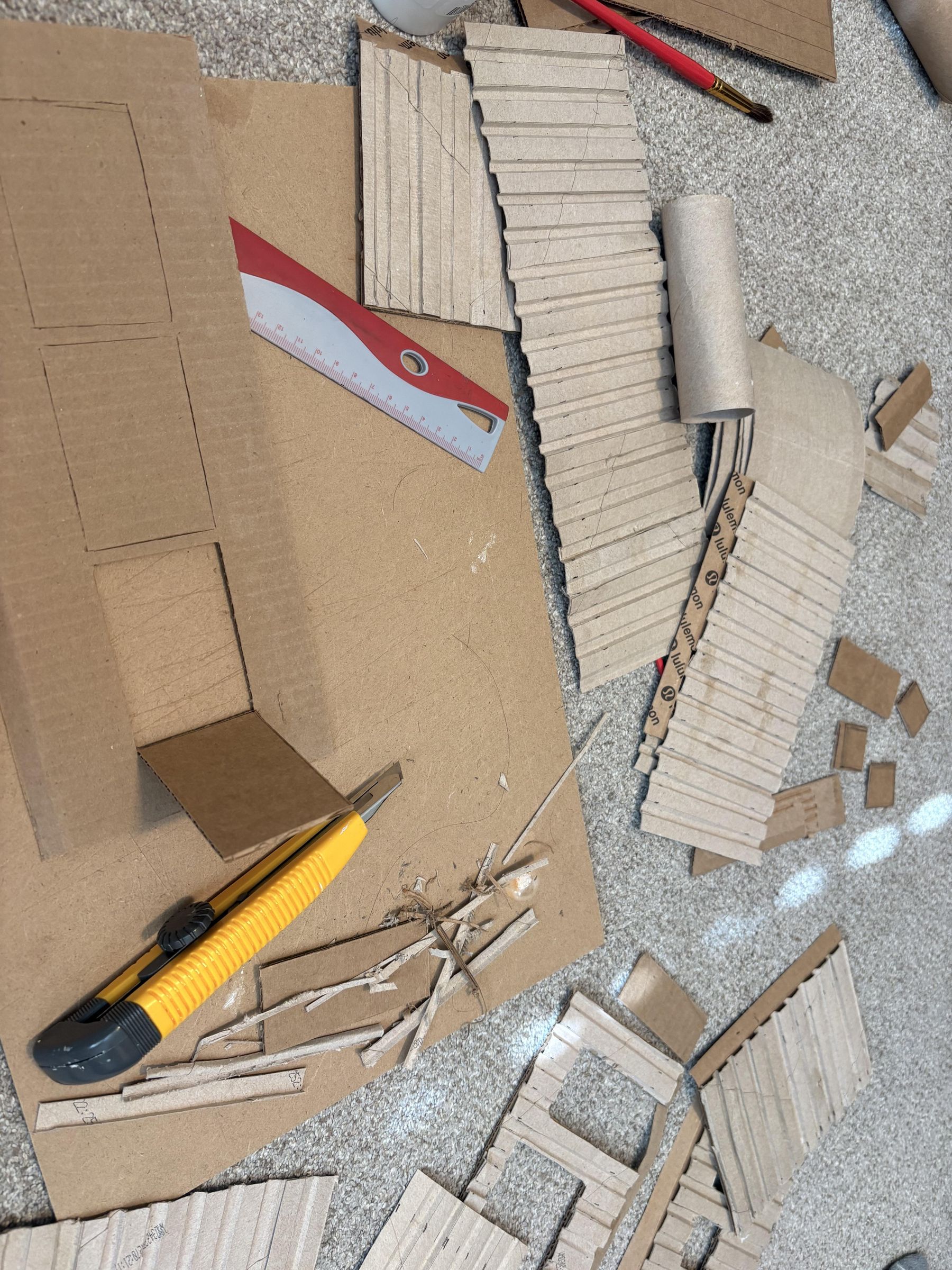
(Majority of materials used for the physical model are recycled)
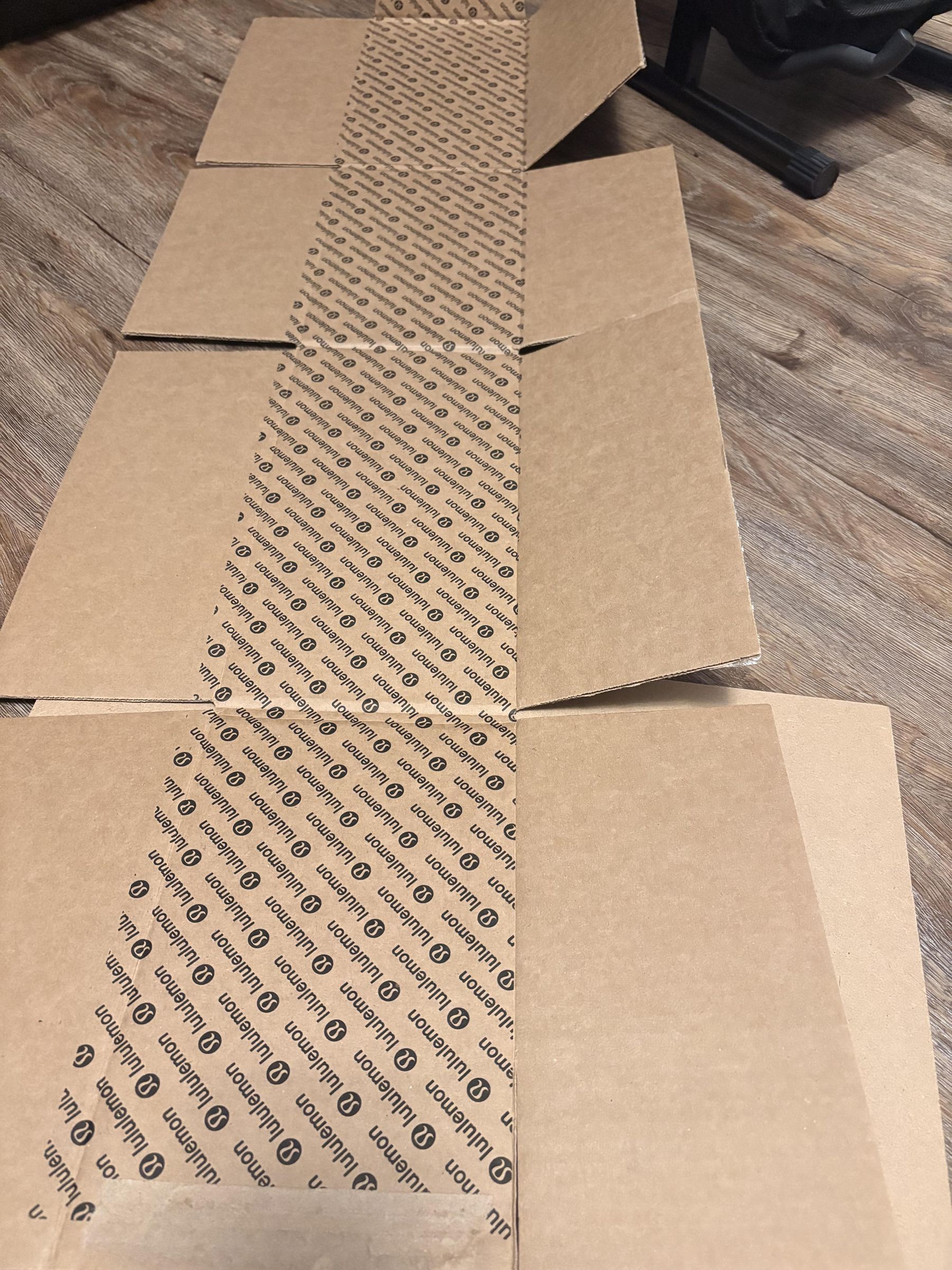
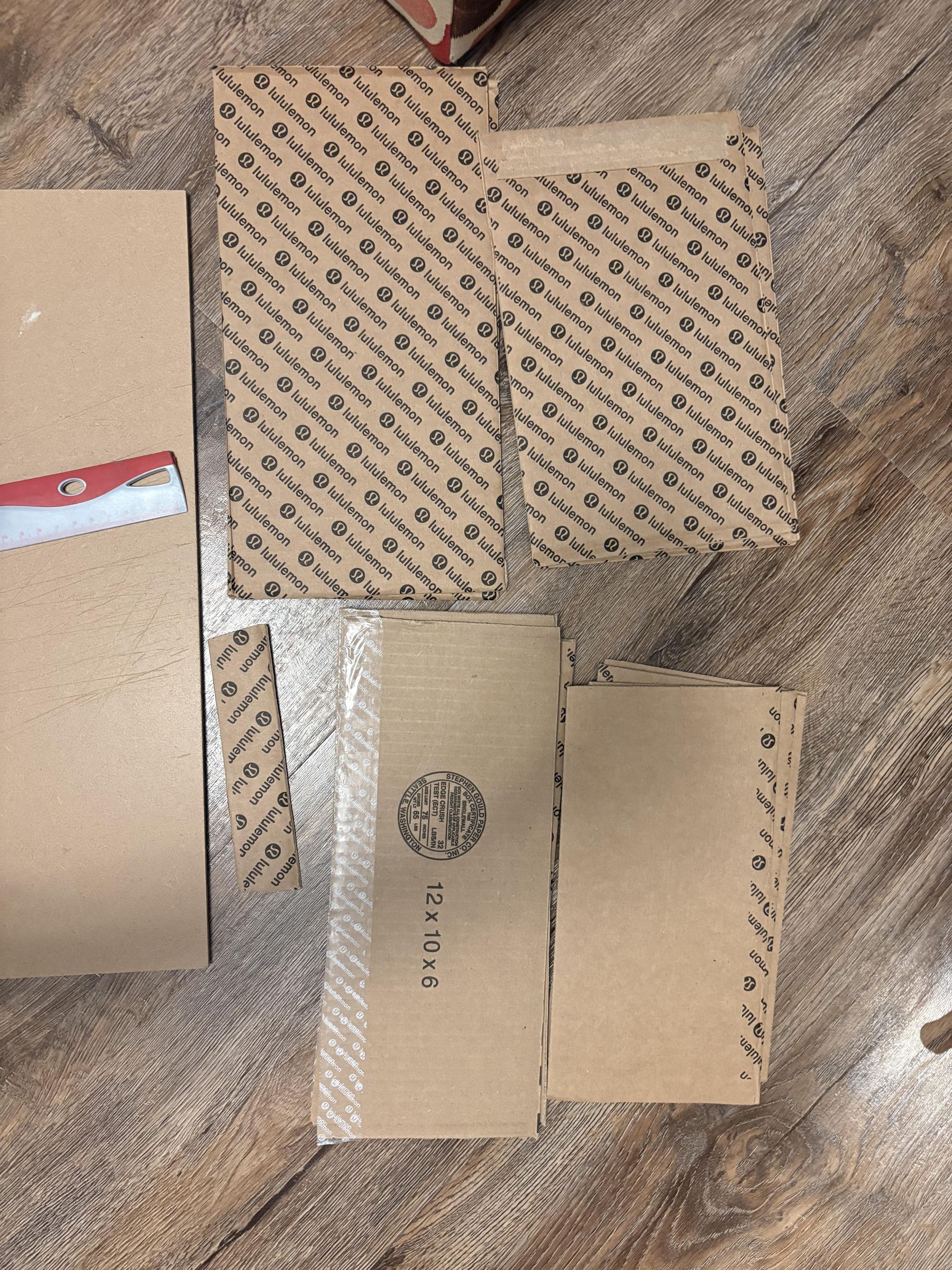
First, I took apart two cardboard boxes so I could see how big I could scale the build. Then, I cut out nine walls and four floors (always have extras!). I also marked where I wanted windows, and cut those out too.
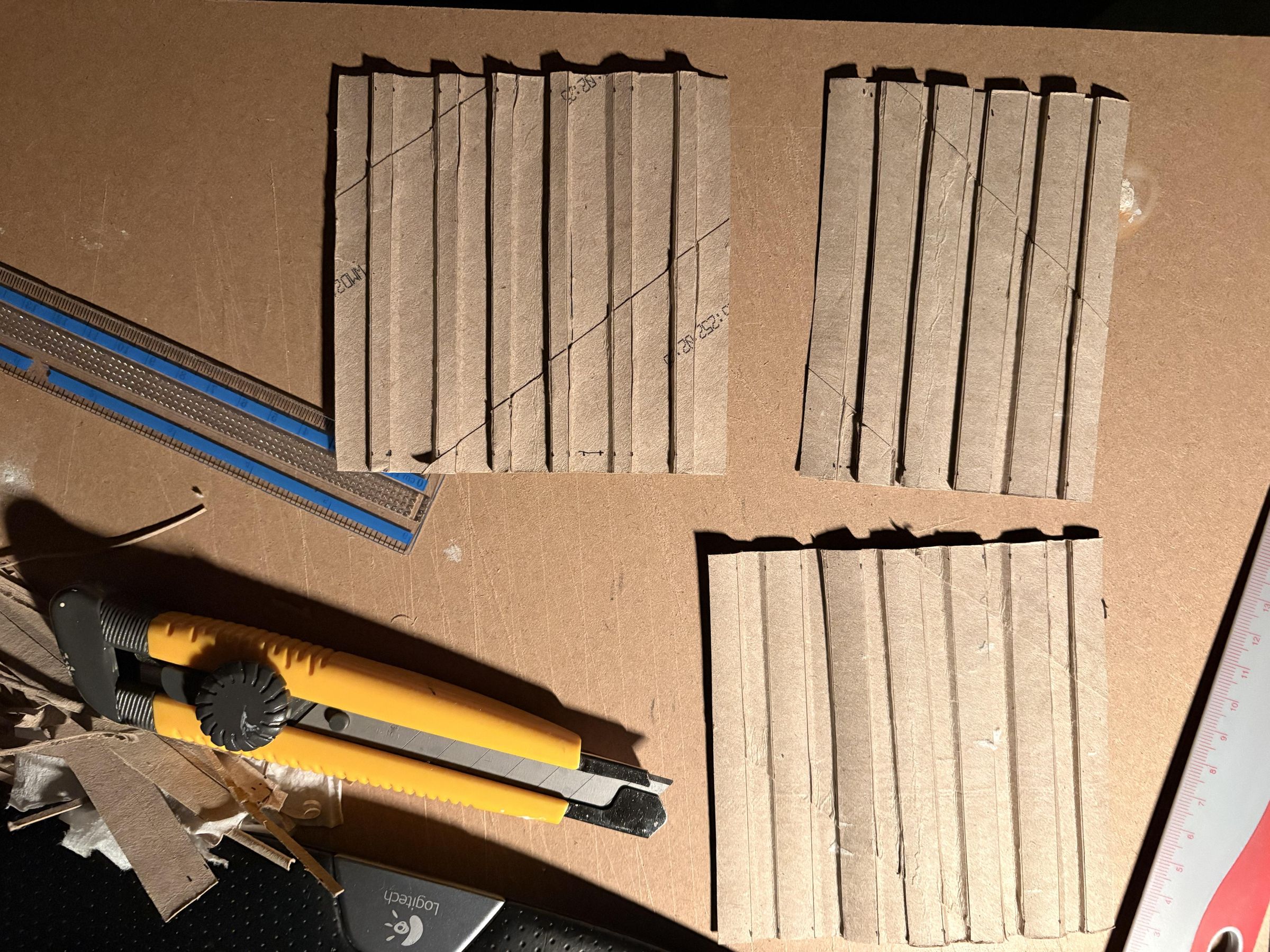
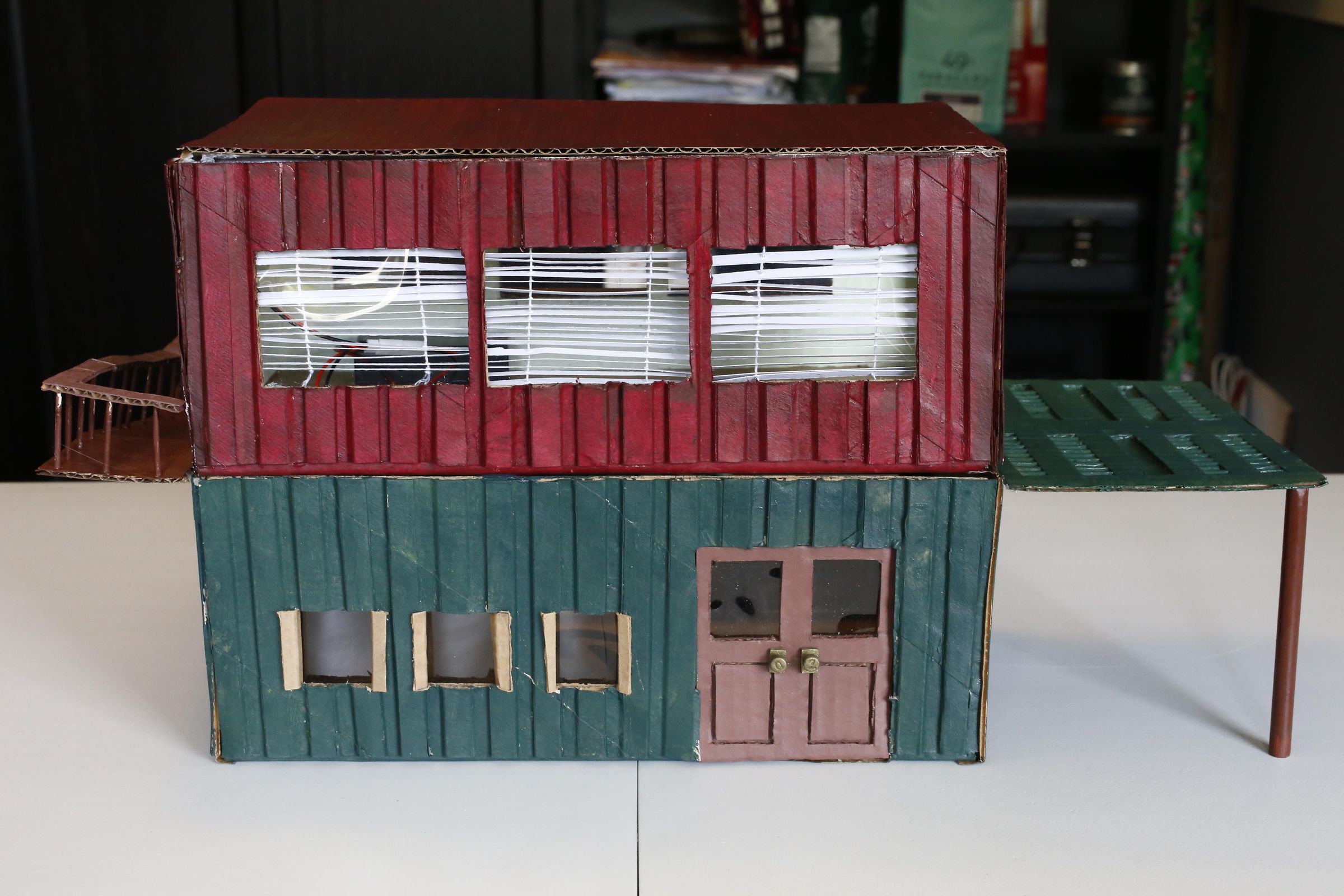
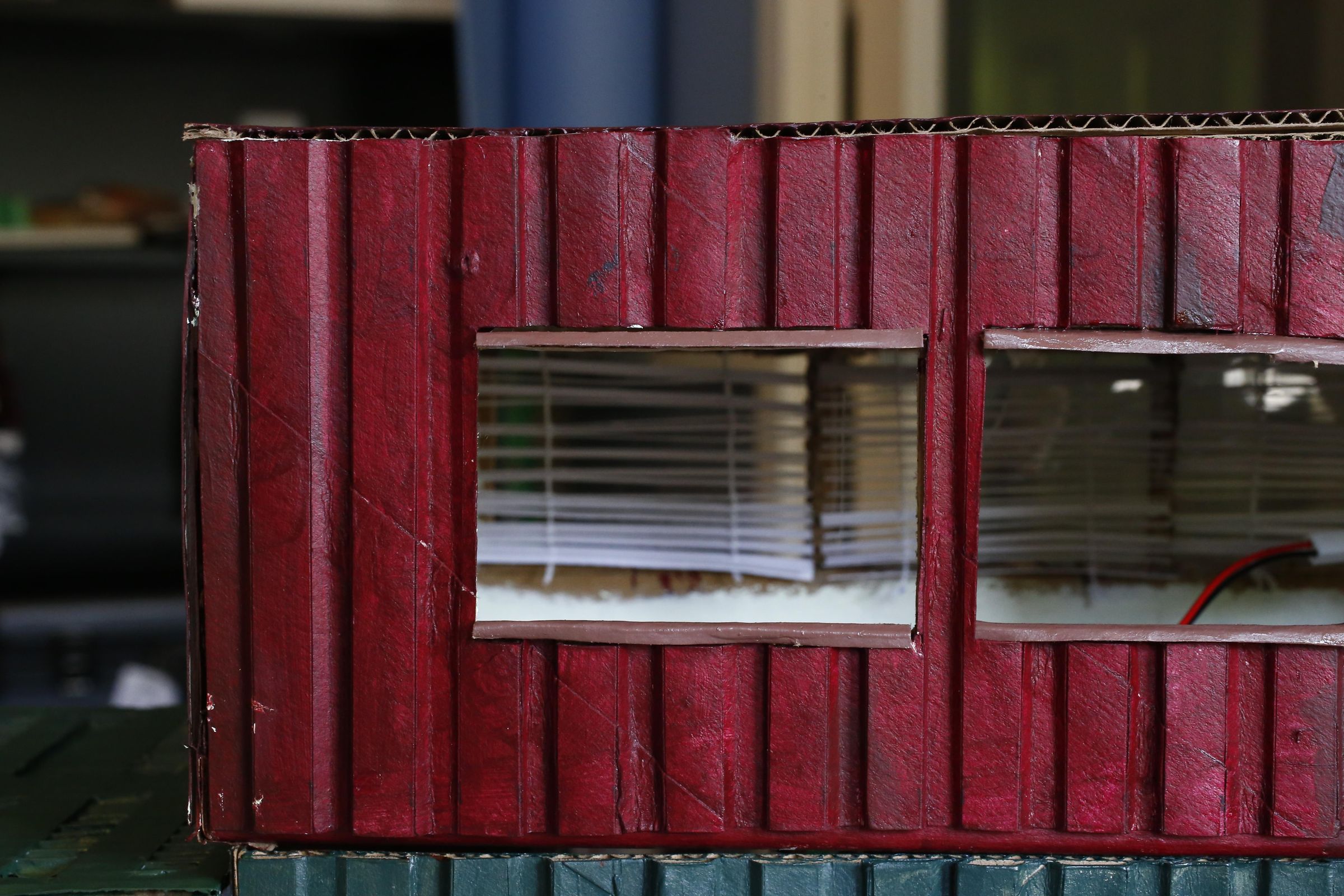
I wanted to capture the texture of the shipping containers for the physical aspect of this project. I ended up using toilet paper rolls, scoring and folding them. I glued them to the walls that I had pre-cut.
LEDs
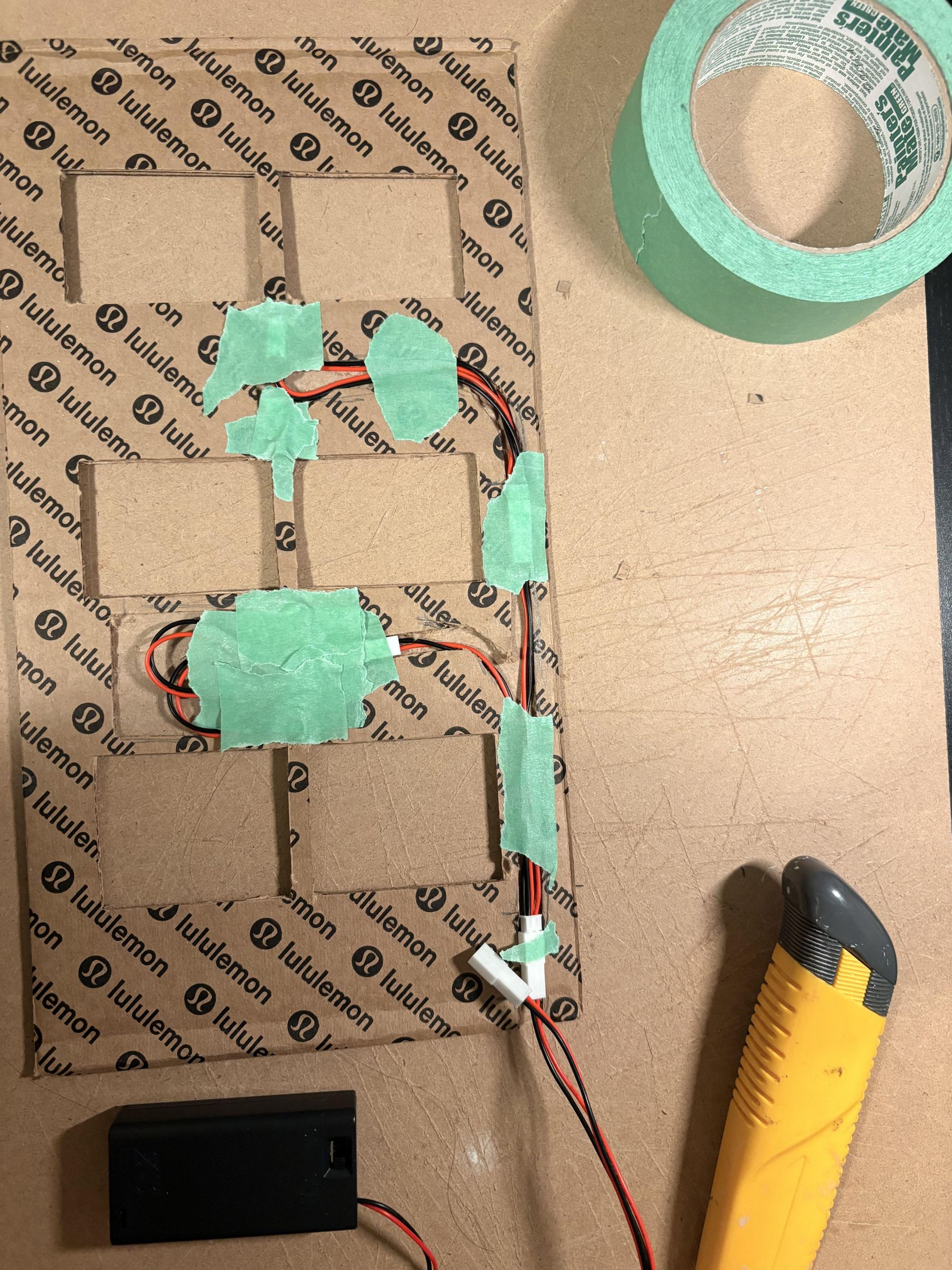
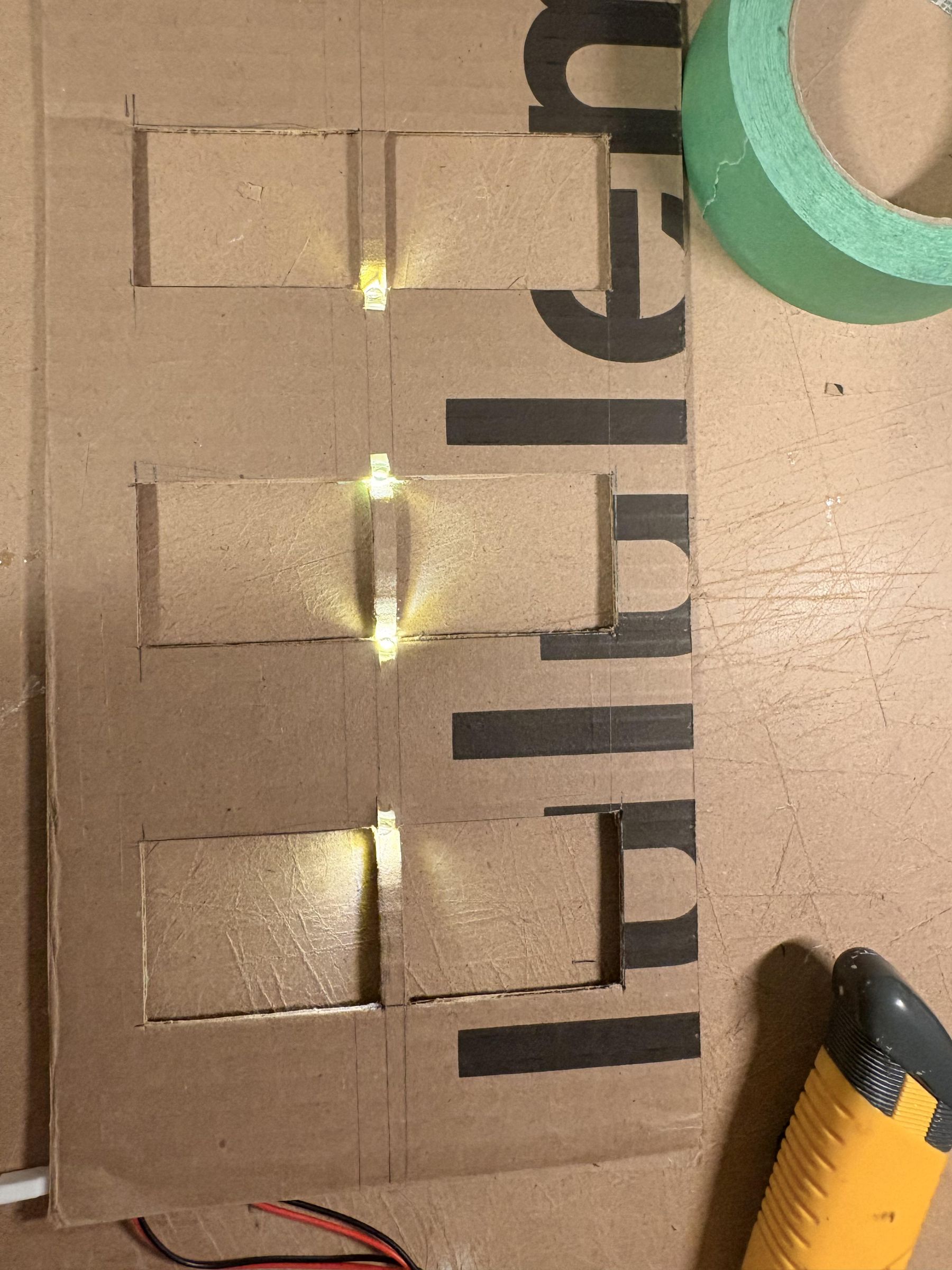
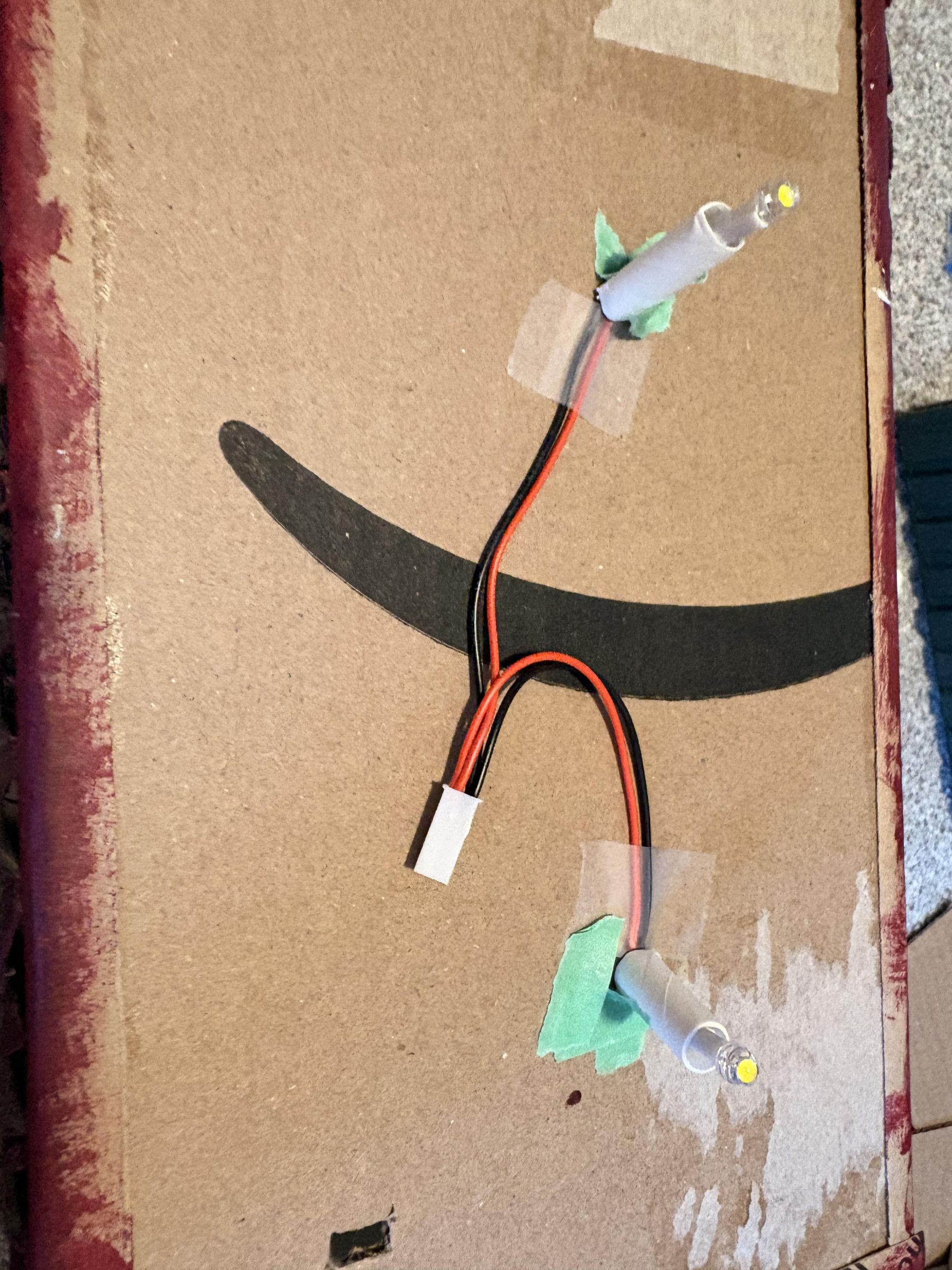
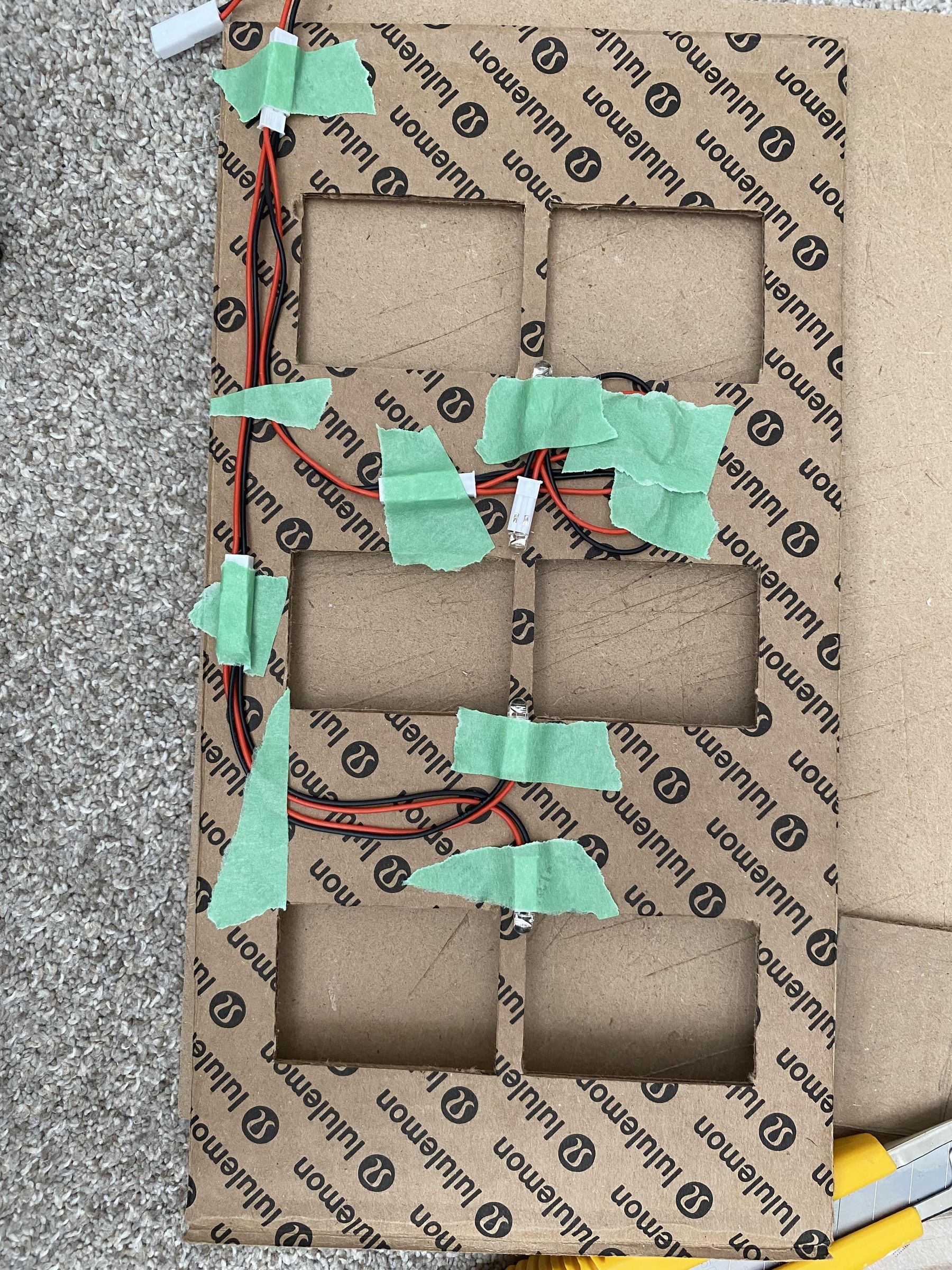

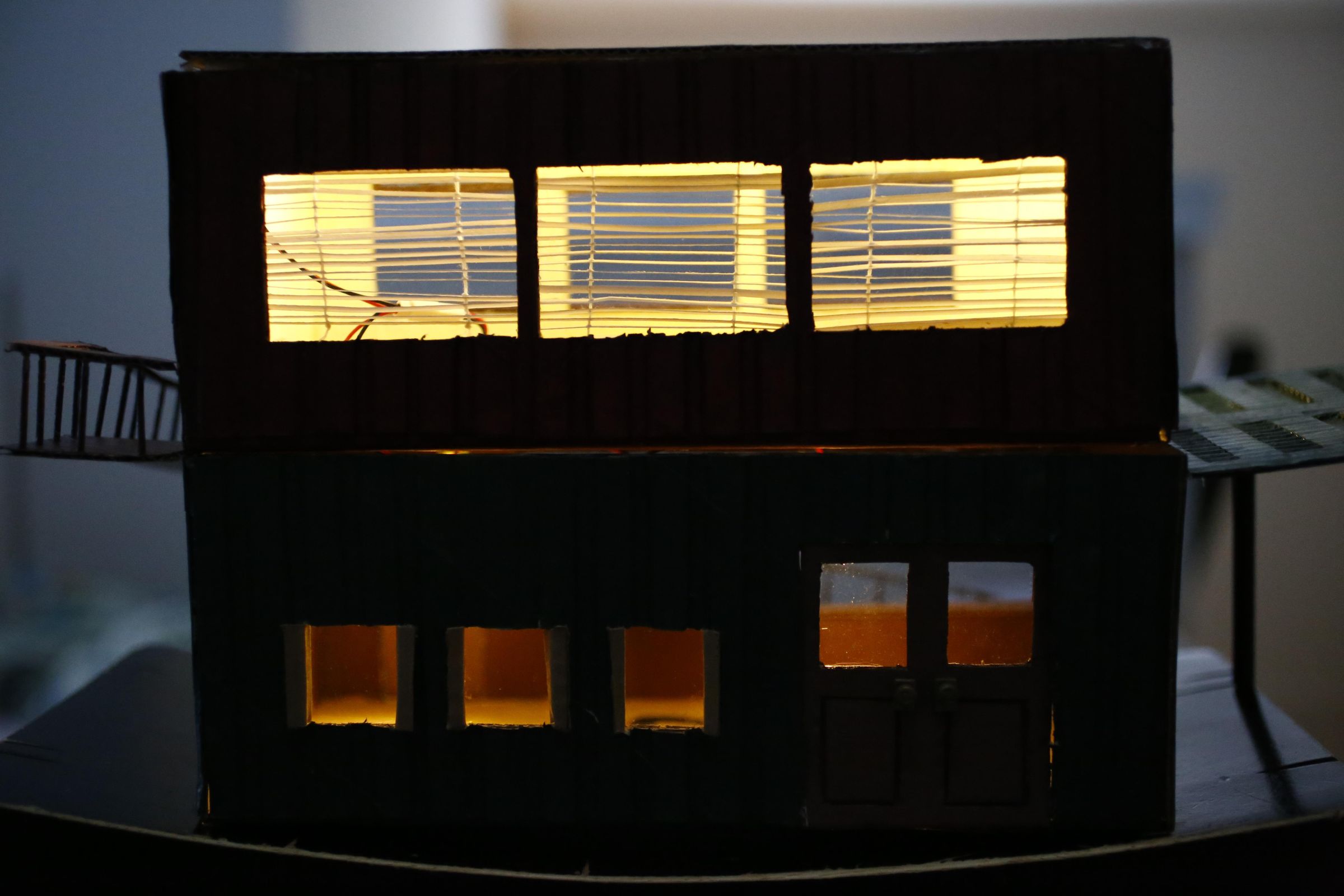
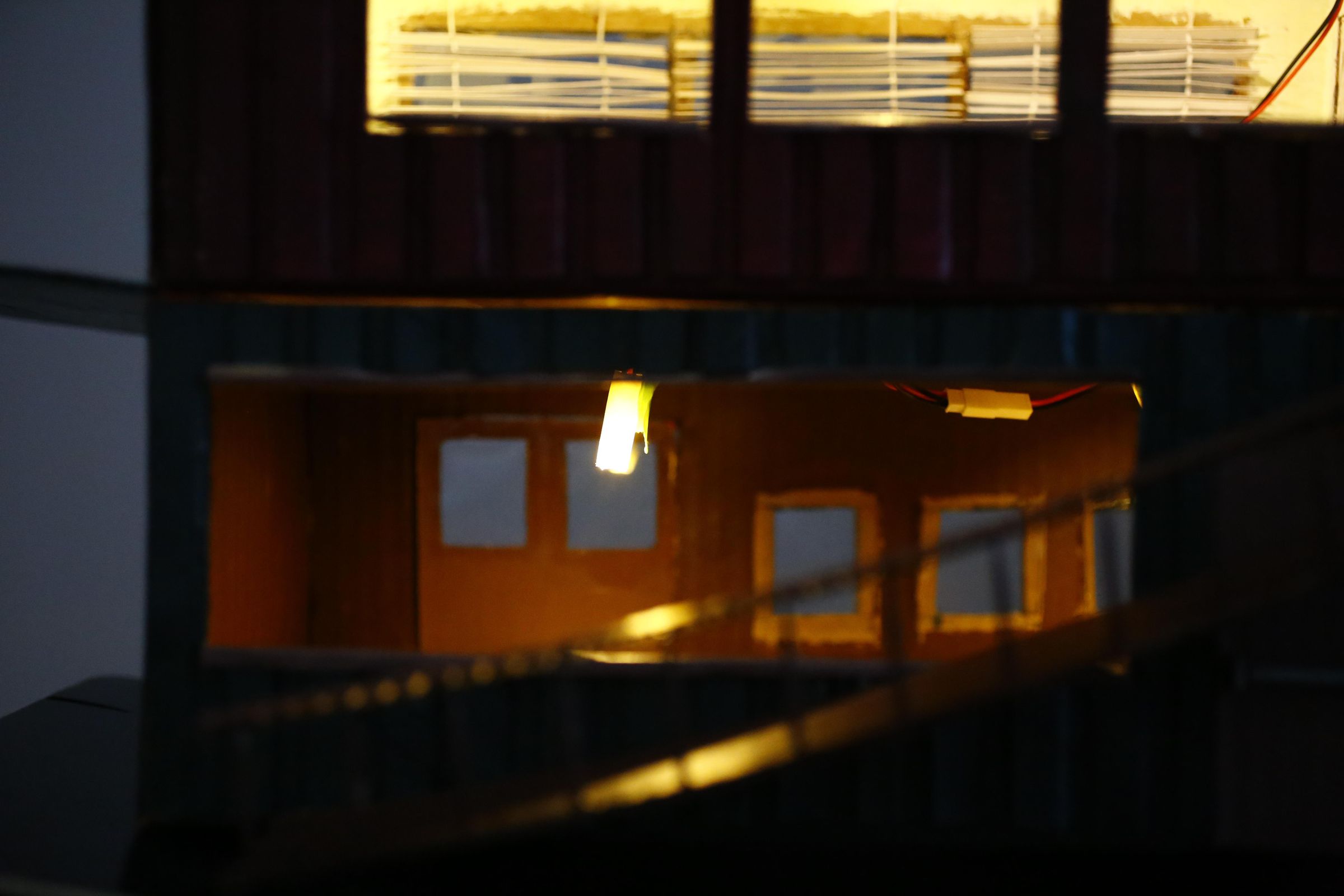
To add a sense of liveliness, I wanted to use LEDs. I did not buy them specifically for this project, and I was waiting for the right time to use them. I was only planning for the ground floor classroom to be lit up, but then I realized that I had enough individual LEDs for both classrooms.
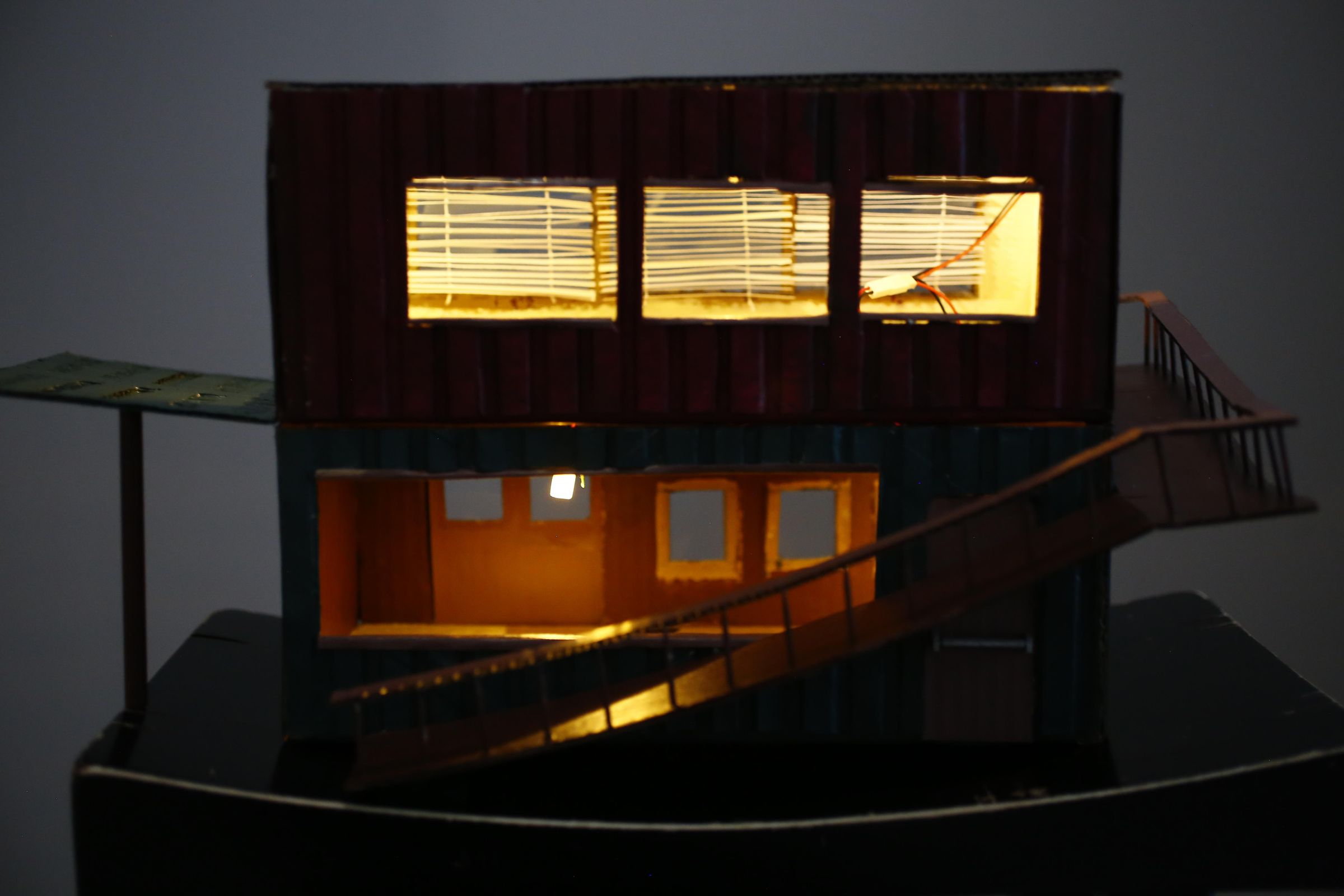
In total, there were 6 LEDs, all connected to one battery pack. But the way that the lights were designed, I could not put 3 LEDs in each room. It had to be divvied up 2 and 4. I gave the ground floor 2 lights (pointing straight down), and the second floor the rest (they were horizontally because I wanted to hide them). The battery pack in hiding on the second floor.
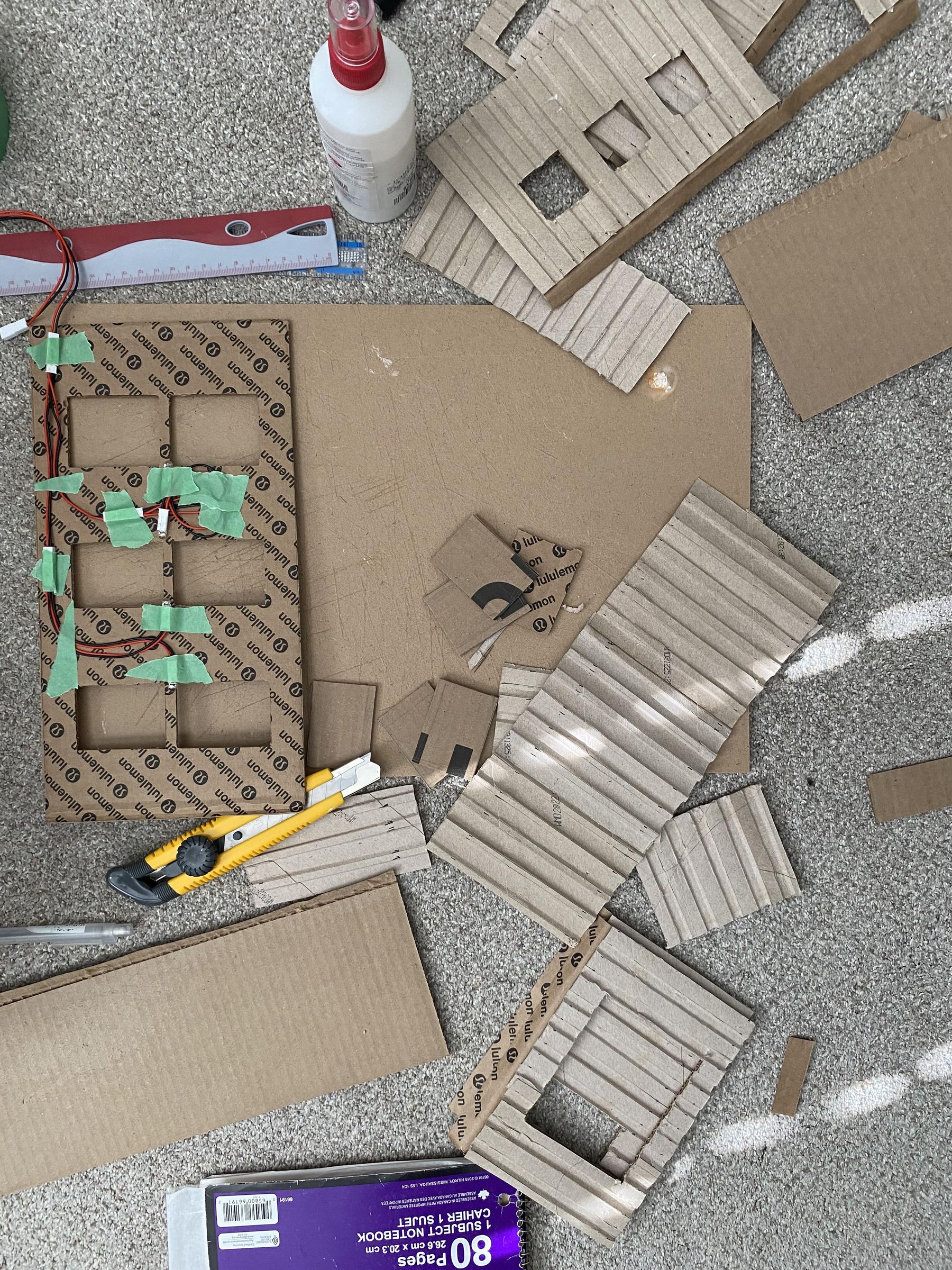
To clarify, the first and second photos are the ceiling of the second floor, and the third photo is the ceiling of the ground floor.
Painting the Structure
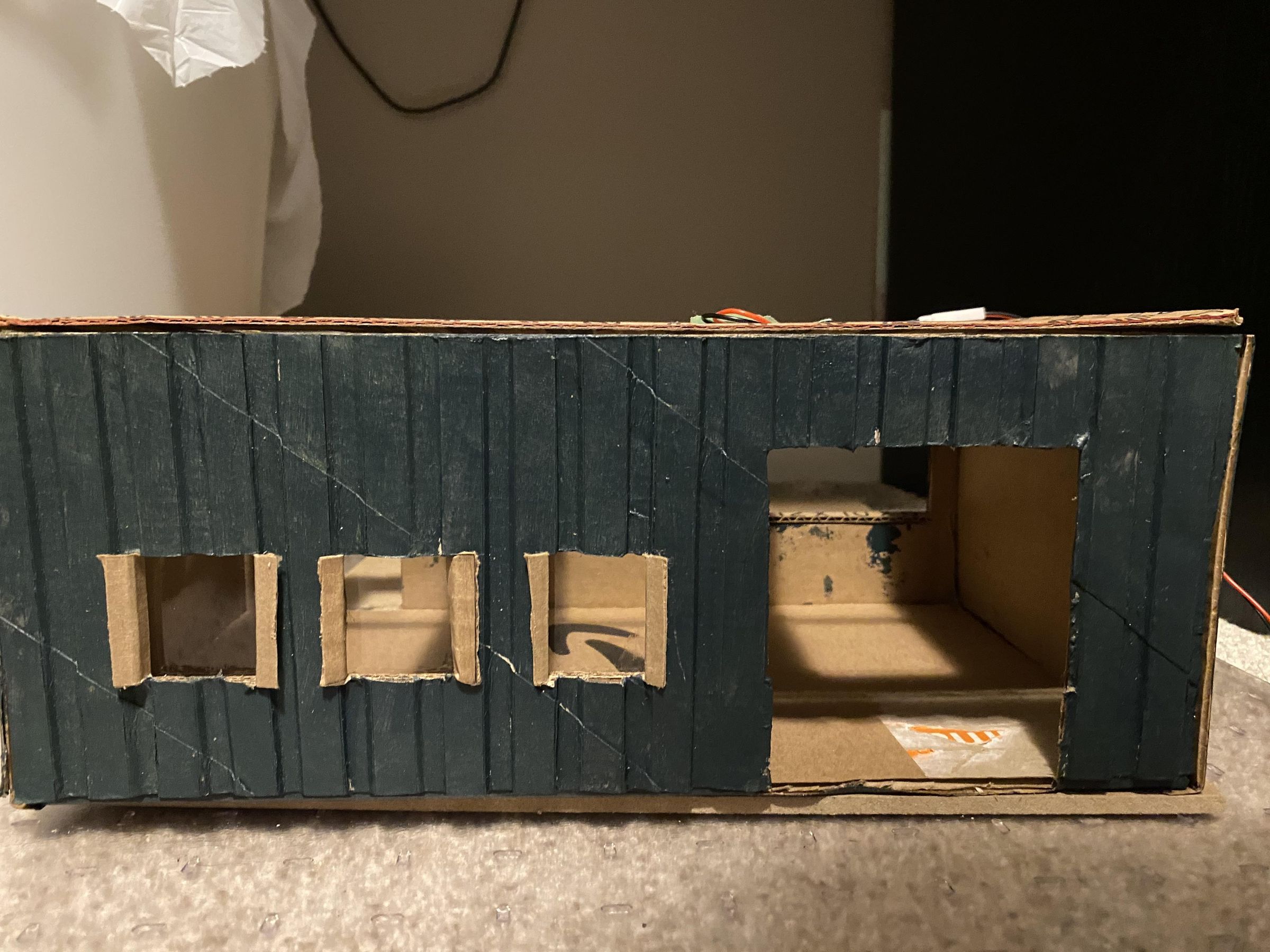
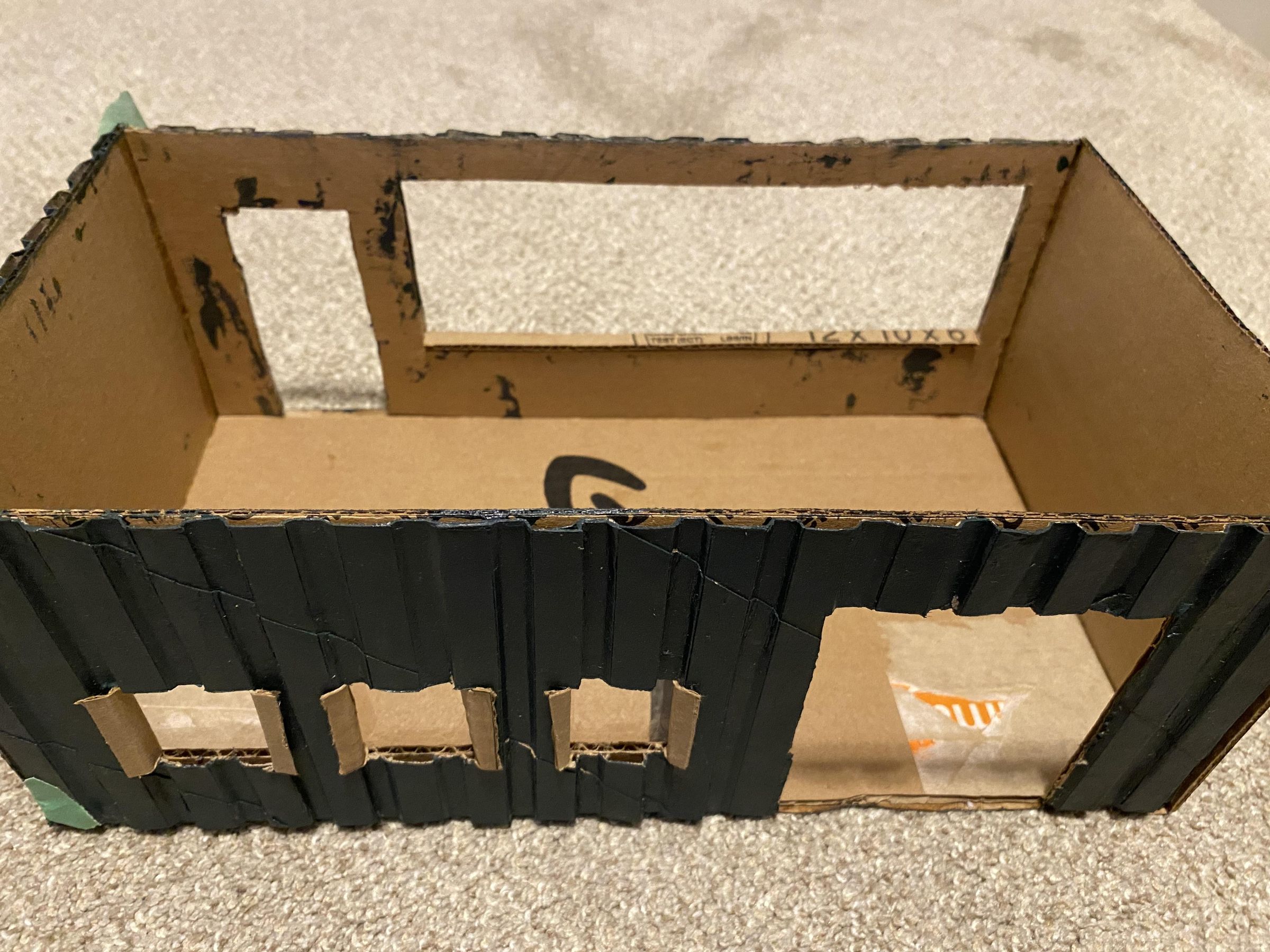
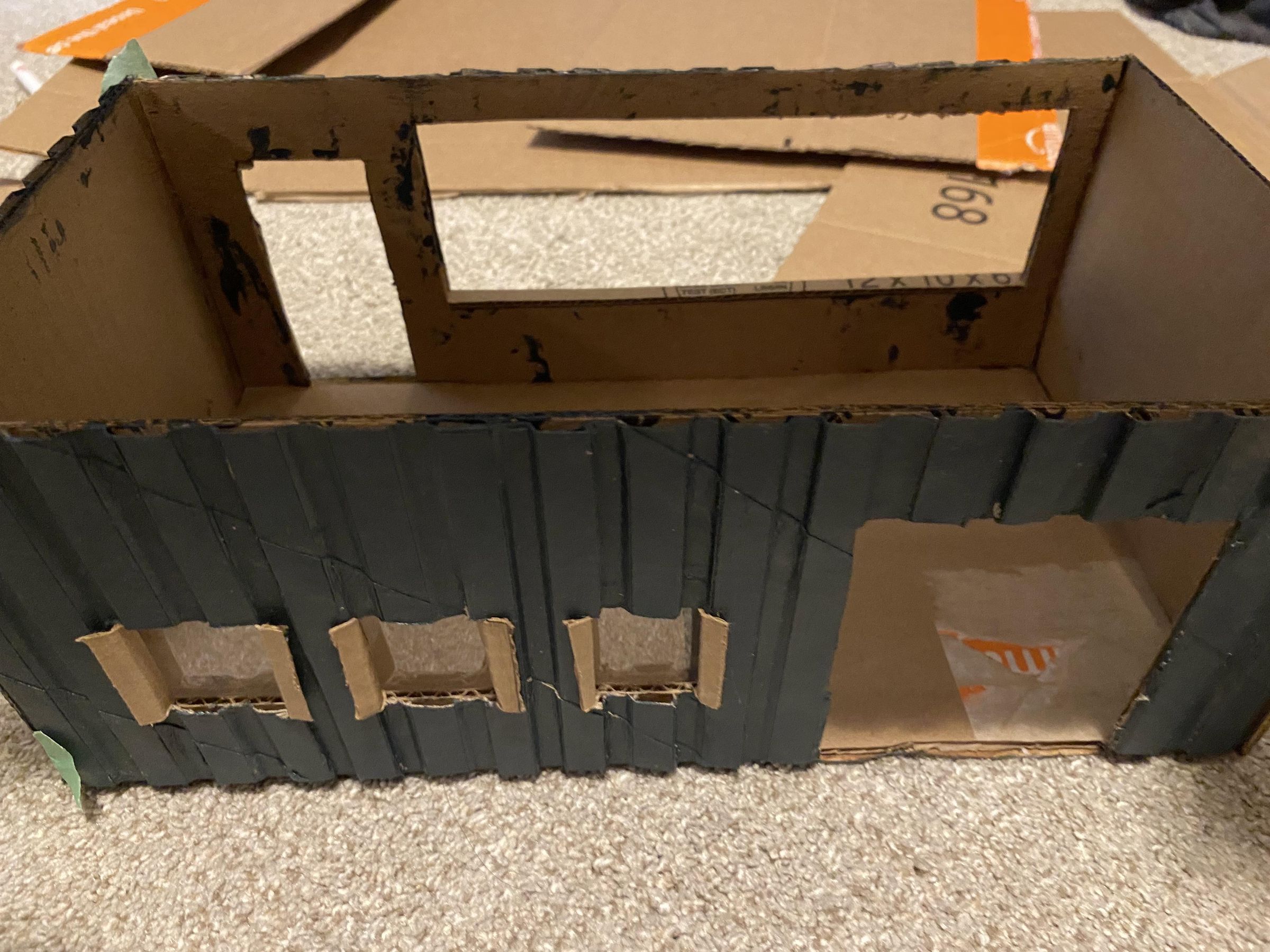


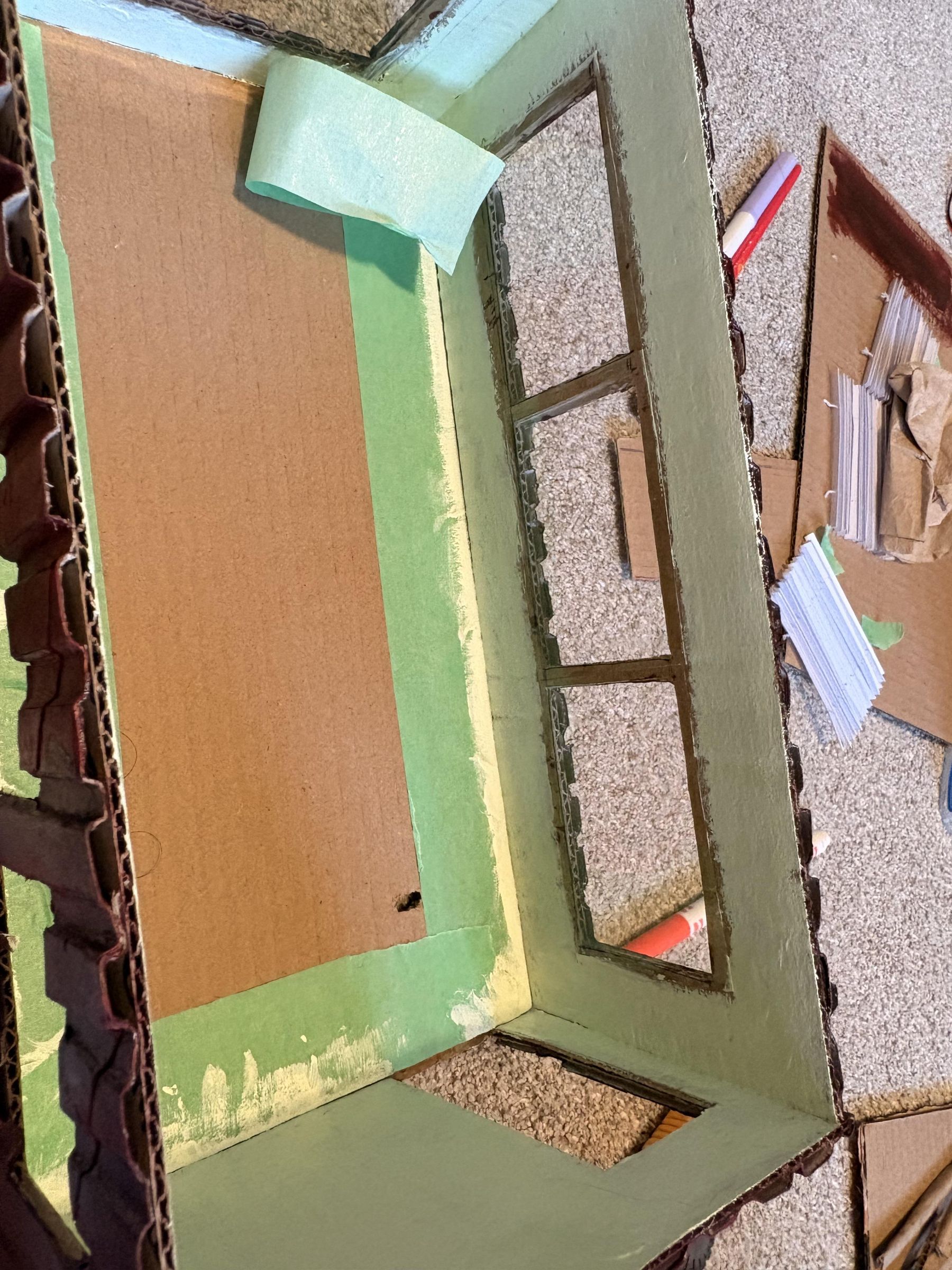
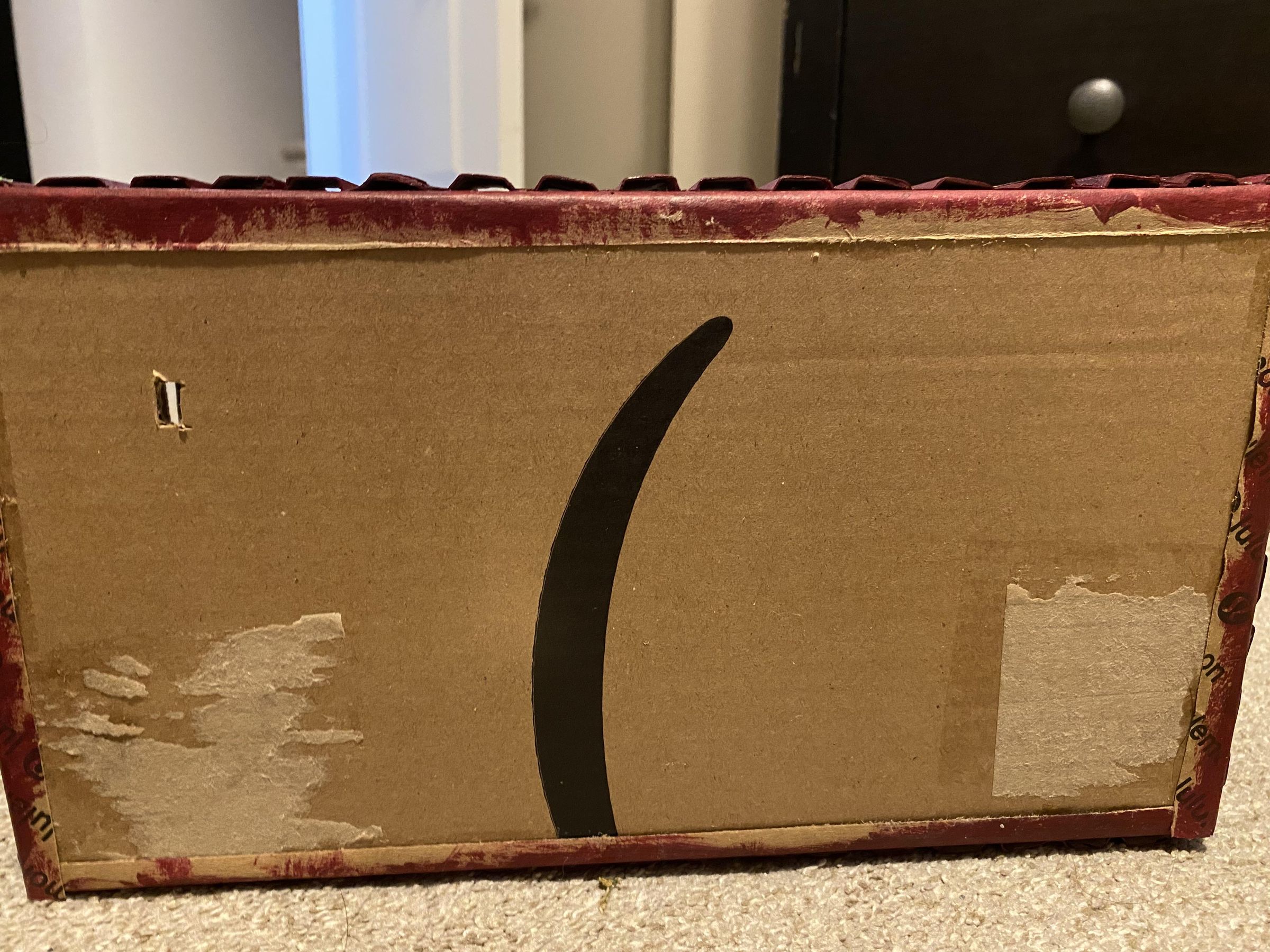
Then, I painted all the walls. I made the bottom container green and the top one red. Gluing all the walls took so long, because I had to wait for each individual wall to dry before gluing another one. Also made a little hole in the floor of the second floor for the LED wires to go through.
I also painted the interior walls white and brown, which is something I should have done before gluing. I made a huge oversight, thinking that the interior wouldn't really matter. But it did, because of the abundance of windows in my design. Besides this decision, I try not to touch the interior again.
Doors and Windows
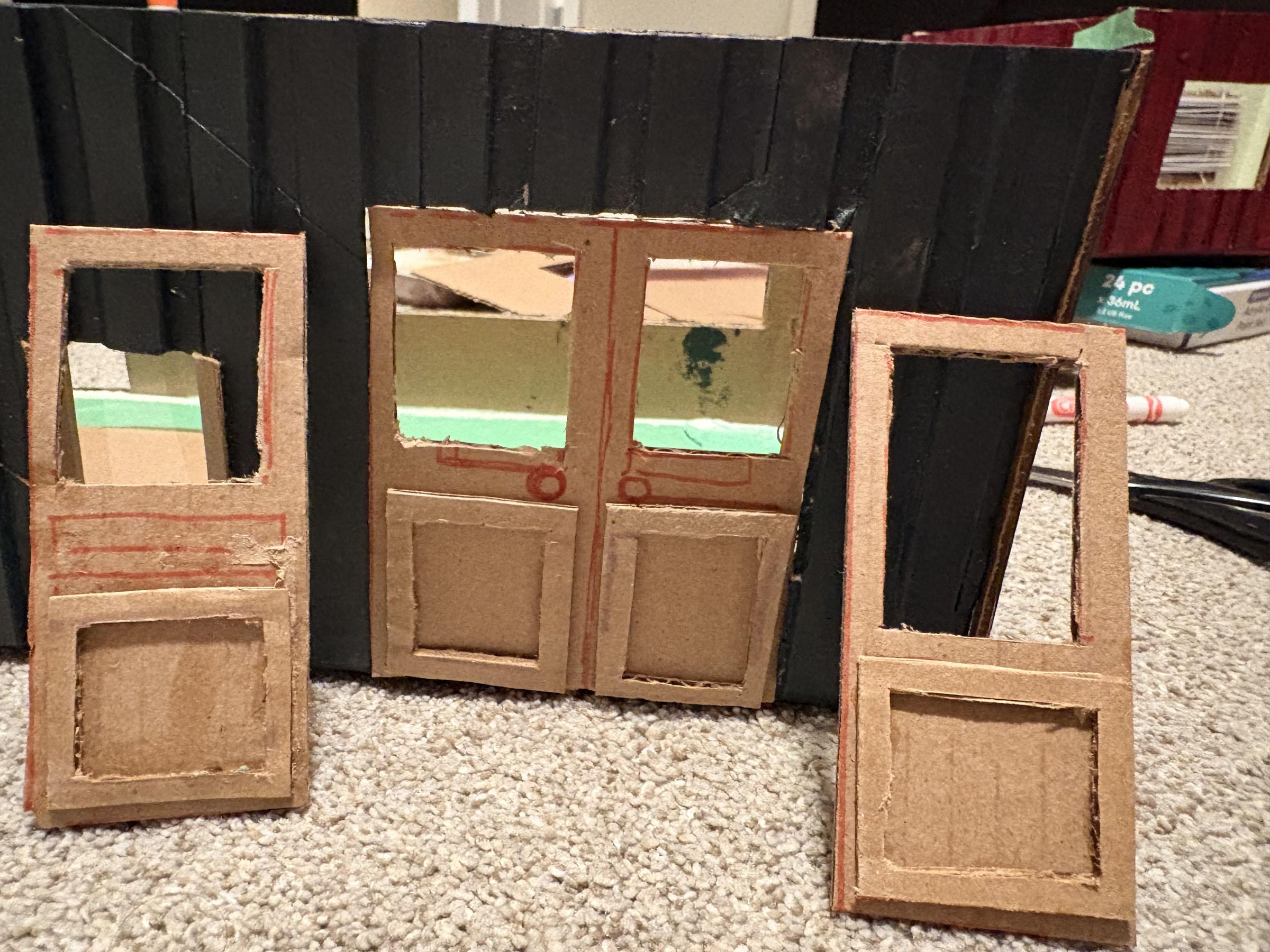


Doors
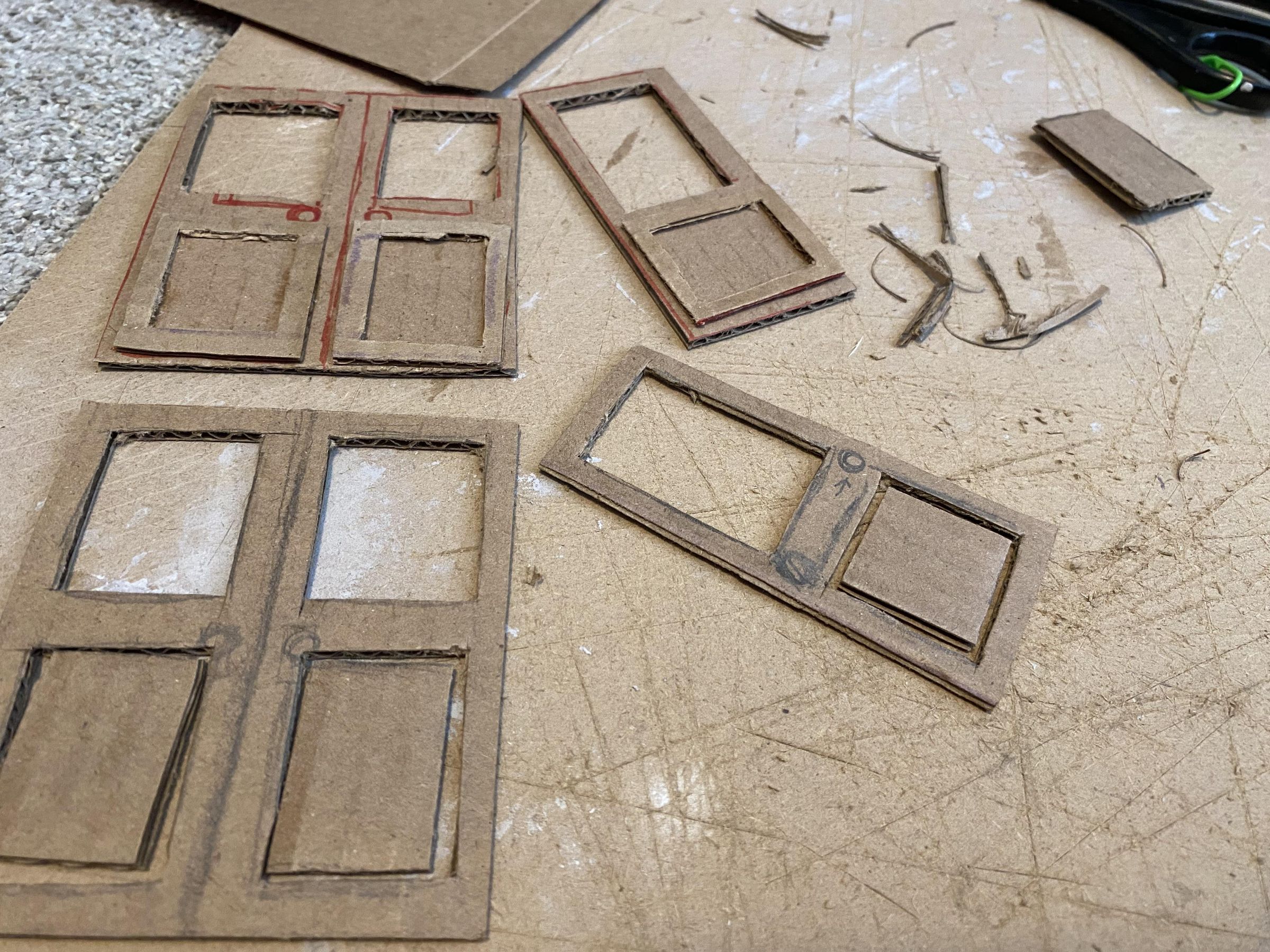
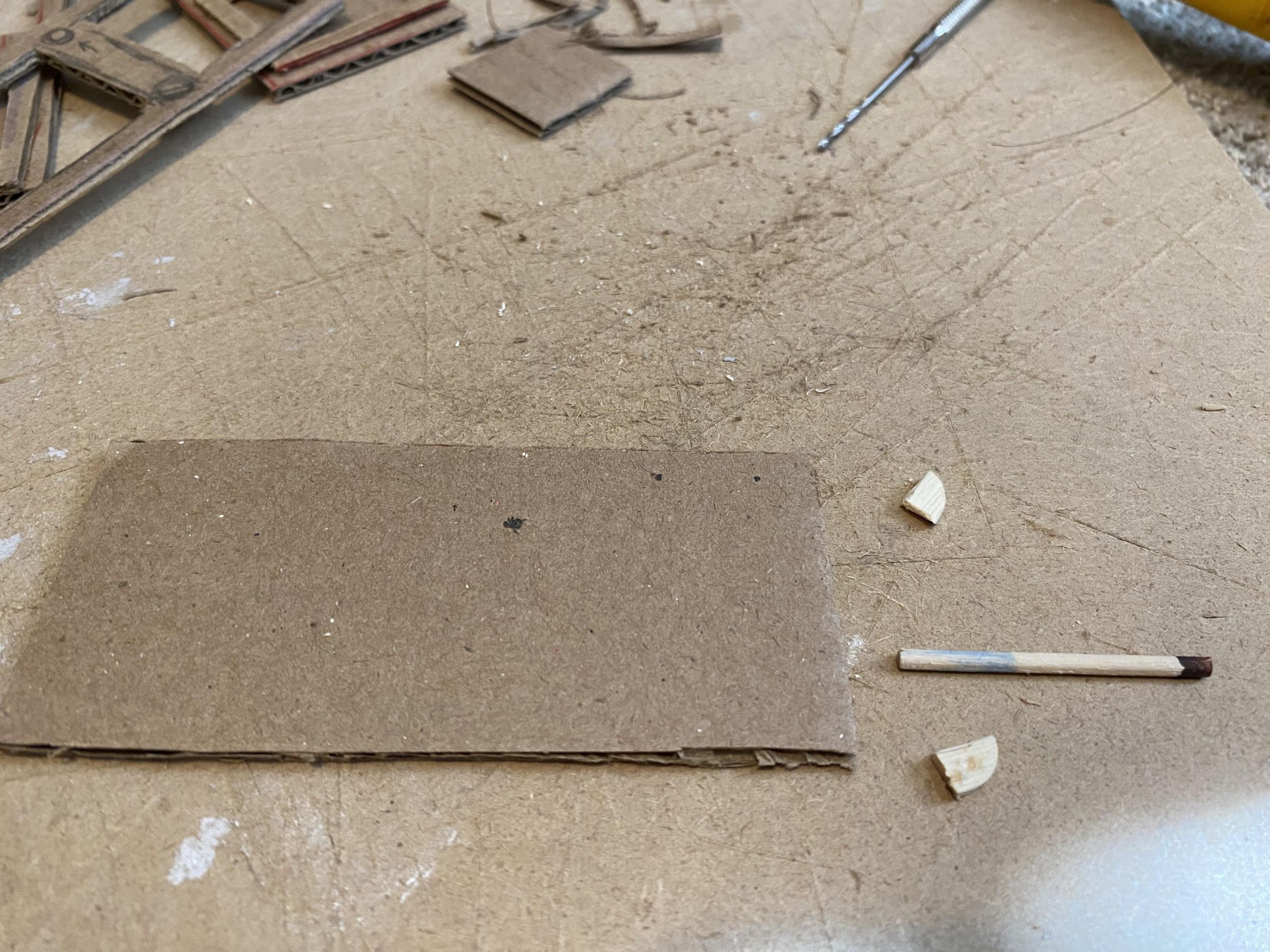
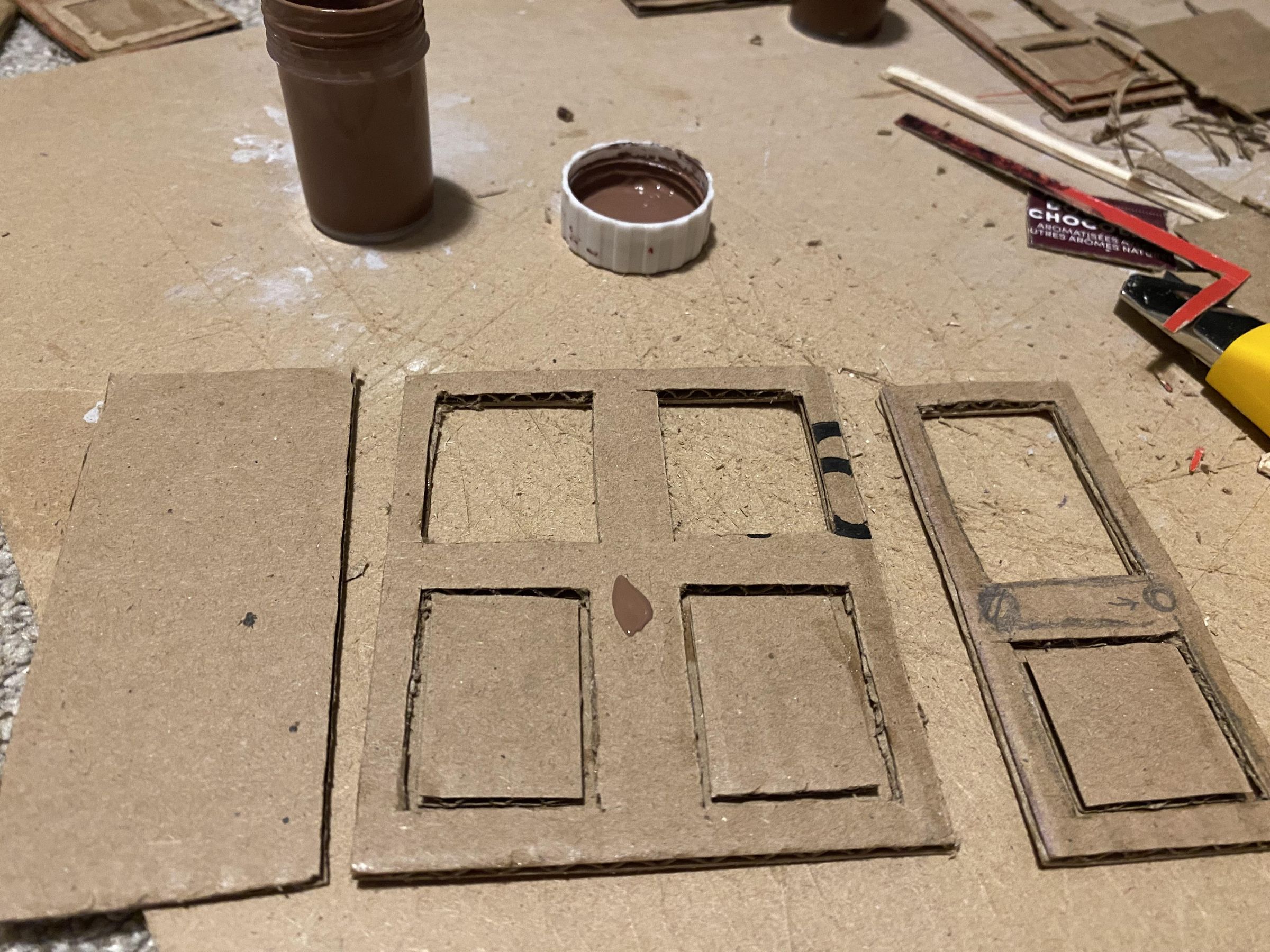
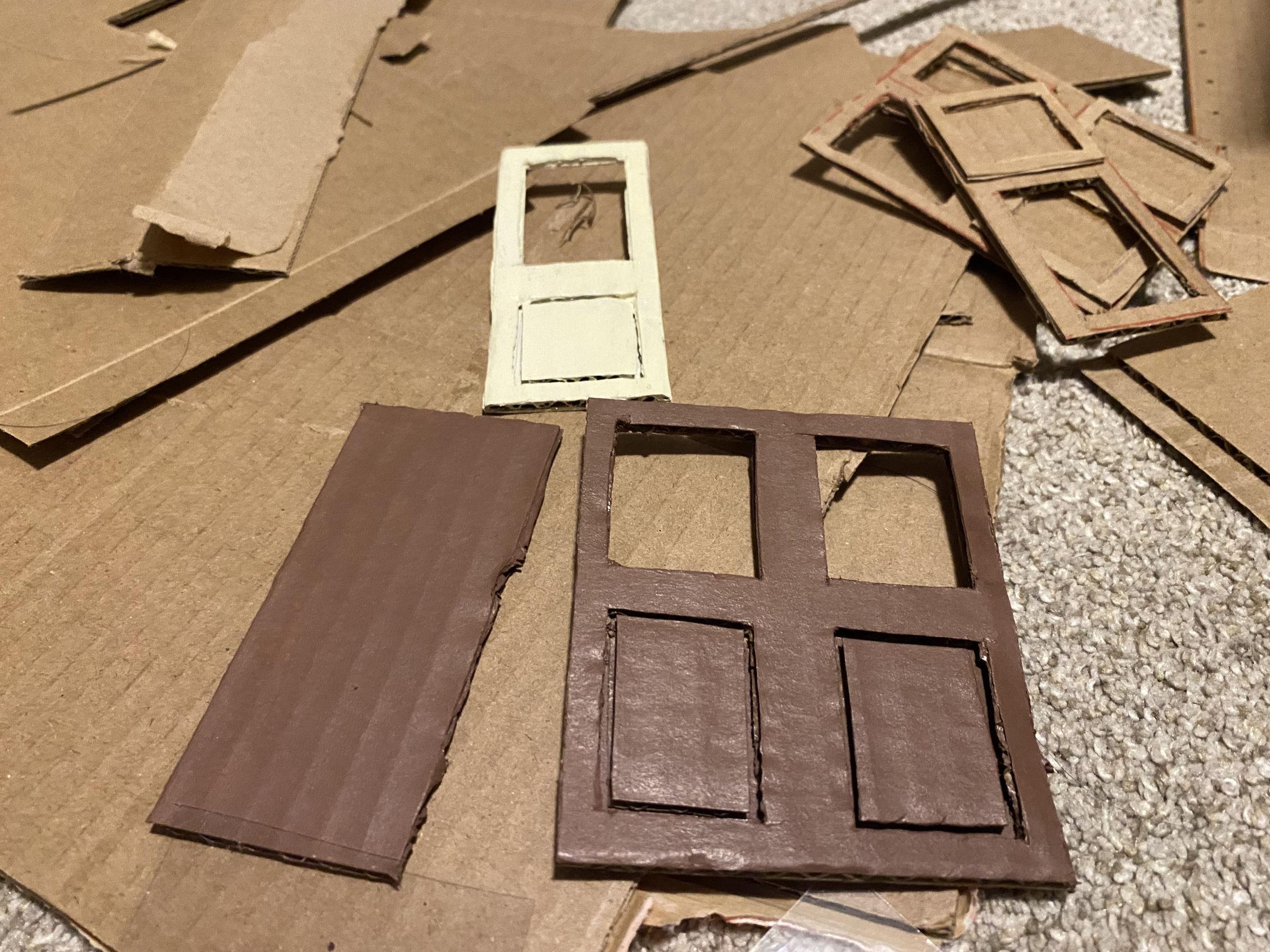
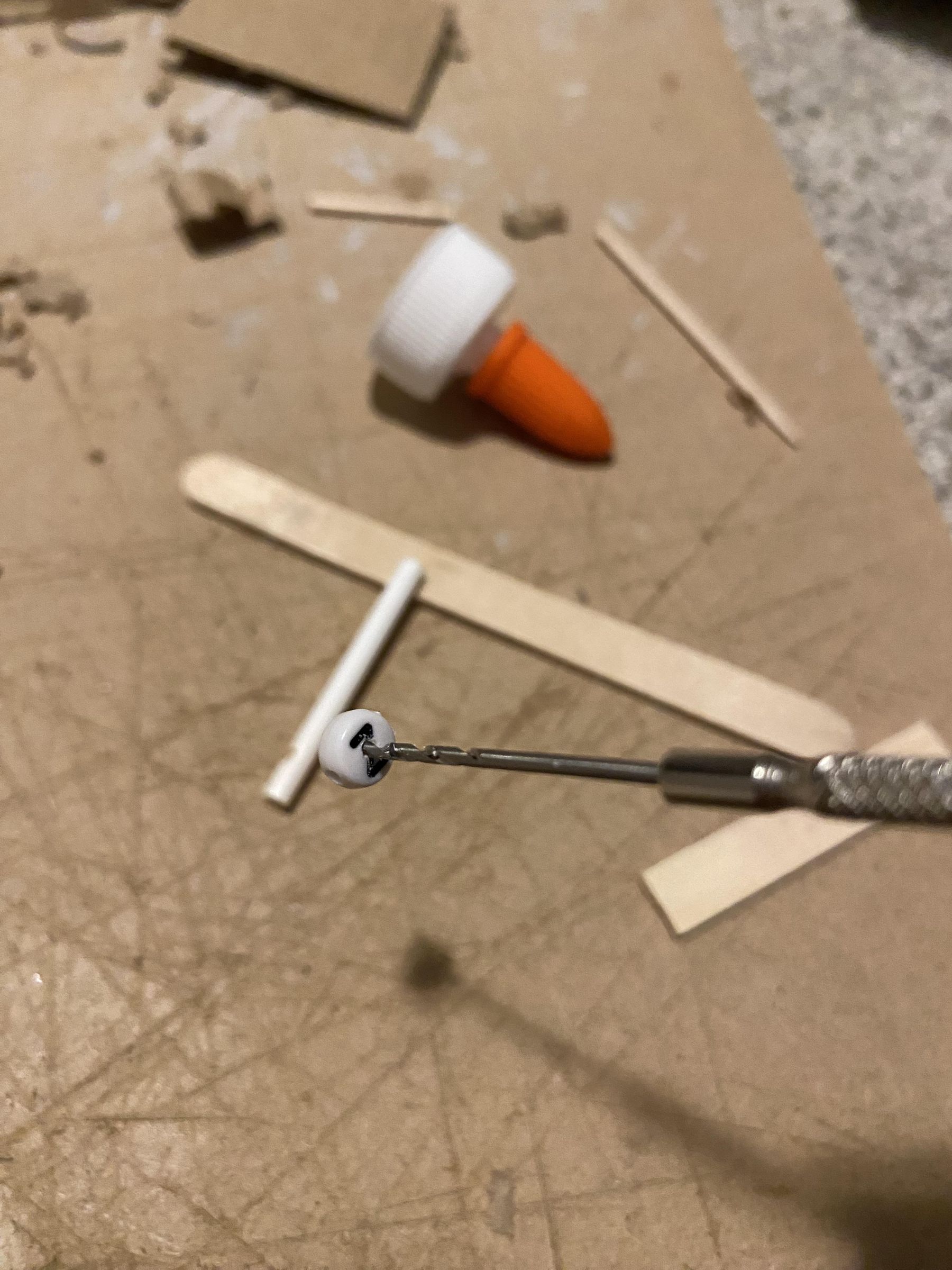
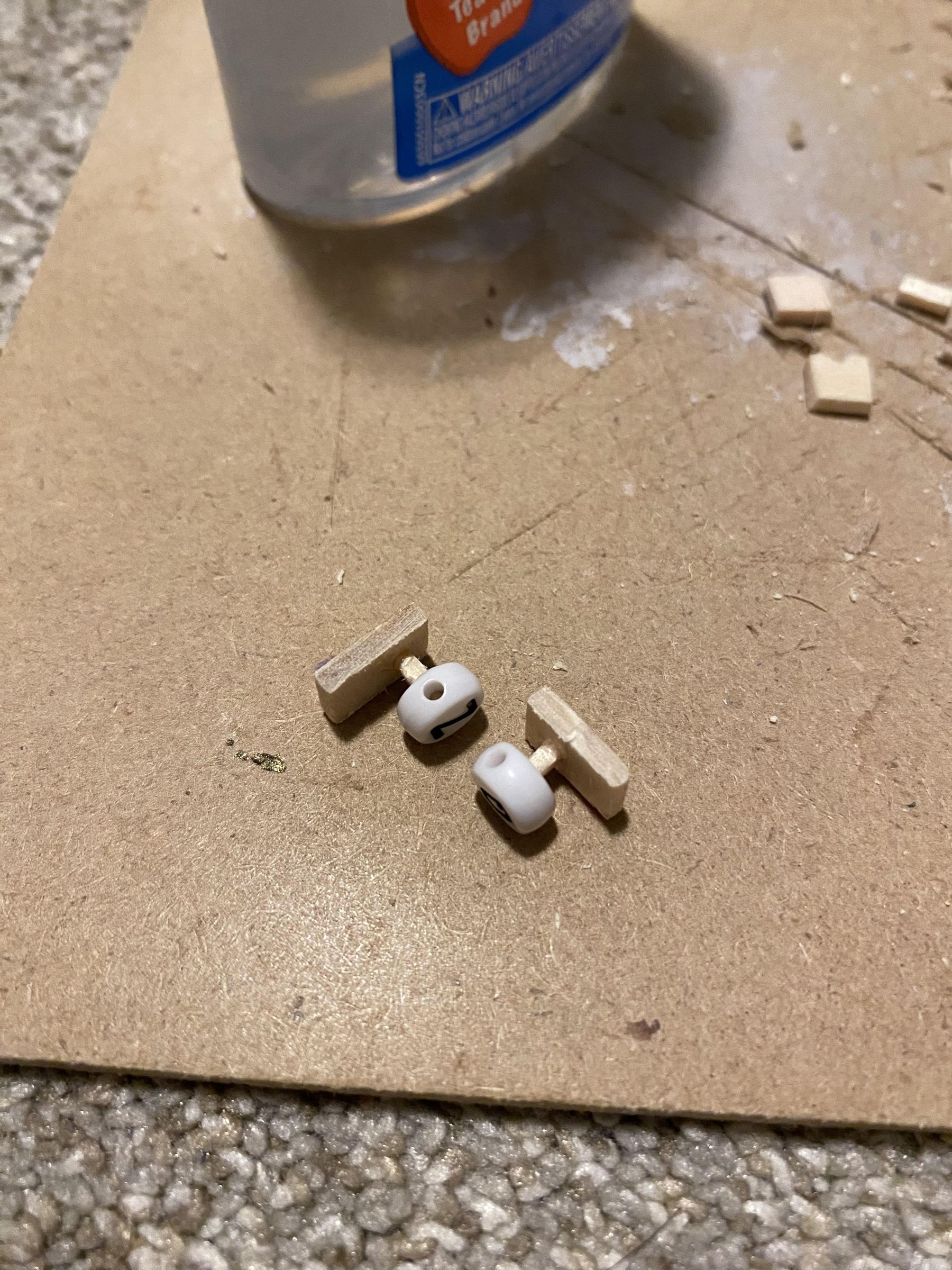
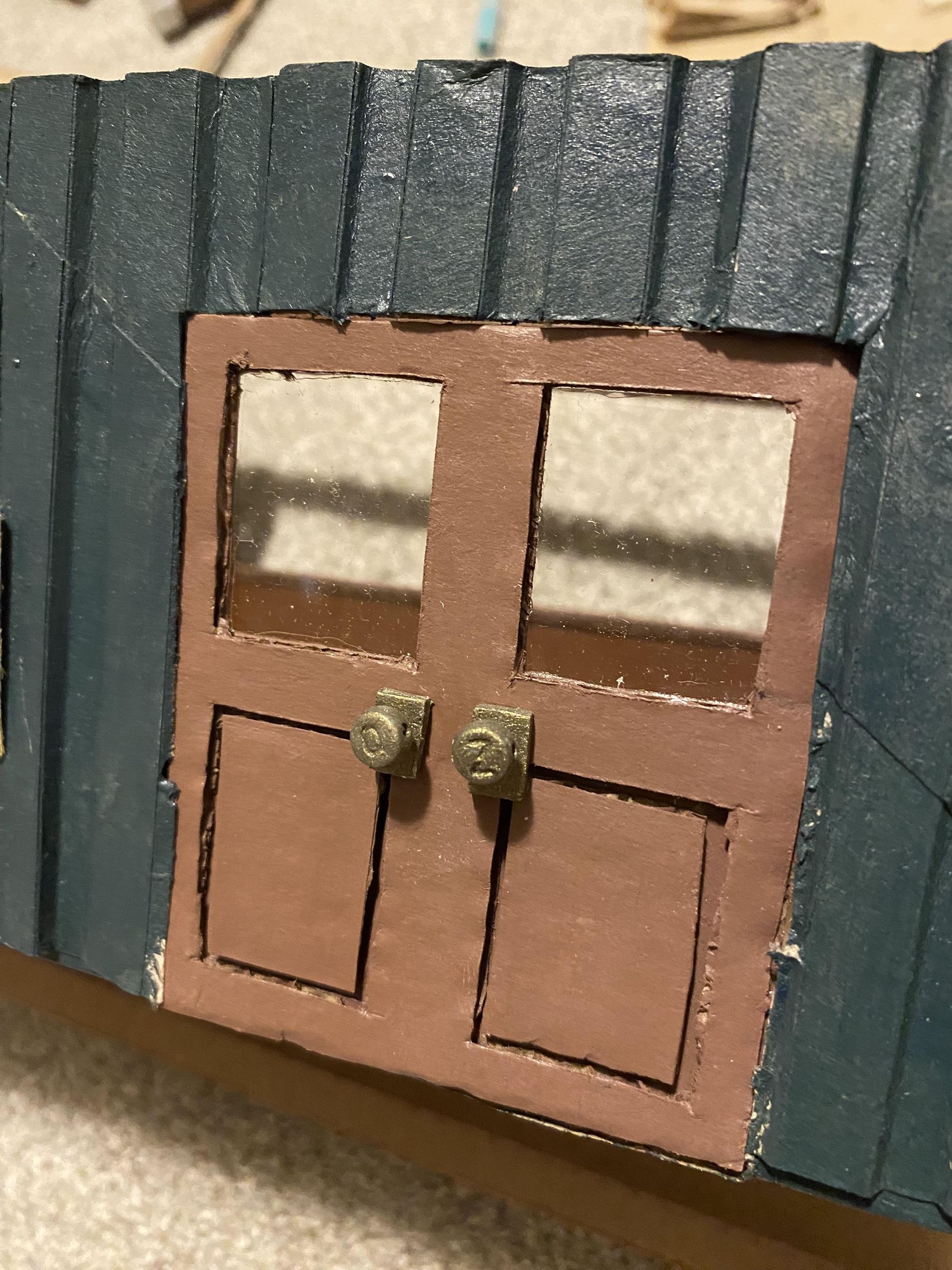
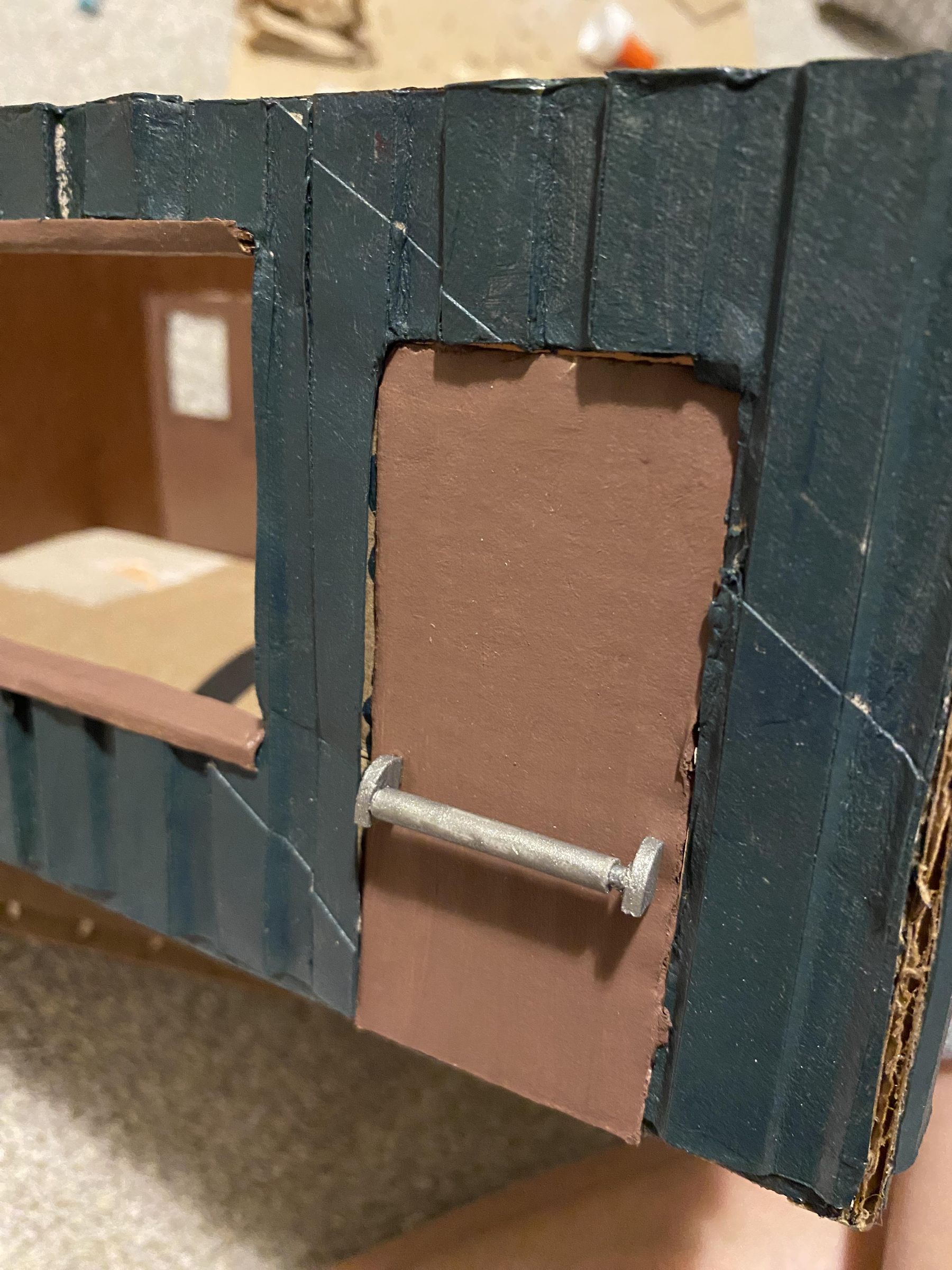
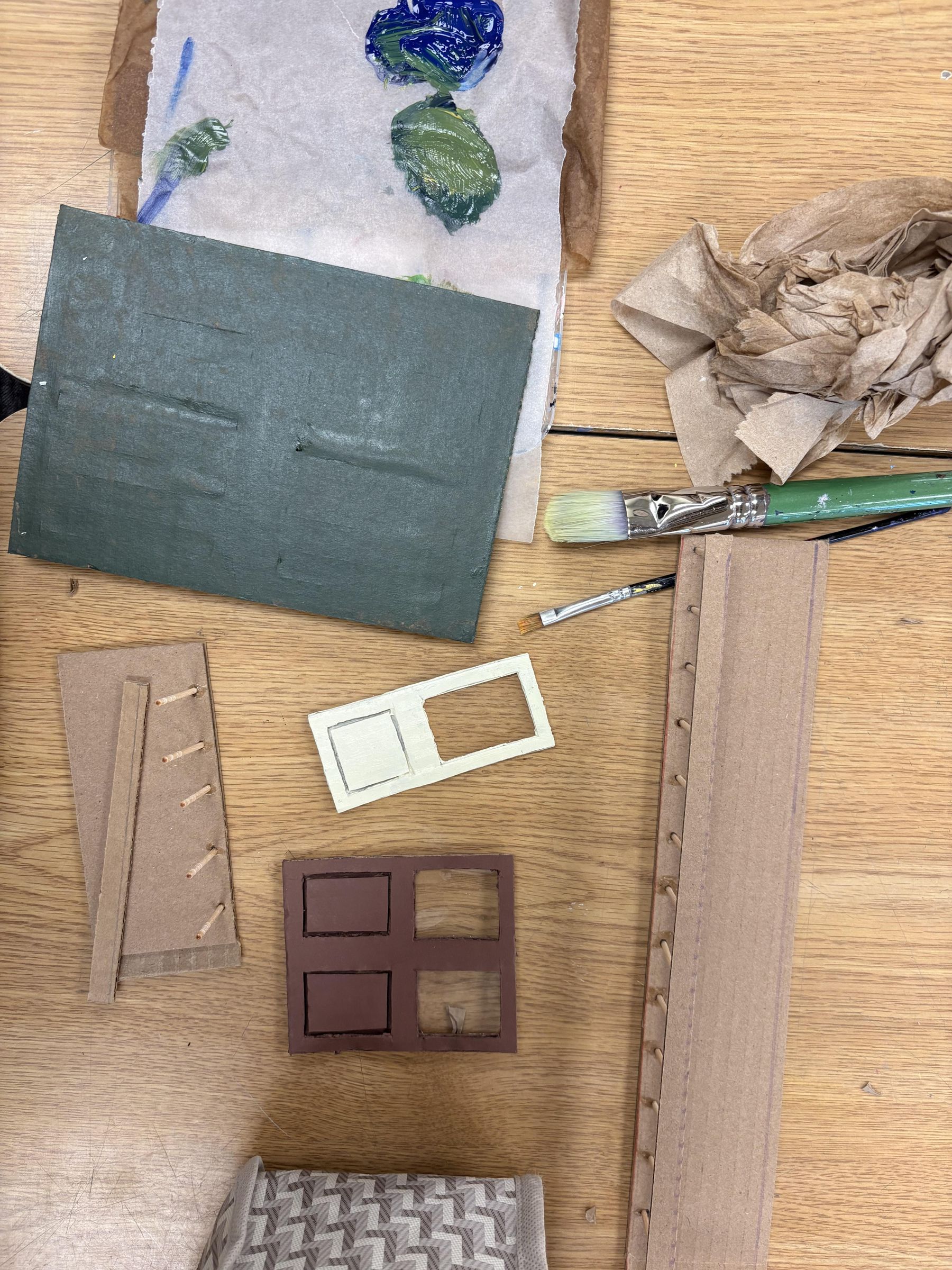
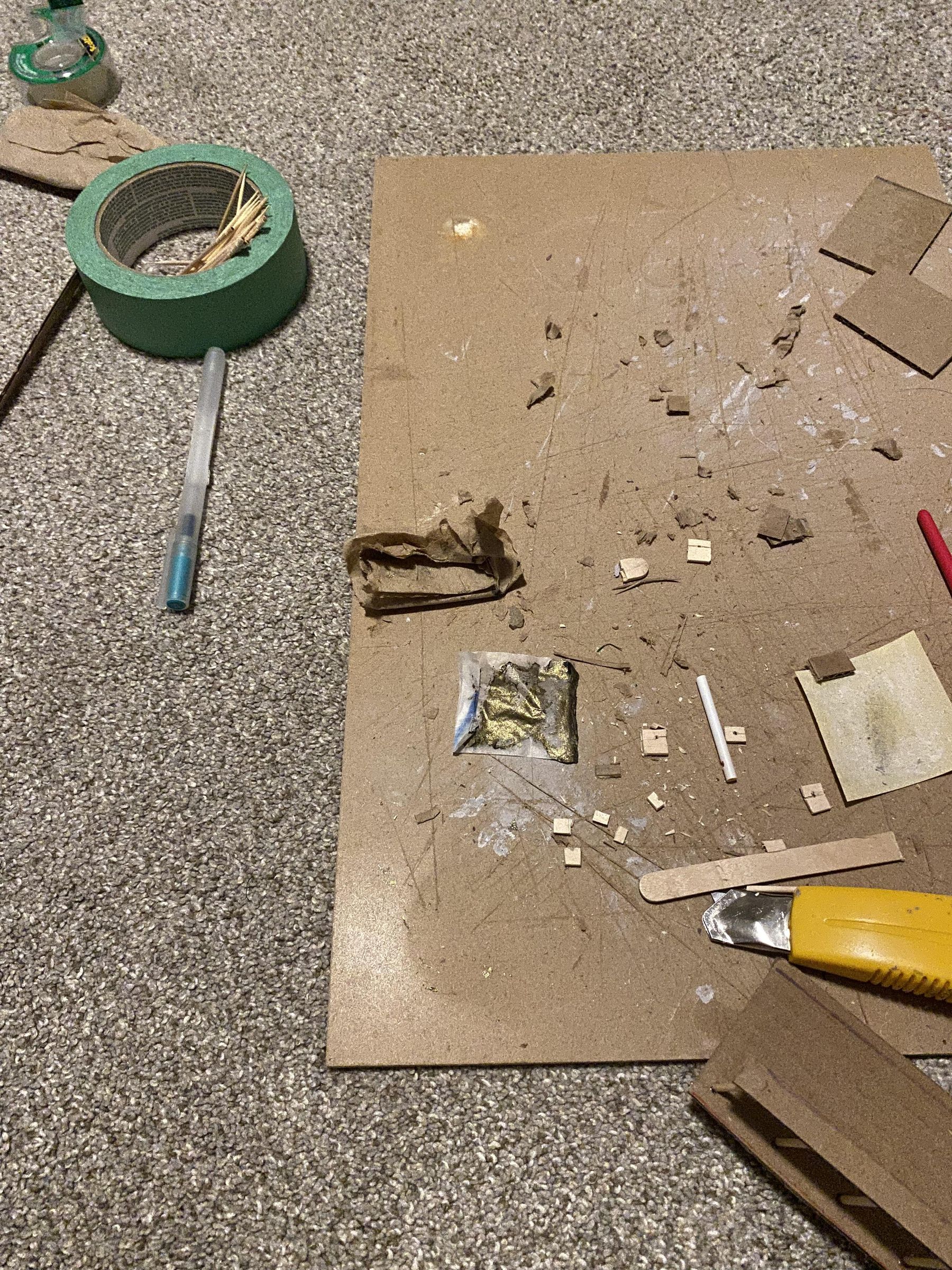
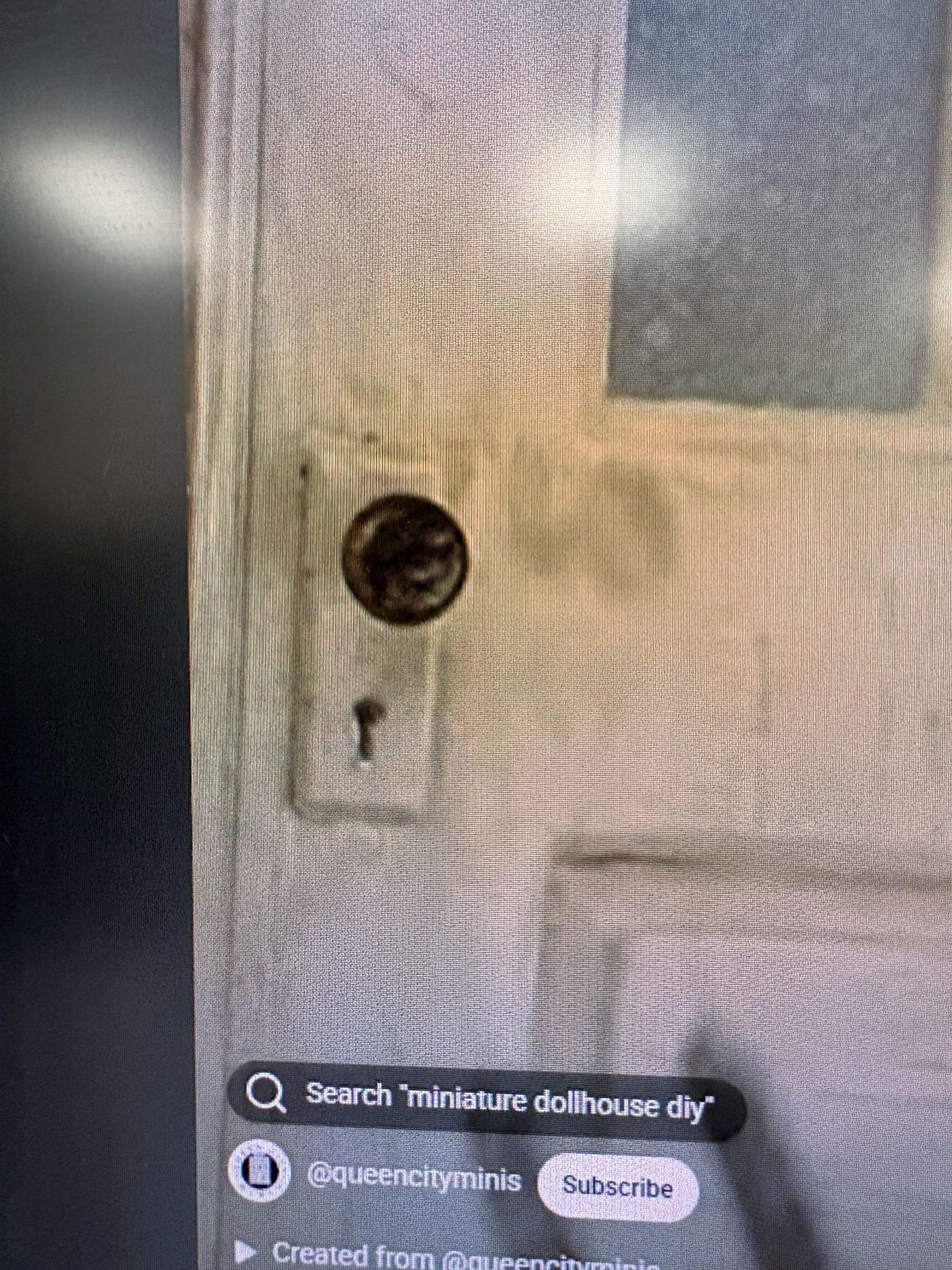
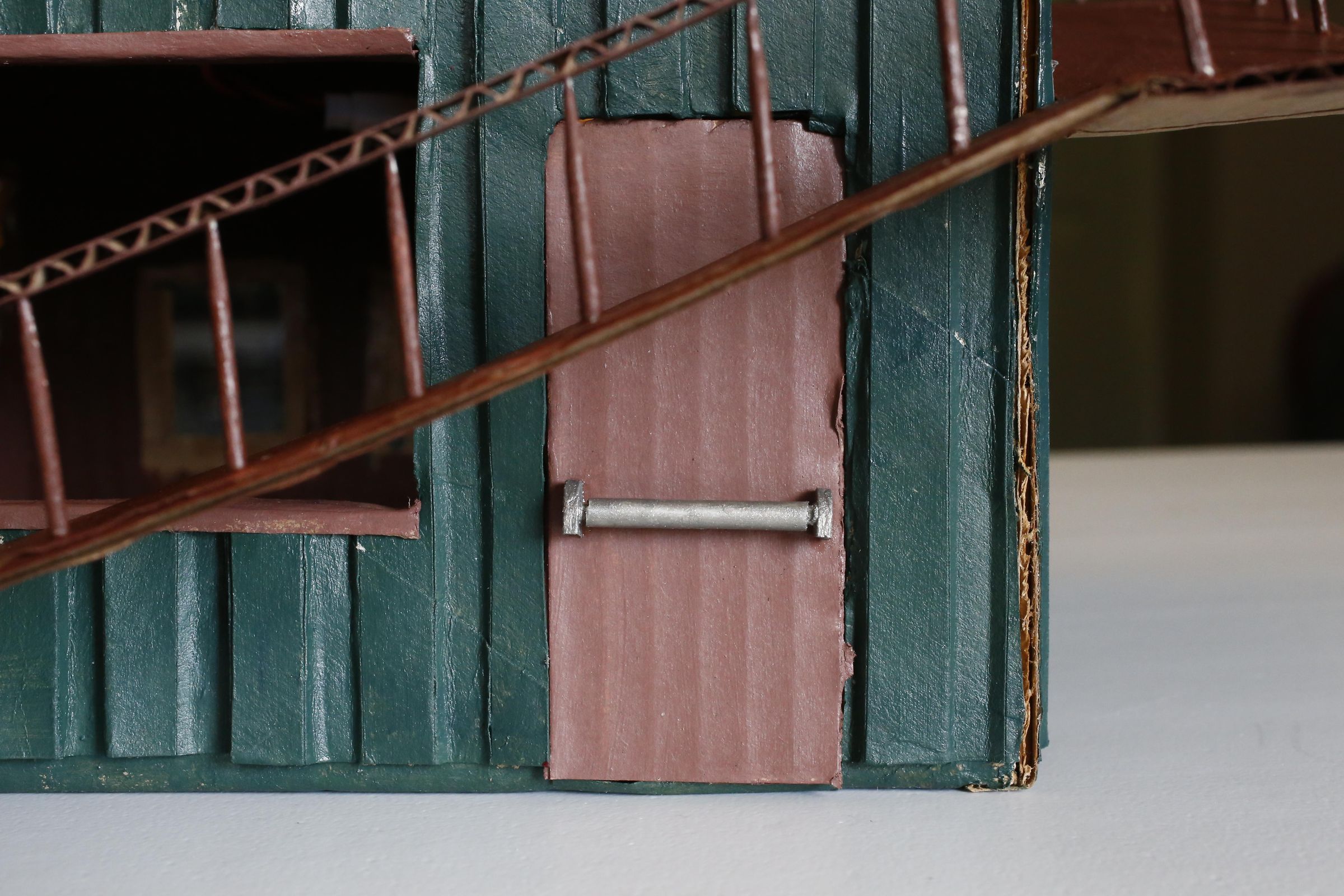
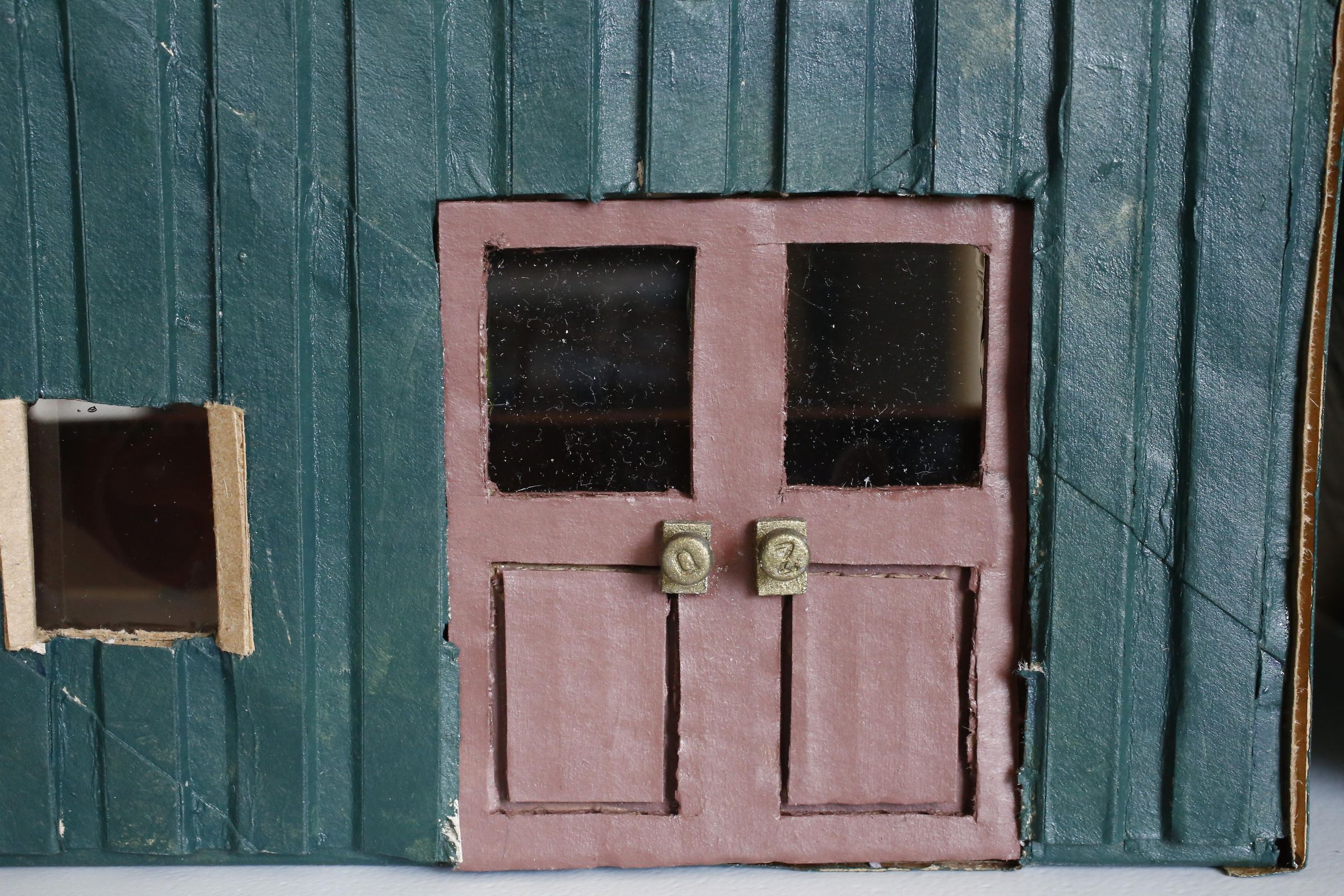
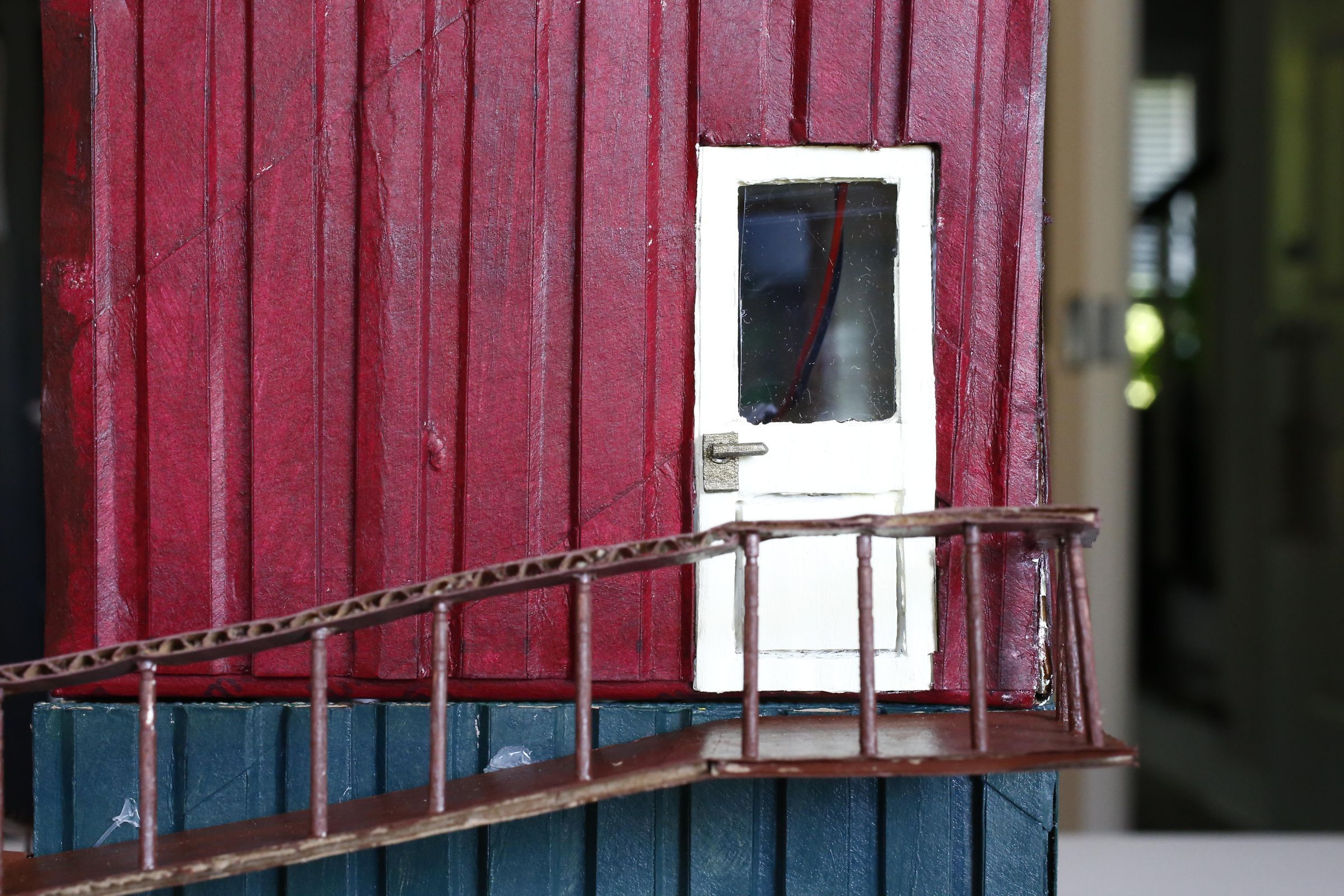
It took me 3 attempts to get to a design I liked (first photos of doors, I didn't like. Final design is in the other photos) Initially, I was going to paint all of them brown, but then I thought that painting the door on the second floor white would make it stand out more. Next, I cut out and glued plastic sheets to mimic the glass of a window. Soon after, I made handles out of beads and popsicle stick wood. Painted it, and glued it to the final doors.
Windows
As a makeshift window, I cut and glued plastic sheets to the pre cut windows of my walls, this was before I glued the walls together. For some of the windows, I even added a simple frame to make each wall different.
Blinds
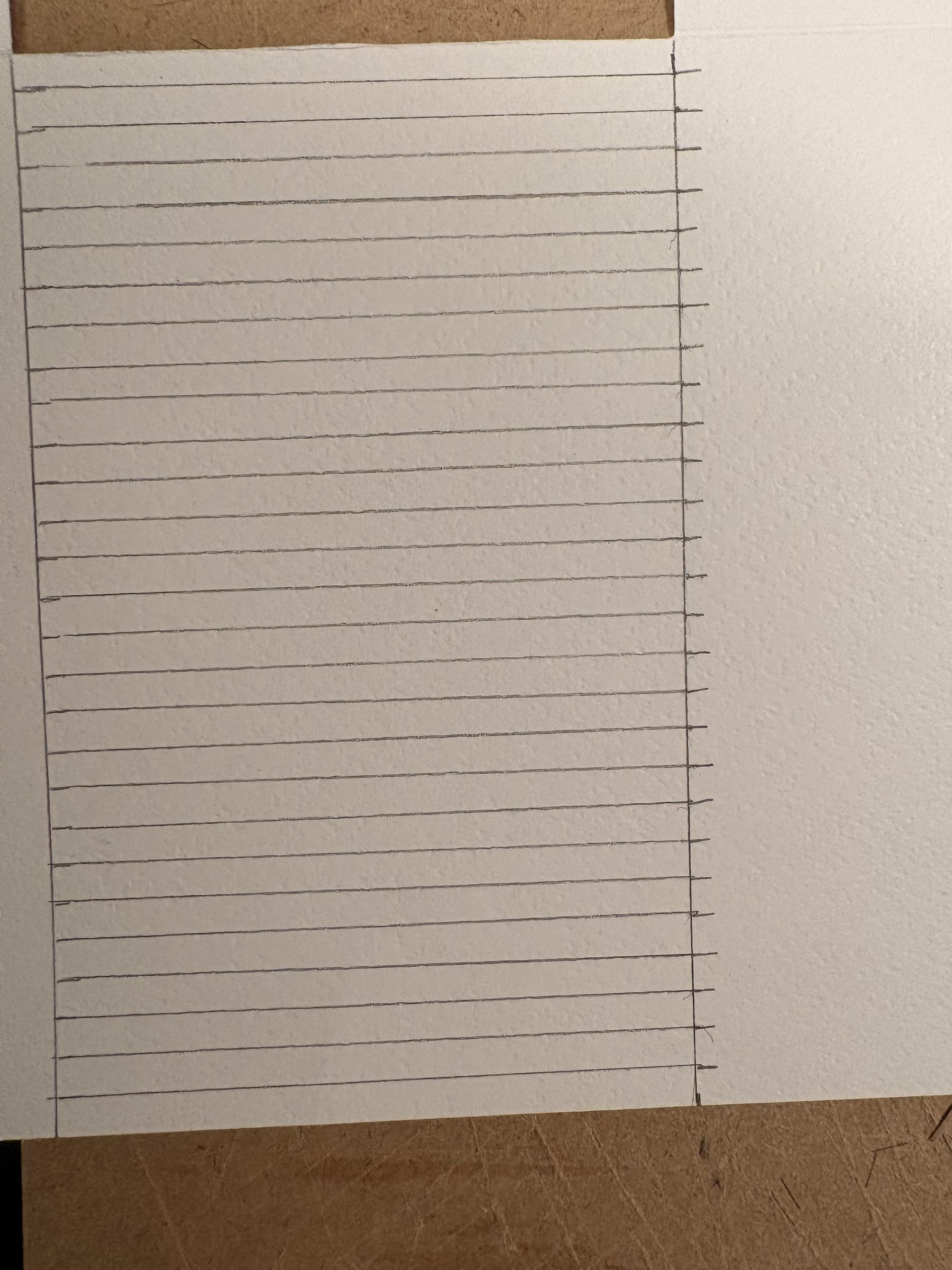
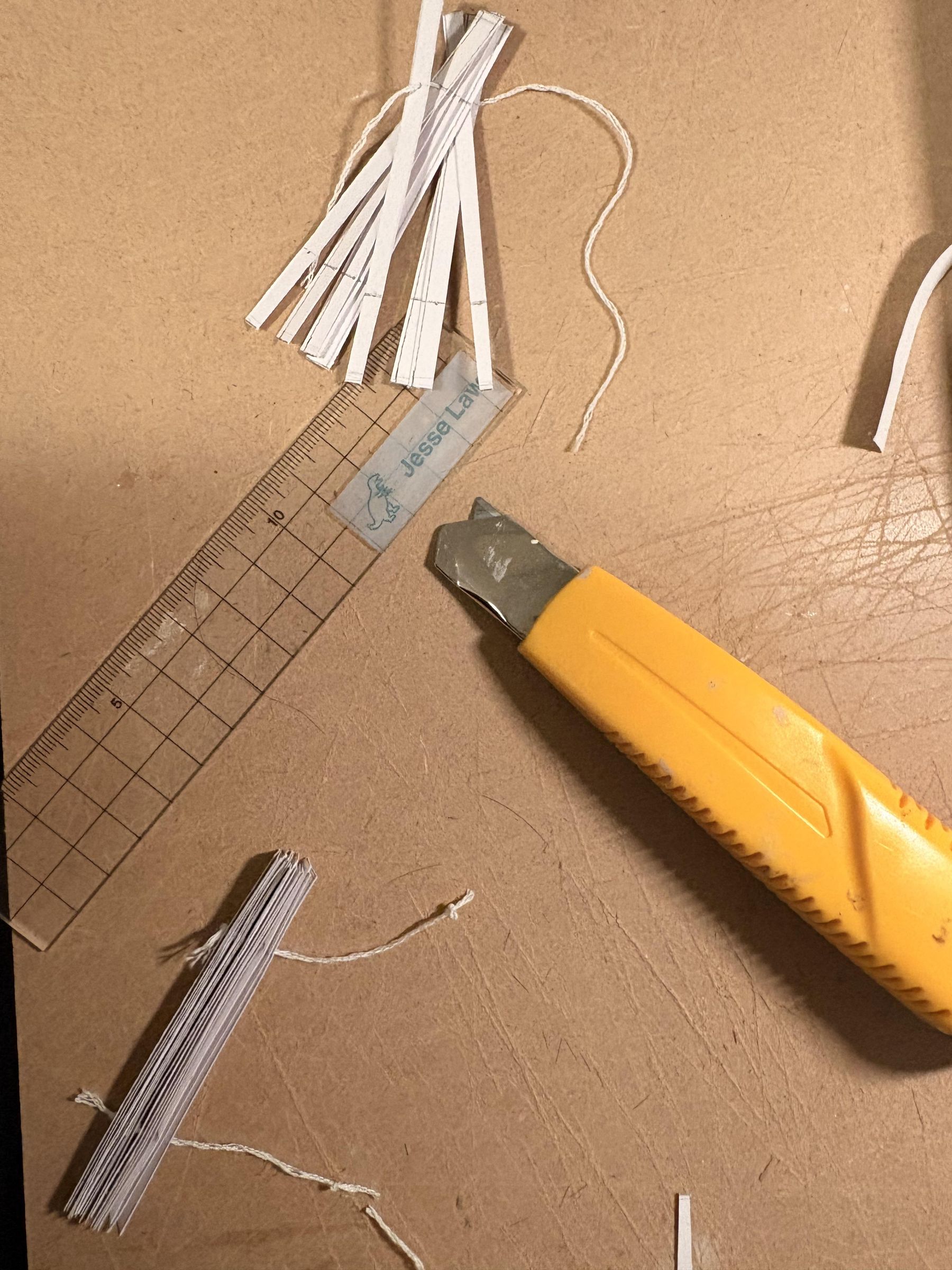
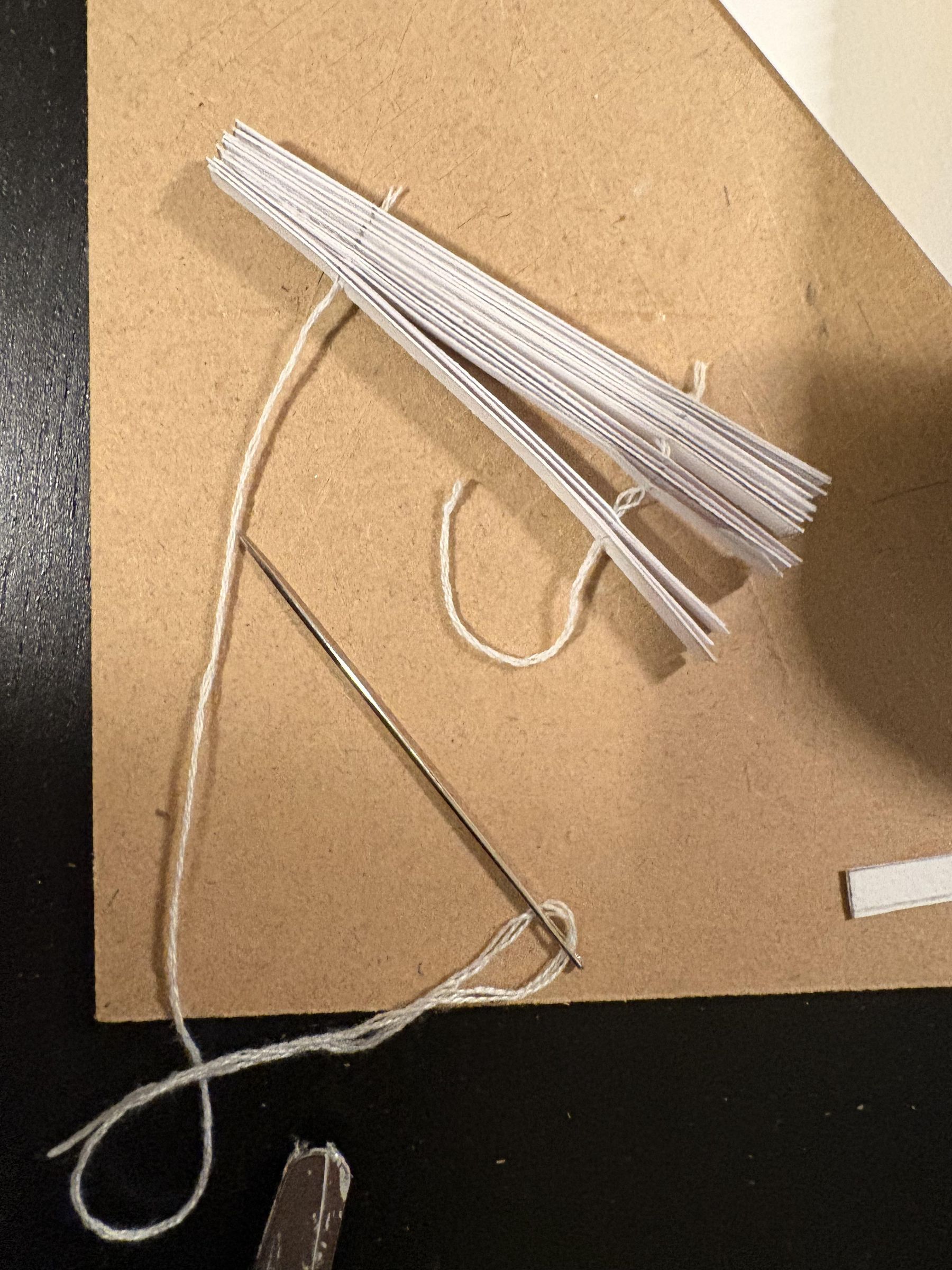
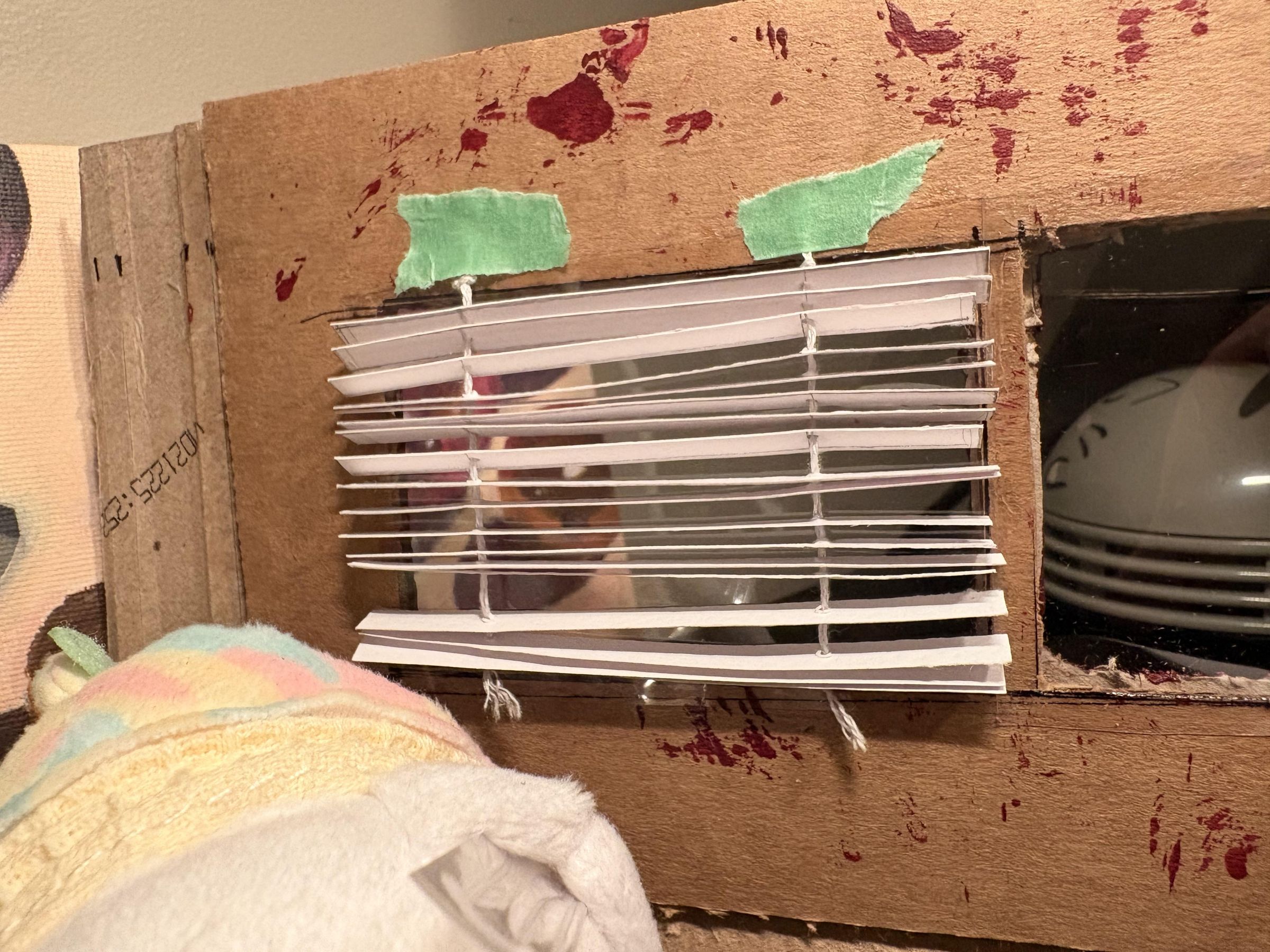
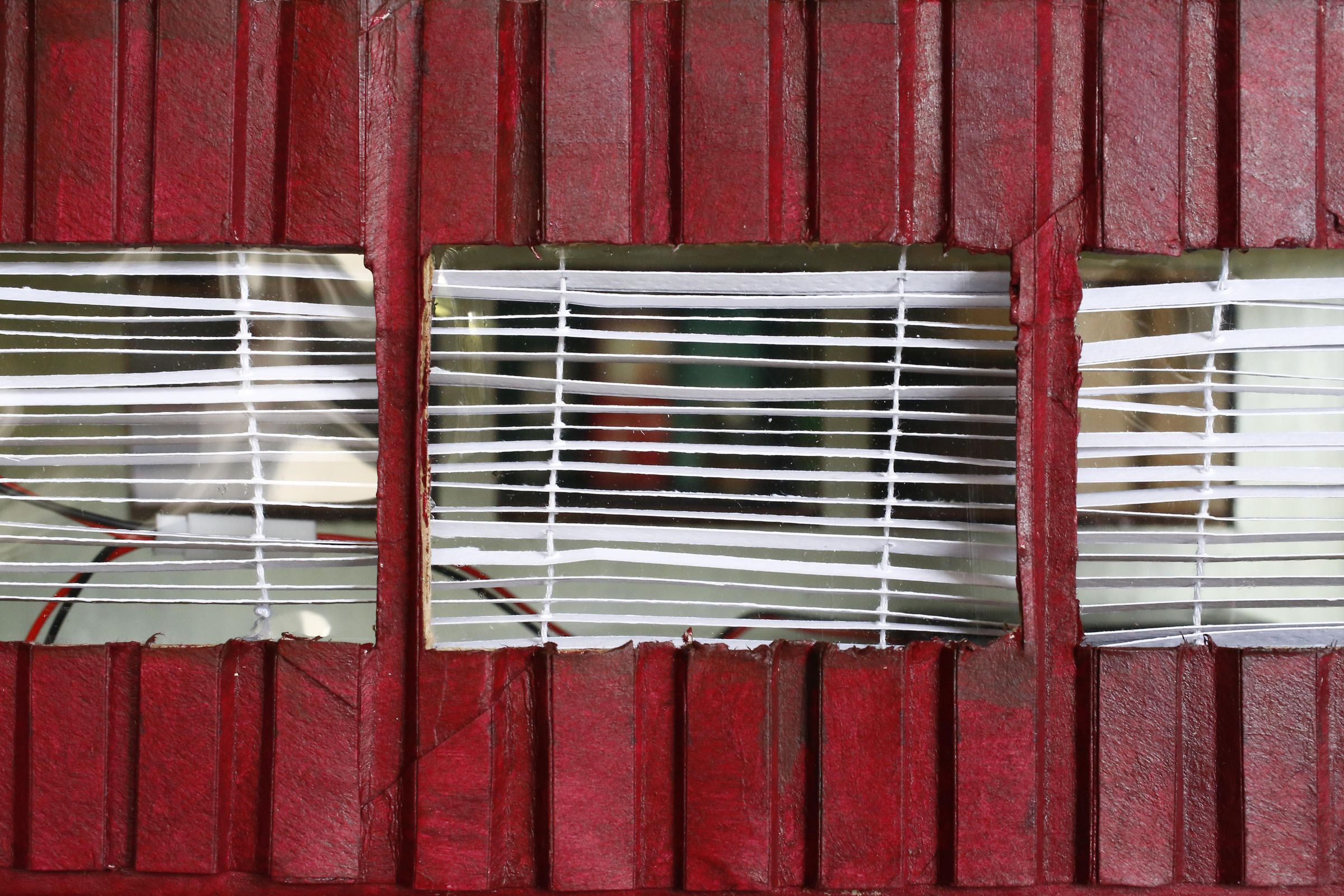
I was contemplating figuring out how to make these, and after I had assembled my classrooms, I knew that I had to add them because it wasn't cozy enough. Like the doors, I had a bit of trial and error before realizing that I needed to use thicker paper for the blinds or else it would easily tear. I used embroidery thread to hold the blinds together. It's a good way to maintain privacy, and adds so much to the final design.
Benches and Assembling Update
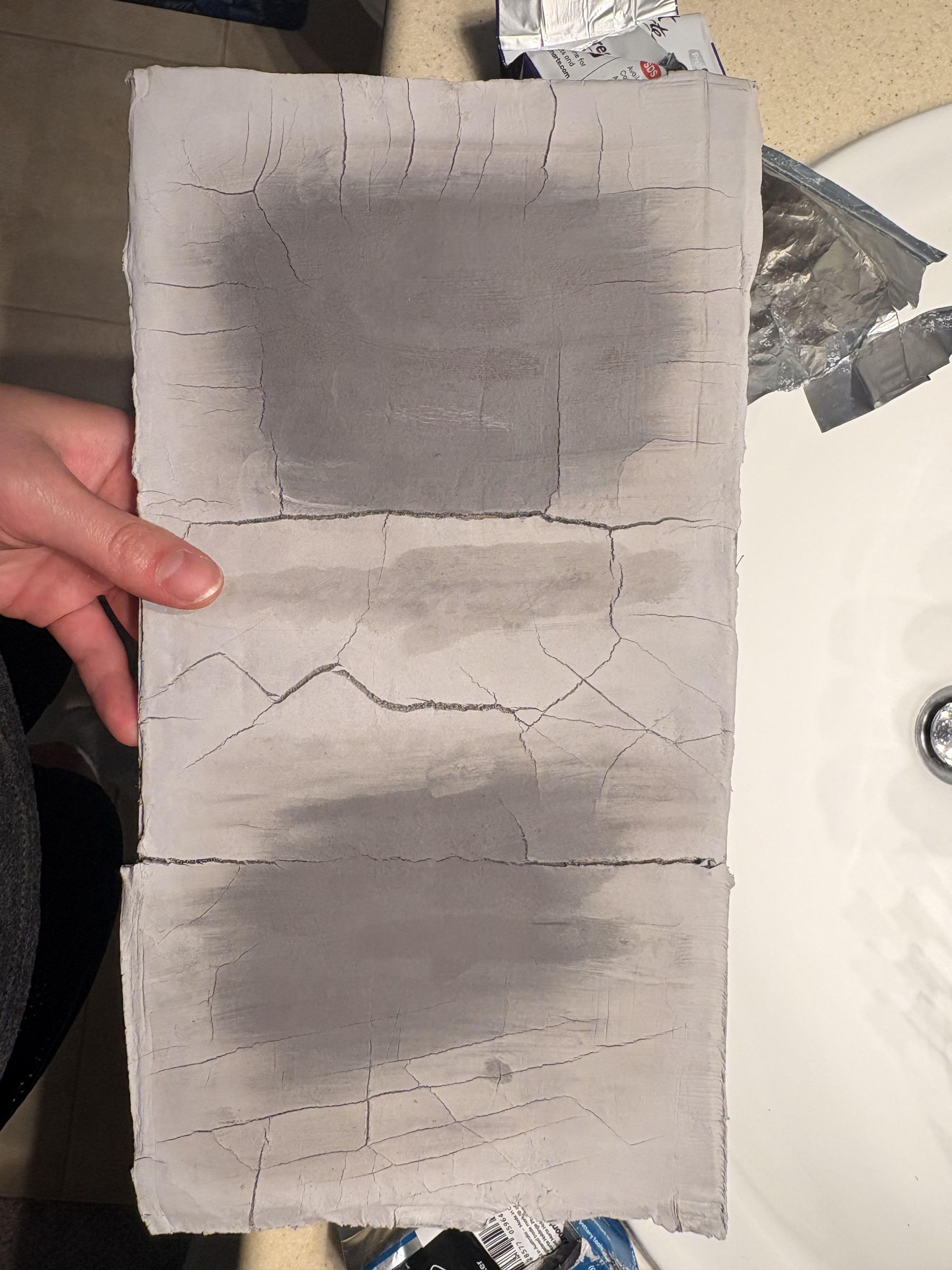
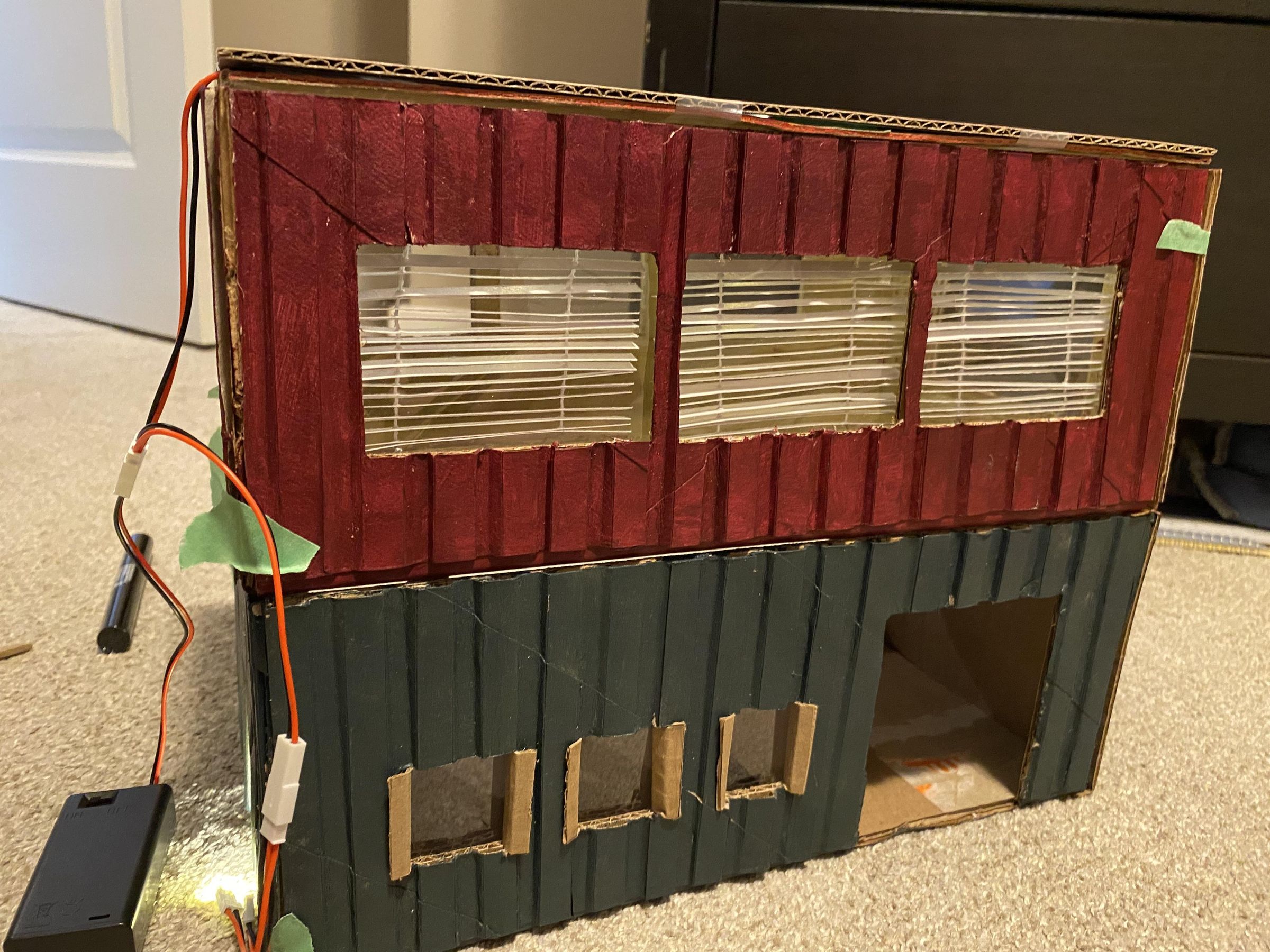
My plan for the floor was to cover the cardboard with a thin layer of air dry clay, and then put a nice glaze to replicate the shine of tile. However, while I was letting the clay dry, it started cracking so much. This may have been because the cardboard was wet, and got warped. Then I put heavy books on top of it while it was drying, so it probably cracked the moment I did that. Also, I underestimated how much clay I even needed to cover the area of the floor, and had difficulty rolling a single piece long enough with the amount on hand. So, I rolled 3 separate pieces, then merged them together. This may have lead to the visible cracking, because it wasn't one single piece. Whatever the issue, I realized that this approach wasn't going to work, and had to scrap it. I ended up leaving the cardboard as it is in my final design.
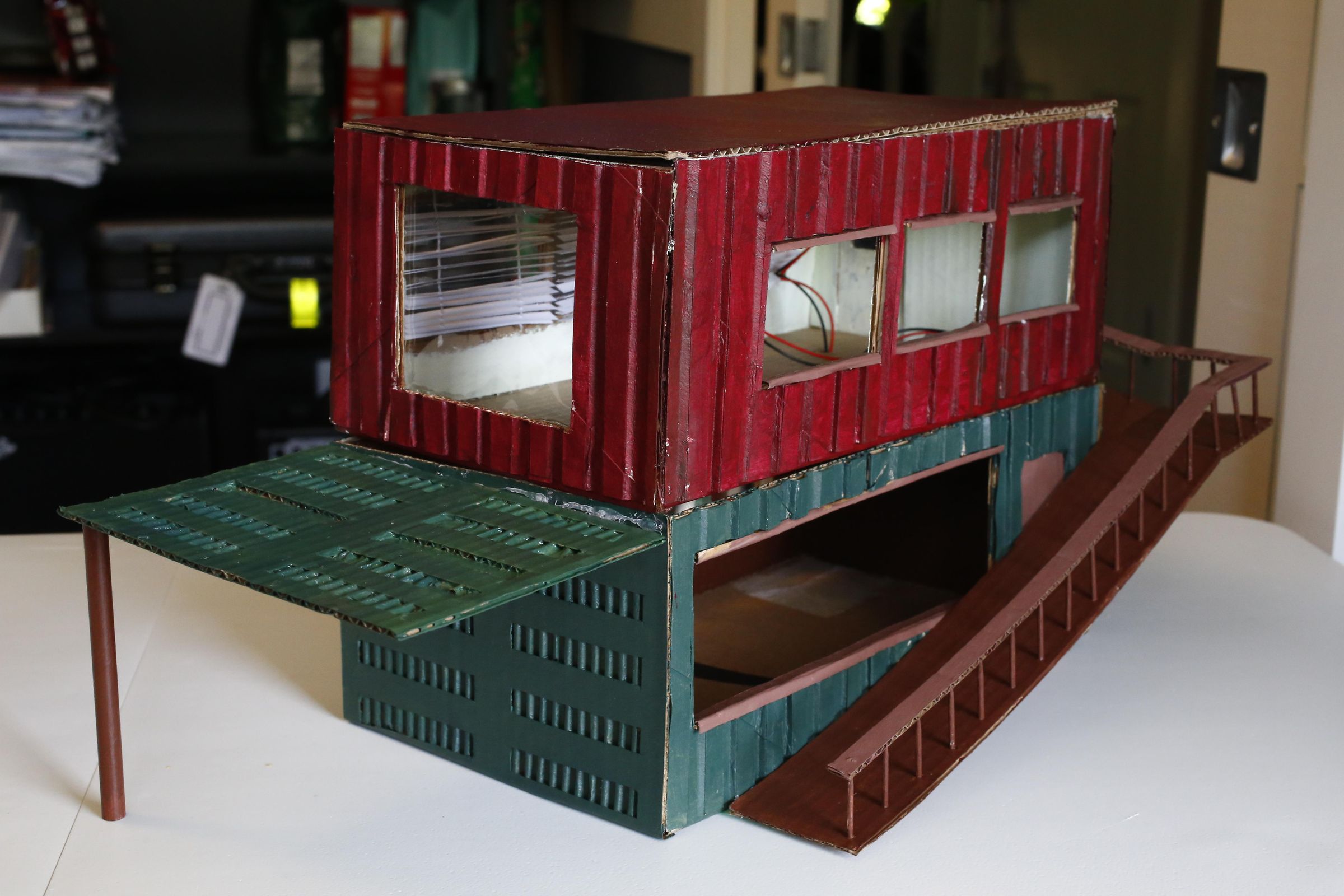
I also glued on the overhang, which was not cooperating with me, so I added poles to stabilize the structure. At this stage of the process, I found out something. Unfortunately due to material issues and timing, I was not able to create physical models of the benches, which was something I was planning to do. I still wanted the concept of an outdoor learning environment, which is why I kept them in the design.
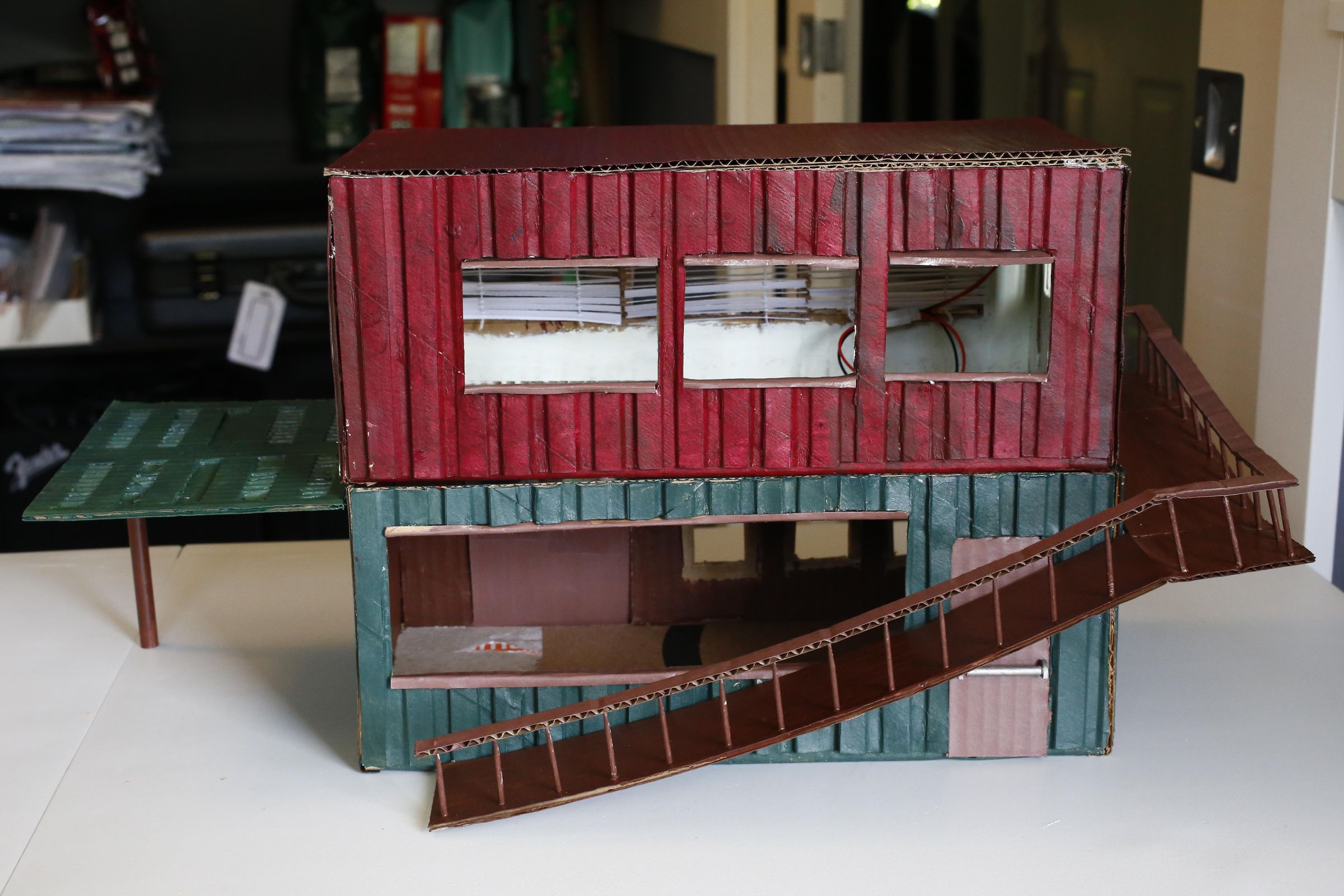
The Ramp
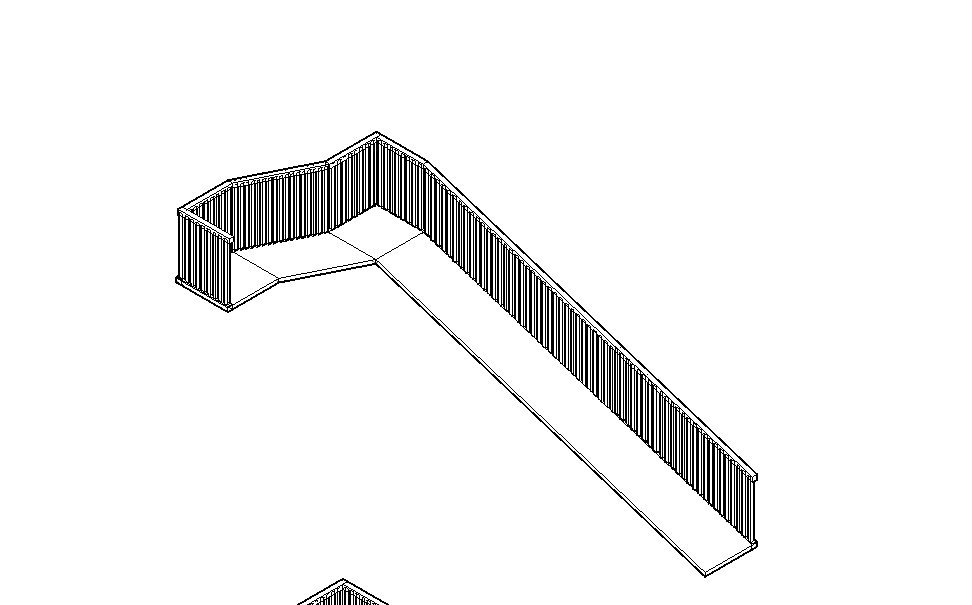
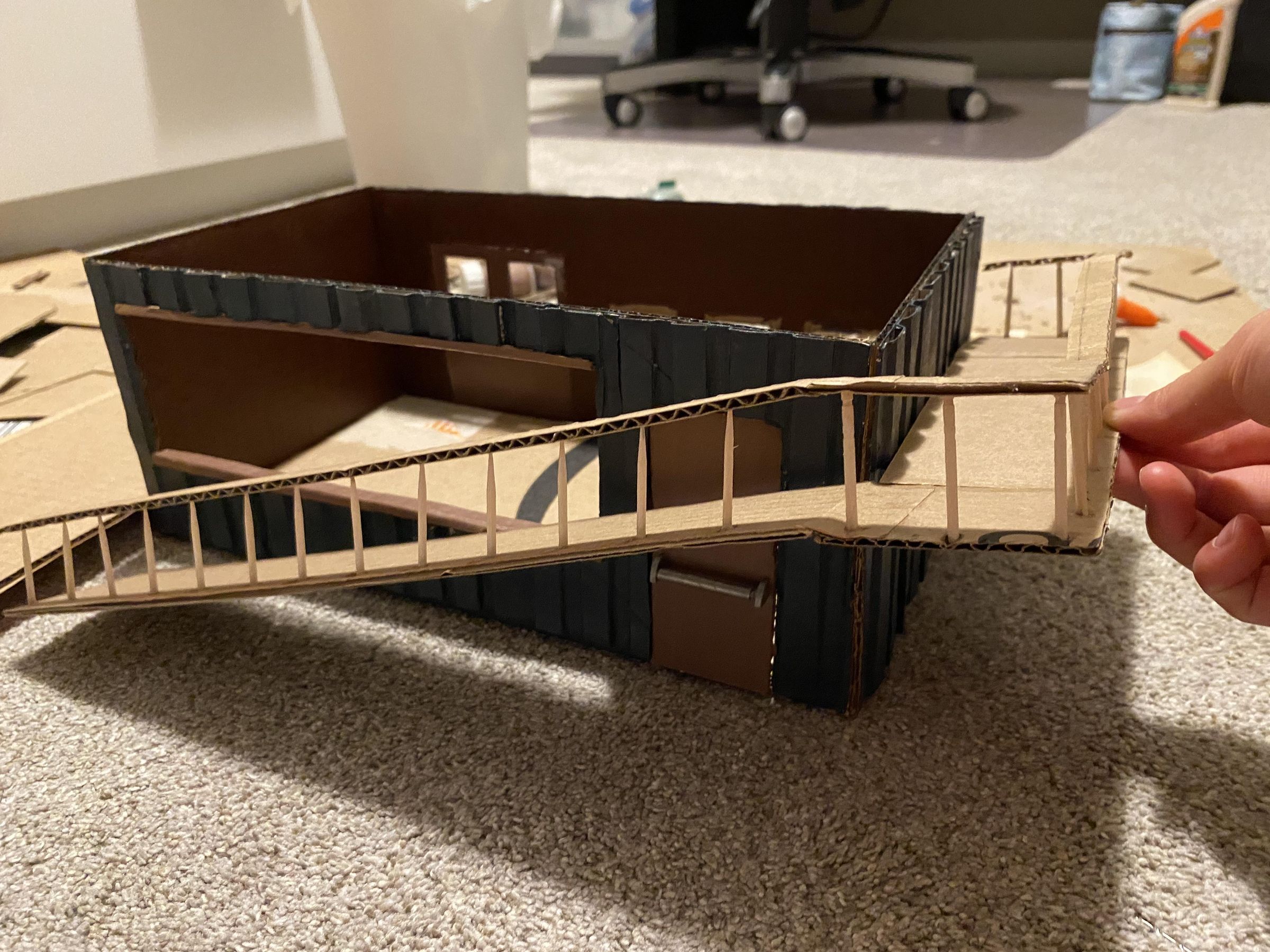
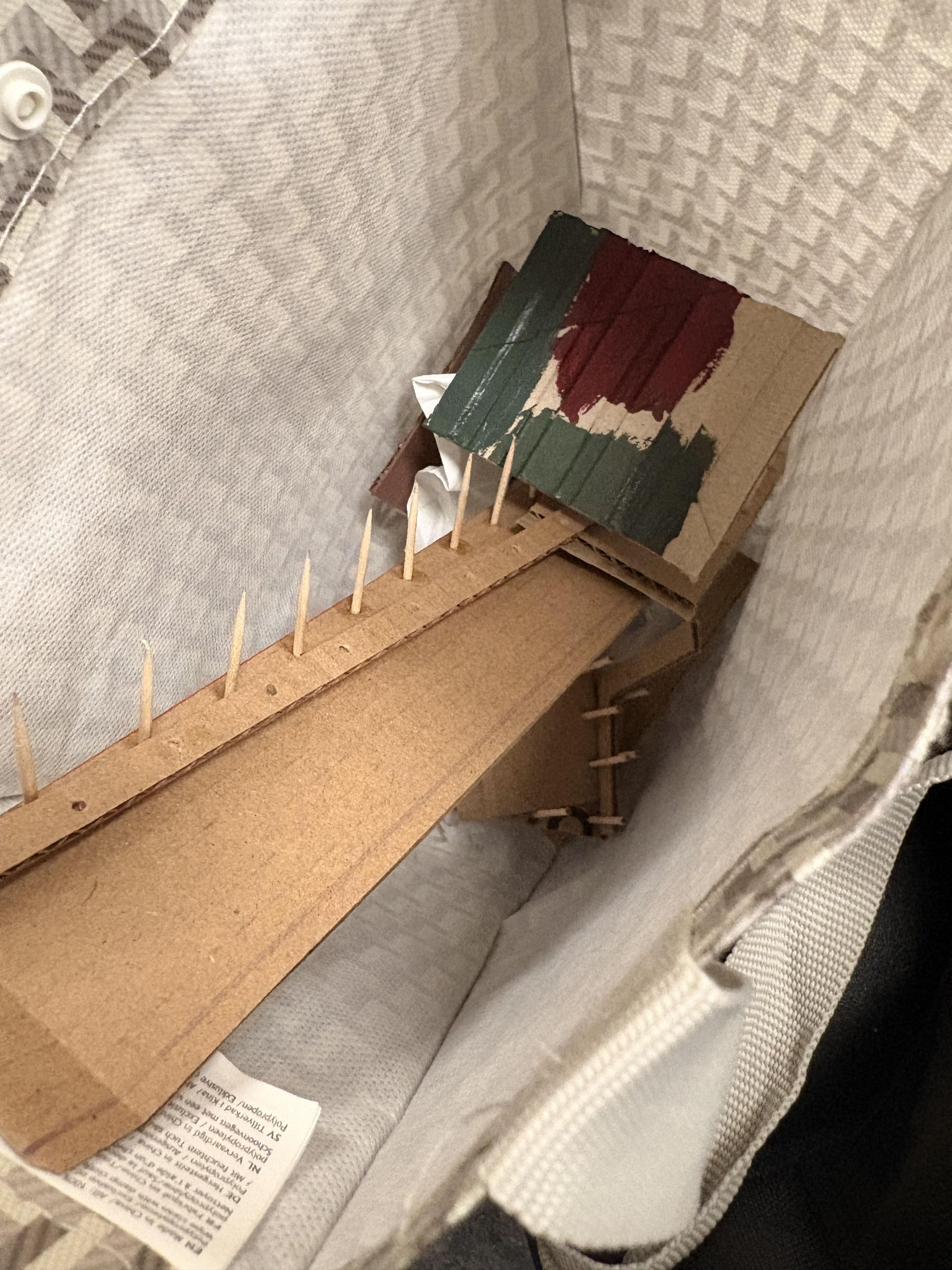
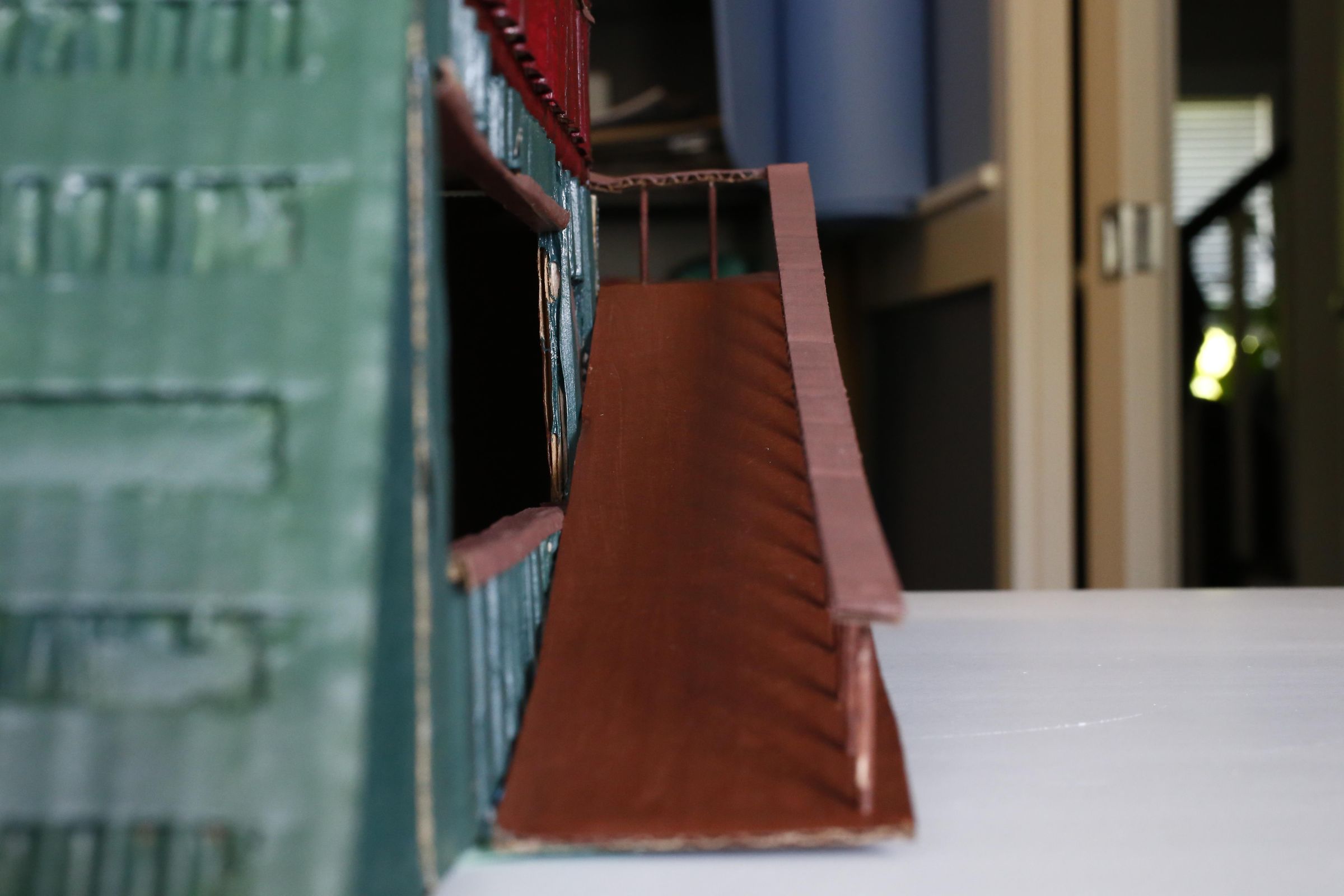
During my research, I learnt that a standard ramp needs to be 12 units long for every 1 unit it rises. I put this into careful consideration in my design, but I wasn't really able to show it in my physical model, due to the limited cardboard I had, and the size of the box that I used, which was from Lululemon. I'm estimating that the ramp is closer to 1:11, which can still be acceptable in some cases.
The railing was made from toothpicks, which I cut in half and glued to the ramp. I did have a limited amount so if I had more, I would have spaced them out like in my digital model.
I painted the ramp 2 shades of brown, to stay true to the colour palette. Then I tacked the ramp on using hot glue.
Final Thoughts
(Credit to my dad for taking the final photos)
While researching, designing and creating this project, it helped me empathize for the victims of natural disasters in a way I couldn’t have imagined. I want to help rebuild individual trust in the community during times of loss and devastation, and this design will hopefully encourage more socializing, which will give people the strength to push forward.
As serious as this contest is, I also had so much fun planning this project. I usually prefer working as a group, and the change of working individually surprised me. Being able to go through with impulsive decisions helped make this creation a hundred times more authentic.
This is my first time entering an Instructables contest, and I am truly grateful that I had the opportunity to grow as a student, and as a human being.