Project Quiet Harbor

The environments we create have a powerful influence on the way people live, learn, recover, and interact with others. Buildings are often viewed simply as places where activities take place, but thoughtful design can do much more. Well-designed spaces can promote health, encourage social connection, reduce stress, improve accessibility, and create opportunities for personal growth. When architecture, planning, and community resources are combined with a clear purpose, they can help address complex challenges and improve quality of life for the people who use them.
This project explores how design can be used to support individuals on their journey toward recovery and independence. The concept is a rehabilitation and wellness campus that brings together housing, healthcare, recreation, education, and community spaces within a single supportive environment. Rather than focusing on one building or service, the project considers how an entire campus can work together as a connected system that meets a wide range of needs. The goal is to create a place where people feel safe, respected, supported, and empowered as they work toward a healthier future.
The campus was designed around the idea that recovery is not a single event but an ongoing process. People often benefit from having access to multiple forms of support, including medical care, counseling, education, employment resources, social opportunities, and outdoor recreation. By incorporating these elements into one community-oriented setting, the design seeks to encourage long-term well-being while fostering a sense of belonging and stability.
Nature and outdoor spaces play an important role in the overall vision of the campus. Green spaces, walking paths, gathering areas, trees, gardens, and open courtyards are integrated throughout the design to create a welcoming atmosphere and provide opportunities for relaxation and reflection. These features help balance the built environment with natural surroundings while encouraging physical activity and social interaction.
To bring this concept to life, I designed and constructed a detailed scale model using Autodesk Tinkercad and 3D printing technology. The process involved many months of planning, research, modeling, testing, and refinement. Every building, pathway, landscape feature, and public space was carefully considered to ensure it contributed to the overall purpose of the campus. As the project developed, numerous revisions were made to improve functionality, appearance, accessibility, and realism.
Research was a major part of the design process. I studied rehabilitation facilities, healthcare campuses, supportive housing communities, urban planning principles, and examples of therapeutic architecture. These real-world references helped guide decisions about campus organization, building placement, circulation, and the relationship between indoor and outdoor spaces. Through this research, I gained a deeper understanding of how the built environment can influence emotional, physical, and social well-being.
The project also provided an opportunity to explore the connections between architecture, engineering, healthcare, sustainability, and community planning. Each of these fields contributes unique ideas and solutions, and combining them helped create a more comprehensive vision for the campus. The experience demonstrated how complex challenges often require interdisciplinary thinking and how design can serve as a bridge between different areas of knowledge.
Beyond the technical aspects of modeling and construction, this project encouraged me to think about the broader impact that design can have on society. It highlighted the importance of creating spaces that serve people’s needs while promoting dignity, inclusion, and opportunity. It also reinforced the idea that innovation is not only about developing new technologies but also about finding better ways to support individuals and communities.
Although this project exists as a scale model, it represents a larger vision of what supportive and healing-focused environments can become. It demonstrates how thoughtful planning, careful design, and a focus on human well-being can work together to create places that inspire hope, encourage growth, and improve quality of life. Ultimately, the project reflects a belief that design has the power to positively influence communities and help people build stronger, healthier futures.
Supplies
Materials:
- PLA Fillimant
- Plastic Foliage
- Plastic Lamp Posts
- Plastic Benches
- Plastic Figures
- Powdered Grass
- Foam Board
- Hot Glue Sticks
Software:
- Tinkercad
- Floorplanner
- 3D Printing Slicer
Tools:
- 3D Printer
- Box Cutter
- Hot Glue Gun
Finding a Location

Image Source: Wikimedia Commons
Before designing any buildings or creating site plans, it was important to determine where this facility could have the greatest positive impact. The goal of this project is to create a supportive community for individuals experiencing homelessness who also face mental health challenges, physical disabilities, substance use disorders, or a combination of these circumstances. Rather than functioning as a temporary shelter, the facility is envisioned as a comprehensive rehabilitation and recovery campus that provides safe housing, medical care, therapy, drug treatment programs, life-skills training, and opportunities for residents to rebuild independence and stability. Because of this broad mission, choosing the right location was one of the most important decisions in the entire project.
A successful site needed to meet several requirements. First, it had to be located in an area where there is a significant need for supportive housing and rehabilitation services. Many communities across California continue to face challenges related to homelessness, mental health care access, addiction treatment availability, and affordable housing shortages. The chosen location needed to be somewhere that could genuinely benefit from additional resources and support systems. Second, the site needed to be close to hospitals, medical specialists, public transportation, grocery stores, pharmacies, and employment opportunities. Residents should be able to access essential services without being isolated from the surrounding community.
Another major consideration was accessibility. Since many future residents may have mobility impairments, chronic illnesses, developmental disabilities, or other physical challenges, the location needed to support accessible infrastructure and allow for barrier-free design. The surrounding environment should be safe, easy to navigate, and capable of supporting features such as wheelchair-accessible pathways, public transportation access, and connections to healthcare providers. Equally important was the social environment. The facility should promote dignity, community involvement, and long-term recovery rather than creating a sense of separation from society.
After evaluating different possibilities, the focus narrowed to locations within the San Francisco Bay Area. The region offers extensive healthcare resources, established social service networks, and numerous organizations already working to address homelessness and behavioral health challenges. Within the Bay Area, one city emerged as a particularly strong candidate due to its combination of need, available services, transportation connections, and ongoing efforts to improve public health outcomes. That city was Richmond, California, which became the selected location for this project and serves as the foundation for all subsequent planning and design decisions.
Why Richmond?

Image Source: Wikimedia Commons
After evaluating several potential locations, Richmond, California, stood out as the best fit for this project. The city faces many of the challenges that this facility is designed to address, including homelessness, limited access to mental health services, substance abuse issues, and a shortage of affordable housing. These factors create a strong need for a supportive community that provides stable housing, rehabilitation services, medical care, and opportunities for long-term recovery.
Richmond also benefits from a strong network of healthcare providers, social service organizations, and public transportation options. Residents would have access to hospitals, clinics, pharmacies, and community programs that can support their recovery journey. Reliable transportation makes it easier for individuals to attend appointments, find employment opportunities, and stay connected to the broader community.
Another advantage is Richmond's commitment to improving public health and supporting vulnerable populations. The city has invested in programs aimed at addressing homelessness and expanding access to care, making it an ideal environment for a facility that focuses on rehabilitation, dignity, and independence. Rather than operating separately from the community, the campus can work alongside existing organizations and resources to provide more comprehensive support.
By combining a demonstrated need for services with access to healthcare, transportation, and community partnerships, Richmond provides an excellent location for a rehabilitation and supportive housing campus that can help residents rebuild their lives and work toward a more stable future.
History of Richmond


Image Source: Wikimedia Commons
Understanding Richmond's history helps explain why the city is a meaningful location for this project. Originally home to Indigenous peoples, the area later developed into an industrial and transportation hub. Richmond experienced rapid growth during World War II, when its shipyards became some of the most productive in the nation. Thousands of workers moved to the city in search of employment, transforming Richmond into a diverse and vibrant community almost overnight.
Following the war, however, many industries declined, leading to economic challenges, job losses, and disinvestment in some neighborhoods. Like many cities across the United States, Richmond faced periods of poverty, housing instability, and unequal access to healthcare and social services. These challenges contributed to issues that are still present today, including homelessness, untreated mental health conditions, and substance abuse.
Despite these difficulties, Richmond has shown remarkable resilience. Community organizations, local leaders, healthcare providers, and residents have worked to improve public health, increase access to services, and create opportunities for those facing hardship. Today, Richmond continues to invest in programs that support vulnerable populations and strengthen the community.
This history makes Richmond an appropriate location for a rehabilitation and supportive housing campus. The city has a long tradition of overcoming challenges and supporting diverse populations, making it a place where a project focused on healing, recovery, and dignity can have a meaningful impact.
Mental Health in Richmond

Image Source: Wikimedia Commons
Mental health is a significant concern in Richmond, as it is in many cities across California, particularly in areas affected by poverty, housing instability, and long-term economic stress. Many residents face challenges such as depression, anxiety, trauma-related disorders, and severe mental illness, often compounded by barriers to accessing consistent care. For individuals experiencing homelessness, these issues can become even more severe due to exposure to unsafe environments, lack of stability, and limited access to medical support.
One of the key challenges in Richmond is the gap between the need for mental health services and the availability of long-term, integrated care. While there are clinics, hospitals, and community programs in the area, many systems are focused on short-term treatment or emergency response rather than ongoing rehabilitation and recovery. This can make it difficult for individuals to maintain consistent support over time, especially when combined with challenges such as unemployment, addiction, or disability.
Substance use disorders are also closely linked with mental health in the region. Many individuals struggling with addiction are also dealing with underlying psychological trauma or untreated mental illness. Without stable housing and coordinated treatment, it becomes difficult to break this cycle. This is especially true for people experiencing homelessness, who often move between shelters, hospitals, and streets without long-term continuity of care.
These conditions highlight the importance of a comprehensive facility that combines mental health services, substance use treatment, and stable housing in one place. Rather than treating these issues separately, an integrated approach allows residents to receive therapy, medical care, and rehabilitation support while also living in a safe and structured environment. In Richmond, where the need is clear and ongoing, such a facility could help bridge critical gaps in the current system and provide a foundation for long-term recovery and stability.
Current Plans in Action
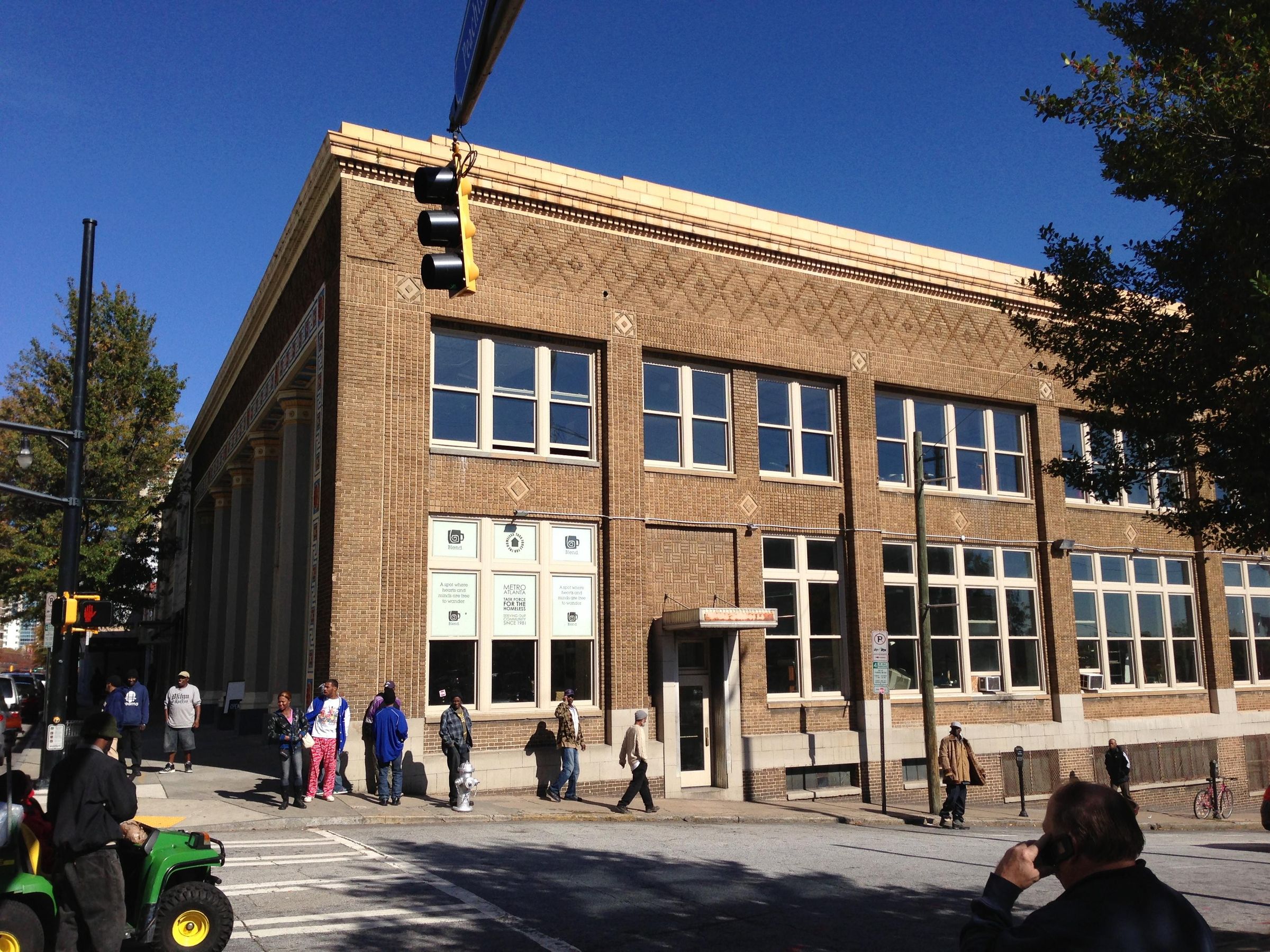
Image Source: Wikimedia Commons
In Richmond, there are already ongoing efforts aimed at addressing homelessness, mental health care, and substance use treatment, but most of these programs operate in separate parts rather than as a fully integrated system. The city works alongside county agencies, healthcare providers, and nonprofit organizations to provide emergency shelter, transitional housing, counseling services, and outreach programs. These initiatives are important, but they often focus on immediate needs rather than long-term recovery pathways that combine housing stability with continuous treatment and rehabilitation.
Programs such as outreach teams and mobile crisis services help connect individuals in need to basic resources, including food, temporary shelter, and urgent medical attention. At the same time, local clinics and behavioral health services offer therapy, medication management, and addiction treatment. However, one of the major challenges is continuity of care. Many individuals move between different services without a single stable environment that supports long-term healing, which can make recovery more difficult to sustain.
There have also been efforts in the region to expand supportive housing and “housing first” models, which prioritize stable housing as a foundation for recovery. These approaches have shown positive results, but availability remains limited compared to demand. As a result, many people still experience cycles of temporary shelter stays, hospital visits, and return to homelessness.
This project builds on the foundation of these existing efforts but expands them into a single, unified campus. Instead of separating housing, treatment, and rehabilitation services, the facility would combine them into one coordinated environment. By doing so, it addresses one of the biggest gaps in current systems in Richmond: the lack of a long-term, integrated space where individuals can live, recover, and gradually rebuild independence with consistent support.
The Solution
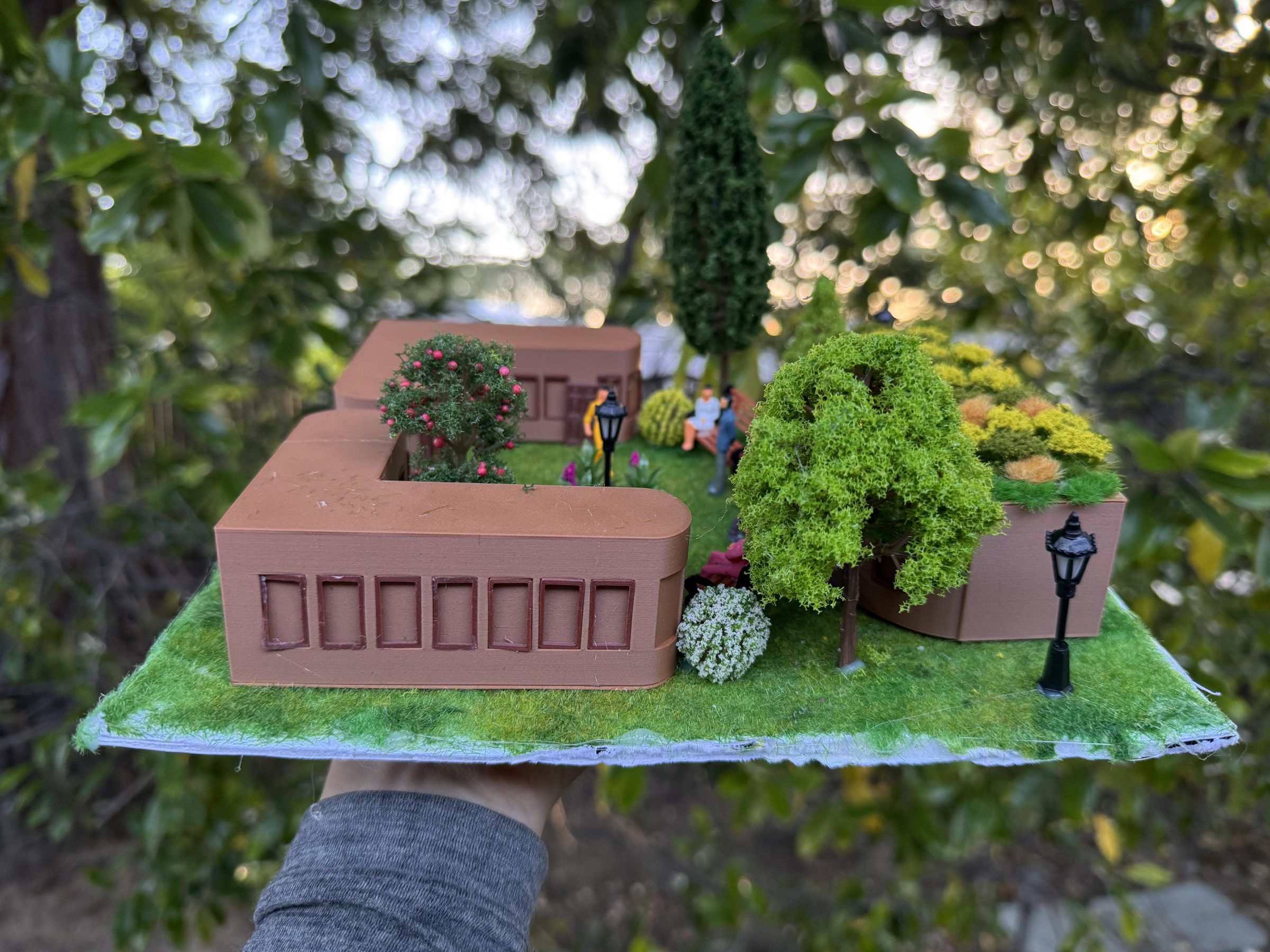
The proposed solution is a comprehensive rehabilitation and supportive living campus designed to bring together housing, medical care, therapy, addiction treatment, and community life in one coordinated environment. Instead of treating homelessness, mental health conditions, disability, and substance use as separate issues, the facility addresses them as interconnected challenges that require continuous and integrated support. The goal is to create a stable foundation where residents can focus on recovery without the constant disruption of moving between shelters, hospitals, and temporary programs.
At the core of the solution is dignified, long-term housing. Residents are provided with safe, private or semi-private living spaces that prioritize comfort, stability, and independence. Housing is not conditional on immediate recovery, but instead acts as the foundation for progress. Alongside housing, residents have access to on-site medical care, mental health therapy, and addiction treatment programs, ensuring that support is always available and easily accessible.
The campus also includes communal spaces that encourage social connection and routine. Shared dining areas, recreation rooms, workshops, and outdoor environments help rebuild a sense of community and belonging. These spaces are designed to reduce isolation, which is often a major factor in both mental health decline and relapse in substance use.
In addition, the facility incorporates life skills training, vocational support, and educational opportunities. Residents can work toward employment, develop independent living skills, and gradually transition into greater self-sufficiency when ready. The entire system is structured around gradual progress rather than strict timelines, allowing recovery to happen at a realistic and individual pace.
Overall, the solution is not just a place to stay, but a structured environment for healing, growth, and reintegration into society. It combines care, dignity, and opportunity into one unified system designed to support long-term recovery.
Design Philosophy
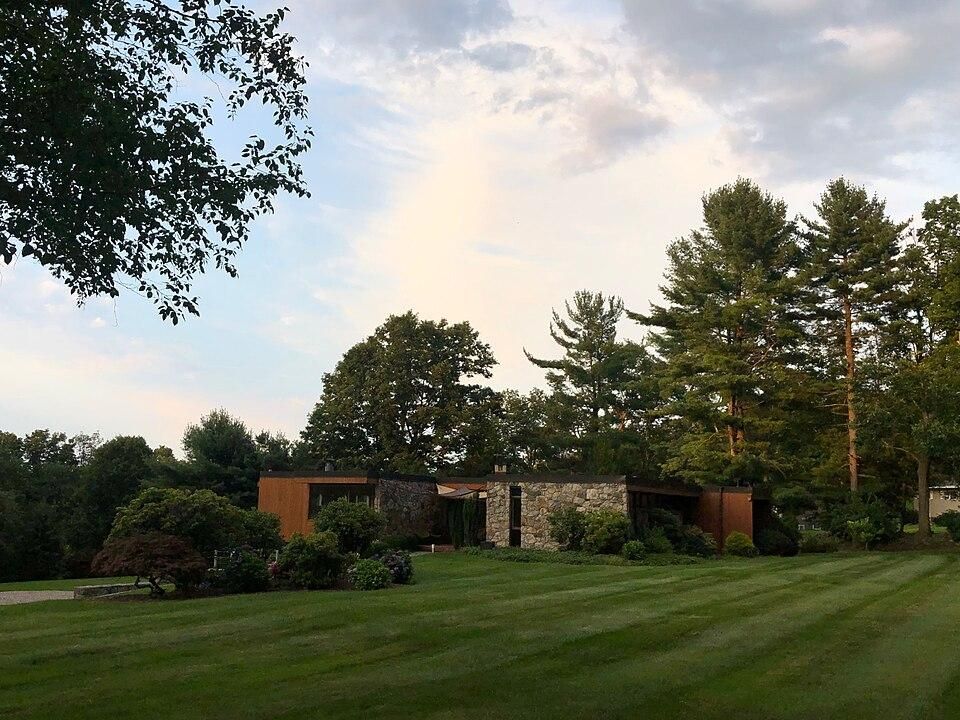
Image Source: Wikimedia Commons
The design philosophy of the facility is centered on dignity, recovery, and long-term stability. Rather than resembling an institutional shelter or hospital, the campus is intended to feel like a small, supportive neighborhood where residents can live, heal, and gradually rebuild their independence. Every architectural and planning decision is guided by the idea that the physical environment has a direct impact on mental health, emotional regulation, and overall recovery outcomes.
A key principle is normalization. Spaces are designed to feel familiar, calm, and residential rather than clinical or restrictive. This includes warm materials, natural lighting, clear sightlines, and access to outdoor environments. The goal is to reduce stress and create a sense of safety, especially for individuals who may have experienced trauma, instability, or long-term homelessness.
Another important principle is accessibility. The entire campus is designed to be usable for people with a wide range of physical abilities, including wheelchair users, individuals with chronic illness, and those with temporary injuries. This influences everything from building layout and pathways to room design, signage, and transportation within the site. Accessibility is not treated as an add-on but as a core part of the design from the beginning.
Community integration is also central to the philosophy. Instead of isolating residents, the campus encourages interaction through shared spaces such as courtyards, gardens, dining halls, workshops, and therapy spaces. These areas are designed to support healthy social connections, which are essential for recovery and reintegration into society.
Finally, flexibility is built into the design. Residents may be at different stages of recovery, so spaces must support a range of needs—from quiet private areas for rest and therapy to active communal zones for learning and engagement. The overall philosophy is to create an environment that adapts to the individual, rather than forcing individuals to adapt to the environment.
Entrance and Common Area Building

The entrance and common area building acts as the emotional and functional gateway to the entire campus. It is the first space residents and visitors experience, so its design is intended to immediately communicate safety, calmness, and dignity rather than institutional control. Instead of feeling like a checkpoint or administrative barrier, the entrance is designed to feel welcoming and human-centered, helping reduce anxiety during arrival and transition into the program.
Functionally, this building serves as the main coordination hub of the facility. It includes reception and intake areas where new residents are welcomed and guided through the admission process in a respectful and structured way. Nearby, there are administrative offices for staff, case managers, and support coordinators who help organize care plans and connect residents with medical, therapeutic, and social services. This centralization ensures that residents can access help quickly without needing to navigate multiple disconnected systems.
The common area portion of the building is designed to encourage social interaction and gradual adjustment to the campus environment. It includes comfortable seating areas, dining or café-style spaces, and multipurpose rooms for group meetings, workshops, or community activities. These shared spaces are essential for building trust, reducing isolation, and helping residents begin forming connections with others who may share similar experiences.
Design-wise, the building emphasizes openness and natural light. Large windows, visible outdoor connections, and clear interior layouts help reduce feelings of confinement and promote orientation within the space. Materials are chosen to feel warm and residential rather than sterile, reinforcing the idea that this is a place of support rather than enforcement.
Overall, the entrance and common area building sets the tone for the entire campus. It acts as both a welcoming threshold and an organizing center, ensuring that every person who enters begins their experience in an environment built around respect, stability, and healing.
Residential Building
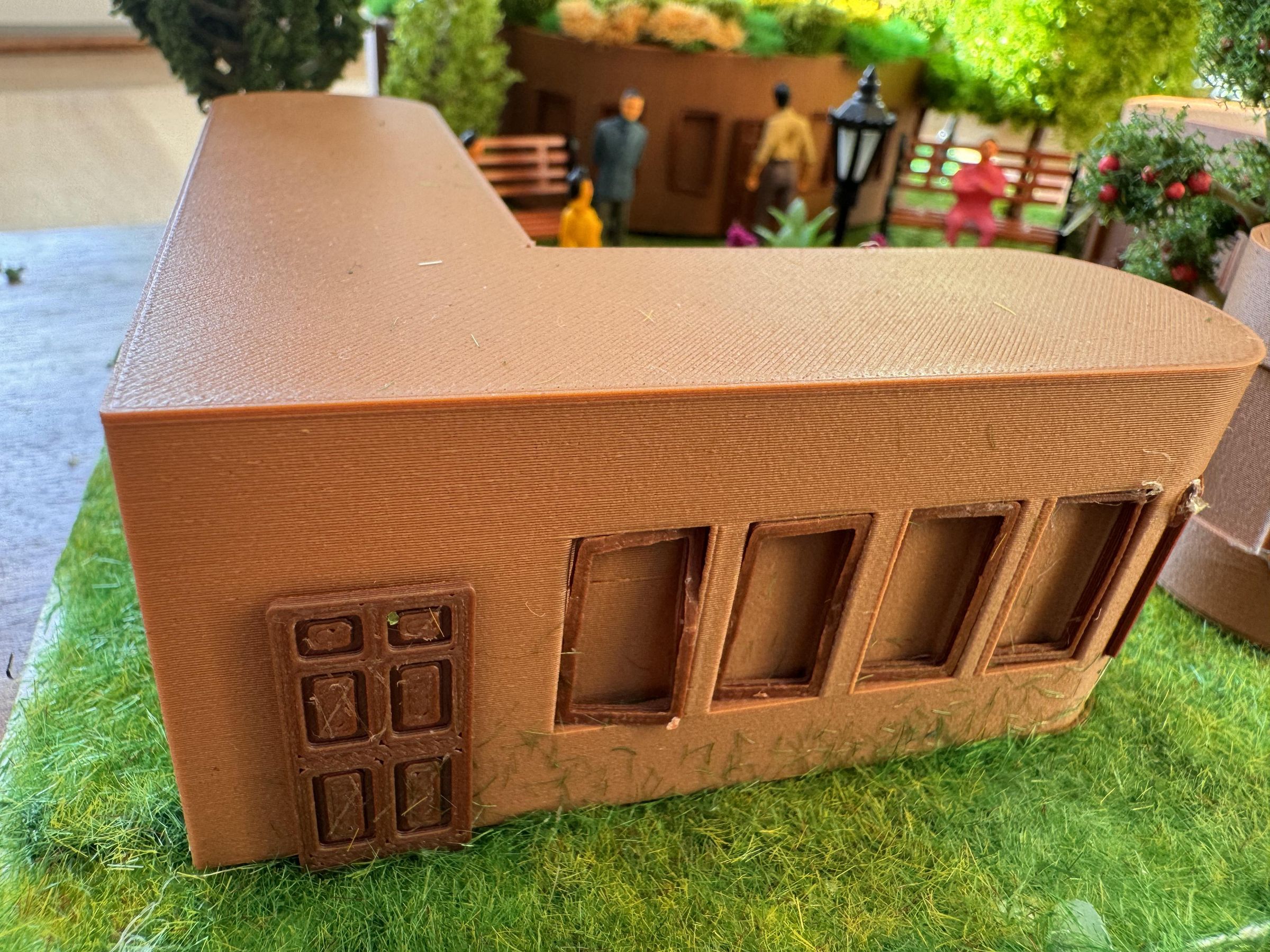
The residential building is designed as the primary living environment for residents, focusing on stability, comfort, and gradual independence. Unlike the front entrance building, which serves as a public-facing and organizational space, the residential wing is more private and community-focused, giving residents a consistent place to rest, recover, and build daily routines. The design emphasizes a calm, home-like atmosphere rather than an institutional feel, helping residents feel grounded and secure over time.
At the core of this building are the individual or shared living rooms where residents stay. These spaces are designed to be safe, simple, and dignified, providing personal space while still keeping support close by. The layout prioritizes privacy without isolation, ensuring residents can retreat when needed but still remain connected to the community. Accessibility is built into every unit to accommodate physical disabilities and a wide range of mobility needs.
In addition to living spaces, the residential building includes a secondary gathering area that functions as a smaller, more relaxed community space compared to the main common area in the entrance building. This space encourages informal social interaction, peer support, and quiet group activities. It helps residents build relationships in a less structured environment, which is important for emotional recovery and trust-building.
A gym is also included within this wing to support physical health and routine building. Exercise plays an important role in mental health recovery, addiction treatment, and overall well-being, so having on-site fitness facilities makes it easier for residents to develop consistent healthy habits. The gym is designed to be inclusive and adaptable, allowing use for all ability levels and recovery stages.
Overall, the residential building acts as the “living heart” of the campus. It provides stability, encourages community connection, and supports both physical and emotional recovery in a setting that feels safe, consistent, and respectful of each individual’s journey.
Medical and Therapy Facility
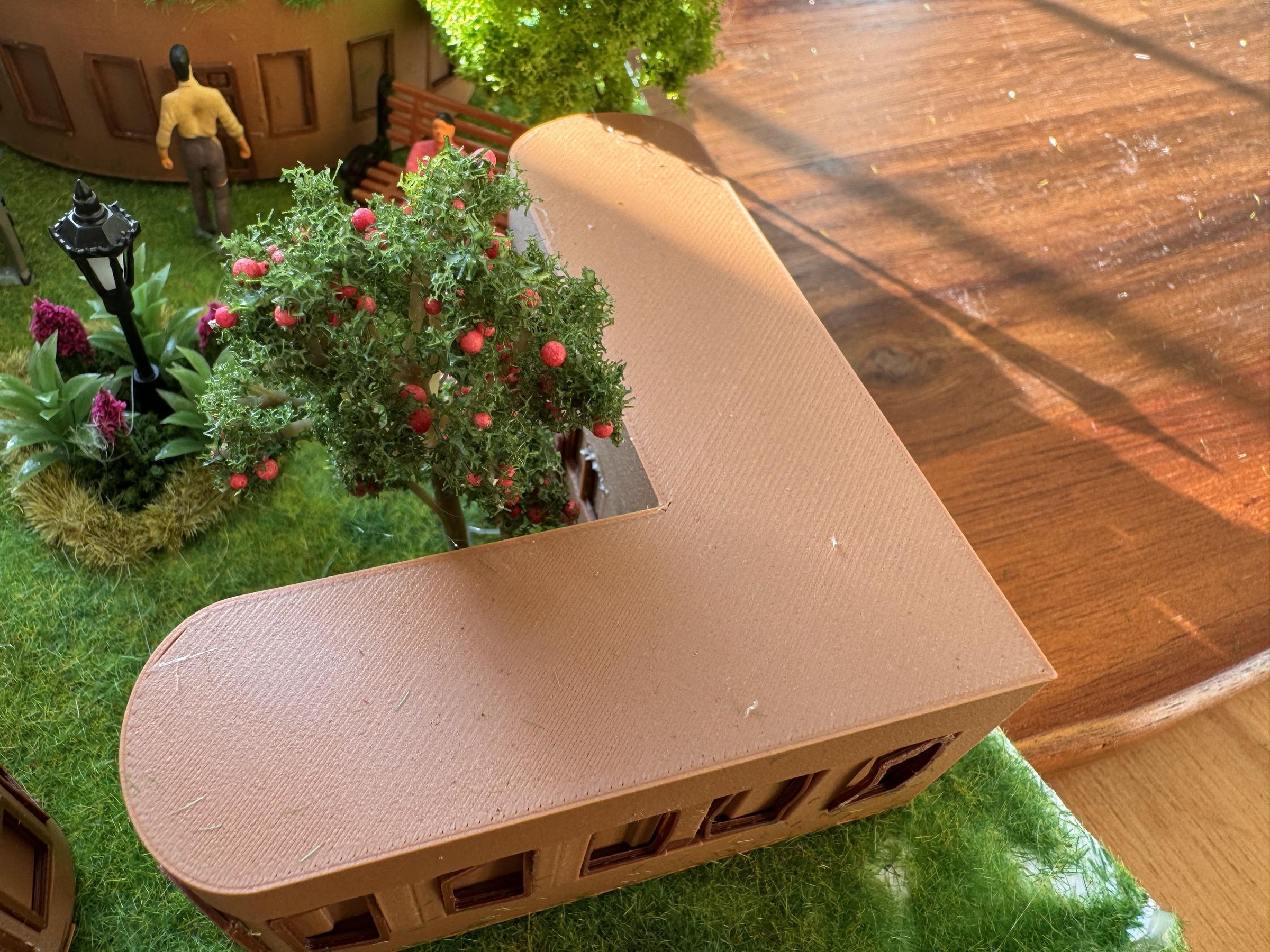
The medical and therapy facility is the clinical core of the entire campus, designed to provide consistent, integrated care without requiring residents to leave the supportive environment of the community. Its purpose is to combine physical healthcare, mental health treatment, addiction recovery services, and long-term rehabilitation planning into one accessible system. By keeping these services on-site, the facility reduces barriers that often prevent people from receiving continuous care, such as transportation issues, missed appointments, or fragmented service providers.
The medical section includes primary care services, routine health screenings, chronic illness management, and basic urgent care. Many residents may arrive with untreated or long-neglected physical conditions, so having immediate access to healthcare is essential for stabilizing overall well-being. Accessibility is a key priority, ensuring that individuals with mobility challenges or disabilities can easily receive treatment in a safe and supportive setting.
Alongside medical care, the therapy component provides a wide range of mental health services, including individual counseling, group therapy, trauma-informed care, and psychiatric support. The design of these spaces emphasizes privacy, calmness, and emotional safety, helping residents feel comfortable engaging in difficult but necessary therapeutic work. The goal is not just short-term stabilization, but long-term emotional recovery and resilience.
A major feature of this wing is the addiction recovery and rehabilitation program. This includes structured treatment plans, relapse prevention support, and ongoing counseling tailored to individual needs. Because addiction is often closely linked with trauma, homelessness, and mental health conditions, treatment is fully integrated rather than separated from other services.
The facility also includes housing transition and skills development areas. These spaces help residents prepare for greater independence by offering life skills training, job readiness programs, financial literacy support, and guidance for transitioning into permanent housing when appropriate. This creates a clear but flexible pathway from stabilization to independence.
Overall, the medical and therapy facility ensures that recovery is continuous, coordinated, and deeply connected to daily living. It acts as the support system that allows residents to heal physically, mentally, and socially within one unified environment.
Property Design
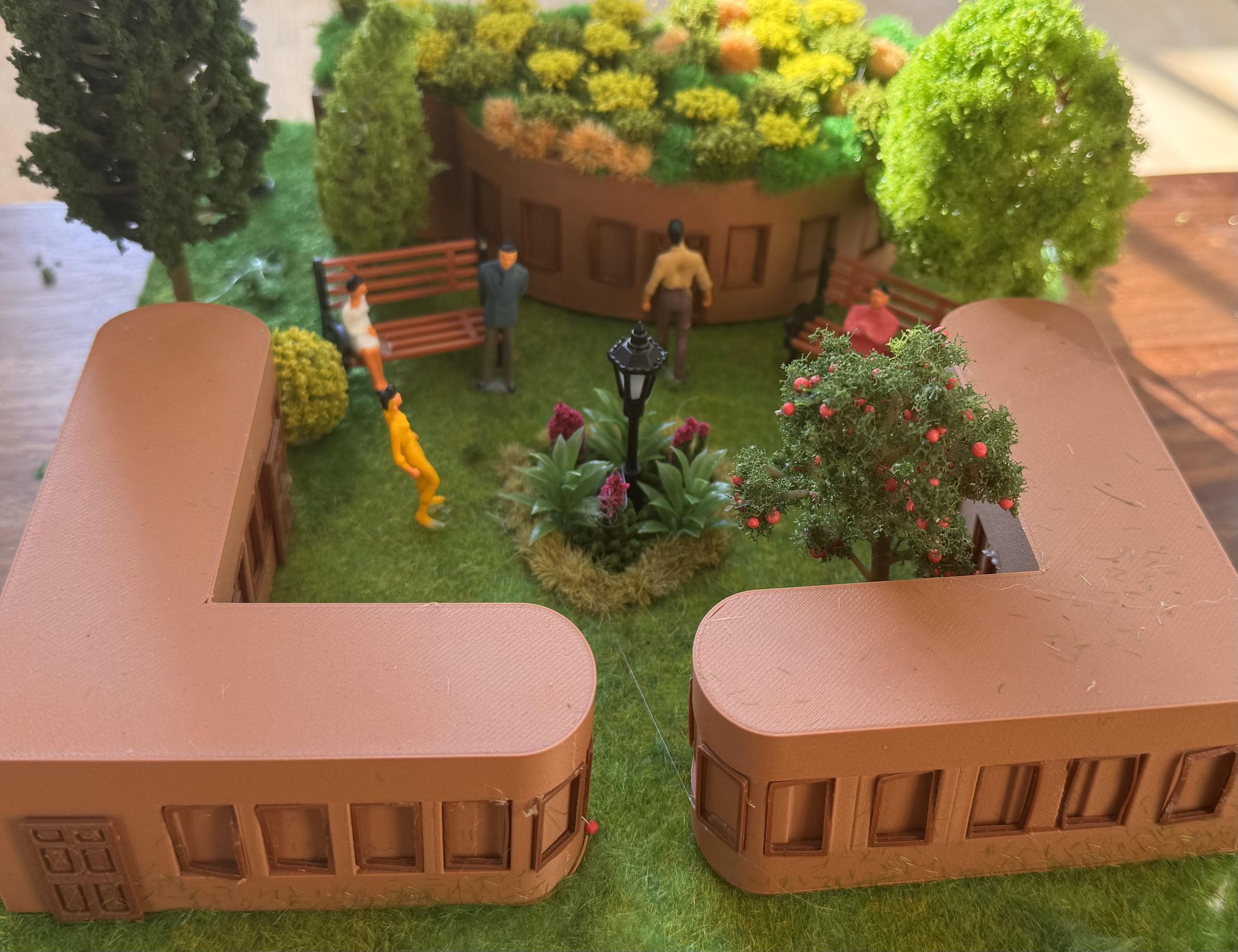
The overall property design brings all three main wings—the entrance and common area building, the residential building, and the medical/therapy facility—into a unified campus that functions like a small, structured neighborhood. Instead of feeling like separate institutional buildings, the layout is intended to feel connected, walkable, and intuitive, so residents can move between spaces easily without confusion or stress. The design prioritizes clarity of navigation, safety, and a strong sense of community cohesion.
At the center of the campus is a shared open space that acts as a social and visual anchor. This could include courtyards, gardens, or landscaped gathering areas that provide natural light, greenery, and opportunities for calm outdoor activity. These spaces are essential for mental health recovery, as access to nature and open air can reduce stress, improve mood, and encourage healthy daily routines. Pathways are wide, accessible, and clearly marked to ensure that all residents, including those with mobility devices, can move comfortably throughout the site.
The placement of buildings is intentional. The entrance building is positioned at the front for easy access and orientation, serving as the main point of arrival and coordination. The residential building is placed in a quieter section of the property to promote rest and stability, while still remaining close enough for staff support and community engagement. The medical and therapy wing is located centrally or in a connected area to ensure that residents can reach care quickly and discreetly when needed.
Safety and visibility are balanced with privacy. Open sightlines allow staff to maintain awareness of the campus without creating a sense of surveillance or control. Landscaping, seating areas, and transitional spaces between buildings help soften the environment and make it feel less institutional. Lighting design is also important, with well-lit pathways and common areas that support both safety and comfort during evening hours.
Overall, the property is designed as a cohesive healing environment rather than a collection of separate buildings. Every element—from building placement to outdoor spaces—is arranged to support accessibility, dignity, community interaction, and long-term recovery.
Finding a Suitable Neighborhood
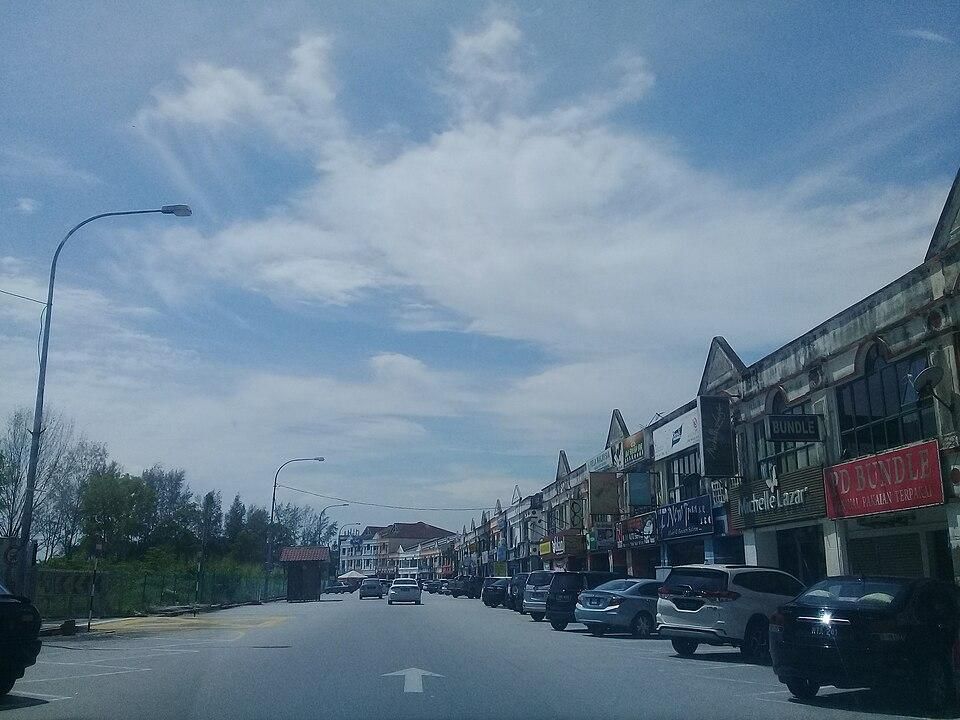
Image Source: Wikimedia Commons
For this project, the selected neighborhood within Richmond is Downtown Richmond, specifically the area around the Richmond BART station and the Macdonald Avenue corridor. This location is the strongest fit because it combines high accessibility, proximity to services, and direct connection to public transportation, all of which are essential for a rehabilitation and supportive housing campus.
Downtown Richmond provides immediate access to the Richmond BART station, multiple bus lines, and major transit routes, making it easy for residents to reach hospitals, clinics, job opportunities, and community programs throughout the Bay Area. This level of connectivity is especially important for individuals in recovery who may need frequent medical appointments, therapy sessions, or structured reintegration into work and education.
The area is also close to key urban services, including healthcare providers, pharmacies, grocery stores, and local organizations that support housing and social services. This reduces isolation and ensures that residents remain integrated into the broader city infrastructure rather than being separated from it. At the same time, the site selection can be planned carefully within the neighborhood to avoid the busiest commercial sections while still maintaining accessibility.
Another advantage of Downtown Richmond is that it is already an established civic and service-oriented area, meaning the presence of a supportive facility aligns with existing land use patterns. This makes integration more practical and reduces the need for residents to travel long distances for essential resources.
Overall, Downtown Richmond offers the best combination of transportation access, service proximity, and urban integration, making it the most suitable and practical location for the campus within the city.
Zoning
Image Source: Wikimedia Commons
For this project, the most suitable and realistic zoning designation in Downtown Richmond would be Mixed Use (MU) zoning—specifically the Downtown Mixed Use / Transit-Oriented Development (TOD) areas around the Richmond BART Station and Macdonald Avenue corridor.
This zoning category is the best fit because it already supports a combination of residential, commercial, and institutional uses in the same area. A campus that includes supportive housing, medical services, therapy spaces, dining facilities, and community areas requires exactly this kind of flexibility. In contrast, single-family residential or heavy industrial zones would not allow the scale or function of this type of facility.
Within Richmond’s Downtown TOD and mixed-use framework, multi-story residential development is permitted, along with public-serving institutional uses such as clinics, social service centers, and community facilities. This makes it legally compatible with the three-wing structure of the campus: residential housing, medical/therapy services, and shared communal infrastructure. The density allowances in this zoning also support a compact campus design, which is important near a transit hub where land efficiency is prioritized.
Another key advantage of the Downtown MU/TOD zoning is its emphasis on transit accessibility and reduced car dependency. Parking requirements are typically relaxed compared to suburban zones, which aligns with the project’s goal of creating an accessible, walkable environment. Residents can rely on BART, local bus routes, and pedestrian infrastructure rather than needing private vehicles.
The City of Richmond’s general plan also supports higher-density, mixed-use redevelopment in this corridor as part of ongoing revitalization efforts. Projects that include supportive housing and health services are often viewed favorably when they contribute to addressing homelessness and improving public health outcomes. This makes approval more realistic compared to less flexible zoning districts.
Overall, the Downtown Richmond Transit-Oriented Mixed-Use zoning near the BART station is the most specific and appropriate designation, as it legally supports the scale, function, and integrated design of a rehabilitation and supportive housing campus while aligning with the city’s long-term development goals.
Accessibility
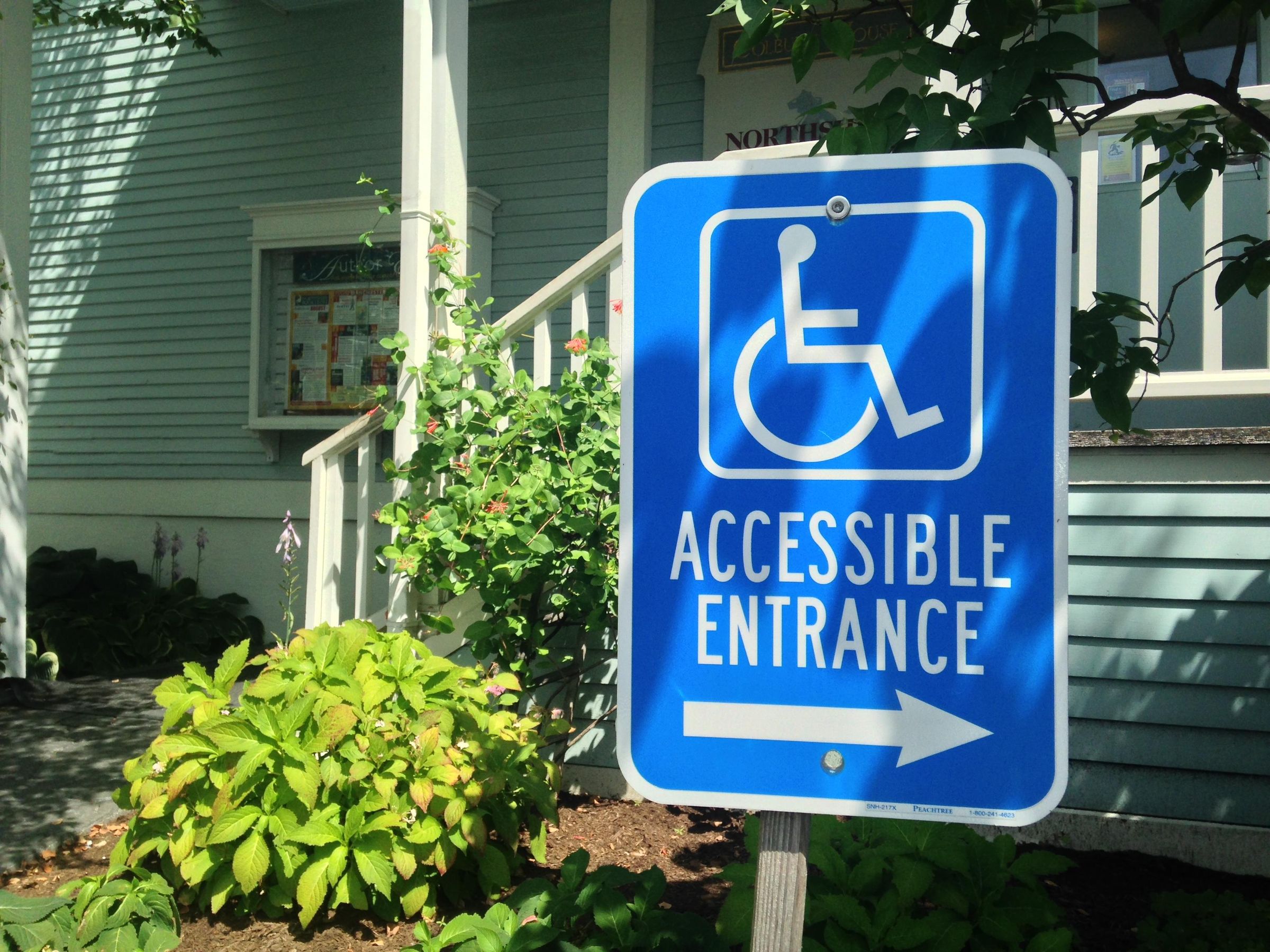
Image Source: Wikimedia Commons
Accessibility is a core requirement of the entire campus design because the facility is intended to serve people with a wide range of physical, cognitive, and sensory disabilities, as well as individuals recovering from illness, injury, or substance use. The goal is to ensure that every resident can move through the space safely and independently, regardless of mobility level or support needs. Accessibility is not treated as a compliance checklist, but as a foundational design principle that shapes every building and outdoor space.
All buildings are designed to be fully ADA-compliant, with step-free entrances, wide corridors, elevator access to all floors, and doorways sized to accommodate wheelchairs and mobility aids. Bathrooms, bedrooms, and therapy rooms are designed with adaptive features such as grab bars, roll-in showers, and adjustable fixtures. These elements ensure that residents with permanent or temporary disabilities can live comfortably without relying on constant assistance.
The campus layout also prioritizes accessible circulation between buildings. Pathways are wide, smooth, and gently graded to avoid steep slopes. Tactile indicators, clear signage, and high-contrast visual cues help support residents with visual impairments or cognitive challenges. Lighting is designed to be even and non-harsh, reducing confusion and improving safety during both day and night use.
Transportation accessibility is also essential. The proximity to public transit in Downtown Richmond allows residents to travel to external appointments, jobs, and community programs without needing personal vehicles. Within the campus itself, shared mobility options such as shuttle carts or assisted transport may be provided for residents who need additional support moving between wings.
Finally, accessibility extends beyond physical movement into program design. Services such as therapy, medical care, and skills training are structured to accommodate different learning styles, communication needs, and cognitive abilities. This ensures that every resident, regardless of disability or condition, has an equal opportunity to participate fully in recovery and community life.
Security

Image Source: Wikimedia Commons
Security in this campus is designed to protect residents while still maintaining a calm, non-institutional atmosphere. The goal is to create an environment where people feel safe without feeling controlled or confined. Instead of relying on harsh or prison-like measures, security is built into the layout, staffing, and daily operations of the facility in a balanced and trauma-informed way.
The entrance and common area building serves as the primary security and coordination point. A staffed security office is located directly at the front entrance, allowing trained personnel to monitor arrivals, manage visitor access, and respond quickly to any incidents. This does not function as a restrictive checkpoint, but rather as a supportive presence that helps maintain safety, assist new arrivals, and ensure that only approved visitors enter residential and clinical areas.
Throughout the campus, security is supported by clear sightlines, well-lit pathways, and thoughtful building placement that reduces hidden or isolated areas. Staff presence is consistent but discreet, with caseworkers, support staff, and trained security personnel integrated into daily activity rather than standing apart from residents. This approach helps maintain safety while preserving dignity and trust.
Inside the medical and therapy facility, controlled access is especially important. Certain areas, such as medication storage rooms and pharmacy storage spaces, include extra-secure locked cupboards and restricted access systems for controlled or high-risk medications. Only authorized medical staff can access these areas, and inventory is carefully managed to prevent misuse, theft, or diversion of prescription drugs. This ensures that necessary medications are available for treatment while maintaining strict safety standards.
Emergency response systems are also built into the campus, including rapid communication links between buildings, staff alert systems, and designated response protocols for medical emergencies, mental health crises, or safety concerns. However, the emphasis remains on de-escalation and care-first intervention rather than punishment or force.
Overall, security is designed to support healing. By combining a staffed front entrance security office, controlled medical storage (including secure medication cupboards), and a calm environmental design, the campus maintains safety while still feeling like a supportive, residential community rather than a restrictive facility.
Fire Safety

Image Source: Wikimedia Commons
Fire safety is a critical design requirement for a campus of this size, especially because it includes residential housing, medical treatment areas, communal dining spaces, and therapy facilities. The goal is to create a system that prevents fires where possible, allows for fast detection if they occur, and ensures that all residents—including those with mobility or cognitive disabilities—can evacuate safely and efficiently.
Every building on the campus is equipped with modern fire detection systems, including smoke alarms, heat sensors, and sprinkler systems in all residential, medical, and communal areas. These systems are networked so that alerts are immediately communicated across the campus, allowing staff to respond quickly and coordinate evacuation if necessary. Fire alarm signals are both audible and visual to ensure accessibility for residents with hearing or vision impairments.
Evacuation planning is integrated directly into the architecture. All buildings include multiple clearly marked exits, wide hallways, and accessible routes that can accommodate wheelchairs, walkers, and medical transport equipment. Stairwells are enclosed and pressurized where required, and elevators designed for emergency use are included in medical and residential buildings when permitted by code. Each wing of the campus is designed so that no resident is ever too far from a safe exit point.
Outdoor assembly areas are strategically placed throughout the property to serve as safe gathering points during emergencies. These spaces are clearly marked, open, and accessible, ensuring that staff can quickly account for all residents. Regular fire drills and evacuation training are part of the campus routine so that both staff and residents are familiar with procedures and can respond calmly in an emergency.
Materials used in construction also support fire resistance, including non-combustible structural elements, fire-rated doors, and flame-retardant interior finishes where appropriate. Landscaping is designed with defensible space principles in mind, reducing fire spread risk and ensuring safe separation between buildings.
Overall, fire safety is treated as an integrated system combining technology, design, and training. It ensures that all residents can live in a secure environment where emergencies are managed quickly, safely, and with clear, accessible procedures that prioritize protection and dignity.
Sustainability

Image Source: Wikimedia Commons
Sustainability is an important part of the campus design because the facility is intended to be long-term, stable, and beneficial not only to its residents but also to the surrounding environment and community. The design incorporates environmentally responsible strategies that reduce energy use, improve air quality, and create calming natural spaces that directly support mental and physical health recovery.
One of the central features of the sustainability plan is the use of green roofs and integrated garden spaces across multiple buildings. Green roofs help regulate building temperature by reducing heat absorption in the summer and improving insulation in the winter. This lowers energy consumption for heating and cooling while also extending the lifespan of roofing materials. Beyond their technical benefits, these rooftop gardens provide quiet outdoor areas where residents can relax, participate in gardening activities, or simply spend time in nature, which is strongly linked to improved mental health outcomes.
At ground level, the campus includes landscaped gardens, walking paths, and therapeutic outdoor spaces designed for both relaxation and structured programs. These gardens can be used for horticultural therapy, where residents engage in planting, watering, and maintaining vegetation as part of their rehabilitation process. This type of activity supports routine-building, responsibility, and emotional regulation while also fostering a sense of purpose and accomplishment.
The buildings themselves are designed with energy efficiency in mind, incorporating natural lighting, cross-ventilation, and energy-efficient HVAC systems. Solar panels may be integrated where appropriate to reduce reliance on non-renewable energy sources and lower long-term operational costs. Water conservation strategies, such as rainwater collection and drought-resistant landscaping, are especially important in California’s climate and help ensure responsible resource use.
Overall, sustainability in this project is not just about environmental impact, but also about creating healthier living conditions. Green roofs and gardens, combined with efficient building systems and natural landscaping, help transform the campus into a restorative environment that supports both ecological responsibility and human recovery.
Opening Floorplanner

With the research, planning, and design goals established, the next phase of the project was creating a digital model of the facility. To accomplish this, I used Floorplanner, an architectural design platform that allows buildings, rooms, furniture, and site layouts to be visualized in both 2D and 3D. This software made it possible to translate the concepts developed in earlier stages into a realistic campus design that could be tested and refined before construction would ever take place.
The first step was setting up a new project and establishing the scale of the site. Accurate dimensions are important because the campus must accommodate residential spaces, medical facilities, therapy rooms, communal gathering areas, accessibility features, and outdoor landscaping while still maintaining comfortable circulation between buildings. By creating the project digitally, different layouts could be explored and adjusted as the design evolved.
Floorplanner also allowed me to view how the three-building campus would function as a complete environment rather than as separate structures. Building placement, walking paths, outdoor gathering areas, and relationships between the entrance building, residential wing, and medical facility could all be visualized together. This helped ensure that the final layout remained intuitive, accessible, and supportive of the campus's overall mission.
Using a digital planning tool also made it easier to furnish spaces, evaluate room sizes, and confirm that important functions were included. Elements such as reception areas, security offices, dining spaces, therapy rooms, bedrooms, medical storage, and communal living areas could be placed and adjusted to create a realistic representation of how residents and staff would use the facility each day.
With the project created and the workspace prepared, the next step was defining the building lot and establishing the physical footprint of the campus.
The Building Lot

Before creating any buildings, the first task in Floorplanner was defining the building lot. The lot serves as the foundation for the entire project and determines how much space is available for structures, outdoor areas, accessibility features, and future expansion. Because this facility is designed as a campus rather than a single building, the site needed to be large enough to accommodate three separate wings while still providing open space for recreation, gardens, and safe pedestrian circulation.
The lot was laid out to support a clear organization of functions across the property. The entrance and common area building was positioned toward the front of the site to create an obvious arrival point for residents, visitors, and staff. Behind this building, space was reserved for the residential wing, providing a quieter area for living accommodations. The medical and therapy facility was placed nearby but separate enough to maintain privacy for appointments and treatment sessions.
Sufficient space was also allocated for sidewalks, wheelchair-accessible pathways, landscaping, outdoor gathering areas, and therapeutic gardens. These outdoor spaces are an important part of the recovery environment, providing opportunities for exercise, relaxation, and social interaction. Parking areas for staff, visitors, service vehicles, and accessible transportation were also considered during site planning.
By carefully establishing the building lot before designing any structures, the campus could be organized efficiently from the beginning. This ensured that each building would have room to fulfill its purpose while remaining connected to the larger community-focused layout of the facility. The next step was creating the footprint of the first building, which serves as the main entrance and community hub of the campus.
First Building Footprint

With the building lot established, the next step was creating the footprint of the first building. This structure serves as the main entrance and common area building, making it one of the most important parts of the campus. Because every resident, visitor, and staff member will pass through this building, its layout needed to be welcoming, easy to navigate, and large enough to support several key functions.
The footprint was designed as a simple, efficient shape that maximizes usable interior space while remaining easy to construct and maintain. A rounded layout was selected because it allows rooms to be organized logically around central circulation areas. This also makes the building more accessible, helping residents and visitors quickly understand where different services are located.
The size of the footprint was determined by the functions planned for the building. Space was needed for a reception area, administrative offices, a security room, a large dining area, a kitchen, a community living room, and supporting facilities such as restrooms and storage spaces. Since this building acts as the social center of the campus, additional space was allocated to the living room and dining areas to encourage gathering, interaction, and community-building among residents.
The footprint was positioned near the front of the property to create a clear and welcoming entrance. This placement also allows staff to monitor arrivals and provides easy access for deliveries, visitors, and emergency services when necessary. At the same time, the building acts as a transition between the public-facing entrance of the campus and the more private residential and medical areas located farther inside the site.
Once the overall footprint was completed, the next stage was dividing the interior into individual rooms that support the building's daily operations and community functions.
Rooms for First Building

After creating the footprint of the first building, the interior space was divided into rooms based on the functions needed for the campus. Since this building serves as the main entrance and community hub, the layout was designed to balance administrative operations with welcoming communal spaces that residents use every day.
Near the front entrance, a reception area was created to serve as the primary point of contact for visitors, new residents, and service providers. Adjacent to reception is an administrative office where staff can manage daily operations, resident support plans, and campus coordination. A dedicated security room was also included near the entrance so security personnel can monitor access to the facility and respond quickly when needed.
The largest spaces within the building are the dining room and living room. The dining room provides a shared location where residents can gather for meals, community events, and celebrations. Nearby, the living room functions as a comfortable social space where residents can relax, watch television, read, participate in activities, or simply spend time together. These communal spaces play an important role in reducing isolation and strengthening the sense of community throughout the campus.
A kitchen was placed next to the dining area to support meal preparation and food service. Storage areas and utility spaces were also included to support building operations. Finally, a bathroom was added to ensure that residents, visitors, and staff have convenient access to restroom facilities while using the building.
By dividing the footprint into these specific rooms, the building begins to take shape as both the administrative center and social heart of the campus. The next step is adding doors to create clear circulation and connections between each space.
Doors for First Building

After the interior rooms were defined, the next step was adding doors to establish clear movement paths throughout the first building. Doors are more than simple access points—they control flow, improve accessibility, and help separate public, staff, and resident spaces in a way that feels natural and easy to navigate.
The main entrance doors were placed at the front of the reception area to create a direct and welcoming point of arrival. From here, residents and visitors can immediately access the reception desk without confusion. Wide automatic doors were used in this area to support wheelchair access, stretchers, and high-traffic entry during busy periods.
Inside the building, doors were positioned to connect key functional spaces logically. The reception area connects directly to administrative offices and the main corridor, ensuring staff can move quickly between coordination spaces. The security room was given a controlled access door located near the entrance so staff can monitor entry points while remaining close to the main flow of activity.
Doors between the dining room, kitchen, and living room were carefully arranged to support efficient movement while still keeping operational areas separate from communal spaces. This allows food service staff to move easily between preparation and serving areas without disrupting residents in the dining or living spaces.
Hallway doors leading to bathrooms and storage areas were placed in accessible, clearly visible locations to ensure ease of use for all residents. Door widths throughout the building were designed with accessibility in mind, allowing comfortable passage for wheelchairs, walkers, and mobility aids.
Overall, the door layout helps create a building that is intuitive, safe, and easy to navigate, supporting both daily operations and a welcoming community environment. The next step is adding windows to bring natural light and improve the atmosphere inside the building.
Windows for First Building


After the doors were placed and circulation through the building was established, the next step was adding windows to improve natural lighting, visibility, and the overall atmosphere of the first building. Since this structure functions as the main entrance and community hub, it was important that it feel open, calm, and welcoming rather than enclosed or institutional.
Large windows were placed in the reception area to create an immediate sense of openness upon entry. This allows natural light to enter the space and helps residents feel oriented as soon as they arrive. It also improves visibility between inside and outside, which supports both safety and a more inviting environment. In administrative areas, smaller but still well-positioned windows were added to provide daylight while maintaining privacy for staff working on sensitive case management and planning.
The dining room received some of the largest window placements in the building. These windows were positioned along exterior walls to maximize daylight during meal times, helping create a more comfortable and uplifting atmosphere. Natural light in shared eating spaces also encourages routine, improves mood, and supports a sense of normalcy for residents who may be transitioning from unstable living conditions.
In the living room, windows were placed to frame views of outdoor garden or courtyard spaces. This connection between indoor communal areas and nature is intentional, as it helps reduce stress and supports mental health recovery. It also makes the space feel less confined and more like a residential home environment.
Even in functional areas like corridors and secondary rooms, smaller windows or interior glass panels were added where possible to reduce dark or closed-off spaces. Overall, the window design ensures that the building feels bright, safe, and connected to the outdoors while still maintaining the privacy and functionality needed for its various uses.
Bathroom and Dining Room

After completing the structural openings with doors and windows, the next step was refining two of the most important shared-use areas in the first building: the bathroom and the dining room. These spaces play a major role in daily life on the campus, so their layout needed to balance functionality, accessibility, and comfort while still supporting a calm, dignified environment.
The bathroom was designed as a fully accessible, multi-user facility that can accommodate residents with a wide range of physical abilities. Stalls were spaced to allow wheelchair movement, and at least one fully ADA-compliant stall with grab bars and roll-in access was included. Sinks were positioned at accessible heights, with clear floor space for mobility aids. The layout was kept open and easy to navigate to reduce confusion and ensure privacy without creating tight or restrictive conditions. Durable, easy-to-clean materials were prioritized to maintain hygiene while supporting long-term use in a high-traffic environment.
The dining room was designed as one of the central social spaces of the entire campus. Its layout emphasizes openness and community, with enough seating to accommodate residents during shared meals while still allowing comfortable spacing between tables. This prevents overcrowding and creates a calmer, more respectful eating environment. Tables were arranged to support both group interaction and individual comfort, recognizing that residents may have different social needs at different stages of recovery.
Accessibility was a key consideration in both spaces. Clear pathways were maintained throughout the dining area so residents using wheelchairs or walkers could move easily between seating, serving areas, and exits. In the bathroom, turning radiuses and door widths were carefully planned to ensure independent use whenever possible.
Overall, these two spaces were designed not just for function, but for dignity and routine. The bathroom supports essential daily care in a safe and accessible way, while the dining room reinforces structure, community, and stability through shared meals and social interaction.
Windows and Doors for the Bathroom and Dining Room

With the bathroom and dining room layouts finalized, the next step was refining how these spaces connect to the rest of the building through carefully placed doors and windows. Even though these are functional areas, the goal was still to maintain comfort, accessibility, and a sense of calm, rather than making them feel purely utilitarian.
For the bathroom, doors were positioned to ensure privacy while still allowing easy access from nearby hallways. A wide, accessible door was used to support wheelchairs, walkers, and assisted movement if needed. The placement avoids direct exposure from main social areas like the dining room, creating a clear separation between public and private functions. This helps maintain dignity and comfort for residents using the space while still keeping it easy to reach quickly from anywhere in the building.
In the dining room, doors were placed to connect directly to both the kitchen and the main circulation hallway. This allows staff to efficiently serve meals and move between preparation and dining areas without disrupting residents. A secondary exit door was also included for safety and emergency evacuation, ensuring the space can be cleared quickly if needed.
Windows in the dining room were expanded and carefully aligned with seating areas to maximize natural light during the day. These windows also help create a visual connection to outdoor green spaces, reinforcing the calming, restorative atmosphere of the campus. The bathroom, in contrast, uses smaller, higher-positioned windows or frosted glazing where applicable to bring in light while preserving privacy.
Overall, the placement of doors and windows in these rooms was designed to balance three priorities: privacy in sensitive areas, efficiency for staff movement, and natural light to improve comfort and wellbeing. This ensures both rooms function effectively within the larger flow of the building while still supporting the dignity and needs of residents.
Furnishing the Bathroom

After the structural layout and openings were finalized, the next step was furnishing the bathroom to make it fully functional, accessible, and appropriate for a high-use residential support environment. The focus here was not only on practicality, but also on ensuring dignity, privacy, and ease of use for residents with a wide range of physical and cognitive abilities.
Individual toilet stalls were furnished with reinforced grab bars, ensuring stability and safety for residents with mobility challenges. At least one stall was designed as a fully ADA-compliant accessible unit, featuring extra floor space for wheelchair turning, a roll-in layout, and easy-locking doors that can be operated with minimal effort. The goal was to ensure that every resident can use the facilities independently whenever possible.
Sinks were installed at multiple heights, including lowered basins for wheelchair users and standard-height sinks for general use. Touchless or easy-to-use faucet systems were included to support hygiene and reduce barriers for residents with limited dexterity. Mirrors were placed at adjustable or angled positions so they remain usable for both standing and seated individuals.
The layout also included clear circulation space between all fixtures, avoiding tight corners or obstructed pathways. This is especially important in a setting where residents may be using walkers, wheelchairs, or receiving assistance from staff. Flooring was designed to be non-slip and easy to clean, supporting both safety and long-term maintenance.
Lighting in the bathroom was kept bright but soft, avoiding harsh glare while ensuring visibility for all users. Ventilation systems were included to maintain air quality and comfort in a high-traffic shared space.
Overall, the bathroom furnishings were designed to prioritize independence, safety, and dignity. Every element works together to ensure that essential daily needs can be met comfortably and reliably within a supportive environment.
Furnishing the Dining Room

With the bathroom completed, the next step was furnishing the dining room, which functions as one of the most important communal spaces in the entire campus. This room is not just for eating—it is also a place where residents build routine, socialize, and gradually reconnect with a sense of normal daily life. Because of this, the furnishing choices were focused on comfort, accessibility, and creating a calm, welcoming atmosphere.
The dining room was equipped with a mix of long communal tables and smaller round tables to support different social needs. Some residents may prefer group interaction, while others may feel more comfortable in smaller or quieter settings. All tables were selected to be wheelchair accessible, with appropriate height clearance underneath and enough spacing to allow easy movement between seating areas.
Chairs were chosen for durability and comfort, with supportive backs and stable frames to assist residents who may have mobility or balance challenges. A portion of seating was designed with armrests to make sitting and standing easier. The layout ensures that no area feels overcrowded, maintaining wide pathways throughout the room for safe and efficient circulation.
At the front of the dining room, a serving area was furnished to connect directly with the kitchen. This includes counters for meal distribution, storage for utensils, and accessible serving stations that allow staff and residents to move through the space efficiently. The design supports both staffed meal service and potential self-service options depending on the program structure.
Lighting was kept warm and natural where possible, supported by large windows placed earlier in the design. This helps create a more relaxed environment and reduces the institutional feeling often associated with large dining facilities. Acoustic considerations were also important, with furnishings and materials chosen to reduce noise levels and create a calmer atmosphere during busy meal times.
Overall, the dining room was furnished to support more than just nutrition. It is designed as a structured social environment where residents can experience stability, community, and routine in a respectful and accessible setting.
Furnishings the Lobby

After completing the dining room, the next step was furnishing the lobby area in the first building, which acts as the main point of arrival and orientation for anyone entering the campus. This space sets the emotional tone of the entire facility, so it was designed to feel calm, welcoming, and easy to navigate rather than institutional or overwhelming.
The reception desk was placed as the central feature of the lobby, positioned so staff have a clear view of both the entrance and the main interior corridors. It was furnished with accessible counters at different heights to accommodate standing visitors and wheelchair users. Behind the desk, organized storage and digital systems support resident check-ins, scheduling, and coordination of services across the campus.
Seating areas were added throughout the lobby to create a comfortable waiting and gathering environment. Chairs and small couches were arranged in clusters to encourage a sense of calm and reduce the feeling of overcrowding. These seating areas are especially important for new residents who may be arriving during stressful transitions and need a moment to adjust before moving deeper into the facility.
Signage and wayfinding elements were also incorporated into the furnishing plan. Clear visual indicators help residents and visitors understand where to go without confusion, which is especially important in a multi-building campus with many services. The design avoids clutter while still ensuring that key information is easy to access.
Lighting in the lobby was furnished to be bright but soft, using a combination of natural light from windows and warm interior fixtures. This helps create a sense of safety and openness while avoiding harsh or clinical lighting conditions. Materials and finishes were chosen to feel durable but residential, reinforcing the idea that this is a place of support and stability.
Overall, the lobby furnishings were designed to support smooth transitions into the campus while creating a respectful and calming first impression. It functions as both an operational hub and a welcoming social space that reflects the core values of the entire facility.
Furnishing the Living Room

The living room in the first building is designed as a relaxed, communal space where residents can spend time outside of structured programs like meals, therapy, or skills training. Unlike the dining room, which is more routine-based, the living room focuses on comfort, social connection, and emotional decompression. Its furnishing was chosen to make the space feel like a shared home environment rather than a public institution.
Seating is arranged in soft groupings, including couches, armchairs, and modular seating that can be rearranged depending on group size or activity. The layout avoids rigid rows or overly formal arrangements, instead encouraging natural conversation and flexible use of the space. A portion of seating is designed to be more private or low-stimulation for residents who may need quiet time without complete isolation.
Tables and side surfaces are included throughout the room to support everyday activities such as reading, board games, writing, or casual group meetings. These small functional elements help reinforce routine and encourage positive social interaction without requiring structured programming at all times.
Entertainment and shared media features, such as a television or presentation area, are included but kept secondary to human interaction. The goal is not to create a passive entertainment space, but a balanced environment where residents can choose how they engage, whether socially or independently.
Soft lighting and warm materials were used to create a calm and residential atmosphere. Natural light from previously placed windows helps reduce stress and supports a healthier daily rhythm. Acoustic-friendly furnishings, such as upholstered seating and rugs, help reduce noise levels and prevent the space from feeling overwhelming during busy periods.
Overall, the living room is furnished to support emotional recovery through comfort, familiarity, and safe social interaction. It serves as a key space where residents can begin rebuilding trust, routine, and a sense of belonging within the campus community.
Furnishing the Office

The office areas in the first building are designed to support the administrative, clinical coordination, and case management functions that keep the entire campus running smoothly. While these spaces are not primarily for residents, they play a crucial behind-the-scenes role in ensuring that each person receives consistent care, proper scheduling, and coordinated support across housing, medical, and therapy services.
Each office is furnished with practical workstations that include desks, ergonomic chairs, computers, and secure storage for sensitive documents. Case managers and staff need organized spaces where they can track resident progress, coordinate appointments, and communicate with medical and therapy teams. The layout is designed to support efficiency while still maintaining a calm and non-stressful work environment.
Privacy and confidentiality are important considerations in these rooms. Furnishings include sound-dampening elements where possible, as well as enclosed storage cabinets for files and personal records. This ensures that sensitive information related to residents’ medical and social situations is handled securely and respectfully.
At the same time, the office design avoids feeling overly rigid or institutional. Natural lighting from windows, simple décor, and comfortable furniture help create a professional but human-centered workspace. Staff well-being is also important, since they are responsible for supporting residents through complex recovery journeys.
Meeting areas within or near the office spaces are furnished with tables and seating for private discussions, care planning sessions, and interdisciplinary coordination between staff members. These areas allow for collaborative decision-making while maintaining a respectful and structured environment.
Overall, the office furnishings are designed to support organization, confidentiality, and teamwork. They ensure that the administrative side of the campus operates efficiently, allowing staff to focus on delivering consistent, compassionate care to residents.
Furnishing the Security Room

The security room is a controlled but low-profile operational space designed to support safety across the campus without creating a prison-like atmosphere. Its purpose is to monitor the entrance, coordinate responses to incidents, and maintain overall awareness of activity on the site while still respecting the dignity and privacy of residents.
The room is furnished with monitoring stations that include computer screens connected to campus entry points and key shared areas such as the main entrance, pathways, and exterior zones. These systems allow security staff to observe activity in real time and respond quickly if assistance is needed. The setup is designed for clarity and efficiency, with organized workstations that reduce clutter and support calm decision-making.
Communication equipment is also a key part of the furnishing. This includes internal alert systems, radios or headsets, and direct communication links to administrative offices and medical staff. This ensures that in any situation—whether medical, behavioral, or safety-related—staff can coordinate quickly across departments without delay.
The security room also includes a secure storage area for access control items such as keys, visitor passes, and emergency equipment. Everything is organized and restricted to authorized personnel to maintain safety and accountability within the campus.
Furnishings are intentionally minimal and professional. The room is designed to feel focused and functional rather than intimidating. Lighting is steady and neutral, and seating is ergonomic to support long shifts without discomfort or fatigue. Windows, where included, are positioned to maintain awareness of the entrance area without compromising operational focus.
Overall, the security room is designed to quietly support the safety of the entire campus. It balances oversight with restraint, ensuring protection for residents and staff while maintaining the therapeutic and respectful environment that defines the rest of the facility.
Furnishing the Kitchen

The kitchen in the first building is designed as a high-functioning, professional-grade space that supports daily meal preparation for residents, staff, and community activities. Because the dining room is a central part of the campus experience, the kitchen must be efficient, safe, and capable of producing consistent, high-quality meals at scale while maintaining a calm and organized working environment.
The layout is divided into clear functional zones, including food preparation, cooking, plating, cleaning, and storage. Industrial appliances such as ovens, stovetops, refrigeration units, and food warmers are placed in a logical workflow to reduce unnecessary movement and improve efficiency. Counter space is generously provided to allow multiple staff members to work simultaneously without crowding or interference.
Storage is a key component of the kitchen furnishing plan. Dry storage, refrigerated storage, and freezer units are organized to ensure food safety and easy access. Shelving systems are clearly labeled and arranged to support inventory management and reduce waste. This structure helps maintain consistent meal planning and supports dietary needs for residents with medical or cultural requirements.
Safety is built into every aspect of the kitchen design. Non-slip flooring, heat-resistant surfaces, proper ventilation systems, and fire suppression equipment ensure a secure working environment. The kitchen is also designed to accommodate staff with varying levels of experience, with clear layouts and accessible controls that reduce risk and improve usability.
The space is furnished with durability and hygiene in mind. Surfaces are easy to clean and maintain, supporting strict sanitation standards required in communal food preparation environments. Despite its industrial function, efforts are made to ensure the kitchen remains well-lit and organized, reducing stress for staff and promoting a positive working atmosphere.
Overall, the kitchen serves as a vital support system for the entire campus. It ensures that residents receive consistent, nutritious meals while maintaining safety, efficiency, and dignity in every aspect of food preparation and service.
Second Building Footprint

With the first building complete, the next phase is establishing the footprint for the second building, which serves as the residential wing of the campus. This structure is focused on long-term living, rest, and daily recovery routines, so its placement and layout are intentionally more private and quiet compared to the entrance building. It is positioned slightly deeper into the site to reduce noise and traffic while still maintaining easy access to shared campus services.
The footprint is designed to accommodate a series of private or semi-private rooms, shared living spaces, a secondary common area, a gym, and support rooms such as storage and staff access points. Unlike the more public-facing first building, this structure is organized around comfort and routine, prioritizing a residential feel that resembles a supportive housing community rather than an institution.
The overall shape of the footprint is kept simple and efficient, typically rectangular or L-shaped, to allow for clear hallways and logical room grouping. Residential rooms are grouped together in quieter sections, while communal areas such as the gym and secondary living room are placed centrally to encourage healthy social interaction without disrupting rest areas.
Accessibility is integrated into the footprint from the beginning. Wide corridors, elevator placement (if multi-story), and direct exit routes are planned so that all residents can move safely and independently throughout the building. Outdoor access points are also considered, allowing easy connection to gardens or courtyard spaces.
Overall, the second building footprint establishes the foundation for a stable, supportive living environment. It balances privacy with community, ensuring residents have both personal space and shared areas that encourage connection, health, and recovery.
Rooms for Second Building

After establishing the footprint of the residential wing, the next step was dividing the space into clearly defined rooms that support daily living, recovery, and community interaction. The goal of this building is to feel like a stable, home-like environment where residents can rest, build routines, and gradually regain independence while still having access to support when needed.
The primary focus of the layout is the residential rooms, which are organized in clusters along quieter corridors. These rooms are designed for private or semi-private living, depending on the needs of residents. Each room is placed to maximize comfort, reduce noise, and provide a sense of personal space while still remaining connected to staff support and communal areas.
A secondary gathering space is included as a central room within the building. This functions as a smaller, more relaxed common area compared to the main entrance building. It is intended for informal social interaction, peer support, and low-pressure activities, helping residents build relationships in a more intimate setting.
The gym is also a key component of this building’s room layout. It is positioned in a way that is easily accessible but slightly separated from sleeping areas to reduce noise. This space supports physical health, routine building, and stress reduction, all of which are important parts of recovery. It is designed to be flexible, accommodating different ability levels and rehabilitation needs.
Support rooms such as storage areas, staff access points, and utility spaces are included to ensure the building can operate efficiently without disrupting resident life. Circulation paths are kept wide and simple, connecting all rooms in a way that is easy to navigate and accessible for residents with mobility challenges.
Overall, the room layout of the second building creates a balanced residential environment. It supports privacy, encourages community, and integrates wellness spaces in a way that reinforces stability, dignity, and long-term recovery.
Doors for the Second Building

After the rooms were laid out in the residential building, the next step was adding doors to define movement, privacy, and access throughout the space. In a building designed for long-term living and recovery, doors are especially important because they help balance independence with safety and support.
The main entrance doors for the second building were placed in a central, clearly visible location to ensure easy access from the campus pathways. These doors are wide, automatic, and fully accessible, allowing residents with mobility devices or limited strength to enter and exit without difficulty. This entrance connects directly to the internal circulation spine of the building, making orientation simple and intuitive.
Inside the building, doors were positioned to separate key functional zones while maintaining smooth flow. Residential room doors are placed along quieter corridors to support privacy and rest, with sound-reducing design considerations to minimize disruption between rooms. These doors are designed to feel residential and non-institutional, reinforcing the sense of a supportive home environment.
Doors leading to the secondary living room and gym are located centrally so residents can easily access shared spaces without passing through private sleeping areas unnecessarily. This helps maintain a respectful balance between community interaction and personal space. The placement encourages social engagement while still preserving calm zones for rest and recovery.
Support spaces such as storage rooms, staff access areas, and utility rooms are positioned slightly off main pathways, with controlled access doors to ensure safety and organization without interfering with daily resident movement. Staff-only doors are discreet but strategically placed so staff can respond quickly when needed.
Overall, the door layout in the second building is designed to create clear, logical movement patterns while maintaining privacy, accessibility, and a strong sense of residential comfort. It supports both independence and structure within the living environment.
Windows for the Second Building

After the doors established how people move through the residential building, the next step was adding windows to shape the atmosphere, lighting, and overall sense of comfort inside the space. Since this building is where residents spend most of their personal time, the window design plays a major role in making the environment feel calm, safe, and connected to the outside world.
In the residential rooms, windows were placed to provide natural light while also maintaining privacy. They are positioned at heights and angles that allow residents to see outside without feeling exposed, helping create a sense of personal space and security. Natural light in these rooms is especially important because it supports healthy sleep patterns, mood regulation, and overall mental wellbeing.
In shared areas like the secondary living room, larger windows were used to create an open and welcoming atmosphere. These windows help bring in daylight throughout the day, making the space feel more active and socially inviting. Views toward gardens or courtyards were prioritized wherever possible to strengthen the connection between indoor and outdoor environments.
The gym also includes wide windows to provide natural lighting and reduce the feeling of confinement during physical activity. This helps encourage consistent use of the space and makes exercise feel more energizing and less clinical. Ventilation is also supported through window placement, improving air circulation during high-use periods.
In hallways and transitional spaces, smaller windows or interior glass panels were added where appropriate to reduce dark areas and improve visibility without compromising privacy. This helps residents navigate the building more easily and contributes to a safer, more open feeling throughout the structure.
Overall, the window design in the second building supports a balance between privacy, light, and openness. It reinforces the residential, home-like atmosphere while ensuring the space remains healthy, bright, and emotionally supportive for long-term living.
Furnishing the Gym

After the structure and openings of the residential building were complete, the next step was furnishing the gym. This space is an important part of the campus because physical activity directly supports mental health, addiction recovery, mobility improvement, and overall daily routine building. The gym is designed to be accessible, low-pressure, and adaptable to a wide range of abilities and recovery stages.
The layout includes a mix of cardio equipment, strength-training areas, and open floor space for stretching, physical therapy exercises, or group movement activities. Equipment is arranged with wide spacing to ensure safe navigation for wheelchair users, walkers, or residents with limited mobility. Nothing is overcrowded, which helps reduce stress and makes the environment feel more inviting and less intimidating.
A key focus of the furnishing design is inclusivity. Equipment is chosen so that residents at different fitness levels can participate, from light rehabilitation exercises to more advanced workouts. Some machines are specifically suitable for low-impact use, allowing residents recovering from injury, illness, or substance use to engage safely in physical activity.
The flooring is cushioned and non-slip to reduce injury risk and support joint health. Mirrors are placed strategically to help with form and movement awareness, but the overall design avoids creating a harsh or overly clinical fitness environment. Instead, it maintains a calm, supportive atmosphere that encourages consistent use rather than performance pressure.
Lighting and ventilation are also important parts of the gym furnishing. Large windows and bright, natural lighting help create an energizing environment, while airflow systems ensure comfort during exercise. Seating areas are included along the edges of the room for rest, supervision, or low-energy recovery activities.
Overall, the gym is furnished as a therapeutic and supportive space rather than just a fitness facility. It encourages routine, physical health, and emotional stability, helping residents build strength and confidence as part of their broader recovery journey.
Furnishing the Bedrooms

The bedrooms in the residential building are the most personal and important spaces for each resident, as they provide privacy, rest, and a sense of stability that is essential for recovery. The furnishing approach focuses on simplicity, comfort, and dignity, ensuring that each room feels safe and calm rather than institutional or temporary.
Each bedroom is equipped with a bed, a secure storage area for personal belongings, and basic furniture such as a small desk or table and a chair. The layout is intentionally minimal to avoid clutter and overstimulation, while still giving residents enough space to feel ownership over their environment. Storage is designed to be secure and lockable, helping residents feel confident that their belongings are protected.
The beds are positioned to maximize comfort and natural light from the windows, without blocking circulation or creating tight spaces. Mattresses and bedding are chosen for durability and comfort, supporting consistent sleep routines, which are a key part of both mental and physical recovery.
Lighting in the bedrooms is soft and adjustable, allowing residents to control brightness based on their needs. This helps support different routines, whether someone is resting during the day, preparing for sleep, or engaging in quiet personal activities. The goal is to create an environment that adapts to the individual rather than forcing a single standard experience.
Accessibility is built into every room, ensuring that residents with mobility aids or disabilities can move comfortably and independently. Clear floor space is maintained, and furniture is arranged to avoid obstacles. In some rooms, adaptive features such as grab bars or adjustable furnishings may be included depending on resident needs.
Overall, the bedrooms are designed as safe personal retreats within the larger campus. They provide residents with a consistent, private space that supports rest, emotional regulation, and a sense of personal dignity throughout their recovery journey.
Furnishing the Storage Room

After completing the residential bedrooms, the next step was furnishing the storage room, which plays a quiet but essential role in the daily operation of the residential building. Although it is not a space residents spend much time in, it directly supports comfort, organization, and safety throughout the entire wing.
The storage room is designed to hold a combination of resident-related supplies, maintenance equipment, cleaning materials, and general building necessities. Shelving units are arranged in a highly organized layout, with clearly labeled sections to separate different categories of items. This helps staff quickly locate supplies without disrupting the flow of daily activities in resident areas.
Security and access control are key aspects of this space. Certain supplies, especially cleaning chemicals, maintenance tools, or specialized equipment, are stored in locked cabinets within the room. This ensures that only authorized staff members can access potentially hazardous materials while maintaining a safe environment for residents at all times.
The layout is intentionally simple and efficient, with wide aisles that allow staff to move items easily, including larger equipment if needed. Flooring is durable and easy to clean, reflecting the practical nature of the room. Good lighting is also important, ensuring visibility and reducing the risk of accidents when staff are retrieving or storing items.
Ventilation is included to maintain air quality, especially when storing cleaning or maintenance products. Even though the room is utilitarian, it is designed to remain safe, organized, and easy to manage within the larger residential system.
Overall, the storage room supports the smooth functioning of the residential building by keeping essential supplies organized, secure, and easily accessible, ensuring that daily operations run efficiently without impacting the comfort of residents.
Furnishing the Second Living Room

The second living room in the residential building serves as a smaller, more informal community space compared to the main common areas in the entrance building. It is designed to feel more intimate and relaxed, giving residents a place to unwind, socialize quietly, or spend time alone in a shared environment without the structure or scale of larger public spaces.
The furnishing layout focuses on comfort and flexibility. Sofas, armchairs, and soft seating are arranged in loose groupings to encourage natural conversation while still allowing personal space. The arrangement avoids rigid symmetry, instead creating a more home-like atmosphere where residents can choose how they want to engage with the space.
Small tables and side surfaces are placed throughout the room to support casual activities such as reading, writing, playing board games, or drinking tea and coffee. These details help reinforce daily routines and create opportunities for low-pressure social interaction, which is important for rebuilding trust and connection over time.
A key feature of this space is its adaptability. The furniture can support both group interaction and quiet individual use, depending on residents’ needs at different times of day. Some seating areas are oriented toward windows or calmer corners of the room to provide low-stimulation options for residents who need rest without isolation.
Lighting is soft and layered, combining natural light from windows with warm interior fixtures. This creates a calming environment that feels safe and residential rather than institutional. Acoustic-friendly materials, such as upholstered furniture and rugs, help reduce noise and maintain a peaceful atmosphere even when the room is in active use.
Overall, the second living room is furnished as a supportive social space that encourages comfort, routine, and gentle community interaction. It strengthens the residential building’s role as a place of stability, connection, and recovery.
Third Building Footprint

With the residential building completed, the next phase is laying out the third building footprint, which is dedicated to medical care, therapy, housing transition services, and skills development programs. This structure is designed as the clinical and rehabilitation core of the campus, where residents receive structured support that helps them move from stabilization toward long-term independence.
The footprint is positioned to remain closely connected to the residential building while still maintaining a quieter, more focused atmosphere. This allows residents to easily access care without needing to leave the campus environment, while also keeping clinical activities slightly separated from everyday living spaces. The layout is organized to support efficiency, privacy, and calm circulation between treatment areas.
The shape of the building is structured to accommodate several distinct but interconnected zones. These include medical treatment rooms, therapy offices, group counseling spaces, housing transition planning areas, and classrooms for skills development. Each zone is planned with clear internal organization so that residents can move through different stages of care in a logical and supportive flow.
Accessibility is fully integrated into the footprint from the beginning. Wide corridors, step-free pathways, and strategically placed entrances ensure that individuals with mobility challenges can access every part of the building. The design also considers the need for discreet movement between sensitive areas, especially for therapy and medical consultations.
Outdoor access points are included where appropriate, allowing connection to gardens or calming exterior spaces that can be used for reflection or therapeutic activities. This helps soften the clinical nature of the building and reinforces the overall healing environment of the campus.
Overall, the third building footprint establishes the foundation for a highly functional care and recovery center. It is designed to support structured treatment while remaining fully integrated into the broader residential and community-focused campus system.
Rooms for Third Building

After establishing the footprint of the third building, the next step was dividing the space into clearly defined rooms that support the medical, therapeutic, and transition-focused functions of the campus. This building acts as the most structured care environment on the site, so its layout is designed to guide residents through treatment, recovery planning, and skill development in an organized and supportive way.
The medical area is placed in a central, easily accessible section of the building. It includes examination rooms, consultation spaces, and treatment rooms where residents can receive primary care, routine checkups, and ongoing health management. These rooms are arranged to ensure privacy while still allowing staff efficient movement between patients and services.
Adjacent to the medical section are the therapy rooms. These include individual counseling offices, group therapy rooms, and trauma-informed care spaces. The layout is intentionally calm and quiet, with separation from busier areas to create a safe emotional environment. Each room is positioned to minimize noise and distractions, supporting focused and confidential sessions.
The housing transition area is also a key part of this building. This includes planning rooms where residents work with case managers on long-term housing goals, independence strategies, and discharge planning. These spaces are designed to feel supportive and collaborative rather than clinical, helping residents prepare for life beyond the campus in a structured and realistic way.
Skills training classrooms are included as another major component of the layout. These rooms are used for job readiness programs, life skills education, financial literacy, and other practical training that supports reintegration into society. They are arranged in flexible configurations to support both lectures and hands-on learning activities.
Support rooms such as staff offices, storage, and utility spaces are placed along the edges of the building to keep core treatment and learning areas unobstructed. Circulation paths are kept clear and intuitive, ensuring that residents can move easily between different services without confusion.
Overall, the room layout of the third building creates a structured but supportive environment focused on healing, preparation, and long-term independence. It connects medical care, therapy, and life skills into a single coordinated system that supports each stage of recovery.
Doors for Third Building

After the rooms in the third building were defined, the next step was placing doors to organize movement, privacy, and access throughout the medical and rehabilitation wing. Because this building contains the most sensitive and structured services on the campus, door placement was especially important for maintaining confidentiality, safety, and smooth workflow between different care areas.
The main entrance doors to the third building were positioned to connect directly from the campus pathways, allowing residents to enter easily from both the residential wing and outdoor circulation routes. These doors are wide, accessible, and designed for high daily use, supporting wheelchairs, stretchers, and assisted mobility without barriers.
Inside the building, doors were carefully arranged to separate the three main functional zones: medical care, therapy services, and transition/skills development. Medical room doors are positioned along a central corridor for efficient access by staff and patients, while still maintaining privacy for consultations and examinations. Therapy room doors are placed in quieter sections of the building to ensure a calm and confidential environment, reducing interruptions during sessions.
The housing transition and skills classrooms are connected through clearly marked internal doors that support structured movement between planning sessions and educational activities. These areas are designed to feel less clinical, so doors here are more open and welcoming in tone while still maintaining organization and flow.
Staff-only doors and restricted access points are integrated into the layout for storage rooms, medical supply areas, and administrative offices. These doors are discreet but secure, ensuring that sensitive materials and information remain protected while allowing staff to move efficiently throughout the building.
Overall, the door placement in the third building creates a clear and logical circulation system that supports both structured care delivery and a calm, respectful environment. It ensures that residents can move through different stages of treatment smoothly while maintaining privacy, safety, and dignity at every step.
Windows for Third Building

After the door layout defined movement and access, the next step was adding windows to the third building to shape lighting, atmosphere, and emotional tone across the medical and therapy wing. Since this building contains the most clinical and structured services on the campus, the window design plays an important role in making it feel less institutional and more supportive and calming.
In the medical rooms, windows were placed to provide steady natural light without creating glare or distractions. They are positioned to support patient comfort during exams and consultations while maintaining privacy from the outside. This helps create a clinical environment that still feels human-centered and less stressful for residents receiving care.
Therapy rooms were given carefully placed windows that prioritize calmness and emotional safety. These windows allow soft natural light into counseling and group spaces, helping reduce anxiety and creating a more grounded atmosphere. In some cases, window placement is oriented toward quiet outdoor areas or gardens to reinforce a sense of peace and reflection during therapy sessions.
In the housing transition and skills training areas, larger windows were used to create a more open and optimistic environment. These spaces are focused on planning for the future, learning, and personal growth, so natural light and outdoor views help reinforce motivation and engagement. The brighter atmosphere supports focus and reduces the heaviness that can sometimes be associated with clinical settings.
Hallways and circulation spaces include smaller windows or interior glazing where appropriate to improve visibility and reduce enclosed feelings without compromising privacy in sensitive rooms. This ensures that even transitional areas feel safe, open, and easy to navigate.
Overall, the window design in the third building helps balance clinical functionality with emotional comfort. It brings natural light and visual openness into a structured care environment, making the space feel more supportive, less institutional, and better suited for long-term recovery and growth.
Furnishing the Medical Area

With the structure and windows of the third building complete, the next step was furnishing the medical area to create a fully functional, safe, and efficient healthcare environment. This section is one of the most critical parts of the entire campus because it provides direct physical care, ongoing health monitoring, and treatment for residents who may arrive with complex or untreated medical conditions.
Each medical room is furnished with essential clinical equipment such as examination tables, diagnostic tools, storage cabinets for medical supplies, and adjustable lighting for procedures and assessments. The layout is designed to keep everything within easy reach of healthcare staff while maintaining clear space for patient comfort and mobility assistance. This helps ensure that examinations and treatments can be carried out efficiently without unnecessary stress or confusion.
The rooms are arranged to support privacy and dignity. Curtains or partition systems are included where needed, allowing patients to feel secure during examinations. Furnishings are chosen to feel clean and professional, but not overly sterile or intimidating, helping reduce anxiety for residents who may already be experiencing high levels of stress or trauma.
Accessibility is fully integrated into the medical area. Treatment rooms are spacious enough for wheelchairs, stretchers, and assistive devices, and equipment is positioned to accommodate patients with varying levels of mobility. Staff workflow is also considered, with clear paths between rooms and storage areas to support smooth and coordinated care delivery.
Secure medical storage is a key part of the furnishing plan. Cabinets and controlled-access storage units are included for medications, supplies, and sensitive equipment. This ensures that all medical materials are safely organized and only accessible to authorized staff, supporting both safety and regulatory standards.
Lighting and ventilation are carefully controlled to maintain a calm but functional clinical environment. Bright, even lighting supports medical accuracy, while air circulation systems help maintain hygiene and comfort throughout the space.
Overall, the medical area is furnished to provide high-quality, accessible healthcare within the campus. It ensures that residents can receive consistent treatment in a safe, dignified, and well-organized environment that supports both immediate care needs and long-term recovery.
Furnishing the Therapy Area

After completing the medical rooms, the next step was furnishing the therapy area, which is one of the most emotionally important sections of the third building. This space is designed to support mental health recovery, trauma processing, addiction counseling, and emotional stabilization in a calm and safe environment. The furnishing choices focus heavily on comfort, privacy, and reducing stress so residents feel secure enough to engage in difficult but necessary therapeutic work.
Individual therapy rooms are furnished with simple, comfortable seating such as armchairs and small couches rather than traditional clinical desks, helping to create a more conversational and less intimidating atmosphere. Soft lighting, warm materials, and minimal clutter are used throughout each room to reduce sensory overload and support emotional regulation. Soundproofing elements are also included in the furnishings to ensure privacy and confidentiality during sessions.
Group therapy rooms are arranged with flexible seating that can be reorganized depending on the type of session. Chairs are placed in circles or semi-circles to encourage communication and equality among participants. The design avoids rigid classroom layouts, instead prioritizing openness and emotional safety so residents feel comfortable sharing experiences and participating in group discussions.
The therapy area also includes specialized rooms for trauma-informed care and crisis support. These spaces are furnished to be especially calming, sometimes including softer seating, reduced lighting options, and minimal visual stimulation. The goal is to provide a safe environment where residents can de-escalate, process emotions, and receive immediate support when needed.
Natural light is an important part of the furnishing design, with windows positioned to bring in soft daylight while maintaining privacy. This helps reduce anxiety and supports a more grounded emotional environment. Plants or natural elements may also be included to enhance calmness and create a connection to nature.
Overall, the therapy area is furnished to prioritize emotional safety, trust, and healing. Every element is designed to help residents feel supported, understood, and comfortable enough to engage in meaningful therapeutic progress.
Furnishing the Library

The library in the third building is designed as a quiet, restorative space that supports education, reflection, and personal growth as part of the broader recovery process. Unlike the medical and therapy areas, which focus on treatment and clinical care, the library provides a calmer, self-directed environment where residents can learn, think, and rebuild confidence at their own pace.
The furnishings are centered around comfort and accessibility. Bookshelves are arranged in an open layout with clear pathways, allowing residents using wheelchairs or mobility aids to move freely throughout the space. Seating areas include a mix of soft armchairs, small tables, and quiet study desks, giving residents options depending on whether they want to read independently, study, or simply sit in a peaceful environment.
Lighting in the library is designed to be soft but bright enough for reading and focus. Large windows bring in natural daylight, reducing the need for artificial lighting during the day and helping create a calm, grounded atmosphere. At the same time, adjustable lamps are placed throughout the room so residents can personalize their lighting depending on comfort and visual needs.
The layout also includes small, semi-private reading corners that provide a sense of personal space without isolation. These areas are especially important for residents who may feel overwhelmed in larger group environments but still benefit from being in a shared, supportive setting. The furniture in these zones is arranged to reduce noise and visual distraction.
In addition to reading materials, the library may include resources related to life skills, job training, mental health education, and personal development. This reinforces the idea that learning is a key part of recovery and long-term independence.
Overall, the library is furnished as a peaceful and empowering space. It supports mental clarity, education, and personal reflection, helping residents build knowledge and stability as they move forward in their recovery journey.
Opening Tinkercad

The first action is opening Tinkercad, which will be used as the 3D modeling environment for constructing the entire campus. This step marks the shift from planning and layout into physical digital modeling, where all three buildings and the site base will be built using simple geometric forms.
Once Tinkercad is opened, a new project is created and the workspace is set up with an appropriate scale so that all buildings can be modeled consistently. This includes preparing a clean grid, ensuring units are consistent, and clearing the workspace so the design can be built from scratch in an organized way.
The purpose of this step is to establish a structured modeling environment before any shapes are created, so the entire project stays accurate, proportional, and easy to modify as the design progresses.
Rough Shape of First Building

The first building is started as a simple L-shaped block form in Tinkercad. At this stage, the focus is not on details or interior design, but on establishing the overall mass and structure of the building in a way that matches the concept of the entrance and common area wing.
The L-shape is used because it naturally creates a sense of separation between different functions while still keeping everything connected in one unified structure. One section of the shape represents the more functional and administrative side of the building, while the other section extends into the larger communal spaces. Even in its rough form, this helps define how people will move through the building and how different areas will relate to each other.
The block is kept simple, with clean edges and basic proportions, so it is easy to adjust later. At this stage, the main goal is to make sure the building has the correct overall size and footprint compared to the rest of the campus. It also helps establish how the building sits on the site and how it connects visually and physically to the other structures.
By using this rough L-shaped form early on, the design starts to feel organized and intentional, even before any windows, doors, or interior spaces are added.
Rounding the Edges

After establishing the rough L-shaped forms for the first and second buildings, the next step is to soften and round the edges of the models in Tinkercad. This is done to move away from sharp, rigid block geometry and start giving the buildings a more natural, welcoming, and human-centered appearance.
Rounding the edges helps reduce the “boxy” industrial feel that simple geometric shapes often have at this stage. Even though the model is still very basic, these softened corners begin to communicate the design intention of a calm, supportive, and healing environment rather than a harsh or institutional one.
The adjustments are applied evenly across both L-shaped buildings so they remain consistent in style. Corners are slightly curved, edges are smoothed, and transitions between building sections are made less abrupt. This also helps visually connect different parts of each building, making them feel more like unified spaces rather than separate blocks stuck together.
At this stage, the focus is still on overall form rather than detail, but rounding the edges helps bridge that gap. It makes the campus feel more approachable and sets up a softer architectural language that will carry through the rest of the modeling process.
Duplicating for the Second Building

After rounding the edges of the first L-shaped building, the next step is to duplicate the base structure to create the second building. This keeps the overall campus design consistent while also speeding up the modeling process, since both buildings share a similar foundational style before being customized for their different purposes.
The duplicated form is then repositioned on the site to represent the residential wing. Even though it starts as the same basic shape, it is treated as a separate building with its own identity and function. This helps maintain a unified architectural language across the campus while still allowing each structure to serve a distinct role.
At this stage, no major changes are made to details or interiors. The focus is purely on copying, placing, and organizing the second building so the overall layout of the campus becomes clearer. This also helps establish spacing between buildings and ensures the site feels balanced and navigable before additional modifications are added.
Rough Shape of Front Building

After duplicating and positioning the second building, the next step is defining the rough shape of the front (third) building, which will serve as the medical, therapy, and transition hub of the campus. Unlike the two L-shaped structures, this building begins with a curved or flowing form, helping it stand out as a distinct space within the overall layout.
At this stage, the shape is still very basic and block-like in structure, but the overall silhouette is intentionally different. The curve helps suggest a softer, more continuous interior flow, which fits the building’s purpose as a place for care, treatment, and gradual personal development. Instead of sharp angles, the form gently guides movement and gives the structure a calmer visual identity.
The rough shape is placed on the site in relation to the other two buildings so it feels connected but still clearly separate. It sits in a position that allows easy access from both the residential and entrance buildings while maintaining a quieter, more focused atmosphere appropriate for therapy and medical work.
This step is mainly about establishing mass, proportion, and placement, ensuring the third building feels balanced within the campus before any windows, doors, or detailed modeling begins.
Windows

After establishing the rough shapes of all three buildings and refining the main forms, the next step is creating the windows by hollowing out rectangular sections and turning them into proper openings in the structure.
Each window begins as a simple rectangular cut into the building walls, forming a clear frame-like opening rather than just a surface marking. These cutouts are adjusted depending on the function of each space—larger openings are used in communal areas to bring in more light and openness, while smaller, more controlled windows are placed in private or sensitive rooms like bedrooms, therapy spaces, and medical areas.
Once the rectangular holes are created, a slight outward extrusion or “sticky-out” frame detail is added around them. This gives the windows depth and makes them look more realistic, as if they have actual window frames rather than being flat cuts in the wall. This also helps visually define the building surfaces, adding structure and rhythm to the exterior.
At this stage, the windows start to give each building more identity. The entrance building feels open and welcoming, the residential building feels balanced and calm, and the curved medical building begins to show more controlled and intentional lighting patterns.
This step is mainly about transitioning from flat forms into architectural detail, preparing the model for even more refined features like doors, smaller windows, and final structural finishing.
Smaller Windows

After cutting the main window openings and adding simple frame details, the next step is adding smaller secondary windows to refine the buildings further and improve visual balance across the surfaces.
These smaller windows are created in a similar way—rectangular cuts into the walls—but they are more subtle and placed in less dominant areas of the buildings. They are used in corridors, storage-adjacent spaces, staff rooms, and other supporting areas where full-sized windows would be too large or unnecessary.
The purpose of these smaller windows is not just lighting, but structure. They help break up large wall sections so the buildings don’t feel too flat or repetitive. Even in a simplified model, this adds depth and variation, making each building feel more designed and intentional.
In combination with the larger framed windows from the previous step, the smaller windows create a clear hierarchy across the campus: big openings for community and shared spaces, medium openings for offices and transitional rooms, and smaller ones for support and background functions.
At this stage, the buildings start to feel more realistic and layered, even though they are still in a simplified Tinkercad form.
Window Slots

After placing both the main windows and the smaller secondary ones, the next step is refining them into precise window slots that clearly define where material will be removed or shaped in the final model.
At this stage, each window opening is reviewed and adjusted so the proportions are consistent across all three buildings. The goal is to make sure the slots feel evenly spaced, properly aligned, and visually balanced with the overall structure of each wall. This helps prevent irregular or awkward placements once the model is finalized.
The window slots are also cleaned up to match the intended architectural rhythm. In larger communal areas, the slots are spaced wider and more open, while in private or sensitive areas they are tighter and more controlled. This reinforces the idea of different levels of privacy and function throughout the campus.
Even though the design is still in a simplified modeling phase, this step is important because it prepares the structure for accurate cutting and detailing in the next stage. It ensures that all openings are clearly defined, properly scaled, and ready for the transition from conceptual shapes into final architectural features.
Cutting the Slots

After refining the window placements into clean, consistent slots, the next step is to cut them fully into the building walls so they become actual openings rather than just marked shapes.
In Tinkercad, this is done by subtracting the window slot shapes from the main building bodies. Once removed, each window becomes a clear void in the structure, immediately changing how the buildings feel both visually and spatially. The once-solid walls now begin to show openness, light direction, and interior structure.
This step also reveals any issues with alignment or proportion. Some openings may need slight adjustments to ensure they line up properly across different floors or match the intended interior room layouts. Making these corrections now helps keep the model clean and consistent before moving on to doors and finer details.
As the cuts are completed across all three buildings, the campus starts to feel more realistic. Light paths become more understandable, and the distinction between public, private, and clinical spaces becomes clearer through the pattern of openings.
This stage is a key transition point where the model shifts from solid massing into true architectural form, setting up the buildings for doors, interior access points, and final detailing.
The Doors

With the windows completed, the next step is adding the doors to each building. These openings help define how people enter, exit, and move throughout the campus, making the model feel much more like a functioning facility rather than a collection of building forms.
The door openings are created by cutting rectangular sections into the walls at key entry points. Larger doors are used for the main entrances to make them clearly visible and welcoming, while smaller doors are added where appropriate for secondary access points. Their placement follows the circulation patterns established during the planning phase, ensuring each building has logical and convenient access.
To give the doors more visual interest, simple frame details are added around the openings, similar to the window treatment. Some doors also include a slight protruding element that makes them stand out from the wall surface and helps identify them as major entrances. This small amount of depth adds realism without making the model overly complicated.
Once the doors are in place, the buildings begin to communicate how people will interact with them. Entry points become obvious, movement through the site becomes easier to understand, and the overall campus starts to feel more complete and functional.
Preparing the Print

After all of the windows and doors were designed, the next step was preparing the model for 3D printing. Rather than creating every window and door individually, the completed pieces were duplicated as many times as necessary and resized when needed to fit different parts of the buildings. This saved time, maintained consistency across the model, and ensured that all architectural details shared the same design language.
Once the required number of windows and doors had been created, each piece was separated from the buildings and arranged for printing. To improve print quality and reduce the chance of failures, all components were carefully rotated and positioned so they rested on their flattest edge. This creates a larger contact area with the print bed, improving stability during printing and reducing the need for excessive support material.
The buildings themselves were also checked for orientation to determine the most efficient printing position. Any unnecessary overhangs were minimized where possible, and the layout of parts was organized to make the best use of the available print area.
By the end of this step, all building components, windows, and doors were properly prepared, oriented, and ready to be exported into slicing software for the next stage of the fabrication process.
Slicing

After completing the design phase, the next step was preparing all components for 3D printing through the slicing process. The models were divided into three main categories: building structures, windows, and doors. Each category was sliced separately to ensure optimal print quality, accuracy, and consistency across all parts.
The building structures were imported into the slicing software first. Each building was positioned carefully on the print bed to maximize stability and reduce the need for supports where possible. Orientation played an important role in preserving wall strength, roof details, and overall geometry. Once positioned, the slicing settings were adjusted to balance strength, print time, and surface quality before generating the final toolpaths.
Next, the window components were imported and sliced as their own group. Since these pieces were smaller and more detailed, they required different considerations than the main buildings. They were arranged in batches on the print bed to make efficient use of space, with spacing adjusted to prevent interference between parts. Print settings were tuned to prioritize fine detail so that frames and openings would remain sharp and clean.
Finally, the door components were sliced separately. Like the windows, they were grouped together in the slicing software and arranged efficiently across the build plate. Their orientation was chosen to ensure flat, accurate surfaces and clean edges. The slicing settings were adjusted to maintain dimensional accuracy so that the doors would properly align with the building openings during assembly.
Each batch was reviewed in the slicing preview to confirm that all details, edges, and proportions would print correctly. Once verified, the sliced files for buildings, windows, and doors were exported individually and prepared for printing. This separated workflow helped maintain consistency and made it easier to manage each type of architectural component during fabrication.
Printing the Buildings

With the slicing process complete and the print files prepared, the next step was printing the three main building structures. Each building was sent to the 3D printer individually, allowing close monitoring of print quality and reducing the risk of losing multiple parts if a problem occurred.
As the printer built the models layer by layer, the overall shapes of the campus gradually emerged from the print bed. The rounded corners, curved medical building, and window openings that had previously existed only in the digital model became physical components that could be handled and assembled. During the printing process, progress was checked periodically to ensure proper layer adhesion and to catch any issues before they affected the final result.
Because the buildings were oriented on their flattest surfaces during preparation, they printed with good stability and required minimal support material. This helped preserve surface quality and reduced post-processing work after the prints were completed.
Once each building finished printing, it was carefully removed from the print bed and inspected for defects. Small imperfections, stringing, or support remnants were cleaned up as needed to prepare the parts for assembly. By the end of this step, all three major building structures existed as physical pieces, ready for the separate printing and installation of the windows and doors.
Printing the Windows and Doors

After printing the buildings, the next step was physically printing these smaller architectural parts. Unlike the main buildings, these pieces were printed in batches, allowing multiple identical elements to be produced efficiently in a single print session.
The parts were carefully arranged on the print bed to maximize space while still maintaining enough separation to prevent fusion or print errors. Because these components are smaller and more detailed, the print settings were adjusted to prioritize precision and clean edges, ensuring that frames, cutouts, and protruding details came out clearly.
As printing progressed, the windows and doors gradually took shape as individual, repeatable components. The process was monitored to ensure that thin sections and edges were forming correctly without warping or breaking. Since these pieces are essential for the final appearance of the buildings, accuracy was more important than speed during this stage.
Once printing was complete, each piece was carefully removed from the build plate and lightly cleaned to remove any excess material or imperfections. The result was a full set of consistent windows and doors, ready to be attached to the three main buildings in the next stage of assembly.
The Base

After all the buildings, windows, and doors were printed, the next step was creating the base for the entire model. This base acts as the foundation that holds the whole campus together and gives the final piece a clear sense of place and structure.
The base was designed as a flat platform large enough to fit all three buildings with enough space between them for pathways, open areas, and outdoor flow. Its purpose is not just structural support, but also to define how the campus is experienced as a complete environment rather than separate objects.
At this stage, the base is kept simple and clean, focusing on stability and correct proportions. The placement of each building is considered carefully so the layout feels balanced, accessible, and realistic when viewed as a full model. This step establishes the physical “ground” that everything else will be attached to in the following stages.
Adding Grass to the Base

After establishing the base platform, the next step is adding grass texture and green surface detail to represent the outdoor environment of the campus. This transforms the model from a plain structural layout into a more realistic and welcoming landscape.
The grass layer is applied across the entire base, helping unify all three buildings into a single environment rather than separate printed objects. It also establishes the idea that the campus is surrounded by nature and open space, reinforcing the calming and restorative purpose of the facility.
Areas where buildings and pathways will sit are kept clear and well-defined so that the grass does not interfere with structural placement. This creates a contrast between built spaces and natural ground, making the layout easier to read visually.
At this stage, the base begins to feel like a real site rather than just a platform, setting up the groundwork for pathways, landscaping, and final environmental details in later steps.
Trimming the Base

After applying the powdered grass layer, the next step is trimming and refining the base surface so the terrain looks clean, intentional, and ready for final assembly.
The excess powdered grass is carefully removed or leveled out around the edges of the platform to prevent uneven buildup and ensure a smooth, stable foundation. This helps keep the focus on the main campus layout rather than messy or inconsistent ground texture.
Around the areas where buildings will be placed, the surface is flattened and lightly pressed to create secure, even contact points. This is especially important for ensuring that the structures sit properly and align with the intended site plan. Any clumps or uneven patches of grass are adjusted so pathways and open spaces remain clearly defined.
This step also helps visually separate different zones of the campus. Built areas, walking paths, and green zones become more readable and organized, reinforcing the overall design logic of the site.
By the end of this stage, the base is no longer just covered in material—it becomes a structured landscape that is ready to support the placement and attachment of all three buildings in the next steps.
Attaching the Windows for the First Building

After preparing the base and finalizing the buildings, the next step is attaching the windows to the first building. This is where the entrance and common area structure starts to gain its final architectural identity.
Each printed window piece is carefully aligned with its corresponding slot on the building walls. Because the windows were previously designed and duplicated consistently, they fit into place in a uniform and predictable way. This makes the attachment process smoother and helps maintain visual consistency across the entire structure.
The windows for the first building are positioned to emphasize openness in key areas like the reception, dining room, and living spaces. As they are attached, the building immediately begins to feel more welcoming and complete, with clear patterns of light and structure emerging across the façade.
Small adjustments are made during placement to ensure that each window sits flush against the surface and aligns properly with the internal room layout. Once secured, the first building starts to transition from a basic printed form into a detailed architectural model with defined character and purpose.
Attaching the Doors for the First Building
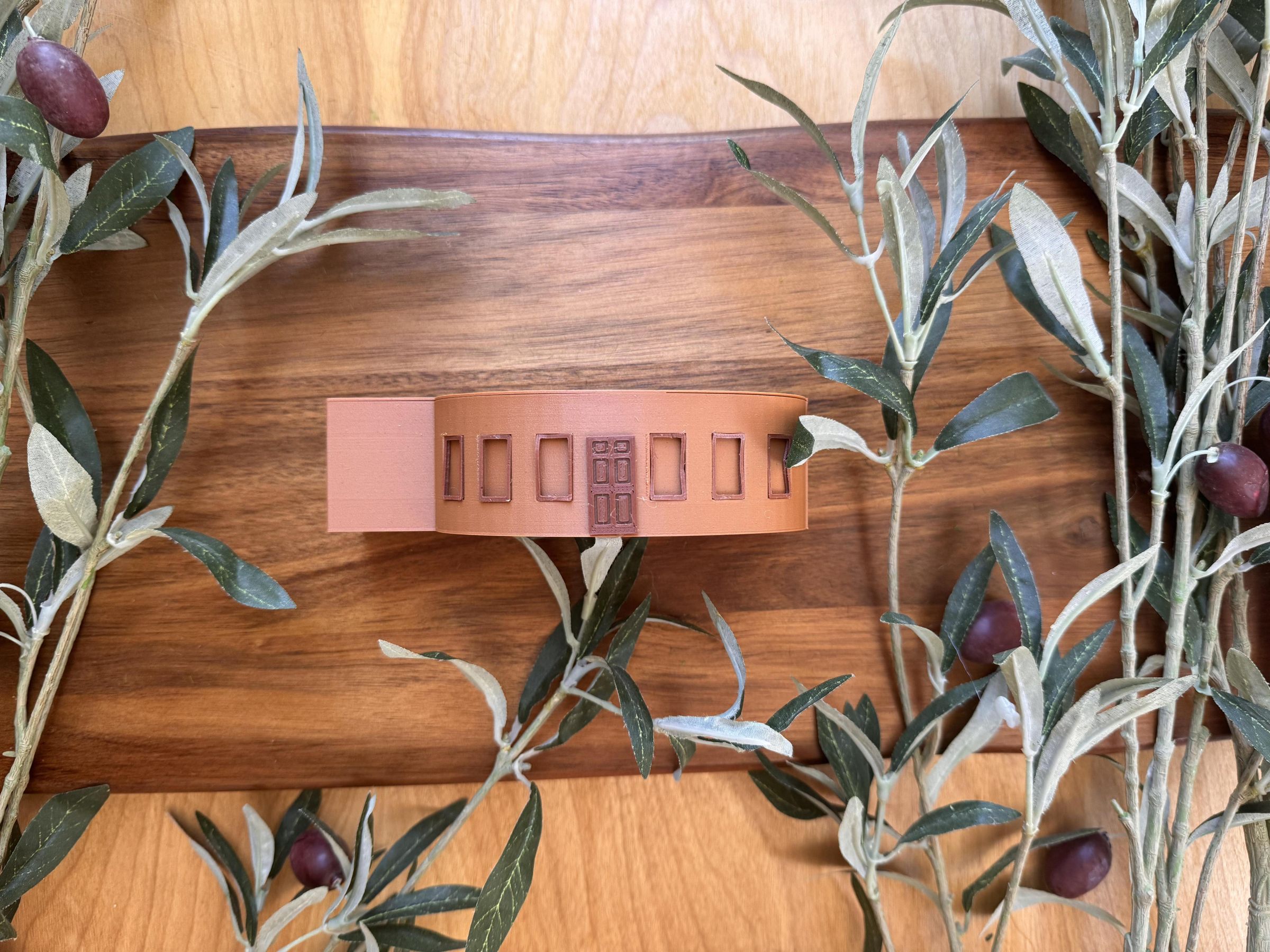
After the windows are secured, the next step is attaching the doors to the first building, completing the main access points and defining how movement enters and flows through the structure.
Each door piece is carefully aligned with its corresponding doorway cutout, ensuring a precise fit with the printed frame. The main entrance doors are positioned first, since they act as the primary focal point of arrival for the entire campus. These are secured firmly to ensure stability and a clean, finished appearance.
Secondary doors leading to areas like offices, the kitchen, and the living spaces are then attached. Their placement reinforces the internal organization of the building, making it easier to understand how different rooms connect and function together. As each door is added, the building becomes more readable as a real, usable space rather than just a printed shell.
Attention is given to alignment and flush contact with the walls so that all doors sit evenly and operate or display correctly, depending on their design. Once complete, the first building now has fully defined entry points, completing another major step in transforming the model into a finished architectural structure.
Attaching Windows for the Second Building
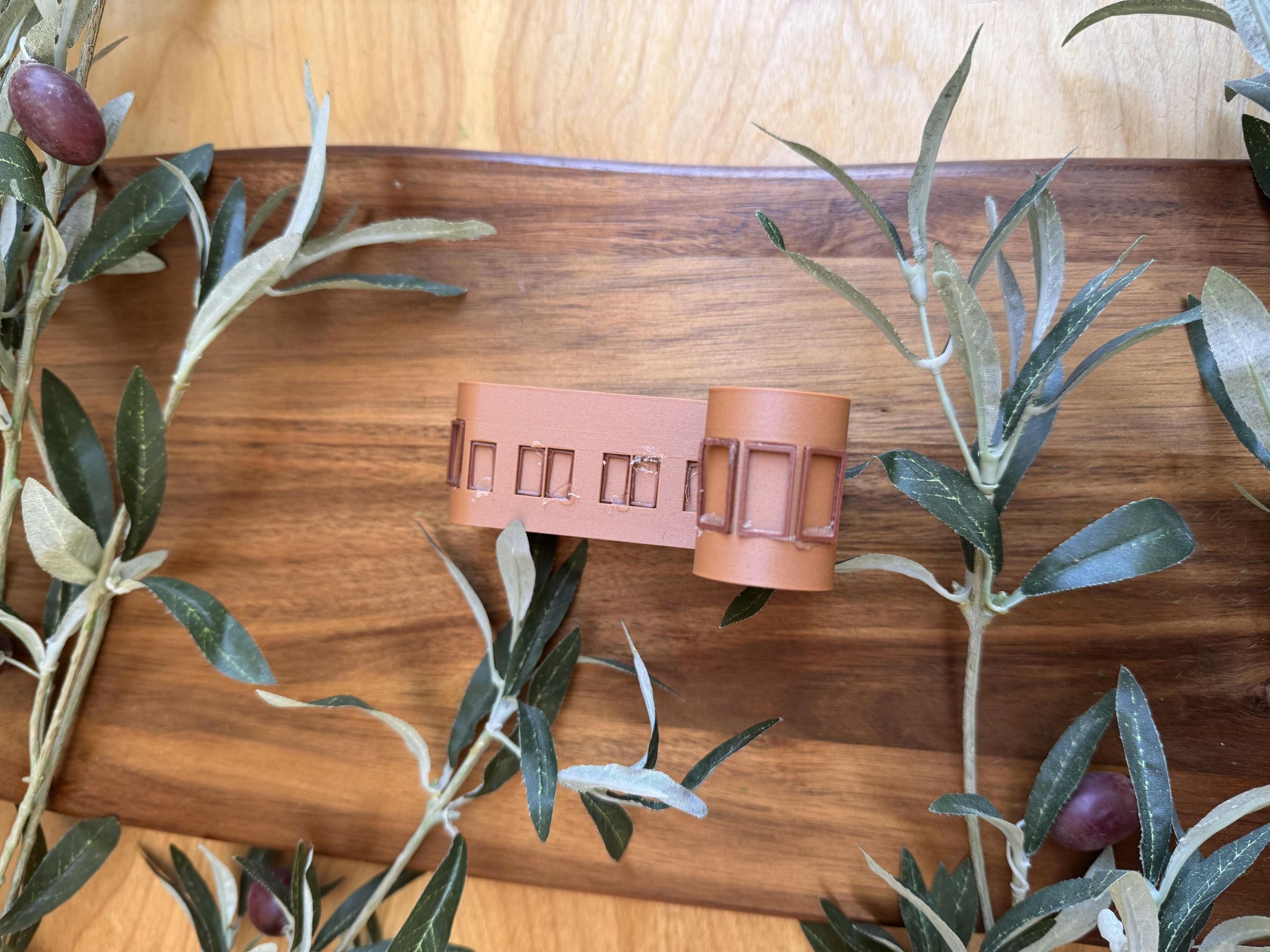
After finishing the first building, the next step is attaching the windows to the second (residential) building. This stage is important because it starts to give the housing wing its final lived-in character and helps distinguish it from the more public-facing entrance building.
Each window piece is carefully aligned with the pre-cut slots in the residential structure. Because this building is focused on long-term living, the placement of windows is especially important for creating a calm, comfortable atmosphere. Larger window sections are installed in shared spaces like the secondary living room and gym, while more controlled and smaller windows are fitted into bedroom areas to maintain privacy.
As the windows are attached, the building begins to feel more balanced and residential. Light distribution patterns become more visible, and the structure starts to look less like a block form and more like a functional living environment.
Care is taken to ensure each window sits evenly and securely against the surface, maintaining consistency with the first building while still reflecting the quieter, more private nature of this wing of the campus.
Attaching Doors for the Second Building

After the windows are installed on the residential wing, the next step is attaching the doors for the second building, which defines how residents move between private, shared, and support spaces within their living environment.
Each door is carefully aligned with its corresponding opening to ensure a clean fit and smooth transition between rooms. The main entrance door is secured first, creating a clear and accessible entry point from the campus pathways into the residential building. This helps establish the building as a welcoming but quieter space compared to the front entrance structure.
Interior doors are then attached along hallways and between key zones such as bedrooms, the secondary living room, and the gym. These placements help reinforce the building’s internal organization, guiding movement in a natural and intuitive way while still preserving privacy in sleeping areas.
As the doors are added, the residential building becomes more defined as a place of daily life and recovery. The flow between spaces becomes clearer, and the structure begins to feel more functional and complete, with a balance between personal space and shared community areas.
Attaching Windows for the Third Building
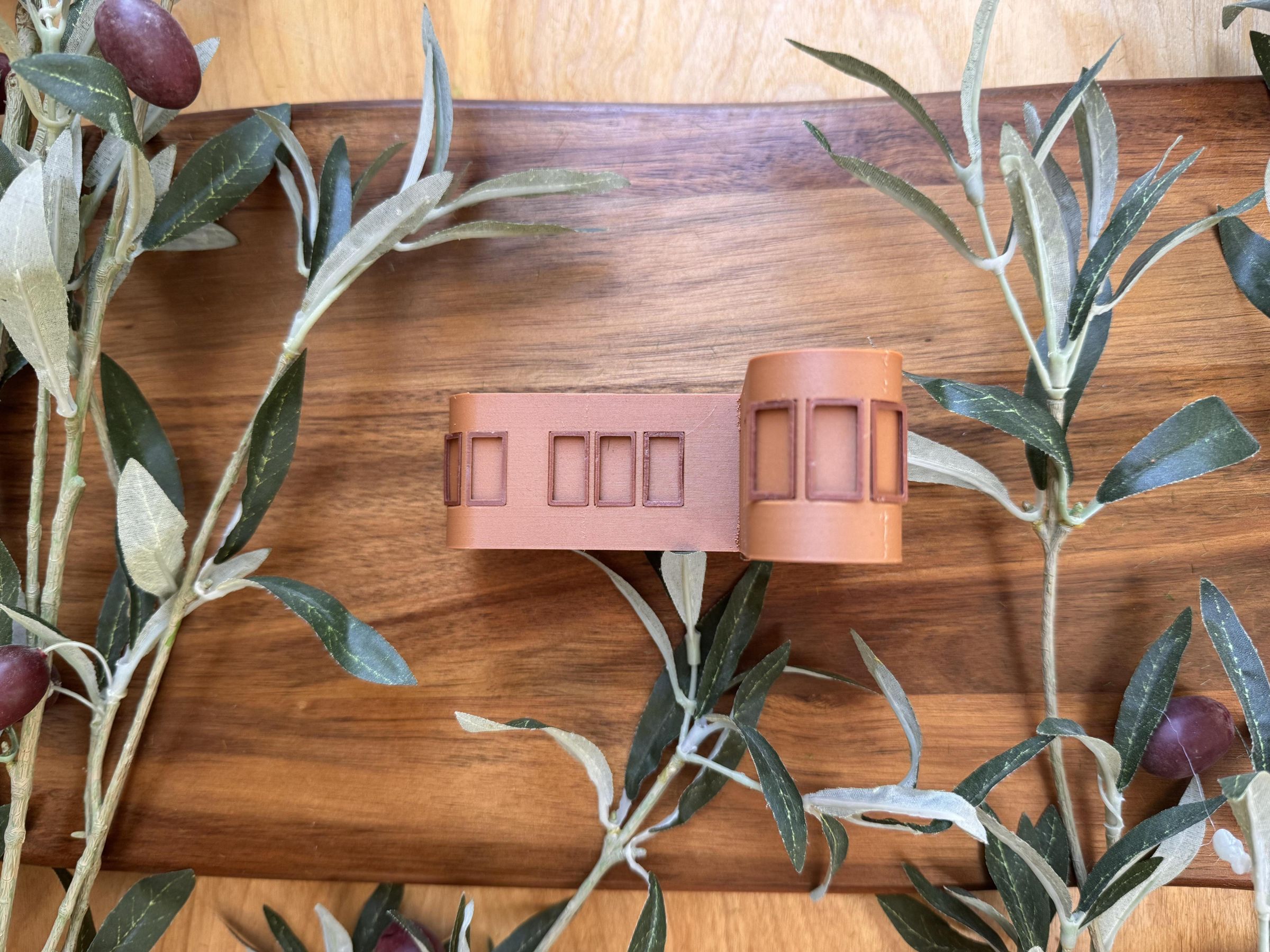
After completing the residential wing, the next step is attaching the windows to the third building, which is the medical, therapy, and skills transition center. This stage is especially important because window placement here directly affects the mood and emotional tone of spaces that are meant for healing and focused support.
Each window piece is carefully aligned with the pre-cut openings in the curved structure. Because this building combines multiple functions—medical care, therapy, and classrooms—the windows are installed with different intentions depending on the room type. Medical areas receive controlled, evenly placed windows for clarity and comfort, therapy rooms get softer, more calming light sources to reduce stress, and skills or classroom spaces use larger openings to encourage focus and engagement.
As the windows are attached, the curved form of the building becomes more expressive. The flow of light across the surface highlights its unique shape compared to the L-shaped structures of the other buildings. This helps visually reinforce that this is the specialized care and transition wing of the campus.
Care is taken to ensure all windows sit flush and consistently across the curved walls, maintaining a clean finish while still emphasizing the building’s softer, more supportive architectural identity.
Attaching Doors for the Third Building
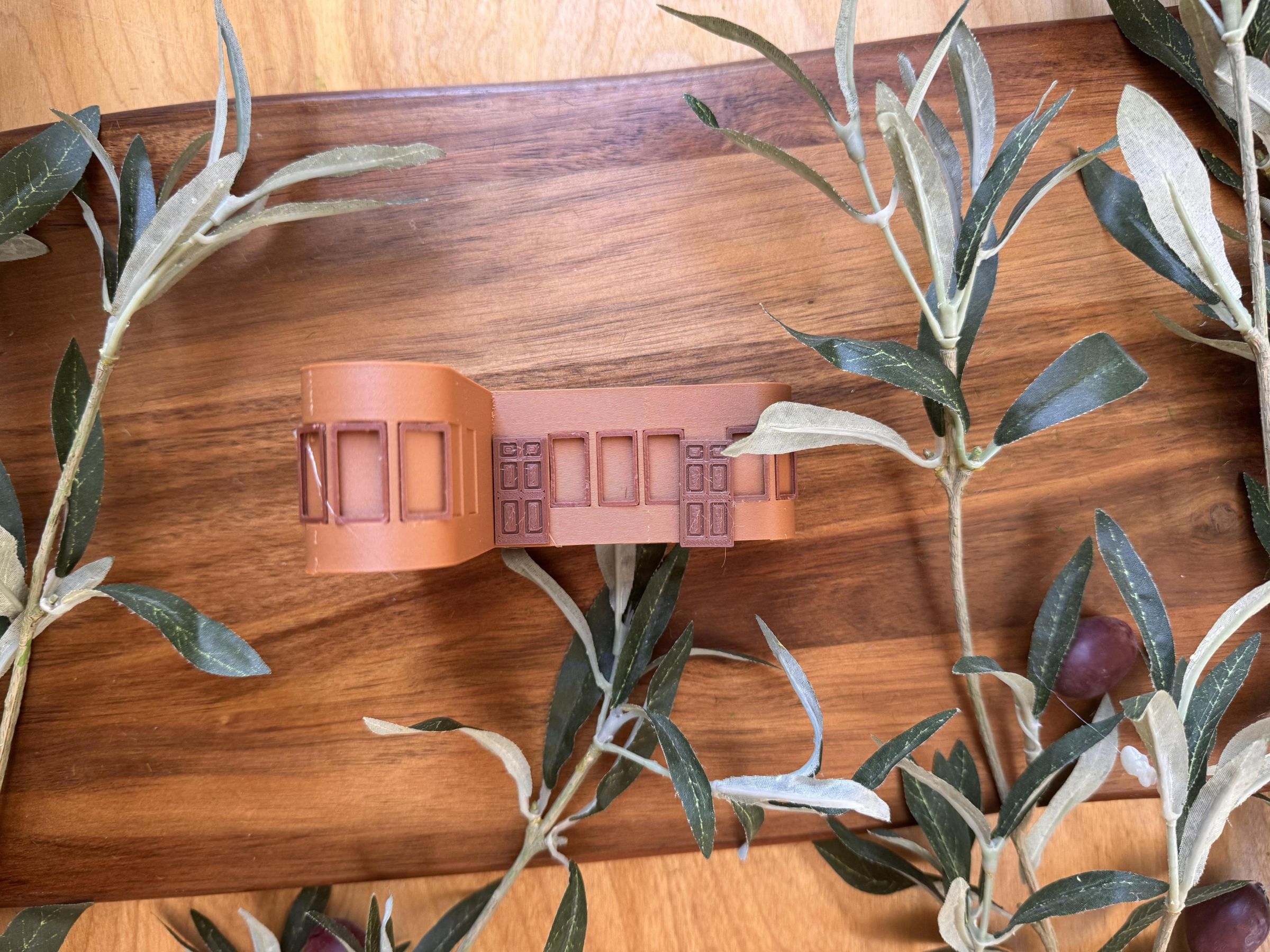
After the windows are installed on the curved medical and therapy building, the next step is attaching the doors, which define movement through the most sensitive and structured part of the campus.
Each door is carefully aligned with its corresponding opening to ensure accurate placement along the curved form. The main entrance doors are installed first, creating a clear and accessible entry point that connects the third building to both the residential wing and the central pathways of the campus. This entrance is designed to feel direct but calm, supporting easy access to medical and therapy services without feeling overwhelming.
Inside the building, doors are then attached to separate the key functional zones: medical rooms, therapy spaces, and skills transition areas. Medical doors are placed along efficient corridors for staff movement and patient access, therapy doors are positioned in quieter, more private sections to maintain emotional safety, and classroom or training room doors are arranged to support smooth flow between learning spaces.
As the doors are installed, the curved building begins to feel more structured and functional. The circulation paths become clearer, and the internal organization of care, healing, and education is more visually defined. The overall result is a building that supports both privacy and accessibility while maintaining a calm, supportive atmosphere.
Securing the Buildings

After all windows and doors are attached across the three buildings, the next step is securing the structures onto the base so the entire campus becomes a stable, unified model.
Each building is carefully positioned on the trimmed, grass-covered base according to the original site layout. The entrance building is placed first to anchor the front of the campus, followed by the residential L-shaped building set slightly deeper to create privacy and separation. Finally, the curved medical and therapy building is positioned to balance the overall composition while still remaining easily accessible from both other structures.
Once placement is correct, each building is firmly fixed to the base so there is no shifting or misalignment. This step ensures that all pathways, spacing, and relationships between buildings remain consistent and structurally sound as a single model.
Attention is also given to alignment and orientation so that entrances naturally face connecting walkways and open spaces. This helps reinforce the intended flow of movement across the campus, making the layout feel intentional and easy to navigate even in its physical form.
By the end of this step, the entire campus is fully assembled as one secure, connected structure, ready for final visual enhancements and environmental detailing.
Decorations
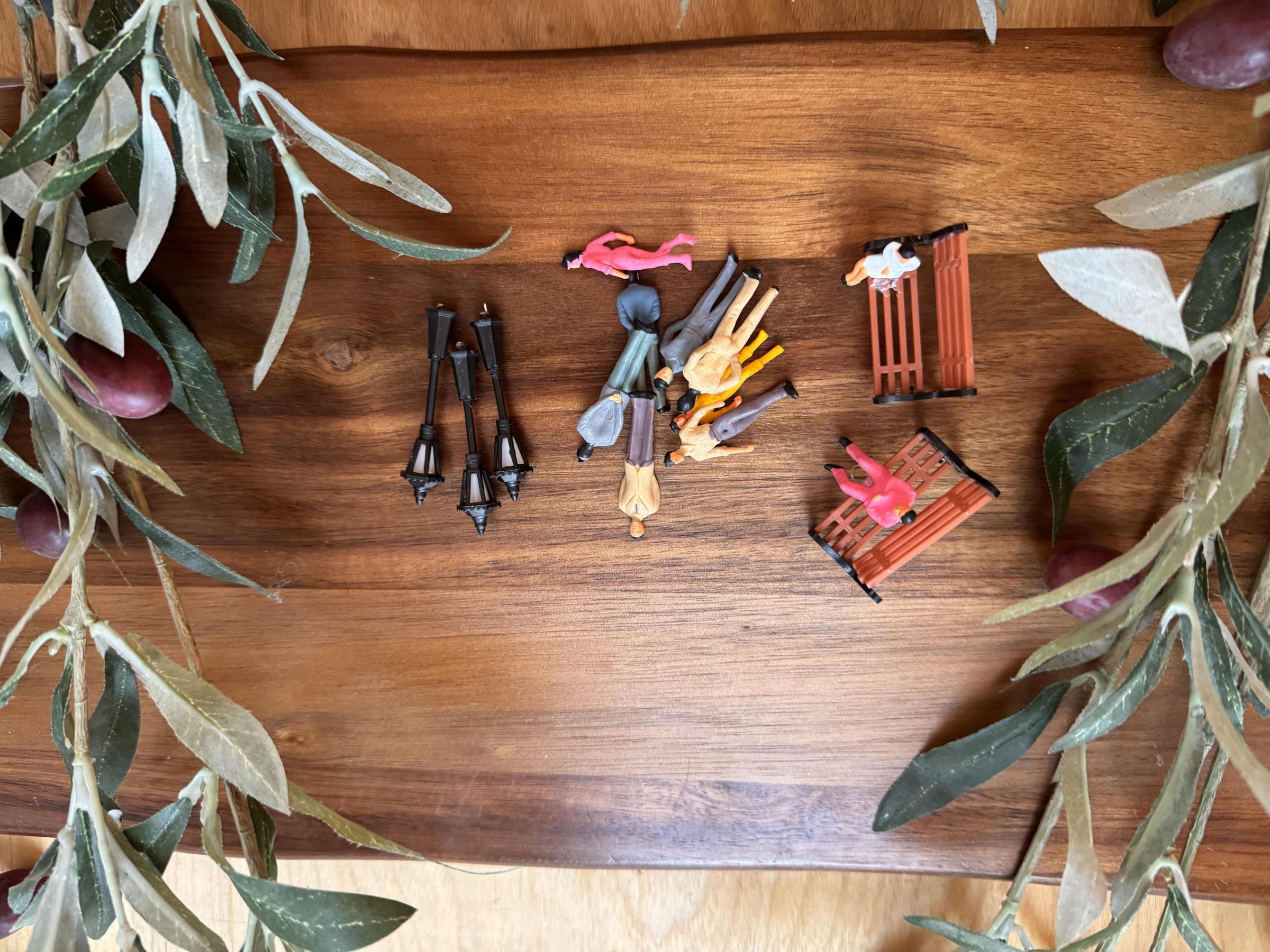
After securing all three buildings onto the base, the next step is adding decorations to bring the campus to life and make the environment feel inhabited rather than purely architectural. This stage introduces smaller-scale details that help communicate daily activity, comfort, and realism throughout the model.
The main decorative elements used are lamps, benches, and human figure models. These are placed strategically across outdoor pathways and shared spaces to create a sense of community and usability within the campus layout. Lamps are positioned along walkways and near building entrances to suggest safe, well-lit circulation areas, especially for evening or low-light conditions.
Benches are placed in key outdoor gathering spots, such as near entrances, between buildings, and along garden-facing areas. These provide resting points and encourage calm social interaction within the outdoor environment, reinforcing the campus as a supportive and accessible space.
Human figure models are then added to complete the sense of scale and activity. In particular, a figure is placed onto each bench, creating small moments of daily life—people sitting, resting, or spending time outdoors. This helps the model feel more realistic and emotionally grounded, showing how residents and visitors might actually use the space.
Overall, this step transforms the campus from a static architectural model into a living environment. The addition of people and everyday objects reinforces the purpose of the design: a place focused on care, recovery, and human presence.
Adding the Decorations

After placing the lamps, benches, and figures, the next step is adding foliage to bring the campus environment fully to life and soften the overall look of the built structures.
The greenery is placed around key outdoor zones, especially near the central lamp and seating area, where benches are already grouped. This creates a natural gathering space that feels calm and inviting, with plants helping to frame the area and make it feel more like a small courtyard or communal garden rather than an empty open space.
Additional foliage is added along the edges of pathways and near building corners to break up hard structural lines. This helps blend the buildings into the landscape, making the campus feel more organic and less rigid. The greenery also guides movement visually, subtly directing people toward entrances, walkways, and shared spaces.
The two corner lamps help anchor the outer edges of the property, while the central lamp becomes the focal point of the outdoor social area. The foliage around this center space reinforces it as the main gathering point, giving it a more peaceful and natural atmosphere.
Overall, this step enhances the emotional tone of the model, making it feel more welcoming, grounded, and connected to nature—important qualities for a healing-focused campus environment.
Adding the Foliage
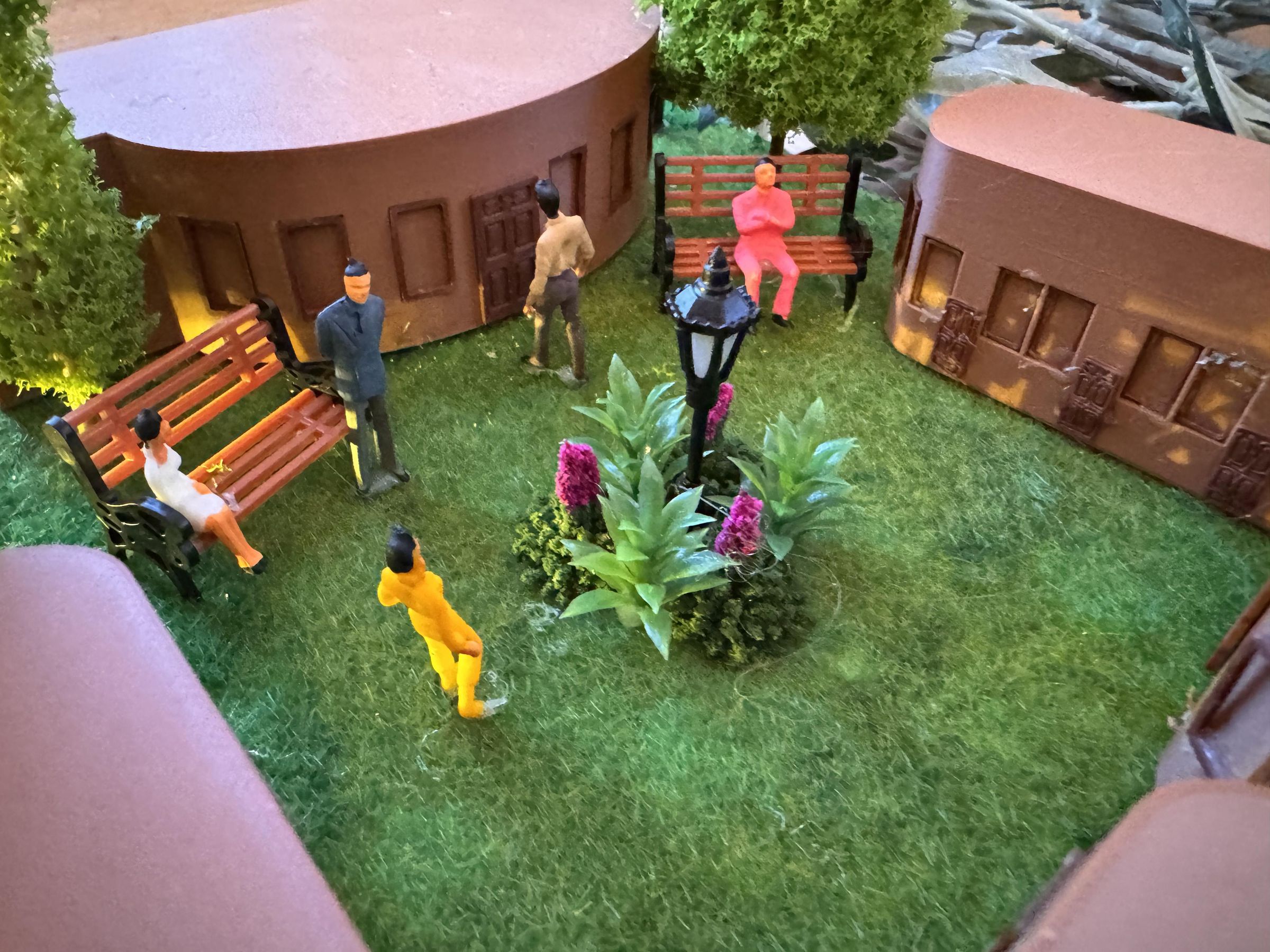
After placing the lamps, benches, and human figures, the next step is refining and expanding the foliage across the entire property to strengthen the natural environment and make the campus feel more grounded and realistic.
Large trees are placed around the outer edges of the property first, forming a natural boundary that frames the entire site. These trees help define the perimeter while also giving the campus a sense of privacy and separation from the outside world. They act as a soft visual barrier rather than a hard fence, reinforcing the calm and protected atmosphere of the space.
Smaller bushes, shrubs, and scattered greenery are then added closer to the buildings and along pathways. This helps transition the environment from dense tree lines at the edges into more open, usable spaces in the center of the campus. The greenery is arranged in a way that guides movement naturally between buildings without feeling overly structured.
Around the central lamp and bench area, foliage is used more intentionally to create a small focal garden space. The plants here help frame the seating area and make it feel like a peaceful outdoor meeting point. This strengthens the idea that the campus includes not just buildings, but meaningful outdoor spaces for rest and reflection.
Overall, the expanded foliage softens the entire model, connects the buildings to their environment, and reinforces the healing-focused design by making nature a constant presence throughout the campus.
The Green Roof
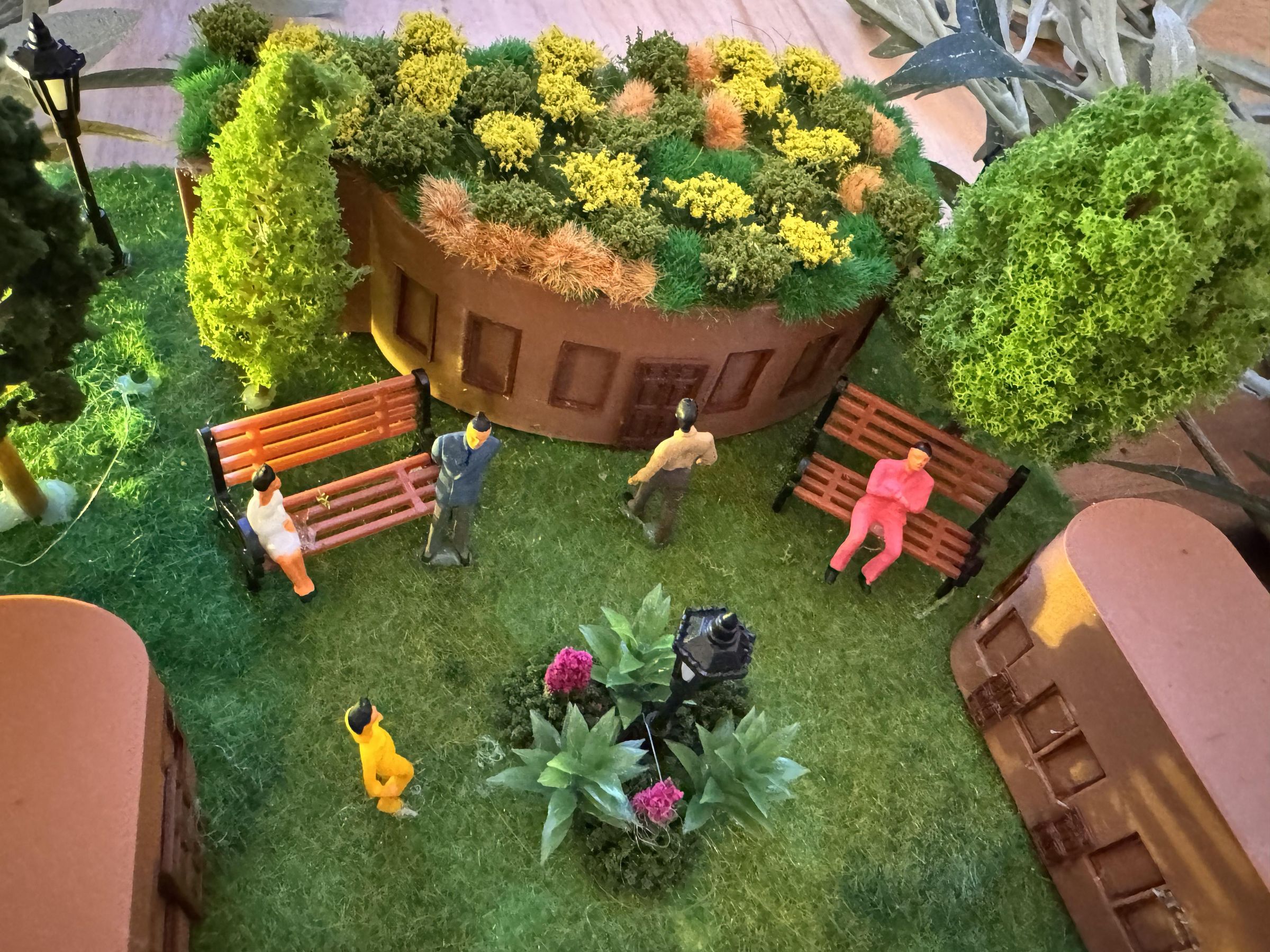
After completing the outdoor landscaping with trees and foliage, the next step is adding a green roof to the front (entrance) building, reinforcing the idea that nature is integrated directly into the architecture rather than existing only around it.
The green roof is applied to the top surface of the first building, creating a layer of vegetation that softens the structure’s appearance from above and from surrounding viewpoints. This helps reduce the visual heaviness of the building’s L-shaped form and blends it more naturally into the landscaped campus environment.
Because the front building is the main point of arrival and public interaction, its green roof is designed to feel structured and intentional. The vegetation appears organized rather than random, giving the entrance building a calm, welcoming identity that reflects its role as the first impression of the campus.
This addition also helps visually connect the front building to the surrounding trees and planted areas, making the entire site feel more unified. Instead of a collection of separate structures, the campus now reads as a continuous environment where architecture and nature work together.
At this stage, the design moves closer to its final form, with natural elements becoming a defining feature of the overall aesthetic.
Finishing Touches

After adding the green roof to the front building, the final step is applying finishing touches to bring the entire physical model to a clean, polished, and presentation-ready state.
A few additional plants are placed in small gaps and empty corners to balance the landscape and make the outdoor environment feel more complete and intentional. These final touches help soften any remaining harsh edges in the layout and ensure that greenery is distributed evenly across the campus, not just concentrated in specific areas.
At the same time, cleanup work is done across the model. Any visible hot glue strings, excess adhesive, or stray material from assembly are carefully removed to improve overall presentation quality. This step is important because it shifts the model from a “constructed project” to a refined display piece, where attention to detail becomes clearly visible.
Loose elements are also checked one final time—benches, lamps, figures, and building attachments are secured and adjusted if needed so everything feels stable and aligned. Small corrections in spacing or positioning help improve visual balance when viewing the campus as a whole.
By the end of this step, the model is fully complete: a cohesive, detailed, and realistic representation of a healing-focused campus where architecture, nature, and human presence all work together in a unified design.
Flow of Movement
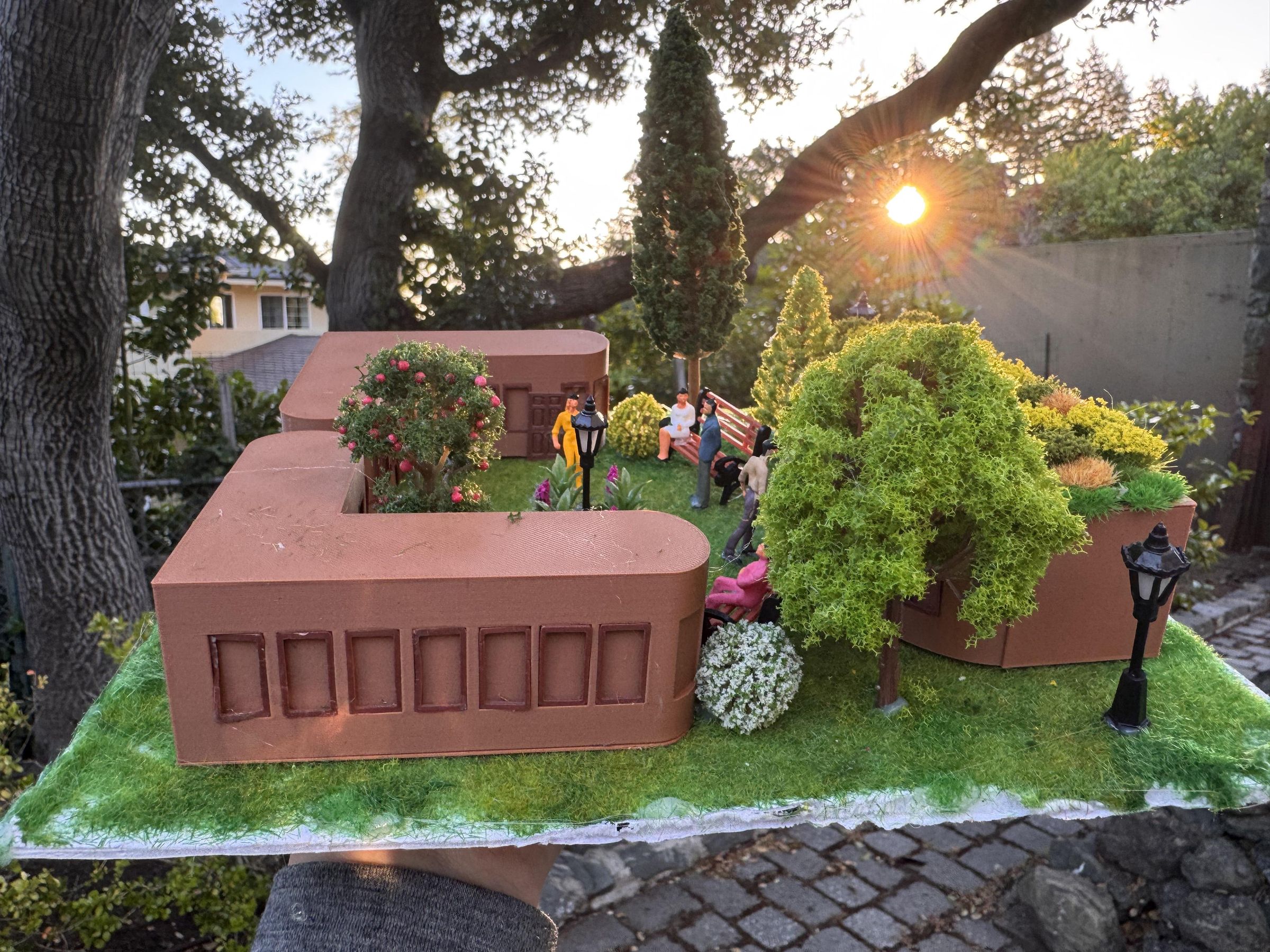
After the physical model is fully assembled and detailed, the next step is focusing on how people actually move through the outdoor spaces of the campus. This step is about bringing the layout to life by imagining real patterns of use, especially in the central courtyard and pathways between buildings.
People naturally exit from all three buildings into the shared outdoor areas, with the strongest flow coming from the front building’s entrance and the residential wing. From there, movement spreads outward into the courtyard, where benches, lamps, and greenery create natural stopping points. Some individuals walk directly between buildings for services or daily routines, while others slow down and use the outdoor space for rest, conversation, or reflection.
The central courtyard becomes the main gathering zone. This is where the benches around the middle lamp naturally attract people to sit, interact, or simply spend time outside. The layout encourages gentle circulation rather than strict direction, allowing people to move freely while still feeling guided by pathways, lighting, and landscaping.
Pathways between buildings are designed to feel intuitive and accessible, supporting smooth transitions between residential, medical, and communal spaces. The placement of trees and plants helps frame these movement routes, making navigation feel natural and calming rather than clinical or rigid.
Overall, the outdoor flow of movement shows how the campus functions as a living environment. It is not just a set of buildings, but a connected space where people continuously move, pause, and interact in a supportive and restorative setting.
Parking
Image Source: Wikimedia Commons
For the final layout of the campus, there is no parking lot placed directly on the property. Instead, parking is intentionally handled off-site to keep the environment quiet, safe, and focused on healing rather than traffic or vehicles.
The closest practical solution is using nearby public transit parking facilities, such as the large commuter lots at nearby BART stations in the San Jose area (like Berryessa/North San José or Milpitas). These locations are designed for people to park their cars once and then continue their journey using public transportation.
From there, visitors, staff, and residents can arrive at the campus through short shuttle rides, buses, or walking connections, depending on the route. This keeps vehicle flow away from the facility itself and prevents congestion at the entrance.
This approach also supports the overall design philosophy of the project. By removing on-site parking, the campus becomes more peaceful, pedestrian-friendly, and environmentally conscious. It reduces noise, increases safety, and reinforces the idea that the space is meant for recovery, not traffic management.
In the final model and presentation, this is represented by showing the campus as a car-free zone, with movement focused entirely on walking paths and landscaped circulation rather than vehicles.
Real World Construction: Site Preparation and Clearing
.JPG)
Image Source: Wikimedia Commons
The first step in constructing the building in real life would be preparing and clearing the site so it is safe and ready for heavy construction work. This would begin with surveying the land to confirm exact boundaries and mark out where each building, pathway, and shared space will be located. After that, any existing vegetation such as trees, bushes, or uneven ground in the construction zones would need to be cleared or carefully relocated depending on environmental requirements. The ground would then be graded and leveled using heavy machinery to create a stable base for the foundations, ensuring that water drainage flows correctly and that no areas of the site are at risk of flooding or structural instability. Engineers would also test the soil to make sure it can properly support the weight of multiple buildings, and if needed, the soil would be reinforced or improved. At the same time, temporary construction infrastructure would be installed, including access roads for trucks and machinery, fencing around the perimeter for safety, and temporary utilities such as water, electricity, and site offices for workers and engineers. This stage is essential because it transforms an empty piece of land into a controlled, organized construction site where the rest of the project can be safely and efficiently built.
Real World Construction: Foundations and Underground Utilities
.jpg)
Image Source: Wikimedia Commons
Once the site has been fully prepared and cleared, the next step is constructing the foundations and installing essential underground utilities, which form the structural base of the entire campus. Excavation crews would begin by digging trenches and foundation pits according to the architectural plans, carefully following the marked layouts for each building. Steel reinforcement bars (rebar) would then be installed to strengthen the concrete and ensure the foundations can support long-term structural loads. After this, concrete would be poured into the forms to create footings and foundation slabs for each building, with time allowed for proper curing so the concrete reaches full strength. During this phase, contractors would also install underground systems such as plumbing lines, sewage pipes, stormwater drainage, and electrical conduits, making sure they are properly connected and tested before being sealed beneath the ground. Waterproofing layers and insulation may also be added to protect the foundations from moisture and temperature changes. This stage is critical because it anchors every building to the ground and ensures that all essential services such as water, waste, electricity, and drainage are integrated before anything is built above the surface.
Real World Construction: Structural Frame Construction

Image Source: Wikimedia Commons
After the foundations have fully cured and all underground utilities are in place, the next step is building the structural frame of each building. This is the stage where the project begins to rise above ground and take its real shape. Construction crews would start by erecting the primary load-bearing structure, which may be steel framing, reinforced concrete columns, or a combination depending on the design of each building. Vertical columns would be anchored into the foundation, followed by horizontal beams that connect them and form a stable skeleton for each floor. Floor systems would then be installed between beams using precast concrete slabs or poured concrete decks reinforced with steel. As each level is completed, scaffolding and temporary supports would be used to ensure safety and stability during construction. Stairwells, elevator shafts, and core structural walls would also be built at this stage since they provide additional rigidity and support for the entire building. Once the main frames are complete, the different buildings in the campus would start to resemble their final form, even though they are still open and unfinished. This step is essential because it creates the backbone of the entire project and determines the strength, height, and overall structure of every building in the campus.
Real World Costruction: Exterior Walls, Roofing, and Building Envelope

Image Source: Wikimedia Commons
Once the structural frames are complete, the next step is enclosing each building by constructing the exterior walls and roofing system. This stage turns the open structural skeleton into defined interior spaces that are protected from weather. Workers would install exterior wall systems such as insulated panels, brickwork, concrete walls, or curtain wall glass systems depending on the design of each building. Openings for windows and doors would be precisely framed during this process so they align with the architectural plans. After the exterior walls are in place, roofing structures would be installed, including trusses or flat roof systems, followed by waterproof membranes and insulation layers to protect the buildings from rain, wind, and temperature changes. At the same time, windows and exterior doors would be fitted and sealed to create a weather-tight building envelope. This stage is important because it fully encloses the buildings, allowing interior work to begin safely regardless of outdoor conditions. Once completed, the campus would no longer appear as an exposed framework but as a group of fully formed buildings ready for interior construction.
Real World Construction: Interior Systems Installation (MEP Rough-In)
Image Source: Wikimedia Commons
After the buildings are fully enclosed, the next step is installing the internal systems that make the spaces functional. This phase is often called MEP rough-in, which stands for mechanical, electrical, and plumbing. Contractors would run water supply lines, drainage pipes, and ventilation ducts throughout the interior walls, floors, and ceilings according to the design plans. Electrical teams would install wiring for lighting, outlets, emergency systems, and communication networks, routing everything back to central electrical panels in each building. Heating, ventilation, and air conditioning systems would also be installed, including ductwork, air handling units, and control systems to regulate temperature and airflow throughout the campus. At this stage, insulation would be added inside walls and ceilings to improve energy efficiency and sound control, which is especially important in a rehabilitation-focused environment where comfort and privacy matter. Fire safety systems such as sprinklers, alarms, and emergency exits would also be integrated. This step is critical because it transforms the empty enclosed structures into functional buildings with the essential infrastructure needed for safe and reliable operation.
Real World Construction: Interior Construction and Finishing
.jpg)
Image Source: Wikimedia Commons
After all mechanical, electrical, and plumbing systems are installed, the next step is closing up the interiors and turning the raw building structure into usable spaces. Drywall or interior wall systems would be installed to cover framing, wiring, and pipes, creating defined rooms and corridors. These surfaces would then be taped, mudded, and sanded to create smooth walls ready for finishing. Floors would be installed next, using materials such as tile, vinyl, carpet, or polished concrete depending on the purpose of each space. Ceilings would also be completed, often including access panels for maintenance of the systems above. At the same time, interior doors, built-in storage, cabinetry, and bathroom fixtures would be installed throughout the buildings. Painting and surface finishing would follow, giving each area its final appearance and helping define a calm and supportive environment suitable for rehabilitation and recovery. Lighting fixtures, switches, and final electrical components would also be connected and tested to ensure everything functions properly. This stage is important because it transforms the construction site into recognizable rooms and usable spaces that match the original design vision of the campus.
Real World Construction: Exterior Works, Landscaping, and Site Development
_(3).jpg)
Image Source: Wikimedia Commons
Once the interior spaces are largely complete, the focus shifts back outside to finish the surrounding campus environment. This includes constructing sidewalks, pathways, ramps, and access roads that connect all buildings in a safe and logical flow for pedestrians, vehicles, and emergency access. Parking areas would be built nearby if needed, along with clear signage to help navigation across the site. At the same time, landscaping crews would begin restoring and enhancing the natural environment by planting trees, shrubs, grass, and garden areas that support a calm and healing atmosphere. Drainage systems would be finalized on the surface to ensure rainwater flows correctly and does not damage walkways or foundations. Outdoor lighting would also be installed along paths and around building entrances to improve safety and visibility at night. Seating areas, courtyards, and communal outdoor spaces would be constructed to encourage social interaction and relaxation. This stage is important because it connects all buildings into a unified campus and helps transform the site from a construction zone into a livable, welcoming environment.
Real World Construction: Testing, Inspections, and Safety Certification
.jpg)
Image Source: Wikimedia Commons
After construction is physically complete, the entire campus must go through detailed testing and inspection to ensure everything is safe, functional, and up to code. Engineers and inspectors would review structural integrity, checking that all buildings meet safety standards and can handle expected loads. Electrical systems would be tested for reliability and safety, including backup power systems and emergency lighting. Plumbing and water systems would be checked for leaks, pressure consistency, and proper drainage. Heating, ventilation, and air conditioning systems would be balanced to ensure proper airflow and temperature control throughout every building. Fire safety systems would undergo full testing, including alarms, sprinklers, and emergency evacuation procedures. Accessibility features such as ramps, elevators, and door widths would also be reviewed to ensure compliance with regulations. Any issues found during inspections would be corrected before approval. This stage is essential because it confirms that the entire campus is safe for occupancy and ready for real use.
Real World Construction: Furnishing, Setup, and Final Opening
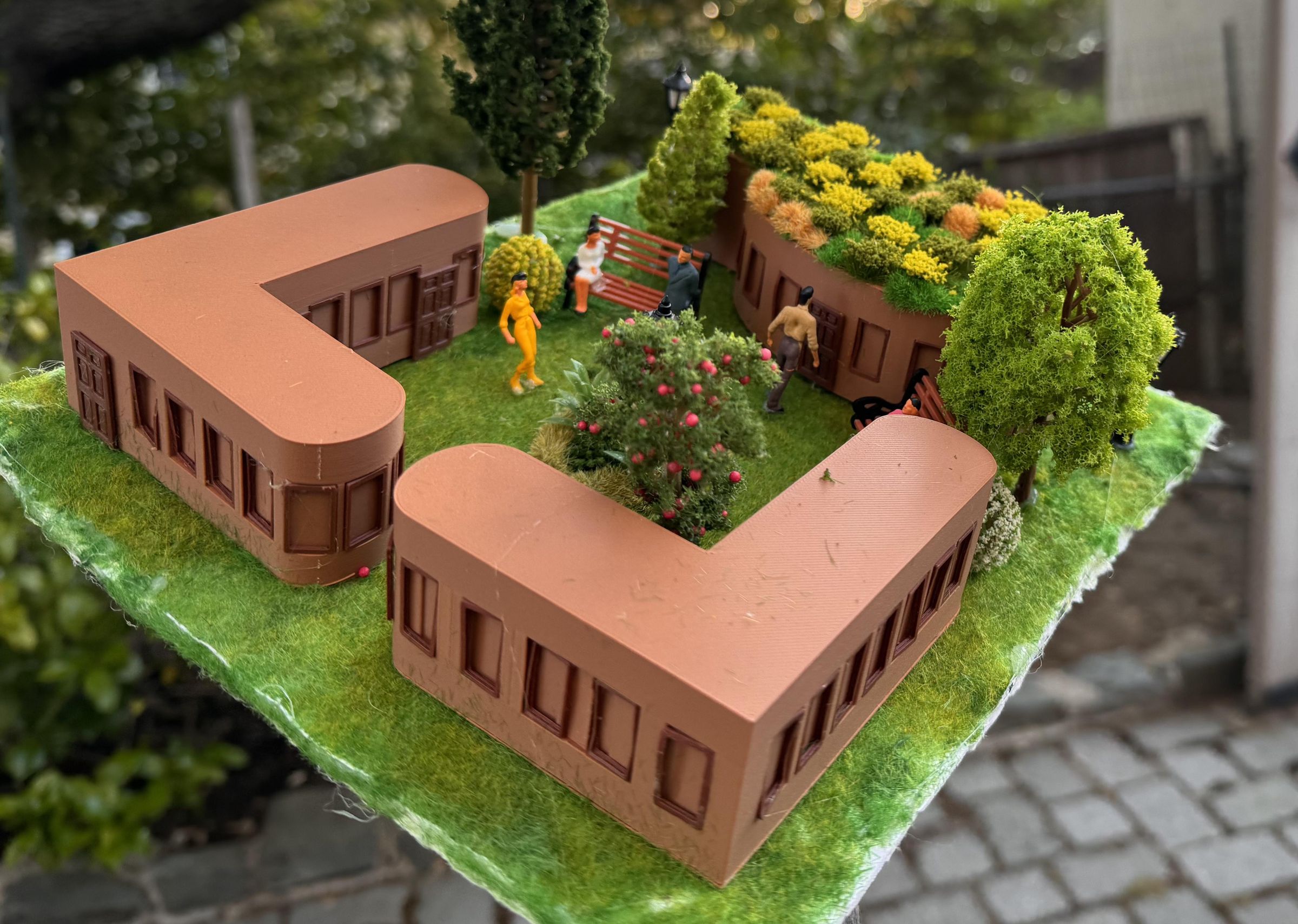
The final step is preparing the campus for actual use by installing furniture, equipment, and finishing touches throughout each building. Beds, chairs, tables, desks, medical equipment, and communal furnishings would be placed according to the purpose of each room and building. Interior spaces would be organized to support comfort, privacy, and functionality, especially in areas designed for rehabilitation and recovery. Technology systems such as computers, security systems, and communication networks would be activated and tested for daily operation. Staff would begin training on how to use the facility, manage workflows, and support residents effectively. Final cleaning would be completed across all areas to remove dust and construction residue. Once everything is fully operational and approved, the campus would officially open, transitioning from a construction project into a functioning environment designed to support healing, stability, and long-term well-being.
Final Product

With all of the buildings printed, assembled, and placed onto the landscaped base, the healing campus model was finally complete. What began as a digital design in Tinkercad became a physical representation of a facility dedicated primarily to drug and substance abuse rehabilitation, while also providing support for individuals experiencing homelessness, mental health challenges, physical disabilities, and other life difficulties. The completed model brings together housing, treatment, healthcare, and community spaces into a single environment focused on recovery and long-term healing.
At the center of the design is the idea that successful rehabilitation requires more than treatment alone. People recovering from addiction often need stable housing, access to healthcare, counseling services, positive social connections, and a safe environment where they can focus on rebuilding their lives. Rather than separating these services into different locations, this campus combines them into one connected community where residents can access the support they need throughout their recovery journey.
The front building serves as the main entrance and community center for the campus. This space is designed to welcome residents, visitors, counselors, and staff while providing common areas for meetings, group activities, educational programs, and community events. Recovery is often strengthened through social support, and this building helps create opportunities for residents to connect with one another in a positive and structured environment.
The L-shaped residential building provides living accommodations for individuals participating in rehabilitation and recovery programs. Stable housing is one of the most important factors in long-term recovery, and this building was designed to provide residents with a safe, comfortable, and supportive place to live while receiving treatment. Its layout helps create a neighborhood-like atmosphere that feels more welcoming and dignified than a traditional institutional setting.
The curved building serves as the medical, therapy, and transition center. This facility represents the core treatment component of the campus. Residents would have access to medical care, counseling services, addiction treatment programs, mental health support, physical rehabilitation services, and case management resources. The goal is to address not only addiction itself but also the underlying challenges that may contribute to substance abuse, including trauma, mental health conditions, physical health concerns, and social instability.
The outdoor spaces were designed to support recovery as well. Research and experience have shown that access to nature, fresh air, exercise, and peaceful environments can play an important role in mental and emotional well-being. Trees, grass areas, pathways, benches, and landscaped spaces help create an environment that encourages reflection, relaxation, and healthy daily routines. These features make the campus feel less like a facility and more like a supportive community where people can focus on healing.
Green roofs and landscaping were incorporated throughout the site to further strengthen the connection between the built environment and nature. These elements improve the visual appearance of the campus while also representing sustainable design practices that could be implemented in a real-world version of the project.
Transportation planning was also considered during the design process. Rather than dedicating valuable space to large parking lots, the campus relies on nearby public transportation and off-site parking facilities. This approach allows more land to be used for housing, treatment services, green spaces, and community amenities that directly benefit residents.
When viewed as a complete project, the model represents a comprehensive rehabilitation and healing campus. It demonstrates how treatment, housing, healthcare, and community support can work together to help individuals overcome addiction and rebuild their lives. While the primary purpose of the campus is drug and substance abuse rehabilitation, its design also supports people facing homelessness, disabilities, mental health struggles, and other challenges that often occur alongside addiction.
The finished model shows a vision of recovery that goes beyond simply providing a place to stay. It creates a community where people can receive treatment, develop healthy habits, build relationships, gain stability, and work toward a more independent future. Through thoughtful planning and human-centered design, the campus aims to provide not only care, but also hope, dignity, and opportunity for those seeking a fresh start.
Feedback

Throughout the development of the project, feedback from friends, parents, and teachers played an important role in improving the overall design before it was finalized. After sharing early versions of the model and layout, friends provided suggestions about how the campus felt to move through, especially focusing on pathways, spacing between buildings, and how realistic the environment appeared. My parents gave feedback based on practicality and overall design clarity, helping me think about whether the layout made sense in a real-world setting and whether certain areas needed better organization or flow. My teachers contributed valuable academic and design-focused feedback, encouraging me to improve structure, add more detail to key areas, and think more deeply about how the campus would function in practice. This combined input helped highlight issues that were not always obvious during individual design work, such as navigation efficiency, balance between open and built spaces, and realism of the layout. As a result, I made several refinements to both the digital model and the physical build, improving accessibility, enhancing visual coherence, and creating a more thoughtful and functional campus design overall.
Conclusion
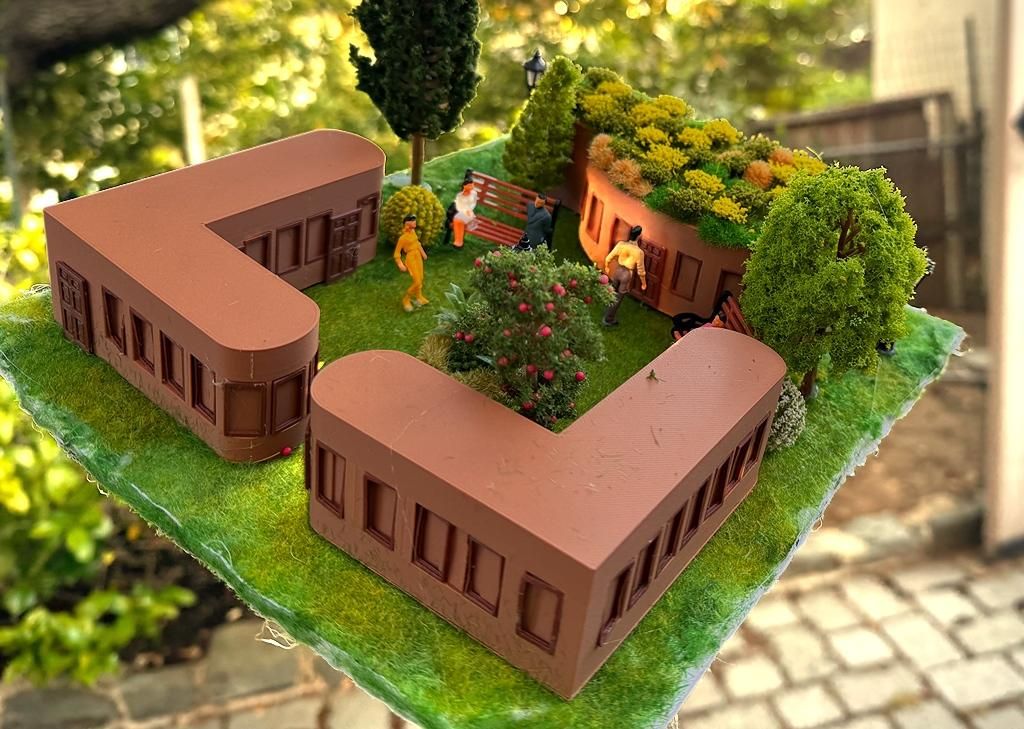
Completing this project allowed me to explore how design and engineering can be used to address real-world social challenges. While the model demonstrates architectural concepts and 3D design techniques, its true purpose is to represent a place where people can heal, recover, and rebuild their lives. Throughout the design process, I focused on creating a campus that would support individuals not only physically, but also emotionally, socially, and mentally.
The primary goal of this project was to design a rehabilitation-focused community that provides more than temporary assistance. Many people recovering from substance abuse face multiple obstacles at the same time, including housing insecurity, limited access to healthcare, unemployment, social isolation, and mental health struggles. Because of this, I wanted the campus to function as a complete support system rather than a single-purpose facility. The combination of residential housing, medical services, therapy spaces, community areas, and outdoor environments reflects that approach.
One of the most important ideas behind the design is dignity. Too often, facilities intended to help vulnerable populations are designed only to meet basic needs. In contrast, this campus was designed to be welcoming, comfortable, and attractive. Features such as landscaped grounds, green roofs, gathering spaces, walking paths, and accessible layouts help create an environment where residents can feel respected and valued. The goal is to provide a setting that encourages personal growth and recovery while helping residents regain confidence and independence.
The completed model also demonstrates the importance of community in the healing process. Recovery is rarely achieved alone. By incorporating shared spaces and opportunities for interaction, the campus encourages residents to build supportive relationships with peers, counselors, healthcare providers, and staff members. These connections can become an important part of long-term success and personal development.
Although this project is a scale model, it represents a vision that could be adapted into a real-world development. Future versions could include additional vocational training facilities, expanded recreation areas, community gardens, renewable energy systems, or educational spaces that help residents prepare for employment and independent living. However, the core mission of the project would remain the same: creating an environment where people have access to the resources and support necessary to move forward in their lives.
Overall, this project demonstrates how thoughtful design can contribute to healing and rehabilitation. Through the integration of housing, healthcare, therapy, community spaces, and nature, the campus provides a model for a more compassionate and effective approach to recovery. The finished design serves as a physical representation of the belief that everyone deserves the opportunity to heal, rebuild, and create a better future for themselves.
Acknowledgments

This project represents many months of planning, designing, problem-solving, and building, and I would not have been able to complete it without the support of many people along the way.
First and foremost, I would like to thank my parents. Throughout this project, they supported me as I developed ideas, revised designs, spent countless hours working in Tinkercad, monitored long 3D printing sessions, assembled parts, and refined the final model. Large projects often involve unexpected setbacks, failed prints, design changes, and moments when progress feels slow. Their encouragement helped me continue improving the project and stay focused on my goals from beginning to end.
I would also like to thank my teachers. Many of the skills that made this project possible were developed through school projects, classroom activities, and lessons that encouraged creativity and critical thinking. Whether learning how to research information, communicate ideas clearly, solve problems, or approach challenges from different perspectives, these experiences played an important role in helping me complete this project. My teachers have consistently encouraged curiosity and innovation, and this project is a direct result of those lessons.
I would like to recognize Autodesk, whose design tools made it possible to develop, test, and refine ideas efficiently and with precision. Working with their software allowed me to translate early concepts into detailed digital models and helped bridge the gap between imagination and a physical build.
In addition, I would like to recognize the engineers, architects, healthcare professionals, rehabilitation specialists, urban planners, and designers whose work inspired many of the ideas incorporated into this campus. While creating the project, I spent time learning about how rehabilitation centers operate, how supportive housing communities are organized, and how architecture can influence mental and physical well-being. Studying these real-world examples helped me understand that buildings are much more than structures—they can directly impact the quality of life of the people who use them.
I am also grateful for the many educational resources available online. Tutorials, articles, design examples, and instructional videos helped me learn new techniques in 3D modeling, architectural design, and project planning. Every new skill I learned contributed to making the final model more detailed, realistic, and functional.
I would especially like to thank the organizers of the Instructables Make It Heal Contest for creating a challenge that encourages participants to think about how design can be used to help people. This contest pushed me to think beyond aesthetics and technical execution and instead focus on a deeper question: how can we design spaces that actively support healing and well-being? That idea became the foundation for the entire project.
As a student, this project taught me lessons that extend far beyond 3D modeling and printing. It showed me the value of persistence when solving difficult problems. It taught me how important it is to revise designs instead of settling for the first idea. It also demonstrated how engineering, architecture, healthcare, sustainability, and community planning can all work together to address complex social challenges.
One of the most meaningful aspects of this project was learning about addiction recovery and rehabilitation. While designing the campus, I gained a greater appreciation for the challenges many people face when trying to rebuild their lives. Recovery is not simply about providing treatment; it often requires housing, healthcare, emotional support, community connections, education, and opportunities for growth. Understanding this helped shape the design and reinforced the importance of creating environments that support long-term healing rather than short-term solutions.
Looking back, I am proud of how the project evolved from a simple idea into a detailed physical model. Every building, pathway, tree, bench, and green space contributes to the overall vision of creating a place where people can feel safe, supported, and respected while working toward recovery and independence.
Most importantly, this project taught me that even as a student, I can use creativity, technology, and design to explore solutions to real-world problems. While this model may only be a small-scale prototype, the ideas behind it are meant to represent something much larger: a belief that thoughtful design can help create stronger communities and provide opportunities for healing, dignity, and hope.
Thank you to everyone who helped, encouraged, taught, inspired, and supported me throughout the development of this project. Your contributions made this vision possible.