Replica Prehistoric Cave Painting

Make prehistory memorable by making your own Ice Age cave paintings!
Cave bears, saber toothed tigers, wooly rhinos: back in the Ice Age, there was no shortage of dangerous animals for early mankind to deal with. Humans armed with stone-tipped spears roamed plains and forests hunting enormous mammals.
Of course, not every prehistoric creature was a threat. Like their present-day counterparts, ancient horses, cattle, and birds lived peaceably side-by-side with mankind. Aurochs, the ancestors of today’s oxen, and elks with enormous antlers covered Europe; penguins lived along the Mediterranean Sea. Judging by the mastodon bones found near ancient cooking fires, they must have once been a popular menu item all across North America.
Then, around 10,000 years ago, however, whether because of climate change or over-hunting by man, Ice Age mammals began to disappear. Luckily, the people who saw them alive managed to leave us pictures of these strange and wonderful beasts -- not photographs, but beautiful and haunting cave drawings.
In France, Spain and elsewhere, prehistoric artists worked deep in hidden caves, creating images which archeologists think were intended to magically ensure good hunting. The earliest known drawings, going back 30,000 years, were discovered in the Chauvet-Pont-d'Arc cave in France in 1994, but other primitive art galleries like Lascaux and Altamira have been studied for decades. Cave drawings were often stylized, with tiny heads and limbs and huge bellies, but by using line and shading to show details like hair and muscle, and overlapping figures or showing them slightly turned, the painters made their artwork lively and three-dimensional.
For materials, cave artists used minerals like iron ore, manganese, and ocher as “crayons” or ground them to a powder and mixed them with sticky animal fat to create earth-toned paints. Colors were applied with fingers, sticks, bits of fur or plants. Charcoal was used for drawing. Sometimes they carved designs right into the soft limestone with sharp flint tools. And bumps and cracks in the cave walls became part of the paintings. To see in the cave’s darkness, they burned fat in shallow stone lamps; wooden scaffolds were built to reach high ceilings and walls.
You'll create your own "wall" indoors, so lighting shouldn't be an issue. But like the original cave artists, you can use the bumps and cracks to inspire your drawings.
Supplies
- Large flat piece of Styrofoam, about 2 inches thick
- Plastic knives, old spoons, thrift store kitchen scrapers, etc.
- Spray paint, or acrylic paint and stiff brushes
- Charcoal, pastels, or oil crayons
- Chamois cloth
Make the Wall
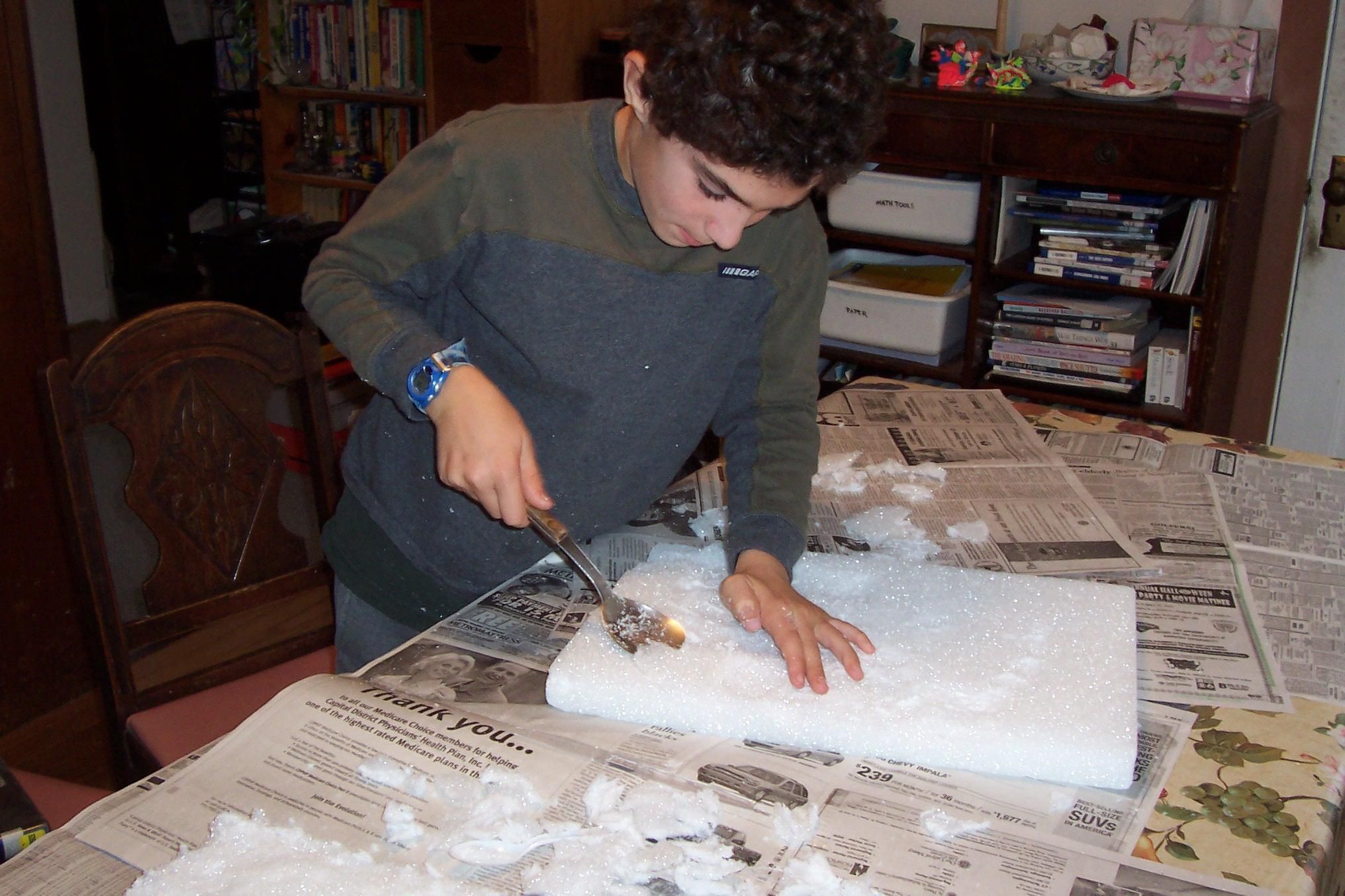


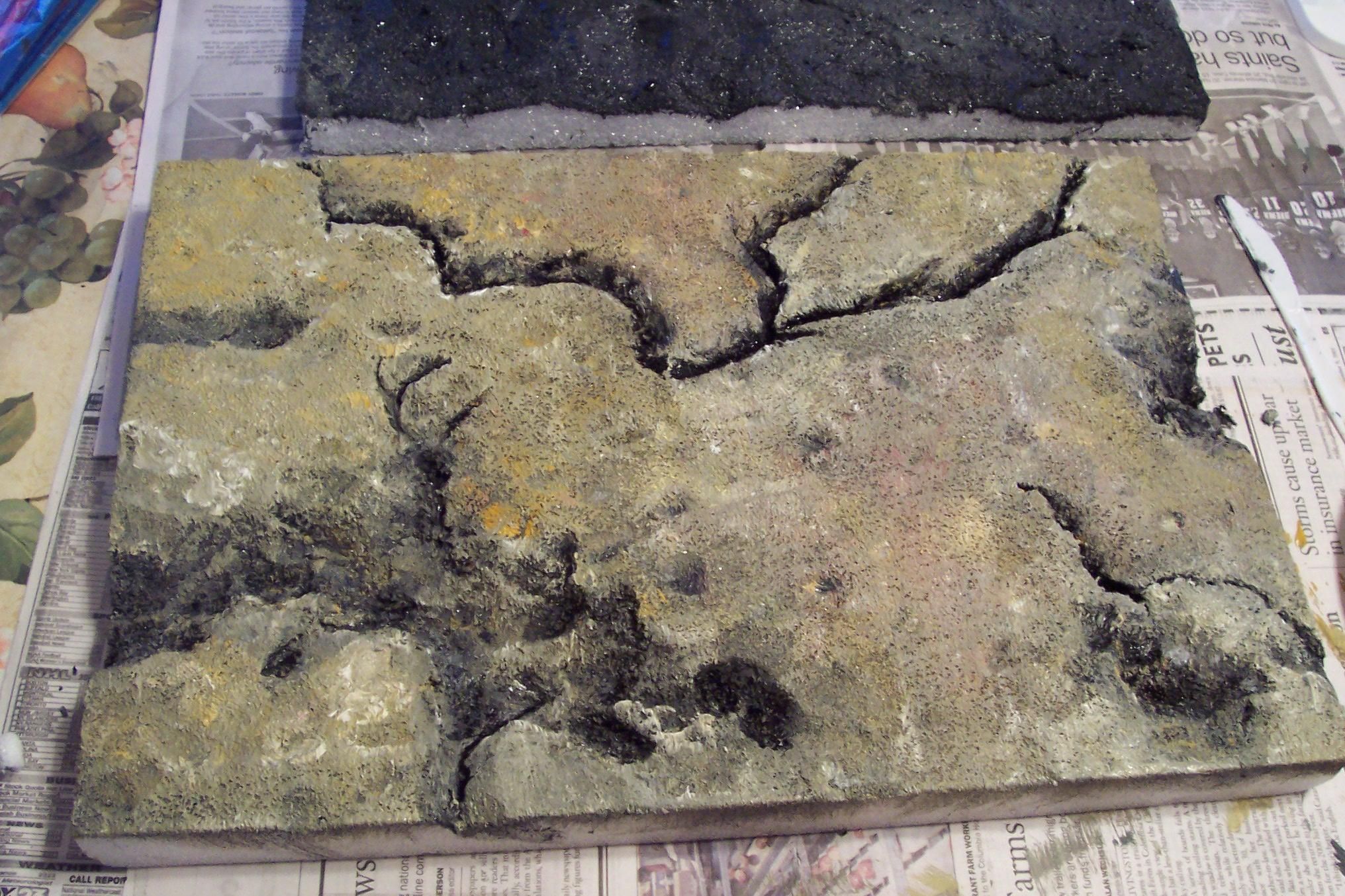
Carve and press the foam with the tools and your fingers until it resembles a rocky cave surface (but don’t make it too uneven, or you won’t have room to draw).
Spray-paint or use stiff brushes to fill the cracks with black or other dark shades. This creates depth.
Dab or spray light grey- or sand-colored paint onto the rest of the cave wall. A mixture of colors in multiple layers gives a realistic stone effect.
Make the Drawings

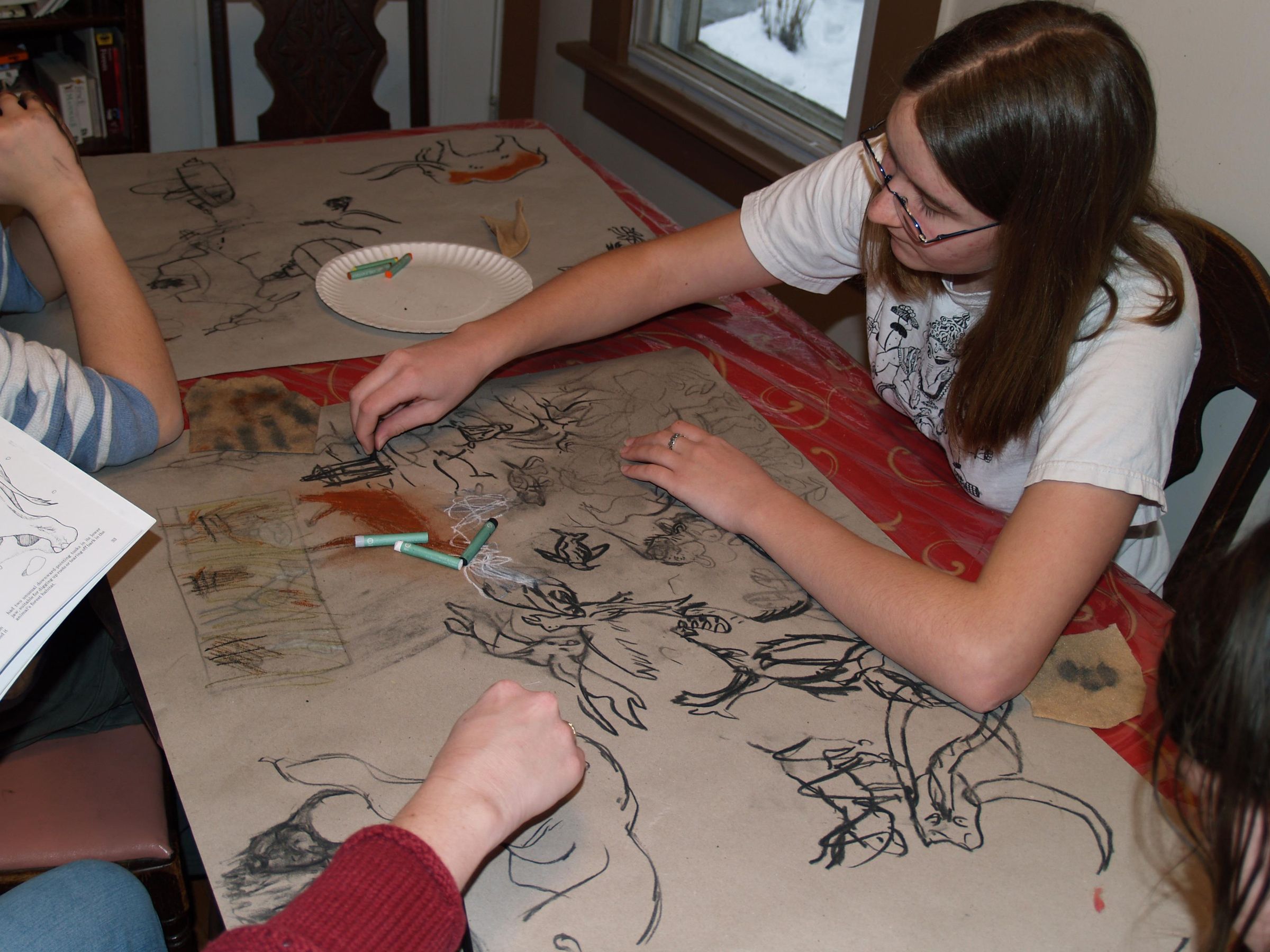
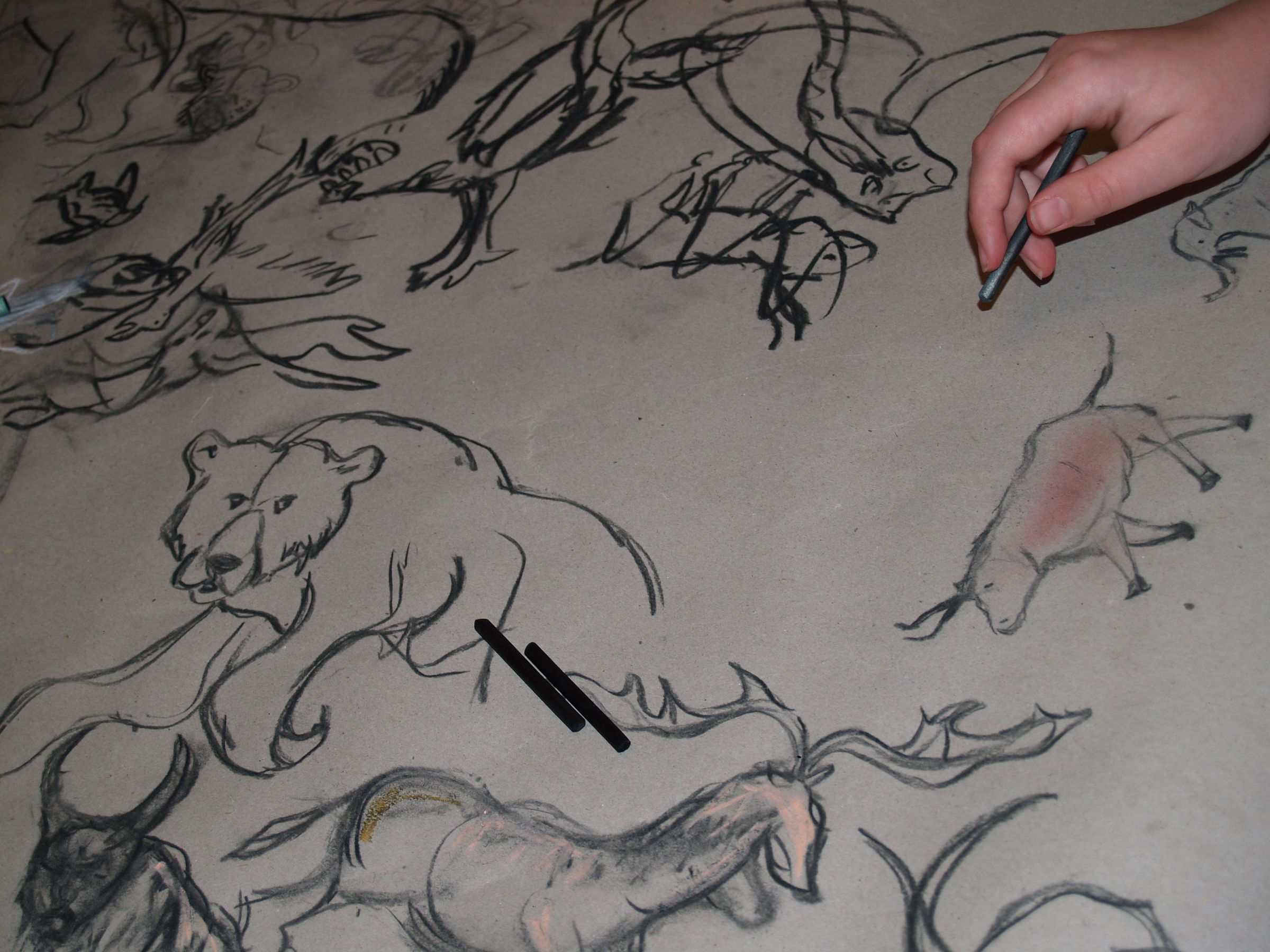
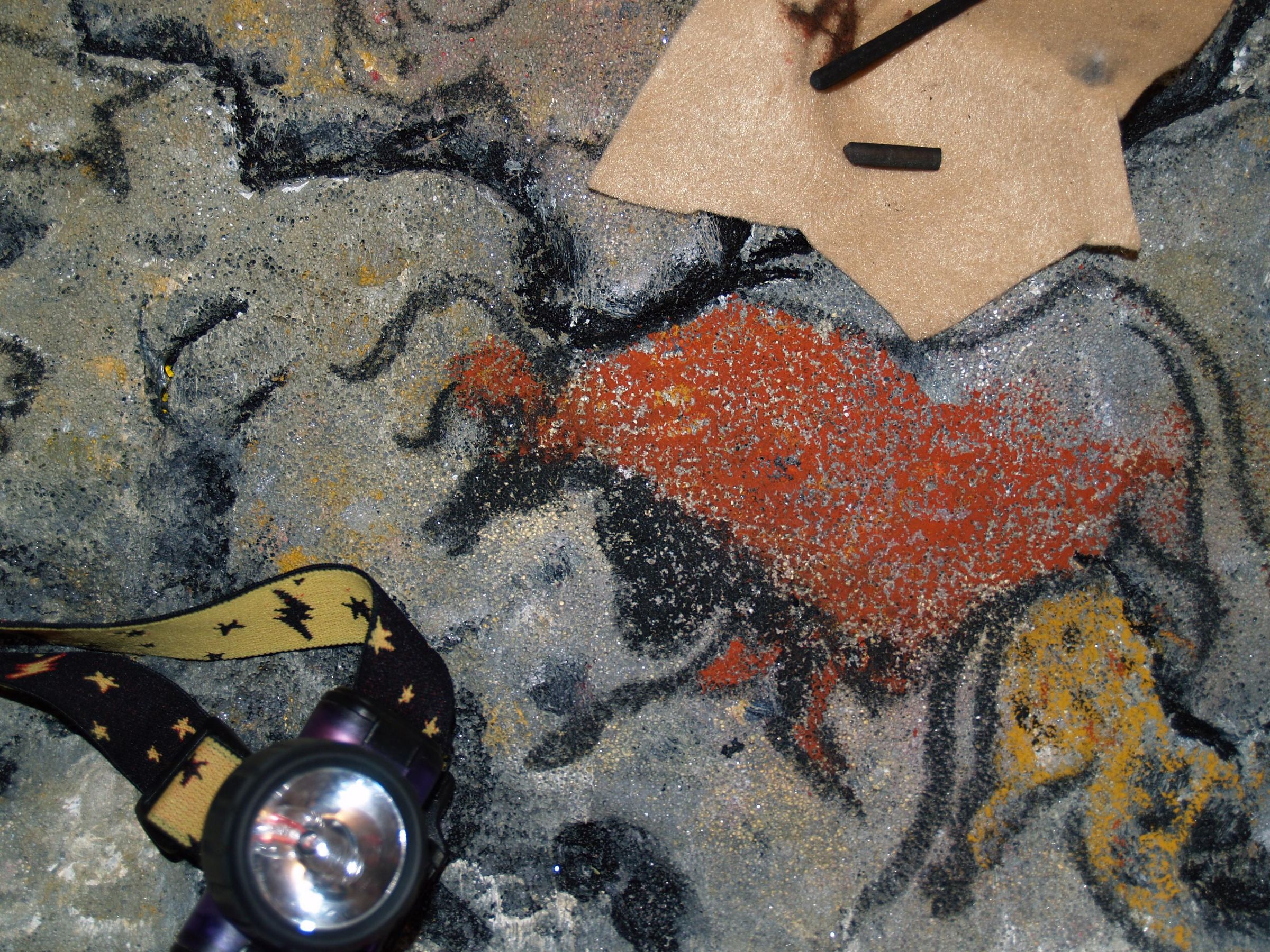
When the cave wall is dry, let the shape of the surface suggest a creature, as cave artists appeared to do. They used knobs and outcroppings in the rock to make the animals stand out. Look for reference drawings of animals and cave drawing renderings as inspiration.
Then draw your own Ice Age bison, snow owls, and trout using vine charcoal and colored oil pastels. Scraps of chamois cloth (the kind used for cleaning cars) or suede-colored felt can be used to blend and shade.
Hang your “discovery” on a wall – or, for the adventurous, inside a dark, quiet closet – where it can be preserved for future generations to study and enjoy.
Some references to try:
- Lascaux Cave virtual tour in English https://archeologie.culture.gouv.fr/lascaux/en
- Smithsonian Cave Painting virtual tour https://naturalhistory2.si.edu/vt3/NMNH-WC/z_NMNH-WC-001.html