Resurgence Sanctuary: Architecture As a Medicine
by Mustafa27 in Design > Architecture
209 Views, 4 Favorites, 0 Comments
Resurgence Sanctuary: Architecture As a Medicine
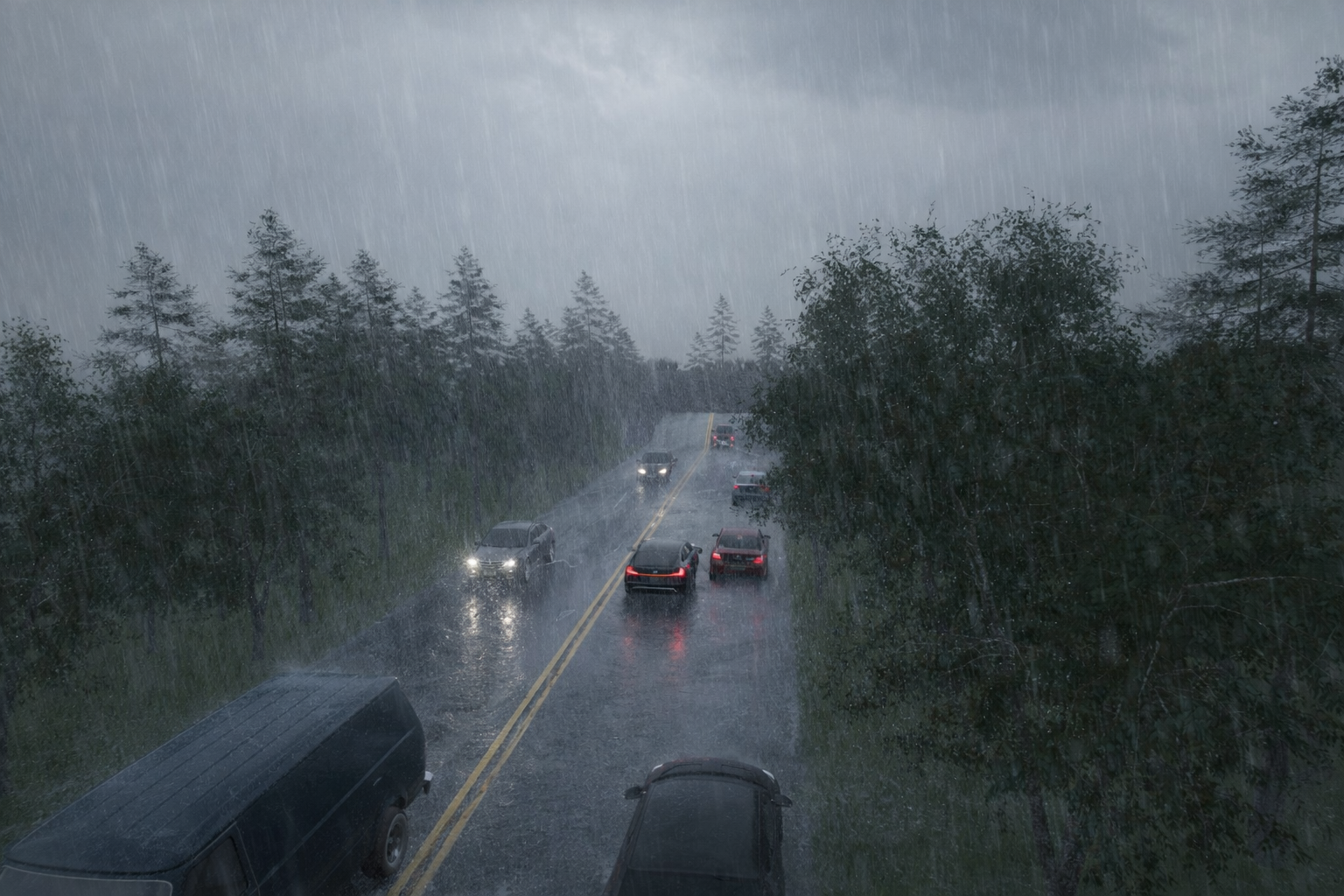
When catastrophe strikes civilian lives, rehabilitation must venture past the physical flesh and enter the psychological state of mind. Resurgence Sanctuary is specially designed to accomplish this task in the most meaningful and realistically possible way. My designed public structure supports recovery and resilience not only after a flood but during it and before it as well. What I have created is a highly flood proof underground evacuation center where healing, emotional, social, and physical can take place. My goal was to use physics to my advantage and to save as many lives as possible using Boyle's Law of pressure. I wanted my place to not only heal the wounded but also to prevent wounds in the first place. Whether it's something physical or mental, I wanted my design to virtually be ready for anything.
Supplies






For this project the only supplies required are a working pc, Wi-Fi, Microsoft Copilot, AutoCAD, and Blender with BlenderKit addon. AutoCAD will be used to create the Heart of this project which is the detailed blueprints and the floor plans of this structure. Blender will then be used to convert the two dimensional layout into a three dimensional render to simulate the buildings appearance in real life. The BlenderKit add-on will be used to decorate the models interior and exterior through premade 3D assets to add additional aesthetic value to it. Using these software's will require you to have a working computer with a graphical processing unit (GPU) capable of running AutoCAD and rendering in Blender. An internet connection will also be needed to load assets in and conduct research on various topics. And lastly Microsoft Copilot will Also be needed to add a Naturalist post effects to the renders for further visual viability.
Researching
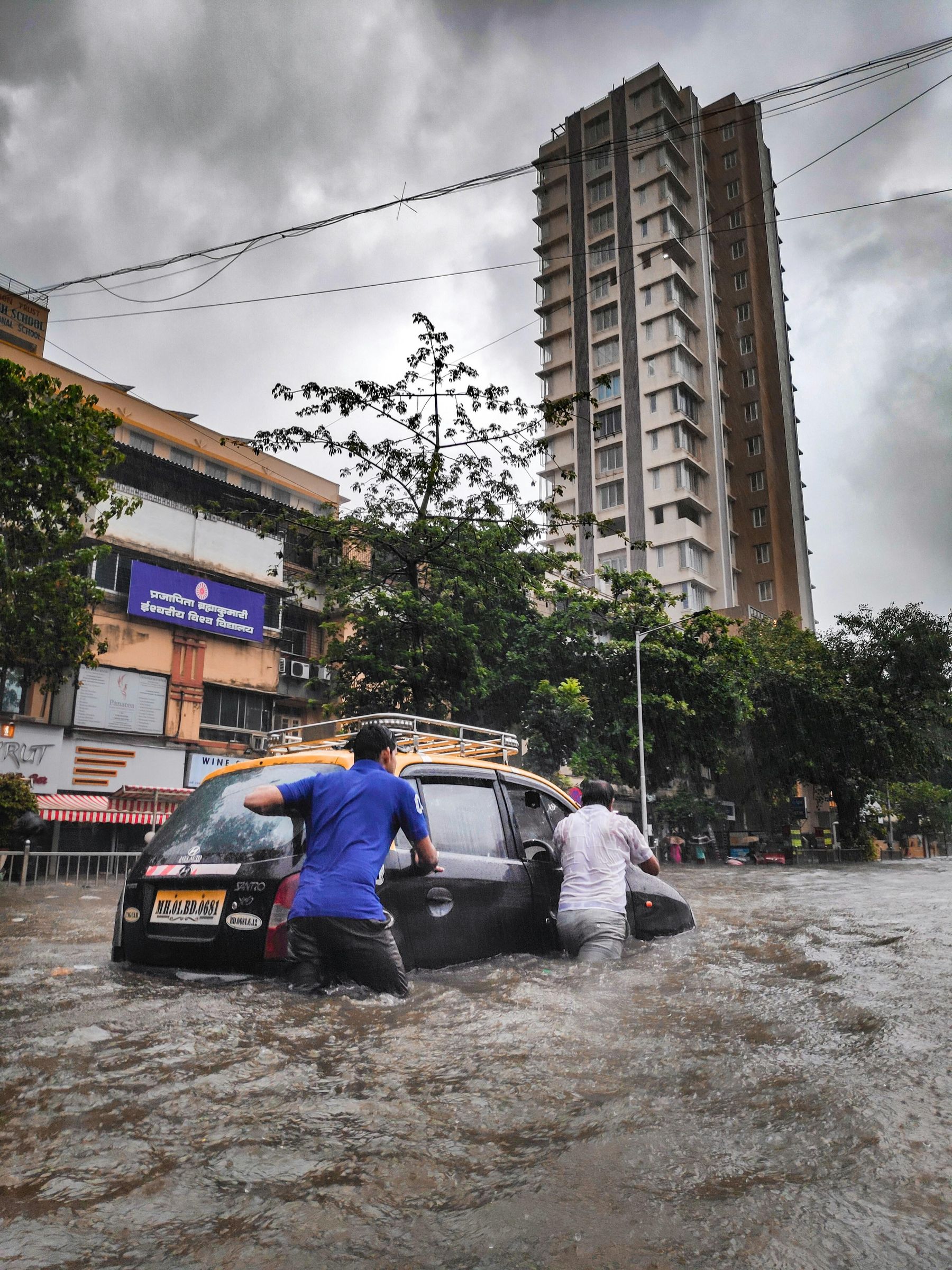
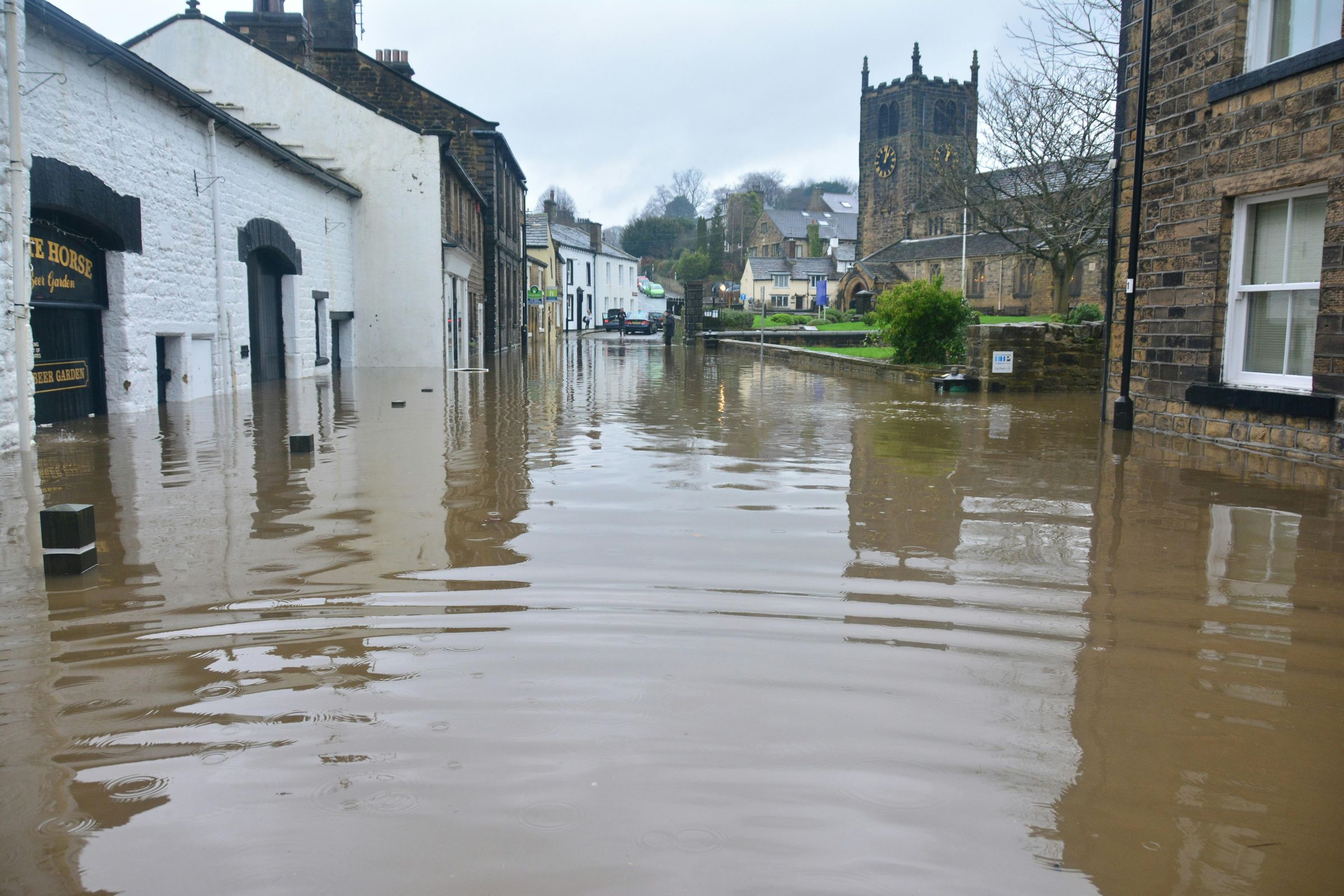
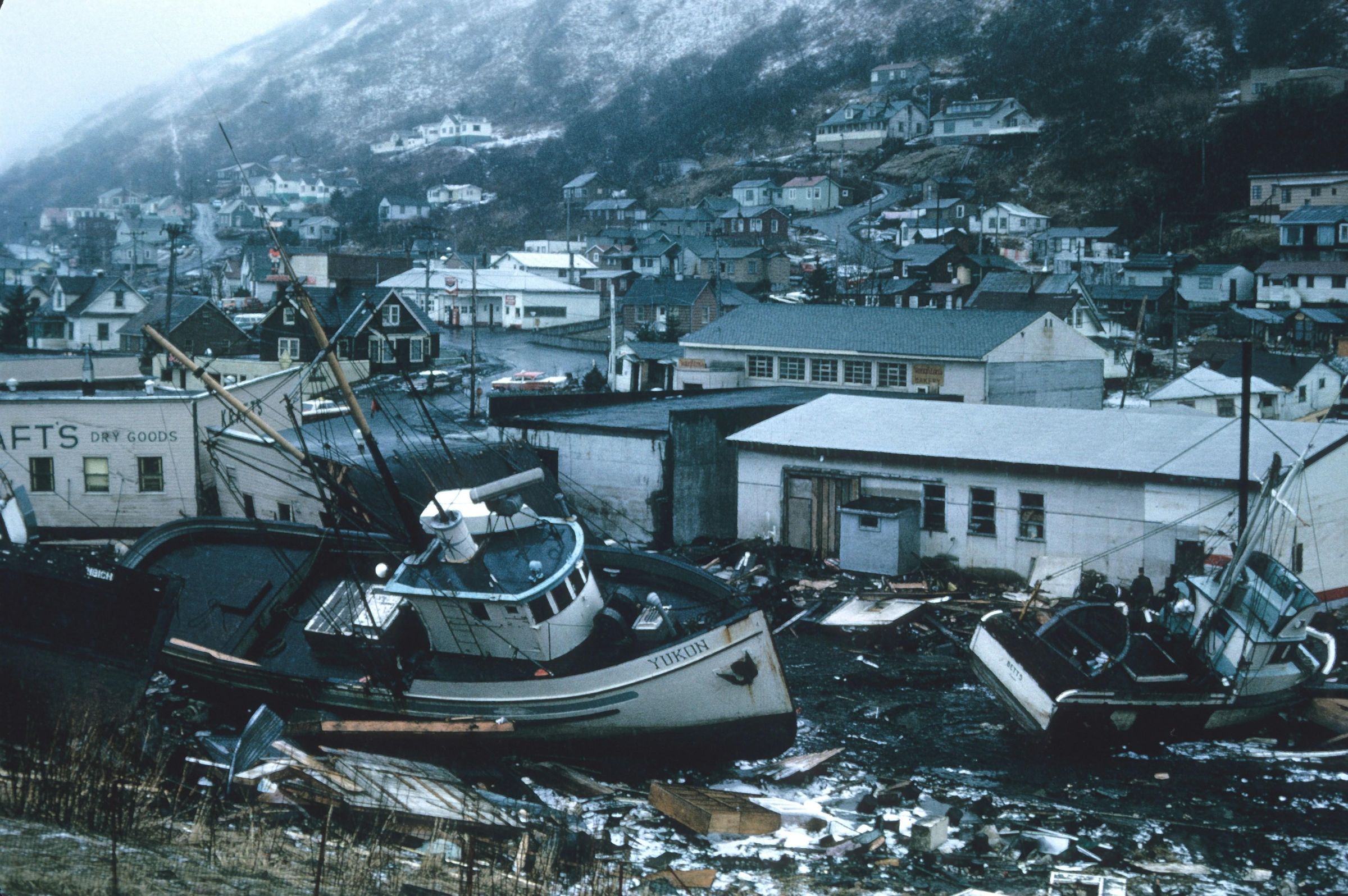
Before starting the project, you need to have a true motive to do so. With proper motivation, the elevation of one's design exceeds the limits of imagination. Through researching we find out that the annual death toll from natural disasters is a staggering high of 40,000 to 50,000. Out of the many natural disasters that contribute to this number the most commonly occurring one is the flood.
Floods can be caused by many reasons like severe storms, heavy rain fall, coastal surges and if you go to the more extreme and dangerous side, typhoons, cyclones, tsunamis, tidal waves and hurricanes. These are all things that can cause a deadly flood which are typically responsible for a combined 10,000 to 20,000 deaths a year. This grim reality motivated me to design Resurgence Sanctuary which is a solution to this problem at hand.
Addressing Community Needs

Every great and effective engineering design must meet the requirements of the people it's meant for. When the question is asked "What if the built environment could be part of healing?" I say there should be no need to heal in the first place. The best way to "Heal" someone is to never get them damaged in the first place or to at least minimize it as much as possible. Post-Traumatic Stress Disorder (PTSD) is one of most widespread psychological trauma that follows people after natural disasters. This trauma is driven by witnessing injury or death, losing loved ones and the helplessness of displacement.
These experiences can shatter the sense of safety in an individual and can trigger the highest rate of PTSD and life long grief. In order to prevent this, my design's purpose along with healing people is to save the lives of as many people as possible and to give them a safe and supportive place to stay until the commotion is over.
Planning and Concept Drawing


To achieve the planned goals the most suitable and reasonable way to go with this was to design an evacuation center that can save people's lives and heal simultaneously. The problem with that is that whenever there's an evacuation center and the stakes get high or the building gets full, the doors close and there are certainly always people that get left behind. Well, at least in all the natural disaster films I've watched. So to solve this, we need a way for people to get in without the water coming in also.
You know how when you flip a cup upside down and put it in water, the inside doesn't get wet because it's filled with air. Well, that's Boyle's Law which tells us that trapped air gets squeezed into a smaller space and pushes back harder. This means that the water cannot fill the cup because the compressed air builds up enough air pressure to stop it. That's how I want my entrance to be but with the addition of an air-lock double-gate pressure system. In order for this to work out the whole infrastructure needs to be placed underground. This will not only help in achieving the pressure entrance, but also drastically decrease the amount of damage the water can physically have on the building. We need the entrance to be not only for the pedestrians, but also for vehicles too (car, SUV, pick up trucks, NOT Full sized trucks and semis).
Furthermore we also need to consider the fact that during a flood or another natural disaster that can cause a flood the power goes out, electricity, gas, water, and the sewage system stop working completely. So in order for the people to survive in the evacuation center, it must be completely self sustainable. It must also be able to provide them with enough food for them to survive until the flood is over and beds/rooms for them to stay in.
They'll also need a place where they can all truly heal. And what's a better place to heal then an actual hospital. So a hospital will also be located inside it as well. A place for them to relax and take their mind off of what is going on outside will also be needed for them to embrace sustainability and resilience. The rough diagram and mental sketches I have drawn above show all that was going through my mind as the concept was generated inside my head and shows what I am aiming to achieve and how I'm wanting to achieve it.
Deciding the Size
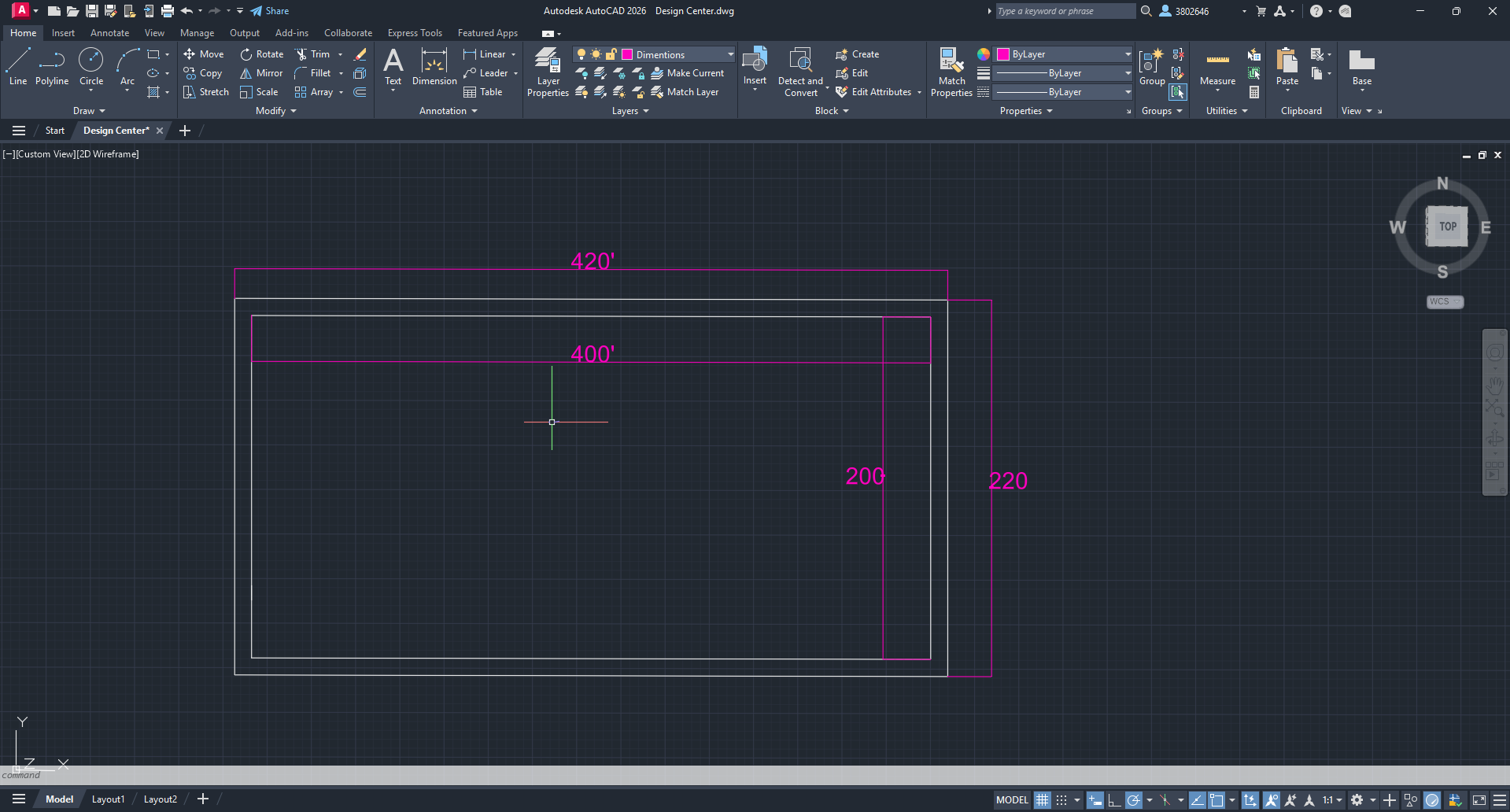
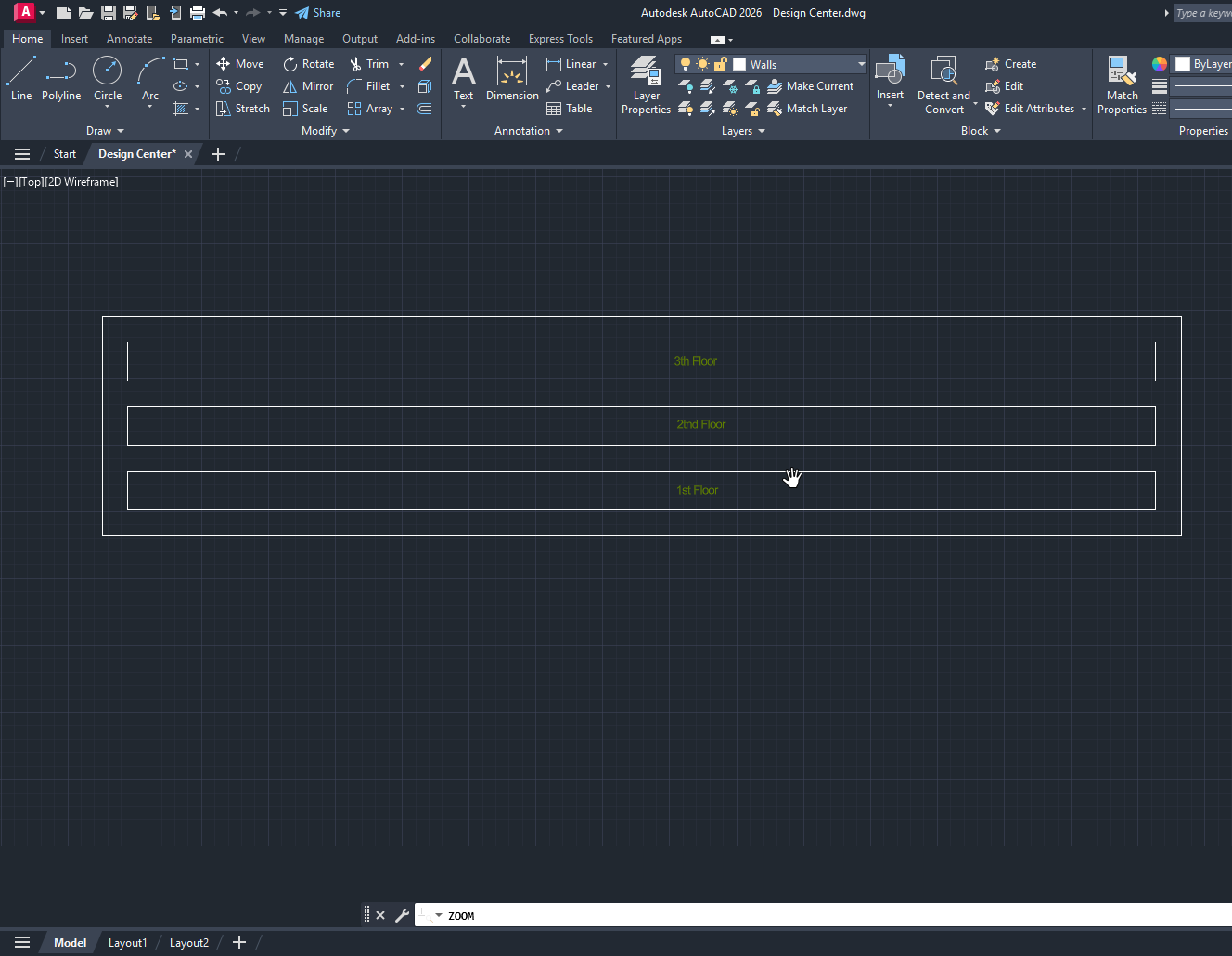
For the evacuation center to be worthwhile, it has to be able to accommodate a reasonable amount of civilians. After researching some more I came to the conclusion that It should be able to at least hold and fulfill the needs of up to 1,000 People. And we also need to consider that they'll probably need to stay here for days because floods aren't something that just come and go, they can stay for a long, long time. So we need to make it comfortable for the people inside it so that they can feel free to move and not like if they were trapped in a confined space. A typical person needs about 40sqft in an evacuation center for a bed and some space to move, for a 1,000 people that becomes 40,000sqft. We also need a place for them to dine, an entertainment spot, a hospital, a place for machinery, and we can't forget about parking spaces either.
- 40,000sqft - beds/rooms
- 87,500 - Parking space (assuming 4 people per car) + Driving aisle
- 5,000 - Hospital
- 5,000 - Entertainment center
- 15,000 - Hallways/Walls
- 3,500 - Dining hall
- 50,000 -Machinery
This comes to about 206,000sqft. This is way too much to be on one floor so we are going to have to divide the stuff on to 3 floors of 80,000sqft each to be on the safe side. (80,000 x 3 = 240,000). Bottom will be the parking because of the massive amount of weight that it will create, second will be the main center and rooms. Lastly, the top will be some more room and machinery. And since it's underground with the weight of the tons of water and waterlogged earth above and around it. The push against the outer walls of the structure will be intense, needing them to be extra strong and reinforced. I will therefore make them 10ft wide and made of reinforced concrete adding another 10ft on each side of the building perimeter.
Pillar Array Placement
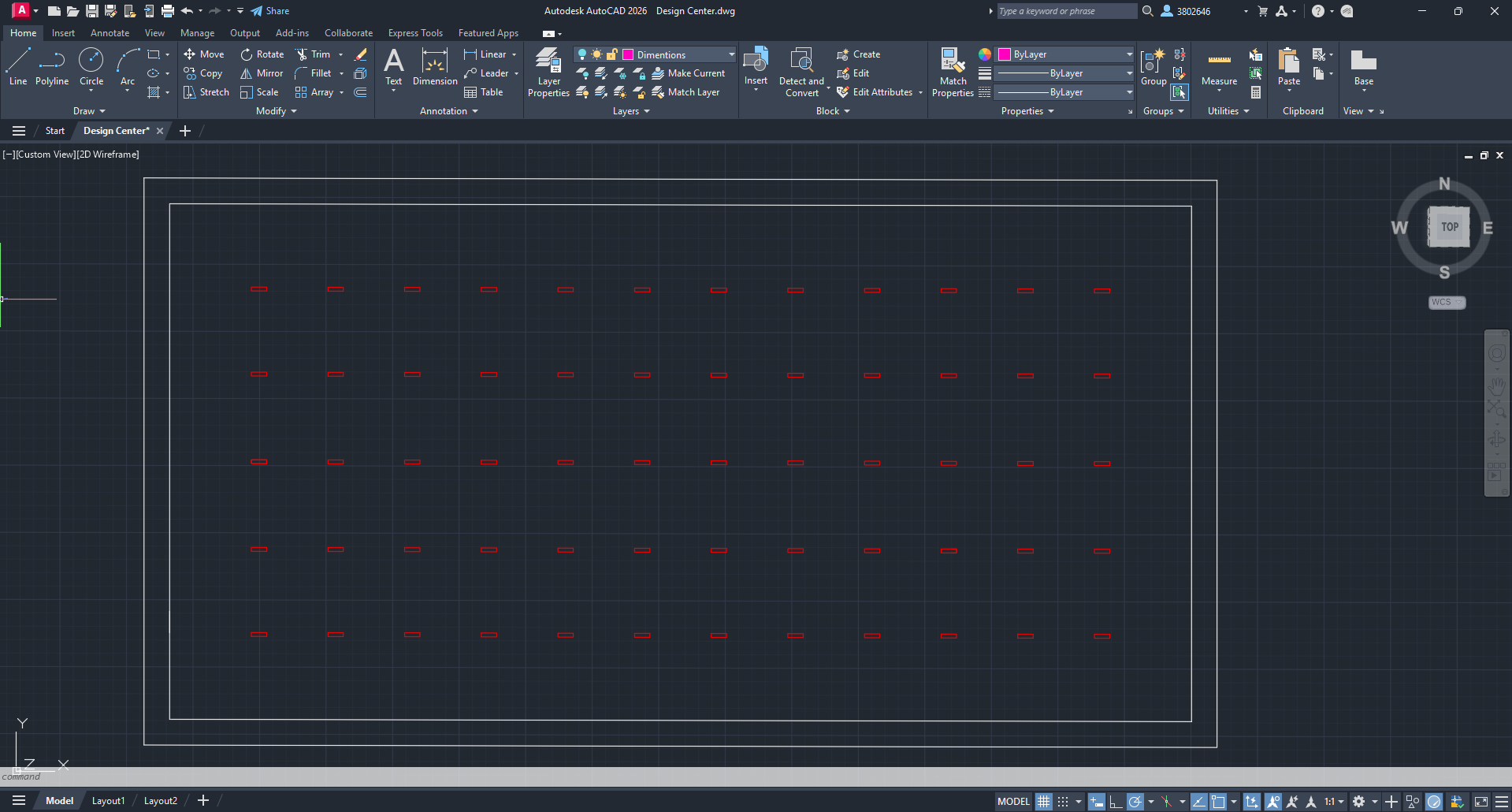
Before I start designing this floor and adding walls, I need to account for pillars to keep the infrastructure of the building standing and to prevent it from ever collapsing. For my building, to accommodate for the massive weights of my floors, I will realistically need pillars of 3x3ft every 30ft. This is the standard configuration for any industrial or commercial construction to balance open floors with structural integrity. But I will need to modify it a bit hence 3x3ft pillars will weirdly stick out of place at location. I will make them 1ft 6in by 6ft keeping the area the same while making them easier to fit into walls. (For a clearer image please look at the PDF below)
Downloads
The Parking
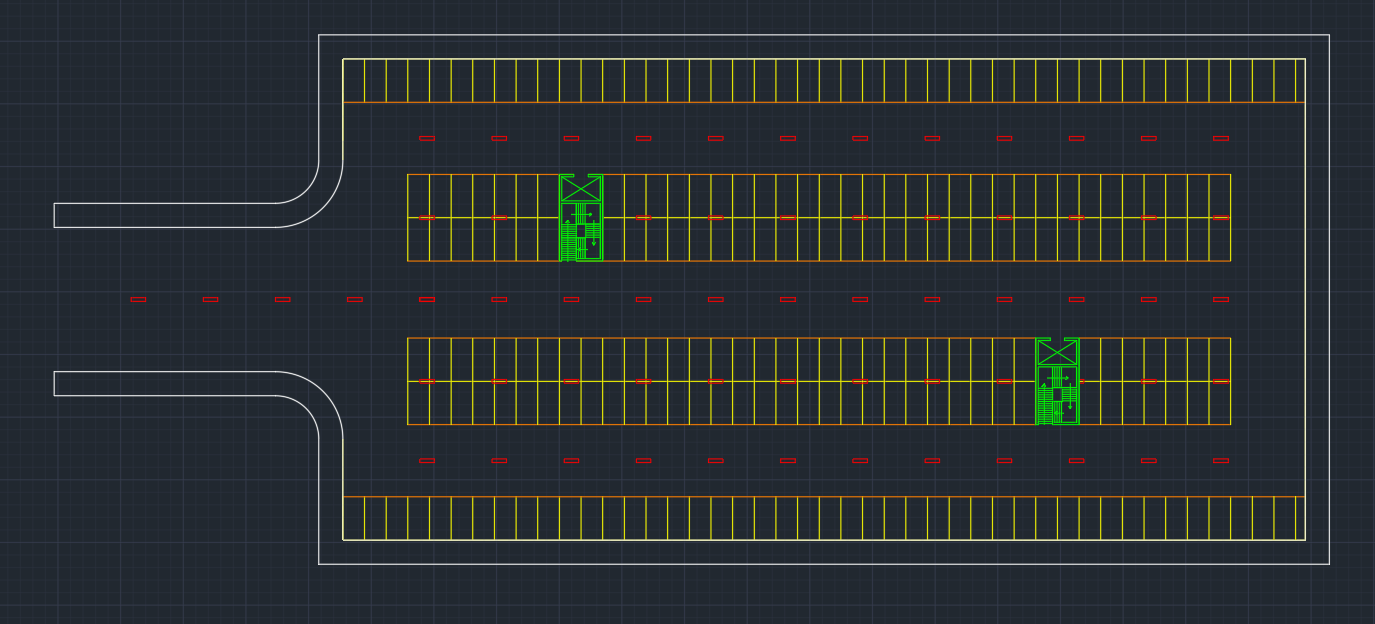
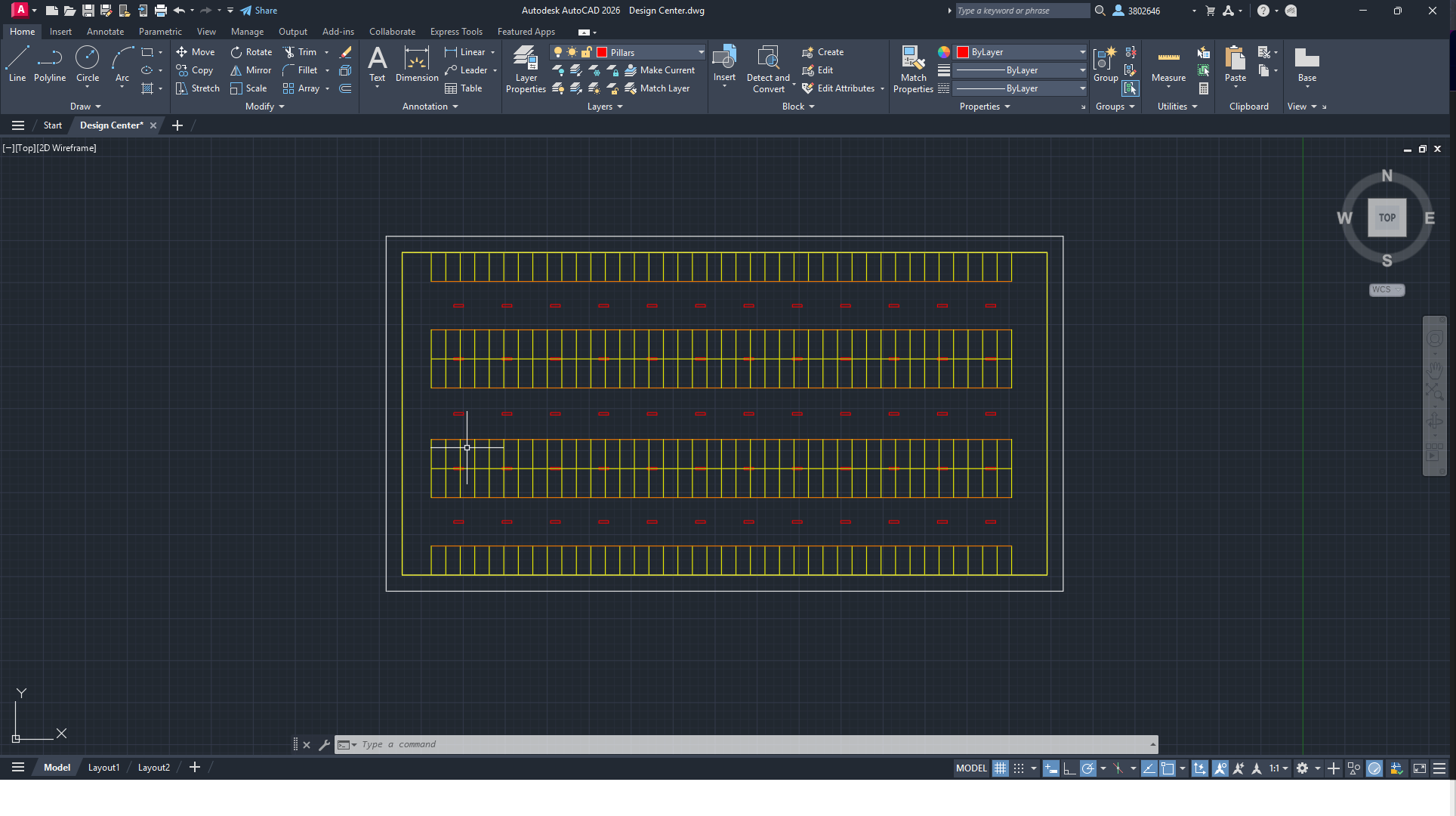
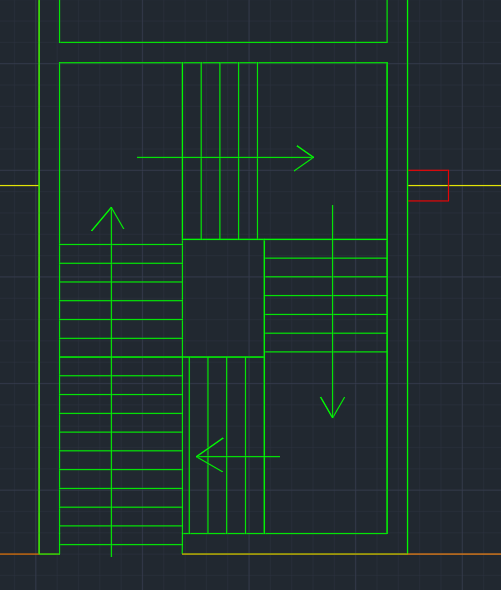
A standard parking space for a car is 18x9ft and we need at least 250 of them in our bottom floor. But we can't just fill up the entire space with parking because we also need driving lanes. This is so that any one can get in or out at any time without anyone blocking anyone.
We also need to account for a way for the people to get to the upper floors too. Like stairs and elevators. Instead of having a long straight stair it would be better to have a stair well in a spiral-ish shape because that way it will take up less space. There will also need to be a few landing in it as well so that the elderly and kids can take a breathing pause and so that if someone slips and falls, he won't come tumbling down the whole way, just that section. I can remove the pillar interfering with my stairwell since the stairwell itself acts as a massive pillar supporting the structure as well. An elevator was also put beside it for the people that can't walk the stairs or have difficulty in doing so. I included two of these stairwells to accommodate the massive crowd of people. They are placed on opposite corners of the space to minimize the distance each individual has to walk in order to reach them. An entrance was also needed. so I made a rough entrance so that the next steps could be made accordingly. This main road entrance will be updated further down the process. (For a clearer image please look at the PDF below)
Downloads
The Main Floor (hospital)
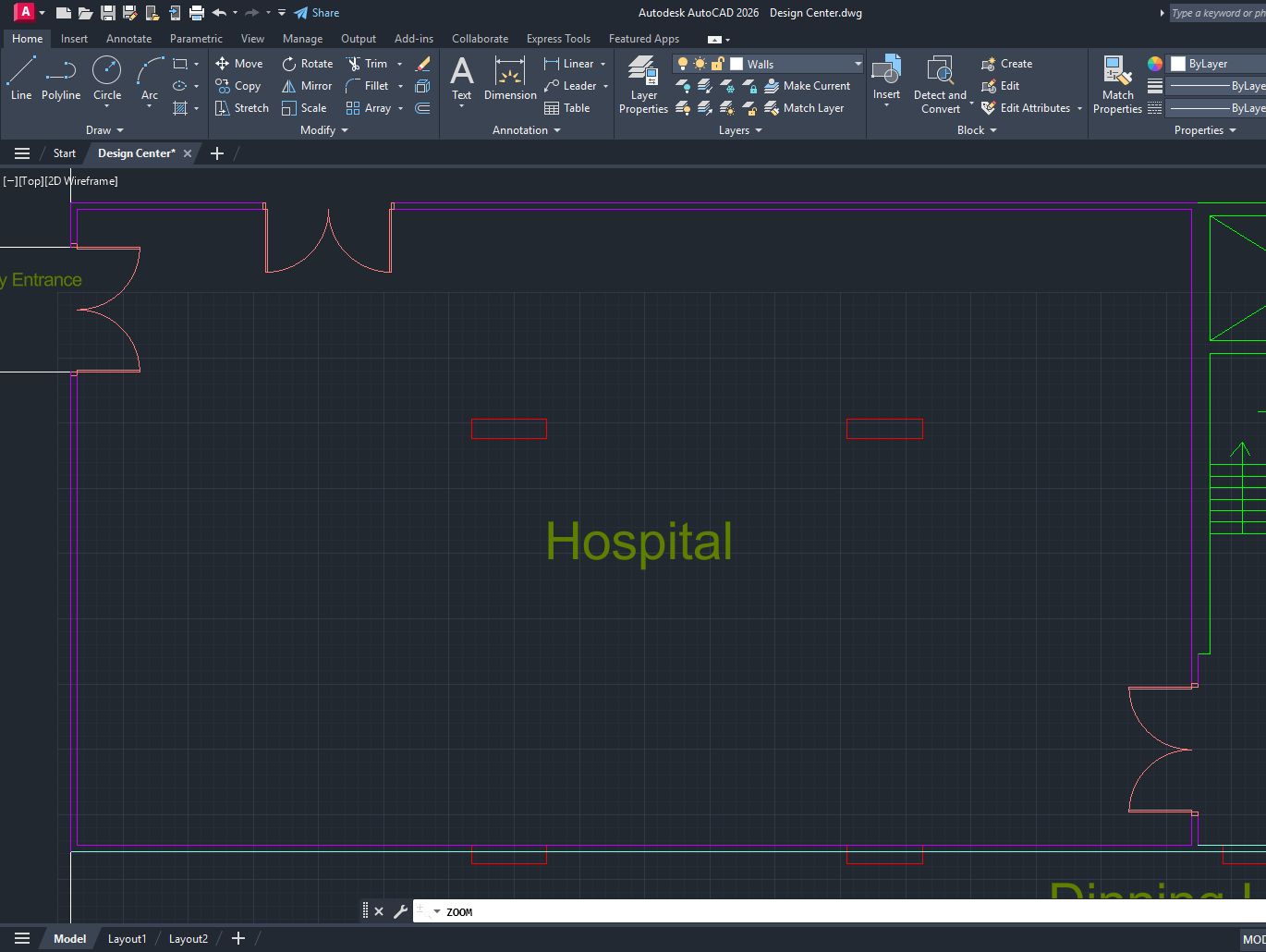
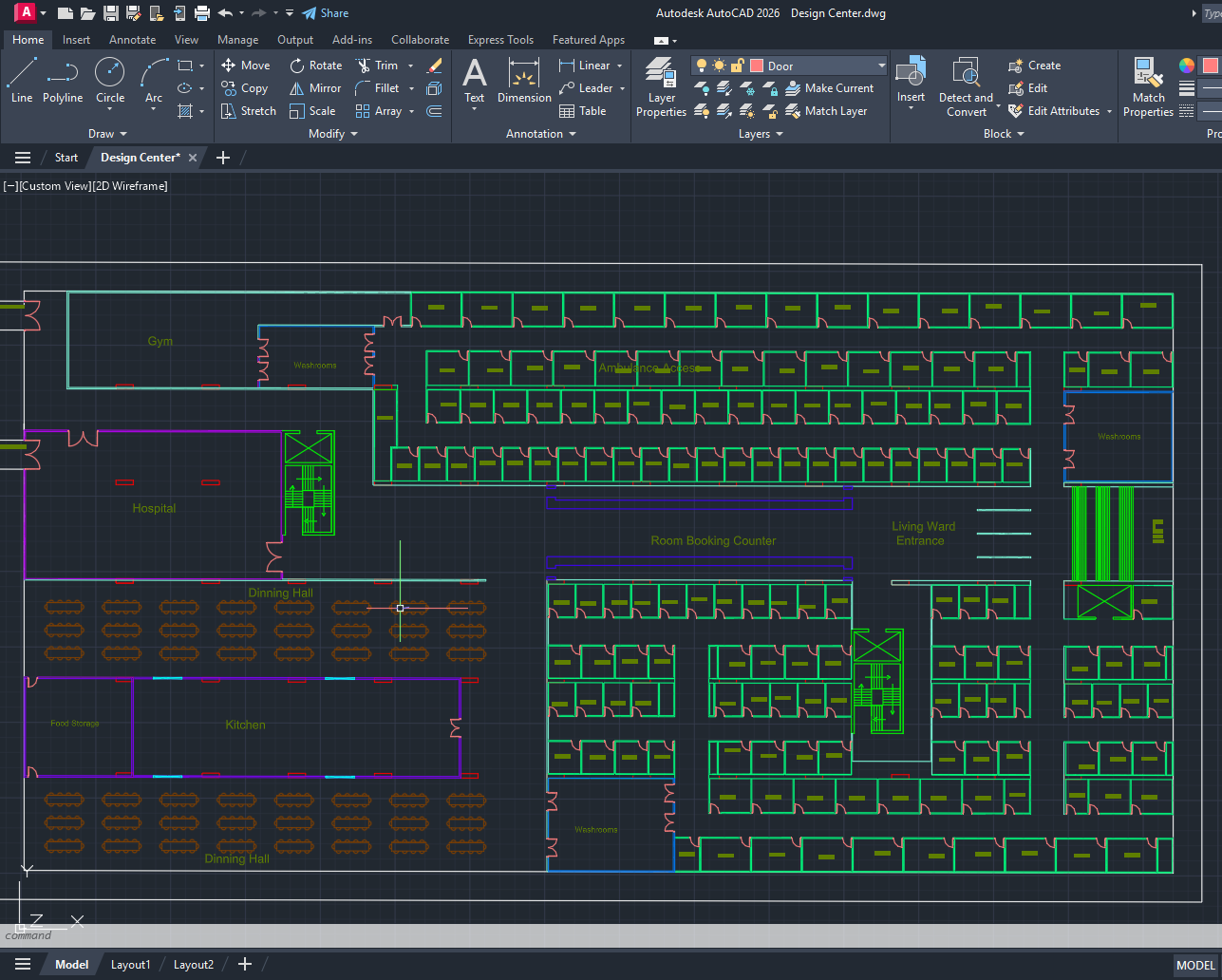
This floor will be the main area in which the crowd will eat, heal, rest, get organized and just overall feel really safe. The hospital will be located on this floor and be accessible to any one in the building at any time. Injured people will be able to be brought in immediately and a separate emergency entrance will be given to the hospital for ambulances and other medical emergencies. This hospital will not only heal the patient physically but also mentally, by having therapists along with doctors and nurses. This hospital will be prepared and ready for any medical emergency that the people can throw at it. Saving lives will be of its top priorities and its duty will be to help the people heal and to help them embrace sustainability and resilience. (For a clearer image please look at the PDF below)
Downloads
The Main Floor (Kitchen/Dining)
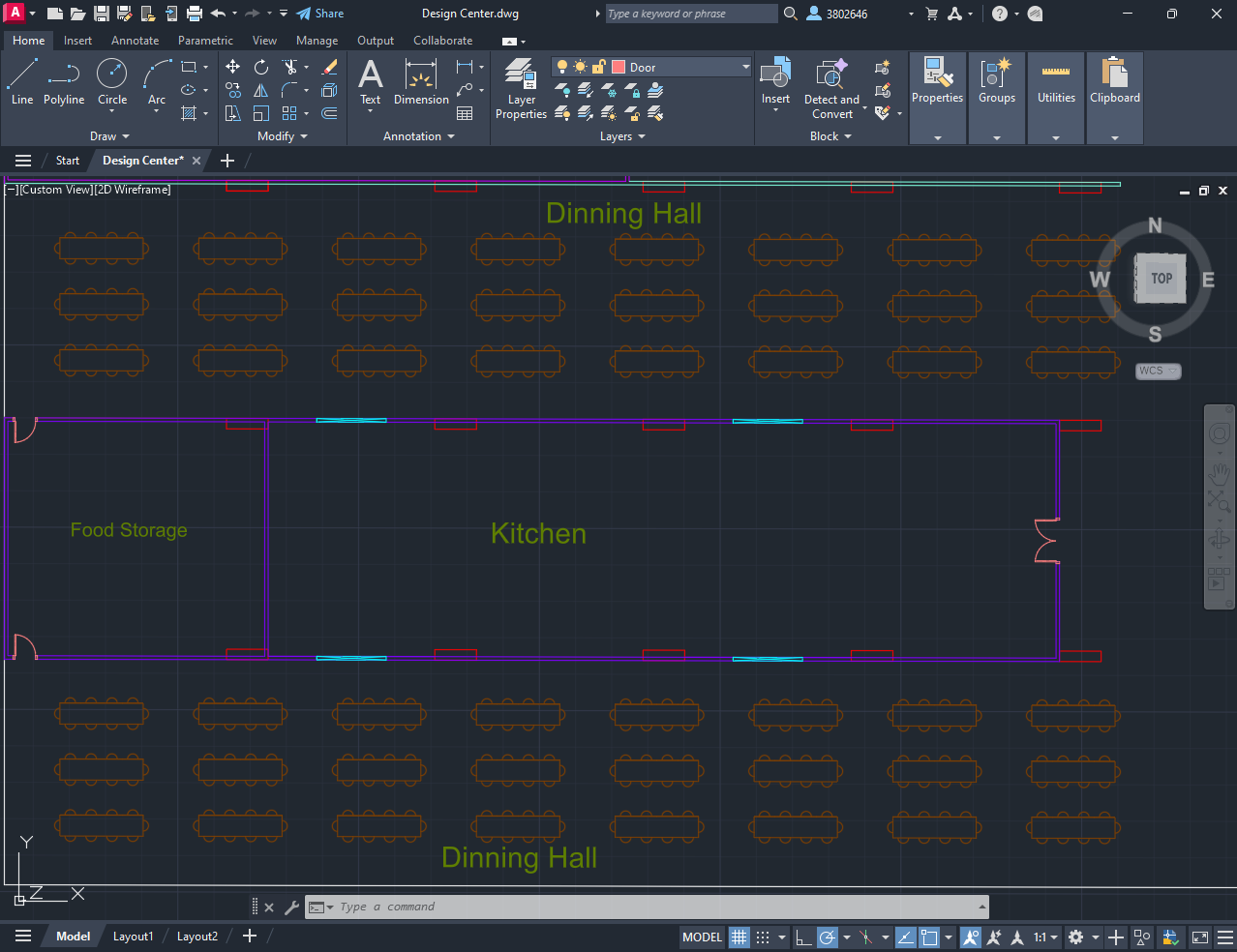
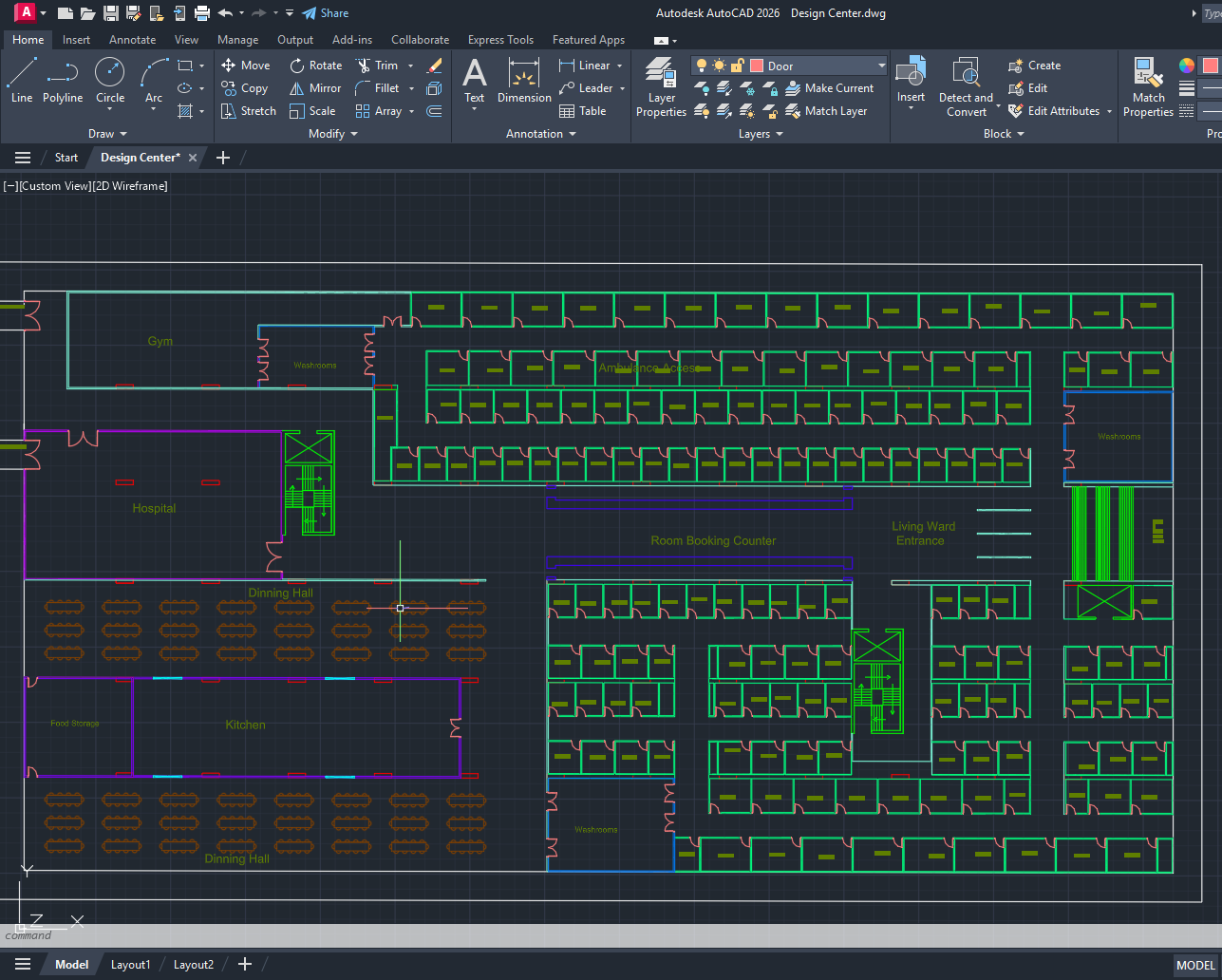
The floor will also house a massive kitchen and dining hall which will provide the people there with food and a safe place to eat. Seating for a thousand people will take a lot of space and a more reasonable way to go with this would be to have it done in 2 or 3 shifts. There are 48 tables in the dining hall each with the capacity of 10. This means 480 people can dine at the same time. This does not quite add up to 1,000 if we did it shifts of two so shifts of three will be more reasonable. This will ease the load on the kitchen and its staff while also making the hall less crowded. People will need to get into lines and get their food from openings in the kitchen wall. This way the staff stays safe, the flow stays smooth and by having 4 serving windows, decrease wait times too.
A massive place to store food will also be needed that is capable of holding several days of food for the people if they aren't able to bring supplies in because of the flood. I made it 34x37x15ft which will be divided into three portions, a walk-in refrigerator, a walk-in freezer and a dry storage. This will ensure the people will get all the nutrients they need without a repetitive source of food. The massive size of the storage room will be able to hold roughly 2 months of food at a time so that during a flood if the deliveries get cut the 1000 people don't die of starvation or from a lack of nutrients. (For a clearer image please look at the PDF below)
Downloads
The Main Floor (Living Wards)
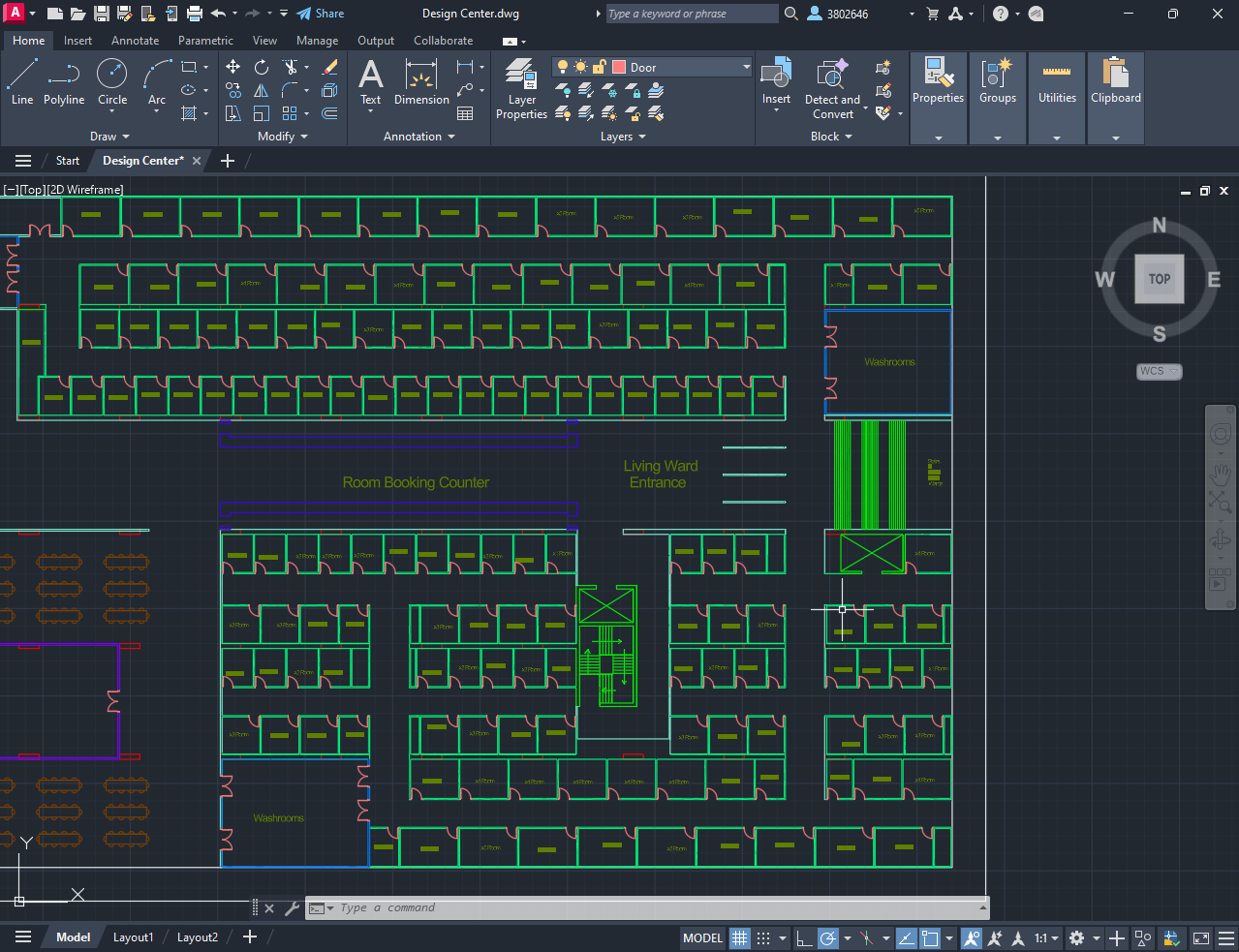
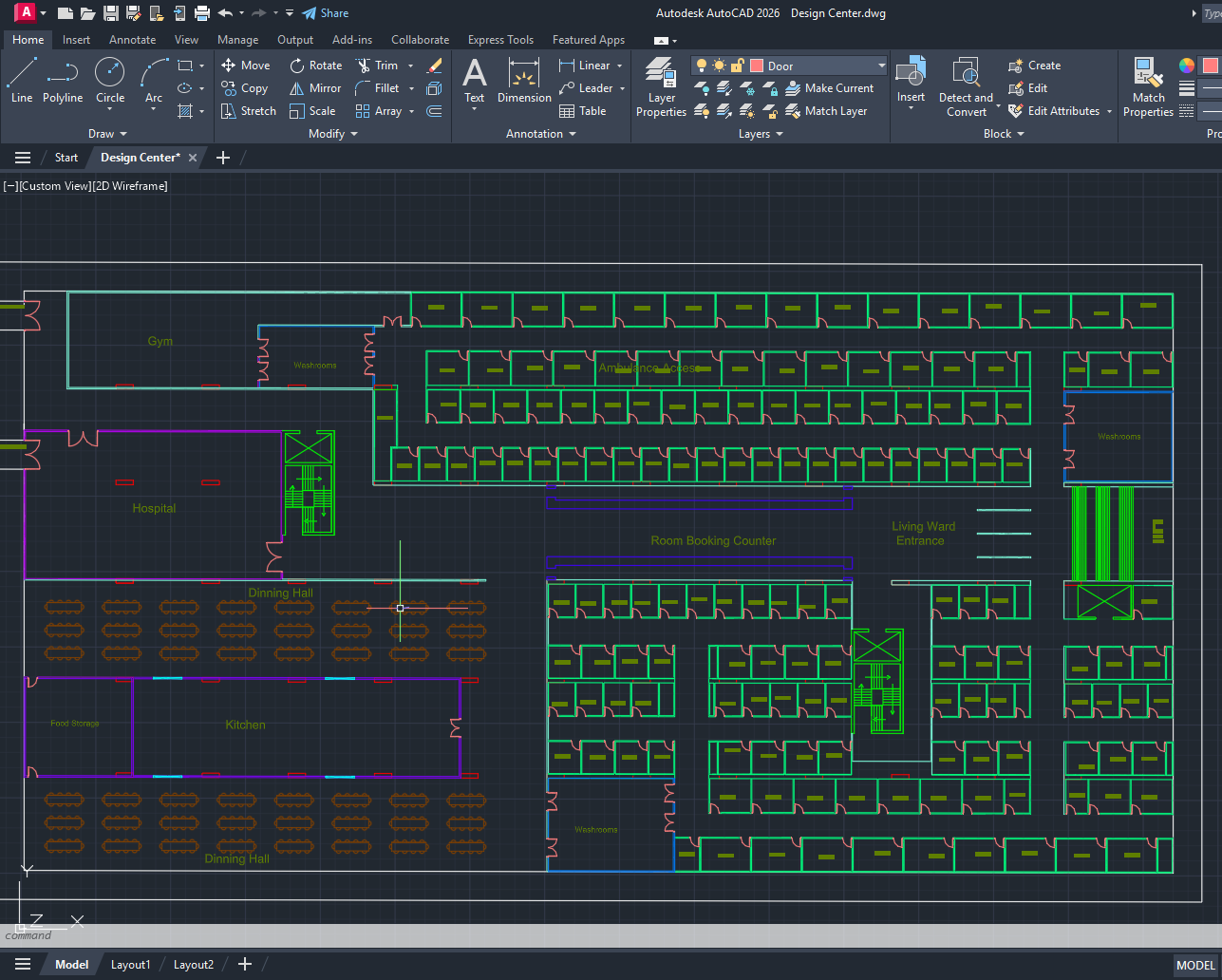
A way to get the people assigned to rooms and organize them is also a task needed to be accomplished to keep everyone safe and to make sure they get a safe place to stay. That's why there will be a room booking center as well. People will have to book out a room according to the size of their family. Only after they've booked one out will they be able to enter the living wards where all the rooms will be located. Rooms will be in the sizes for 2, 3, 4 and 5 people. The rooms will have the exact number of beds, pillows and blankets as listed and will contain a small tv and a few cabinets and drawers for storage.
The washrooms will be public washrooms and separate from the room to account for the large mass of people. Each washroom will be separated in men and women sections each having their own separate entrance. Half of the washrooms and rooms will be on this floor while the rest will be placed on the top floor with the rest of the rooms. A decently sized gym will also be located here for the people to utilize freely. This will help them stay active and fit as their routines will certainly become messed up here. (For a clearer image please look at the PDF below)
Downloads
The Top Floor (Living Wards)

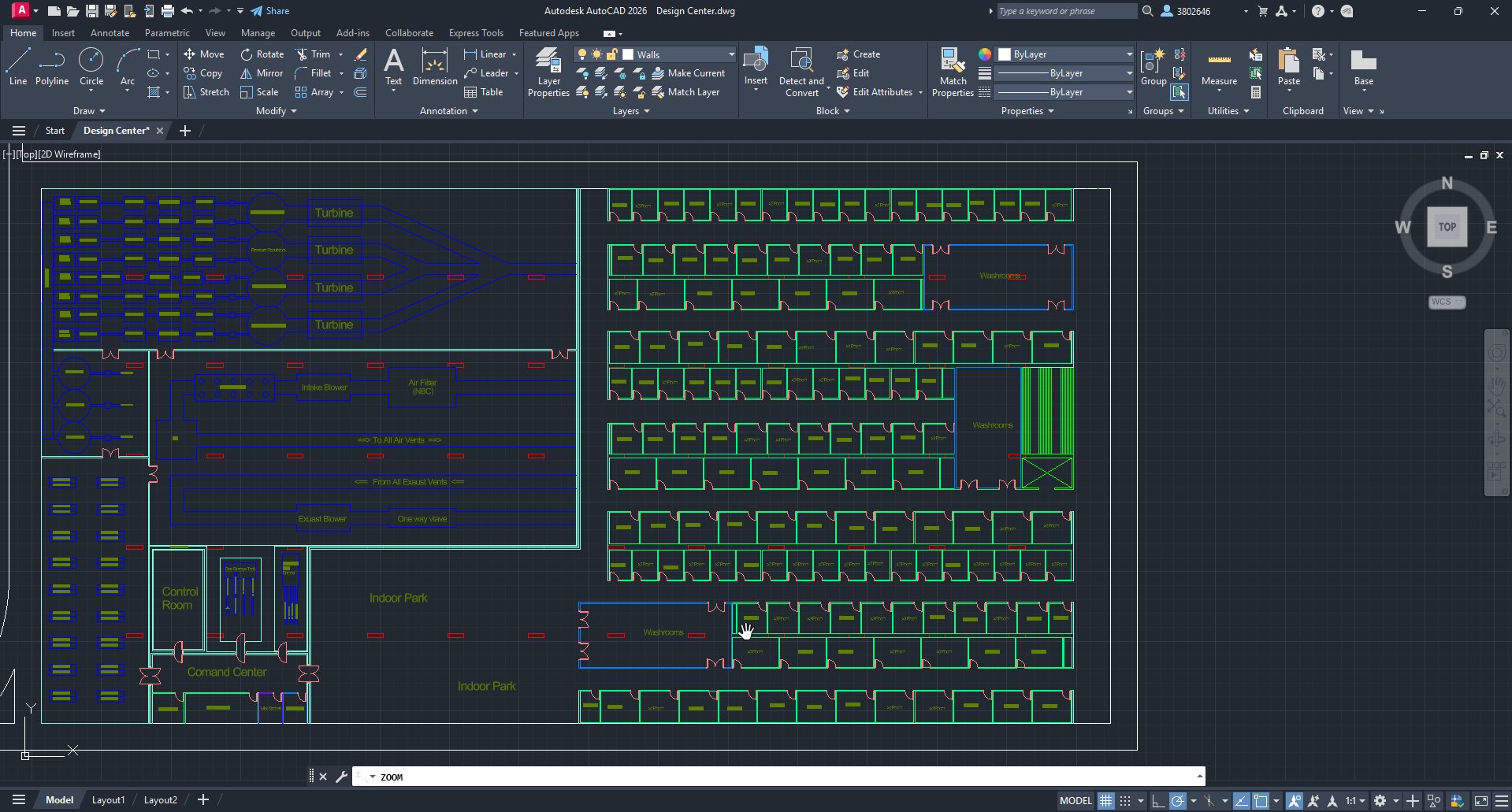
Similar to the one on the middle floor, rooms and washrooms will also be in this area. Both sections will be connected through a wide staircase and a massive elevator to ease the flow of people from one floor to the other. Unlike the one down stairs this section will not contain a gym in it. People living on this floor will need to take a short walk down there to utilize the facilities of the gym. Instead it will have a decently sized indoor park with artificial natural beauty. This place where people can come and relax will be the best place for the healing of their mind giving peace to their mental health. This place will be made to mimic the outdoors for any one that feels sick of being trapped in a confined space. (For a clearer image please look at the PDF below)
Downloads
Machinery Needed

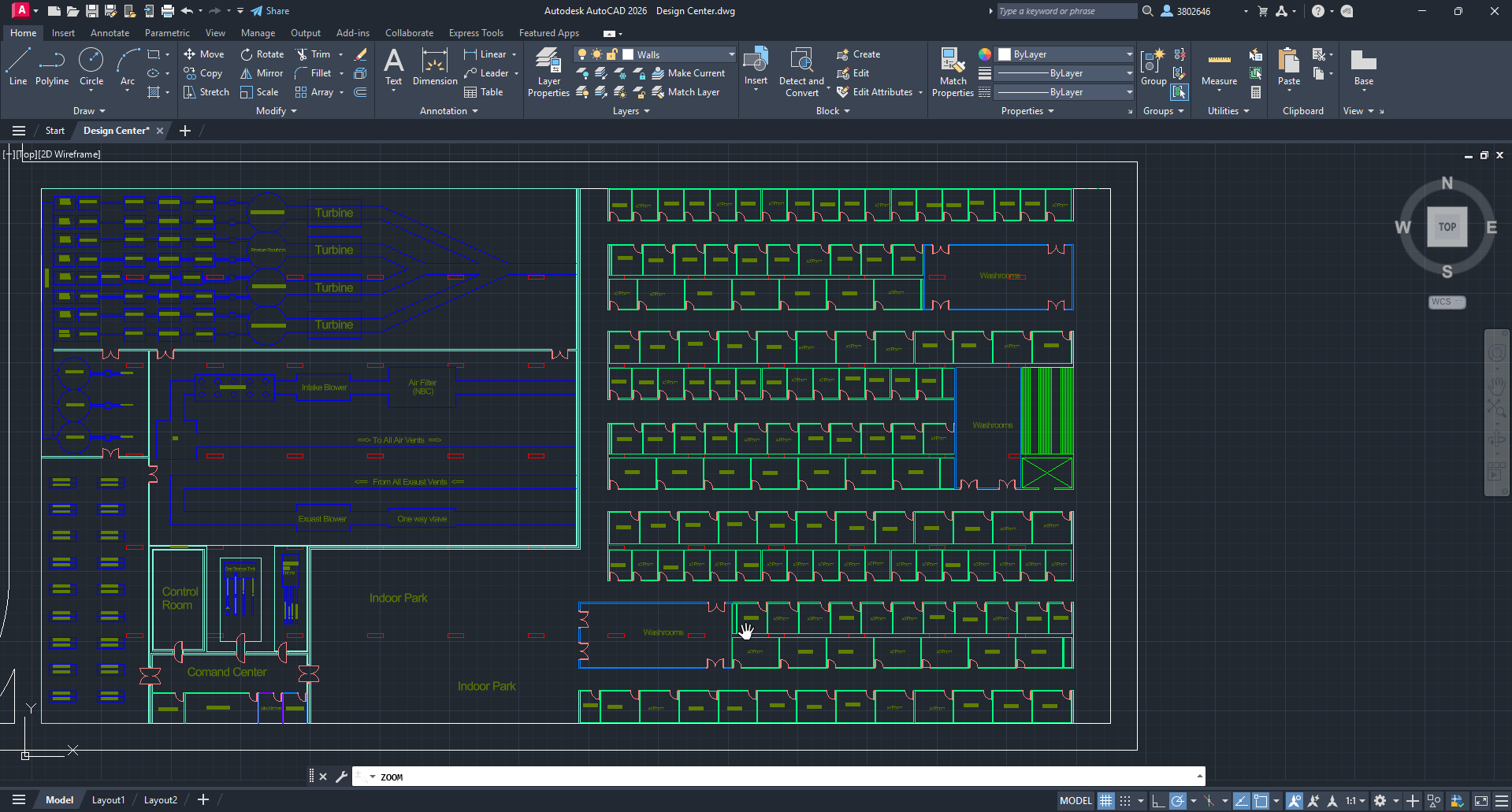
Ok, for this place to actually work out we need to account for some physical problems with this massive underground infrastructure. First of all the place is going to need a lot of air because a thousand people in a confined space will need a lot of oxygen and also a way to get rid of all the carbon dioxide that will be produced by them. Secondly when the storm will hit, all the cities sewage system, electricity, water system and gas will get cut out needing this facility to be fully self sufficient. It will need its own water regulation system, its own way to handle waste and its own way to operate and create its gas. Also its own energy. (For a clearer image please look at the PDF below)
Downloads
Water System
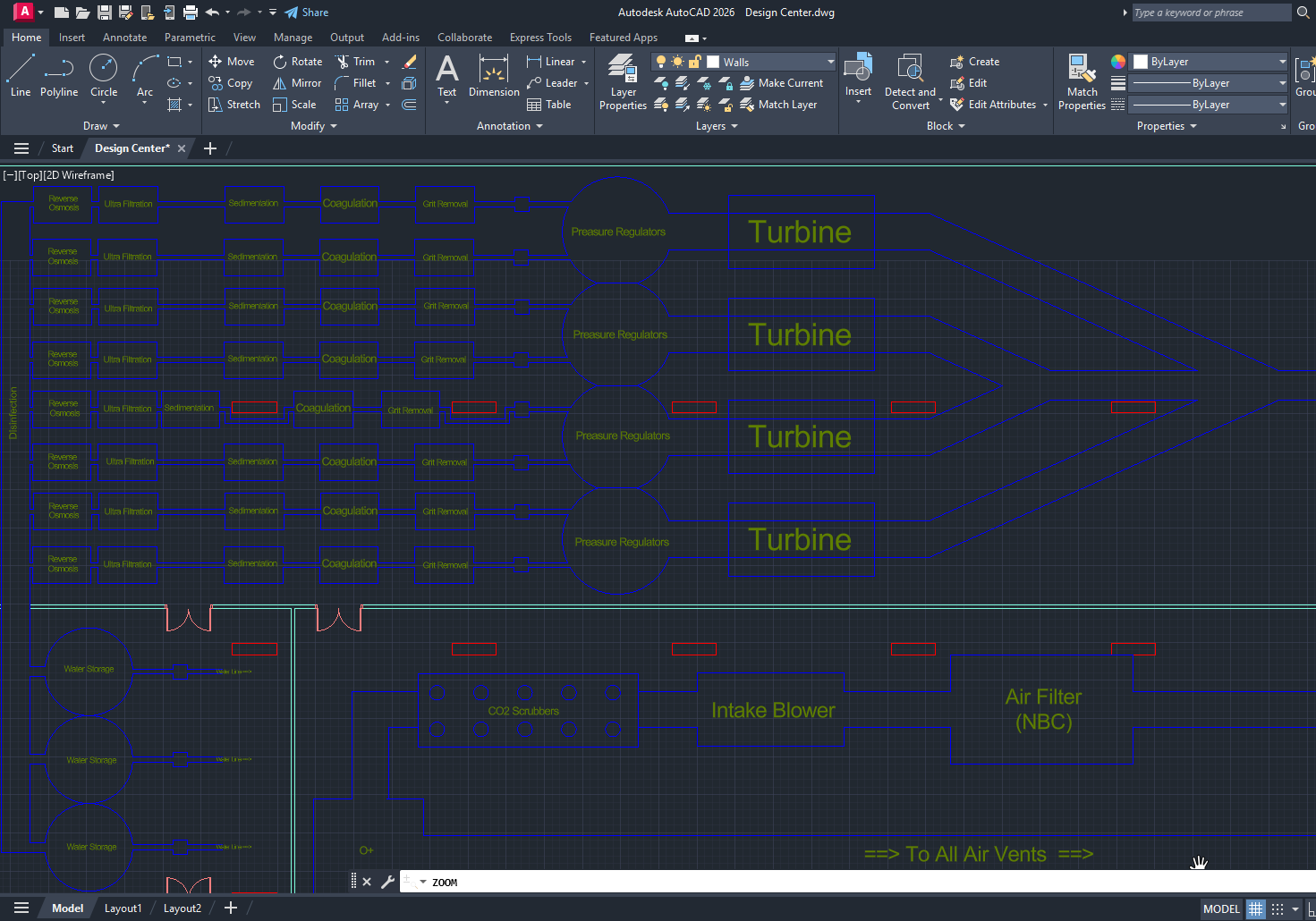
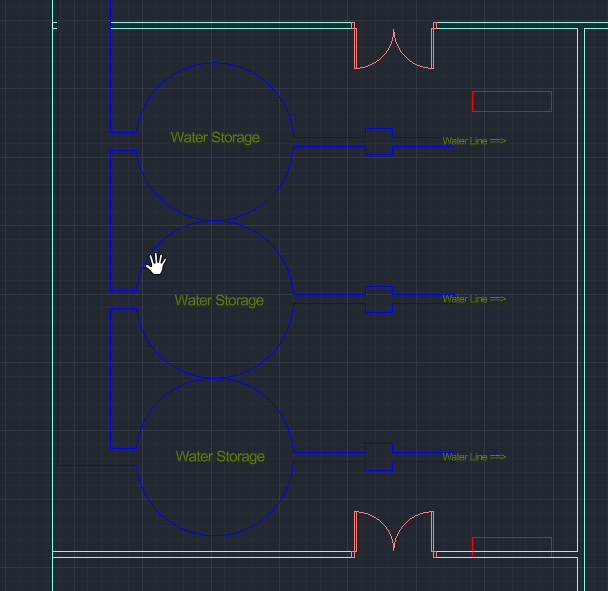
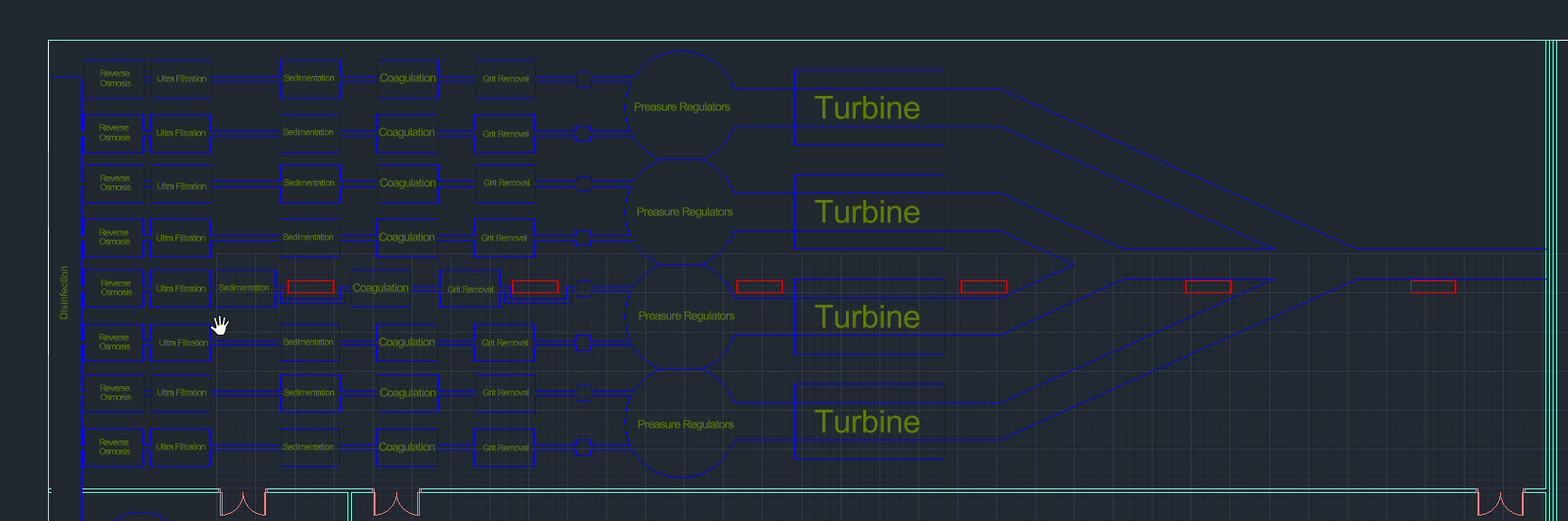
If the city's water gets cut, the building will switch its water supply on to its own machinery. It will utilize the flood water from outside and turn it into fresh drinkable and usable water. But it's not that simple. Flood water produces a lot of pressure that before going down into the system needs to be stabilized. Pressure regulators will need to be in place to break the pressure down. Then it must go through a series of filtration processes to be safe to drink. These processes include grit removal, coagulation, sedimentation, ultra filtration, reverse osmoses and then finally disinfection.
This water can finally now be used as regular tap water or be stored in the tanks for further reassurance of never running out. This water will not only be used for drinking but also for the cooling of the building since 1,000 humans will create a massive amount of body heat. The machinery will also be cooled by this water and etc. (For a clearer image please look at the PDF below)
Downloads
Air System
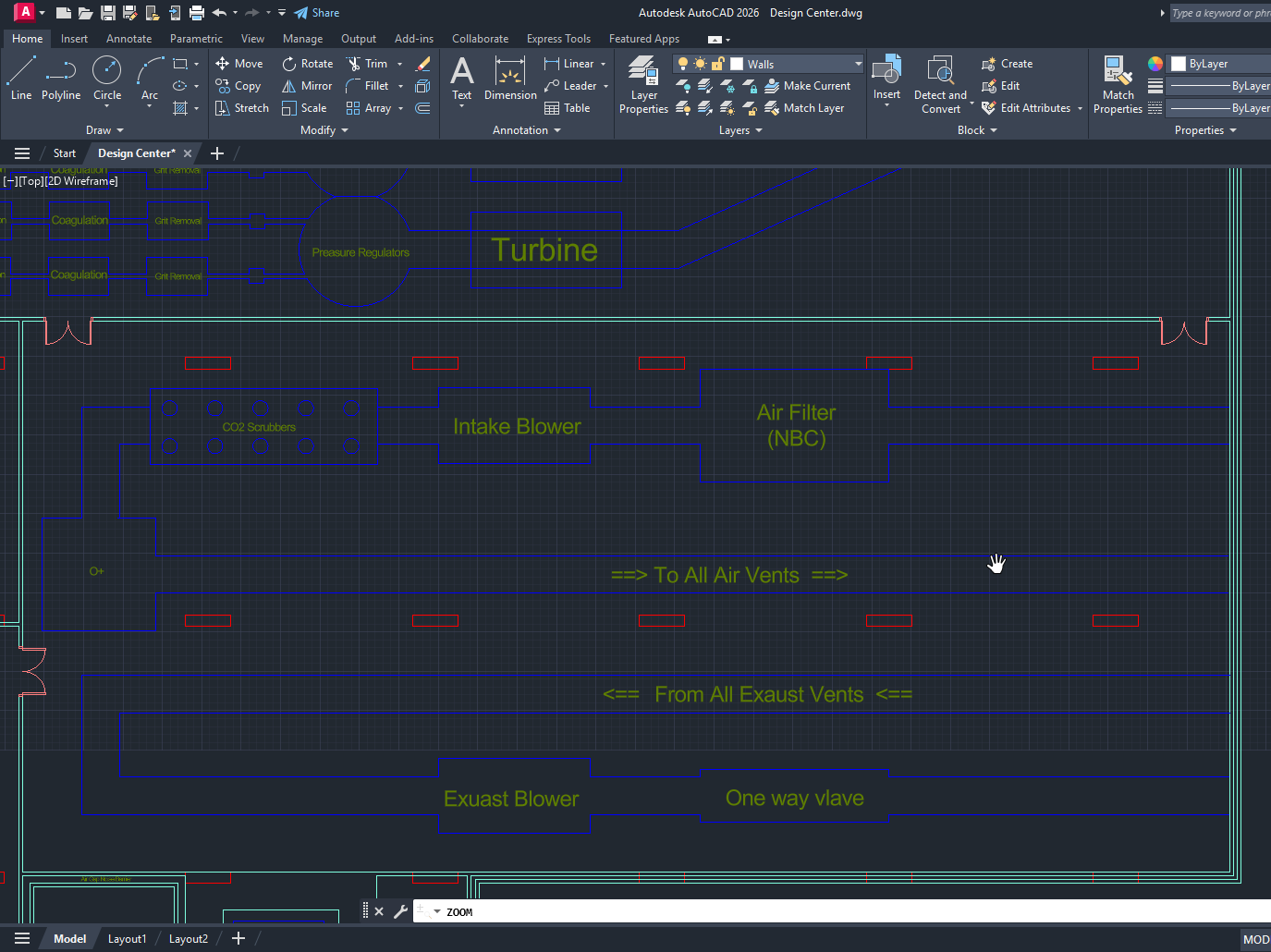
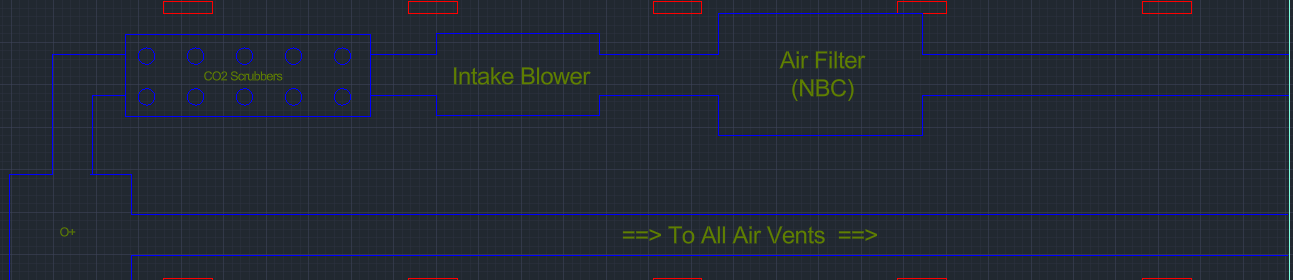

Regulating the air will also need to be done. Two reinforced structure will need to be sticking out from the ground, one for air intake and another for the exhaust. These will need to be heavily reinforced as debris floating in the flood water could crash in to them leading to the suffocation of the people inside. The intake will will have a massive industrial blower to suck the air in. This air will also need to be somewhat filtered for the safety of the people. An NBC filter (Nuclear, Biological, and Chemical) will be placed near the entrance of the intake because it is a specialized air purification system designed to remove hazardous radioactive particles, biological pathogens (like bacteria and viruses), and toxic chemical gases from the air. Furthermore it will pass through C02 scrubber then finally go though vents to various part of the building providing everyone with fresh oxygen rich air.
The exhaust on the other hand will collect used air from various part of the building and blow them out through another blower similar in size to the intakes one. Both of these will contain one way valves to prevent water from flowing in and disrupting the functionality of the structure. (For a clearer image please look at the PDF below)
Downloads
Energy System
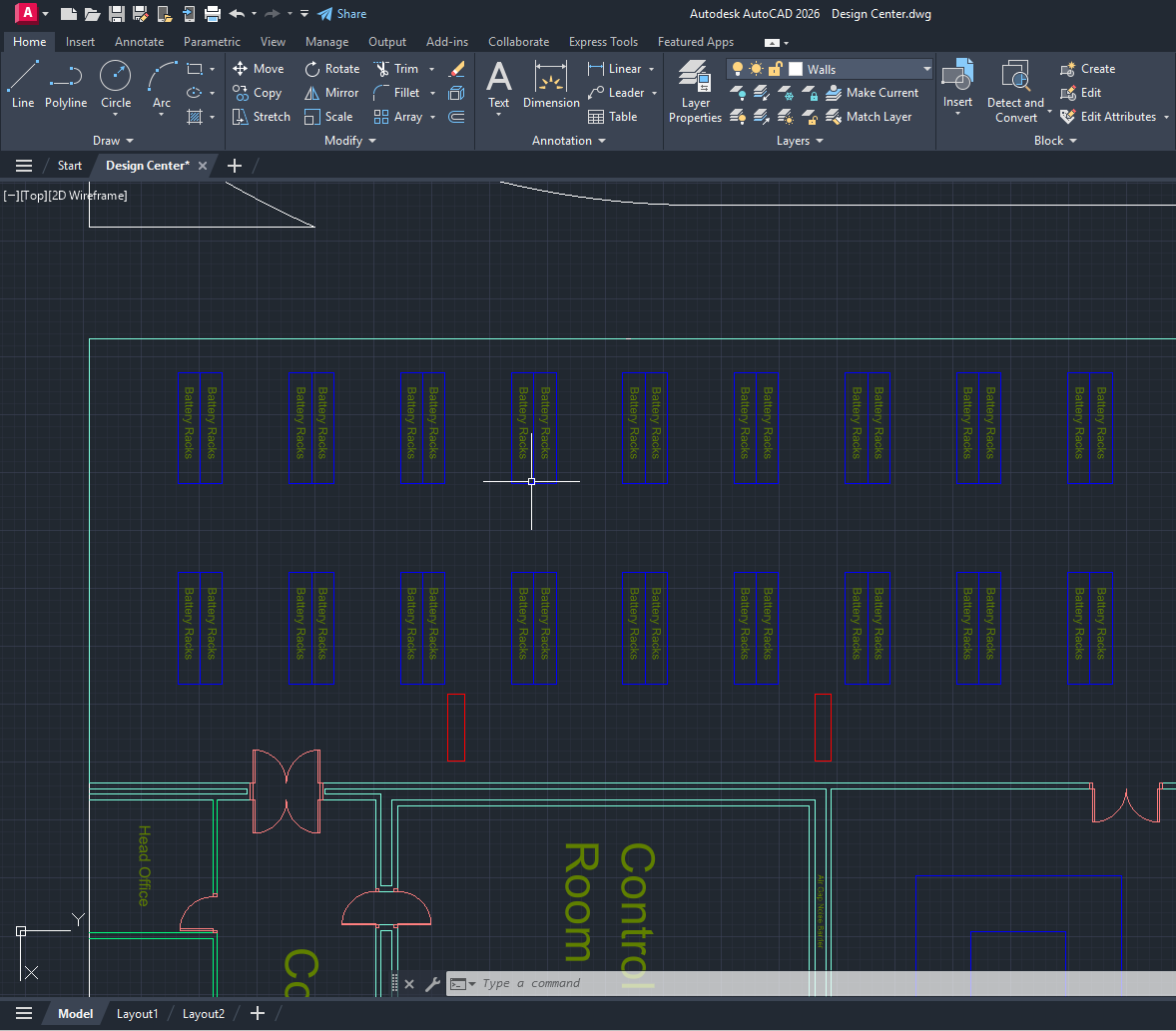
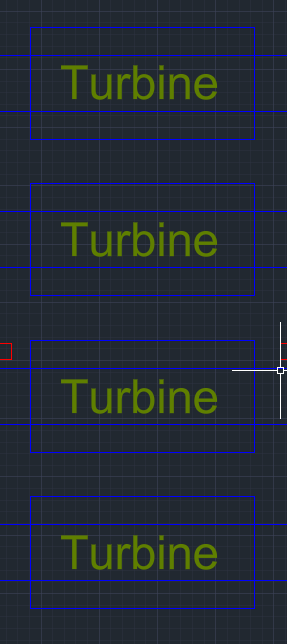
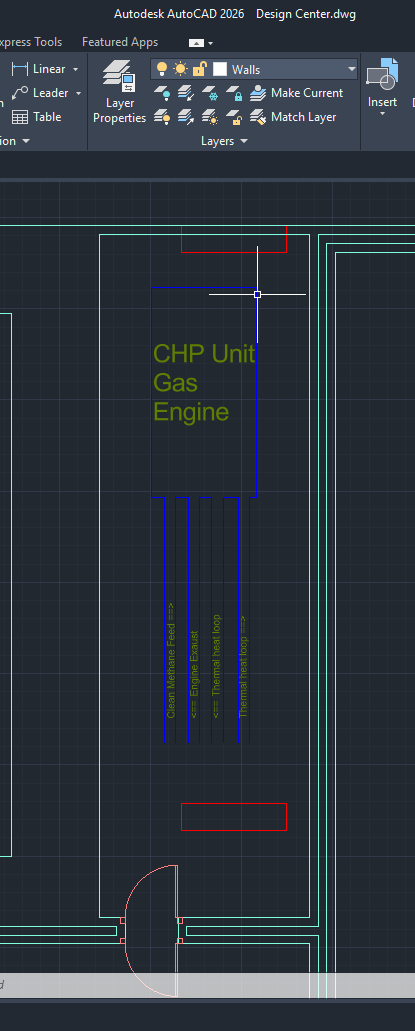
When the city's power gets cut off, this facility will have a whole section full of batteries. But the batteries can only provide the building with enough power to run for a couple of days before running out so they can't be the main or only source of energy for the building. So I'll need another source also. Before the water collected from outside goes into the water system, it will pass through turbines that will generate the energy needed to charge the batteries as they are being used up. The turbines will be the main source of energy for the building when the power goes out and the batteries will become a buffer between them and will also be a back up source of energy. This will ensure that the bunker receives energy 24/7 until the city's own power gets back on. (For a clearer image please look at the PDF below)
Downloads
Waste/Gas Management System
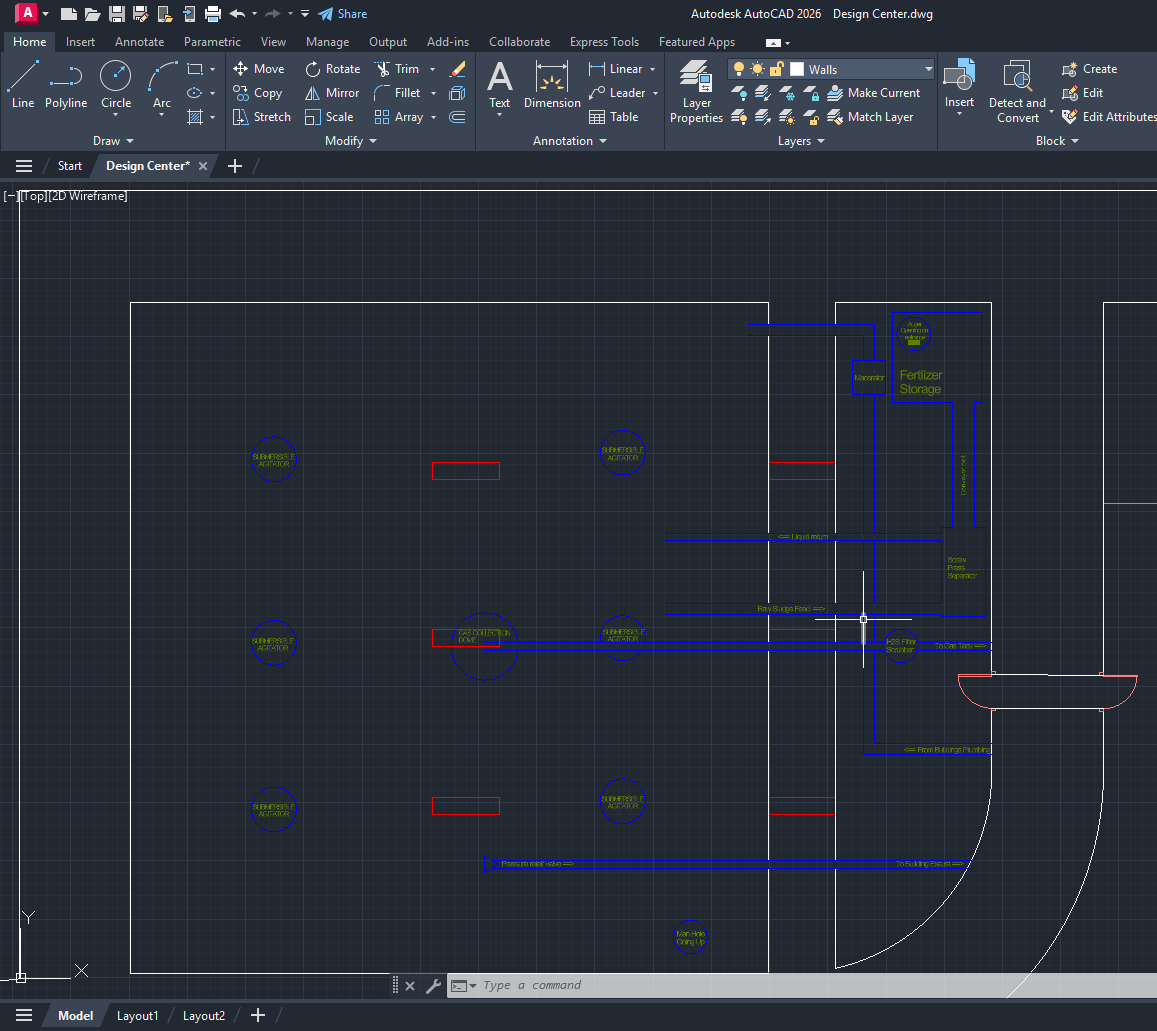
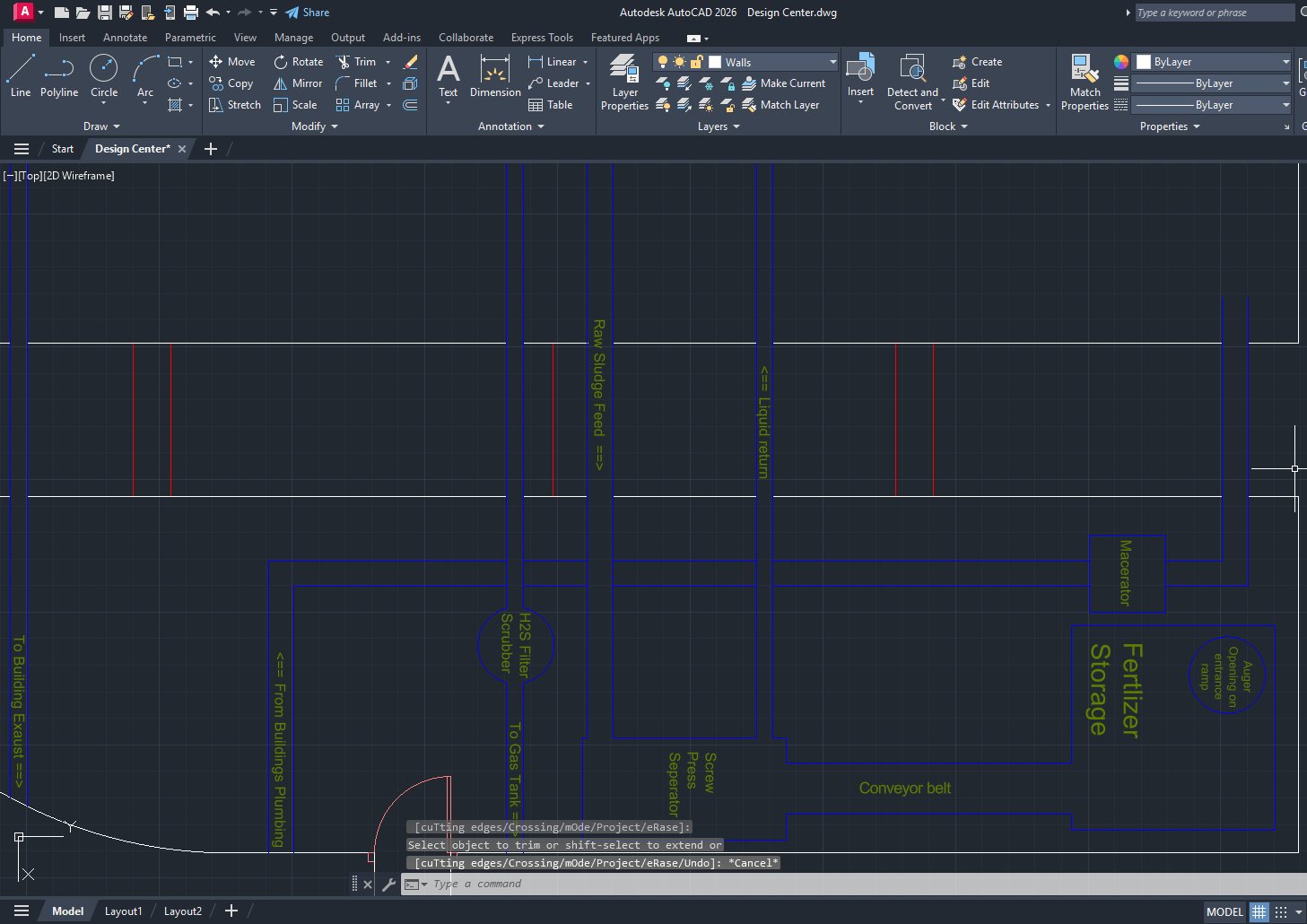
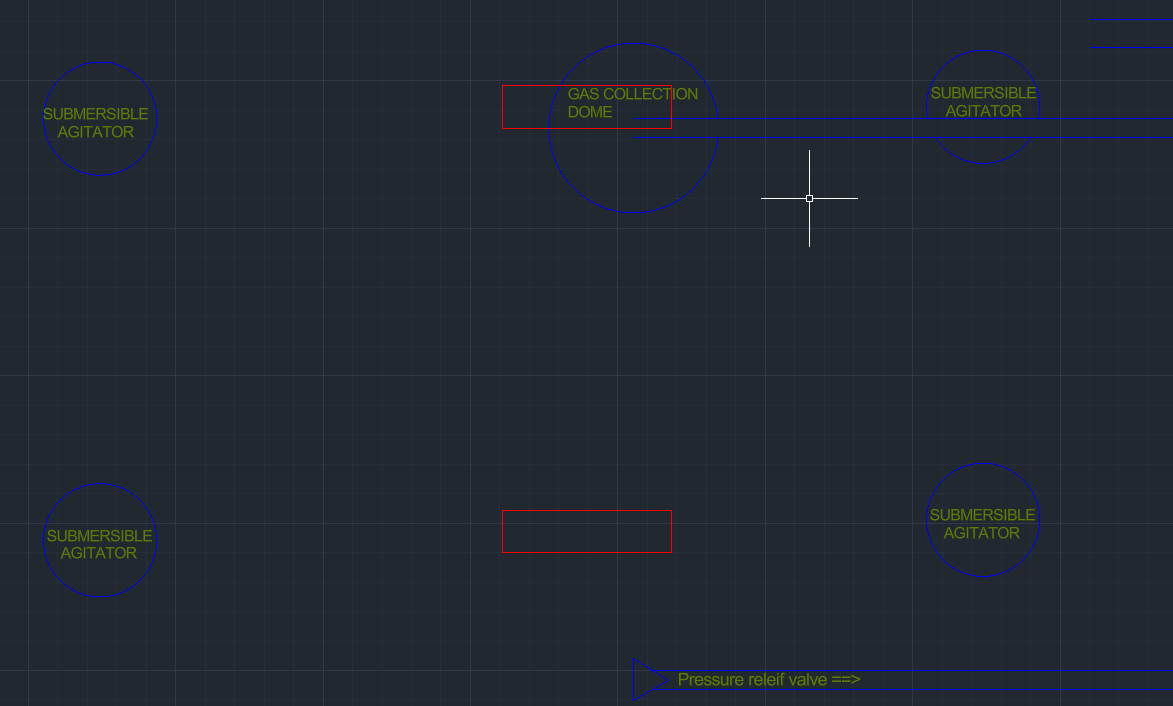
Another thing that happens when floods hit is that the city's sewage system overflows with water and gets messed up. The only way to make this building self sustainable for these tasks would be to store the waste and get rid of it when things settle back down. But why just have it sit there and do nothing but take up valuable space. Therefore I will turn it into a biodigester. This biodigester will collect all the non-toxic waste from the building and keep it in one place while also continuously mixing it to prevent buildup. Bacteria in it will eat away at the waste products creating gas. That gas after being a bit filtered through H2S filter scrubbers can be used by the stoves in the kitchen. The excess can either be stored for later or can also be used in the CHP gas engine unit to further generate electricity easing the load on the turbines.
The left over waste can be compressed into fertilizer and stored to later sell to agricultural companies making another source of income for the building. A man hole will be given in the digester and fertilizer storage for access via vacuum trucks to be dealt with later. (For a clearer image please look at the PDF below. Digester located in bottom floor while gas tank and engine are on the top floor)
Control Center
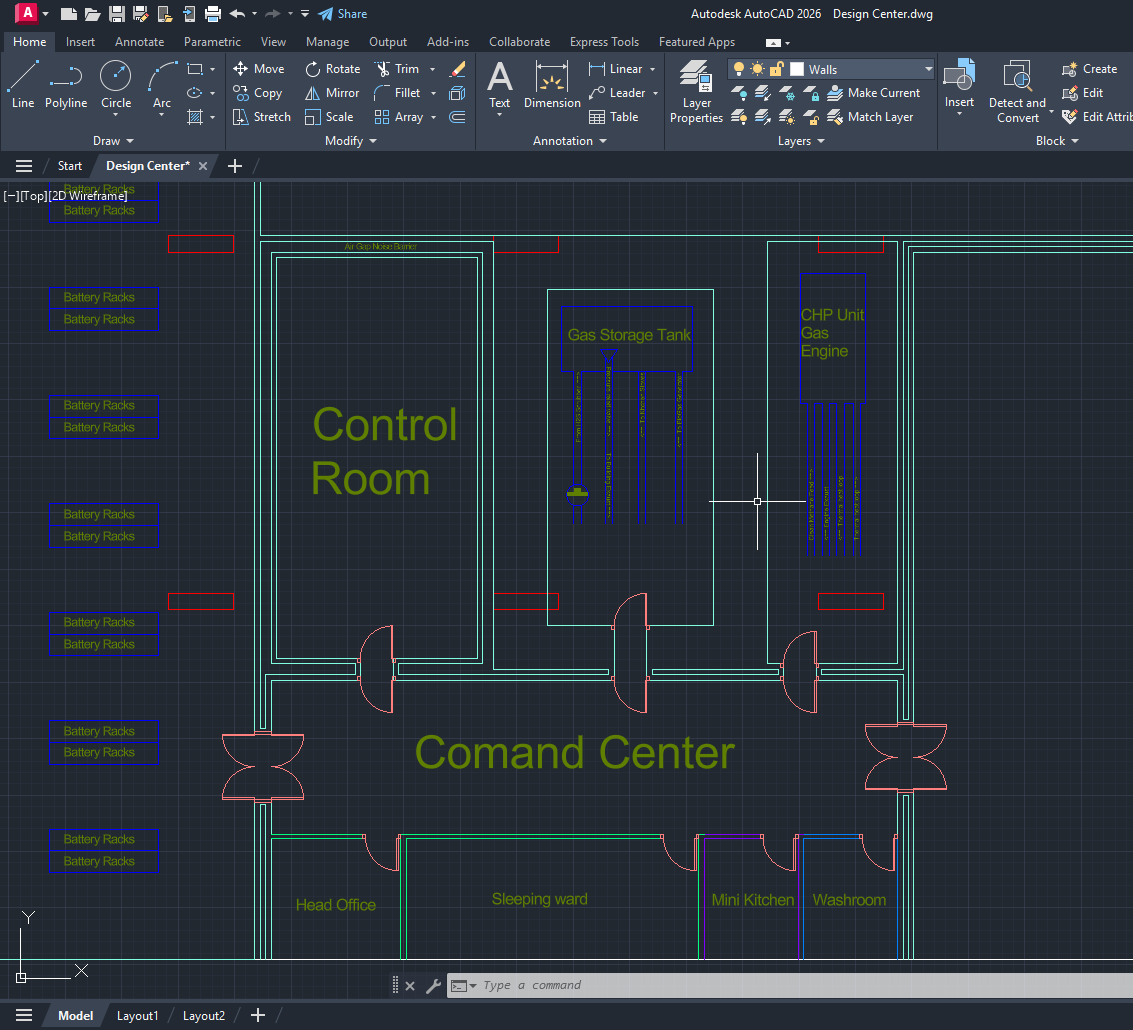
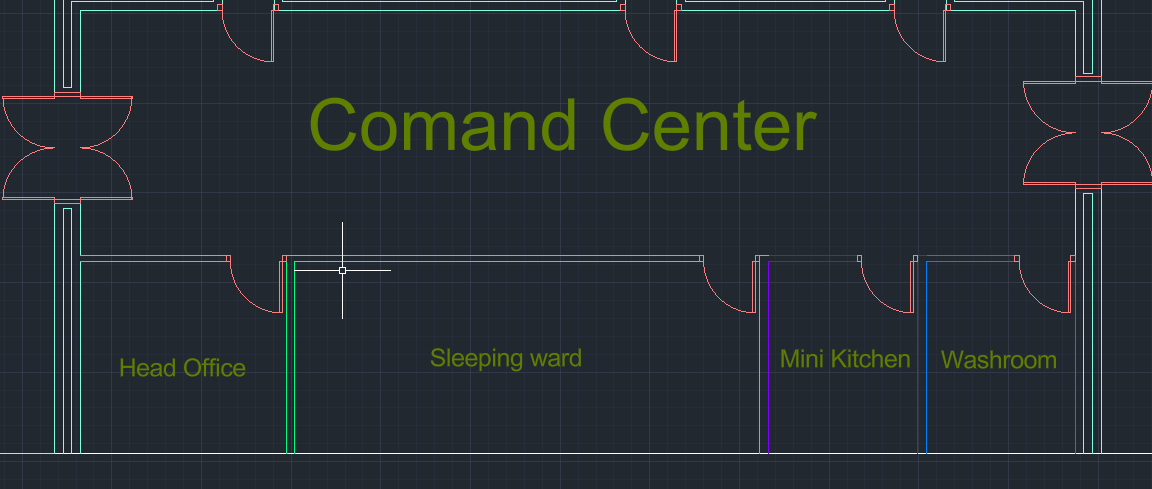
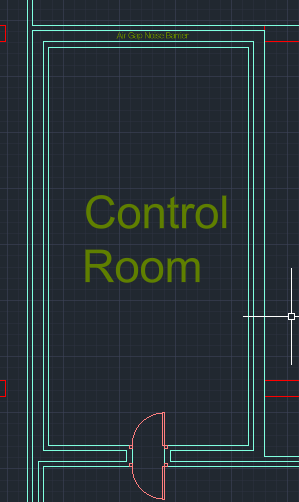
The operation of these machinery will need a professional and dedicated staff. These machines need to be running 24/7 and need to be in constant observation as breaking down or not working for too long could result in major problems for the people. That is why the team will have a dedicated sleeping place, kitchen and washroom right where they work, so that the jobs can be completed in shifts. Some work while the others sleep and when they sleep the others work and so on. These places being so near the machinery will need to have noise canceling double walls to prevent the workers ear drums to stop working. The whole machinery section will be double walled from the living area of the people to prevent noise from disturbing them as well. The air gap between the walls will ensure that sound won't be able to travel across them. (For a clearer image please look at the PDF below)
Downloads
The Entrance

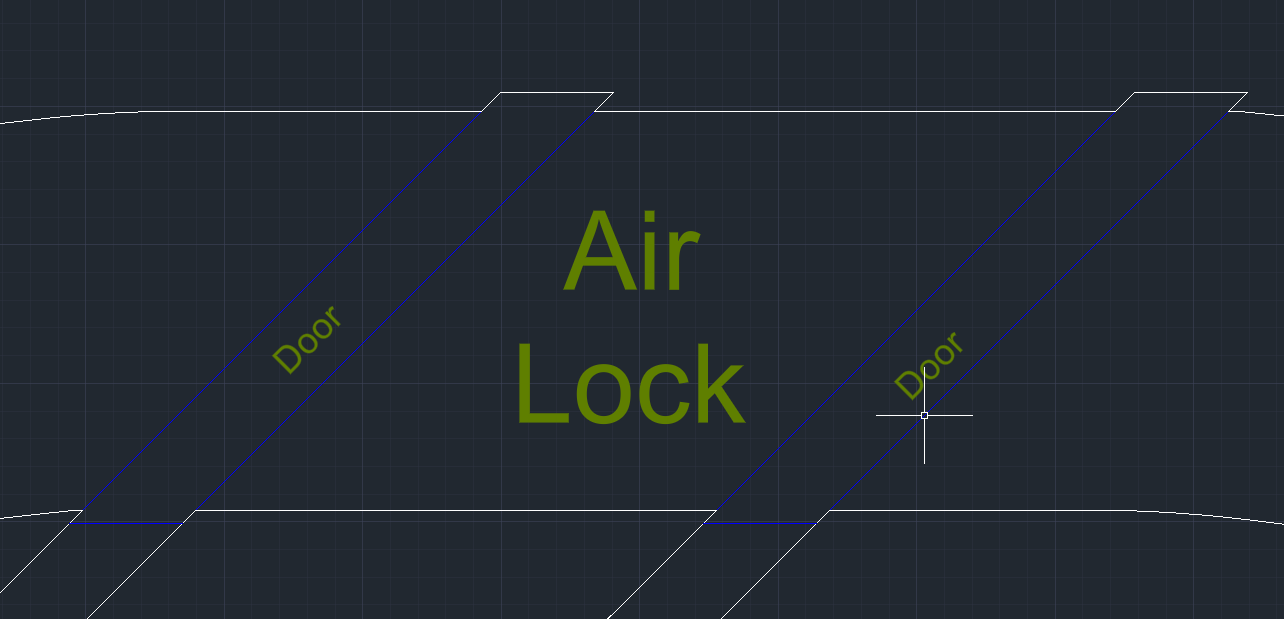
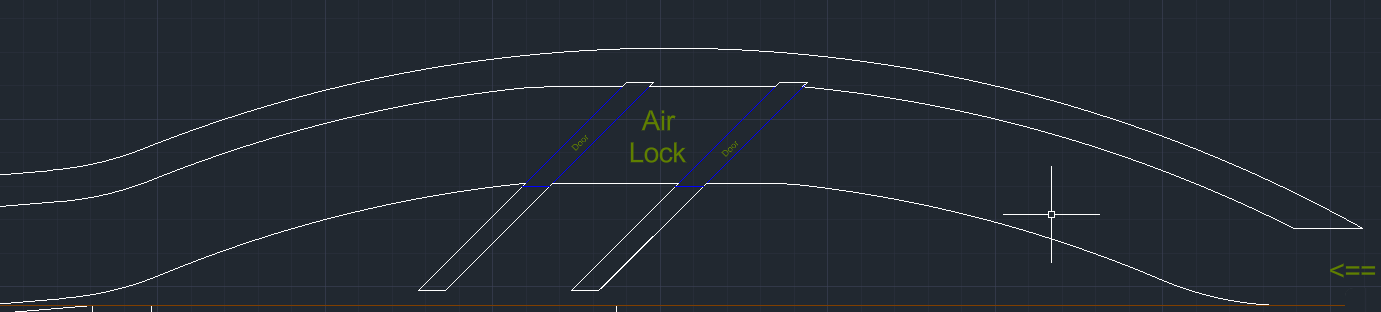
As I said in the beginning, I want the entrance to be able to let people in even after the door close. So to solve this I want my entrance to be in a hump shape with the addition of an air lock double gate pressure system. The hump shape will ensure that the flood water has a hard time getting in and even if it dose the gate located inside will block it. The special part is that there will be two gates and air pressure inside the entrance. Water from outside will not be able to enter past the entrance point since it's filled with air that has nowhere else to go if someone enters this area there safe and they can safely now go to the gate. One gate opens, they step in to the air lock then it closes behind them. Then the second gate opens making a way for them to get inside, after they're gone it closes too. The only downfall of this is that any one entering after the water levels have risen quite high, the pressure in the entrances will also have been increased. This can be a threat to the elderly and little kids as it will negatively affect their breathing, but first of all it only for like 1 to 3 min (the point of entering the building to the 1st gate) and secondly it's better than dying. (For a clearer image please look at the PDF below)
Downloads
The Ramp
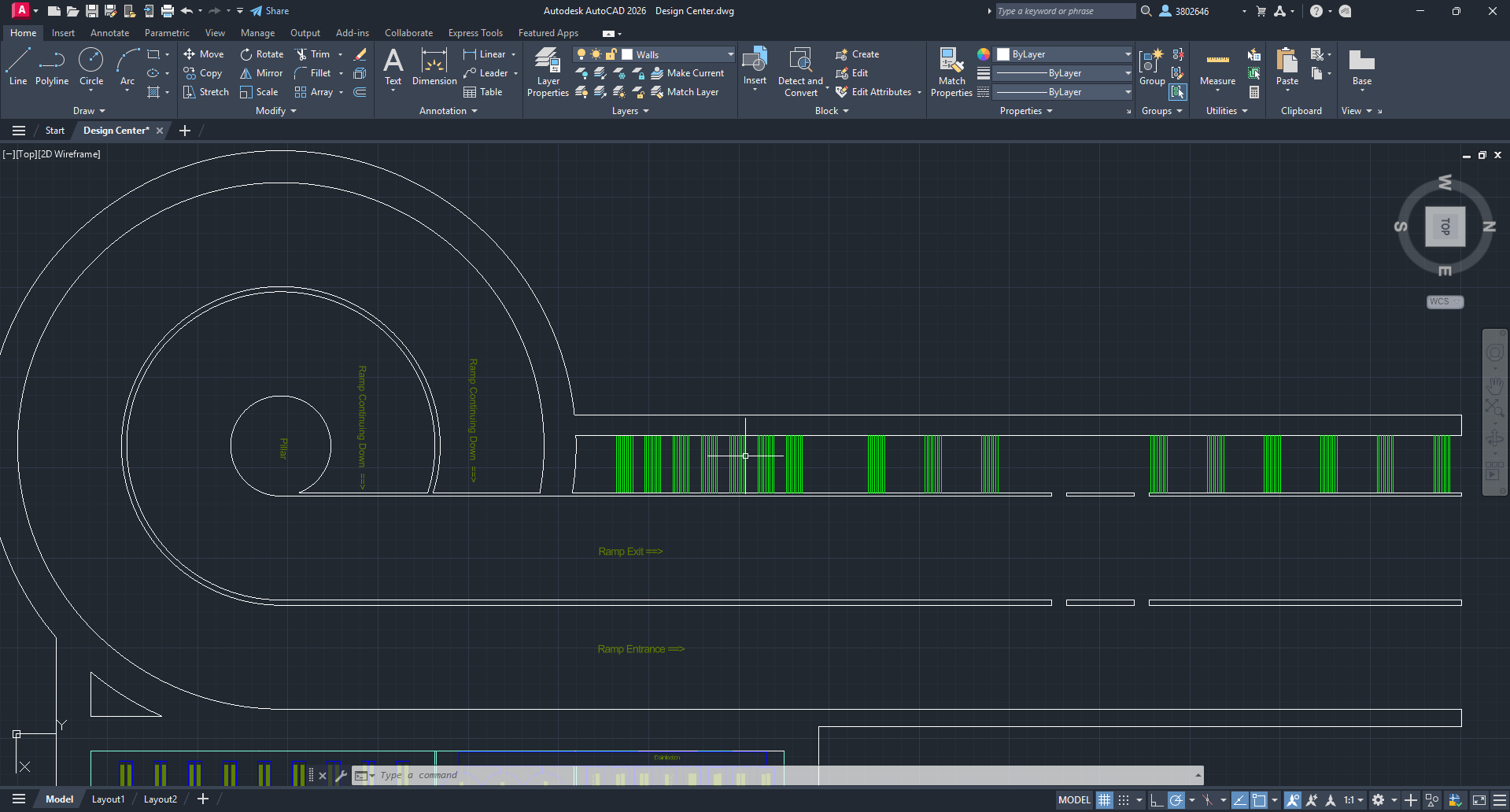
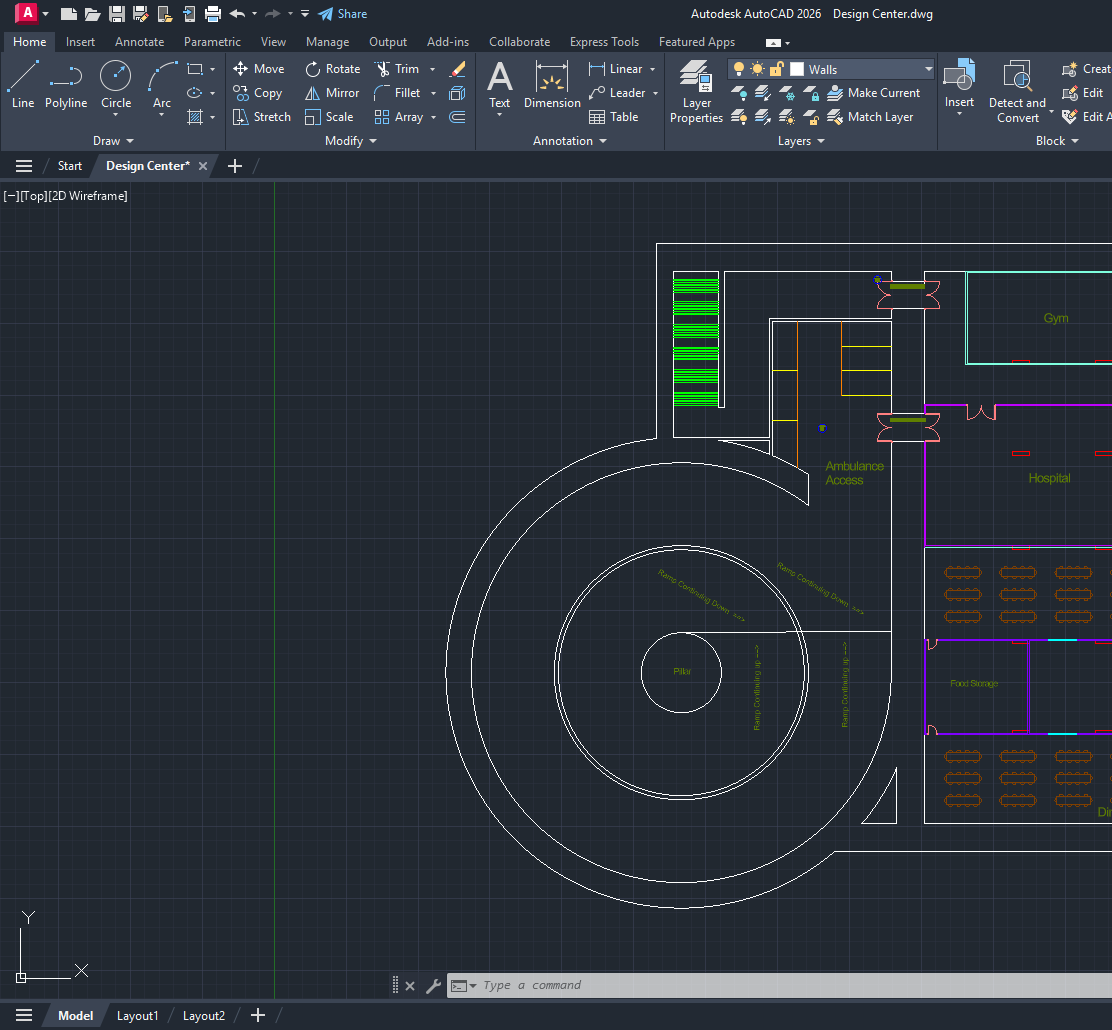
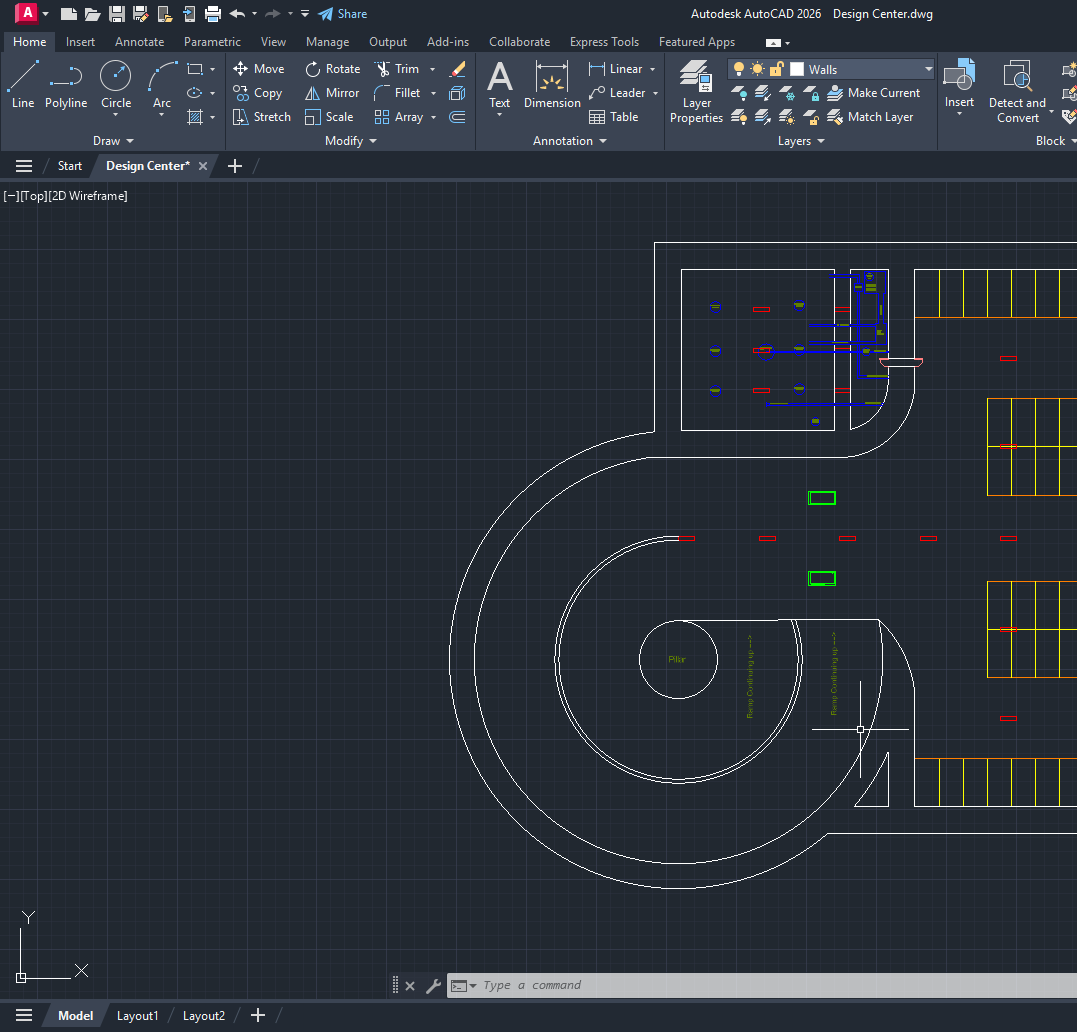
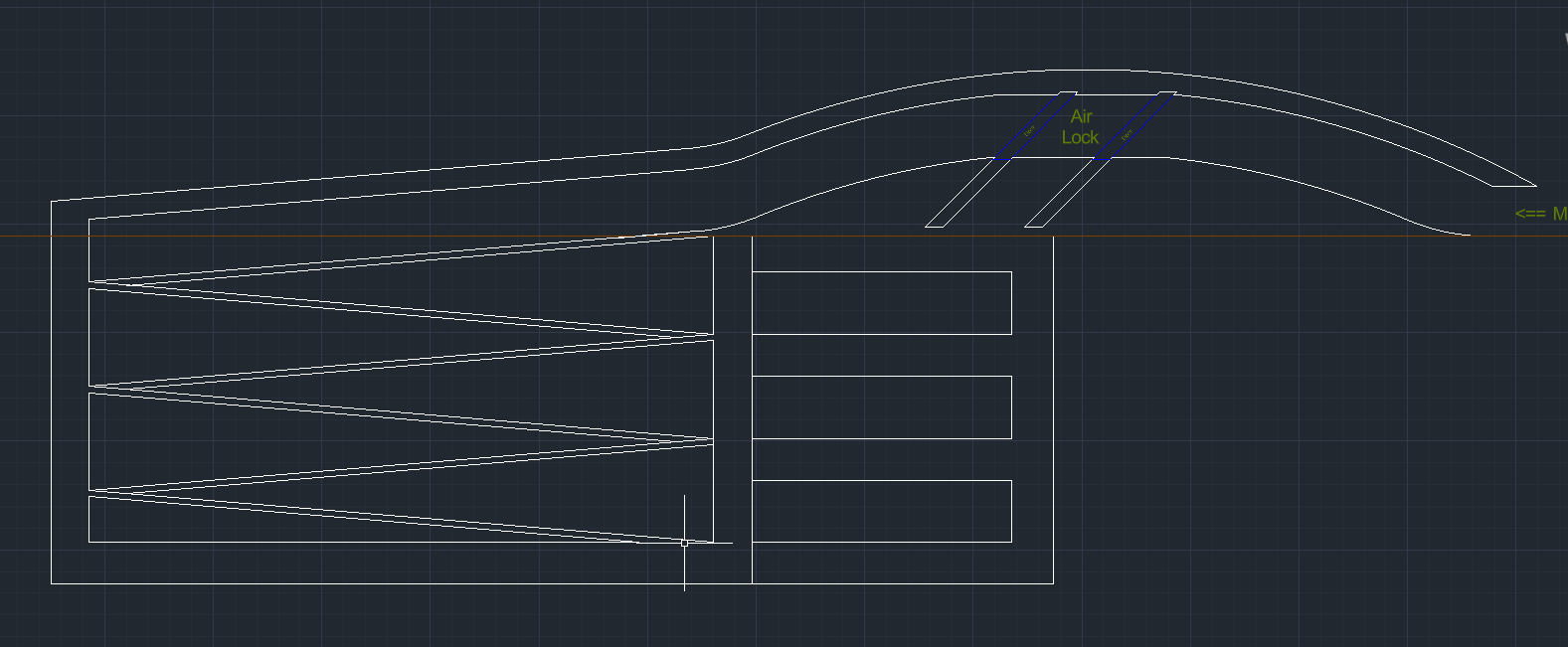
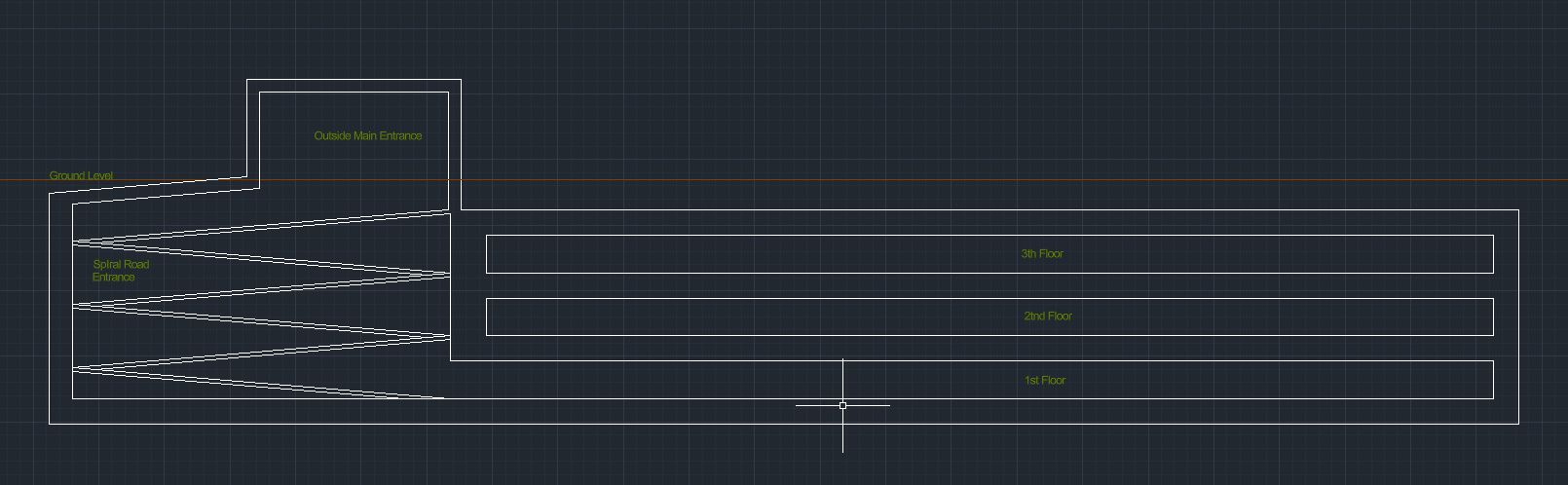
This will also be the case for people entering in cars. but unlike the people walking who can just take a few stairs down to the main floor, the cars will need to take a long spiral road down to the bottom floor where the parking is. There will be a side entrance to the hospital for ambulances only so that they can bypass the parking lot in order to get the patient to the hospital as fast as possible. The calculated diameter of the spiral will result in a reasonable grade for vehicles coming in and coming out when everything is finally over. (For a clearer image please look at the PDF below)
Downloads
Cost and Affordability


I know this structure will be nowhere near cheap, but I feel like it will be worth it for everyone. Governments of countries that regularly experience floods, tsunamis and other water related natural disasters already spend billions of dollars to prevent damage to their country and people. And the lively loss that they face annually is one of the many things they are striving to reduce. And unlike something that can be thrown on to the expense list, this building can be seen as an investment too. The building can easily and simultaneously be a fully functional hospital for the public while also being a restaurant and a hotel all at once. This will create a decent amount of revenue benefiting the government economically as well as in the time of emergency becoming a win win situation in the long shot.
Downloads
Location
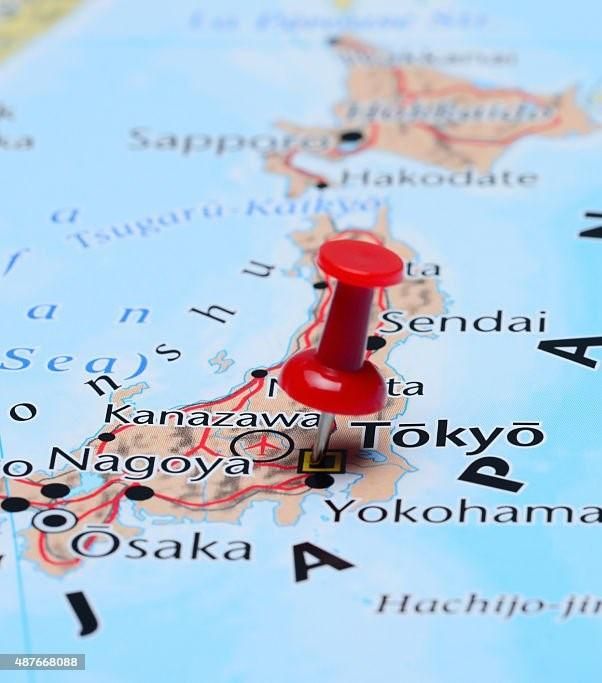
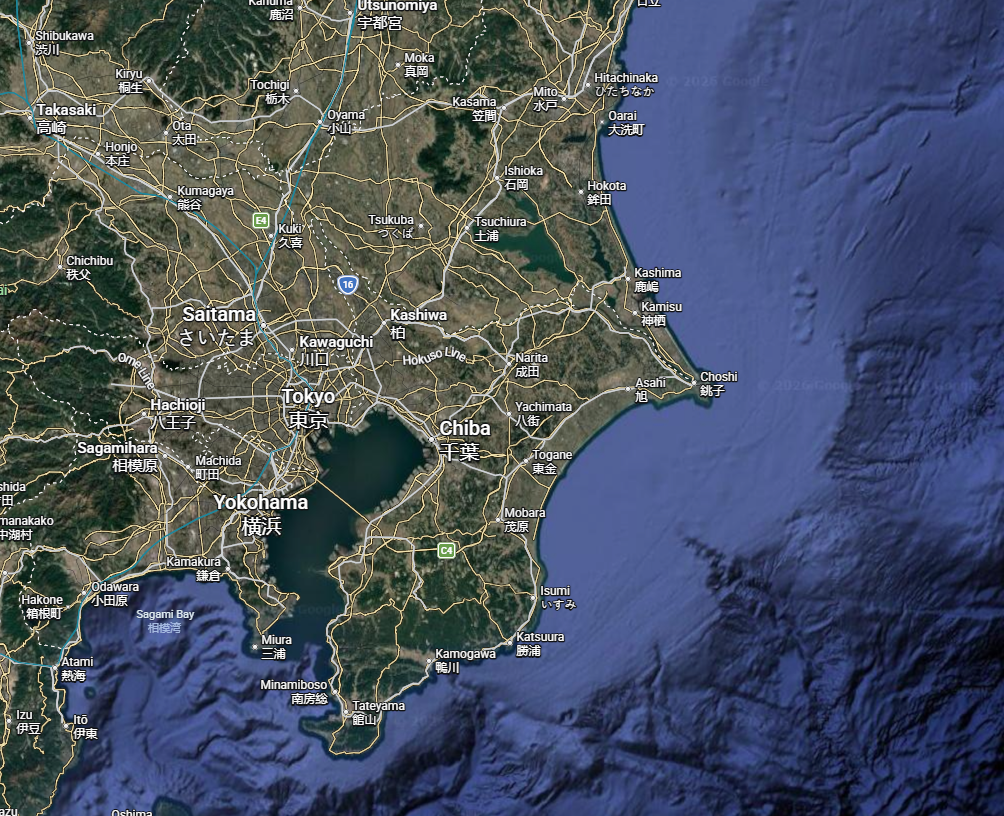
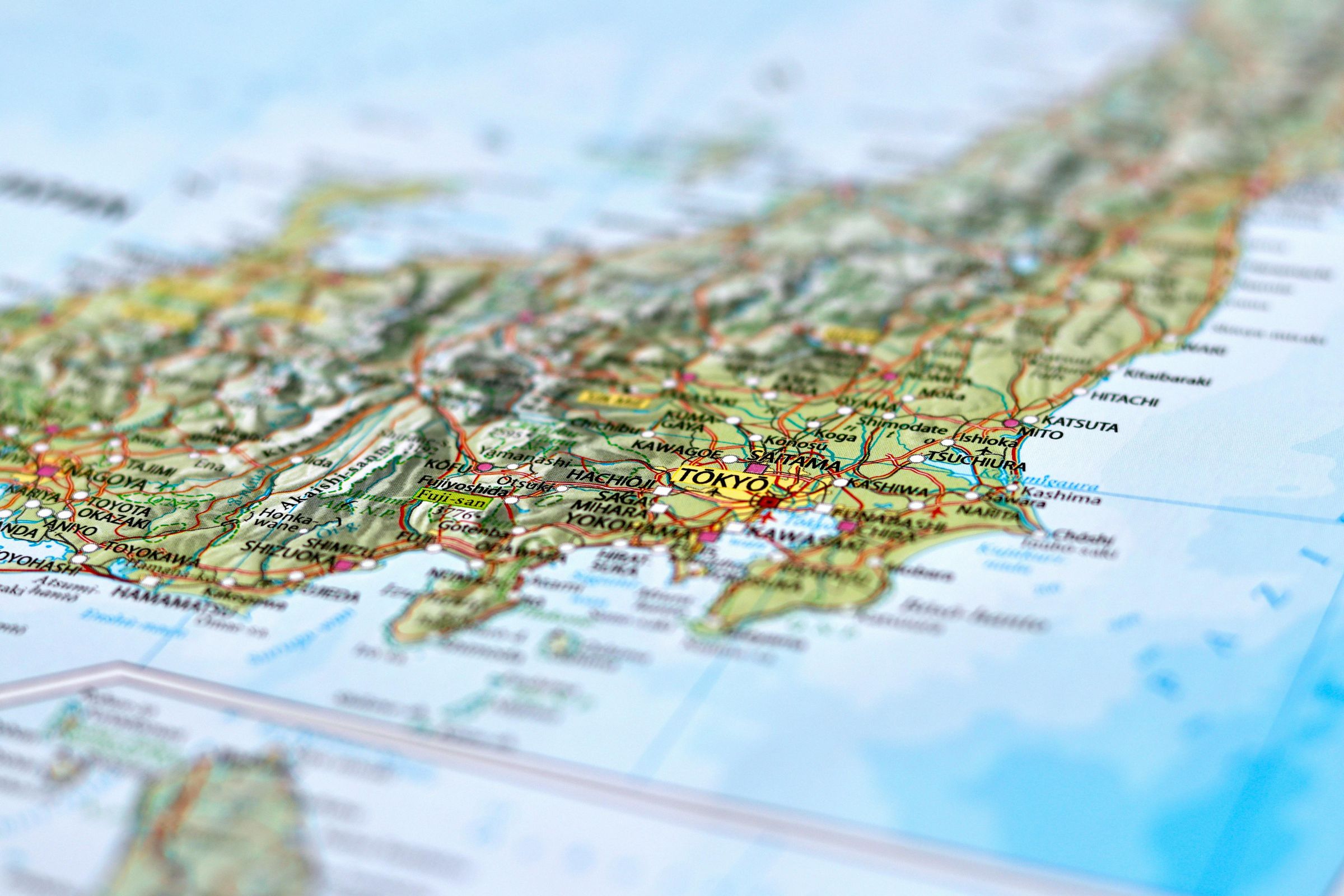
The best places for it to be located are places that have a high flood rate and/or a place where tsunamis and water related disasters are common. An excellent example of this is the coast of Japan that faces major floods multiple times a year. For everyone to make it to the building in time it needs to be placed so that it is about the same distance from every one. It will also be needed to be in a place with a high density of people so that the maximum number of people can be saved. It should also be placed at a height above sea level so water hits it last giving more people more time to safely come inside. A place where the soil won't sag the infrastructure will also be needed. To save the lives of as many people as possible I will need to precisely place it near the start of the flood since that's where most deaths occur. Considering all the factors above the final verdict on its location would be to place it near coastal areas where floods are the most common. For example the coast of the country of Japan and all the other countries that experience frequent flooding.
Downloads
Visulizing It
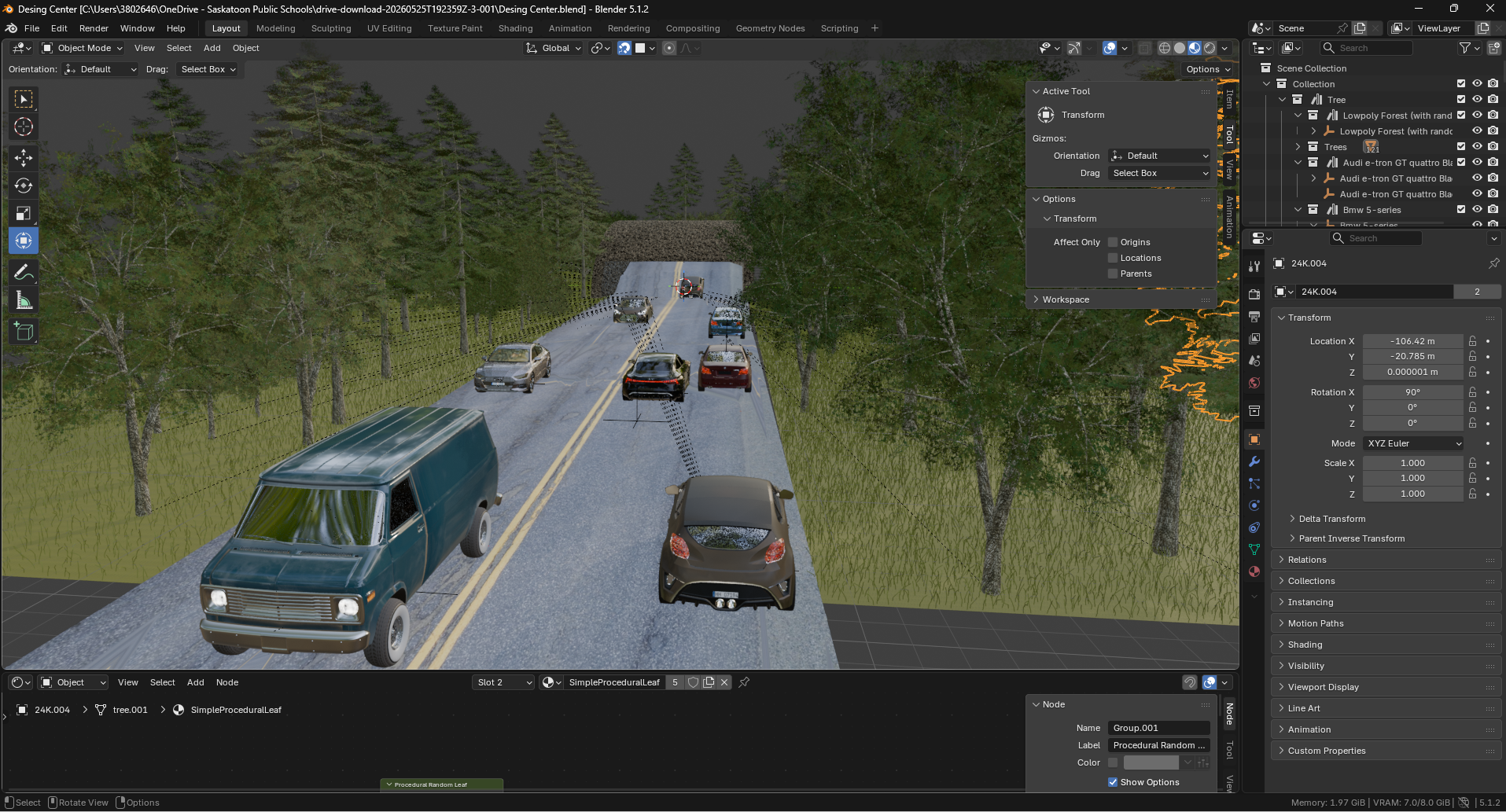

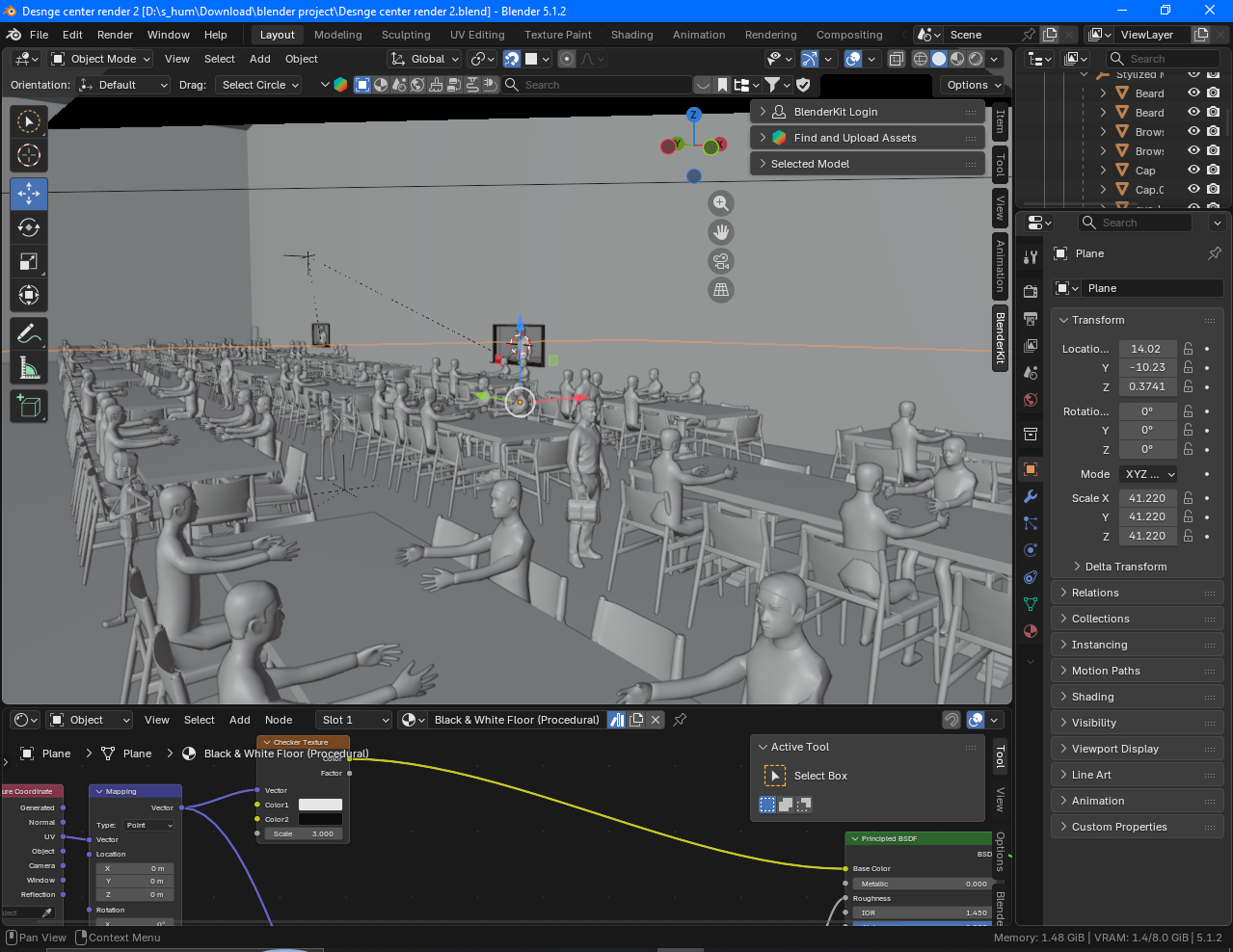
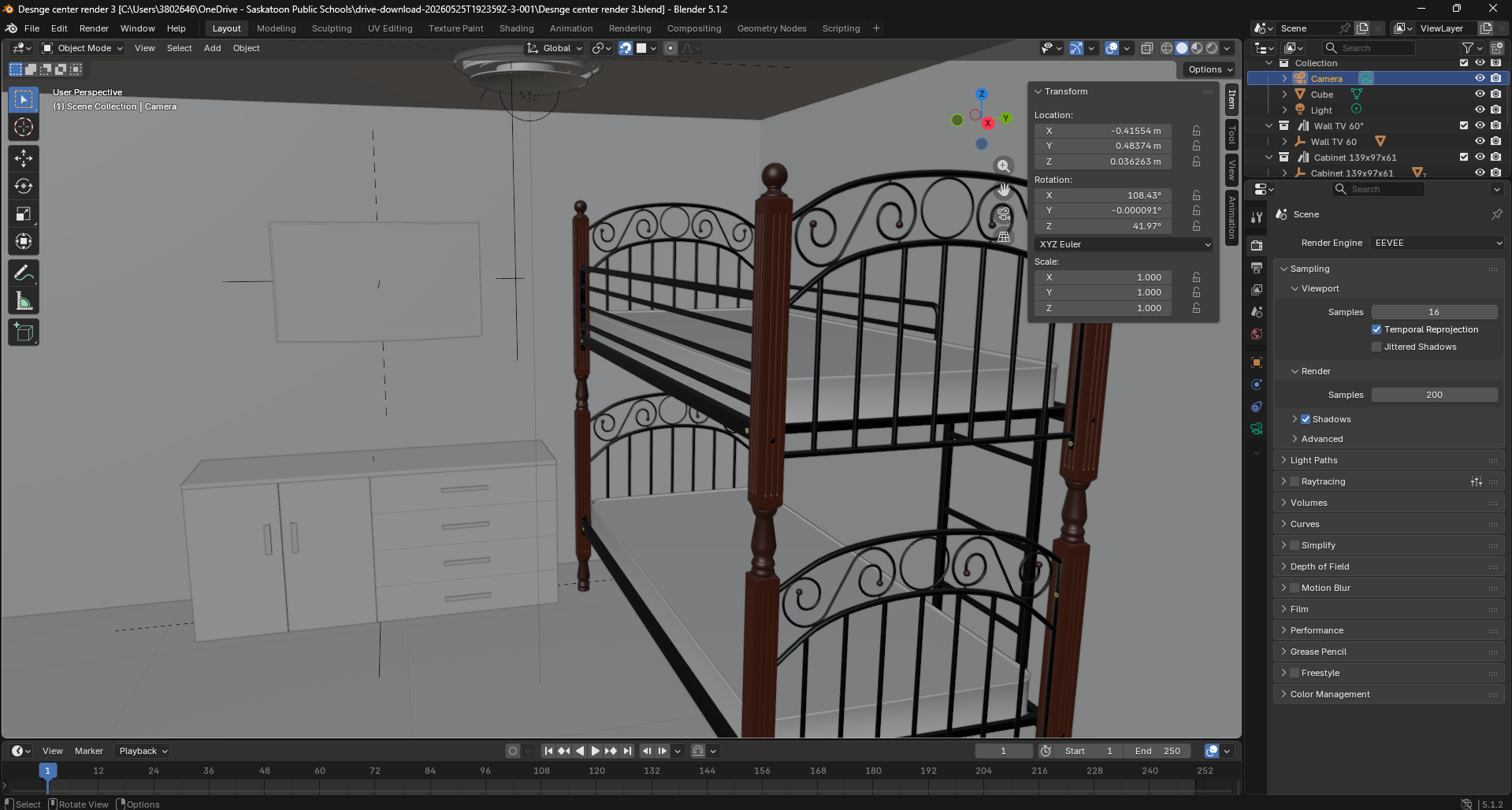
The structure is mostly located underground requiring minimal space above the ground. Therefore the space above it could also be utilized for anything light such as a football field, a soccer field, etc. The low profile entrance will make it harder for debris to destroy it and the reinforced materials that will be used to make it will ensure collapsation never occurs. I have used blender to turn my plan into a 3D model for visualization since that is what I'm most familiar with. I have made it according to the dimensions of my CAD file and made it to the best of my abilities. The 3D assets I used are taken from the blender kit addons free assets as well as the textures and HDRs in the scenes.
Downloads
Render 1
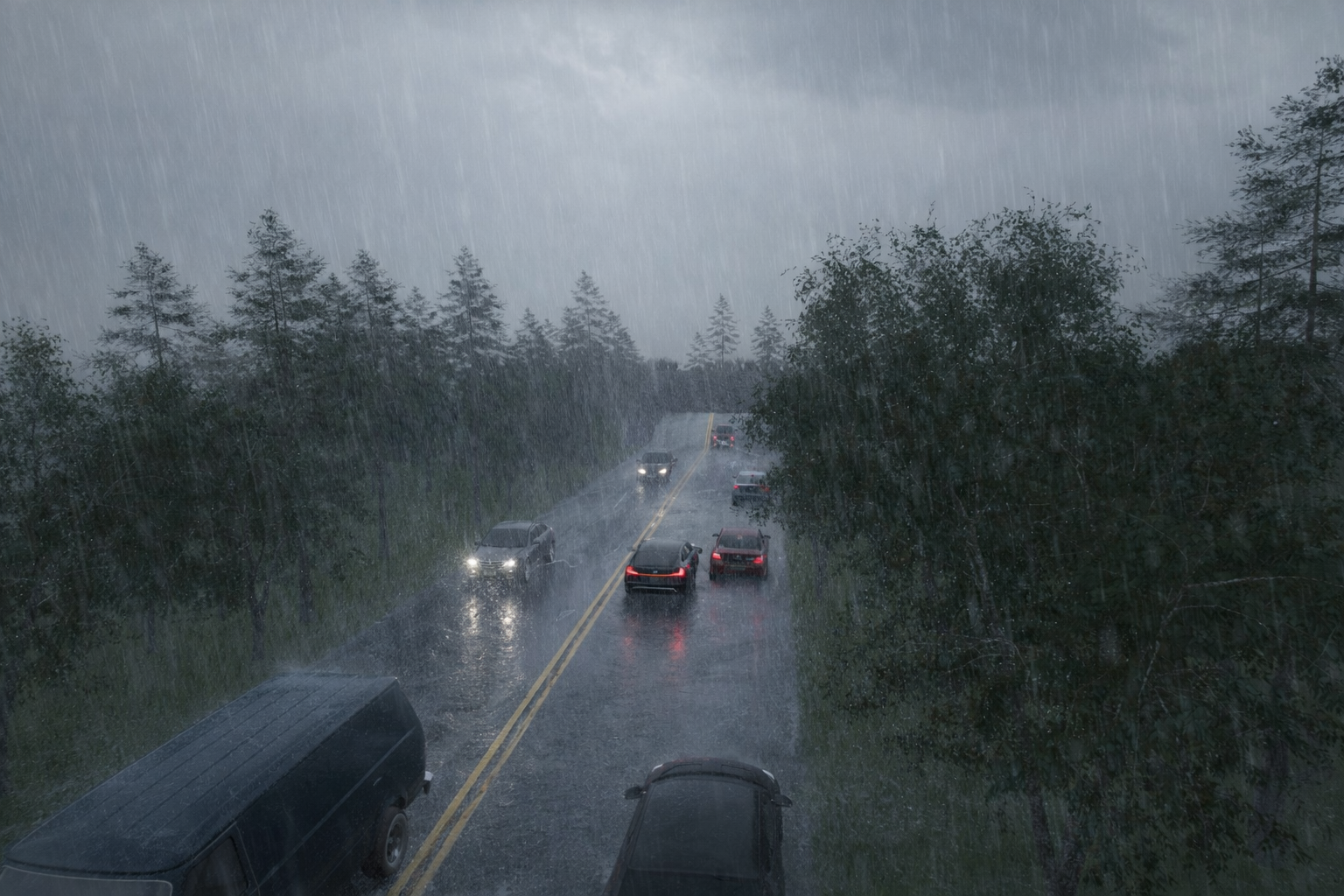
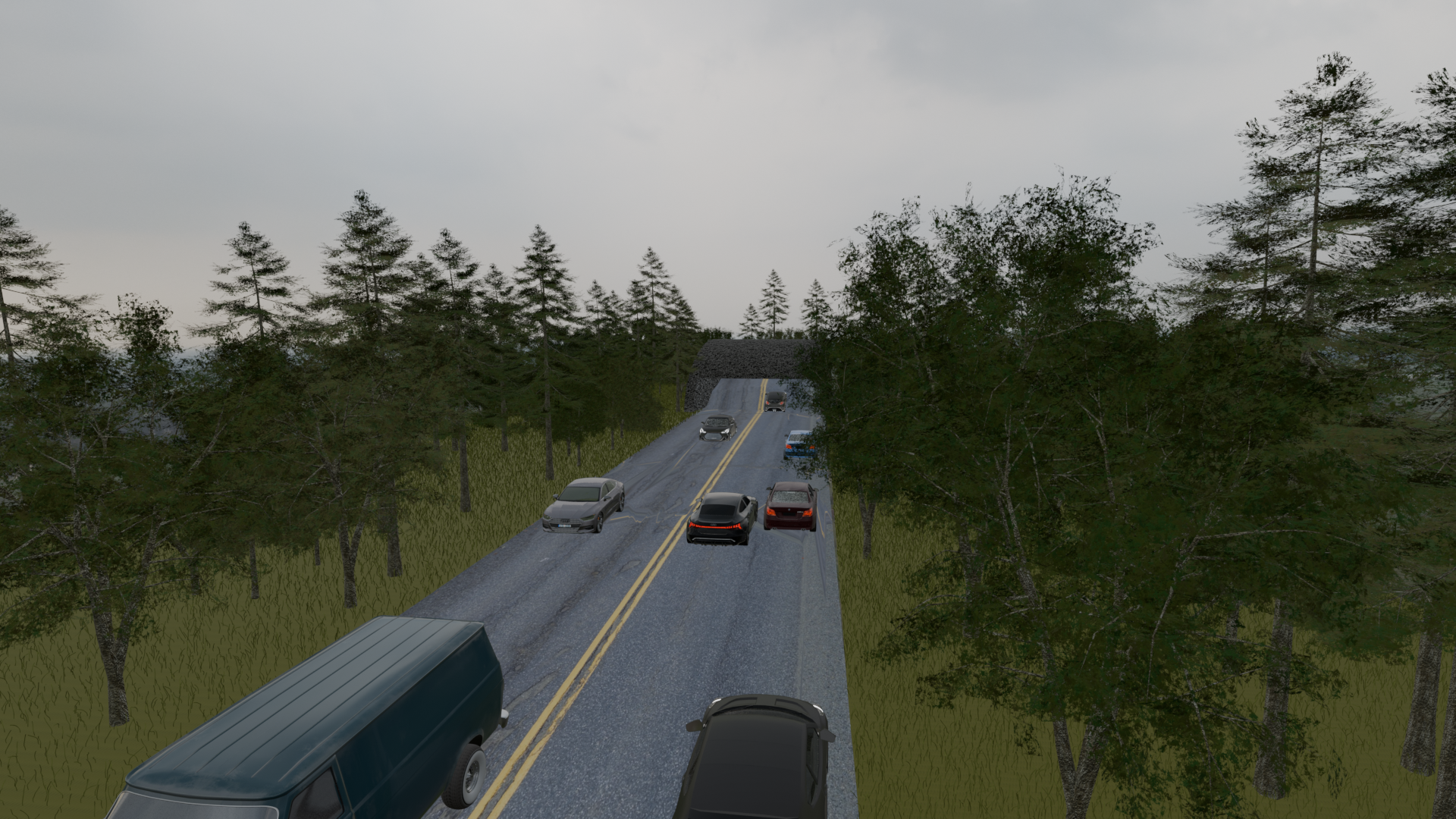
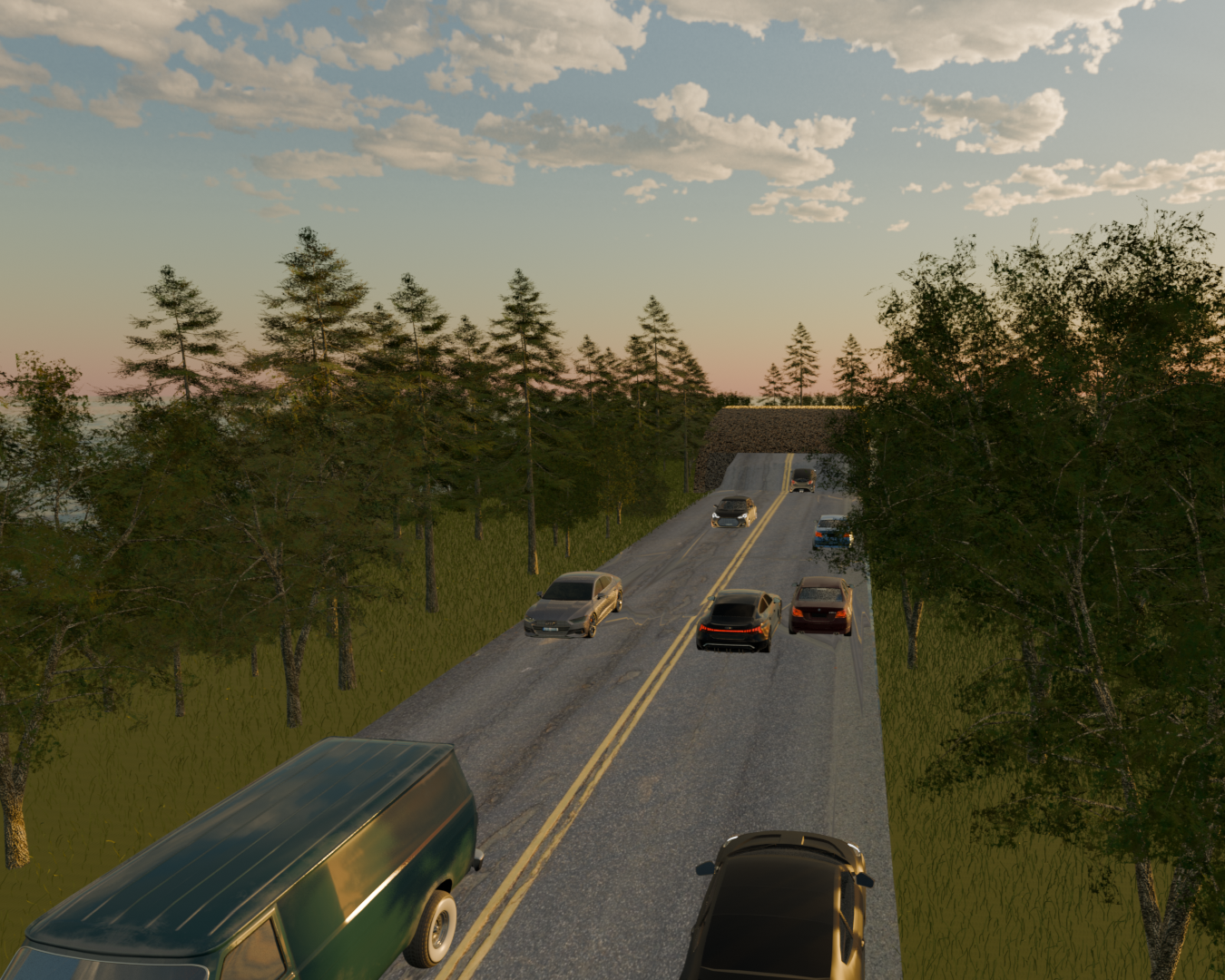
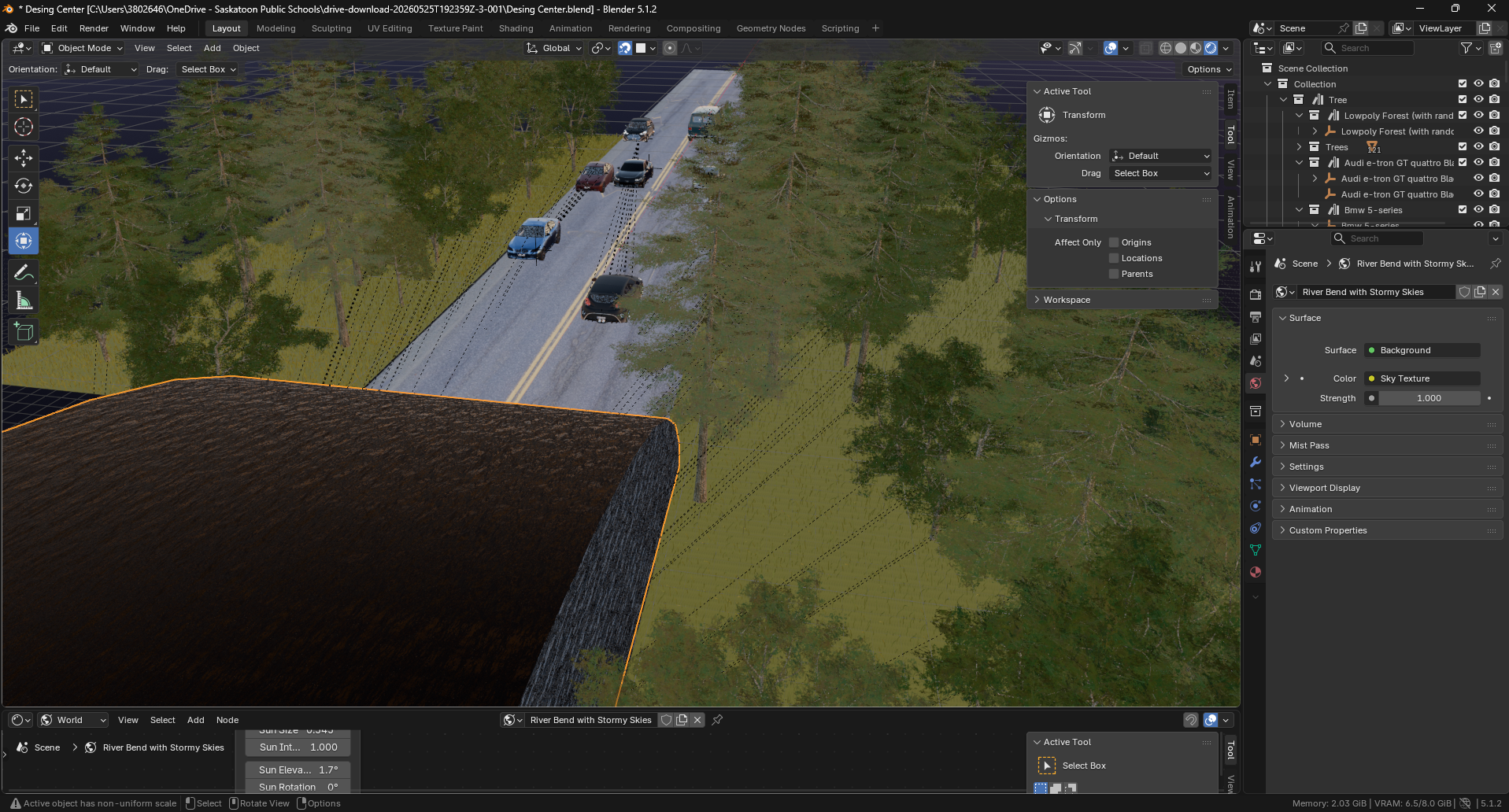
This is what the structure outside will look like. To make this render I first made the Hump part of the building. Then I added a flat plane and added grass texture to it. Then I used Blenders particle hair feature to mimic grass. After that I used a road asset from blender kit and modified it to suit my needs. Then I got a bunch of various different types of trees and scattered them around the grass plane. This doesn't mean that this building can not be in the city. In fact it would have been better in the city around buildings filled with people, but trying to render that would have crashed my computer which is why I took the less performance heavy way. I also added some sky boxes before starting the render. I tried it with 2 different sky boxes and then I finally added a post effect of rain through Copilot for the finishing touches.
Downloads
Rendering
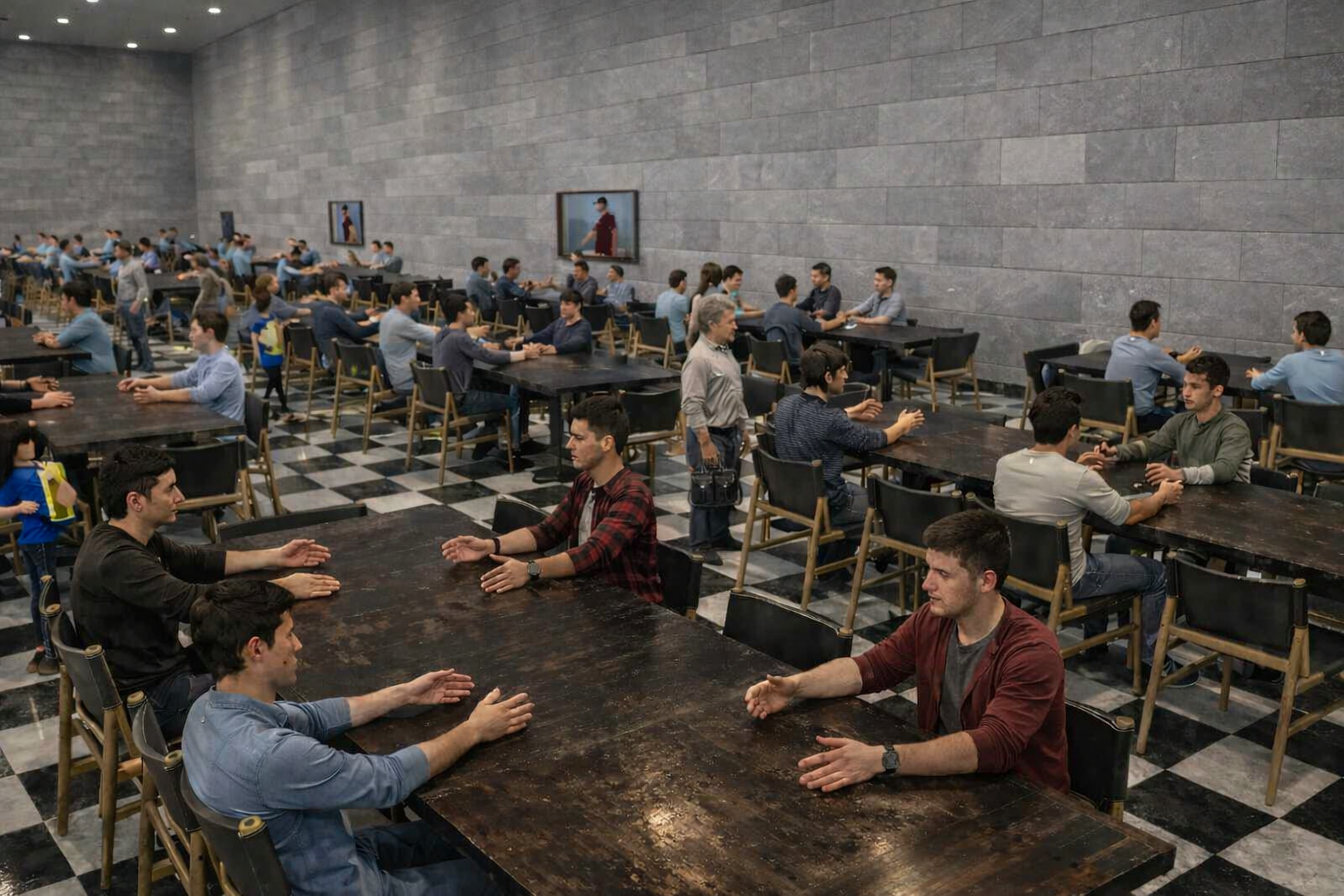

This second render was done pretty much the same as the first one. I took a flat plane and added a floor texture to it, then I got a lot of tables and chairs and put them in an array according to my floor plan and blueprint. I then added the door and serving windows to the walls and then I finally crowded it with a number of 3D human models. I added some lighting after that and sent it to render. After the result I once again gave it to copilot to add a naturality effect on it.
Downloads
Rendering
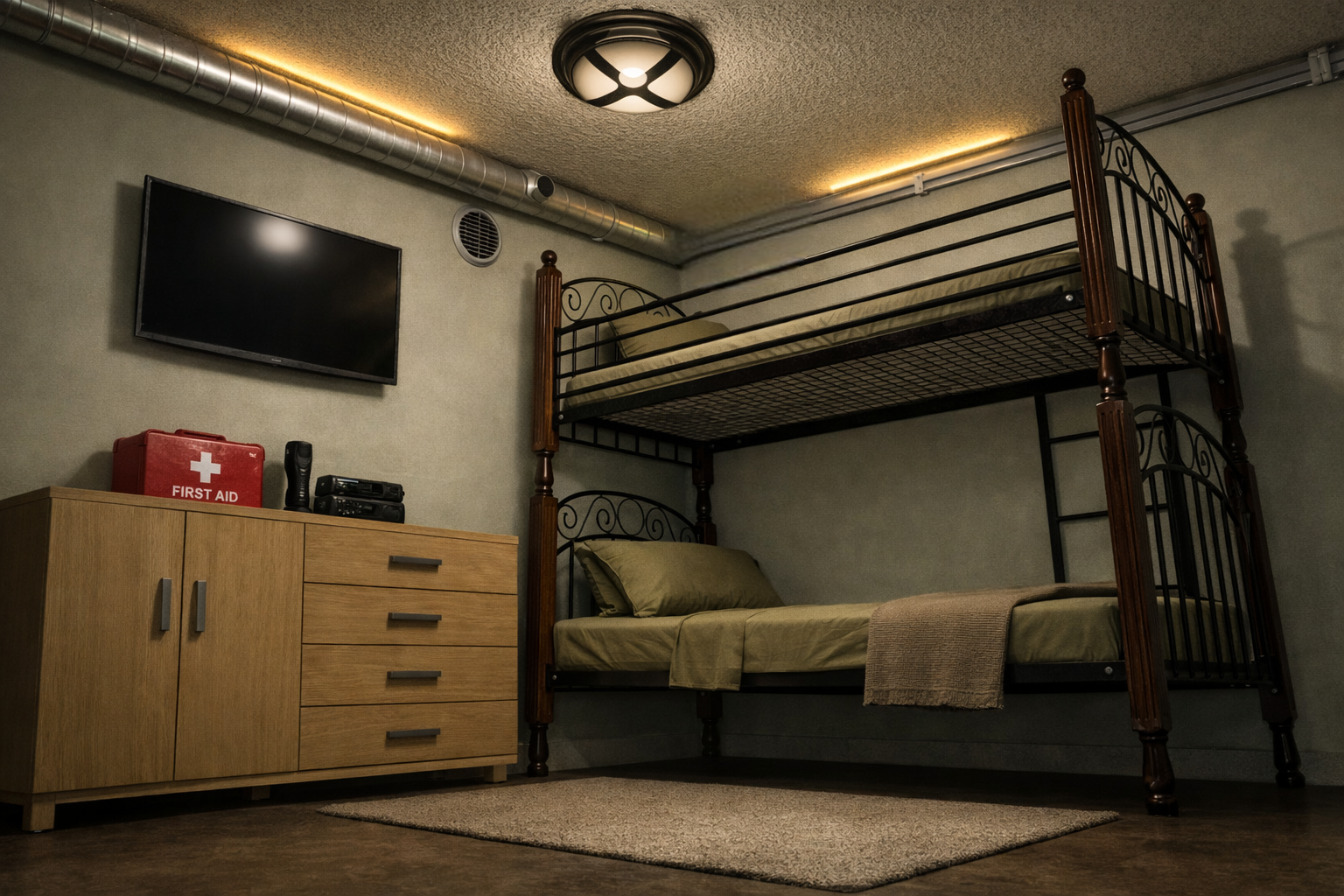

Yet again the same process. I brought up some walls with a flat plane as the floor and roof. I added texture to them and started with the asset placement. Then I got a light, bunk bed, tv, and a storage unit from Blenderkit and placed them accordingly. Then I again got a copilot and got a naturality effect on it making it visually more appealing and lively.
Downloads
Making It Heal
So at last after finishing the project let's look back and see once again on all the factors that contribute to making it truly heal. First of all, it prevents the trauma of being left behind because it allows people to come in even after the doors are closed. Furthermore its main goal is to save the lives of as many as possible decreasing the trauma of losing loved ones from people too. Once there, a hospital is there to physically heal their wound and therapist for mental treatment. A gym and an indoor park are also given for them to take advantage of so that they can take their mind off of what's happening outside. They are given a safe place to sleep and food to eat while a dedicated team helps them fulfill their basic life needs. In the start I mentioned that the best way to heal someone is to never have them hurt in the first place. Well, I think my Resurgence Sanctuary does all that. I made my structure so that it not only helps the wounded if they get hurt, but also to stop them from getting hurt in the first place. Throughout the process my top priority was to somehow use architecture as a medicine.
Downloads
Future Improvements

As of now I am done and finished, but there are still a couple things left that could be further added such as, the venting layout, the exhaust layout, plumbing pipe paths, water line paths or even a wiring diagram for the place. Where the lights, switches, outlets, vents will be located are also things that could be further planned in the future. What and where things will go in the kitchen and hospital can be later designed. But that will be for another time. My whole AutoCAD drawing is below this step for a clearer viewing.
Downloads
Reflection

As it's said, the process is more important than the product and looking back at my journey, I realized that every challenge, mistake, and victory shaped my growth far more than the final product ever could. I know my skills aren't professional grade, but knowing that I did my best helped me recognize that the learning process itself fosters deeper understanding and skill development. I learned about the filtration process, and all the steps involved in it. I learned what a biodigester is and how it works. The maximum and minimum slope gradients of roads and what cars will be able handle were also things I had to find out.
When I started this project about 2 months ago, I had no idea that there were going to be so many processes within making an underground space self sufficient. In our day to day lives we use our utilize with so much ease that we forget how hard people are working to provide us with water, gas, electricity and sewage. What I also learned was all the suffering happening in the world. So many people are suffering and dying and my goal is to be the change I want to see in the world. I don't want my design to remain just an idea. That's why I did everything I could to make Resurgence Sanctuary physically possible. I don't just want to talk about healing, I want to witness it, feel it and be a true part of it.