ShareBox Station: a Smart Community Food Sharing System
by kidzlogic in Living > Kitchen
38 Views, 0 Favorites, 0 Comments
ShareBox Station: a Smart Community Food Sharing System


ShareBox Station is a smart, modular community food-sharing system designed to reduce food waste and improve local food accessibility. The system allows residents to safely donate and collect surplus food using a secure locker-based station integrated with simple digital tracking.
The goal is to reimagine how neighborhoods manage extra food by turning waste into shared resources through a low-cost, scalable infrastructure.
Supplies

Tinker cad
Paper
System Architecture & Core Idea

The system is built around three main components:
Physical ShareBox Station (smart locker unit)
Mobile/Web interface for users
Optional cloud backend for tracking and notifications
Each station operates as a decentralized food node where users can:
Deposit extra food items
Scan items using QR codes
Receive notifications about available food nearby
The system prioritizes simplicity, accessibility, and community-driven sharing.
Physical Design & 3D Modeling


The ShareBox Station was designed in a 3D modeling environment such as Autodesk Fusion 360 or Tinkercad.
Key structural elements include:
Multi-compartment locker system for food separation
Transparent access windows for visibility
Solar panel integration on the top surface
Front-facing touchscreen interface
LED status indicators for availability tracking
Weather-resistant outer shell for outdoor deployment
A cutaway model was created to visualize internal storage and electronic placement.
Smart Locker Mechanism
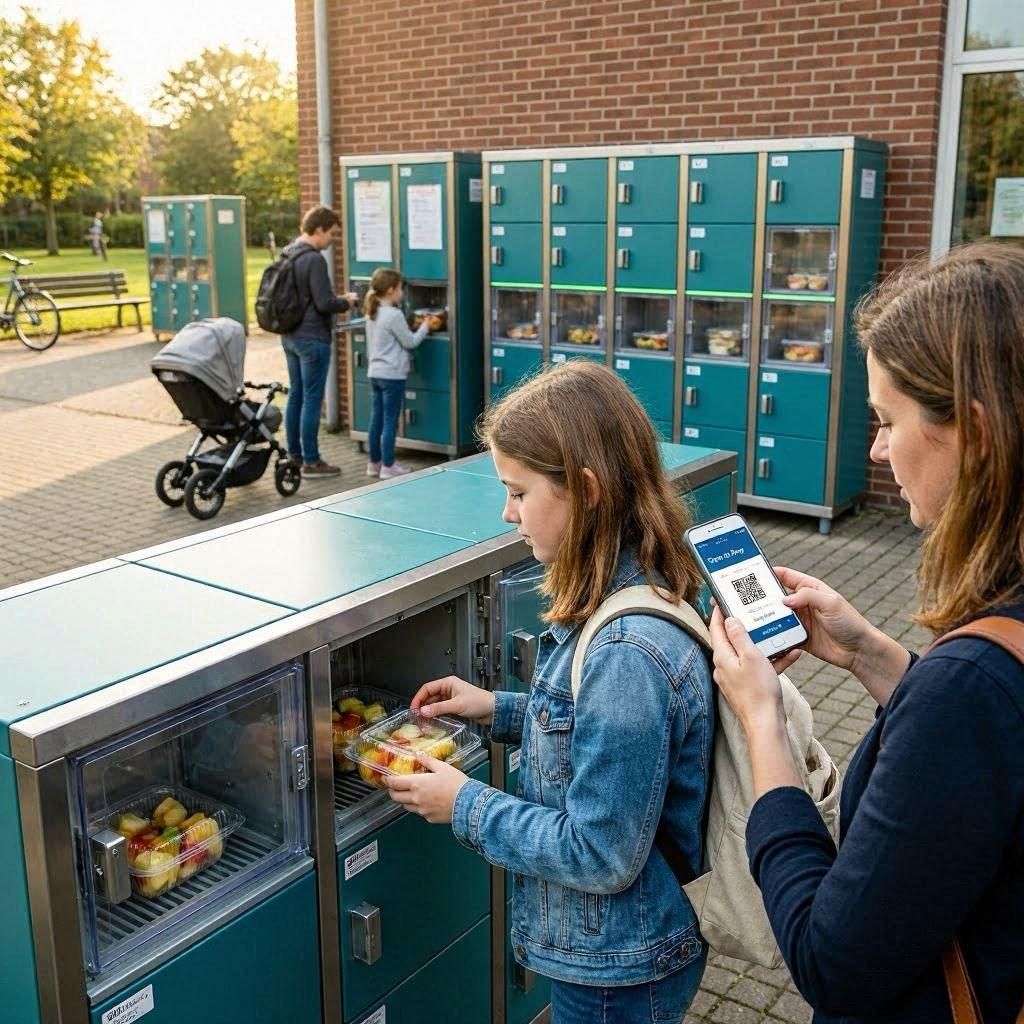
Each compartment in the ShareBox system functions as an individually controlled locker.
Proposed mechanism includes:
Servo-controlled locking doors
RFID or QR-based access validation
Optional keypad backup system
When a user deposits food:
Locker is opened via authentication
Item is placed inside
Door is closed and locked
System logs entry data
This ensures safety and prevents unauthorized access.
Digital Tracking System
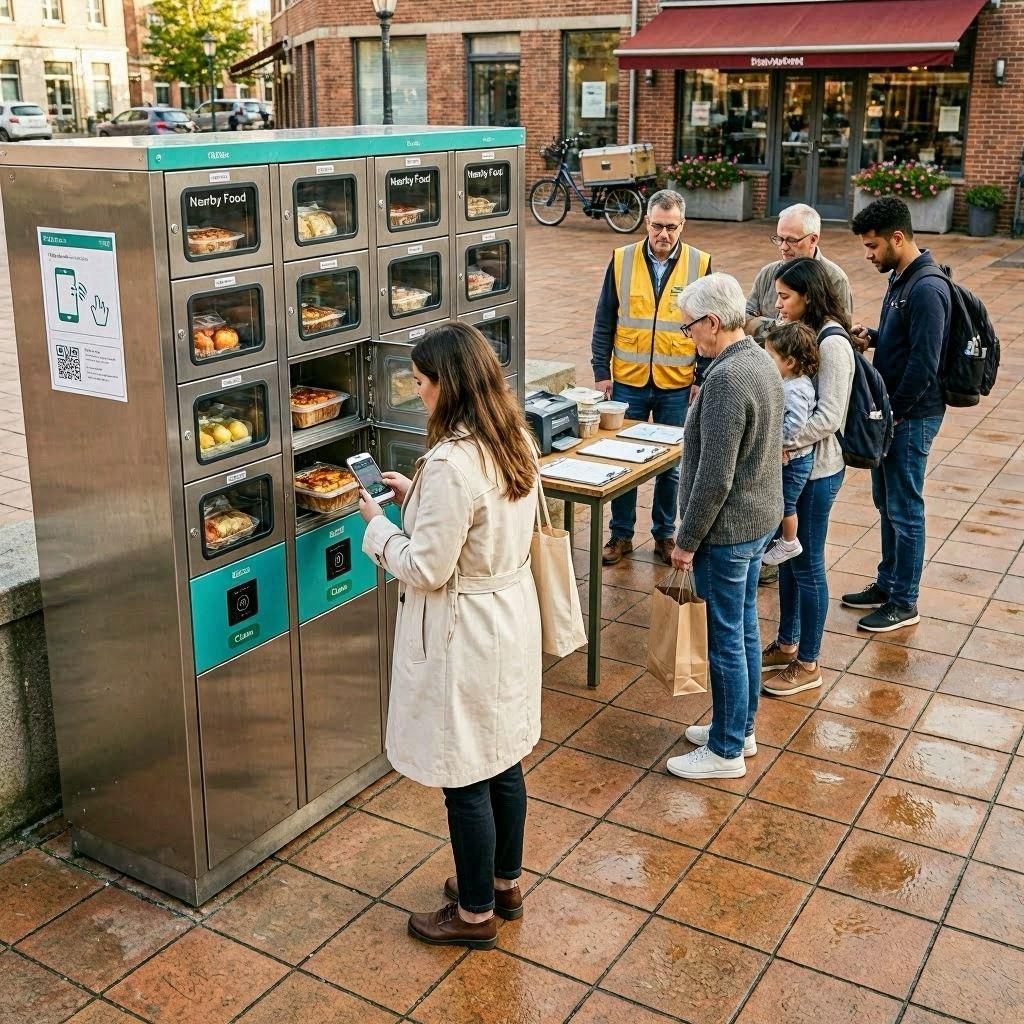
Each food item is assigned a digital identity using a QR code system.
Tracked data includes:
Item name
Expiration date
Donation timestamp
Optional allergen information
The system updates availability in real time, allowing nearby users to see what food is accessible at any station.
User Interaction Flow
The user experience is designed to be simple and fast:
Donor Flow:
Open ShareBox app or station UI
Select “Donate Food”
Scan QR code or enter item details
Place item in unlocked compartment
Confirm donation
Receiver Flow:
Open app/map view
Find nearest ShareBox Station
Reserve available item (optional)
Scan QR code at station
Retrieve food item
Electronics & Prototype Implementation (Optional Build Version)

A working prototype can include:
Arduino or ESP32 microcontroller
Servo motors for locking system
RFID reader or QR scanner module
LED status indicators
Small touchscreen or OLED display
Optional load sensor for weight tracking
Power system:
Rechargeable Li-ion battery pack
Optional solar charging module for outdoor stations
Smart Features & Future AI Integration
Future versions of ShareBox Station could include:
AI-based food demand prediction
Expiration alert automation
Smart recommendation system (“use this food soon”)
Heat/cold monitoring sensors for safety
Community usage analytics dashboard
Deployment Concept

ShareBox Stations are designed to be deployed in:
Apartment complexes
Schools
Community centers
Grocery store exits
Public parks
Each station operates independently but can optionally connect to a city-wide network for tracking food distribution patterns.
Conclusion
The ShareBox Station demonstrates how simple mechanical systems combined with lightweight digital tracking can create a powerful community-driven solution for food waste and accessibility.
By combining physical design, QR-based tracking, and scalable deployment, this system reimagines neighborhoods as connected ecosystems where surplus food becomes a shared resource rather than waste.