Solar Emergency Backup or Cabin Power Supply
by dohebert in Living > Education
177 Views, 4 Favorites, 0 Comments
Solar Emergency Backup or Cabin Power Supply
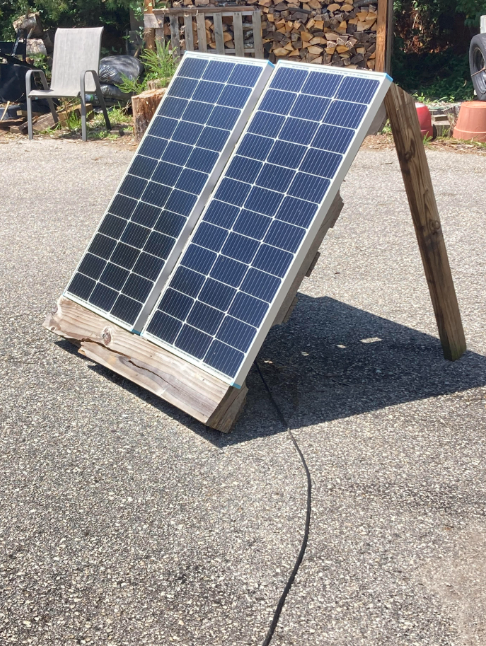
This is a small solar generator setup that's perfect for emergency power backup, supplemental home power, or remote vacation cabins. I wanted something a bit more versatile and inexpensive than the pre-packaged units you can buy already assembled.
Supplies
I used:
2 100W solar panels ( amazon.com/dp/B07JXYTFF7?ref=ppx_yo2ov_dt_b_fed_asin_title )
1 12v 100ah LiFePO4 battery ( https://www.amazon.com/dp/B0CLRY5J2N?ref=ppx_yo2ov_dt_b_fed_asin_title&th=1 )
1 charge controller ( https://www.amazon.com/dp/B07G1PL1B9?ref=ppx_yo2ov_dt_b_fed_asin_title )
1 1500 watt inverter ( https://www.amazon.com/dp/B0CLTQ537M?ref=ppx_yo2ov_dt_b_fed_asin_title )
a couple of connectors ( https://www.amazon.com/dp/B0D5DLJVC9?ref=ppx_yo2ov_dt_b_fed_asin_title )
some wire (I used extension cord rated for the amps my panels generate)
Mount Your Panels
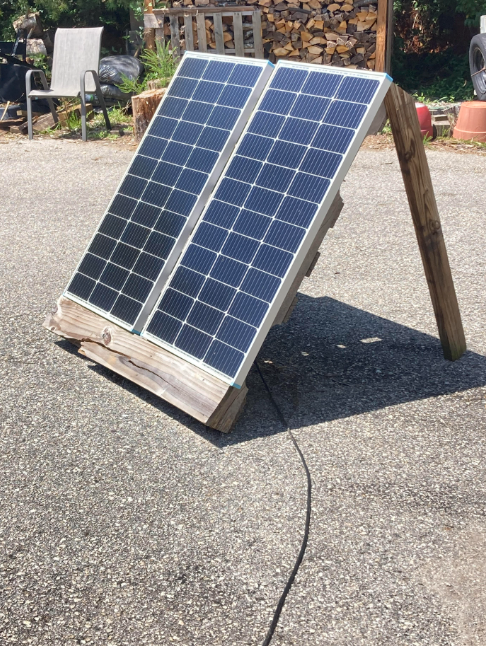
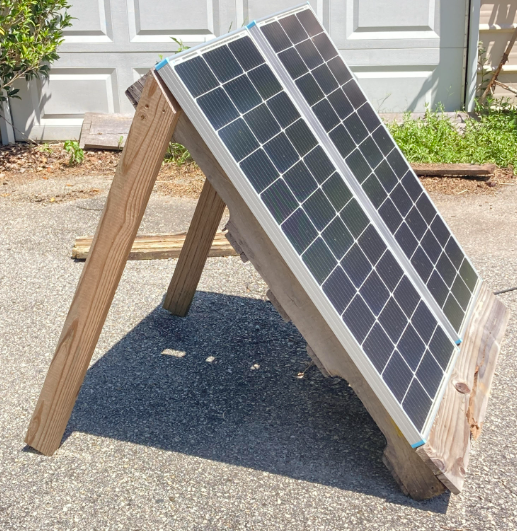
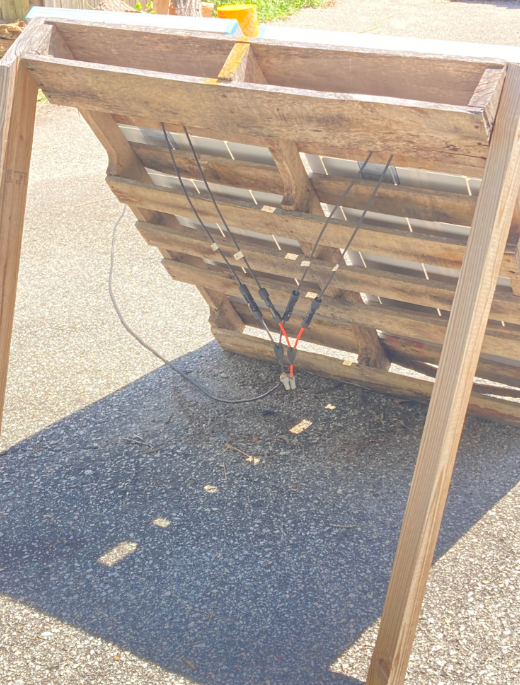
My panel mount is low-tech and inexpensive. A pallet, with a couple of pieces of 2x4 attached as props. I attached a board along the bottom edge of the pallet as a lip for the bottom of the panels to sit on, and I used silicone caulk along the top and bottom edges of the panels to hold them to the pallet.
Connect Your Panels to Each Other
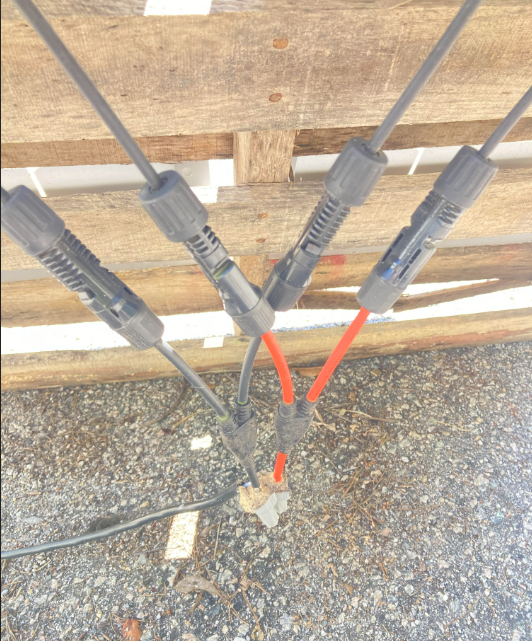
This is where those connectors come in handy. I'm using a 12 volt battery, and these are 12v panels, so to keep the whole system at 12v, we go red to red and black to black (or pos to pos and neg to neg, if you prefer). I used the connectors just to get the two positive (red) wires (one from each panel) and the two negative (black) wires (one from each panel) to join and give me one red wire and one black wire, which I then connected with wire nuts to an extension cord that I'd snipped the ends off of. I sealed the wire nuts with caulk to prevent moisture from getting in there.
A system like this is less than 15 amps, so you don't need a super heavy duty extension cord. But if you were to run more panels, you'd want to pay closer attention to the size of the wire you use. When you hook the solar panels to the extension cord, note the color of the wire inside the extension cord that you use for your negative and your positive from the panels. Let's say you have white, green, and black inside your extension cord. I'd use white for the pos and black for the neg. The wire from the panels then runs into my laundry room in my house, where I have ...
[Footnote: I like having the battery in the house, for temperature control. It' shouldn't be allowed to freeze or overheat. These LiFePO4 batteries are generally safe for indoor use. Their stable chemical composition resists thermal runaway and does not release oxygen during a failure, making them much safer inside a home than traditional lithium-ion or lead-acid alternatives.]
Charge Controller, Battery, Inverter
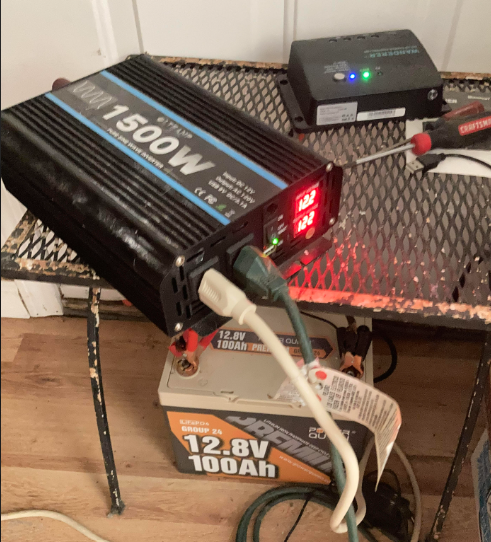
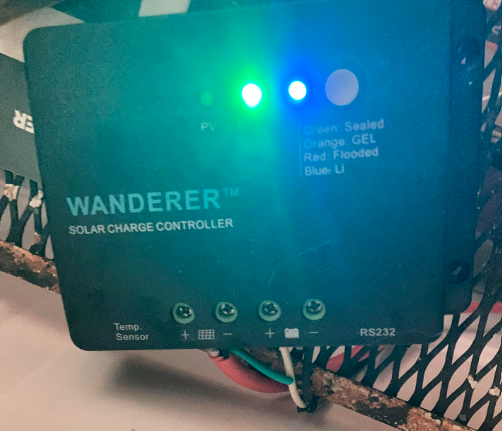
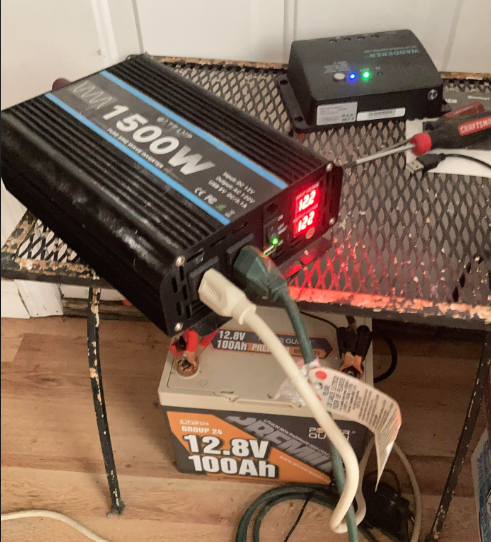
The small box at the back is the charge controller. It makes sure that the battery is charged properly, and not overcharged. Make sure you get the right type of controller for the battery you're using. (This model can be used on multiple types of batteries.) On the back of the charge controller, it has a place to attach the positive and negative wires from the solar panels. (This is a good time to remember what colors you hooked your + and - from the panels to.) The back of the charge controller also has an output port, where you'll run a wire from the charge controller to the positive terminal of your battery, and another wire to the negative terminal of your battery.
Hookup is pretty easy - this controller shows you where the wires from the panels go in (you can see I used the black and white from inside my orange extension cord, and ignored its green wire; and then I used separate black and white wires from the controller out to my battery. With this small setup, as long as you connect the + to + and the - to -, you'll be ok.
Connect Your Inverter
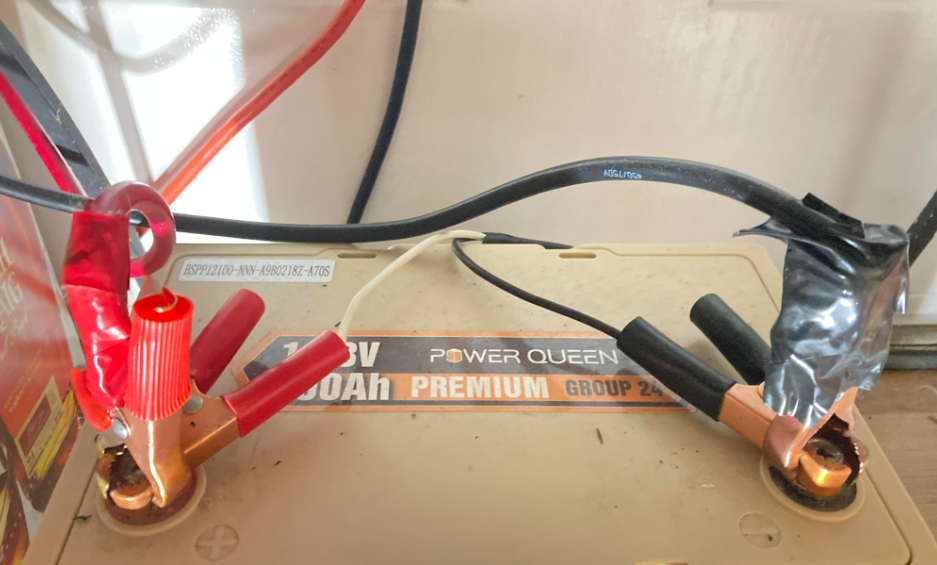
I used clips to connect the charge controller to the battery (small black and white wires) and then to connect the inverter to the battery (larger black and red wires). I used to move the battery more, so I wanted a quick disconnect; if I were doing this over or feel like improving it at some point I'd use terminals that connect to the battery screws.
Conclusion
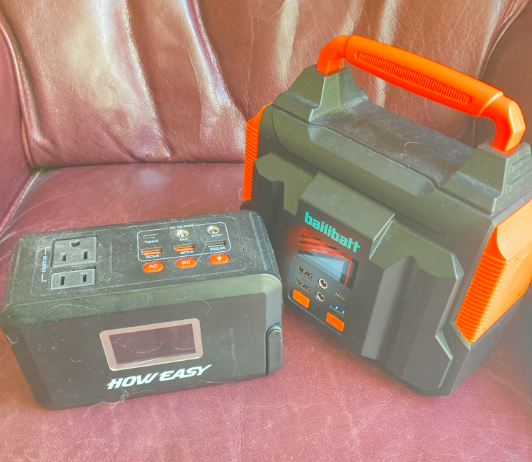
So, what do I do with this system? At the cabin, I run lights and a radio, which is all I really need out there. At my house, (in western NC post-Helene) it's a nice small backup if the power goes out; but even when the power isn't out, I use this system to charge my laptop, phone, and cordless tools, power my wifi, and charge portable battery packs that I can use to run lights in other rooms without having to run extension cords (or I can take my battery packs camping, etc.). It's just very handy to generate my own supplemental power, which lowers my electric bill, and to have a backup that isn't grid-tied. If one component breaks, it's easy for me to replace, unlike those pre-made solar generators (and this system cost me less than those systems as well). Also, if I move, it's easy to take with me and set up somewhere else.