Sunlit Commons
Hello, I am a high school sophomore living in California. As my school year comes to a close, I wanted this project to be more than just a contest submission. I saw it as a chance to bring together what I have learned in my 3D modeling class with new tools like AI, using both creativity and technology to imagine a space that could serve a real community.
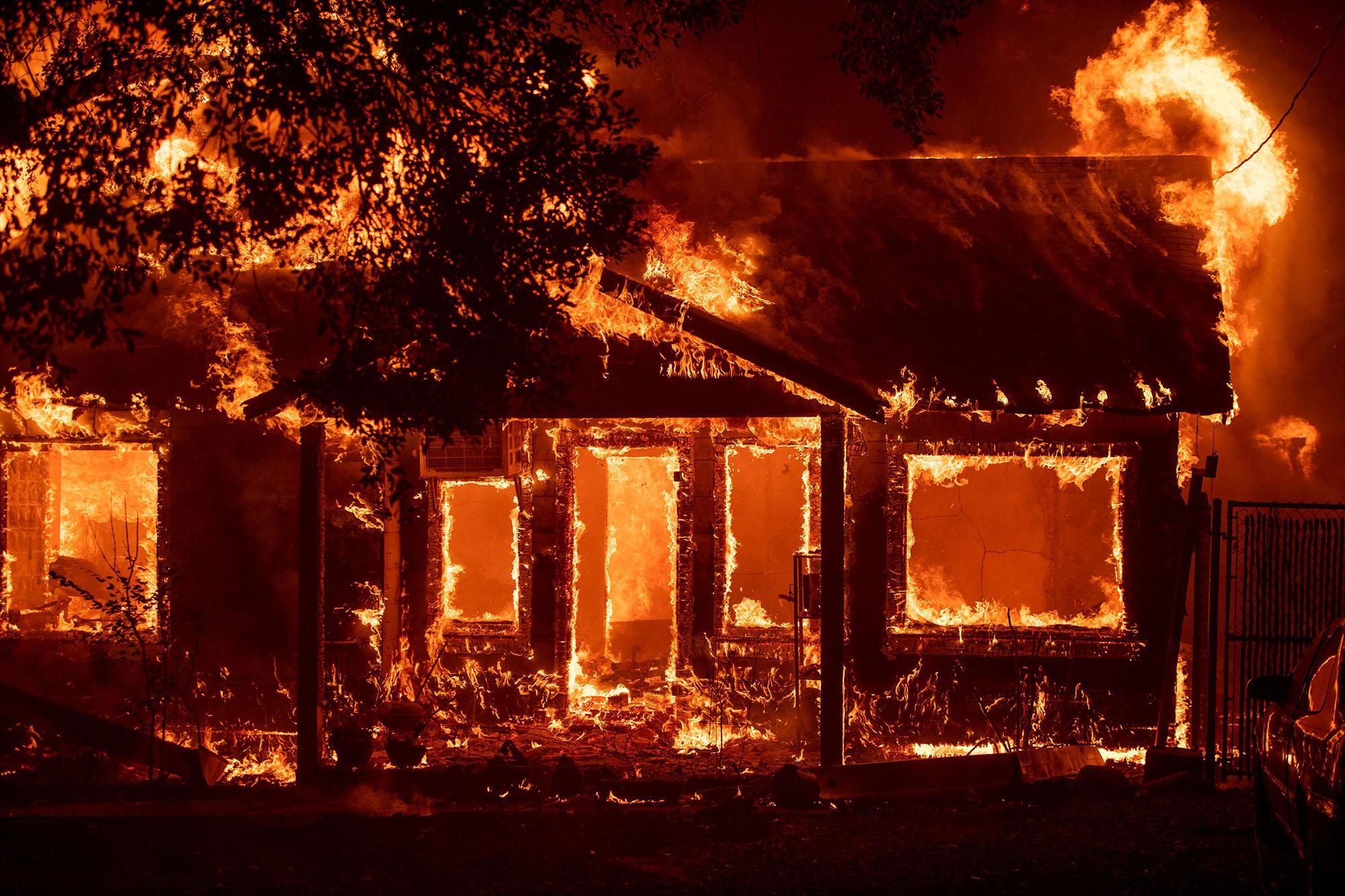
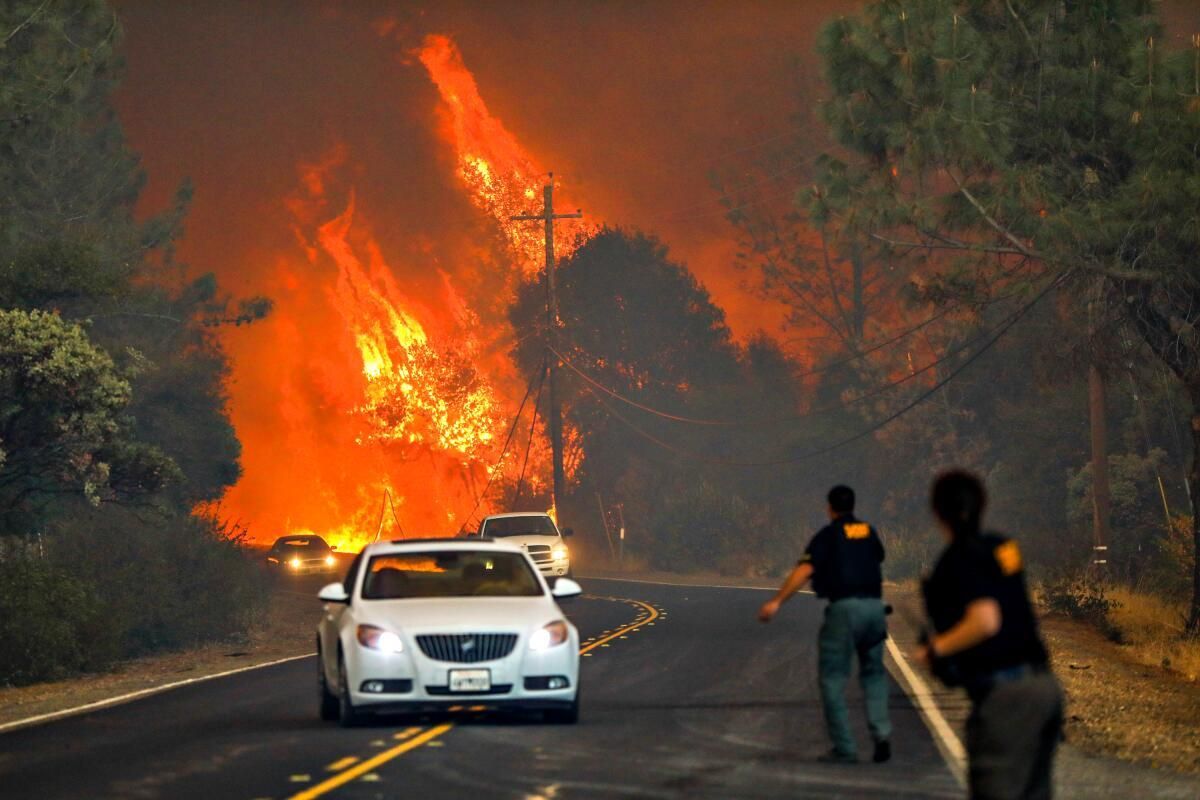
For my site, I chose Paradise, California, a town whose story is deeply tied to loss and resilience. In 2018, the Camp Fire devastated Paradise, destroying an estimated 90–95% of its structures, including homes, businesses, and the everyday places where people gathered. After the fire, the town’s population dropped to only about 9,000 to 11,000 people, roughly one-third of what it had been before.
When I thought about what kind of building could belong there, I kept coming back to the idea of regrowth. Paradise is not just a location marked by tragedy; it is a community still rebuilding, still reconnecting, and still finding its way forward. That is why I designed a community center for Paradise: a place meant to bring people together, encourage connection, and symbolize life returning after destruction.
Through this design, I wanted to create more than a building. I wanted to imagine a space where families could gather, neighbors could meet, students could learn, and the town could continue healing. My hope is that this community center could help Paradise move one step closer to becoming a reflection of its name.
Supplies

- Autodesk Fusion 360
- Anthropic Claude Opus 4.6
- OpenAI ChatGPT 5.5
Location
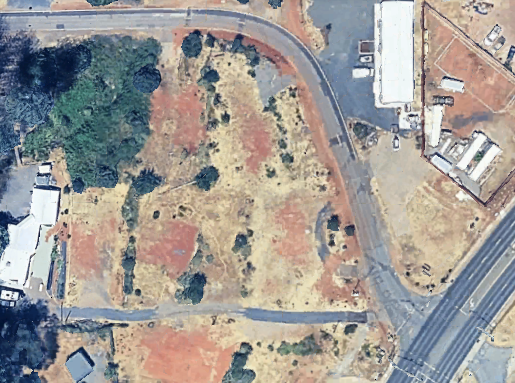
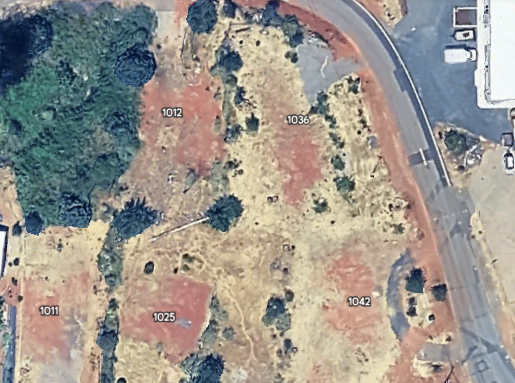
The layout is based on the empty lots located at 1012, 1025, 1036, and 1042 Central Park Drive in Paradise (39.7596° N, 121.6219° W). I selected this location for several reasons. It sits within the heart of the Paradise community, making it a central and easily accessible gathering place. The site is connected to three roads, which improves accessibility and traffic flow. In addition, the large undeveloped lots provide ample space for construction, supporting not only parking but also future expansion of the site.
Hand-Drawn Sketches
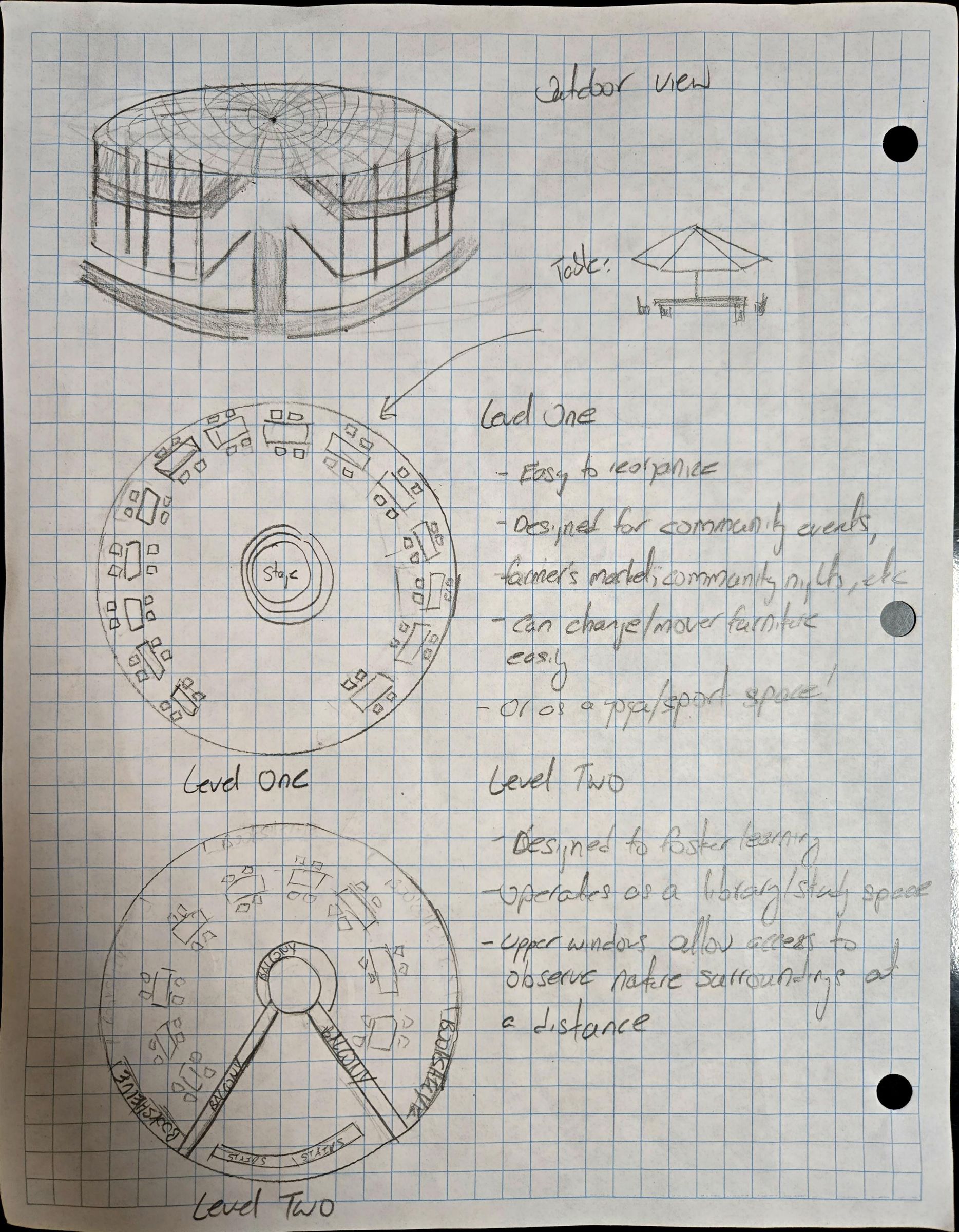
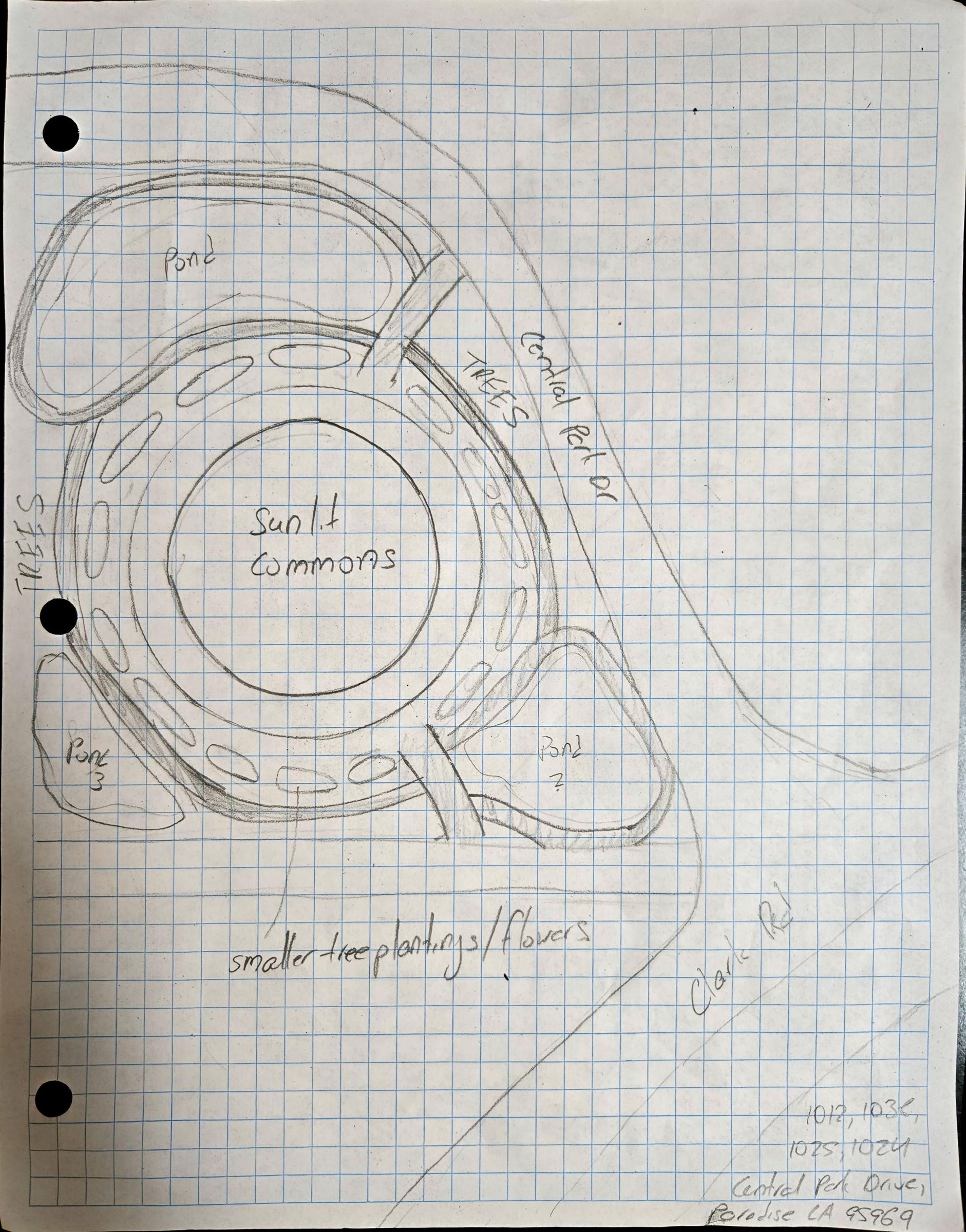
Based on the shape and layout of the lots, I sketched an initial blueprint for the Sunlight Commons, surrounding the property with gardens, trees, and natural spaces. The design emphasized growth, healing, and renewal through nature, reflecting the community’s recovery after so much had been destroyed by the wildfire.
Initial 3D Modeling Via Fusion 360 and Claude Opus 4.6
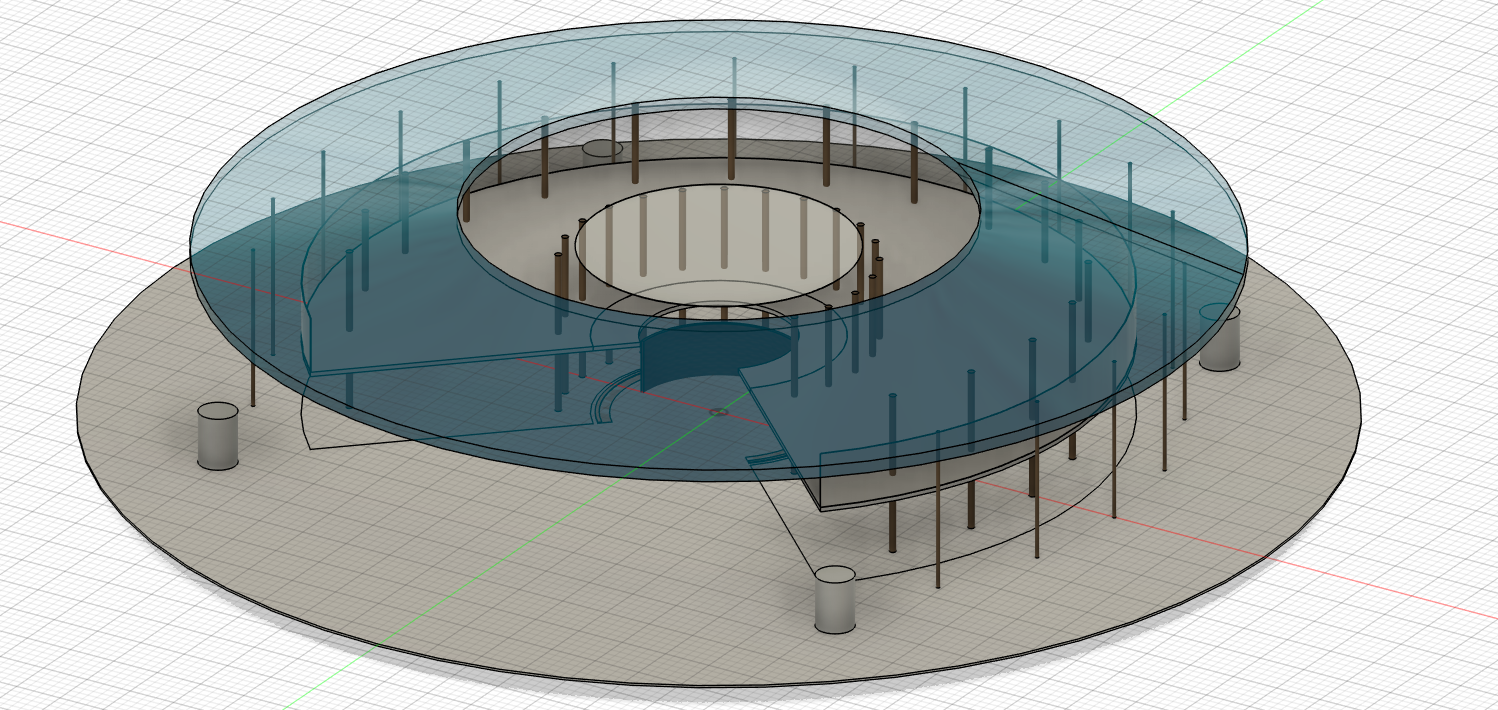
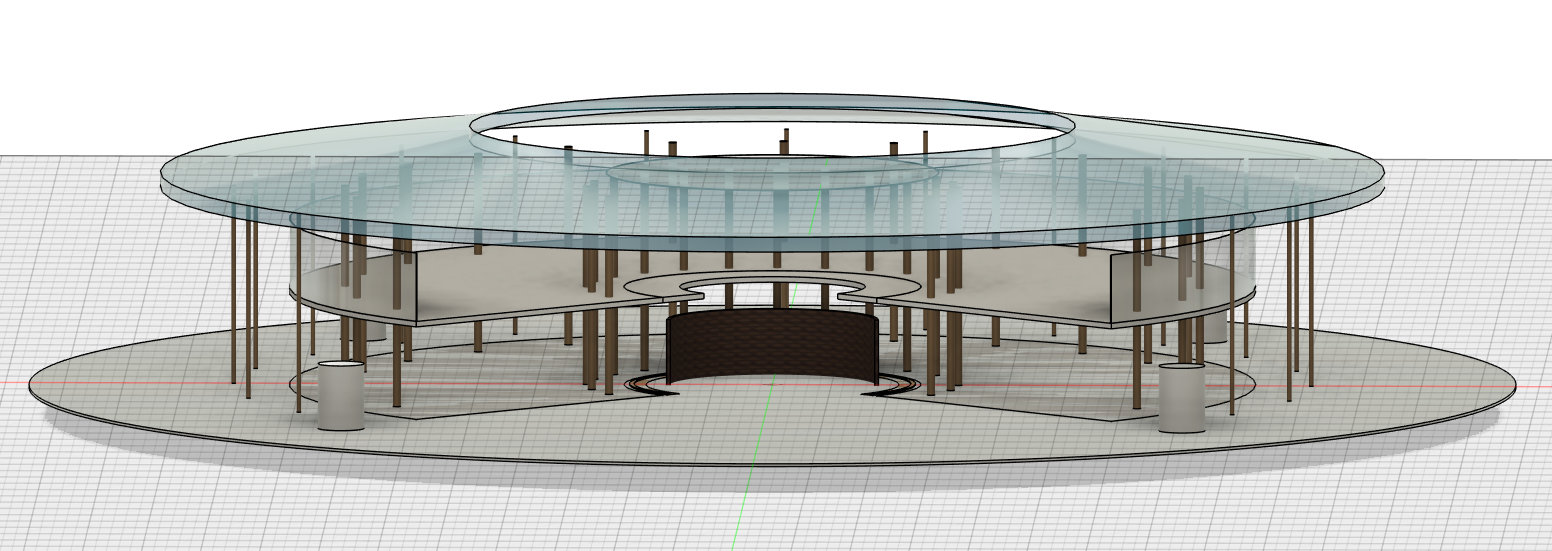
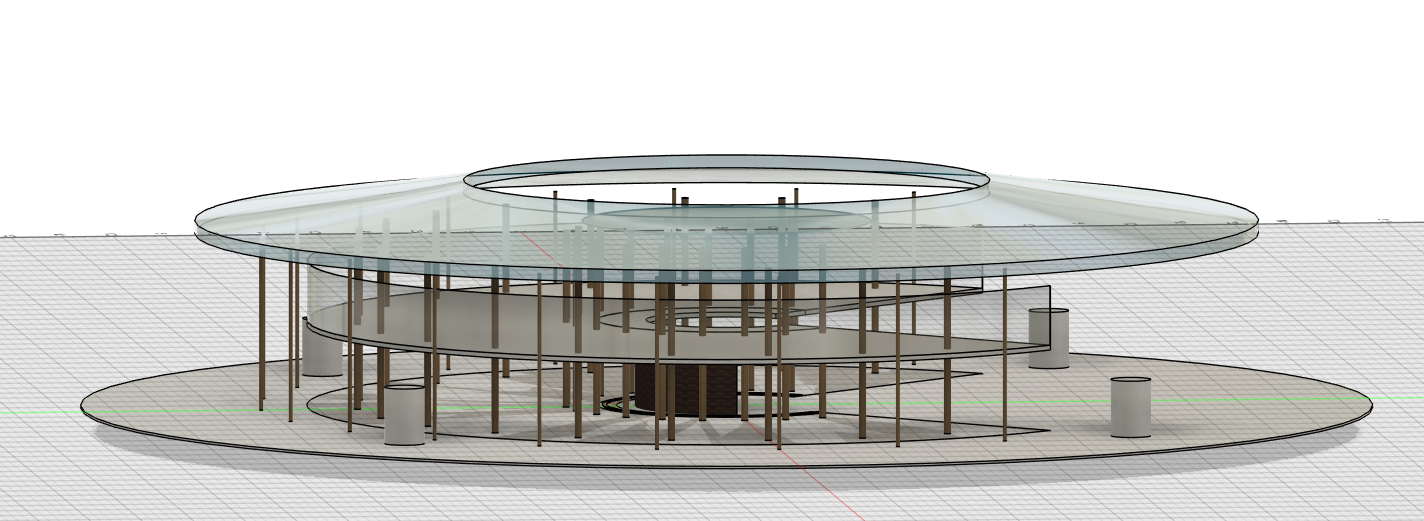
I chose a rounded, campus-oriented layout to focus on a horizontal structure with deeply interconnected spaces. By opting for a circular form that gets rid of traditional corners, the design establishes an environment built on equality, openness, and a shared community where people can interact organically in a warm, casual atmosphere.
Instead of standard hand-modeling of the structure in Autodesk Fusion 360, I utilized the Autodesk Fusion 360 Connector feature to integrate Anthropic Claude Opus 4.6. This new AI-assisted workflow accelerated the modeling process by many times compared to traditional methods, enabling me to test more ideas, refine designs more efficiently, and focus greater attention on the overall functionality and aesthetics of the project.
Downloads
Final 3D Model and Rationale
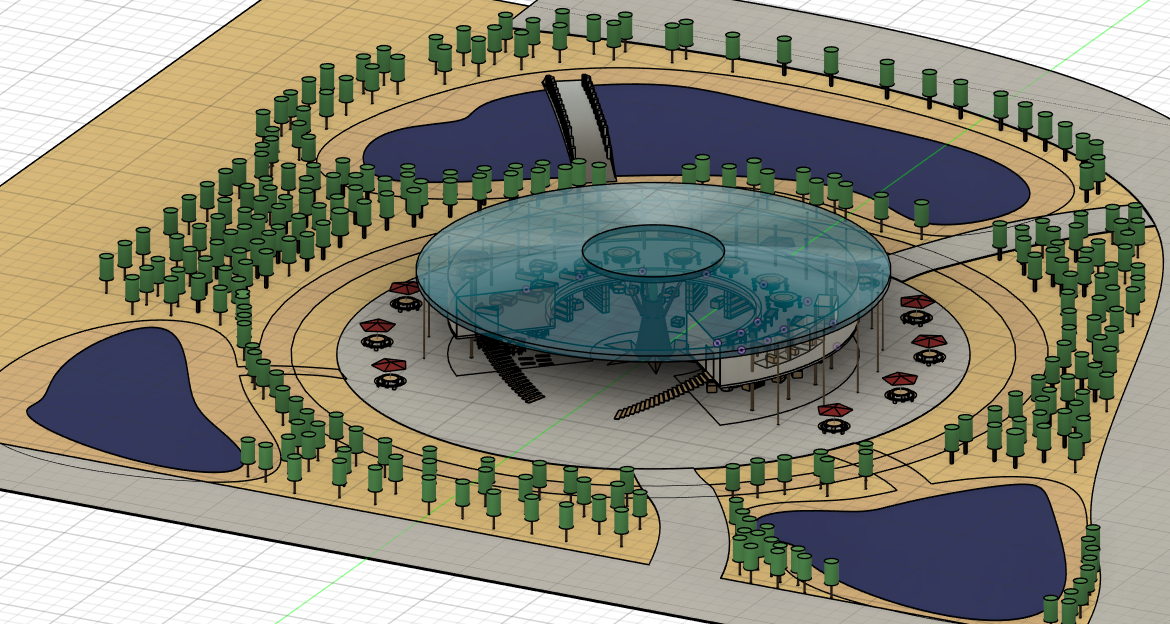
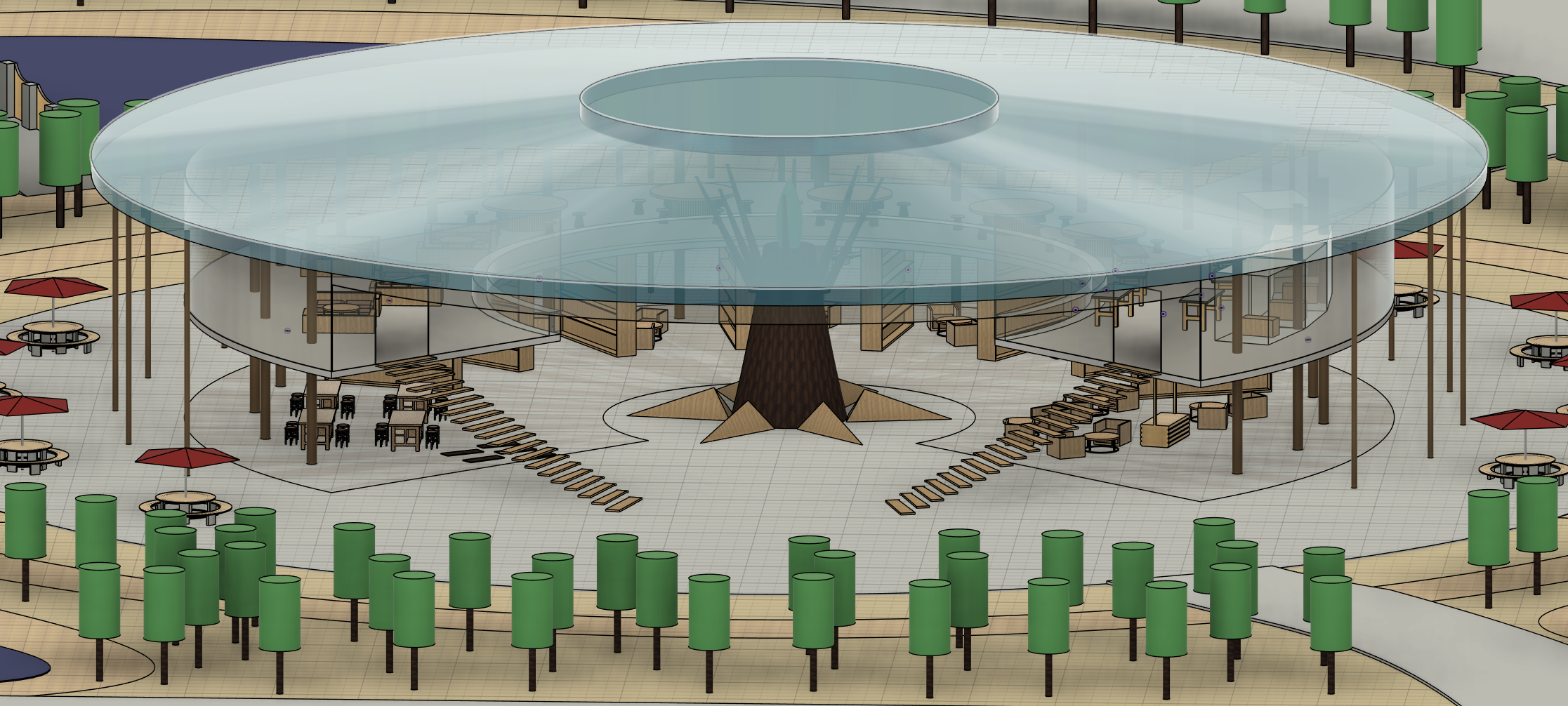

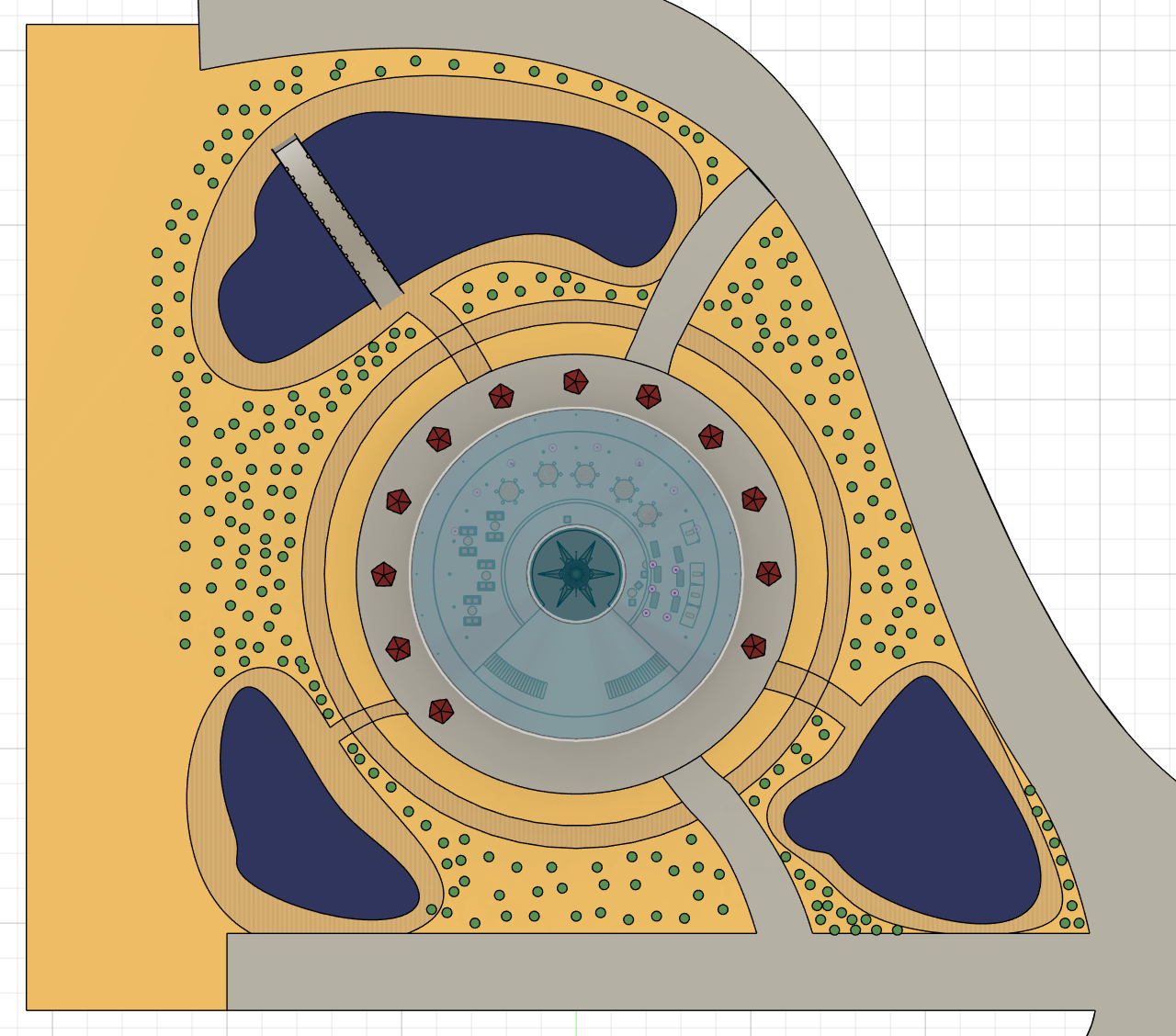
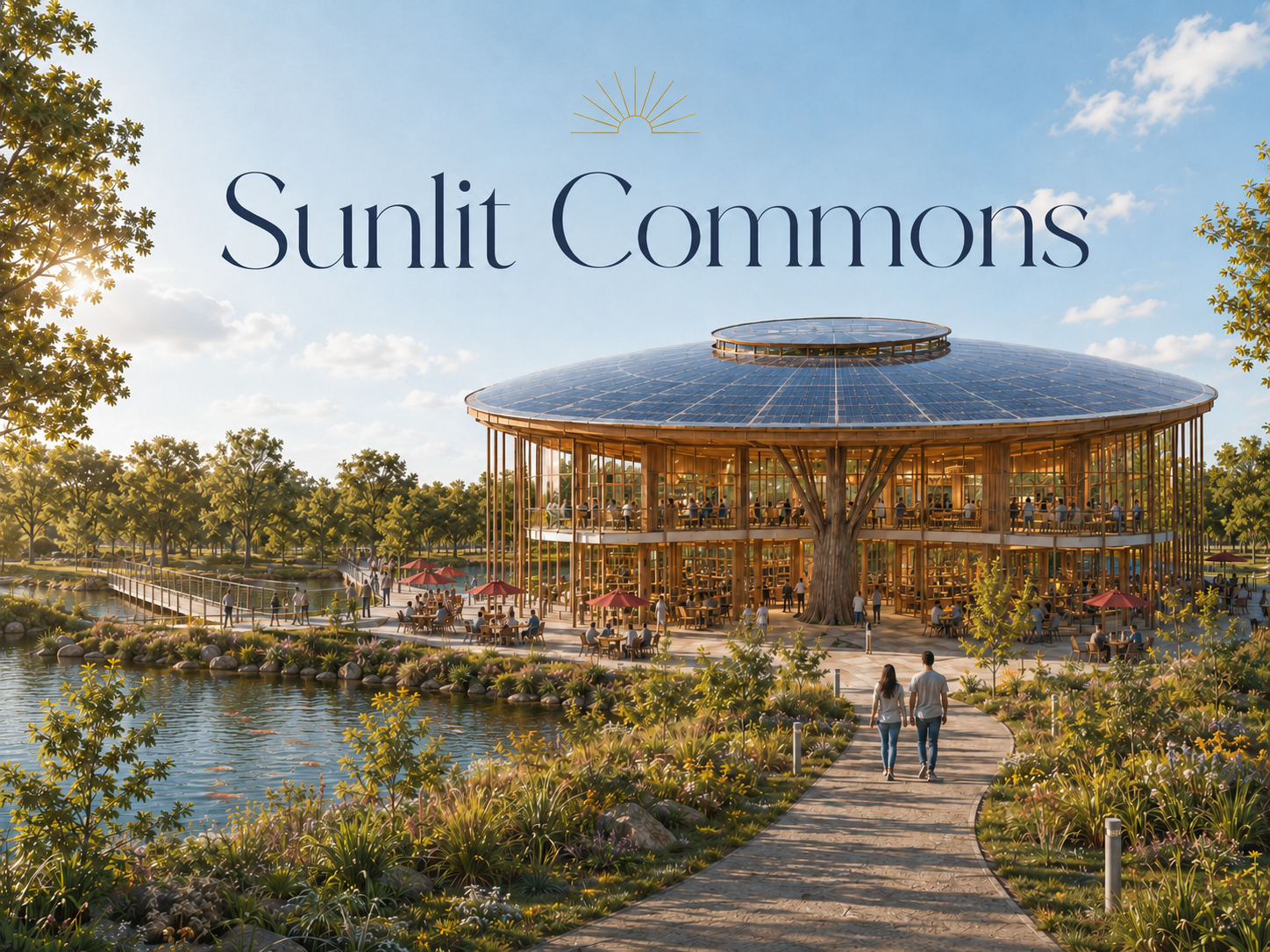
The roof uses blue-tinted transparent BIPV solar glass to generate renewable energy while filtering California sunlight into the building. Its darker tint also helps shade the interior and keep the space more comfortable.
Native and California-adapted trees are placed throughout the site to symbolize regrowth after wildfire and support a healthier landscape. Species such as Coast Live Oak, California Sycamore, Coast Redwood, and Big Leaf Maple help provide shade, habitat, and a stronger connection to the local environment.
The building combines steel, glass, paved pathways, and wood to create a durable, practical, and sustainable community space. The lower level serves as a library and marketplace for learning, local events, and conversation. The upper level is a flexible workspace with areas for group projects, labs, workshops, robotics, and hands-on learning.
At the heart of this layout sits a large, prominent tree—serving as a powerful symbol of growth, resilience, and interconnectedness while acting as a natural gathering point that physically anchors the community's shared journey of healing.
The ponds are designed to create a lively and welcoming habitat, including Koi fish symbolizing vibrancy, movement, and longevity. Dirt paths and a pedestrian bridge allow visitors to freely explore the site like a local park while observing wildlife respectfully.
Image Rendering Via ChatGPT 5.5
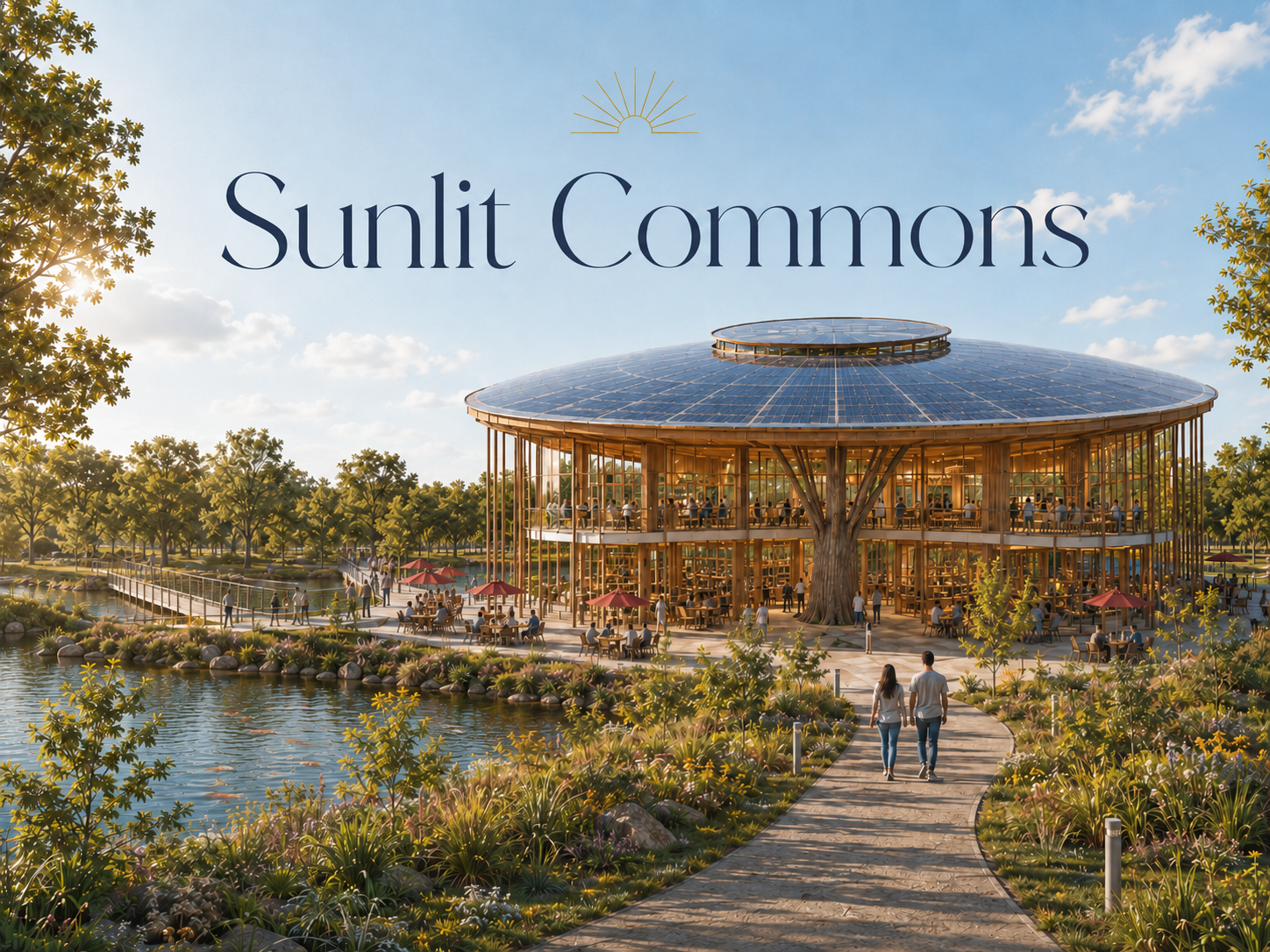
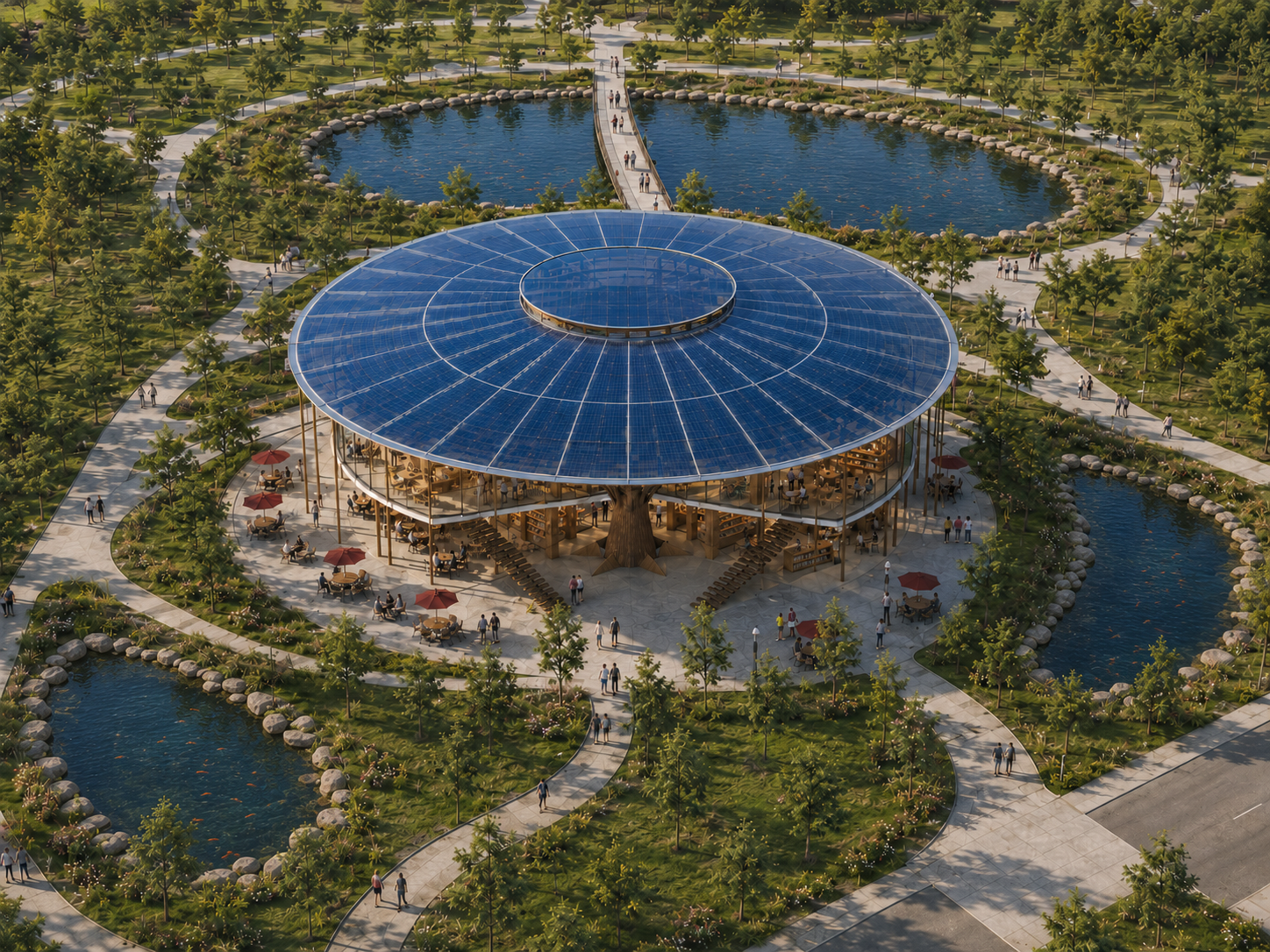
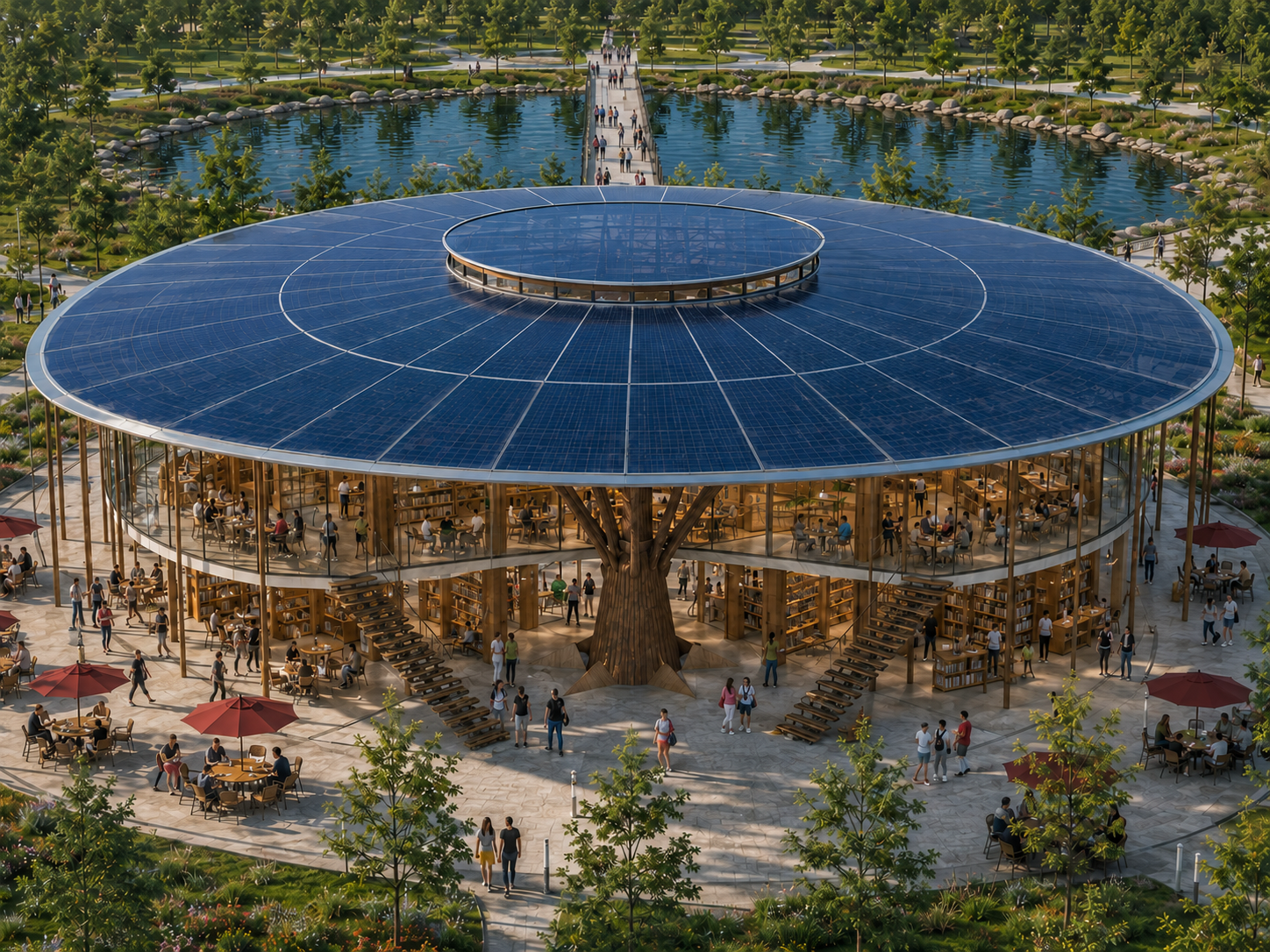
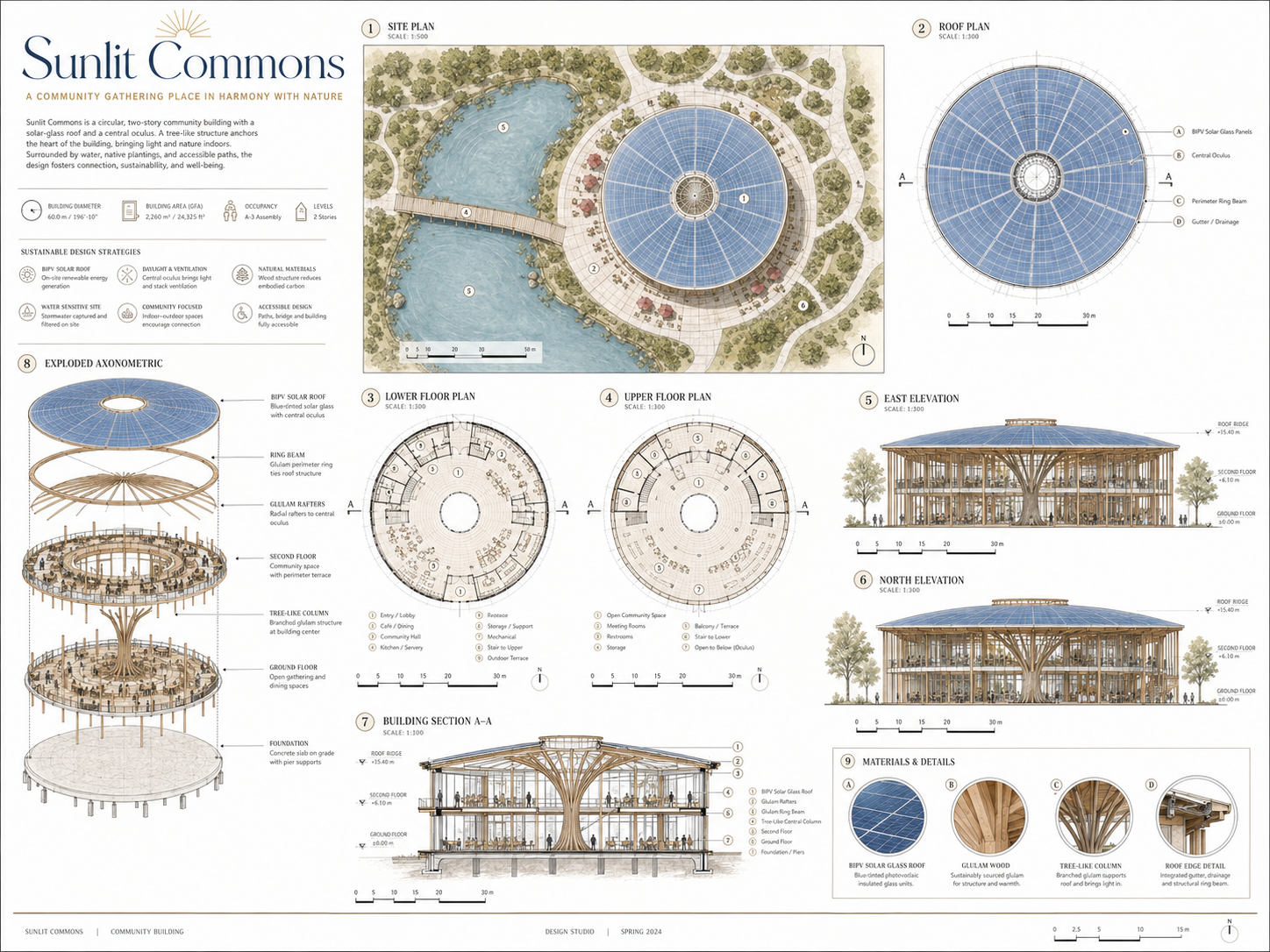
While I initially considered other AI tools, I chose OpenAI’s ChatGPT-5.5 for its best-in-class image generation capabilities. Leveraging its advanced features allowed me to transform my 3D model into more realistic, dynamic, and highly detailed rendered images.
Project Reflection
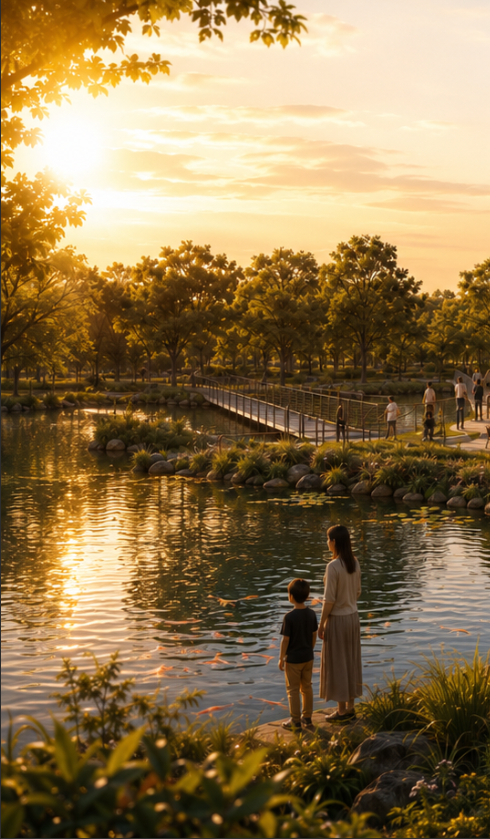
Looking back at the design process for Sunlit Commons, this project became much more than just an exercise in 3D modeling—it became my passion project with many lessons. Choosing Paradise, California as my site completely changed how I approached the design. Knowing that the community is still recovering from the devastating 2018 Camp Fire made me realize that a community center shouldn't just be a functional building; it needs to be a place that physically and emotionally brings people together.
That goal is exactly why I decided on a circular layout. By getting rid of traditional corners, I wanted to create a space built entirely on equality, openness, and a shared community environment. I wanted the architecture itself to break down formal barriers, making the complex feel casual and approachable so that neighbors, families, and students could interact organically. Incorporating the solar glass roof, wildlife ponds, and native Coast Live Oaks—allowed me to tie the building directly to the idea of renewal and regrowth.
Bringing this vision to life also pushed me to think about the future of design technology. While hand-modeling a structure of this scale from scratch in Fusion 360 normally takes days, pairing it with Claude Opus 4.6 allowed me to rapidly experiment with and refine my concepts. Using AI as a creative collaborator didn't take away from my role as the designer; instead, it sped up the technical process so I could focus on what mattered most. Ultimately, the making of Sunlit Commons taught me that modern technology and intentional, empathetic design can come together to create spaces that meaningfully serve and uplift a community. THANK YOU to the Instructables team for creating this memorable opportunity! It has been a challenging, fun and meaningful learning process.