The 7th Square
.png)
The 7th Square is a 2-player tactical grid game inspired by puzzle games like Tetris and Block Blast. Unlike traditional tile-matching games, it introduces a high-stakes Line-Stealing mechanic and multi-colour resource management, where every placement requires careful planning and spatial strategy.
Supplies
Software & Design Tools:
Figma: (Free Vector & UI Design Tool used for creating game assets)
Print-and-Play Physical Materials:
Paper: 2-3 A4 Sheets
Color Printer: For printing the board grid, polyomino cards, and tokens
Cutting Tools: Scissors
Tokens / Pieces (84 Total): Print the included colour tokens/pieces from the PDF
Downloads
Concept & Inspiration
The main idea behind The 7th Square was to convert fast-paced digital block-puzzle mechanics into a competitive physical board game.
The Inspiration: Inspired by Tetris and Block Blast, players place polyomino shapes onto a grid to complete full lines.
The Twist: In digital block blast games, completed lines simply disappear. In The 7th Square, completing a line lets you steal all 7 tokens from that line! This keeps players constant fighting for positional advantage and resource control.
Game Components & Setup


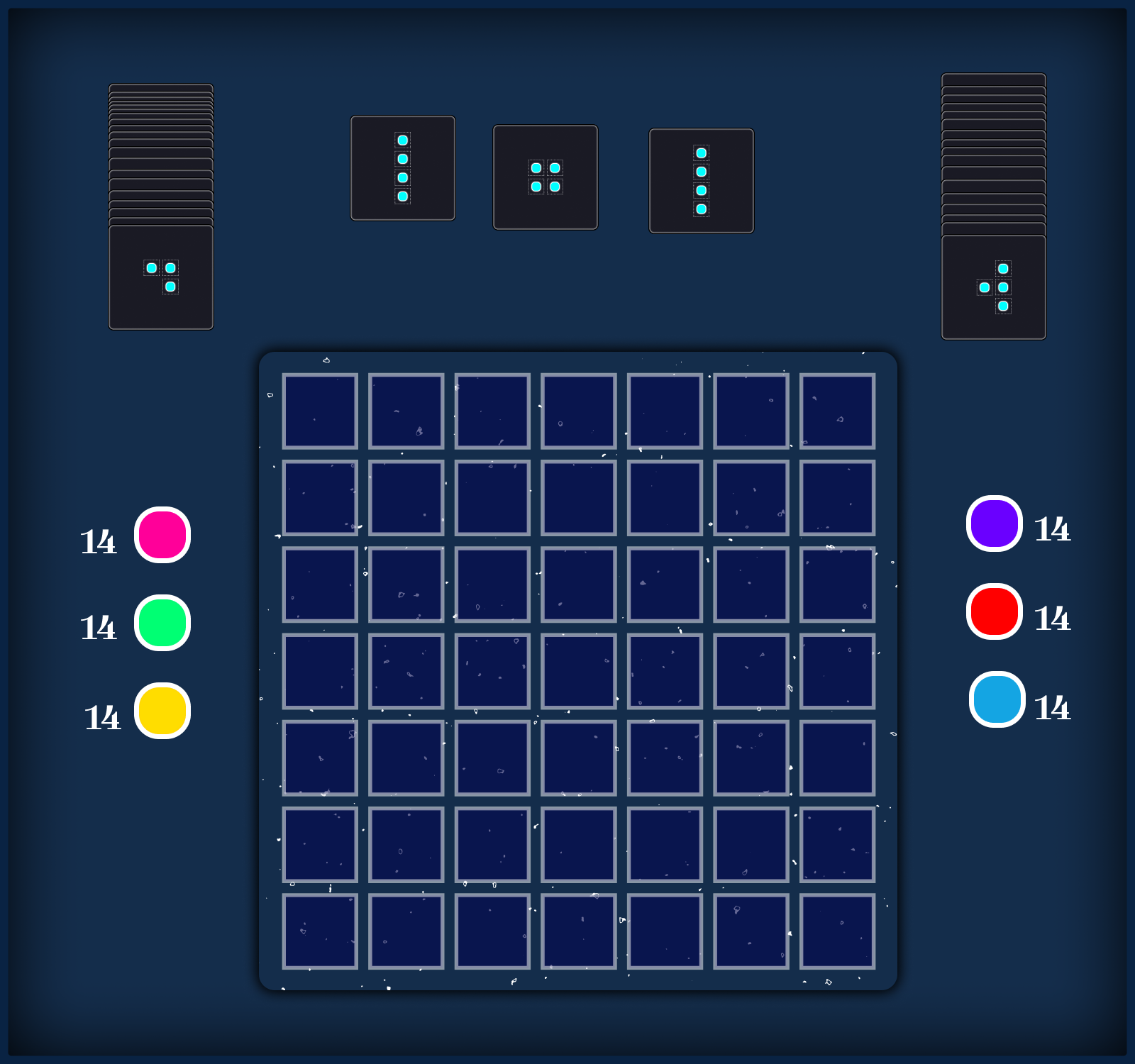
To set up a match of The 7th Square, you need the following components:
1 Board: A 7x7 Grid (49 total squares).
Polyomino Cards: A deck of cards featuring various geometric polyomino shapes.
Tokens (84 Total): 6 different color sets with 14 tokens each.
Player 1: Chooses 3 token colors (14 x 3 = 42 tokens total).
Player 2: Takes the remaining 3 token colors (14 x 3 = 42 tokens total).
Initial Board Setup:
Place the 7x7 grid board in the middle.
Both players place their 42 color tokens in their reserve piles.
Shuffle the Polyomino Deck, split it face-down, and reveal 3 active cards face-up in the market pool between the players.
Turn Flow & Placement Rules

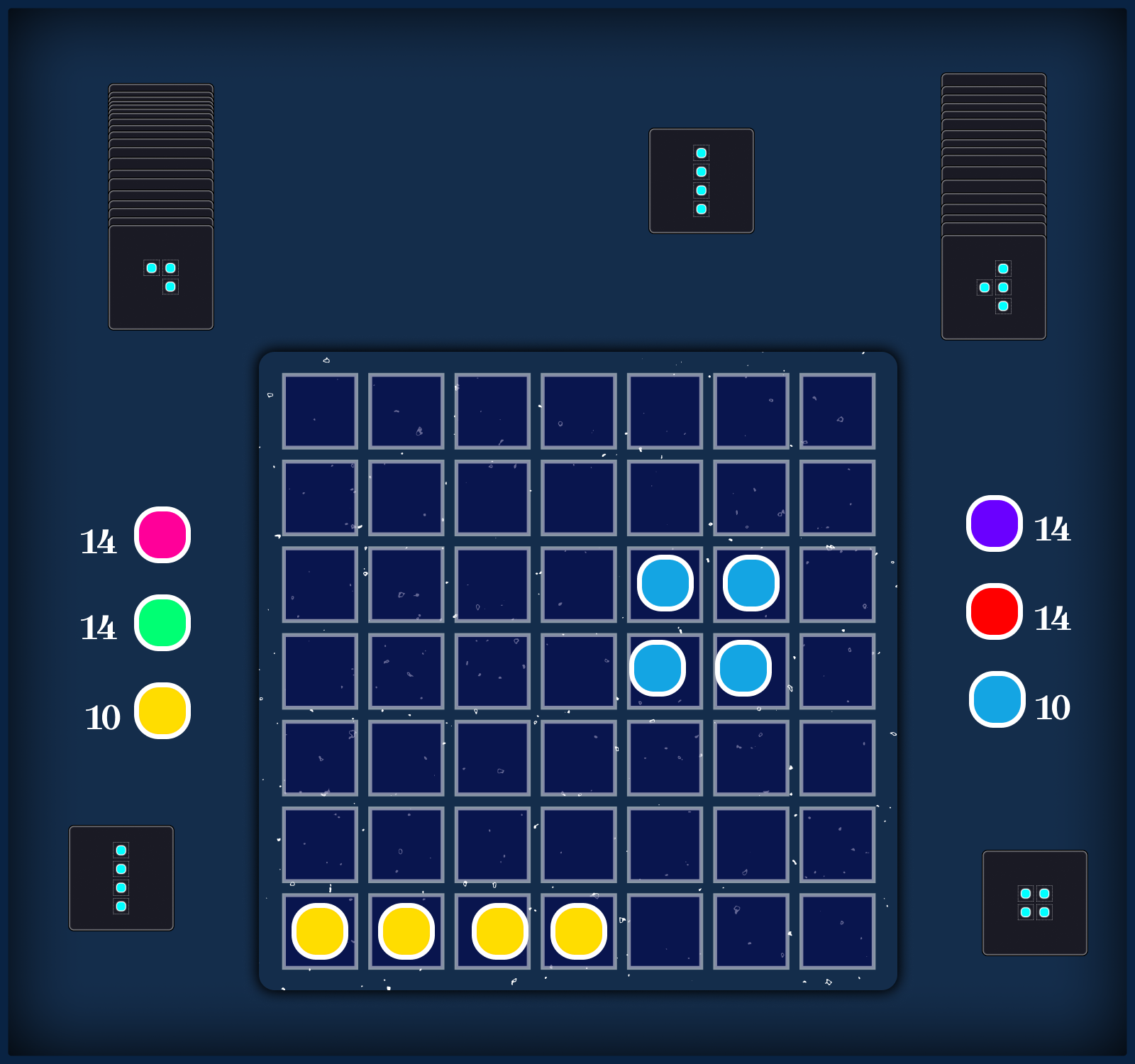

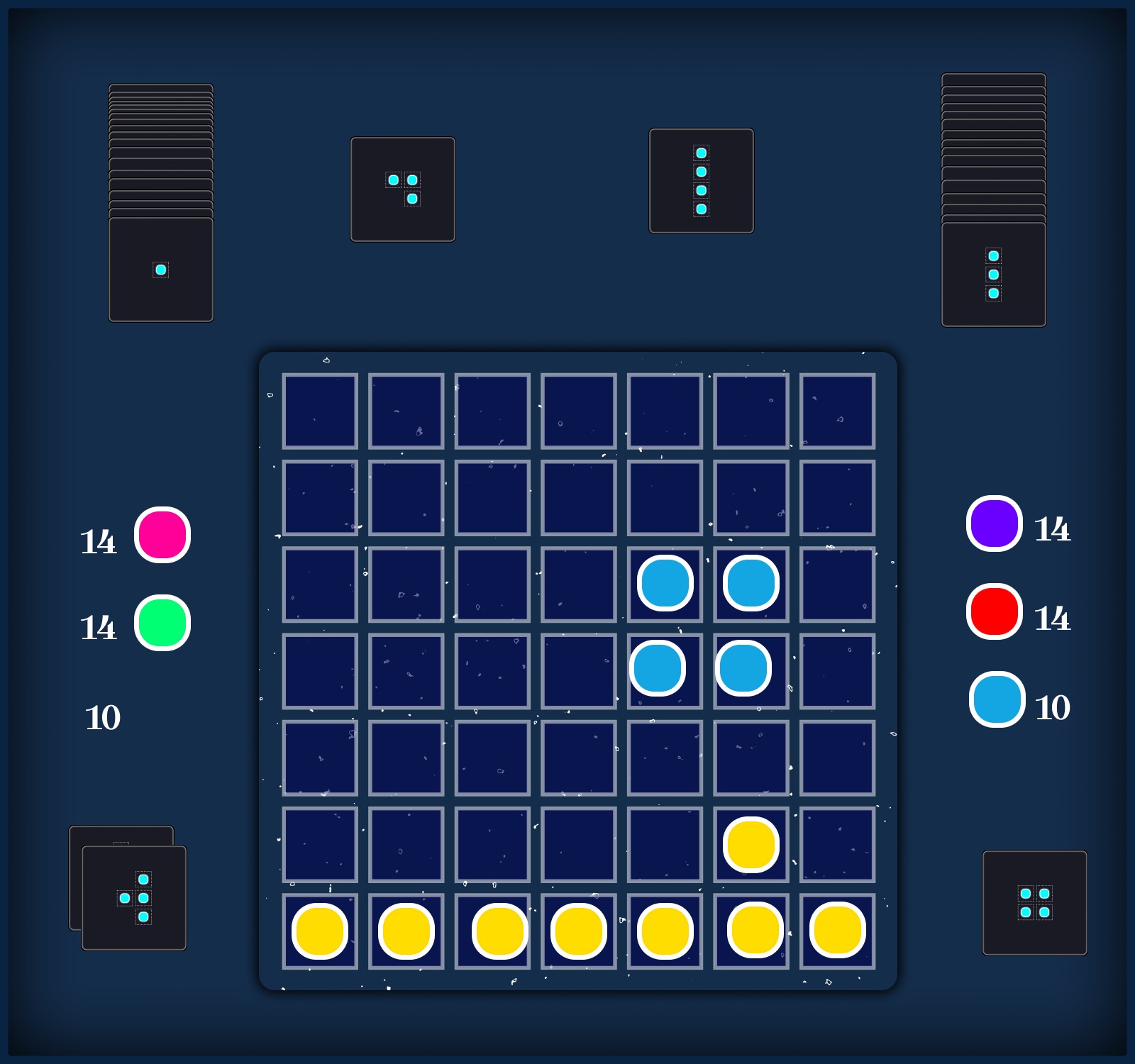
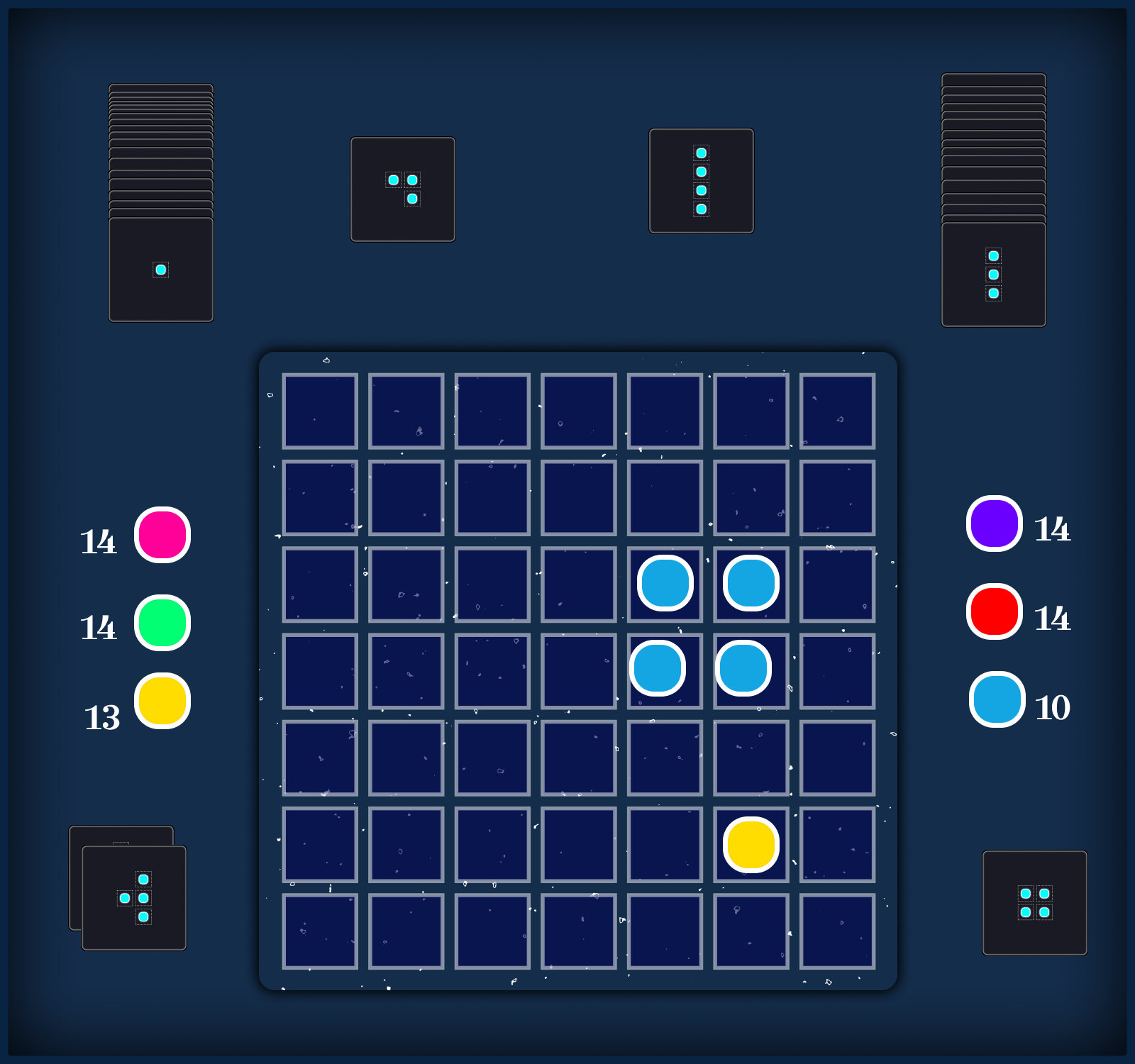
Players take turns executing their actions in the following sequence:
Card Selection: Select 1 face-up polyomino card from the 3 available market cards.
Placement: Place your tokens onto the 7x7 board matching the exact shape shown on the chosen card.
Rotation Allowed: You can rotate the shape in any orientation.
No Mirroring: Flipping/mirroring the shape is not permitted.
Single-Color Constraint Rule: When placing a shape, all tokens used for that shape must be of the same color. (For example, if a card requires a 4-token polyomino, you cannot mix 3 Green and 1 Blue token; you must use 4 Green or 4 Blue tokens).
Card Replenishment: Discard the used card and reveal a new face-up card from the deck so 3 choices remain available for the next turn.
The Line-Stealing Mechanic

The defining strategy of The 7th Square revolves around completing rows and columns:
Stealing a Line: As soon as any horizontal row or vertical column of 7 squares is fully filled, the player who placed the final piece to complete the 7th square claims all 7 tokens in that line.
Strategic Play: Since the board is shared, you can intentionally set up lines or hijack an opponent's progress to steal their pieces right before they complete a row!
Win Conditions
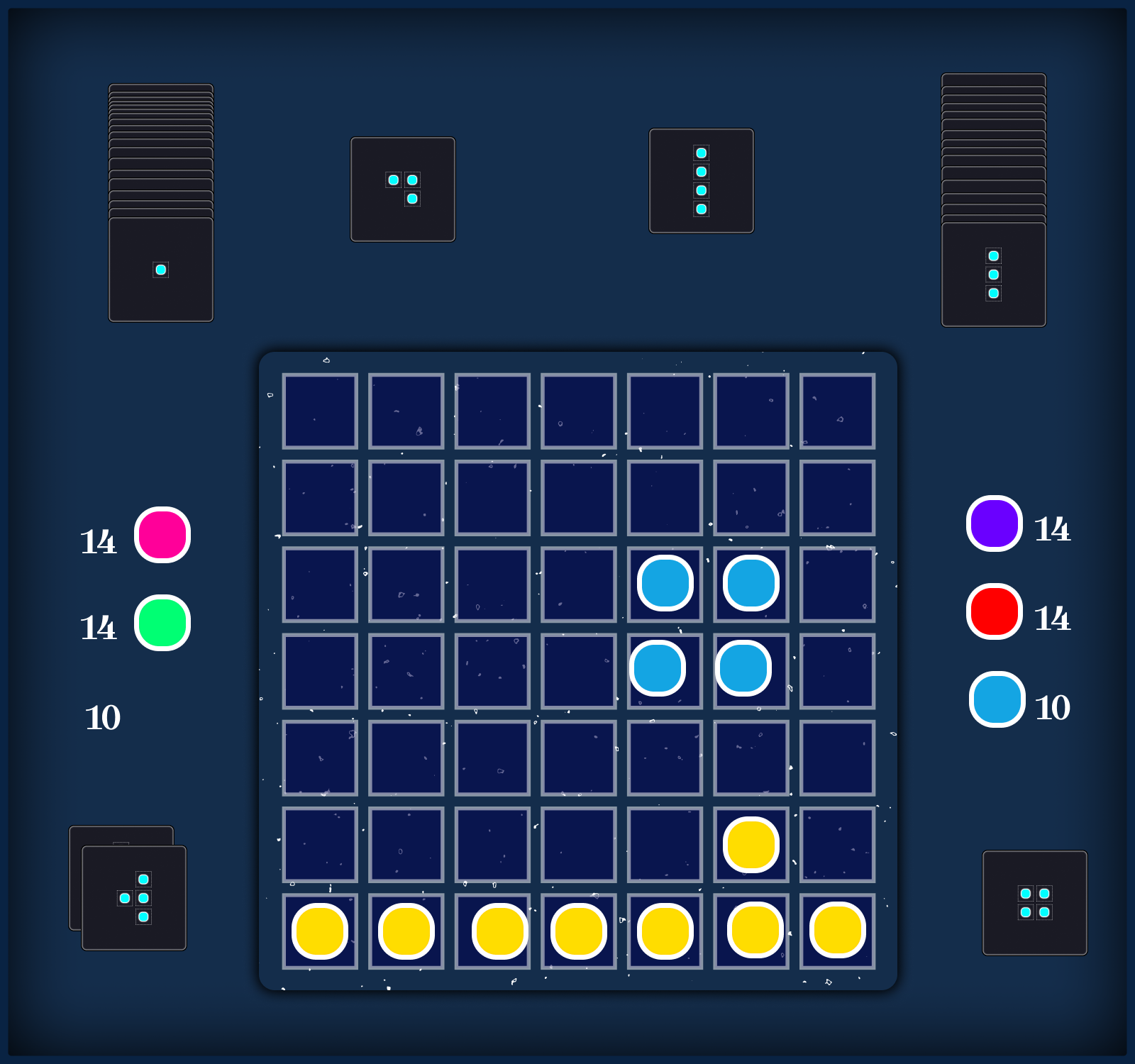
A match of The 7th Square can end in one of two ways:
Resource Elimination (Instant Win): If a player completely runs out of all their reserve tokens, the game ends immediately and the opponent with remaining tokens wins!
Deck Exhaustion (Score Victory): If the Polyomino deck runs out of cards and no further moves can be made, the game ends. Both players count their remaining tokens, and the player with the highest number of tokens/pieces wins.