The Phoenix Hub: Flood Recovery That Grows With You
by samfrk10 in Design > 3D Design
136 Views, 0 Favorites, 0 Comments
The Phoenix Hub: Flood Recovery That Grows With You
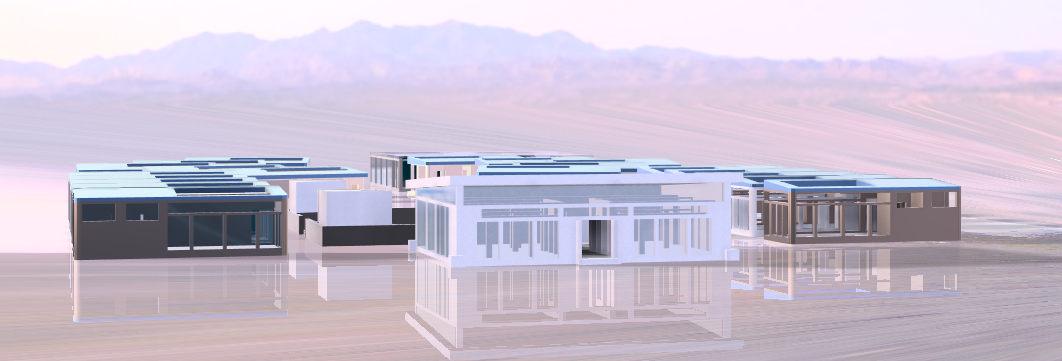
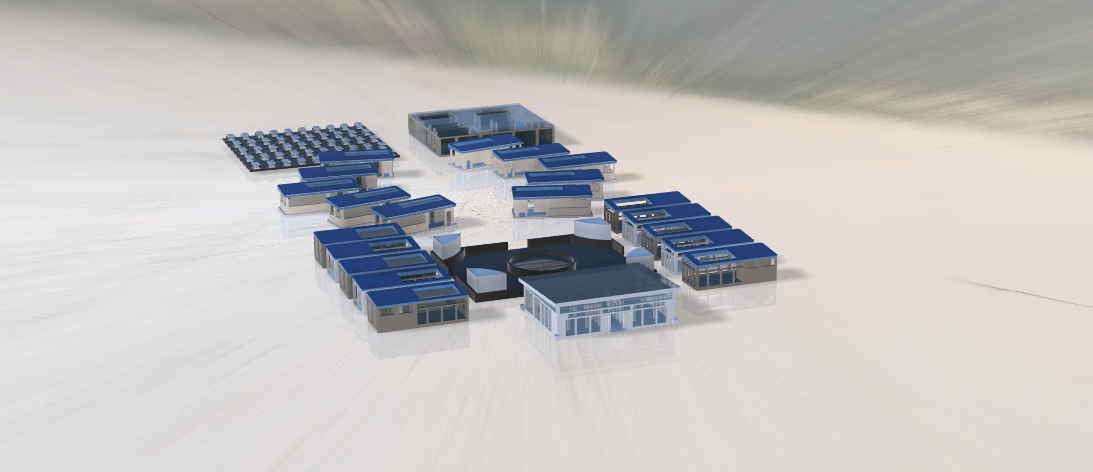
In the summer of 2025, I took part in a Short Term Mission Trip in Dakar, Senegal, which was conducted by Calvary Church. The experience changed my perspectives on life completely. Everywhere I looked, there were half-made buildings with roofs missing, and where there was nothing but nature. There were people living under such miserable conditions and without any roofs at all.
When I returned to America, I found nothing strange any more. On each Saturday, while helping out at the Roof Above food bank, I was seeing the same poverty everywhere. People had been forced into becoming homeless due to a lack of places to live in.
From such experiences has come about Project Senegal in 2025, an environmentally friendly way of constructing houses, based on appreciating cultures. Everything about culture is done in Senegal, from dancing, feasting, singing, and group behavior to communicating more than words can ever do. There was a feeling of hospitality and unity within the people that could not go unnoticed. It’s hard to forget going down the dirt road at night-time with the boys following after us knowing well they needed food, not because they were shy but because it was a case of necessity. Some canvas houses had been erected by the missionaries where the boys could sleep in.
What I found most inspiring about these boys is how happy they were even after having nothing; a ball with holes became something precious for them, and happiness emanated from them even under such adverse conditions. It made me realize the universal concept that irrespective of whether it is Senegal or Charlotte, everyone needs a safe, stable, and honorable home.
This concept led to my thinking of developing not just a house but rather developing a whole new concept of housing that would be applicable anywhere, whether Senegal or Charlotte, that would help improve the lives of the people by giving them a sense of connection.
Living in North Carolina, I have spent many years visiting the western mountains and seeing how closely communities depend on their surrounding environment. After witnessing the impacts that severe storms, flooding, and natural disasters can have on mountain communities, I began asking how engineering could help communities recover faster and become more resilient.
That question inspired the Phoenix Hub, a modular disaster recovery platform that combines renewable energy, clean water production, housing, healthcare, and local manufacturing into one integrated system. By bringing together technologies such as the Sunmill renewable energy grid, AquaSol atmospheric water generation, modular housing, healing spaces, and fabrication facilities, the Phoenix Hub is designed to support both immediate disaster response and long-term recovery.
The project demonstrates how scalable, modular infrastructure can help communities become more self-sufficient, adaptable, and prepared for future challenges while providing a model that can be deployed in disaster-prone regions around the world.
Supplies


Design Software
- Autodesk Fusion 360 (Primary CAD modeling, rendering, and engineering design software)
- Bambu Studio Slicer
Model Construction Materials
- PLA Filament (3D printing all Phoenix Hub components)
- Heavy-Duty Cardstock / Cardboard (Landscape base)
- Super Glue (Structural assembly)
- Elmer’s Glue (Landscape installation)
- Masking Tape / Painter’s Tape (Paint masking and detailing)
Paint & Finishing Materials
- Matte Black Paint (Landscape base, foundations, and Makerspace roof)
- Metallic Blue Paint (Aquaverde water feature, Healing Center roof, Living Module roofs, and water elements)
- Paint Brushes
- Sandpaper (Support cleanup and finishing)
Fabrication Equipment
- 3D Printer
- Flush Cutters / Support Removal Tools
- Hobby Knife (Optional for cleanup)
Scale
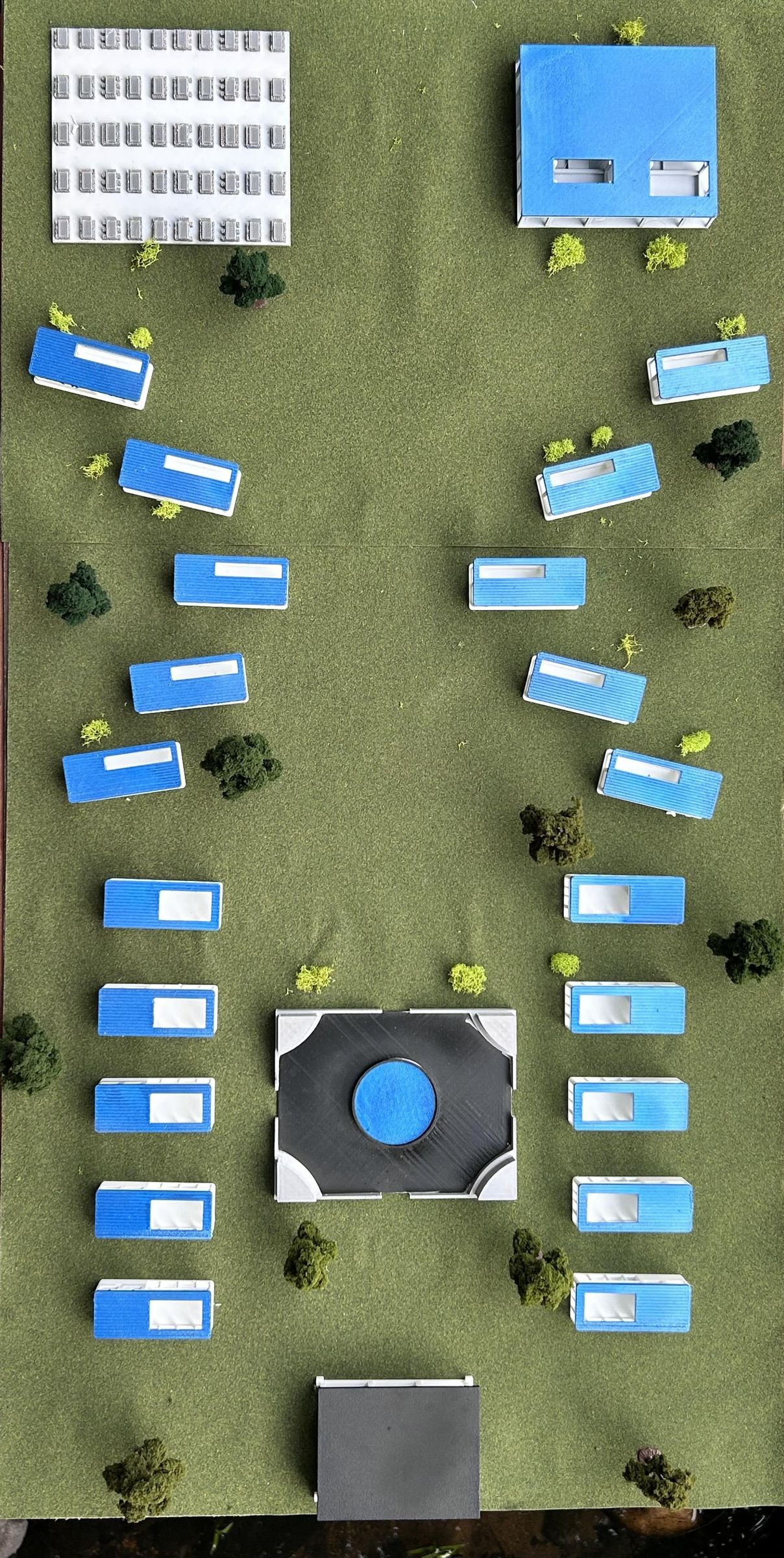
All Phoenix Hub components were fabricated at approximately 0.75% of full-scale dimensions to create a complete physical prototype of the resilience system.
Table Of Contents:
I. Introduction & Context
- Step 1: Case Study
- Step 2: Metrics and Economic Aspect
- Step 3: The Problem – Healing More Than Buildings
- Step 4: The Limitations of Traditional Disaster Shelters
- Step 5: Architecture As Medicine
- Step 6: Culture – Resilience & Impact
II. Project Overview & Recovery Stages
- Step 7: Project Overview – Stage 1
- Step 8: Stage 2
- Step 9: Stage 3
- Step 10: Stage 4
- Step 11: Resilient City
III. Design Principles & Neuroscience Framework
- Step 12: Design Principles (Framework)
- Step 13: NeuroDesign As a Design Framework
- Step 14: Acoustic Buffer Zones
- Step 15: Natural Light and Circadian Health
- Step 16: Biophilic Design and Connection to Nature
- Step 17: The “Dignity” Metric in Engineering
- Step 18: Nature As a Healer – Designing With Nature As Infrastructure
- Step 19: Data-Informed Biophilic Integration and Dynamic & Diffuse Light
- Step 20: Proximity to Water
- Step 21: Natural Airflow and Sensory Comfort
- Step 22: Nature As a Recovery System
- Step 23: The Quiet Zones
- Step 24: Architectural Implementation of Restorative Metrics
- Step 25: Sensory Restoration
IV. Modular Construction & Infrastructure Systems
- Step 26: Modular Construction
- Step 27: Three-Tier Transport Strategy
- Step 28: The Emergency Microgrid: Sunmill Energy System
- Step 29: Engineering for Disaster Resilience
- Step 30: Water Resilience: Harvesting & Purification
- Step 31: AWG Stage 1–3
- Step 32: AWG Stage 4
- Step 33: Production and Integration
- Step 34: Passive Climate Control As Resilience Infrastructure
- Step 35: Phase-Change Material (PCM) Thermal Regulation
V. Community Makerspace & Workforce Development
- Step 36: The Community Makerspace
- Step 37: Skills Training
- Step 38: Modular Foundations
- Step 39: The Phoenix Training Curriculum
VI. Technical Reference & Blueprinting
- Step 40: Reference Sheet
- Step 41: Blueprint
VII. Module Construction Tutorials
Housing Module
- Step 42: Housing Module – Create the Foundation and Structural Layout
- Step 43: Construct the Building Envelope
- Step 44: Complete the Roof and Environmental Systems
Sunmill & AquaSol Systems
- Step 45: Sunmill
- Step 46: AquaSol
Aquaverde System
- Step 47: Aquaverde
Maker Space
- Step 48: Maker Space
- Step 49: How to Create the Maker Space
- Step 50: Creating the Openings & Ventilation
Healing Room
- Step 51: Creating the Healing Room – Steps
- Step 52: Create the Roof and Skylight
- Step 53: Finalize the Therapeutic Design Features
Energy Grid
- Step 54: Creating Energy Grid & Steps
- Step 55: Construction of the Sunmill Microgrid Network
- Step 56: Filling the Grid With Filler Modules
Foundations
- Step 57: Foundation
VIII. Fabrication & Model Building
- Step 58: 3D Printing
- Step 59: Living Space Build
- Step 60: Healing Modules
- Step 61: Maker Space Build
- Step 62: Aqua Verde Build
- Step 63: Landscape Build
IX. Cultural Integration
- Step 64: Meeting Cultural Norms
X. Final Assembly & Materials
- Step 65: Full Assembly
- Step 66: Materials
XI. Local Rebuilding & Soil Printing
- Step 67: Rapid Local Rebuilding
XII. Recovery Timeline & Impact
- Step 68: The Recovery Timeline
- Step 69: Impact Metrics
XIII. Future Vision & Acknowledgments
- Step 70: Future Scalability: a Global Model for Resilience
- Step 71: Acknowledgments
Case Study
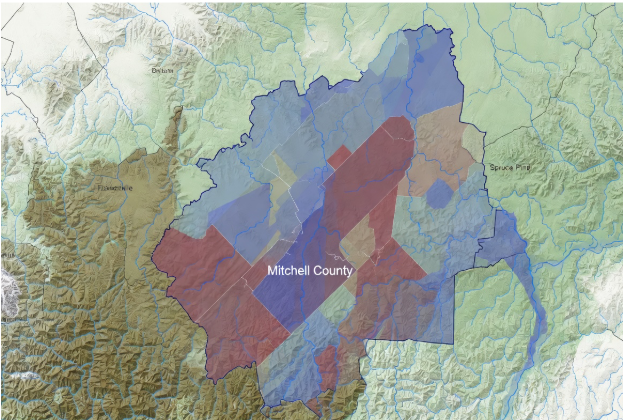

It all starts in Mitchell County, North Carolina. Nestled within the Blue Ridge Mountains, Mitchell County is an example of something researchers have termed the "Rural Recovery Paradox," referring to a location characterized by robust community relations as well as vulnerable infrastructure and geography.
Hurricane Helene made it clear just how dangerous such a geographical location can be. In valleys prone to flooding and with mountainous regions that caused mudslides, entire neighborhoods found themselves inaccessible for days, weeks even. Flooding washed away vital infrastructure and knocked out electrical lines. Those who lived there didn't know when help would finally come.
"The storm made one thing painfully clear: Recovery systems must be able to stand on their own when everything else falls apart."
Metrics and Economic Aspect
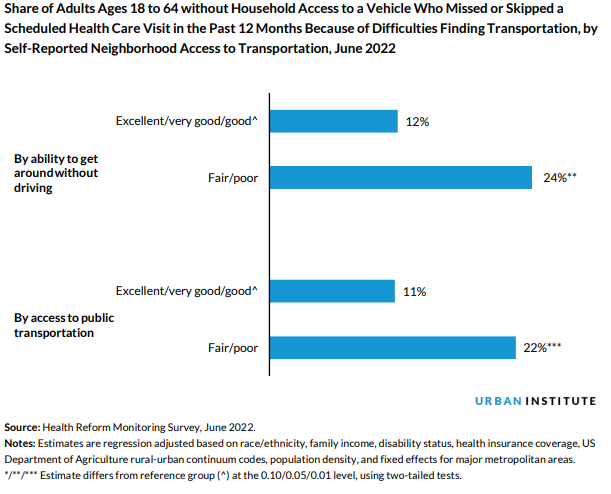
This region not only suffers from geographical risks but also social risks. A high number of residents belong to the elderly generation who are unable to get proper transportation. In case of any disaster, a centralized facility becomes a necessity rather than luxury. U.S. Census Bureau.
However, the primary issue remains funding. Although initial response money reaches the affected area quickly, long-term recovery is a slow, costly, and largely understaffed process. The western parts of North Carolina face a budget deficit worth billions of dollars that affects its reconstruction process significantly.
The Phoenix Hub offers a different approach towards tackling such an obstacle. It includes:
modular construction, phased roll-out, and flexible infrastructure.
Such an approach is cost-effective and scalable. NC Budget & Tax Center
"In a region where risks run high and resources run low, the Phoenix Hub turns vulnerability into resilience—one modular step at a time."
The Problem - Healing More Than Buildings
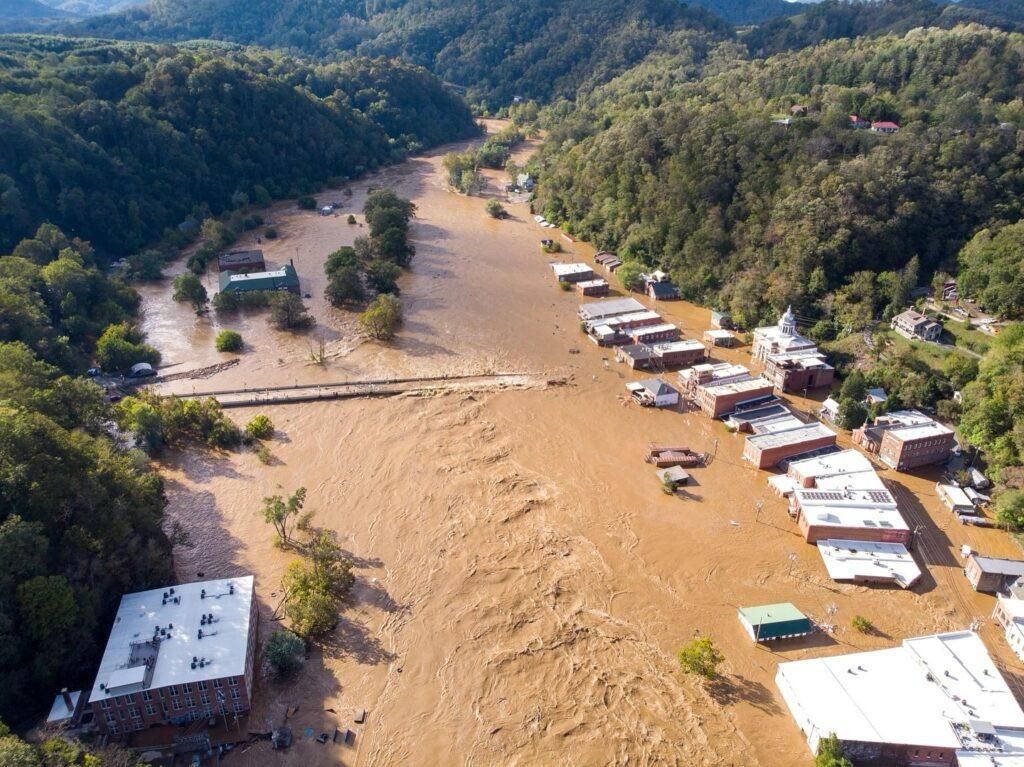
Disasters not only demolish structures; they destroy communities. People may lose homes, institutions, community gathering places, and ways of living within an instant. Although rescue teams strive to help people return to their normal lives, restore their infrastructure, and provide temporary solutions like electricity and shelter, sometimes they fail to recognize the psychological impact of the situation.
That kind of impact on individuals’ well-being is called Root Shock, which is a term used to describe the shock associated with being uprooted and forced to relocate due to the destruction caused by disasters. It is more than losing one’s home; it involves the loss of one’s identity and community.
For disaster survivors, rebuilding does not always mean getting back what they lost.
"Recovery isn’t just reconstruction. It’s restoring the sense of home that disaster steals and that's what Phoenix Hub intends to bring"
The Limitations of Traditional Disaster Shelters
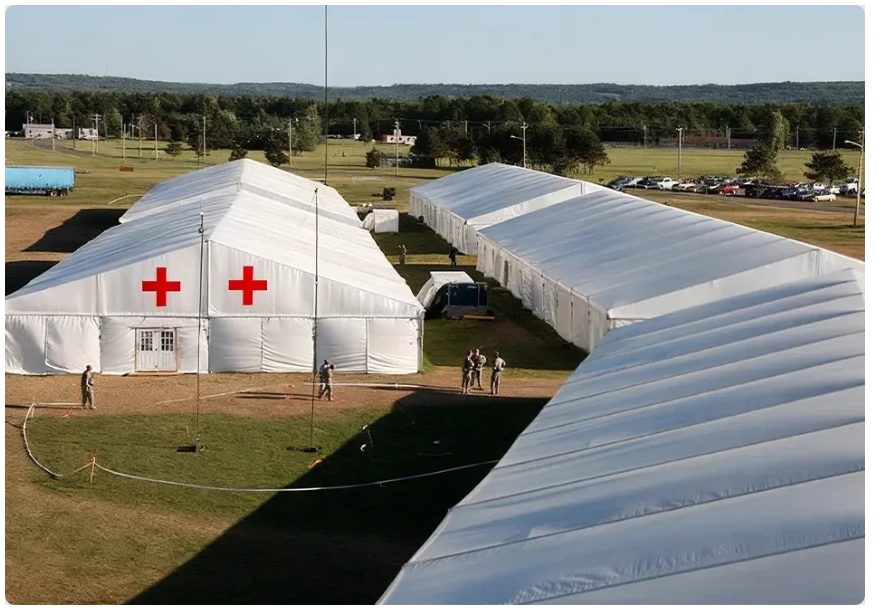

Most disaster shelters are constructed for efficiency and efficacy, rather than therapy. They tend to be large-scale structures, bright, loud, overcrowded, and highly managed. Such facilities save lives but seldom restore humanity.
Unrelenting illumination. Unending sound. No opportunity for solitude. No feeling of possession.
Such conditions may lead to higher levels of stress, fatigue, and psychological pressure.
Rather than empowering victims and aiding in their transition towards normality, regular shelters tend to rob them of this chance and reduce them to mere beneficiaries.
The Phoenix Hub poses a new challenge to this idea through a single question:
Can recovery processes restore dignity rather than deprive individuals of it?
“The Phoenix Hub doesn’t just shelter survivors — it restores their humanity.”
Architecture As Medicine
.jpg)
The Phoenix Hub treats architecture not as a container for services, but as a tool for healing.
Every design decision begins with one question: How can this space help someone feel safe again?
The result is a restorative environment that supports both physical and emotional recovery. Instead of simply housing displaced residents, the Phoenix Hub creates spaces that encourage connection, resilience, and personal agency.
It’s not just a shelter. It’s a place where healing begins.
“The Phoenix Hub isn’t built to shelter people - it’s built to help them rise.”
Culture - Resilience & Impact

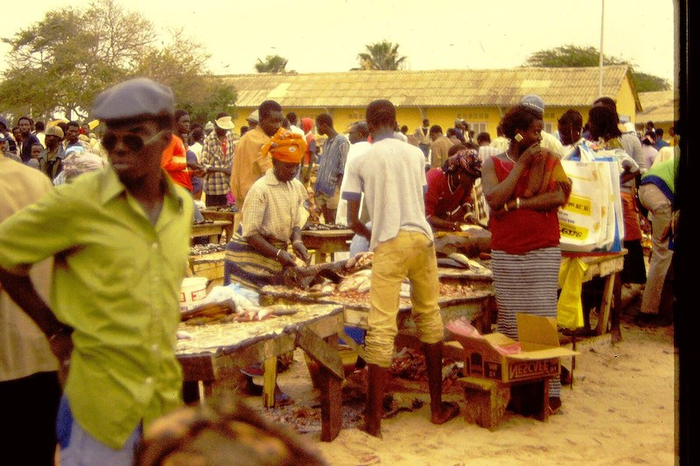
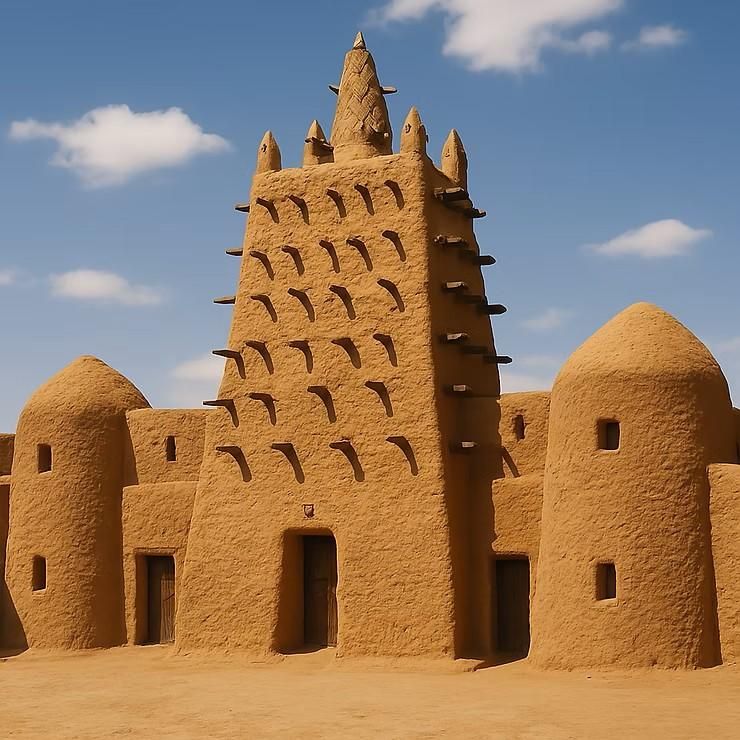
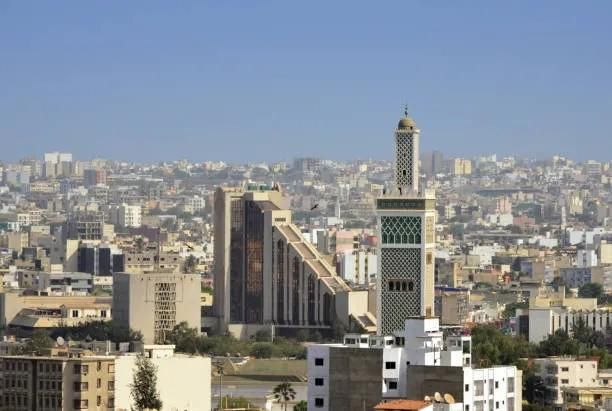
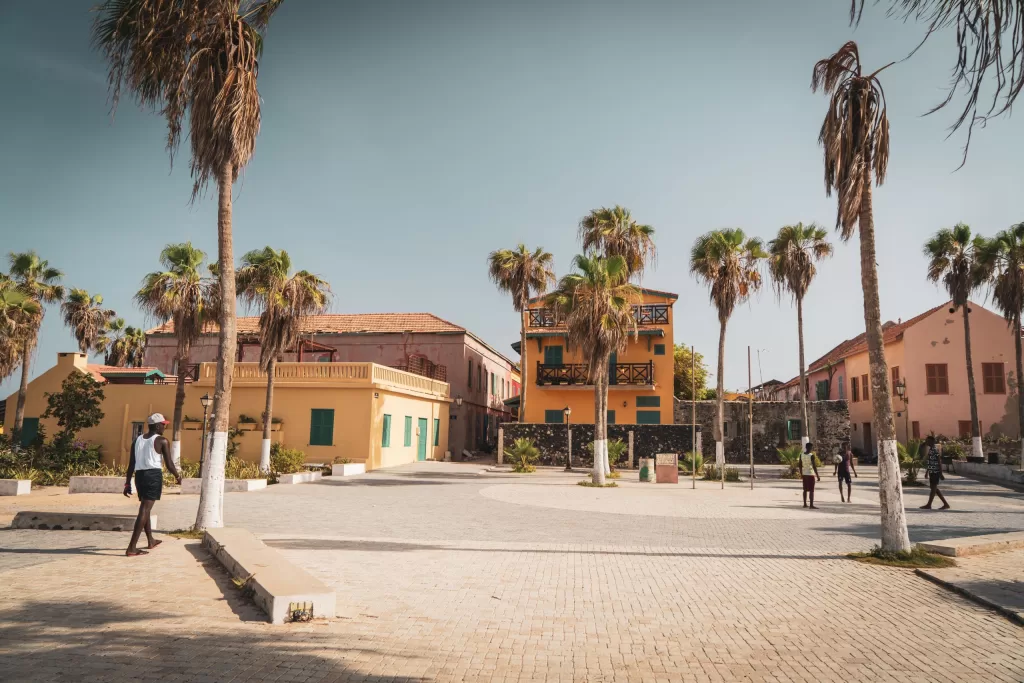
I came to learn another unexpected lesson in Senegal: resilience comes not from structures but through culture. The people of Senegal do not overcome adversity as individuals; they overcome it as a community. It is not hospitality but the hospitality economy. The community is essential, not a luxury.
Those lessons found their way into the design of the Phoenix Hub, more than any engineering drawings ever could.
Radical hospitality, known as teranga among the Senegalese people, guided the creation of welcoming spaces in the Hub, where strangers are treated like family members.
Traditional Senegalese courtyards inspired the Community Commons space.
Impluvium roof structure, an ancient technique that helps collect rainwater, inspired the development of decentralized water infrastructure of the Hub.
The concept of building within the natural environment, such as creating airflow and using shade and native material, inspired the passive climate control methods for the Phoenix Hub.
Of course, not only active communal practices shaped the design.
Even the quiet moments of faith, reflection, and storytelling reminded us of the need for both physical and emotional/spiritual recovery.
The Phoenix Hub incorporates all those concepts into a modern design and uses innovative technologies, including atmospheric water generation, modular construction, and renewable power supply.
"Rooted in Senegalese hospitality, rebuilt with modern tools - the Phoenix Hub rises from both worlds."
Project Overview - Stage 1

Project Overview
The Phoenix Hub is intended to change alongside the community. Instead of acting as a temporary aid in the process of disaster relief, it functions as an adaptable resilience system, constantly changing to reflect changing community needs. From the point of view of a project's evolution, the Phoenix Hub begins its life as an emergency response hub and then becomes a civic resource in the process.
Modular design, renewable energy systems, trauma-informed design, and community rebuilding programs are the key features that allow the Phoenix Hub to serve as an example of Bouncing Forward. Through multiple phases of development, each building on top of the previous one, it helps the affected community members move from stabilizing and healing to rebuilding and growing. The combination of elements such as emergency response, trauma therapy, workforce education, sustainable infrastructure development, and civic participation turns the disaster recovery experience into something more valuable and long-lasting.
Stage 1: The Phoenix Hub arrives as a rapidly deployable emergency response system designed to restore critical services when conventional infrastructure fails. Modular housing units, renewable power generation, water purification, and communication systems provide immediate stabilization for affected residents. By delivering essential resources within the first 72 hours, the hub creates a foundation for recovery while reducing dependence on external aid.
“In the first 72 hours, the Phoenix Hub becomes hope you can walk into.”
Stage 2
_large-1.jpeg)
Stage 2: Once initial necessities are met, the central place transforms its function from basic survival to recovery. The creation of temporary medical services, gathering spots, counseling programs, and other community resources allows for addressing recovery issues both physical and psychological. Following the principles of Trauma-Informed Design, safety and comfort come first along with human interaction.
“From chaos to comfort — the Hub turns survival into stability.”
Stage 3

Stage 3: Recovery is managed by the community itself. Instead of temporary infrastructure, permanent structures are established, with the Makerspace becoming the hub for the local rebuilding process. The residents can now utilize digital design software, 3D printers, and manufacturing facilities to rebuild their homes, businesses, and community spaces themselves. Assistance has been turned into empowerment.
“Recovery becomes real when the community builds it themselves.”
Stage 4
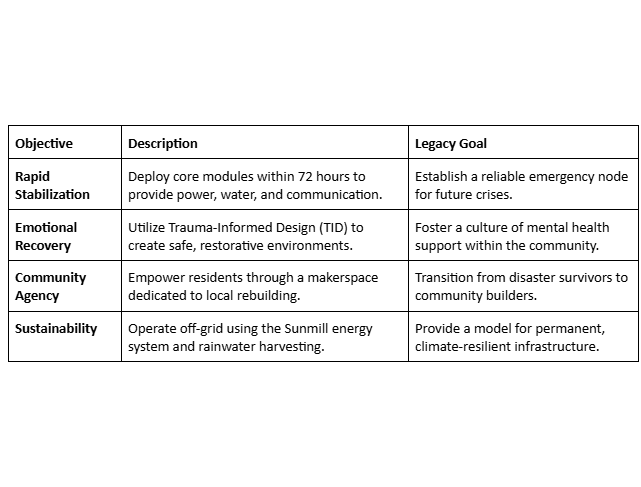
Stage 4: The Phoenix Hub evolves into a permanent civic asset that continues serving the community long after the disaster has passed. What began as emergency infrastructure transforms into a center for education, innovation, recreation, and resilience. Surrounded by renewable energy systems, gardens, public gathering areas, and community programming, the hub becomes a lasting symbol of recovery and preparedness for future generations.
Purpose: To visually communicate the "Bouncing Forward" philosophy and the hub's long-term value.
The Phoenix Hub embodies a new vision for disaster recovery,one that moves beyond restoration toward transformation. By evolving from emergency infrastructure into a permanent civic asset, the project enables communities to not simply recover, but to bounce forward stronger, healthier, and more resilient than before.
Resilient City

Traditional disaster recovery often focuses on restoring what existed before. The Phoenix Hub embraces a different philosophy: communities should not simply return to their previous condition; they should emerge stronger, healthier, and more resilient. By integrating emergency response, mental health support, workforce development, sustainable infrastructure, and long-term community investment into a single adaptive system, the Phoenix Hub demonstrates how recovery can become an opportunity for transformation.
The result is a model of resilience that evolves alongside the people it serves, turning disaster response into a pathway toward lasting social, economic, and environmental renewal.
"The Phoenix Hub doesn’t restore the past - it builds the future."
Design Principles
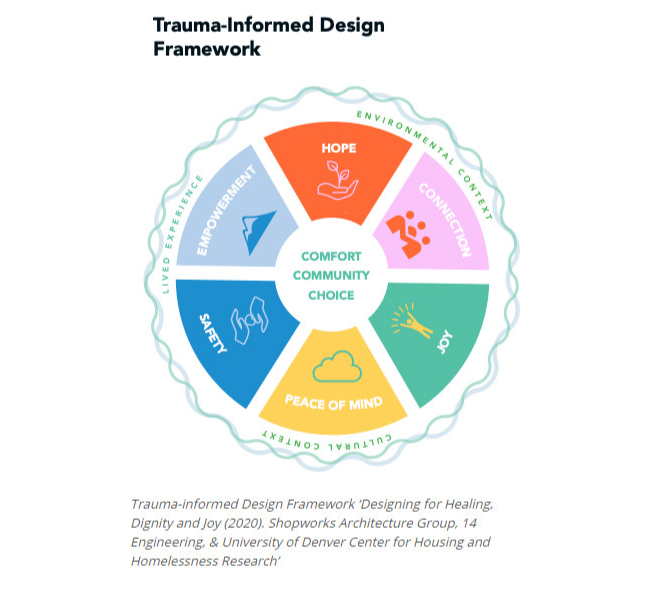
After a disaster, people exhibit higher levels of anxiety, uncertainty, vigilance, and emotional intensity. This state of being is highly connected to the human threat detection system, which consists of the amygdala and evaluates the surroundings to detect any possible danger. If the surroundings are unknown and chaotic, then the amygdala is triggered and creates stress hormones, preventing relaxation and concentration, not to mention feeling like a member of the community.
In turn, the role of architecture does not simply include protecting people from environmental elements but becomes an important element of the recovery process. Everything from the use of materials to the sounds and lighting of buildings affects the perception of safety for individuals. The Phoenix Hub building aims to overcome such effects of the surroundings on people.
"Design that calms the mind becomes design that restores the soul.”
NeuroDesign As a Design Framework
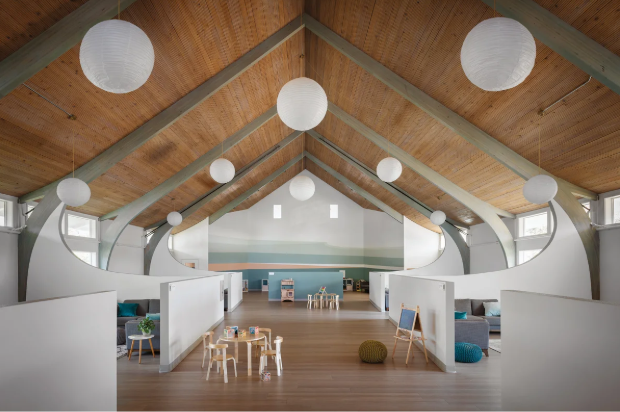
As opposed to viewing Trauma Informed Design as merely theoretical, the Phoenix Hub utilizes neuroscience research by creating specific architectural metrics that can be tested using Autodesk Fusion. Not only is the performance of each design choice assessed for its physical integrity, but also for its possible effect on mental health.
The design approach centers on mitigating negative environmental stimuli, as well as maximizing positive ones. By incorporating rounded shapes, predictable navigation, exposure to light, natural materials, acoustics, and biophilia principles, an environment conducive to healing and resilience is created.
“Where neuroscience meets architecture, healing becomes measurable.”
Acoustic Buffer Zones
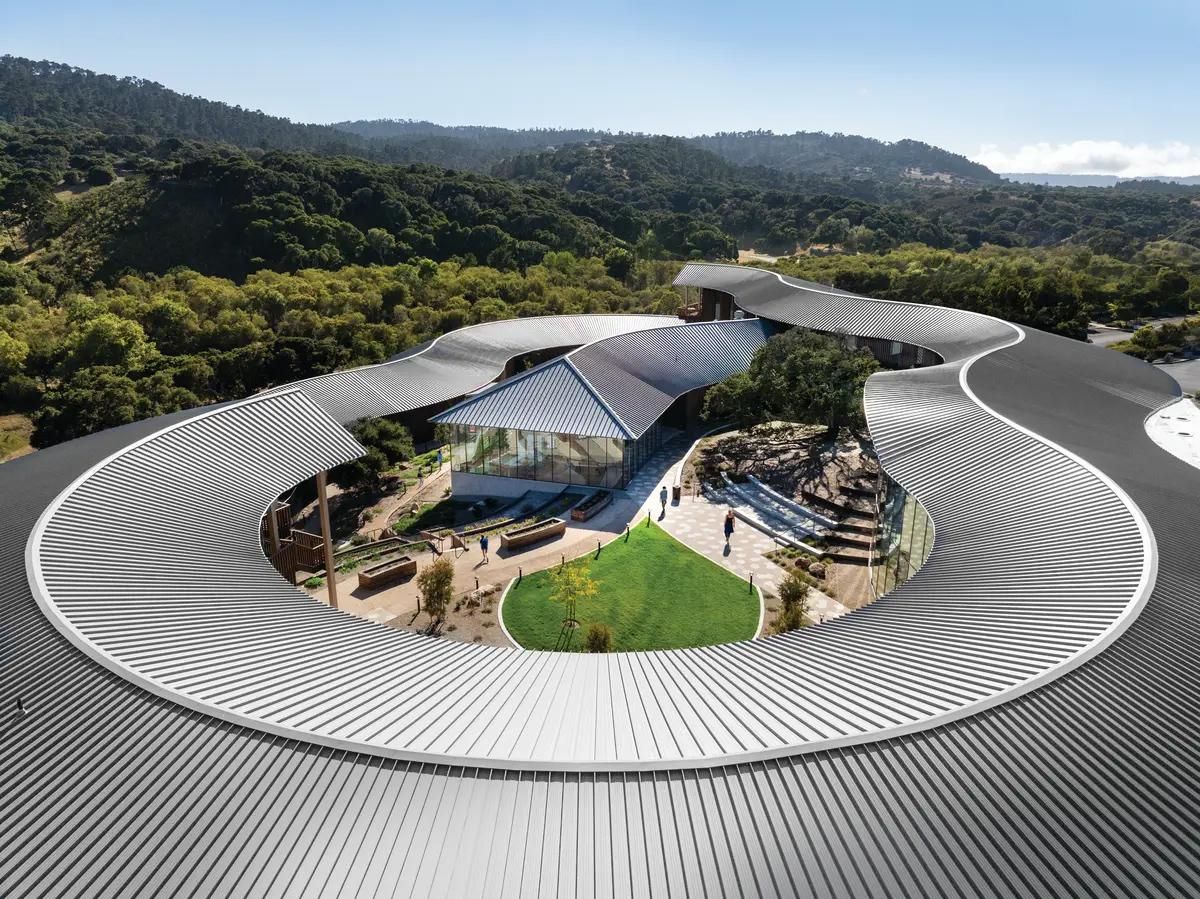
Sudden noise, too much echo, and ambient noise are some of the main environmental factors that trigger stress in people with trauma experiences. These elements lead to high levels of stress and hinder people's ability to focus, sleep, and control their emotions.
Noise is one of the most common environmental triggers for people recovering from trauma experiences. Sudden noise, too much echo, and ambient noise are some examples.
In a tranquil acoustic environment, people will be less exposed to such sensory disturbances.
“Quiet spaces create loud breakthroughs in recovery.”
Natural Light and Circadian Health
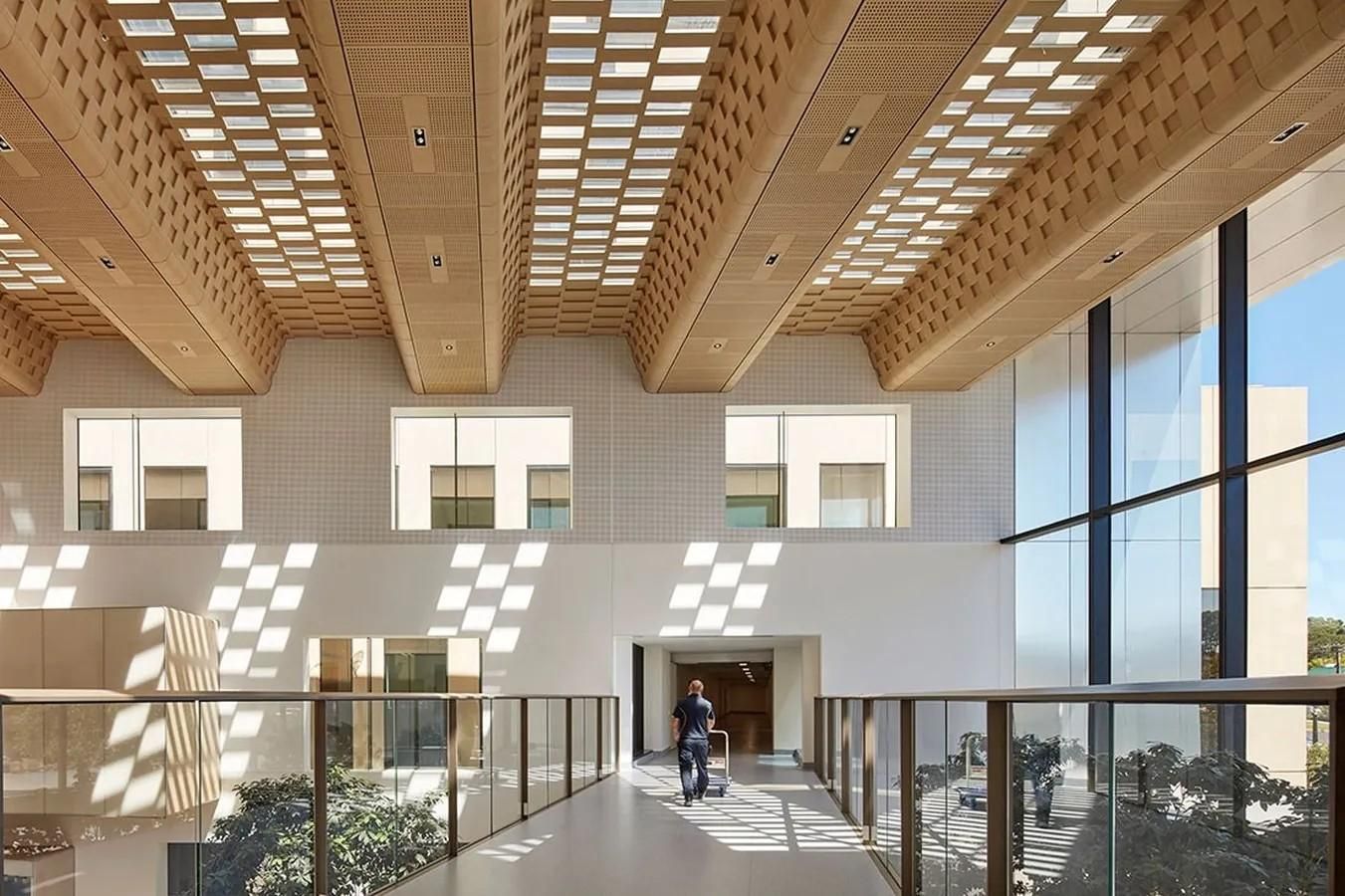
Daylight is an important component for regulating the circadian rhythm of the body, better sleeping, alleviating stress levels, and promoting mental health. The Phoenix Hub is built such that it gets maximum exposure to natural light via windows, clerestories, and skylights incorporated into the living and healing modules.
The design of the healing module especially allows maximum exposure to natural light through high windows and a roof light well in the middle. This ensures minimum usage of artificial lights and more of natural lighting.
“Light becomes medicine when the world feels dark.”
Biophilic Design and Connection to Nature
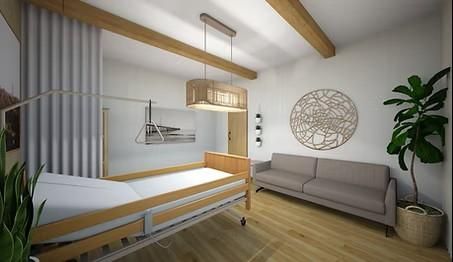
Studies have shown time and again that contact with nature has been known to reduce stress levels, reduce blood pressure, increase positive moods, and even aid in faster recovery. Biophilic designs have been applied in the Phoenix Hub through the creation of gardens, native landscaping, natural ventilation, and views to the outdoors.
The architecture of the building itself works along with nature, through passive cooling and airflow. Instead of separating people from the outside environment, the hub enables people to connect with the environment around them.
“When nature becomes part of the building, healing becomes part of the day.”
The "Dignity" Metric in Engineering
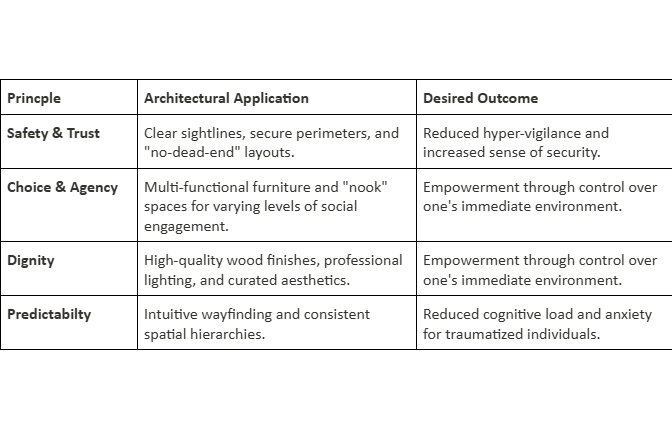
Most emergency structures consider nothing more than the principles of efficiency and economy in their designs. Phoenix Hub defies that norm by recognizing dignity as one of its key design elements.
Within Autodesk Fusion, there is an emphasis on the use of warmer materials that feature textures as opposed to just using utilitarian materials. Such a design element sends a powerful message about care and respect for the occupants of these structures.
This, in turn, helps send across the message that disaster survivors deserve better than just basic survival facilities.
“Dignity isn’t a luxury — it’s the foundation the Phoenix Hub is built on.”
Nature As a Healer - Designing With Nature As Infrastructure
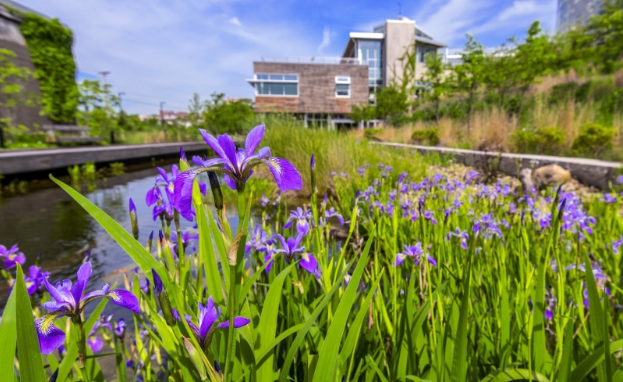
A series of studies shows a definite connection between natural systems and their capacity to reduce physiological stress, control emotions, increase cognitive function, and assist in the process of recovering. It is particularly difficult to recover post-disaster due to the long period of insecurity, relocation, bereavement, and psychological strain.
The infrastructure of the recovery focuses on the basic needs of humans like accommodation, energy supply, and water supply. While those are indeed necessary, there are no means provided that would assist people with their psychological problems. The Phoenix Hub understands that recovery cannot take place without considering the human element. That is why biophilia becomes one of the core strategies for achieving this aim.
“The Phoenix Hub turns nature into infrastructure and comfort into recovery.”
Data-Informed Biophilic Integration and Dynamic & Diffuse Light
Utilizing the concept of biophilic design through evidence-based practice, certain environmental elements were implemented and assessed using Autodesk Fusion. Unlike previous instances where intuition guided me, I set specific standards based on how well they contributed to the occupants' physical well-being and recovery processes.
The interventions were chosen not only because of their performance in the environment but also for their contributions to psychological restoration and resilience.
“Healing isn’t guessed - it’s designed, measured, and built into every detail.”
Natural light is an essential component that assists in the regulation of circadian rhythms, ensuring that sleep schedules remain regular, helping one maintain good moods, and increasing cognitive functioning. Circadian rhythms are usually interrupted after a disaster due to factors such as stress, relocation, and other challenges in people’s environments.
This problem will be addressed through the incorporation of a lattice roof and skylights at the Phoenix Hub, where sunlight is filtered and used to create a pattern of dynamic light and shadows. This has been drawn from the way sunlight is experienced when walking through a forest, as it creates interesting effects without causing any kind of stimulation to the brain.
“Light that moves with the day helps people move forward too.”
Proximity to Water
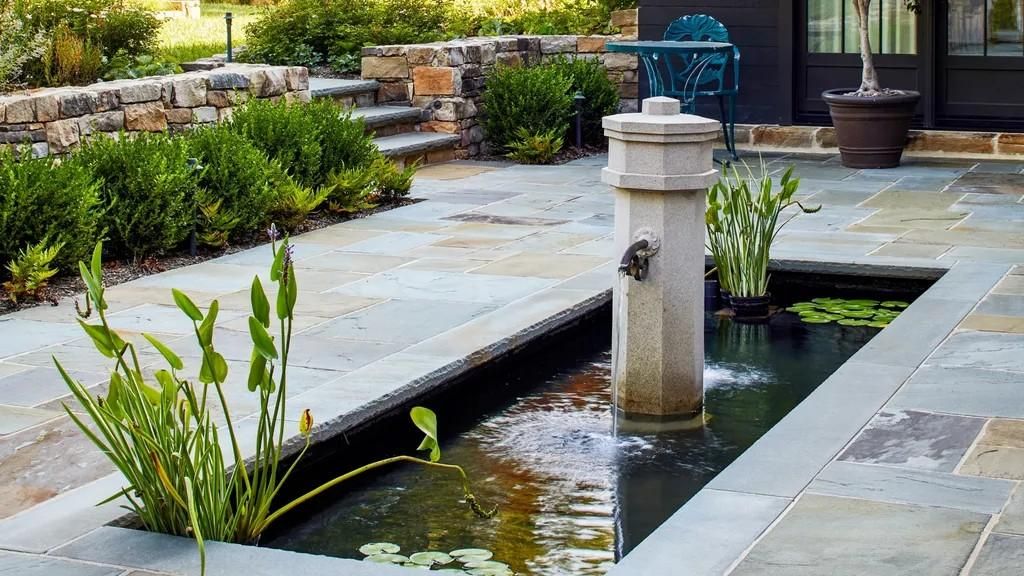
Water is widely recognized as an important symbol for peace, restoration, and comfort in people’s psyche. Several studies have demonstrated that viewing or hearing running water may help reduce stress perception, lower heart rate, and promote emotional well-being.
In order to integrate these attributes in a sustainable manner within the structure, the Phoenix Hub introduces the idea of creating a water element, which would work on a closed water loop, allowing for water circulation and sound production using the collected rainwater.
As opposed to decorative fountains designed solely to impress visitors, the water element in Phoenix Hub serves multiple purposes. On top of its ability to restore one’s senses, it could be used for storm water management and act as a social attraction point.
Listening to water sounds will help people relax and reflect on their thoughts even during the most stressful stage of recovery.
“Where water flows, calm follows — even in the hardest moments.”
Natural Airflow and Sensory Comfort
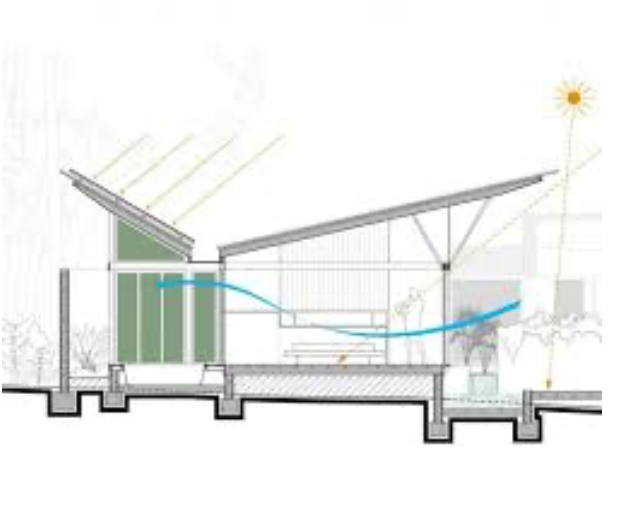
However, thanks to the butterfly roof system and stack effect ventilation system in Phoenix Hub, a relationship between the users and the flow of the natural systems has been created. In other words, rather than cutting off the user from the environment, architecture makes it possible for the individual to feel the flow of air, change of temperature, seasonal changes of nature, and the flow of the natural components.
In the fresh air, which goes in through the lower openings and goes out through the higher clerestory openings, it ensures passive cooling and better quality of air. By interacting with the flow of air, comfort is achieved, thus making the individual less reliant on machines.
Hence, an interactive environment is created.
“Air that breathes with you makes the whole space feel alive again.”
Nature As a Recovery System
Collectively, these biophilic design elements convert nature into infrastructure. Sunlight is used as a way to regulate circadian health. Water acts as an element of emotional healing. Plants are used as a means to create connections. Ventilation acts as a passive system for comfort.
By understanding resilience not only as an engineering problem, but also recognizing that health cannot be separated from environment, the Phoenix Hub is able to implement evidence-based biophilic design benchmarks throughout the design process, thereby creating resilient environments that not only endure disasters, but can recover from them.
“When materials feel human, the space feels like home.”
The Quiet Zones
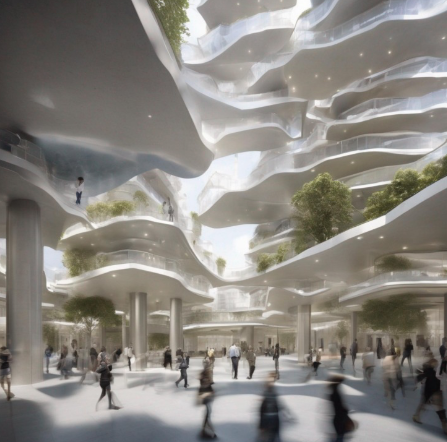
Designing for Psychological Recovery
In a disaster situation, the consequences are not merely limited to the destruction of property and infrastructure. Often, survivors experience protracted phases of stress, uncertainty, and an increased sensitivity to the surrounding environment as part of their efforts to recover.
Studies conducted in environmental psychology and neurology indicate that the physical surroundings have the ability to affect the manner in which people cope with stress and attain psychological comfort. The Quiet Zone areas within the Phoenix Hub help in providing the occupants with the ability to recover mentally and psychologically.
This recovery involves the principles of attention restoration theory and trauma-informed design techniques.
“The Phoenix Hub creates quiet spaces where the mind can finally breathe again.”
Architectural Implementation of Restorative Metrics
Curved Architecture and Reduced Threat Perception
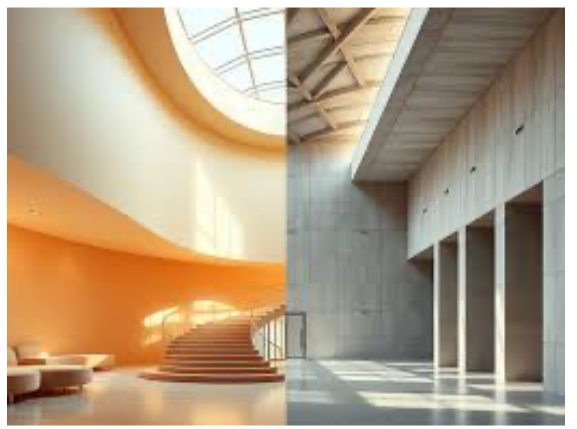
The designers avoided straight edges and angular geometries in the Healing Modules and common areas. Curved wall junctions, curves in interior wall divisions, soft edges of the furniture arrangement and the softening of the building façade make the environment more visually soft and increase feelings of security.
Neuroaesthetics research shows that curved forms are frequently viewed by the brain as less threatening than angles. This results in a more relaxing environment.
“Curves calm the brain — and the Phoenix Hub builds that calm into every corner.”
Sensory Restoration
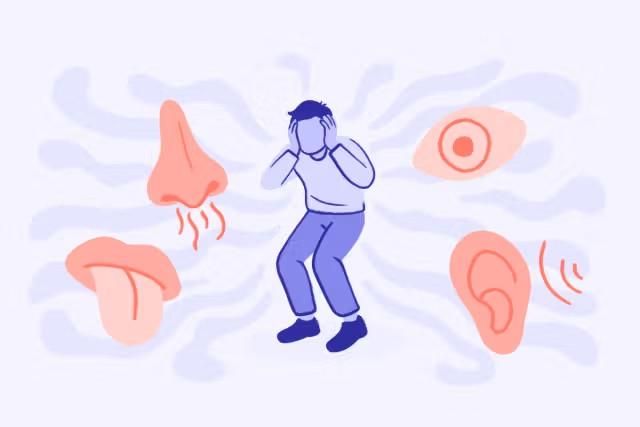
Natural Light as a Recovery Tool
The Phoenix Hub utilizes numerous windows, clerestories, and roof lights within housing units, healing facilities, and communal spaces to increase exposure to natural light, regulate circadian rhythms, and minimize use of artificial light sources.
In the Healing Module, in particular, the installation of high privacy windows and roof lights enables the diffusion of natural light without compromising the occupant's privacy during therapy sessions.
Acoustic Buffering Systems
Mental recovery can be challenging when carried out in an environment that is constantly noisy and distracting. To alleviate this problem, the Healing Modules have been designed separately from manufacturing zones, makerspaces, and busy traffic paths.
Soundproof walls, together with acoustic buffer zones, ensure the creation of a stable acoustic environment that will enable relaxation and engagement in therapeutic activities.
“The Phoenix Hub turns daylight into a daily dose of recovery.”
Modular Construction


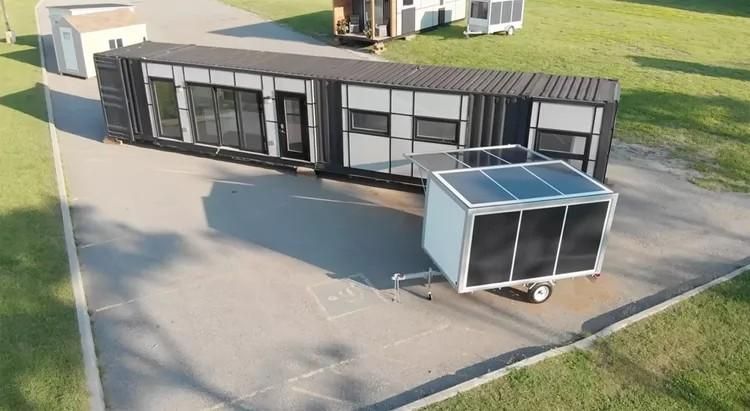
Many modular disaster relief systems use modified shipping containers. The containers are durable and easy to transport, but they weren’t designed for human occupancy. They are small, challenging to insulate, and not very comfortable unless heavily modified.
Phoenix Hub does not use this strategy. It does not utilize cargo containers; instead, it relies on modules that were designed to accommodate humans.
Human-Centered Modular Design
Each individual unit of the module is designed according to human needs, such as large windows, skylights, ventilation, acoustic insulation, and trauma-friendly layout design. While most modular systems focus on safety and storage space, these modules prioritize light, fresh air, privacy, dignity, and comfort. Round shapes, natural materials, and familiarity provide residents with calmness, especially in difficult conditions.
These are not temporary housing units to wait out the disaster—these are instruments for recovery.
Precision Manufacturing
Modular units are manufactured in a specialized environment, where all internal walls, floors, utilities, lighting, plumbing, and finishes are prepared beforehand. Upon arrival at the destination, the installation process is reduced to bare minimum.
Thermal Performance by Design
Instead of relying heavily on mechanical heating and cooling, the framework uses passive strategies:
- Butterfly roofs for stack‑effect ventilation
- Natural airflow paths
- Phase‑change materials for thermal stability
- Daylighting systems
- Cross‑ventilation
These features reduce energy demand while keeping spaces comfortable in changing climates.
Integrated Infrastructure
Each module plugs into a larger resilient network, connecting to:
- The Sunmill renewable micro‑grid
- Rainwater harvesting and treatment
- Emergency communication systems
- Medical support infrastructure
This ensures fast deployment and reliable operation even when the wider grid is down.
Designing Thermal Performance
Not being dependent on mechanical heating and cooling systems, this structure utilizes the following:
- Stack effect butterfly roofs
- Natural air flow routes
- Thermal performance using phase change materials
- Lighting
- Cross ventilation
This allows energy conservation in a changing environment, maintaining comfort throughout the process.
Resilient Infrastructure System
Each modular element forms part of an interconnected resilient infrastructure that connects to:
- Sunmill renewable micro-grid system
- Rainwater harvesting and treatment facility
- Communication systems for emergencies
- Medical infrastructure systems
This helps ensure quick mobilization and deployment despite any power outages.
Evolves With the Community
The system grows as the community does. Modules can become:
- Emergency response units
- Health and counseling spaces
- Gathering areas
- Training and manufacturing spaces
- Classrooms and learning centers
- Transitional or long‑term housing
- Civic and community facilities
New modules can be added at any point without disrupting existing ones.
Housing Module
The Housing Module offers safe and comfortable housing solutions in days following any disaster event. It comes complete with natural light, ventilation, acoustic comfort, and is trauma-informed, thus offering both physical and emotional recovery. These modules can serve their role initially as emergency housing and eventually be transformed into something more sustainable.
From Emergency Shelter to Sustainable Solution
Unlike emergency shelters, Phoenix Hub modules are designed to last. Starting off as an emergency shelter, these modules will soon be used as medical clinics, educational classes, libraries, makerspaces, community centers, and other similar services.
Platform for Disaster Recovery
The Habitable Modular Framework takes the best aspects of advanced manufacturing processes, modular construction techniques, passive design principles, renewable energies, and human-centered approaches to offer an innovative recovery solution.
Deployable by Design
Modules are prefabricated with all interior components as well as all utilities, furniture, and environmental solutions already in place. Once they arrive at their destination, they will function right away without additional installation.
The Phoenix Hub meets the standard requirements of Rapid Deployment Logistics (RDL), allowing a Healing Nexus operation within 72 hours after a disaster event.
“Built for people, not cargo — the Phoenix Hub turns modular design into human recovery.”
Three-Tier Transport Strategy

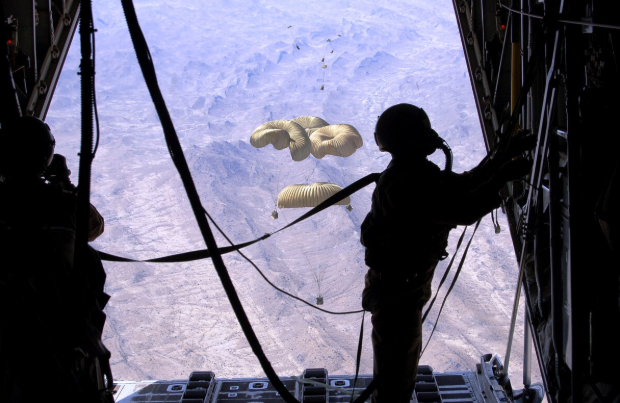
To ensure that the system is adaptable in diverse settings and environments during natural disasters, its design includes the ability to operate on different transportation systems.
1.Strategic Airlift:
Modules are designed to fit into the C-130 Hercules 463L pallet system, ensuring deployment by air across the world.
The modules in the Phoenix Hub are dimensioned to support both humanitarian and military airlifts. This ensures that modules can be transported using the cargo standard of C-130 Hercules 463L pallet system and reach affected regions that lack road connections, railroad services, and supply chains.
Such transportation helps to facilitate rapid recovery infrastructure that will get to the affected communities within hours instead of several weeks.
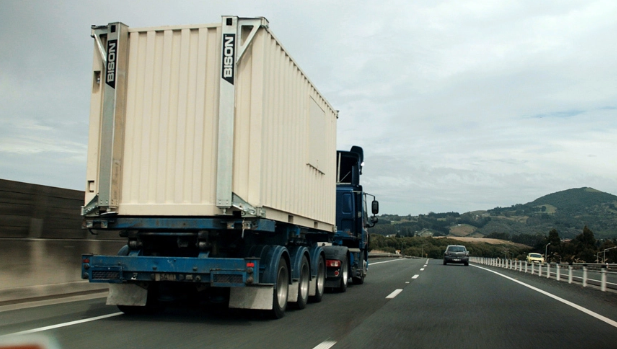
2.Tactical Road Freight:
In regional deployments, the use of standard transportation systems and ISO-compatible connections makes it possible to move modules using flatbed trailers through commercial logistics and freight networks.
The transportation system reduces dependency on special transportation mechanisms while at the same time ensuring deliveries to rural areas and other isolated regions that are not accessible with conventional recovery methods.
The transportation system makes it possible for communities in Western North Carolina and similar disaster prone communities to access rebuilding support rapidly.
3. Autonomous Leveling:
When deployed on-site, hydraulics allow the modules to level themselves regardless of the rough surface they are standing on. This greatly lessens the need for cranes, heavy machinery, and expert labor.
This capability makes the modules deployable even in situations where normal construction techniques would prove ineffective because of the damaged landscape, flooding, destruction, or instability of the surface itself.
These benefits are particularly important in the first few days after a disaster, as equipment might still be in short supply.
Foundation Systems for Rapid Deployment & Recovery - Expanded Later
The use of helical piles or drills, and other innovative foundation systems make the hub deployable even in conditions where it would be impossible to lay down concrete foundations.
These foundation systems are easy and quick to install and do not require any major disruption to the environment, making them environmentally friendly.
Unlike regular concrete foundations, they only take hours to install.
“Wherever disaster strikes, the Phoenix Hub is built to reach it.”
The Emergency Microgrid: Sunmill Energy System

Most emergencies start by damaging the infrastructure that provides power. Once the power grid stops working, communication becomes unavailable, as well as various devices and machines, including life-support equipment. Without power, it becomes impossible to coordinate relief efforts or even treat patients and provide clean water.
This problem can be solved using the Sunmill Energy System at the Phoenix Hub, which is a hybrid micro-grid designed specifically for emergencies. The Sunmill Energy System uses solar and wind power combined with batteries to keep critical services available even without connecting to the power grid. The key idea here is energy sovereignty, the ability to produce, store, and manage energy resources autonomously.
What Is the Sunmill Energy System?
Sunmill is an innovative microgrid consisting of both photovoltaic cells and wind generation combined with state-of-the-art battery storage. While conventional generators run on fuel, Sunmill generates renewable energy locally and stores it for future use. Thanks to the diversity of its energy sources, it can adapt to various conditions of weather changes and generate a steady flow of electricity to recover from power outages.
The Phoenix Hub employs a 15 kW bifacial PV system to produce energy from two different angles by using not only the direct sunlight but also its reflection from nearby surfaces. Additionally, the Phoenix Hub roof and landscape make the system more efficient to generate more energy from less space.
Battery Energy Storage System
Besides generating energy, any resilient system requires energy storage. In order to achieve energy resilience at the Phoenix Hub, we employ a 100 kWh Lithium Iron Phosphate (LFP) battery system because of:
- Fire-proofing
- Reliability for critical missions
- Durable cycles
- Ease of maintenance
- Toughness against temperature variations
“Recovery can’t wait for the grid — the Phoenix Hub brings its own power.”
Engineering for Disaster Resilience
.png)
These include the following three principles:
Redundancy
Various types of energy generation allow for the situation where failure at any one point does not disrupt the whole process of energy production. These include solar energy, wind energy, and battery storage.
Flexibility
The design structure makes it easy to add other sources of energy depending on increasing demands. This means that more battery storage, solar power, or wind energy can be incorporated without a change of design.
Sustainability
Whereas the traditional generator depends on fuel supply through delivery and pollutes the atmosphere, the Sunmill energy system employs renewable sources of energy that still function when the transport infrastructure is unavailable.
Generating Power for Four Phases of Recovery
Sunmill Energy System powers each phase of Phoenix Hub's transformation process.
Phase One: Immediate Action
The microgrid supplies instant power for communications, emergency lighting, medical care, and purification of water.
Phase Two: Stabilizing the Community
A reliable source of power is necessary to provide counseling, healing space, refrigeration of food, food delivery, and community meeting spaces.
Phase Three: Rebuild & Empower
Fabrication equipment, makerspaces, training centers for the workforce, and computer modeling labs run on renewable energy from local sources.
Phase Four: Creating a Lasting Legacy
It becomes a community microgrid powering education, government activities, and workforce development for years to come after completion of the recovery work.
And More!
Reliable electricity powers everything we do today in disaster response.
Communications stop working without electricity.
Coordination stops without communications.
“Power that adapts, endures, and grows — the Phoenix Hub keeps recovery alive at every stage.”
Water Resilience: Harvesting & Purification
When a flood, landslide, or hurricane strikes, the potable water supply may become inaccessible, treatment plants are damaged, water pipes are broken, and water resources underground become contaminated with sediment, debris, sewage, and chemicals.
To ensure continued water autonomy in such scenarios, the Phoenix Hub makes use of a decentralized water supply model based on atmospheric water generation (AWG), filtration, grey water reclamation, and a monitoring system.
The idea is straightforward: generate water; purify it; reuse it; recover constantly.
Why Atmospheric Water Generation?
In many areas, particularly Western North Carolina, groundwater in post-floods becomes contaminated. The Phoenix Hub, not dependent on unreliable sources, utilizes the only constant source – air – for extracting water.
The AWG-V500-AquaSol generates water by harvesting humidity from the air, providing potable water in a situation when other sources do not work.
"In post-flood Western North Carolina (WNC), water from underground is frequently contaminated. Hence, the Phoenix Hub opts for atmospheric water generation (AWG) technology, harvesting moisture straight from the air."
From the Atmosphere to Drinking Water - The AquaSol Unit
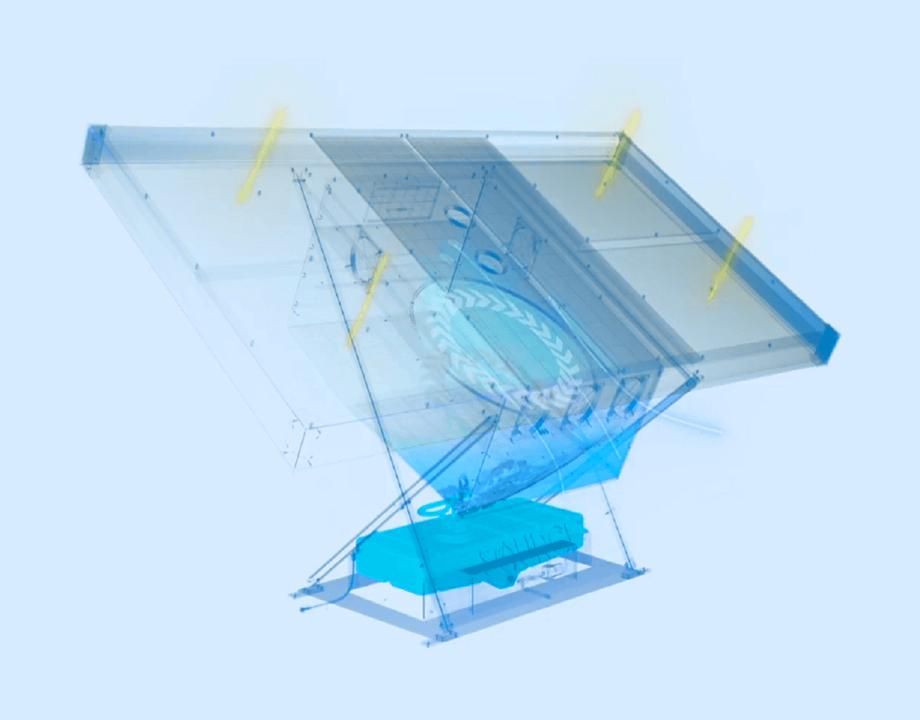
The AquaSol unit is an AWG module that is uniquely crafted for disaster response settings. It combines with the Phoenix hub and employs a four-stage mechanical and filtration system to produce drinking water from atmospheric moisture.
“When the ground is contaminated, the Phoenix Hub looks upward for answers.”
AWG Stage 1– - 3
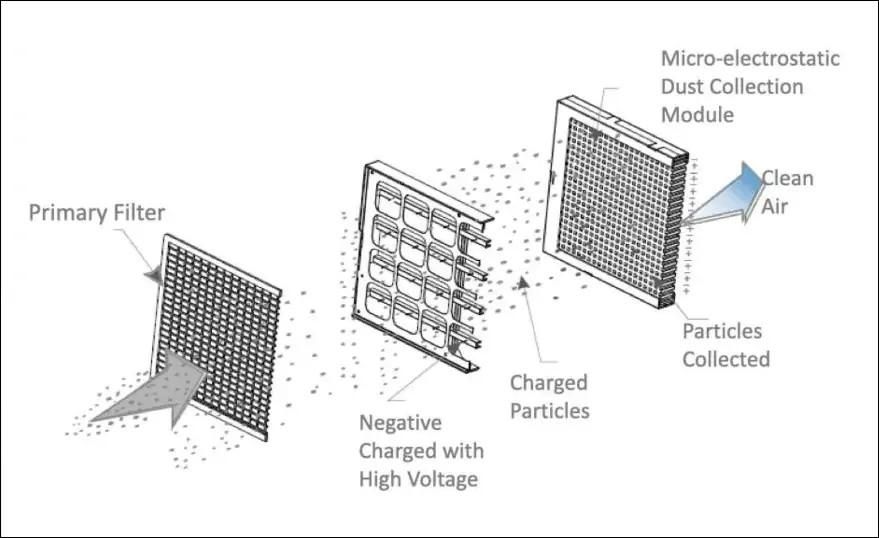
Stage 1: Air Inlet & Electrostatic Filtering
Moist air is drawn into the machine via 400 mm × 400 mm inlet ports, which travel through an electrostatic filter.
What is filtered out?
• Dust
• Debris
• Pollen
• Airborne particles
• After-storm pollutants
This helps maintain the purity of incoming air prior to condensing.
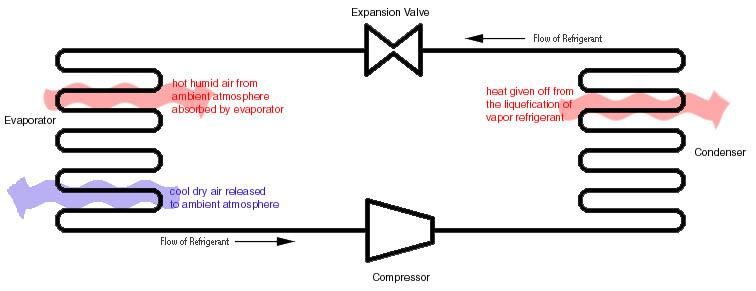
Step 2: Condensation Core
Source: MIT
The filtered air passes through the refrigeration evaporator system driven by a 2.5 kW compressor.
The temperature of the air is lowered to below the dew point to make atmospheric moisture precipitate on the evaporator coils.
In this step, humidity is converted to water without the need for groundwater or tap water supply.
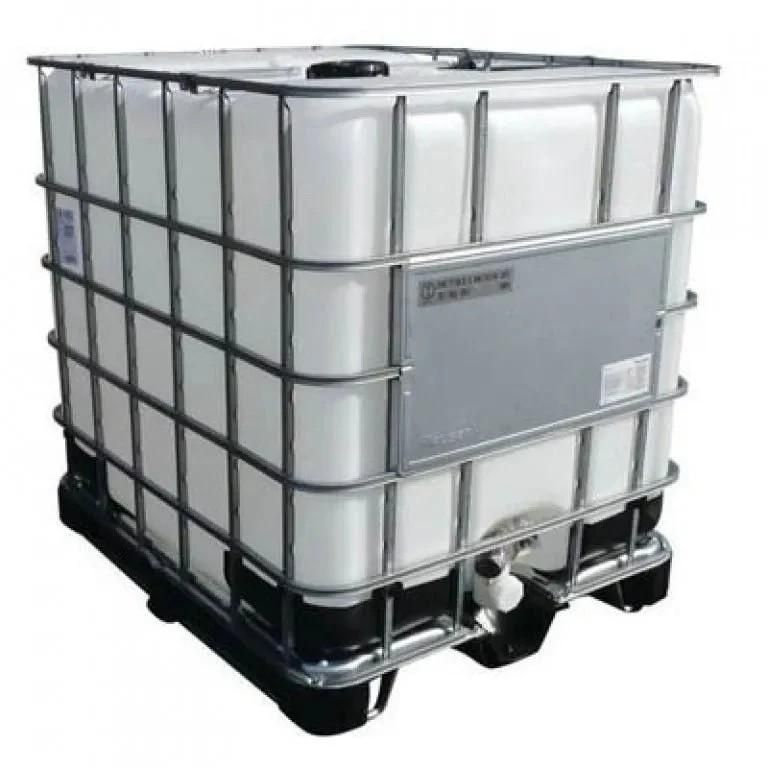
Step 3: Collection Basin
Source: 275-Gallon Food-Grade IBC Tote
The condensed water is collected in a food-grade collection basin.
A low voltage pump is used to transfer the collected water to the purification chamber.
AWG Stage 4

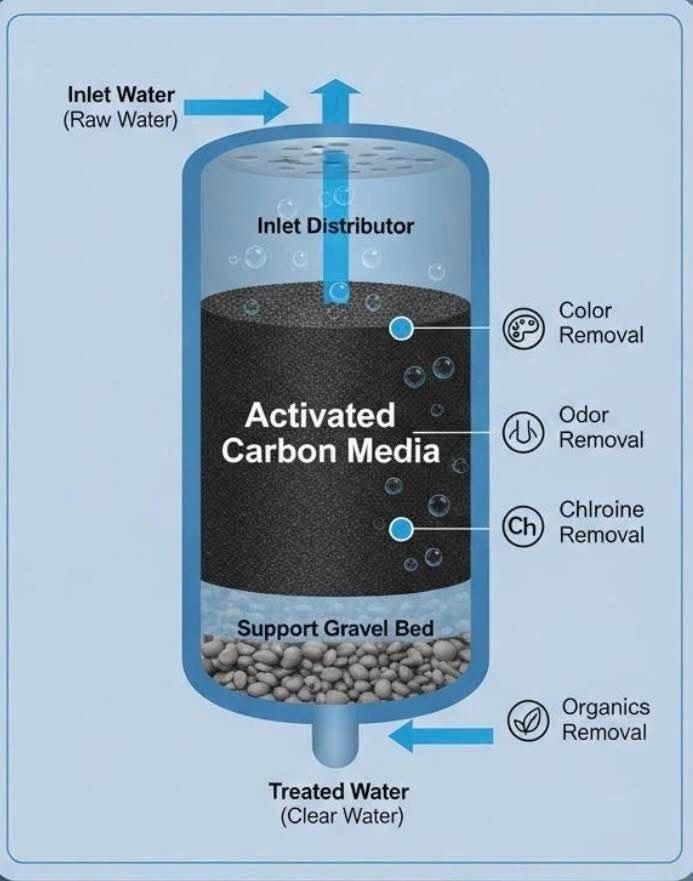

Step 4: Multi-stage Purification
The following processes are undergone by the water in the multi-step purification chamber:
- Sediment Filtration - removes fine particles and micro-impurities
- Activated Carbon Filtration - removes odors, VOCs, and chemical traces
- Dual UV-C Sterilization - eliminates bacteria and biological contaminants
Production and Integration
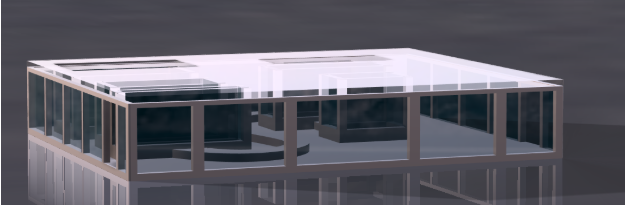
Daily Water Output Capability
Assuming an average moisture content in Western North Carolina, the AquaSol is capable of producing up to 500 liters of water daily. This level of production allows for vital disaster response activities such as:
- Health care operations
- Shelter provision
- Water supply for drinking purposes
- Cooking areas
- Sanitation facilities
- Recovery center operations
The fact that the system operates independently of any other outside facilities means it can operate throughout all disaster phases.
System Integration
AquaSol is designed in an integrative fashion where the unit serves as a singular module of utilities at the Phoenix Hub complex compared to being made up of several smaller modules.
AquaSol will be contained within a structural design that incorporates a central architectural space containing the whole system for air suction, condensation, purification, and storage.
The integrative design makes it possible to:
- Have direct vertical and horizontal piping of both air and water
- Cut the mechanical distances between filtering processes
- Maintain all purification mechanisms in one maintenance area
- Avoid redundancy by having a combined purification system
- Structural connection with Energy Cube foundation system
The module is connected to the potable water supply line of Phoenix Hub via a 25 mm supply line, while overflow is diverted through utility exits.
Passive Climate Control As Resilience Infrastructure
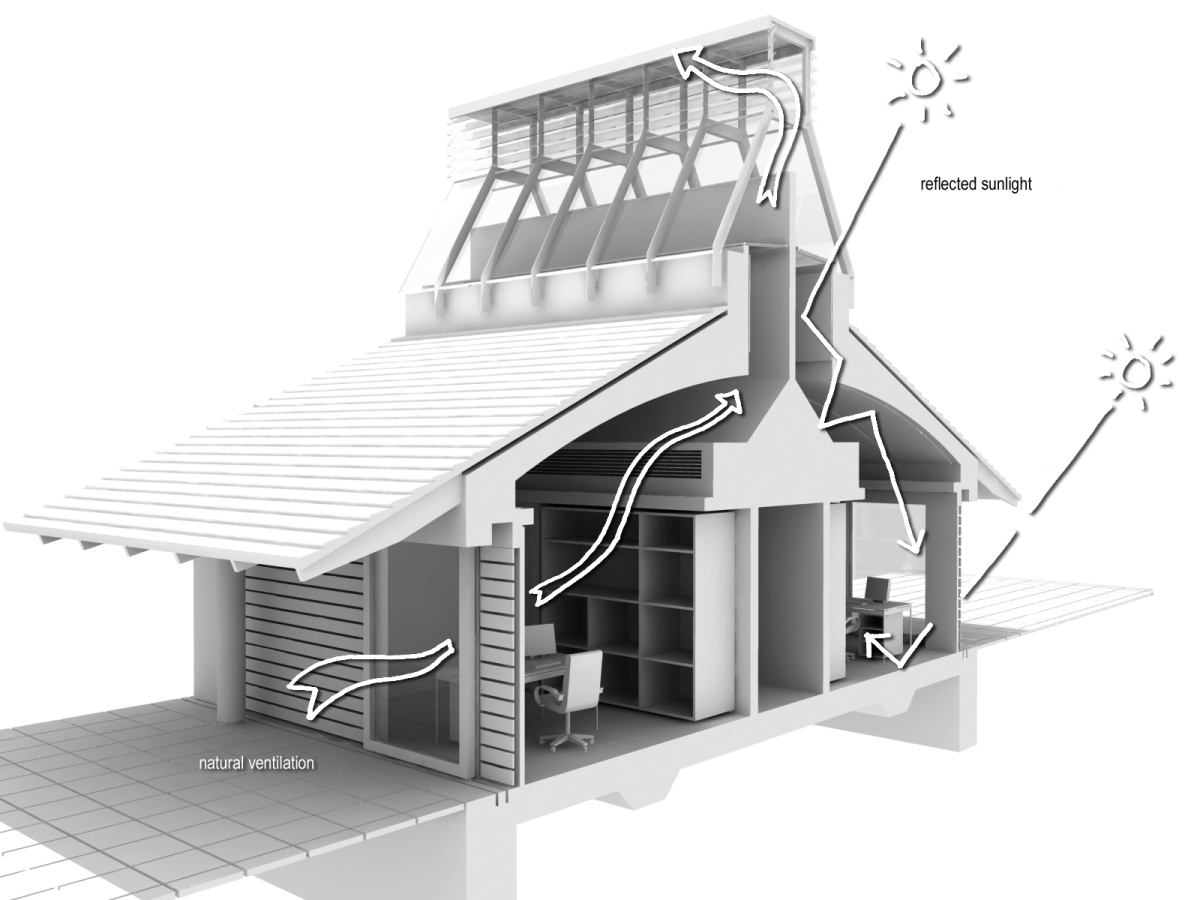
In disaster recovery environments, energy must be prioritized for critical systems such as medical operations, water purification, communications, and emergency services. To reduce HVAC demand, the Phoenix Hub integrates thermodynamic architecture, using building design and material behavior to regulate indoor climate passively.
Instead of relying solely on mechanical cooling and heating, the structure itself functions as a climate-control system through airflow engineering, thermal storage materials, and solar-responsive geometry.
The goal is to maintain occupant comfort while minimizing energy consumption from the Sunmill microgrid.
Phase-Change Material (PCM) Thermal Regulation
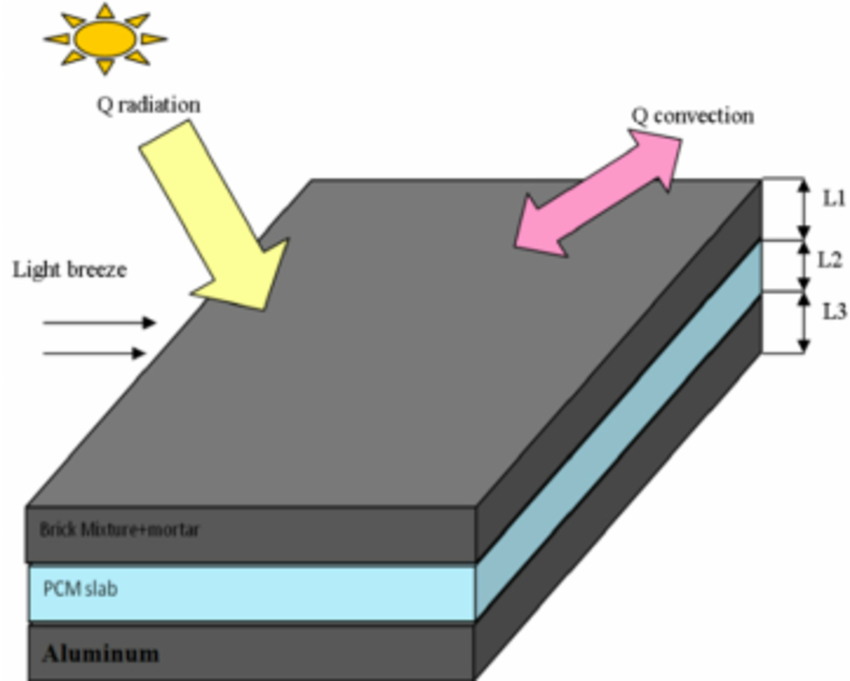
Since we have covered all aspects related to Water Harvesting & Purification, let’s talk about how to counter indoor temperature fluctuation through use of Phase Change Materials (PCM) in walls and ceilings at the Phoenix Hub. Phase Change Materials work differently from regular insulations as they control heat transfer through heat absorption and release during phase change cycles.
- Excess heat is absorbed during heat gain in the day time
- Heat is slowly released during cool times
The result is a controlled temperature range without the need for HVAC system usage.
Energy Load Mitigation Approach
As a result of stack effect ventilation and PCM energy storage, the Phoenix Hub requires significantly less energy for cooling and heating.
This means that there is sufficient energy for other vital processes:
- Medical and psychological services
- Communications in case of emergency
- Aquasol water purification technology
- Cooling and refrigeration facilities
- Communal recovery centers
Philosophy of Building Design
In the concept of the Phoenix Hub, nature conditions serve as an advantage. Air flow, thermal mass, solar orientation, and behavior of materials become a part of architecture, decreasing the use of active mechanisms.
The building becomes a climate modifier, capturing heat and creating air flows within the system.
The Community Makerspace


Relief to Empowerment
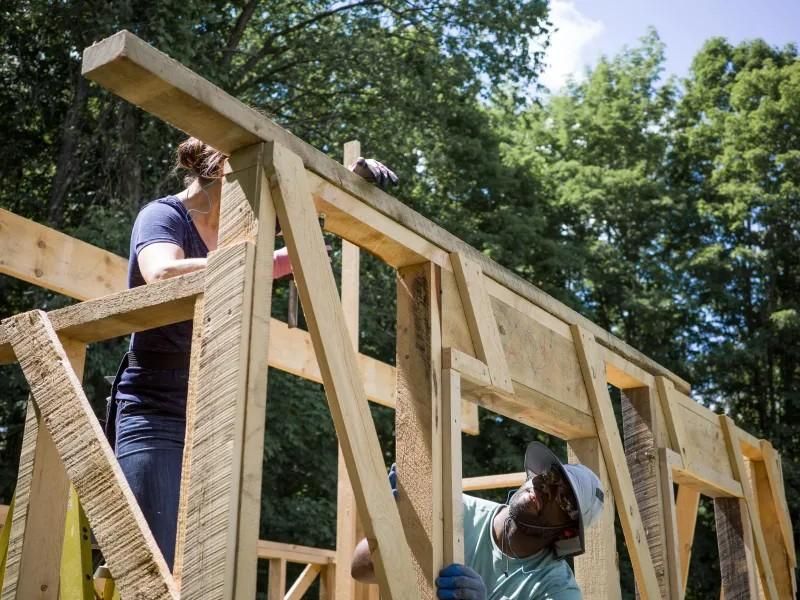
In addition to being useful in terms of physical recovery, the Phoenix Hub is also important for economic and social empowerment purposes. The main focus in that regard is represented by the Community Makerspace, whose purpose is to shift from relief, which is provided externally, to empowerment, which comes internally.
Contrary to traditional relief centers, the Community Makerspace gives people a chance to participate in designing and rebuilding their environment.
As has been demonstrated by previous studies, community-driven disaster recovery results in a more resilient community both economically and socially. ScienceDirect,
The Ecosystem of the Makerspace
The Community Makerspace, on the other hand, works according to the ecosystem principle in that all of its fabrications, education, and workforce development capacities run at once.
Namely, the Community Makerspace consists of:
- Fab Lab
- Education spaces
- Design spaces
- Repair and Prototyping Space
- Modular Fab Lab
That Modular Fab Lab serves as the base of the Makerspace, being supplied with assembling equipment, fabrication stations, and modular building supplies that allow people to expand, modify, and maintain the Phoenix Hub.
Source: https://yestermorrow.org/learn/architectural-design
Moreover, additional modules can be created and updated based on the requirements of the community, thus not depending exclusively on contractors from outside. As a result, the cost-saving process will allow people to actively take part in rebuilding efforts.
Digital Empowerment: Utilizing 3D printers and CNC equipment, one could construct replacement parts for houses using materials found locally or through recycling (e.g., pipes, brackets).
Skill-Sharing Hub: This module can be used as a classroom where renewable energy installation skills as well as techniques of disaster-resistant building construction can be imparted to the local workforce.
Using such technologies, one can construct plumbing fittings, structural brackets, mounting hardware, replacement panels, and other repair parts using locally sourced or recycled materials.
Workforce Development & Knowledge Transfer
Aside from being a workshop space, Makerspace can be used as a communal classroom in which there are designated areas set aside for skill-building programs geared towards enabling residents to acquire skills such as renewable energy generation, modular construction, digital fabrication, and disaster resilience construction methods.
These programs not only help in the development of certain skills in the residents but will also enable them to put their skills to work in the community through their participation in community-based recovery projects.
Knowledge transfer happens between community members, local experts, educators, and professionals in the industries. This makes it possible for people to learn from each other all the time.
Circular Recovery Economy Development
It is common practice when recovering from a disaster to rely on a system in which residents outsource their needs from external sources. This method although useful might cause dependency.
According to the Phoenix Hub, a better solution would be a circular economy in which residents recycle their materials, learn and teach skills, and come up with creative solutions for the challenges faced after the disaster.
Skills Training
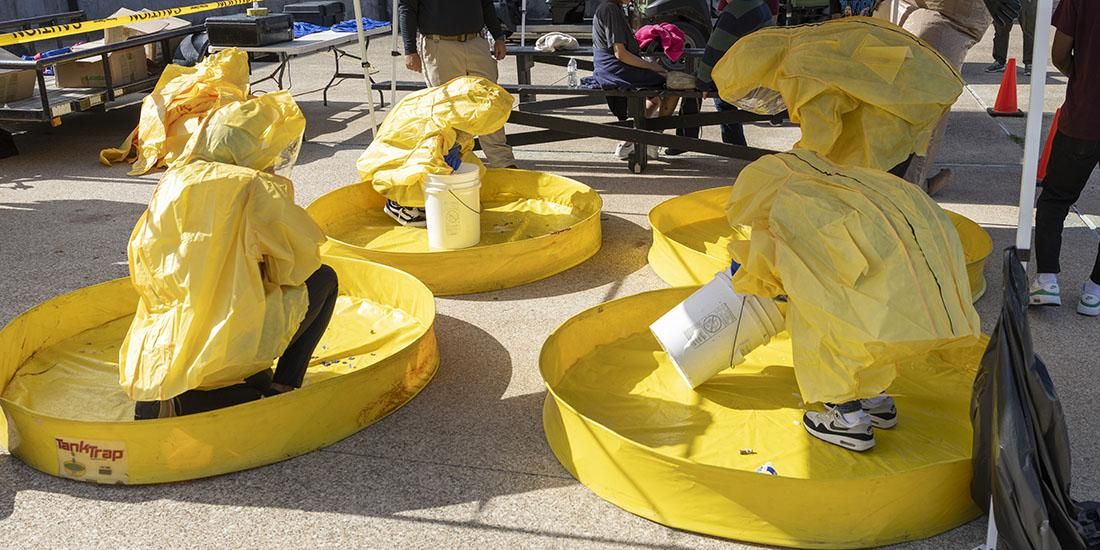
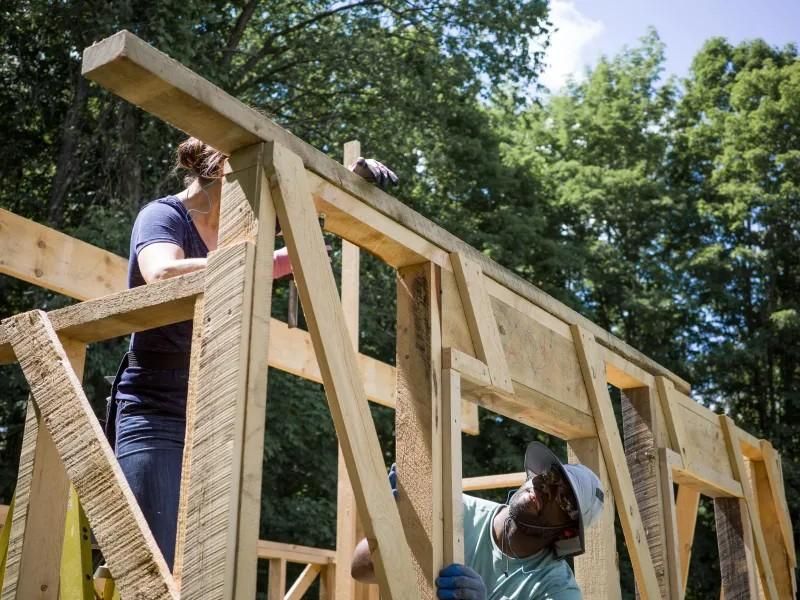

Skill Development for Community Reconstruction
When it comes to community reconstruction after disasters, people generally think of it as an engineering project. However, along with reconstructing the infrastructure, there is a necessity to restore the workforce needed to manage the infrastructure. This process of workforce restoration is done by Phoenix Hub using the Vocational Recovery Engine in which infrastructure reconstruction also acts as a means of learning.
Domestic Preparedness,
Vocational Recovery Engine
The Community MakerSpace acts as the training center wherein people learn important skills related to the management of infrastructure through working on infrastructure reconstruction projects at Phoenix Hub.
Learning is done with regards to the following infrastructure components:
- Modular buildings
- Microgrid renewable energy sources (Sunmill System)
- Water harvesting from the atmosphere (Aquasol System)
- Fabrication and maintenance processes
In turn leading to an infinite cycle of:
build → train → maintain → grow
Modular Foundations
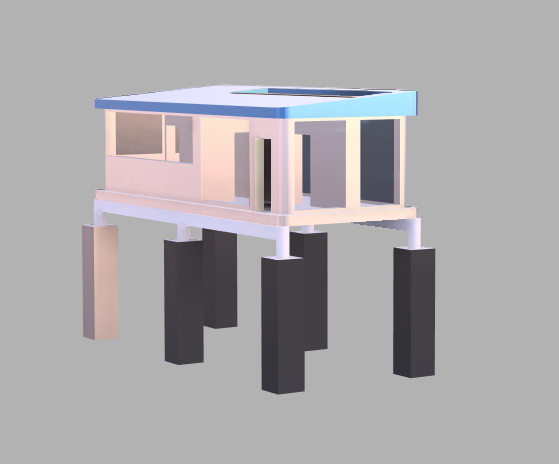
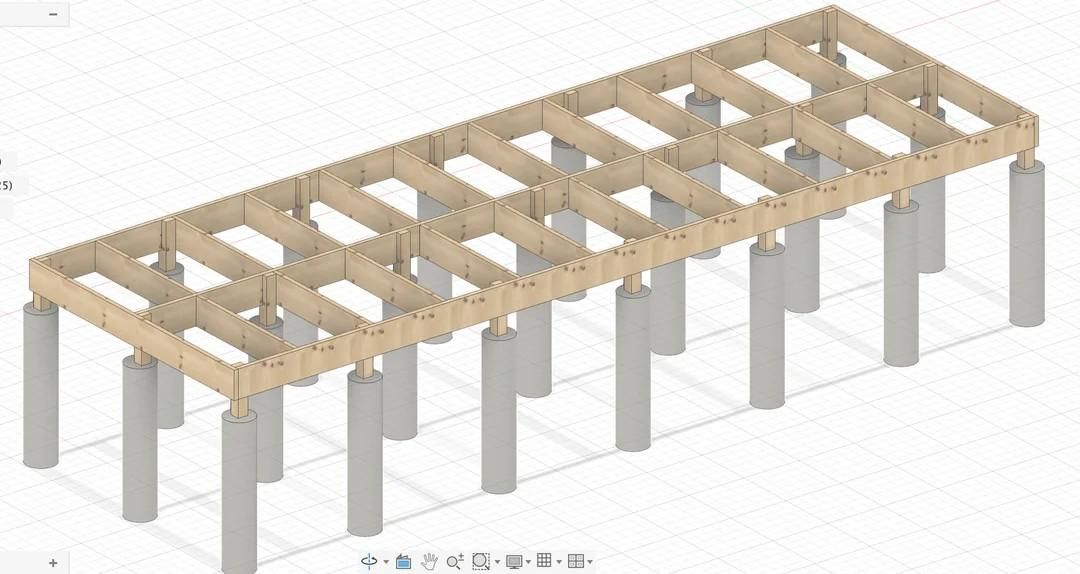
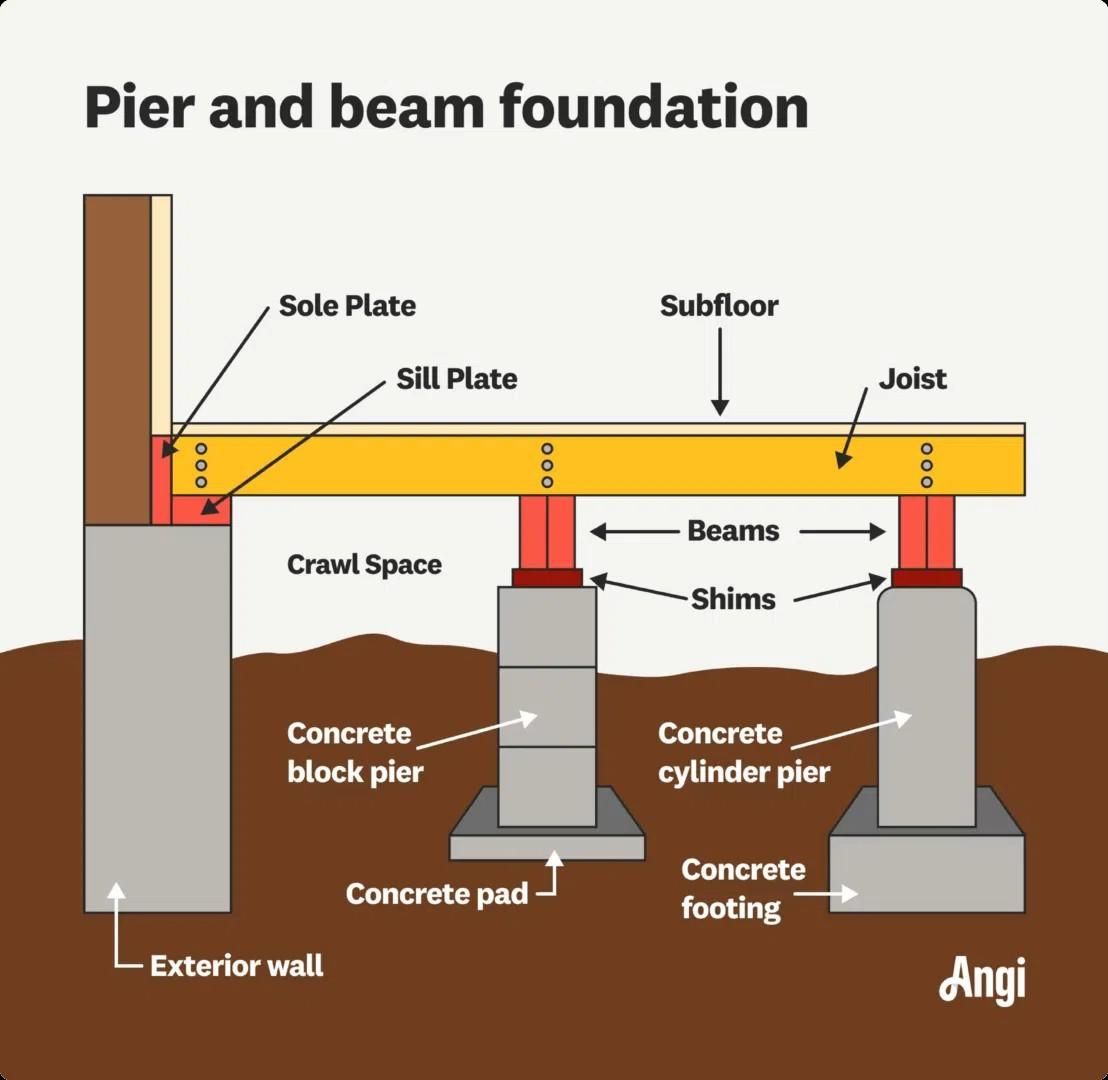
The Living Module is supported by an engineered grid of four monolithic concrete pier footings, arranged at uniform 3,650 mm center-to-center spacing. Each pier is constructed with a 600 mm diameter base, drilled to a 1,500 mm subgrade depth to ensure resistance against lateral environmental forces and ground movement.
The piers extend 1,500 mm above natural grade, elevating the primary structure to reduce flood exposure and protect the building envelope from ground-level moisture infiltration.
At the top interface of each pier, a 50 mm high-tensile alignment sleeve provides a precise mechanical connection point, securing the steel C-channel chassis to the foundation grid and ensuring stable load transfer between superstructure and ground system.
The Phoenix Training Curriculum
1. Modular Construction Systems
Residents are trained in modular fabrication, assembly, and structural integration using light-gauge steel systems.
Skills include:
- Structural framing and alignment
- Panelized system assembly
- On-site adaptation of modular units
- Tool-based fabrication workflows
Example Certifications:
- NCCER Core Construction Certification
- OSHA 10-Hour Construction Safety Certification
- Autodesk Certified User (Fusion 360 / CAD for construction)
- Lean Construction Institute Micro-Credential (modular workflow efficiency)
2. Renewable Energy Systems (Sunmill Microgrid)
Hands-on training in solar, battery storage, and hybrid microgrid systems based on the Phoenix Hub energy infrastructure.
Skills include:
- Solar PV installation and wiring
- Battery energy storage system (BESS) integration
- Microgrid monitoring and control systems
- Hybrid renewable system maintenance
Example Certifications:
- NABCEP Associate Certification (Solar PV Basics)
- OSHA 10/30 Electrical Safety Certification
- ETA Photovoltaic Installer Certification
- North American Board of Certified Energy Practitioners (entry pathway)
3. Aquasol Atmospheric Water Systems
Training focused on operation, maintenance, and safety of the Aquasol atmospheric water generation system.
Skills include:
- Condensation system monitoring
- Filtration system maintenance (sediment, carbon, UV-C stages)
- Water quality testing fundamentals
- Fluid distribution system inspection
Example Certifications:
- NSF Water Quality & Treatment Fundamentals Certificate
- EPA Water Treatment Operator (Level I exposure pathway)
- OSHA Water System Safety Training
- Introductory Environmental Engineering Micro-Credential (Coursera / university extension equivalent)
4. Emergency Infrastructure Readiness
Residents are trained to respond to and manage post-disaster infrastructure systems.
Skills include:
- Damage assessment and structural inspection
- Emergency logistics and coordination
- Communication systems setup
- Resource distribution planning
Example Certifications:
- FEMA IS-100 / IS-200 / IS-700 Emergency Management Courses
- American Red Cross Disaster Response Certification
- Community Emergency Response Team (CERT Training)
- ICS (Incident Command System) Certification
Creating a Resilience Economy
The long-term goal of the Phoenix Hub is to create a local resilience economy in which recovery investments generate lasting economic benefits. Instead of relying exclusively on external contractors and temporary labor, communities develop their own skilled workforce capable of maintaining infrastructure, deploying renewable energy systems, and supporting future resilience projects.
As residents gain certifications, technical skills, and practical experience, they become valuable contributors to both local and regional economies. The knowledge acquired through recovery efforts becomes a lasting asset that continues generating opportunities long after rebuilding is complete.
Reference Sheet
Step 1: Download and Set Up Fusion 360
- Navigate to Autodesk's website and select the Education section.
- Scroll down to the available educational products.
- Select Fusion 360.
- Sign in or create a student account.
- Choose the Student/Education Plan.
- Complete the required verification information.
- Download and install Fusion 360.
- Launch Fusion 360 and create a new design file.
Step 2: Create a Sketch
- Select Create Sketch from the toolbar.
- Choose the plane or face on which you want to sketch.
- Use the sketch tools to create shapes such as rectangles, circles, or lines.
- Press D to activate the Dimension tool.
- Apply dimensions to fully define the sketch.
- Click Finish Sketch (green checkmark) to complete the sketch.
Step 3: Extrude a Sketch
- Press E or select Extrude from the toolbar.
- Select the sketch profile to extrude.
- Enter the desired extrusion distance.
- Choose the operation:
- Join
- Cut
- New Body
- New Component
- Click OK to create the feature.
Step 4: Apply a Fillet
- Open the Modify menu.
- Select Fillet.
- Click the edge or edges to round.
- Enter the desired radius.
- Click OK to apply the fillet.
Step 5: Apply a Chamfer
- Open the Modify menu.
- Select Chamfer.
- Select the edge or edges to bevel.
- Enter the chamfer distance or angle.
- Click OK to complete the operation.
Step 6: Create a Rigid Joint
- Press J or select Joint from the toolbar.
- Set the motion type to Rigid.
- Select the first component connection point.
- Select the second component connection point.
- Confirm alignment and click OK.
- The components will now move as a single rigid body.
Step 7: Create a Slider Joint
- Press J or select Joint.
- Choose Slider from the Motion menu.
- Select the component that will slide.
- Select the guiding component.
- Verify the sliding axis.
- Click OK to create the joint.
Step 8: Create a Revolute Joint
- Press J or select Joint.
- Choose Revolute from the Motion menu.
- Select the rotation axis or circular edge.
- Select the mating component.
- Verify the rotational direction.
- Click OK to complete the joint.
Step 9: Center a Shape on the Middle of a Side
- Create the desired sketch geometry.
- Add a construction point at the midpoint of the edge.
- Add a point at the center of the shape being positioned.
- Open the Constraints menu.
- Apply the Horizontal/Vertical Constraint between the points.
- Repeat on the perpendicular axis if necessary.
- Verify that the shape is centered on the face or edge.
Step 10: Complete the Design
- Review all dimensions and constraints.
- Verify all joints and component relationships.
- Save the design.
- Assemble additional components as needed.
- Continue modeling using sketches, extrusions, patterns, and joints throughout the project.
YouTube video: Getting Started With Fusion 360 - It's Free! - Chris's Basement ...www.youtube.com › watch
Beginners guide: Autodesk Fusion Beginners Guide (2025) + Example ProjectYouTube · 3D Printer AcademyFeb 27, 2025
Blueprint

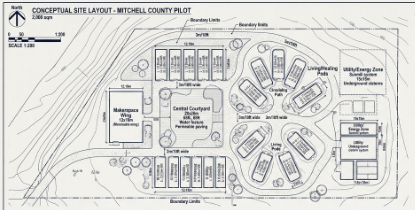
From Vision to Construction
The Phoenix Hub is more than a conceptual design, it is a fully engineered system developed through industry-standard architectural and engineering workflows. This blueprint package demonstrates how the project transitions from a design concept into a constructible, scalable, and deployable resilience hub.
Using Autodesk Fusion 360, every component of the Phoenix Hub was modeled, coordinated, and documented to ensure structural feasibility, modular compatibility, and future scalability. The resulting blueprint serves as both a technical guide and a communication tool for builders, emergency planners, and community stakeholders.
A. Conceptual Site Layout
The primary drawing illustrates the proposed Mitchell County pilot site and the spatial organization of the Phoenix Hub ecosystem.
At the center of the site is the Community Courtyard, a restorative gathering space designed to promote social interaction, mental well-being, and community engagement. Surrounding the courtyard are clusters of modular living and healing pods arranged along pedestrian circulation paths, creating a walkable and human-centered environment.
The site is intentionally organized into functional zones:
- Living & Healing Pods provide temporary housing, counseling spaces, and wellness facilities.
- Community Links create gathering spaces that encourage collaboration and social connection.
- Makerspace Wing serves as the hub for workforce development, fabrication, and rebuilding efforts.
- Utility & Energy Zone houses the Sunmill microgrid, battery storage systems, and underground water infrastructure.
The radial arrangement ensures accessibility while maintaining strong visual connections between all areas of the campus.
Modular Unit Specifications
The blueprint identifies several module types that can be combined and reconfigured depending on community needs.
Living Modules
Designed to provide safe, comfortable accommodation for displaced residents while supporting long-term adaptability.
Healing Modules
Dedicated spaces for counseling, medical support, trauma-informed recovery services, and wellness programs.
Utility Modules
Housing critical infrastructure such as water purification systems, energy storage equipment, communications technology, and mechanical systems.
Makerspace Modules
Flexible fabrication and training environments equipped with digital manufacturing tools and workforce development resources.
Foundation Strategy
The blueprint also illustrates the hub's foundation system, which utilizes deep pier foundations to provide stability on uneven mountain terrain.
This approach minimizes site disturbance while ensuring structural reliability in flood-prone environments. The elevated foundation design also improves resilience against future storm events and allows critical infrastructure to remain operational during extreme weather conditions.
Housing Module - Create the Foundation and Structural Layout

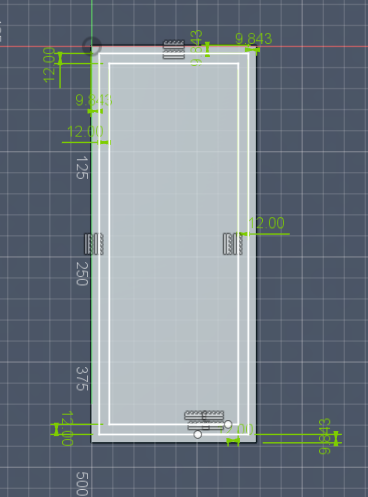


Begin by creating the housing module footprint using a 12.19 m × 3.05 m rectangle. Extrude the footprint upward by 12 inches to form the foundation base. Create the exterior wall system by offsetting the perimeter inward and defining a consistent wall thickness. Divide the interior into three functional zones consisting of a bedroom, living area, and bathroom using partition walls and designated door openings.
Construct the Building Envelope
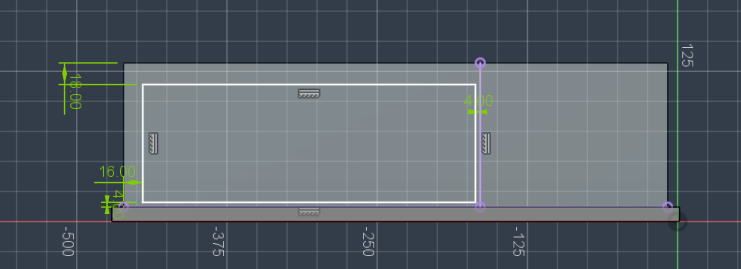
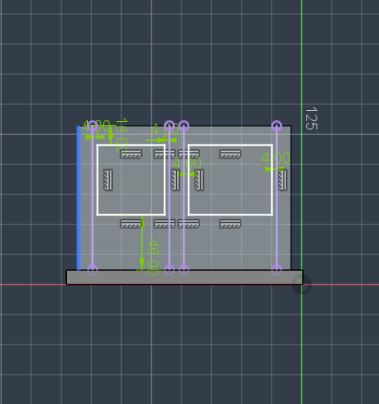

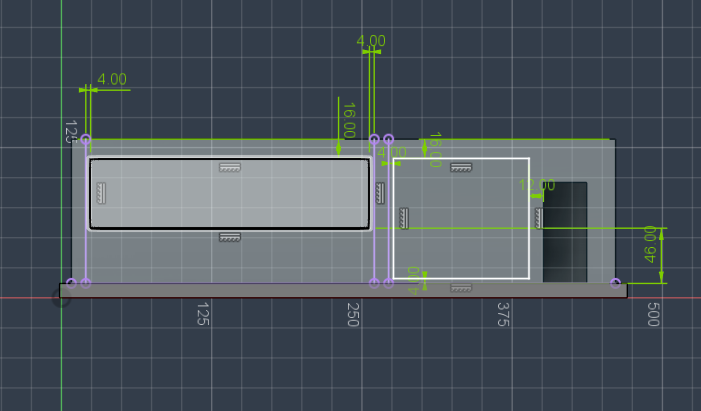
Extrude the wall profiles to create the primary enclosure of the structure. Create the main entrance door on the right side of the building and add all exterior and interior window openings according to the specified dimensions and offsets. Use projected geometry where necessary to ensure alignment between walls, partitions, and openings. These features provide circulation, ventilation, daylighting, and visibility throughout the module.
Complete the Roof and Environmental Systems
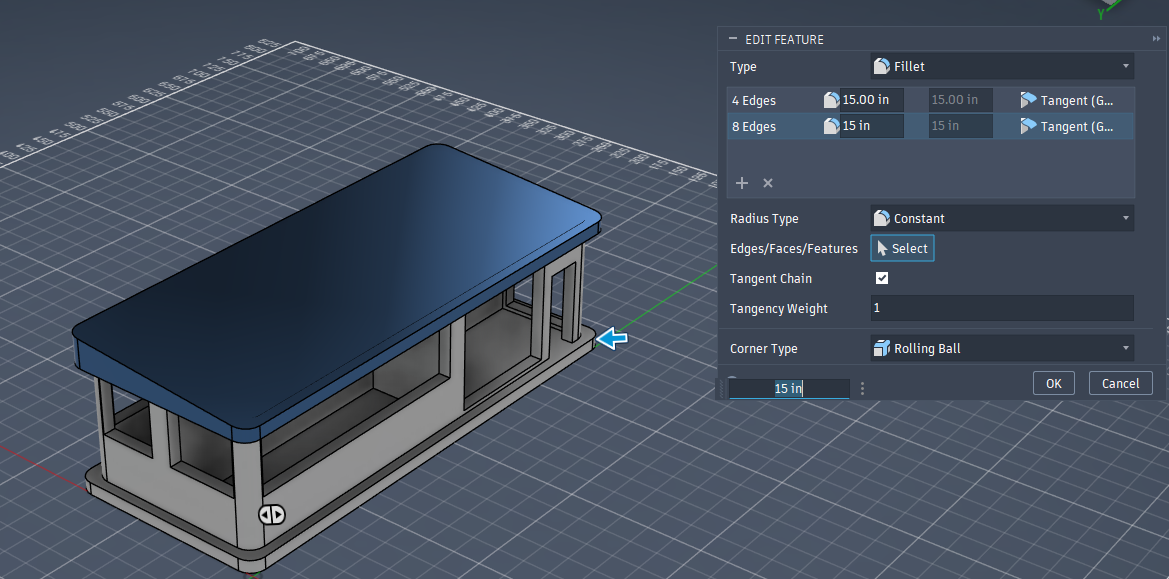
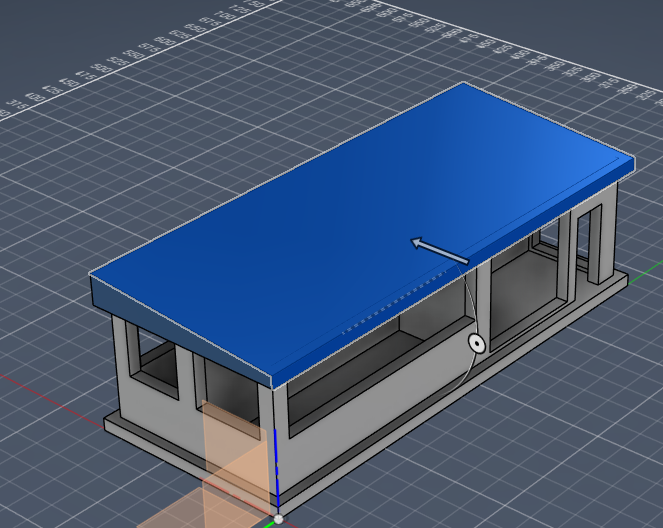
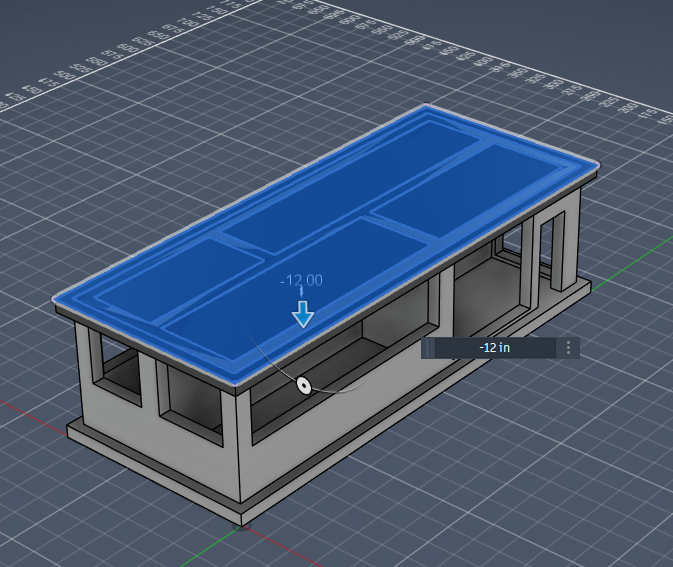
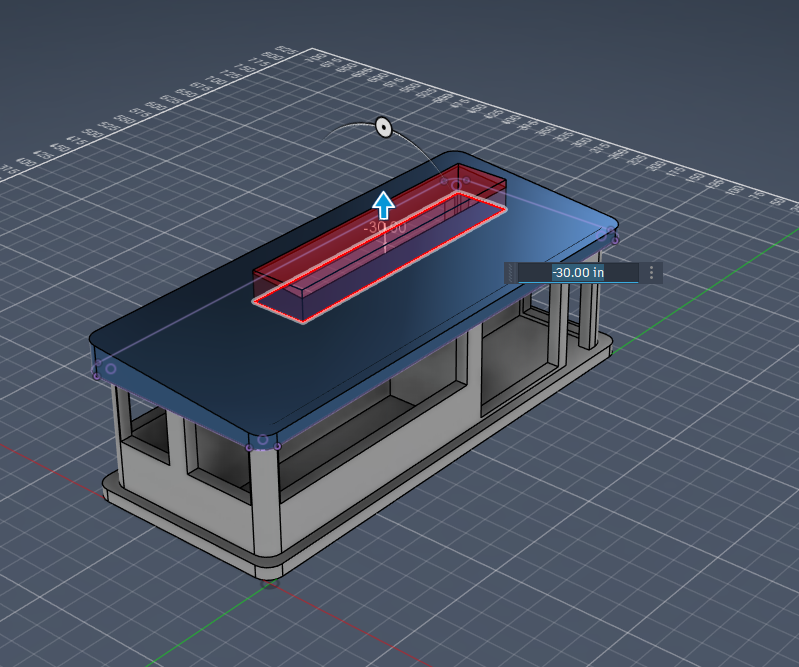
Create a roof sketch using projected wall geometry and extrude it downward by 12 inches to form the roof assembly. Apply a 4.5° butterfly roof draft to support rainwater collection and stack-effect ventilation. Fillet all sharp edges to create a safer and more welcoming environment. Finally, create a skylight above the sunroom and extrude it as a cut feature through the roof to improve natural daylighting and occupant comfort.
Note: Mirror to create the other sides replicated
Sunmill
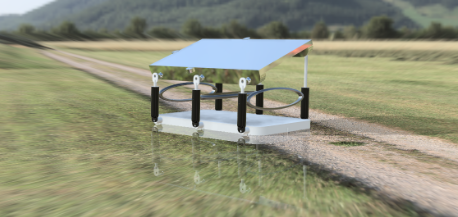
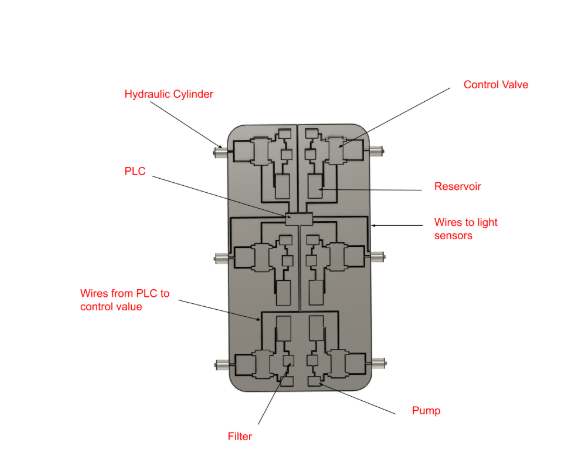

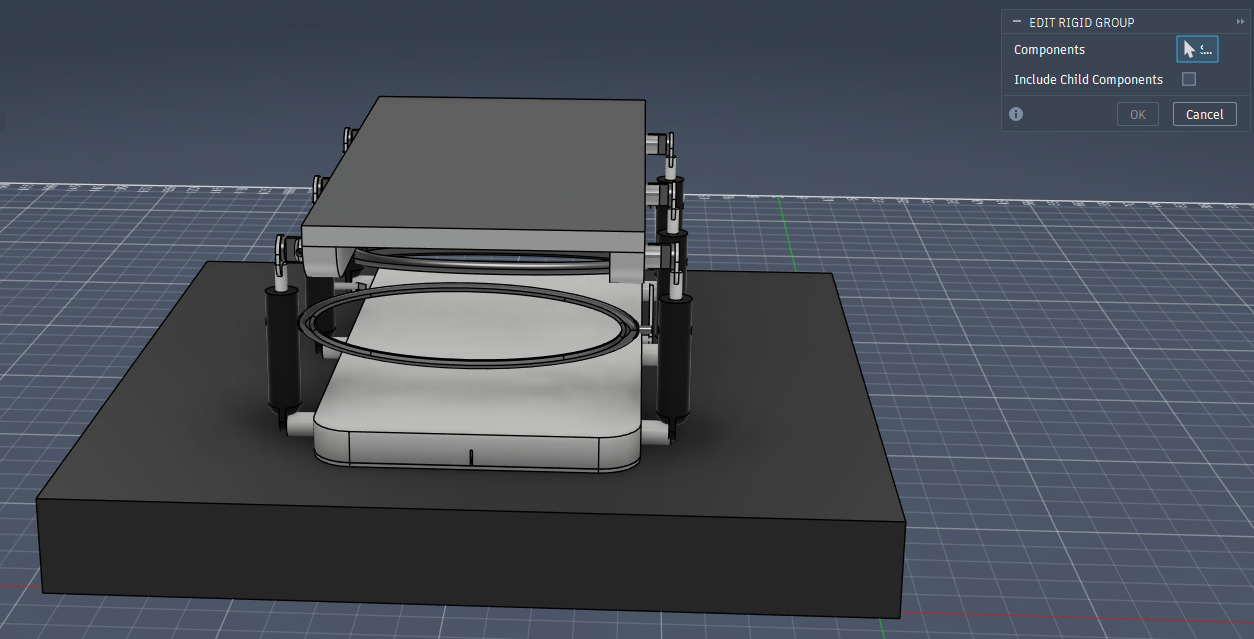
The Sunmill is the primary renewable energy system of the Phoenix Hub, combining dual-axis solar tracking and wind power generation into a single integrated platform. Using a hydraulic tracking mechanism, the solar panels continuously adjust their position throughout the day to maximize solar exposure, while the wind generation system provides supplemental power during cloudy conditions and nighttime hours. Together, these technologies create a reliable and decentralized energy source capable of supporting critical infrastructure across the hub. The electricity generated by the Sunmill powers essential systems including the AquaSol atmospheric water generation units, housing modules, lighting, refrigeration, communications equipment, and emergency response operations, forming the foundation of the Phoenix Hub’s energy resilience strategy.
AquaSol

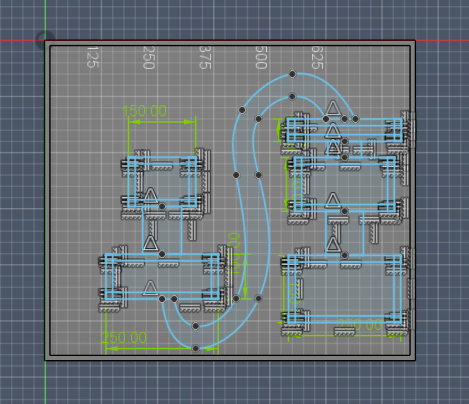
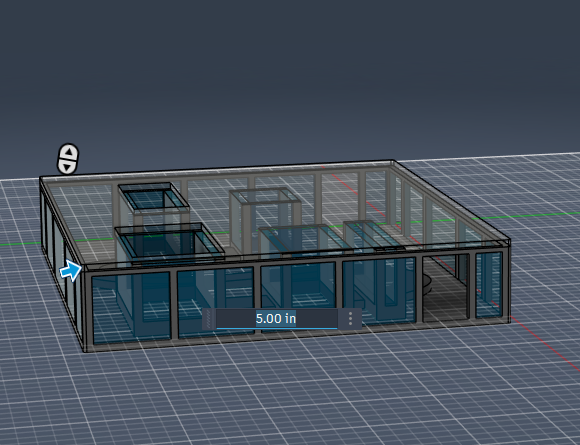
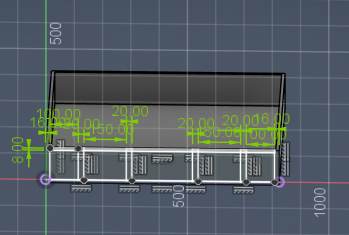
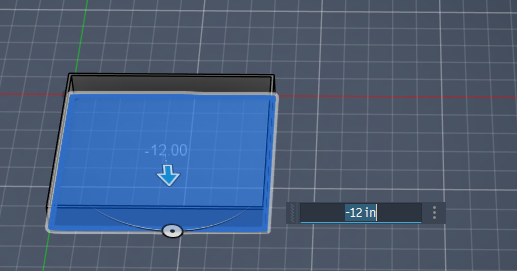
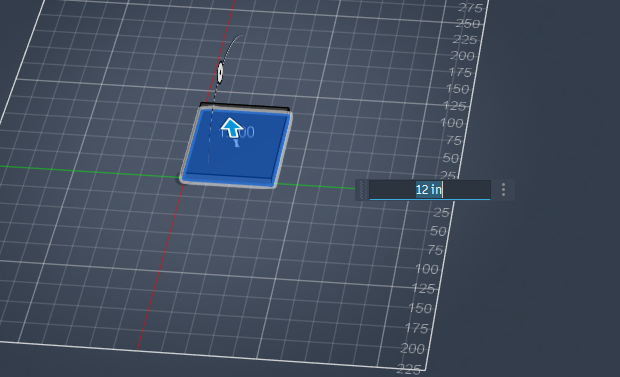

Step 1: Construct the AquaSol Structure
Begin by creating the AquaSol foundation, perimeter walls, and internal system geometry according to the design dimensions. Extrude the walls and structural elements to their specified heights, including the water basin, monument features, and surrounding architectural components. Create the Aquaverde fountain system by forming the central water element and mirrored corner monuments, then add circulation areas, entrance features, and pavement surfaces to establish the complete physical framework of the system. Project and align all sketches as needed to maintain dimensional accuracy and ensure every component remains integrated within the overall structure.
Step 2: Complete the Roof and Atmospheric Water Generation System
Create a roof sketch using the projected wall geometry and extrude it upward by 12 inches to form the roof structure. Project the Stage 1 intake and Stage 2 exhaust profiles onto the underside of the roof and create corresponding openings to support the atmospheric water generation process. These openings allow humid air to enter the intake system and dry air to exit after processing, enabling continuous operation of the AWG-V500 system. Once complete, the AquaSol functions as a fully integrated water resilience system capable of harvesting atmospheric moisture, purifying potable water, and supporting the Phoenix Hub's long-term disaster recovery infrastructure.
Stage 1: Air Intake & Electrostatic Filtration
Humid air enters the system through 400 mm × 400 mm intake vents and passes through an electrostatic filtration matrix.
This stage removes:
- Dust
- Debris
- Pollen
- Airborne particulates
- Post-storm contaminants
This protects internal components and improves the purity of incoming air before condensation.
Stage 2: Condensation Core
Filtered air moves through a refrigeration evaporator system powered by a 2.5 kW compressor.
Air is cooled below its dew point, forcing atmospheric moisture to condense on evaporator coils.
This process converts humidity directly into liquid water without requiring groundwater or a municipal supply.
Stage 3: Collection Basin
Condensed water is captured in a food-grade collection basin.
A low-voltage pump transfers the collected water into the purification system for final treatment.
Stage 4: Multi-Stage Purification
Water is treated through a sequential purification chain:
Sediment Filtration - removes fine particles and micro-impurities
- Activated Carbon Filtration - removes odors, VOCs, and chemical traces
- Dual UV-C Sterilization - eliminates bacteria and biological contaminants
This ensures the water meets potable safety standards.
Aquaverde
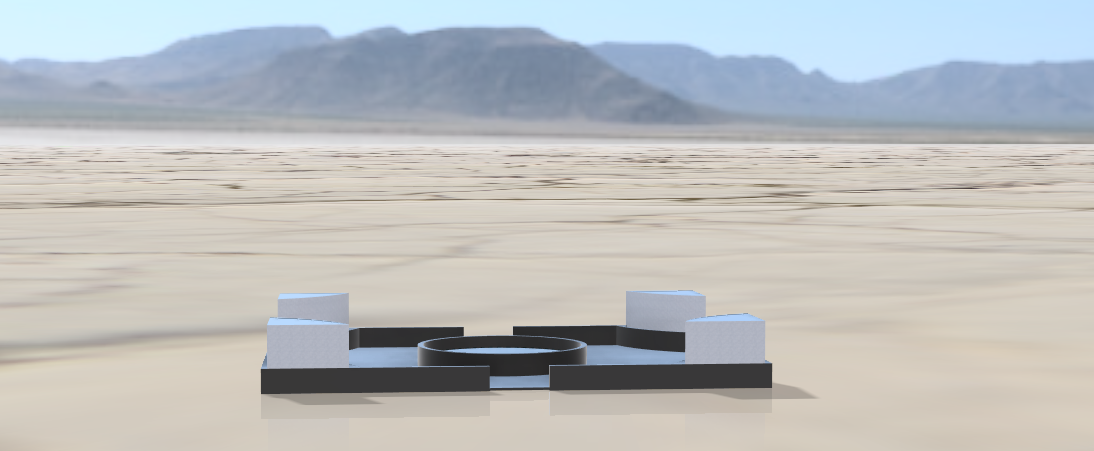
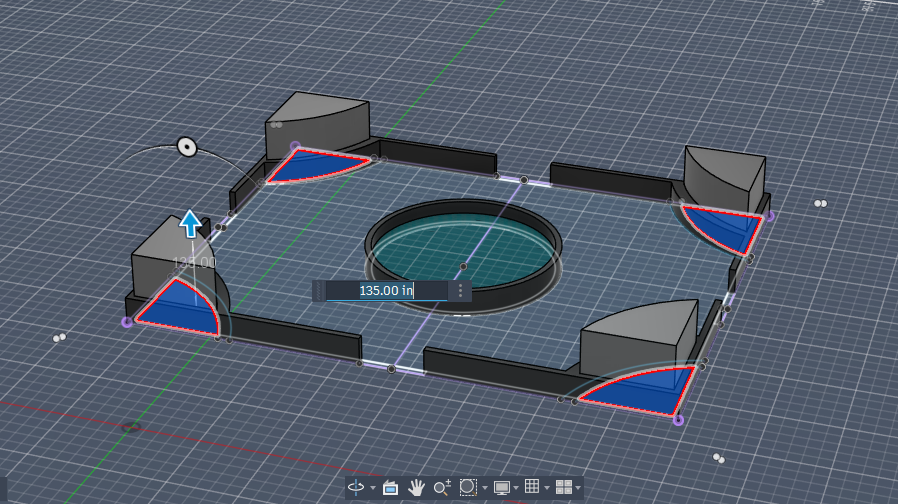

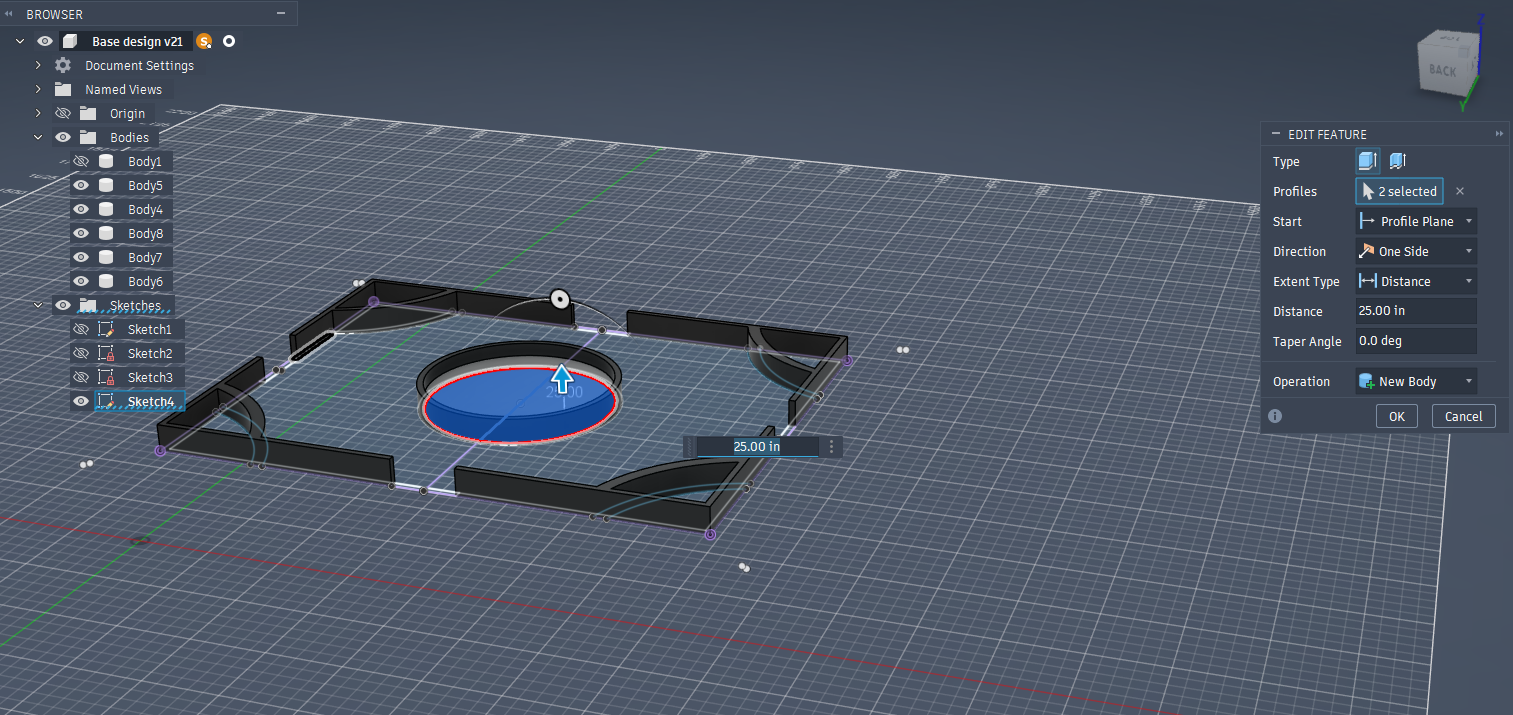

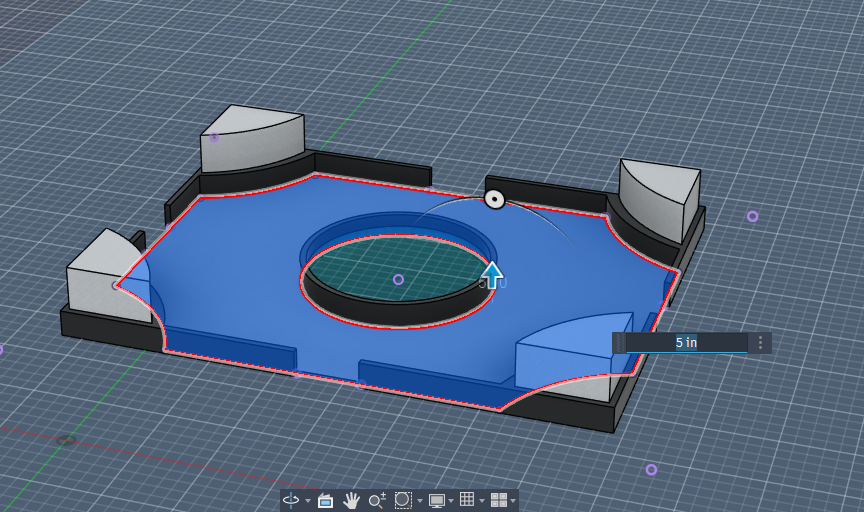
Aquaverde is the Phoenix Hub’s central water and biophilic feature, designed to combine water, vegetation, and public gathering space into a single focal point. Positioned at the heart of the hub, it serves as both a visual landmark and an environmental asset, providing evaporative cooling, supporting green infrastructure, and creating a restorative space for community interaction. Surrounded by four monument structures, Aquaverde symbolizes renewal, resilience, and the integration of natural systems into disaster recovery.
Step 1: Create the Aquaverde Foundation and Layout
Aquaverde serves as the Phoenix Hub’s central water and biophilic element, acting as the heart of the site’s environmental and wellness systems. Begin by creating a centered base rectangle measuring 1023.622 inches × 787.402 inches. Sketch a single corner module using the reference dimensions, then use the Mirror and Linear Pattern tools to create four identical corner modules positioned symmetrically around the perimeter. Next, create a 350-inch diameter circle at the center of the base and add a second concentric circle offset 12 inches inward to define the inner wall boundary. Finally, place four entrance tables at the midpoint of each side of the perimeter to serve as access points and circulation nodes.
Step 2: Construct the Water Feature and Monuments
Extrude the exterior walls and corner modules upward to create the primary structural framework of the system. Extrude the inner circular region upward by 25 inches to form the raised water basin, maintaining concentric alignment with the surrounding geometry. Create the four corner monuments by extruding their interior profiles upward by 135 inches, establishing the primary vertical focal points of the fountain complex. Complete the design by extruding the entire base slab upward by 5 inches to create a paved foundation surface that defines circulation space and reinforces the overall monument composition.
Maker Space
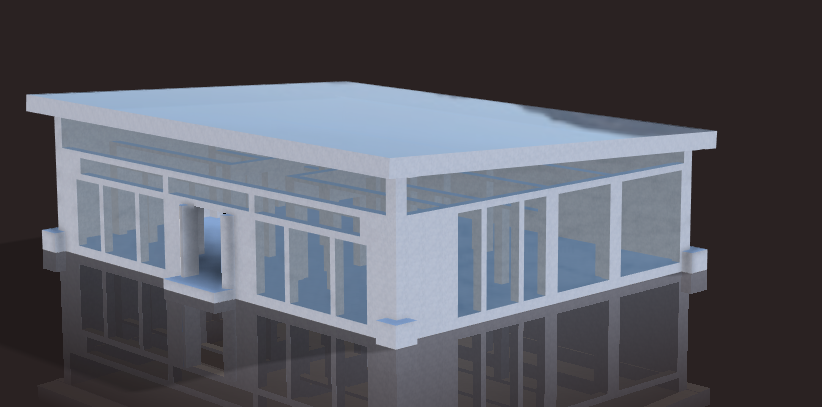
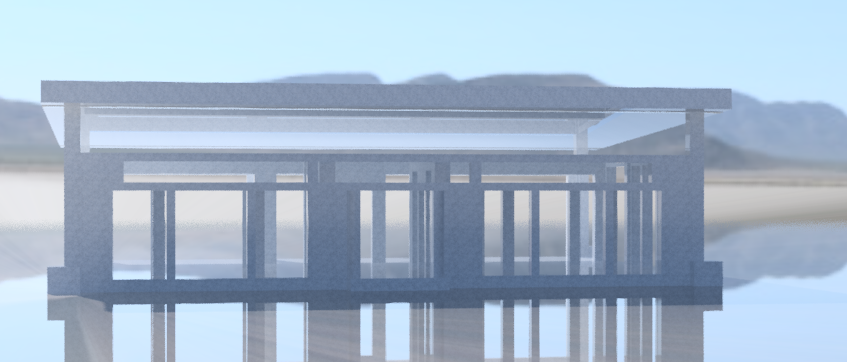
Makerspace Overview
The Makerspace is the Phoenix Hub’s digital-to-physical fabrication center, designed to transform ideas into real-world solutions that support disaster recovery and community rebuilding. By combining a Digital Design Lab, 3D Printing Lab, and Fabrication Workshop within a single facility, it provides a complete workflow from computer-aided design and prototyping to full-scale manufacturing and assembly. The space enables local, on-demand production of essential components such as housing modules, repair parts, emergency equipment, and infrastructure systems, reducing reliance on external supply chains during crises. More than a workshop, the Makerspace serves as both a reconstruction hub and workforce development center, equipping residents with technical skills while accelerating recovery through innovation, fabrication, and community-driven problem solving.
How to Create the Maker Space

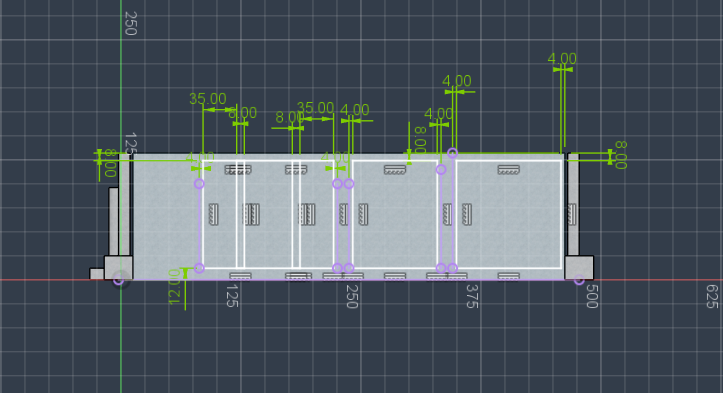
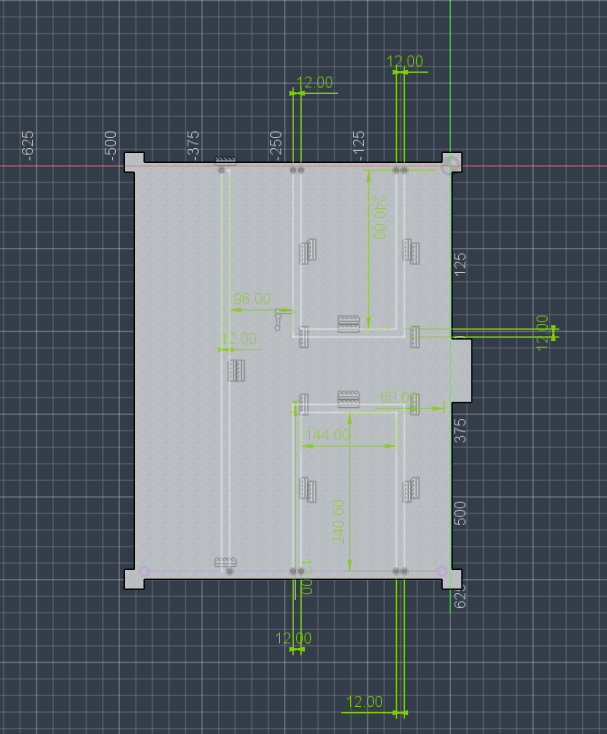
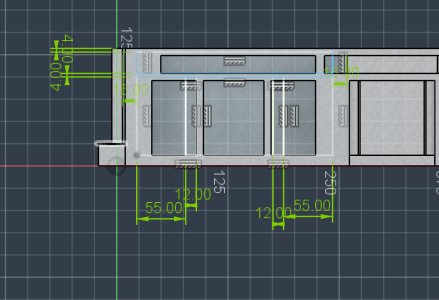
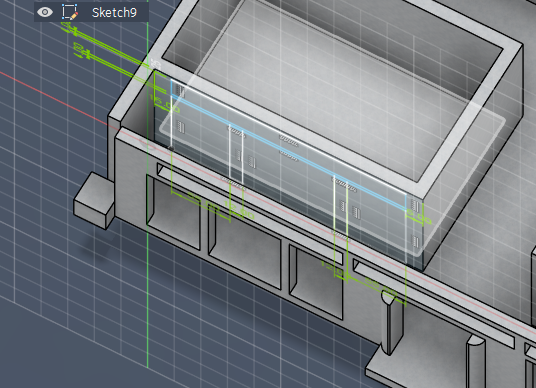
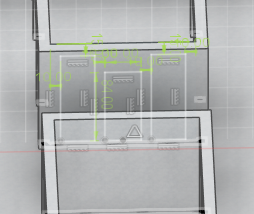
Step 1: Create the Makerspace Structure and Interior Layout
Begin by creating the makerspace foundation and structural framework, including the base slab, corner support pillars, and exterior wall system. Add the primary entrance, architectural entry features, and window openings while maintaining consistent dimensions and placement throughout the facility. Divide the interior into three dedicated spaces—the Digital Design Lab, 3D Printing Lab, and Fabrication Workshop—using partition walls that establish a logical workflow from design to prototyping and final production.
Creating the Openings & Ventilation
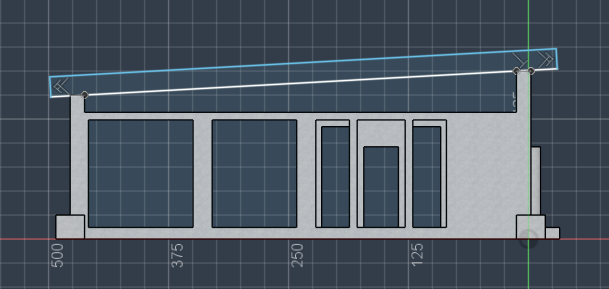
Step 2: Complete the Openings, Ventilation, and Roof System
Create the remaining doors and observation windows for each lab space, ensuring visibility, daylighting, and cross-ventilation throughout the building. Extend the structural pillars to create a stepped elevation profile that supports passive airflow and fabrication fume removal. Finally, construct the butterfly roof system by connecting the front and rear support structures, adding roof overhangs and completing the building envelope. This roof geometry works with the stack-effect ventilation strategy to improve indoor air quality, reduce energy demand, and maintain a comfortable working environment for fabrication and manufacturing activities.
Creating the Healing Room - Steps
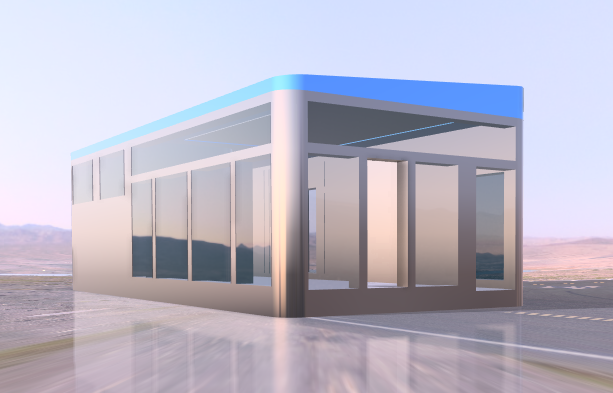


Healing Room Overview
The Healing Room is a private wellness and counseling space designed to support mental health, recovery, and emotional stabilization within the Phoenix Hub. It provides a calm, daylight-filled environment that combines therapy, counseling, meeting, and private care functions within a single integrated structure. Through the use of natural lighting, passive ventilation, skylights, therapeutic design principles, and softened architectural forms, the Healing Room promotes comfort, privacy, and well-being while serving as a dedicated space for recovery and community support during both disaster response and long-term rebuilding efforts.
Step 1: Create the Healing Room Structure
Create a rectangular floor plan measuring 479 in × 106 in and divide the interior into the therapy office, meeting space, hallway, and bathroom using 12-inch-thick walls. Extrude the foundation downward by 12 inches and extrude all wall profiles upward by 10 feet to form the primary structure. Add the main entrance door and create all exterior and interior window openings using the established Phoenix Hub window standards to provide daylight, privacy, and ventilation throughout the building.
Create the Roof and Skylight

Step 2: Create the Roof and Skylight
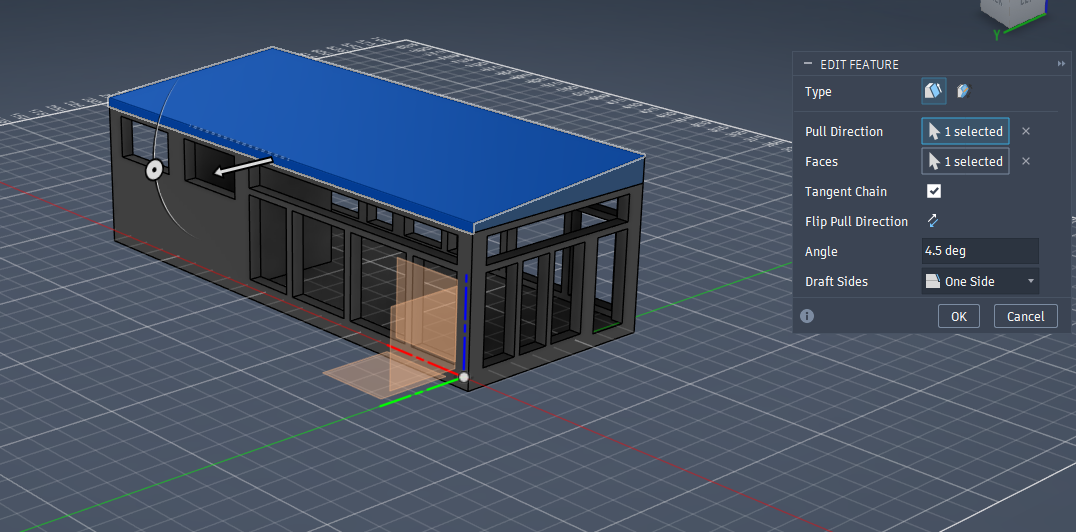
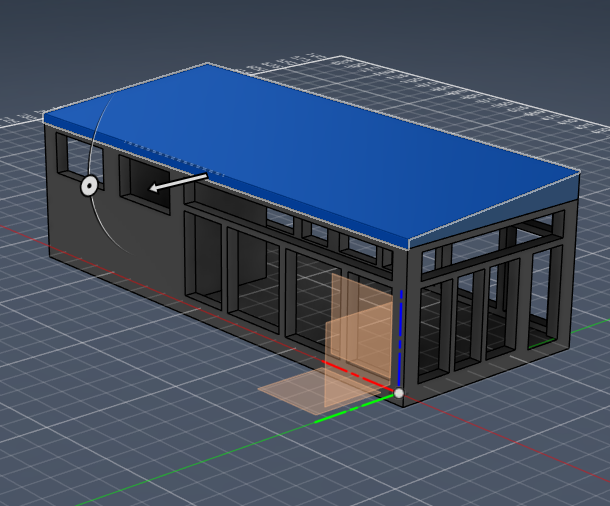
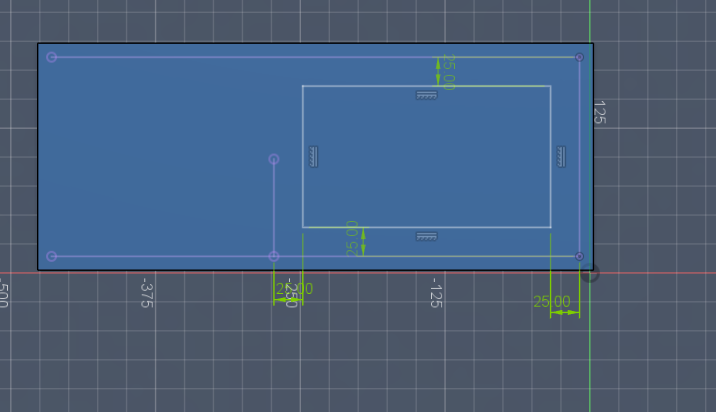
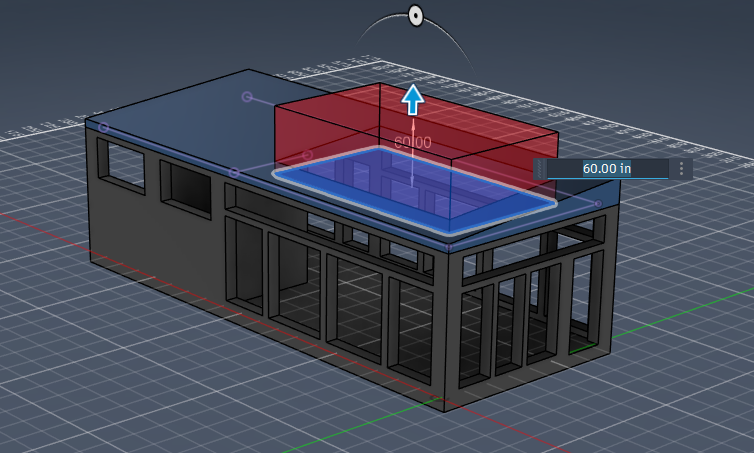
Create a roof sketch matching the building footprint and extrude it upward by 8 inches to form the roof assembly. Apply a 4.5° draft angle to create the passive ventilation roof profile that supports the Phoenix Hub’s butterfly airflow strategy. Then create a centered roof panel by projecting the wall geometry, offsetting the panel 25 inches from surrounding walls, and performing a cut extrusion through the roof to create a skylight that enhances natural lighting and occupant well-being.
Finalize the Therapeutic Design Features
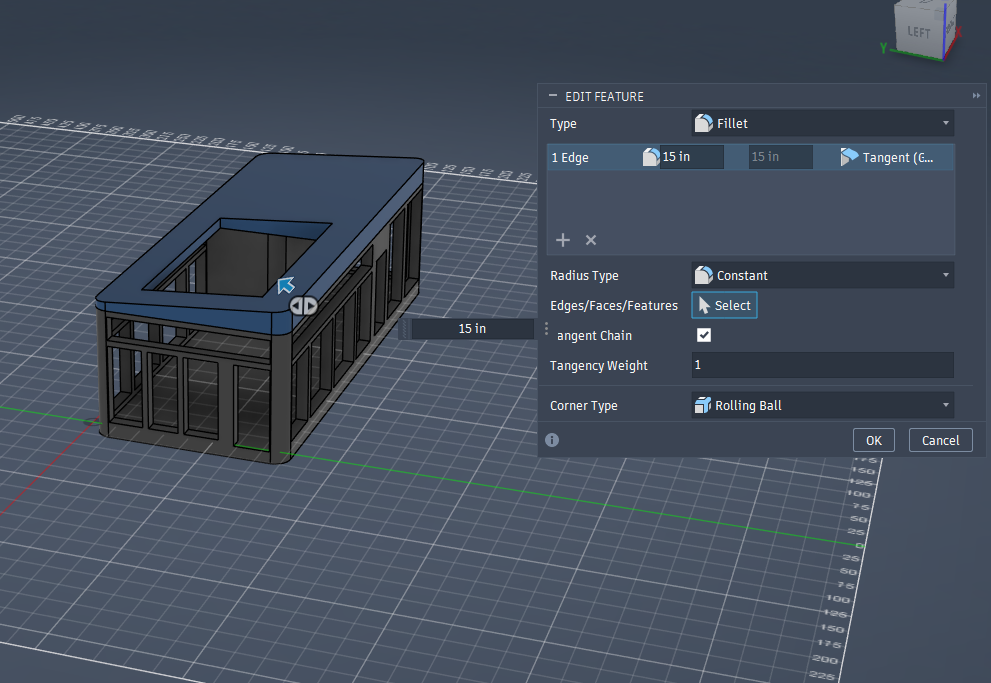
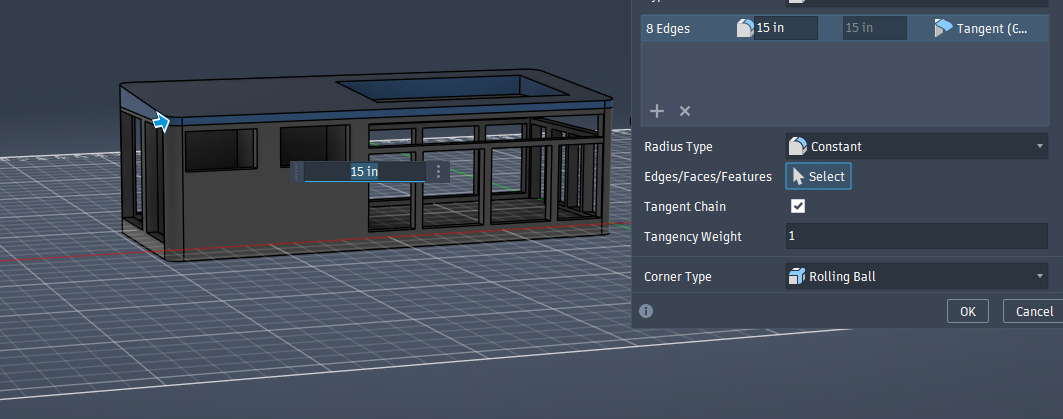
Step 3: Finalize the Therapeutic Design Features
Project any remaining window geometry where necessary and perform cut extrusions to complete all openings. Finally, apply fillets to the exterior corners, interior wall intersections, and skylight edges to soften the architecture and create smooth transitions throughout the structure. These rounded forms reinforce the Healing Room’s trauma-informed design approach, creating a welcoming environment focused on comfort, healing, privacy, and recovery.
Note: Mirror to create the other sides replicated
Creating Energy Grid & Steps
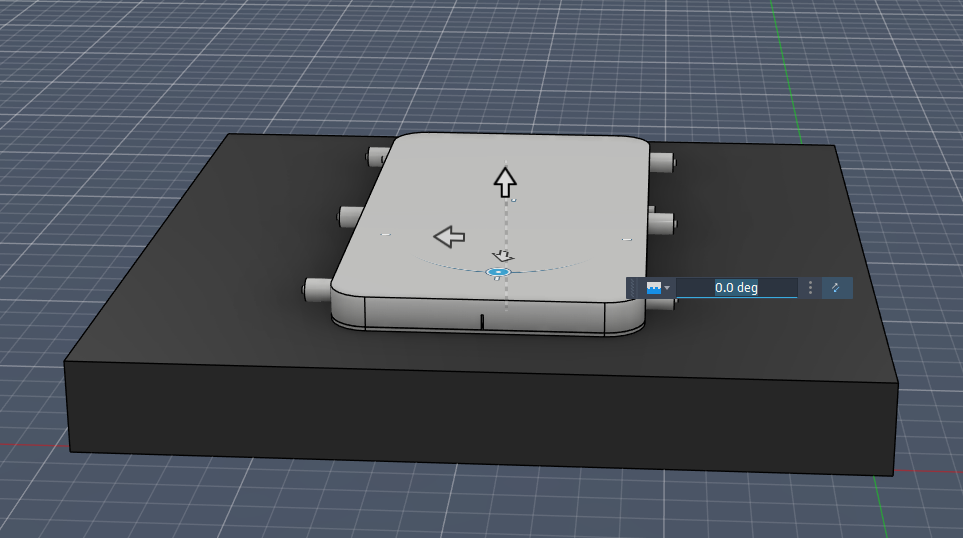
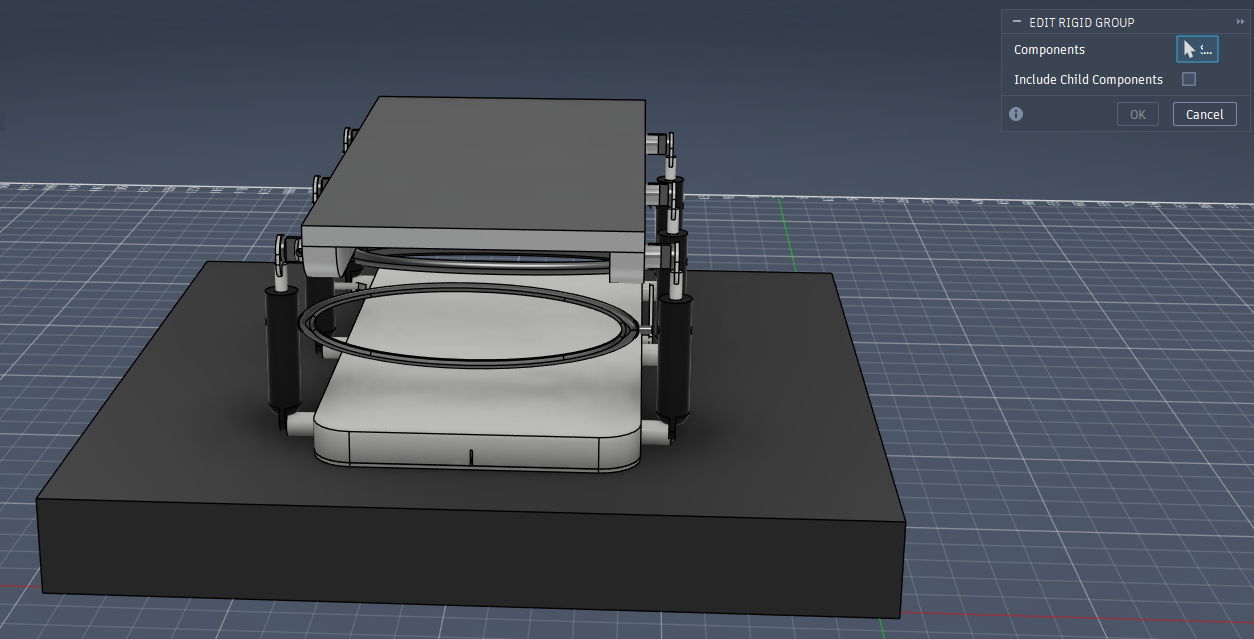
Sunmill Energy Grid Description
The Sunmill Energy Grid is the renewable energy power system within the Phoenix Hub. Consisting of interlinked Energy Cubes that hold Sunmill solar-wind systems, this network generates energy not only for normal operation but also during any possible emergency situations. The structure of the Sunmill Energy Grid allows adding modules to this system without sacrificing energy production, thermal isolation, or redundancy. Besides providing power, the energy grid also ensures water production, communications, lighting, healthcare services, housing, and other important elements.
Step 1: Develop the Base of the Energy Grid
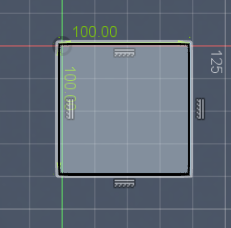
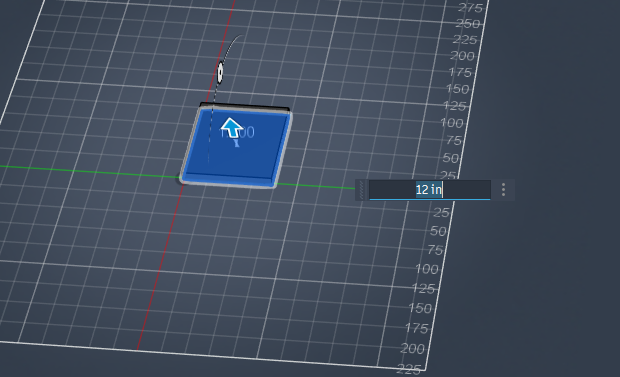
Developing the first Energy Cube requires creating a 100 in x 100 in structure that is extruded upward by 25 in. Adding the mounting platform requires projecting the Sunmill footprint onto the upper surface of the Energy Cube and then extruding this area upward by 2 in. Thus, this cube becomes the basis of the entire system.
Construction of the Sunmill Microgrid Network
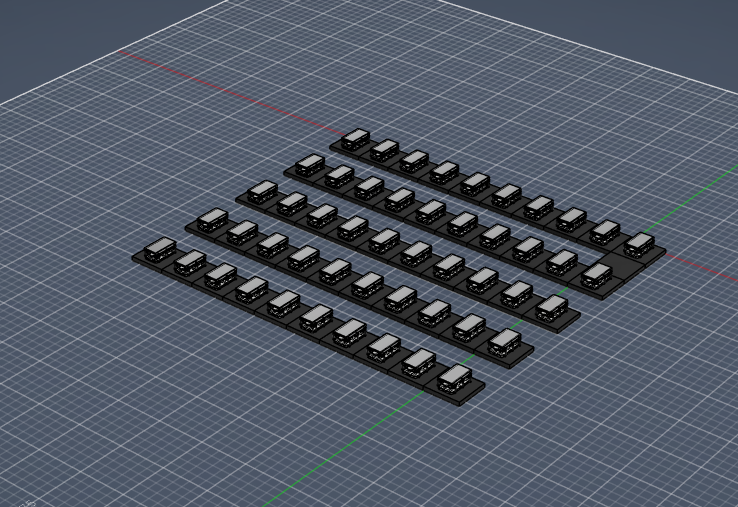
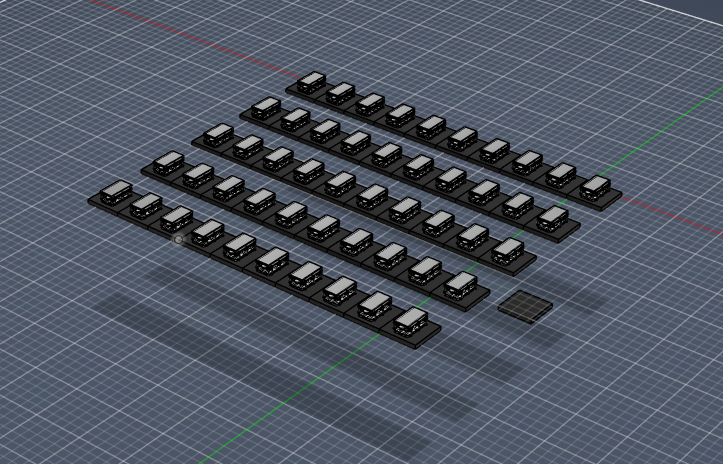

Step 2: Construction of the Sunmill Microgrid Network
Integrate several Energy Cube units together in one construction and link the units through the use of Rigid Joints. Create rows of the units by using the Linear Pattern function, with each unit spaced at 100 inches apart, and subsequently pattern the rows orthogonally, making sure that there is an alternate row left empty. This alternate row provides room for access to maintenance work, ventilation, insulation, additional equipment, and future development.
Filling the Grid With Filler Modules
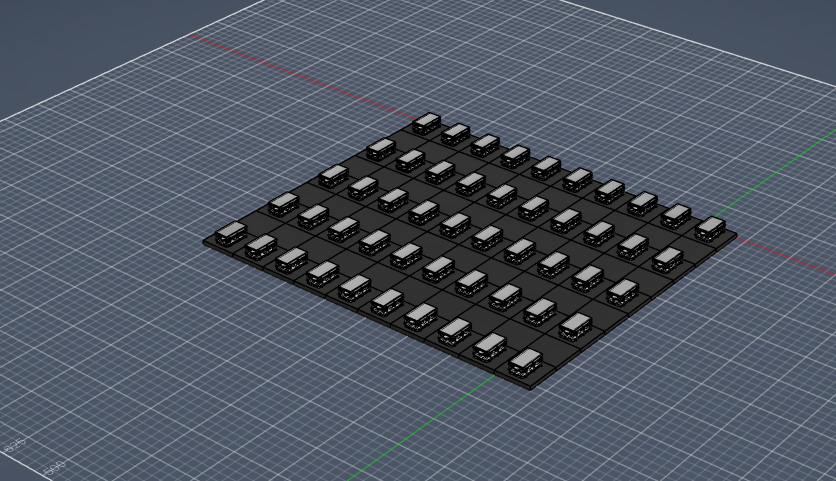
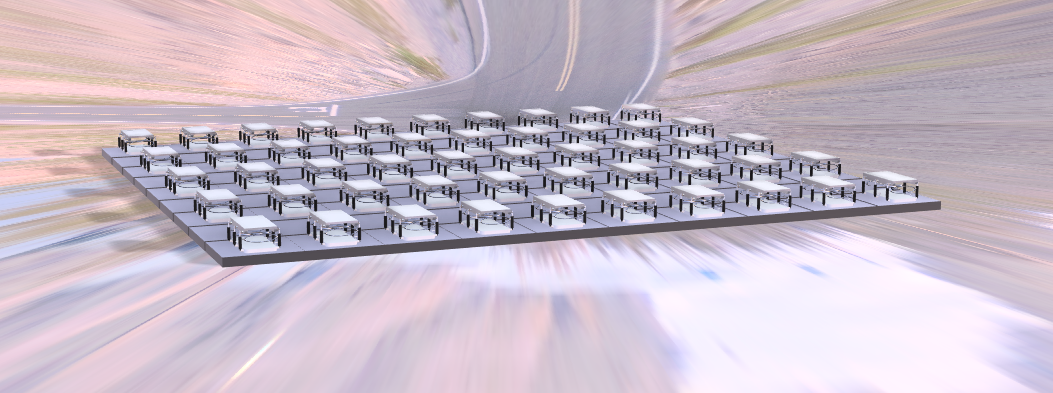
Step 3: Filling the Grid with Filler Modules
Fill the grid with filler modules that use the same 100 in x 100 in footprint but are devoid of Sunmill assemblies. Connect the filler modules to form a solid grid structure, utilizing the same joint references for the primary modules of Energy Cubes. Deploy the filler modules in accordance with the assigned grid spaces to finalize the construction of the Sunmill Energy Grid. The completed structure becomes a sustainable energy network ready to deliver renewable energy within the Phoenix Hub.
Foundation
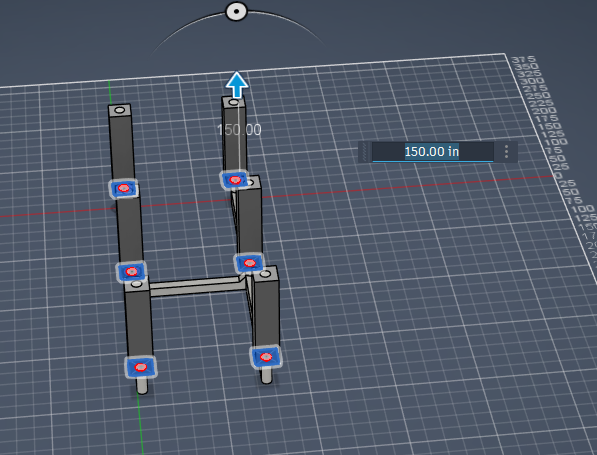

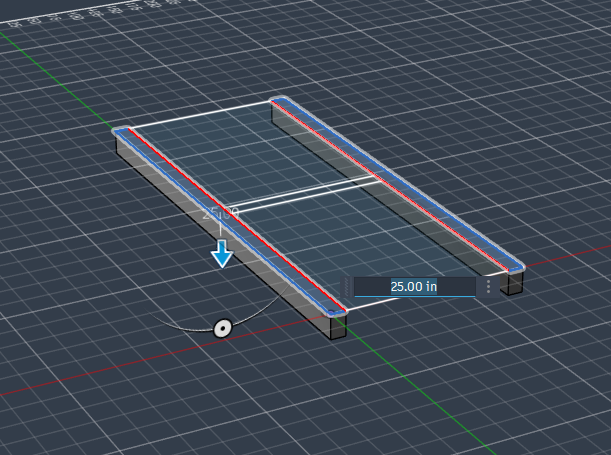
To create a modular and efficient foundation system, begin by sketching two parallel structural support beams that run the length of the building and serve as the primary load-bearing members. Connect these beams with a central cross-beam positioned between them to improve rigidity, distribute loads evenly, and prevent lateral movement. Once the structural frame is complete, create six cylindrical foundation piers beneath the beam system, spacing them evenly to transfer building loads deep into the soil and provide long-term stability across varying site conditions.
Next, create four reinforced concrete footing blocks surrounding the foundation piers. Position these blocks strategically around the pier system so they work together to resist settlement, uplift, and lateral forces while anchoring the structure securely to the ground. Together, the parallel beams, central stabilizing member, cylindrical piers, and reinforced concrete footings form a modular foundation that is strong, scalable, easy to deploy, and capable of supporting the Phoenix Hub's structures in a wide range of disaster-prone environments.
3D Printing
In order to manufacture the parts needed for testing the physical model, a 3D printer was required to execute the designs. I used our robotics team’s 3D printer, the Bambu Lab P1S, to fabricate these components. This process not only allowed me to create the necessary test pieces but also provided insight into the layer lines that would appear in construction if a full-scale version of the model were produced. The Bambu Lab P1S has a print volume of 10 × 10 × 10 inches, which makes it possible to produce a scaled-down version of the design. For this project, the model was printed at approximately 1.5% of the original structure’s size, allowing for manageable fabrication while still capturing key details of the full-scale concept.
Slicer:
Depending on the specific 3D printer being used, you need to download the appropriate software to prepare,or “slice”,the parts and components for printing. For example, my team uses a Bambu Lab printer, so we export the models from Fusion and then process them using Bambu Studio to generate the necessary print files.
After you download your slicing software, create a new project.
Preparing
Then, import the part into the slicer by clicking “Add” and selecting the desired file. Then, use the slicer’s auto-rotate function and enable supports to prevent deformation during printing. Set the arrangement option to “0” so the software automatically positions all objects for optimal layout.
For all of the modules use the perform cut module to cut off the roof and print separately in order to save time and support.
Slicing
After this, select “Slice Plate” so the software can generate the G-code, which essentially provides the printer with detailed layer-by-layer instructions. Once slicing is complete, connect to your printer and send the files over for printing.
Printing
After completing calibration and pre-print checks, the printer begins the job. The progress can be monitored in real time through the software, which provides live updates and access to the built-in camera feed. This allows you to watch each layer being printed, verify adhesion, and ensure there are no issues such as warping or failed supports. If necessary, you can pause or stop the print remotely to prevent wasted material or time.
Living Space Build


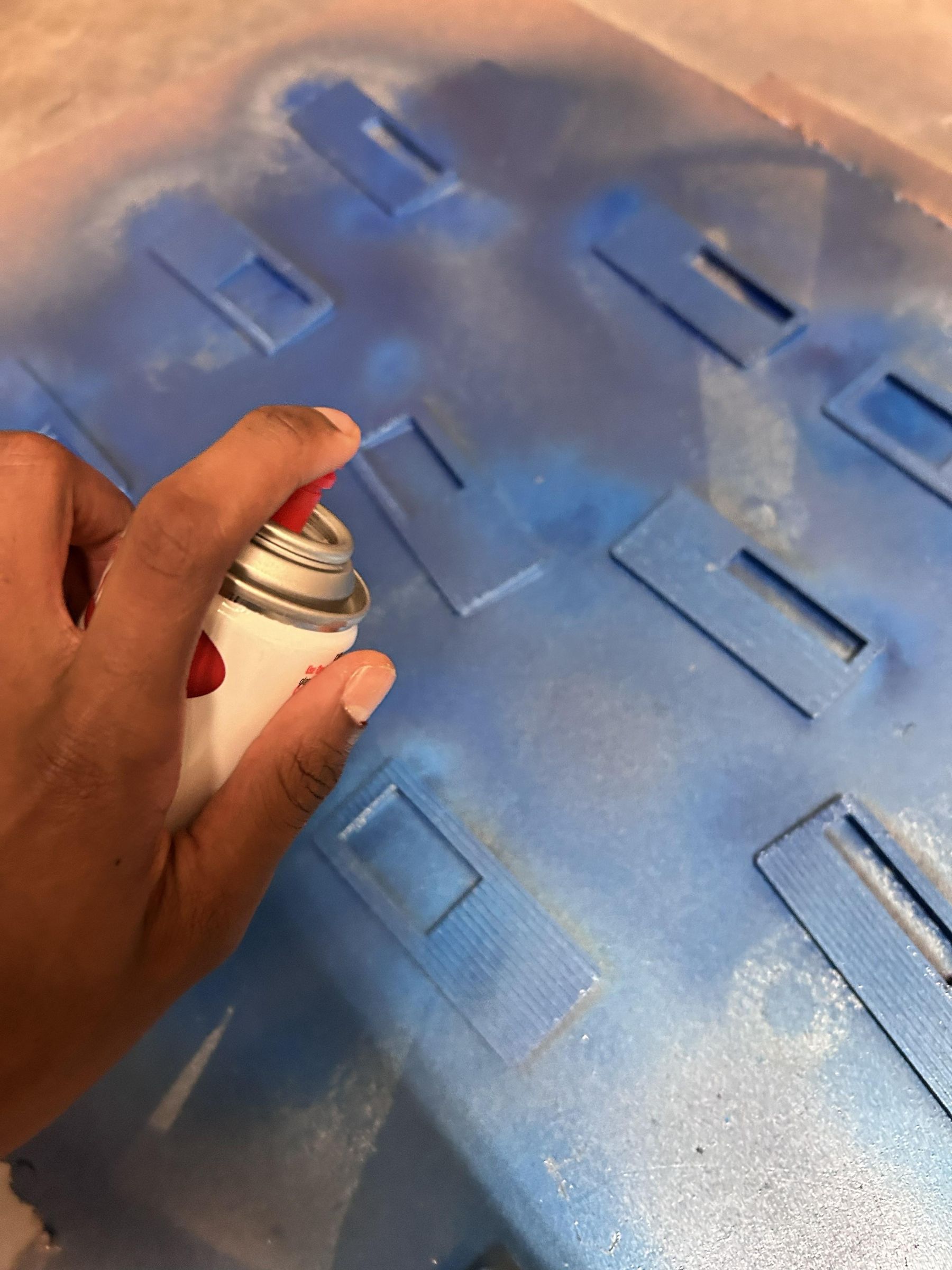
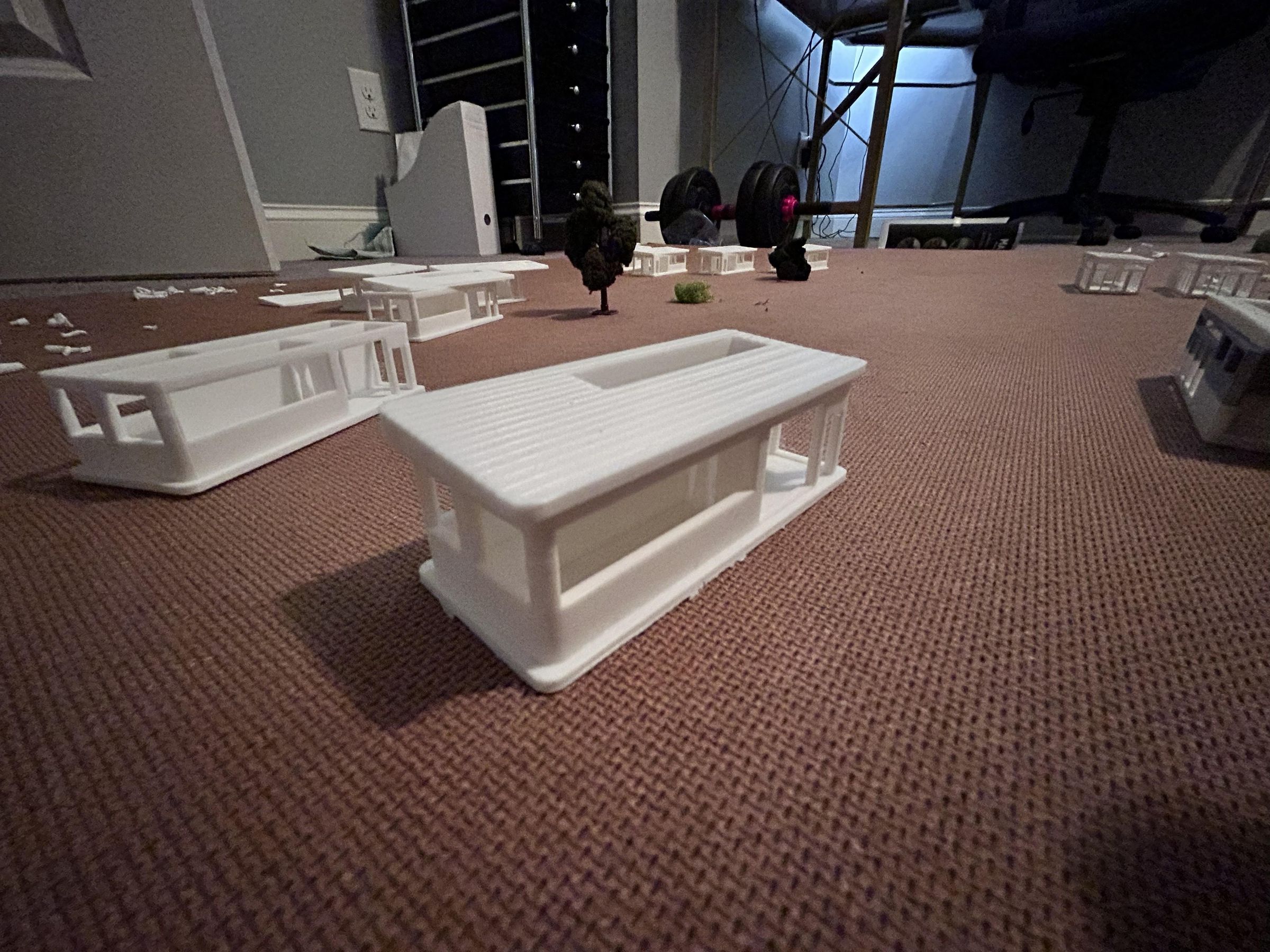
Following the printing of the Living Modules construction without the roof and the roof separately, the next step is to remove all supports and extra print material from both models. The roof element should be covered with matte black only while other elements will remain untouched. After complete drying of the paint, place the roof on top of the construction and attach it using superglue. This will result in a ready model featuring the modular roof design, where you can clearly see the interior spaces suitable for habitation. Perform the same actions with the symmetrical construction of the Living Modules as well to ensure uniformity throughout your model set.
Healing Modules
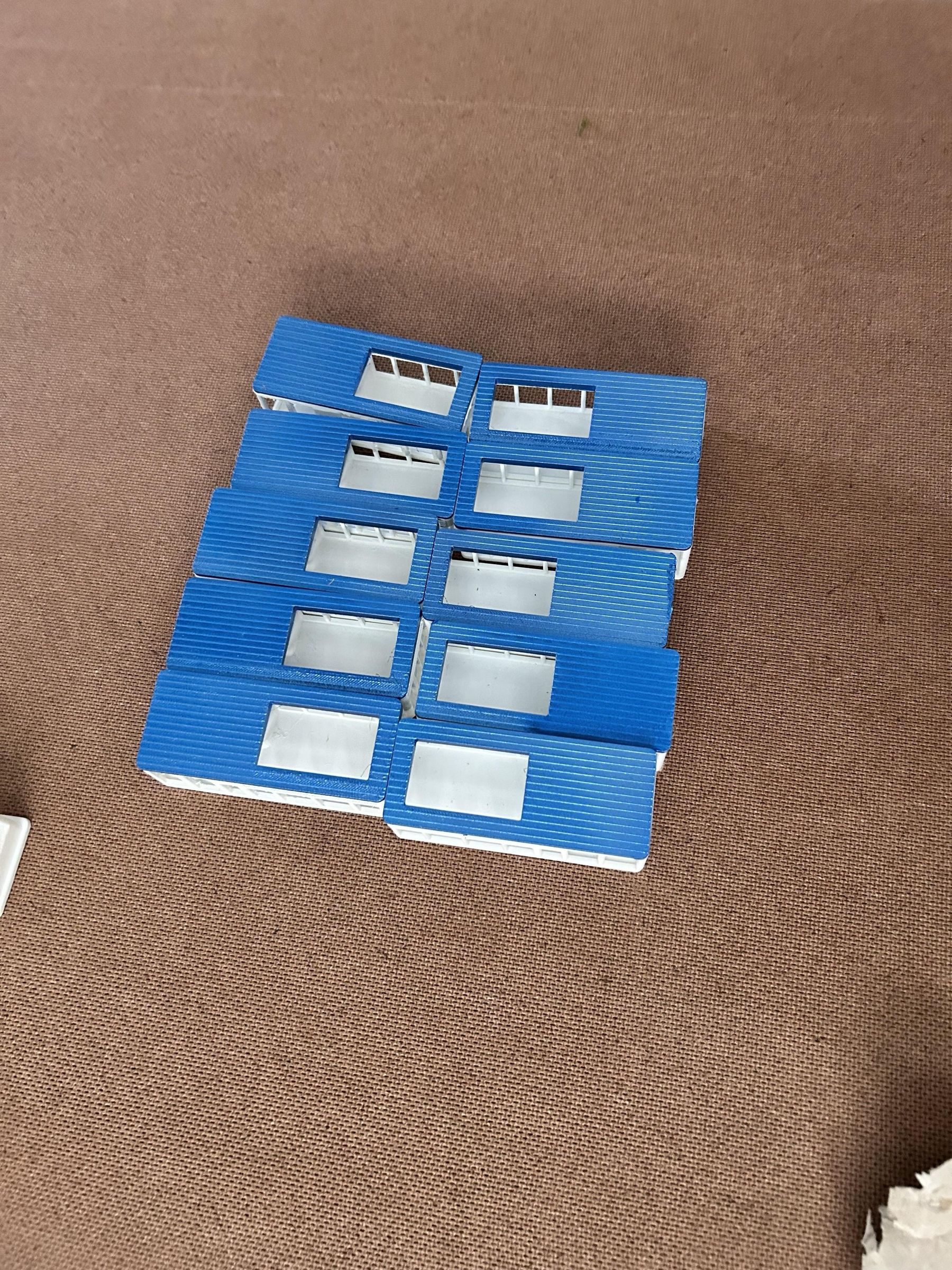
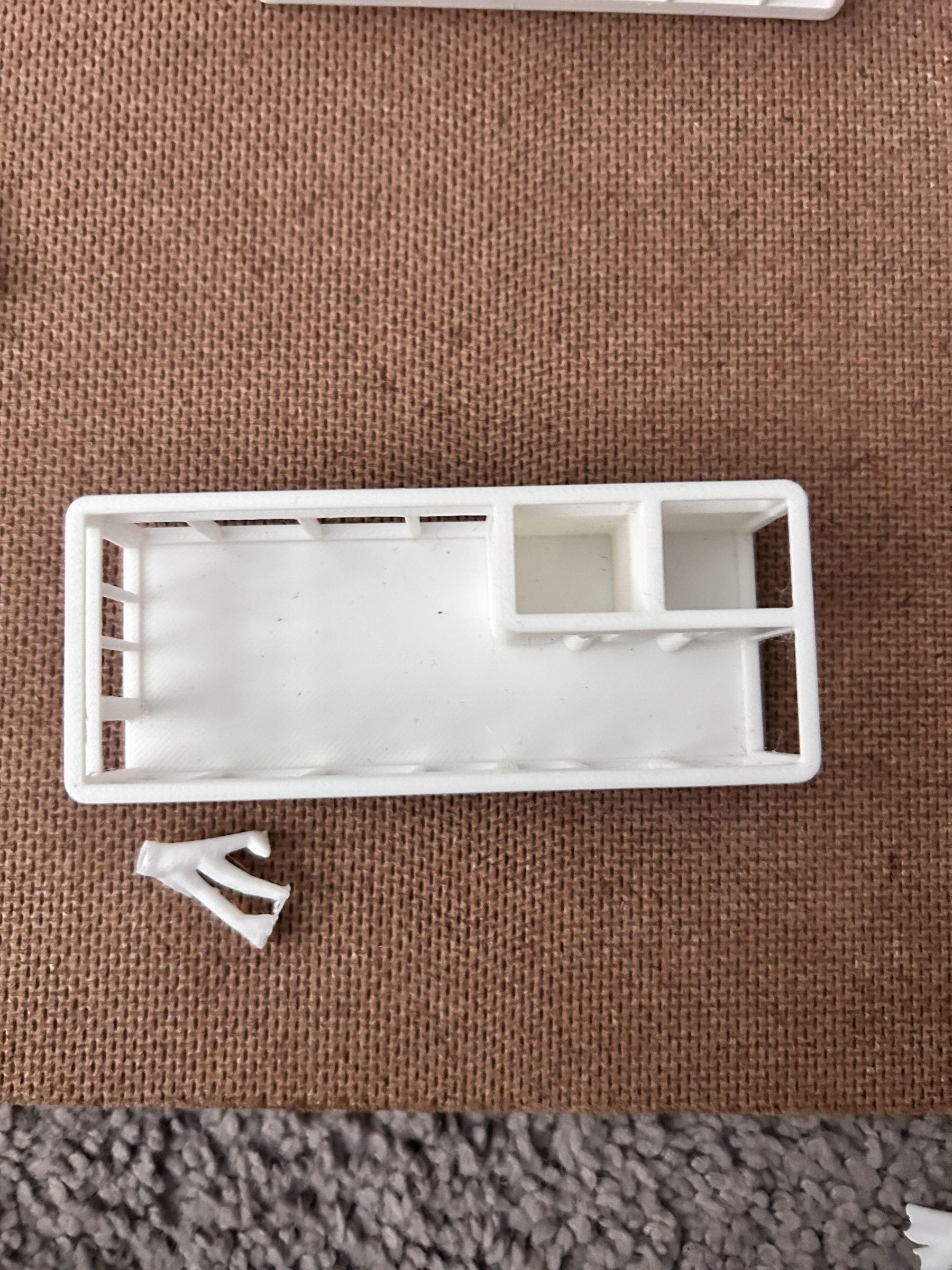


Once you have printed the structure of the Healing Center without the roof and the roof separately, make sure you remove all the supports and extra printing material from the two prints. Paint the roof piece with a metallic blue paint while leaving the other structure bare. After you let the paint dry, fit the roof onto the structure by using the super glue to complete your model.
Maker Space Build
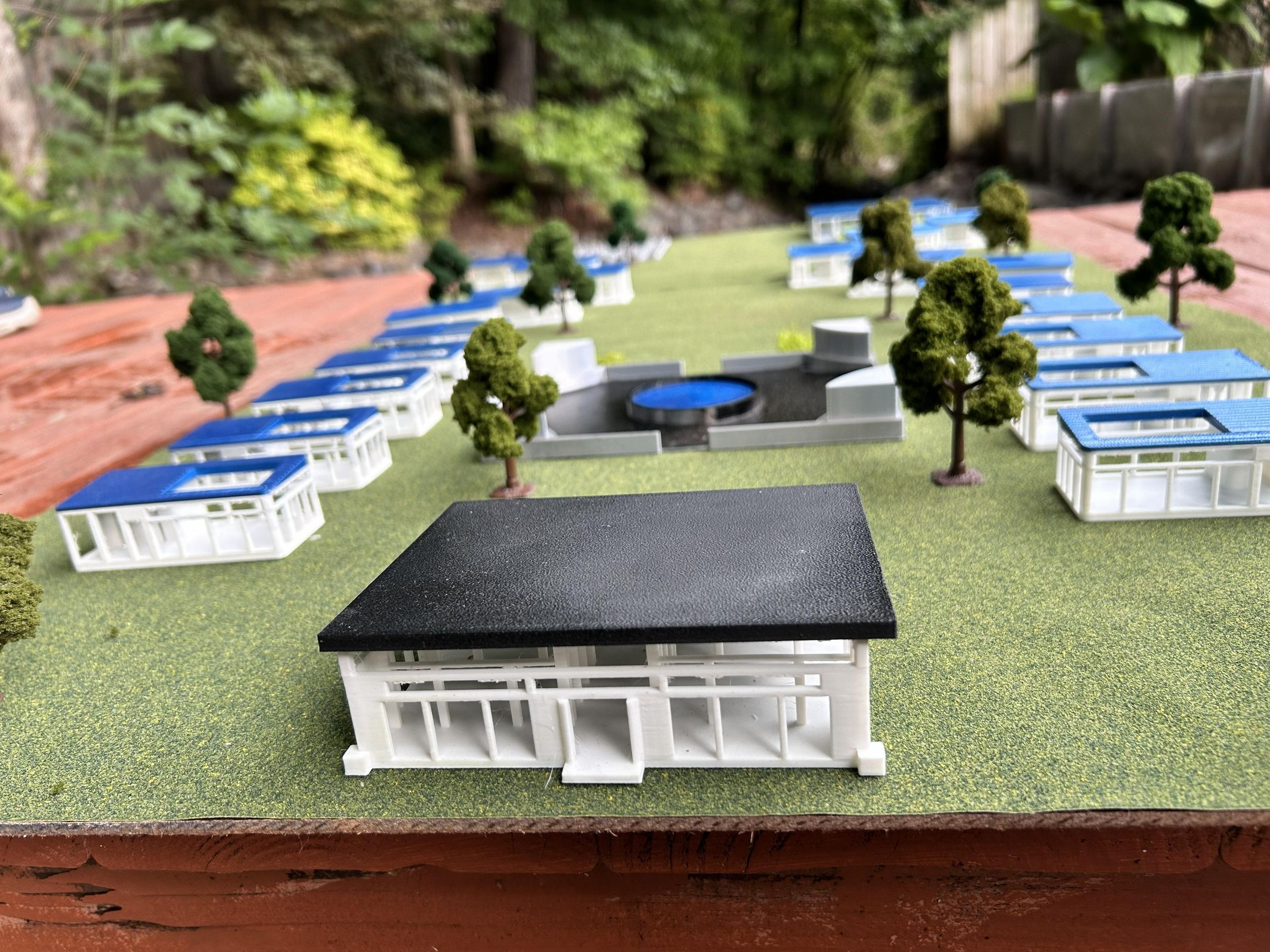


Following the successful printing of the Makerspace structure without the roof and of the roof separately, detach all supporting structures along with any extraneous parts in the process of printing from both prints, in order to create perfect edges for assembly. Add a matte black coating only on the roof but leave the rest of the Makerspace structure in its original color of the printing material. When the painting is complete, join the roof with the rest of the structure and use super glue to stick them together.
AquaVerde Build
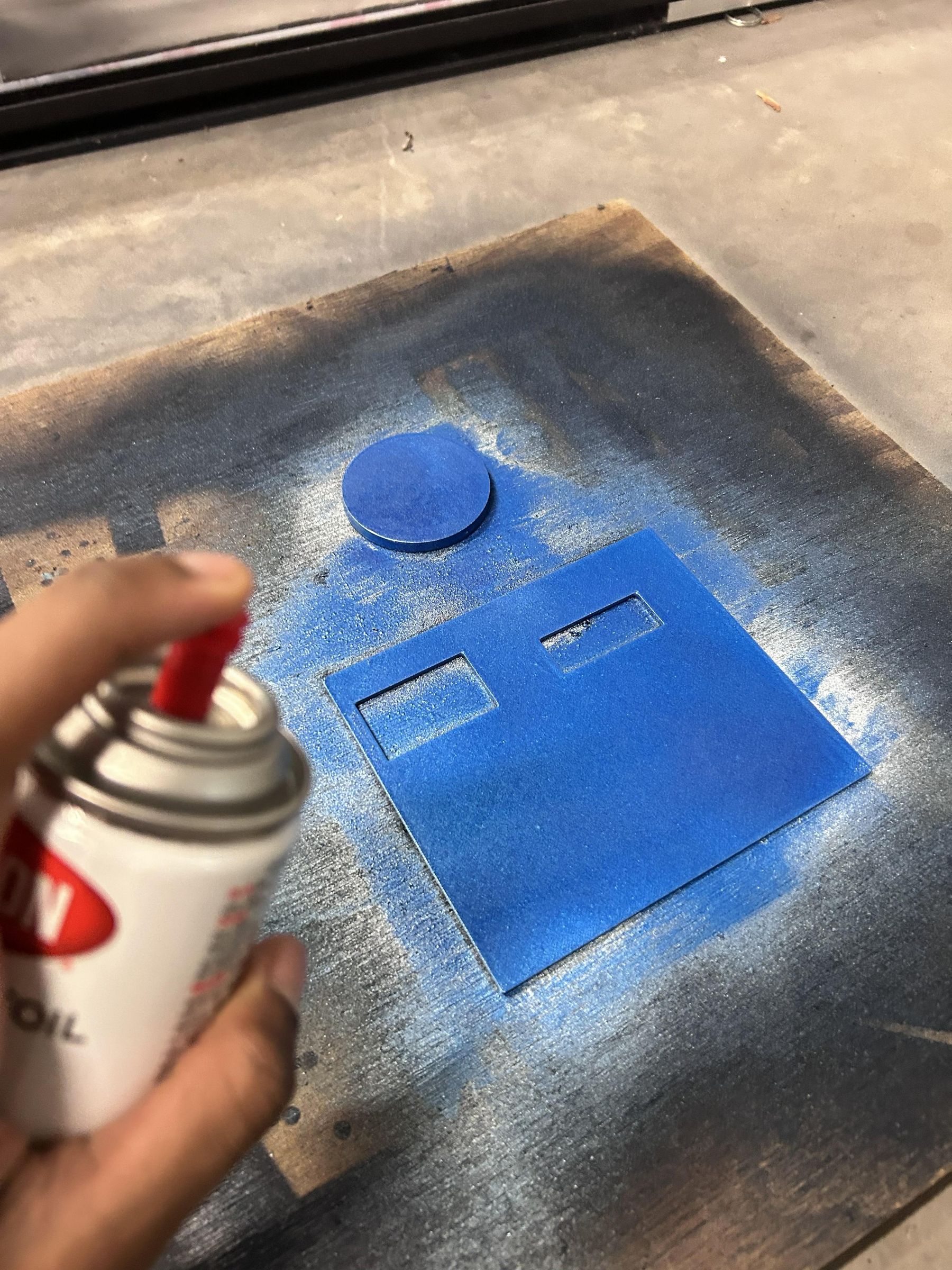
.jpg)
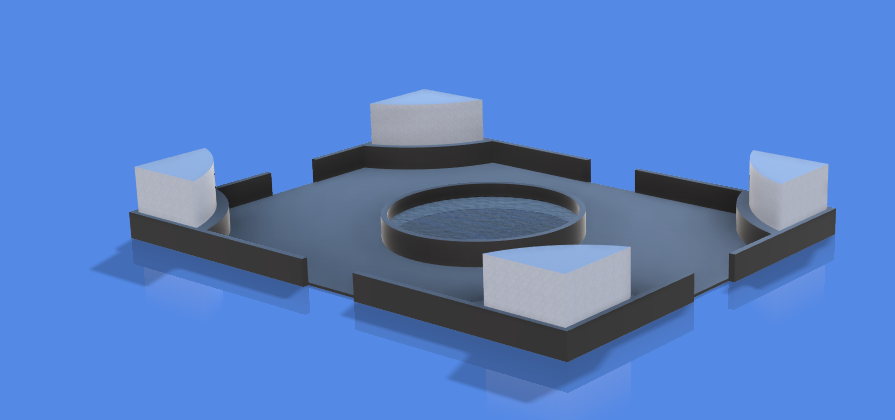
In the case of the Aquaverde design, once the printed structure is fully assembled, masking tape or duct tape should be used to cover all the outer sides except for the ground-facing base. It should be ensured that the architectural details are not damaged while taping the exterior surface. The exterior surface should be covered up, and then the ground-side surface should be painted with matte black paint. Allow sufficient time for the paint to dry, and then remove the tape to see the clear-cut difference between all the surfaces.
Afterwards, print out the interior water part (the “pool puck”), which will require metallic blue paint to simulate moving water. Once the paint is fully dried, position and insert the interior piece inside the circular opening of the Aquaverde design.
LandScape Build
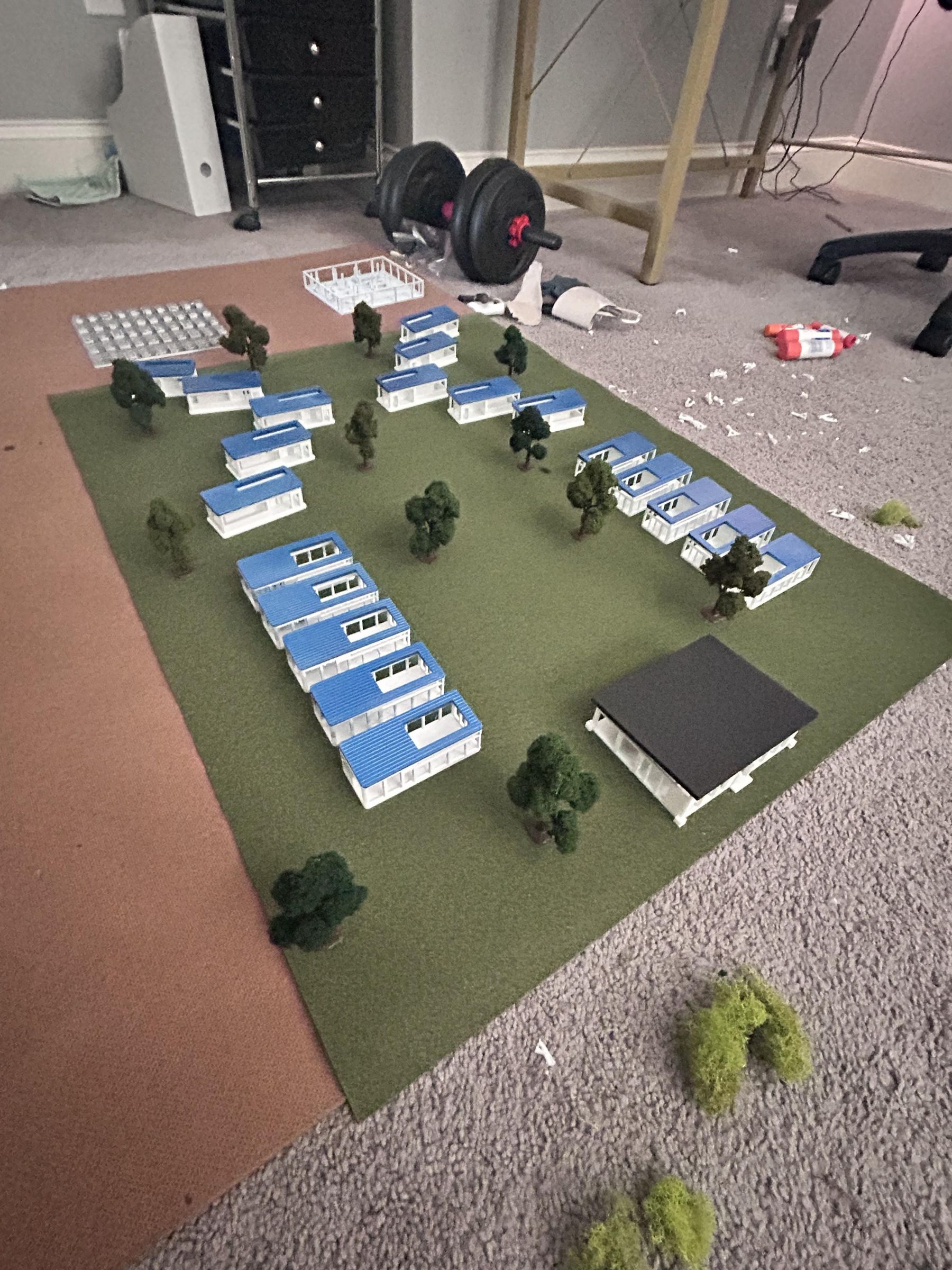


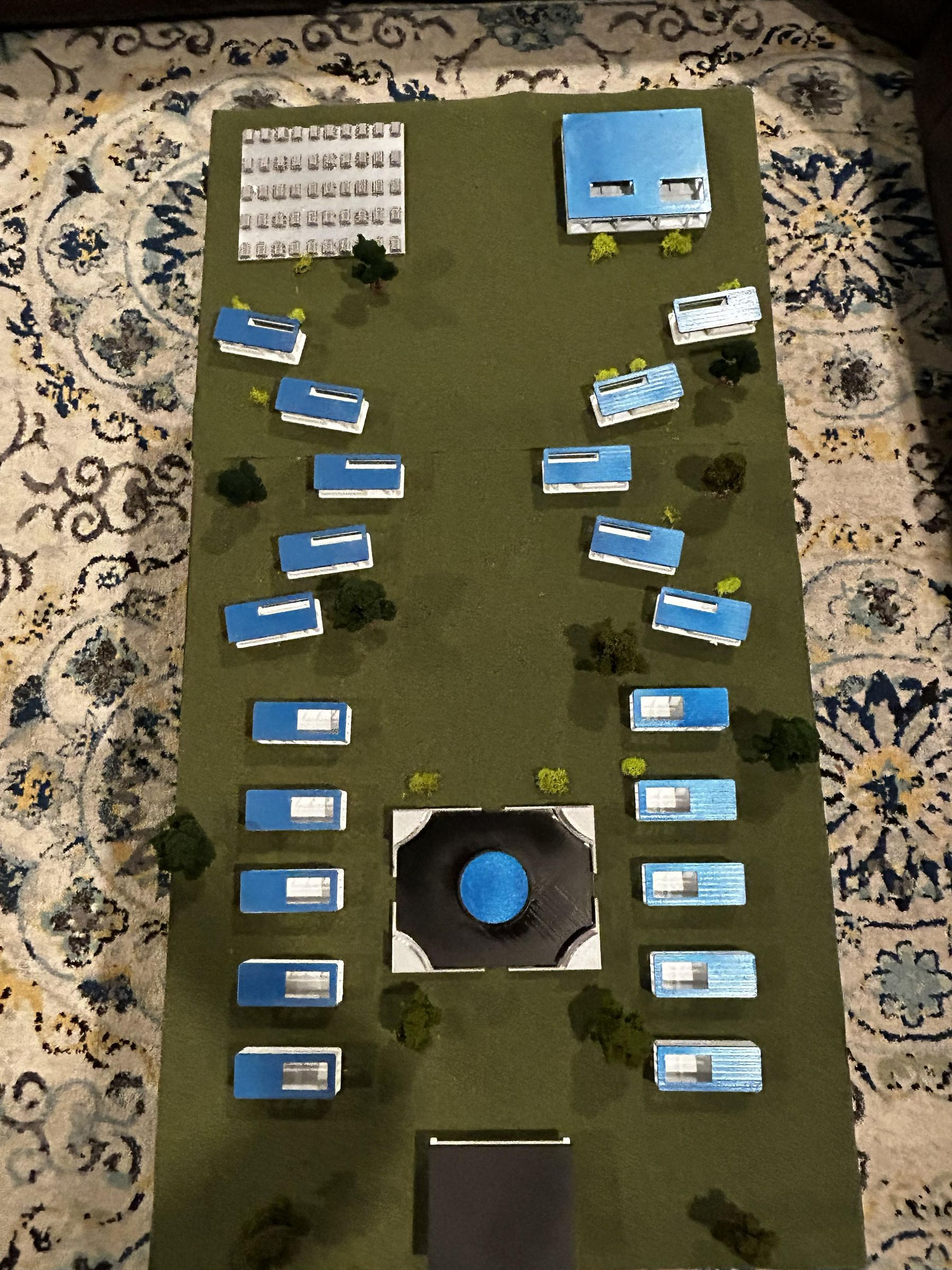
For the landscape, one should reduce the length and width measurements from the base module assembly by about 0.75% in order to proportionately make the measurements according to the model base. These dimensions can be transferred onto a hard stock cardboard, where they can be carefully traced before cutting them out according to the new dimensions.
When the base is created, the next step involves putting the grass texture sheet onto the cardboard using a mixture of Elmer’s glue and super glue. This will provide proper coverage and ensure that it is glued firmly on the cardboard to create a landscape.
Meeting Cultural Norms
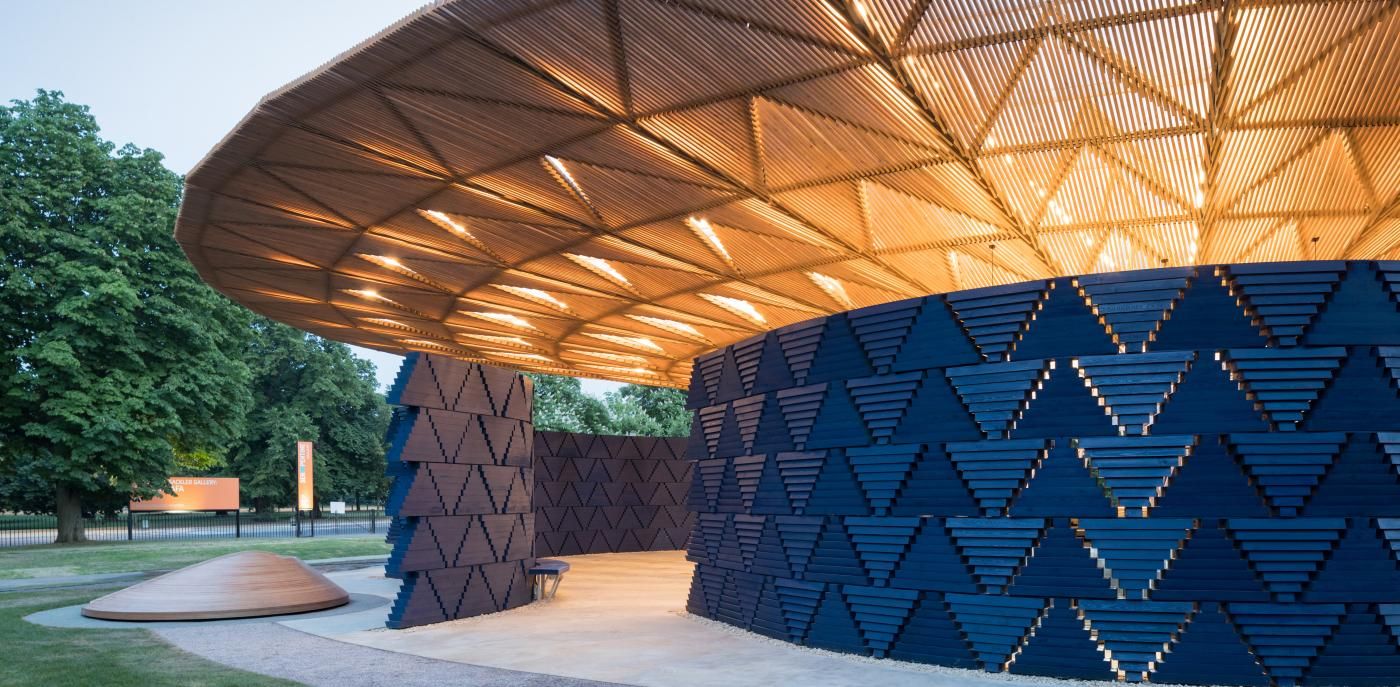
Cultural Values into Infrastructure
The design of Phoenix Hub is premised on the belief that resilience can be developed by ensuring a relationship exists between the cultural values of the society and its infrastructure. The study conducted in Dakar, Senegal, shows that seven themes emerge from the culture including hospitality, assembly, sustainability, healing, storytelling, sufficiency, and innovation.
The themes stated above have not just been used for decoration purposes but also integrated into physical structures and programs.
Teranga: Hospitality Through Design
Cultural Principle:
Senegal's philosophy of Teranga emphasizes hospitality, inclusion, and treating strangers as family.
Phoenix Hub Response:
- Central Community Commons located at the heart of the facility
- Open circulation paths that encourage interaction and visibility
- Flexible gathering areas for community meals, meetings, and support services
- Shared recovery spaces designed to reduce social isolation
These features create an environment where residents, volunteers, and visitors are welcomed into a shared recovery process.
The Courtyard: Community Gathering/Aquaverde
Cultural Principle:
Traditional Senegalese courtyards function as the social center of daily life.
Phoenix Hub Response:
- Community Commons serves as the organizational center of the facility
- Multi-purpose gathering areas support meetings, events, and resource distribution
- Outdoor gathering zones extend social activity beyond the building envelope
- Makerspace and training areas encourage collaborative learning
Like the courtyard, these spaces place community interaction at the center of the design.
The Impluvium House: Water Stewardship
Cultural Principle:
Impluvium Houses use architecture to collect and manage water as a community resource.
Phoenix Hub Response:
- Aquasol atmospheric water generation system
- Integrated water storage infrastructure
- Multi-stage water purification systems
- Distributed potable water access throughout the facility
By generating and storing water independently of damaged infrastructure, the Phoenix Hub applies the same principle of resource stewardship through architecture.
Building with the Environment
Cultural Principle:
Traditional Senegalese architecture responds to climate using passive strategies and locally appropriate design.
Phoenix Hub Response:
- Stack-effect ventilation system
- Butterfly roof geometry
- Passive daylighting strategies
- Phase-change thermal materials
- Reduced HVAC dependence through thermodynamic architecture
These systems work with environmental forces rather than relying solely on mechanical equipment.
Faith, Reflection, and Healing
Cultural Principle:
Spaces for reflection, spirituality, and emotional restoration are integrated into community life.
Phoenix Hub Response:
- Dedicated healing and counseling spaces
- Quiet reflection areas
- Trauma-informed design strategies
- Wellness-focused environments supported by daylight and biophilic design
These spaces recognize that recovery involves emotional and psychological healing alongside physical rebuilding.
Storytelling Through Space
Cultural Principle:
Architecture can preserve community identity and collective memory.
Phoenix Hub Response:
- Areas designated for community artwork and installations
- Educational exhibits documenting local recovery efforts
- Flexible display spaces for local history and cultural expression
- Community-created content integrated into the facility over time
This allows the building to evolve as a reflection of the people who use it.
Tradition Meets Innovation
Cultural Principle:
Modern technologies should strengthen, not replace, cultural knowledge and community values.
Phoenix Hub Response:
- Community Makerspace
- Workforce development programs
- Renewable energy training through the Sunmill system
- Aquasol water system operations training
- Digital fabrication technologies including CNC machining and 3D printing
These programs combine traditional skills of craftsmanship, repair, and self-reliance with modern resilience technologies.
The cultural lessons observed in Dakar were not copied directly into the Phoenix Hub. Instead, they were translated into architectural strategies, infrastructure systems, and community programs that support the needs of Mitchell County.
Each cultural principle identified through research became a design decision.
Each design decision became a physical feature.
Each feature contributes to a recovery environment that supports belonging, dignity, participation, and long-term resilience.
The result is infrastructure that does more than restore services.
It strengthens the cultural foundations that allow communities to recover together.
Full Assembly
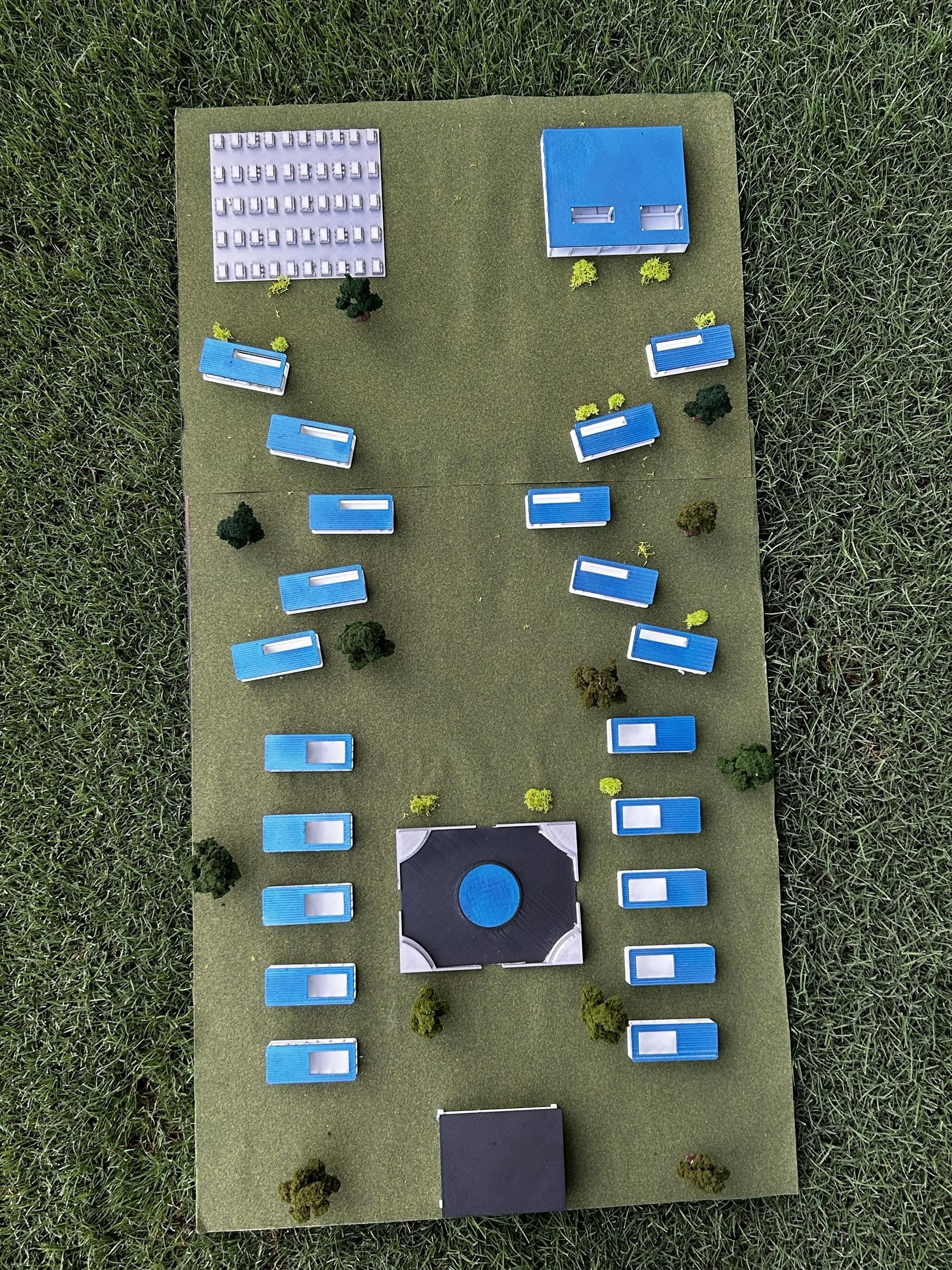
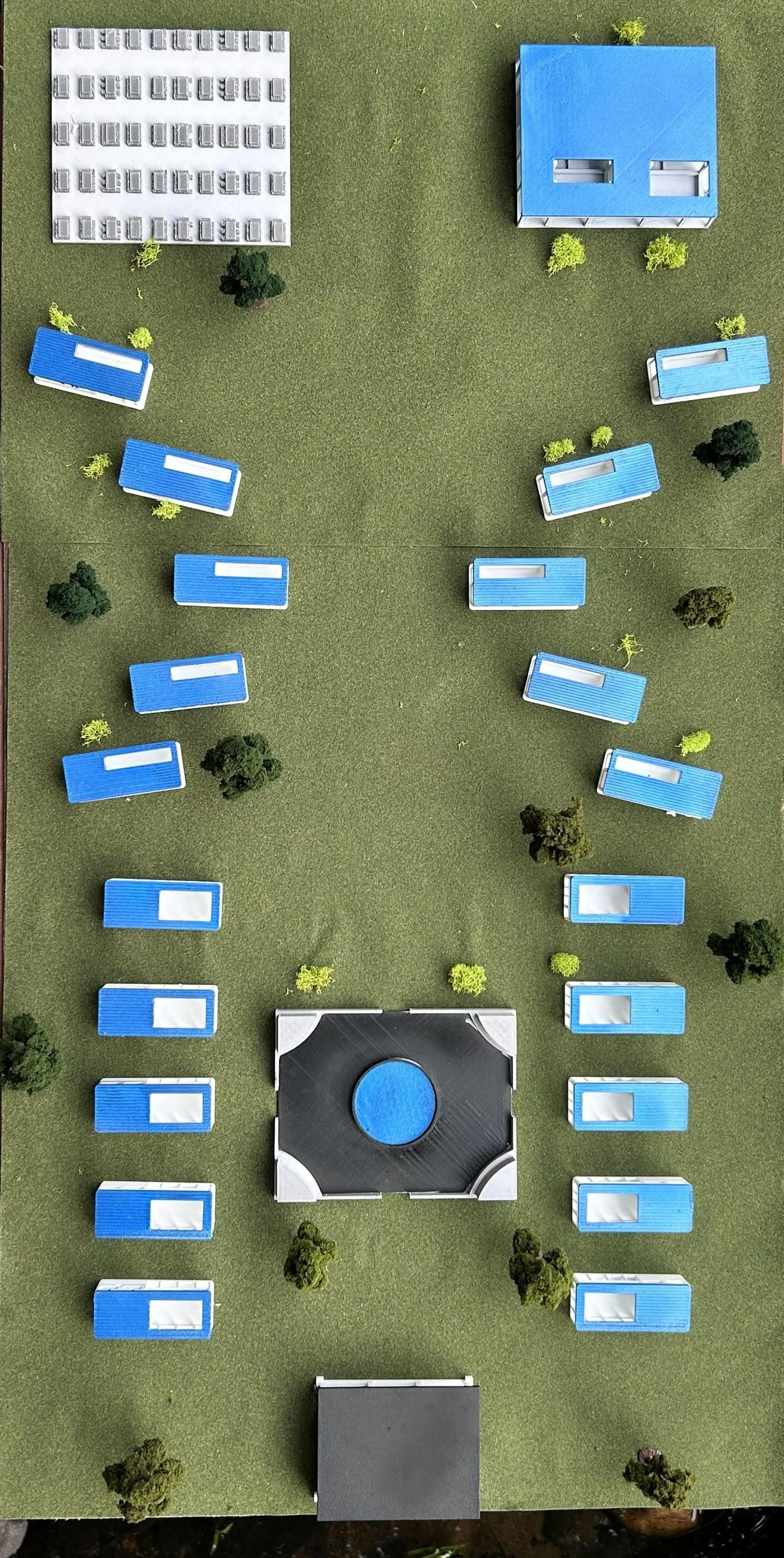

Start with the base modular landscape board and then add each finished building, including the makerspace, the Healing Room, Aquaverde, Sunmill solar energy grid, and the living modules, according to the initial scaled design of the Phoenix Hub. Make sure to properly place each element in relation to the rest so that all aspects, from spacing to energy flow, water supply, pathways, and service corridors, align within the model. By doing so, each subsystem will work together as part of the greater resilience system rather than as individual units.
Once the placement of all the modules is done, proceed to attach the model elements by securing each of them to the base using super glue in limited portions. Press each module in place and make sure to give it enough time to set properly before moving on to another one. Finally, double-check everything by making sure that all aspects, such as the energy grid and water system, housing units, and fabrication spaces, form one cohesive Phoenix Hub landscape model.
Then incorporate the finishing landscape features through placing twigs and clusters of moss on the model to symbolize real bushes. Place them at the edges of pathways, between modules, and in open ground space regions. Make use of a small quantity of glue to fix the moss and twigs to ensure that they remain steady without interfering with essential structural features of the Phoenix Hub model. These features will make your model more realistic.
The landscape modules of the Phoenix Hub model include the Makerspace Module, the Healing Room Module, the Aquaverde System, the Sunmill Energy Grid, and the Living Modules among others. All the components that make up the Phoenix Hub landscape model are built in a ratio of 0.75 compared to the architectural size of each structure. This means that the models have been scaled down to 75%.
Materials
.jpg)

Material and Method of Construction – Phoenix Hub (Summary)
Phoenix Hub uses an innovative earth-based 3D-printing construction method, combined with reinforced concrete, as well as acoustic and sound-damping material, for ensuring the strength, resilience, and comfort of the structure. Structural components of the structure are constructed out of clay, soil, and cement, which is laid down in the form of layers to create load-bearing walls which become strong when they are cured. The walls made of earth-based materials are then complemented by sound-absorbing layers that minimize sound transmission between different functional areas.
The whole system is built on a reinforced concrete foundation, with steel reinforcement bars made according to ASTM A615 Grade 60, at 100-inch modular intervals. The grid serves as an alignment structure for all modules, including Energy Cubes and Aquaverde systems.
After printing and curing, the modules are connected mechanically to foundation nodes via rigid joints and standardized interface points, providing expandable options without interfering with the basic geometry. Systems are integrated into the modules at the time of manufacturing, with systems for water delivery (Aquasol / Aquaverde), energy delivery, use of Phase Change Materials (PCM), and ventilation channels becoming one environmental system.
External components like insulation, protective finishes, and glazed exterior systems improve durability, temperature regulation, weather protection, and sound absorption.
Steps in construction begin by laying out a foundation grid, installing base acoustic and structural systems, printing Earth modules, curing and hardening the modules, securing the module connections, integrating the systems, and applying external finishes.
Core Concept: Print the Structure. Anchor the System. Silence the Environment. Activate Resilience.
Rapid Local Rebuilding
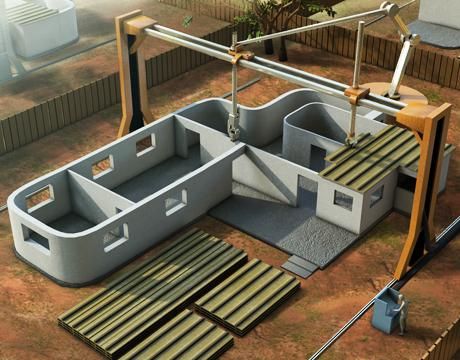
.jpg)
.jpg)
Local Materials as a Building Infrastructure for Post-Disaster Reconstruction
The most significant problem after any disaster is that of disrupted supply lines. Key building materials can be unavailable, infrastructure can be in disrepair, and prices of rebuilding will shoot up because of the high cost of doing business. The Phoenix Hub solves this problem by relying on local building using natural materials.
3D Soil Printed Building
Picture credit: Experimentally printed structure built with soil from the surrounding area - MaterialDistrict
As against receiving materials from distant suppliers, the innovative approach adopts the process of 3D Soil Printing (3DSP) technology to construct an edifice with locally available soil. It accelerates the entire process as well as helps to make it eco-friendly while at the same time involving the locals in the construction process.
It makes buildings and other infrastructure sustainable and practical.
3DSP (Three-Dimensional Soil Printing)
Fundamental to this approach is a robotic system with the ability to deposit and extrude an innovative soil material. By means of a gantry-style or robotic arm printer, the system lays down successive layers of the material using digital building models created in Autodesk Fusion to construct wall assemblies.
This print-ready material comprises:
- Local soil
- Organic strengthening fibers
- Low-carbon binders
- Construction waste when possible
When combined, these ingredients produce a resilient building material able to build permanent structures such as homes and community infrastructure.
Unlike traditional construction techniques involving significant formwork and the transport of raw materials, 3DSP can build structures where they will be used.
Soil Resources in Mitchell County
In an effort to optimize structural performance and efficient use of materials, the Phoenix Hub uses soil analysis at a specific site to determine soil compositions suitable for additive manufacturing applications.
Geotechnical surveys, soil mapping systems, and digital topography analysis allow for the evaluation of soils at a given location regarding such features as texture, particle distribution, drainage abilities, water-holding capacity, plasticity, and compressive strength. In particular, soil samples will be assessed for amounts of sand, silt, and clay components, as all these features affect printing and performance of the soil mixture.
Most soils found in the state of North Carolina fall under the category of Ultisols – soils that are highly weathered, rich in clay minerals, and naturally acidic. Although challenging in regular constructions, such soil composition may prove to be beneficial due to high clay content, which provides good binding abilities when stabilized in engineered earthen material mixtures.
Local soils and site-specific adaptation of material recipes make the Phoenix Hub less reliant on non-local construction materials and more adapted to the site and its surroundings through creating structures based on soils available in the immediate vicinity.
The Recovery Timeline
.png)
Systems Thinking: The Four-Phase Evolution
The Phoenix Hub is designed not as a rigid system but rather as an adaptive one, evolving according to the recovery of the community served by the Phoenix Hub. This kind of staged evolution process is characteristic of systems thinking, where infrastructure developments are adapted to human needs and demonstrate future resilient thinking – a necessary criteria according to the Autodesk framework.
Phoenix Hub: Transformation Pathway
Phase 1: Emergency Response (H+0-H+72)
Immediately following a disaster, modular pods of the hub come together to provide the essential elements required for stabilization. The primary objective is providing lifesaving measures such as medical assistance, emergency housing, and communications capabilities to help reunite disconnected populations.
Phase 2: Community Stabilization (1 Week-6 Months)
With the stabilization of the most acute conditions, the Phoenix Hub can evolve into a place that supports recovery efforts. Healing Pods and the Community Commons become operational to help recover and reunite disconnected social circles through mental health support, provision of safe food and community connections.
Phase 3: Rebuilding & Empowerment (Months 6 – 2 years)
The hub is refurbished as a full makerspace and education center. The focus in Phase 3 becomes rebuilding lives by way of local manufacturing, learning skills, and taking advantage of advanced technology such as 3D soil printing for rehousing and redevelopment.
Phase 4: Legacy (Years 2+)
In the end, the Phoenix Hub will be built as a permanent structure for public use such as a library, science center, or town hall. This is the legacy of resilience infrastructure that will endure long past its creation.
Impact Metrics
.png)

The success of the Phoenix Hub is gauged based on specific numerical goals: deployment of disaster response housing within 72 hours, energy generation of between 30% to 40% more from the Sunmill systems, and generation of between 80% and 90% of its own water on-site via atmospheric systems such as Aquasol. The design seeks to minimize the duration of time taken to restore infrastructure by 50% to 70%, save on construction costs by 60% against normal rebuilding costs, and cut down carbon emissions of the process by between 30% and 50%.
Future Scalability: a Global Model for Resilience

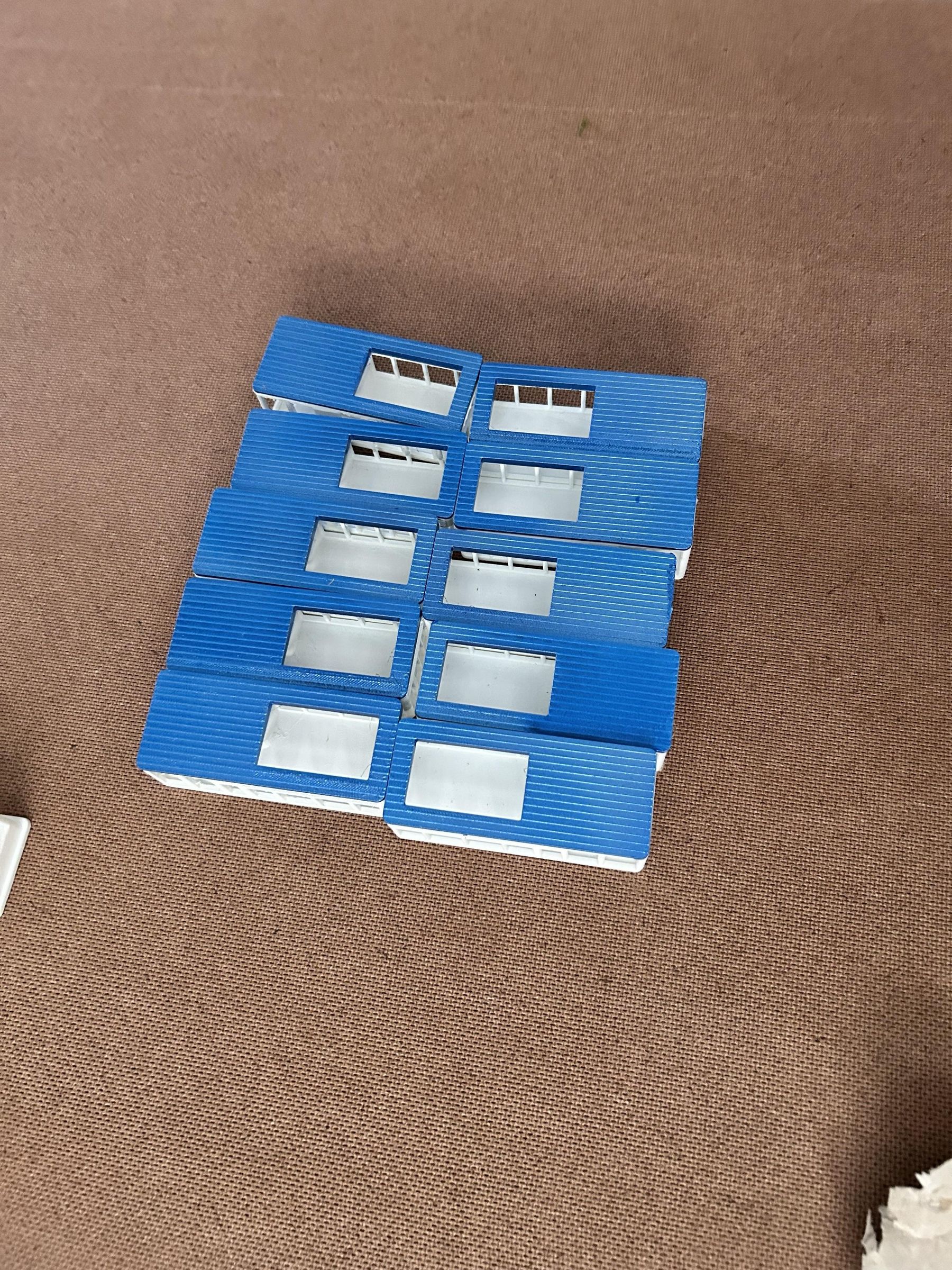
Future scalability: modular and configurable system
Phoenix Hub relies on a modular architecture system in which each structure, from housing units to Energy Cubes, makerspaces, and service modules, attaches to a 100-inch reinforced foundation grid. The modular architecture allows for reconfigurability, scalability, or replacement of each structure without having to reinvent the whole underlying structure design. Every module is provided with standardized docking points, enabling its rearrangement like Lego pieces depending on the number of inhabitants, site conditions, or emergency measures.
The foundation system of the project is also made modular through repeating concrete grid cells with embedded anchor nodes that allow expanding in any direction while maintaining structural compatibility. As a result, the Phoenix Hub structure can be expanded horizontally into networks or vertically to create dense cities. Modules can be replaced, removed, or added at any time without compromising structural integrity and functional integration.
In such a way, the modular approach allows implementing the concept of a live infrastructure system that can evolve along with the changing environment while providing uniformity in structure design.
Acknowledgments
The Phoenix Hub would not have been possible without the support, guidance, and inspiration of many people and organizations.
First, I would like to thank my parents for their constant encouragement throughout this project. Thank you for supporting my interests in engineering, listening to my ideas, driving me to events and activities, and helping me through the many late nights spent designing, researching, and refining this project.
Thank you to Calvary Church for providing opportunities to serve both locally and internationally. Through mission work and service experiences, I gained a greater appreciation for the challenges many communities face and the importance of creating solutions that can improve lives.
I would also like to recognize the emergency responders, utility crews, construction workers, volunteers, nonprofit organizations, and local community leaders who worked tirelessly to help western North Carolina recover from the impacts of Hurricane Helene. Their resilience, dedication, and commitment to rebuilding communities inspired many of the ideas behind the Phoenix Hub and demonstrated the importance of preparedness, recovery, and community-driven solutions.
Thank you to Autodesk for making professional engineering and design tools available to students. Fusion 360 played a central role in the development of this project and has helped me grow as both a designer and engineer.
Finally, thank you to everyone who takes the time to review this project. My hope is that the Phoenix Hub demonstrates how engineering, innovation, and community resilience can work together to create meaningful solutions for future challenges.
Thank you for your time, support, and interest in this project.