The Resilient Pavilion
Hi,
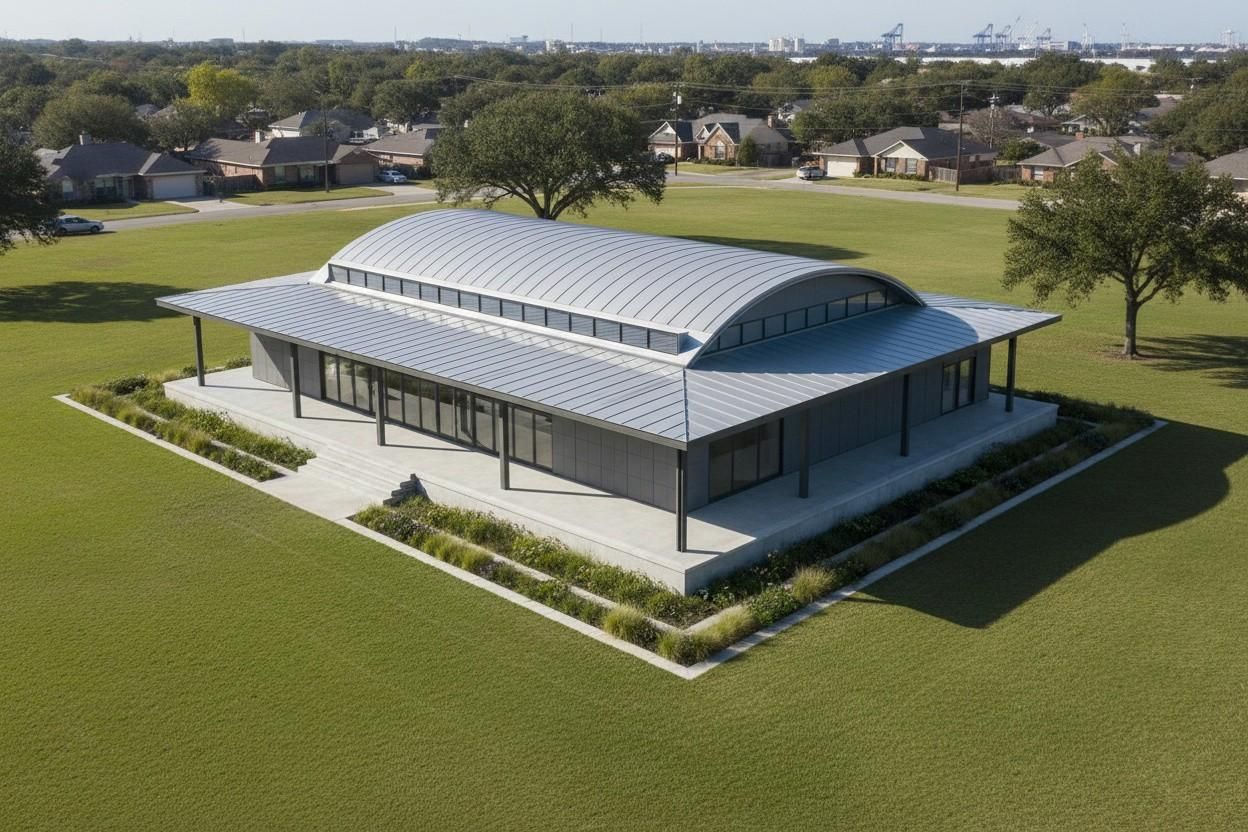
I am a community college student designing a Resilient Pavilion for Healing: a modular community hub for Harris County, Texas.
After the 2024 derecho and Hurricane Beryl left thousands without power during extreme heat, I wanted to design a building that serves the community daily and transforms into emergency infrastructure when disaster strikes.
This Instructable documents my complete design process: problem research, site analysis, concept development, 3D modeling in Autodesk Fusion 360, and visual presentation.
What This Project Addresses:
- Climate-adaptive public infrastructure for compound disaster scenarios
- Thermal resilience during grid failures
- Trauma-informed spatial design using the SPACe framework
- Modular construction for rapid deployment
- Dual-mode programming (everyday use + emergency activation)
Supplies



Software
- TinkerCAD
- Fusion 360
- Bambulab
Physical Prototype
- Cardboard
- Cutting Knife
- Super glue/Hot Glue
- Fake Greenery (trees, bushes, grass)
Design References
- SPACe framework (Safety, Privacy, Accessibility, Control, Efficiency)
- Biophilic design principles
- FEMA P-361 safe room guidelines
- Harris County Flood Control District elevation data
Data Sources
- CDC Social Vulnerability Index
- NOAA storm event records
- Harris County Appraisal District
Understanding the Problem
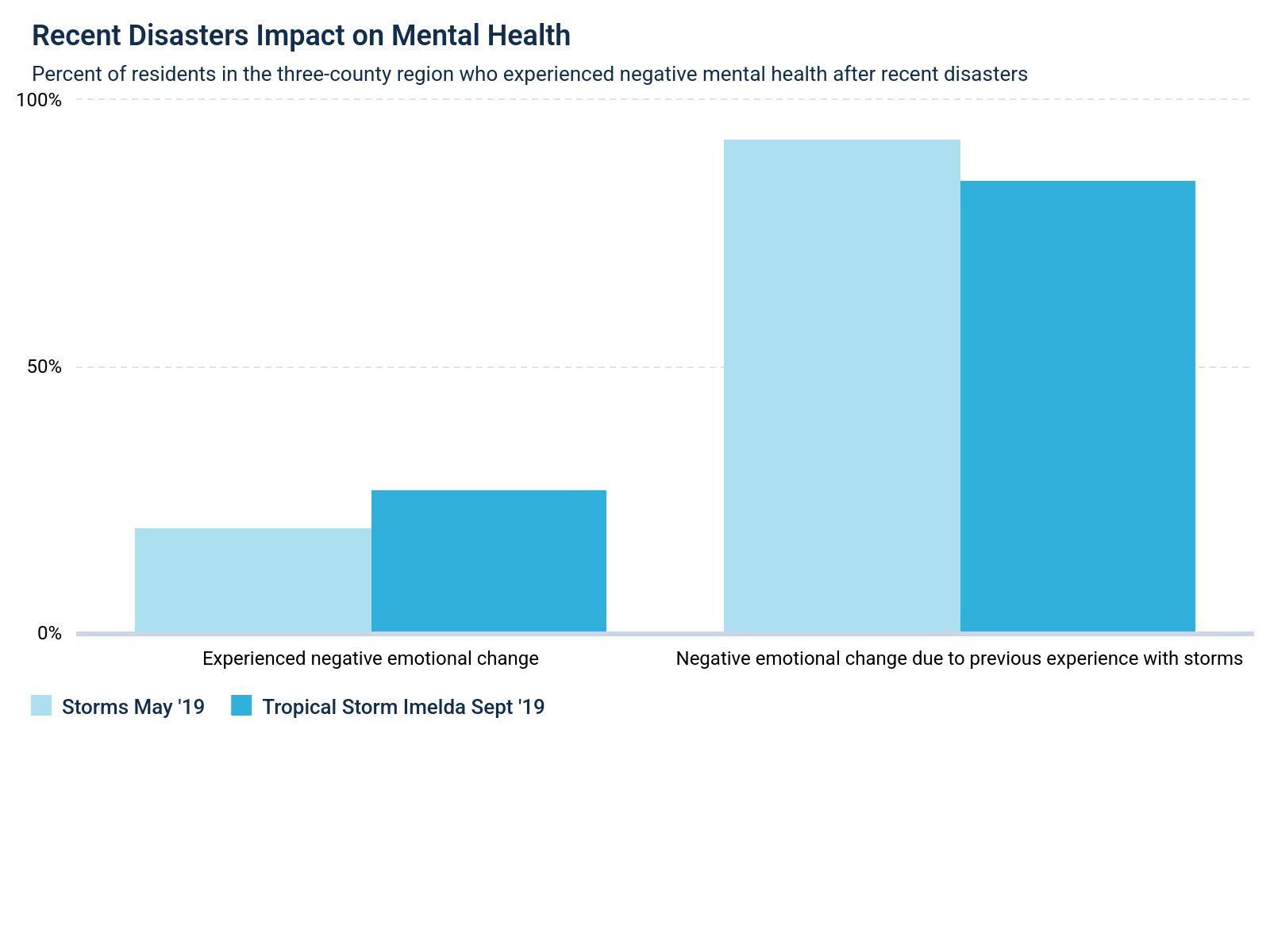
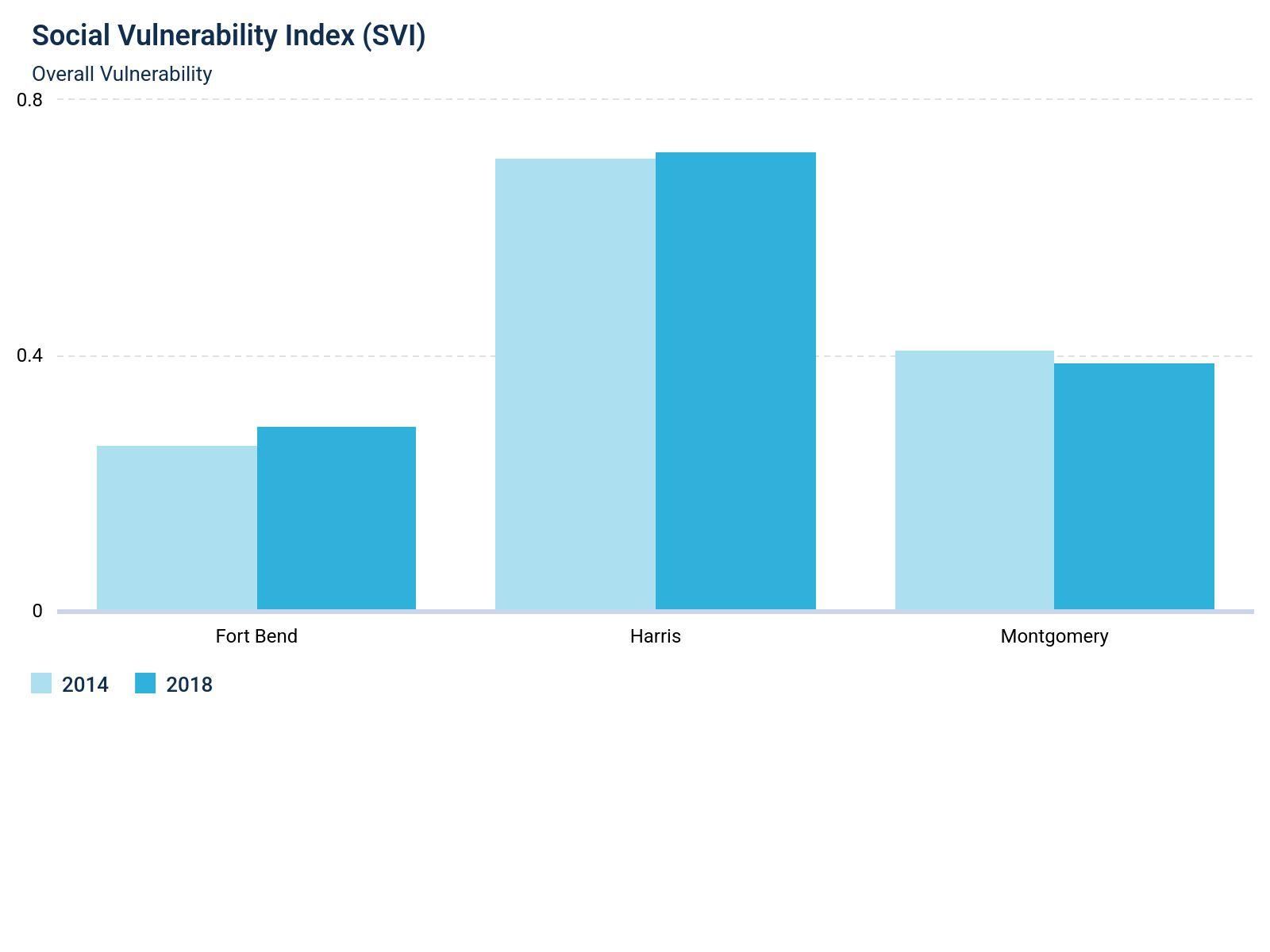
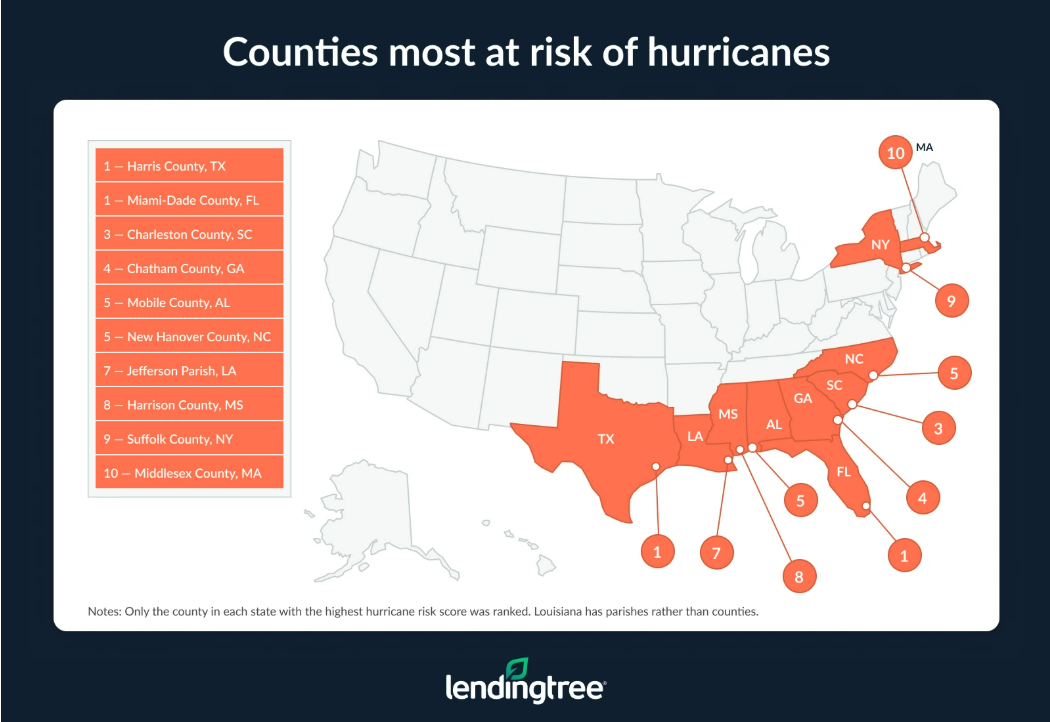
Before designing anything, I researched what occured during the 2024 disasters.
What Harris County Faced in 2024:
- May: Derecho with 100+ mph winds, causing widespread grid failure
- July: Hurricane Beryl flooding before recovery was complete
- Result: Compounding disasters that overwhelmed recovery systems
Key Statistics That Shaped My Design:
- 107,000 homes in Harris County lack central AC
- During outages, indoor temps become dangerous within hours
- Harris County SVI of 0.72 = more vulnerable than 72% of US counties
- Existing cooling centers were overcrowded and hard to reach
The Core Problem: Harris County lacks public infrastructure that is climate-adaptive, thermally resilient, and designed for both everyday use and emergency activation. The built environment is reactive. I wanted to design something proactive.
Site Selection
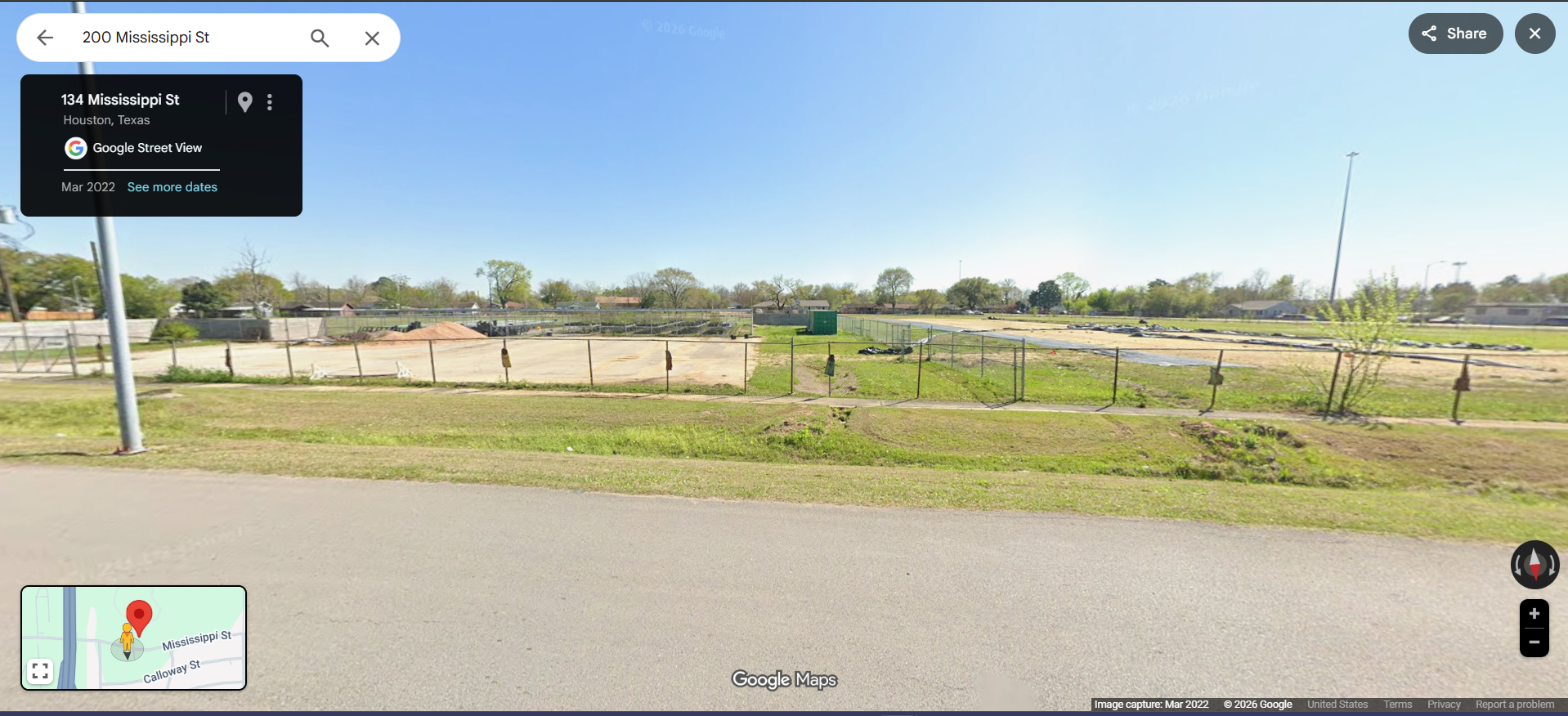
Site Address: 200 Mississippi St, Houston, TX 77029
After identifying the regional problem, I needed a specific location. I selected Clinton Park in East Houston because it sits at the intersection of vulnerability and need.
Why This Site:
- Port Houston industrial corridor = limited tree canopy, heat island effects
- Low-lying terrain = flood risk (drove my elevated platform design)
- High SVI neighborhood = resilience infrastructure most needed here
- Open park land = room for expansion and emergency staging
- Transit accessible = reduces transportation barriers during emergencies
Site Constraints That Became Design Drivers:
- Flood risk → Elevated platform 3 ft above grade
- Extreme heat → Deep canopy overhangs for passive cooling
- Industrial context → Building as refuge from poor air quality
- Open land → Flexibility for future expansion
Idea Layout


The key insight: a building that sits empty until disaster strikes won't be trusted when people need it most. The pavilion must operate in two modes.
Everyday Mode:
- Community workshops and maker space
- Youth programming and education
- Public gatherings and events
- Outdoor markets under shaded canopy
Emergency Mode:
- Cooling center (solar + battery backup)
- Device charging and communication access
- Flexible clinic rooms for heat-related illness
- Aid distribution with organized flow
Why This Matters: Daily use builds familiarity and trust. When disaster strikes, residents already know the building. They know where to go. They know how the space works. This psychological continuity is critical for emergency response.
Design Principles Into Architectural Decisions
Once I established what the pavilion needed to do, I shifted from identifying problems to creating rules for the design.
I wanted every architectural decision to have a reason behind it. Instead of selecting forms, materials, and layouts based on appearance alone, I translated the site conditions and recovery needs into measurable design principles.
To guide those decisions, I used the SPACe framework (Safety, Privacy, Accessibility, Control, Efficiency), a trauma-informed design approach that treats the built environment as an active part of recovery. Rather than asking how the building should look, I asked how people should feel when using it.
SPACe framework from trauma-informed healthcare design:
Safety: Clear sightlines, no blind corners, visible staff station, elevated platform
Privacy: Gradient from public to private zones, modular partitions, acoustic separation
Accessibility: Single level, multiple entries, universal design throughout
Control: Operable windows, movable furniture, multiple exit paths
Efficiency: Linear service spine, pre-positioned storage, one-way circulation option
Biophilic Strategies:
- Clerestory windows for natural daylight deep into floor plan
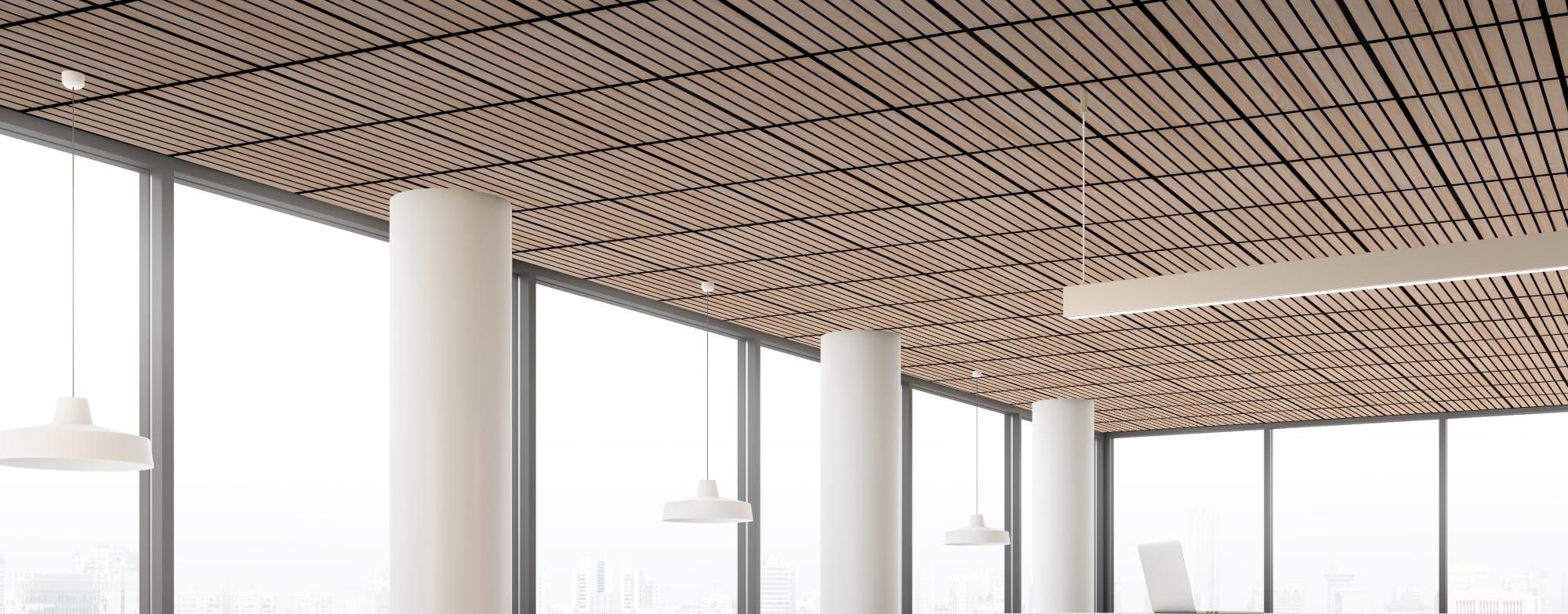
- Wood slat ceiling (warm, natural material)
- Native landscape visible from interior
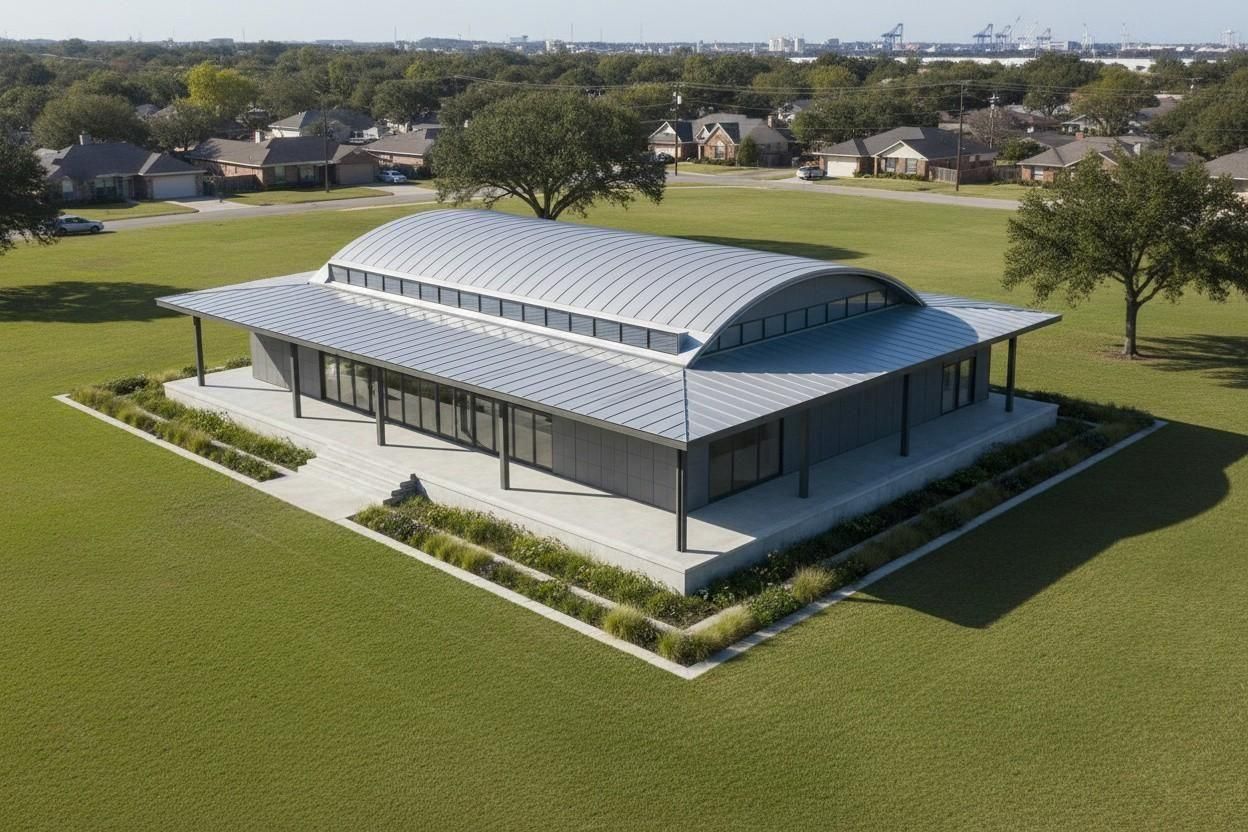
- Curved roof form echoing tree canopy
Early Sketches and Massing Studies
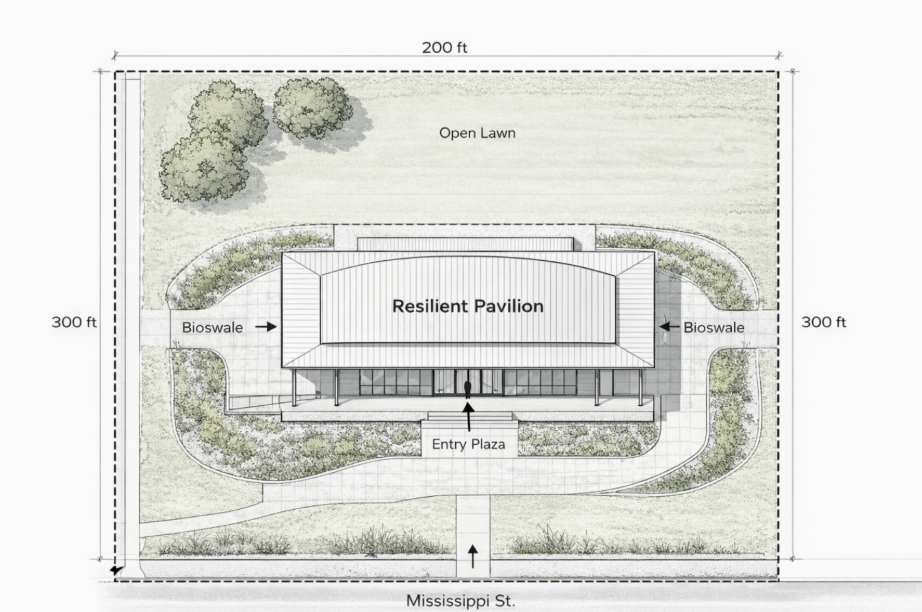
I explored form through quick studies before committing to detailed modeling.
Site-Driven Decisions:
- Long axis east-west (minimizes harsh sun on facades)
- Primary entry on south, protected by canopy
- Floor elevated 3 ft above grade (flood resilience)
Massing Options Tested:
Option A: Single Bar — Simple rectangle, efficient but limited indoor/outdoor connection
Option B: L-Shape — Protected courtyard, but complex circulation
Option C: Pavilion with Extended Canopy — Compact core with deep overhangs ✓
I selected Option C because it:
- Maximizes shaded outdoor area (critical for everyday use and emergency overflow)
- Keeps conditioned volume compact (reduces energy load)
- Allows modular expansion without altering the core
- Creates a visible civic presence
Zone Organization:
- South = Entry + Main Hall
- Center = Service Core (restrooms, storage, mechanical)
- North = Breakout Rooms (convertible to clinic/counseling)
- Perimeter = Covered Outdoor Zones
Structural System Design & Materials
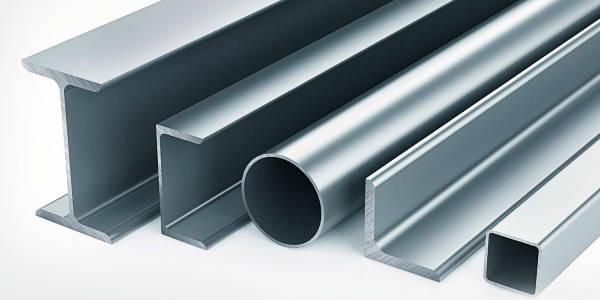

A resilient building requires a structural system that withstands site hazards and can be constructed efficiently.
System Selection: Modular Steel Frame
Wind (100+ mph): Steel moment frame, welded connections
Flood: Elevated on concrete piers, no below-grade elements
Speed: Prefab wall/roof panels, bolted assembly
Expansion: Standardized 20' x 20' bay grid
Primary Materials:
- Steel frame — Exposed where visible (communicates strength)
- Insulated metal panels — East/west walls (fast install, durable)
- Curtain wall glazing — South facade (transparency, daylight)
- Polished concrete floor — Durable, thermal mass, easy to clean
- Wood slat ceiling — Acoustic control, biophilic warmth
- Standing seam metal roof — Curved profile, solar panel ready
Resilience Details:
- All MEP above flood elevation
- Impact-rated glazing for hurricane zones
- Water-resistant finishes below 4 ft
- Breakaway utility connections
Modeling

.png)
.png)
Before building a detailed CAD model, I started in Tinkercad to explore ideas without committing to dimensions or construction details.
At the beginning of the project, I was not trying to solve every structural problem immediately. I wanted to understand the overall feeling of the space: how people would move through it, how indoor and outdoor areas connected, and what type of form best matched the goals of healing and resilience.
Tinkercad became my rapid ideation tool.
Using simple geometric shapes, I blocked out different pavilion layouts and experimented with relationships between covered gathering spaces, enclosed program areas, and open landscape zones. Because Tinkercad allows fast iteration, I could test multiple concepts in a short amount of time and focus on spatial ideas rather than technical constraints.
This stage helped me answer questions like:
- Should the building stretch horizontally or remain compact?
- How much of the project should remain outdoors?
- How deep should shading zones extend?
- How can emergency overflow happen without expanding conditioned space?
- What arrangement encourages both everyday use and emergency activation?
After comparing multiple options, I selected the extended canopy pavilion concept because it created strong indoor–outdoor continuity while maximizing shaded public space.
Once I established the general direction in Tinkercad, I moved into Autodesk Fusion 360 to develop the design further.
Fusion allowed me to transition from conceptual thinking into a more realistic and buildable proposal.
Physical Model

This physical prototype represents my first attempt at building an architectural model from cardboard. While the model is not perfectly to scale and some details are simplified, the process helped me better understand how the Resilient Pavilion would be assembled and how its major design elements work together.
Using kraft board and corrugated cardboard, I constructed the elevated platform, structural walls, perimeter columns, clerestory windows, and curved roof canopy by hand. Building the model revealed the importance of the deep roof overhangs, which create large shaded outdoor spaces, as well as the elevated platform strategy used to improve flood resilience.
Although there are minor imperfections and scale inconsistencies, the prototype successfully communicates the pavilion's overall form, structural concept, and disaster-resilient design goals. Creating a physical model allowed me to move beyond the digital design and better evaluate the building as a real, buildable community resource.
Reflection
This is the first project that really helped me understand what a full length project is like. When I started out, I used AutoCAD/Fusion 360 to create individual parts. Now I'm really starting to think about entire buildings: including their layout, construction methods and how they'll react to real-world problems.
The biggest shift was using research to make my decisions. Once I had data on the level of heat, flood risk and social vulnerability; my decision-making became much more informed and easier. Rather than just trying to come up with an attractive solution, I was working towards developing a viable solution for a specific place and its corresponding problem.
Another important realization I came to was that this type of project doesn't fall under "architecture." It's an interdisciplinary approach incorporating public health, emergency response planning and community design. The pavilion evolved into less about the building itself and more about the role it could play in supporting people throughout a disaster: pre-disaster, during the disaster and post-disaster.
Of course there are many elements I would do differently if/when I undertake another project similar to this (including conducting a comprehensive cost analysis, simulating energy consumption, etc.); however, these are components of learning.
The greatest lesson for me has been that this should not only be limited to a single structure. The intent behind the design is for it to be reproducible. If it works effectively in one park; it will likely function similarly well in other parks. A single pavilion may serve a neighborhood, but a group of pavilions would be social infrastructure.
This project allowed me to understand that effective design begins by identifying a problem. Resiliency isn't just about surviving a disaster; i's about providing areas people can depend upon before experiencing a disaster.
Thank you for reviewing my project.