The Speed of Steam: Chemical to Kinetic Energy - the Steam Engine
by Preston Makes in Workshop > Energy
2240 Views, 11 Favorites, 0 Comments
The Speed of Steam: Chemical to Kinetic Energy - the Steam Engine
.png)
For so many years I have been interested in the mechanics that involve the transfer of energy to perform working output. I remember even as a elementary school student reading of all the innovations changing the world during the industrial revolution. Arguably, the steam engine, is what pushed us forward into the industrial revolution. It moved us away from the need of animal or human power. Steam engines even let us move away from natural water ways without need need for a water wheel. I've always founds the design behind simple engines fascinating. The speed of a steam engine is a direct measure of how efficiently it can convert static thermal energy into continuous rotary motion. Generally found in two forces, Internal Combustion Engines, and External Combustion Engines. The different between them, as their name implies, is simply where the combustion, or heat source is in relation to the engine itself.
External Combustion Engines thermal energy source (fire) is on the outside of the engine, which then is used to compress a working gas or fluid in order to generate mechanical energy through moving a pistol or crank.
Internal Combustion Engines use thermal energy that directly drives the pistol within the engine, making the need for a working gas or fluid not needed.
I have gained so much knowledge in just creating my own engine. I think being able to create electrical power through thermal energy just feels like magic. Even more so as I start to refine this engine to make it faster, increasing it's speed. I made more mistakes on this project that I would like to admit, but I also learned a lot about material science, physics and engineering along the way.
I will go over my final build primarily during this. I built quite a few things twice, and changed placements from my original designs in order to actually get it to run. At the very end of this project I will go over some of the things I tried to do to make this more efficient. Most failed, but somethings worked really well. I was even able to run this model independently (for about 45 seconds), before it started shaking the glue apart.
I will also be going over some of the math that is used to find out gear ratios, I helped write an HTML script that I will use to show some of the math as it applies to my engine.
This entire engine I made modularly, so I was able to take it all apart and replace pieces as I went. This increases down time considerably, letting me almost hot swap out pieces that I was upgrading.
Supplies
As much as I could I used supplies that could be found around the house. However, I did end up using a few things from my old chemistry lab, as well as I 3D printed a few of the pieces I wouldn't have had time to build otherwise. All 3D printed pieces will be uploaded as file attachments. They were all designed in TinkerCAD. Three of the 3D printed pieces were designed by others that I scaled for use in my project. They will also all be credited, with links to their files.
Non 3D Printed Parts:
- 1 - 50mL Erlenmeyer Flask
- 1 - 10mL syringe
- 1 - Ring Stand + Ring Clamp
- 1- Ring Clamp Knuckle
- 2 - 58mm tall jars, (the ones I used have removable caps, so I can unbuild and rebuild it)
- 1 - Clothes hanger
- Rubber Glove
- Medical Tubing (any size)
- 25 cm of 20 gauge wire
- 30 cm of worsted weight yarn
- 3-5V Electric Hobby Engine (I pulled mine from an old hand coffee mixer)
- Metal Base
- Balloon
- Clay
3D Printed Parts:
- Generator Mount (2 Parts - Files Uploaded)
- 120mm fly wheel (Link to File)
- Pistol Mount (File Uploaded)
- 2 Pully Wheels (Link to File)
Other Supplies:
- Plastic Wrap
- Hot Glue
- Super Glue
- Knife / Sharp Cutting Utensil
- Ruler (mm perfered)
- Graphite for dry lubricant
- Drawing Program - Not Needed - But I actually used Excel
- Canva - Creating a Few Diagrams
Designing the Engine


There are many designs out there to choose from, from verital builds that push a piston straigh up, to horizontal builds that push the pistol side to side. There is also evey angle between veritcal and horizontal, but what really matters is being able to generate enough power to push the pistol with the steam.
Let's talk a little bit about how a steam engine works, at it's most basic form. You can use the pictures above as visual aids as you read this. We have an external heat source, in my case I was using home made sterno (calcium acetate suspended in alcohol, I have a video on my channel how to make it). The fire will heat the water in the boiler, in my case a flask. That steam will push the piston forward, as the piston turns it gains angular momentum. Momentum builds in the fly wheel, which pushes the piston back in and the whole process starts over. The really cool thing here, there is power being delivered on the forward and backward stroke of the piston.
I created an initial model with the idea that the generator would sit in the center of the fly wheel, and the crank would be connected to directly to the flywheel. I decided against that, so I could connect the generator to a pully system and take advantage of gear ratio.
So I moved the generator to sit under the fly wheel and piston so I can attach a pully to it with a (3:2) ratio. More on that later.
This was ultimately the best configuration I found for the best power stroke, and for it to be able to run on its own.
Creating Piston / Attaching Boiler / Mounting




.png)


.png)
.png)
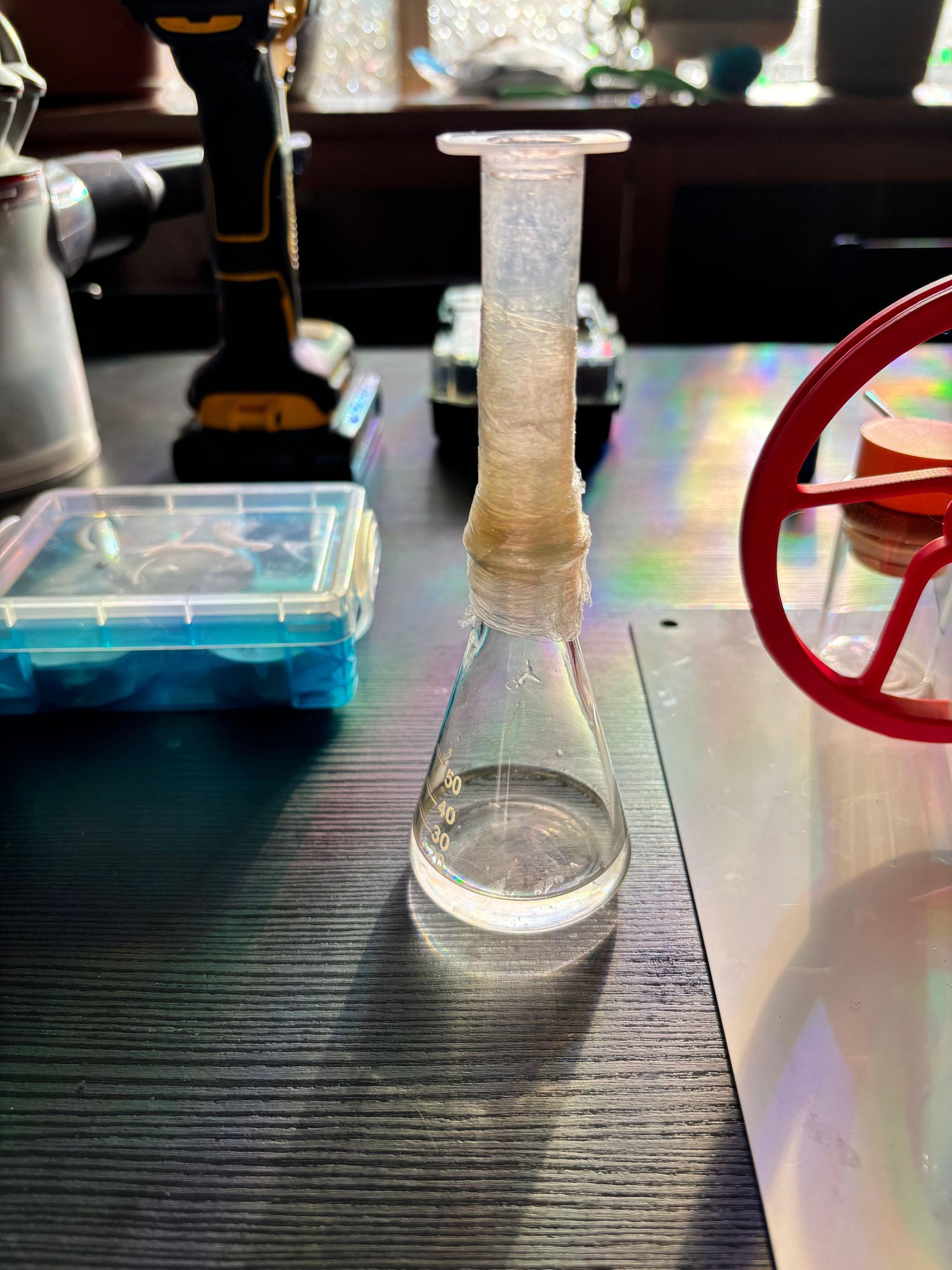
The first thing we will do is take out 10ml syringe and cut of the tip very carfully, just leaving the small hole in the middle. From there, I will wrap it with plastic wrap, this increases the size of the synringe, giving it a very snug fit into the boiler (flask).
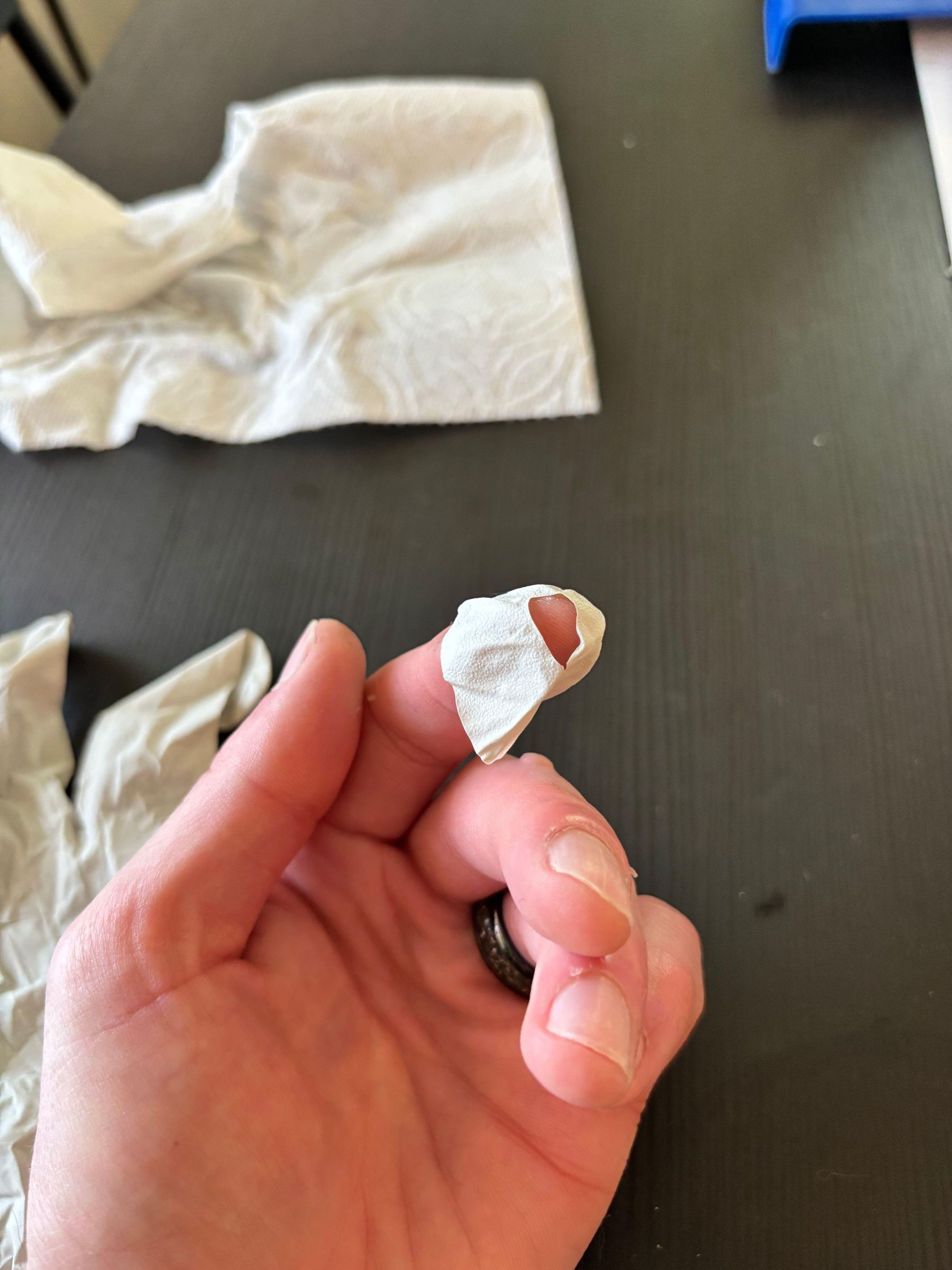
From there, I take a rubber glove a snip off one or two tips of the fingers. I then cut an even smaller hole out of the center tip of each of the small cuttings. (As seen in the photos above). Next I poke the piston through the gloves. These will help the steam push the piston out faster by giving little gaps that give the steam something to push on. Above I put together a small visual to see a side with the flaps, versus a side without the flaps. The flaps will help catch the steam in small pockets. We want to make sure that they dont cause too much extra friction. I found with one it worked. With two it was ideal and with three it cause slightly too much friction.
From there we will put the piston rod into the piston and connect it to the boiler. Next we will attach it to a mount. The mount is 3D printed and made of two parts. The base and a hollow rectangle, with a hole at the top that fits a 6mm screw that will attack to a ring clamp knuckle. This is what will hold our piston in place as it run. The knuckle allows me to put a top screw in place, but I have to make sure to barely screw it in, otherwise it blocks the piston from making full strokes.
The last thing we need to do, is attach a small piece of medical tubing to the end of the piston rod, and this is where the crank will eventually attach to. We can do this at any stage, I decide to do it before I made the other modifcations, so apolgies for pictures not showing chronological order. We will see this later, but this medical tubing acts as a perfect hinge to let the crank move freely up and down to follow the moition of the crank shaft.
The Crank / Crankshaft / Pulley Wheel
.png)
.png)


.png)


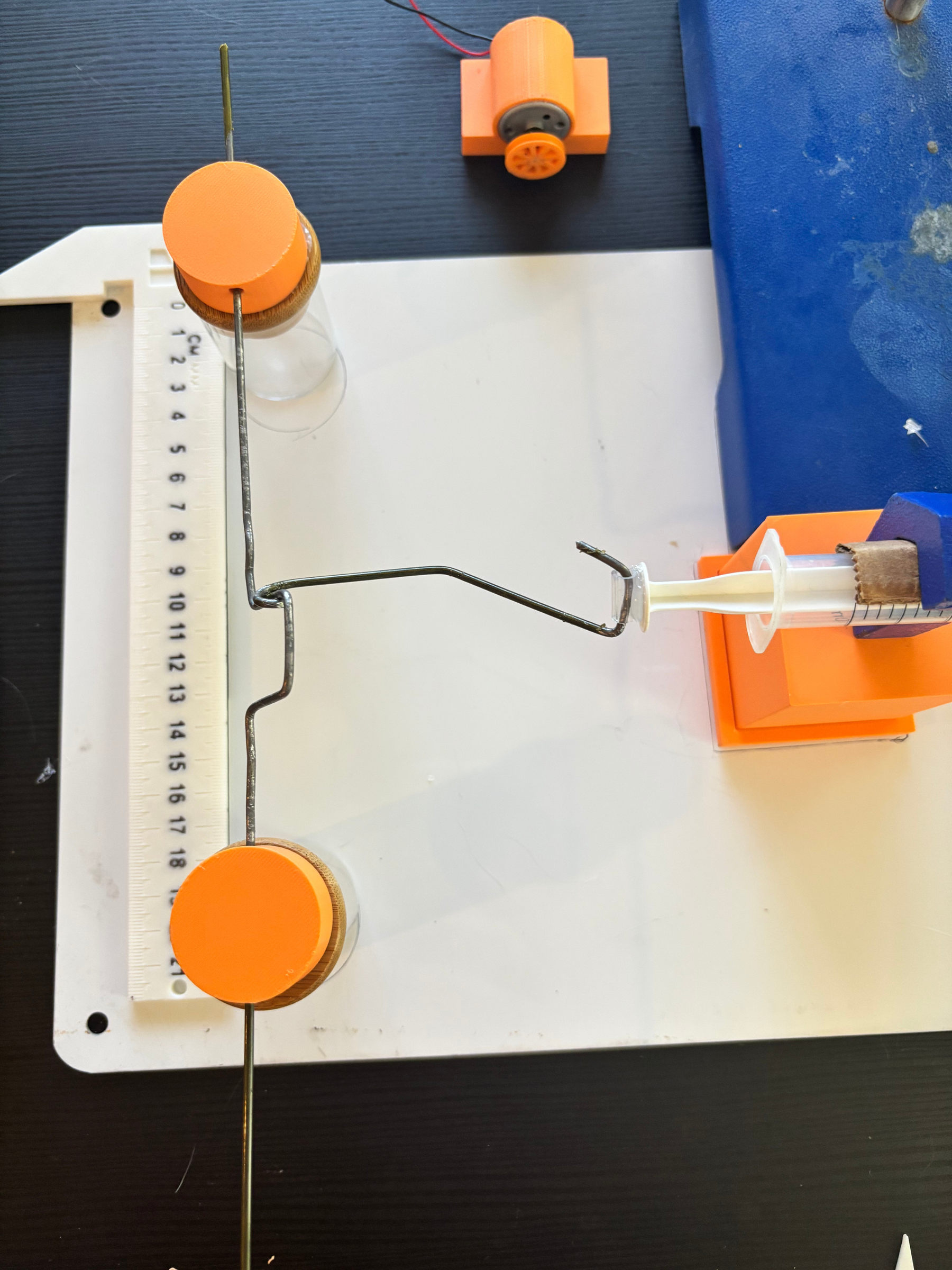


Making the crank, crankshaft and pulley wheels requires some playing around with. The main limitation is the length of your piston, versus the bend in your crankshaft. The bend in the crankshaft has to be 1/2 of the length of the stroke of the piston (shown in photo 2). The length of my piston stroke is 52mm, so at max the bend in the crankshaft needs to be 26mm. This allows the piston to be able to make a full stroke, then push back in. Also we never want to go the full length of the piston, because it will be pulled out during out of it outstrokes.
I used a thick steel hanger for this. I cut it down into the appropriate length. If your crank is too long, you can always bend it, which if done correctly will also provide some extra power on the outstroke if things aren't perfectly aligned. I then bend the crankshaft with the measurements I specified above, 26mm. I then can connect my crank to the small connected small piece of medical tubing we connected to the end of the piston. (shown in photo)
When I connected the crank to the crank shaft, it was moving around a little too much, so I took some 20 gauge wire to make a guide so the crank will stay within that range as it moves (photo above). In inside mounts of my crankshaft were covered with graphite as a dry lubricant. This helps it spin so much faster.
From there I measured my 2 glass jars to connect to my metal base. For this I measure everything out, with my max stroke length in mind, and hot glue my glass jars to the base. I used glass jars that has removable lids, this let me continuously adjust and replace parts as needed. I glued my 3D printed crankshaft mounts on top of the wooden lids. Next I connected everything together for the first time. This is where I decided I would bend my crank slightly, which is why you see the bend in the photos.
Finally I glue the pulley wheel onto the crankshaft, around where my diagram states. This doesn't have to be perfect, but make sure it wont interfere with any of the other movement what will happen (photo above).
Flywheel


The fly wheel on these engines serves a really cool purpose. It serves dual purposes as a way for the engine to build and store angular momentum. This helps when the engine jumps, or when the boiler doesn't provide consistent fuel, the fly wheel will help push on to the next stroke. Due to this, the flywheel stores energy that is built up from our engine moving. Each flywheel can be different, I decided to go with a design that was already premade, and the link can be found up above in the supplies section.
There are some things to consider when making your flywheel. There is actually a boat load of physics that just go into designing flywheels, and learning it was super cool. Generally the weight, balance and max speed are the most important factors. Something really neat I learned during this process though, is the placement of the weight is a lot more important than just weighing the same. In the visual above, you can see a wagon wheel and disc that both weigh 35g. In this case, since most of the mass of the wagon wheel is stored in the outside ring, this should be ideal to increase speed. The wagon wheel, (if perfectly made) could potentially store up to twice the enrgy as the disc, this is because all of the weight is at the maximum radius which increases angular momentum.
The premade wheel weighs 32g, and I added 3g of clay to the inside and allowed it to dry. Next I attached it as close to the pulley wheel as I felt comfortable with and added a sufficient amount of glue to each side. This will ensure that the wheel spins and the crankshadft spins.
Generator / Pulley Strings
.png)


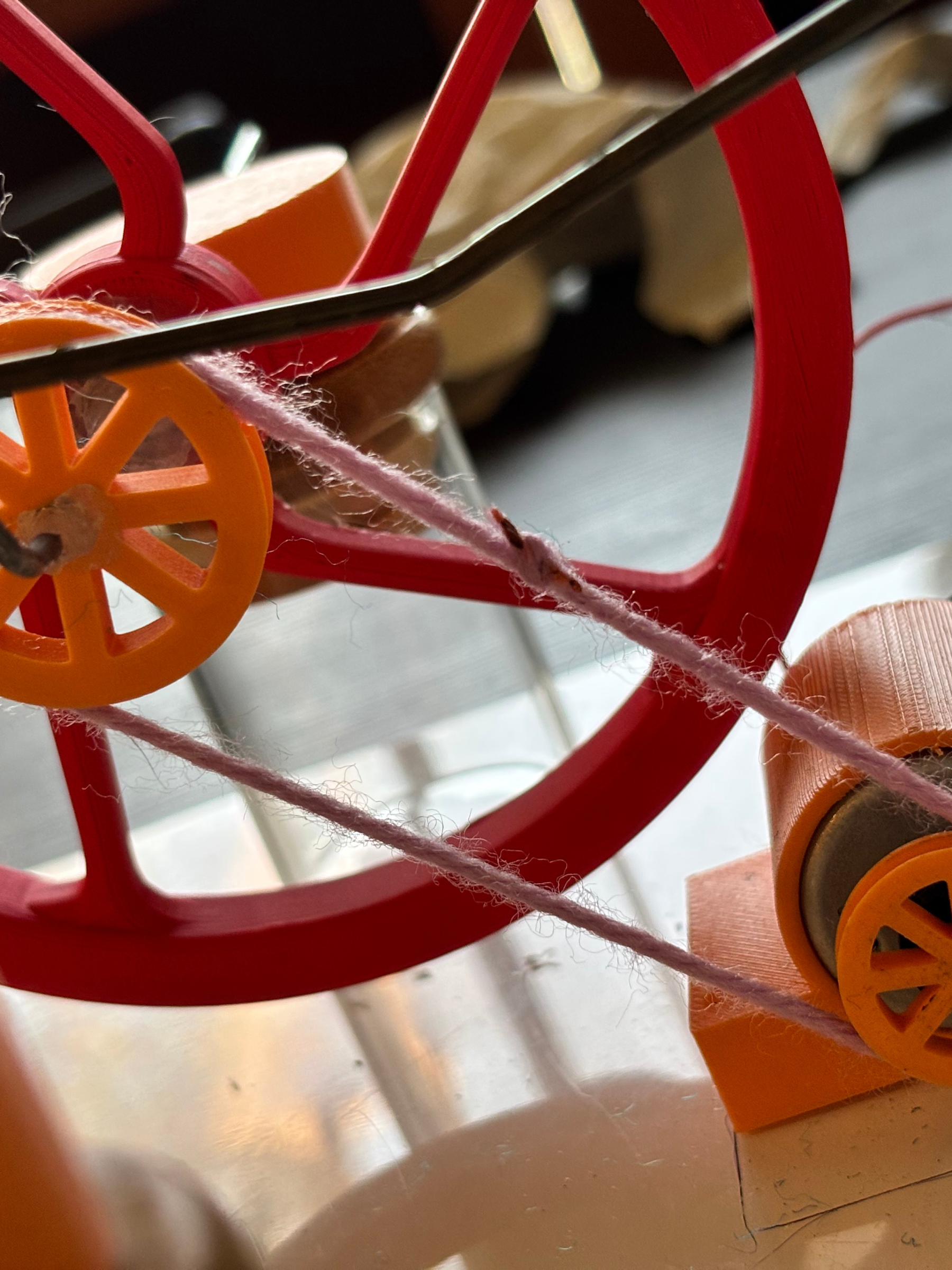


Finally we will add the generator mount to our base plate. I measured this one to have a tolerance of .3mm. This ensured a snug fit, and I have included that file above.
I added a smaller pully wheel to the generator with super glue. There is going to be a ton of sheer force on this, so I don't want it to be pulled off. The bigger pulley wheel above is 30mm, and our smaller one attached to the generator is 20mm. This allows the smaller gear to spin 50% faster than our crank shaft giving us the chance to generate more energy. Ideally I could continue playing with this, and get it even faster. In the visual above, I show two pulley wheels. When the larger wheel is going 60rpm, the smaller wheel goes 90. So this is what I was aiming for, at least for now.
For the pulley belt, I used a piece of yarn ultimately. It allowed me to get the measurements just right. I also made sure I tested different acrylic yarns, so see which had the most strength and grip. You will see a blue and purple yarn. Ultimately I went with the purple yarn because it held up better over testing.
To place the yarn, cut out a larger piece than you need. Thread it around both wheels giving it a little bit of pressure. Too much pressure on your knot will make it harder for the crankshaft to turn, so you want it tight, but not too tight. I made a double knot in the yarn, then cut off til I had around 5mm left. I then burnt the yarn and molded into a straight line with my fingers.
Now time to test it!
Testing It
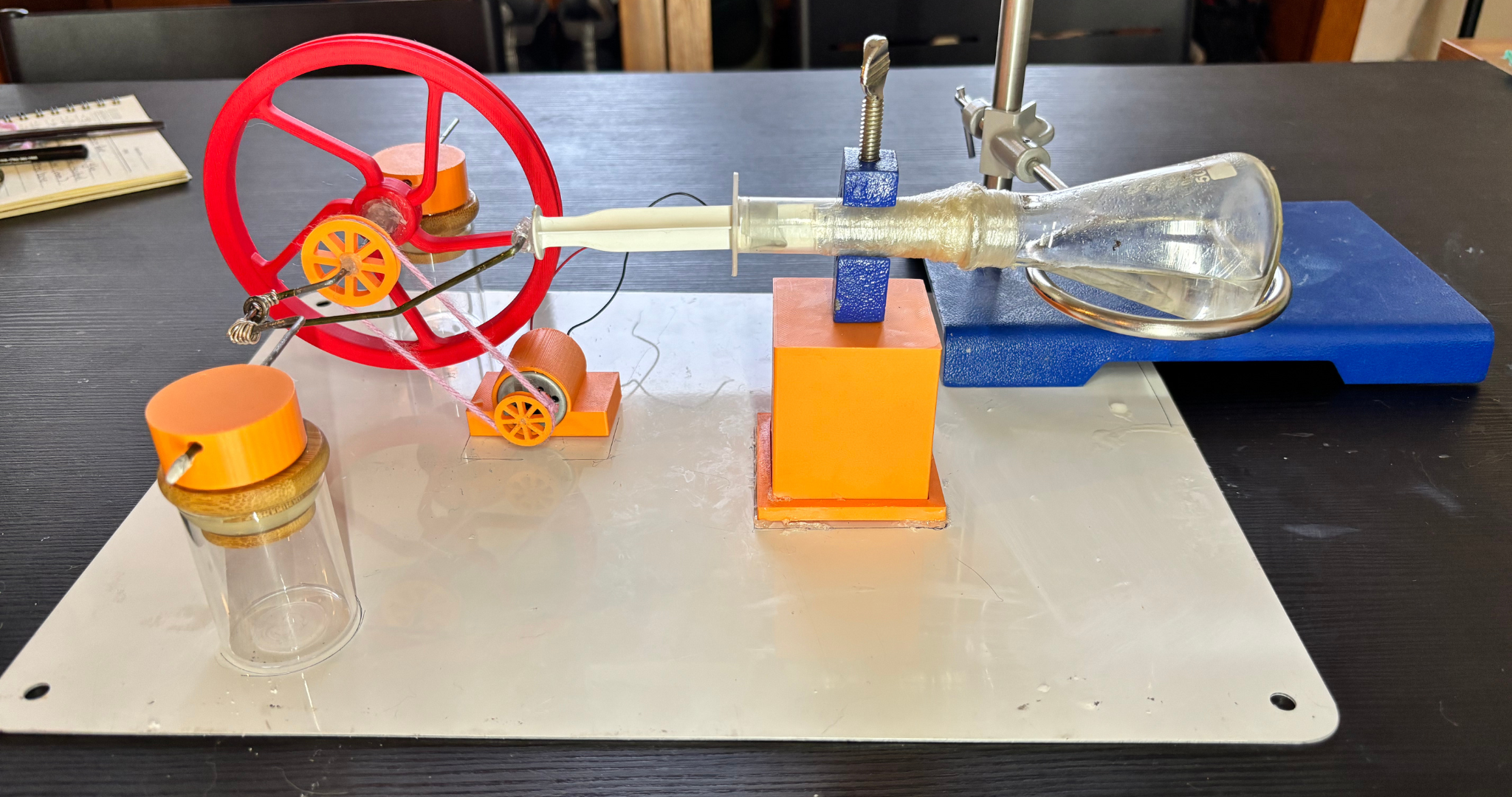
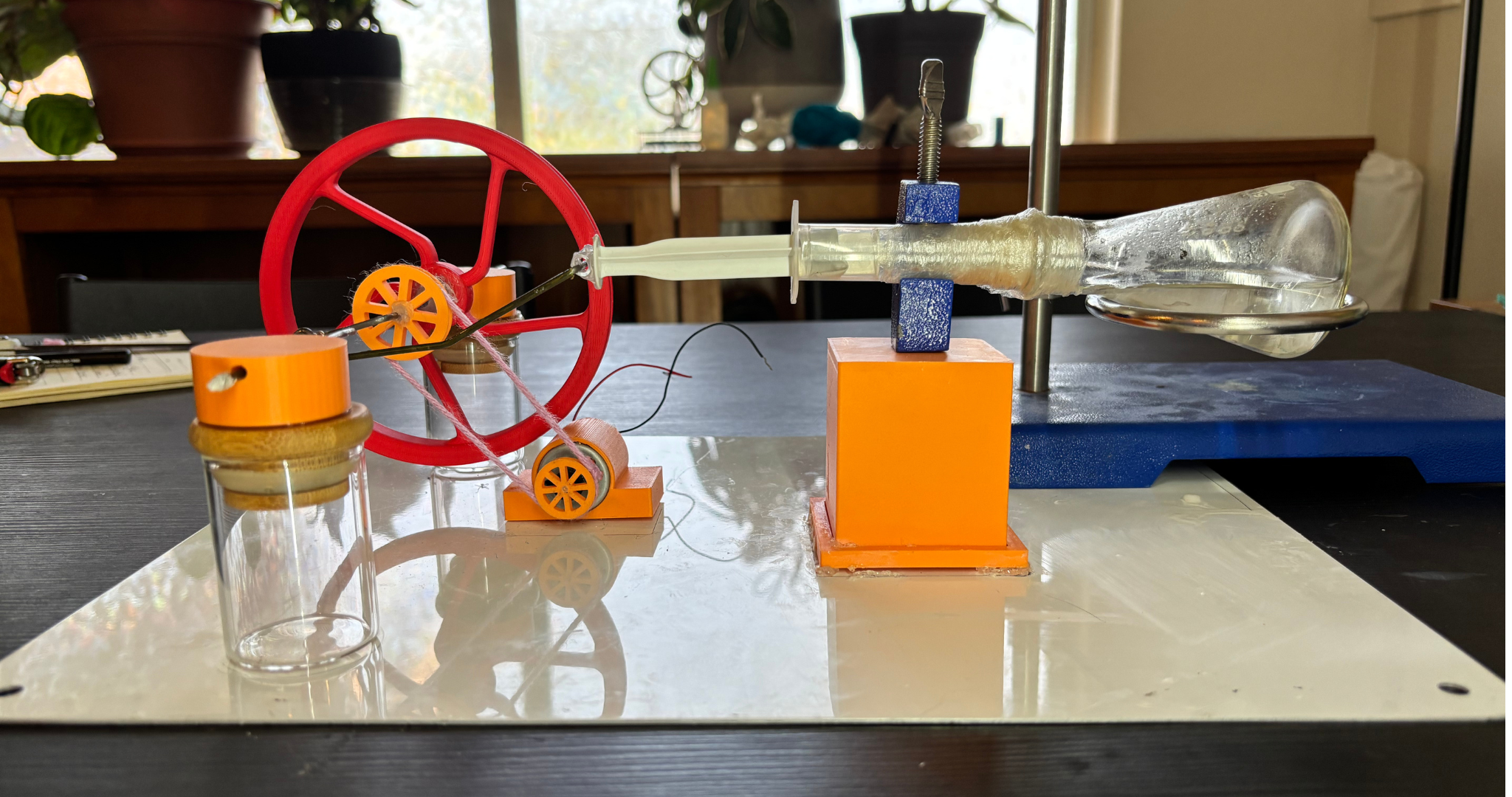
I added two photos of the full setup. Then I added three different videos.
The first two videos are of my testing the engine with a battery from the engine, to then power my pistol (testing in reserve, powering my generator to then power my crankshaft then it pumps the piston.
The second video is a slow motion video at 120fps. It takes about 2 seconds to make 1 full roation on the flywheel (at 120fps), we can conclude that our generator is going about 180 rpm, which is really cool to think about.
The third video is of me using steam to power the engine, but it didn't hold up too well due to wobble. It also only ran for about 45 seconds before something started to break. But this was amazing first attempt.
I hope everyone enjoyed this little write up! It was my first, but definitely wont be my last little engine. Hopefully in the future I can make one that generates enough electricity to power a phone or charge a small battery.
Have a great rest of your day!
Things to Consider
The more percise you are with measurements and making the best piston and crankshaft will be my two biggest upgrades I will make in the future.
The wobble really slows things down and makes it all less efficient.
Use a small boiler, if there is a lot of headspace for the steam to hang out, it takes a long time for the entire engine to heat up.
Do not use any sort of hot glue, candle wax, or any other semi liquid material in the piston. It melts immediately. I thought I could grease it up somehow, but honestly if I did I would use something like a graphite dry lubricant.
The best decision I made was to make everything easily come apart. I change out so many parts, multiple times to try to optimize them.