Tribal Community Center After Flooding
by Yang Hao in Design > Architecture
31 Views, 0 Favorites, 0 Comments
Tribal Community Center After Flooding
On September 23, 2025, a barrier lake at the upstream of Matai'an Creek in Hualien County, Taiwan, collapsed. This caused the river to rise suddenly. Bridges were destroyed, and water flowed over the embankments into the community. In the end, 19 people died, 5 went missing, and 157 were injured. Thick silt covered the fields, streets, and houses. This stopped traffic, ruined houses, and made farmland unusable (the silt has very little organic matter and is too dense to grow crops).
Local tribes formed the "Fata'an Self-Help Association" to work on rebuilding. In interviews, they mentioned that the rebuilt community should not separate tribal members in different places, as happened after past storms in Taiwan. Instead, they must stay together to keep the tribe's structure. Therefore, I want to create a centralized hub. This single building will meet many needs—from disaster recovery to disaster prevention—making the community connection tighter in space.
Supplies
- Autodesk Fusion
- Tinkercad
Site Selection
Since most people are still living in temporary housing and the final location for moving the tribe is not yet decided, a specific location cannot be confirmed. However, this building can be built as long as there is enough open land.
Draft Design


At first, I thought of many grand designs to build an unbreakable fortress, like a doomsday bunker where everyone hides when water comes. But these projects were too big and unrealistic. So, I later created a simpler design. Instead of just trying to keep the water out, this design allows water to flow through without hurting people during a flood. After the water recedes, life can continue. The ancient Chinese thinker Mencius once said that building a wall to push water to the side is "treating neighbors as a drain." This means making your neighbors suffer the flood instead. If a community center makes the flood worse for surrounding residents during a disaster, it goes against the meaning of the building.
Building Draft Design
.png)
.png)
I first used Tinkercad to quickly turn the paper drafts into a clear building. At this stage, I considered and adjusted the actual size of the building to make it easier to draw in Fusion.
Building Model Design


Using Autodesk Fusion allowed me to quickly turn engineering ideas into beautiful presentations so community members could understand and communicate easily. I built the building in Fusion and added materials. All textures and models are either built-in or made by me.
Rendering Result


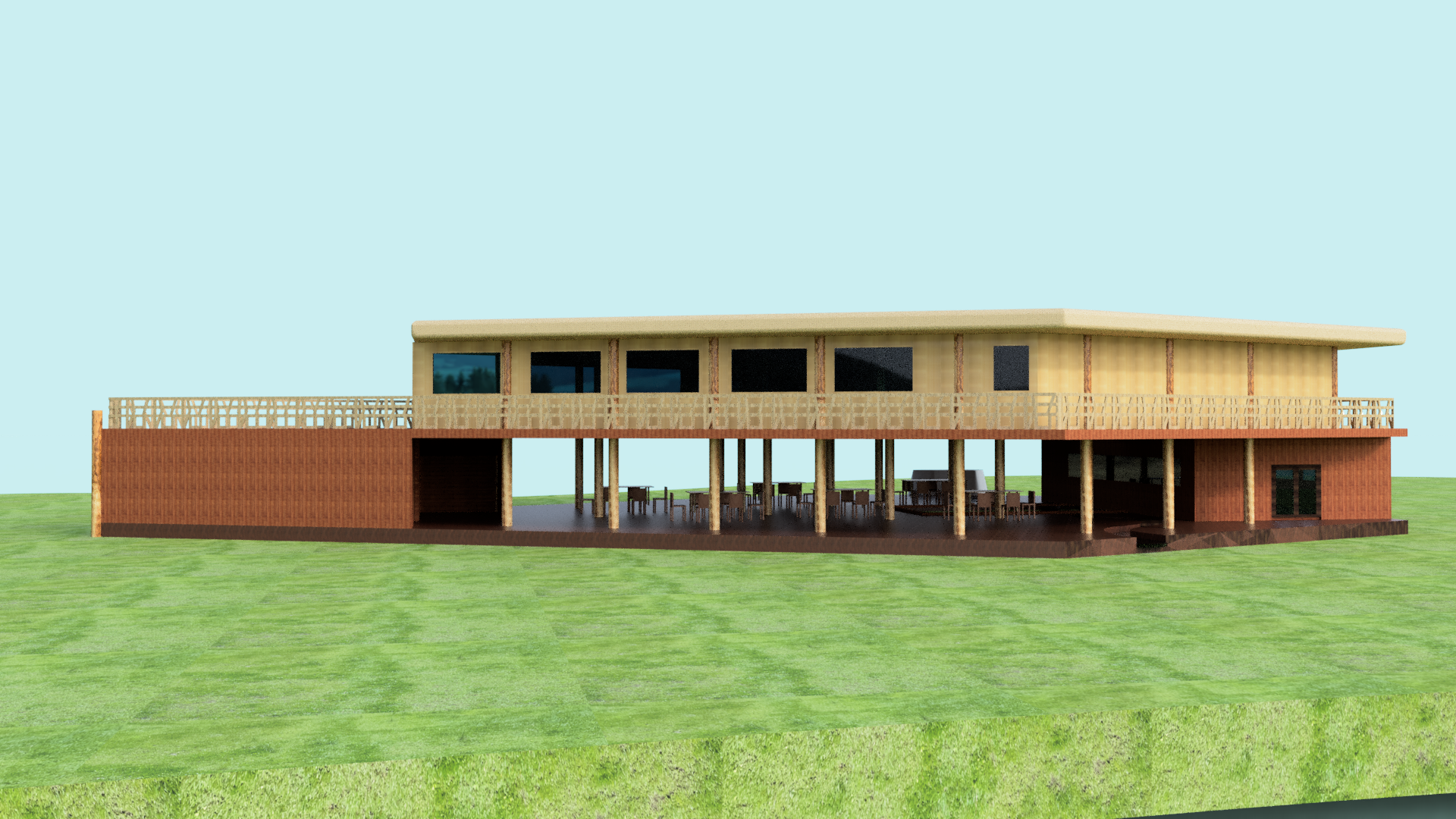
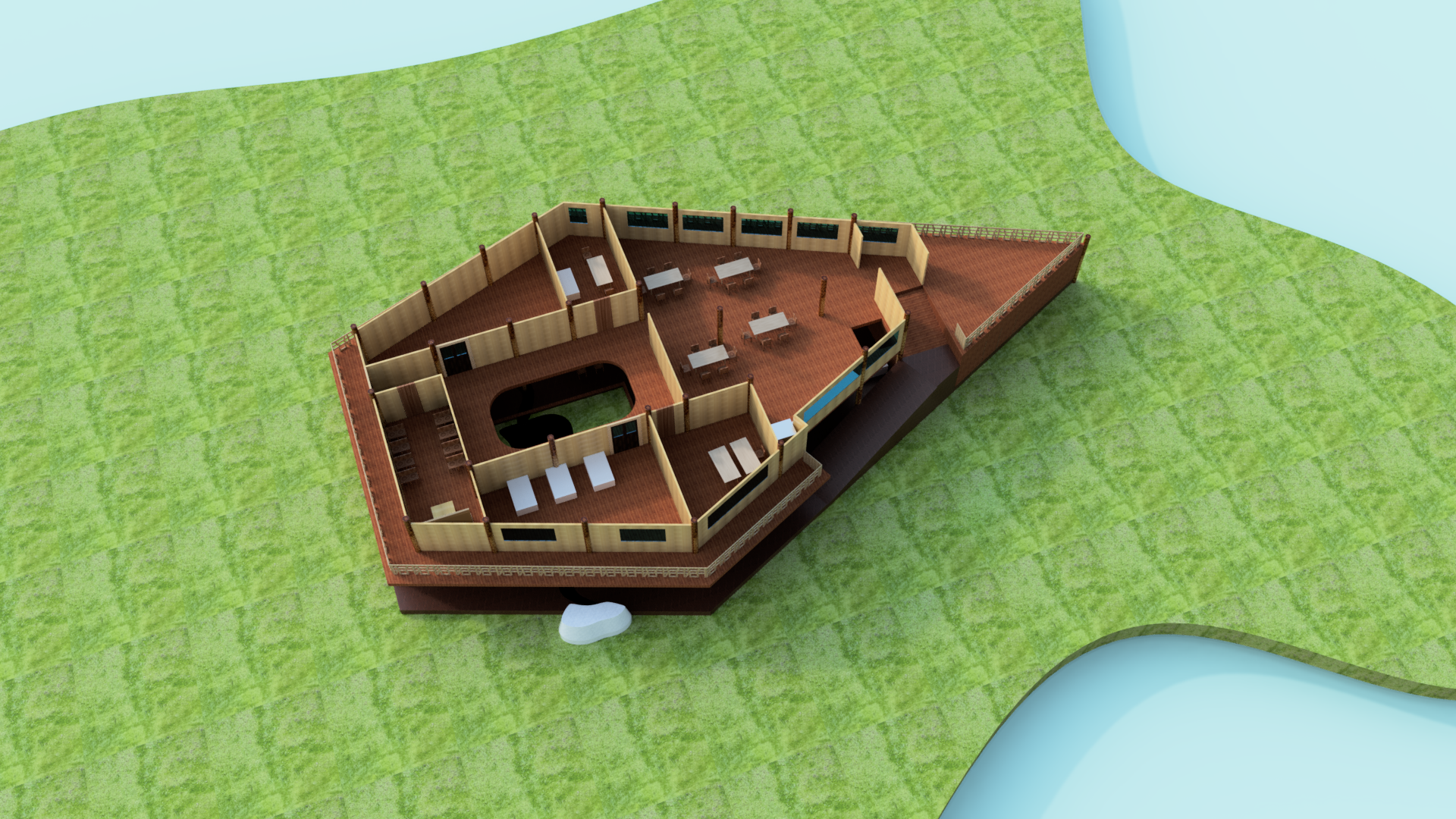
The overall shape is based on a hexagon with an area extending forward. The second floor does not extend, creating the image of a ship. The triangular area in the front is like a ship's deck, symbolizing that this building and the community can ride above the water without fear.
Explanation

Surrounding Space
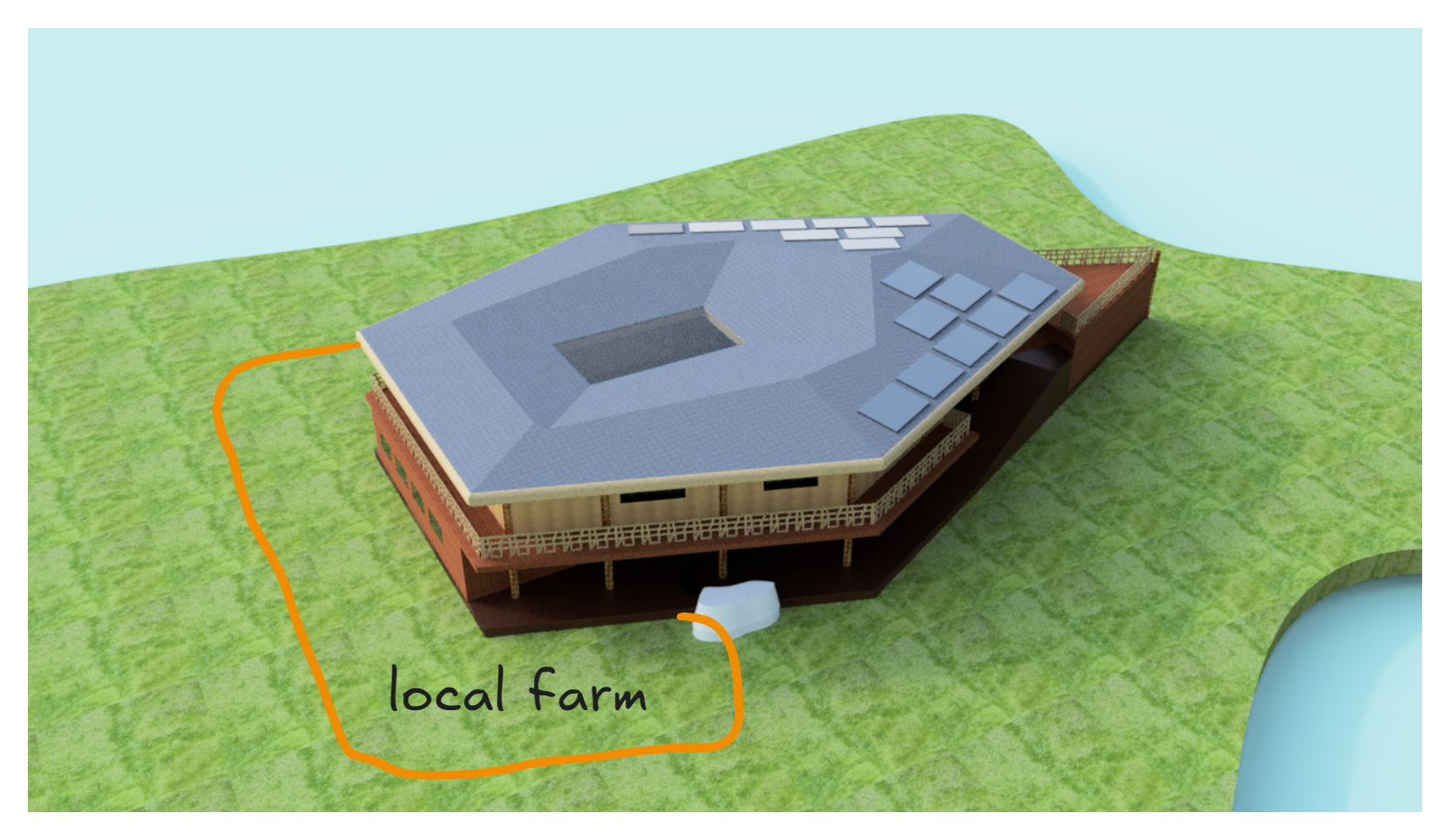
A community farm can be started behind the classrooms. In rebuilding meetings, it was mentioned that local Indigenous elders are used to working to feel fulfilled. A farm where they can grow fruits and vegetables can increase happiness. Working helps them forget the pain of the disaster and achieve a healing effect.
1st Floor
The first floor is a semi-open main space, including:
- Many tables and chairs for various activities.
- A skylight to increase indoor light and ventilation.
- An indoor small canal. Water flows constantly using a circulation system. The pool under the skylight can also store rainwater.
- A multi-purpose classroom for events, such as traditional crafts or tribal meetings.
- Toilets.
- A diesel backup generator.
2nd Floor
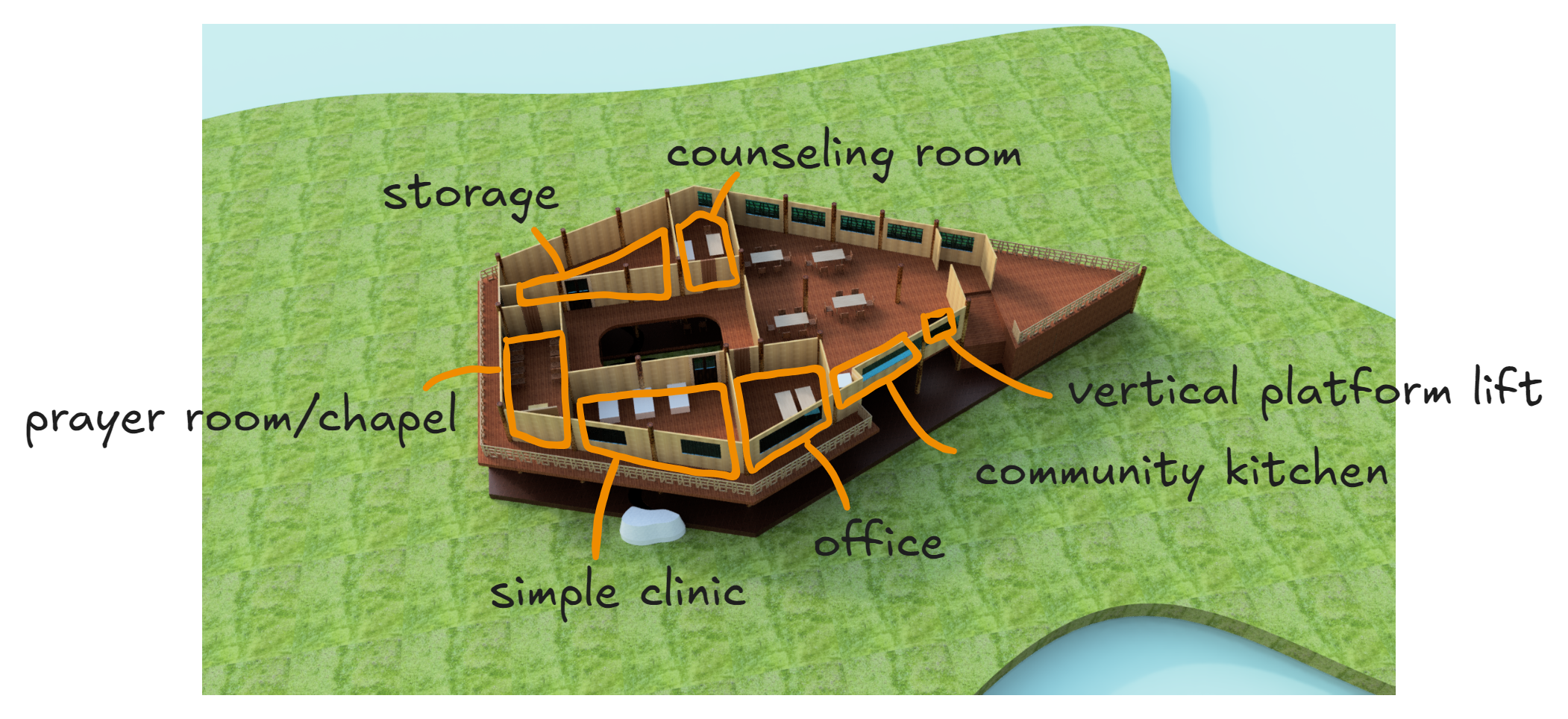
The second floor is mainly indoor space with a corridor and a deck-like platform. It includes:
- A storage room for tribal public items, such as tools for traditional ceremonies.
- A counseling room to provide services for those with emotional trauma after the disaster.
- A prayer room/church. After a disaster, people need a peaceful place. This room is in the quietest corner, fitting this function. Since most locals are Christian, it can be used as a small church.
- A simple medical room. Medical facilities are scarce or far away in rural areas. A medical room is useful for treating children's scrapes or as a temporary care spot for elders while waiting for an ambulance from the city.
- An office, as a community center needs management.
- A Vertical Platform Lift (VPL).
- An indoor gathering space to use when it is too hot or cold outside. It can also serve as an emergency shelter.
Roof
- A skylight window. There is a large automatic window that closes during rain and stays open for ventilation.
- Solar panels.
- A sloped roof to collect rainwater.
Design Concept
1. Healing Space Design
- The wood color is a warm tone, making people feel more hope and warmth.
- The second floor has many windows so people can see far away, making the space feel open rather than narrow.
- The building shape uses obtuse angles and slopes to reduce sharp edges, making it feel more inclusive and natural than a square building.
- Water is introduced into the middle of the first floor. Besides cooling, the sound of flowing water acts as white noise. It also symbolizes that water can be peaceful, not just a scary flood.
- Tables and a kitchen are in the public area so people can build community feelings through gathering, crafts, and cooking together.
2. Climate Resilience
- Important facilities are on the second floor, like a stilt house, to stay safe during floods.
- Most of the first floor is open to reduce the water's push against the building.
- Although the nearby fields might be ruined by a flood, they help protect the building by absorbing water.
3. Sustainability
- Roof rainwater collection system.
- Solar panels.
- Water flow on the first floor lowers the temperature (powered by solar energy to circulate the water).
- Skylight ventilation.
- The wooden building stays warmer in winter and cooler in summer compared to concrete, reducing air conditioning use.
4. Seven Principles of Universal Design
- Equitable Use: People with mobility issues can reach the second floor via the lift and use accessible toilets.
- Flexibility in Use: Different classes in the first-floor classroom meet various interests. The leisure space covers needs for cooking, farming, and playing with water.
- Simple and Intuitive Use: Gender-neutral toilets allow anyone to enter without thinking.
- Perceptible Information: A semi-open ramp allows everyone to see the way to the second floor from a distance. The lift is also next to the stairs for clarity.
- Tolerance for Error: Outdoor spaces on the second floor have strong fences to prevent accidental falls.
- Low Physical Effort: All tables and chairs use light wood materials, making them easy to move.
- Size and Space for Approach and Use: Windows are 100 cm high so people can enjoy the view whether sitting or standing.
5. Other Special Architectural Designs
- The outer corridor on the second floor adds layers to the building, preventing a direct view to the ground to reduce fear for those afraid of heights.
- Toilet entrances use a hallway design to avoid facing public areas directly.
- The first floor uses a semi-open pavilion design to bring users closer to nature and the public.
- Open indoor areas on the second floor are reserved as temporary housing during disasters.
- An emergency generator provides power during disasters to increase the community's sense of security.
- Gender-neutral toilets increase efficiency and include dedicated space for the disabled.
- Rounded corners in the skylight area make the space feel wider and help wheelchairs move smoothly.
- A lift is used instead of an elevator because it is a simpler way to meet accessibility needs.
- A skylight in the middle brings in natural light and keeps the building ventilated.
- Ramps replace stairs to make the whole space more continuous.
- Fine fence designs on the second floor add detail to the flat exterior.
Conclusion
This is my first time using Fusion. Although some design details are not perfect, Fusion is very beginner-friendly. I could master the tools quickly without reading manuals. I was very moved to see the beautiful rendering results. You can easily make great-looking architectural concepts even without using AI image generators.