Truck Bed Bench


This semester, my project was to design and build a bench for the back of my truck. The inspiration for this idea came from a TikTok video, shown in one of the images above, where someone created a custom wooden bench that fit perfectly in the bed of their truck. I was interested in the design because it combined both functionality and creativity, and I thought it would be a useful addition to my own truck.
After carefully studying how the creator in the video built the bench, I began brainstorming ideas for my own version. I wanted my design to be unique while still keeping the practical features that originally inspired me. I started by sketching out different concepts and measurements to ensure the bench would fit properly in the truck bed and provide enough support and comfort.
Throughout the planning process, I considered the materials, dimensions, and overall durability of the bench. My goal was to create something sturdy, visually appealing, and functional for everyday use. This project allowed me to apply problem-solving, design, and construction skills while also giving me the opportunity to create something personalized and useful.
Supplies

this was a pretty simple project to put together with the only recourses I used being...
plywood
wood screws
drill
cnc router
sander
stain
Prototype


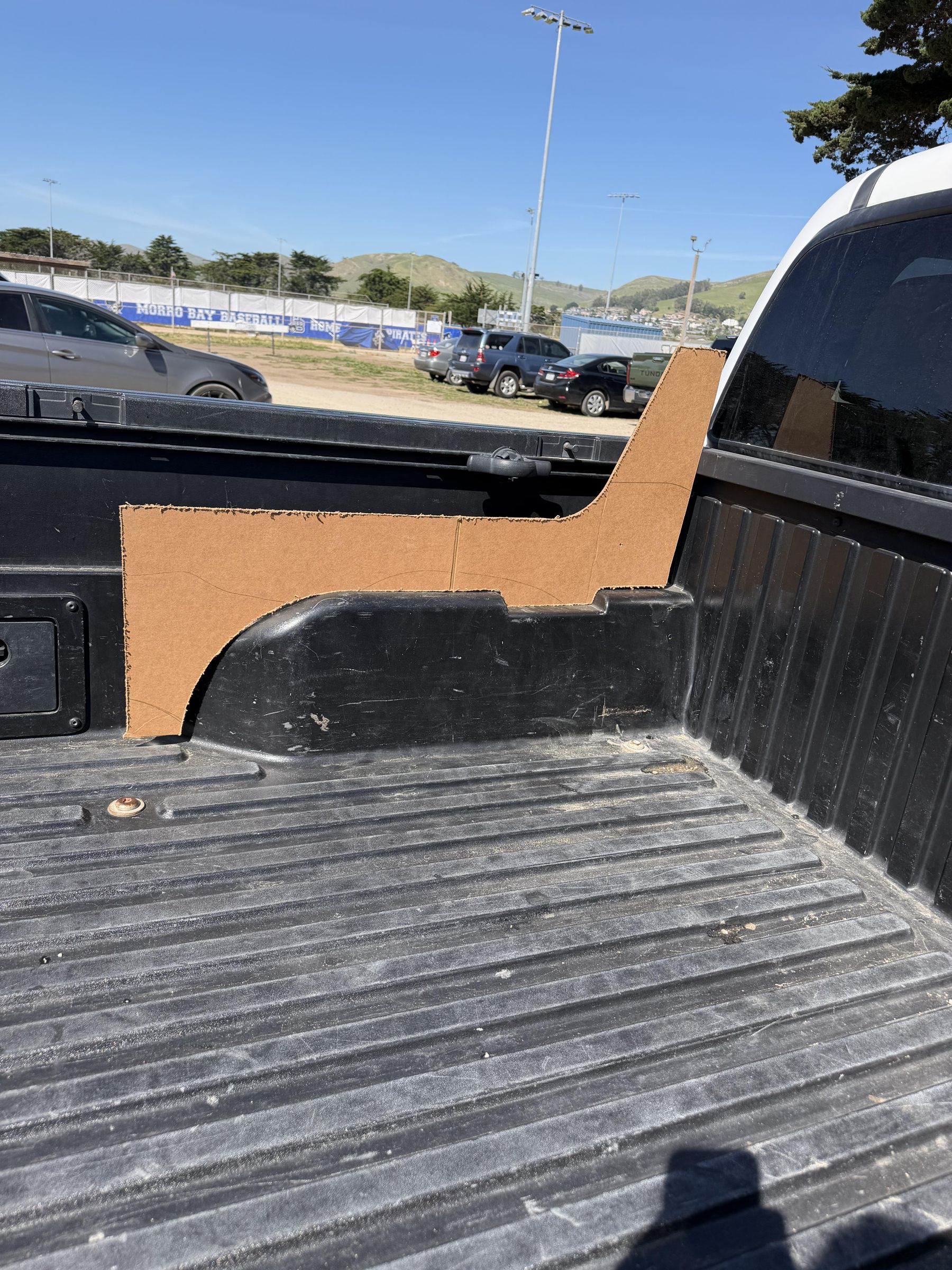
I started the design process by creating a prototype using a small 3D-printed model of a truck bed along with cardboard pieces. This allowed me to experiment with the design on a smaller scale before moving on to the full-size version. To make the bench fit properly inside the truck bed, I first traced the outline of the wheel well onto a piece of cardboard and carefully cut it out to create a rough template. This helped me better understand the shape and dimensions needed for the side panels of the bench.
Once I had the basic cardboard prototype completed, I took a picture of the outline and imported it into Fusion 360 CAD Model. Using Fusion 360, I traced the outline digitally to create a more accurate and precise design. After tracing the shape, I extruded the sketch into a 3D model, which allowed me to visualize the bench and make adjustments before manufacturing. This process helped bridge the gap between the physical prototype and the final CAD design, while also improving the accuracy and professionalism of the project.
Making the Cad Model
.jpeg)

After using yard sticks to measure the dimensions of my truck bed, I transferred the measurements into Fusion 360 to create an accurate digital model of the project. This step was important because it allowed me to visualize the design and ensure that all of the dimensions would properly fit the truck bed before beginning the final build. By carefully adjusting the measurements in the software, I was able to create a more precise and professional design.
Once the model was complete, I used the CNC router to cut out another prototype of the bench. This prototype helped me test the fit and overall structure of the design more accurately than my earlier versions. Using the CNC machine also improved the precision of the cuts, making the pieces cleaner and more consistent.
While assembling the prototype, I needed a way to keep the cardboard securely in place during testing. To accomplish this, I attached a small block of wood and used a screw to hold the cardboard in position, as shown in the photo above. This temporary support method allowed me to stabilize the prototype and better evaluate how the final bench would fit and function inside the truck bed.
This stage of the project was an important part of the design process because it allowed me to identify any adjustments that needed to be made before moving on to the final version. It also gave me more experience using design software, measuring accurately, and working with manufacturing tools such as the CNC router.
Finishing the Cad Model
After reviewing the prototype and identifying areas that needed improvement, I went back into Fusion 360 and made the necessary adjustments to the design. I refined the measurements and modified certain features to improve the overall fit, stability, and appearance of the bench. Making these changes in the digital model allowed me to correct small issues before producing the final version, which helped save both time and materials.
Once the updated design was complete, I prepared the file for manufacturing and used the CNC router to cut out the final product. The CNC machine allowed for precise and accurate cuts, ensuring that each piece matched the dimensions from my Fusion 360 model. Compared to the earlier prototypes, the final cuts were much cleaner and more professional, which improved the quality of the finished bench.
After all of the pieces were cut, I was able to begin assembling the final product. This stage of the project showed how important the design and prototyping process was, because the adjustments I made in Fusion resulted in a better-fitting and more functional final build. Overall, this step demonstrated the value of using CAD software and CNC machining together to create an accurate and well-crafted finished product.
Sanding and Finish

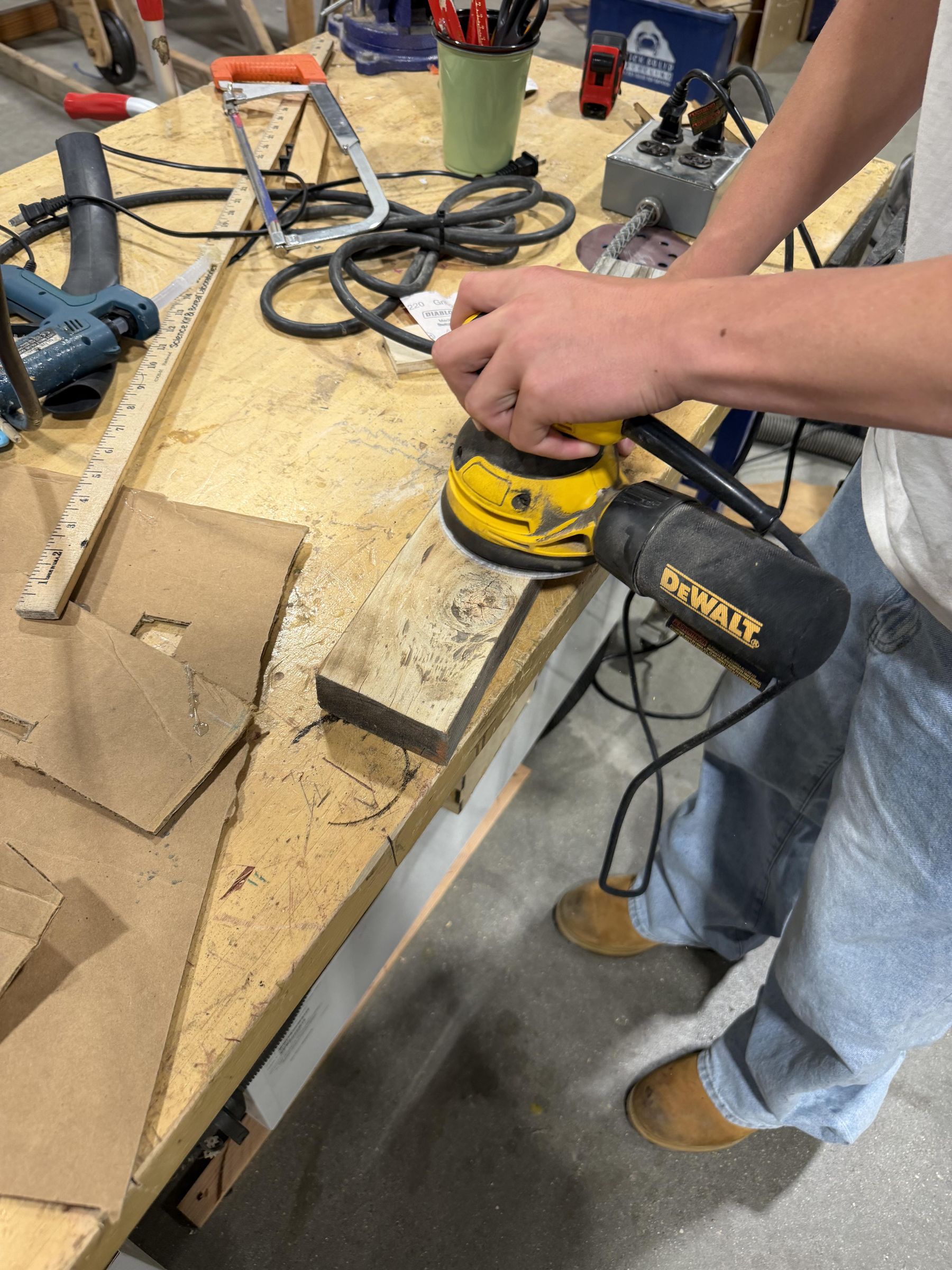

My next step in the construction process was to prepare the wood materials for assembly and finishing. I began by cutting the 8-foot 2x4 boards in half to create the correct lengths needed for the frame and support structure of the bench. Making accurate cuts was important to ensure that all of the pieces would fit together properly during assembly and provide a stable foundation for the final product.
After cutting the boards to size, I moved on to sanding both the 2x4s and the side panels. This step was necessary to remove any rough edges, splinters, or imperfections left from cutting and machining. I carefully sanded each piece until the surfaces were smooth and even, which not only improved the overall appearance of the bench but also made the wood safer and more comfortable to handle and use.
Once the sanding process was complete, all of the wood pieces were properly prepared for staining. Smoothing the wood beforehand was especially important because it allowed the stain to be absorbed more evenly, resulting in a cleaner and more professional finish. This stage of the project helped improve both the durability and visual quality of the bench, bringing it one step closer to the final assembled product.
Assembly

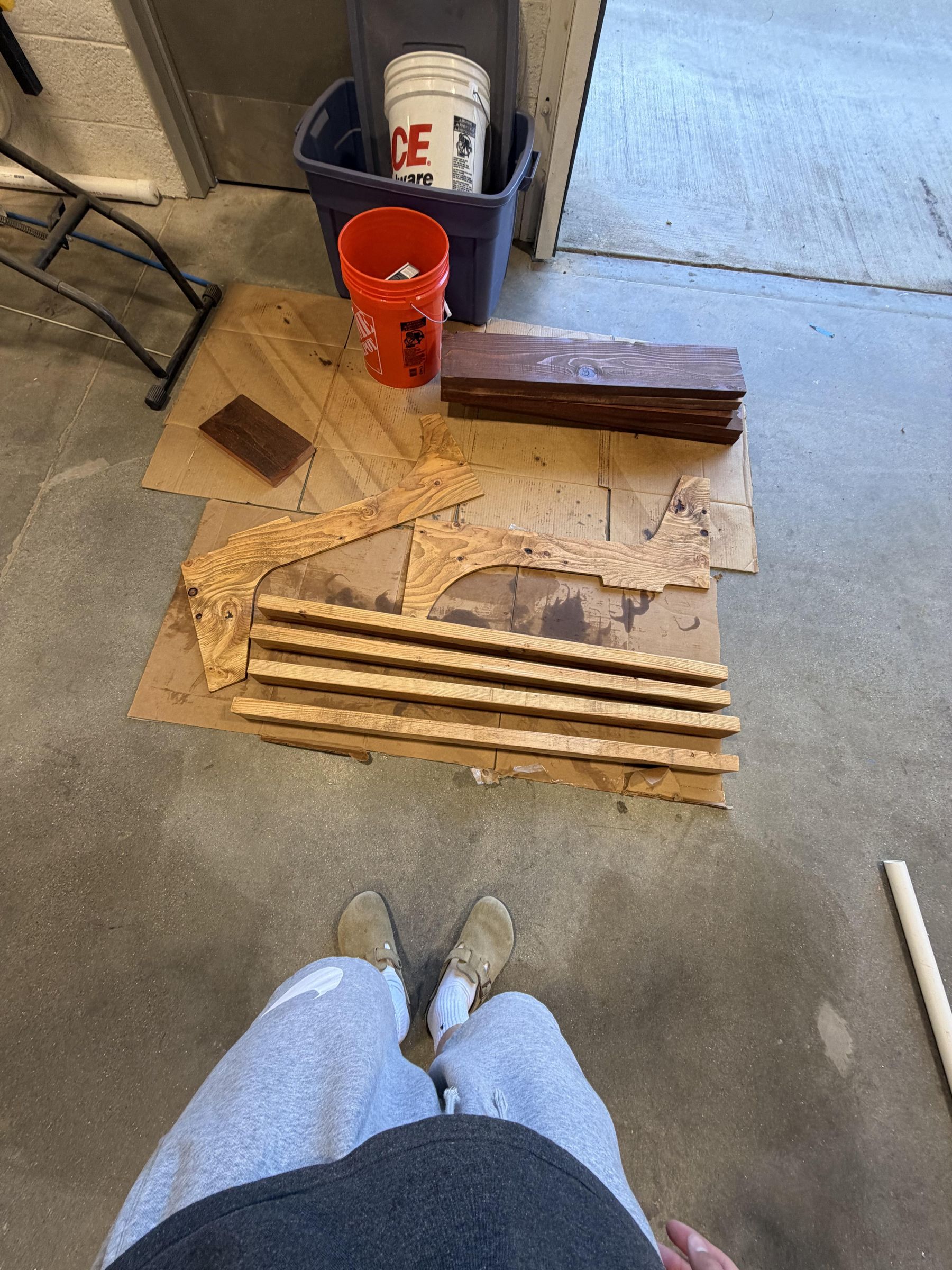
After allowing the stain to dry for a full day, I moved on to the final assembly of the bench. Waiting for the stain to fully cure was an important step because it ensured a smooth, even finish and prevented any damage to the wood during assembly. Once the pieces were completely dry, I organized all of the parts and began putting the bench together.
The assembly process was simple and efficient, requiring only four screws for each 2x4 support board, with two screws placed on each side panel for stability. Although the process was straightforward, it was important to carefully align each piece to ensure the bench was strong, level, and properly secured. As the project came together, I was able to see the final design take shape and confirm that the measurements and planning from Fusion 360 were accurate. This stage completed the construction process and brought the project to its finished form.
Finishing Touches


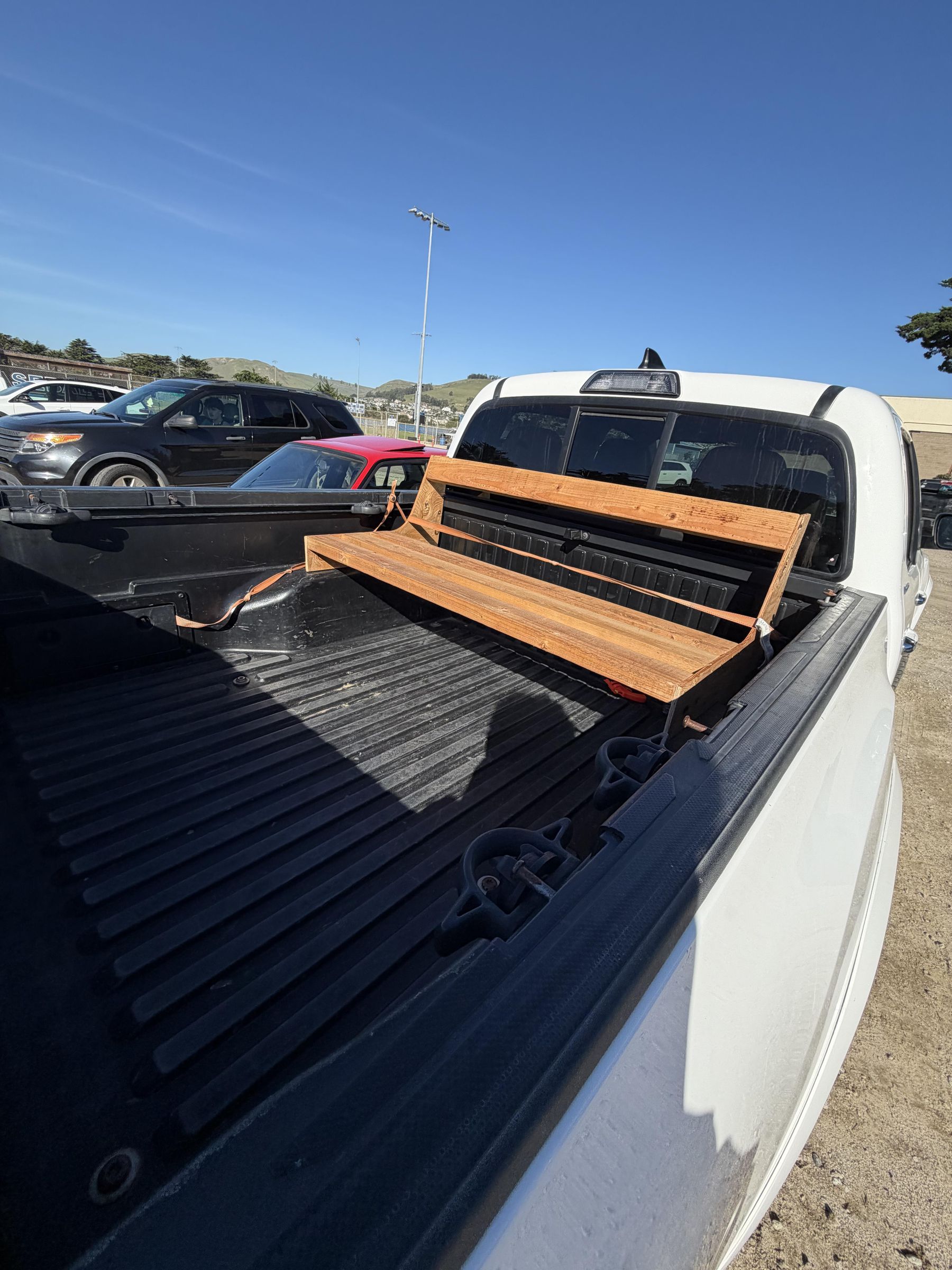
After assembling the bench, I realized that the end pieces were not necessary because the bench functioned the same without them. With this in mind, I decided to modify the design to make it smaller and more convenient. I carefully cut down the ends and sanded the edges smooth to maintain a clean and professional appearance. This adjustment made the bench lighter, easier to handle, and more practical for everyday use while also improving the overall design.
Reflection
Overall, this project taught me many valuable skills and required me to troubleshoot several problems throughout the design and building process. Some of the challenges involved working in Fusion 360, while others occurred while using the CNC router. Although these issues were difficult at times, they helped me improve my problem-solving skills and better understand the tools and equipment used in the project.
One of the biggest problems I faced was uploading my design file to the CNC router. At first, I struggled to get the machine to recognize the file correctly, which delayed the cutting process. After spending time reviewing my settings and troubleshooting the issue, I was eventually able to solve the problem and successfully upload the file. This experience taught me the importance of patience, persistence, and attention to detail when working with technology.
I believe the final build was successful because the bench fit properly in the truck bed, looked clean and professional, and functioned the way I intended. The finished product was sturdy, practical, and closely matched the design I originally created in Fusion 360. I was especially satisfied with the smooth finish, accurate CNC cuts, and overall appearance of the bench.
If I were to complete this project again, there are a few improvements I would make. I would spend more time refining the digital design before creating prototypes to reduce mistakes and save materials. I would also consider adding extra features, such as storage space or cushions, to make the bench even more functional and comfortable. Overall, this project was a valuable learning experience that improved my skills in design, construction, and problem-solving.