Make an Orbital Pendant Necklace
by bippy8 in Workshop > Woodworking
3029 Views, 29 Favorites, 0 Comments
Make an Orbital Pendant Necklace

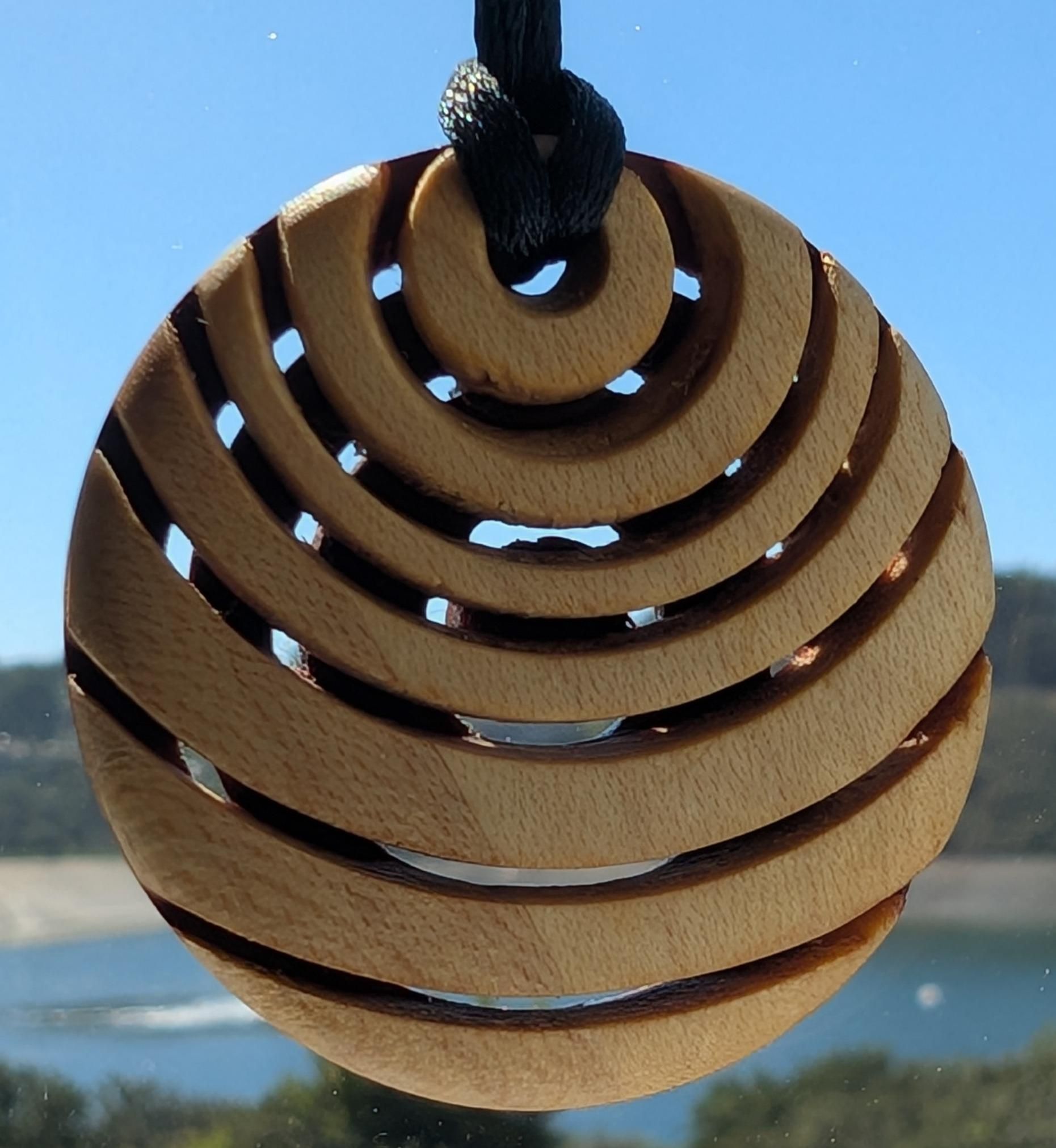
Sometimes the most beautiful patterns appear when things spin just a little out of alignment.
This Orbital Pendant started as an experiment in offset woodturning using a simple jig you can make to shift a pendant's center on the lathe by just a bit. Then by cutting arcs on one side of a laminated maple and padauk wood blank and concentric circles on the other side, you can create a two-sided lattice pattern.
The result looks far more complex than it really is to create a small, geometric sculpture that you can wear.
Key to this project was to make a low cost offset turning jig and save $100.
See how you can make one.
Supplies
Materials
- Maple and padauk (or other contrasting Exotic Woods)
- Birch plywood (for jig) 3/4”
- Wood glue
- Leather cord
- Finish (oil, wax, or CA glue)
Tools
- Lathe with chuck
- Drill press
- Forstner Bits
- Parting tool (~1/16" tip)(you can make one with these)
- Saw (for jig slot)
- Sandpaper
- Pencil
*Amazon affiliate link added for reference
Laminating the Pendant Blank


Glue together two pieces of wood of different colors (I used maple and padauk roughly 2" square and 3/8" thick). Clamp until fully cured. The contrasting colors will make the lattice pattern pop.
Also find some scrap wood to make a sizing jig to use when turning so you have the right size to use in your offset turning jig.
Turn Pendant Blank Round to Size
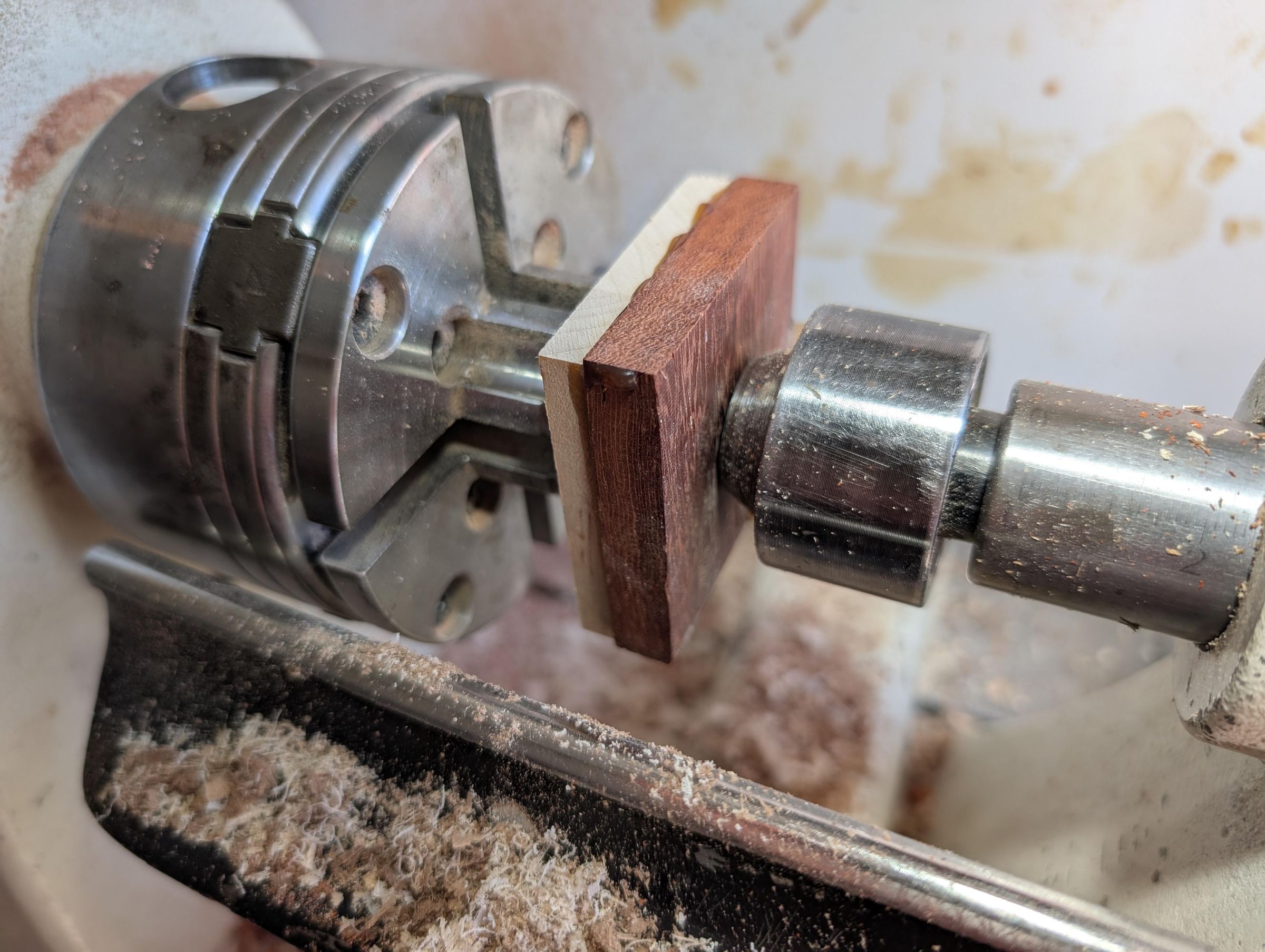

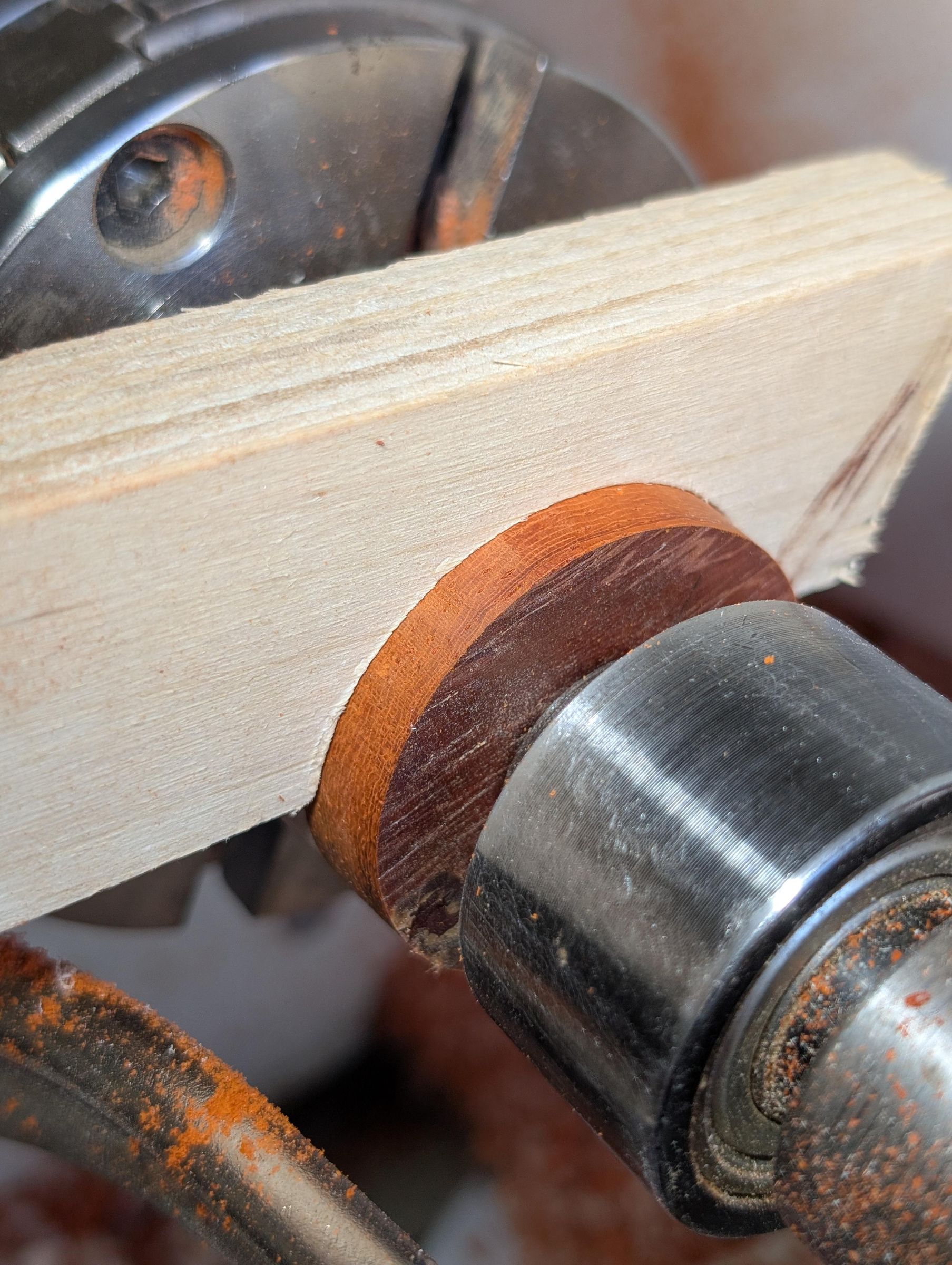
Mount the laminated pendant blank on the lathe. Turn it round and reduce the diameter until it fits the sizing jig. I made my pendant about 1-3/8". The sizing jig ensures a perfect fit in the offset turning jig.
Make Offset Turning Jig (The Key to the Pattern)


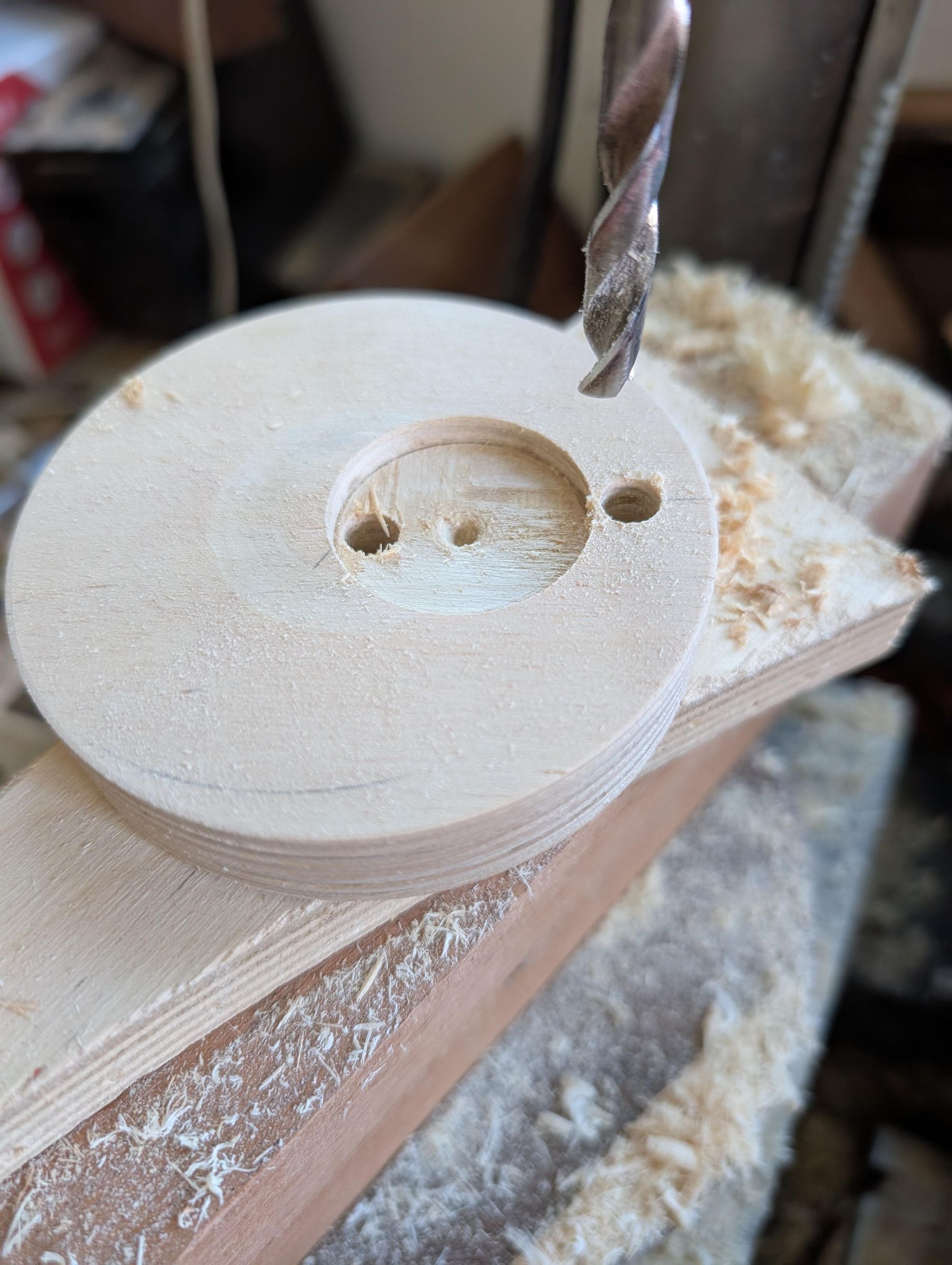
The Jig is how the magic works and can cost around ~$100. My version can be made with scrape wood so free!
Cut a 3/4" birch plywood square (~5"). Turn it round (~4" diameter).
Drill:
- A centered 1-3/8" with a 3/16" recess on one side
- An offset 1-3/8" 3/16" recess, about 1/2" below center, on the other
This offset is what creates the arcs and ultimately the lattice.
Add the Clamping Slot

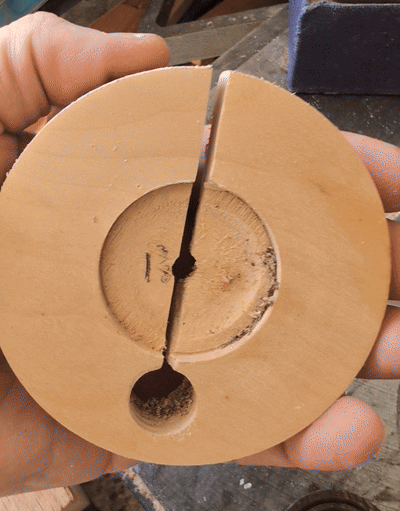


Drill a 1/4 in hole through the jig’s center and another 1 in from the bottom.
Cut a slot from the edge through the lower hole.
This allows the jig to flex slightly and hold the pendant securely when inserted into the lathe chuck and tightened.
I made additional offset jigs for pendant of different sizes.
Turn Pendant on the Offset Side


Insert the pendant into the offset hole in the jig. Mount the jig in the chuck.
Spin the chuck by hand and use a pencil to draw arcs across the surface of the pendant with space around 1/16".
Using a 1/16 in parting tool, cut along the pencil arcs until you just reveal the contrasting wood beneath. This is the first side of the lattice pattern.
While the pendant is in the offset side of the jig you can drill a hole for the necklace cord.
TIP: Shape and sand this side of the pendant to a slight convex shape now since it will be hard to remount later. (I forgot but suggest you don't.)
Turn Other Side of the Pendant


Remove the pendant, flip the offset jig to the other side. Now insert the pendant with the uncut side facing out. Lathe the pendant to a nice convex shape then spin the chuck by hand and draw concentric circles across the surface.
Using the same parting tool, cut along the concentric lines until the opposite wood shows. Now both sides have intersecting grooves forming a double-sided lattice pattern.
Sand through progressively finer grits. Apply your favorite wood finish or stain to enhance the grain and color contrast.
Finally, thread the pendant onto a leather cord to complete the necklace.
Turning Geometry Into a Space Themed Gift


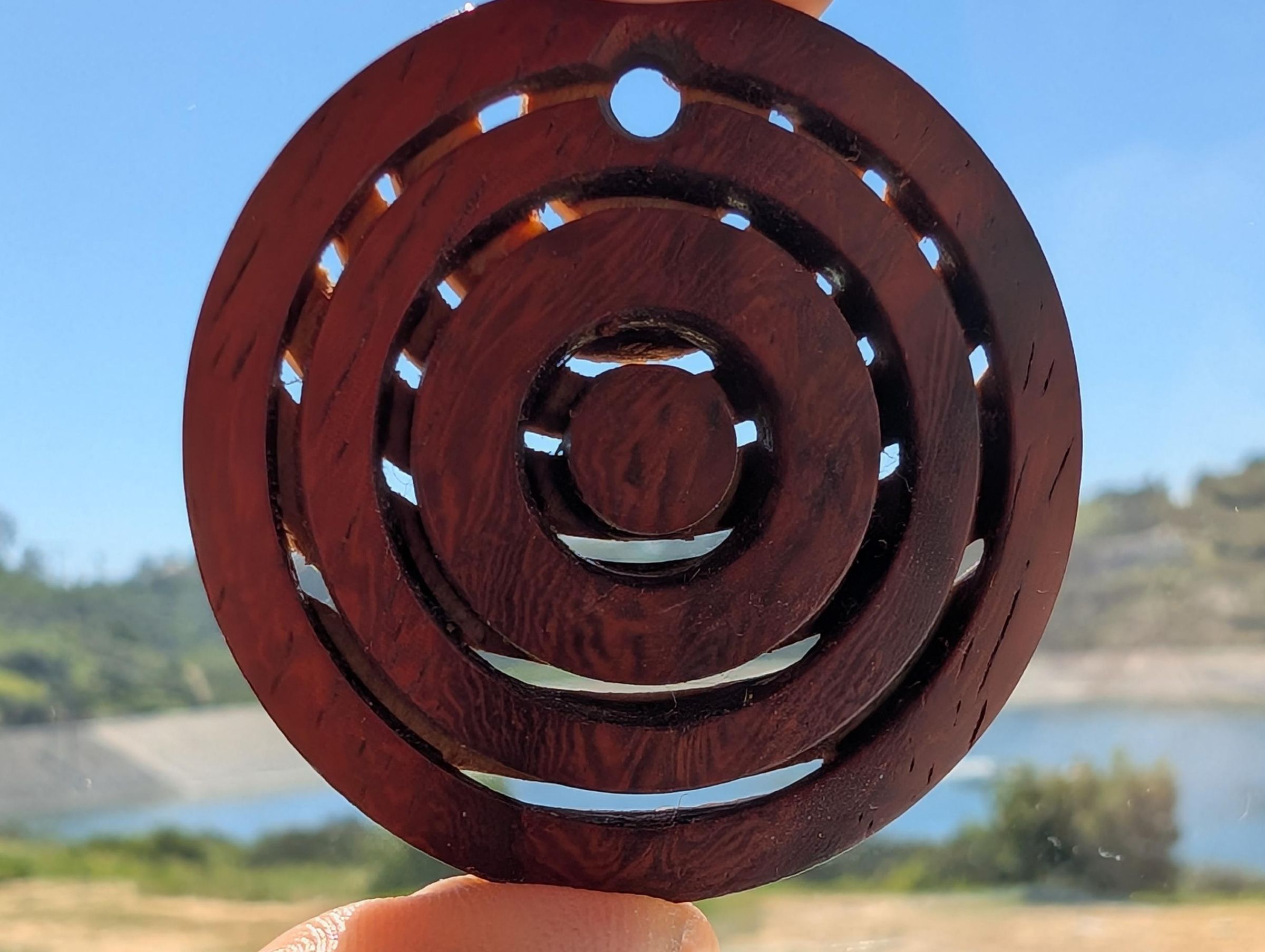
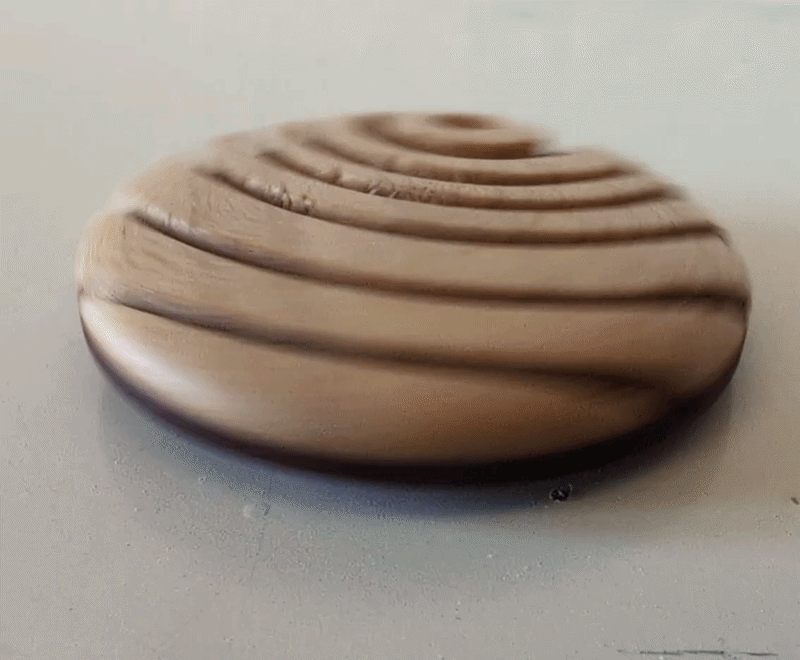
I started this project off as a small off-center turning experiment. It then became a piece of wearable geometry and made even more meaningful when I gave as a gift to my niece and she loved it.
Lesson: Not everything beautiful has to be perfectly centered.