Turning Trash Into Fire: Rebuilding Döbereiner’s Hydrogen Lamp
by J_Sanahuja in Workshop > Science
1621 Views, 7 Favorites, 0 Comments
Turning Trash Into Fire: Rebuilding Döbereiner’s Hydrogen Lamp


In 1823, German chemist Johann Wolfgang Döbereiner created one of the first practical instant-fire devices in history: the Döbereiner hydrogen lamp.
Long before disposable lighters, piezo igniters, or electric sparks, this device used chemistry itself to make fire. In the original design, zinc reacted with diluted sulfuric acid to produce hydrogen gas. That hydrogen was directed toward platinum, where catalytic oxidation heated the metal enough to ignite the gas. It was part science, part engineering, and part controlled alchemy.
For this project, I rebuilt the idea with a modern twist.
Instead of zinc and acid, I used discarded aluminum and sodium hydroxide to generate hydrogen. In other words: a 19th-century fire machine powered by 21st-century trash.
This build is not an exact museum replica. It is a contemporary reinterpretation of Döbereiner’s lamp: historical chemistry, recycled materials, visible gas generation, and a little bit of dangerous beauty.
Historical era: Scientific Revolution & Enlightenment / early industrial chemistry influence, with the original Döbereiner lamp invented in 1823. Döbereiner is also remembered for his work on early chemical classification and catalysis, and his lamp became one of the first commercial applications of heterogeneous catalysis.
Supplies
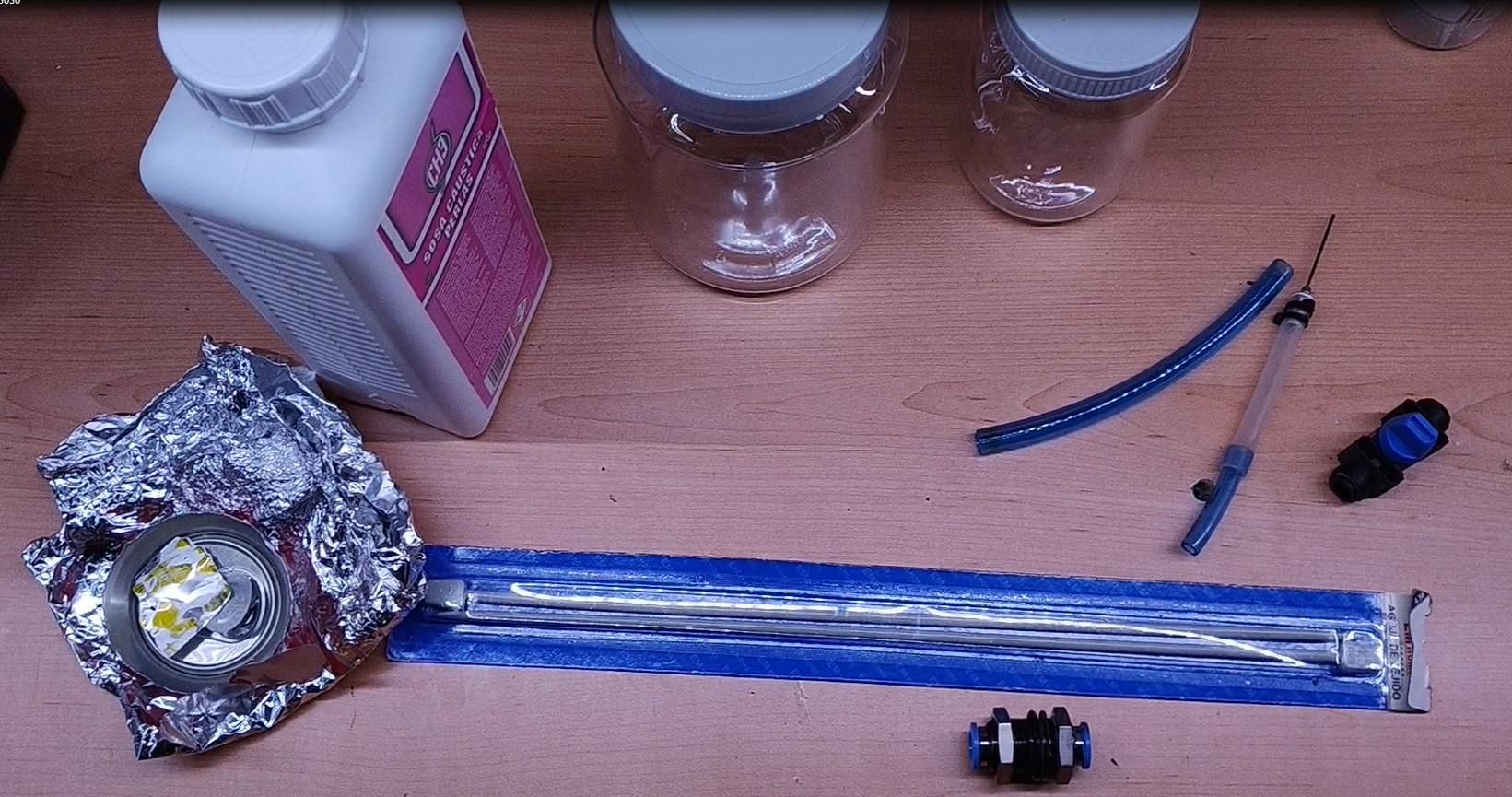
For my version I used:
- Discarded aluminum pieces
- Sodium hydroxide
- Water
- Platinium filament
- Two plastic containers, one large and one small (the small one should fit completely inside the large one)
- 1 tube, for the gas outlet
- 1 veterinary needle
- Cable ties
- Gas connections
- 1 Gas valve
- 2 Knitting needles, on which we will place the aluminum
Useful tools:
- Drill
- Pliers
- Cutter
- Files or sandpaper
- Hot glue or epoxy where chemically safe
- Clamps
- Small saw
- Protective gloves
- Safety glasses
How the Original Döbereiner Lamp Worked


The original Döbereiner lamp was a clever chemical lighter.
Its basic operation was:
- Zinc reacted with diluted sulfuric acid.
- This reaction produced hydrogen gas.
- The hydrogen was guided through a small outlet.
- The gas reached platinum sponge.
- The platinum catalyzed the reaction between hydrogen and oxygen.
- The catalyst heated up and ignited the hydrogen flame.
No battery.
No match.
No spark plug.
Just chemistry, pressure, metal, and gas.
That is what makes this object so fascinating: it feels ancient and futuristic at the same time.
In the 19th century, this was not just a laboratory curiosity. Döbereiner’s lamp was produced commercially and used as a practical ignition device before modern lighters existed.
The Moving Mechanism: Valve, Piston, or Hinged Cover
The central component of the mechanical control is a moving mechanism, which can take different forms depending on the manufacturer:
- A hinged cover,
- A rocker arm,
- A small vertical piston.
Or a valve in my case.
This component performs several functions simultaneously:
It opens or closes the hydrogen outlet to the nozzle.
It modifies the internal geometry of the system, affecting the contact between the acid and the zinc.
It allows the user to control the process with a single mechanical action.
When the mechanism is raised or activated:
- Hydrogen can flow freely,
- Internal pressure decreases,
- The acid–metal reaction remains active.
When the mechanism is lowered:
- The gas outlet is blocked,
- The internal pressure increases slightly,
- The effective contact between acid and zinc is reduced,
- Hydrogen generation decreases or stops.
This control is indirect and passive, but sufficient for the device’s purpose.
My Modern Twist — Aluminum Waste Instead of Zinc

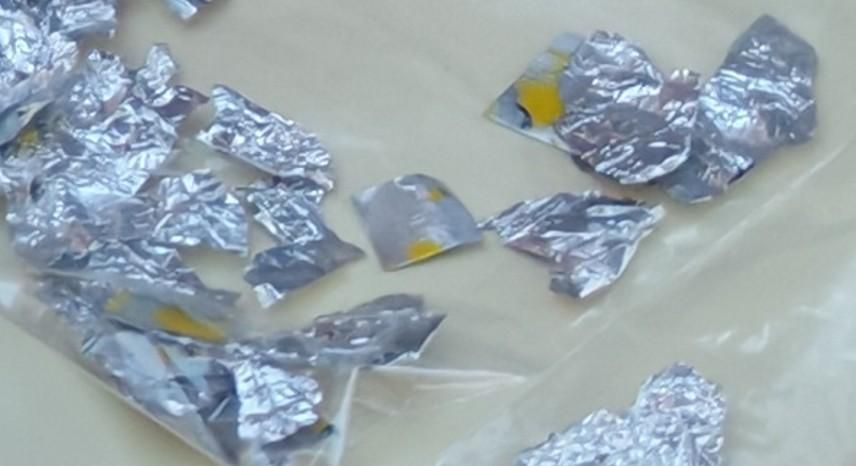
The historical lamp used:
Zinc + sulfuric acid → hydrogen
My version uses:
discarded aluminum + sodium hydroxide → hydrogen
This changes the soul of the project.
The original lamp belongs to the early age of applied chemistry.
This version belongs to our age of waste, recycling, and improvised technology.
Aluminum cans, foil, scraps, and discarded packaging are everywhere. Most people see them as garbage. But chemically, aluminum still contains stored potential. With the right reaction, that waste can become hydrogen.
That is the core idea of this build:
old science, modern waste, visible energy.
This is not just a replica. It is a conversation between two centuries.
Building the Reaction Chamber
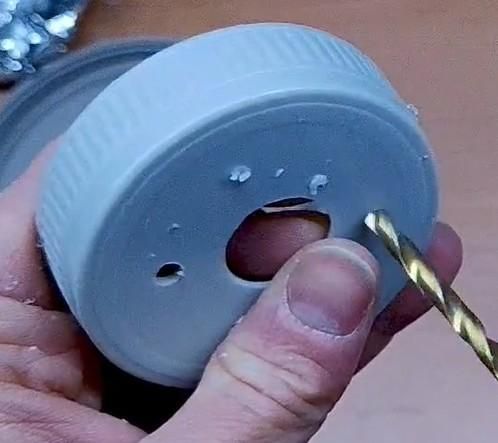


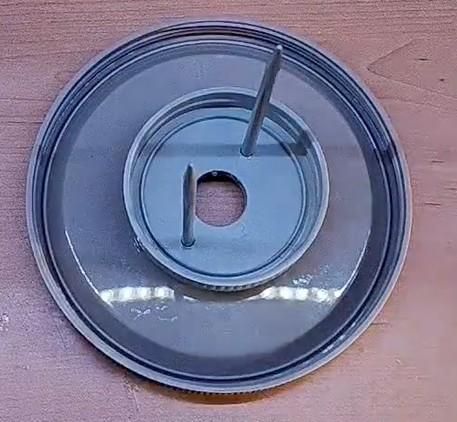
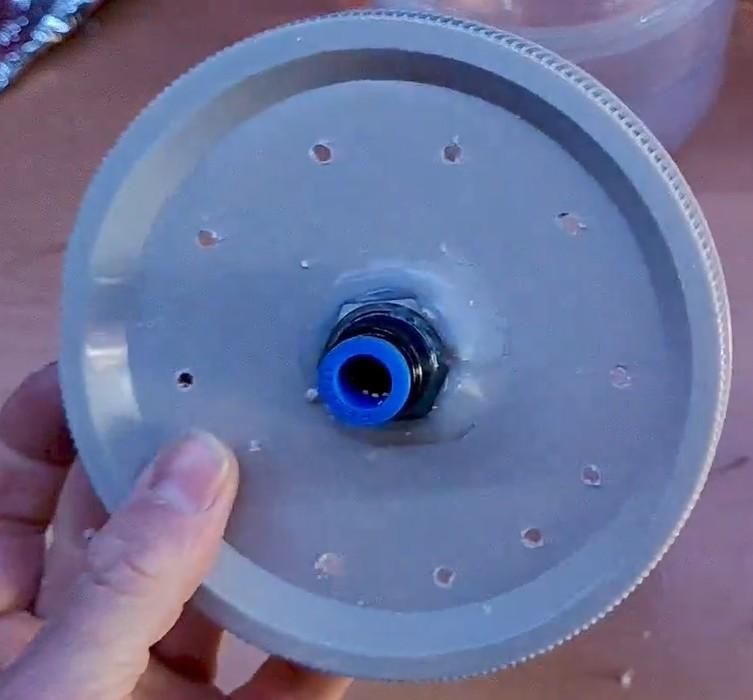
The reaction chamber is where the aluminum is pierced with knitting needles. I made this chamber using the small plastic container.
To start, I cut the bottom of the jar so the sodium hydroxide can rise.
Then, on the lid, I secured the knitting needles with epoxy glue and attached it to the lid of the large jar.
Once the glue dried, I drilled a hole to insert the gas connection, which is where the hydrogen will escape once it forms.
Be sure to seal both lids—including the connection and the needles—tightly with hot glue or silicone to ensure that this reaction chamber is airtight.
We'll also drill some small holes in the large lid, making sure they don't line up with the holes in the small lid on the other side, so that the large jar remains at atmospheric pressure.
Leak Test

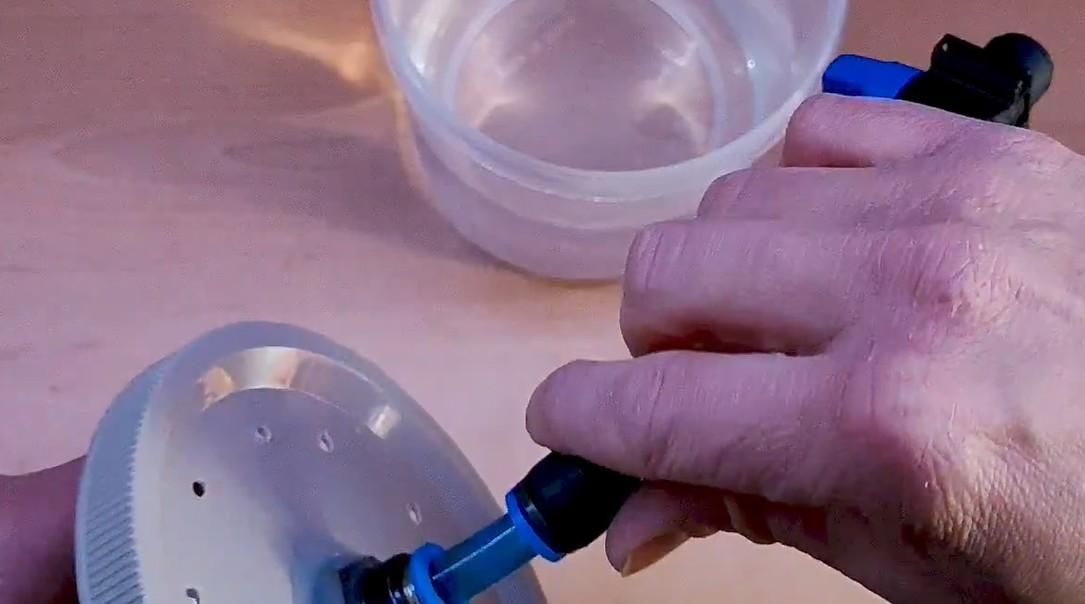
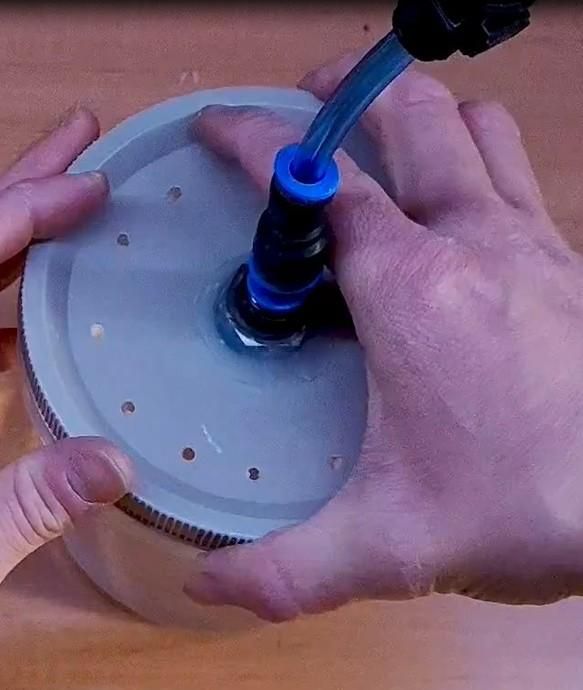

Now we'll perform a quick leak test to make sure the system isn't leaking.
To do this, simply screw the small container—with the bottom cut off—onto its lid.
We’ll connect a tube with the valve to the connection on the lids. We’ll keep the valve closed.
We’ll fill the large container halfway with water and put the lid on, with the small container attached.
If everything went well, the water from the large container won’t flow into the small container.
Load the Lamp/generator With Aluminum

Once the leak test is complete, we will proceed to thread the aluminum onto the knitting needles
Preparation of the Sodium Hydroxide Solution (Caustic Soda)
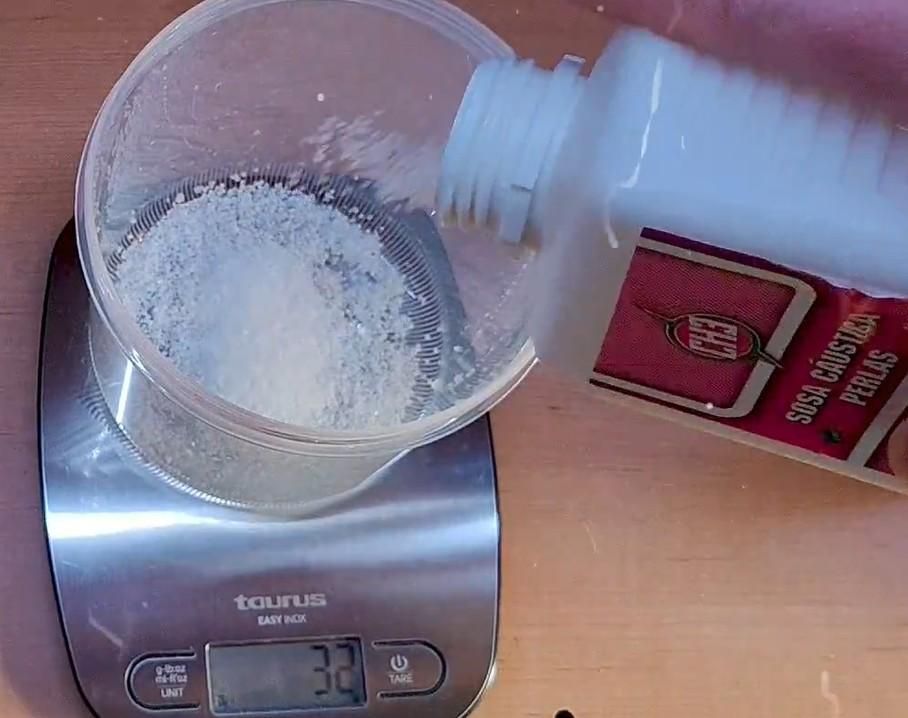
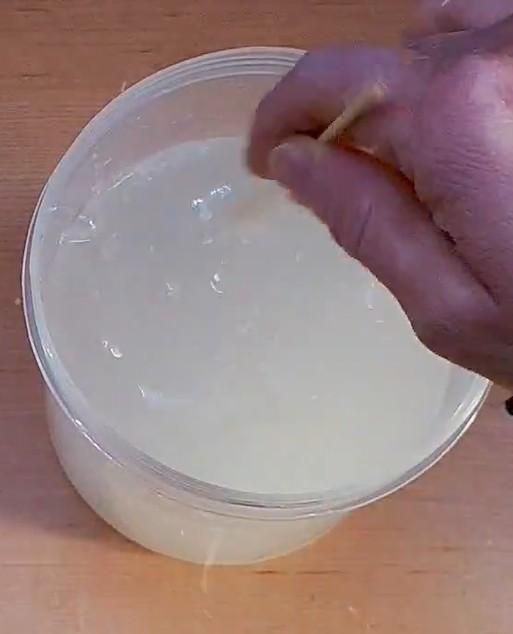
We will prepare the caustic soda directly in the large jar.
I have made one liter of a 5% sodium hydroxide solution (i.e., 50 g of hydroxide in 1000 g of water).
First Test
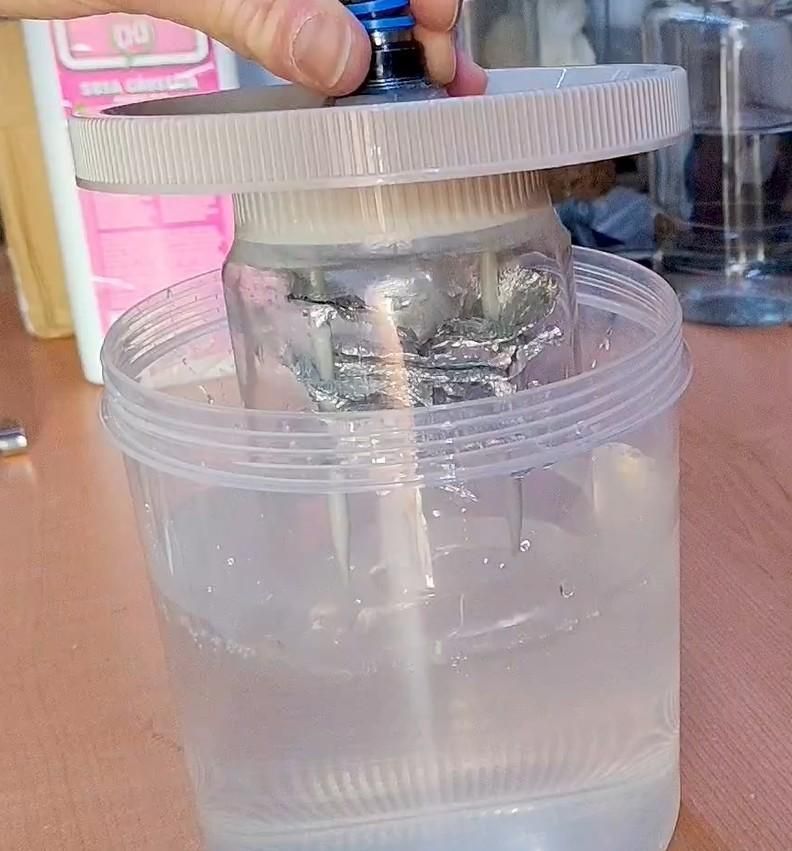
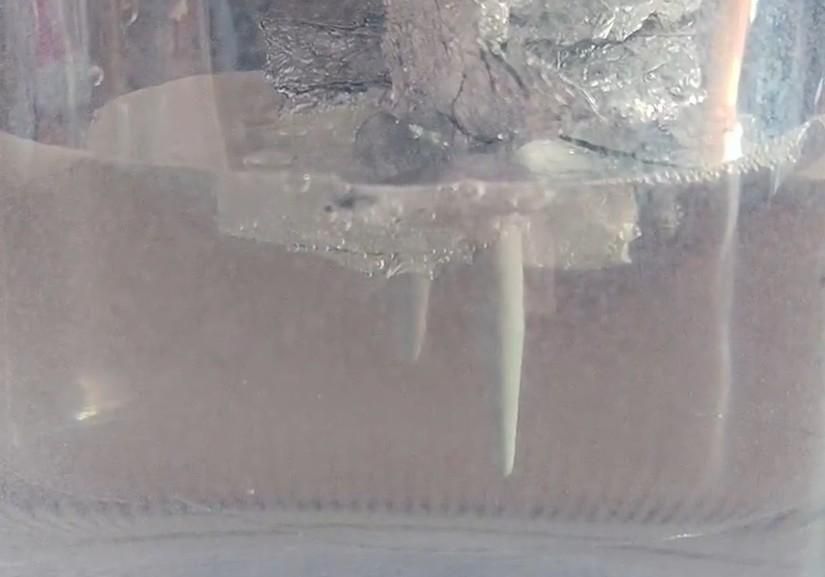

With the reagents prepared, it’s time to test the generator.
I’ve attached a veterinary needle with a tube to the valve outlet (we’ll try to make a blowtorch with it).
We’ll close the lid on the small container and place the aluminum foil in the large container with the baking soda.
If we’ve done it right, the baking soda won’t touch the aluminum yet, and hydrogen won’t form until we open the valve.
With everything ready, we’ll open the valve.
The first thing we should see is the baking soda level rise; it comes into contact with the aluminum, and hydrogen begins to form. At the start of the reaction, you need to open and close the valve to control the generation of hydrogen.
Once enough hydrogen has been generated and it begins to escape through the veterinary needle, we’ll ignite it with a lighter to confirm that we’re producing hydrogen in a controlled manner.
Final Test of the Döbereiner Lamp
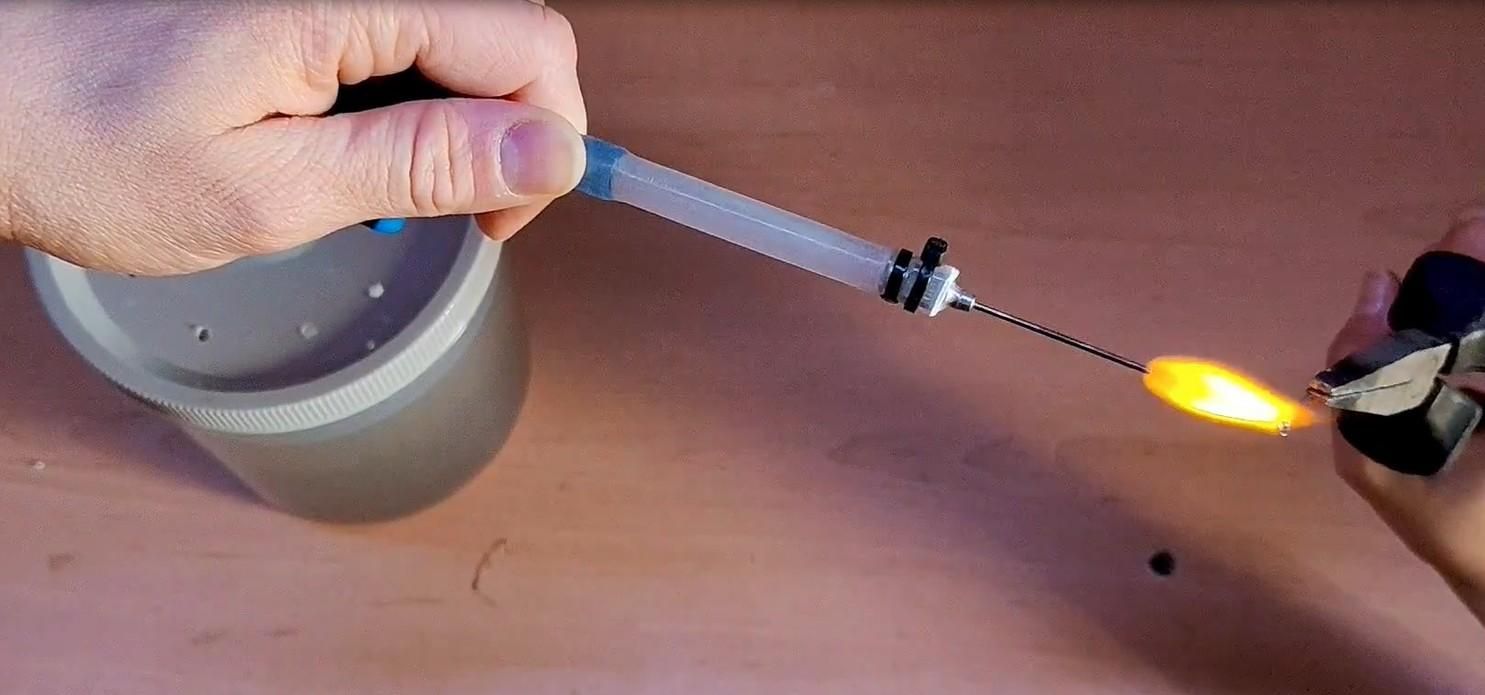
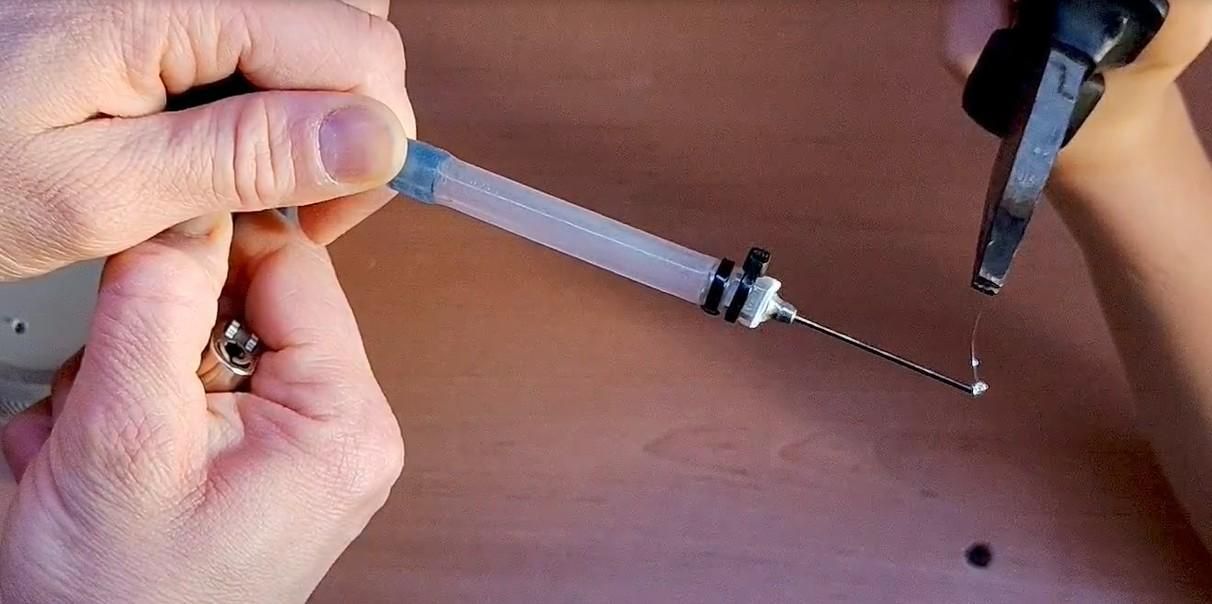
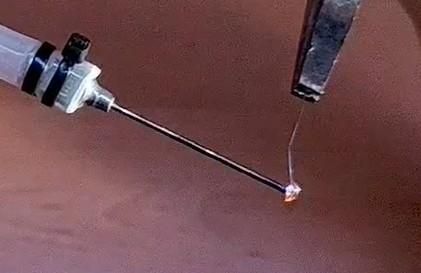
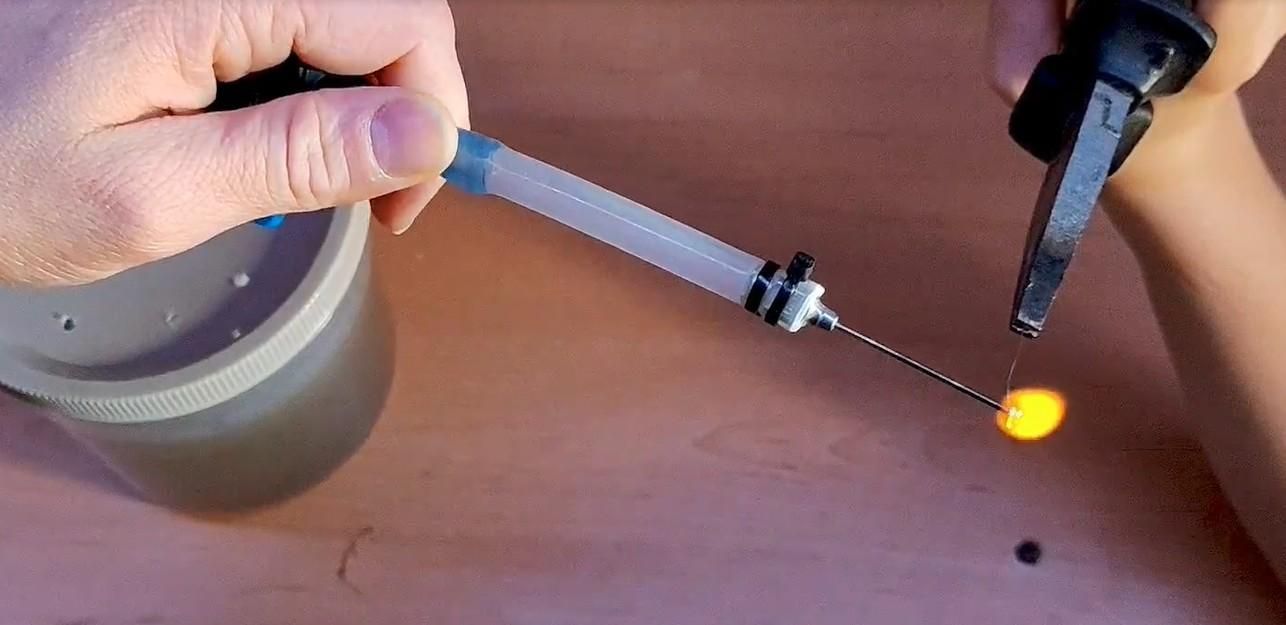
In the original Döbereiner lamp, he used platinum sponge as a catalyst to ignite the hydrogen. I haven't been able to find any platinum sponge, but I did find a platinum filament. It doesn't work as well as the sponge, since it doesn't have as much surface area, but it works well enough for a reproduction.
To do this, we’ll need to give the filament a little help. I’ve twisted it into a small ball of platinum. First, I heated the filament with the hydrogen torch we’ve already made. Then I closed the gas valve to extinguish the flame, and with the platinum filament still hot, I reopened the valve to let the hydrogen out so it would come into contact with the platinum.
And... the platinum filament reignites the hydrogen flame through catalysis.
Video Demonstration

I also made a full video of this project showing the build and the lamp in action.
And you can find an article, in spanish, with the explication of the Döbereiner lamp and the reaction here: Döbereiner lamp
Final Thoughts — Old Chemistry, Modern Trash
Döbereiner’s lamp is a strange and beautiful object because it belongs to a time when chemistry was becoming technology.
It was not just a lighter.
It was a promise.
A promise that invisible reactions could be shaped into useful machines.
Rebuilding it with discarded aluminum changes the message. The original lamp turned zinc and acid into instant fire. This version turns waste into a small, flickering reminder that materials are not dead just because we throw them away.