YUMO PULSE — ESP32-C3 Mini Desk Gadget With OLED, Proximity Detection and Web Interface
by yumobuilds in Circuits > Microcontrollers
60 Views, 0 Favorites, 0 Comments
YUMO PULSE — ESP32-C3 Mini Desk Gadget With OLED, Proximity Detection and Web Interface
)


I'm a construction worker. I broke my leg and used 8 weeks of recovery to teach myself electronics from scratch — no coding background, AI-assisted firmware, but all the physical build is done by hand.
This is YUMO PULSE, my second build. It's a compact desk gadget built around the ESP32-C3 Super Mini, sitting inside a hand-cast epoxy resin housing I made myself.
It displays live temperature, humidity, a clock, and glows brighter when your hand gets close. You can also push custom text to it from your phone via a web interface.
Full source code is free on GitHub. This guide will show you how to build your own.
📺 Watch the full build: https://www.youtube.com/watch?v=wUF-UrtmaxU
💾 Source code: https://github.com/yumobuilds/yumo-pulse
Supplies
• ESP32-C3 Super Mini
• SHT3X Temperature & Humidity Sensor
• 0.09" OLED Display (128×32)
• Flexible LED filament
• Bare copper wire (for proximity antenna — connects to GPIO7)
• 18650 LiPo battery (its not suitable for resin epoxy - you should chose different battery)
• TP4056 charging module
• Epoxy resin (for the casing)
• Soldering iron, wire cutters, mixing cups for resin
Wiring the Components


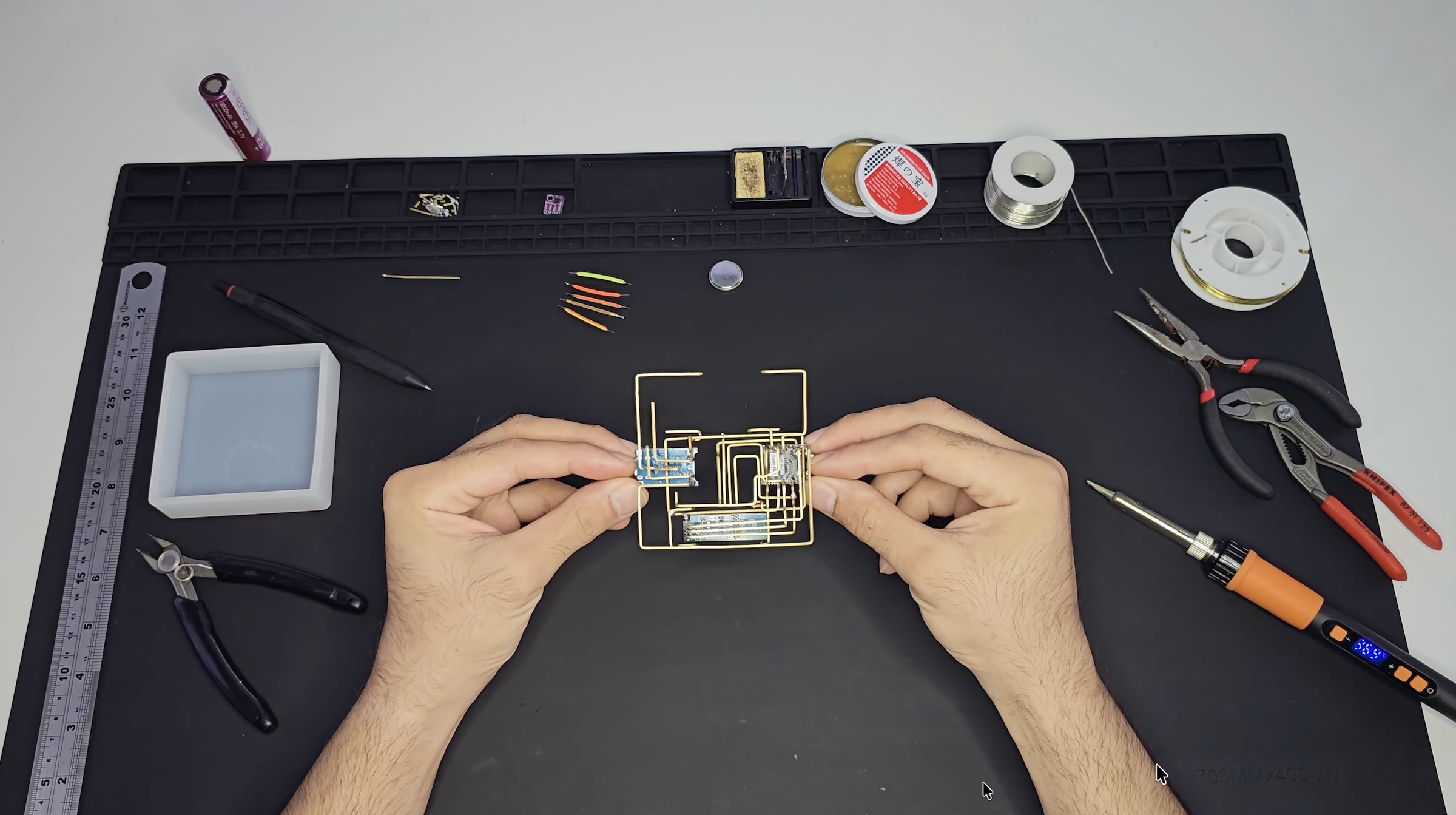

Connect the SHT3X sensor to the ESP32-C3 via I2C (SDA/SCL). Connect the OLED display the same way. The proximity antenna is just a short bare wire soldered to GPIO7 — no special sensor needed, the ESP32 reads capacitance changes natively. Wire the LED filament to your chosen GPIO pin. Connect the 18650 battery through the TP4056 charging module.
Casting the Epoxy Resin


The casing is the heart of YUMO PULSE's look. I mixed and poured epoxy resin by hand into a mould, embedding the components during the pour so everything is locked in place. Take your time here — bubbles are your enemy. A toothpick & heat it in up the surface helps pop them before the resin sets.